Insta-Reaction: Outlander, Season 4, Episode 7

Season 4 is here! My intention is to write an “Insta-Reaction” post for each episode soon after viewing, to share some initial thoughts, questions, reactions — you name it.

Warning:

Spoilers

I may be talking about events from this episode, other episodes, and/or the book series… so if you’d rather not know, now’s your chance to walk away!

Outlander, episode 407: “Down the Rabbit Hole”

The official synopsis (via Starz):

Brianna follows in her mother’s footsteps and travels through the stones back in time to 18th century Scotland where she struggles to make her way to the Colonies to find her parents.

My take:

Major plot points:

  • Roger follows Brianna through the stones at Craigh na Dun.
  • Brianna sets off on foot across the Highlands to get to a harbor and try to find passage to the Colonies.
  • She becomes injured, and is taken in and cared for by Laoghaire and her daughter Joan.
  • Laoghaire is not pleased to discover that Brianna is Claire’s daughter.
  • Brianna meets Ian Sr. at Lallybroch, who helps her on her journey.
  • Meanwhile, Roger secures passage on board the Gloriana, captained by Stephen Bonnet, who is just as cruel as we expect.

Insta-reaction:

Episode 407, “Down the Rabbit Hole”, is (as far as I recall) the only Outlander episode so far without Jamie or Claire appearing at all — and yet, it’s quite a strong episode, filled with important plot developments as well as great character moments.

Three cheers for the Outlander casting team, for giving us the treat of seeing Frank Randall and Ian Murray again, and for introducing us to two characters who’ll be a regular part of the Fraser family’s lives for years to come — Joseph and Lizzie Wemyss. And, well, I’m too much of a Laoghaire hater to say it was a treat, but yes, it was a good surprise to see her back on the show again too.

First off, Brianna’s journey. She made it through the stones safely, and is now walking across the snowy Highlands towards a harbor, where she plans to secure passage to America so she can find Claire and Jamie. Her mission, as she sees it, is to warn them about the fire that lies in their future, hoping to save their lives. I’m not sold on her plan here, though — wouldn’t it be smarter (and faster) to find transportation, rather than walking the whole way? It certainly would have been safer, since Brianna stumbles down a hillside and severely bruises her ankle, making it almost impossible to walk. Finally, she passes out from exhaustion, and wakes up in a snug bed, cared for than none other than the (evil, conniving ) Laoghaire.

At first, it’s kind of hard to hate Laoghaire. She’s sweet and kind toward Brianna, making her welcome and caring for her while her ankle heals, giving her warm clothes, a place to sleep, and good company. Little Joan is delighted to have Brianna there, and the two are quite sweet together. Brianna even sings “San Francisco (Flowers In Your Hair)” to her, which is a cute little anachronism. When Brianna overhears an argument one night between Ian Murray and Laoghaire, she learns that Laoghaire’s deadbeat former husband is short on his alimony payment yet again. Brianna hears the sad story of Laoghaire’s true love being bewitched and stolen away from her. Oh, Bree, if only you knew.

Eventually, of course, the truth comes out, and Laoghaire is horrified to learn that Brianna is the daughter of the whore/witch Claire. Bree attempts to leave, but is locked in by Laoghaire, who decides to report Brianna as a witch as well. Little Joan saves the day, rescuing Bree and taking her to Lallybroch, where she’s welcomed by her uncle Ian. The two are soon parted, as Brianna books passage to America, along with a servant girl (Lizzie*), whose father begs Brianna to take her in order to keep her safe from a man who wants to defile her.

*Side note: Anyone else startled by Lizzie’s appearance? In the books, she comes across as frail and delicate and always sickly, but here’s she’s taller than Brianna and looks pretty robust! I’m sure she’ll be fine, but it’s one of those book vs TV moments that’s kind of startling.

Throughout the episode, we see Brianna’s memories of Frank Randall, the man who raised her and loved her. Brianna feels a certain amount of guilt toward Frank, since on the night of his fatal car accident, he’d told her that he and Claire were planning to divorce, and he asked her to come to England with him. Brianna had been so upset that she left him without saying “I love you” back to him, and has been carrying that memory ever since. Over the course of the episode, she seems to have come to terms with her relationship with Frank, so that finally, she sees a vision of him (in what I thought was a pretty corny moment) smiling at her on the docks, as if giving his blessing to her journey.

And now let’s return to poor Roger.

Poor Roger! My familiar refrain. What that man suffers! He pursues Brianna through the stones, dressed in period clothing (and wearing some very silly looking trousery/gaucho/breeches type thing). And whoa, he even shaved his beard! Why, though? We’ve seen plenty of Highlanders with facial hair, right?

Beards are glorious, aye?

Roger makes it through the stones and goes straight to the harbor (as Brianna should have done), and is directed to the captain of a ship about to sail for the Colonies — and of course, it’s Stephen Bonnet, and we know he’s a bad’un even if Roger doesn’t. Bonnet tells Roger that he’s not taking any more passengers, but Roger is persistent, and finally convinces Bonnet to take him on as a crew member.

During the voyage, there’s a smallpox outbreak, and here’s where Roger first sees Bonnet’s true colors. Bonnet orders that anyone with signs of smallpox be thrown overboard, since the disease may otherwise spread throughout the ship. The first victim is a little girl, whom Roger tries desperately to save. But Bonnet does as he wishes, and has an awful Jamie Lannister moment.

Not quite the Outlander scene, but pretty darn close

On board his own ship, Stephen Bonnet is the law, and everything and everyone is under his power. Roger hides a woman with a baby — the baby has a rash and the woman is afraid that the crew will throw the baby overboard, even though she’s sure it’s just a normal baby rash. The woman’s name is Morag Mackenzie — and book readers know that her child Jemmy is in the direct line of Roger’s ancestors. By saving the baby, he’s ensuring his own existence a couple hundred years later. Bonnet discovers the child, and threatens to kill Roger as punishment, but a flip of a coin saves Roger’s life. Bonnet is the worst.

Insta-reaction wrap-up:

For an episode without Jamie and Claire, “Down the Rabbit Hole” really rocked. Brianna and Roger’s story is in many ways the heart of Drums of Autumn, and it’s great to see their TV journey kicking into higher gear. We know things won’t be easy for these two, but it’s good to see them on their way. Poor Roger! I can’t help it saying it over and over again, since it always ends up feeling appropriate. So far, we’ve seen him give up his 20th century life, his career, his well-being, and his beard to chase after a woman who doesn’t want him to chase her. She specifically said in her letter now to follow her, so of course that’s exactly what he decides to do. Not that they’re not meant to be, but he really does go through all sorts of torments of hell because of this decision.

Bonnet is despicable, and his easy ability to flip from smiles and friendliness to deadly, amoral murder is a big part of what makes him so scary.

I loved seeing Ian and Lallybroch once again, although I wish Jenny had been home! And I was almost charmed by Laoghaire, who comes across in her first several scenes as sweet, maternal, and caring, a woman deserving of compassion… until she launches into one of her anti-Claire crazypants tirades and loses my goodwill completely.

I suppose the show needed to keep the Brianna and Roger stories in balance throughout the episode, but I did start to feel that the “hanging out with Laoghaire” story stretched out longer than was needed. Thankfully, we’re done there, and can pick back up with Brianna in America in the next episode.

And furthermore…

Hurray for Brianna’s peanut butter and jelly sandwich on Wonder bread! In Voyager, Claire brings the same kind of sandwich through the stones with her and eats it in Edinburgh before seeing Jamie for the first time, but that was omitted from the show in season 3. It’s not particularly important, just a fun little detail to throw in for a bit of color and yet another nod to the source material.

And — hold up! — it was hard to get a good look… but was that Claire’s ring on Bonnet’s hand?

And a final word:

Is anyone else already getting sad over the fact that we’ve passed the half-way point of the season? It seems like season 4 just started, and now suddenly there are only six episodes left!

Save
Save

Save

Save

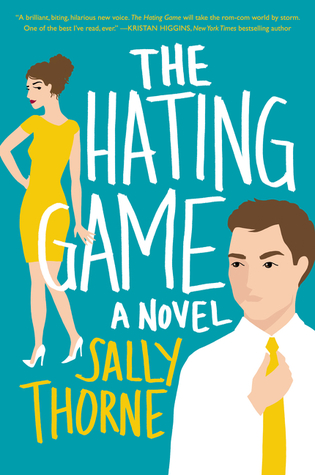
Take A Peek Book Review: The Hating Game by Sally Thorne

“Take a Peek” book reviews are short and (possibly) sweet, keeping the commentary brief and providing a little peek at what the book’s about and what I thought.

Synopsis:

(via Goodreads)

Lucy Hutton and Joshua Templeman hate each other. Not dislike. Not begrudgingly tolerate. Hate. And they have no problem displaying their feelings through a series of ritualistic passive aggressive maneuvers as they sit across from each other, executive assistants to co-CEOs of a publishing company. Lucy can’t understand Joshua’s joyless, uptight, meticulous approach to his job. Joshua is clearly baffled by Lucy’s overly bright clothes, quirkiness, and Pollyanna attitude.

Now up for the same promotion, their battle of wills has come to a head and Lucy refuses to back down when their latest game could cost her her dream job…But the tension between Lucy and Joshua has also reached its boiling point, and Lucy is discovering that maybe she doesn’t hate Joshua. And maybe, he doesn’t hate her either. Or maybe this is just another game.

My Thoughts:

I picked up The Hating Game on a whim while pondering which of the heavier books on my list to tackle next. Sometimes, light and romantic is just the thing, and this book delivered — but also made me alternate between hair-pulling frustration and goofy, grinning swoons.

Office romances are risky, and depicting them in fiction takes some delicacy… which The Hating Game mostly lacked. I spent the first twenty percent or so of this book shrieking at the characters to grow up and act like professionals! (OK, my day job might be leaking through a bit here — as someone who works in HR for a living, I was more than a little horrified by the workplace behavior of the characters and the fact that their bosses were completely hopeless as managers). Add to the office nonsense the fact that Josh and Lucy were up for the same promotion (and just how do executive assistants suddenly get considered for COO jobs?), and much of the story drove me absolutely batty.

BUT… when we get Josh and Lucy away from the office, suddenly their banter, flirtation, and chemistry become adorable, and — I admit it — it was impossible not to be caught up in the steamy scenes of almost-but-not-quite between the two of them. Sure, the plot and romance development were complicated by the usual contemporary romance tropes of poor communications and jumping to wildly off-base conclusion about the other’s intentions, but my grumpiness about these elements was eventually washed away by the sheer cuteness and sexiness of Josh and Lucy together. (With Lucy as the only POV character, we have to take her word for everything — but she does have a tendency to freak out over Josh’s behavior in ways that seem overly exaggerated. For a smart woman, she jumps to some dumb conclusions… repeatedly.)

Oh, and for a book that was supposedly centered around the office competition between the two characters, the ending left the career elements strangely unfinished, at least for Lucy. [SPOILER ahead] The big interview for the COO job has been Lucy’s focus (apart from Josh) for weeks, yet the story ends before the interview, so we don’t find out if Lucy ever got the job. We do know that Josh withdraws his application and takes a job with another company so that he and Lucy can pursue their relationship without professional conflicts of interest, but Lucy isn’t necessarily a lock and there are outside candidates — so why, after all the emphasis on Lucy’s dedication to her career, do we not get to know if she achieved her goal? This piece left me decidedly unsatisfied.

So, I guess you could say that I had a love/hate relationship with The Hating Game. I definitely got caught up in the story and basically dropped everything else until I finished… but so many parts of the story left me snorting with disbelief or rolling my eyes. If I had to come up with a rating, I’d probably give 2 stars for the office romance components, but 4 stars for the out-of-the-office flirtation, chemistry, and sexytimes. And apparently, I’ve turned into a contemporary romance reader this month — who’d have thunk it?

_________________________________________

The details:

Title: The Hating Game
Author: Sally Thorne
Publisher: William Morrow
Publication date: August 9, 2016
Length: 384 pages
Genre: Contemporary romance
Source: Library

**Save

Save

Save

Save

Save

Save

Save

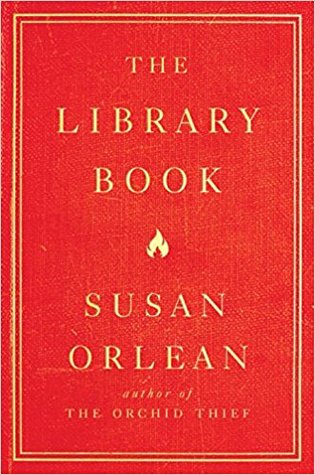
Book Review: The Library Book by Susan Orlean

On the morning of April 28, 1986, a fire alarm sounded in the Los Angeles Public Library. As the moments passed, the patrons and staff who had been cleared out of the building realized this was not the usual fire alarm. As one fireman recounted, “Once that first stack got going, it was ‘Goodbye, Charlie.’” The fire was disastrous: it reached 2000 degrees and burned for more than seven hours. By the time it was extinguished, it had consumed four hundred thousand books and damaged seven hundred thousand more. Investigators descended on the scene, but more than thirty years later, the mystery remains: Did someone purposefully set fire to the library—and if so, who?

Weaving her lifelong love of books and reading into an investigation of the fire, award-winning New Yorker reporter and New York Times bestselling author Susan Orlean delivers a mesmerizing and uniquely compelling book that manages to tell the broader story of libraries and librarians in a way that has never been done before.

In The Library Book, Orlean chronicles the LAPL fire and its aftermath to showcase the larger, crucial role that libraries play in our lives; delves into the evolution of libraries across the country and around the world, from their humble beginnings as a metropolitan charitable initiative to their current status as a cornerstone of national identity; brings each department of the library to vivid life through on-the-ground reporting; studies arson and attempts to burn a copy of a book herself; reflects on her own experiences in libraries; and reexamines the case of Harry Peak, the blond-haired actor long suspected of setting fire to the LAPL more than thirty years ago.

Along the way, Orlean introduces us to an unforgettable cast of characters from libraries past and present—from Mary Foy, who in 1880 at eighteen years old was named the head of the Los Angeles Public Library at a time when men still dominated the role, to Dr. C.J.K. Jones, a pastor, citrus farmer, and polymath known as “The Human Encyclopedia” who roamed the library dispensing information; from Charles Lummis, a wildly eccentric journalist and adventurer who was determined to make the L.A. library one of the best in the world, to the current staff, who do heroic work every day to ensure that their institution remains a vital part of the city it serves.

Brimming with her signature wit, insight, compassion, and talent for deep research, The Library Book is Susan Orlean’s thrilling journey through the stacks that reveals how these beloved institutions provide much more than just books—and why they remain an essential part of the heart, mind, and soul of our country. It is also a master journalist’s reminder that, perhaps especially in the digital era, they are more necessary than ever.

After that lengthy synopsis, I’m not sure what else there is to say, other than to talk about my experience reading this book.

The short version is — I loved it.

Susan Orlean is a brilliant writer, new to me, although I’ve been hearing about The Orchid Thief for years and always meant to get to it (and after finishing The Library Book, finally bought myself a copy). The story here is fascinating and multi-layered. The framing device of the book is the 1986 Los Angeles library fire, which is devastating and horrifying to read about, as the author takes us practically minute by minute through the fire’s path and shows us the awful damage done during those terrible hours.

Interspersed with the story of the fire is a history of the role of libraries in society, focusing mainly (but not exclusively) on the history of the library in Los Angeles, showing the library as a reflection of the society it serves, its challenges and its triumphs. We see how public libraries have evolved over time, and how those who work in libraries are devoted both to serving the public and to keeping public libraries vital and vibrant, even as society and technology constantly change and provide fresh challenges to the concept of what a library actually is.

We also meet amazing people, past and present, who played a part in the Los Angeles library, from head librarians to architects to security guards. It’s amazing to see the incredible talent and intelligence and humor of the people who helped build the library system and who continue to keep it relevant and important.

The story of Harry Peak is the most puzzling piece of the book — an unsuccessful actor who was suspected of the arson, but whose constantly shifting stories and alibis made any sort of case against him questionable at best. He’s an odd person, and so much is uncertain — but it’s interesting to see how his strange life intersected with such a major civic disaster.

Susan Orlean’s writing is gorgeous. Like the best non-fiction, it flows and captivates, and I never for a moment felt bored or like I was reading a dusty, dry history book.

On visiting a boarded-up, abandoned branch library:

This building made the permanence of libraries feel forsaken. This was a shrine to being forgotten; to memories sprinkled like salt; ideas vaporized as if they never had been formed; stories evaporated as if they had no substance and no weight keeping them bound to the earth and to each of us, and most of all, to the yet-unfolded future.

Other memorable (or just entertaining) lines and passages:

In times of trouble, libraries are sanctuaries.

In the year leading up to Prohibition, when the ban on alcohol seemed inevitable, every book about how to make liquor at home was checked out, and most were never returned.

[Althea] Warren was probably the most avid reader who ever ran the library. She believed librarians’ single greatest responsibility was to read voraciously. Perhaps she advocated this in order to be sure librarians knew their books, but for Warren, this directive was based in emotion and philosophy: She wanted librarians to simply adore the act of reading for its own sake, and perhaps, as a collateral benefit, they could inspire their patrons to read with a similarly insatiable appetite. As she said in a speech to a library association in 1935, librarians should “read as a drunkard drinks or as a bird sings or a cat sleeps or a dog responds to an invitation to go walking, not from conscience or training, but because they’d rather do it than anything else in the world.”

The library is a whispering post. You don’t need to take a book off a shelf to know there is a voice inside that is waiting to speak to you, and behind that was someone who truly believed that if he or she spoke, someone would listen.

The Library Book is simply a delicious read, perfect for anyone who appreciates finely detailed research, expressive writing, and a passion for books and libraries. I loved this book, and can’t wait to give copies to a whole bunch of book-obsessed friends.

_________________________________________

The details:

Title: The Library Book
Author: Susan Orlean
Publisher: Simon & Schuster
Publication date: October 16, 2018
Length: 317 pages
Genre: Non-fiction
Source: Gift (yay!)

Save

Save

Save

Save

Save

Bibliophile: An Illustrated Miscellany by Jane Mount: The perfect gift for the bibliophiles in your life!

If you’re looking for the absolutely perfect gift for a very special booklover, I’m here to tell you:

THIS IS THE ONE.

Bibliophile is just so, so wonderful. Anyone who’s crazy about books (and let’s face it, if you’re reading a book blog right now, you fit the category) will adore this book.

In this gorgeous hardcover, artist Jane Mount creates a reference guide/ode to great books/piece of artwork that is a pleasure to page through. I’ve had it sitting out on my nightstand for a few weeks now, ever since I treated myself to my very own copy, and I can personally attest that the few minutes I spend each day opening Bibliophile at random and soaking in a few pages at a time are utter bliss. And who doesn’t need that at the end of the day?

In my happy place

Okay, so now that I’ve raved on for a bit, here’s a little more about what’s actually inside.

Bibliophile is a smorgasbord of book-related subjects and illustrations, focusing on everything from favorite bookstores to bookstore cats, striking libraries to writers’ pets, iconic covers to books made into great movies.

The book is a gorgeous balance of illustrations and words, with full-color spreads to amaze and delight, such as the ones featured in this review on Read It Forward:

Jane Mount is a talented artist who specializes in books. You can check out her amazing work at Ideal Bookshelf, where you can find prints, notecards, totes and more — or if you really want to splurge you can even order a custom painting of your own favorite bookshelf.

Just a little taste of what’s available at https://www.idealbookshelf.com/collections/everything

By the way, you’ll probably want to check out her previous book, My Ideal Bookshelf, which features a round-up of cultural celebrities — writers, chefs, and more — describing the books they love the most, with Mount’s beautiful illustrations for each shelf.

And look at that! A post full of gift ideas for your favorite booklovers — or even little treats for yourself, because you deserve it.

Save

_________________________________________

The details:

Title: Bibliophile: An Illustrated Miscellany
Author: Jane Mount
Publisher: Chronicle Books
Publication date: September 11, 2018
Length: 224 pages
Genre: Non-fiction/art/reference
Source: Purchased

Save

Save

Save

Save

Shelf Control #147: The Women in the Castle by Jessica Shattuck

Shelves final

Welcome to Shelf Control — an original feature created and hosted by Bookshelf Fantasies.

Shelf Control is a weekly celebration of the unread books on our shelves. Pick a book you own but haven’t read, write a post about it (suggestions: include what it’s about, why you want to read it, and when you got it), and link up! For more info on what Shelf Control is all about, check out my introductory post, here.

Want to join in? Shelf Control posts go up every Wednesday. See the guidelines at the bottom of the post, and jump on board!

cropped-flourish-31609_1280-e1421474289435.png

Title: The Women in the Castle
Author: Jessica Shattuck
Published: 2017
Length: 356 pages

What it’s about (synopsis via Goodreads):

Set at the end of World War II, in a crumbling Bavarian castle that once played host to all of German high society, a powerful and propulsive story of three widows whose lives and fates become intertwined in an affecting, shocking, and ultimately redemptive novel from the author of the New York Times Notable Book The Hazards of Good Breeding.

Amid the ashes of Nazi Germany s defeat, Marianne von Lingenfels returns to the once-grand castle of her husband s ancestors, an imposing stone fortress now fallen into ruin following years of war. The widow of a resister murdered in the failed July 20, 1944, plot to assassinate Adolf Hitler, Marianne plans to uphold the promise she made to her husband’s brave conspirators: to find and protect their wives, her fellow resistance widows.

First Marianne rescues six-year-old Martin, the son of her dearest childhood friend, from a Nazi reeducation home. Together, they make their way across the smoldering wreckage of their homeland to Berlin, where Martin s mother, the beautiful and naive Benita, has fallen into the hands of occupying Red Army soldiers. Then she locates Ania, another resister s wife, and her two boys, now refugees languishing in one of the many camps that house the millions displaced by the war.

As Marianne assembles this makeshift family from the ruins of her husband s resistance movement, she is certain their shared pain and circumstances will hold them together. But she quickly discovers that the black-and-white, highly principled world of her privileged past has become infinitely more complicated, filled with secrets and dark passions that threaten to tear them apart. Eventually, all three women must come to terms with the choices that have defined their lives before, during, and after the war each with their own unique share of challenges.

Written with the devastating emotional power of The Nightingale, Sarah’s Key, and The Light Between Oceans, Jessica Shattuck’s evocative and utterly enthralling novel offers a fresh perspective on one of the most tumultuous periods in history. Combining piercing social insight and vivid historical atmosphere, The Women in the Castle is a dramatic yet nuanced portrait of war and its repercussions that explores what it means to survive, love, and, ultimately, to forgive in the wake of unimaginable hardship.

How and when I got it:

I won it in a Goodreads giveaway.

Why I want to read it:

Talk about guilt! I was so excited when I won this book — and somehow, it seems to always fall behind the nightstand or slip off the TBR stack (metaphorically speaking), and I’ve just never gotten to it. My husband read it soon after I first received it, and he thought it was incredibly powerful. I really have no excuse, and it makes me seem horribly ungrateful not to have read a giveaway book already. The subject matter sounds fascinating, and I know (from hubby as well as others) that it’s well worth reading. Note to self: Let’s make this a priority for 2019!

__________________________________

Want to participate in Shelf Control? Here’s how:

  • Write a blog post about a book that you own that you haven’t read yet.
  • Add your link in the comments!
  • If you’d be so kind, I’d appreciate a link back from your own post.
  • Check out other posts, and…

Have fun!

Save

Save

Save

Save

Save

Save

Save

Save

Save

Save

Save

Save

Save

Insta-Reaction: Outlander, Season 4, Episode 6

Season 4 is here! My intention is to write an “Insta-Reaction” post for each episode soon after viewing, to share some initial thoughts, questions, reactions — you name it.

Warning:

Spoilers

I may be talking about events from this episode, other episodes, and/or the book series… so if you’d rather not know, now’s your chance to walk away!

Outlander, episode 406: “Blood of My Blood”

The official synopsis (via Starz):

Jamie and Claire are surprised when Lord John Grey drops in on Fraser’s Ridge with an unexpected traveling companion. When Grey takes ill, Claire must reconcile her personal feelings with her duties as a doctor.

My take:

Major plot points:

  • Guests come calling at Fraser’s Ridge! It’s Lord John and Willie — that would be young William, Jamie’s illegitimate son.
  • Dinner conversation gets awkward. Murtagh and Lord John do not see eye to eye.
  • Lord John comes down with measles. Jamie takes William out camping while John is contagious.
  • Claire tends to John, and the two have some intense conversations.
  • Jamie and William come close to getting killed by Cherokees.
  • Everyone is okay in the end!
  • Jamie gives Claire a new silver ring to replace the one stolen by Stephen Bonnet. Claire likes it.
  • Jamie and Claire get a little quality alone time together.

Insta-reaction:

Episode 406, “Blood of My Blood” — a lot of intense relationship drama, but an odd confrontation with a group of Cherokees threw me off kilter a bit.

It was sweet seeing John and Jamie greet each other after all these years. A little bit awkward too — what, no hug? Apparently, the two old friends/former warden and prisoner have been corresponding regularly, since John knew about Jamie’s new home on Fraser’s Ridge, and apparently knew that Claire had returned from wherever she was for 20 years. (THE FUTURE, John — she was in the FUTURE.)

William introduces himself to Jamie, but later realizes that this man is actually Mac, the former groom from Helwater who taught him to ride and was so important to him. He questions Jamie about why he didn’t say so in the first place. Jamie doesn’t have a good answer for this. Question: Is this the same young actor who played season 3 William? There’s a similar look, but this one looks a lot older (as he should).

[Answer (thanks, IMDb!) – no, it’s not the same actor, but they do look alike! Season 3 Willie is played by Clark Butler, and season 4 William (he’s grown up now, thank you very much) is played by Oliver Finnegan.

Season 3

Season 4

Murtagh is still visiting at Fraser’s Ridge, although he needs to get back to town to work at his smithy and also be a rabble-rousing Regulator. He and John square off over dinner over loyalty to Governor Tryon and the British government versus exploitation of the common folk. Needless to say, they do not see eye to eye. Later, Murtagh learns that William is actually Jamie’s son.

When John becomes ill, Claire worries that William may have been infected as well. She and Jamie are both immune — Jamie since he had measles as a child, and Claire thanks to being innoculated (yay, 20th century medicine!). The contagious period lasts six days, so Claire puts John to bed where she can care for him, and Jamie sets out to ride around the wilderness with William until the six days have passed. William is not down with this plan, and kicks up a fuss until Jamie picks him up and basically throws him on a horse. Nice parenting, Jamie.

Claire and John are a little prickly with one another. Well, Claire is the most prickly. John is mostly just desperately feverish and miserable. Claire pushes John to admit why he really came to Fraser’s Ridge, since it wasn’t really on his way. Was it to rub her face in his shared past with Jamie? Was he trying to make her jealous? No, really, it turns out that John’s wife Isobel died recently, and John was saddened to realize that he felt nothing. He needed to come see Jamie to find out if he could still feel anything at all. Turns out, yes, he could.

Claire and John finally understand one another, and end up offering one another an odd sort of friendship and respect.

Meanwhile, Jamie and William have a pretty good time out in the woods, where William learns to fish the Highlander way, shoots a deer and guts it himself, and spends some manly time with his bio dad. But when William crosses the boundary line into Cherokee territory, of course a group of Cherokee come along right then and threaten to kill one or both of them. William protects Jamie after Jamie tries to protect William, and the Cherokee, respecting William’s bravery, end up leaving without any murder happening.

Jamie and William return to the cabin to find a recovered John, and by the time John and William leave, William’s connection to Jamie has been reestablished. They share a final look as William rides away, not knowing when or if they’ll see each other again.

Later, Jamie and Claire are finally alone (since Ian is out on a hunting trip with some Cherokee friends). Jamie gives Claire a bath, then presents her with a new silver ring with a thistle-pattern design, made from his mother’s silver candlestick. Inside the ring is the inscription “da mi basia mille” — give me a thousand kisses. It’s a sweet, romantic moment, and leads to some sexy post-bath fireside love. These two… It’s nice to see that they’ve still got it!

The ring!!!

Insta-reaction wrap-up:

I could have done without the Cherokee scene this episode. It wasn’t at all necessary, other than to show Jamie declaring William to be his son in an effort to convince the Cherokee to kill him instead of William. Were they really going to kill William over a fish that he handed right back to them? Really? And are these different Cherokee than the ones Jamie established a friendship with and Ian is now spending time with? It was sweet that William threw himself in front of Jamie to save him, but the whole thing felt contrived to me, and I’m not particularly comfortable with scenes like this that show the Cherokee being unreasonably violent and murderous. Just seemed out of place, in my humble opinion.

Ha, this episode included the mother of awkward conversations. In his feverish delirium, John tells Claire that he could have had Jamie if he’d wanted to, when Jamie offered to repay John for adopting William by offering him his body. Claire seemed more than a little stunned by this, but where was the follow-up? John didn’t offer further explanation (although he did apologize for being offensive while sick), and we don’t see Claire asking Jamie about this. Wouldn’t you think a wife might ask her husband a few questions on the matter?

I did think it was funny when John made a point of telling Claire that he was an adequate husband to Isobel IN ALL WAYS. Um, Claire, that means that he did sleep with her. So quit acting like it was weird, even though he described his relationship with Isobel as being like brother and sister. At least William had loving parents!

And furthermore…

I liked all the little nods to favorite moments and icons from the books, including the snake in the privy in the opening shot, the resurrection of the silver ring and its inscription as described in the very first Outlander novel, and all the little bits of dialogue lifted straight from the text. It makes my bookish heart all warm and tingly to see the show honoring the source material, and makes me feel even more appreciative of the writers and showrunners for recognizing the importance of these moments.

It’s also really fun to play “spot the moment” with the images from the opening song. We’ve seen a bunch now — the arrival at River Run, the folding hands, the bath — but there are so many good ones still to come!

Can we please do something about this hair?

But a final note — can someone please give Jamie a haircut? Those fringe-y bangs are making me bonkers. Just grow them out or pull them back or something! Don’t get me wrong, Jamie can never look bad… but that hair style is doing him no favors.

Save

Save

Save

Save

The Monday Check-In ~ 12/10/2018

cooltext1850356879 My Monday tradition, including a look back and a look ahead — what I read last week, what new books came my way, and what books are keeping me busy right now. Plus a smattering of other stuff too.

What did I read during the last week?

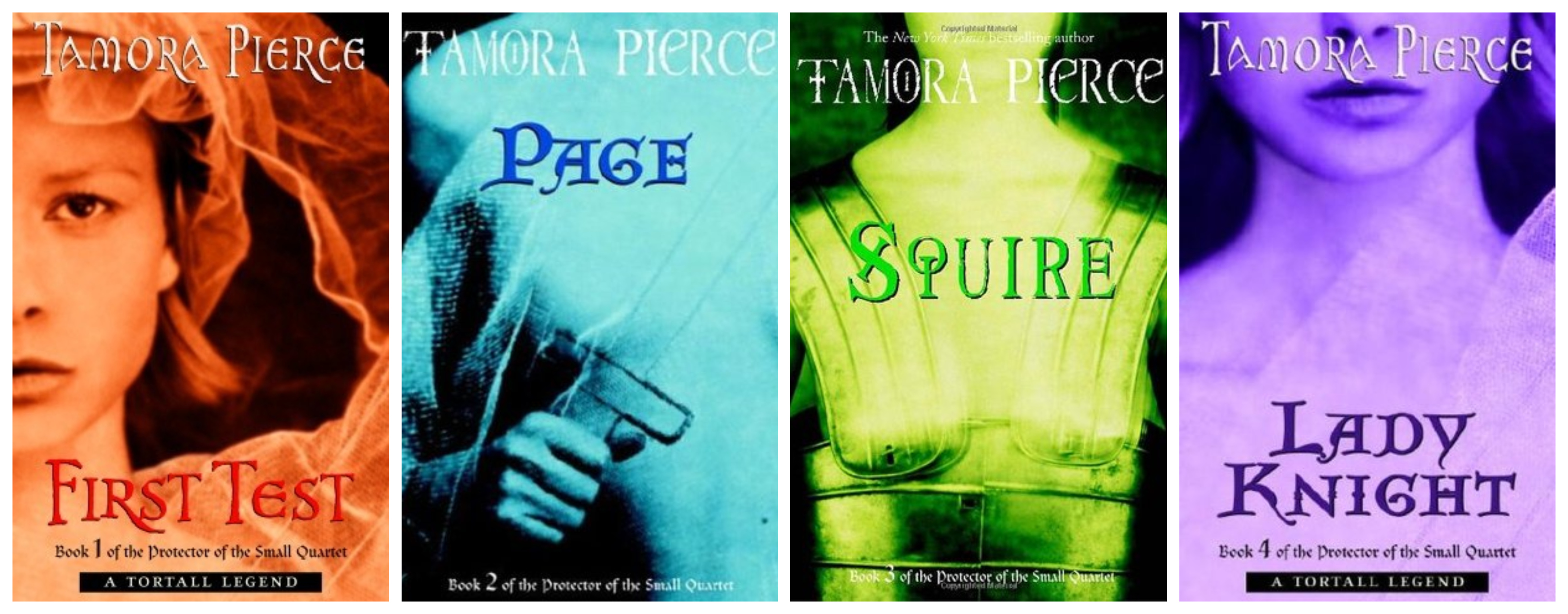
Trickster’s Choice and Trickster’s Quuen by Tamora Pierce: I read both books in the Daughter of the Lioness duology. Sadly, a fairly weak story in the world of Tortall, which I really struggled to get through. My thoughts are here.


I also posted wrap-ups of two series that I loved:

Old Man’s War series by John Scalzi


Protector of the Small quartet by Tamora Pierce

In audiobooks, I listened to two terrific Audible Originals:

Check out my review of both, here.

Outlander, baby!

I’m writing reaction posts for each episode of season 4:

Episode 404, “Common Ground” (aired 11/25/2018) – my reaction post for the 4th episode is here.
Episode 405, “Savages” (aired 12/2/2018) – my reaction post for last week’s episode is here.
Episode 406, “Blood of My Blood” (aired 12/9/2018) – my reaction post for last night’s episode is on the way! I was too tired to stay up late enough to finish… so watch for my post later Monday or early Tuesday.

Fresh Catch:

Two new science fiction books arrived this week:

What will I be reading during the coming week?

Currently in my hands:

The Library Book by Susan Orlean: I’d been wanting this book… and then a wonderful family member gave it to me for Hanukkah! I swear, I did NOT drop any hints. I’m just getting started, but loving it so far.

Now playing via audiobook:

The Hating Game by Sally Thorne: I got this from the library on a whim, while waiting for something else to come in. I’m just starting it today — wish me luck!

Ongoing reads:

Book group reads — getting close to the end for both!

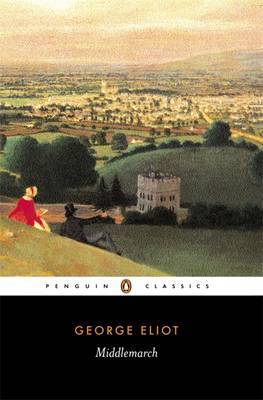
  • Classic read: Middlemarch by George Eliot — we’ll be done in January.
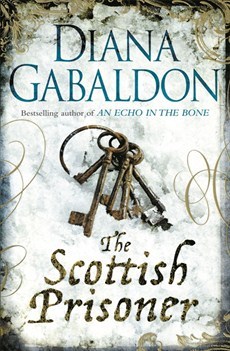
  • The Scottish Prisoner by Diana Gabaldon — just a few chapters still to go!

So many books, so little time…

boy1Save

Save

Save

Save

Save

Save

Save

Save

Save

Save

Save

Save

Save

Save

Save

Save

Save

Save

Save

Save

Save

Save

Save

Save

Save

Save

Save

Save

Save

Save

Save

Save

Save

Save

Save

Save

Save

Save

Save

Save

Save

Save

Save

Save

Save

Save

Save

Save

Save

Save

Save

Save

Save

Save

Save

Save

Save

Save

Save

Save

Save

Save

Save

Save

Save

Save

Save

Save

Save

Save

Save

Save

Save

Save

Save

Save

Save

Save

Save

Save

Save

Save

Save

Save

Save

Save

Save

Save

Save

Save

Save

Save

Save

Save

Save

Save

Save

Save

Save

Save

Save

Save

Save

Save

Save

Save

Save

Save

Save

Save

Save

Save

Save

Audiobook double feature: Stephen Fry’s Victorian Secrets and Have A Nice Day

Audible Originals came through for me in a big way this week, as I listened to two terrific productions that really made me happy.


Legendary British comic Stephen Fry is our tour guide to the highs and the lows of Victorian society. In popular culture, the straitlaced era is portrayed as one of propriety, industry, prudishness, and piety. But scratch the surface and you’ll find haunting tales of scandal, sadism, sex, madness, malice, and murder.

“They were us in different dress and slightly different codes,” says Fry, whose signature wit and whimsy are in full force in this Audible Original. Find the quirky, dark, and forbidden details and family skeletons that even the most distinguished and conventional households attempted to cover up and hide, as you listen for the humanity beyond the polished veneer of this most fascinating era.

This audio adventure is a fun look at the secrets of the Victorian era, covering everything from fashion to lunacy to sexual orientation, plus sewers, sanitation, Sherlock Holmes, and more. Stephen Fry narrates, explaining the context and the strange stories from that time, and including interviews with historical experts and excerpts from diaries and newspapers of the time — all of which make the tales come to life. Parts of Stephen Fry’s Victorian Secrets are quite sad or disturbing, and some topics were of greater interest to me than others… but all in all, it’s really an informative and entertaining listen.

Audible Original: 7 hours, 33 minutes


Have a Nice Day features a live multi-cast script reading captured over two evenings at Minetta Lane Theatre in Manhattan’s Greenwich Village.

Tony and Emmy Award winner Billy Crystal leads an all-star cast including Oscar winner Kevin Kline (President David Murray) and four-time Oscar nominee Annette Bening (First Lady Katherine Murray) in a performance of this hilarious and poignant story about a man desperately scrambling to put his affairs in order: to save his presidency, his marriage, his relationship with his daughter—and possibly his life.

President David Murray starts the day in crisis. He’s lost control of Congress, has to decide whether to run for a second term, and his wife and teenage daughter are barely talking to him. What’s more, the Angel of Death has sent a rather inept “repo man” who is at the foot of his bed, giving him only one more day to live.

Cast members include Justin Bartha, Irene Bedard, Annette Bening, Chris Cafero, Dick Cavett, Auli’i Cravalho, Billy Crystal, Rachel Dratch, Darrell Hammond, Christopher Jackson, Robert King, Kevin Kline, and Robin Thede.

Have a Nice Day was an unexpected treat! I listened to this all in one go while out for a long walk, and got completely sucked into the funny yet poignant story of a man — in this case, the President of the United States — trying to make things right on the last day of his life. The story is written by Billy Crystal and Quinton Peeples, and features Billy Crystal as death’s messenger. Kevin Kline is terrific, as is Annette Bening and the rest of the cast. The story is sweet, and includes just enough laughs to keep it from getting too sappy. Still, I found myself really moved by the story of a good man trying to make amends to his wife and daughter –while also trying to keep his security detail and White House aides from freaking out over his caught-on-video moments going viral.

This is a relatively short listen, perfect for one of those weeks when your time is limited.

Audible Original; 1 hour, 46 minutes

If you’re an audiobook fan looking for a break from longer books or wanting to switch up fictional pursuits with something a bit different, give one (or both) of these recordings a try!

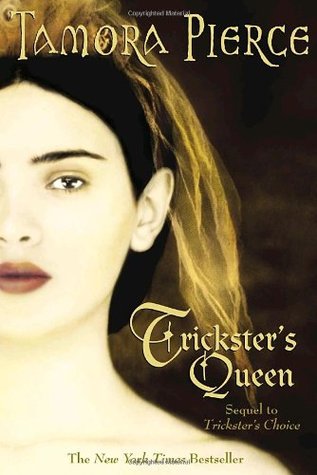
Disappointment between the covers: On reading Trickster’s Choice and Trickster’s Queen by Tamora Pierce

If you’ve visited my blog at all during the last few months, you’ve probably seen me gushing over the series of fantasy books by Tamora Pierce that I’ve been listening to obsessively. These three quartets, all set in the kingdom of Tortall, feature brave young women finding their own unique strengths and showing courage under fire as well as compassion to those in need. I loved, loved, loved these books, and vowed to keep going until I’d read EVERYTHING set in Tortall.

That vow still holds, but this post will be a temporary break from the gushy lovefest.

I’ve been following story as well as publishing chronology, so after finishing the outstanding Protector of the Small quartet, my next adventure was to be the Daughter of the Lioness duology, starring Alianne, the 16-year-old daughter of Alanna, Tamora Pierce’s first heroine (and Tortall’s first Lady Knight).

I knew I was in trouble almost immediately. I’ve been listening to the audiobook for all of these series… but within the first few chapters of listening to book #1, Trickster’s Choice, I was hopelessly lost. So much exposition! It felt like I was being bombarded with thousands of names (people, places, historical figures), with no firm grounding in action to help keep track. I made the quick, tactical decision to switch to print, hoping that having the ability to flip back and forth and to refer to the maps and cast of characters listing in the print edition might help. Well… I suppose it helped a bit, but the essence of the story didn’t change, and that became a problem for me.

So what’s it all about?

Here’s the Goodreads summary for Trickster’s Choice:

The Future is in the hands of the next generation.

Aly: a slave with the talents of a master spy, a fabled lineage she must conceal, and the dubious blessing of a trickster god.

Sarai: a passionate, charming teenage noblewoman who, according to prophecy, will bring an end to a cruel dynasty.

Dove: the younger sister of Sarai; she has a calculating mind and hidden depths that have yet to be plumbed.

Nawat: a magical young man with a strangely innocent outlook and an even stranger past; Aly’s one true friend in a world where trust can cost you your life.

Aly is short for Alianne, daughter of Alanna the Lioness and George Cooper, Alanna’s husband and the spymaster of Tortall. Aly has been taught the tricks and secrets of the spy trade since infancy, but at age 16, she’s restless and wants to get out into the field, which her parents oppose. She sneaks out on her own to go boating and promptly gets kidnapped by pirates, who sell her into slavery in the nearby kingdom of the Copper Isles.

The Copper Isles are plagued by centuries of unrest between the ruling luarin (white) nobility and the down-trodden (brown-skinned, native) raka people. Aly becomes a slave in a noble household under suspicion from the reigning monarch. The trickster god Kyprioth, the god of the Copper Isles, enlists Aly in a plan to help raise a rebellion. And the adventure is underway.

I had a very hard time with this book. I was half-bored through most of it. As I mentioned, it’s a lot of people and places, but I didn’t connect with most of the characters. For a story about rebellion, the plot has some seriously slow points. But the chief problem I have with the story is Aly herself. She’s just too skillful and knowledgeable about being a spy. Yes, she comes from an espionage family, but she’s never been an agent or seen active duty. She never falters, never lacks the ability to carry out her ideas, and pretty much never screws up.

One of the things that makes the other Tortall quartets so special is seeing the main characters evolve from young, untrained youths who work and fight to fulfill their potential. Here in Trickster’s Choice, Aly already is who she is. There’s no learning curve, no doubt, and very little introspection.

And that’s not even addressing the social issues that are so problematic, which are talked about quite a bit in the many reviews to be found on Goodreads. Basically, this white, privileged girl from noble background has to swoop in to lead the native people to an uprising, which they apparently couldn’t manage without her. On top of which, when given the chance at freedom, Aly chooses to maintain her enslaved status in order to provide better cover for her mission from Kyprioth, which seems to imply that being enslaved maybe has a purpose. All of this made me very uncomfortable.

Oh, and the love interest is a crow who’s turned himself into a man and is learning to be human. Awkward.

I finished this book with a great sense of frustration and discontent… so why did I continue? Yes, despite my fairly unhappy time reading Trickster’s Choice, I went straight on to Trickster’s Queen, hoping for a stronger second act in the Daughter of the Lioness story.

In Trickster’s Queen:

The stage is set for revolution…

Aly: no longer just a master spy, but a master of spies. Can she balance her passion for justice and her compassion for others, and at what cost?

Sarai: beautiful, dramatic, and rash – will she fulfill the role chosen for her by destiny?

Dove: she has always stood in Sarai’s shadow. Can she prove to the world that she herself is a force to be reckoned with?

Nawat: half crow, half man. He wants Aly for his life mate, but will the revolution make that impossible as they step into new roles to change the future?

Suddenly, Aly is a spymaster. She pulls the strings and directs her pack of spies and their recruits, teaching spycraft and strategy, plotting with the raka rebellion leaders, and instigating high-stakes sabotage throughout the kingdom in an effort to undermine and destabilize the ruling monarchs.

And my frustration continues. How does Aly possibly have the skills to do all this? It makes no sense. And if I had to see Aly referring to her spies as “my children” or “dear ones” one more time, I was going to smack her.

I won’t go too far into story developments or resolutions. The book is sloooooow for a very long time, basically just a recounting of spy tactics and information gathering, over and over and over, until the actual battle takes place at the very end. Meanwhile, there’s a lot of bloodshed (and I’m not sure how we’re meant to feel about that), the fairly casual murder of children, and a befuddlingly huge number of named characters, when frankly, not every single spy, servant, or noble who shows up in a scene needs a name. It’s all just too much.

Argh. It’s so crushing to go from absolutely amazing books (like Protector of the Small) to such a let-down in the continuation of the overarching story.

I really did come close to quitting quite a few times, but I do want to continue with the Tortall books, and I still have a trilogy, a book of stories, and the 1st book in a new series to go. What if the people or events from the Trickster books end up mattering down the road? Call it bookish FOMO, but I forced myself… unhappily… to finish.

I will be moving on to the Beka Cooper trilogy fairly soon, once the library’s audiobooks become available. And once I get through all of my Tortallian TBR list, I’ll be able to better state whether Aly’s books are skippable. For future readers’ sakes, I hope that they are!

_________________________________

Book details:

The Daughter of the Lioness duology:
Trickster’s Choice – published 2003
Trickster’s Queen – published 2004
Save

Wrapping up the Old Man’s War series by John Scalzi (books 4 – 6)

Finally, after threatening to read these books for oodles of year, I’ve done it! As of this past week, I’ve finished the Old Man’s War series by John Scalzi. I’m definitely feeling a sense of satisfaction over seeing this through — but what will I put on my reading resolution list for 2019, now that this perennial favorite has moved to the “already read” shelf?

After finishing the first three books in the six-book series, I wrote a wrap-up post (here) to share my thoughts from the halfway point. So now, I’ll dive back in and focus on books 4 – 6, which take the series in a decidedly different direction.

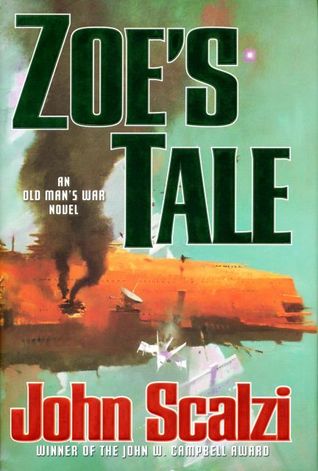
Book #4, Zoe’s Tale is THE EXACT SAME STORY as the one told in The Last Colony. The catch is, this time around we see events through the eyes of Zoe, adopted daughter of John Perry and Jane Sagan, and biological daughter of a man who came close to destroying all of humanity. (Spoiler alert: he failed.) Once again, we journey with the family to the new colony of Roanoke, where things go spectacularly badly for the human colonists.

Zoe is a fun point-of-view character, giving us the teen girl take on being dragged across the universe by her parents, being forced to leave her friends and technology behind, and engage in the dirty, difficult business of building a new home out of practically nothing.

Zoe is smart, and a smart-ass, and it’s exhilarating to see her come into her own and make a difference in intergalactic politics and intrigue. Plus, Zoe — by virtue of her birth father’s contributions — is a hero to an entire alien race, and seeing Zoe interact with her Obin bodyguards is worth the price of admission all on its own.

As a side note, throughout the series, Scalzi excels at creating multitudes of alien races and making them distinct and endlessly entertaining. Some are weird, some are scary, some are practically beyond description… and it all just adds to the fun of the Old Man’s War books.

You might think it would be dull to read about the same events in a second book, but trust me, it’s not. It’s kind of a blast to hear Zoe’s take on what happened, and to see how her version dovetails (or not) with her parents’ side of the story. Really, Zoe’s Tale is a great read — and I think best appreciated if read immediately following The Last Colony.

Zoe’s Tale is, in a way, an end of the main piece of the story, at least if you consider the series to be specifically about John Perry and his family. The next two books continue with events in the Old Man’s War universe, but have a very different format and focus.

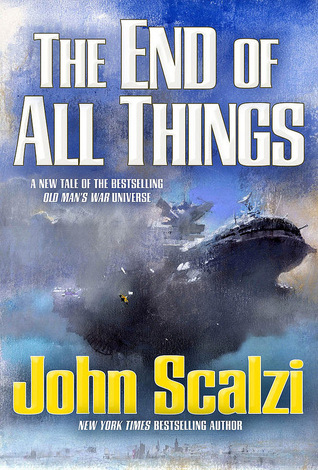
Books #4 and 5, The Human Division and The End of All Things, are written (and were originally published as) a series of interconnected stories. John Perry’s actions at the end of the previous books pretty much blew up the uneasy coexistence of the Colonial Union (representing humanity) and the Conclave (an alliance of 400+ alien species). In these two books, we see what happens next.

Previously, Earth was kept isolated from the Colonial Union. Earth humans had the option of joining the CDF (Colonial Defense Forces) when they turned 75, but it was a one-way relationship. Earth was kept mostly in the dark about the goings-on out in space, and had no say in how humans interacted with the various other species they encountered.

John Perry broke through that barrier, and in The Human Division and The End of All Things, we see the fall-out. Earth is no longer willing to be merely a supplier of people and goods to the Colonial Union, and wants its own voice heard. In these two books, we meet diplomats — lots and lots of diplomats — from Earth, from the Colonial Union, and from the Conclave, each of whom represent their people’s interest, but carry layer upon layer of secret agendas as well.

Of course, these are John Scalzi books we’re talking about, so in addition to diplomatic negotiations, we have daring space rescues, lots of things blowing up, a brain in a box (yup!), wise-ass soldiers wielding mighty weapons while discussing ancient pop culture, descriptions of very interesting and sometimes scary alien beings, and more snark than might seem possible to fit into two paperback books.

As I said in my wrap-up of the first three books in the series:

Ever since discovering John Scalzi’s amazing books, I’ve know that I needed to make time for this series, but after talking about it for so long, it started feeling like a huge undertaking — and I’m not quite sure why. Now that I’ve dived in (and read three books in the space of a week), I can tell you that this series contains all the trademark Scalzi wit and smart-assery (is that a word? it should be a word) that we know and love from books like The Android’s Dream, Redshirts, and Lock In. I was afraid that Old Man’s War would be all hard sci-fi, serious and full of space battles, and I’m happy to say that that’s not the case. I mean, yes, there are space battles and the eradication of planets and species… but these books are funny, dammit, even while containing moments of deep emotion and moral dilemmas.

Now that I’ve reached the end of Old Man’s War, I can say that I’m 100% happy to have read the series! John Scalzi is consistently smart and funny in everything he writes, and I think it’s safe to say that I’m a fan for life. I haven’t started his newest series, The Interdependency (which consists of two books so far, The Collapsing Empire and The Consuming Fire) — so I guess I do have something Scalzi for my goals list for 2019 after all.

_________________________________________

The details:

Zoe’s Tale – published 2008; 325 pages
The Human Division – published 2013; 431 pages
The End of All Things – published 2015; 380 pages

**Save

Save

Save

Save

Save

Save

Save