Title: Exit Party Author: Emily St. John Mandel Publisher: Picador Publication date: September 15, 2026 Length: 320 pages Genre: Science fiction Source: Purchased Rating:
⭐⭐⭐⭐⭐
Rating: 4.5 out of 5.
From the bestselling author of Station Eleven, Exit Party is Emily St. John Mandel’s epic new story of crimes committed and loves lost across worlds and decades.
2031. America is at war with itself, but for the first time in weeks there is some hope: the Republic of California has been declared, the curfew in Los Angeles is lifted, and everyone in the city is going to a party.
Ari, newly released from prison, arrives with her friend Gloria just as a fragile new era begins. But there are people at the party who shouldn’t be there. Something is very wrong…
Years later, living a different life in Paris, Ari remains haunted by that night. Whatever happened at the party fractured her sense of reality – and may hold the key to a very different world.
Freedom and surveillance, art and survival, love and loss in a broken world: Exit Party is the electrifying new novel from Emily St. John Mandel.
Emily St. John Mandel’s books are always startling and practically impossible to describe. They have to be experienced; there’s a sense of wonder that comes with seeing her stories unfold on the page. Exit Party is another fine example of her strange, lyrical storytelling.
In 2031, the United States is no more. After a coup d’état, the country has fractured into a myriad of territories and republics and city-states. As the story opens, war has ended — at least for the moment — in Los Angeles, and people are ready to celebrate. The main character is Ari, recently released after an eighteen-year prison sentence, who lives in LA with her roommate Gloria. Gloria had intended to bring Ari to a friend’s party, but has a hard time leaving the apartment; Ari — after a lifetime of premonitions that come true — feels strongly that they need to attend.
The party is fun at first, but odd things happen. A woman Ari’s never met calls her by the name on her birth certificate — a name she never uses — and then seems to appear in a completely different outfit moments later. Another woman looks almost exactly like Gloria, and Ari sees more things that she can’t explain. Later, the party’s host disappears, and is never heard from again.
Following the party, Ari’s life goes on, as she move from place to place, in and out of danger, finding new ways to survive and making new connections, navigating a world of militias and checkpoints and violence. The mysteries surrounding that party never really leave her mind, and we see how the ripple effects follow her across decades.
All this is in the “A-Side” section of Exit Party; the book’s second half is “B-Side”, and without going into too much detail, it provides a look at a very different version of the world. In “B-Side”, there’s no longer a United States — instead, there’s the State, a surveillance based country in which life is supposedly safe, because it’s absolutely controlled. There’s no war, because the Service knows and sees everything and stops problems before they start. There’s a connection to Ari’s story; let’s leave it at that.
Exit Party is astounding in all the right ways. The parallels between the halves of the book are a joy to discover, a puzzle to unravel and muse over. Characters weave in and out of both halves, some fully fleshed out and alive, some who make brief but memorable appearances before disappearing again. Both halves show worlds that seems awful in their own ways, yet it’s intriguing to see how events play out in both, and scarily possible to imagine a path from our own world to these other versions.
My one minor quibble with this book is that despite how much I loved the writing and was fascinated by the complex storytelling, I often felt emotionally disengaged. I was interested in the characters, but not actually connected to them on a deeper level. The plot threads are woven together beautiful and I was intrigued by the characters’ lives and experiences; I just didn’t feel that I was in the story alongside them, if that makes any sense.
Despite that, I was very absorbed throughout my time with Exit Party. The author’s writing casts a spell, and the book as a whole is a fascinating journey. Highly recommended for fans of the author as well as for readers new to her work.
Purchase links: Amazon – Bookshop.org – Libro.fm Disclaimer: When you make a purchase through one of these affiliate links, I may earn a small commission, at no additional cost to you.
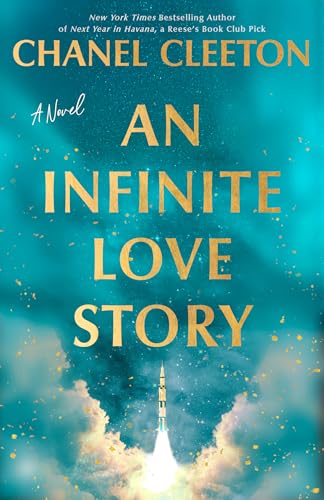
Title: An Infinite Love Story Author: Chanel Cleeton Publisher: Berkley Publication date: July 7, 2026 Length: 352 pages Genre: Historical fiction Source: Purchased Rating:
⭐⭐⭐⭐
Rating: 3.5 out of 5.
When an astronaut is lost in space, his wife relives their epic love as she attempts to unravel what truly happened to him, in this sweeping love story set against the backdrop of the 1960s Space Race, from the New York Times bestselling author of The Lost Story of Eva Fuentes.
When Joe Mitchell launches into space, the world is watching. It’s 1968, and the country waits with anticipation and excitement for another successful mission, another celebration as America sets its sights on the Moon. And then comes the knock at the door.
Joe Mitchell’s spacecraft has lost contact. He and his fellow astronauts onboard are feared to be dead. It’s his wife Vivian’s worst nightmare come to life, her grief suddenly taking center stage as the nation waits and mourns. In her quiet moments, Vivian relives their memorable story, unable to accept that this is the end to a love that felt as though it was written in the stars.
As the investigation surrounding Joe’s lost spacecraft intensifies and the mishap is written off as an operator error, Vivian is determined to clear her husband’s name and uncover the mystery of what happened in space. When someone starts sending Vivian messages—messages she believes only Joe could send—she begins to wonder if their love is stronger than space and time, and she’ll do whatever it takes to bring her husband back to her.
Space exploration and space-related historical fiction are always favorite topics for me, so picking up An Infinite Love Story seemed like an obvious choice. And while I found a lot to love about this book, its foray into a more speculative resolution didn’t quite work for me.
An Infinite Love Story is, as the title promises, first and foremost a story about love. When Vivian meets Joe in the early 1960s, she’s a hard-working reporter trying to break into the boys-club DC newsroom business. Despite her obvious talents, she’s too often shoved aside or assigned to coffee-making duties rather than getting to sink her teeth into real reporting. One of Vivian’s hard and fast rules for her personal life is no dating pilots — her own childhood was a blur of being dragged around the country as her mother pursued one risky relationship after another, after Vivian’s fighter pilot father was killed in action when she was quite young. Vivian wants a career first and foremost, and maybe a safe, quiet dating life on the side.
All that changes when she meets Joe Mitchell, the stereotypical fighter pilot whose charisma and good looks dominate whatever room he’s in. Joe and Vivian share an instant spark, but she’s absolutely not interested… and yet, each time they meet, they find that they can’t resist or walk away from the connection that draws them together. Even once they’re married, Vivian is unhappy with Joe’s career, as his dream of getting selected as an astronaut finally comes true and he begins his NASA training. And yet, she can’t help but support him, despite the pain of knowing that the man she loves works at a job that entails daily risk and uncertainty.
When Joe is assigned command of the first mission to orbit the moon, he’s elated and Vivian is fearful. With launch approaching, he makes a promise:
“Fine, let’s take the issue of whether or not I’m a great pilot and try it this way—have I ever broken a promise to you?”
“No.”
She’d learned that early on in their relationship—that when Joe gave his word about something, he meant it, wholly, completely. It was one of the things she admired most about him.
“Then I’ll make you a promise now. I’ll always come back to you. Always.”
“You can’t make a promise like that. No one can.”
“I can and I will.”
The day after launch, the worst possible news arrives: Mission Control has lost contact with the spacecraft. No communications, no telemetry, no signals at all — it’s just gone. Vivian refuses to believe it. If something terrible had happened, wouldn’t there be evidence? Debris? Something in the communication history to indicate a problem? But as days pass, the world seems ready to accept the tragic fact that the mission has failed and the spacecraft is lost. Vivian’s worst fears have come to pass — but then odd things begin to happen. Moved objects, a note in Joe’s handwriting, a strange book showing up on his nightstand. Is she imagining things, or is Joe somehow out there, trying to reach her?
First, what I really enjoyed about An Infinite Love Story: I’m always fascinated by stories set during the space race, whether faithfully recreated historical fiction or alternate versions (see my comments on The Calculating Stars and AppleTV’s For All Mankind as examples). By using a dual timeline to show Vivian and Joe’s early courtship starting in 1961, interwoven with the failed mission in 1968, the book provides readers with a good sense of the focus and fervor associated with the space program as well as the expectations and burdens placed on astronauts’ wives and families.
But… where I struggled with this book has to do with the more “woo-woo” aspects, specifically what Vivian perceives as Joe’s communication after the disaster and her belief that he’s still out there somewhere. While her experiences and investigation are interesting, I didn’t buy the resolution, and felt that the conclusion betrays some of the sentiment so important to the rest of the story. I suppose some readers will have quite an opposite reaction and will find the ending uplifting and hopeful. To me, it was simply not believable or palatable, and made my overall experience of the book a bit of a letdown.
An Infinite Love Story held my attention, and I came to truly care about the characters. Plot choices later in the story made this a less successful read for me, but I still found much to enjoy earlier on.
Purchase links: Amazon – Bookshop.org – Libro.fm Disclaimer: When you make a purchase through one of these affiliate links, I may earn a small commission, at no additional cost to you.
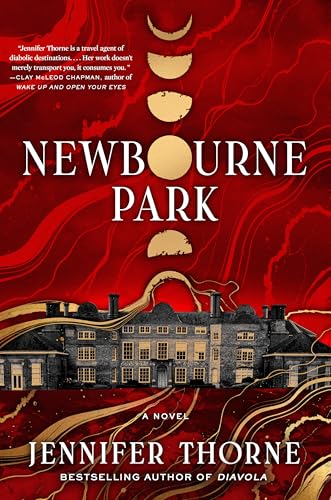
Title: Newbourne Park Author: Jennifer Thorne Publisher: G.P. Putnam’s Sons Publication date: September 29, 2026 Length: 368 pages Genre: Horror Source: Review copy courtesy of the publisher via NetGallety Rating:
⭐⭐⭐⭐⭐
Rating: 4.5 out of 5.
From the USA Today bestselling author of Diavola comes a darkly funny, blood-soaked horror novel about the terrifying seduction of unlimited power.
After years of caring for her dying mother, Martha Shaw feels empty, exhausted, and far older than her twenty-six years. So when her brother invites her to a weekend getaway at the opulent, two-hundred-acre country estate where his friend works, Martha reluctantly agrees. After all, what’s the harm? The owners and all their staff will be gone. Security cameras will be off. The house will be theirs. For the first time in years, Martha might actually have fun.
And it is fun, taking advantage of the historic mega-mansion and its vast grounds. Martha begins to feel human again. But when night falls, the rightful master of Newbourne Park returns—and she’s not alone. Suddenly, being caught trespassing is the least of their worries, because what steps out into the moonlight is something vicious. And hungry.
What began as a lark becomes a bloody battle for survival, where greed and morality collide—and a woman must choose to bow, break, or bite back.
Have you read books where you went in knowing only the bare basics, and had a sharply defined moment where you thought, “Oh, so THAT’s what this book is about!”? That was my reading experience with Newbourne Park, and I have to say, I loved experiencing it that way. So, with that in mind, I’m going to be as general as I can when talking about this book… although I suspect most reviews will tell you straight away that this is a [insert theme here!] story.
What the brief bits of the blurb I’d paid attention to told me, and what I’ll share here, is this: Martha Shaw has spent years caring for her dying mother in their cottage in a working-class village. Martha was expected to rise above her station; as a child, her mother took her and her brother on outings to visit great houses and estates, and Martha’s intelligence and gift for learning earned her a place in a prestigious school and an offer to study medicine at Oxford. Her shining future collapsed when her mother became ill, and now, months after her mother’s death, Martha finds herself lonely, depressed, and with not much going for her.
But as Martha tells us in the first few pages:
You’ll likely hate me by the end of this — but oh, my darlings, I could not care less.
Doesn’t sound like the woman I’ve described so far, does it? Clearly, something changes.
Martha’s brother insists on getting her out of the house once a week for pub nights, and convinces her to join him, his girlfriend, and his best friend Tommy on a weekend adventure. Tommy is a footman at a lavish estate, and the owners and staff will all be away. With even the security cameras disarmed for the weekend, it’s a rare opportunity to sneak onto the grounds and live like the rich folks do for a few days. Reluctantly, Martha agrees to go along, and feels drawn by Newbourne the moment she enters the estate.
At first, it’s a crazy risk that pays off. Yes, they’re trespassing, and of course, Tommy could be fired and they could all be arrested if caught… but Newbourne Park is beautiful and isolated, and its luxuries are too much to resist. But on their second day there, unexpected deliveries and arrivals interrupt the trespassers’ country getaway… and things take a turn toward violence and extreme danger.
And that’s only in the opening chapters!
Author Jennifer Thorne creates an unforgettable story out of familiar elements, showing Martha’s evolution into a person of power — both through elements outside of her control and through her own deliberate decisions. The descriptions of what she experiences at Newbourne are blood-soaked and scary, and yet, there are social elements that are downright funny as we see Martha skewering expectations and forcing her way into a world where she’d more naturally be excluded.
The horror elements are well-drawn, imbuing certain tropes with new twists as well as providing startling and often entertaining character moments. I loved seeing what becomes of Martha, how she changes from mousy and beaten-down into someone to be reckoned with, and what she’s willing to do in order to make sure her place at Newbourne is secure.
The pacing in Newbourne Park is fabulous, giving space for the personal moments and interactions while also keeping the sense of menace going full-tilt, and with scenes of violent action interspersed so the readers never lose sight of just what’s going on here.
Jennifer Thorne’s 2022 novel Lute remains my favorite of her books… but Newbourne Park is a close second! This author is incredibly talented, with a flair for compelling, complicated characters and vivid storytelling. I’m already eager to hear what she’ll be writing next!
Meanwhile, if my vague description of Newbourne Park has piqued your interest in any way… absolutely make a point of checking out the book! I couldn’t put it down. For horror fans, it’s a must-read.
Purchase links: Amazon – Bookshop.org – Libro.fm Disclaimer: When you make a purchase through one of these affiliate links, I may earn a small commission, at no additional cost to you.
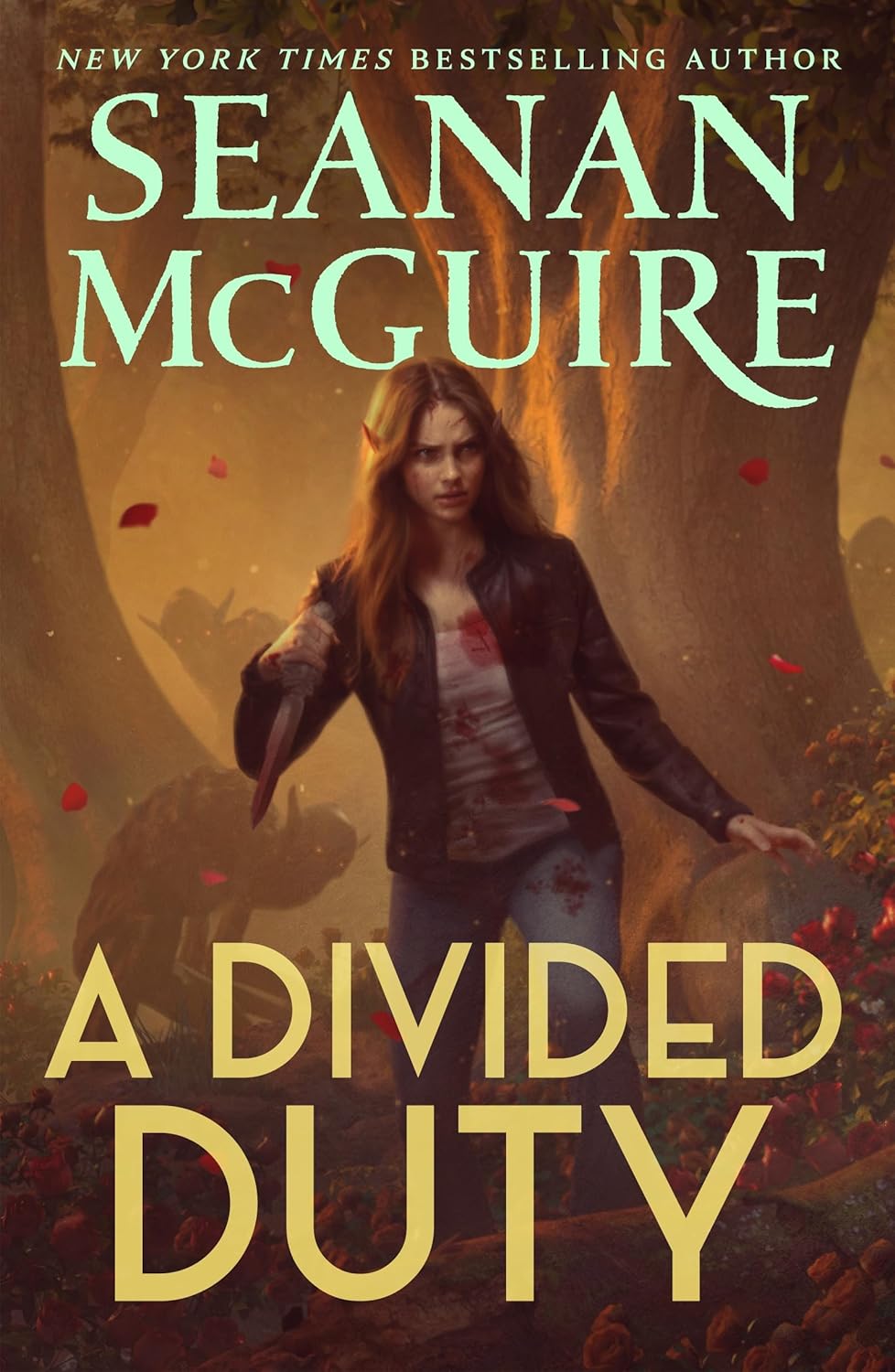
Title: A Divided Duty Series: October Daye, #20 Author: Seanan McGuire Publisher: Tor Books Publication date: September 29, 2026 Print length: 400 pages Genre: Urban fantasy Source: Review copy courtesy of the publisher via NetGalley Rating:
⭐⭐⭐⭐
Rating: 4 out of 5.
Seanan McGuire’s New York Times bestselling and Hugo Award-nominated October Daye series finds Toby Daye torn between caring for her newborn daughter and keeping the world of Faerie―and her found family―safe.
October “Toby” Daye is settling into life with a baby, remembering the ins and outs of motherhood, and trying to find ways to balance her work with her desire to keep her baby safe at home and away from all the terrors Faerie has to offer. Her whole household is pitching in, from May all the way down to Raysel, the estranged daughter of Toby’s liege lord who is currently serving out a term of offense in Toby’s home.
Naturally, as everything is beginning to find a balance, it’s time for Raysel’s term of offense to end, and Luna Torquill very much wants her daughter back.
But Toby has been helping Raysel get the help she desperately needs, from giving her a safe place to hide all the way to finding her a licensed therapist who works with the fae, and Raysel isn’t ready to leave. Luna isn’t taking no for an answer, and before anyone can realize what she’s planning, she steals her own child away to Blind Michael’s lands.
Not even Luna knows all the terrible secrets her father and his works hid from the world, and not even she can protect her daughter from the monsters in their lineage. All too quickly, Toby must race the clock to save Raysel―before it’s too late for her to ever come home.
It’s been years, but now the question will be asked again: can she get there and back by the light of a candle?
October Daye is back, and going strong! The 20th book in an ongoing series is clearly not the place to jump in… but for readers who’ve been along for the ride so far, A Divided Duty hits all the high marks we’ve come to love and expect from Seanan McGuire’s brilliantly detailed fantasy world.
In short: Toby, a hero of the realm, is also a new mother. Her baby girl Miranda is fully fae, although it’s still too early to know how much of each of her parents’ magical lineages she carries. Toby and her husband Tybalt are sleep-deprived but happy, as are the rest of the assorted people who make up their quirky household.
One of these is Raysel, daughter of Toby’s liege, recovering from a tormented past in which she committed major crimes and offenses. Toby offers her the space to heal, but her officially sanctioned time in Toby’s household is coming to a close, and Raysel’s mother wants her back — but going home to Luna would be terrible for Raysel, and she’s desperate to stay where she is. The law of the realm backs Raysel’s wishes, but Luna refuses to accept the Queen’s ruling, and steals Raysel away to a land of darkness and terror, where she believes they’ll be untouchable.
Toby and Tybalt must set out on yet another dangerous, practically impossible quest to rescue Raysel, leaving baby Miranda at home while they attempt to bring back the stolen member of their found family — and hoping with all their might that they won’t end up leaving Miranda an orphan.
A Divided Duty is another excellent adventure for Toby, and a terrific showcase for the dynamics of her relationship with Tybalt. The two have navigated tremendous ups and downs over the course of the series; it’s fascinating to see all the ways in which they balance one another, recognizing their individual strengths and vulnerabilities and how they work best in tandem.
The characters in Toby’s world are still in recovery from the traumatic events of books 16 – 18, which upended their lives and the entire fae world in ways still having ripple effects. The author skillfully shows how the various characters have experienced life-altering changes due to those events, and how the traumas continue to linger and reverberate even after the main threats have been dealt with.
A Divided Duty wraps up well, and of course leaves plenty more issues and conflicts to explore. Central mysteries of the series remain unresolved, and it feels as though there are endless more adventures ahead for Toby, Tybalt and the rest of these beloved characters.
At this point, the world of the October Daye series is vast. In addition to the twenty main books, there are novellas (often included as bonus sections in the main books) and countless short stories, including many on Seanan McGuire’s author website and on her Patreon. Some of these provide older histories, while others fill in the gaps between main novels, and honestly, it’s overwhelming (for me, at least) to even attempt to keep up. I’d love it if someone published/maintained a directly of all of these, including where they fit into the main stories chronologically and in which characters’ story arcs. Who knows? Maybe someday I’ll have enough time on my hands (ha!) to actually do a deeper dive!
In any case… A Divided Duty provides a compelling next chapter for Toby and Tybalt. The danger and drama are terrific, as are the lighter character moments. As always, quirky moments and quippy banter provide entertainment, and it’s always a pleasure to spend time in Toby’s world.
I’ll close with my typical statement about the October Daye series: Starting at the beginning is a must. Pick up Rosemary and Rue — you won’t want to stop!
As I mentioned, main books in this series tend to include a novella at the end. For A Divided Duty, the novella is But by Degrees, narrated by Toby’s squire Quentin, a complicated young man who finds himself at a loss after the events of books 16 – 18. In those books, Quentin — along with everyone else — found himself living in an alternate version of reality, and now that the real world has been restored, he’s struggling to reconcile the person he’s always believed himself to be with what he saw himself become in that alternate world. But by Degrees is a moving character study, and I appreciated the insights into Quentin’s emotional state as well as this look at the lingering effects of unresolved trauma. It’s a fitting closing piece for A Divided Duty and works well as a companion to the main novel.
Purchase links: Amazon – Bookshop.org – Libro.fm Disclaimer: When you make a purchase through one of these affiliate links, I may earn a small commission, at no additional cost to you.
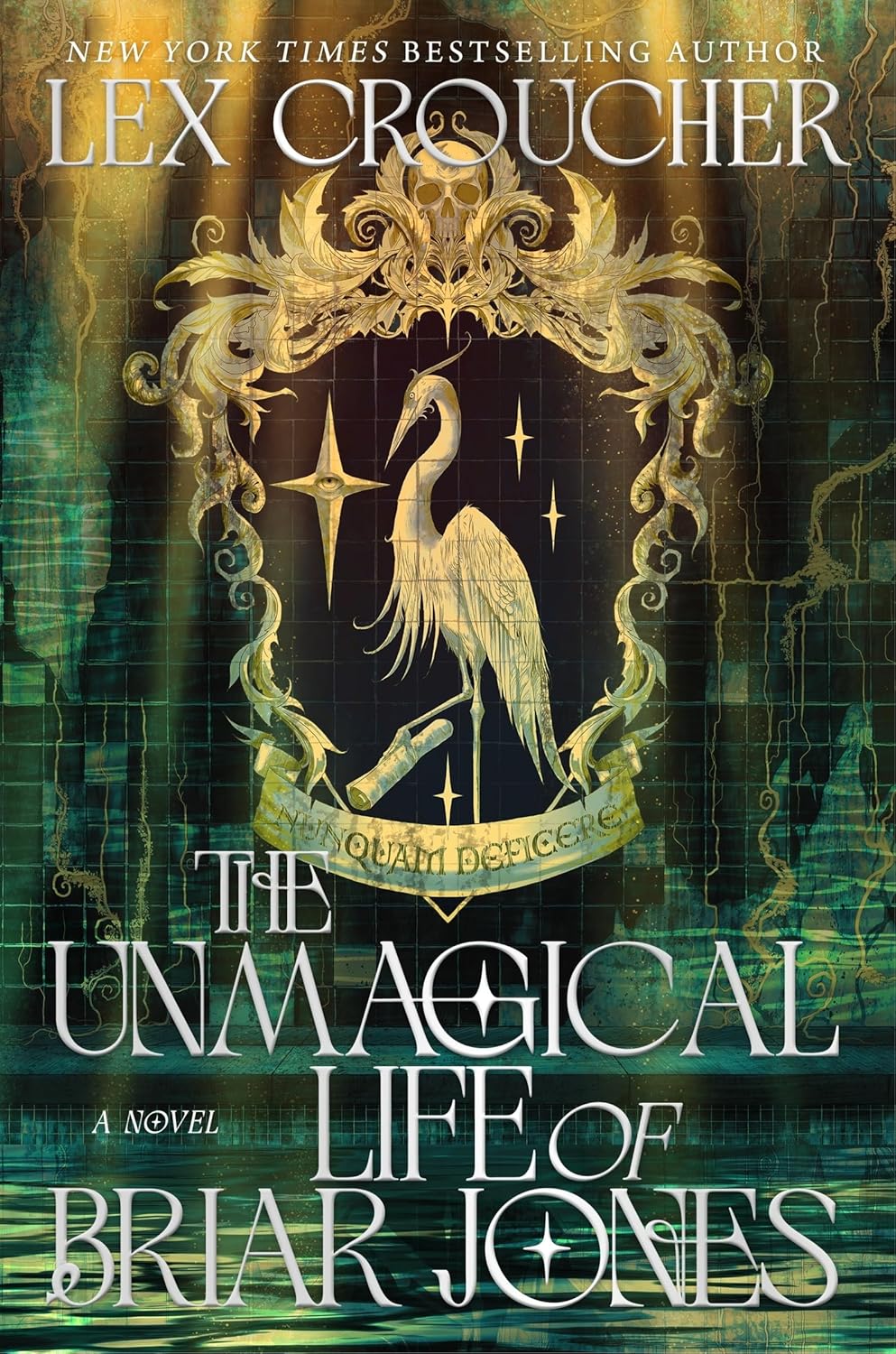
Title: The Unmagical Life of Briar Jones Author: Lex Croucher Publisher: Harper Voyager Publication date: June 9, 2026 Length: 447 pages Genre: Fantasy / dark academia Source: Purchased Rating:
⭐⭐⭐⭐⭐
Rating: 4.5 out of 5.
Casey McQuiston meets The Secret History in this unmissable dark academia fantasy from New York Times bestselling author Lex Croucher following former childhood best friends who reunite at magical boarding school after years, only to find themselves enemies on opposite sides of the ugly secrets hidden within the gilded walls.
Welcome to the Temple School of Thaumaturgy … and your newest dark academia obsession.
For as long as they can remember, Briar Jones dreamed of attending the Temple School of Thaumaturgy. Behind its looming ornate gates, the elite prep school—the place that has produced the most CEOs and Prime Ministers in British history—is whispered to be magical.
Briar’s best friend, Sebastian Wolfe, never cared about Temple or believed in the rumors. He just wanted them to stay together forever.
When, at age 11, Seb gets an acceptance letter and Briar doesn’t, their childhood friendship is shattered. Seb vanishes onto Temple’s grounds and Briar resigns themself to a mundane life. But they can’t completely forget their yearning for Temple, for the extraordinary, to be one of the chosen in the ivory tower.
Then, seven years later, Briar secures a temp job sorting through the junk in Temple’s attics. And they discover that quiet, sensitive Seb, the boy they once loved more than anything else in the world, has become Bastian: a beautiful, arrogant villain feared by the entire school. And worse, the secrets Temple is hiding might not be so magical after all, but a dark conspiracy with implications that extend far beyond the gates.
If you’d asked me a week ago whether I wanted to check out a new dark academia novel, my answer would have been no. And then… I saw a New York Times book review column with the headline This Is the Best Book Our Fantasy Columnist Has Read All Year… and how could I resist at least giving it a try?
The Unmagical Life of Briar Jones is a story of a broken friendship, a shot at dealing with childhood pain, and a deep, dark conspiracy that reaches the highest levels of British society and beyond. Sounds like a lot, right? Somehow, the pieces all come together to form an intense, compelling drama that’s impossible to put down. (The NYT columnist says she forgot to eat while reading this book… I didn’t quite have that problem, but it was hard to focus on anything else until I finished the book!)
Briar and Seb were best friends from before Briar can even remember. Despite being on quite different ends of the economic divide — Seb’s family has a gorgeous estate and piles of money and connections; Briar’s mother and stepfather run a small farm and get by — the two are inseparable throughout their childhoods. Seb is sensitive and easily wounded, both by a cruel, cold father and by the mean village kids who bully him. But Briar is a fierce defender, and they protect Seb as best they can. The two of them dream about Temple, the mysterious school located behind forbidding walls just a short bike ride from their village. Temple is rumored to be a school of magic, although no one knows for sure — but what is fact is that Temple has produced more Prime Ministers, CEOs, and other influential people than any other school in the UK.
Seb and Briar have concocted all sorts of fantasies about what their magical lives will be like once they’re admitted to Temple and learn its secrets… but at age eleven, their applications have very different outcomes. Seb is accepted — not surprising, as his father and older brothers all attended Temple — and Briar is not. With no connections and no money, Briar doesn’t even get the courtesy of a reply to her application. And while we don’t learn the details until much later in the book, Seb and Briar’s friendship is irreparably broken. Seb leaves for Temple, Briar is left behind, and the two never see each other again.
Until… seven years later, Briar gets a summer temp job at Temple. Their assignment is to sort, organize, and clear out decades worth of junk from an unused attic on campus. Meanwhile, they’ll be assigned a dorm room and will live at Temple as well. It’s a redemption of sorts for Briar. The pain of their rejection has never really gone away, and while they made friends and got by at the local high school, the yearning for Temple and Seb have left them feeling like something’s been missing all these years.
Briar’s work isn’t all that interesting, but they soon befriend a group of 17-year-old students entering their final Temple year, who explain the ropes to them and help them navigate what’s quickly revealed to be a dangerous world. School society is dominated by the Mons, the powerful advanced students who control everyone else, mete out punishments, carry out the Trials required for all first-years (“pips”), and answer to the school’s mysterious board of governors. Briar has spent years defending underdogs, but their instinct to protect gets her on the wrong side of the Mons almost immediately, and to their dismay, one of these is revealed to be Seb, now known as Bastian, the most powerful and cruelest of them all.
How did the sweet, gentle boy of Briar’s childhood turn into this cold, dangerous person? Bastian has mastered the Work, which is what Temple’s magical powers are called. Students learn Workings with different areas of focus, and all seem to revolve around influence over others — including the ability to force others to answer questions and obey orders without hesitation, and to induce feelings of acceptance even in the most horrific of circumstances. What’s worse, there’s no defense against Workings, other than by studying and learning them. Pips are defenseless; as Temple students (known as scholars) advance through their studies, their knowledge of Workings shield them from having these types of influence being used against them.
I realize this is quite a lot of explanation! But The Unmagical Life of Briar Jones has some complicated world-building to accomplish, and author Lex Croucher does it incredibly well. Temple is not a happy place; there’s no cutesy moving staircases or charming professors or silly charms bouncing around — it’s more like going to school with nothing but Slytherins, but worse. Faculty turn a blind eye or passively encourage the torments going on around them; Temple is a legacy school, and they’ve all been through it. It’s the price of power, steeped in generations of tradition. Temple’s connections are everywhere, and it’ll do anything to keep its secrets and maintain its access to the power the Workings provide.
Briar’s growing friendship with the three people she meets early on gives her some small measure of security, but they’re all vulnerable, especially when these friends seem determined to disrupt the Trials, placing a huge target on all of their backs. But while Briar’s friends are able to protect themselves through knowledge of the Work, Briar has no defenses at all, and ends up subject to terrible punishments at the hands of a particularly sadistic Mons.
While Bastian at first seem indifferent, even unhappy, to see Briar once again, his reaction to them is shown to have more complex layers. He’s horrified to see Briar entering such a dangerous setting, and conflicted over the unresolved complications of their childhood — yet he also can’t stand by while Briar is threatened and hurt, and his involvement eventually places him at odds with the very power structure he so strongly represents.
The storytelling in The Unmagical Life of Briar Jones is fast-paced and breathless, so while the book is on the longer side, it absolutely flies by. Readers discover Temple’s dark secrets alongside Briar, and their sense of dismay, helplessness, and anger is palpable. It seems impossible that an unmagical person such as Briar could ever make a difference, but they can’t walk away from their new friends. As Briar spends time at Temple, they keep encountering Bastian, and the two eventually confront their pasts and the truths that had been hidden for so many years — and Bastian becomes yet another reason that Briar can’t walk away.
Some fascinating themes emerge, especially around self-image and the concepts of good and evil. Briar has spent years convinced that they’re the hero, the defender of the weak, and upon arrival at Temple, immediately categorizes Bastian as a villain. But the truth is more nuanced than these surface-level distinctions. Part of Briar’s growth arc throughout the story is how they come to understand past actions and learn that they themself contain darker elements than they want to admit.
One of the reasons I typically shy away from dark academia is my challenge in suspending disbelief long enough to accept that parents would willingly send their children to such scenes of mayhem and danger, or to find that the schools’ structures and rules make sense in a way that would allow them to continue to operate. Yet here, I bought it completely. The Unmagical Life of Briar Jones is fantasy in that magic exists, but in every other way, it’s rooted firmly in our own real world. Temple is a source of wealth and power and influence; it seems entirely realistic to me that should such a place exist, the powers that be would do everything to protect and preserve it.
There may be a tendency to categorize dark academia fantasy as young adult fiction. That would be a mistake here. The author makes clear in the book’s introduction that this is not intended for young readers, and a content warning section fills up a good half a page. I won’t go into all the details; you can find them on the author’s website (https://www.lexcroucher.co.uk/the-unmagical-life-of-briar-jones-content-warnings). Suffice it to say, the content can be very disturbing; readers with content sensitivities should be aware ahead of time what they may encounter.
Overall, I found the premise, characters and plotting of The Unmagical Life of Briar Jones completely fascinating, and could barely breathe at times from all the stress, tension, and danger as the story progresses. Briar is a complex lead character, and their relationship with Bastian as well as with their new-found friend group adds depth and emotion to an action-packed, dramatic story. Highly recommended.
Purchase links: Amazon – Bookshop.org – Libro.fm Disclaimer: When you make a purchase through one of these affiliate links, I may earn a small commission, at no additional cost to you.
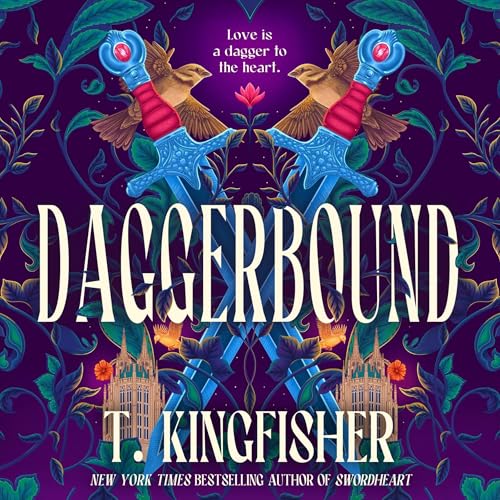
Title: Daggerbound Series: Swordheart, #2 Author: T. Kingfisher Publisher: Bramble Publication date: August 25, 2026 Length: 436 pages Genre: Fantasy Source: Purchased Rating:
⭐⭐⭐⭐⭐
Rating: 4.5 out of 5.
Learned Edmund, a disillusioned scholar, is transporting yet another precious relic from one stuffy temple to a different stuffy temple. Another great adventure for the ages…
But when Edmund is set upon by bandits, in desperation, he breaks the cardinal rule and grabs for the relic, an ancient sword. To his surprise, instead of unsheathing a rusty, ancient weapon, an alarmingly handsome man appears, wielding daggers of blue steel and cutting the thieves down.
This man is the Dervish, an immortal warrior who’s been trapped for centuries in a sword of enchanted steel, and is angry as hell about it. He hates the curse that put him there, and he wants to hate Edmund, just as he has hated every wielder before him.
But the damned scholar is just so sweet and clever and kind. And while the Dervish may be able to protect Edmund from bandits, cultists, dragons, and strange inhuman diplomats, he may find it much harder to protect his own heart.
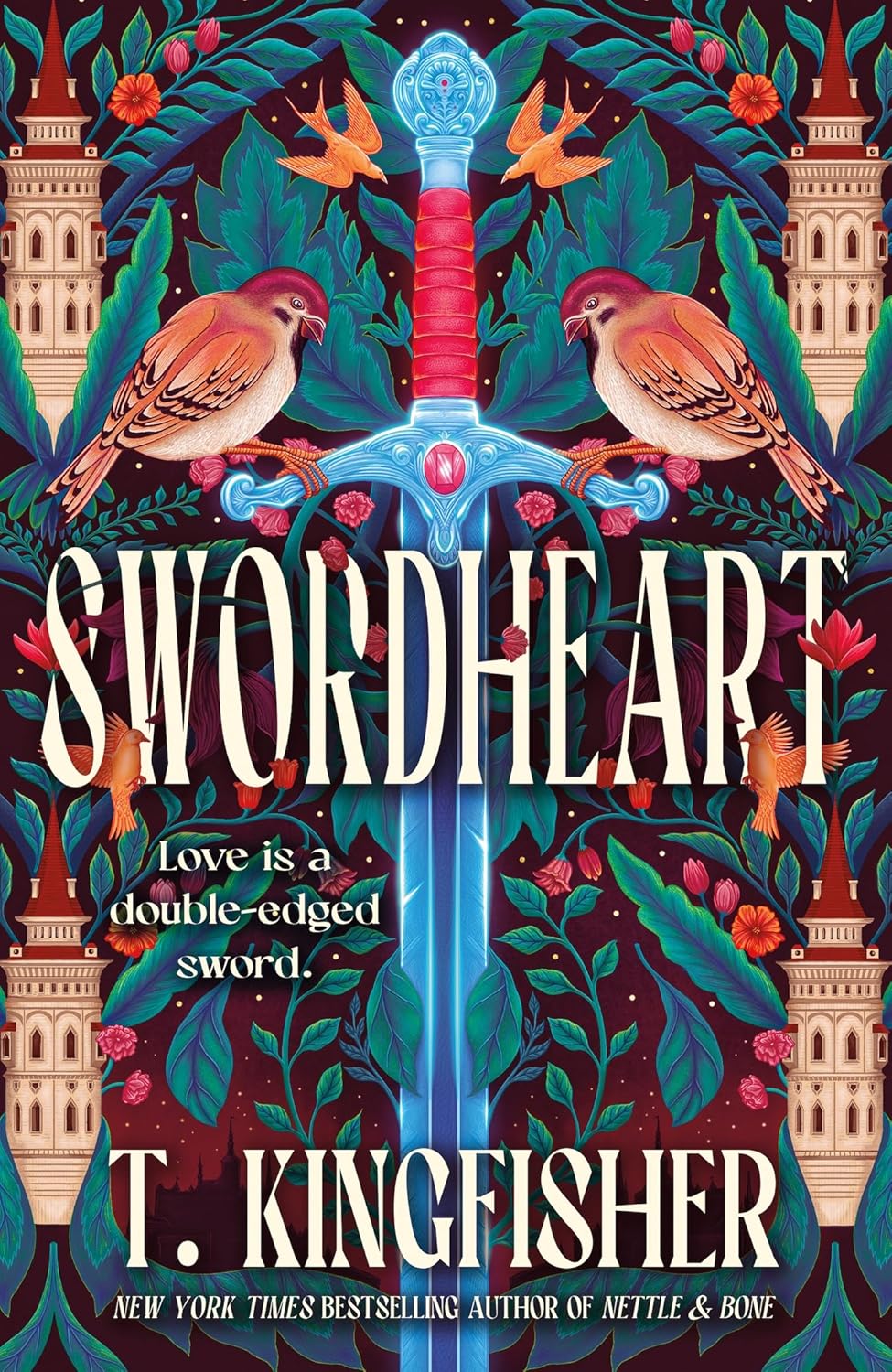
T. Kingfisher’s fantasy novels are always a delight, and this sequel to Swordheart is every bit as wonderful as I’d expected it to be! Swordheart told the story of Sarkis, a man condemned to immortality while bound to a sword and whoever wields it. Here in Daggerbound, we pick up the story with the Dervish, one of Sarkis’s two fellow soldiers sentenced to the same fate.
As the story opens, Learned Edmund, a scholar and dedicate of the Many-Armed God, is leaving his temple to transport books and an ancient sword to recipients in a distant city. His temple doesn’t know, however, that he’s taking this opportunity to leave his religious order behind, having grown disillusioned from years of pushing for progress and change. Edmund’s journey does not go well — set upon by bandits, he accidentally unsheathes the sword, and is astonished by the appearance of what he at first takes to be an angel — a ridiculously handsome man with silver markings who appears out of nowhere in a flash of silver and proceeds to dispatch the men assaulting Edmund.
The man is no angel — it’s the Dervish, a man bound to the sword and forced to serve whoever wields it, compelled by the sword’s magic to defend his wielder, if need be at the cost of his own life. Of course, being immortal, he can only be temporarily dead, and some time spent back inside the sword heals him up again.
The Dervish is gorgeous, fierce, and angry, and is tormented by memories of the anguish he suffered at the hands of a particularly sadistic former wielder. He’s understandably irritated to find himself bound to yet another wielder, but quickly comes to see that Edmund is very different from those he’s served before. Edmund is a scholar, who only wishes to learn and apply his knowledge to helping others. He’s not interested in personal power or glory, and doesn’t wish to manipulate Dervish, and in fact agrees to help him figure out if there’s a way to break the curse and free him from his immortal, sword-bound existence.
As the pair travel onward, they acquire some highly unusual companions, find themselves in a variety of dangerous situations, and must fight their way out of more than one trap. The more time they spend together, the more evident it becomes that there’s something beyond a wielder/sword dynamic going on here — despite Dervish constantly reminding himself that Edmund is not his type.
Dervish is a fantastic character. His blend of hardened toughness and self-assuredness make him a formidable opponent for anyone who even looks like they might threated Edmund, and his ego — especially about his astonishing good looks — is never not hilarious. And yet, the terrible memories from his former wielder rise to the surface at unpredictable moments, revealing his unhealed psychic wounds and leaving him emotionally vulnerable.
Dervish and Edmund have a fabulous dynamic — opposites in so many ways, they find a deep appreciation for one another, and come to realize just how much they care and are willing to risk to keep the other person safe.
Other characters are also quite memorable (I won’t go into specifics — it’s so much fun to discover them on your own!), and having key characters from Swordheart join the adventure later in the book feels like meeting up with old friends.
Daggerbound is a wonderful follow-up to Swordheart. I loved being back in the world of this series, and enjoyed every twist and turn, every dangerous escapade and every tender moment. Daggerbound‘s love story is humorous, charming, and quite beautiful, and the characters are terrific, together and on their own.
I can’t wait to see what happens in the next book in the series. Book #3, which will focus on the third person cursed alongside Sarkis and Dervish, is scheduled for release in August 2027 — much too far away from now!
Book #3, Shieldborn; to be released 8/2027
Daggerbound succeeds as a sequel to Swordheart and as a terrific fantasy adventure story. Another outstanding book from an incredibly talented author. Highly recommended.
I enjoyed the audio version of Swordheart so much that I opted to go the same route with Daggerbound, and I’m so glad that I did. Once again, narrator Jesse Vilinsky knocks it out of the park with her excellent character voices and expressive storytelling.
Purchase links: Amazon – Bookshop.org – Libro.fm Disclaimer: When you make a purchase through one of these affiliate links, I may earn a small commission, at no additional cost to you.
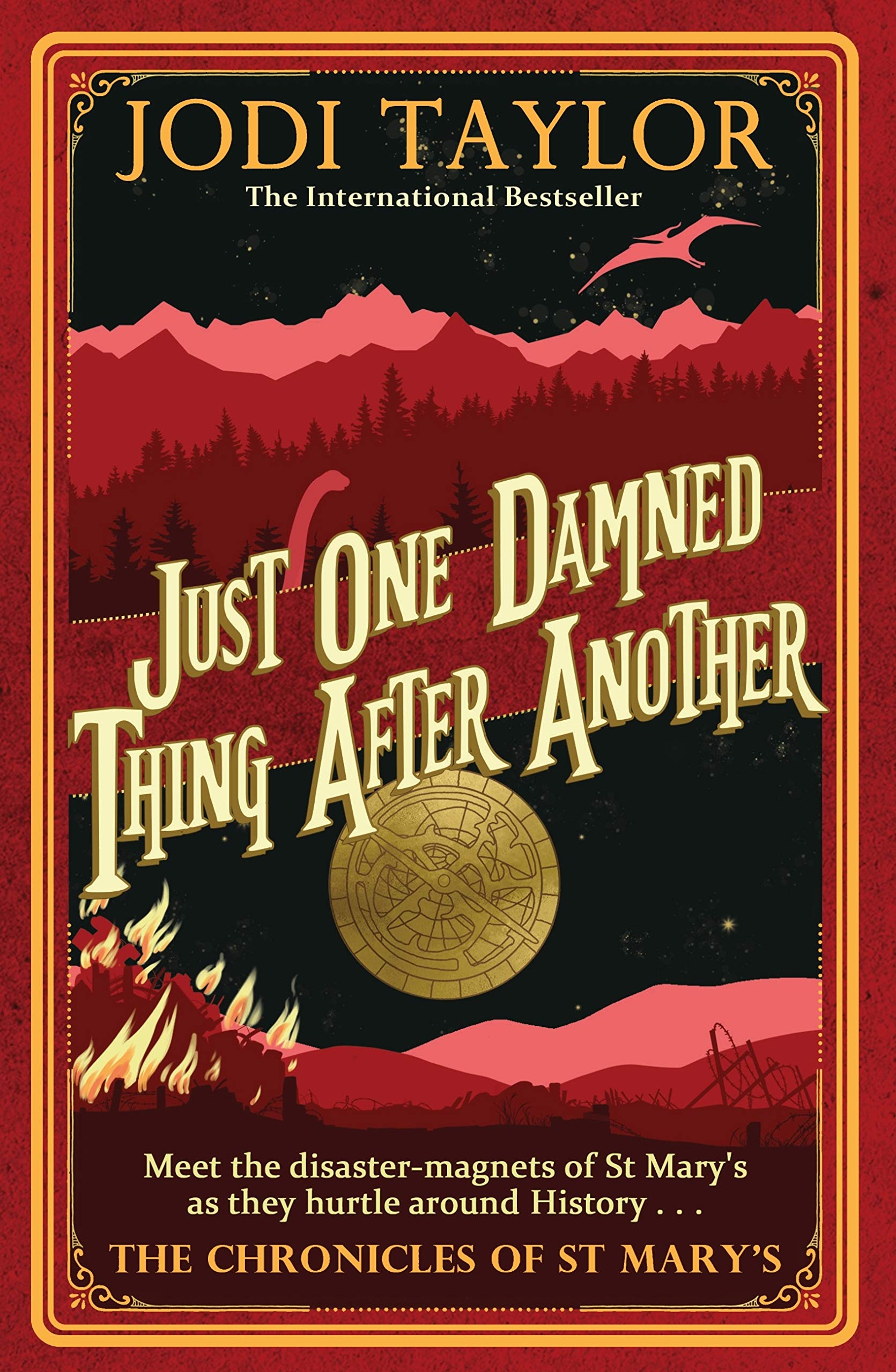
Title: Just One Damned Thing After Another Series: The Chronicles of St. Mary’s, #1 Author: Jodi Taylor Publisher: Headline Publication date: June 1, 2013 Length: 282 pages Genre: Time travel Source: Purchased Rating:
⭐⭐⭐⭐
Rating: 4 out of 5.
They say that History is just one damned thing after another. Welcome to St Mary’s Institute of Historical Research – where damned things happen every day.
When Dr Madeleine ‘Max’ Maxwell is recruited by St Mary’s, she finds their methods to be somewhat unorthodox. They don’t just study the past – they actually visit it, carefully observing historical events as they unfold in real time.
And not dying. This last part is important.
The whole of History now lies before Max and her new colleagues, but, as she will discover, time travel is never straightforward. Because History doesn’t like to be messed with, and danger lurks in every century…
The Chronicles of St. Mary’s series has been on my to-read for years now. Back in January, I committed to finally starting it in 2026… and now I have, and I can’t believe I waited this long!
‘You’re feeling a bit under the weather,’ he said soothingly. ‘I know it’s natural for historians, but try not to dwell so much on the past.’
Book 1, Just One Damned Thing After Another, introduces us to the crazy world of St. Mary’s, a seemingly normal, possibly even boring, institute of historical research. But behind the front doors, something else entirely awaits. Max, a history professor in her late 20s, is recruited by St. Mary’s and learns what they’re really up to: Rather than relying on books and artifacts to understand the past, the St. Mary’s team uses time travel to visit and observe key moments and document their findings.
“… Although the phrase “time travel” is so sci-fi. We don’t do that. Here at St Mary’s we investigate major historical events in contemporary time.”
They can’t change anything while they’re there, but they’re able to report back with incredible new findings to pass along through the more official university channels. Their work is revolutionary, but government and university funders are breathing down their necks, and their continued existence is always a question mark.
Max is outspoken and fierce. After a rigorous training period — which includes everything from hand-to-hand combat to field medicine — she begins going on missions with other historians. And as she sees, these missions really are just one damned thing after another. Things go wrong often, and dramatically. Meanwhile, secrets about her colleagues at St. Mary’s change her understanding of certain situations, and betrayal from within threatens Max and everyone she cares about.
Some descriptions of this series describe it as madcap, hilarious, full of hijinks… and that may be true (and granted, I’ve only read the first book) — but I found that Just One Damned Thing After Another gets quite dark at time too. There are certainly plenty of humorous moments, and the dialogue truly makes me laugh at times. Still, there are some pretty awful things that happen to Max and others, including scenes of death and destruction, emotional collapse, and a couple of terrible moments between Max and people she trusts that are upsetting and heartbreaking.
On the whole, though, the book’s fast pace and sense of adventure keeps things moving and doesn’t force (or allow) readers to dwell for very long on the more painful moments. Meanwhile, there are ancient artifacts and extinct creatures to encounter! Even back at St. Mary’s, the inventors and scientists and researchers keep everyone on their toes (explosions, mainly unplanned, abound).
You can say this about historians, we may be the tea-drenched disaster-magnets of St Mary’s but bloody hell, can we think quickly when we have to.
My small quibble with Just One Damned Thing After Another is that there are just so many characters to keep track of! The book has a “Dramatis Thingummy” section at the beginning, listing and defining over 30 characters — which, yes, is helpful as a reference while reading, but feels really daunting as well. There are some people I never did manage to keep straight — we’ll see how many show up in the next books in the series.
Overall, I really enjoyed Just One Damned Thing After Another. The writing is upbeat and engaging, and even through the darker moments, there’s always another bright spot to look forward to. I came to love Max herself and her close colleagues and allies, thought the approach to time travel and the idea of historians as the ultimate explores were amazing, and can’t wait to see what’s in store for the St. Mary’s crew.
Will I continue this series? Absolutely. As of this moment, there are 14 novels in the series (and a long list of associated short stories), and apparently a 15th book scheduled for release in 2027. With so many books ahead of me, I’m going to try to pace myself — but I do hope to read at least one or two more by the end of this year.
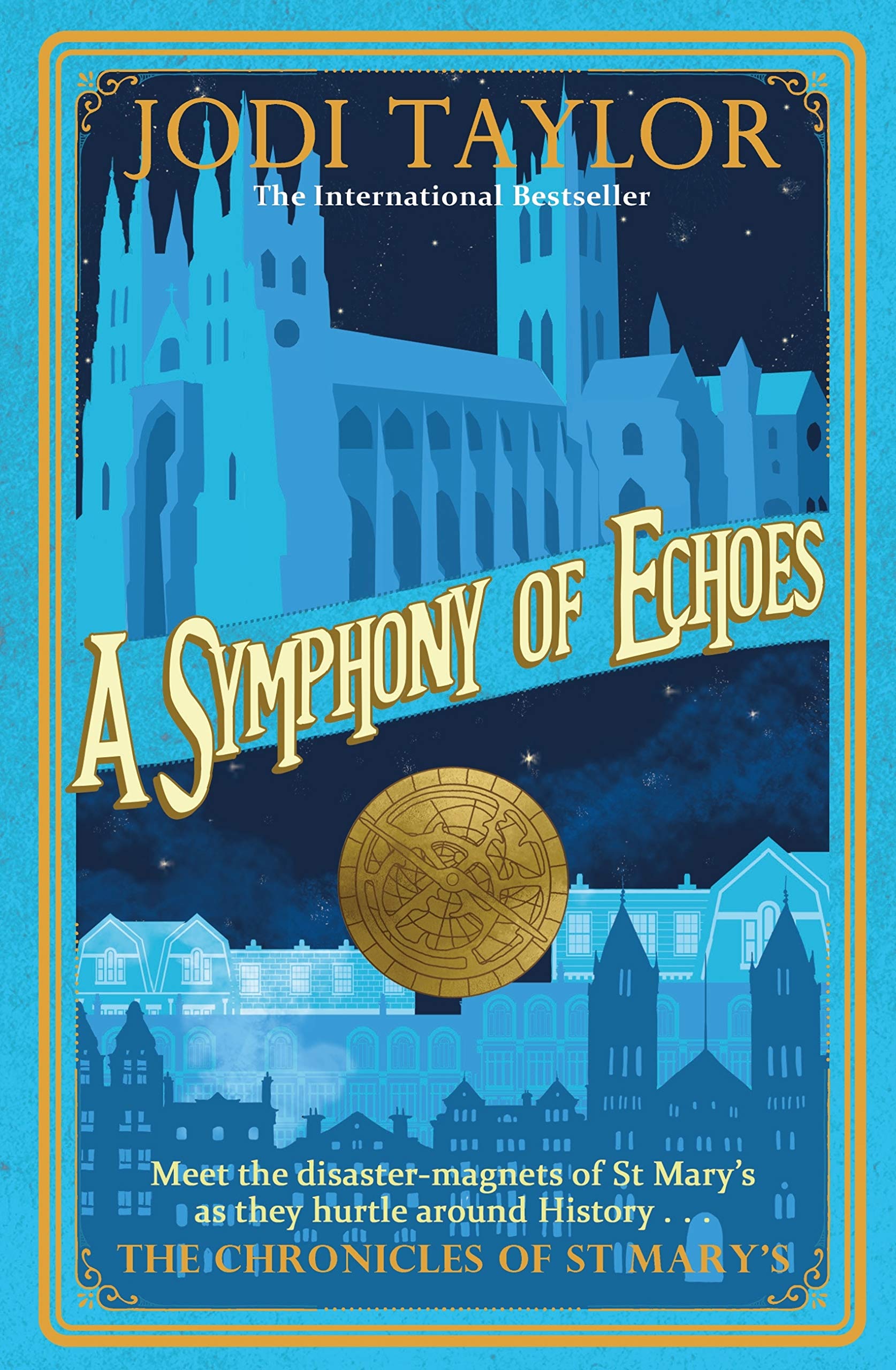
Up next: Book #2, A Symphony of Echoes
Purchase links: Amazon – Bookshop.org – Libro.fm Disclaimer: When you make a purchase through one of these affiliate links, I may earn a small commission, at no additional cost to you.
Title: Into the Blue Author: Emma Brodie Publisher: Ballantine Books Publication date: April 7, 2026 Length: 448 pages Genre: Contemporary fiction Source: Purchased Rating:
⭐⭐⭐⭐⭐
Rating: 5 out of 5.
From the award-winning author of Songs in Ursa Major comes an epic, decade-spanning love story that blazes through the worlds of acting and comedy, and charts a connection so powerful it might just break space and time itself.
“The truth is there’s no such thing as a normal life. There’s just the time you get and how you spend it.”
In the summer of 2000, AJ Graves dreams of writing for Saturday Night Live; instead, she’s stuck working in a video rental store, with slim odds of escaping her small Massachusetts town. Then in walks Noah Drew, the enigmatic and intense scion of the Drew acting dynasty, and her life changes forever. Despite wildly different upbringings, the two forge a deep, cosmic bond, first as friends, then as acting partners—until one day, Noah disappears without a word.
Seven years later, in New York City, AJ is shocked to find herself cast in the same intergalactic TV production as Noah, by then a well-known Hollywood heartthrob. As their on-screen characters grow closer every day, the lines between reality and acting begin to blur. Unable to stay away from each other, AJ and Noah are forced to confront the truth of what happened years ago—and the devastating secret that will send their lives careening apart, even as fate continues to draw them together.
Blending unforgettable characters, explosive chemistry and yearning, and profound emotion, Into the Blue is a journey unlike any other—one that asks: What does it mean to diverge from the script to forge your own story?
Into the Blue is a hard book to describe. It’s a story of love and acting, geekiness and intensity and fandoms, commitment and abandonment, and so much more. There are incredibly funny moments, and scenes so raw that I felt as though my heart had been pulled out and stomped on.
At age seventeen, AJ Graves works at a video rental store in her small Berkshires town, obsessed with old movies and classic cult TV, especially the 60s-era improvisational sci-fi series, Astronauticals. A short-lived, one-of-a-kind series, the show centered on a space crew and their adventures, but with scenes completely improvised. One of the actors, Eudora Drew, is local to AJ’s town, and her character Glimmette especially fascinates AJ. When Eudora’s nephew Noah, four years older than AJ and a former classmate of her big brother, walks into the store to start a summer job alongside her, AJ’s hackles are raised. He must clearly be slumming it — he’s a descendant of the Drew acting dynasty, and certainly doesn’t need a minimum wage job to support himself.
As the summer progress, though, AJ and Noah bond over Astronauticals and other movies, and when Noah brings her by the Drew mansion, she meets Eudora — who immediately insists that she’s going to train AJ and Noah. AJ dreams of a comedy writing career, but Eudora demands that she and Noah learn her improv and acting methods, and puts them through a rigorous, intensive program that somehow forges an intense, rare connection between them. As they “play” together all summer, they become highly attuned to one another’s thoughts and feelings, and it goes way beyond acting. And yet, something goes wrong, and one day Noah is just gone, and AJ find herself shut out by Eudora as well. Bereft and heart-broken, she has no choice but to throw herself into finishing school and getting on with her future.
Years later, as AJ works in New York as a writer with an improv/comedy troupe, Noah shows up… but in the intervening years, Noah has become a star with an Oscar nomination and huge movie roles to his credit. His appearance at the improv center has a purpose: He’s slated to be a part of an Astronauticals reboot, to be called Into the Blue… and with it going into production at the time of the writers’ strike, it’ll have a novel approach. While the general story line and premise are layed out, the episodes themselves will be completely improvised. To AJ’s shock, she’s cast in the show as well, and as the production progresses, it becomes clear that she’ll become the major female lead and love interest for Noah’s character.
The intense connection between AJ and Noah sparks back to life — clearly, it had never really died out. Yet AJ is still devastated by his abandonment years earlier and the silence since then, and is unwilling to let him back in. But their bond is so powerful that it can’t be avoided forever, and their relationship burns bright… until certain truths push them apart once again.
It’s hard to discuss this book without giving details away, and that would be a shame. The intensity and power of the connection between AJ and Noah drives the plot forward, and there has to be a very good reason for the estrangements that continue to drive them into separate lives… and there is, but that doesn’t lessen the impact or help AJ or Noah forget what’s between them.
There are lighter moments too — the descriptions of fandoms and cons and obsessions over pop culture are all really well done. I was reminded throughout of Firefly… which was reinforced later in the book when I came across this brief line:
But as Ana, such sounds broke from her as to burn the land and boil the sea.
Powerful moment, and those particular words really drive it home. (IYKYK)
The final section of the book is one of the most evocative, unusual, and emotionally devastating pieces of writing I’ve come across in a long time. Again, I really can’t say why or provide details without diminishing the way this book gets under your skin and into your heart. All I can say is that it blew me away.
I loved the characters, felt their joy and pain, and wanted to stay in their world for as long as possible. Beyond that, the chapters set in the worlds of SNL, improv, and filming Into the Blue are an amazing mix of creative expression, humor, and blazing connection between people who find a way to share inspiration and bring it to life.
One small quibble left me questioning whether to reduce my star rating: This book makes use of one of the break-up tropes I find most maddening — the “I’m breaking up with you for your own good and won’t tell you why” approach — and it makes me crazy every time, especially when the person on the receiving end believes the fake reasons for the break-up when clearly they’re being told a whopping lie. I was pretty mad at the characters over this issue… but at the end of the day, I’m sticking with my 5-star rating, because I simply can’t overlook or downplay how the book as a whole made me feel.
Into the Blue has easily become one of my favorite books of 2026. It made me laugh and cry, and shows so much about love and the power that exists in forging a bond with the person who means the world to you. This book is truly a unique reading experience. Don’t miss it.
Purchase links: Amazon – Bookshop.org – Libro.fm Disclaimer: When you make a purchase through one of these affiliate links, I may earn a small commission, at no additional cost to you.
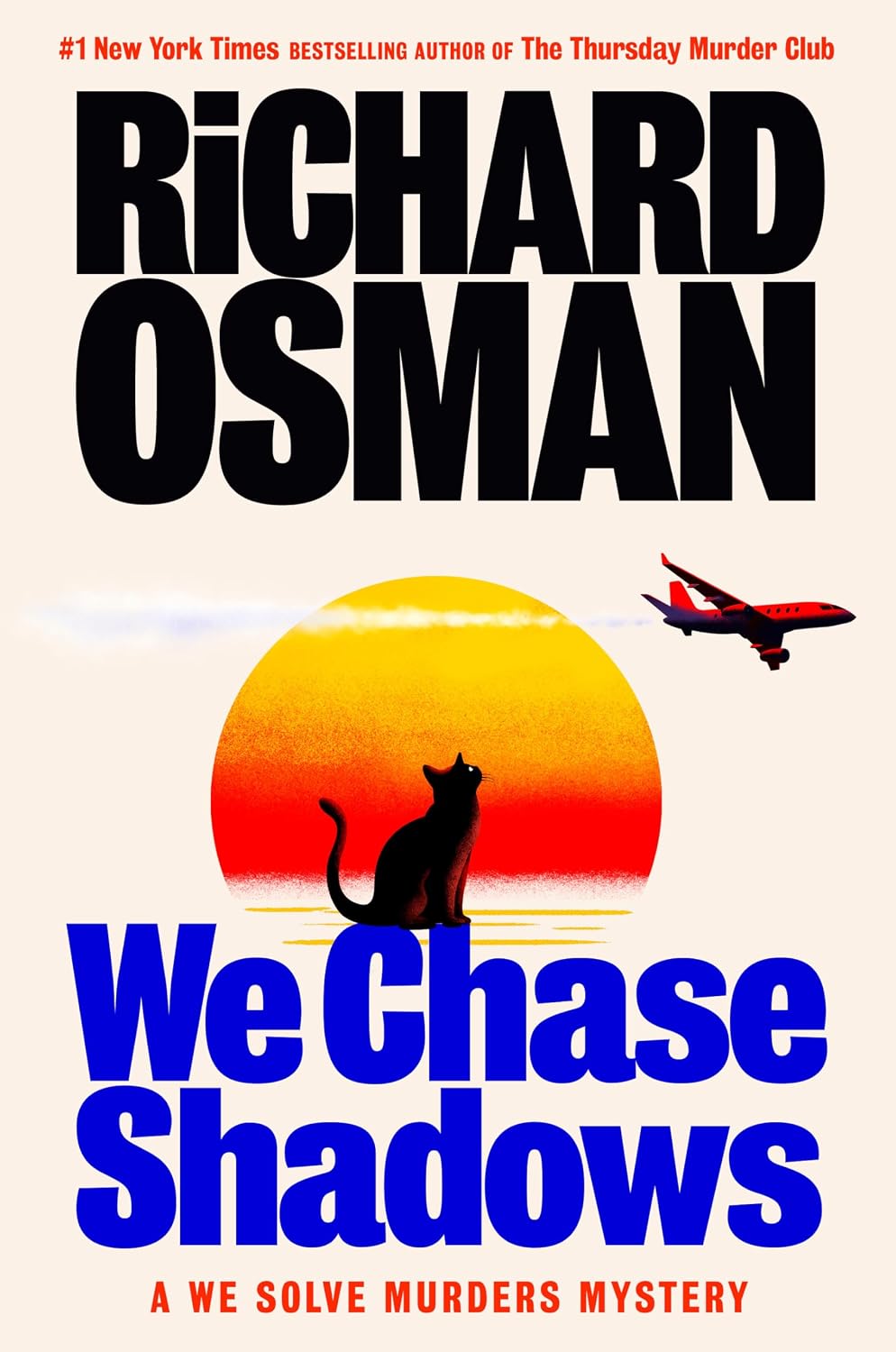
Title: We Chase Shadows Series: We Solve Murders, #2 Author: Richard Osman Publisher: Pamela Dorman Books Publication date: September 15, 2026 Length: 345 pages Genre: Mystery Source: Review copy courtesy of the publisher via NetGalley Rating:
⭐⭐⭐⭐
Rating: 3.5 out of 5.
Back together. Back on the case. And back to solving murders . . .
At sunrise, high in the Italian hills, a body is found on the steps of a beautiful private villa. On the body is a threatening note, signed by a mystery man.
Back at We Solve Murders HQ, Amy, Rosie, and Steve leap at the chance to take on their first proper case. So what if their new client seems to have his own reasons for avoiding the police? All they need to do is uncover who left the note, and then find them. Simple.
But once they start digging, the suspects keep piling up: there’s Sweden’s most-wanted criminal, a canny ex-wife and a fierce business rival – yet the murderer keeps evading them. And as the trio chase a villain through the shadows, danger travels closer to home . . .
Between Italy and Palm Springs, via Barcelona and Steve’s village pub, can the team catch an elusive killer who knows EXACTLY where to hide?
The awesome trio formed during the first book in this clever series (We Solve Murders) is back in action in We Chase Shadows. Rosie, an internationally bestselling mystery writer of indeterminate age, Amy, her former bodyguard, and Steve, a retired cop and Amy’s father-in-law, may seem like an odd mix, but after the events of the first book, they’ve teamed up to open a detective agency called… We Solve Murders.
That’s what makes them a great team. Rosie will sleep with you, Amy will hit you, Steve will tell you a fact about public transport. They’ve got all angles covered.
The problem is, no one has actually called upon them to solve any murders. Amy, for one, is getting bored — she hasn’t had anyone to punch in far too long. When Rosie goes on the Graham Norton Show to promote her newest book, she slips in a mention of We Solve Murders, and boom! They finally get a case.
Secretive tycoon Vern Blackwood summons them to his Tuscany villa to find the person who murdered one of his bodyguards. Conveniently, his body was found with a note in his pocket, taking responsibility for the murder and threatening Vern with further murders to come — and the note is even signed by the killer, someone who’s one of Vern’s chief competitors in their super shady and illegal business world. But, Vern insists, the note is a distraction: He’s sure that person isn’t the actual killer and he wants them to find out who is.
Globe-hopping ensues, as Rosie, Amy, and Steve use Rosie’s private jet to zoom around the world chasing leads, connecting with allies, and popping back home for Steve’s weekly pub quiz. As more bodies pile up, the list of suspects gets weird, and weirdly narrower, as the likely suspects are the people who keep turning up dead.
We Chase Shadows is a fun-filled, not terribly serious caper book. The mystery is engaging, but it’s the banter and escapades of our mismatched trio that keep the plot zipping along.
“Stevie,” says Tommy “I’ve been alive for seventy years, right? And I ain’t died yet. That can’t be a coincidence?”
“I think that’s just how life works,” says Amy. “No one dies until they die.”
“All I know is what I know,” says Tommy. “Hundred percent record of not dying. […]”
Interesting twists and red herrings come into play, and the bad guys aren’t psychopaths or darkly evil, just people with highly questionable moral compasses who’ll do anything for a profit. Yes, they’re internationally wanted criminals… but their motive is money, not cruelty, which keeps the book from ever getting too grim.
The We Solve Murders books are a bit lighter on character depth and development than the Thursday Murder Club series, but this newer series shows promise too. I might argue that no one in real life would ever talk the way these people do, but that’s okay. Their quips and ridiculousness are part of the fun, and certainly keep the atmosphere bubbly even when danger looms for the characters.
The author’s notes indicate that his next book will be a return to the Thursday Murder Club series (yay!), but that a 3rd book in We Solve Murders will be on the way after that. I’m looking forward to both!
Purchase links: Amazon – Bookshop.org – Libro.fm Disclaimer: When you make a purchase through one of these affiliate links, I may earn a small commission, at no additional cost to you.
Title: Jamaica Inn Author: Daphne du Maurier Publication date: 1936 Length: 307 pages Rating:
⭐⭐⭐⭐⭐
Rating: 4.5 out of 5.
The coachman tried to warn her away from the ruined, forbidding place on the rainswept Cornish coast. But young Mary Yellan chose instead to honor her mother’s dying request that she join her frightened Aunt Patience and huge, hulking Uncle Joss Merlyn at Jamaica Inn. From her first glimpse on that raw November eve, she could sense the inn’s dark power. But never did Mary dream that she would become hopelessly ensnared in the vile, villainous schemes being hatched within its crumbling walls—or that a handsome, mysterious stranger would so incite her passions… tempting her to love a man whom she dares not trust.
For the second Classics Club Spin in a row, I ended up with a Daphne du Maurier novel, and was thrilled to have the extra little push to read yet another of her books. For the previous spin, I read Frenchman’s Creek, a lush, passionate tale of romance and pirates. This spin’s book, Jamaica Inn, is something else entirely: Dark, grim, and dire… and yes, there’s a romantic element too, but for me, that was just a minor element in a tale about a strong heroine confronting irredeemably evil people.
Released in 1936, Jamaica Inn was Daphne du Maurier’s fourth published novel, and was the book that immediately preceded her most famous, iconic work, Rebecca (published 1938).
Set in the early 1800s, Jamaica Inn tells the story of 23-year-old Mary Yellan, who’d been born and raised in the bucolic town of Helford, a coastal village in Cornwall. On her deathbed, Mary’s mother makes Mary promise to go live with her aunt Patience, whom Mary remembers fondly from visits many years earlier, although she hasn’t seen her at all since. Carrying out her obligation once her mother dies, Mary travels to the lonely, desolate Jamaica Inn on Bodmin Moor, where Aunt Patience lives with her husband Joss Merlyn. But Mary finds Patience a changed woman — no longer the pretty, vivacious young aunt from ten years earlier, she’s haggard, meek, and full of nervous tics.
Uncle Joss is huge and menacing, and Jamaica Inn is just as frightening — an isolated, dark building surrounded by miles of open moors, dirty and mildewed and in terrible repair. The bar room appears to be opened to guests as Joss sees fit, but it’s clear that no one actually stays at the inn and that it’s not a place that offers hospitality. In fact, most travelers along the Bodmin road drive by as quickly as possible, sensing the danger that awaits if they stop.
Mary is dismayed. Sent by her mother to live under Patience’s care, once there, it’s obvious that Mary will have to care for Patience, and while she’s desperate to leave, she can’t abandon her fragile aunt to Joss’s cruelty.
The longer Mary stays at Jamaica Inn, the more she learns about Joss Merlyn’s nefarious schemes and the terrible crimes he’s involved with. Eventually, she must find a way to escape, rescue her aunt, and bring justice to hold Joss accountable for all the evil he’s done.
Jamaica Inn is unrelentingly grim, with Mary’s terrible experiences broken up only by her long walks across the moors and her encounters with a man she’s drawn to, yet knows she shouldn’t trust.
He lacked tenderness; he was rude; and he had more than a streak of cruelty in him; he was a thief and a liar. He stood for everything she feared and hated and despised; but she knew she could love him.
Mary’s love for this man is hard to understand, other than acknowledging it as an unexpected and unwanted passion for a classic bad boy. Mary makes assumptions about him, not all of which turn out to be true. She’d decided for herself years earlier that she would never marry, having seen over and over again how the most romantic of couples in love end up leading bitter lives after reality and hardship sets in. She’s never wanted love of her own, and is frustrated by her desire for this man, which defies her own rules of logic.
I go round and round in a trap, all because of a man I despise, who has nothing to do with my brain or my understanding. I don’t want to love like a woman or feel like a woman, […]; there’s pain that way, and suffering, and misery that can last a lifetime. I didn’t bargain for this; I don’t want it.
The driving force of the story lies in the secrets of Joss Merlyn and the evil doings centered around Jamaica Inn. As Mary remains there, she comes to understand the terrible acts he’s responsible for, and she concocts a desperate plan to bring him down.
There are some excellent twists as the climactic moments of Jamaica Inn are revealed, and I won’t give a bit of them away! (Sure, it’s an almost 100-year-old book at this point, but still — spoilers are spoilers!). I was thankful that I was able to read this book with no expectations or foreknowledge of the plot. As with other books of that era, there’s a breathlessness to the chase scenes and other dramatic moments that makes them highly evocative and edge-of-the-seat exciting. Whether it’s the fear of storm-tossed seas or the danger of fog-shrouded moors, this book is a terrific example of high-adrenaline storytelling.
I had not expected the grimness of this story, especially after the romance of Frenchman’s Creek, and found it almost too much at the start, as I wondered just what sort of book I’d stumbled into and whether the darkness would ever let up. There aren’t many (if any) lighter moments, and even brief moments of Mary relaxing or experiencing a hint of happiness are overshadowed by the overall sense of threat and disaster that looms over everything.
I’m left marveling at Daphne du Maurier’s ability to craft a story to leave her readers breathless. Reading Jamaica Inn isn’t exactly fun, but the book truly is compelling, and a fantastic example of a master writer’s work.
Now that I’ve read two du Maurier books in a relatively short span of time, I’m eager to keep going over the course of the coming year. I have copies of The House on the Strand, My Cousin Rachel, and The King’s General on my shelves — I’d welcome recommendations on which to try next!
I was interested to learn that Jamaica Inn has been adapted for the screen several times, most notably:
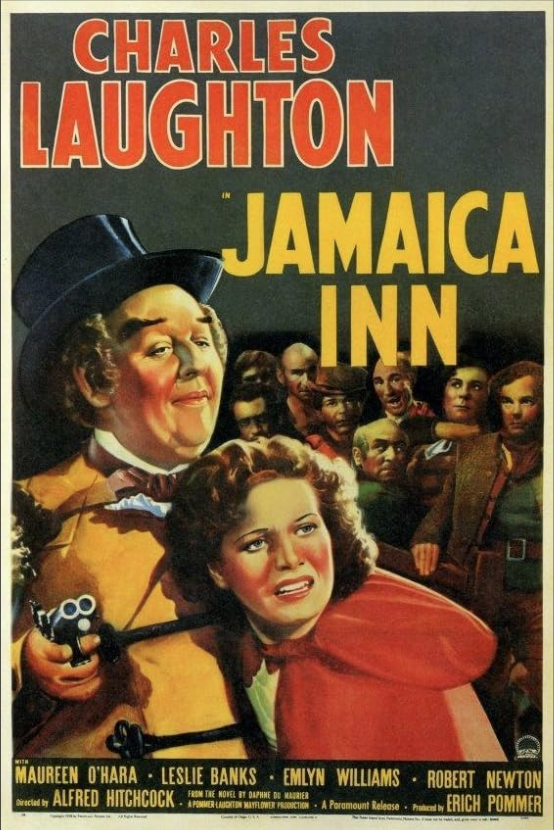
The 1939 film by Alfred Hitchcock, starring Charles Laughton and Maureen O’Hara
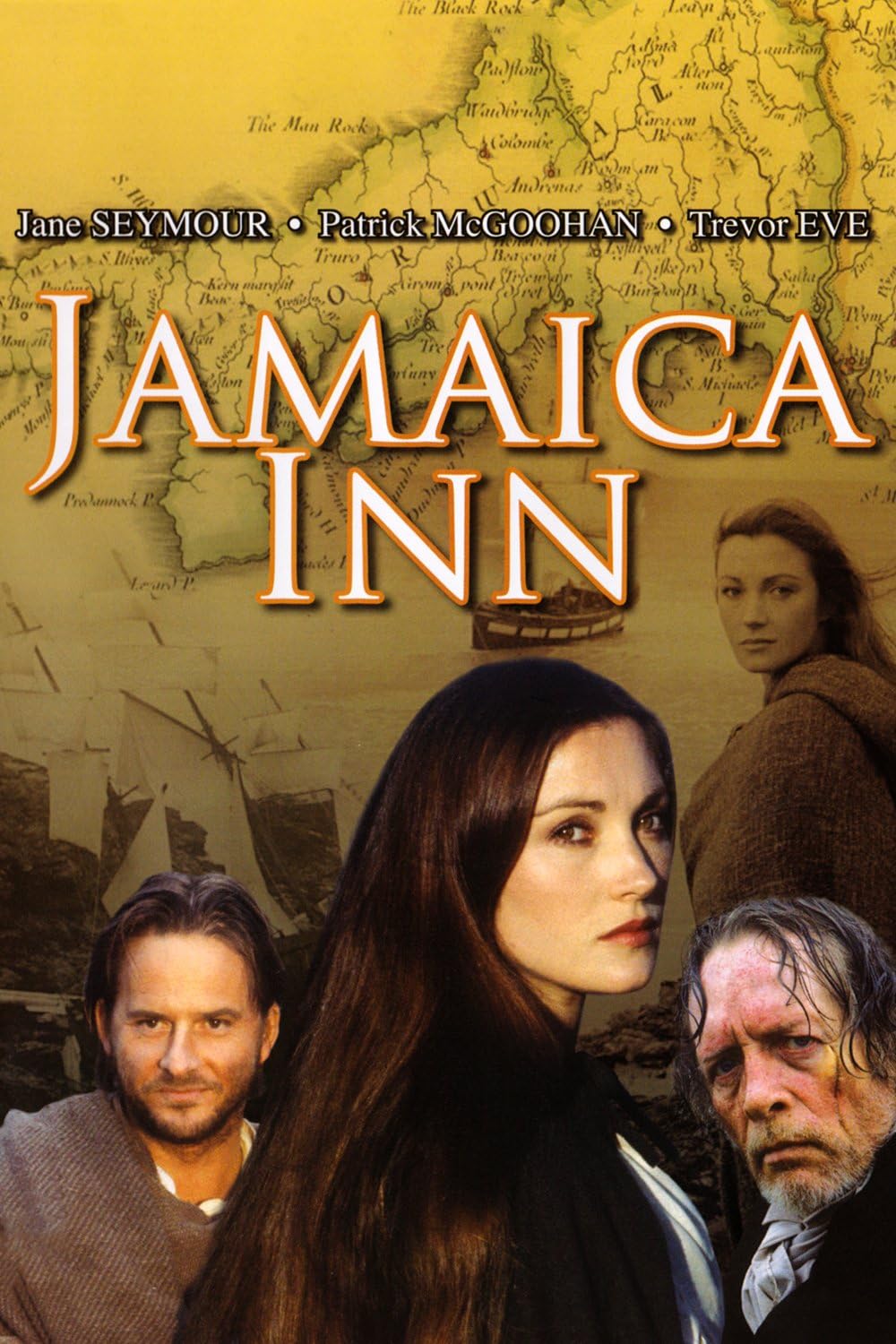
A 1983 miniseries starring Jane Seymour
A 2014 miniseries starring Jessica Brown Findlay, Matthew McNulty, Sean Harris, Joanne Whalley and Ben Daniels.
Of these, I’d be most inclined to check out the 2014 version, although I do love a good historical romance with Jane Seymour…
About the author:
Daphne du Maurier (1907-1989) was the daughter of the legendary actor-manager Gerald du Maurier and granddaughter of George du Maurier, the author of the vastly successful late-Victorian novel Trilby and cartoonist for the magazine Punch. She grew up in London and Cornwall, where she would settle as an adult. Du Maurier published her first novel when she was twenty-three and would go on to write seventeen more, many of them best-sellers, including My Cousin Rachel, Jamaica Inn, and Rebecca, one of the most popular novels of the twentieth century. In addition to her fiction, du Maurier wrote several family biographies, a biography of Branwell Brontë, a study of Cornwall, two plays, and a good deal of journalism. She was married to Tommy “Boy” Browning and was the mother of three children.