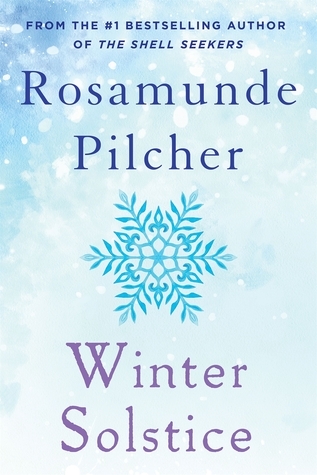
Book Review: Winter Solstice by Rosamunde Pilcher

Title: Winter Solstice
Author: Rosamunde Pilcher
Publisher: Dutton
Publication date: 2000
Length: 520 pages
Genre: Contemporary fiction
Source: Purchased
Rating:

Rating: 5 out of 5.

In Winter Solstice Rosamunde Pilcher brings her readers into the lives of five very different people….

Elfrida Phipps, once of London’s stage, moved to the English village of Dibton in hopes of making a new life for herself. Gradually she settled into the comfortable familiarity of village life — shopkeepers knowing her tastes, neighbors calling her by name — still she finds herself lonely.

Oscar Blundell gave up his life as a musician in order to marry Gloria. They have a beautiful daughter, Francesca, and it is only because of their little girl that Oscar views his sacrificed career as worthwhile.

Carrie returns from Austria at the end of an ill-fated affair with a married man to find her mother and sister sharing a home and squabbling endlessly. With Christmas approaching, Carrie agrees to look after her sister’s awkward and quiet teenage daughter, Lucy, so that her mother might enjoy a romantic fling in America.

Sam Howard is trying to pull his life back together after his wife has left him for another. He is without home and without roots, all he has is his job. Business takes him to northern Scotland, where he falls in love with the lush, craggy landscape and set his sights on a house.

It is the strange rippling effects of a tragedy that will bring these five characters together in a large, neglected estate house near the Scottish fishing town of Creagan.

It is in this house, on the shortest day of the year, that the lives of five people will come together and be forever changed. Rosamunde Pilcher’s long-awaited return to the page will warm the hearts of readers both old and new. Winter Solstice is a novel of love, loyalty and rebirth.

What a perfect book to start off a new year! I suppose it would have been even better to read Winter Solstice in the weeks leading up to Christmas and the solstice… but now I know in case I ever want to re-read it.

Winter Solstice is a big, heartwarming book, originally published in 2000, but with such a lovely, unhurried air that it feels like a throwback to an earlier era. In Winter Solstice, the author introduces us to a large cast of characters and then takes her time to let us get to know them before weaving all their stories together.

First and foremost is Elfrida Phipps, a former actress in her early 60s, who’ll be the first to inform you that her acting career was nothing splashy. After losing the man she loves after a long illness, Elfrida is ready to move into her retirement years. She leaves London and buys herself a cozy cottage in the village of Dibton, where she settles into small-town life and becomes part of the community.

In Dibton, she’s welcomed by Oscar and Gloria Blundell, who lives in a gorgeous home with their young daughter Francesca. Elfrida especially enjoys her conversations with Oscar, the church organist and a lifelong music lover and teacher, as well as her newfound friendship with Francesca.

Meanwhile, Elfrida’s cousin Carrie is heartbroken after the end of her long-term relationship with a married man. She returns home to London to find her mother and sister endlessly squabbling, leaving her 14-year-old niece Lucy stuck in the middle and yet sadly ignored.

Rounding out the cast of main characters, we also meet Sam, a businessman who’s returning home from New York to the UK to take up a prestigious new position with a wool-manufacturing conglomerate, at loose ends and unsure of anything but his work life.

The characters’ paths come together in the small Scottish town of Creagan where, for various reasons, they end up spending the weeks leading up to Christmas. As they settle in, they find shelter, friendship, and new possibilities. I really don’t want to say much more about the plot. This is a rather gentle story, so there aren’t any cliffhangers or mysteries — and yet, discovering how all the characters’ lives intersect and move forward is one of the joys of reading this lovely book.

There’s something beautiful and timeless about the writing in Winter Solstice. Nothing is rushed; the story moves forward through small steps, as we see moments in people’s lives, reflections on what’s come before, and an understanding of each person’s dreams, frustrations, and needs.

The descriptions of the land, the sea, and the general surroundings are simple and lovely:

And over the shallow hills of the distant headland inched the first sliver of an orange sun. The curved rim of dazzling light touched the shifting sea, smudged shadows on the undulations of the sand, and drained darkness from the sky, so that gradually it was no longer sapphire-blue, but faded to aquamarine.

The characters spend time together, but also alone. There’s a deep sense of appreciation as they find themselves in a moment of peace, away from the hustle of day to day life, able to live in the moment and simply let themselves experience the people and places around them.

This is a long novel, and I was afraid at first that it would be slow or even (gasp!) boring. No need to worry! The plot does take a leisurely approach, but I was never uninterested or wishing for the pace to pick up. The writing style gives us time to really get to know the characters, and it’s this approach that enables us to truly appreciate how they later connect and form new, meaningful relationships.

Prior to the this, the only book by Rosamunde Pilcher that I’d read was The Shell Seekers — so long ago that I couldn’t tell you a thing about the plot at this point. I doubt I ever would have come across Winter Solstice if not for a recommendation by an author who chatted with my book group last year. I’m so grateful that she recommended it!

Winter Solstice represents comfort, friendship, community, and goodness, without ever verging into saccharine-sweetness. The characters are lovely but imperfect, and there’s plenty of sadness mixed in with the joy. I thoroughly enjoyed this novel, and recommend it highly.

Question: Have you read Rosamunde Pilcher’s novels? Do you have a favorite to recommend?

Purchase linksAmazon – Audible audiobook – Bookshop.orgLibro.fm
Disclaimer: When you make a purchase through one of these affiliate links, I may earn a small commission, at no additional cost to you.


Audiobook Review: Shakespeare: The Man who Pays the Rent by Judi Dench and Brendan O’Hea

Title: Shakespeare: The Man who Pays the Rent
Author: Judi Dench and Brendan O’Hea
Narrators: Brendan O’Hea and Barbara Flynn, with Judi Dench
Publisher: St. Martin’s Press
Publication date: April 23, 2024
Print length: 400 pages
Audio length: 12 hours 5 minutes
Genre: Non-fiction / memoir / literature
Source: Library
Rating:

Rating: 5 out of 5.

Discover the work of the greatest writer in the English language as you’ve never encountered it before by ordering internationally renowned actor Dame Judi Dench’s SHAKESPEARE: The Man Who Pays The Rent—a witty, insightful journey through the plays and tales of our beloved Shakespeare.

Taking a curtain call with a live snake in her wig…

Cavorting naked through the Warwickshire countryside painted green…

Acting opposite a child with a pumpkin on his head…

These are just a few of the things Dame Judi Dench has done in the name of Shakespeare.

For the very first time, Judi opens up about every Shakespearean role she has played throughout her seven-decade career, from Lady Macbeth and Titania to Ophelia and Cleopatra. In a series of intimate conversations with actor & director Brendan O’Hea, she guides us through Shakespeare’s plays with incisive clarity, revealing the secrets of her rehearsal process and inviting us to share in her triumphs, disasters, and backstage shenanigans.

Interspersed with vignettes on audiences, critics, company spirit and rehearsal room etiquette, she serves up priceless revelations on everything from the craft of speaking in verse to her personal interpretations of some of Shakespeare’s most famous scenes, all brightened by her mischievous sense of humour, striking level of honesty and a peppering of hilarious anecdotes, many of which have remained under lock and key until now.

Instructive and witty, provocative and inspiring, this is ultimately Judi’s love letter to Shakespeare, or rather, The Man Who Pays The Rent.

This audiobook makes my list of one of my most enjoyable listens of 2025! In this remarkable book, Dame Judi Dench discusses her many roles in Shakespeare productions, going back to her very first professional roles and taking us through her experiences in the decades that followed. What becomes immediately apparent is her great love for Shakespeare, and even more astounding, her in-depth, detailed recall and understanding of the great lines and moments she’s performed over the years.

This book started as a series of recorded conversations between Judi Dench and Shakespearean actor and director Brendan O’Hea, with whom Ms. Dench has worked with many times over the years. The conversations took place over a period of four years, with the duo originally intending to donate the recordings to the archives of the Globe. But over time, the authors realized that there might be content here to appeal to a broader audience, and thus we have this book.

In it, the authors discuss all of Dame Judi’s roles, going play by play and character by character. It’s extraordinary to witness her vivid descriptions of the costumes, sets, and fellow actors, as well as the tone of the production and the specifics of working with different directors. Beyond the story of her experiences acting are deeper reflections on the content of the plays themselves, with vastly insightful thoughts on Shakespeare’s writing, what he includes or doesn’t include in the play, and why these plays still have meaning for today’s audiences and readers.

There’s so much to learn here! I’ve taken Shakespeare courses (long, long ago), but don’t remember learning nearly as much in that context as I did here, especially in terms of what is conveyed by whether lines are written in iambic pentameter or blank verse or prose. She discusses where breaths fall and how lines are delivered, pacing of speech and in-the-moment decisions about intonation and emphasis. It’s fascinating.

Equally fascinating are the tidbits about different productions and the reactions of critics to seemingly small details. I also picked up plenty of little trivia items along the way. For example, I don’t think I ever knew that in Shakespeare’s time, it was illegal to perform a wedding on-stage in a theatrical production — which is why weddings in Shakespeare’s plays take place offstage or aren’t shown in full.

The audiobook experience is terrific. While Brendan O’Hea reads his part of the conversations, narrator Barbara Flynn stands in for Judi Dench. I was disappointed at first not to be hearing Judi Dench throughout, but Barbara Flynn does such a great job that she melts into the part she’s playing, and I often forgot that I wasn’t listening to the actor herself. However, Judi Dench does the reading for the Shakespearean lines that start each chapter, and there’s a really amusing little extra at the end of the audiobook which is a recording of an additional conversation between her and Brendan. It’s very, very funny.

While the audiobook conveys the content in full, and is an amazing way to appreciate the lines from the plays throughout, it’s worth mentioning that the hard copy of the book includes sketches by Judi Dench herself. I’d recommend at least borrowing a library edition of the hard copy to follow along as you enjoy the audiobook. For me, I was loving the audio so much that I just had to have a print edition of my own, and made myself a little holiday gift of the hardcover version.

Not only did I love the stories and insights, but I also gained knowledge about plays I hadn’t read or encountered before. Reading this book has inspired me to read (and then try to find film versions) of more Shakespeare plays.

Shakespeare: The Man Who Pays the Rent is a phenomenal audiobook experience. For anyone who loves Shakespeare and the history of theater, I’d say it’s a must read and/or must listen! And beyond the academic aspects, it’s lovely to hear Judi Dench’s reminiscences and personal stories about her life in theater and what it’s all meant to her.

Definitely a 5-star experience. Don’t miss it.

Purchase linksAmazon – Audible – Bookshop.org – Libro.fm
Disclaimer: When you make a purchase through one of these affiliate links, I may earn a small commission, at no additional cost to you.
Save

Reading goals: Series to read in 2026

Welcome to 2026!

Each January, I typically identify a few series that I want to prioritize in the coming year. When I started this tradition, my lists were long and ambitious… and I didn’t particularly succeed at sticking to my plans. Last year, I scaled bag and highlighted a much smaller selection of series — and while I didn’t get to all of them, I did finish one series and sampled a few others.

As always, there are a few series (completed or ongoing) that I’d like to at least start. If I like the first book, maybe I’ll decide to keep going… but in any case, I hope to sample a few series starters and then see how I feel.

My priority series to read in 2026 will be:

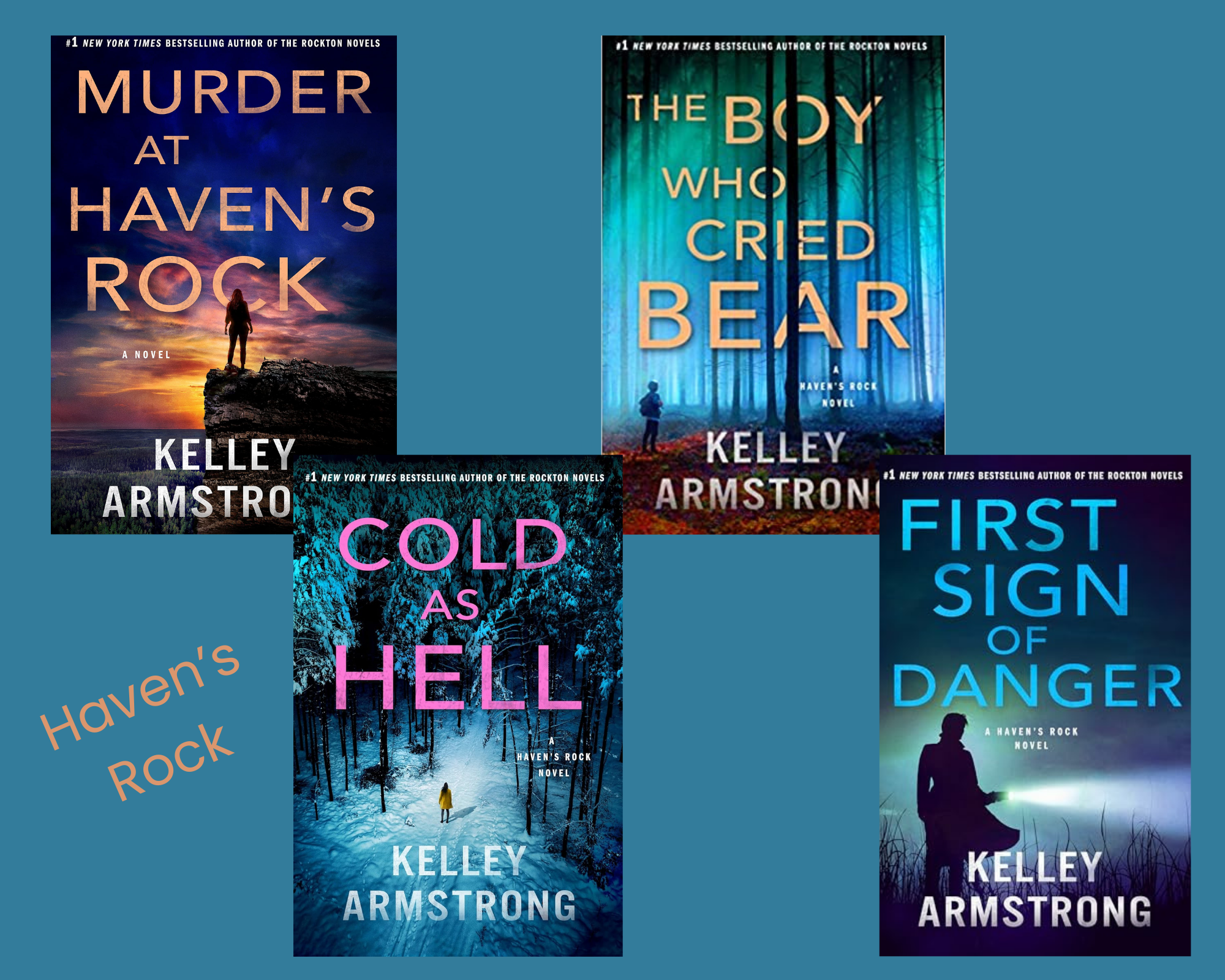
Haven’s Rock series by Kelley Armstrong: The Rockton series was a highlight for me in 2025, and I’m thrilled that there’s a spin-off series so I can keep spending time with these characters. I’ve been holding off since early December… and now that it’s 2026, I’m reading to dive in.

The fourth book, Sign of Danger, is the newest book, coming in February 2026. I do plan to read all four of these, not necessarily by February, but certainly within the next few months.

Other series to sample or binge in 2026:

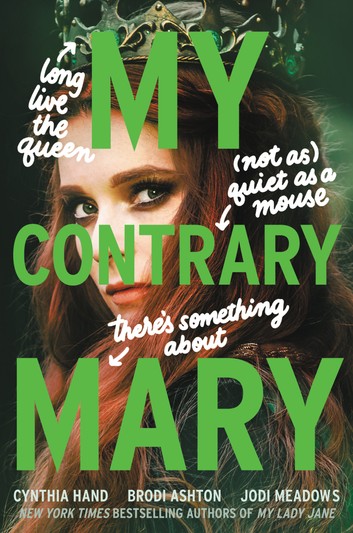
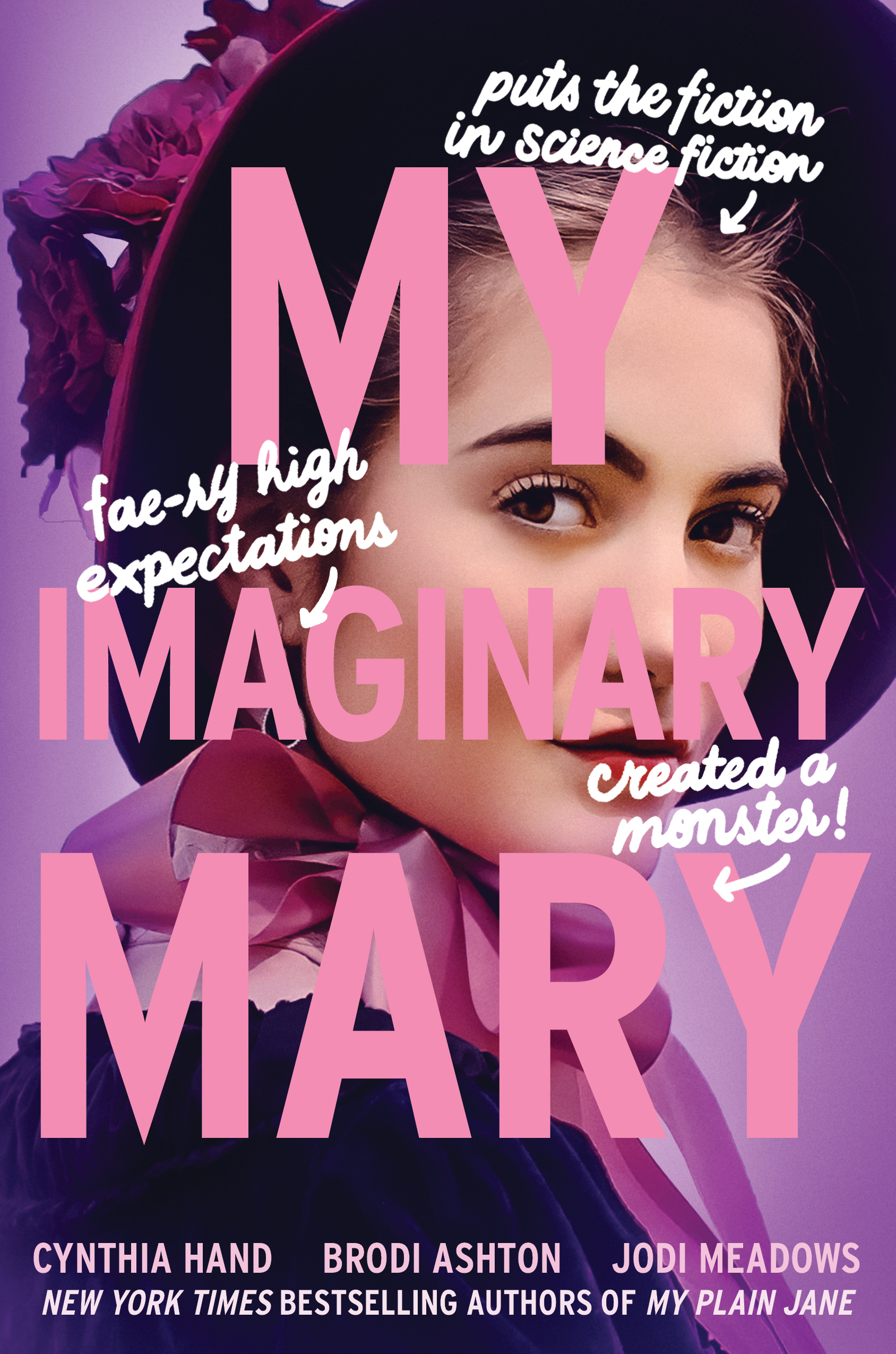
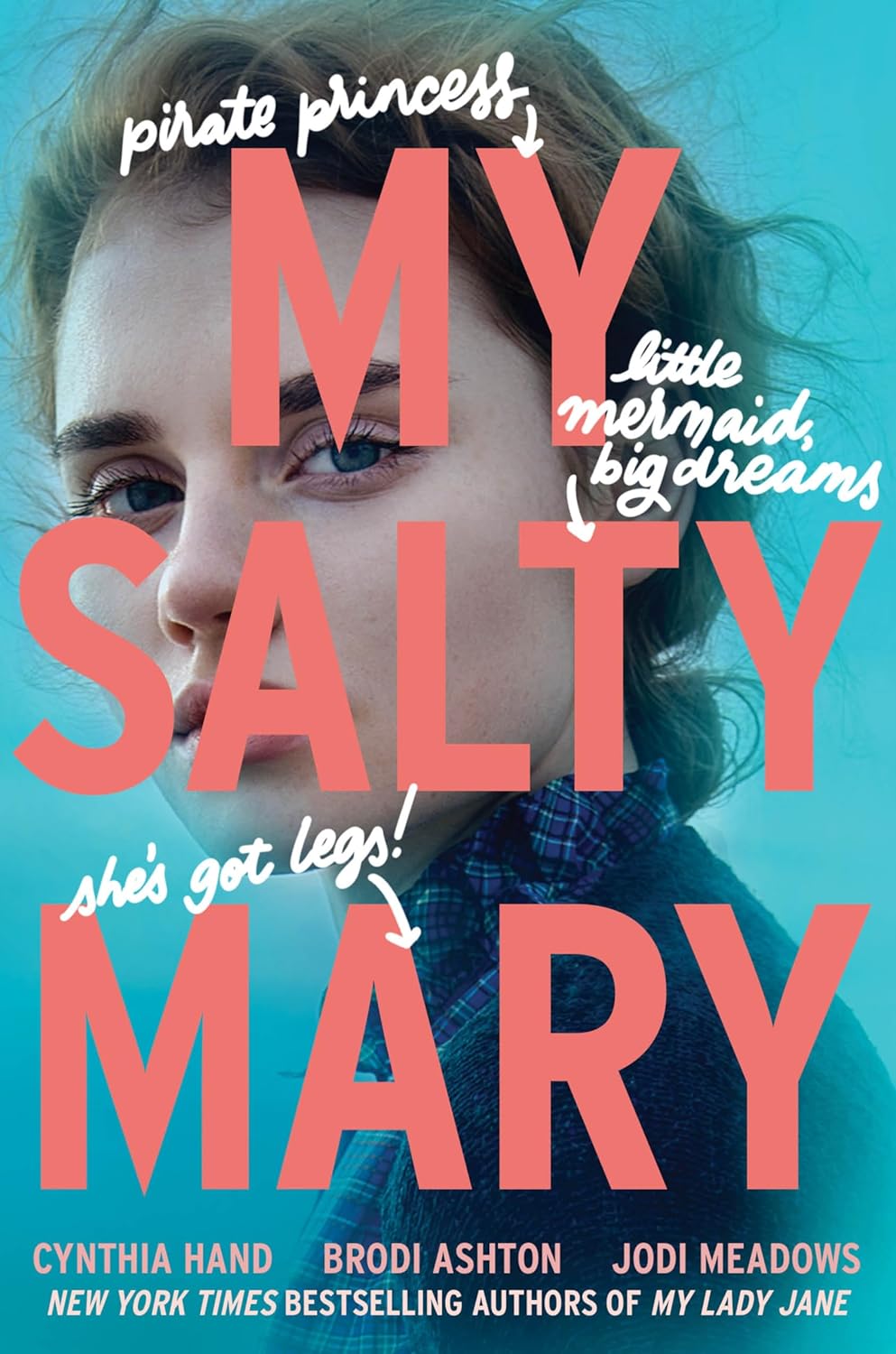
The Mary books (Lady Janies series) by Cynthia Hand, Brodi Ashton, and Jodi Meadows: My one hold-over from 2025! I really did mean to get to at least one of these books, and I’m recommitting to it for 2026.

The Chronicles of St Mary’s series by Jodi Taylor: According to Goodreads, there are 14 primary works plus a whole bunch of short stories in this series — which sounds a bit daunting, and yet, I’ve been seeing so many rave reviews for these books that I feel like I’m really missing out if I don’t give them a try. I’m committing to reading the first in the series, Just One Damned Thing After Another… and we’ll see what happens after that.

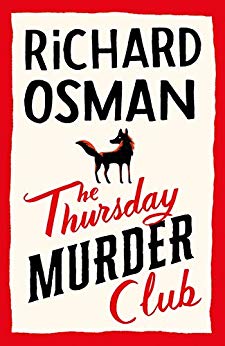
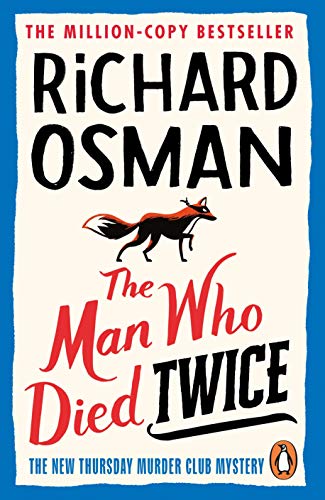
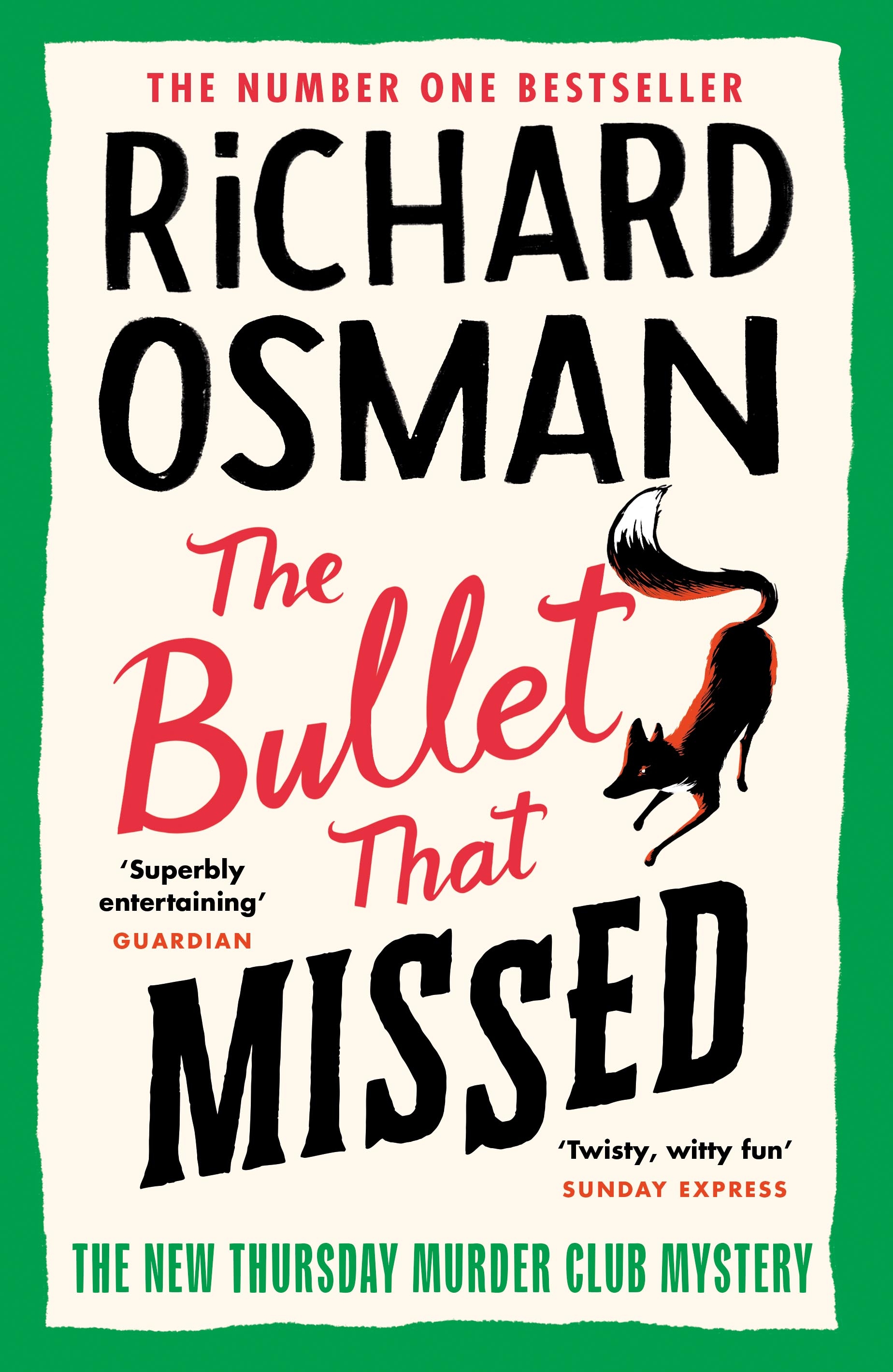
The Thursday Murder Club series by Richard Osman: I read the first book late in 2025 — and yes, it lives up to the hype. There are currently four more books in the series, and I plan to read at least one or two (if not more) this year.

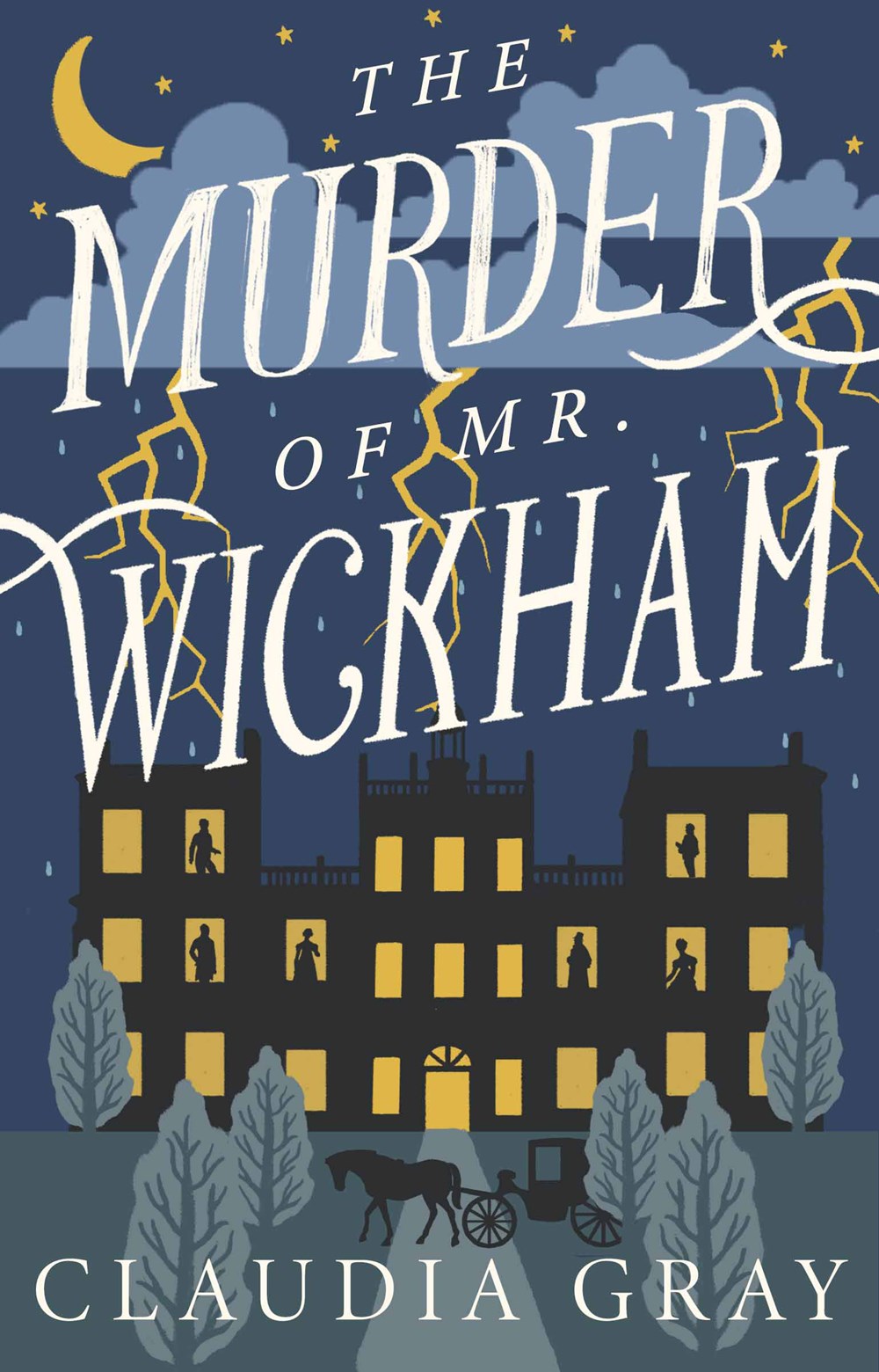
Mr. Darcy & Miss Tilney series by Claudia Gray: I read the first book in this series over a year ago, and I’ve been wanting to get back to it, at least for one more book. The 5th book in the series will be released in June 2026.

Children of Time by Adrian Tchaikovsky: I finally read the first book in this series this past year, after having it on my series-to-read list for several years in a row! I liked it a lot, but don’t necessarily feel a burning desire to dive back in right away. Still, I think I’d like to at least give the 2nd book a try, and then decide about the rest — so I’m only including book #2 on my list for now.

The “maybe” books:

And now, all my “maybe” choices — these are all series starters that I’m interested in. Maybe I’ll get to some of these in 2026, and then maybe I’ll want to read more from the same series… or maybe not. In any case, here are the other series starters that I’m considering this year, including several that are holdovers from 2025:

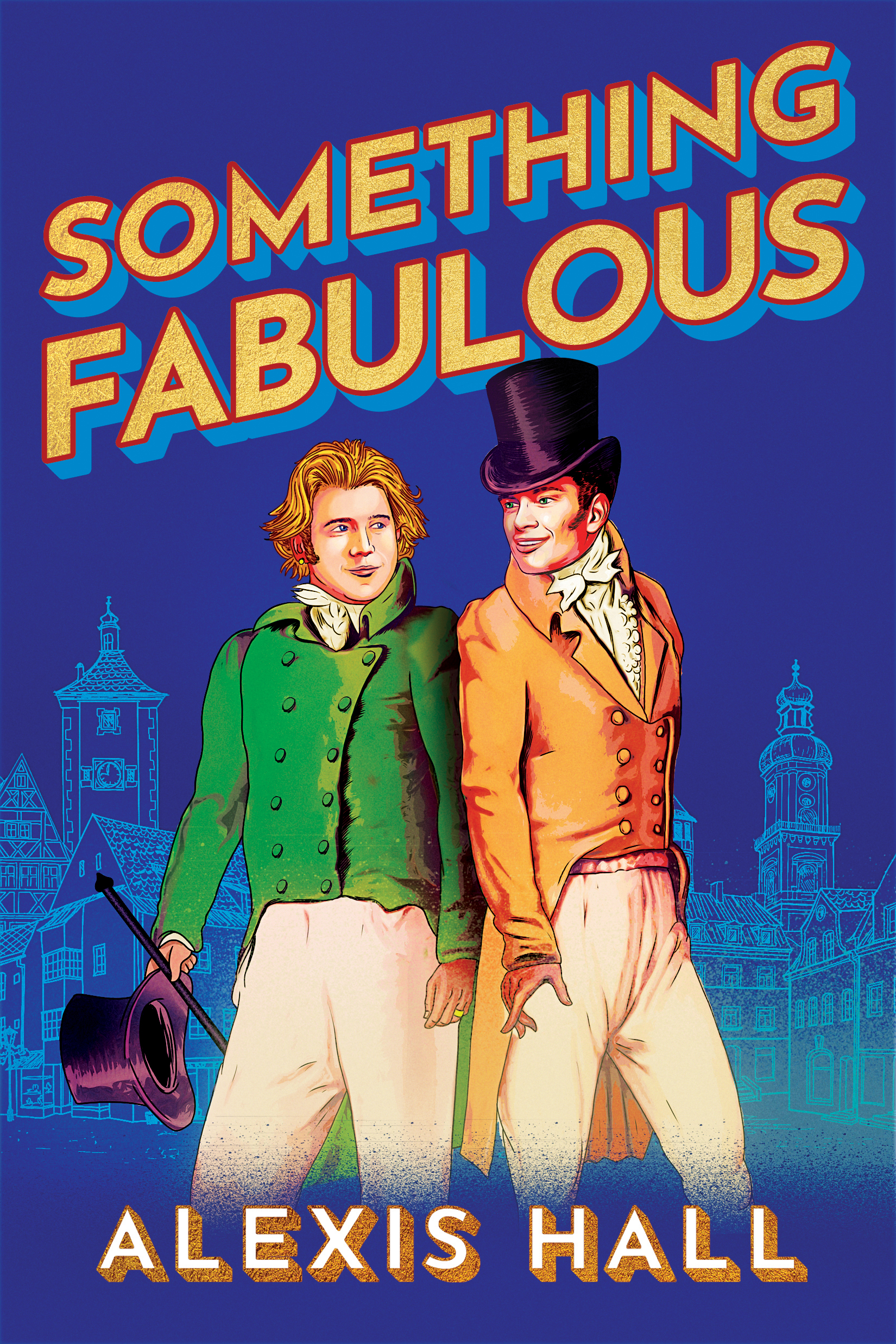
  • Something Fabulous by Alexis Hall
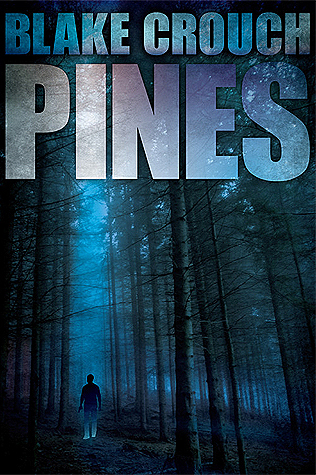
  • Pines by Blake Crouch
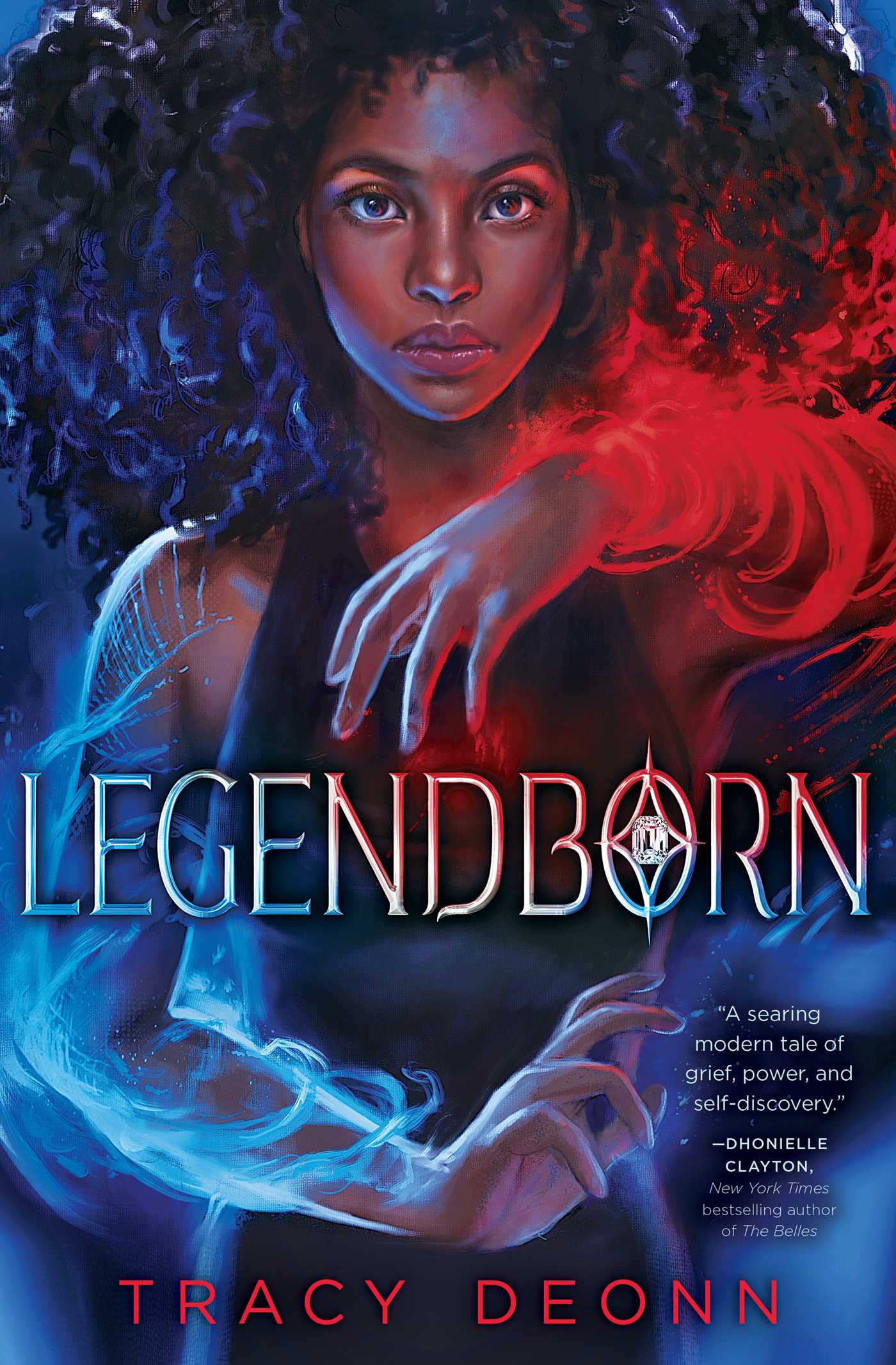
  • Legendborn by Tracy Deonn
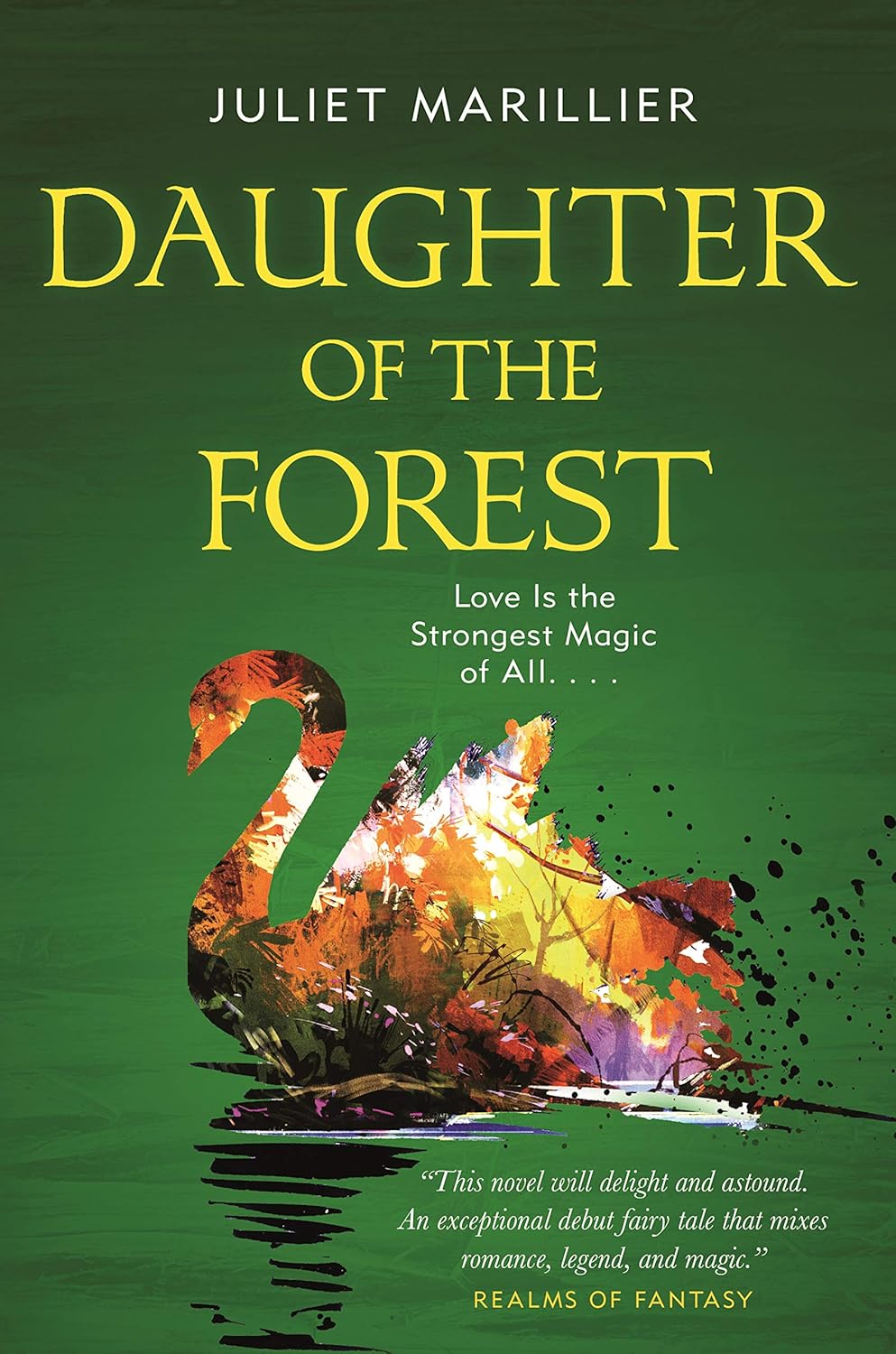
  • Daughter of the Forest by Juliet Marillier
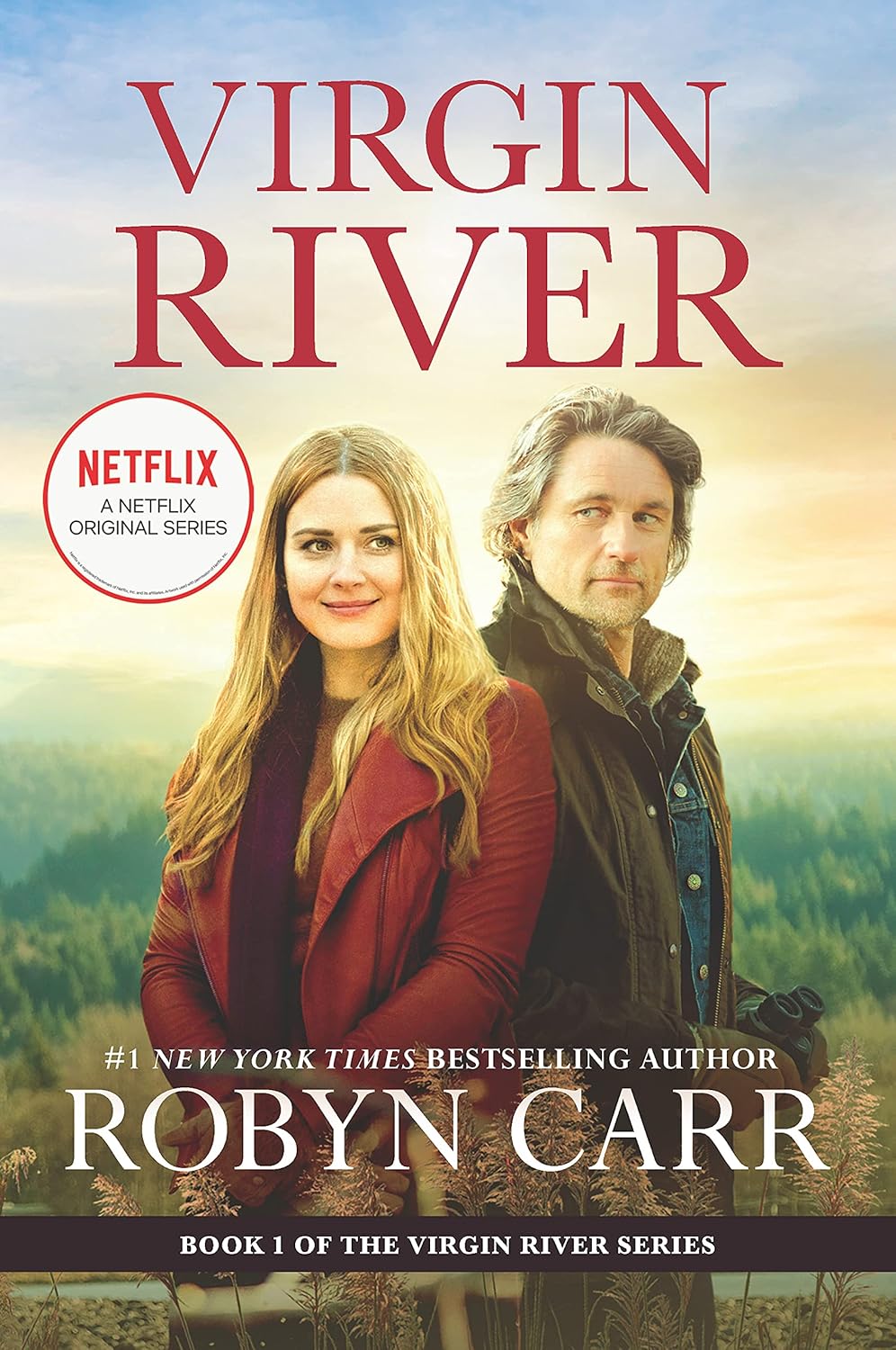
  • Virgin River by Robyn Carr
  • Wool (Silo, #1) by Hugh Howey
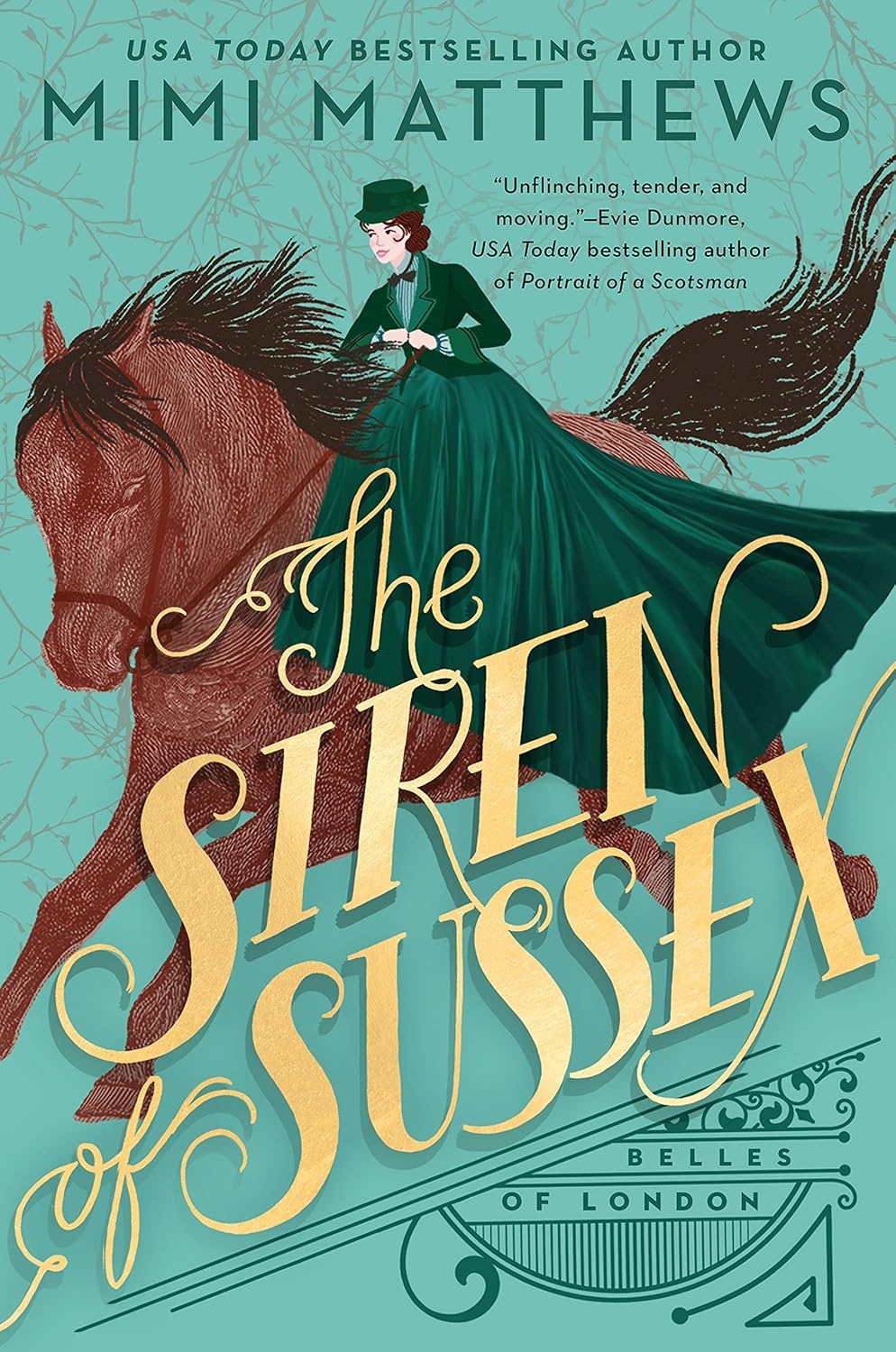
  • The Siren of Sussex by Mimi Matthews
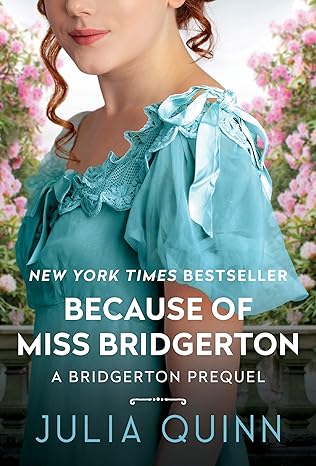
  • Because of Miss Bridgerton by Julia Quinn

Are you planning to start any new series this year? If you’ve read any of the series on my list for 2026, please let me know what you thought and if you have any recommendations!

Bookish Goals for 2026

Happy New Year!

As 2026 gets underway, I’m taking a moment to think about my book-related goals for the year to come.

My bookish goals mainly have to do with my reading habits: What do I want to focus on more — or less? What types of books do I want to read? What challenges do I want to join or set for myself?

Many of my reading goals are similar to those from years before… but that’s okay! I’m a work in progress — and my life as a reader continues to evolve.

Below are goals (intentions) that I’ll try to keep in mind as 2026 rolls along.

I’ll be joining a few challenges, as well as creating a few just for me:

Goodreads:

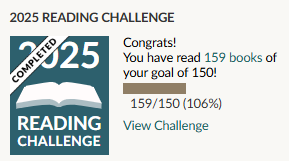
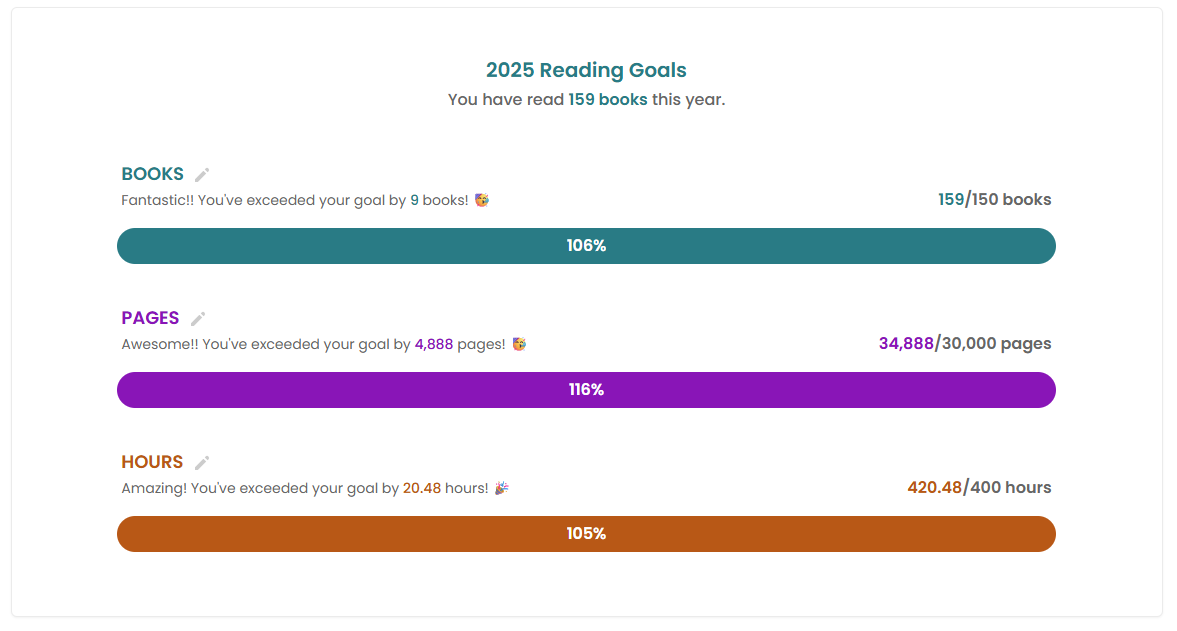
This is one I do every year. Last year, my goal was 150 books, and I ended up reading 159. However — I want to take things a bit slower this year and give myself breathing room for longer books and/or books that take more concentration or effort. Keep in mind that my goal number includes print and audio books, and I usually also have at least a few graphic novels and children’s/middle grade books in the mix.

StoryGraph:

I love that StoryGraph lets us break out our annual goals in three ways: Total number of books, number of pages, and number of hours (for audiobooks). I think my page and hours numbers from last year are pretty doable, but once again, I’m going to lower my total book count for the year.

More StoryGraph challenges:

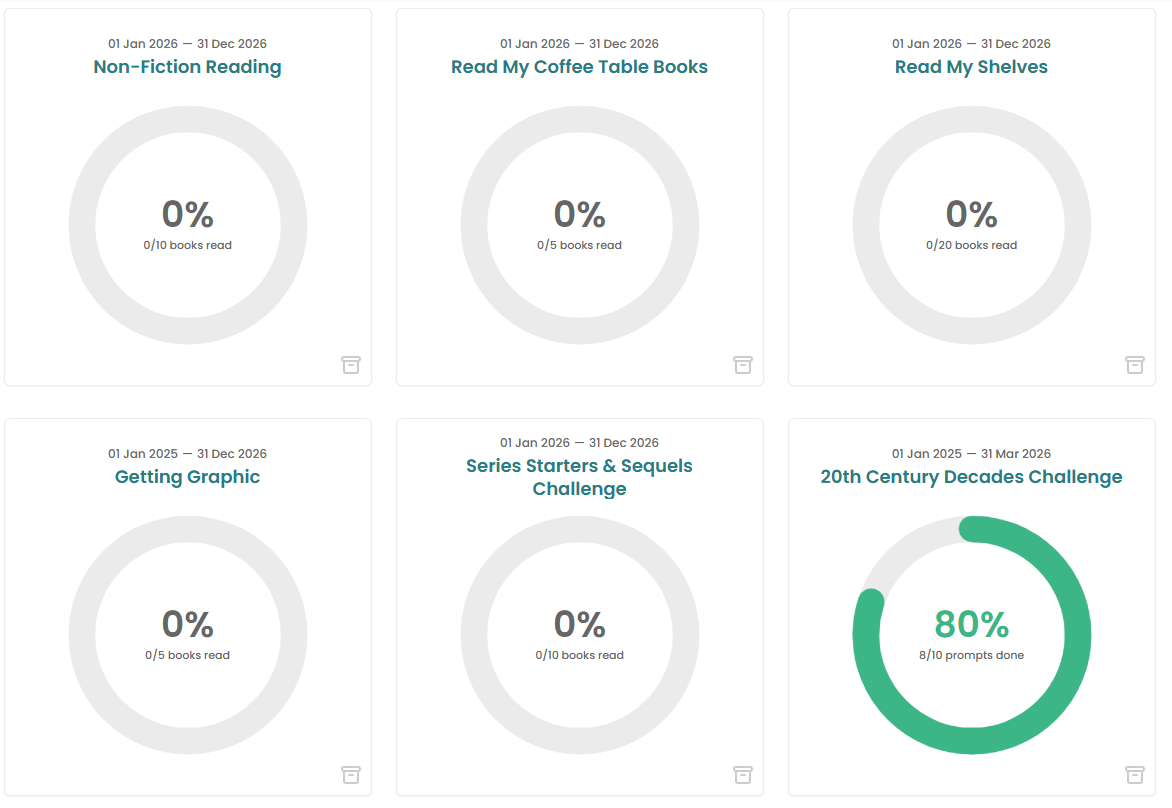
I’m creating several challenges for myself on StoryGraph to help me stay on track with my personal goals. I’ve set these up as public challenges, just in case anyone wants to join in… but really, my intention is to use these as motivation for myself! My challenges are:

  • Non-Fiction Reading: Read at least 10 works of non-fiction — any topic will do.
  • Read My Coffee Table Books: Because I have a tendency to buy these and not truly spend time enjoying them. This is the year to change that!
  • Read My Shelves: My most important challenge of the year! I’m committing to reading at least 20 books that I’ve owned since 2025 or earlier.
  • Getting Graphic: Making time for more graphic novels, especially those I own and haven’t read yet.
  • Series Starters & Sequels Challenge: Committing to reading at least 10 books from series — either starting a new-to-me series or continuing a series I’ve already started.
  • 20th Century Decades Challenge: This is a holdover from 2025 (and it’s a challenge I love). The goal was to read one book from each decade of the 20th century. I’ve made it through all but two, and decided to extend the end date so I could actually finish!

Beyond the challenges, here are my overall goals related to reading, blogging, and my bookish life:

Read whatever I feel like, as much as I can. I say this every year… and every year it’s worth repeating! I’m always happiest when I read without a plan. It’s a wonderful feeling! Apart from ARCs and book group books, this is the approach that works for me… which is why I tend not to join big, popular reading challenges with a ton of prompts and categories to live up to.

Keep ARC requests manageable, and keep up with the ARCs I’ve committed to. I did really well with this goal in the 2nd half of 2025, but find myself starting 2026 with more ARC commitments than I’d really prefer. I’ll see them through — after all, my ARC request are all for books that I truly want to read! But beyond the ARCs I’ve already committed to, I’m going to attempt to limit my requests for the rest of the year.

Keep up with my book group books. We have our book-of-the-month picks all set for 2026, and I find I do best if I plan ahead and figure out in advance when to start each book.

Make time for my priority series for 2026, which I’ll be highlighting in a separate post this week.

Read books I already own. I know, I know… we all say this, every single year! I’m getting a little annoyed with myself for not doing a better job of reading books promptly after I add them to my shelves. I have so many books in my home and on my Kindle that I haven’t read yet — and while some no longer interest me, there are plenty more that I really do want to read. I’m going to push myself in this direction throughout the year, although it can be hard to keep the momentum going when favorite authors keep releasing new books.

Continue finding time for classics. I’ve been participating in the Classics Club spins for the past couple of years, which I love — but I have a big list of classics yet to read, and I’d like to carve out some time for at least one or two outside of the “spin cycle”.

Continue to pare down the number of physical books on my shelves, and be mindful about which I keep and which I send on their way. I’ve now had my own Little Free Library for over a year, and I’ve loved seeing the books come and go. When the LFL starts looking a little empty, I restock with a few books from my shelves that I haven’t looked at in ages. It’s a great feeling to see my “old” books get grabbed up and taken to a new home! I’m continuing to list books on Pango Books too, which helps me feel like I’m offsetting my book buying dollars a bit while also sending my gently loved books onward to someone new who’ll love them.

Do a big audiobook reread: I’ve been wanting to do an audio re-read of the Green Creek series by TJ Klune for a couple of years now. There’s also a new audiobook edition of Outlander, and well… it’s never a bad time for an Outlander re-read!

What are your bookish goals for 2026? Whatever they may be… wishing you lots of bookish delights!

2025: My reading year wrap-up

It’s the last day of 2025, and before it strikes midnight, it’s time to look back on my reading and blogging stats for the year. Overall, my sense is that it was a good reading year! I definitely read lots of book that I loved… but let’s see what the numbers reveal!

First, according to Goodreads:

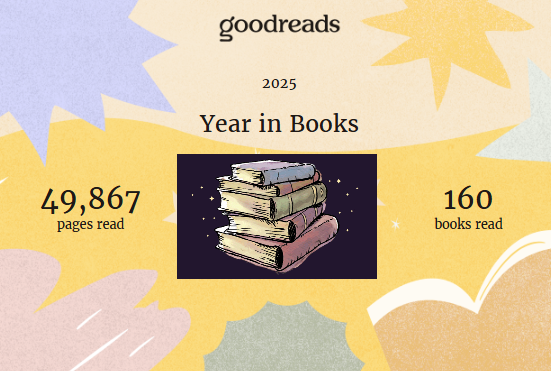
Not sure why this says 160 books read — my challenge and all other stats say 159, which is correct!

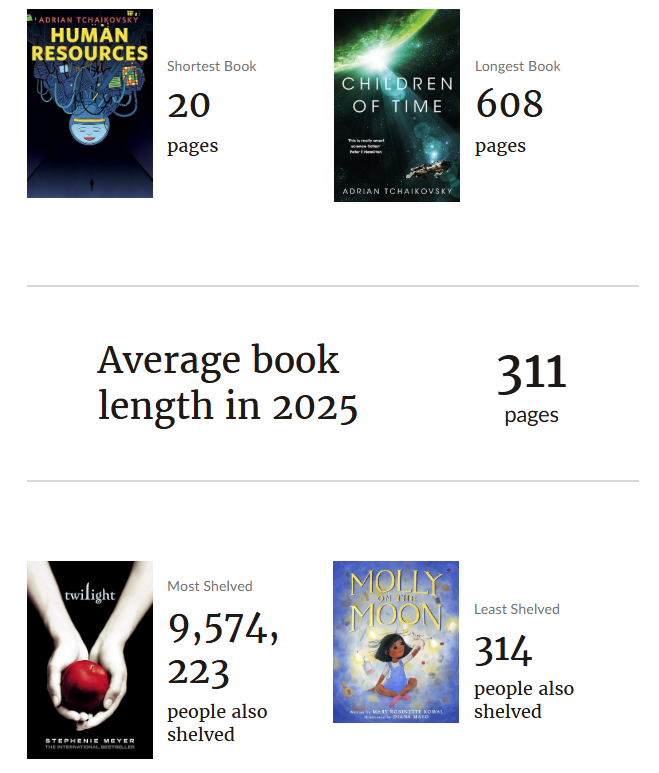
Ha! I forgot that I reread Twilight this year after a visit to Forks over the summer!

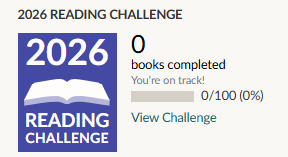
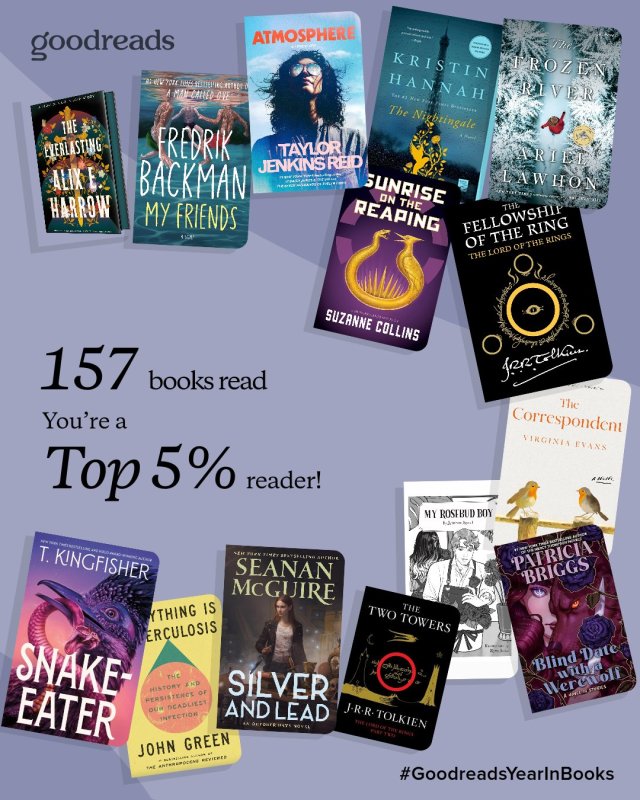
I completed my 2025 Reading Challenge… but keep in mind my total includes graphic novels and children’s books as well as novels and big “serious” books.

I’m planning to lower my goal for 2026 by a lot. I’m aiming for 100 books in 2026. I want to give myself plenty of breathing room and allow space for books that take more time and concentration.

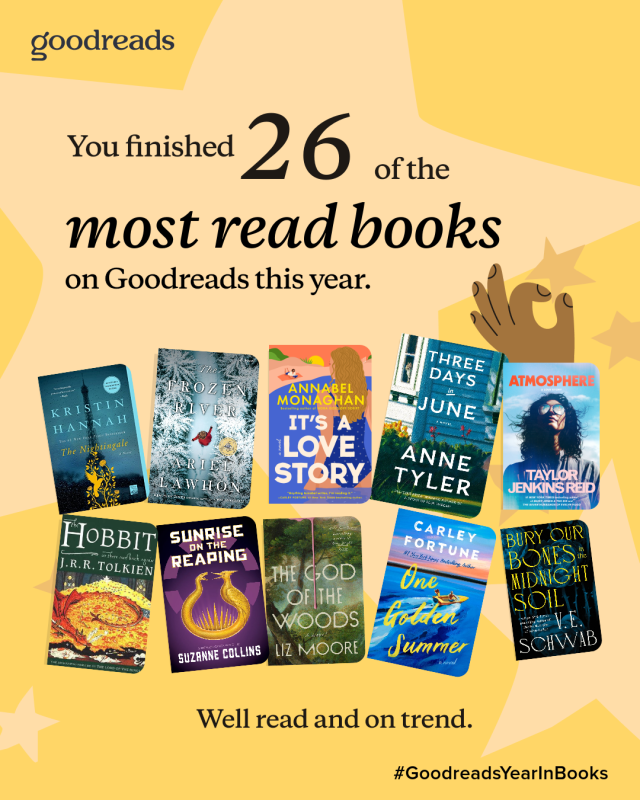
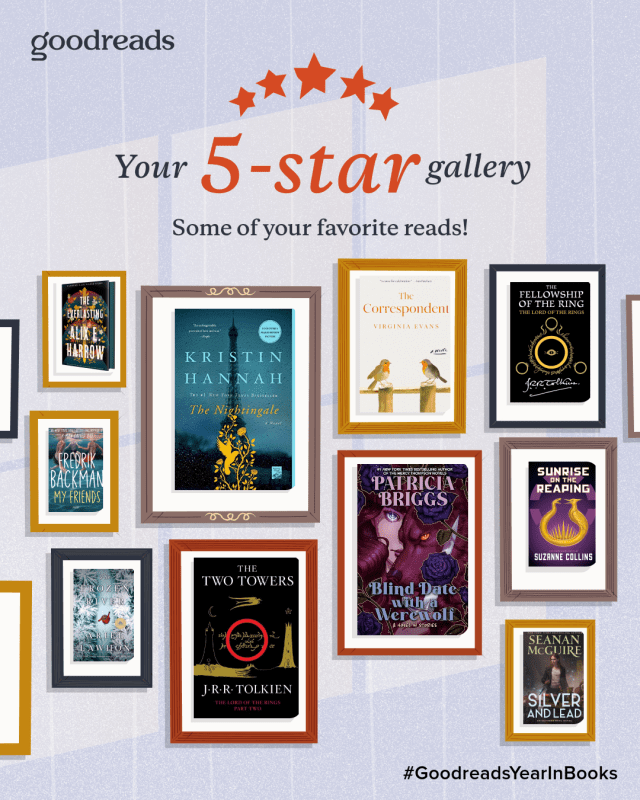
I really like the Goodreads graphics that I received in a wrap-up email last week:

Over on Storygraph, different sets of stats and views are available. From my challenge page, here’s where I stand as of December 31, 2025:

I really like that audiobooks are tracked by hours, rather than pages. Makes sense!

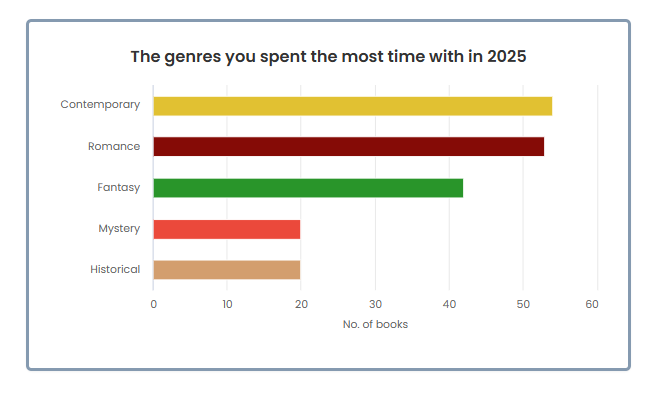
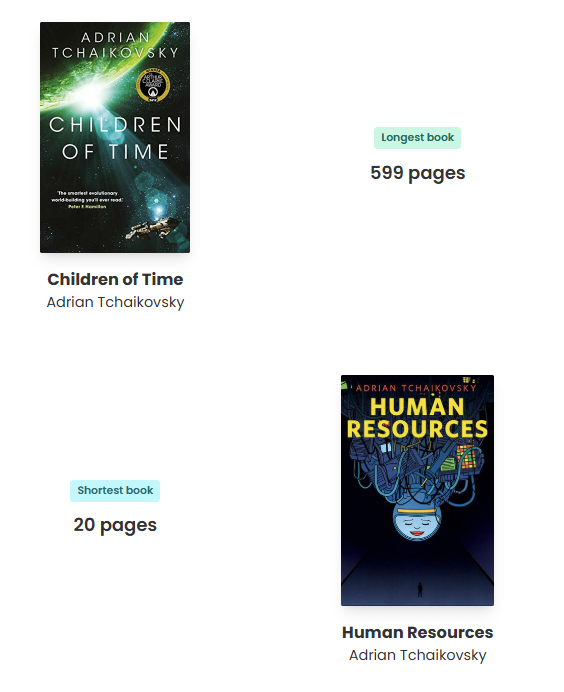
For my year in review:

Yup, same books as on Goodreads… although the page count is slightly different, presumably due to accidentally selecting different editions on StoryGraph vs Goodreads

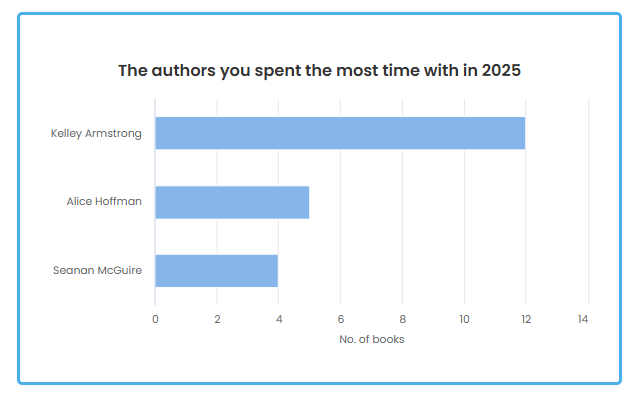
Kelley Armstrong doesn’t surprise me at all, but I was really puzzled by Alice Hoffman… until I remembered that I listened to several audiobooks of her short fiction while on a trip last spring!

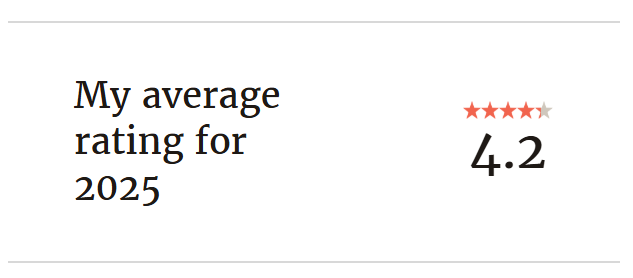
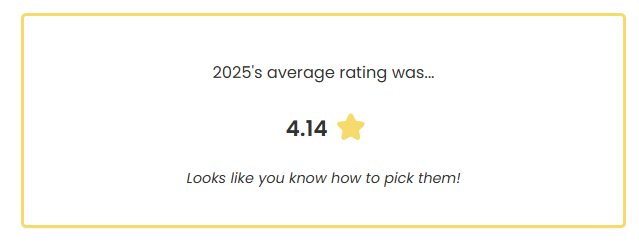
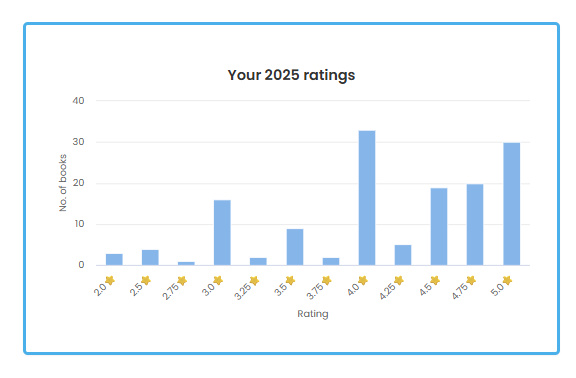
I’m actually surprised that my average rating is pretty closely aligned with the stats from Goodreads, since StoryGraph allows fragments of stars and Goodreads only allows full stars.

I gave 5 stars to 30 books in 2025! That’s a pretty awesome feeling!

This little tidbit made me laugh:

So clearly not correct! But I guess what I learn from this is that I’ve missed out on marking books as owned on StoryGraph. Note to self: Do better in 2026!
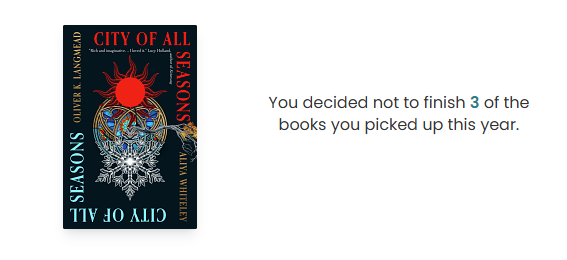
More than three, actually — but for the handful of books that I put down within the first chapter or so, I didn’t even bother marking them as DNFs.

I participated in three private challenges on StoryGraph as well:

  • Series Progress Challenge: I set myself a goal to read at least five books from series on my TBR — either by starting with the first book or reading at least one more from an already started series. And I did it! I’m planning to do something similar in 2026.
  • 20th Century Decades Challenge: I decided to challenge myself to read one book from each decade of the 20th century. I did pretty well! I still need to read books from the 1920s and 1960s… and since this challenge is just for me — and because I do want to see it through — I’ve extended the end date by three months to give myself more time. My challenge, my rules!
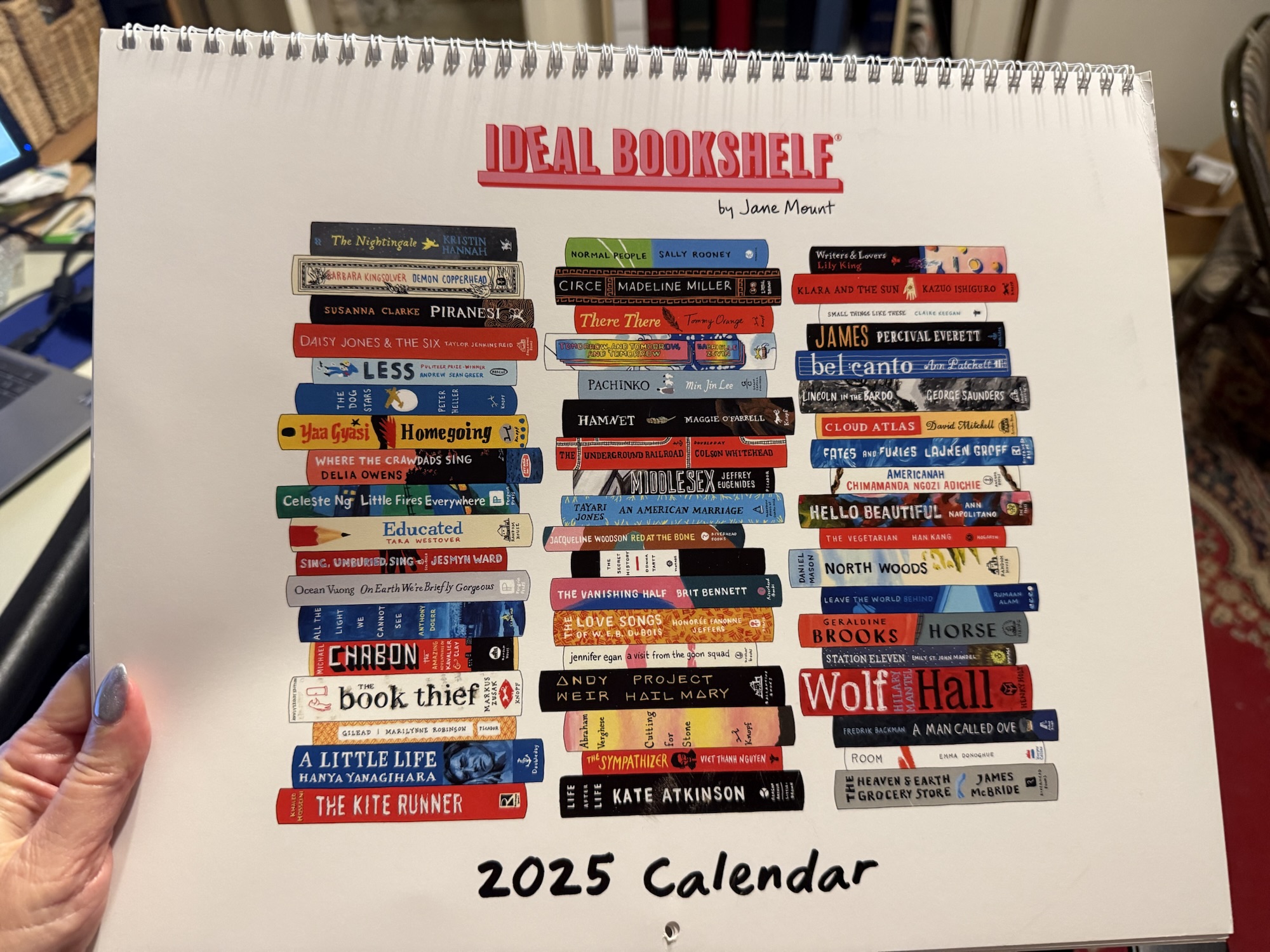
  • Ideal Bookshelf 2025 Calendar: This was a fun one! As a holiday gift last year, I bought the 2025 Ideal Bookshelf calendar for my daughter, and then treated myself to one as well. My brilliant daughter decided it would be fun to create a challenge for the two of us, with the goal of reading one book from each month on the calendar. And I did it! Since two months were cooking/baking-themed, she made those bonuses. In the end, I read one per month of all the rest, plus one bonus book. We didn’t get the calendars for 2026, so this was a one-time challenge. I loved it!


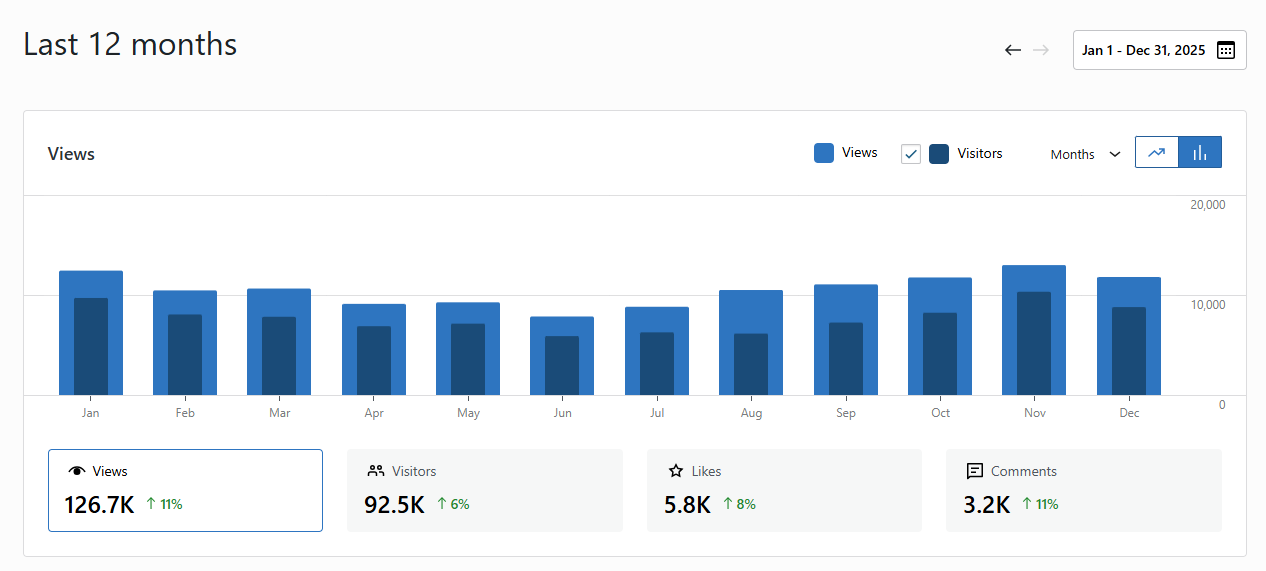
In terms of blogging stats, I think I had a decent year!

Most of my referrers were search engines and WordPress reader. I had a few very odd days with 1000+ views — which is NOT my norm — and there was no particular reason for it. Chalk it up to a visit from the bots!

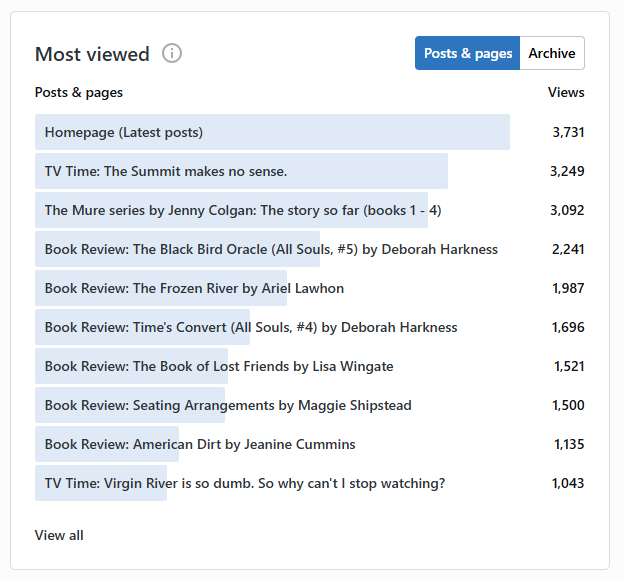
According to WordPress, these were my most-viewed posts from 2025:

I’m not sure how real any of this is. It’s not like the most-viewed book review posts got a significant number of comments relative to other book review posts — so again, I’m guessing a lot of this is bot-driven. I will note, however, that my small number of TV-related posts tend to get high numbers of reviews and comments… which is a bit weird for me, since most of my focus is books, not TV. (Sad commentary on today’s society? Or just another weird fluke of search engines and bots?)

Well… that was fun! I tend not to follow stats too closely during the year, but it’s interesting to see all the graphs and trends at year end.

Onward to 2026! Wishing one and all a year full of great books and happy reading hours!

All the books I meant to read – 2025 edition

It’s time for my annual end-of-year tradition — a look at all the books I meant to read! Here’s a look back at all the books I purchased in 2025, but just didn’t get around to reading for one reason or another.

As I noted last year, I’ve gotten much better about being thoughtful about which hard copy books I add to my shelves. I’ve leaned much more heavily into borrowing library books, and when I do spend money on new books, it tends to be for e-editions (since both my husband and I do the bulk of our reading on our Kindles).

However… I do still give in to temptation! There are certain authors whose books I need no matter what! I picked up a couple of signed books at author events this year, and treated myself to a few books that caught my eye and were total impulse purchases. In total, I bought fewer hard copy books than in previous years — and of the ones I bought, many were copies of books I’d already read, loved, and then decided to add to my bookshelves.

When it comes to e-books, I must admit that my restraint seems to go out the window. I tend to grab copies of ebooks when I see a good deal — I just can’t resist when a book on my TBR is available for $1.99 as a one-day price drop! The downside is that I end up adding books that I don’t necessarily intend to read right away. So, you’ll see lots and lots of new Kindle books added in 2025 and not yet read.

Let’s get to it. Here’s a salute to my unread books of 2025!

First, the hardcovers and paperbacks:

As for the ebooks added to my Kindle library in 2025:

Save

The e-book list is pretty overwhelming. Almost all of these were purchased when their prices dropped to a dollar or two… but still, that’s way more than I really should be adding to my library, when I still have so many books yet to read. I’ll try to do better in 2026 (but also, I acknowledge that I say this every year!)

End note:

While I’m talking about “meant to read” books, I thought I’d take a look at my quarterly Top Ten Tuesday TBR posts of 2025, to see if I actually read the books I listed as my priorities each season. Turns out, I did okay! Of the 37 books I named (three books were listed in more than one quarter), I read all but seven. My unread TTT/TBR books are:

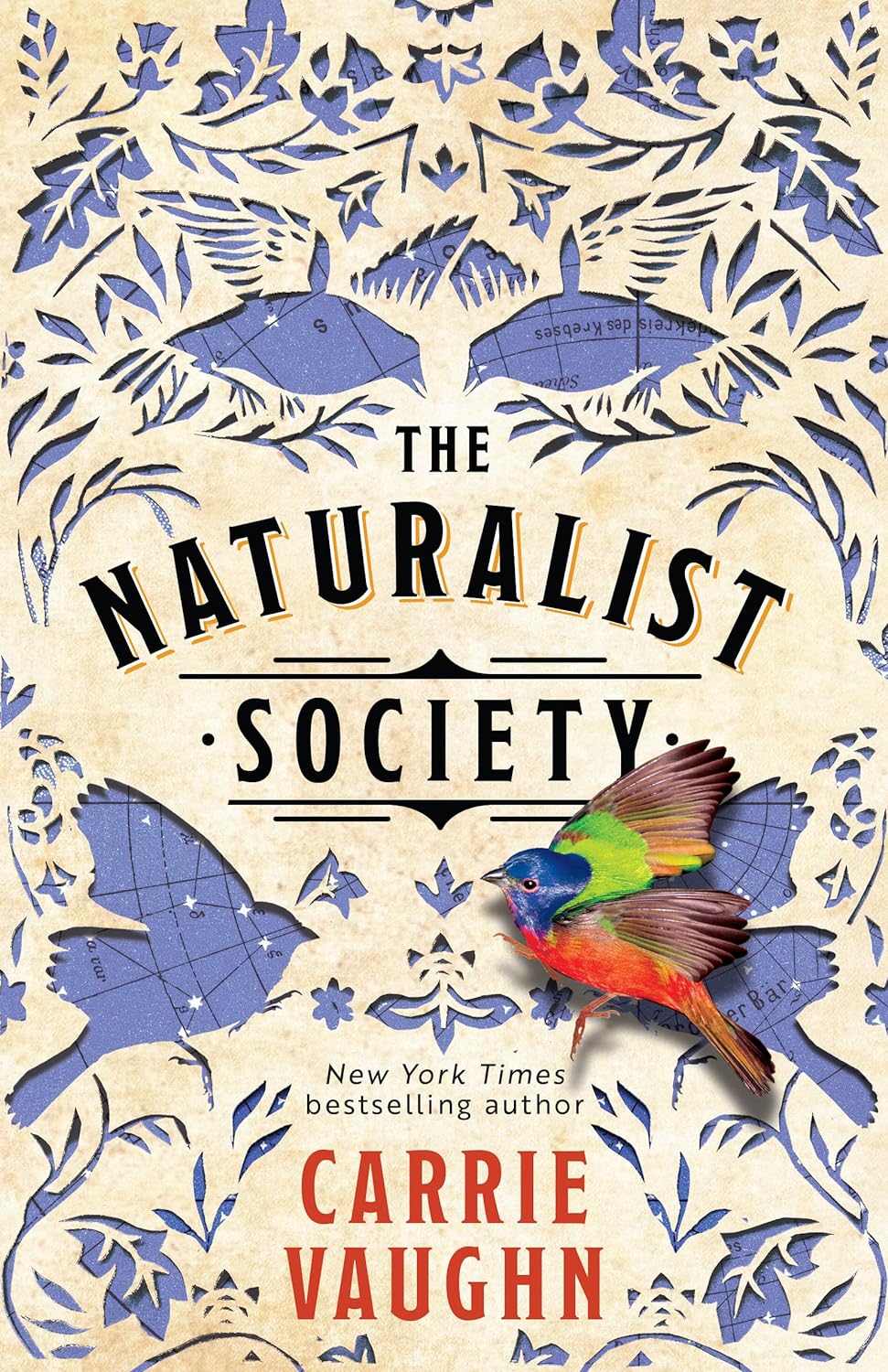
  • The Naturalist Society by Carrie Vaughn: I really like this author, but didn’t feel interested enough to read this one.
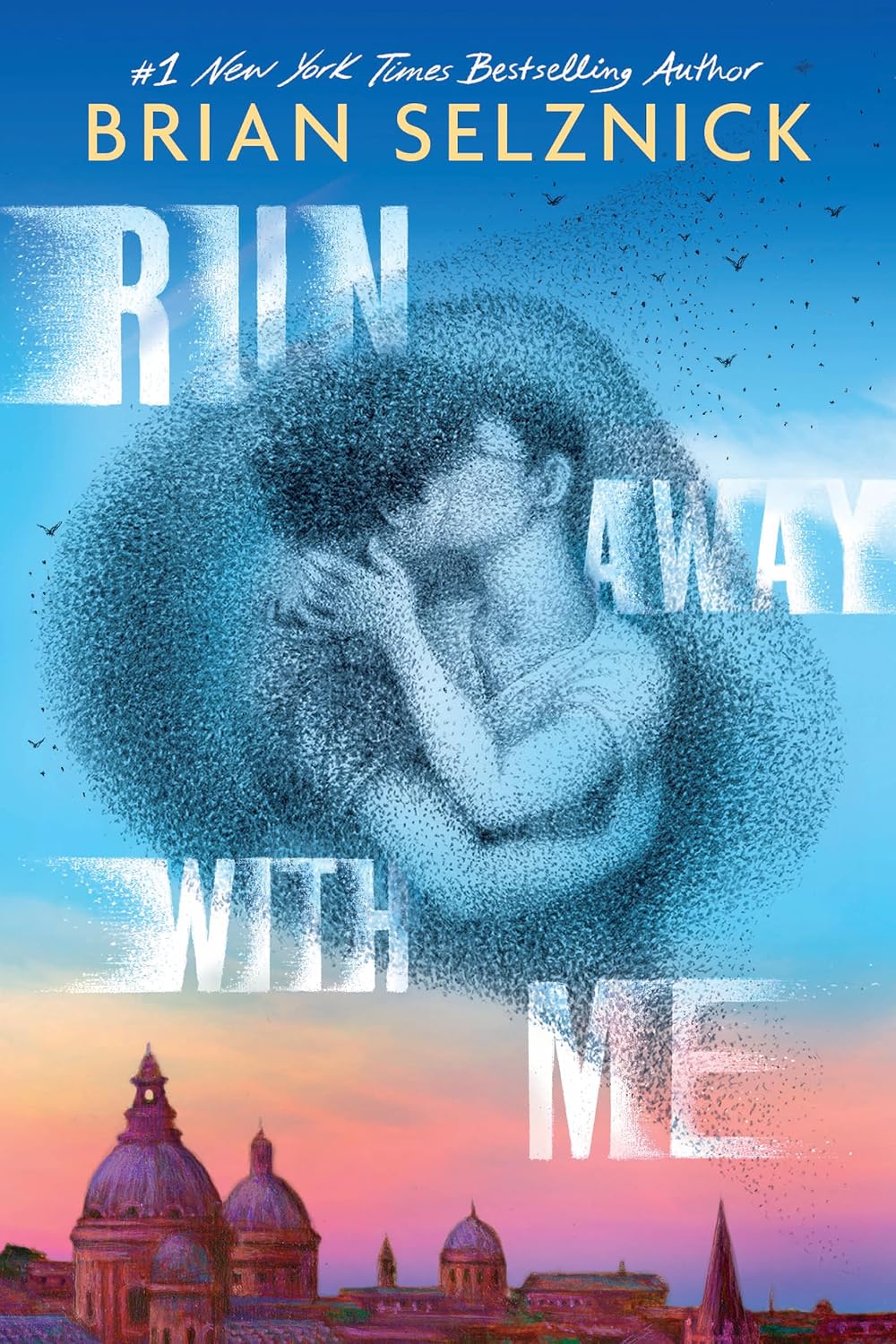
  • Run Away with Me by Brian Seltzer: Just didn’t get around to borrowing this book from the library. Maybe someday, but it doesn’t feel like a priority.
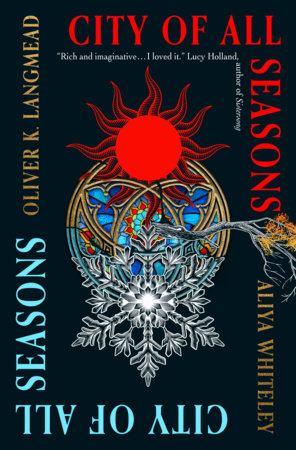
  • City of All Seasons by Aliya Whiteley and Oliver K. Langmead: DNFd this one after a couple of chapters.
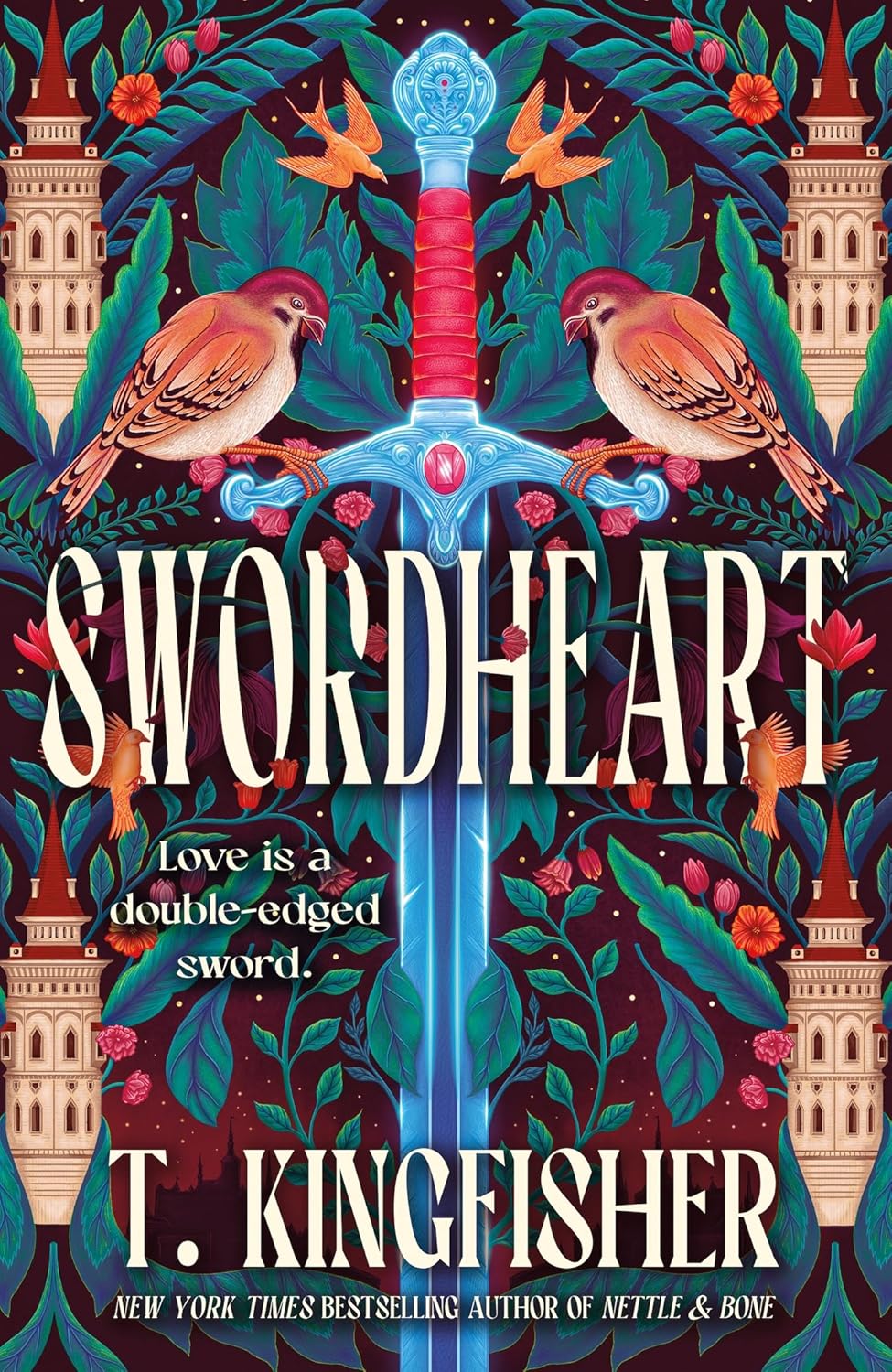
  • Swordheart by T. Kingfisher: Still plan to read
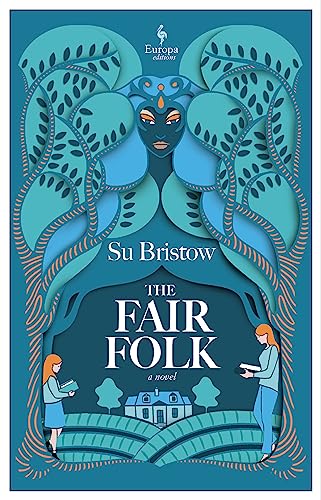
  • The Fair Folk by Su Bristow: Still plan to read
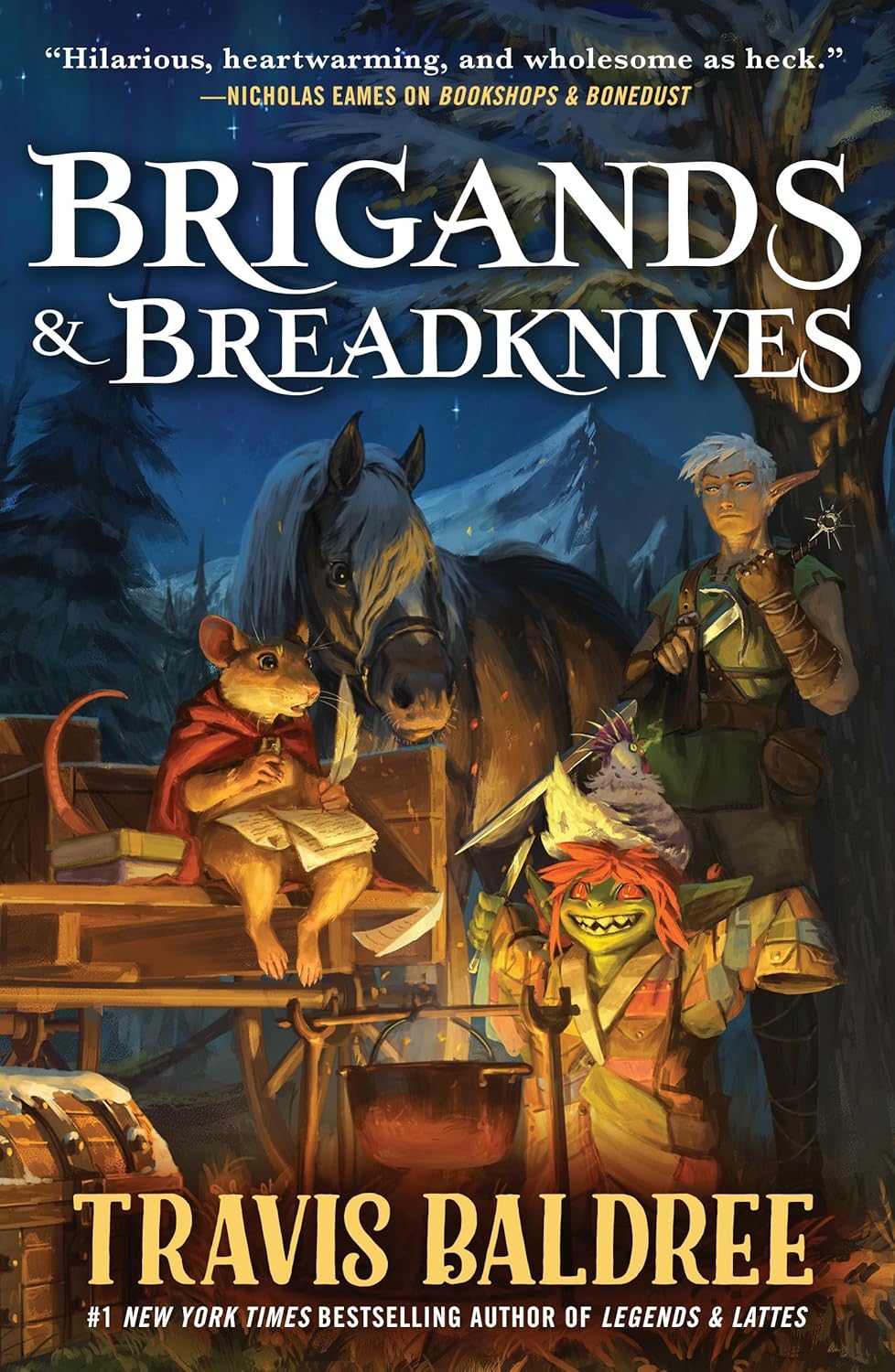
  • Brigands & Breadknives by Travis Baldree: Still plan to read
  • A Town with Half the Lights On by Page Getz: Still plan to read

Have you read (and loved) any of my 2025 “meant-to-read” books? Please let me know if you see any you’d consider best of the bunch!

Onward to 2026! Happy New Year!Save

Top Ten Tuesday: The Ten Most Recent Additions to My Kindle Library

snowy10

Top Ten Tuesday is a meme hosted by That Artsy Reader Girl, featuring a different top 10 theme each week. This week’s topic is Most Recent Additions to My Bookshelf.

I’ve already shared most of the recent physical books I’ve added to my shelves — mainly hardcover editions of books I’ve already read (either as ARCs or from the library). So, for today’s post, I’m focusing on my Kindle library. Kindle books are an ongoing source of temptation for me. I can’t resist clicking that “buy now” button when there’s a sudden price drop! $1.99 for a book I’ve been wanting? Yes, please! Of course, I end up with more Kindle books than I can possibly read right away… but it’s nice to have options.

Here are the ten Kindle books I’ve added most recently:

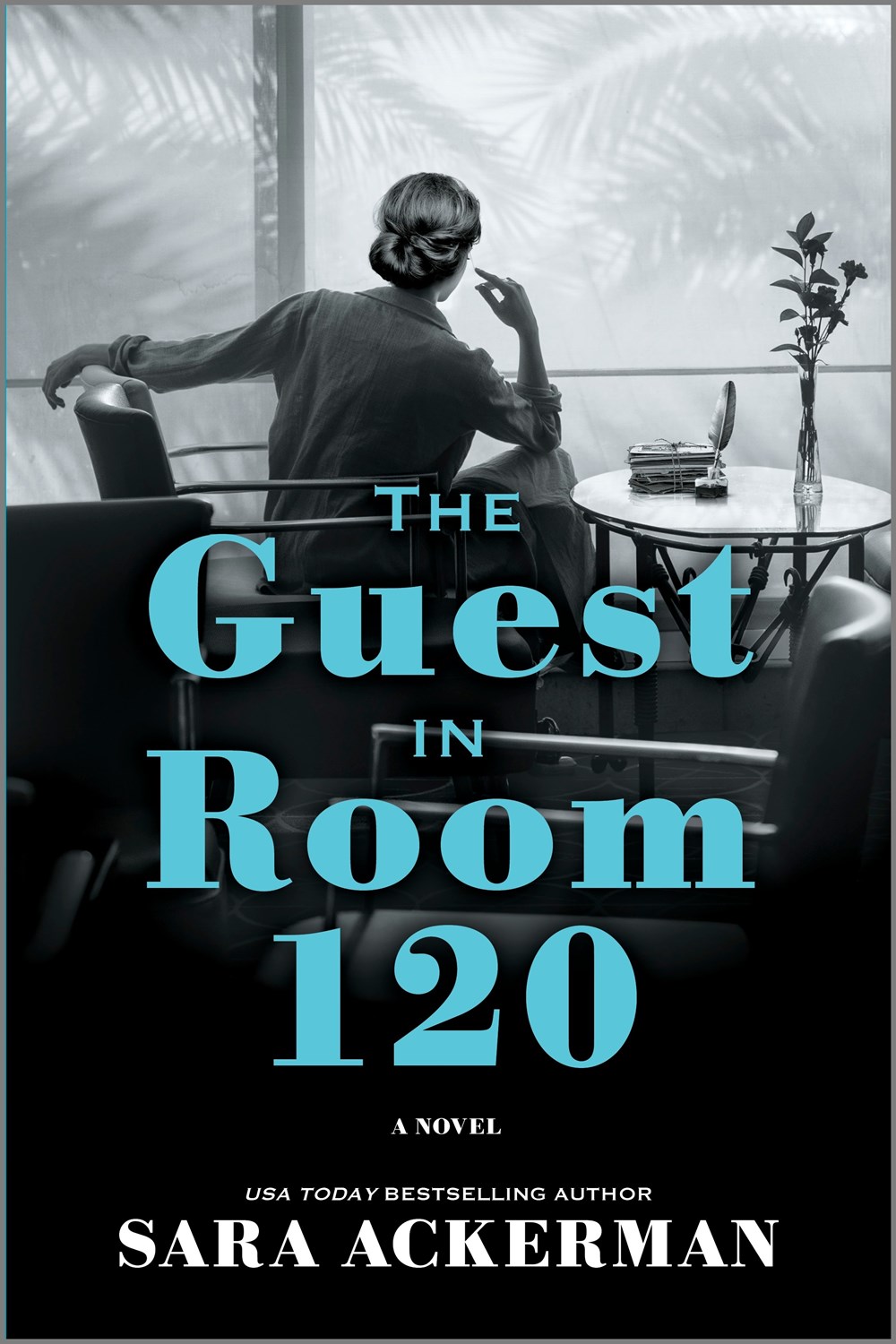
  1. The Guest in Room 120 by Sara Ackerman
  2. The Amalfi Curse by Sarah Penner
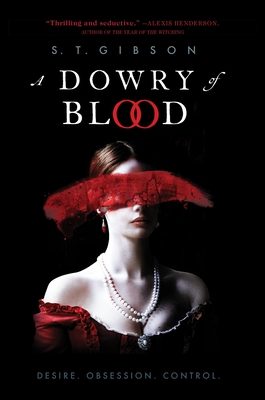
  3. A Dowry of Blood by S. T. Gibson
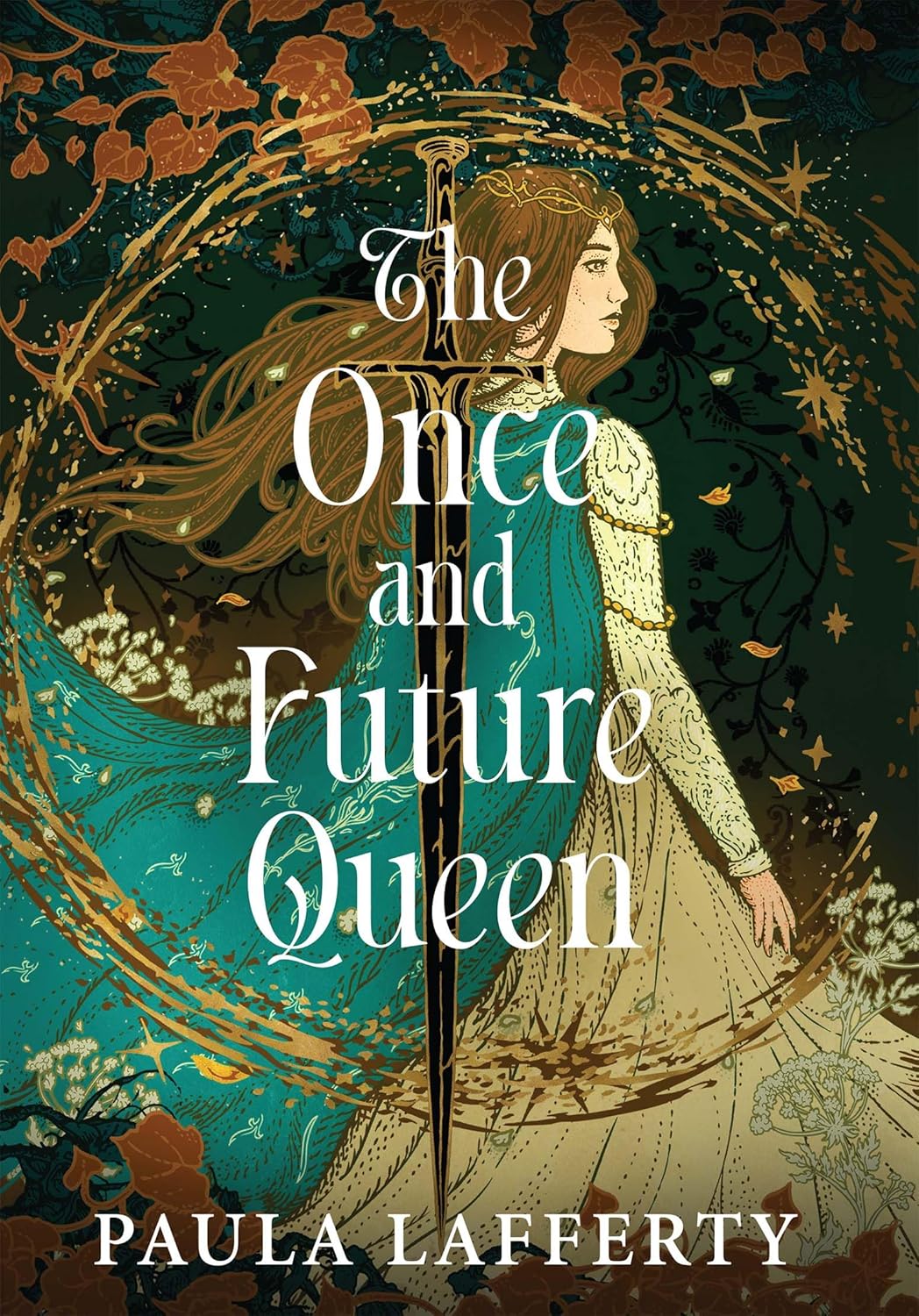
  4. The Once and Future Queen by Paula Lafferty
  5. All of Us Murderers by KJ Charles
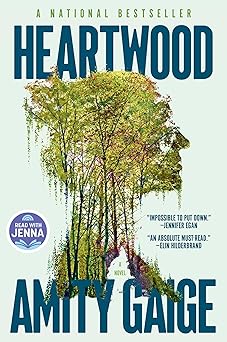
  6. Heartwood by Amity Gage
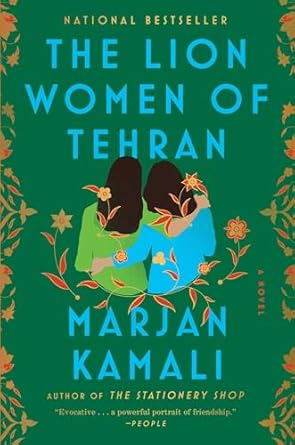
  7. The Lion Women of Tehran by Marjan Kamali (an upcoming book group read)
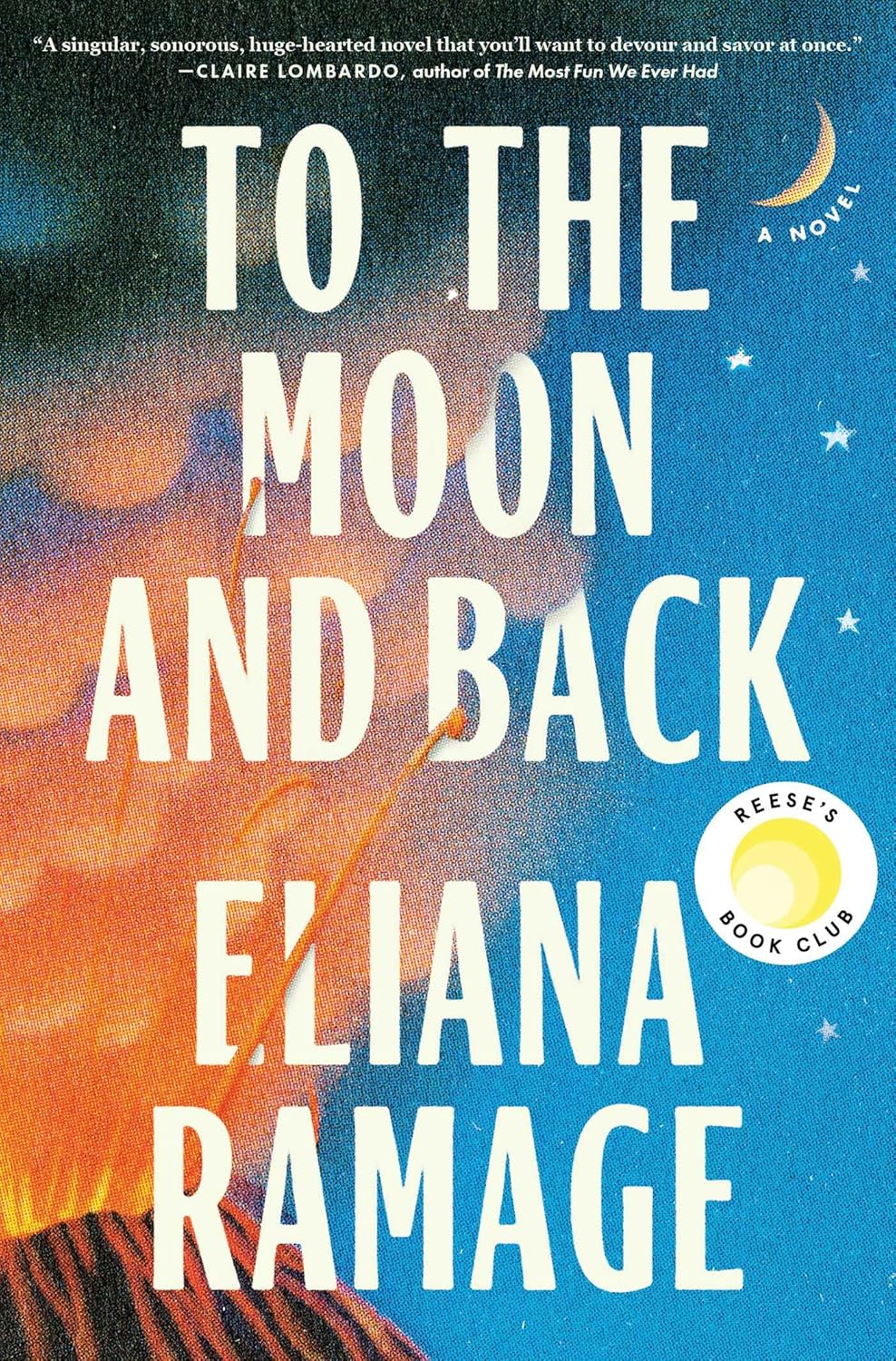
  8. To the Moon and Back by Eliana Ramage
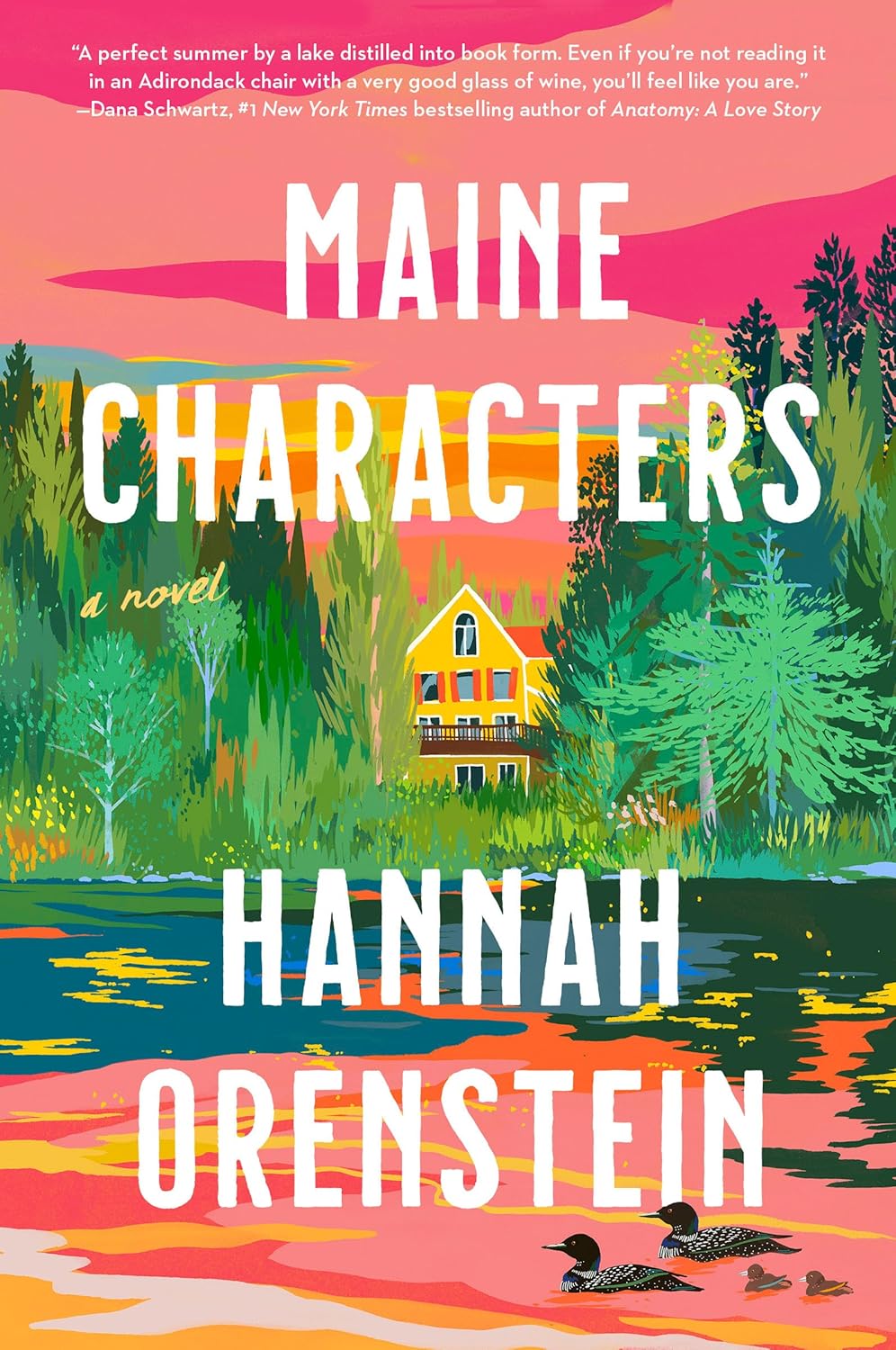
  9. Maine Characters by Hannah Orenstein
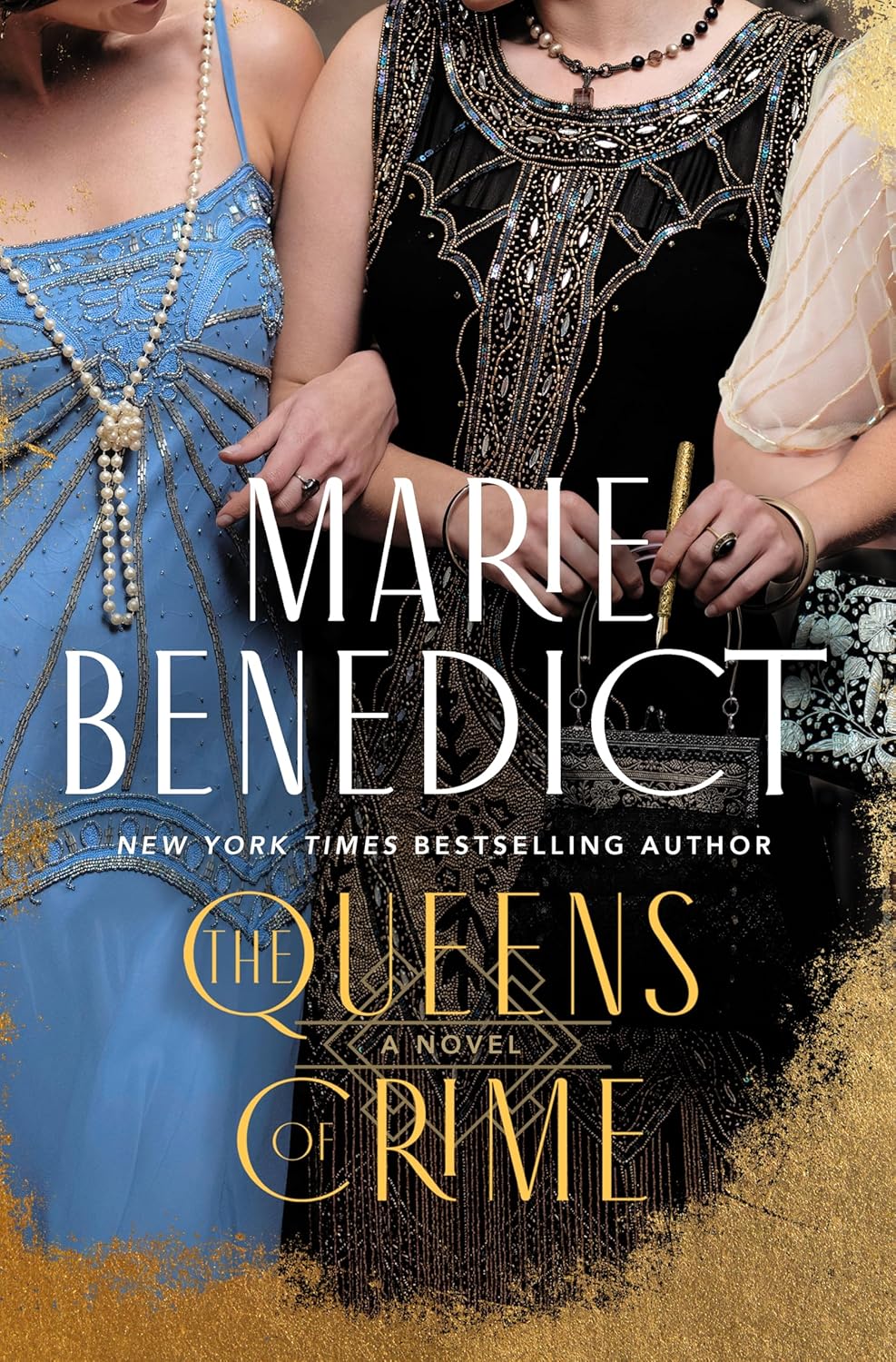
  10. The Queens of Crime by Marie Benedict (another upcoming book group read)

Have you read any of my recent additions? What books have you bought most recently?

If you wrote a TTT post, please share your link!

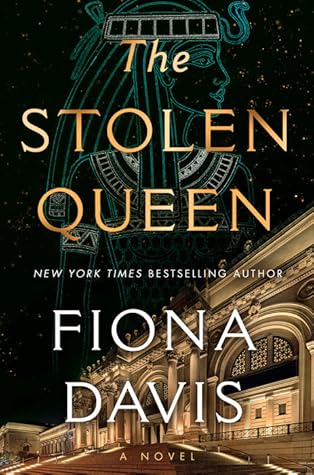
Book Review: The Stolen Queen by Fiona Davis

Title: The Stolen Queen
Author: Fiona Davis
Publisher: Dutton
Publication date: January 7, 2025
Length: 352 pages
Genre: Historical fiction
Source: Library
Rating:

Rating: 4 out of 5.

From New York Times bestselling author Fiona Davis, an utterly addictive new novel that will transport you from New York City’s most glamorous party to the labyrinth streets of Cairo and back.

Egypt, 1936: When anthropology student Charlotte Cross is offered a coveted spot on an archaeological dig in Egypt’s Valley of the Kings, she leaps at the opportunity. But after an unbearable tragedy strikes, Charlotte knows her future will never be the same.

New York City, 1978: Eighteen-year-old Annie Jenkins is thrilled when she lands an opportunity to work for iconic former Vogue fashion editor Diana Vreeland, who’s in the midst of organizing the famous Met Gala, hosted at the museum and known across the city as the “party of the year.” Though Annie soon realizes she’ll have her work cut out for her, scrambling to meet Diana’s capricious demands and exacting standards.

Meanwhile, Charlotte, now leading a quiet life as the associate curator of the Met’s celebrated Department of Egyptian Art, wants little to do with the upcoming gala. She’s consumed with her research on Hathorkare—a rare female pharaoh dismissed by most other Egyptologists as unimportant.

That is, until the night of the gala. When one of the Egyptian art collection’s most valuable artifacts goes missing . . . and there are signs Hathorkare’s legendary curse might be reawakening.

As Annie and Charlotte team up to search for the missing antiquity, a desperate hunch leads the unlikely duo to one place Charlotte swore she’d never return: Egypt. But if they’re to have any hope of finding the artifact, Charlotte will need to confront the demons of her past—which may mean leading them both directly into danger.

I seem to say this a lot: Thanks to my book group, I’ve read yet another book that I might not otherwise have picked up… and I’m so glad I did!

In The Stolen Queen, author Fiona Davis presents a dual-timeline story, alternating between events in Egypt in 1937 and in New York in 1978. The connection is Charlotte Cross, a curator at the Metropolitan Museum of Art specializing in Egyptian artifacts. In 1937, as a young student, she worked on an archaeological team in the Valley of the Kings, where she helped discover a previously unknown tomb. But tragedy struck, and she vowed never to return to Egypt.

Now, in 1978, she has a steady career at the Met, and pursues her passion project — an investigation into the woman pharaoh Hathorkare, whom most historians ignore or consider unimportant. Charlotte has uncovered evidence that disputes the generally held beliefs about Hathorkare, and just needs approval to move ahead with publication.

The other main character is Annie, a 19-year-old who works hard at menial jobs to support herself and her immature, selfish mother while dreaming of a future in fashion. When a chance encounter puts her into the orbit of Diana Vreeland, her dreams appear to be within reach — until a disaster at the Met Gala seems to entirely ruin her hopes.

When a priceless Egyptian artifact is stolen and Charlotte and Annie end up in the path of the thief, they join forces to track down the missing item. Charlotte is finally forced to confront her past as the search leads them to Egypt. Together, they not only trace clues to the theft, but uncover deeper secrets that have a huge impact on Charlotte’s life and change everything she thought she knew about her own past.

I picked up this book with some trepidation. I wasn’t entirely sure that I was in the mood for historical fiction, and was afraid (for whatever reason) that the story would be dry. I’m happy to report that my fears were unfounded! Once I started reading, I was hooked.

Both timelines are handled very well. The 1937 storyline gives us a strong foundation for who Charlotte is as a person, and is crucial for understanding the woman we meet in the later timeline. We get a very good sense of the status of women in the field of archaeology, as well as a vivid picture of the challenges and triumphs of life on a dig. The descriptions of working in Egypt — the heat, the sights and sounds and smells — bring the period and the setting to vibrant life.

In the 1978 timeline, we initially encounter a very different Charlotte, but as the book progresses, we can make the connection between who she once was and who she is now, as a 60-year-old woman with respected status in her field and a personal life that seems to teeter back and forth between being satisfying or just a holding pattern. The tragedy from Charlotte’s past is never forgotten, but also never spoken of — and as we learn, there are unresolved pieces that even Charlotte doesn’t fully understand.

I did question the inclusion of the Diana Vreeland storyline. I suppose if you’re writing a novel set at the Met, including the Met Gala adds glamour and excitement — but of all the various story threads, this is the one that interested me the least and seemed least successful. This is Annie’s entry into Charlotte’s life, but other than that, much of the Met Gala plot felt unnecessary to me.

My other quibble with the book is Charlotte’s focus on the curse associated with Hathorkare. As a scholar and an archaeologist, Charlotte’s belief in the curse and her suspicion that it was responsible for some of the tragedies in her life just isn’t credible. I couldn’t prevent a bit of eye-rolling whenever the subject of the curse cropped up.

On the other hand, I enjoyed the scenes in Egypt and the investigation that occurs there, as well as the development of the research into Hathorkare’s tomb and her history. Some events feel a bit too convenient or coincidental, but ultimately, I was able to overlook these as the overarching story kept me engaged throughout.

Themes of lost and found family tie the various elements of the plot together, as does the examination of women’s professional opportunities and how those have changed (or not) over the decades.

Through the characters’ discussions, we also gain insights into the ongoing debate about where antiquities belong. Does preservation or the ability to share with a greater public override the claims of the country of origin, even if that country doesn’t have the means to adequately preserve, protect, or display the antiquities? There aren’t any easy answers, but I appreciate the thoughtful way the issues are discussed in this book.

The Stolen Queen is the first book I’ve read by Fiona Davis, although I have a few others on my TBR list. If you have recommendations, please let me know!

Overall, I’m very glad to have read The Stolen Queen. It had me hooked right from the start. I loved the characters, the historical elements, and the several mysteries that are central to the plot. Definitely recommended for fans of historical fiction — and needless to say, recommended for book groups!

Purchase linksAmazon – Audible audiobook – Bookshop.orgLibro.fm
Disclaimer: When you make a purchase through one of these affiliate links, I may earn a small commission, at no additional cost to you.
The Monday Check-In ~ 12/29/2025

cooltext1850356879

My Monday tradition, including a look back and a look ahead — what I read last week, what new books came my way, and what books are keeping me busy right now. Plus a smattering of other stuff too.
Life.

The clock is ticking… it’s almost 2026! I have no plans for New Years, other than enjoying a day off from work and doing whatever I end up feeling like.

It’s been a good week, with family time and a few fun get-togethers with different groups of people. I’ve enjoyed the relaxed vibe of this end-of-year time — just wish it could last longer!

Blog posts:

I shared some thoughts on audiobooks, and what I think could make them better. Check it out here — I’d love to hear what you think! Also new this week: the first of my traditional year-in-review posts, this one about my series reading in 2025.

What did I read during the last week?

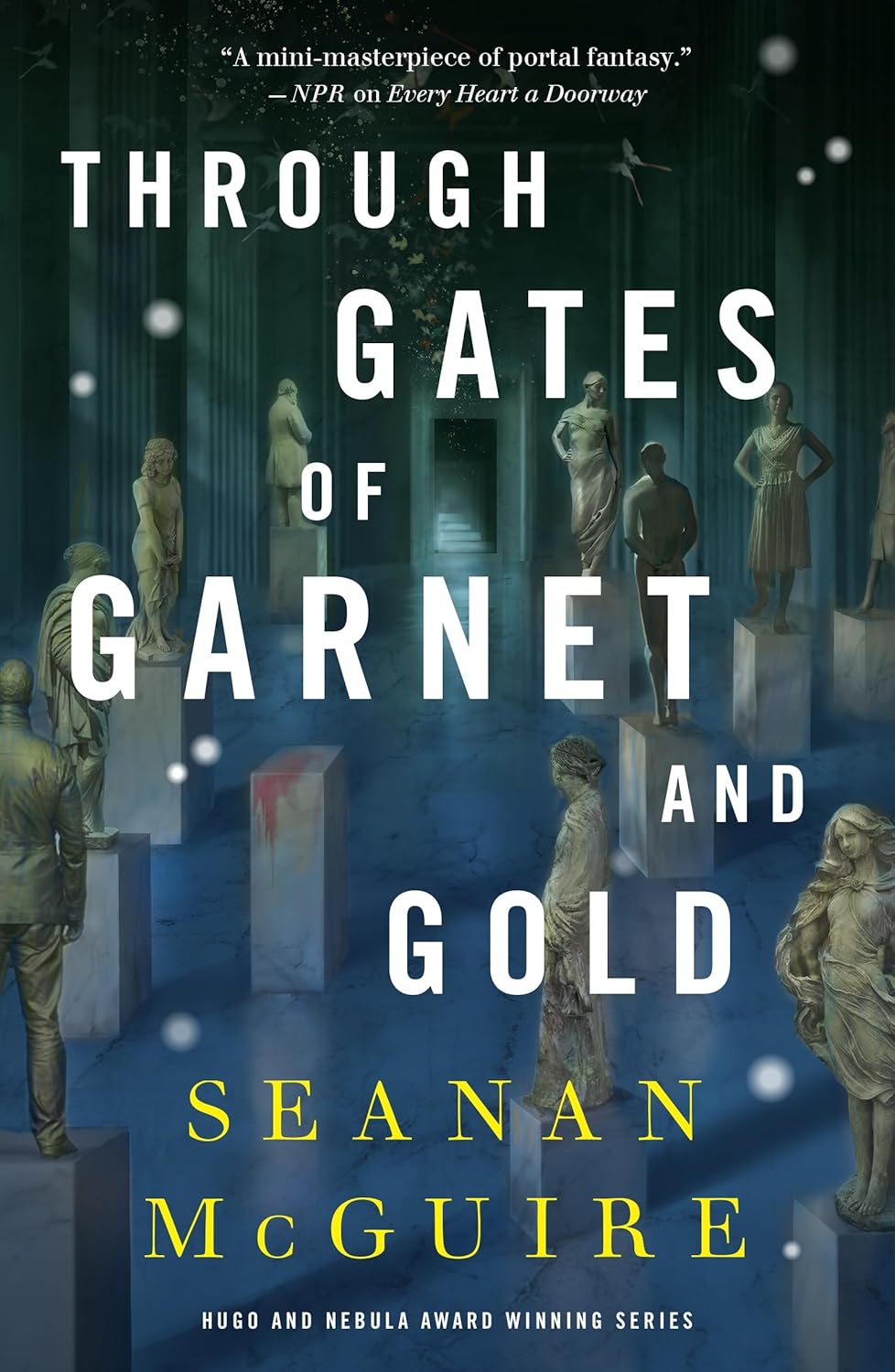
Through Gates of Garnet and Gold (Wayward Children, #11) by Seanan McGuire: Another terrific addition to a great series. My review is here.

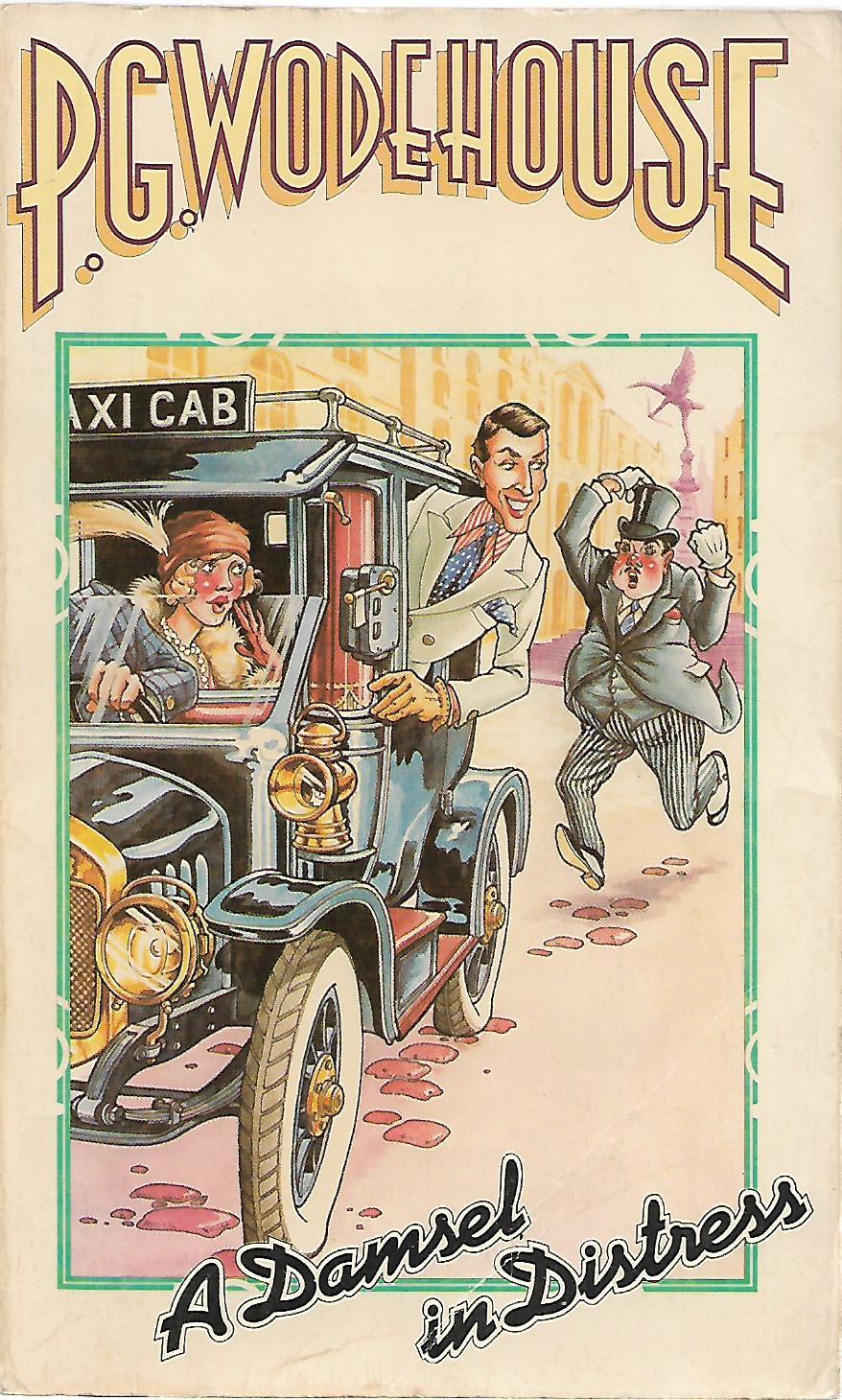
A Damsel in Distress by P .G. Wodehouse: A delightfully silly story. My review is here.

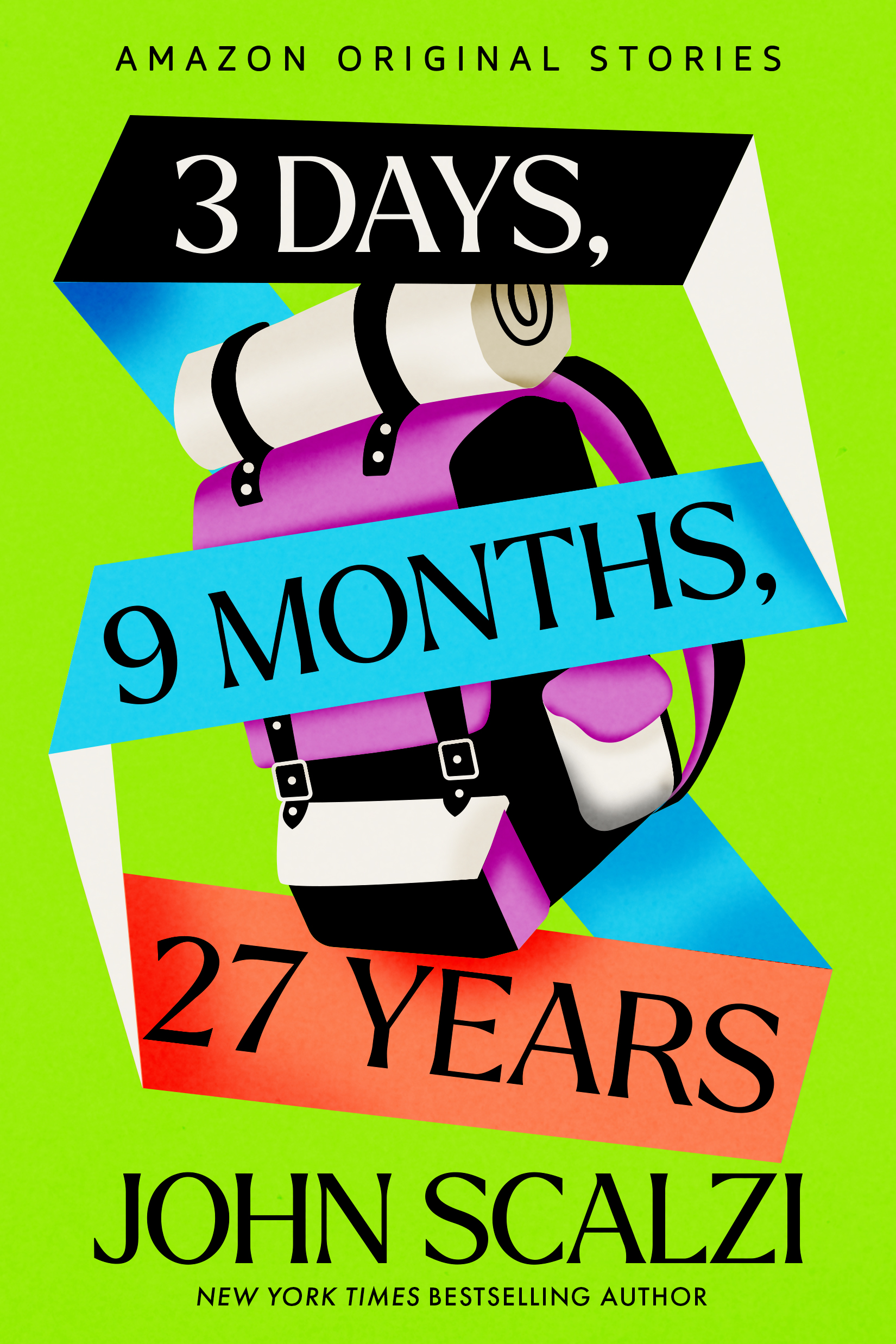
3 Days 9 Months 27 Years by John Scalzi: An excellent short story with a twisty approach to time travel.

The Stolen Queen by Fiona Davis: My book group pick for December — finished just under the wire! I couldn’t put it down. Review to follow later in the week.

Pop culture & TV:

I finished season 2 of The Morning Show! Geez, that series is all over the place. Some characters are just so messy… and the pandemic is still recent enough that watching it on TV isn’t exactly entertainment. Still, I’m interested enough to keep going and see what happens next.

Meanwhile, I’ve watched 5 episodes of Pluribus. It’s so weird, and so hard not to binge straight through!

Fresh Catch:

Three new books this week:

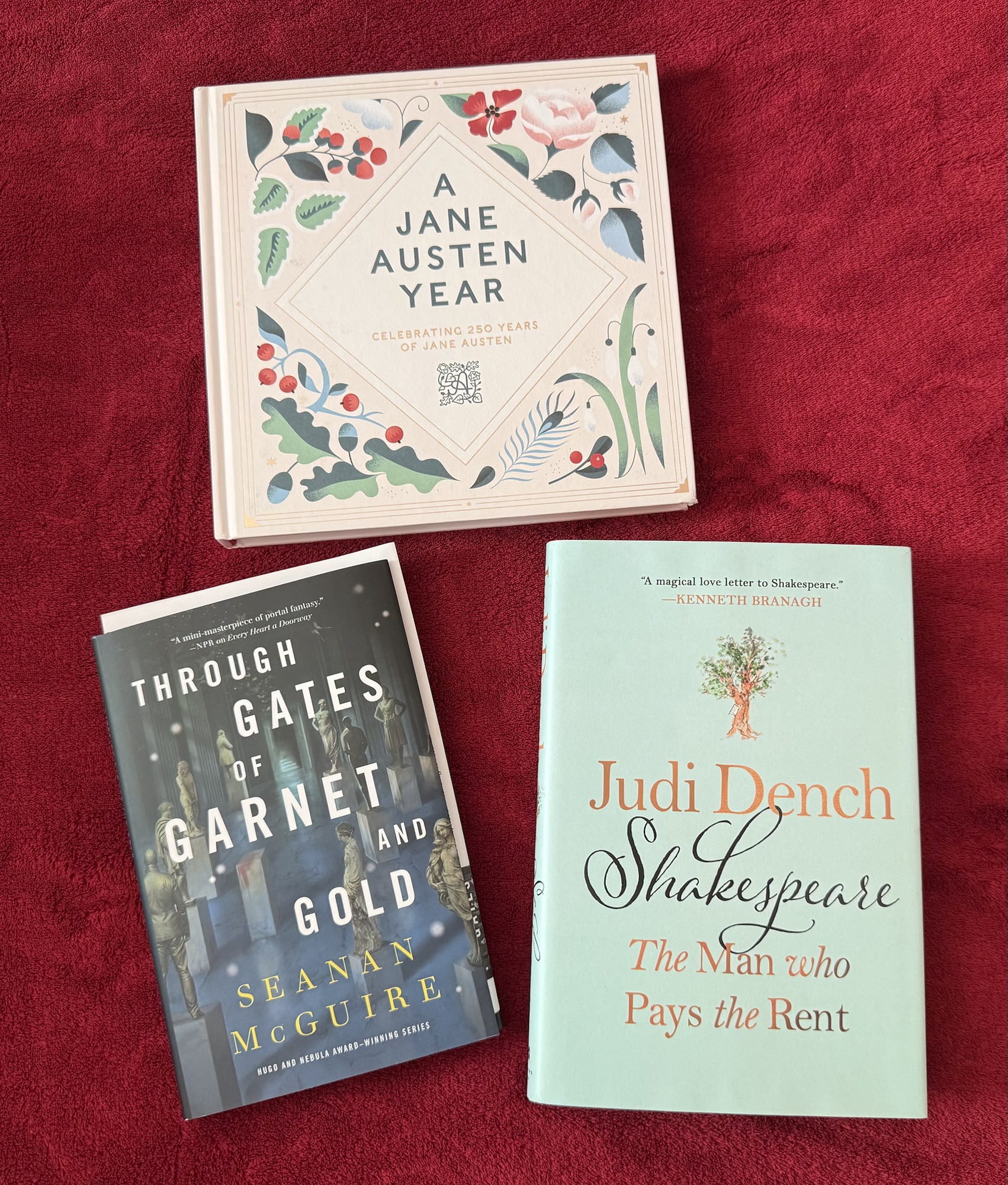
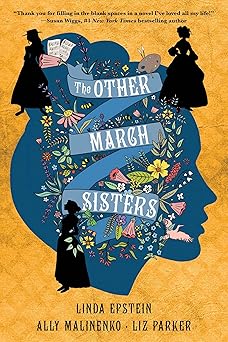
I treated myself to copies of an Austen-related book and the Judi Dench book that’s my current audio listen, and received an early copy of the new Wayward Children book from the publisher.

What will I be reading during the coming week?

Currently in my hands:

Winter Solstice by Rosamunde Pilcher: This book was recommended by an author whose books I love, and it feels like the right time of year to give it a try! I’ve only just started, but hope to have quite a bit of reading time this week to sit and enjoy it.

Now playing via audiobook:

Shakespeare: The Man Who Pays the Rent by Judi Dench: I’ve had limited listening time this past week, but that’s okay — I’m really savoring this audiobook. It’s Judi Dench in conversation about the various Shakespeare roles she’s played throughout her career. Wonderful.

Ongoing reads:

My longer-term reading commitments:

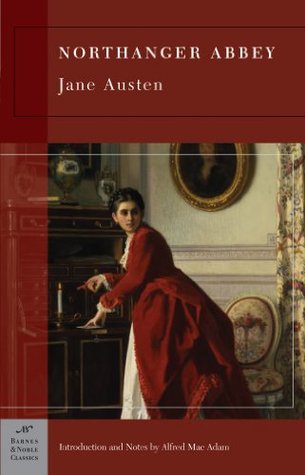
  • Northanger Abbey by Jane Austen: My book group’s current classic read. We’re reading and discussing two chapters per week. Progress: 29%. Taking a break this week — we’ll pick up our group read again next week.
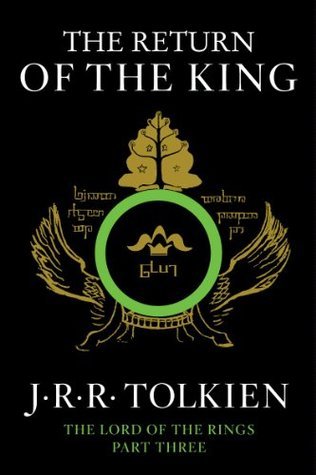
  • The Return of the King by J. R. R. Tolkien: Coming soon! My book group will be continuing our LOTR reading journey starting early January.

What will you be reading this week?

So many books, so little time…

boy1

Audiobooks: The highs and lows… and the change I most want to see!

audio image

As an avid audiobook fan, I spend a good chunk of hours every week plugged in and listening. And I love it! Mostly.

The audiobook experience can be highly rewarding, but I have a few pet peeves that I’d love to see audiobook producers address.

Without further ado, here’s a guide to what I love about audiobooks… and what I think needs to change:

THE HIGHS:

  • Being able to listen on the go: I listen to audiobooks on my daily commute and on my weekend walks. It’s a wonderful way to fit in more reading time.
  • Terrific narrators: Not all narrators are equally talented, but there’s something amazing about finding a new favorite. A great narrator brings the story to life, embodying the characters’ voices, keeping the story moving, and providing emotion and movement to the narration.
  • New ways to enjoy rereads: I find myself going to the audiobook versions of books I want to reread, such as when I want to reread the previous book in a series before a new book comes out. It’s a great refresher, doesn’t eat into my print reading time devoted to new books, and often gives me a new perspective on books I’ve already read.
  • Keeping up with reading commitments: I’m always overloaded with books to read, and among those are my commitment books — especially, books for my book group, which has monthly picks as well as longer-term group reads. I tend to end up with the audio version of at least several of our monthly picks. This helps keep me on track, while also (like the previous bullet point) keeping me from feeling like I’m diverting attention from one of the many other books I want to be reading

THE LOWS:

  • Names: It can be tough to pick up unusual names just from the audio. I’ve had several experiences where I only realized I was “seeing” a character’s name wrong after looking at the print synopsis. I try to be careful to vet name and place spellings against a print edition before posting reviews, but sometimes one will slip through the cracks.
  • Details: When a lot of characters are introduced at once, or key information is shared in a detailed way, it can be tricky to keep track when I only have the audiobook. For example, one really enjoyable summer romance from this past year included a large family gathering, and it was practically impossible to sort out which children and spouses belonged to which of the characters. Sure, it was explained when they were introduced, but that’s a lot to keep track of while listening, without a visual reference.

MY MAJOR PET PEEVE ABOUT AUDIOBOOKS — AUDIOBOOK PUBLISHERS, I’M BEGGING YOU TO FIX THIS!

Breaking this one out from the lists above because it’s such a biggie for me! It is incredibly frustrating that audiobooks tend not to include certain vital pieces from the print editions.

First, the author notes: I’ve very rarely experienced audiobooks where these are included. And yet, author notes can add so much to the overall reading experience. If an author is sharing background on why they wrote the book, historical resources, inspiration, etc, I want to hear it!

Second, other extras: I’d like it if the “About the Author” info were also included in the audiobook. In terms of acknowledgments, maybe that would be less engaging to listen to, but I’d still like the option. Some print editions include extras like a Q&A with the author, and I’d want that too!

Third, visual references: I’ve listened to a couple of audiobooks that had downloadable materials available as well, such as the maps or photos that accompany a print edition. This seems to be rarely done, yet feels essential to me, and should be standard for all audiobooks.

My imperfect solution to some of these issues is to try to borrow a hard copy or e-edition of the book at the same time I’m borrowing the audiobook, but that’s not always possible. Library wait times for different editions don’t generally sync up. I’ve learned that for non-fiction books, where visual materials are more often included, it makes sense to wait and try to borrow both print and audio at the same time. For fiction, I find it makes less of a difference in terms of enjoying the content, although there’s still the issue of missing out on the notes and other extras.

So, why don’t audiobooks include these items?

I’ve found a few discussions on Reddit and elsewhere that include some reasons that may apply. Many of these come down to cost: Production costs and process are dependent on the length of the book. Anything beyond the actual book content adds expense and work.

It’s also mentioned in several posts that listeners in general don’t want the extras — but I wonder how true that is (I WANT THEM), and how that’s determined.

I’ve also seen comments that it may be an author’s choice. Again, I wonder whether this is always the case, or if different publishers/platforms have a definite approach for all audiobooks that they produce.

    As a big fan of audiobooks (yes, I’m totally hooked and wouldn’t make it through daily drives without them), I can safely say that I’ll continue listening to audiobooks no matter what. But — the experience would be greatly improved (in my humble opinion) if audiobook productions included at least some of the extras, or made them available as free downloads.

    What do you think? Is there anything you have in mind that could improve your audiobook experiences?