My Monday tradition, including a look back and a look ahead — what I read last week, what new books came my way, and what books are keeping me busy right now. Plus a smattering of other stuff too.
Life.
Not much new this week, but we had nice sunny weather over the weekend and I was able to spend time outdoors, so that counts as a win!
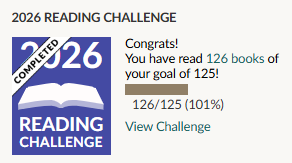
Also, this happened:
Let’s see what those numbers look like by the time December 31st rolls around…
Bookish bits & bobs:
There’s a cover and release date for Christina Lauren’s next book!
And I just have to share:
100% accurate!
What did I read during the last week?
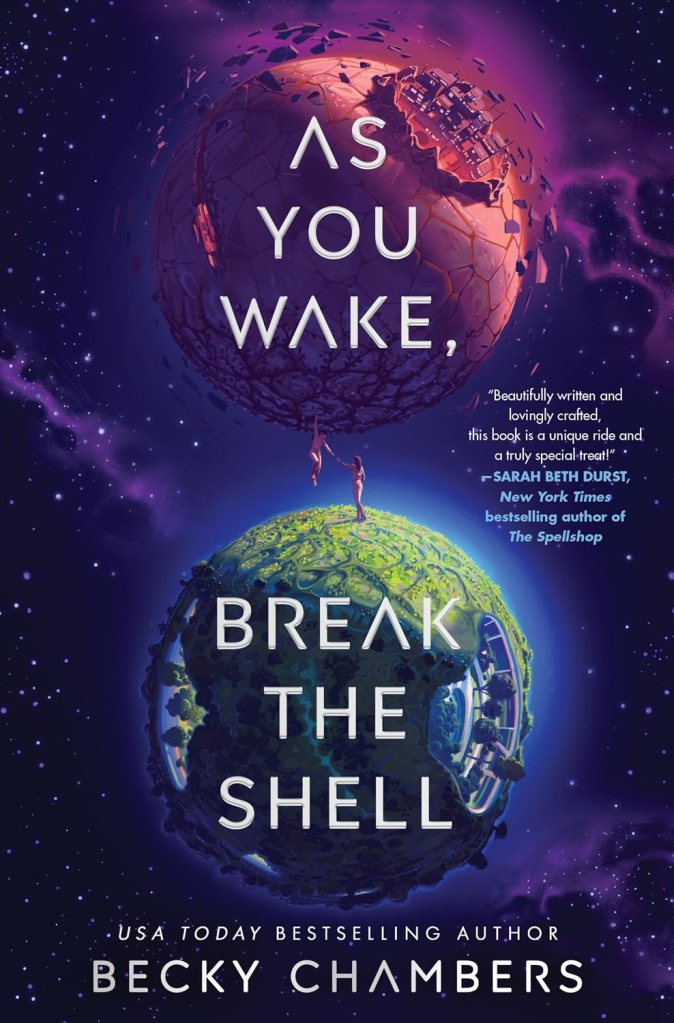
As You Wake, Break the Shell by Becky Chambers: Breathtakingly beautiful science fiction with gorgeous writing and powerful emotional impact. My review is here.
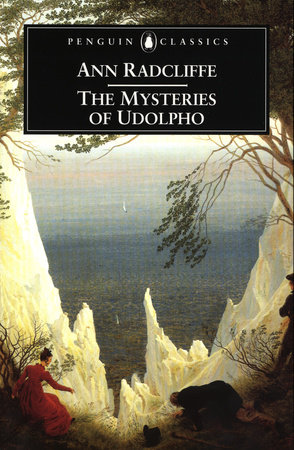
The Mysteries of Udolpho by Ann Radcliffe: At long last, we’re done! My book group has been reading this book, at a pace of two chapters per week, since April. I’m very glad to have read it (and I’m also glad to be finished). This 1794 classic is so over the top and ridiculous, by today’s standards, but it was enormously entertaining to read it after reading Northanger Abbey and think about Catherine Morland’s reactions.
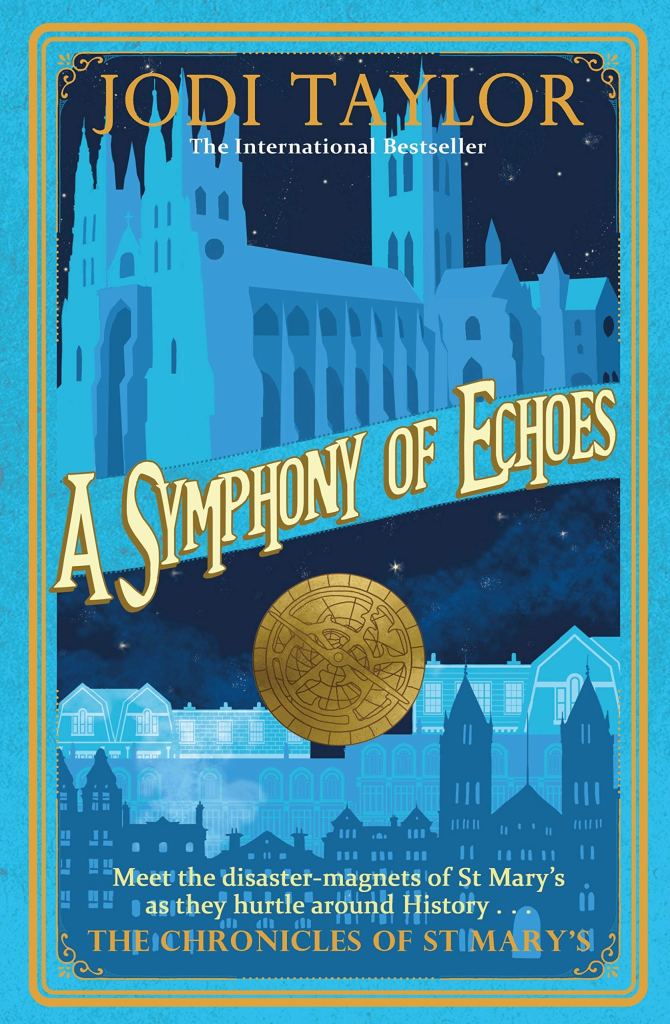
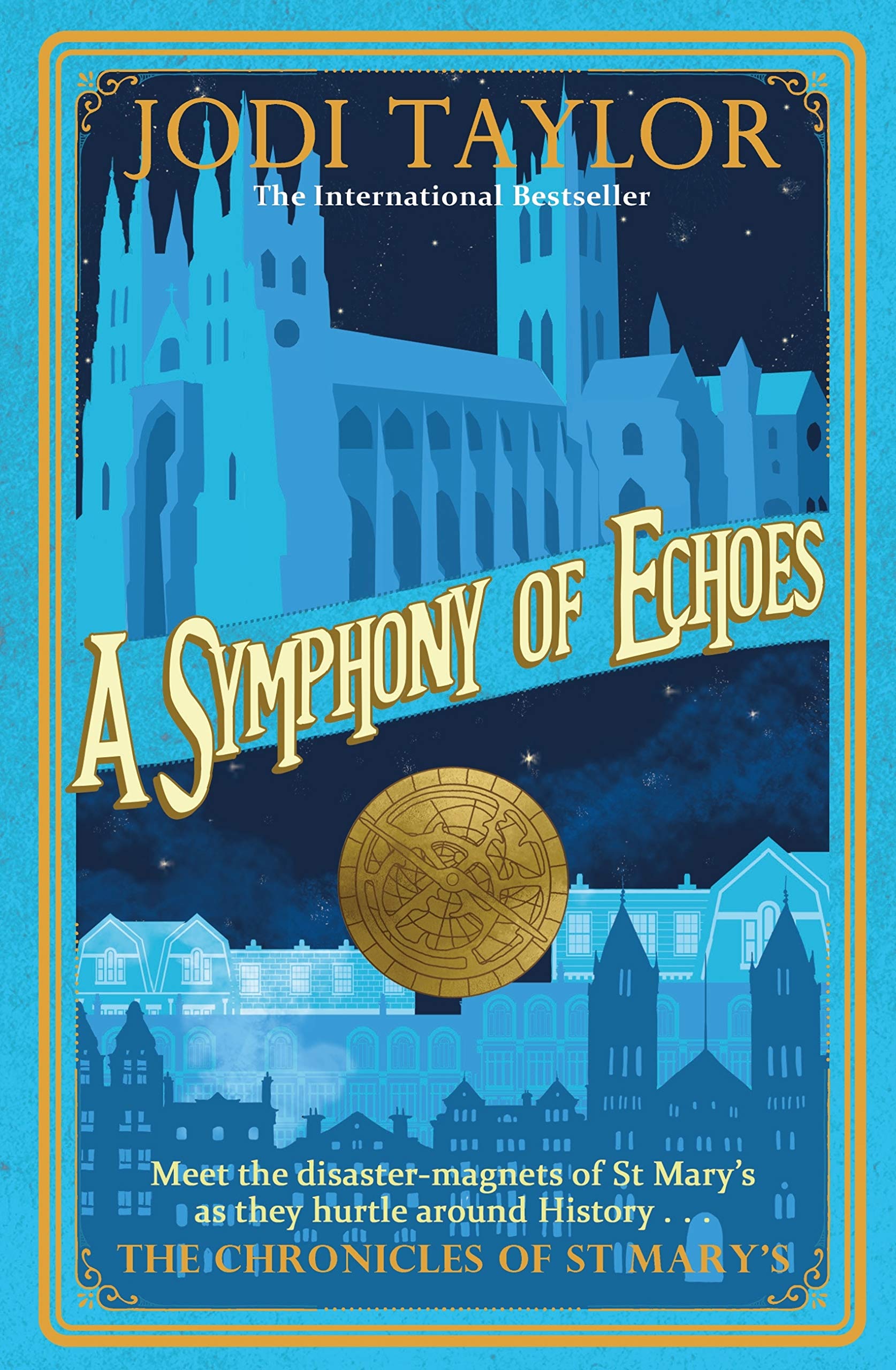
A Symphony of Echoes (The Chronicles of St. Mary’s, #2) by Jodi Taylor: Two books in, I’m already hooked on this time travel series! It’s a bit madcap, yet pretty dark in places too, and just so much fun. My review is here.
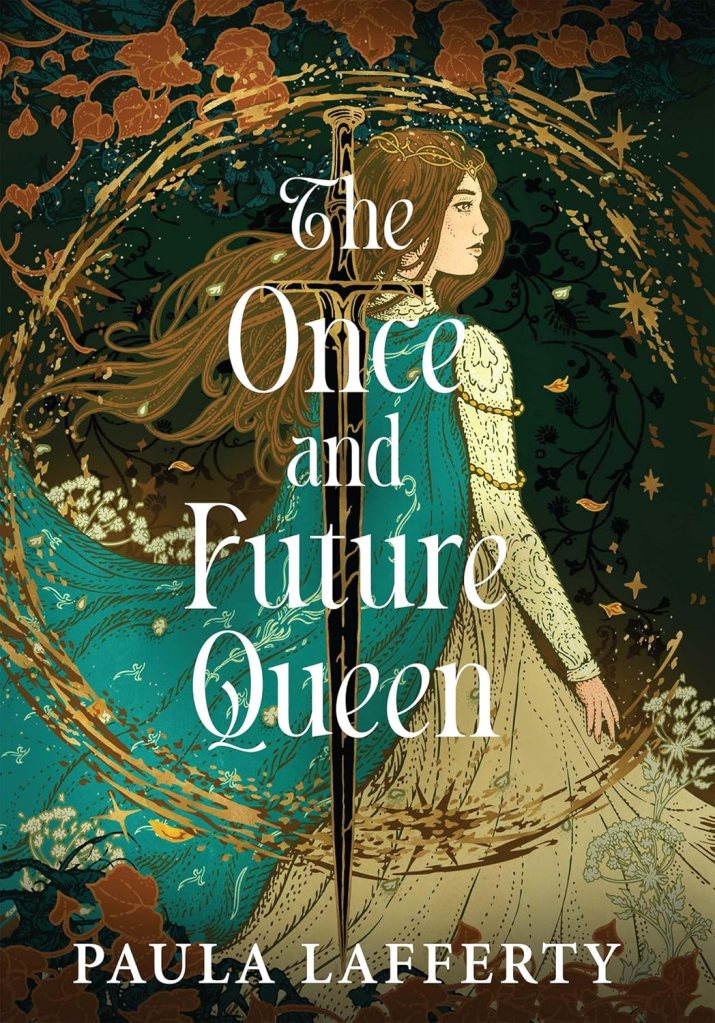
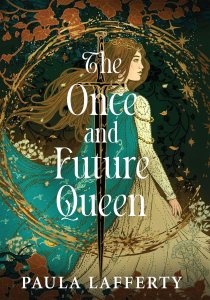
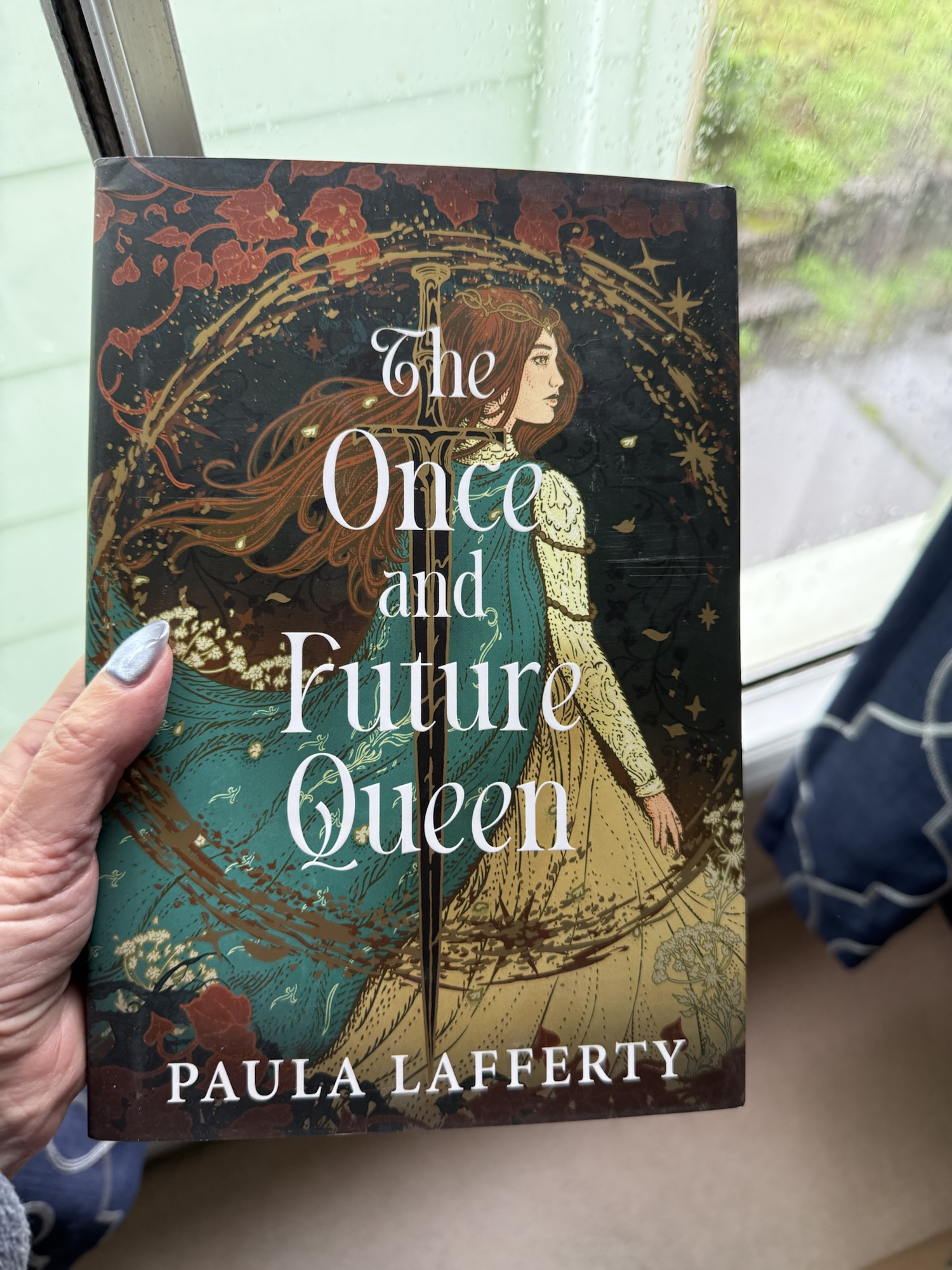
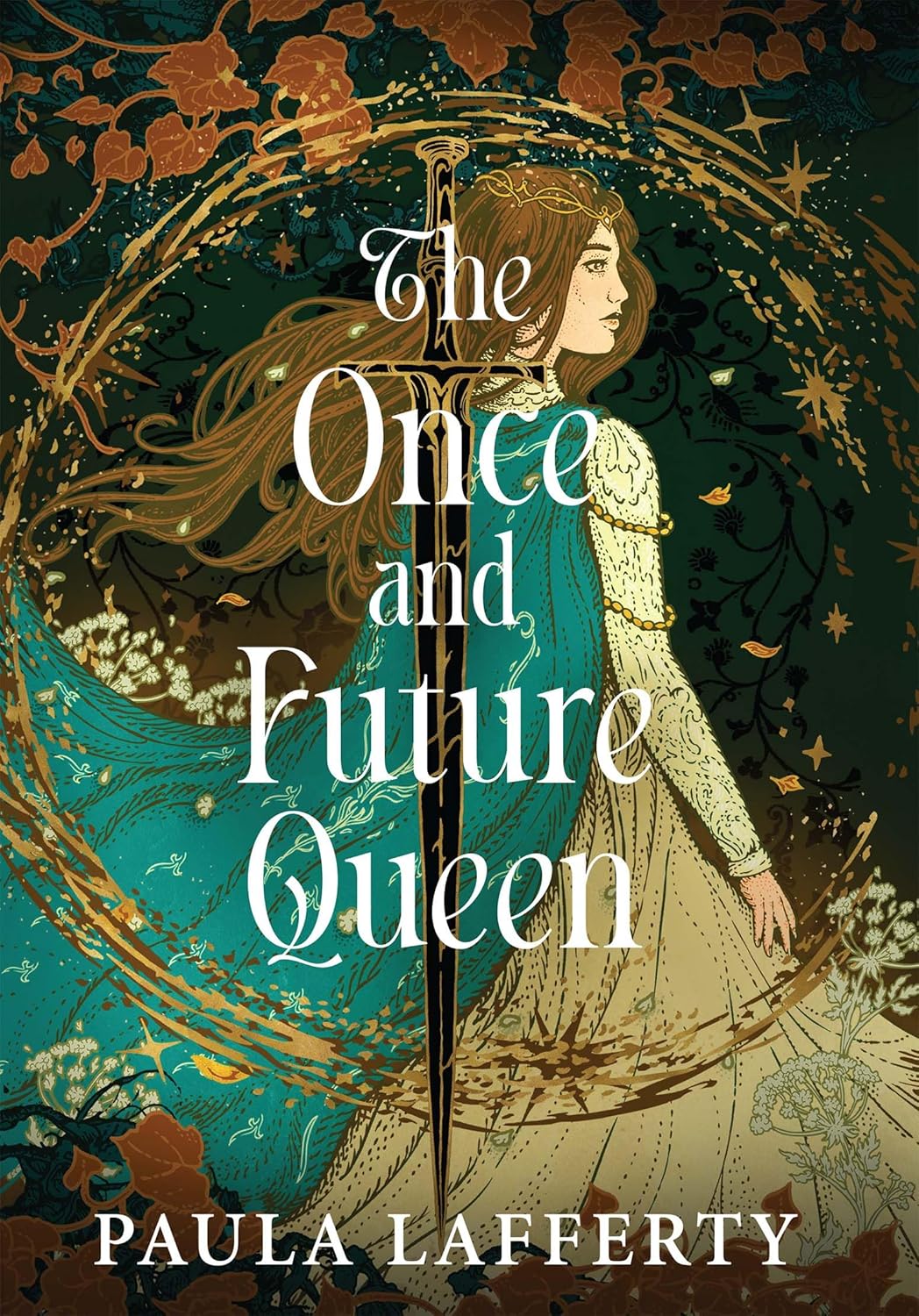
The Once and Future Queen by Paula Lafferty: I loved everything about this time travel fantasy approach to Arthurian legend. Wonderful storytelling and characters. My review is here.
Pop culture & TV:
I wrapped up season 4 of Ted Lasso this week. I enjoyed it, maybe not quite as much as previous seasons, but it was still lots of fun, and I’m hoping there will be at least one more season on the way.
Last night, I started the new season of The Diplomat, and I was instantly hooked all over again. I only had time for two episodes — can’t wait to race through the rest.
And of course, there’s a Dancing with the Stars check-in! Last week’s episode featured some great moments, and there were no eliminations! My favorite dance of the week:
(Note: This was “dedication night” on DWTS — that’s Ezra’s mother joining them for the dance)
Fresh Catch:
No new books this week.
What will I be reading during the coming week?
Currently in my hands:
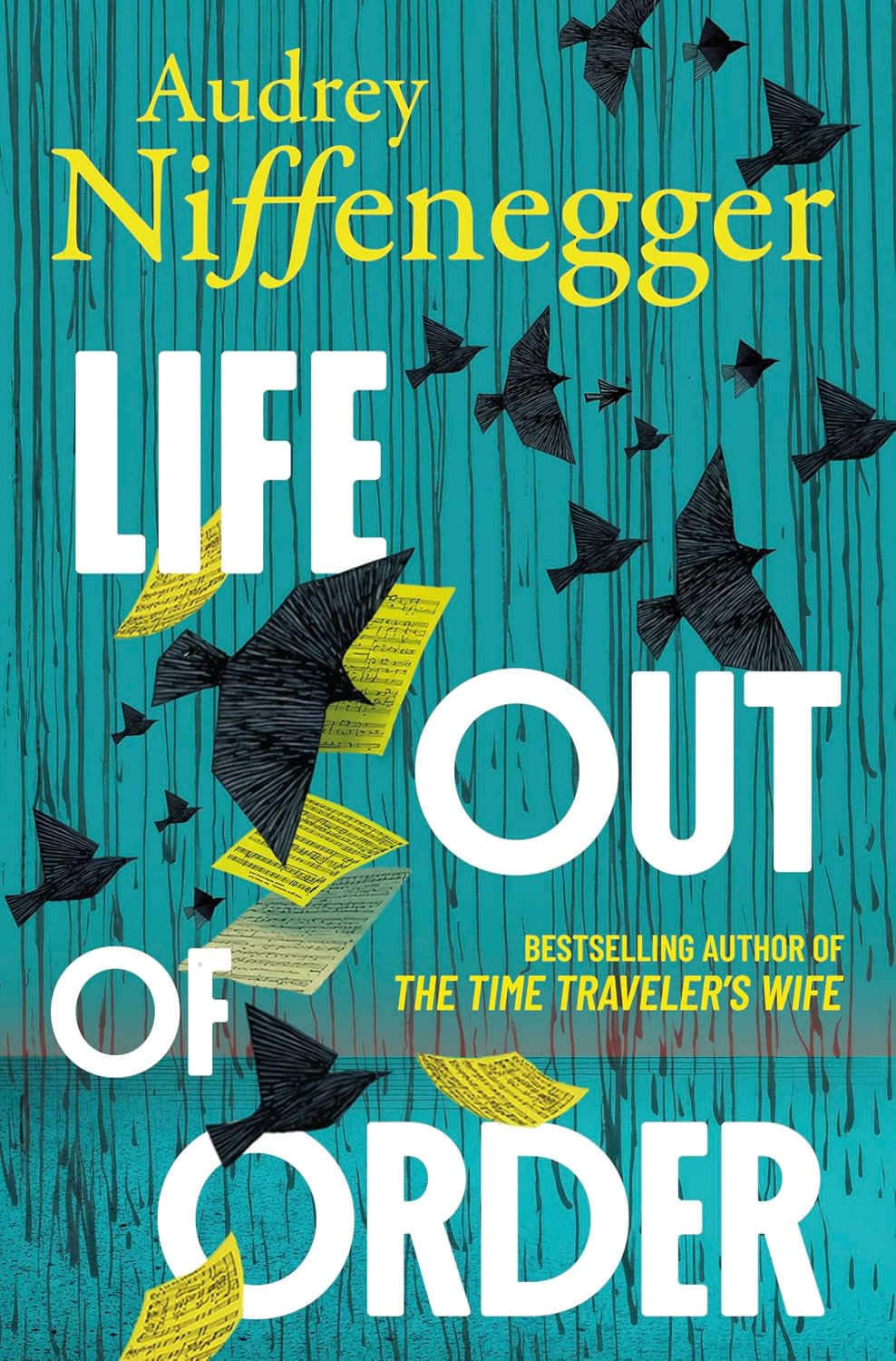
Life Out of Order by Audrey Niffenegger: This sequel to The Time Traveler’s Wife was one of my most anticipated books of the year… and sadly, I’ve found it hard to connect with or care about the story, which is very frustrating. For the first 25% or so, I was strongly tempted to DNF, but pushed onward. Now that I’m closer to 50%, I’m more committed to finishing the book, but I still can’t say that I’m particularly enjoying it.
Now playing via audiobook:
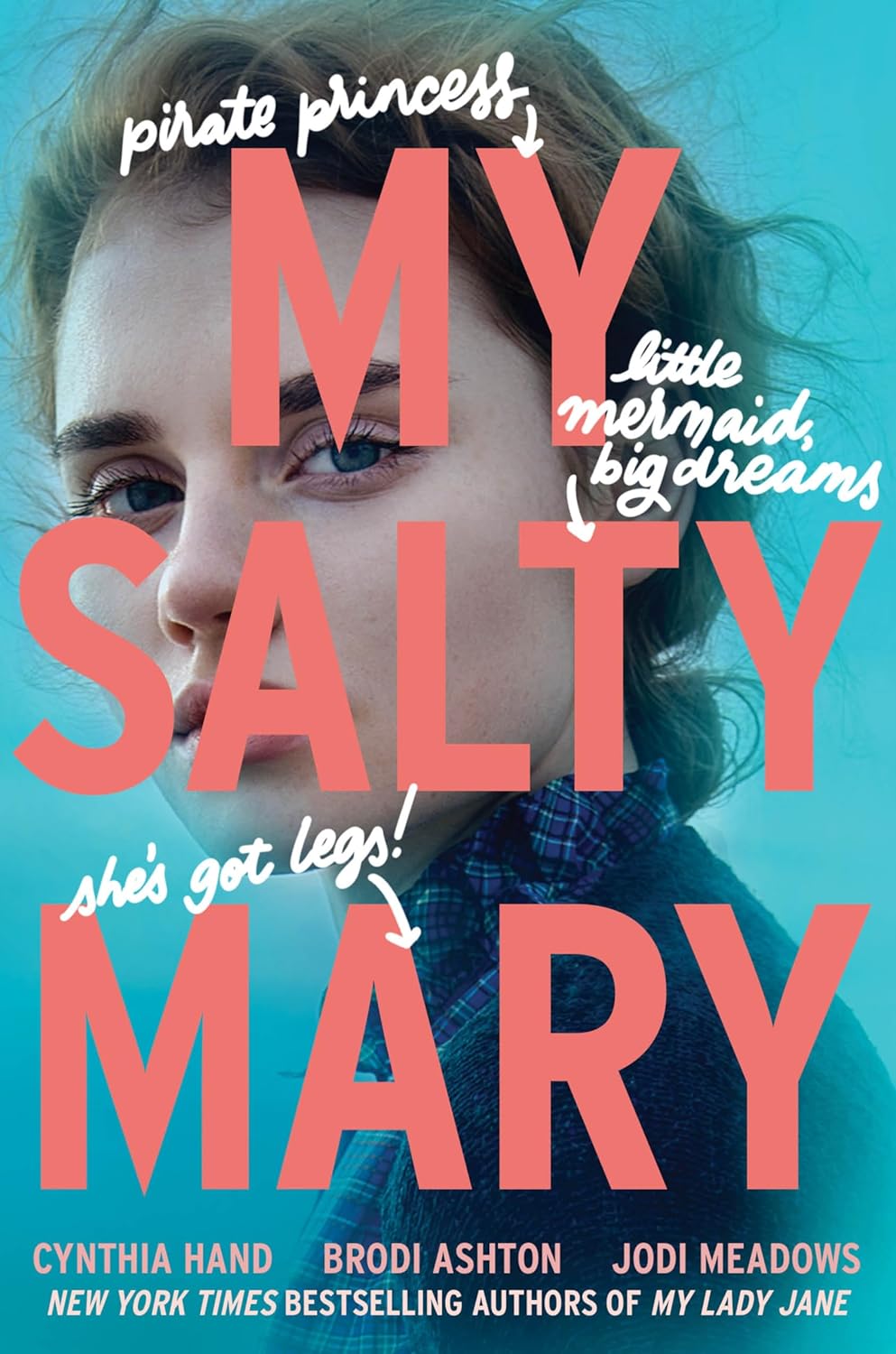
My Salty Mary (The Marys, #3) by Cynthia Hand, Brodi Ashton, Jodi Meadows: The final book in this terrific, very funny series! I’ve just gotten started, but I’m already having a good time with this mash-up of the Little Mermaid and the story of real-life pirate Mary Read.
Ongoing reads:
My book group has a two-week breather before we start our next big, long-term classic read — so, I thought I’d take advantage of this short break to spend time with a story collection I bought recently:
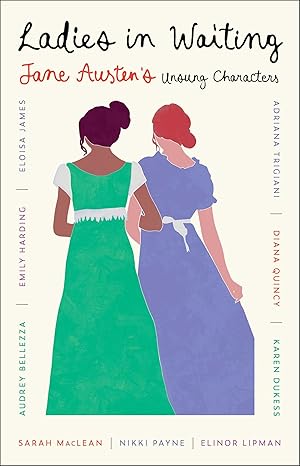
Ladies in Waiting: Jane Austen’s Unsung Characters by assorted authors: I really do not do well with short stories as a general rule, but I’ve wanted to give this collection a try for a while now. My goal is to read one story every few days and see how far I get. Here’s the book synopsis:
In honor of her 250th birthday, nine authors have come together with wildly imaginative reboots of the lives of several of Jane Austen’s minor characters. Written with plenty of love and wit, these clever stories star everyone from Pride and Prejudice’s snobbish Caroline Bingley to the modern descendant of Sense and Sensibility’s Eliza Williams and much more. Blurring genres and taking us across the oceans, Ladies in Waiting is a heartfelt celebration of Jane Austen and her timeless masterpieces.
The contributing authors are: Sarah MacLean, Nikki Payne, Elinor Lipman, Karen Dukess, Eloisa James, Adriana Trigiani, Audrey Bellezza, Emily Harding, and Diana Quincy. Sounds like fun!
Title: The Once and Future Queen Series: The Lives of Guinevere, #1 Author: Paula Lafferty Publisher: Harper Voyager Publication date: December 16, 2025 Length: 512 pages Genre: Fantasy Source: Purchased Rating:
⭐⭐⭐⭐⭐
Rating: 5 out of 5.
Outlander-meets-The Princess Bride plus Camelot in a fresh, big-hearted, feminist, timeslip adventure reimagining the epic saga of King Arthur, as told from the perspective of his spunky and surprising queen, Vera – complete with time travel and good running shoes!
Vera always knew she didn’t fit in. When she learns that she is meant to be in another time, she leaps at the chance to embrace a new life in a world of valor, intrigue, and unexpected magic in this bold and romantic retelling of Arthurian legend . . .
22-year-old Vera is at a crossroads: waiting tables, grieving her previous relationship, and jogging aimlessly each morning as if toward an uncertain future. Then an odd man shows up at her workplace, insisting that she was once the legendary Queen Guinevere of Camelot, and that her lost memories hold the key to changing both the past and the present. Somehow, it all feels like the direction she’s been looking for. But when she asks the mysterious man to tell her more about Lancelot, Arthur, and a faithless queen, he can only say that much of what she’s heard about Camelot is wrong. The truth, he claims, is something she must see for herself.
After jumping through a portal in Glastonbury’s historic center, Vera is not prepared for what she finds. Magic is everywhere, but a curse on the kingdom means it dwindles every day. She has no idea how to perform a queen’s duties. Her fast friendship with Lancelot sets gossip flowing, and the stranger she must call “husband” often refuses to meet her eye. Arthur is a puzzle: cold, forbidding, and, while angry to her face, keeps leaving secret tokens of tenderness in her chambers. Worst of all, Vera’s memories—and the answers locked within them—show no signs of returning. If Vera is truly destined to save Camelot, she’ll have to trust her instincts. And her king will have to trust her . .
First things first: Ignore much of the blurb above! Outlander meets The Princess Bride? No. Yes, like Outlander, time travel is key to the story, but if you expect the sweet silliness of The Princess Bride, you’ll find yourself in quite the wrong book. I’ll give them Camelot, though! And “spunky” is not how I’d describe Vera… so let’s get into it.
And before I truly begin, let me just say: The Once and Future Queen will be on my list of favorite reads for 2026!
To the best of her knowledge, Vera was twenty-two years old. And by the time she finished tying the laces of her running trainers on this early October morning, she had ten hours and fourteen minutes remaining of the life she knew in a little town called Glastonbury in the southwest of England.
“To the best of her knowledge”? What does that even mean? How does she not know? Quite the intriguing opening, isn’t it?
Vera is — as stated — 20-something, living and working in her family’s inn in the historic town of Glastonbury. After losing the love of her life earlier in the year, she finds comfort through her daily early morning runs and time with her loving parents. Oddly, Vera doesn’t have many other people in her life. She rarely makes an impression, and has no close friends. It’s lonely, but she accepted that she’s just not particularly memorable long ago.
On the day that the book opens, a strange man shows up, with an even stranger tale to tell. He tells her that she’s actually Guinevere, Queen of Camelot, saved by him — Merlin — from a tragic death and installed in modern-day Glastonbury to give her time to (essentially) regenerate and be ready for a return to her own world… and the time for that return is now. Vera doesn’t believe him, naturally, until her mother confirms the truth of his words, and certain puzzles about her own past fall into place. Vera has no memory of any other life, but according to Merlin, she has Guinevere’s memories locked within her mind, and these hold the key to saving Camelot from destruction. With a promise that he’ll return Vera to her own time when all is done, she agrees to go with Merlin.
Arriving in the 7th century, she immediately meets Lancelot, with whom she feels an instant connection. But her first impressions of Arthur are another matter entirely. He’s cold, even hostile, and Vera has no memory of knowing him or anyone else. Her oddities and momentary lapses are explained away by memory loss following injury — she’s supposedly been away for a year at a monastery to recover from her wounds. With each passing day, Vera settles into life as Guinevere, but the “real” Guinevere’s memories don’t return. Meanwhile, there’s a growing threat to Camelot: The magic that powers the kingdom seems to be drying up and no one knows why, and rumors of an impending invasion become more and more dire. Even Merlin’s magic can’t seem to break through and release whatever memories are locked up in Vera’s mind.
Meanwhile, Vera finds friendship with Lancelot and other knights, and for the first time in her life, feels a sense of belonging. Even Arthur eventually begins to thaw, treating Vera with polite distance at first, but gradually showing concern and kindness toward her, and possibly even more. As Vera is drawn ever closer to Arthur, she’s desperate for the answers Camelot needs, and desperate to figure out whether the feelings between her and Arthur are real or magically induced.
Transporting a 21st century woman into the world of Camelot allows readers a relatable entry into this legendary world (where Vera learns that not all the legends she’s heard are true). Her confusion and sense of displacement are shown through her struggles to navigate daily life (everything from wondering whether the water is safe to drink to figuring out which of the people surrounding her she can actually trust). Relationships are well-drawn and developed, as we see Vera finding easy friendship with some of the people she meets and learning to rely on her intuition when something strikes her as suspicious.
The supporting characters, including Lancelot, the mage Gawain, and lady-in-waiting Matilda, as well as others of the royal household and assembled knights, feel alive and highly individualized. It’s easy to see why Vera and Lancelot become such close friends, and heartwarming to witness Vera breaking down barriers between herself and those who treat her primarily as Queen rather than as a person.
Vera’s presence introduces historical anomalies to Camelot, which are lots of fun. In a bored moment, she teaches Lancelot to play Rock, Paper, Scissors, which becomes one of the kingdom’s favorite games. To ease Vera’s transition to this new life, Merlin has brought back some of her favorite books — and she and Arthur bond over reading The Hobbit together.
It’s not all fun and games, however; Vera’s journey becomes dark indeed, as threats from within and without the kingdom continue to mount, and she herself winds up in grave danger. As we reach the concluding chapters, everything and everyone is in peril… and we end with some important emotional moments, yet with the overall story more or less in cliffhanger status — which makes sense, since The Once and Future Queen is the first book in a trilogy.
I found myself utterly absorbed by The Once and Future Queen, and never wanted to put it down once I started. I completely fell for the characters. Vera’s point-of-view perspective provides readers with a unique lens on life in Camelot, and the storytelling lets us see the wonders of this kingdom as well as the threats and problems that a modern-day viewpoint might more easily recognize. Arthur and Lancelot are especially wonderful, but so are the rest of the people in Vera’s daily sphere.
The author does a magnificent job of balancing light and dark. Of course it’s incredibly entertaining to see a 21st century woman navigating life in Camelot — and yet we never can forget the high stakes for the kingdom and for the individuals, and we come to care deeply about the fate of them all.
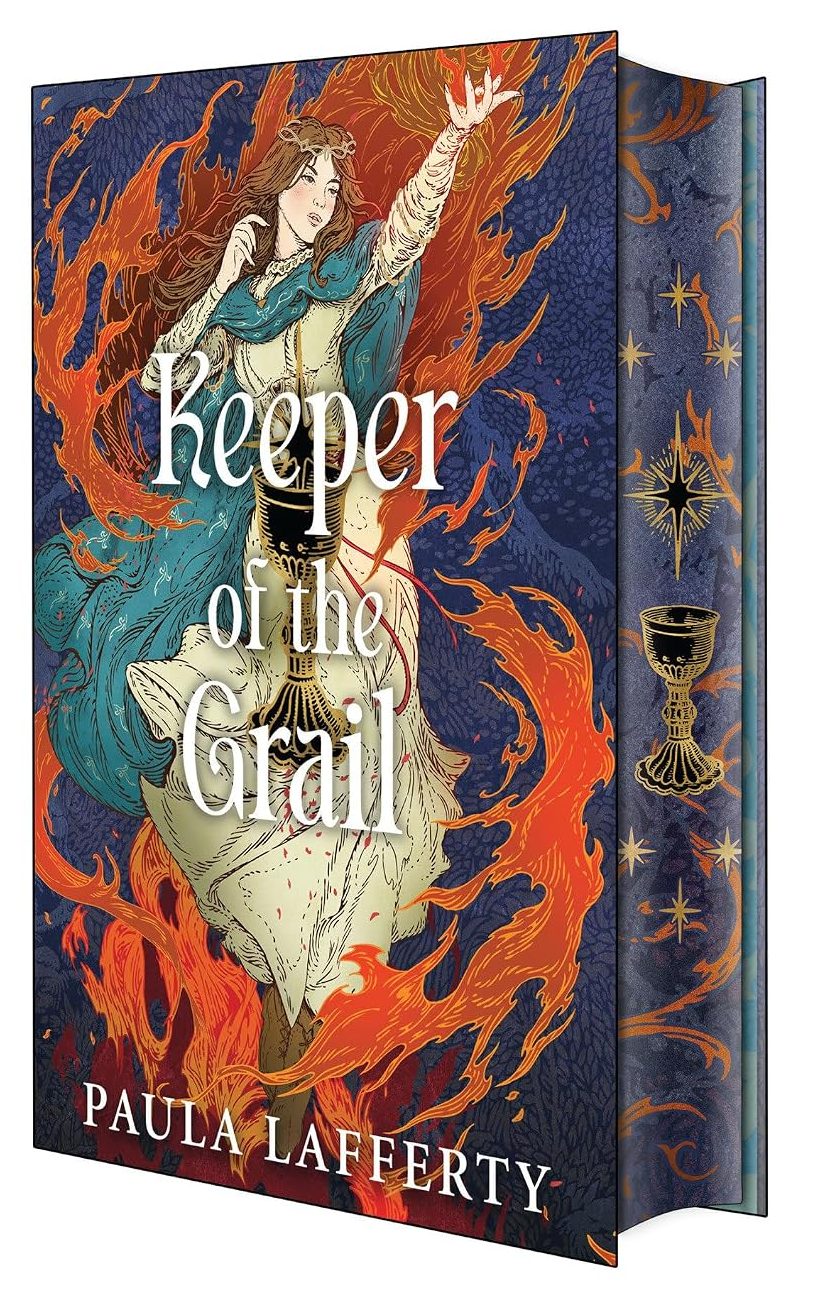
The second book in the series, Keeper of the Grail, will be released in January 2027, and I cannot wait. I feel so invested in this story and these people… I wish I had the next book in my hands right now!
For readers who enjoy fantasy worlds, time travel, and retellings of classic tales, I highly recommend The Once and Future Queen. It’s a wonderful book. Don’t miss it.
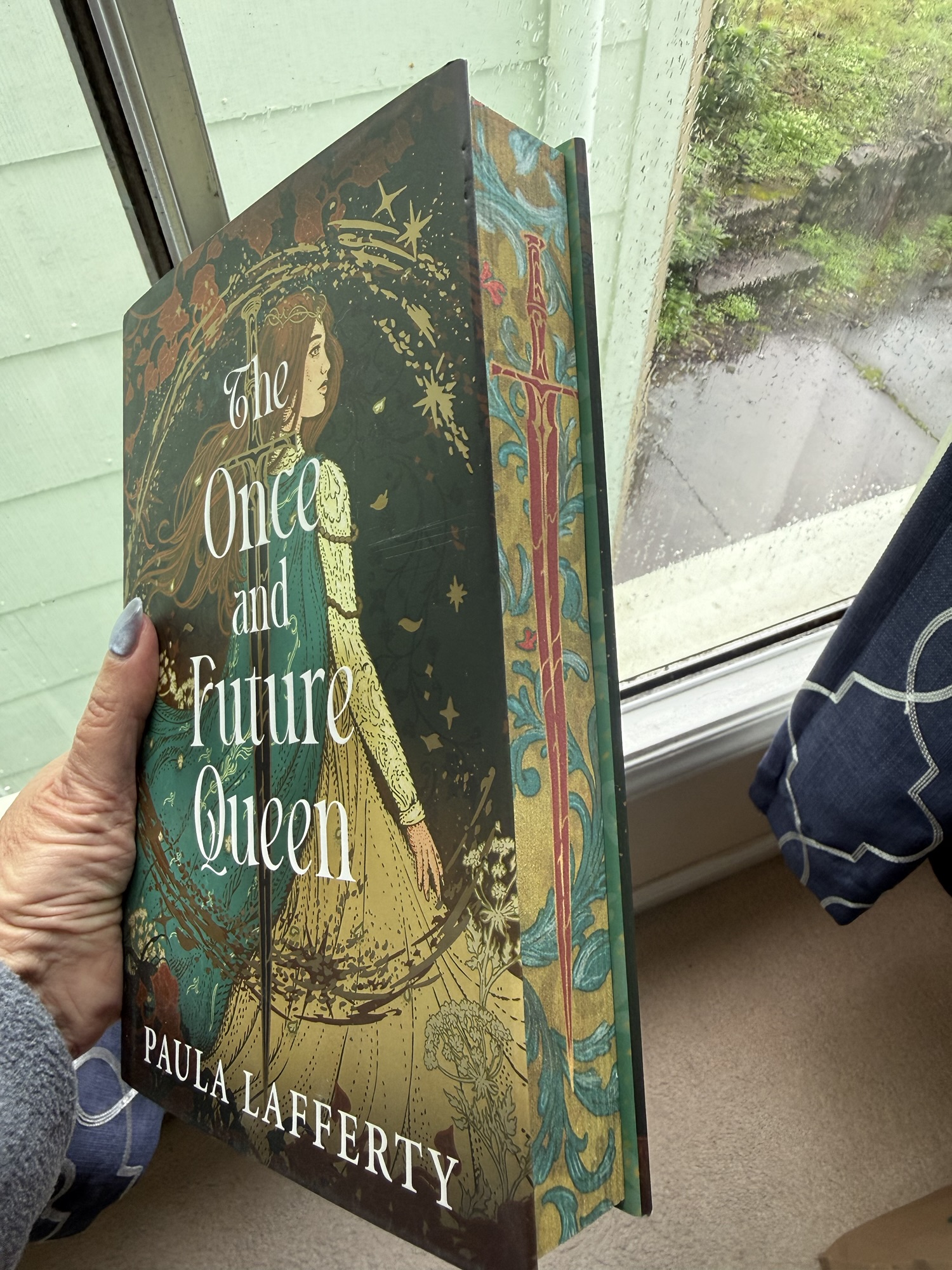
The book itself is gorgeous! The deluxe edition features painted edges and lovely inside illustrations. And yes, it was the beauty of the cover that first made me pick up the book!
Book #2 looks like it’ll be just as beautiful:
Up next: Keeper of the Grail, to be released January 5, 2027
Purchase links: Amazon – Bookshop.org – Libro.fm Disclaimer: When you make a purchase through one of these affiliate links, I may earn a small commission, at no additional cost to you.
Title: A Symphony of Echoes Series: The Chronicles of St. Mary’s, #2 Author: Jodi Taylor Publisher: Headline Publication date: October 22, 2013 Length: 336 pages Genre: Time travel Source: Purchased Rating:
⭐⭐⭐⭐⭐
Rating: 4.5 out of 5.
The second book in the bestselling Chronicles of St Mary’s series which follows a group of tea-soaked disaster magnets as they hurtle their way around History. If you love Jasper Fforde or Ben Aaronovitch, you won’t be able to resist Jodi Taylor.
Wherever the historians go, chaos is sure to follow…
Dispatched to Victorian London to seek out Jack the Ripper, things go badly wrong when he finds the St Mary’s historians first. Stalked through the fog-shrouded streets of Whitechapel, Max is soon running for her life. Again.
And that’s just the start. Max finds herself in a race against time when an old enemy is intent on destroying St Mary’s. An enemy willing, if necessary, to destroy History itself.
From the Hanging Gardens of Nineveh to the murder of Thomas a Becket, via an unscheduled dodo rescue mission, join the historians of St Mary’s as they hurtle around History on more hilarious, hair-raising escapades
I’m so glad that this year finally brought me around to starting The Chronicles of St. Mary’s series, which had been on my TBR for ages. I read the first book in the series, Just One Damned Thing After Another, last month, and couldn’t wait to see what would happen next.
In a nutshell, this series follows the adventures of the historians of St. Mary’s, an institute whose staff “investigate major historical events in contemporary time” which means… they time travel! They can’t change anything that’s already happened, but they can go and observe… and they certainly can die or be wounded in an endless variety of gruesome ways while on their hops into the past.
People sometimes think St Mary’s is just a charmingly eccentric bunch of amiable history nuts. And we are. But make no mistake, St Mary’s has teeth. And when we have to – we bite.
In A Symphony of Echoes, some continuing story arcs develop further, even while our beloved historians find themselves in new (and needless to say, extremely dangerous) situations. From a deadly encounter with Jack the Ripper to interfering in the life of Mary, Queen of Scots, the historians of St. Mary’s are adept at picking history’s wildest hot spots and then inserting themselves right into the center of the action — even when they’re really, truly intended just to be observers.
The whole scene breathed peace and serenity. When you consider our usual setting was some bloody battlefield, or rat-filled slum, or viewing a spectacular but hazardous natural catastrophe, it could have been a lot worse. We were in a garden. What could go wrong?
The blurbs for these books focus on the madcap nature of the stories, and comparisons to Jasper Fforde, among others, might lead a new reader to expect nothing but laughs. Even after seeing how dark parts of the first book were, I was still taken aback by how very dire and awful certain pieces of this story are. Yes, there’s plenty of humor and very clever writing and dialogue… but also, absolutely terrible things happen, leaving scars and then some. Max (Dr Madeleine Maxwell), the main character, is usually upbeat and highly courageous, but she has her inner demons and occasional crippling bouts of self-doubt and pain. While overall maintaining a light outlook, these book contain plenty of darkness too — something readers should keep in mind.
A little quirk of the author’s is to include heavy doses of foreshadowing. Whenever things seem to be going especially well, little statements like these pop up:
The end of my world was here and I never saw it coming.
Each time, I find myself holding my breath, and resenting the fact that no one gets to be calm and happy for more than a page or two!
Still, there’s plenty of fun too, despite the more dire nature of some scenes and outcomes, and the writing is always a delight. I had to chuckle over a Big Bang Theory shout-out:
Despite the Cooper/Hofstadter papers on the subject, no one seems quite sure what would happen […]
… and even sweet, sentimental moments tend to have a uniquely St. Mary’s spin:
So there we were. All set for a romantic reconciliation. I gazed into his eyes. Rainbows blossomed. Bluebirds sang. The music swelled to a crescendo. The bloody fire alarms went off.
A Symphony of Echoes is a terrific sequel to Just One Damned Thing After Another. While new, thorny problems arise — some dealt with, some not — the overarching storyline and major bad guy from the first book continue, and remain unresolved as of the end of this book. I’m looking forward to seeing where the story goes next!
I’ve now read 2 of the 14 published novels in the series… so I do have quite a long way to go, but hope to read at least another one or two before the end of the year.
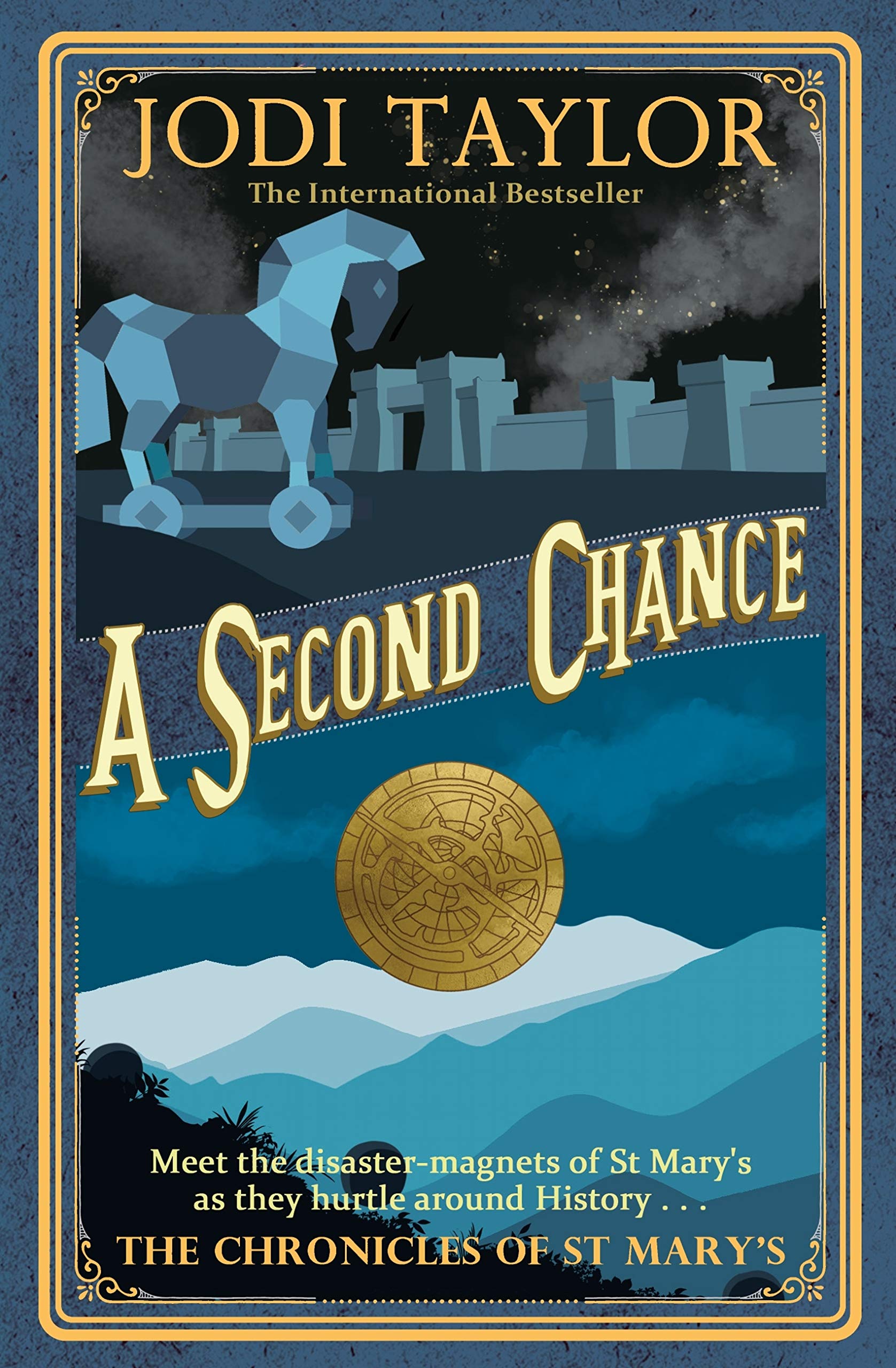
Up next: Book #3, A Second Chance
Purchase links: Amazon – Bookshop.org – Libro.fm Disclaimer: When you make a purchase through one of these affiliate links, I may earn a small commission, at no additional cost to you.
First Lines Friday is a weekly feature for book lovers created by Wandering Words. What if instead of judging a book by its cover, its author or its prestige, we judged it by its opening lines? Here’s how to join in:
Pick a book off your shelf (it could be your current read or on your TBR) and open to the first page.
Copy the first few lines, but don’t give anything else about the book away just yet – you need to hook the reader first.
Finally… reveal the book!
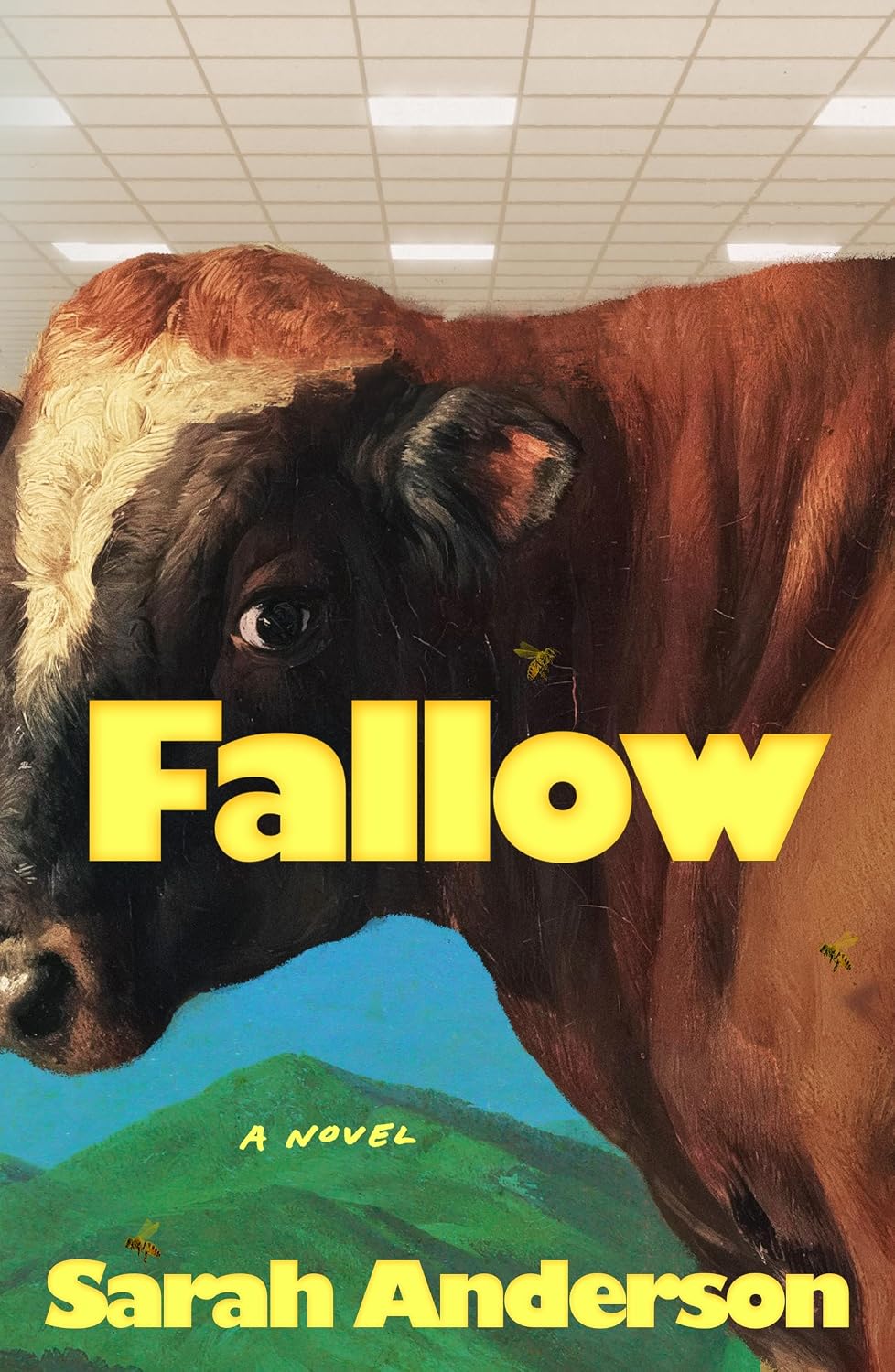
It’s been quite a while — over a month — since I last did a FLF post… but this book sounded too bonkers not to share!
Today’s line are from a book released this fall — and I’m just waiting for my library hold to come in:
The problem was that I’d never held a job with dental insurance. The problem was that I didn’t want one. The problem was ancient. The problem was teeth. The problem was urgent. The problem was money. The problem was that I hate to work and I always have.
So what’s the book?
Fallow by Sarah Anderson Release date: September 15, 2026 324 pages
Synopsis:
Slyly funny and disarmingly tender,Fallowis the story of a young woman who signs up to be the world’s first in-house corporate surrogate, then finds herself caught up in a social experiment of another kind.
Natalie knows one truth: there is no such thing as a good job.
As the clock ticks away at the call center where she logs complaints of workplace harassment, she tries to ignore the increasing pain in her jaw. She has no dental insurance. She has no skills or ambitions. She has student loans. And, minute by minute, she hears the many ways workers are not just not getting by, but actually getting hustled.
Then, at the blood bank where she sells her plasma, a mysterious flyer leads her to The Company. Natalie turns out to be the perfect candidate for their pilot program, pitched as an opportunity to help women access greater gender equity. She will be their in-house surrogate, delivering seven babies in ten years and enabling their executives to have motherhood without maternity leave. Finally, she will be adequately—generously—compensated.
For years, her every need is met: stacks of healthy meals in the refrigerator of a luxury condo, fitness coaches and nutritionists, around-the-clock health care. Between deliveries, she takes time off— a fallow period, with no obligations or expectations. For the first time in her life, she is good at her job; for the first time, she feels free.
But just as she’s about to fulfill the terms of her contract, a staffing decision upends everything. Natalie is pulled into an entirely different kind of social experiment, one that raises new questions about her future, her freedom, her purpose, what she can expect from the world, and what she can offer to it.
Woundingly funny and genuinely moving, Sarah Anderson’s Fallow is a tender, alarmingly real vision of a woman balancing on the knife-edge of capitalism as she comes to realize who she wants to be.
This book was not on my radar at all until I stumbled across a review for it… and the synopsis really caught my attention. I hope it’s as good as it sounds! This book has been described as a dark comedy. Can’t wait to give it a try!
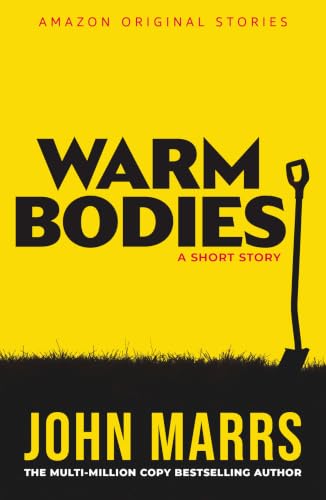
Title: Warm Bodies Author: John Marr Publisher: Amazon Original Stories Publication date: November 1, 2026* Length: 107 pages Genre: Contemporary fiction Source: Kindle First Reads freebie Rating:
⭐⭐⭐⭐
Rating: 4 out of 5.
From the multimillion-copy bestselling author comes a chilling tale about Brenda: they watched her, judged her, and talked. They should have left her alone.
Brenda lives quietly in a picture-perfect English village. She looks after her grandchildren, restores old furniture, and keeps herself to herself. She’s the sort of neighbour people feel comfortable judging.
And judge they do. Because villages notice everything. The shopping. The visitors. The hours kept behind closed doors. And when the local WhatsApp group begins to turn its attention to Brenda, curiosity hardens into suspicion, and gossip becomes a sport.
As scrutiny tightens, Brenda finds herself navigating busybodies, moral crusaders and a community that believes it knows best. What they don’t know is that Brenda has spent a lifetime solving problems discreetly.
Methodically. Permanently.
Well, this was a fun little diversion! Warm Bodies was one of the free options for Kindle First Reads this month. The cover caught my eye, I read the synopsis, and I just had to know more!
In this short(ish) story, Brenda is just trying to take care of her family and mind her own business. In her fifties, she provides a home for her daughter and three grandchildren. They’ve had the good fortune of moving to a sweet little cottage in a lovely village, where the children are safe and attend good schools. Brenda is a doting grandmother, and after years of just barely scraping by, works hard to provide a good life for the people she loves.
What she actually does for work is revealed and, well, it’s not precisely what you’d consider grandmotherly… but it keeps a nice roof over the family’s heads and food on the table, and she does enjoy the challenge of it all.
But the neighbors are not exactly warm and welcoming, and Brenda has declined invitations to join volunteer committees and clubs once too often. The village chat has zoomed in on Brenda, and they’re determined to drive her away. As the gossip mounts, Brenda finds herself at the center of unwanted attention that presents a danger to herself and her family’s well-being… and she really can’t have that.
The writing here is snappy and a bit twisted. The village WhatsApp thread oozes viciousness under a layer of fake concern. Brenda is a marvel, savvy and practical, incredibly loving yet capable of doing whatever needs to be done, and what needs to be done… well, let’s just say, it isn’t pleasant.
Warm Bodies is a small town thriller with a dark sense of humor. Some scenes may be a bit much for squeamish readers. I found it all oodles of fun. Brenda is a terrific character — I wouldn’t want to hang out with her, but it was certainly entertaining (in a totally macabre way) to be inside her head for a while. I’m glad I stumbled across this short read and gave it a try!
*A note on the publication date: November 1, 2026 is listed as the official release date for Warm Bodies, but it’s available now as a First Reads pick for Amazon Prime subscribers.
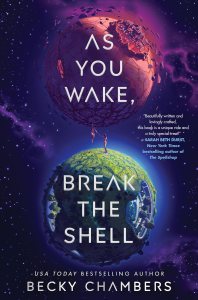
Title: As You Wake, Break the Shell Author: Becky Chambers Publisher: Harper Voyager Publication date: October 13, 2026 Length: 480 pages Genre: Science fiction Source: Review copy courtesy of the publisher via NetGalley Rating:
⭐⭐⭐⭐⭐
Rating: 4.5 out of 5.
Explore a universe of stubborn survival and found family, of persistent danger and quiet wonder in the first installment of a heartfelt new duology from Hugo Award–winning author Becky Chambers.
Life on the resource-poor planet of Fortune is challenging, but for its inhabitants, it’s home. For two of them, Signy and Cora, this home might no longer be enough.
Signy is a brilliant but reclusive botanist who bio-prints medicine from her small plant shop, often bending the rules to help those the system leaves behind. Her life is filled with the green of her store, the warmth of her one elderly friend, and the quiet determination to help others without putting herself in danger.
Cora is a rorqual pilot, one of the few with the unique ability to navigate the massive, living ships that connect the scattered settlements of their solar system. Her bond with her rorqual, Colibri, is profound—a connection that is both her greatest gift and a threat to her career.
It is that threat—the “mindbleed,” a dangerous side effect of her piloting—that brings her to Signy’s shop, and her appearance puts Signy in the danger she so fears. But it’s soon apparent it’s not just about losing her license—this delicate balance between risk and trust has the potential to change everything for them.
Told in an alternating timeline of their initial coming together and a not-so-distant future where they have found domestic bliss, this is a story harrowing and haunting, heartfelt and hopeful. Through a love story centered around survival, we are given a glimpse into the very best of what Becky Chambers does in her writing: explore what it means to be human, and what it means to come together.
As You Wake, Break the Shell is an imaginative, powerful, emotional look at connections, home, and purpose, as told through the story of two women, Signy and Cora, and two timelines — the timeline of their initial meeting and developing romance, and another 15 years later, where we see them living a very different life.
When they meet, both reside on Fortune, a planet that sounds, frankly, hellish. The surface and atmosphere are completely incompatible with sustaining life of any sort. Humans live on rafts inside a liquid filled crater, where going outside means donning gear to protect from acid rain and poisonous air, and the eruption of the planet’s very active volcanoes can send people running for emergency shelter at a moment’s notice.
Humans arrived on Fortune generations earlier through spacecraft originally from Earth, carrying embryonic life and a Primer that explains humanity’s origins. As people were grown from the bio-prints, they built homes and communities following Primer instructions, with the goal of eventually advancing enough to build spacecraft to enable them to reunite with the mothership. Meanwhile, thousands upon thousands of people live on Fortune, ferrying between rafts, building businesses and social structures, and otherwise going about the business of surviving.
Cora is a rorqual pilot, one of the gifted few who are able to mind-meld with giant flying creatures (rorquals) who ferry their pilots to quarry moons to collect the ice needed for Fortune’s water supply. Being a pilot requires skill and advanced training, but comes with high risk: By blending her consciousness with that of Colibri, her rorqual, Cora opens herself up to mindbleed, where she’s no longer able to separate her own mind from Colibri’s. This endangers her life and could ground her as a pilot… and if that happens, it would likely mean death for Colibri too, as rorquals generally cannot bond with more than one person, and would be put down.
Cora seeks out Signy who, under cover of her plant shop, runs a black market pharmacy creating medicines from genetically modified plant templates for those whom the healthcare system would consider beyond recovery, and therefore not provided with medicines other than for palliative care. Cora and Signy see something in one another, and connect on a profound level in love, friendship, and a deep understanding.
Meanwhile, in interspersed chapters, we see Cora and Signy’s lives fifteen years later, where they seem to lead an idyllic life on a distant moon where they’ve established a home and lush gardens. This life of theirs is filled with love, although they remain haunted by distant, painful memories of past losses.
How Cora and Signy get from where we meet them to this future life is something that doesn’t become clear for quite a long time — and in fact, we’re only partially there by the time the book ends. (Fear not — this is book one of a duology, and I trust that the full story will make sense once we get the second book.)
The book is roughly structured as a countdown (sections are labeled T-Minus 7, T-Minus 6, etc) — although, again, we really don’t know what we’re counting down to until we get there at the end. While the weaving of the two timelines and the jumps between the two can be confusing, that seems deliberate: We’re not meant to fully understand until we get to the right moment. Meanwhile, by slowly showing us the depth of the relationships, the book makes sure that what happens later feels right and well-grounded in what’s come before.
The story’s core themes are connection and love. What does it mean to truly open oneself to another? What does it mean to love someone enough to put them first? These seem like simple questions on the surface, but as we see through the characters’ deepening relationship, there are layers upon layers of trust, concern, and care that come into play. Equally important is the role of Colibri. Interwoven chapters show the mind-to-mind conversations between Cora and Colibri, as they struggle to find common language and concepts, a huge challenge for beings whose basic biology means that their perceptions of the world around them are so vastly different as to be practically unfathomable.
The writing in As You Wake, Break the Shell is beautiful, letting us into the characters’ lives and surroundings, illustrating the day-to-experiences of life in the harsh environment of Fortune, while also showing how the fundamentals of human love and connection remain recognizable even in such an unknown time and place.
This book has a darker, more serious feel than what I’ve come to expect from Becky Chambers’s writing, and she does provide some context in the afterward that helps the tone make sense. Overall, the book is lovely and the characters are wonderful, but tragedies inform their lives, and the joy of Cora and Signy’s love has a thread of sorrow as well.
As You Wake, Break the Shell is on the lengthier side and requires concentration. I recommend starting the book when you have time to really sink into it and spend time with it. Now that I’ve reached the end, the more I think back, the more I realize how beautifully told the overall story is. I’ve yet to be disappointed by anything I’ve read by Becky Chambers. As You Wake, Break the Shell is a remarkable achievement and a powerful reading experience. Don’t miss it.
Purchase links: Amazon – Bookshop.org – Libro.fm Disclaimer: When you make a purchase through one of these affiliate links, I may earn a small commission, at no additional cost to you.
Top Ten Tuesday is a meme hosted by That Artsy Reader Girl, featuring a different top 10 theme each week. This week’s topic is Things That Make Up My Perfect Day, with the prompt: share the people, places, activities, foods, circumstances, etc. that make a day perfect for you. Go into as much or as little detail as possible!
My first instinct was to go with the dream of a perfect day — a tropical beach somewhere, white sand, cool breezes, fresh fruit, a great book… but I think instead I’ll keep my focus on the here and now. Here are little things that contribute to a great (maybe even perfect!) day for me:
Long walk, preferably with great views out in nature somewhere
Good coffee
Uninterrupted reading time for at least a couple of hours
Sitting down for a delicious dinner with my family
Catching up by phone with a long-distance friend or two
Dancing (preferably outdoors, with a mix of old and new dances, and my favorite dance companions)
Binge-watching an episode or two of a great drama or comedy series
Word games and jigsaw puzzles
Planning my next trip
Spending time with the people I love
It’s rare to get all of these in one day… but I’ll take any combination I can get!
My Monday tradition, including a look back and a look ahead — what I read last week, what new books came my way, and what books are keeping me busy right now. Plus a smattering of other stuff too.
Life.
It’s been another busy week (what else is new?) — followed by a really enjoyable weekend. We had friends and family over for a nice dinner on Friday. Saturday was a double-stuffed dancing day — first, a couple of hours of dancing in the park with my small dance group, then a once-a-month dance party that night, which is always a great time. (I happened to have my phone in my leggings pocket all day… and according to my tracking app, I danced the equivalent of 6.7 miles on Saturday!)
Sunday was truly a day of rest — no plans, so I was able to get out for a much needed walk (accompanied by a terrific audiobook), organize a bit around the house, and catch up on my book group book for October.
Bookish bits & bobs:
I spent most of the week reading a big, chunky sci-fi novel (As You Wake, Break the Shell by Becky Chambers), but had so little time each day that I was only at 50% by the time the weekend rolled around… and at that point realized that I absolutely needed to start my book group book, since I’m the person responsible for the discussion this time around. I hate putting down a book I’m enjoying in order to start something else, but in this case, I had no choice! Looking forward to getting back to the other book this week (and I hope re-entering that world won’t feel too jarring.)
Random things that amused me this week:
Seen while out running errands mid-week… happy Heated Rivalry Halloween!
What did I read during the last week?
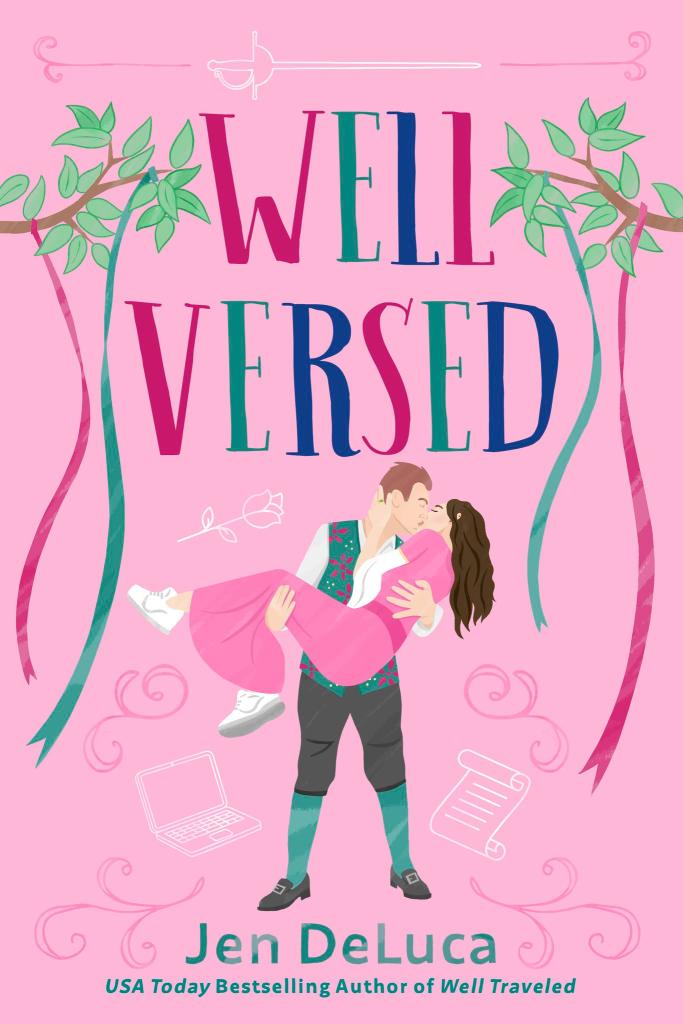
Well Versed (Well Met, #5) by Jen DeLuca: A trip to the Ren Faire is always a delight! My review is here.
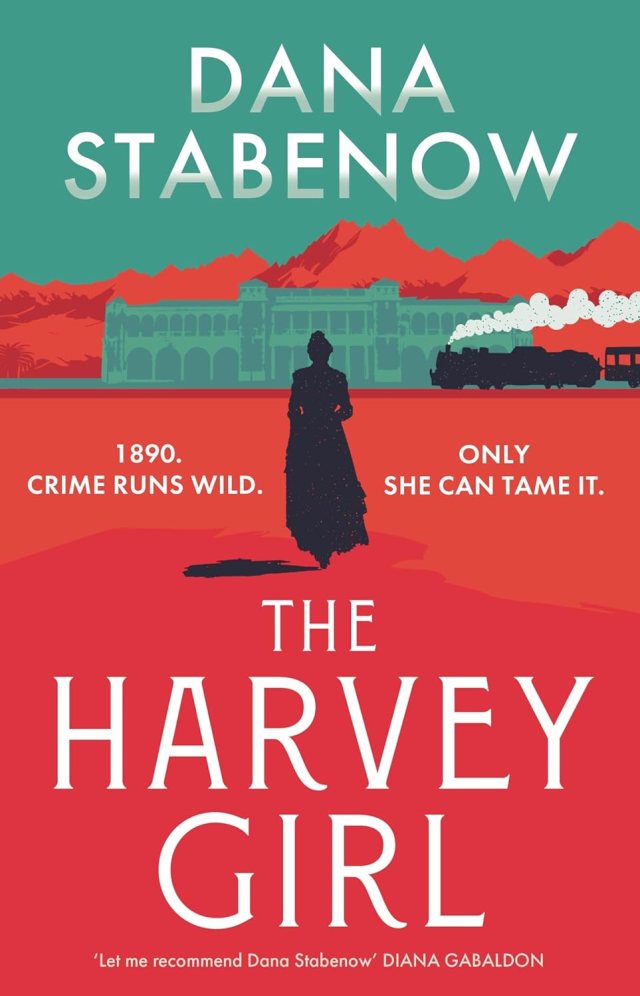
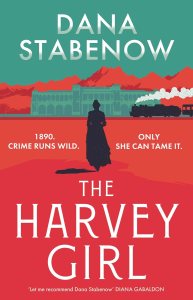
The Harvey Girl by Dana Stabenow: I bought a copy back when this book came out earlier in the year, then held off until now to read it so I’d have it fresh in my mind for my book group discussion this week. A fun detective story with a wild west setting that I wasn’t particularly familiar with — I’m glad to have finally read it! My review is here.
Pop culture & TV:
Dancing with the Stars check-in: Oh, the drama! Social feeds are going a bit insane this week after one pro faces a one-week suspension over a (now deleted) post that some viewed as threatening toward a DWTS judge. Fans are irate! (IMHO, his post was inappropriate, but not actually a threat — just an ill-advised attempt at snark that backfired). Anyhoo… all my faves (Amber Glenn, Ezra Frech, Julia Stiles, and Tatyana Ali) are still in the competition, so yay!
In other viewing, I finally started season 4 of Ted Lasso, and have gotten through about half the episodes. I like it – -maybe not as much as previous seasons, but that’s okay. It’s nice to have a bit of cheerful viewing to look forward to.
Fresh Catch:
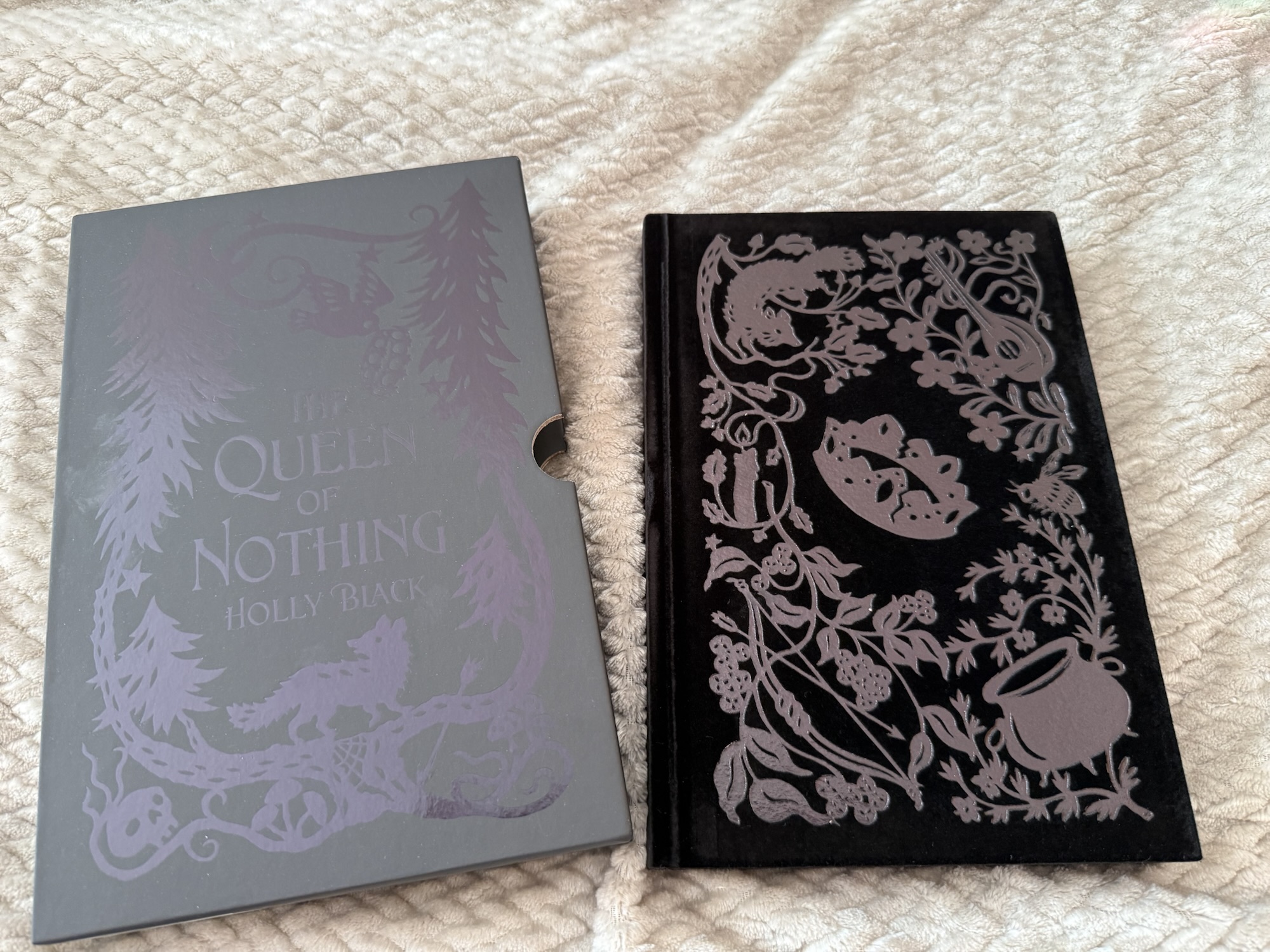
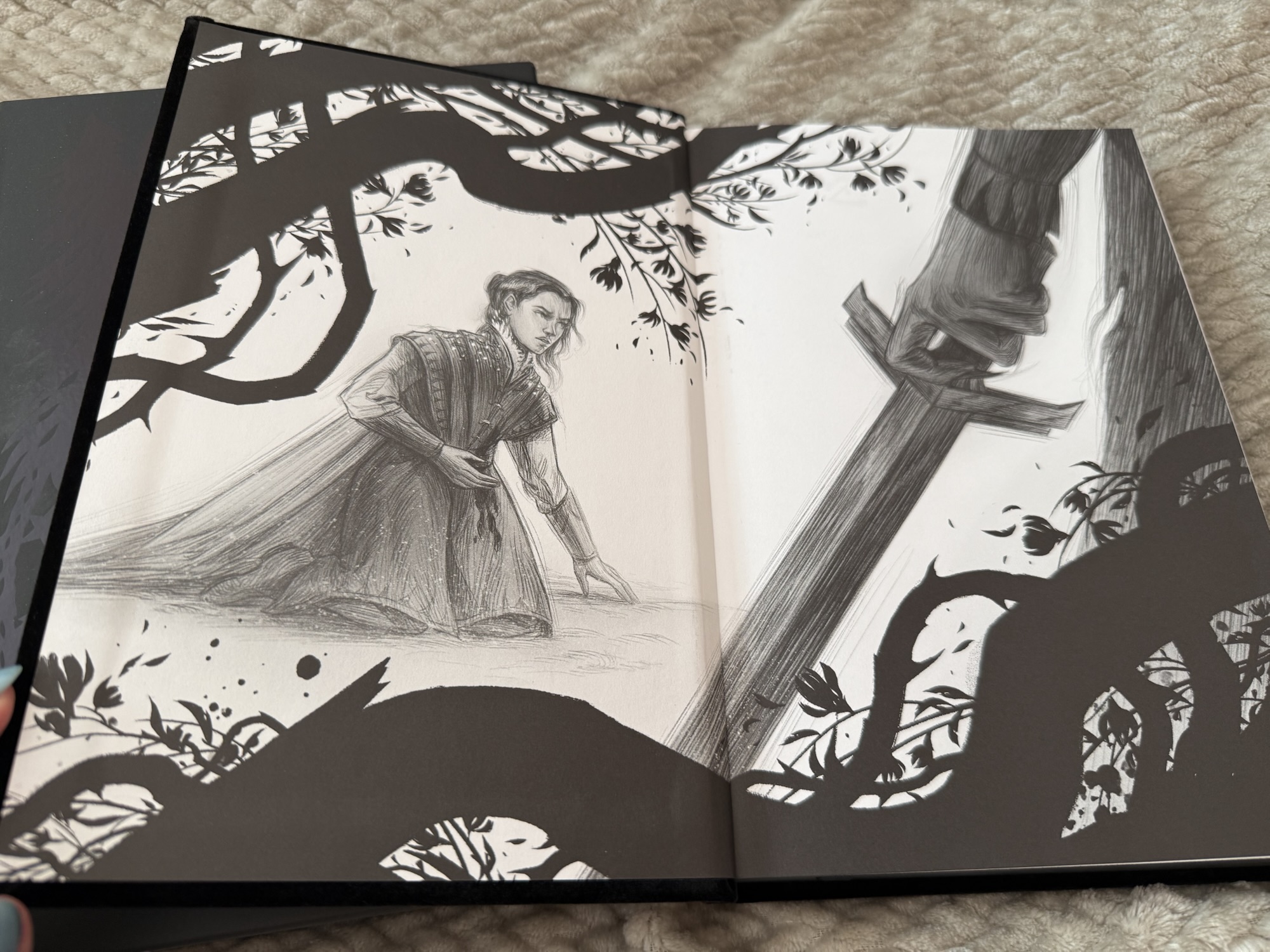
The new Queen of Nothing special edition arrived this week!
My photos do not do it justice! It’s a velvety black edition with a box and beautiful inside illustrations. And now I have all three books from the series! I sense a re-read in my near future…
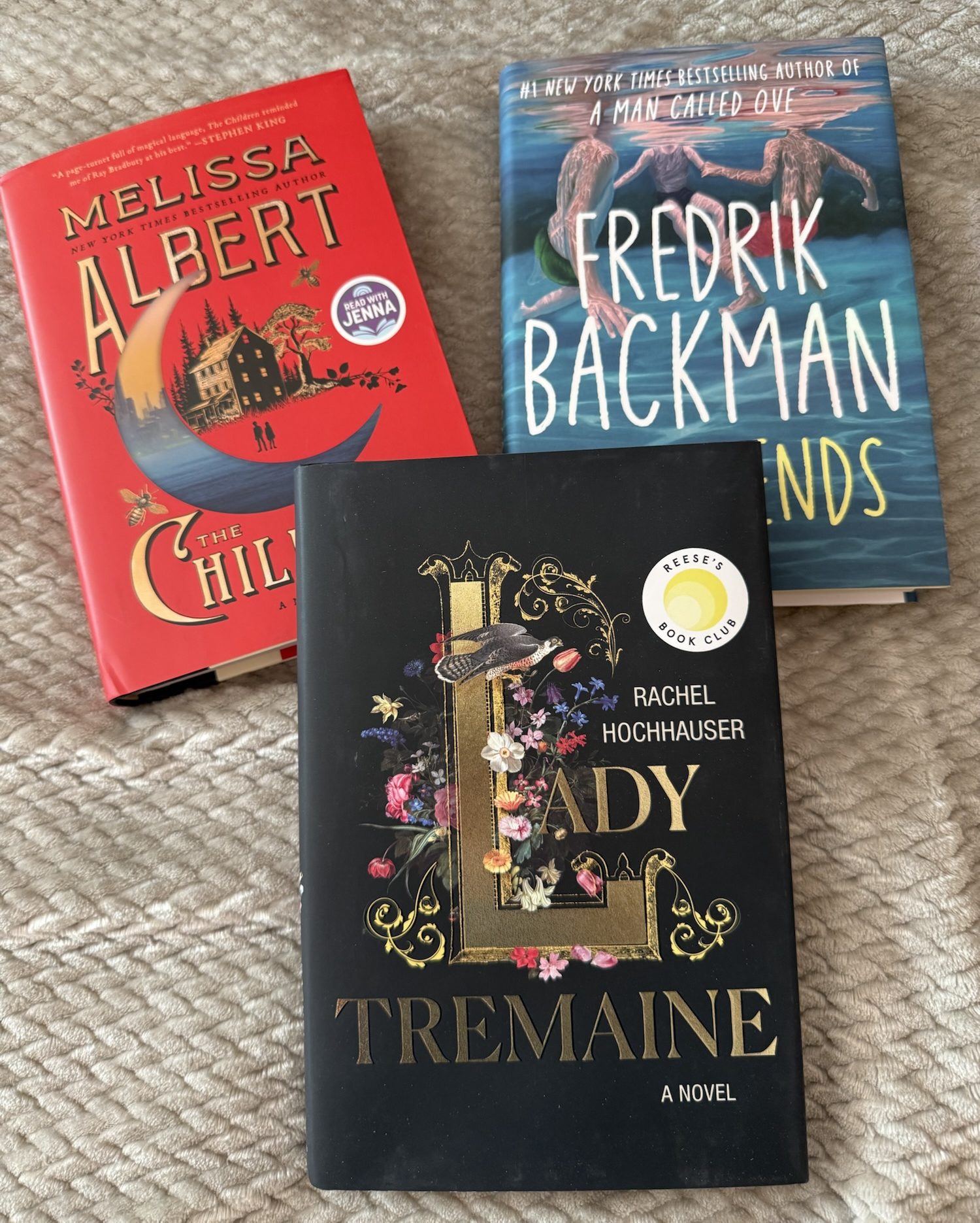
I indulged during Amazon’s big sale days last week and used some credits to buy hardcovers that had been on my wishlist for a while:
All three are books that I read within the past year, and loved! In case anyone wants to know more, here are the reviews I posted:
As You Wake, Break the Shell by Becky Chambers: I’m happy to be getting back to this book! As I mentioned, I had to pause for a few days, just past the 50% point, but now I’m diving back in (and hoping to have more time to really focus on it than I did last week).
Now playing via audiobook:
The Once and Future Queen by Paula Lafferty: I’m absolutely loving this book! It’s on the longer side… I started listening last Monday, and should be able to finish within the next few days.
Ongoing reads:
The Mysteries of Udolpho by Ann Radcliffe: My book group’s classic read. We’re reading and discussing two chapters per week. Progress: 97%. Coming up this week: Volume 4, chapters 17 and 18. Just three chapters left!
Title: The Harvey Girl Series: The Harvey Girls Mysteries, #1 Author: Dana Stabenow Publisher: Head of Zeus Publication date: March 5, 2026 Length: 272 pages Genre: Historical fiction Source: Purchased Rating:
⭐⭐⭐⭐
Rating: 3.5 out of 5.
From the award-winning author of the Kate Shugak Mysteries, a thrilling new detective series set during America’s wild boom time and frontier expansion of the nineteenth century. WELCOME TO THE GILDED AGE. WHERE NOT EVERYTHING GLITTERS. 1890. The New Mexico Territory is a lawless frontier where criminals steal money and land alike with impunity. Everyone wears a six-gun and is ready and willing to draw it.
In the new city of Montaña Roja, Fred Harvey’s growing empire is threatened by the robberies plaguing his newest Harvey House restaurant. To get justice, he needs a skilled detective to go undercover and procure answers to questions the law will not ask.
The assignment falls to Clare Wright, a young Pinkerton agent. Disguised as one of Harvey’s famous hostesses, Clare travels west where she risks being exposed at every step of her investigation. To get answers – and to get out alive – there are only two things she can trust: her instincts, and her derringer.
Dana Stabenow’s Kate Shugak series is one of my favorites, so of course I was eager to try The Harvey Girl, the first book in the author’s newest series. Here, the focus is on crime-solving in the lawless Wild West of the 1890s, as a young woman working for the famous Pinkerton Detective Agency goes undercover to solve a series of train robberies in the booming New Mexico territory.
Clare, at age 22, is young, brave, well-trained, and up for a challenge. She’s hired by Fred Harvey, founder of the Harvey Houses — restaurants located at every major stop of the railroad, where respectable young women offer pristine food service to passengers and locals, held to high standards of conduct at all times. Fred Harvey’s goods have been stolen during brazen train heists, and he needs the crimes solved — and stopped — immediately.
As Clare arrives in Montaña Roja, New Mexico, she begins work as a Harvey Girl, and must quickly unravel the tangle of mining tycoons, bankers, sheriffs, and the various outlaws, cowboys, and businessmen who make up the boomtown’s population. Meanwhile, she works demanding shifts carrying out her Harvey Girl duties according to the high standards expected, while befriending the other girls and hiding her own true purpose there.
The Harvey Girl is at its best portraying frontier life during the Gilded Age, when greed and profit rule, lawlessness runs rampant, and bar fights ending in gun battles are seemingly everyday occurrences. Vibrant descriptions capture the desert settings, the natural beauty, and the feel of a Western town enjoying rapid growth, as well as the personalities of the upwardly mobile and wannabes attempting to cash in on every available source of profit.
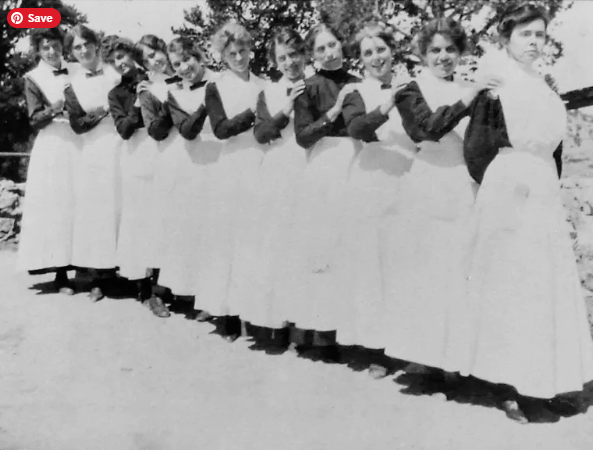
Learning about Harvey Houses and Harvey Girls was fascinating. I was unfamiliar with this piece of history, and fell down a few major internet rabbit holes while looking for more details and images. I even stumbled across the IMDb page of a 1946 movie musical called The Harvey Girls, starring Judy Garland! I may have to track it down and watch it, if it’s available to stream.
I struggled more with the mystery around the train robberies and related crimes which Clare uncovers. Honestly, the trail of clues and suspects felt difficult to follow. The conclusion is rushed, with a lot of exposition as Clare explains her findings, but the answers didn’t seem especially concrete or supported by what we actually see happening on the page.
Still, there’s a lot to enjoy here, especially some action-packed moments of danger, a couple of parties that illustrate different types of social gatherings, and cameos from some real historical figures alongside all the fictional characters. Clare herself is an interesting character, although I wish we’d gotten a bit more of her internal life, rather than just snippets of her background and scenes showing her detective skills.
A second book in the series, The Iron Trail, has been announced already, with a projected release date of November 2027. It looks as though this installment will provide Clare with new adventures while also picking up some of the lingering threads from The Harvey Girl. I’ll be interested in seeing where the story goes!
Purchase links: Amazon – Bookshop.org – Libro.fm Disclaimer: When you make a purchase through one of these affiliate links, I may earn a small commission, at no additional cost to you.
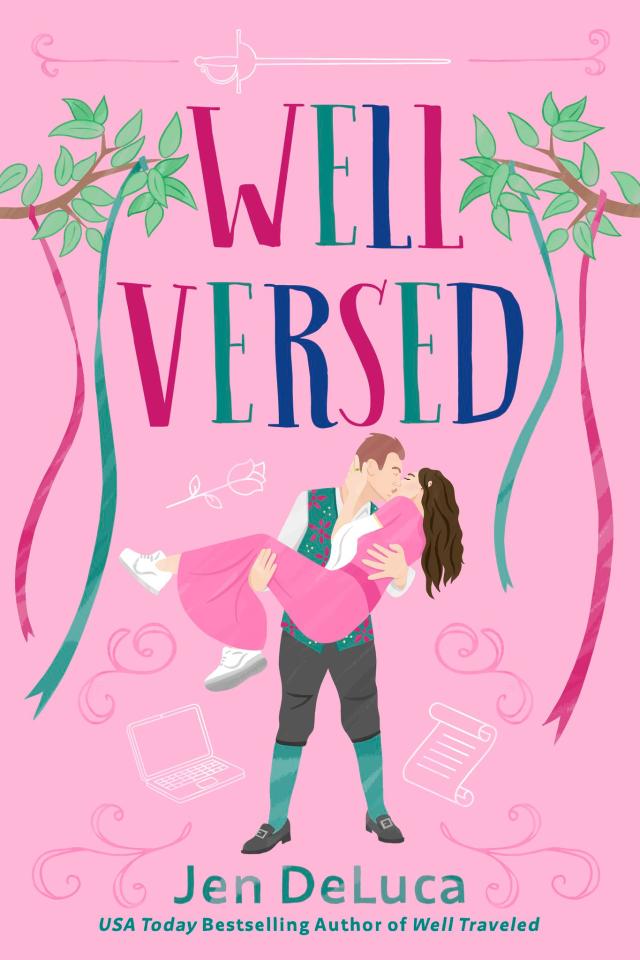
Title: Well Versed Series: Well Met, #5 Author: Jen DeLuca Narrator: Brittany Pressley Publisher: Berkley Publication date: September 22, 2026 Print length: 352 pages Audiobook length: 10 hours, 8 minutes Genre: Contemporary romance Source: Purchased (audiobook); e-ARC via NetGalleyRating:
⭐⭐⭐⭐
Rating: 4 out of 5.
It’s a second chance at first love at the Renaissance Faire, where the search for a new queen shapes a destiny, from USA Today bestselling author Jen DeLuca.
Caitlin Parker was eighteen when she fell out of love with the magic of the Willow Creek Renaissance Faire—the site of her first real heartbreak. But now, twenty-four and unemployed, she finds herself in her childhood bedroom and her childhood lady-in-waiting costume, assisting a rotating cast of substitute queens for the season. The very last person she wants to see is Alexander Wright—the sword-fighting, Shakespeare-spouting young man who won and broke her teenage heart. Yet there he is, older, annoyingly hotter, and back on stage at her Faire.
When Alex broke things off with Caitlin the first time, he thought he was just ending a summer fling. He didn’t realize how much he’d fallen for her until he let her go, and he certainly didn’t know he’d tarnished her memories of her cherished Faire and worse, shattered her view on love and relationships. His need to right that wrong this summer brings them together again and again, and this time, it won’t be so easy to let go of this summer fling.
But as summer winds down, real life is catching up to both of them. Caitlin’s always thought that being an adult with adult responsibilities means leaving whimsy behind. Alex, with a life full of stage combat, songs, and sonnets, doesn’t know how to live any other way. Can they go after their dreams and find a future together where they can still say “huzzah”?
It’s good to get back to the Faire! Four years after the release of Well Traveled, Jen DeLuca’s delightful Renaissance Faire romance series is back, delivering her signature mix of Faire fun and modern-day romantic challenges.
In Well Versed, Caitlin — whom we first met way back in book #1, Well Met, as a 14-year-old volunteering at the Faire — is now all grown up! Time flies for sure. Caitlin is now 24 years old and recently laid off from a tech job, and while she job hunts, has moved back home with her mother April and April’s partner Mitch (whose love story was the focus of book #3, Well Matched). And since it’s the start of summer, that means it’s also time for the Willow Creek Renaissance Faire, organized by Caitlin’s aunt and uncle and the focus for their entire community each summer.
Caitlin used to love the Faire as a teen, when she’d don the costume of a lady-in-waiting, get into character, and wander the faire grounds at the side of her queen. But a heartbreaking end to her first love left her disillusioned and absolutely done with anything related to Faire — she hasn’t been back, and even swore off her love of Shakespeare in order to pursue a career in IT. No more swoony sonnets for her!
The past comes crashing back on opening day of Faire, when her ex Alex strolls back into her life. Two years older than Caitlin, he’d broken up with her after their first romance, telling her to find someone her own age (he was 20, she was 18). She’s never forgiven him, and is furious that he’s back, up on a stage spouting Shakespeare and looking unfairly great. It gets worse, though — when Mitch is injured, Alex steps in to take his place in the Faire’s centerpiece swordfighting exhibition, and that means he’s at her house every day to practice. She can’t get away from the guy!
Meanwhile, the Faire itself is missing its queen — the former queen has officially retired, and each replacement seems to miss the mark. It seems inevitable that a certain jaded someone will finally step up and embrace the role, if only she can recapture some of that earlier joy she used to feel at the Faire each summer.
As Caitlin and Alex spend time together, old wounds are finally given time to heal. Caitlin thinks a summer fling with Alex might be a great way to have fun, as a break from dealing with the pressures waiting at the end of the summer — figuring out jobs, where to live, and what to do with the rest of her life. But as things heat up, Caitlin and Alex’s feelings definitely go beyond a mere fling, leaving them wondering how to balance this new beginning with all the demands of adulting that they feel closing in on them.
As always, the sense of delight at the Renaissance Faire is fully embodied here in Well Versed. The book captures the summer experience, the joy of putting on a costume and embracing a different way of being, and the sense of community as people come together to create something magical.
While it was a bit of an adjustment at first to see Caitlin as an adult (we met her as a young teen!), she’s an interesting main character to spend time with. Caitlin’s struggle to get over past hurts, assert herself differently, fit back in with her hometown, and also figure out her future feel realistic for a young woman in that particular phase of her life. I enjoyed seeing her reconnect with family and friends, especially since they’re all so much a part of the Well Met series’s broader story. How fun to catch up with them all and see how they’re doing!
The love story elements are well done, showing the repairing needed before Caitlin can accept Alex as a friend once again. I appreciated that Caitlin comes to realize that Alex’s intentions were good all those years ago, despite his not-great delivery, and that the time wasn’t right back then for a serious relationship. Of course, being set at a Ren Faire, their reconciliation is full of swoony gestures, and all the swordplay and sonnet deliveries don’t hurt!
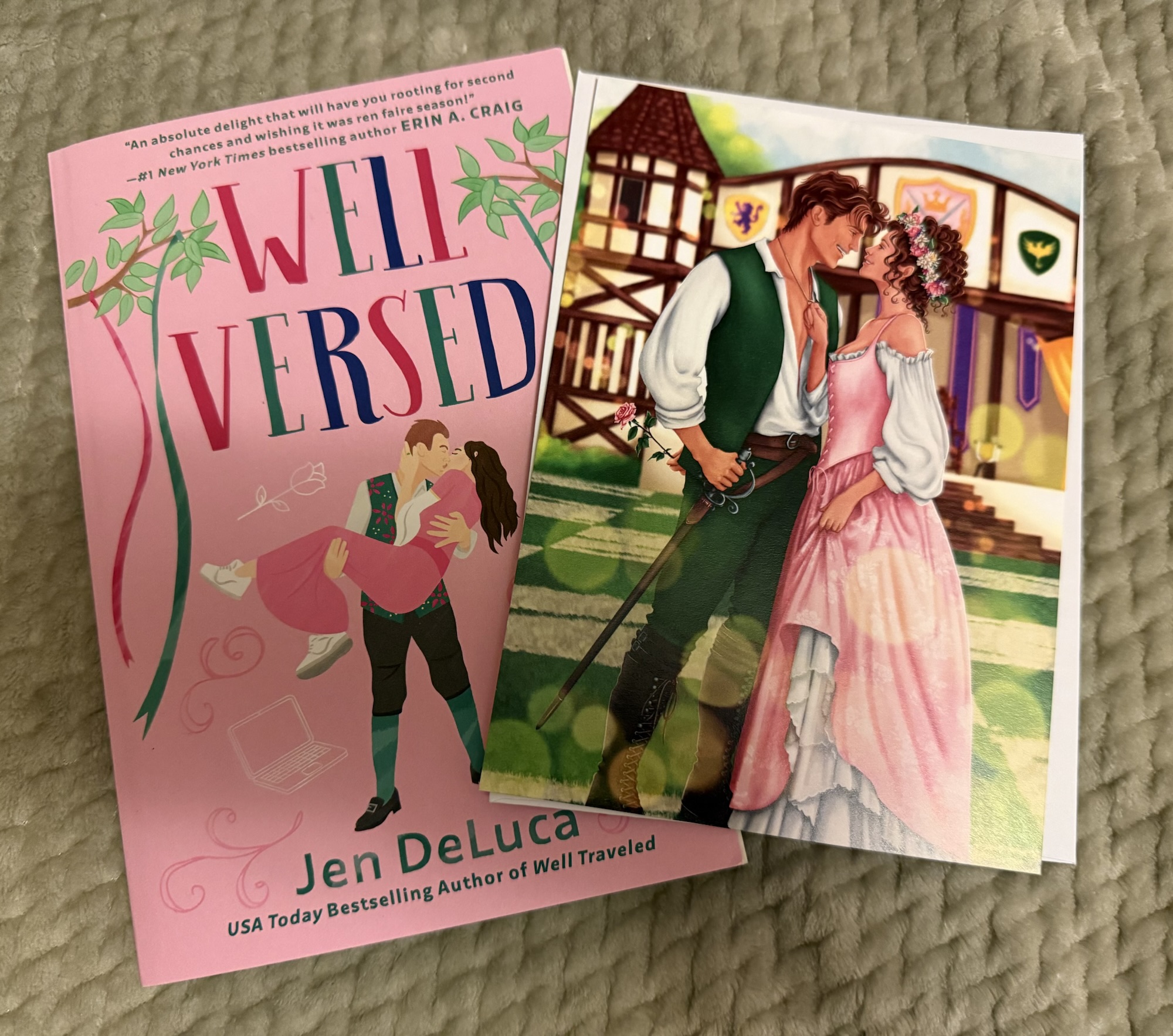
I treated myself to a signed paperback, which came with this adorable artwork!
I did wish for a bit more Faire content — we see them at the Faire throughout, of course, but often it’s just a recap of how the day went after a few brief scenes of the day starting. Perhaps the author felt that we didn’t need full-on scenes of Faire life, after the previous four books… but I did! I wanted to spend just a little more time wandering the lanes, hearing about characters and accents and flower crowns and mead, seeing the jousts… all the little touches that make these books so enjoyable.
The inevitable communication issues pop up right near the end, as is typical for so many romances. Thankfully, here the issues are less about misunderstanding one another than that the characters are so in in their own heads that they’re not fully listening to one another… and also, thankfully, it all gets resolved without too much agonizing to wade through.
Brittany Pressley is one of my favorite audiobook narrators, and once again, she does a terrific job with the characters and the Ren Faire dynamics. She lets the various personalities shine through and keeps them all distinct, conveys the humor and whimsy of so many scenes, and captures the dialects (pirate, Scottish warrior, Queen!) of the Faire voices with flair.
Overall, I really enjoyed Well Versed… and as usual, really hope we’ll get more books set in this world! Huzzah!
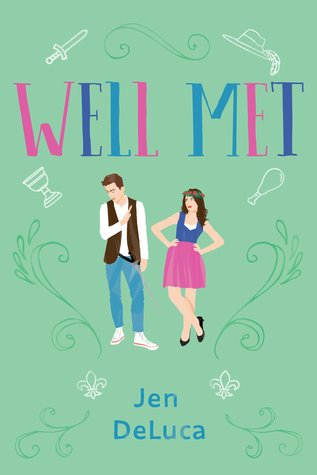
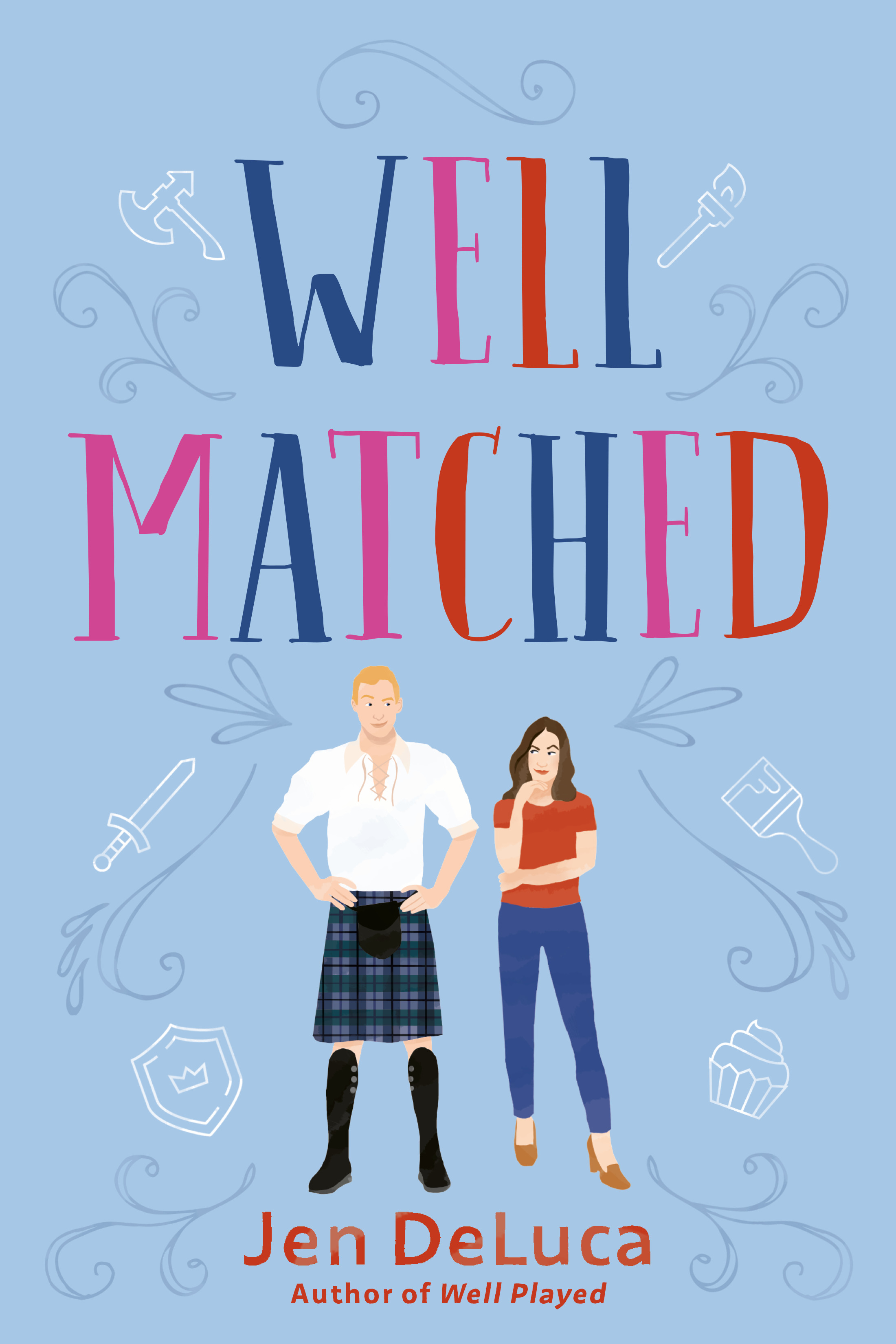
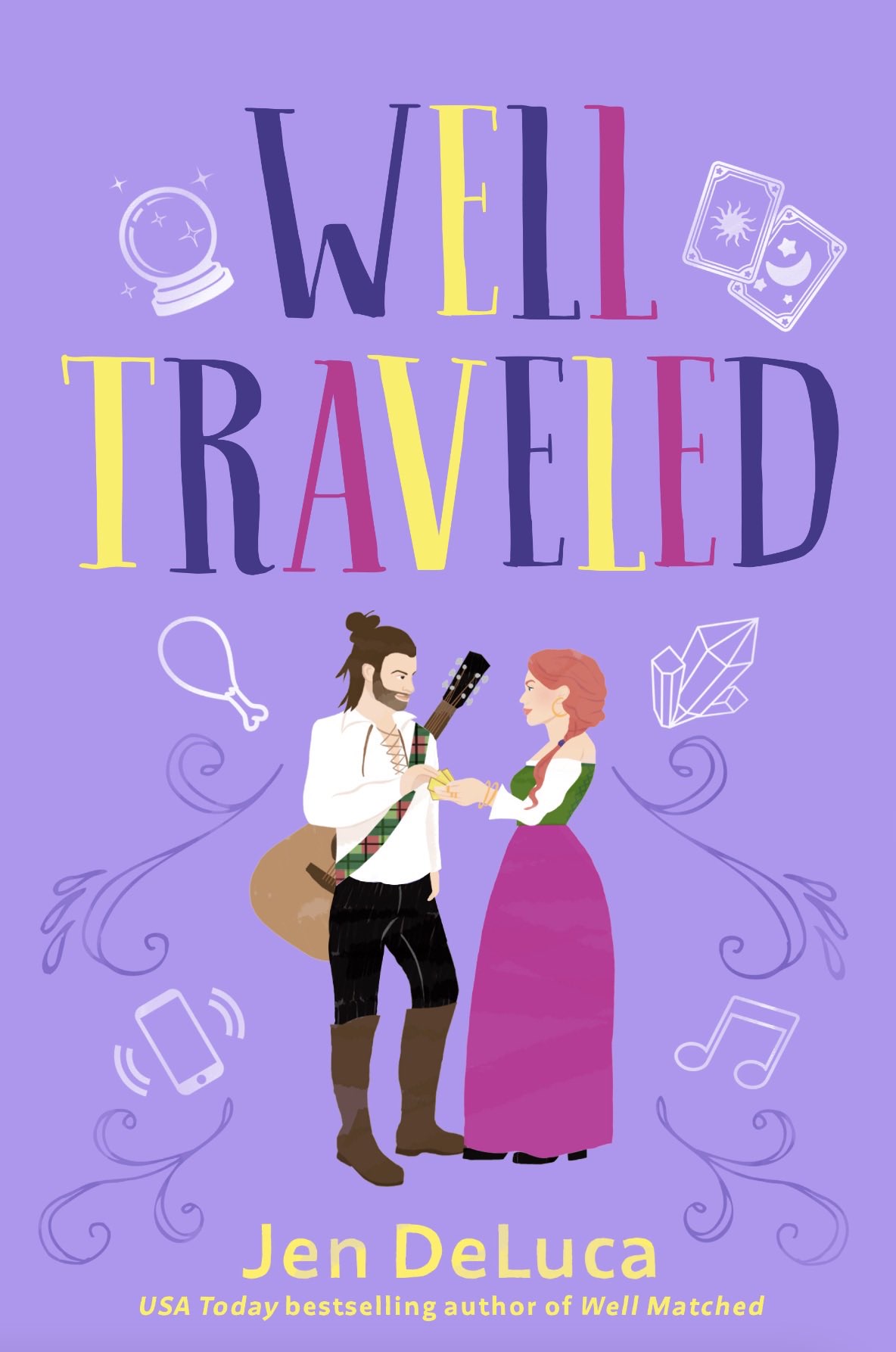
Interested in this series? Don’t miss the previous books:
Purchase links: Amazon – Bookshop.org – Libro.fm Disclaimer: When you make a purchase through one of these affiliate links, I may earn a small commission, at no additional cost to you.