A children’s classics two-fer: Celebrating Anne (with an E) and the glory of great dogs

We all have gaps in our reading. Classics we never were exposed to, great works that didn’t appeal, kids’ books that just didn’t come our way as children. And while I know reading EVERYTHING is an impossible dream, there are definitely children’s classics that it seems like everyone has read but me.

Of the two I finally read, one had been on my radar for years, and one was a more recent addition to my TBR. This year, my book group decided to do a reading challenge inspired by PBS’s Great American Read, where we each put together a list of five books (from the list of 100) that we hadn’t read yet, and committed to reading them (or possibly alternates) during 2019. A pretty low-pressure challenge — which is my kind of challenge!

My list of five that I committed to in January:

  1. Anne of Green Gables by L. M. Montgomery
  2. Where the Red Fern Grows by Wilson Rawls
  3. The Grapes of Wrath by John Steinbeck
  4. Foundation by Isaac Asimov
  5. Hatchet by Gary Paulsen

As of this week, I’ve read two of my five! So I thought I’d share some thoughts and reactions.

First off, I read Anne of Green Gables (originally published 1908) earlier this month… and adored it.

As soon as Anne Shirley arrives at the snug white farmhouse called Green Gables, she is sure she wants to stay forever . . . but will the Cuthberts send her back to to the orphanage? Anne knows she’s not what they expected—a skinny girl with fiery red hair and a temper to match. If only she can convince them to let her stay, she’ll try very hard not to keep rushing headlong into scrapes and blurting out the first thing that comes to her mind. Anne is not like anyone else, the Cuthberts agree; she is special—a girl with an enormous imagination. This orphan girl dreams of the day when she can call herself Anne of Green Gables.

Finally, I understand why so many people are passionately devoted to Anne! What a lovely, entertaining, charming story. Anne herself is a delightful character, full of curiosity, imagination, and a gift for inspiring those around her. I loved this journey from 11-year-old girl to a more mature young woman at the start of her teaching career. The writing is absolutely winning, especially Anne’s long monologues and flights of fancy.

A few choice (brief) bits:

“Will you ever have any sense, Anne?” groaned Marilla. “Oh, yes, I think I will, Marilla,” returned Anne optimistically. A good cry, indulged in the grateful solitude of the east gable, had soothed her nerves and restored her to her wonted cheerfulness. “I think my prospects of becoming sensible are brighter now than ever.”


“Don’t be very frightened, Marilla. I was walking the ridgepole and I fell off. I expect I have sprained my ankle. But, Marilla, I might have broken my neck. Let us look on the bright side of things.”


“I’m so glad I live in a world where there are Octobers. It would be terrible if we just skipped from September to November, wouldn’t it?”

Consider me a new-found fan! I will definitely be continuing with the Anne series. I’m hooked!

Next, I read Where the Red Fern Grows (originally published 1961).
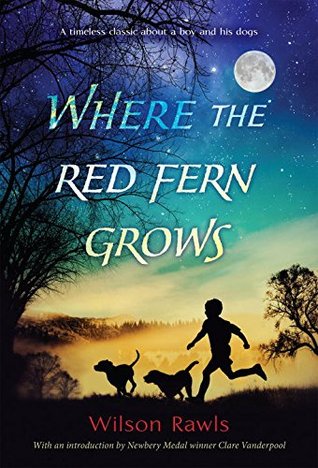
For fans of Old Yeller and Shiloh, Where the Red Fern Grows is a beloved classic that captures the powerful bond between man and man’s best friend.

Billy has long dreamt of owning not one, but two dogs. So when he’s finally able to save up enough money for two pups to call his own—Old Dan and Little Ann—he’s ecstatic. It’s true that times are tough, but together they’ll roam the hills of the Ozarks.

Soon Billy and his hounds become the finest hunting team in the valley. Stories of their great achievements spread throughout the region, and the combination of Old Dan’s brawn, Little Ann’s brains, and Billy’s sheer will seems unbeatable. But tragedy awaits these determined hunters—now friends—and Billy learns that hope can grow out of despair.

This is a sweet story about a boy and his dogs — which, granted, probably would not be published without controversy today, but given its time and place, is a powerful and often uplifting read.

There’s an emphasis on loyalty and devotion to family, and Billy and his family epitomize a commitment to living a good life despite harsh times and limited means. Billy works for everything he gets, including his beloved dogs, and his family supports him every step of the way. Little Ann and Old Dan are the quintessential good dogs, perfectly devoted to one another and to Billy.

Yes, I could have done without the hunting for sure. And yes, that’s a big part of the story. But I can’t get too hung up on it either. I appreciate this book for what it is, focusing on the love between Billy and the dogs. It’s quite lovely in parts, and there’s something very quaint and moving about seeing the world through Billy’s innocent eyes.

(There’s also more religion and prayer than I’d normally appreciate — but again, this is part of Billy’s character and belief system, so ultimately I’m okay with it.)

I wonder whether today’s generation of kids would find anything here to relate to. Much as the Little House books are still loved despite their more problematic aspects, I’d imagine that there’s still a place in children’s literature for books like Where the Red Fern Grows. I’m glad I read it! Despite the pieces of the subject matter that don’t appeal to me as a person, I really did love the beauty of seeing the world from Billy’s perspective and the beauty of the relationships between the family members and between the people and animals.

I’m so glad I read both of these books! And while I’m overloaded with new and upcoming releases at the moment, I’m really excited about reading more from my challenge list as well.
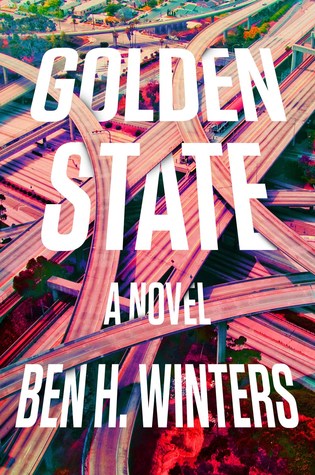
Take A Peek Book Review: Golden State by Ben H. Winters

“Take a Peek” book reviews are short and (possibly) sweet, keeping the commentary brief and providing a little peek at what the book’s about and what I thought. My newest “take a peek” book:

Synopsis:

(via Goodreads)

A shocking vision of our future that is one part Minority Report and one part Chinatown.

Lazlo Ratesic is 54, a 19-year veteran of the Speculative Service, from a family of law enforcement and in a strange alternate society that values law and truth above all else. This is how Laz must, by law, introduce himself, lest he fail to disclose his true purpose or nature, and by doing so, be guilty of a lie.

Laz is a resident of The Golden State, a nation resembling California, where like-minded Americans retreated after the erosion of truth and the spread of lies made public life, and governance, increasingly impossible. There, surrounded by the high walls of compulsory truth-telling, knowingly contradicting the truth–the Objectively So–is the greatest possible crime. Stopping those crimes, punishing them, is Laz’s job. In its service, he is one of the few individuals permitted to harbor untruths–to “speculate” on what might have happened in the commission of a crime.

But the Golden State is far less a paradise than its name might suggest. To monitor, verify, and enforce the Objectively So requires a veritable panopticon of surveillance, recording, and record-keeping. And when those in control of the truth twist it for nefarious means, the Speculators may be the only ones with the power to fight back.

My Thoughts:

Golden State is a weird mind-f*ck of a novel, and that’s what makes it so wonderful. In a society where adherence to the Objectively So is the primary goal, the crime of telling a lie can lead to lengthy imprisonment or even exile, a fate assumed to be equivalent to death. Law enforcement agents like Lazlo can feel when a lie has been told, and their ability to sense anomalies leads them in pursuit of those who attempt to subvert the State with their untruths. People greet each other on the street by stating absolute facts (“A cow has four stomachs.” “A person has one.”), and the ringing of clock bells leads to streams of statements about the time, hour after hour.

I loved the explanations for the rules and moral certainties of the Golden State, which we’re led to believe has been in existence for several generations already as of the start of this story:

You go back far enough in history, ancient history, and you find a time when people were never taught to grow out of it, when every adult lied all the time, when people lied for no reason or for the most selfish possible reasons, for political effect or personal gain. They lied and they didn’t just lie; they built around themselves whole carapaces of lies. They built realities and sheltered inside them. This is how it was, this is how it is known to have been, and all the details of that old dead world are known to us in our bones but hidden from view, true and permanent but not accessible, not part of our vernacular.

It was this world but it was another world and it’s gone. We are what’s left. The calamity of the past is not true, because it is unknown. There could only be hypotheses, and hypotheses are not the truth. So we leave it blank. Nothing happened. Something happened. It is gone.

Golden State is a book that I’ll need to revisit, probably a few times. The writing is spot-on, conveying the strange realities of its world from an insider’s perspective, immersing the reader in the weird double-speak of Speculators and Small Infelicities and Acknowledged Experts — it’s strange and alien, yet we inhabit it through the characters for whom it’s all just part of the normal lives they lead.

Reading Golden State is a treat. I wanted to stop to highlight passages practically everywhere — there’s so much clever wordplay and inversion of our understanding of what things mean. It’s a great read, highly recommended. Now I need to get back to the other books on my shelves by this author, because I’m pretty sure I’m going to love them.

_________________________________________

The details:

Title: Golden State
Author: Ben H. Winters
Publisher: Mulholland Books
Publication date: January 22, 2019
Length: 319 pages
Genre: Speculative fiction
Source: Review copy courtesy of the publisher via NetGalley

Book Review: The Secret of Clouds by Alyson Richman

Katya, a rising ballerina, and Sasha, a graduate student, are young and in love when an unexpected tragedy befalls their native Kiev. Years later, after the couple has safely emigrated to America the consequences of this incident cause their son, Yuri, to be born with a rare health condition that isolates him from other children. Maggie, a passionate and dedicated teacher agrees to tutor Yuri at his home, even though she is haunted by her own painful childhood memories. As the two forge a deep and soulful connection, Yuri’s boundless curiosity and unique wisdom inspires Maggie to make difficult changes in her own life. And she’ll never realize just how strong Yuri has made her — until she needs that strength the most…

A novel that will make readers examine what it means to live life with a full heart.

The Secret of Clouds is about a young teacher, Maggie, whose enthusiasm for her middle school students and her passion for introducing them to the joys of reading and writing seems limitless. Maggie is asked to take on an additional role, tutoring a 12-year-old boy named Yuri who is unable to come to school because of a health condition. Hesitantly, Maggie agrees, but soon is completely charmed by this lonely boy and becomes determined to help him regain an interest in the world around him.

Bonding through his love of baseball, Maggie slowly draws Yuri out of his shell of apathy, and soon has him engaging with her and the worlds of literature she’s introduced him to with real interest and insight. As she begins to earn Yuri’s trust, Maggie also learns more about his parents, Katya and Sasha, and their desperate love for their ill son.

Katya and Sasha lived in Kiev at the time of the Chernobyl disaster, and while they themselves suffered no adverse effects, like so many others, their offspring suffered birth defects — in this case, a rare heart ailment — due to their own radiation exposure.

Meanwhile, as Maggie witnesses Yuri’s struggles to live his limited life to the fullest, she reassesses her own life and relationships, seeing where her true happiness lies and making the changes needed to live life to her best ability.

The Secret of Clouds is touching and appealing in many ways, yet something about the writing style let me down. It’s the old “show, don’t tell” issue: I felt like Maggie was sharing a summary of her experiences, rather than drawing me in enough to see the events myself. The writing kept me at a distance throughout, as entire months or sometimes years went by in the span of a few paragraphs. There was no sense of immediacy; I rarely felt as though I had entered into a scene or had a genuine moment of emotional connection. For example, when Maggie meets and falls in love with a new man in her life, it’s very nice for her, yet I’d be hard pressed to tell you a thing about him other than that he’s a musician and seems to be a really great guy. Granted, their love story was not the main point of this book, but he feels like a cipher to me.

From the synopsis, I expected Katya and Sasha to have equal time in this novel alongside Maggie, but that’s not the case. While we see their lives in Kiev in the early chapters, once it’s been established that they were exposed to fallout from Chernobyl, the story shifts entirely to its 1999/2000 setting, focusing on Maggie and Yuri. Katya and Sasha become supporting characters, in the background as Yuri’s parents, but not central point-of-view characters.

The Secret of Clouds is a fine read with an interesting story to tell, but unfortunately the writing style kept me from feeling truly emotionally invested. I will say, though, that if every student had a teacher as committed, idealistic, and compassionate as Maggie, the world would be a much, much better place!

_________________________________________

The details:

Title: The Secret of Clouds
Author: Alyson Richman
Publisher: Berkley
Publication date: February 19, 2019
Length: 384 pages
Genre: Contemporary fiction
Source: Review copy courtesy of the publisher via NetGalley

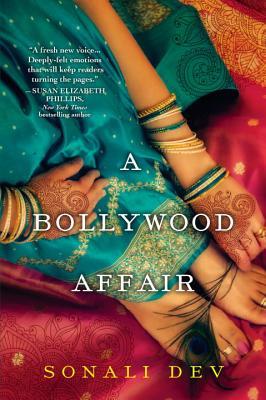
Book Review: A Bollywood Affair by Sonali Dev

Mili Rathod hasn’t seen her husband in twenty years–not since she was promised to him at the age of four. Yet marriage has allowed Mili a freedom rarely given to girls in her village. Her grandmother has even allowed her to leave India and study in America for eight months, all to make her the perfect modern wife. Which is exactly what Mili longs to be–if her husband would just come and claim her.

Bollywood’s favorite director, Samir Rathod, has come to Michigan to secure a divorce for his older brother. Persuading a naive village girl to sign the papers should be easy for someone with Samir’s tabloid-famous charm. But Mili is neither a fool nor a gold-digger. Open-hearted yet complex, she’s trying to reconcile her independence with cherished traditions. And before he can stop himself, Samir is immersed in Mili’s life – cooking her dal and rotis, escorting her to her roommate’s elaborate Indian wedding, and wondering where his loyalties and happiness lie.

A Bollywood Affair is my book group’s selection for February — we do have a tendency to go romance-themed each year at this time, and the results have been decidely mixed for me. I’m not a romance reader, although I do enjoy a good love story every so often. Still, there are elements of the genre that just don’t float my boat, but more on that later…

In A Bollywood Affair, we start with a marriage between two children. Mili, at age 4, is married off to Virat, a much older 12 years old, by arrangement between their grandparents. Apparently, mass weddings between children are traditional in the region of Mili’s birth. And while the two children are immediately separated, they’re expected to eventually live as man and wife once they’re old enough. Meanwhile, Mili’s grandmother raises her to be a perfect wife, and only at Mili’s insistence that her husband would want her to be as educated as city girls is she allowed to attend university and pursue an education.

At age 24, Mili travels to Michigan for graduate work in sociology, aiming to work toward her goal of improving the lives of women in India. She has no money though, and her fellowship leaves her only the barest subsistence to get by on.

Back in India, Virat and his pregnant wife learn that the annulment of his marriage to his child bride was never finalized, and he’s worried that this will interfere with the well-being of his wife and baby. Virat’s younger brother Samir, a playboy heart-throb who is (of course) gorgeous and has (of course) a heart of gold hidden beneath his player, bad boy exterior, is sent to America to get Mili to sign the annulment papers once and for all. And (of course), things get complicated.

Mili is klutzy, innocent, and awkward, and immediately rides a bike into a tree and injures herself in Samir’s presence, so he has no choice but to stay and take care of her, hiding the true reason for his arrival. He’s drawn to her sweetness and beauty; she’s drawn to his kindness and amazing biceps. They open up to each other emotionally, but the secret reason for Samir’s presence looms in the background, ready to ruin the love growing between the two of them.

Mili is a little too naive to be believable, and Samir is too much of the bad-boy-who-is-secretly-good stereotype. Mili clings to her vision of her marriage and the husband who will someday claim her as his wife, even as she works to better the status of women’s rights in India. Samir puts up with an awful lot to be near Mili, and it’s kind of hard to buy his willingness to immediately devote himself to her. Both being gorgeous, amazing in the kitchen, and absolutely fantastic people, they are naturally and immediately drawn to each other, and (we’re told) have a strong chemistry that keeps them both lusting after one another pretty much constantly.

Look, I basically liked the story, but I have issues. First off, please spare me from any book in which the main male character names his penis. Sorry, but no. I do not want to hear Samir refer to “Little Sam”, not once and not repeatedly. I also don’t want to hear about Mili’s “dark crevices”, as in…

Her name rumbled in his chest. She felt the sound rather than heard it and warmth melted through her like molten gold filling a mold at the goldsmith’s. It slid into her heart and into the deep dark crevices of her body.

Did I mention already that I’m not really a romance reader? I’m no prude, but I don’t need every detail of a sexual encounter spelled out for me — body parts and fluids and the rest. The overblown language during the sex scenes just immediately pulled me out (no pun intended) of the mood and made me giggle instead:

She let him jab into her, free her, tangle her. She tasted him, breathed him in. His smoky taste, clean and dark and hot. His tongue, hungry and probing and hot. His heavy shoulders under her fingers, firm and yielding and hot.

Yes. Hot. I get it.

Man, do I sound mean right now, but honestly, this kind of writing just doesn’t work for me.

That said, I actually enjoyed a lot of the story, when the gasping and tasting and “liquid skin” and “sensitive, secret flesh” weren’t getting in the way. I really liked the descriptions of the foods and the clothing and the traditions that we see through Mili and Samir’s experiences, and the backstory about Samir’s childhood is both upsetting and touching. The obligatory secret between the main characters (there wouldn’t be much of a plot without it) makes the drama feel forced at times, but I came to care enough about Mili and Samir as people that I was willing to overlook most of the elements that I didn’t care for.

Would I recommend this book? I’d say it’s a very qualified… maybe. I don’t regret reading it, and I’m looking forward to discussing it with my book group — despite the fact that this isn’t the type of book I’d usually choose to read. Still, if you’re a fan of steamy scenes in the midst of your love stories, you may truly love A Bollywood Affair!

Save

_________________________________________

The details:

Title: A Bollywood Affair
Author: Sonali Dev
Publisher: Kensington
Publication date: October 28, 2014
Length: 304 pages
Genre: Romance
Source: Purchased

Save

Save

Save

Save

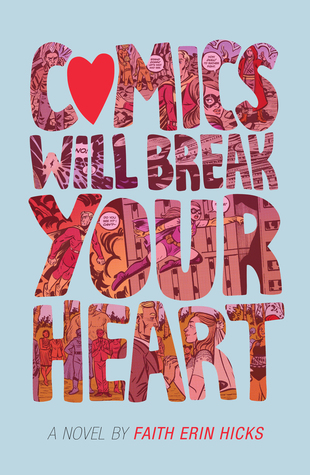
Take A Peek Book Review: Comics Will Break Your Heart by Faith Erin Hicks

“Take a Peek” book reviews are short and (possibly) sweet, keeping the commentary brief and providing a little peek at what the book’s about and what I thought. This week’s “take a peek” book:

Synopsis:

(via Goodreads)

Miriam’s family should be rich. After all, her grandfather was the co-creator of smash-hit comics series The TomorrowMen. But he sold his rights to the series to his co-creator in the 1960s for practically nothing, and now that’s what Miriam has: practically nothing. And practically nothing to look forward to either-how can she afford college when her family can barely keep a roof above their heads? As if she didn’t have enough to worry about, Miriam’s life gets much more complicated when a cute boy shows up in town… and turns out to be the grandson of the man who defrauded Miriam’s grandfather, and heir to the TomorrowMen fortune.

In her endearing debut novel, cartoonist Faith Erin Hicks pens a sensitive and funny Romeo and Juliet tale about modern romance, geek royalty, and what it takes to heal the long-festering scars of the past (Spoiler Alert: love).

My Thoughts:

Comic and graphic novel writer Faith Erin Hicks makes her debut in young adult fiction with Comics Will Break Your Heart, and does it beautifully! In this sweet YA novel, two teens from families with a long-standing grudge meet and connect one summer in Nova Scotia. Miriam’s grandfather co-created the TomorrowMen comics with Weldon’s grandfather, but sold his rights to the brand for only $900 many decades earlier. Since then, TomorrowMen has blown up with a huge fandom and a blockbuster movie in the works, and while Weldon’s family stands to profit hugely, Miriam’s will see not a dime, despite the 20-year lawsuit waged by her grandfather to undo the shoddy deal he unwittingly agreed to.

When Miriam and Weldon meet, they each carry their families’ baggage, but their mutual love of comics as well as their own personal struggles to figure out their futures draw them together and help them move past the animosity that’s lingered for so long. This is a quick, fun read, with touching moments too, and has some lovely scenes that highlight the intricacies and quirks of best friendships, relationships between teens and their parents, and the heartaches and worries that come with making decisions about where to go in life.

Comics Will Break Your Heart is also a terrific ode to the glories of fandom, culminating in a visit to (of course) San Diego Comic-Con. I’m sure everyone with a secret geeky obsession will relate to the characters’ reactions to entering geek heaven:

In a flash he saw everything as she saw it, the madness and energy but also the joyful heart of the convention.

“Oh, wow,” she whispered. “Comics made all of this.”

For more by this author, check out my reviews of two of her graphic novels, Friends With Boys and The Adventures of Superhero Girl.

_________________________________________

The details:

Title: Comics Will Break Your Heart
Author: Faith Erin Hicks
Publisher: Roaring Brook Press
Publication date: February 12, 2019
Length: 218 pages
Genre: Young adult
Source: Review copy courtesy of the publisher via NetGalley

Book Review: Summer at Little Beach Street Bakery by Jenny Colgan

Summer has arrived in the Cornish town of Mount Polbearne and Polly Waterford couldn’t be happier. Because Polly is in love: she’s in love with the beautiful seaside town she calls home, she’s in love with running the bakery on Beach Street, and she’s in love with her boyfriend, Huckle.

And yet there’s something unsettling about the gentle summer breeze that’s floating through town. Selina, recently widowed, hopes that moving to Mount Polbearne will ease her grief, but Polly has a secret that could destroy her friend’s fragile recovery. Responsibilities that Huckle thought he’d left behind are back and Polly finds it hard to cope with his increasingly long periods of absence.

Polly sifts flour, kneads dough and bakes bread, but nothing can calm the storm she knows is coming: is Polly about to lose everything she loves?

Summer at Little Beach Street Bakery is the 2nd in a series of three (which starts with Little Beach Street Bakery, reviewed here). As I mentioned in my review of book #1, Jenny Colgan writes escapist fiction more or less to a formula, but it’s a formula that works: Young woman, beat down by city life, escapes to a remote, quaint location, and discovers joy and meaning in her new life. Plus a dreamy, hot love interest. Quirky locals who embrace the new arrival are an added bonus.

In Summer at Little Beach Street Bakery, Polly is well-established in Mount Polbearne after living there for about a year, running a successful bakery, living with her hot American boyfriend Huckle (who’s utterly devoted to her), and continuing her obsession with the puffin who’s decided he’s her pet. At the end of book #1, Polly and Huckle decided to buy the decrepit town lighthouse and make it their home. Now living in the lighthouse, they love its charm, but it needs a ton of work, and both are decidedly short on cash for anything but the basics.

Polly’s world gets upended when the old woman who owns the bakery passes away, and her sister (who lives far away) decides to put her worthless son in charge of the place. He immediately takes a dislike to Polly and everything she does, not seeing the value in her high-end ingredients and artisanal breads and instead wanting to make everything cheap and efficient. Eventually, he outright fires Polly, throwing her into despair.

To make ends meet and create a fund from which Polly can invest in a new business venture, Huckle decides to go work on the family farm back in America for a short time in order to make some money. (Is farming really that lucrative? This doesn’t seem like the most realistic plan to me.) So now, on top of her bakery woes, Polly is living without Huckle for a while, and is miserable.

Meanwhile, there are further complications. Polly realizes that Neil the puffin should be wild, but has a hard time letting go. The widow of a man she inadvertently had an affair with (he didn’t disclose his marital status) has moved back to town, and Polly befriends her, without telling her what happened with her husband. Polly and Huckle’s new brainstorm is to convert a food truck into a bread truck, which is a challenging venture that the new bakery owner is determined to ruin. And then a storm blows in, bringing danger to Polly and the people she cares about.

Overall, I really enjoyed Summer — it was a perfect choice for a week when I was looking for a low-involvement, fun, sweet escape. Even when there are problems and peril, it’s a totally safe bet that everything will work out okay in the end.

I did have some confusion about Polly’s business model. In the first book, she opened the bakery in an abandoned old storefront and totally transformed it, creating something special that reinfused the town with fresh life. Polly’s arrangement was to pay rent to the woman who owned the property, but the bakery was essentially hers to run as she saw fit. In this book, when the jerky Malcolm gets involved, Polly is treated as a mere employee and then fired. But the place wouldn’t exist without her! At one point, a very rich friend offers to buy the bakery for Polly, but she turns him down because she wants to make it on her own. Time for a reality check! Take the rich friend’s offer, Polly! I mean, she could always pay him back (not that he cares), but isn’t that a better alternative to having the bakery she created ripped away from her?

You don’t read Jenny Colgan books for harsh doses of reality — they’re meant to be light and lovely, and Summer succeeds in being just that. I enjoyed it, even while feeling that Huckle is TOO perfect, that Neil the puffin is TOO ridiculous as a house-bird, and that Polly finds success maybe a bit TOO easily. But that’s okay.

I really like spending time with Polly and all the quirky people (and seabirds) around her, and will definitely be back for more! The third book is Christmas at Little Beach Street Bakery, and I can’t wait to read it.

Side note: These books WILL make you hungry. So much delicious bread! There are even recipes at the end. I need one of Polly’s fresh-made loaves NOW.

Save

_________________________________________

The details:

Title: Summer at Little Beach Street Bakery
Author: Jenny Colgan
Publisher: Sphere
Publication date: February 26, 2015
Length: 396 pages
Genre: Contemporary fiction
Source: Purchased

Save

Save

Save

Save

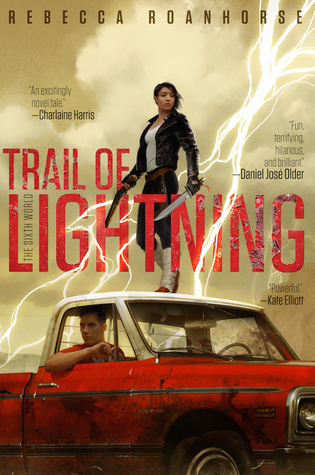
Take A Peek Book Review: Trail of Lightning (The Sixth World, #1) by Rebecca Roanhorse

“Take a Peek” book reviews are short and (possibly) sweet, keeping the commentary brief and providing a little peek at what the book’s about and what I thought.

Synopsis:

(via Goodreads)

While most of the world has drowned beneath the sudden rising waters of a climate apocalypse, Dinétah (formerly the Navajo reservation) has been reborn. The gods and heroes of legend walk the land, but so do monsters.

Maggie Hoskie is a Dinétah monster hunter, a supernaturally gifted killer. When a small town needs help finding a missing girl, Maggie is their last—and best—hope. But what Maggie uncovers about the monster is much larger and more terrifying than anything she could imagine.

Maggie reluctantly enlists the aid of Kai Arviso, an unconventional medicine man, and together they travel to the rez to unravel clues from ancient legends, trade favors with tricksters, and battle dark witchcraft in a patchwork world of deteriorating technology.

As Maggie discovers the truth behind the disappearances, she will have to confront her past—if she wants to survive.

Welcome to the Sixth World.

My Thoughts:

What a cool set-up! Sometime after the world we know is left mostly underwater and the United States is no more, survived by pockets of humanity living in rogue states, the Navajo nation is thriving within the magical walls erected before the flood by prescient elders. Within the walls, the Dinétah people live in a world where magic and gods have returned. And for some of the mortals, clan heritage has manifested with special powers and gifts — among these, Maggie Hoskie, whose speed and ability to kill have made her a powerful monster-slayer.

Maggie struggles with the emotional upheavals that have brought her to this point, and is joined by Kai, a former outsider who has secret clan powers of his own, to try to tame the evil that has brought monsters to the land. The story combines the grit and violence of urban fantasy with the natural beauty and starkness of the Dinétah land.

It’s a rich and fascinating world, although the world-building itself felt incomplete to me. While we’re introduced to Maggie and some of the elemental powers and gods, I felt that the story needed a bit more grounding and expansion. I always felt as if I was missing some tiny element that would push this book over the edge into full-on greatness for me. I would have liked to get to know Maggie more as a person, and the same is true for Kai.

Still, I loved the use of language and culture to paint a picture of the people, the land, and the magic. Trail of Lightning is the first book in a series, and I really can’t wait for more. I’m hoping the next book will give me the greater picture of this world that I’m dying for, so I can feel fully immersed.

As a side note, my city’s public libraries have chosen this book as the citywide “On the Same Page” book for January/February, which I think is all sorts of awesome. It’s really terrific to get a taste of fantasy fiction with a Native American heroine and cast of characters — really a unique set-up, and a world I want to know more about!

_________________________________________

The details:

Title: Trail of Lightning (The Sixth World, #1)
Author: Rebecca Roanhorse
Publisher: Saga Press
Publication date: June 26, 2018
Length: 287 pages
Genre: Speculative/dystopian science fiction
Source: Library

**Save

Save

Save

Save

Save

Save

Save

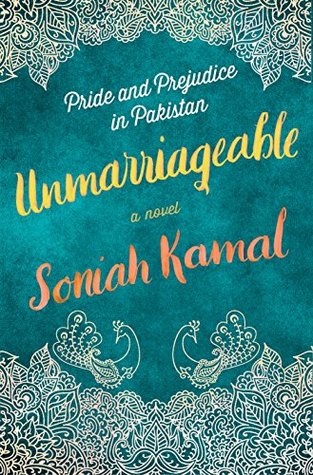
Book Review: Unmarriageable (Pride and Prejudice in Pakistan) by Soniah Kamal


In this one-of-a-kind retelling of Pride and Prejudice set in modern-day Pakistan, Alys Binat has sworn never to marry—until an encounter with one Mr. Darsee at a wedding makes her reconsider.

A scandal and vicious rumor concerning the Binat family have destroyed their fortune and prospects for desirable marriages, but Alys, the second and most practical of the five Binat daughters, has found happiness teaching English literature to schoolgirls. Knowing that many of her students won’t make it to graduation before dropping out to marry and have children, Alys teaches them about Jane Austen and her other literary heroes and hopes to inspire the girls to dream of more.

When an invitation arrives to the biggest wedding their small town has seen in years, Mrs. Binat, certain that their luck is about to change, excitedly sets to work preparing her daughters to fish for rich, eligible bachelors. On the first night of the festivities, Alys’s lovely older sister, Jena, catches the eye of Fahad “Bungles” Bingla, the wildly successful—and single—entrepreneur. But Bungles’s friend Valentine Darsee is clearly unimpressed by the Binat family. Alys accidentally overhears his unflattering assessment of her and quickly dismisses him and his snobbish ways. As the days of lavish wedding parties unfold, the Binats wait breathlessly to see if Jena will land a proposal—and Alys begins to realize that Darsee’s brusque manner may be hiding a very different man from the one she saw at first glance.

Told with wry wit and colorful prose, Unmarriageable is a charming update on Jane Austen’s beloved novel and an exhilarating exploration of love, marriage, class, and sisterhood.

Pride and Prejudice retellings come in so many flavors and varieties — but Unmarriageable by Soniah Kamal makes it all feel new and fresh again by setting the familiar story in her native Pakistan in the early 2000s.

It is a truth universally acknowledged that a girl can go from pauper to princess or princess to pauper in the mere seconds it takes for her to accept a proposal.

So begins this enchanting story. You know the basics, of course. A formerly prosperous family, rather down on their luck, has five daughters in need of husbands. Their small-town life gets a dose of excitement when a new, very eligible, very wealthy young man arrives on the scene and instantly attracts attention from all the mothers dying to make good matches for their daughters.

In Unmarriageable, the Binat family lives in the less-than-exciting town of Dilipabad. Having been cheated out of the family fortune, they’ve adapted to their reduced circumstances, and meanwhile mother Pinkie obsesses over the futures of her single daughters, exhorting them to make sure to “grab it” whenever they have a chance to meet a wealthy man. The oldest two sisters, Jena and Alysba (Alys) teach English at a private school for girls. In their early 30s, the sisters are practically over the hill, but Pinkie has not given up on them just yet. When the family is invited to the big society event — the NadirFiede wedding — it’s another opportunity to find eligible men for the girls to make “you-you eyes” at.

Alys, our main character, is smart and independent, not willing to accede to her mother’s insistence on marriage as the be-all and end-all of a woman’s purpose. She loves her family and her friends, loves to read and think, and is not about to pursue a man or agree to a match because it’s expected or provides access to a fortune. At the wedding, she and Jena meet Bungles, a lovely young man who’s instantly smitten with Jena, but his friend Darsee is rude and stand-offish, and Alys takes an immediate loathing to him.

We all know where the story goes, right? Unmarriageable hits all the major marks of the Pride and Prejudice story, but the Pakistani setting keeps it fun and different. Some retellings just don’t work within a 21st century timeframe, because the emphasis on social standing and marrying for money doesn’t necessarily translate well in a way that makes sense. Here, though, we’re led to understand that among the upper class society circles (and those longing for acceptance into those circles), the pursuit of successful marriages is everything. It’s really entertaining to see the traditional butting up against the modern, whether through the descriptions of the clothing, the marriage rituals, or the expectations for women to fulfill their prescribed roles in respectable society.

I loved the introduction to Pakistani culture — the foods, music, clothing, literature, and unique ways that the English and Pakistani languages are interwoven. The use of close-but-not-exact names to mirror Austen’s characters is really clever too.

My only minor quibble is that it doesn’t quite work for me to have an Austen retelling in which the characters read Jane Austen! In many of the modern-day retellings I’ve read, it’s never acknowledged that the original stories even exist. But here, in Unmarriageable, Alys teachers Pride and Prejudice in her English classes, and returns again and again to thinking about Austen’s themes. So given that, how does she understand her own life and the people in it — sisters Jena, Mari, Qitty, and Lady; her suitor Kaleen; Darsee and his sister Jujeena; and the dastardly Mr. Jeorgeullah Wickaam? Wouldn’t you think she’d end up in some sort of existential crisis, wondering if she really exists or if she’s just a character in a book?

That silliness aside, I do love the writing in this story, which captures some of the archness and intelligence we’d expect in a P&P retelling:

The clinic was an excellent facility, as all facilities that cater to excellent people tend to be, because excellent people demand excellence, unlike those who are grateful for what they receive.

The story doesn’t dwell on serious matters for too long, but there are little moments that let us know that the lives of women are particularly fraught at that time, and that the issues facing women go well beyond securing a rich husband:

She grabbed the newspaper no one had opened yet and flipped through the usual news of honor killings, dowry burnings, rapes, blasphemy accusations, sectarian violence, corruption scandals, tax evasions, and the never-ending promises by vote-grubbing politician to fix the country.

But overall, there’s plenty of lightness and joy to go around:

Alys laughed. “O’Connor, Austen, Alcott, Wharton. Characters’ emotions and situations are universally applicable across cultures, whether you’re wearing an empire dress, shalwar kurta, or kimono.”

And finally, something that I know will ring true for all the booklovers out there:

It was a truth universally acknowledged, Alys suddenly thought with a smile, that people enter our lives in order to recommend reads.

It’s my pleasure to recommend Unmarriageable! If you love Austen and are ready for a new take on a well-loved story, definitely check this one out!

_________________________________________

The details:

Title: Unmarriageable
Author: Soniah Kamal
Publisher: Ballantine Books
Publication date: January 22, 2019
Length: 352 pages
Genre: Contemporary fiction
Source: Review copy courtesy of the publisher via NetGalley

Audiobook Review: Inheritance: A Memoir of Genealogy, Paternity, and Love by Dani Shapiro


The acclaimed and beloved author of Hourglass now gives us a new memoir about identity, paternity, and family secrets—a real-time exploration of the staggering discovery she recently made about her father, and her struggle to piece together the hidden story of her own life.

What makes us who we are? What combination of memory, history, biology, experience, and that ineffable thing called the soul defines us?

In the spring of 2016, through a genealogy website to which she had whimsically submitted her DNA for analysis, Dani Shapiro received the stunning news that her father was not her biological father. She woke up one morning and her entire history—the life she had lived—crumbled beneath her.

Inheritance is a book about secrets—secrets within families, kept out of shame or self-protectiveness; secrets we keep from one another in the name of love. It is the story of a woman’s urgent quest to unlock the story of her own identity, a story that has been scrupulously hidden from her for more than fifty years, years she had spent writing brilliantly, and compulsively, on themes of identity and family history. It is a book about the extraordinary moment we live in—a moment in which science and technology have outpaced not only medical ethics but also the capacities of the human heart to contend with the consequences of what we discover.

Timely and unforgettable, Dani Shapiro’s memoir is a gripping, gut-wrenching exploration of genealogy, paternity, and love.

I picked up Inheritance on a whim, after a book group friend mentioned plans to attend a talk by the author at an upcoming event. The little bit I heard sounded interesting enough to make me want to know more: The author, raised in an Orthodox Jewish family, discovers through DNA testing that the man who raised her wasn’t actually her biological father.

With the proliferation of inexpensive testing resources like 23andMe and AncestryDNA, anyone can learn a little bit about their genetic background. Author Dani Shapiro’s half-sister had done DNA testing, and Dani decided to do it as well. But when she got her results back, she was startled: According to the data, she was only 52% Ashkenazi Jewish, not the 100% she was certain was her correct heritage. She’d been raised in an Orthodox Jewish home, and her father’s lineage in particular was practically a who’s who of important people in the Orthodox world. She and her half-sister shared a father, but when she compared their results, it turns out that the two women were not actually biologically related at all.

The author was in her mid-50’s at this point, and both her parents were already deceased. She began to follow the scanty available clues, among them memories of her mother stating that she’d been conceived thanks to a medical institute in Philadelphia, and within days, made the discovery that her parents had turned to a fertility center that relied on donor sperm to help infertile couples have children. With only the most preliminary attempts at sleuthing, the author was able to trace connections and find her biological father, a man who was a sperm donor for a period of time as a medical student in Philadelphia in the 1960s.

The book focuses on Dani Shapiro’s search for both the facts of her heritage and conception, and the bigger truth about her identity. Much of Inheritance is spend on understanding the essential question: Who am I? The author, in discovering that the facts of her entire life were false, found herself unmoored and in desperate need of answers. Did her parents truly understand the treatment they sought? Did they know that donor sperm would be used? If they truly knew, how could they hide the truth from her for her entire life? Does this truth change her history, her understanding of her parents’ marriage, her place in the family history?

The author narrates the audiobook, which lends it greater immediacy and emotion. When she describes her soul-searching and her moments of pain and shock, it feels genuine — as though the author was allowing us a peek inside herself, letting us see the turmoil she experienced.

I must admit that there were sections that made me feel very impatient. The degree of shock and dislocation experienced by the author was hard for me to fully understand. I mean, I get being shocked by learning in midlife that there’s a big family secret that was hidden all this time — but the extreme questioning about whether she was still herself and whether she still belonged to her family struck me as over the top. What about people who’ve been adopted? What about all the other people out there whose parents used assisted reproductive technologies involving donor sperm or donor eggs? Why should the use of donor sperm in conception mean that the father who raised her wasn’t really her father?

As a whole, Inheritance spends a great deal of time on introspection and the search for meaning. Which I guess is the point of a memoir, so maybe I’m just not a particularly good memoir reader? In any case, I was much more interested in the unraveling of clues, the discussion of the medical ethics, and the research into fertility approaches in the 1960s than in the contemplative sections on identity and belonging.

That being said, I did find Inheritance quite fascinating as a whole. It’s a relatively quick listen, with lots of food for thought, and elements focused on the author’s Jewish upbringing and how that carries through to her current life particularly resonated for me.

_________________________________________

The details:

Title: Inheritance: A Memoir of Genealogy, Paternity, and Love
Author: Dani Shapiro
Narrated by: Dani Shapiro
Publisher: Knopf Publishing Group
Publication date: January 15, 2019
Length (print): 272 pages
Length (audiobook): 6 hours, 44 minutes
Genre: Memoir
Source: Purchased

Book Review: The Wartime Sisters by Lynda Cohen Loigman


Two estranged sisters, raised in Brooklyn and each burdened with her own shocking secret, are reunited at the Springfield Armory in the early days of WWII. While one sister lives in relative ease on the bucolic Armory campus as an officer’s wife, the other arrives as a war widow and takes a position in the Armory factories as a “soldier of production.” Resentment festers between the two, and secrets are shattered when a mysterious figure from the past reemerges in their lives.

The Wartime Sisters is the second novel by Lynda Cohen Loigman, whose debut novel The Two-Family House came out in 2016 (reviewed here). Both books focus on women’s lives during the 20th century, and both examine the intricate relationships between sisters, friends, and the people who come into their lives.

In The Wartime Sisters, Millie and Ruth couldn’t be more different. Ruth is three years older than Millie, and spends her entire childhood and adolescence hearing about her sister’s beauty and charm. Millie is the one their mother pins her hopes on, fantasizing about how the endless crowd of suitors will yield the perfect man to propose to Millie and make all her dreams come true. Meanwhile, Ruth grows up realizing that she’ll never be the pretty one, and resents Millie for always being the center of attention… never stopping to ask herself if Millie actually wants or enjoys the attention that comes her way.

The story flashes back and forth between the late 1930s, as the girls approach womanhood, and 1942/1943, as they settle into life at an army base in Massachusetts. We learn over time how they came to be there, and how they became so estranged from one another following their parents’ death.

Interwoven throughout their chapters on their earlier years is a nice evocation of Jewish life in Brooklyn at that time, showing the ways in which the family’s religion and culture define their world, their friends, and their approaches to life. Meanwhile, in Springfield, both Millie and Ruth form new bonds among the military wives and base workers, who represent a different but no less vibrant sort of community.

The Wartime Sisters shows the damage done to women’s souls through neglect and abuse, and also by the small and large cruelties carried out through resentment and gossip. In Springfield, we meet two additional women who fill large roles in the sisters’ new lives: Lillian, the base commander’s wife, with her own troubled childhood, is a pillar of strength and goodness amidst the turmoil; and Arietta, a motherly woman with a talent for both singing and cooking, takes Millie under her wing.

It’s sad to see the conflict between Ruth and Millie. As Ruth’s husband is sent overseas as a wartime scientist and Millie arrives, husband-less, impoverished, and burdened by secrets, it would seem that the two women finally have an opportunity to reclaim their relationship and establish a new closeness. Sadly, although Ruth offers a home to Millie, the warmth and ease that should come with it is missing. While the author lets us see why Ruth feels as she does and how her resentments built over time, it’s still hard to empathize. As far as we can see, Millie has never done anything wrong, has never set out to hurt Ruth or to undermine her. Ruth blames Millie for the incessant comparisons unkind neighbors have made all their lives, but it’s clearly just so unfair. Because of Ruth’s animosity, Millie is left to deal with their parents’ death on her own, and makes some calamitous decisions that bring about hardship and suffering. It’s hard to forgive Ruth for what she put Millie through.

In terms of the historical settings, I enjoyed learning about the Springfield Armory and the role women played in wartime readiness and production. The characters are colorful and memorable, and Arietta in particular is a delight to meet.

Overall, I found The Wartime Sisters to be moving and engaging. The story is crisp and nicely constructed, and the length means that it never feel draggy. I enjoyed the exploration of Ruth and Millie’s relationship, and despite being super annoyed with Ruth for much of the story, I thought the build-up of their history together and the explanation of all the baggage they carry with them was really effective and realistic.

_________________________________________

The details:

Title: The Wartime Sisters
Author: Lynda Cohen Loigman
Publisher: St. Martin’s Press
Publication date: January 22, 2019
Length: 304 pages
Genre: Historical fiction
Source: Review copy courtesy of the publisher via NetGalley