Book Review: The Midnight Train by Matt Haig

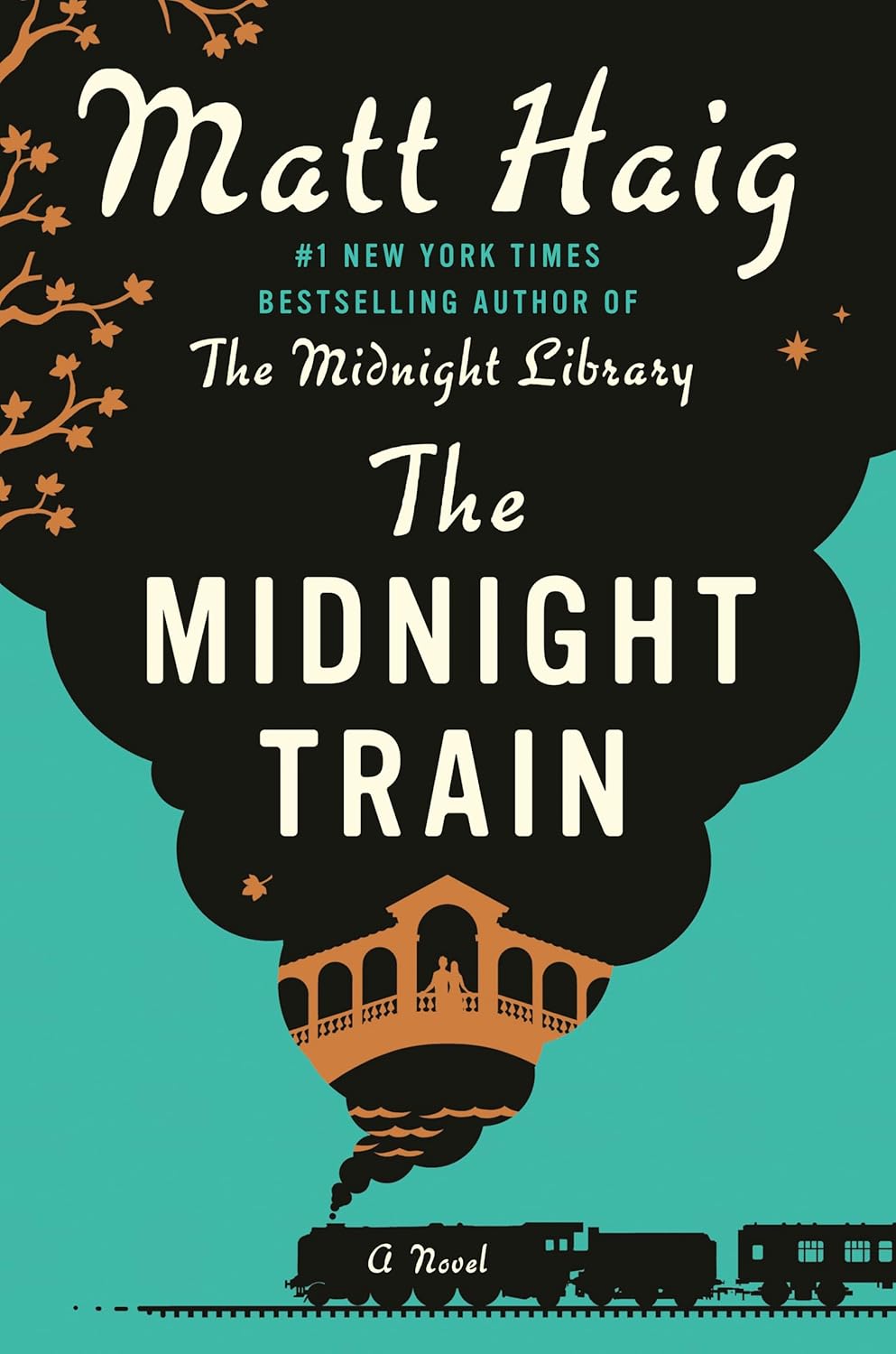
Title: The Midnight Train
Author: Matt Haig
Publisher: Viking
Publication date: May 26, 2026
Length: 296 pages
Genre: Fantasy
Source: Purchased
Rating:

Rating: 4.5 out of 5.

When your life flashes before your eyes, where would you stop?

No one can change the past, but the Midnight Train can take you there. The chance to re-live the moments that meant most. To see what kind of person you really were.

For Wilbur his best days were with Maggie, the love of his life. On his honeymoon in Venice.

Before he gave it all away.

He wishes he could go back and live differently. But to do so risks everything . . .

A magical, time-travelling love story, from the world of The Midnight Library.

As The Midnight Train opens, it’s 1974, and Wilbur and Maggie are on their honeymoon in Venice. They’re young, in love, and have their whole lives in front of them. They promise to love one another forever.

They talked and talked, as though a relationship was really just a conversation that never wants to end.

And then we readers turn the page. Wilbur is 81 years old, and it’s the day he dies. And we learn that he and Maggie have been divorced for years, although he still has their wedding photo on display in his house. He clearly still loves her. What went wrong?

Upon dying, Wilbur is summoned to board a train — the Midnight Train — that takes him back through scenes from his life. To reach eternity, where he’ll exist forever and be reunited with everyone he’s ever cared about, he first has to revisit his life, getting off the train to witness significant moments, then reboarding as the train carries him onward. He can only observe, not change things — this is an opportunity to see all the places in his life where his decisions and actions set him on certain paths, and to understand where and how he might have chosen differently.

The incredibly annoying thing about being dead was that you got all your priorities in order, just when it was too late to do anything about them.

The journey is difficult. While Wilbur has the joy of seeing his first meetings with Maggie and how they fell in love, he also must revisit the most painful moments as well, when he lost important people in his life, responded from a place of fear, and made some crucially bad decisions. The further Wilbur travels, the more he wonders: Could he actually interact with his younger self? Knowing all the ways in which he failed, can he try to course-correct? And should he, if it means that he’ll be giving up eternity?

He had lived long enough to know that time and meaning were not shared out equally. Some personal eras were relatively empty. The temporal equivalent of air. And then you would come across a day—or even a minute—and it would have a whole decade’s worth of weight. It would be everything. It would have the power to change an entire life.

The Midnight Train is a moving look at what it means to live fully, and how working toward some unknowable future can mean not fully inhabiting the present. Wilbur is a well-meaning person who loves his wife devotedly, and yet lets the pain of past losses drive him in a way that brings financial success while losing what really matters along the way. Wilbur and Maggie start off so clearly meant for one another, with such brightness ahead of them. It’s painful to see them losing their connection, not through ill intent, but through distraction and ambition and a misdirected focus.

The magical elements of The Midnight Train work well as a conduit for Wilbur’s journey back through his own life. It doesn’t have to make perfect sense, and indeed, we’re told that each person experiences their journey in a way that’s personal to them. Traveling alongside Wilbur, we see the heartbreaking losses of his younger years and can understand the fear and guilt that stays with him, even as we wish for things to turn out differently.

The Midnight Train is a companion of sorts to the author’s 2020 novel, The Midnight Library. You don’t have to have read the first book to appreciate this one, although an important character from The Midnight Library plays a role here. Both books deal with themes related to finding meaning in life, but come at this theme from different angles. Each approach is fascinating — as the author states in his acknowledgments, the two books can be seen as being in conversation with one another.

I found The Midnight Train to be a fast, engaging read with an emotional core that feels true. Wilbur’s journey conveys profound messages about appreciating the life in front of us, but these messages never feel preachy or overly sentimental. There’s a beauty to Wilbur’s experiences and the wisdom that he finally finds at the end of his life. We’re left with a lovely sort of hope as we reach the final pages and see how his story turns out.

I highly recommend The Midnight Train. A lively writing style with humor mixed in alongside the sadness and seriousness make this a thoroughly enjoyable reading experience, and there are plenty of life lessons to be absorbed along the way — not to mention a love story that’s sweet and powerful.

Purchase linksAmazon – Bookshop.org – Libro.fm
Disclaimer: When you make a purchase through one of these affiliate links, I may earn a small commission, at no additional cost to you.
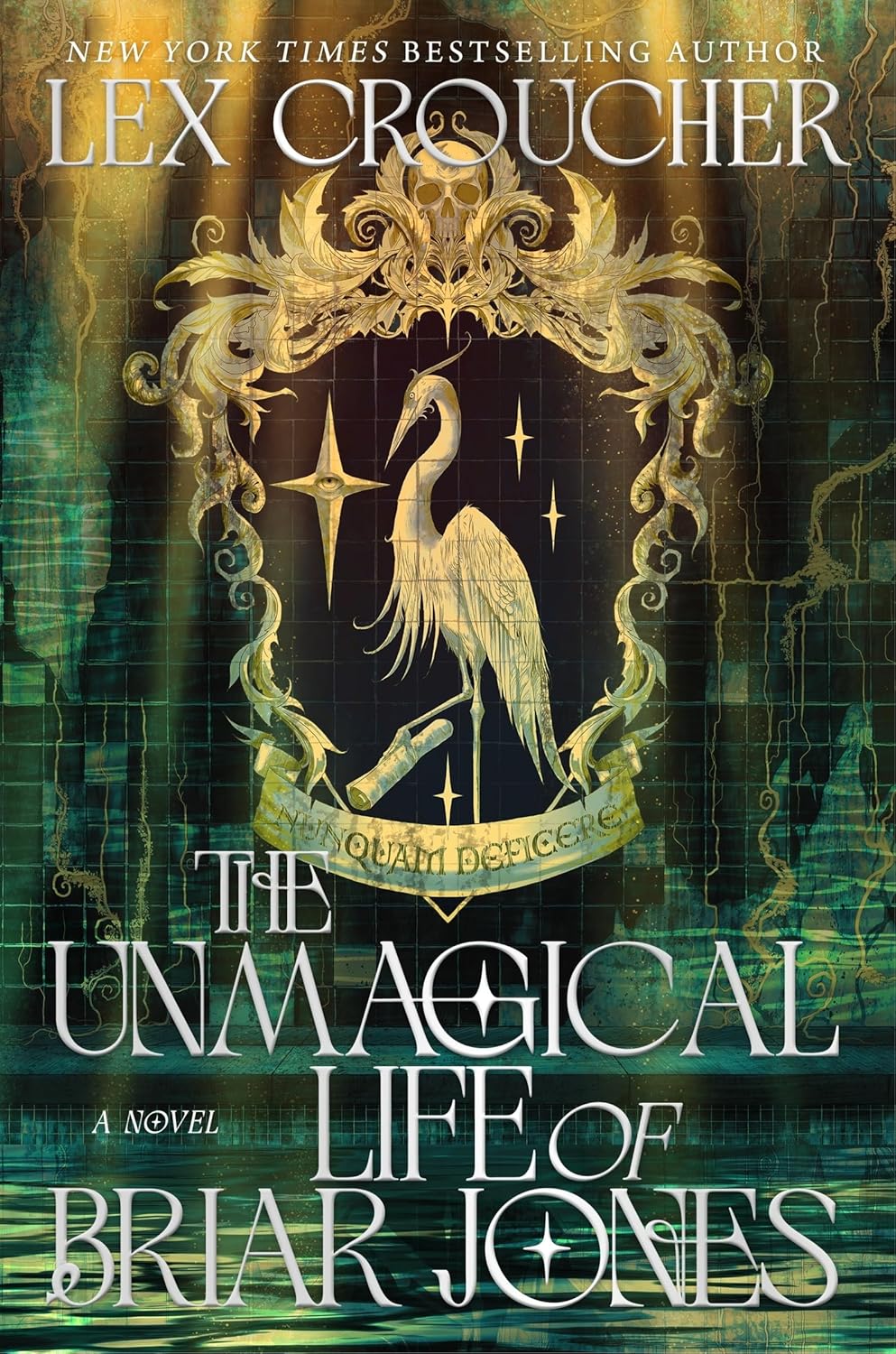
Book Review: The Children by Melissa Albert

Title: The Children
Author: Melissa Albert
Publisher: Bramble
Publication date: June 2, 2026
Length: 416 pages
Genre: Fantasy/Horror
Source: Library
Rating:

Rating: 4.5 out of 5.

An intoxicating, haunting new novel from New York Times bestselling author Melissa Albert, in which the estranged adult children of a legendary author, written into their dead mother’s beloved fantasy series, contend with the vine-like creep of legacy, memory, and magic.

Guinevere Sharpe has two childhoods.

In one, she lives in the wooded shadow of her family’s isolated Vermont farmhouse; in the other, the pages of her mother’s world-famous Ninth City books, where her magical adventures have made her a household name. In reality, Guinevere’s childhood isn’t the enchanted idyll her mother’s readers imagine: she and her older brother are growing up near-feral, unwashed and underfed, escaping each day to the lichen-clotted woods they’ve made their playland. As Edith Sharpe’s books explode into epic popularity, the threats of a rural childhood give way to the escalating perils of fame—until the night it all goes up in flames, leaving Edith’s series unfinished and her children the sole survivors.

Now an adult coasting on her mother’s name, Guinevere is mid-promotion for a ghostwritten memoir when her estranged brother, an artist who has until now spurned his family’s legacy, announces an upcoming installation titled Mother. As rumors swirl around a death connected to his last show, unsettling recollections from Guinevere’s childhood begin to surface. Her public facade starts to crack, forcing her to confront the questions she’s spent the last twenty years running from: What really happened the night of the fire? And what dark history lies behind their mother’s creative genius?

Wise to the mythic weight childhood memories gather over time, The Children whispers to you from the hallway outside your bedroom, lights flickering as you turn the pages of a book that didn’t seem so scary a moment ago. It’s a story for anyone who’s ever revisited an old favorite and found it cast in a darker light, the line separating magic and memory blurring as the gap widens between the authors we imagined and the people they turn out to be.

The Children is a creepy, haunting tale that drew me in practically from page 1 and never let me go. I found myself immersed in this story about the children of a bestselling author — whose childhood was anything but the ideal dream portrayed to the public.

Edith Sharpe writes the children’s fantasy series, The Ninth City, at the family’s rural Vermont home, an isolated place known as the Farmhouse, surrounded by forests and orchards, miles from anywhere. As Edith’s fame grows, so too does the never-ending streams of stars and artists and wannabes who gravitate into Edith’s orbit. Edith’s children, however, never asked for or agreed to the fame that they’re forced into by their mother, who gives her main characters her children’s names. The world thinks they know Ennis and Guinevere Sharpe, the brave, clever brother and sister who star in the series. Only Ennis and Guin know the truth about their childhood — one in which they essentially grew up wild and untended, cared for only by one another while their parents indulged in a life of creative frenzies, dissipated parties, and a general lack of interest about their children’s wellbeing.

As adults, Guin and Ennis have been estranged for twenty years, ever since the horrific night of a fire that destroyed their world and thrust them into very different lives. Now in her early 30s, Guin has been living off her mother’s legacy, in terms of both her inheritance and being part of the publicity machine that keeps Edith Sharpe on the bestseller list year after year. While promoting her own memoir — a whitewashed, ghost-written, surface-level and sunny depiction that bears little resemblance to the truth — Guin learns that Ennis will be opening a new art installation entitled “Mother”, and is immediately consumed by the need to reconnect with him… and to find out whether he’s finally decided to break his silence on Edith Sharpe after all these years.

As Guin goes off the rails, ruining her carefully constructed publicity tour through unpredictable and ill-advised interviews, she’s thrust back into childhood memories she’s worked so hard to ignore or deny.

The story unfolds through modern-day chapters, in which adult Guin spins out of control in her search for meaning and for Ennis, woven among chapters going back to the siblings’ childhood, from arriving at the Farmhouse when Guin was five years old to the final disaster when she was eleven. There’s a certain beauty to some elements of their early years, as they run wild, unhindered in their exploration of the forests, with no rules and little to no guidance about their daily lives. They’re supposedly home-schooled, but they’re not. They’re fed… when someone remembers, or when they fend for themselves. Their father, a gifted actor who was forced out of the spotlight due to scandal, is a shining, glorious creature… until he’s not; until something, somehow causes him to lose bits and pieces of himself and fade into a failed has-been.

And then there’s Edith, a woman who’s never been predictable, married young to an older man, and an uninvolved mother even at the best of times. But something happens at the Farmhouse. Guin loves the house, except for the sinister 3rd floor room where Edith writes. And Edith writes in frenzied bursts, clacking away on her typewriter with no interruptions allowed.

The sense of menace is pervasive throughout The Children. We may not know exactly why, but we know from the start that very bad things have happened. At the same time, we know that the Ninth City books were life-changing for their millions of fans, and that Guin and Ennis are seen as heroes, standing in for Edith and the world she created even as they attempt to live their own lives. The neglect that Guin and Ennis live through is disturbing in and of itself, but add to that the sense that something other is going on, something very much not right, and the chills ratchet up higher and higher.

While I had guesses about the mysteries of The Children, I never did quite manage to figure it all out, and I’d guess that most readers end up in the same boat. The revelations near the end of the book are mind-blowing, yet tie the entire story together in a way that makes a frightening sort of sense. I simply couldn’t put the book down; each chapter is stunning in its own way. I cringed quite a bit over adult Guin’s choices and actions, but there’s no denying that she follows a path that seem practically foreordained. The childhood chapters are more deeply disturbing and impactful, but the entire book works so well together that it’s impossible to point out any moments where the story lags or loses focus.

I’d say that my only complaint about The Children has more to do with my reading experience than with the book itself. I tore through the final third or so in such a mad dash to get to the end that I’m afraid that I may not have absorbed it all as deeply as I might have if I’d taken my time. I can definitely see going back for a reread to savor it more slowly and pick up the themes and hints I might have missed along the way the first time through.

The Children is one of this summer’s biggest, buzziest books… and it’s well worth giving in to the hype and giving it a chance! Creepy, scary, disturbing, and compelling, this story will stick with you long after the final pages.

Want to know more? Check out these great reviews:
Tammy at Books, Bones & Buffy
Krysta at Pages Unbound

Purchase linksAmazon – AudibleBookshop.orgLibro.fm
Disclaimer: When you make a purchase through one of these affiliate links, I may earn a small commission, at no additional cost to you.

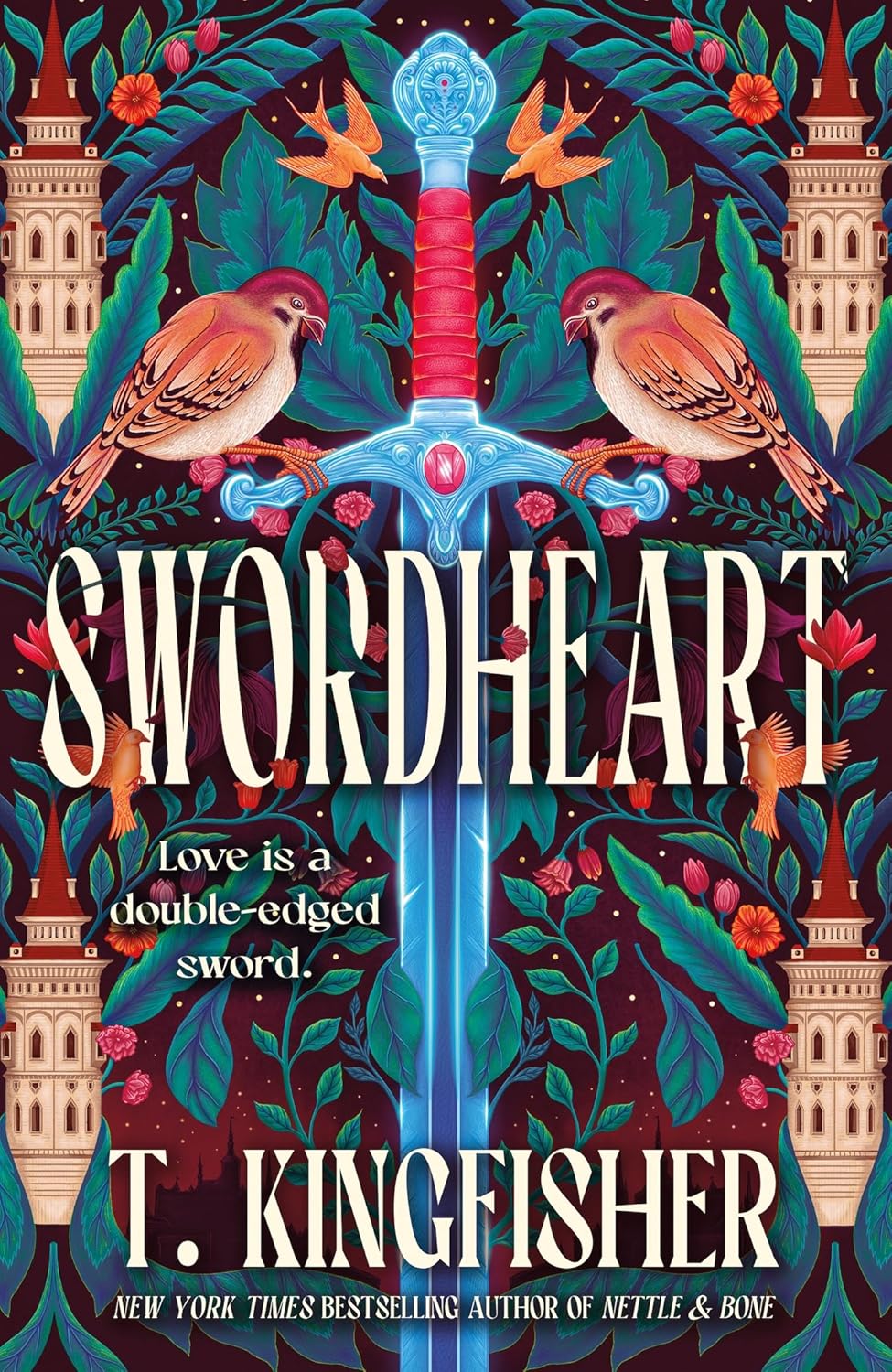
Book Review: Swordheart by T. Kingfisher

Title: Swordheart
Author: T. Kingfisher
Publisher: Bramble
Publication date: Originally published November 27, 2018; new hardcover edition released 2025
Length: 448 pages
Genre: Fantasy
Source: Purchased
Rating:

Rating: 5 out of 5.

Halla has unexpectedly inherited the estate of a wealthy uncle. Unfortunately, she is also saddled with money-hungry relatives full of devious plans for how to wrest the inheritance away from her.

While locked in her bedroom, Halla inspects the ancient sword that’s been collecting dust on the wall since before she moved in. Out of desperation, she unsheathes it—and suddenly a man appears. His name is Sarkis, he tells her, and he is an immortal warrior trapped in a prison of enchanted steel.

Sarkis is sworn to protect whoever wields the sword, and for Halla—a most unusual wielder—he finds himself fending off not grand armies and deadly assassins but instead everything from kindly-seeming bandits to roving inquisitors to her own in-laws. But as Halla and Sarkis grow closer, they overlook the biggest threat of all—the sword itself.

I adore T. Kingfisher’s fantasy novels, so it’s not a surprise that Swordheart seems written just for me! Originally published in 2018, Swordheart was reissued in 2025 with a gorgeous new cover… and call me shallow, but I just cannot resist a pretty book. Although I gifted myself the hardcover edition last year, I hadn’t found the right moment to pick it up and read it… until on a whim, I borrowed the audiobook from the library last week. What a treat! My main complaint… is against myself. Why did I wait so long to indulge in this delicious story?

The main character of Swordheart is Halla, a “respectable widow” (as she defines herself) in her thirties who lost her inept, less-than-charming husband years earlier, and has spent the years since as his kindly great-uncle’s housekeeper. With no other family and no means of support, Halla has been grateful for her place in his home. When Great-uncle Silas dies of old age, Halla is startled to learn that he’s left her his entire estate… but not as startled as his scheming niece and her son, who are positively irate.

Aunt Malva decides that the best solution is for Halla to marry her pathetic son Alver, so that the inheritance will legally belong to Alver. And if Halla meets with an accident soon after, well, who would really mind? This assumes that Halla will agree to the plan, and she most emphatically does not. Halla’s unwillingness doesn’t seem to faze Malva, who locks Halla in her bedroom and plans to leave her there until she complies. Malva doesn’t count on Halla finding an antique sword hanging on the wall. Intending to put herself out of her own misery, Halla unsheaths the sword to see if she can find a way to use it on herself, and instead ends up face to face with the tough, scowling, ancient warrior who appears in a burst of blue light.

Sarkis is the servant of the sword, a man who centuries earlier was magically bound to the weapon, condemned to live forever and serve the sword’s wielder, whoever that might be. Sarkis has served kings and warlords and all sorts of unsavory types, but never a stubborn “respectable widow” with a tendency to stop and chat when she should be running away.

An unlikely pair, Halla and Sarkis are bound together nonetheless, and after making a daring escape from Silas’s house, they set off on the road to seek help in reclaiming Halla’s inheritance. At first, they find one another maddening: Sarkis has a tendency to manhandle Halla into ditches whenever trouble approaches, and Halla asks questions about absolutely everything. But as their spur-of-the-moment road trip progresses, they find a sense of camaraderie they hadn’t expected. Later, joined by Zale, a priest of the order of the White Rat, it’s practically a buddy movie! The travelers get into a crazy amount of adventures and trouble, but somehow manage to keep their quest moving forward… even if it’s at the excruciatingly slow pace of the ox pulling their wagon.

Swordheart is pure delight, there’s just no other way to put it. From the start, Halla is an incredibly entertaining main character. She’s kind, but unwilling to just take orders, especially when it comes to Aunt Malva and Cousin Alver, whose clammy hands are but one of his unpleasant defining features. Halla’s superpower seems to be driving people batty: She’s learned that people in power just can’t deal with women they underestimate, and has perfected the fine art of playing stupid in order to get others to see her as not a threat and therefore not worth questioning too closely.

Sarkis’s tortured past leaves him dour and scowly. He’s utterly fierce, but finds himself continually flabbergasted by Halla’s chatter and tendency to march right into trouble. And yet, he can’t help but soften toward her… and the feelings quickly become mutual.

The adventure aspects of the story zip along quickly, as Halla and Sarkis meet an eclectic assortment of rogues, priests, bandits, and more along the road, not to mention the otherworldly dangers they stumble into when they end up traveling through magical lands. Still, the most menacing people they encounter are the family members and close associates of Silas’s, who pose more of a threat than all the various others who wave weapons at them from time to time.

The dialogue throughout Swordheart is incredibly entertaining, and made me laugh out loud throughout the book. The humor leavens even the tensest of situations, and I adored the chemistry between Halla and Sarkis, as well as their friendship with Zale. The world of Swordheart is fascinating, with a whole host of gods and religions complicating the group’s journey, and Sarkis’s backstory, including the lingering questions about the magic of his sword, adds a magical element with its own rules and complications.

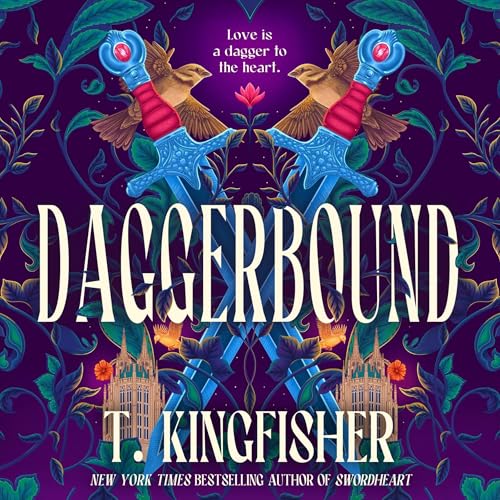
The ending implies that there’s more to come, if not for Halla and Sarkis personally, then certainly within the world of their story… and so it’s wonderful to know that book #2, Daggerbound, will be released in August 2026. I’ve already placed my preorder!

Swordheart is easily one of my favorite reads for 2026. I’m beyond thrilled that I finally experienced this terrific tale. Highly recommended for anyone who enjoys fantasy books with a touch of humor and light romance… and of course, a must-read for fans of T. Kingfisher.

A note on the audiobook edition:

Narrator: Jesse Vilinsky
Released: 2021
Audio length: 14 hours 32 minutes

While I own a beautiful hardcover edition of Swordheart, I ended up listening to the audio version when a long-time library hold came in — and I’m so glad I did! Jesse Vilinsky’s narration is perfection! Halla’s personality shines through, and Sarkis’s growly voice (with a bizarrely Scottish-sounding accent — which totally works!) is exactly how I’d want him to sound. The action scenes ring with vibrancy, and the entire delivery is well worth the 14-hour listening time. If you’re thinking of checking out Swordheart and enjoy audiobooks, this is the way to go!

Question for readers: I understand that Swordheart connects to the same world as the author’s Clockwork duology and Paladin series. Has anyone read either or both of these? Any recommendations on which to pick up first?

Purchase linksAmazon – AudibleBookshop.orgLibro.fm
Disclaimer: When you make a purchase through one of these affiliate links, I may earn a small commission, at no additional cost to you.
First Lines Friday 5/29/2026

First Lines Friday is a weekly feature for book lovers created by Wandering Words. What if instead of judging a book by its cover, its author or its prestige, we judged it by its opening lines? Here’s how to join in:

  • Pick a book off your shelf (it could be your current read or on your TBR) and open to the first page.
  • Copy the first few lines, but don’t give anything else about the book away just yet – you need to hook the reader first.
  • Finally… reveal the book!

This week’s lines are from a favorite fantasy novel:

So what’s the book?


The Eyes of the Dragon by Stephen King
Published: 1984
384 pages

Synopsis:

A tale of archetypal heroes and sweeping adventures, of dragons and princes and evil wizards!

Once, in a kingdom called Delain, there was a king with two sons…

Thus begins one of the most unique tales that master storyteller Stephen King has ever written—a sprawling fantasy of dark magic and the struggle for absolute power that utterly transforms the destinies of two brothers born into royalty. Through this enthralling masterpiece of mythical adventure, intrigue, and terror, you will thrill to this unforgettable narrative filled with relentless, wicked enchantment, and the most terrible of secrets…


This book has been on my mind since earlier in the week, when I included it on a Top Ten Tuesday list of favorite books by favorite authors. I first read The Eyes of the Dragon many, many years ago, and have revisited it at least twice since then… and I hope to reread it again soon!

Does this sound like something you’d enjoy?

Happy Friday! Wishing everyone a great weekend!

Book Review: The Book Witch by Meg Shaffer

Title: The Book Witch
Author: Meg Shaffer
Publisher: Ballantine Books
Publication date: April 7, 2026
Length: 320 pages
Genre: Fantasy
Source: Review copy courtesy of the publisher via NetGalley
Rating:

Rating: 5 out of 5.

She can hop into any novel, she just can’t stay there. Come along with the book witch in this magical and inspiring love letter to reading from the USA Today bestselling author of The Wishing Game.

Rainy March is a proud, third-generation Book Witch, sworn to defend works of fiction from all foes real and imaginary. With her magical umbrella and feline familiar, she jumps in and out of novels to fix malicious alterations and rogue heroes like a modern-day magical Nancy Drew.

Book Witches live by a strict code: Real people belong in the real world; fictional characters belong in works of fiction. Do not eat, drink, or sleep inside a fictional world, lest you become part of the story. Falling in love with a fictional character? Don’t even think about it.

Which is why Rainy has been forbidden from seeing the Duke of Chicago, the dashing British detective who stars in her favorite mystery series. If she’s ever caught with him again, she’ll be expelled from her book coven—and forced to give up the magical gifts that are as much a part of her as her own name.

But when her beloved grandfather disappears and a priceless book is stolen, there’s only one person she trusts to help her solve the case: the Duke. Their quest takes them through the worlds of Alice in Wonderland, The Great Gatsby, and other classics that will reveal hidden enemies and long-buried family secrets.

We all know that books are magic, right? In the world of The Book Witch, it’s the job of the local coven to make sure that fictional characters stay where they’re supposed to and to fight the malicious intentions of Burners, the book witches’ arch-enemies who seek to destroy stories from within. What’s at stake? Why, only the very existence of books that we know and love. A real-world book burner might burn copies of a book, but the book itself still exists. When a Burner destroys a book from the inside, it’s as if it’s wiped from existence: all copies, everywhere, are erased, and all memory or knowledge of the book is gone too.

Shudder.

That may make The Book Witch sound like a grim tale, and it’s anything but. In this quirky, whimsical novel, Rainy March is a lovely, bubbly book witch who has swooped to the rescue over and over again, landing inside a story thanks to her magical umbrella, accompanied by her cat familiar Koshka, and making sure the story and characters remain true to themselves.

All stories are love stories if you love stories. And I do love stories. As a Book Witch, you kind of have to love them. It’s on our recruitment posters, after all.

Rainy knows the rules — the eight Black and Whites — as well as anyone… but when she enters the noir fiction world of the Duke of Chicago in order to save him and his book series, she can’t help wobbling from the straight and narrow. Duke is a dashing, suave, sexy detective who always solves his cases, and Rainy has had a crush on him since she read the very first book in his series. When she meets him inside his story, things go a bit sideways, and before she can prevent it, he’s became self- aware — meaning, he knows he’s fictional — and they’ve fallen into a secret relationship that isn’t allowed to have a happily ever after.

Duke said that once he learned he was a fictional character, he became subtly aware of his readers. He felt their watchful eyes and sensed their quiet, gentle presence. He knew his stories were being read when the light had a certain warmer quality to it. And when the lights dimmed, he longed to be read again.

When Rainy’s prize edition of a special book — all she has left of her late mother — goes missing, she’s faced with a confusing array of clues. Who better to assist than her favorite fictional detective? Once on the trail, Rainy and Duke jump in and out of various storylands, desperately seeking elusive answers that seem always just out of reach.

There’s so much to love about The Book Witch. First and foremost, this is a book for booklovers. It speaks to the heart of anyone who’s fallen in love with fictional characters, anyone whose life has been changed because of the right book at the right time, anyone who’s ever found themselves inspired or empowered by a book, or even just gotten a reason to smile during dark times thanks to stories on a page.

An unread book is a caged animal, trapped between paper walls. They want reading, need it. To open a book is to set a story free.

The writing here is clever and funny, with banter that fits the various fictional characters who cross Rainy’s path — and yet, it’s not a silly book. Rainy’s feelings are deep and genuine, and the connections she forges are quite special. I won’t give anything away, but there’s a section toward the end that had me wiping away a few awkward tears. The Book Witch beautifully shows the delicate threads binding readers, writers, books, and characters.

I’ve been a fan of Meg Shaffer’s since picking up The Lost Story on a whim (and then immediately feeling the need to dive into her previous novel, The Wishing Game). Her stories are full of heart, and explore all the various and intricate ways that fiction changes lives.

The Book Witch is another stellar example of Meg Shaffer’s creativity. While the plot gets so meta by the end that it made my head spin, I love it in all its (occasionally) baffling glory. Rainy is a fabulous character, and The Book Witch made me really wish that the two key book series so central to the plot were in fact real books I could pick up and read. Even without being able to read those, I loved how The Book Witch shows how real lives are changed by books. Just lovely.

For more by this author:
The Wishing Game
The Lost Story

Purchase linksAmazon – Audible audiobook – Bookshop.orgLibro.fm
Disclaimer: When you make a purchase through one of these affiliate links, I may earn a small commission, at no additional cost to you.
Book Review: Butterfly Effects (InCryptid, #15) by Seanan McGuire

Title: Butterfly Effects
Series: Incryptid, #15
Author: Seanan McGuire
Publisher: Tor Books
Publication date: March 10, 2026
Length: 432 pages
Genre: Urban fantasy
Source: Review copy courtesy of the publisher via NetGalley
Rating:

Rating: 3.5 out of 5.

Seanan McGuire’s New York Times-bestselling and Hugo Award-nominated InCryptid series continues with the fifteenth book following the Price family, cryptozoologists who study and protect the creatures living in secret all around us.

Chaos, noun:
1. The inherent unpredictability in the behavior of a complex natural system.

Chaos theory, noun:
1. A branch of mathematical and physical theory that deals with the nature and consequences of chaos and chaotic systems.
2. The study of unpredictable systems.
3. See also “impossible math.”

Sarah Zellaby is a Johrlac, a member of a species of psychic ambush predators colloquially referred to as “cuckoos.” Eight years ago, she survived the difficult, painful process of becoming a cuckoo queen…although not without costs. In the wake of her transformation, the man she loved was entirely erased from his own mind, forcing her to reconstruct him from the memories of the people who knew and loved him.

Sarah has been struggling to come to terms with her actions ever since. But there’s no one else on the planet with the power to hold her accountable―until the Johrlac authorities show up. It’s time for her to stand trial for what she’s done, something which can only happen on Johrlar, home world of her species, where the population is controlled by a system of unyielding hiveminds and crime is punishable by erasure.

With Sarah’s life on the line, her family will need to find a way to cross dimensional borders and survive a hostile, telepathic world in order to get her back―before the Sarah they know ceases to exist.

But no matter what happens, actions have consequences… and Sarah Zellaby is about to learn that lesson the hard way.

Fifteen books in, the Incryptid series remains wildly inventive, with a stunningly huge array of characters and nonhuman species to keep track of. The Price-Healy family remains at the center of it all, but the details and mythology at this point are so complex that it feels next to impossible to talk about this book specifically in any sort of way that makes sense.

But I’ll try.

Butterfly Effects is the 3rd book in the series to focus on Sarah Zellaby as the main character, which is tricky. Despite appearances, Sarah is not human — she’s what’s known as a “cuckoo”, a descendent of a group of Johrlacs exiled generations earlier from their home dimension Johrlar. Johrlacs are telepathic, and cuckoos are considered ambush predators here on Earth. Through the power of their minds, they can take over anyone else’s thoughts and rewrite them — so a cuckoo child, for example, can convince a new family that they’re loved, that they belong, and that they’ve always belonged. And that’s among the least harmful examples. When a cuckoo wants to influence someone, the person being influenced has no defenses and won’t even know it’s happening.

The Price family has been studying and interacting with cryptids — non-humans — for generations, and is uniquely suited to providing Sarah with a home. Sarah is the adopted daughter of one of the family matriarchs, and has been raised to use her abilities responsibly. What’s more, Sarah was raised with love — she’s part of the family. But eight years before the events in Butterfly Effects, she evolved into a cuckoo “queen”, and her powers essentially exploded beyond her control, causing damage that she never intended. Now, years later, Sarah has been forcibly extracted back to Johrlar, supposedly to be held accountable for her actions… but more sinister motivations are at play.

When Sarah is taken, her family springs into action — including her cousin Antimony, Antimony’s boyfriend Sam, and her grandparents Alice and Thomas who — for… reasons — appear to be no older than their grandchildren. This team of fighters and sorcerers heads off on a rescue mission, but once on Johrlar, finds themselves in grave danger as well.

Like I said, it’s complicated. Fortunately, this book has Sarah share the narration, so while she’s the main POV character, there are sections where Antimony takes the lead. Honestly, it’s a relief. Not to be all speciesist… but Antimony’s human mind is a much less headache-inducing place to be than Sarah’s. Sarah thinks in math and equations, and her telepathy and worldview can be insanely twisty and hard to relate to.

I do love this series as a whole, but it’s so wide-ranging that it can be hard to keep track of. With books focusing on so many different characters, I constantly need a refresher on where we left off, where the major players are, and whose lives are dealing with which crises. (Books #13 and #14 were told from the perspective of the family’s ghost babysitter… to give you an idea of just how strange a series this is!)

Maybe it’s just because they were introduced first, but the core Price family siblings and their immediate families remain my favorites, and when they’re off-page for too long (or for entire books, except for brief drop-bys) I miss them. Butterfly Effects seems to provide a definitive wrap-up to most of Sarah’s ongoing issues (at least, for now), so I’m hoping the next books in the series will move back to focusing elsewhere within the family.

Butterfly Effects took a while to draw me in. Eventually, I was hooked on the latest adventure and started feeling like I was reading a page-turner… but there were definitely moments where I felt like I was reading this one more out of obligation than enjoyment. Still, Seanan McGuire is a terrific storyteller, and overall, I’m sticking with the series, even though I didn’t connect with this particular book quite as much as with some of the earlier installments.

Once again, I’ll point out the obvious: This is not a book to start with! The Incryptid series is so complicated by now that it can only be appreciated by starting at the beginning — which I recommend! It’s a truly creative series with lots of entertainment value, interesting plot twists, and deeper emotional beats. And for those devoted to this world, there are countless spin-off/prequel stories available via the author’s Patreon and elsewhere, so you’ll never run out of Price-Healy family history to explore.

So, while book #15 wasn’t actually my favorite… I’ll certainly be back for #16, and can’t wait to find out whose story we’ll be getting next!

As with other books in the Incryptid series, this one includes a novella at the end, We Sing It Anyway. This story is really more of an epilogue to the main book, although with a different character in the lead role, who deals with the immediate aftermath of the events of Butterfly Effects. It’s a sweet conclusion, and provides both closure and healing to Sarah’s story’s impact on other family members.

Purchase linksAmazon – Audible – Bookshop.org – Libro.fm
Disclaimer: When you make a purchase through one of these affiliate links, I may earn a small commission, at no additional cost to you.

**Save

Save

Save

Save

Save

Save

Save

Book Review: Through Gates of Garnet and Gold (Wayward Children, #11) by Seanan McGuire

Title: Through Gates of Garnet and Gold
Series: Wayward Children, #11
Author: Seanan McGuire
Publisher: Tor
Publication date: January 6, 2026
Length: 160 pages
Genre: Fantasy
Source: Review copy courtesy of the publisher via NetGalley

Rating: 4 out of 5.

A fan-favorite character returns in this action-packed instalment of the Hugo Award-winning Wayward Children series.

After Nancy was cast out of the Halls of the Dead and forced to enroll at Eleanor West’s School for Wayward Children, she never believed she’d find her door again, and when she did, she didn’t look back. She disappeared from the school to resume her place in the Halls, never intending to return.

Years have passed. A darkness has descended on the Halls, and the living statues who populate them are dying at the hands of the already dead. The Lord and Lady who rule the land are helpless to stop the slaughter, forcing Nancy to leave the Halls again, this time on purpose, as she attempts to seek much-needed help from her former schoolmates.

But who would volunteer to quest in a world where the dead roam freely?

And why are the dead so intent on adding to their number?

In Through Gates of Garnet and Gold, the 11th book in Seanan McGuire’s Wayward Children series, we go back to the beginning — sort of — by reconnecting with Nancy, the main character from the very first book, Every Heart a Doorway.

In the world of the Wayward Children, there are doors that lead to other worlds, and children who feel out of place are the ones who tend to find them. But each door comes with a simple warning: Be Sure. Those who are sure may find themselves a new home beyond their doors, a place where they finally fit.

Anyway, wanting isn’t the point. It’s the certainty. The absolute conviction that you’re willing to give up everything you know, everything you have, if you can just go somewhere that you’ll be understood.

When doubts or second thoughts creep in, that’s when children find themselves booted back to their home worlds, no more suited for life where they started from than they ever were. And that’s where Eleanor West’s Home for Wayward Children comes in, providing a refuge and a found family for children who’ve found and then lost their true homes… and in many cases, are simply biding their time until their door comes back to take them home again.

In Nancy’s case, certainty was never an issue. She’s sure. She knows she belongs in the Halls of the Dead, where the Lord and Lady cherish their living statues — people, like Nancy, who find the absolute stillness of this world a balm and a comfort. Nancy never wants to leave, until the silence and motionlessness of the halls are broken by a violent attack of the unquiet dead. Voracious spirits attack, devouring any life they can find. As the living statues are imperiled, the Lord and Lady send Nancy to seek help. To save her home, she agrees to leave it, and finds herself back at the Home for Wayward Children once again.

Rallying a small group of her friends, they return to save the day, but their quest isn’t as straightforward as they’d hoped. They must find the cause of this disturbance and put it right — but as they do so, Nancy learns more about this world she considers home, and more than she really wanted to know about its rulers and their care for their subjects.

I enjoyed this reunion with Nancy, who’s always been a favorite of mine. I’ve always loved the descriptions of her desire for stillness. It may sound crazy to you or me, but the writing in this series truly allows us inside Nancy’s mind, so we can understand what she needs even while knowing that it would be awful for most people.

Other familiar characters come along on the quest. I won’t divulge too many details, but I will point out that this book is not at all a good entry point into the series. You really do need to know what’s come before in order to grasp the significance of certain characters’ actions.

Somehow, Through Gates of Garnet and Gold didn’t quite deliver the brilliance of the last book (Adrift in Currents Clean and Clear) or others that I consider the best of the bunch. Perhaps that’s because this is a return to a world and characters we’ve already seen, rather than an introduction to some new fantastical world. The plot is interesting enough, but lacked a major punch. I was involved, but not on the edge of my seat.

The ending, while wrapping up this particular quest, opens the door (so to speak) to more questions and new developments. I hate the idea of having to wait a year for the next book!

Fans of the Wayward Children series will absolutely want to check out Through Gates of Garnet and Gold. It’s an engaging entry into a series that always offers surprises and delights. I wouldn’t say it’s the best of the series… but it’s still very, very good.

Purchase linksAmazon – Audible — Bookshop.org – Libro.fm
Disclaimer: When you make a purchase through one of these affiliate links, I may earn a small commission, at no additional cost to you.
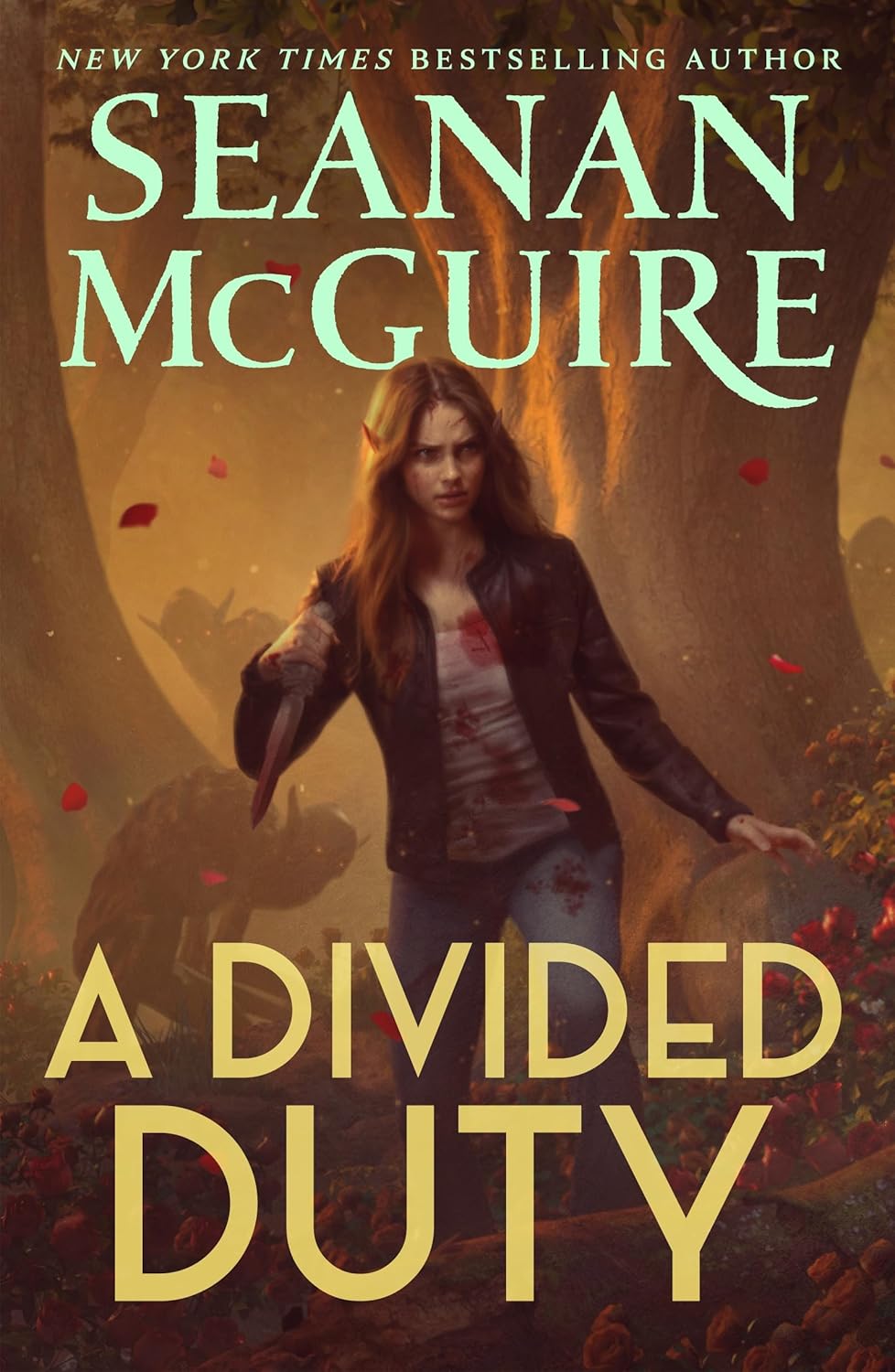
Book Review: Snake-Eater by T. Kingfisher

Title: Snake-Eater
Author: T. Kingfisher
Publisher: 47North
Publication date: November 11, 2025
Length: 267 pages
Genre: Fantasy
Source: Purchased
Rating:

Rating: 4 out of 5.

From New York Times bestselling and Hugo Award–winning author T. Kingfisher comes an enthralling contemporary fantasy seeped in horror about a woman trying to escape her past by moving to the remote US desert—only to find herself beholden to the wrath of a vengeful god.

With only a few dollars to her name and her beloved dog Copper by her side, Selena flees her past in the city to claim her late aunt’s house in the desert town of Quartz Creek. The scorpions and spiders are better than what she left behind.

Because in Quartz Creek, there’s a strange beauty to everything, from the landscape to new friends, and more blue sky than Selena’s ever seen. But something lurks beneath the surface. Like the desert gods and spirits lingering outside Selena’s house at night, keeping watch. Mostly benevolent, says her neighbor Grandma Billy. That doesn’t ease the prickly sense that one of them watches too closely and wants something from Selena she can’t begin to imagine. And when Selena’s search for answers leads her to journal entries that her aunt left behind, she discovers a sinister truth about her new home: It’s the haunting grounds of an ancient god known simply as “Snake-Eater,” who her late aunt made a promise to that remains unfulfilled.

Snake-Eater has taken a liking to Selena, an obsession of sorts that turns sinister. And now that Selena is the new owner of his home, he’s hell-bent on collecting everything he’s owed.

With Snake-Eater, author T. Kingfisher journeys into the realm of folk horror and fantasy, presenting one woman’s struggle to reclaim her life in a desert setting full of spirits and gods… and a bunch of terrific human (and canine) characters too.

Selena arrives in the remote desert town of Quartz Creek with just a few dollars to her name, accompanied by her very good dog Copper. She’s come in search of her aunt Amelia, but discovers upon arrival that Amelia has died the year before. The local postmaster/mayor/police officer Jenny encourages Selena to at least spend the night before deciding to leave — and since Selena can’t afford the return train ticket, and Amelia’s house is sitting empty, she agrees.

But the longer Selena stays in this odd little town in the middle of nowhere, the more settled she becomes. She insists she hasn’t decided to stay — but meanwhile, she becomes close with her nearest neighbor, Grandma Billy, learns to tend Amelia’s garden, attends the community potlucks at Father Aguirre’s church, and figures out how to earn a few bucks here and there, enough to buy Copper’s dog food. And meanwhile, the locals are warm and welcoming, and seem to want Selena to stay,

Selena leaves behind a relationship with a man who gaslit her into believing herself incapable of social interactions. Through insidious comments and continual undermining, Walter had Selena convinced that she was bad with people and could only interact by using carefully memorized scripts. As she settles into life in Quartz Creek, she comes to realize how deeply the gaslighting affected her, and painfully starts to unlearn what she’d come to believe about herself.

Quartz Creek has its own set of oddities and mysteries, especially the locals’ seemingly casual acceptance of the existence of gods and spirits. Even the Catholic priest acknowledges that places can have powerful non-human “people” who affect the lives of those who live there, for good or bad. Selena is startled by the strange figure she sees in her garden, and even more alarmed to hear Grandma Billy casually inform him that it’s a god of the squash plants. Selena is inclined to think that this must be a sign of Grandma Billy declining with age — but no; all the other folks of Quartz Creek back up Grandma Billy’s version. Gods live among them, just as humans and dogs and a stray peacock do.

Selena’s life is complicated by Snake-Eater, a god of roadrunners who appears to have transferred his obsession with Amelia to her niece Selena. And when Selena objects to the god’s attention, he gets very nasty indeed. She and her closest allies, Grandma Billy and Father Aguirre, must venture into the desert to free her from Snake-Eater if she’s to have any hope of living a good life in her newfound community.

What a great story! I adored the desert vibe. The author evokes the heat, the dirt, the plant and animal life, and makes all of this feel real and gritty. It’s easy to see why Selena would want to stay in this harsh but beautiful environment. The community itself is delightful. The people of Quartz Creek are an odd bunch, but they’re committed to their town and one another, and have figured out how to make it work. What’s more, there’s a beautiful sense of love and acceptance. Many of these people have unusual histories, but it doesn’t matter: The community comes together, again and again, and their connection makes them strong.

Selena’s story is so sad to start with. She’s a smart, likable woman whose partner undermined her to such a degree that when we first meet her, we’re tempted to believe the lie that she’s socially awkward and inept as well. Why does she practice scripts in her head? Why can’t she just talk to people? But as we see, Walter’s emotional abuse takes the form of seemingly supportive “help”, shredding Selena’s confidence through comments meant to keep her dependent on him. As Selena spends time in Quartz Creek, she’s able to slowly overcome the doubts that had been trained into her, and learn to trust herself and her new relationships. It’s a joy to see.

As always, T. Kingfisher spins a compelling story full of memorable characters, entertaining set-pieces, and fabulous writing. Snake-Eater is yet another terrific read from an author who never disappoints. Highly recommended.

Purchase linksAmazon – AudibleBookshop.org
Disclaimer: When you make a purchase through one of these affiliate links, I may earn a small commission, at no additional cost to you.
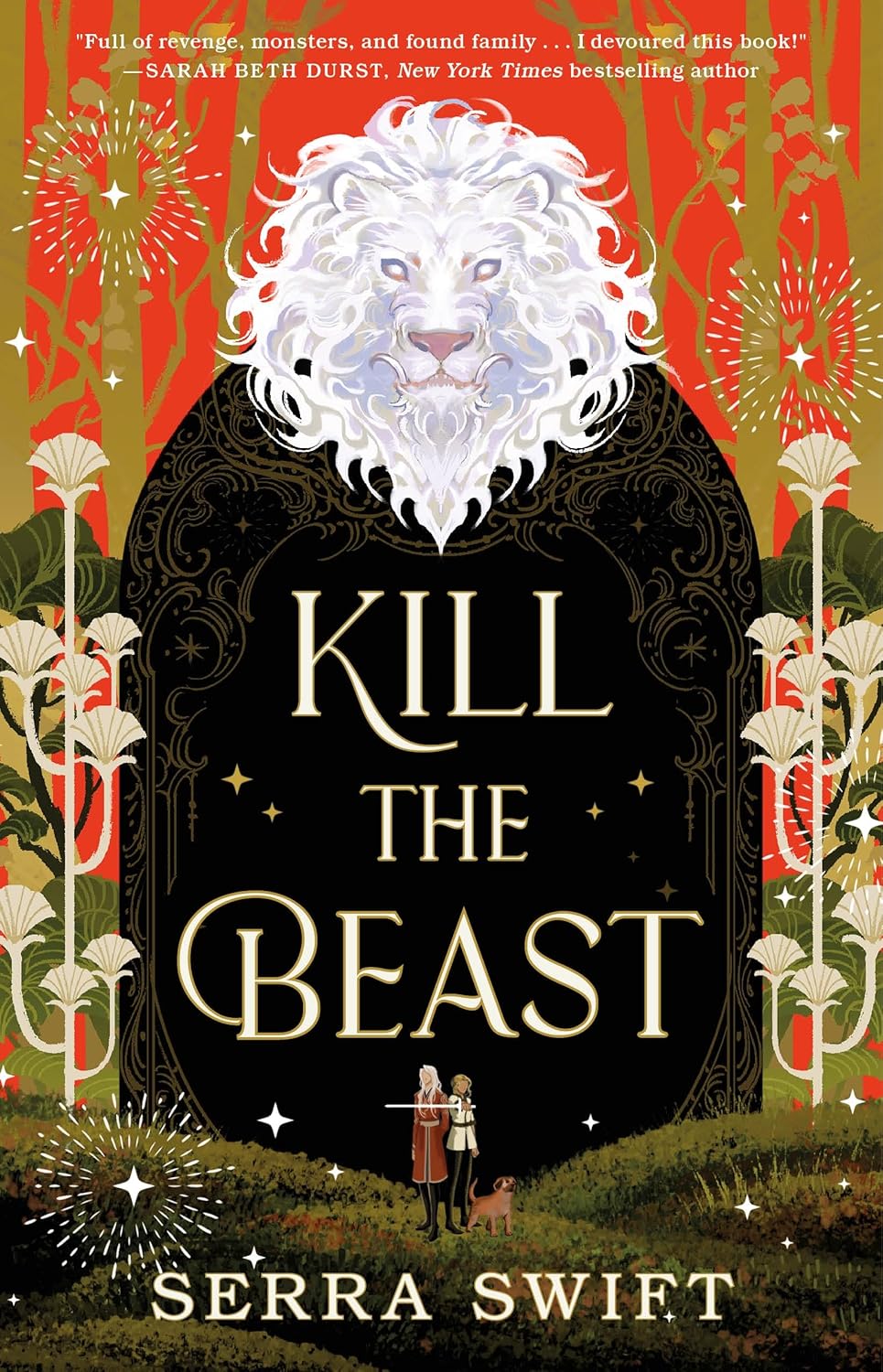
Top Ten Tuesday: Science fiction and fantasy that will stand the test of time

Top Ten Tuesday is a meme hosted by That Artsy Reader Girl, featuring a different top 10 theme each week. This week’s topic is Modern Books You Think Will Be Classics In The Future.

I could digress into a whole discussion of what constitutes a classic… but I’ll spare everyone! My feeling is that “classics” are very much in the eye of the beholder. That said, I’m interpreting this week’s prompt in terms of staying power. What book from the past 20 – 30 years (or so) are likely to continue being read and appreciated in the future, and for many years to come?

I’ve decided to focus on science fiction and fantasy for this week’s list. Here are 10 books that I believe will continue to amaze and delight for many, many years!

(Note: After finalizing this list, I realized I’d done a version of this topic in 2022! At least I’m consistent… three of these books were on that list too, which didn’t only focus on sci-fi/fantasy)

  • Old Man’s War (series) by John Scalzi
  • The Hunger Games (series) by Suzanne Collins
  • Wayward Children (series) by Seanan McGuire
  • The Everlasting by Alix E. Harrow
  • A Discovery of Witches (series) by Deborah Harkness
  • The Expanse (series) by James S. A. Corey
  • Station Eleven by Emily St. John Mandel
  • Jonathan Strange & Mr. Norrell by Susanna Clarke
  • His Dark Materials (series) by Philip Pullman
  • The Goblin Emperor by Katherine Addison

Do you have any favorite sci-fi/fantasy books that you can see as future classics?

If you wrote a TTT post, please share your link!

Save

Save

Save

Save

Save

Save

Book Review: The Everlasting by Alix E. Harrow

Title: The Everlasting
Author: Alix E. Harrow
Publisher: Tor
Publication date: October 28, 2025
Length: 320 pages
Genre: Fantasy
Source: Review copy courtesy of the publisher via NetGalley
Rating:

Rating: 5 out of 5.

From Alix E. Harrow, the New York Times bestselling author of Starling House, comes a moving and genre-defying quest about the lady-knight whose legend built a nation, and the cowardly historian sent back through time to make sure she plays her part–even if it breaks his heart.

Sir Una Everlasting was Dominion’s greatest hero: the orphaned girl who became a knight, who died for queen and country. Her legend lives on in songs and stories, in children’s books and recruiting posters―but her life as it truly happened has been forgotten.

Centuries later, Owen Mallory―failed soldier, struggling scholar―falls in love with the tale of Una Everlasting. Her story takes him to war, to the archives―and then into the past itself. Una and Owen are tangled together in time, bound to retell the same story over and over again, no matter what it costs.

But that story always ends the same way. If they want to rewrite Una’s legend―if they want to tell a different story–they’ll have to rewrite history itself.

The Everlasting by Alix E. Harrow is a beautifully written, slow-burn heartbreaker, with time twists that are truly mind-boggling. After finishing the book a few days ago, I’m still trying to put all the pieces together, but I’m also just basking in the overall feel of the story.

The story of Dominion had many villains over the years, shifting along with the borders of her empire, and many storytellers. But it only ever had one hero, and her name was Una Everlasting.

The country of Dominion has a long, bloody history of war and conquest. Generations of soldiers return home damaged mentally and physically, if they return home at all. Historian Owen Mallory is one of these, suffering recurring trauma and carrying scars from his time at the front. Now, he devotes his time to research the foundational national mythology of Dominion — the story of Sir Una Everlasting, the greatest knight the country has ever known.

“In order to have a future worth fighting for, you must have a past worth remembering.”

Everyone knows the story of Una, a young orphan who found greatness after pulling a legendary sword from a tree, then pledging herself to find for her queen and country. Hers is a tale of strength, courage, and devotion. From her battles to her seemingly impossible quests to her tragic death, the tale of Sir Una Everlasting has motivated and inspired the people of Dominion for centuries.

When a mysterious book arrives on Owen’s desk, it seems to hold the answers to his obsessive research: It’s impossible… but it appears to be the story of Una, written in her own time. Such a thing has never been found before, or even rumored to exist. The arrival of the book plunges Owen into a journey through time, as he ends up transported back into Una’s lifetime — where he discovers that there is more to the story than he ever could have imagined.

The intricate storytelling is best experienced without too much information in advance, as seeing it unfold is part of the book’s power. I went into The Everlasting knowing nothing more than what was in the book’s cover blurbs… and found myself both shocked and entranced as the story unfolded.

The Everlasting conveys several powerful themes; among the most fascinating is the power of shared legends to shape history. Countries experience a sense of shared pride in their foundational stories. But what happens when those stories have holes in them, or when the glorious past is perhaps not so glorious after all? The Everlasting shows the power of these stories to motivate, but also to be used to manipulate. In the hands of corrupt, power-seeking leaders, tales of sacrifice and nobility can be the excuse needed to conquer, kill, and engage in endless wars.

The Everlasting is also a love story, which isn’t obvious at the beginning. There’s a slow awakening, a sense of devotion and yearning that builds over time, and ultimately, a gorgeous connection that’s a meeting of hearts, souls, and bodies. And yet, a sense of tragedy hangs over the love story. By the time the love between the characters fully blossoms, we already know that there can be no happy endings for these two.

I love you by then, or would soon, or always had.

In terms of the reading experience, I found the opening chapters a bit slow, but once the book arrives and Owen gets drawn into Una’s story, it’s un-put-down-able. A few oddities make the reading experience challenging but worthwhile: Large chunks of the story are written in the second person, but in places, the person telling the story changes. I had to stop at several points to remind myself of who was narrating a particular section and who the “you” was.

The main challenging aspect is the time factor. Time loops in all sorts of interesting ways, and the weaving and changing of history becomes more and more complicated as the story progresses. I couldn’t always quite make the “how” of it all make sense… but I also couldn’t look away. The puzzle pieces do fit, but at some point, I stopped trying to apply logic to certain elements and just let myself be swept away by the lush, gorgeous writing.

I highly recommend The Everlasting. It’s a remarkable piece of writing, with powerful messages about power, propaganda, and corruption, told through the vehicle of an achingly beautiful love story. This is a story that will stick with me for a long time to come.

Purchase linksAmazon – Audible audiobook – Bookshop.org – Libro.fm
Disclaimer: When you make a purchase through one of these affiliate links, I may earn a small commission, at no additional cost to you.