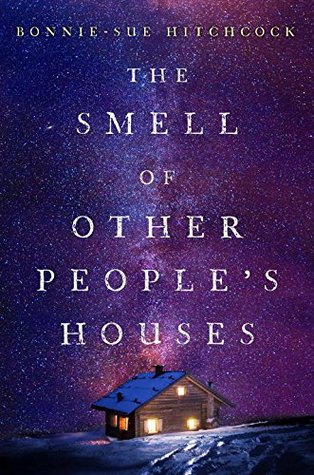
Book Review: The Smell of Other People’s Houses by Bonnie-Sue Hitchcock

smell-of-other-peoples-houses

Alaska: Growing up here isn’t like growing up anywhere else.

Ruth has a secret that she can’t hide forever. Dora wonders if she can ever truly escape where she comes from, even when good luck suddenly comes her way. Alyce is trying to reconcile her desire to dance with the life she’s always known on her family’s fishing boat. Hank and his brothers decide it’s safer to run away than to stay home—until one of them ends up in terrible danger.

Four very different lives are about to become entangled. This is a book about people who try to save each other—and how sometimes, when they least expect it, they succeed.

This is a beautiful piece of writing, showcasing the lives of a handful of young people as they navigate their way through their triumphs and sorrows in 1970s Alaska. The novel is told through interlocking stories, giving us windows into the various characters’ lives, while offering constantly shifting perspectives on other characters as we see how they see one another. Some of the characters are best friends; others just know each other in a friend-of-a-friend or even more remote sort of way.

Along the way, they deal with missing or abusive parents, misunderstandings, birth families and found families, and the quiet support that can come from the most unexpected of sources.

The backdrop of life in Alaska lends the stories a unique flavor. What’s most important is the human relationships, but the scenes of life in a poor neighborhood in Fairbanks or on a fishing boat or along a remote highway give the plot developments a grounding in real life that’s gritty and evocative.

The language in this book is really lovely, and I thought the way the characters’ stories weave together was remarkably well done, with many surprises along the way.

The Smell of Other People’s Houses is a relatively thin book, but it’s got plenty to enjoy and savor. If you enjoy great, emotionally powerful writing, check it out. I believe this book has been marketed as young adult, but there’s no reason that adult readers wouldn’t love it.

Reading tip: I made the mistake of reading this book during a very busy, hectic week, so I was only able to read it in bits and pieces, and I think I lost a bit of the flow along the way. If you can, I’d suggest setting aside a cozy couple of hours and reading this one straight through.

_________________________________________

The details:

Title: The Smell of Other People’s Houses
Author: Bonnie-Sue Hitchcock
Publisher: Wendy Lamb Books
Publication date: February 23, 2016
Length: 240 pages
Genre: Young adult fiction
Source: Purchased

Save

Save

Save

Save

Save

Take A Peek Book Review: These Old Shades by Georgette Heyer

“Take a Peek” book reviews are short and (possibly) sweet, keeping the commentary brief and providing a little peek at what the book’s about and what I thought.

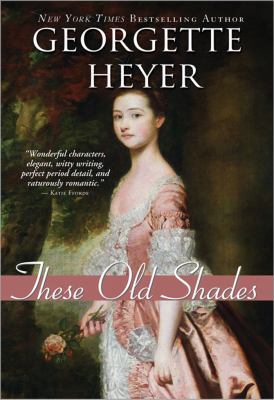
these-old-shades


Synopsis:

(via Goodreads)

Under the reign of Louis XV, corruption and intrigue have been allowed to blossom in France, and Justin Alastair, the notorious Duke of Avon and proud of his soubriquet ‘Satanas’, flourishes as well. Then, from a dark Parisian back alley, he plucks Leon, a redheaded urchin with strangely familiar looks, just in time for his long over-due schemes of revenge on the Comte de St. Vire. Among the splendours of Versailles and the dignified mansions of England, Justin begins to unfold his sinister plans — until, that is, Leon becomes the ravishing beauty Leonie…

Unanswered questions.

Lovely, titian-haired Leonie, ward of the dashing Duke of Avon, had all Paris at her feet. Yet her true origins remained shrouded in mystery. And neither the glittering soirees nor the young aristocrats who so ardently courted her could still the question that plagued her young heart.

What was her mysterious parentage?

Just one man held the secret, the one she feared most in the world–the iron-willed Comte de Saint-Vire, deadly enemy of the Duke. He would give her the answer–for a price. But could she betray the man she secretly, helplessly loved? And could this proud young beauty bear to face the truth when it came?

My Thoughts:

I’m sold! Until this month, I had never read a Georgette Heyer book — until my book club selected Devil’s Cub for our February book of the month. I really enjoyed Devil’s Cub, and once I realized that it was a sequel (kind of) to These Old Shades, I simply had to read this one as well.

These Old Shades is even better than Devil’s Cub, in my humble opinion. The Duke of Avon is just everything you could want in a hero of a Regency romance — he’s of the nobility, has a terrible reputation, is incredibly self-assured and handsome… but turns out to have a smooshy heart just waiting for the right person to come along and melt it. Léonie is a delight — an unpolished young girl, masquerading as a boy, who falls head over heels for her rescuer, but never quite loses her independence, impudence, and saucy sense of humor.

The banter and social maneuverings in These Old Shades are delicious. The book is scrumptious fun, beginning to end.

More Georgette Heyer, please! If you’re a fan, let me know which book you think I should read next.

_________________________________________

The details:

Title: These Old Shades
Author: Georgette Heyer
Publisher: Sourcebooks Casablanca
Publication date: Originally published 1926
Length: 386 pages
Genre: Historical romance
Source: Library

Save

Save

Save

Save

Save

Save

Save

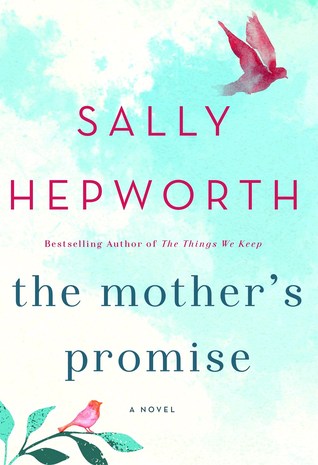
Book Review: The Mother’s Promise by Sally Hepworth

mothers-promiseKeep your Kleenex handy before picking up The Mother’s Promise.

The Mother’s Promise is the story of an unusual yet tightly connected mother and daughter, and the two women who enter their inner circle.

Alice is a 40-year-old single mother who receives the dreaded news that she has ovarian cancer and requires immediate surgery. Zoe is her 15-year-old daughter, a smart girl who’s practically crippled by her overwhelming social anxiety disorder. There’s no one else in their lives — no close friends, no relatives apart from Alice’s alcoholic brother. Zoe’s father has never been in the picture, and Zoe knows nothing about him.

Kate is the oncology nurse looking after Alice. Kate is married to a wonderful man and has two too-good-to-be-true teen-aged stepchildren, but her happy marriage is now on the verge of crumbling under the stress of infertility treatments and multiple miscarriages.

(Do we see where this is going yet? In this case, unpredictability may be overrated. More on this later…)

The fourth character in this circle is Sonja, the social worker assigned to Alice’s case, who steps in to make sure that Alice gets the support she needs as well as to make sure that Zoe has a roof over her head and someone to care for her when Alice’s condition worsens. Sonja, of course, has her own set of hidden problems and pains.

The novel shows these four women coming together, all with their own inner turmoil and emotional trauma, and finding healing and support through each others’ helping hands. The story unfolds via chapters told from all four points of view, so we get insights into what it feels like to be in their shoes.

In Zoe’s case, this is particularly affecting. Zoe’s situation is pure, utter agony. She’s so debilitated by her social anxiety that she can never speak in class, feels ashamed every time she walks down the school hallway, and agonizes over other kids’ opinions to such an extent that , for example, she never allows herself to eat in public for fear that she’ll do something embarrassing and everyone will stare or laugh at her. Being in Zoe’s mind is exhausting and sad, but also fascinating. Here’s a girl with so much to offer, and she just can’t do the things that will help her fit in, no matter how hard she tries. Her mother really and truly is all she has, and it’s terrifying for both of them to realize that her entire life is dependent on Alice being there.

For Alice, the diagnosis comes completely out of the blue (as is so often the case with ovarian cancer). In a particularly moving scene, Alice hears the doctor and nurse pouring information out at her about the tests and the results and the treatment, and yet can’t even recognize the word “cancer” as applied to herself until about the 3rd or 4th time it’s said in her presence. Alice is committed to being positive, but her positivity crosses into denial over the seriousness of her condition and her poor prognosis.

Kate and Sonja’s storylines, while part of the novel, get less time than Alice and Zoe’s, but they each still emerge as individuals with their own lives, worries, and needs.

So what did I think of The Mother’s Promise? Hold on, let me wipe that last tear and then I’ll let you know…

Obviously, this is a heart-wrenching, gut-punching book. That should be clear from the start. It’s about a single mother with ovarian cancer — let’s not kid ourselves about this having a happy ending.

As I mentioned from the start, the resolution of the story is easy to see coming from very early on — but that in no way diminishes the impact. The importance thing in The Mother’s Promise is the journey, not the destination. Zoe in particular is the one to watch — there’s no instant cure for her social anxiety disorder, but she makes small steps toward breaking out of her old ways, and even manages to push past a truly awful moment of humiliation that any teen, even without anxiety issues, would have an extremely hard time getting over. It’s lovely to see Zoe’s determination to try, and enlightening to be inside her head and to learn what it feels like to be such a wounded, vulnerable soul.

Kate is lovely. I don’t want to give too much away, but here’s a woman who loses all of the dreams of the kind of future she wants, and yet finds a way to be open and caring and nurturing. It’s a beautiful story arc, and I wish we got to spend more time with her. Maybe a sequel??

I have mixed feelings about Alice. Obviously, she’s worthy of sympathy and compassion, and her ordeal is horrible. I just wish the storytelling around Alice was a bit more consistent. The chapters told from her perspective are quite moving, of course, yet we cut away to other people’s perspectives at times when I wanted to know how Alice was feeling, phyically and emotionally, such as during her initial hospitalization and recovery from surgery.

As for Sonja — her story weaves in some themes that are important and worthy of attention, but at the same time, she feels extraneous to the story. Again, I don’t want to give too much away here, so I’ll be vague. It’s not that Sonja’s sections aren’t interesting. I just felt that you could remove her pieces from the novel, and the core of the story would not lose anything. Perhaps this is just trying to fit one too many story threads into one novel. It’s a good thread, but unnecessary.

I started The Mother’s Promise knowing I’d probably dissolve at some point while reading it, and that’s a pretty accurate picture of what happened. Mothers and daughters? Cancer? Helplessly watching a parent suffer? Children with no one to care for them? Oh, this book knew exactly how to push my buttons! Waterworks galore.

But still — The Mother’s Promise is a beautiful book despite all the heartache. The relationships are complex and feel real, with fragile people strengthened by their unbreakable emotional bonds. Some tearjerker books feel too deliberate, as if the author sat down and said, “Hmm. How can I make my readers cry?”. Not The Mother’s Promise. Yes, there will be tears, but they’re genuine and feel earned.

Definitely read The Mother’s Promise. It’s powerful and well-written, and will make you look at your loved ones with new, appreciate eyes. And, definitely worth mentioning, the book does an admirable job of showing the power of women caregivers, nurses, and nurterers — people who change lives on a daily basis. Kudos to the author for such a sensitive and fine portrayal of roles that are often overlooked.

For more by this author, check out her amazing (and equally heart-wrenching) previous novel, The Things We Keep (review).

_________________________________________

The details:

Title: The Mother’s Promise
Author: Sally Hepworth
Publisher: St. Martin’s Press
Publication date: February 21, 2017
Length: 368 pages
Genre: Contemporary fiction
Source: Review copy courtesy of the publisher via NetGalley

Save

Save

Save

Save

Month of Maisie Readalong: Birds of A Feather by Jacqueline Winspear

birds-of-a-feather

Welcome to the Month of Maisie Readalong Blog Tour, celebrating the Maisie Dobbs series by Jacqueline Winspear. I’m delighted to be participating in this blog tour, which features each book in the Maisie Dobbs series, leading up to the newest release, In This Grave Hour (release date March 14th – book #13 in the series).

For my stop along the blog tour, I’m focusing on the 2nd book in the series, Birds of a Feather.

Note: See the bottom of this post for the schedule of the rest of the tour. The Month of Maisie Readalong is sponsored by TLC Book Tours.

Synopsis:

An eventful year has passed for Maisie Dobbs. Since starting a one-woman private investigation agency in 1929 London, she now has a professional office in Fitzroy Square and an assistant, the happy-go-lucky Billy Beale. She has proven herself as a psychologist and investigator, and has even won over Detective Inspector Stratton of Scotland Yard’s Murder Squad—an admirable achievement for a woman who worked her way from servant to scholar to sleuth, and who also served as a battlefield nurse in the Great War.

It’s now the early Spring of 1930. Stratton is investigating a murder case in Coulsden, while Maisie has been summoned to Dulwich to find a runaway heiress. The woman is the daughter of Joseph Waite, a wealthy self-made man who has lavished her with privilege but kept her in a gilded cage. His domineering ways have driven her off before, and now she’s bolted again.

My thoughts:

I read the first Maisie Dobbs novel two years ago (review), and was instantly intrigued by the fascinating main character. Maisie is a strong, independent, but damaged woman. A nurse who lost her beloved to his incurable war injury, Maise returns from the battefields of the Great War a changed woman. With the patronage of the wealthy woman who once employed her as a housemaid and the tutelage of a respected professor and psychologist, Maisie develops her intuitive skills and applies them to the pursuit of investigations. Maisie dedicates herself not just to solving cases, but to understanding the deeper issues leading to the individuals’ pain and suffering, and works to help her clients achieve not just closure, but also healing.

In Birds of a Feather, set in 1930, the war may be long over, but its lasting devastation is not. As Maisie investigates a missing-persons case, she unearths the terrible damage wrought by guilt and blame. While the people involved all bear some burden of wrong-doing and bad decisions, it’s clear that the war itself is the villain here, leaving lasting wounds and ripping huge holes into families, villages, and communities.

Maisie herself is a wonderful lead character. She’s not a typical woman of her time. Maisie clearly considers herself a committed loner, as she still makes weekly visits to the man she loved, even though he can’t recognize or remember her, and she mourns the life she never got to have with him. But as we see in Birds of a Feather, Maisie finally starts to open herself to the thought of what the rest of her life might look like. Meanwhile, she’s doing very well professionally, incorporating her unique blend of mindfulness and physical empathy into her investigative approach.

I enjoyed Birds of a Feather, although I was a bit less caught up in the story than I was in the first book. Maisie Dobbs has all the details of Maisie’s sad backstory, and as such, really lets us into her life and mind. The 2nd book is much more focused on the case than on Maisie herself, and I missed the focus on the personal.

That said, the case itself ends up being entwined with a murder case under investigation by Scotland Yard, and Maisie is at her best when she’s in hot pursuit of the truth, even after being cautioned to stay out of the way by her police contacts. As the case becomes more complicated, it’s fascinating to see Maisie’s determination and resourcefulness in tracking down the pieces that connect and putting together a solution that only she could find, with her holistic approach to sleuthing.

I highly recommend the Maisie Dobbs series for readers who love historical fiction, great detective stories, or both!

Links:

Goodreads:

Purchase links:

Amazon  **  Barnes & Noble

About the Author:

jacqueline-winspearJacqueline Winspear is the author of the New York Times bestselling Maisie Dobbs series, which includes In This Grave Hour, Journey to Munich, A Dangerous Place, Leaving Everything Most Loved, Elegy for Eddie, and eight other novels. Her standalone novel, The Care and Management of Lies, was also a New York Times bestseller and a Dayton Literary Peace Prize finalist. Originally from the United Kingdom, she now lives in California.

Find out more about Jacqueline at her website, www.jacquelinewinspear.com, and find her on Facebook.

_________________________________________

The details:

Title: Birds of a Feather
Author: Jacqueline Winspear
Publisher: Penguin
Publication date: 2005
Length: 320 pages
Genre: Mystery
Source: Review copy courtesy of TLC Book Tours

tlc logo

Don’t forget to check out the rest of the Maisie tour!

Monday, February 20th: Life By Kristen – Maisie Dobbs
Tuesday, February 21st: Bookshelf Fantasies – Birds of a Feather
Wednesday, February 22nd: Reading Reality – Pardonable Lies
Thursday, February 23rd: A Bookish Way of Life – Messenger of Truth
Monday, February 27th: Back Porchervations – An Incomplete Revenge
Tuesday, February 28th: Mel’s Shelves – Among the Mad
Wednesday, March 1st: History from a Woman’s PerspectiveThe Mapping of Love and Death
Thursday, March 2nd: Book by Book – A Lesson in Secrets
Monday, March 6th: Bookish Realm Reviews – Elegy for Eddie
Tuesday, March 7th: My Military Savings – Leaving Everything Most Loved
Tuesday, March 7th: Barbara Khan on Goodreads – Leaving Everything Most Loved
Wednesday, March 8th: Lit and Life – A Dangerous Place
Thursday, March 9th: #redhead.with.book – Journey to Munich
Tuesday, March 14th: Reading Reality – In This Grave Hour
Wednesday, March 15th: M. Denise Costello – In This Grave Hour
Thursday, March 16th: Mel’s Shelves – In This Grave Hour
Friday, March 17th: A Bookish Way of Life – In This Grave Hour
Monday, March 20th: Helen’s Book Blog – In This Grave Hour
Tuesday, March 21st: Book by Book – In This Grave Hour
Wednesday, March 22nd: Jathan & Heather – In This Grave Hour
Thursday, March 23rd: #redhead.with.book – In This Grave Hour
Friday, March 24th: Diary of a Stay at Home Mom – In This Grave Hour
Monday, March 27th: History from a Woman’s Perspective – In This Grave Hour
Tuesday, March 28th: What Will She Read Next – In This Grave Hour
Wednesday, March 29th: Bookish Realm Reviews – In This Grave Hour

Save

Save

Save

Save

Save

Save

Book Review: The Girl Before by J. P Delaney

girl-before

Please make a list of every possession you consider essential to your life.

The request seems odd, even intrusive—and for the two women who answer, the consequences are devastating.

Emma
Reeling from a traumatic break-in, Emma wants a new place to live. But none of the apartments she sees are affordable or feel safe. Until One Folgate Street. The house is an architectural masterpiece: a minimalist design of pale stone, plate glass, and soaring ceilings. But there are rules. The enigmatic architect who designed the house retains full control: no books, no throw pillows, no photos or clutter or personal effects of any kind. The space is intended to transform its occupant—and it does.

Jane
After a personal tragedy, Jane needs a fresh start. When she finds One Folgate Street she is instantly drawn to the space—and to its aloof but seductive creator. Moving in, Jane soon learns about the untimely death of the home’s previous tenant, a woman similar to Jane in age and appearance. As Jane tries to untangle truth from lies, she unwittingly follows the same patterns, makes the same choices, crosses paths with the same people, and experiences the same terror, as the girl before.

For a book that consumed my attention nonstop for an entire day, I sure was left feeling unsatisfied.

The premise sounds delicious. A beautiful home, stark and pristine and worth far more than the rental price. Okay, so fine, there are rules — about 200 different items that tenants must agree to in order to live there. And then there’s the fact that only a select few are considered worthy: A lengthy, intrusively intimate questionnaire only possibly gets you in the door for an interview with the property’s architect and owner, and even then, you’re likely to get turned down..

But still, in a tight housing market where even exceeding your budget gets you little better than a dump, this place is a true find.

(Okay, not for me. Once the “no books” clause comes into play, I’m out. But I digress…)

The Girl Before is told in alternating chapters, of “Then: Emma” and “Now: Jane”. As their stories unwind, there’s no doubt that these two women, both vulnerable and bearing emotional scars, are just the sort of easily manipulated prey that might appeal to someone who needs total control. As we get to know each woman, we learn why the house at One Folgate Street appeals to them, and why they’re so eager to upend their lives that they’re willing to accept the terms and conditions that come with the home.

Warning signs abound. There are the odd little facts about the history of the house’s origins, the architect, Edward, and his personal life. There’s Edward himself, who’s quite overly involved for a rental landlord. Emma moves in after a terrifying crime, and Jane after a personal loss, but both are desperate for a fresh start — desperate enough to overlook the little clues (oh, like a house that’s programmed to only turn on the shower after you do a regular assessment of your moods) that they may be in over their heads.

The Girl Before is a thriller that pushes all of a reader’s buttons, with plenty of clues and alarms and suspicious behavior. I could not put it down… but that doesn’t mean that, in the aftermath, I actually enjoyed reading it.

Here’s the deal:

This book certainly makes for compulsive reading — but by about the 2/3 mark, the narrative and the personalities started to change. We find out more about each of the characters, and certain stories and statements get turned on their heads. Emma’s storyline in particular gets completely turned inside out, and I found myself filled with disgust for her actions and their fall-out. (Trying to be non-spoilerish here…)

In fact, certain characters are so not at all what they seem that the revelations and the book’s climax seem to come completely out of the blue. And yes, that’s what thrillers try to do — throw the reader off the scent, come up with a scenario that hasn’t been done before, one we never see coming. But it has to make sense, and I’m not sure that the climax and denouement of the story actually do.

I also, I will admit, am predisposed to dislike “girl in peril” stories, and setting up these two characters as victims and people easily controlled, for different reasons, kind of set my teeth on edge. By the end, although Emma’s circumstances should make her an object of pity and sorrow, it’s hard to feel any compassion for her, the more we get to know her. And Jane is all over the place too, although at least she ultimately displays some backbone and agency.

In the end, while I couldn’t stop reading, I wound up feeling rather cheated. Plot points that were practically lit up in neon ended up being red herrings. Characters’ actions in the big reveal seemed totally divorced from what we’d known of them up to that point. And again, I found it pretty much impossible to care at all about Emma once a particularly unforgivable action of hers is revealed.

So, do I recommend The Girl Before? Not so much. It’s a thriller, to be sure, and it was a good diversion on a rainy day (which is why I spent all day indoors today reading it, instead of going out where it’s wet and chilly). But I don’t like the portrayal of the women characters’ actions or motivations, and didn’t feel like their inner lives made a whole lot of sense or did credit to them as people.

Also, a minor complaint: Why is this book published under a pseudonym? Is that the trendy thing to do now? The author bio on the back flap says that J. P. Delaney is a pseudonym for “a writer who has previously written bestselling fiction under other names”. Hmm. I looked it up, and the identity of J. P. Delaney isn’t hard to find. From an article in the New York Times, it sounds like the author chose to use a non-gender-specific pseudonym to keep readers guessing. (Spoiler: He’s a man.)

Are we supposed to be impressed by his ability to get inside the women characters’ heads? For me, at least, it didn’t work. Maybe that partially explains my feelings about the characters. Not that a male author can never write from a female perspective, but it takes a great deal of talent and empathy to do so convincingly. The Girl Before misses the mark.

I’ll end this rambling review with a not-too-surprising insight: Writing reviews is pretty cathartic. As I sat down to right, I was still feeling overall kind of positive about The Girl Before. But now that I’ve been actually putting my thoughts together, I’m left with a pretty deafening UGH. The last third or so of this book made me feel used and manipulated, and that’s not a good thing.

Can I get my rainy day back for a do-over?

_________________________________________

The details:

Title: The Girl Before
Author: J. P Delaney
Publisher: Ballantine Books
Publication date: January 24, 2017
Length: 320 pages
Genre: Thriller
Source: Library

Save

Save

Save

Take A Peek Book Review: Devil’s Cub by Georgette Heyer

“Take a Peek” book reviews are short and (possibly) sweet, keeping the commentary brief and providing a little peek at what the book’s about and what I thought.

devils-cub-2

Synopsis:

(via Goodreads)

Dominic Alistair, Marquis of Vidal is a bad lot, a rake and seducer, reckless, heedless, and possessed of a murderous temper. He is known by friend and foe alike as the “Devil’s Cub.” Yet as the handsome and wealthy heir to a Dukedom, he is considered a good prospect on the marriage market. Vidal currently has his eye on the young, lovely, and unintelligent Sophia Challoner, and Sophia’s greedy mother is more than happy to encourage his dubious attentions.

When lovely, saucy Mary Challoner had practiced her bold deception upon the hot-blooded, fiery-tempered young Marquis of Vidal–substituting herself for her young sister he had thought to carry off to France–she had little notion he would grimly hold her to her part of the bargain. Now he had left her, and she was alone, a stranger in a strange land, prey to the intrigues of glittering, heartless, 18th century Paris.

Only one person could rescue her–the Marquis himself. But how could she ever trust this man? How could she even hope to overcome the contempt in which he held her? And how could even the sudden flowering of her love ever bridge the terrible gap between them?

My Thoughts:

Until Devil’s Cub, I’d never read a Georgette Heyer novel before, despite knowing several readers (of excellent taste, in my humble opinion) who absolutely adore her work. Georgette Heyer was such a prolific writer that I had no idea where to even start, but fortunately, my book club decided to go with something on the “classic romantic” side for our February book of the month and came up with Devil’s Cub, so I was spared the dilemma of having to choose.

The description really says it all. There’s a Marquis — such a scoundrel! But devilishly handsome. A sweet, decent young woman. A flighty sister. Oodles of lovers’ quarrels and misunderstandings. Elopements and escapes by carriage. Reputations and ruining on the line!

Devil’s Cub is a galloping piece of entertainment with never a dull moment, as social niceties are observed and broken, all in the name of love and honor. The characters are quite endearing. Mary has a backbone and makes for a great heroine, and although the Marquis’s use of threats to get his way rubs my modern sensibilities the wrong way, he’s exactly the sort of decadent lord with a heart of gold that would have been popular in the romantic fiction of the time.

This was a very fun read, light and entertaining, and a diverting little showpiece of social norms and scandals during the Regency era. Devil’s Cub is actually a sequel of sorts to These Old Shades, but it works perfectly fine as a stand-alone (although I do want to read that one as well, as soon as the library has a copy available).

I’m not going out on a Georgette Heyer binge right this second, but I do want to read more of her books. Any suggestions? Any must-reads? Let me know!

Meanwhile, as always, I’m so thankful to be part of an amazing book club that gives me incentive to read books outside my usual reading habits.

_________________________________________

The details:

Title: Devil’s Cub
Author: Georgette Heyer
Publisher: Sourcebooks Casablanca
Publication date: Originally published 1932
Length: 323 pages
Genre: Historical romance
Source: Library

Save

Save

Save

Save

Save

Save

Save

Five reasons to read the Finishing School series by Gail Carriger

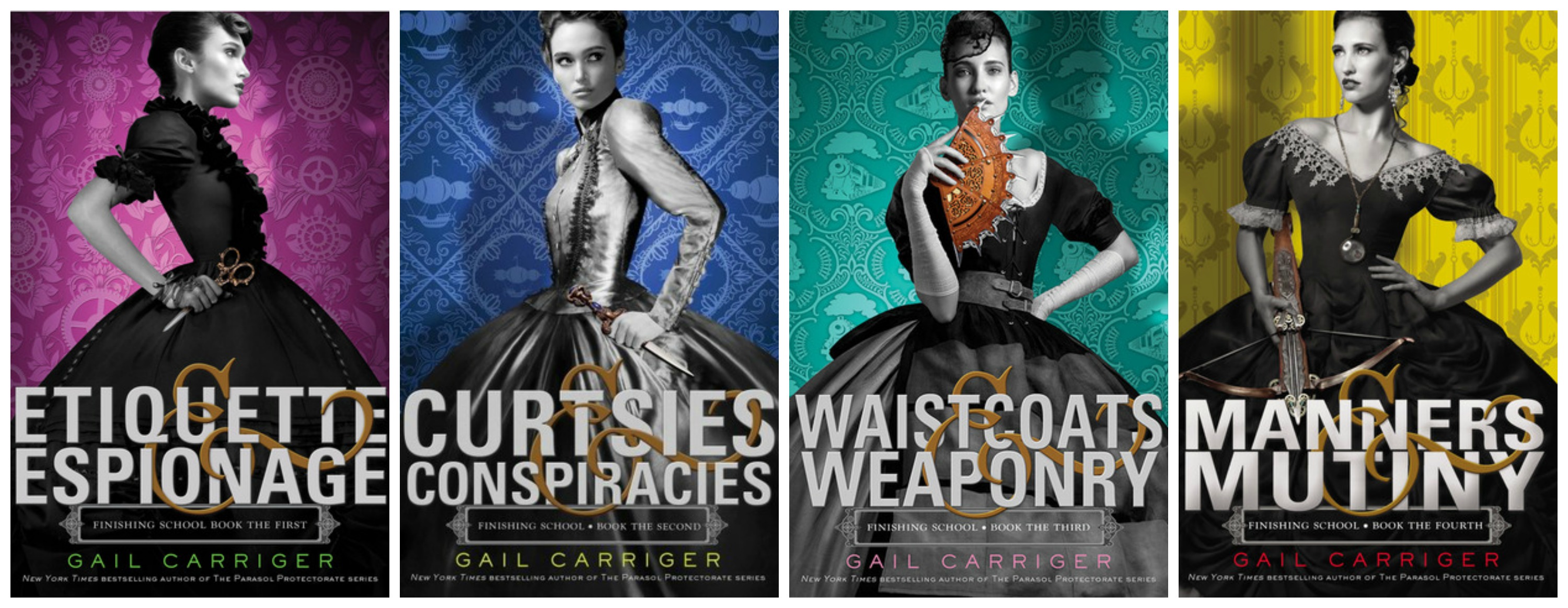
finishing-school-collage

MADEMOISELLE GERALDINE’S FINISHING ACADEMY FOR YOUNG LADIES OF QUALITY was established 1820 as an institution of finer learning, higher manners, and social graces for young women who wish to present their best selves to society. Our young women learn modern languages, dance, music, household management, etiquette, and finishing from the finest instructors on land or in aether. And each morning, after breakfast, every student recites, with religious solemnity, the school motto, ut acerbus terminus: TO THE BITTER END.

Our students don’t just learn to curtsy—they learn to finish—both the right kind and the wrong kind of finishing. But please note that our alumni are not simply assassins. A graduate of Mademoiselle Geraldine’s would never complete an engagement in a way that was messy, unbecoming of a lady, or attracting of attention. They are discrete, they are subtle: they are ladies of quality.

(from the Finishing School website, http://finishingschoolbooks.com/the-academy)

Want to have a heap of fun? Step one: Get your hands on Etiquette & Espionage. Step two: Keep reading until you’ve read all four book in the series.

And better yet: Get the audiobooks! These books deserve a nice, relaxed listen.

I read Etiquette & Espionage years ago, when it first came out (review), and had a deliciously lovely time with it. So why did I stop? I’m not exactly sure, except (a) my dreaded aversion to series-reading raised its ugly head and caused me a fatal lack of interest by the time book #2 was released, and (b) somehow in the interim, I’d convinced myself that the series had too juvenile a tone to appeal to me in the long run.

Wrong on both counts. What was I thinking?

All these years, I’ve managed to believe that I wouldn’t enjoy the Finishing School series, and as a result, I ended up depriving myself — until now! — of the pleasure of reading these super silly yet totally wonderful books.

Mea culpa. Mea maxima culpa.

So, if any of you either haven’t heard of the series, or heard of the books but aren’t convinced that you should give them a try, here are five reasons why they need to be at the top of your MUST READ or MUST LISTEN lists, ASAP.

1) Fantastic world-building: The world of the Finishing School is full of Victorian manners, proper English ladies and gentlemen, lots of tea, and all sorts of supernatural beings — who are an accepted and honored part of society, thank you very much. Vampires, werewolves, and ghosts exist, mingle with humans, and are received in the finest of homes. A steampunk sensibility is in the forefront throughout, so expect lots of gears, dirigibles, mechanical servants and soldiers, valves, frequensors, and the like.

2) Strong female characters: The finishing school of the series title is a floating school housed in a dirigible, in which “young ladies of quality” become finished — in the dangerous arts of espionage, artifice, and assassination, among other important subjects. The most talented of the girls may have careers ahead of them as intelligencers, or may be destined to marriage to high ranking gentlemen so they can work their wiles behind the scenes. In any case, the young women we meet have backbones and brains, are handy with all manner of weaponry (I love Sophronia’s bladed fan), and can out-think any and all bad guys on a moments’ notice. Main character Sophronia and her best friends Dimity, Agatha, and Sidheag aren’t afraid to fight, scheme, flirt, and lie in order to protect each other and the people they care about. What’s more, Sophronia especially doesn’t particularly care about the rules of society, and is determined to set her own course and grab her own destiny, no matter whether others want to take her choices away.

3) Sense of humor: From the smallest of touches to the sublimely ridiculous, Gail Carriger’s writing has just enough arch humor to make every moment fun without crossing the line into dumb jokes. The conversations and descriptions all add to the overall sense of never taking things seriously, broken only when there are moments of true sorrow or tragedy, which the author is equally good at conveying. For snippets of the awesome writing and dialogue, check out some of my Thursday Quotables selections — here and here,

4) Terrific narrator: This is why I so highly recommend the audiobooks. The narrator is amazing! Moira Quirk captures the wickedly funny nature of the dialogue through her sharp-edged delivery, phrasing, and rhythms. She lends distinct voices to Sophronia and her friends, as well as to the oh-so-amusing vampire Professor Braithwope and the countless other unique characters, capturing the class differences with ease… and making me laugh out loud on a regular basis. (Note to self: Stop listening to funny  audiobooks in public.)

5) Visits from familiar friends: Prior to writing the Finishing School books, Gail Carriger had already collected a devoted following of her Parasol Protectorate series (which I adore). Although Finishing School is set approximately 25 years before the start of Soulless, book #1 in the Parasol Proctorate, there are quite a few familiar characters who appear in both series. Conveniently, since we’re talking about supernatural beings, there’s no reason why everyone’s favorite vampire, Lord Akeldama, can’t be a major player in Sophronia’s world too — looking as fashionable and fabulous as always, of course. Some of the others making appearances, large or small, in the Finishing School books are Sidheag Maccon and Genevieve Lefoux, plus a few others we see more or less in the shadows, going unnamed, but awfully familiar, like an inscrutable butler and a sandy-haired Beta werewolf.

Convinced yet?

In each book, the storyline builds on itself, adding to our knowledge of the characters’ inner lives and personal strengths, and then showing them in action as they team up to stop the bad guys and pretty much save the world, or at least, the British Empire. As this series is YA-targeted, the main steam in the story comes from the boiler rooms, not from sexytimes — if you’re looking for adult sexual encounters, check out the Parasol Protectorate books. Still, the Finishing School books contain some truly spectacular romantic moments, a love triangle that’s more than your typical YA three-sided geometry, and a crossing of class and race lines that make Sophronia a woman far ahead of her own time.

But let’s not get too serious about all this. The Finishing School books are good, silly, fun  — amazing characters, dynamic plot, loads of steampunk detailing, and dramatic, hair-raising escapes and adventures.

Please, please, please go check this series out! You’ll thank me. I promise.

Save

Save

Book Review: Always by Sarah Jio

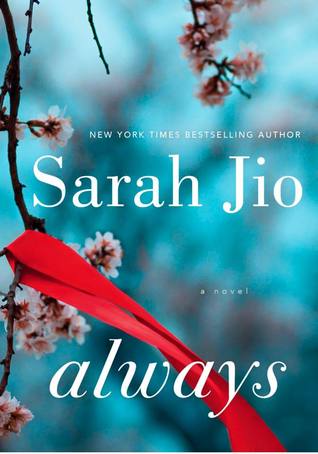
always

While enjoying a romantic candlelit dinner with her fiance, Ryan, at one of Seattle’s chicest restaurants, Kailey Crane can’t believe her good fortune: She has a great job as a writer for the Herald and is now engaged to a guy who is perfect in nearly every way. As they leave the restaurant, Kailey spies a thin, bearded homeless man on the sidewalk. She approaches him to offer up her bag of leftovers, and is stunned when their eyes meet, then stricken to her very core: The man is the love of her life, Cade McAllister.

When Kailey met Cade ten years ago, their attraction was immediate and intense everything connected and felt “right.” But it all ended suddenly, leaving Kailey devastated. Now the poor soul on the street is a faded version of her former beloved: His weathered and weary face is as handsome as Kailey remembers, but his mind has suffered in the intervening years. Over the next few weeks, Kailey helps Cade begin to piece his life together, something she initially keeps from Ryan. As she revisits her long-ago relationship, Kailey realizes that she must decide exactly what and whom she wants.

Alternating between the past and the present, Always is a beautifully unfolding exploration of a woman faced with an impossible choice, a woman who discovers what she’s willing to save and what she will sacrifice for true love.

Warning: This review contains spoilers!

And a disclaimer: This just isn’t my kind of story, and that fact probably influences my reaction quite a bit… but maybe not. I’ll explain, I promise.

I like a good romantic tale every once in a while. A nice, contemporary story about falling in love, or rediscovering love, or the memory of love… what’s not to — you know?

So why didn’t I love Always? For starters, everything was so completely obvious. In chapter one, we see Kailey sitting down to dinner with her super rich, too handsome to be true, perfect gentleman from a fine family fiancé, and I could tell you already that these two will never work out. He’s a developer; she wants to save the homeless shelters in the square of his next big development project. He’s being kind of insistent in an incredibly outdated way about her changing her name when they get married. They seem to read home decorating magazines for fun. There is just no way that these two should ever get married — so when she stumbles across the former love of her life dressed in rags and seemingly out of his mind, there’s really no dramatic tension. OF COURSE she’s going to end up with Cade. I mean, there isn’t the slightest shadow of a doubt about it.

Still, we get the alternating timeline effect, following the story of Kailey and Cade’s first meeting (Seattle in the 90s) and early romance, intercut with chapters set in the later timeline (2008) as she discovers Cade on the streets and decides that she has to save him. The more we see of Kailey and Cade’s relationship, the clearer it becomes that Ryan is all wrong for Kailey. But anyway…

Cade is homeless, begging for food, and clearly has been through something awful. He only shows a glimmer of recognition when he sees the tattoo on Kailey’s shoulder — because of course, he has the same one. She’s desperate to help him, and he doesn’t actually know who she is. Meanwhile, she never tells Ryan the truth, so she’s living a lie, missing work, and disappearing from life with her fiancé — not a good sign.

Plot-wise, there are just too many pieces that make no sense to me. (As I said earlier, SPOILERS!);

  • Cade just up and disappeared 10 years earlier, but it’s not clear whether Kailey actually did anything to find him. A guy, even one who’s been drinking too much, doesn’t just evaporate from his own life for no reason. Did she go to his apartment and notice that all his possessions were still there? Did she call the police? File a missing persons report? Hire a detective? Try to figure out who last saw him? If she’d done any of that, no matter the state of their relationship, I have a feeling she might have actually found him. Although then we’d have no big romantic reunion all those years later, but still.
  • So what exactly was wrong with Cade? “Traumatic brain injury” — what does that even mean? I know this isn’t a medical drama, but a little bit of a reality check might have helped. What part of the brain was affected? What’s the prognosis? And why is the treatment so vague? Living in a facility with unspecified treatments, medications, therapies… and suddenly he can talk and remember? More detail and grounding would have helped sell Cade’s condition better.
  • And what exactly happened the night of the accident? Apparently, Cade was the victim of some sort of crime… maybe? Or hit by a car? Or really, anything at all? We don’t know. And for that matter, why didn’t James, the former best friend, bother finding out afterward?
  • We find out, through Kailey’s barely-making-an-effort detective work, that a John Doe was admitted to the hospital with a brain injury right around that same time, but was checked out by a family member before treatment could be provided. AND THEN WE NEVER GET A RESOLUTION ON THIS PLOT POINT. Who checked him out? Why? Did something nefarious happen? No answers.

Okay, so the more I write, the more I realize how much the plot didn’t work for me. It felt formulaic and utterly predictable, with very little tension (Kailey’s choice is a forgone conclusion), and a romance that gets a pie-in-the-sky ending that feels like it glazes over any and all obstacles. Heck, they even recover Cade’s missing fortune by barely lifting a finger (and the story I expected, of insidious business dealings and a financial motivation, never actually materializes.) The storybook ending is yet another element of a paint-by-number love story that lacks any basis in the real world.

Sure, some may find this an inspiring story of true love finding its way. When two people are meant to be together, nothing (NOT EVEN A TRAUMATIC BRAIN INJURY) can keep them apart. Love conquers all, yo!

Clearly, this was not a book for me.

_________________________________________

The details:

Title: Always
Author: Sarah Jio
Publisher: Ballantine Books
Publication date: February 7, 2017
Length: 288 pages
Genre: Contemporary fiction
Source: Review copy courtesy of the publisher via NetGalley

Save

Save

Save

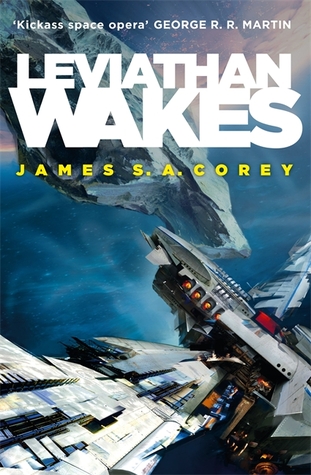
Leviathan Wakes and The Expanse: Book, TV… amazing science fiction!

I just finished this massive book today, and I swear I’ve been reading it for EONS. (Okay, it’s been 10 days, but that seems like forever relative to my normal reading pace).

leviathan-wakesLeviathan Wakes is book #1 in the ongoing series The Expanse, by James S. A. Corey (which is actually a pen name for two co-authors, Daniel Abraham and Ty Franck). The paperback I’ve been lugging around with me is HUGE – 560 pages, about the size of a doorstop, and must weigh close to a ton. (It’s true! My arms are aching.)

The book series has also been adapted into a TV series on Syfy, season 2 of which just premiered this past week. No, I haven’t seen the beginning of season 2 yet. I wanted to finish book #1 first.

The world of The Expanse — TV and book — is set far enough into the future that human life has spread throughout the solar system. Earth and Mars are the inner planets, two independent political forces, and then there’s the Belt — the asteroid belt that’s become a source of mining and resources in service to the inner planets. Belters are an underclass, dependent on Earth and Mars, filled with a discontented people who are agitating for freedom. Earth and Mars have wealth and military might. The Belt is cramped, dirty, underfed, crime-ridden, and downtrodden. There’s a class war ready to explode, and it doesn’t take much to set it off.

Our hero is James Holden, who finds himself captain of a small rogue vessel after an untraceable attack on his home ship leaves him and his crew stranded in space. The anti-hero, of sorts, is Detective Miller, a Belter whose missing-persons case takes on intergalactic significance and brings him in league with Holden and his crew on board the Rocinante.

I really shouldn’t go into a whole lot more detail than that, although if you want a recap of season 1 of the TV show, there’s this brilliant video to check out:

I loved reading the book. I originally started it after watching the first season of the TV show, which has so many political factions and plots and military escapades that I thought the book might help me untangle it all. And it did. The book has a narrower scope in some ways than the TV production. Much of the politics, in particular all of the scenes set on Earth, are not in the book. Sadly, I missed one of the show’s stand-out characters, Avasarala, although I understand that she enters the book series world in the 2nd book.

THE EXPANSE -- Season:1 -- Pictured: Shohreh Aghdashloo as Chrisjen Avasarala -- (Photo by: Amanda Demme/Syfy)

THE EXPANSE — Season:1 — Pictured: Shohreh Aghdashloo as Chrisjen Avasarala — (Photo by: Amanda Demme/Syfy)

Another difference between book 1 and season 1 — season 1 ends at about the midpoint of the book’s plot… which makes me even more excited to dive into season 2, now that I know what’s still to come.

All in all, I’d say the creators of the show have done a remarkable job of capturing the universe of the books, combining elements of the first couple of books (or so I’ve been told) in order to achieve a visual and narrative trajectory that makes sense. The drama never lets up; we get some amazing space battles; there are truly stand-out personalities introduced, and the cast does a great job of bringing to life the complexities of the individuals who make up the whole.

I know I’m jumping around a lot here, because that’s just how my brain is processing all the data at the moment. I turned the final page of the book literally an hour ago, and my mind is whirring.

I suppose Leviathan Wakes would be considered “hard” science fiction. You know, space ships and technology and lasers and all that. But the human element elevates the whole into just really great storytelling, with exciting action and people who seem real enough to make us care.

the-expanse-crew

The crew of the Rocinante

I think anyone who enjoyed Battlestar Galactica will love The Expanse. Likewise, fans of the Killjoys series will find some common themes in the class struggles and solar system dynamics portrayed here.

As for the book, I am thrilled that I finally took the time to read Leviathan Wakes, despite feeling at times like I would never reach the end. From the midpoint onward, the momentum never stops, and I think I must have read the final third just within the past 24 hours. I swore that I would read just one for now… but now that I’ve finished Leviathan Wakes, I have to know what happens next!

Fortunately, it’ll probably take me a couple of weeks to get my hands on a copy of book 2, Caliban’s War… but once I do, I don’t think I’ll be able to keep myself from diving back into this incredible series.

For more info on season 2 of The Expanse, check out this great piece on the politics of the series.

Save

Save

Save

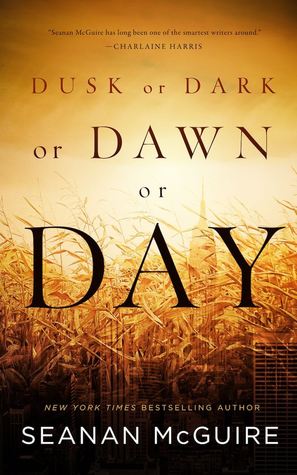
Book Review: Dusk or Dark or Dawn or Day by Seanan McGuire

dusk-or-dark

When her sister Patty died, Jenna blamed herself. When Jenna died, she blamed herself for that, too. Unfortunately Jenna died too soon. Living or dead, every soul is promised a certain amount of time, and when Jenna passed she found a heavy debt of time in her record. Unwilling to simply steal that time from the living, Jenna earns every day she leeches with volunteer work at a suicide prevention hotline.

But something has come for the ghosts of New York, something beyond reason, beyond death, beyond hope; something that can bind ghosts to mirrors and make them do its bidding. Only Jenna stands in its way.

Warning: This review contains minor spoilers!

It’s hard to describe this lovely, haunting novella full of ghosts and yearning and unfulfilled needs. The writing is absolutely gorgeous, and the concepts underlying the story are original and quite moving.

First and foremost, Dusk or Dark of Dawn or Day is a ghost story. Set in our every day world, the story tells the tale of ghosts among us. They live (sort of) and work and spend their days and nights alongside the living, going through the years looking for meaning or redemption or even escape.

Jenna is our main character, a ghost who died accidentally as a teen, right after her sister Patty’s suicide. Ghost Jenna comes to New York looking for Patty, but fails to find her. What she finds instead is a “life” of her own. She works as a hotline volunteer, lives in an apartment building with a ghost for a landlady, and frequents a local diner for its coffee, pie, and interesting visitors.

What I loved:

In this ghostly version of our world, ghosts must take the time they need to reach their intended death date, at which point they can finally move on. They don’t know how close they are until they’re almost there. As they take minutes, days, or even years from the living, the living grow that much younger while the ghost becomes older. For Jenna, she feels she’s taking something that must be earned, and so she limits herself to taking time in proportion to the minutes she spends doing good in her volunteer work. The main thing for Jenna is to join Patty, and she yearns to finally get enough time to make it there.

I just loved the concept of taking and giving time. Our world is peopled with ghosts trying to move on, and it’s simply sad and sweet to see the longing and wistfulness that fills their days.

Alongside the ghost population, there are witches of all sorts, defined by their source of power. A corn witch, for examples, draws her strength not just from fields of corn plants, but anything within reach that contains corn or corn products. Some of the witches’ power sources are shocking, to say the least. The witches and ghosts have a dangerous relationship, as witches have the ability to both steal time from ghosts, staying young seemingly forever, and to trap ghosts in glass and hold them prisoner, keeping them from moving on. Again, as with the ghosts and their time banking, the concepts behind the witches and their powers in this novella are unusual and mind-bending and a bit scary, to be honest.

As I mentioned earlier, the writing in this short work is what makes it truly special. For one example, see my Thursday Quotables post from earlier this week. Here are a few more little pieces that I loved — but really, the entire book reads like a lyrical ghost story, with words that haunt the reader as much as the characters haunt the city:

The world is full of stories, and no matter how much time we spend in it — alive or dead — there’s never time to learn them all.

It’s two o’clock by the time I leave the diner. The frat boys and tourists are gone, and the homeless have gone to their secret places to sleep, leaving the city for the restless and the dead. I walk with my hands in my pockets and the streetlights casting halogen halos through the fog, and I can’t help thinking this is probably what Heaven will be like, warm air and cloudy skies and the feeling of absolute contentment that comes only from coffee and pie and knowing your place in the world.

He loves that phrase, “time is money,” and uses it every chance he gets. Sometimes I wish I could make him understand how wrong he is, that time is time and that’s enough, because time is more precious that diamonds, more rare than pearls. Money comes and goes, but time only goes. Time doesn’t come back for anyone, not even for the restless dead, who move it from place to place. Time is finite. Money is not.

We’re just part of the background noise, and all the talk in the world of ghosts and witches and hauntings won’t change that. No one believes in things like us anymore. There’s freedom in that.

What I loved less:

The plot’s climax becomes somewhat convoluted and dense, and the actions of some characters didn’t make much sense to me. But it actually doesn’t matter a whole lot, truly. It doesn’t have to make complete sense to still be a treat for the senses.

That said, I wish this had been a full novel-length work rather than a novella. While the novella’s structure and brevity give it a certain elegance, there’s so much here to take in and savor that I wish parts had more room to breathe and that the ghost- and witch-inhabited world of DDDD could have been more explicitly built out.

In conclusion:

Dusk or Dark of Dawn or Day is a beautiful work that will stay with me for a long time. The writing is gorgeous, and just cements my admiration for the writer. For more by Seanan McGuire, I strongly recommend the equally lovely Every Heart a Doorway, and can’t wait for its sequel, Down Among the Sticks and Bones, to be released in June.

_________________________________________

The details:

Title: Dusk or Dark or Dawn or Day
Author: Seanan McGuire
Publisher: Tor Books
Publication date: January 10, 2017
Length: 183 pages
Genre: Fantasy
Source: Purchased

Save

Save

Save