First Lines Friday is a weekly feature for book lovers created by Wandering Words. What if instead of judging a book by its cover, its author or its prestige, we judged it by its opening lines?
Pick a book off your shelf (it could be your current read or on your TBR) and open to the first page.
Copy the first few lines, but don’t give anything else about the book away just yet – you need to hook the reader first.
Finally… reveal the book!
This week’s lines are from an upcoming new horror novella:
I have thought long and hard about how I would dispose of a dead body. I have carefully weighed options such as digging, sinking, burning, hiding. It’s something I do when I can’t sleep. I used to think that everyone did this, that each person I met had a plan of their own. But the day I casually mentioned mine during lunch at work, a weird and uncomfortable silence settled over the table. So it turns out that most people listen to audio books when they can’t sleep. It’s only me who hides bodies. I find it relaxing.
So what’s the book?
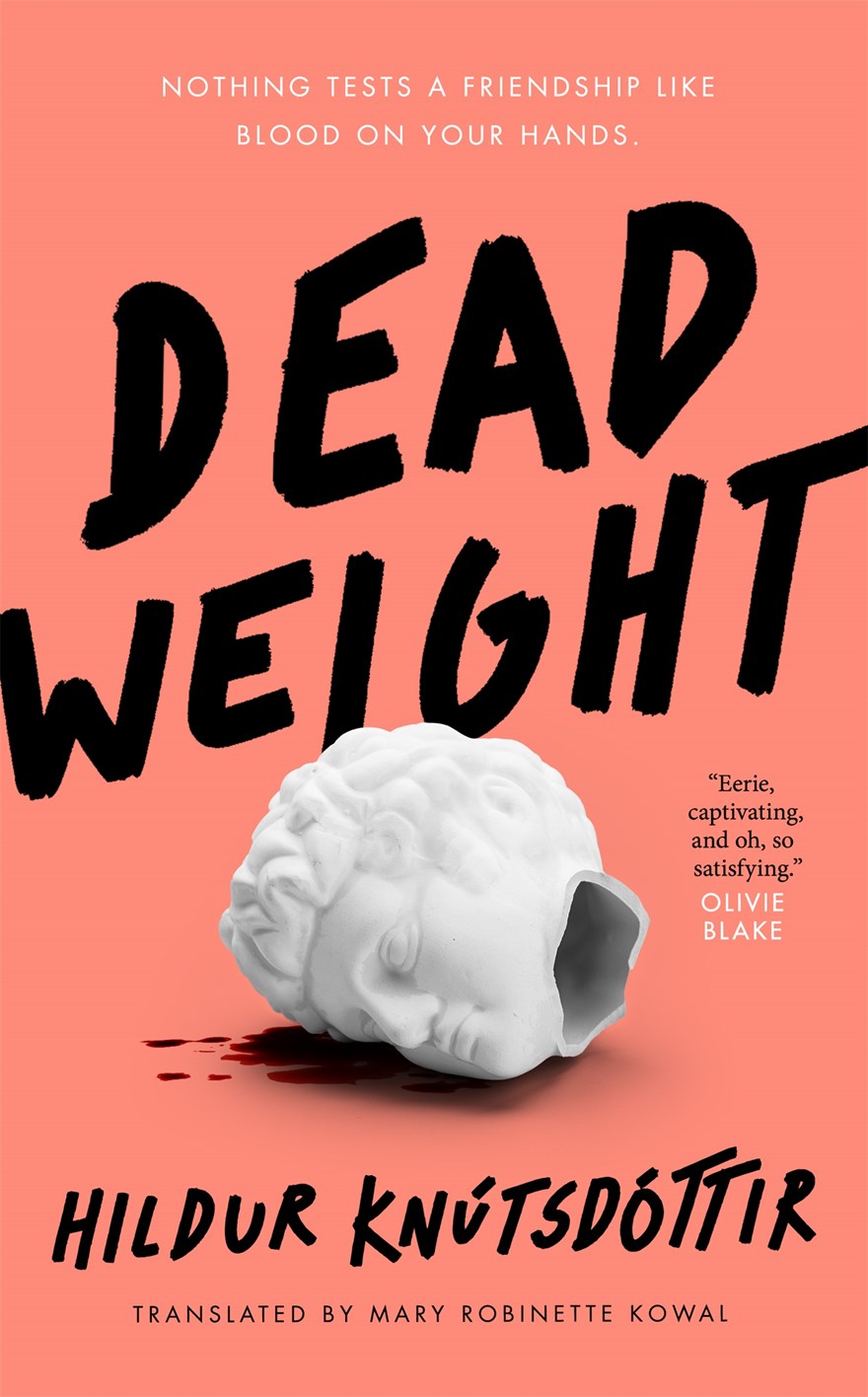
Dead Weight by Hildur Knútsdóttir Release date: May 26, 2026 160 pages
Synopsis:
An Icelandic night may hide secrets and affairs – or even bodies – in this gruesomely cathartic horror thriller from the author of The Night Guest.
Unnur was living a normal, if lonely, life until a black cat showed up at her door.
When she tracks down the cat’s wayward owner, she finds a young woman just as lost and in need of help. Like a gust of cold air in a Reykjavík night, Ásta and her pet slip into Unnur’s life.
It’s unexpected, but welcome. Unnur likes the company, and she begins to rely on Ásta in turn. But like a black cat, trouble has been tailing her new friend, and Unnur is the only one there for Ásta when things take a violent turn.
The two women quickly learn: nothing tests a friendship like blood on your hands.
Too creepy? Or does it sound like something you’d enjoy?
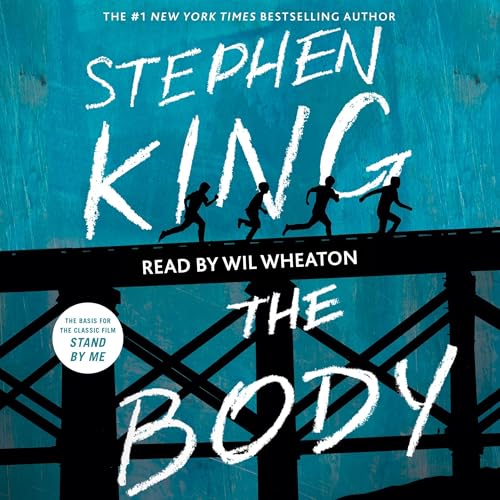
Title: The Body Author: Stephen King Narrator: Wil Wheaton Publisher: William Morrow Publication date: Originally published 1982; new audiobook edition released 2026 Print length: 192 pages Audio length: 6 hours 38 minutes Genre: Coming of age novella Source: Library Rating:
⭐⭐⭐⭐⭐
Rating: 5 out of 5.
Decades after starring in the film adaptation, Wil Wheaton narrates an all-new recording of the story that shaped a generation!
#1 New York Times bestselling author Stephen King’s timeless novella The Body, originally published in his 1982 collection Different Seasons and adapted into the 1986 film classic Stand by Me, now available as a stand-alone edition.
Four rambunctious young boys venture into the Maine woods in search of a boy from a nearby town who has disappeared. Gordie Lachance and his three friends set out on a quest to find the missing boy’s body along the railroad tracks. The Body is set outside King’s iconic fictional town of Castle Rock, which is the setting of many of King’s most popular books including It and The Stand, and Castle Rock, a 10-episode Hulu original series, based on King’s short stories. King’s The Body is an iconic coming of age story that explores the loneliness and isolation of young adulthood.
And from an earlier edition of the book:
It’s 1960 in the fictional town of Castle Rock, Maine. Ray Brower, a boy from a nearby town, has disappeared, and twelve-year-old Gordie Lachance and his three friends set out on a quest to find his body along the railroad tracks. During the course of their journey, Gordie, Chris Chambers, Teddy Duchamp, and Vern Tessio come to terms with death and the harsh truths of growing up in a small factory town that doesn’t offer much in the way of a future.
A timeless exploration of the loneliness and isolation of young adulthood, Stephen King’s The Body is an iconic, unforgettable, coming-of-age story.
Originally published in 1982 as part of Stephen King’s Different Seasons collection, The Body is best known as the story adapted into the outstanding film Stand By Me. I consider myself a fairly well-read Stephen King fan, although I’m nowhere close to having read all (or even more than half) of his works. And yet, before this week, I’d actually never read The Body… and now that I have, I’m astounded that I’ve been missing out on it all these years.
I don’t think I’m exaggerating when I say that The Body may just be one of the most perfect examples of a coming-of-age tale. The story is clearly autobiographical in some ways, in terms of the Maine vibe of the early 1960s, the companionship among boys, the rituals and cultural signifiers, the sense of a future looming just around the corner (not to mention the more obvious fact that the narrator is a writer who writes horror stories, lives in Maine with his wife and children, etc. etc. etc.)
To go back to basics, the core story is as follows: In Castle Rock, Maine one summer day, a group of 12-year-old boys set out on an adventure. The boys are a motley crew, from a variety of unsavory or unlucky families, and even at age 12, no one really expects much of any of them, and the town itself seems like the definition of a dead end. On this summer day, they overhear some of the town “JDs” (aka, the dangerous older brothers and their assorted hoodlum friends) that they’ve found a dead body — a boy who’s been missing for a few days and is believed to be lost somewhere in the woods.
Gordie, Chris, Vern, and Teddy are bored, thirsty for excitement, and eager to claim the title of town heroes. School is about to start, and they have nothing else going on, so they decide to beat the older boys to the body, report that they’ve found it, and basically claim a hefty dose of glory for themselves. The trek to the body is more challenging than they expected, involving miles and miles of train tracks, spots of true danger, and imagined horrors during a sleepless night in the woods.
The brilliance of The Body is in the details. The writing is beautifully evocative of the era, the dynamic of being a 12-year-old boy, the mix of hopefulness and hopelessness that pervades their lives, and the absolute devotion that childhood best friends share for brief moments in time. I felt immersed in Gordie’s worldview; the storytelling voice is powerful and immediate, and we feel what Gordie is feeling throughout.
I never had any friends later on like the ones I had when I was twelve. Jesus, did you?
The Body is also funny and profane and silly — there are some gross-out moments, and the kind of insults that pass for humor among 12-year-old boys. More seriousness is always beneath the surface, or even out in the open. There’s danger from the older boys, but also the looming danger of the future hurtling toward them. What chance do any of these boys have for getting out of their small town? What kind of lives lie ahead? Gordie narrates this tale from a future vantage point, at once enjoying the sweetness of nostalgia while also letting us know that in some ways, these summer days were the best days of their lives, and that they were followed by sorrow and loss and a variety of big and small disappointments.
Wil Wheaton is, of course, a stellar narrator. Having been one of the child stars of Stand By Me (playing Gordie), he’s the perfect choice for this new audiobook edition. His storytelling voice is humorous and inflected with emotion and amusement, and he hits the more tragic or contemplative notes just right.
Listening to The Body reminds me (as if I need reminding) just what an amazing storyteller Stephen King is. On top of telling a terrific tale, he also lets us in on the joys of being a writer and a storyteller, and without hitting us over the head, uses Gordie’s voice to show the power of language and narrative.
The Body is a fantastic story, and the audiobook is truly a special experience. Even if you’ve read the story before, it’s well worth checking out the new audio version.
As for me, I’m now dying for a re-watch of Stand By Me!
Purchase links: Amazon – Audible – Bookshop.org Disclaimer: When you make a purchase through one of these affiliate links, I may earn a small commission, at no additional cost to you.
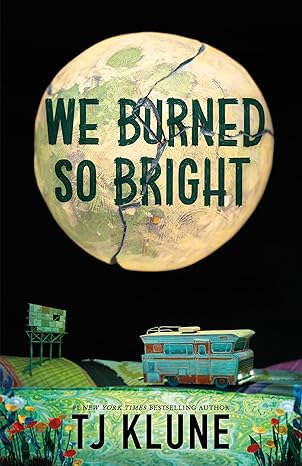
Title: We Burned So Bright Author: TJ Klune Publisher: Tor Publication date: April 28, 2026 Length: 171 pages Genre: Contemporary/science fiction Source: Review copy courtesy of the publisher via NetGalley Rating:
⭐⭐⭐⭐⭐
Rating: 5 out of 5.
A heart-wrenching standalone novel by #1 New York Times bestselling author TJ Klune, We Burned So Bright follows an elder gay couple on an end-of-the-world road-trip.
The road stretched out before them. No other cars, just the headlights on the blacktop. Above, the cracked moon in a kaleidoscope sky….
Husbands Don and Rodney have lived a good long life. Together they’ve experienced the highest highs of love and family, and lows so low that they felt like the end of the world.
Now, the world is ending for real. A rogue black hole is coming for Earth and in a month everything and everyone they’ve ever known will be gone.
Suddenly, after 40 years together, Don and Rodney are out of time. They’re in a race against the clock to make it from Maine to Washington State to take care of some unfinished business before it’s all over.
On the road they meet those who refuse to believe death is coming and those who rush to meet it. But there are also people living their final days as best they know how—impromptu weddings, bright burning bonfires, shared meals, and new friends.
And as the black hole draws near, among ball lightning and under a cracked moon in a kaleidoscope sky, Don and Rodney will look back on their lives and ask if their best was good enough.
Is it enough to burn bright if nothing comes from the ashes?
Why do we find books about the end of the world so compelling? There’s something inherently heartbreaking about humanity as a whole knowing specifically how and when the world will end, and something fascinating in seeing how people choose to act in the limited time left.
TJ Klune’s new release, We Burned So Bright, has a sci-fi premise — a black hole will destroy Earth within a month — but the point and heart of the story is not science fiction, but what this premise shows about the very human hearts involved.
For perhaps the first time in human history, we’re all experiencing the same thing. It doesn’t matter what color you are. Your background. Your beliefs. Your heritage. Who you love. Everyone, right now, is all the same. There’s something beautiful about that.
I’ll quickly note that in looking back at all the other books I’ve read by TJ Klune, I see that We Burned So Bright is the first of these that doesn’t include a supernatural/magical/fantasy element. It doesn’t need it — this a deeply human story about two regular people facing unprecedented times together.
Don and Rodney, now in their 70s, have been together since they met as young men, through the ups and downs of discrimination, abuse, homophobia, the AIDS crisis, “don’t ask, don’t tell” — basically, they’ve weathered the storm of gay history through the power of their love and commitment. It hasn’t always been easy, and they’ve suffered tremendous hardships, but they’ve survived, and so has their love.
As the world faces its last month of life, Don and Rodney have a promise to keep before the end. While society shuts down around them, with rioting and craziness abounding, they pack up their old RV for one last road trip — destination: Washington State.
The reason for their trip will be revealed by the end. Meanwhile, their journey is one of discovery, connection, sorrow, and beauty. As they travel, they encounter others on the road, all dealing with the end in different ways — violence, despair, denial… but also, love and grabbing moments of joy in every remaining second of life.
“You ever think we’d end up in a field in Ohio with hippies?”
“I’m surprised it hadn’t happened to us before, to be quite honest.”
“Sass,” Rodney said fondly. “Always with the sass.”
Slowly, we learn more about Rodney and Don’s past and why their road leads where it does. Their story is heartbreaking, yet makes the reader love them even more. They’re big-hearted, devoted, flawed, kind people who’ve spent their lives loving one another and doing the best they could. Seeing the end of the world through these two lovely people brings it all home better than a focus on explosions and science and governmental scrambles for survival possibly could.
At heart, We Burned So Bright is a personal, emotional story — showing truly how each individual is an entire universe. Rodney and Don are layered, wonderful characters. They’re ordinary people in an extraordinary time, and even as the world collapses around them, they see beauty wherever they go.
A meditation on what it means to share a life, to grow old with the person you love, to experience joy even after facing tragedy, We Burned So Bright is a lovely, powerful story. Don’t miss it.
Purchase links: Amazon – Audible audiobook – Bookshop.org – Libro.fm Disclaimer: When you make a purchase through one of these affiliate links, I may earn a small commission, at no additional cost to you.
I’ve had fun seeing other people’s First Lines Friday posts, and finally decided to give it a try myself! Here’s an overview:
First Lines Friday is a weekly feature for book lovers hosted by Wandering Words. What if instead of judging a book by its cover, its author or its prestige, we judged it by its opening lines?
Pick a book off your shelf (it could be your current read or on your TBR) and open to the first page.
Copy the first few lines, but don’t give anything else about the book away just yet – you need to hook the reader first.
Finally… reveal the book!
Note: I’m not sure if the original host blog is still active — I haven’t been able to find it! If anyone knows of a current host, please share the info!
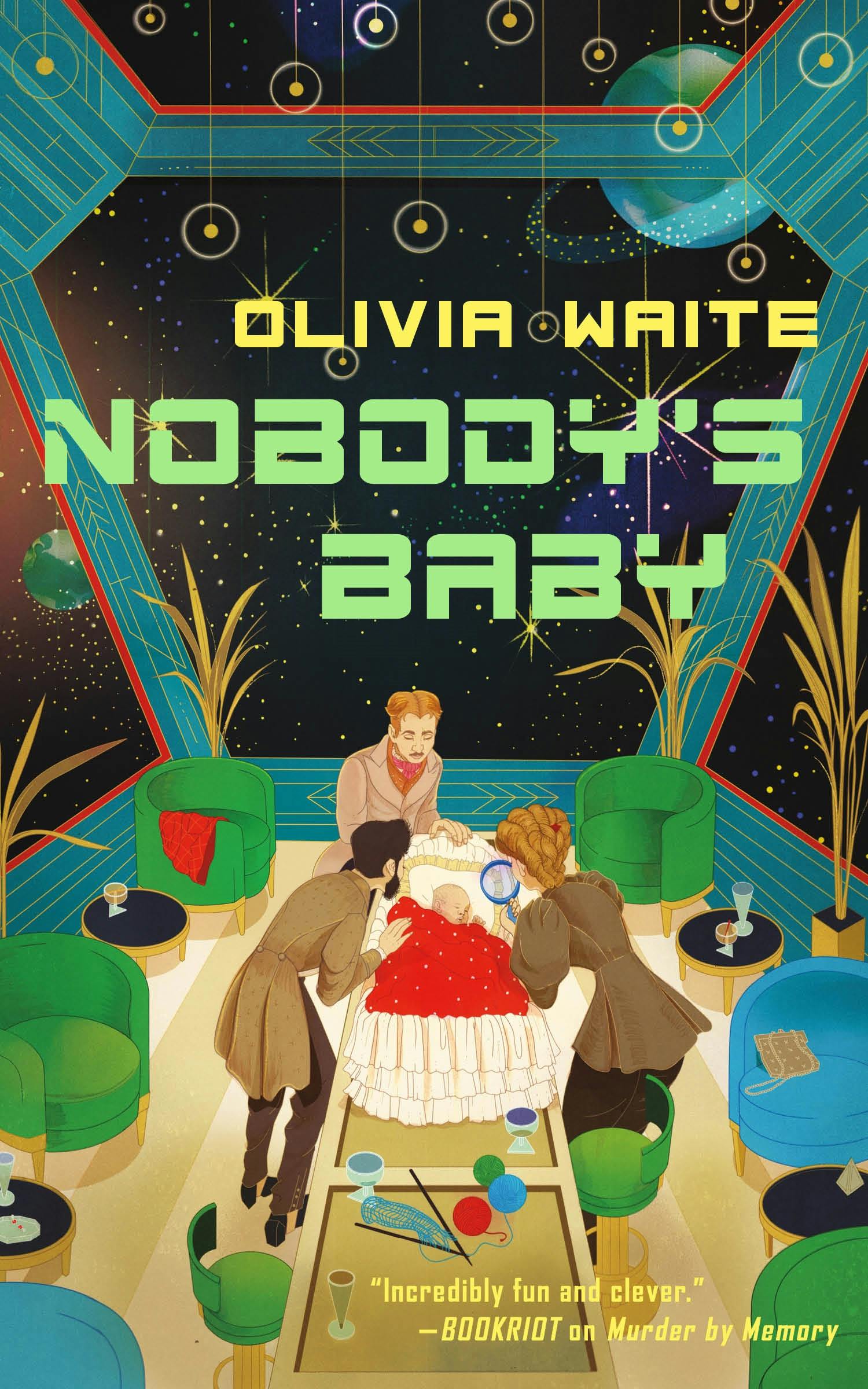
Onward with my FIRST first lines post! This week, I’m featuring lines from a book that I just borrowed from the library. Hint: It’s a novella, it’s a sequel, and it’s sci-fi. Here goes!
The note from Ruthie arrived at breakfast with no preamble, flashing on the glowing face of my pocket watch. At what age do human children grow teeth?
So what’s the book?
Nobody’s Baby (Dorothy Gentleman, #2) by Olivia Waite Tor Books Published March 10, 2026 144 pages
Synopsis:
Becky Chambers meets Miss Marple in the second entry of this cozy sci-fi mystery series, helmed by a formidable no-nonsense auntie of a detective
Welcome to the HMS Fairweather, Her Majesty’s most luxurious interstellar passenger liner! Room and board are included, new bodies are graciously provided upon request, and should you desire a rest between lifetimes, your mind shall be most carefully preserved in glass in the Library, shielded from every danger.
A wild baby appears! Dorothy Gentleman, ship detective, is put to the test once again when an infant is mysteriously left on her nephew’s doorstep. Fertility is supposed to be on pause during the Fairweather’s journey across the stars—but humans have a way of breaking any rule you set them. Who produced this child, and why did they then abandon him? And as her nephew and his partner get more and more attached, how can Dorothy prevent her colleague and rival detective, Leloup, a stickler for law and order, from classifying the baby as a stowaway or a piece of luggage?
Told through Dorothy’s delightfully shrewd POV, this novella series is an ode to the cozy mystery taken to the stars with a fresh new sci-fi take. Perfect for fans of the plot-twisty narratives of Dorothy Sayers and Ann Leckie, this well-paced story will leave readers captivated and hungry for the next installment.
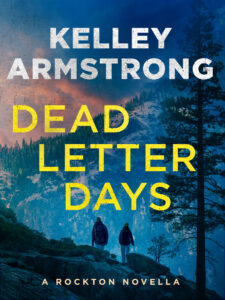
Title: Dead Letter Days Series: Rockton, #7.5; Haven’s Rock, #0.5 Author: Kelley Armstrong Publisher: St. Martin’s Press Publication date: February 20, 2023 Length: 87 pages Genre: Thriller/mystery Source: Purchased Rating:
⭐⭐⭐⭐⭐
Rating: 4.5 out of 5.
Eric Dalton spent most of his life in Rockton, a hidden town in the Yukon for people who need to disappear. Now that sanctuary is gone, and he’s holed up in a wilderness lodge with his girlfriend, Casey Duncan, and their friends, as they scout for a place to build their own Rockton. When Eric and Casey find a literal message-in-a-bottle, it leads them to the mystery of a woman who went missing decades ago, having never received that vital message. As they investigate that cold case, Dalton must finally lay to rest the ghosts of his own past and make some overdue decisions before he’s ready to step forward in his new life with Casey.
Strictly for Rockton series readers, this tidy novella provide an engaging bridge between the completed series and the spin-off Haven’s Rock series. We’re treated to familiar characters in a new, transitional setting, as they prepare to move to a new town and start fresh, on their own terms.
In other words… if you haven’t read the Rockton books, this novella is not for you! BUT… it’s an excellent series, so consider this my friendly encouragement to go pick up book #1, City of the Lost!
In Dead Letter Days, the plot revolves around two sets of communications, rediscovered years after they were written. The first involves a mystery of a missing woman, which Casey feels compelled to investigate. The second hits much closer to home, as letters related to Eric’s childhood come to light and provide him with much needed explanations and an unexpected opportunity for closure.
The Rockton books are all told from Casey’s point of view, so it’s a treat here in Dead Letter Days to have Eric as the narrator. It’s our first time getting to see the world through his eyes, and it’s fascinating.
As I’ve said, this is absolutely not a stand-alone or an entry point — but it is a terrific read that fans should not miss!
As for me, I’m dying to dive right into the Haven’s Rock series… but I’m going to show just a tiny bit of restraint and hold off until the new year.
We all have those books — books on our shelves, that we know we should read, that we absolutely WANT to read… and yet, somehow, we just never seem to pick them up and actually, you know, read them.
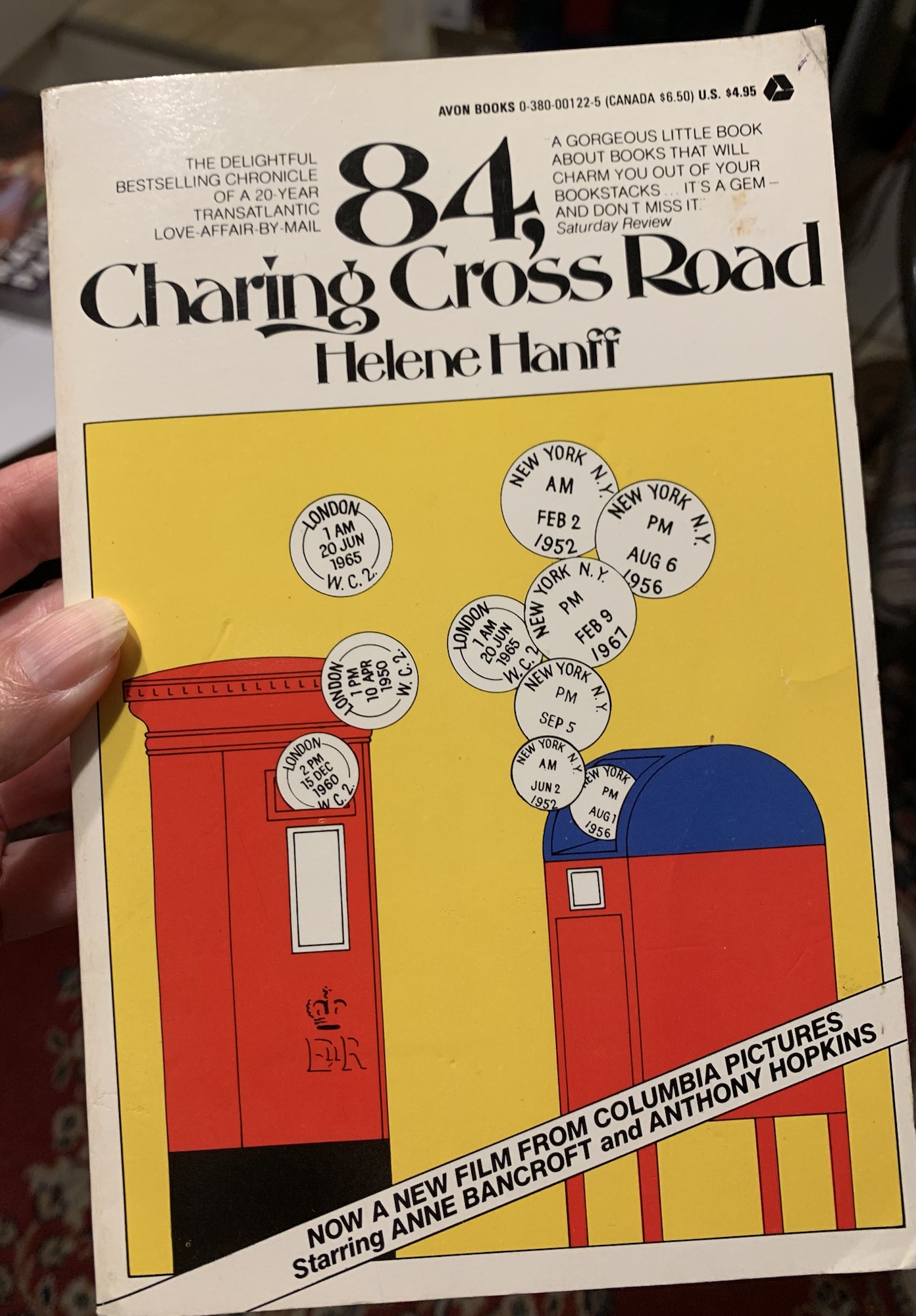
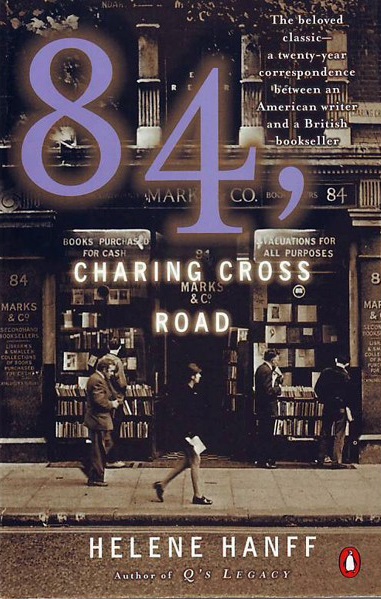
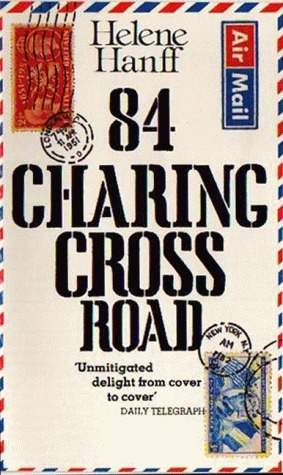
Well, score one for me! I’ve had 84, Charing Cross Road sitting on my shelf for at least ten years now, and this week, the time finally arrived, and I read it all in one sitting!
“84, Charing Cross Road” is a charming record of bibliophilia, cultural differences, and imaginative sympathy. For 20 years, an outspoken New York writer and a rather more restrained London bookseller carried on an increasingly touching correspondence. In her first letter to Marks & Co., Helene Hanff encloses a wish list, but warns, “The phrase ‘antiquarian booksellers’ scares me somewhat, as I equate ‘antique’ with expensive.” Twenty days later, on October 25, 1949, a correspondent identified only as FPD let Hanff know that works by Hazlitt and Robert Louis Stevenson would be coming under separate cover. When they arrive, Hanff is ecstatic – but unsure she’ll ever conquer “bilingual arithmetic.” By early December 1949, Hanff is suddenly worried that the six-pound ham she’s sent off to augment British rations will arrive in a kosher office. But only when FPD turns out to have an actual name, Frank Doel, does the real fun begin.
Two years later, Hanff is outraged that Marks & Co. has dared to send an abridged Pepys diary. “I enclose two limp singles, I will make do with this thing till you find me a real Pepys. THEN I will rip up this ersatz book, page by page, AND WRAP THINGS IN IT.” Nonetheless, her postscript asks whether they want fresh or powdered eggs for Christmas. Soon they’re sharing news of Frank’s family and Hanff’s career.
84, Charing Cross Road is just as wonderful as everyone promised! First off, as soon as I opened the book, I realized that I’d misunderstood what it was about all this time. I thought this book was fiction. It’s not. It’s a selection of the letters sent between the author, a New York freelance writer, and members of the staff of Marks & Co. Booksellers, located in London, spanning the course of over 20 years.
The correspondence starts with a request for certain books, but builds from there to establish a more personal connection between the author and her main correspondent, Frank Doel, as well as Frank’s wife, their neighbor, and other members of the bookstore staff.
The letters begin in 1949, as England is still suffering under post-war shortages; Helene Hanff’s Christmas gifts of meat and eggs do wonders for the bookstore staff’s morale, and their grateful notes back to her are heartwarming and endearing.
84, Charing Cross Road is a lovely, simple book about finding friendship through a love of books. It’s sweet without being cloying, often very funny, and touching as well.
To all those who’ve encouraged me to read this book, now I know why! I loved it. What a treasure.
Published: 1970 Length: 97 pages Rating:
⭐⭐⭐⭐⭐
Rating: 5 out of 5.
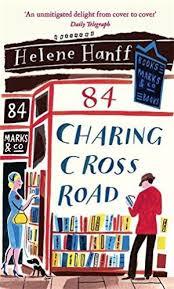
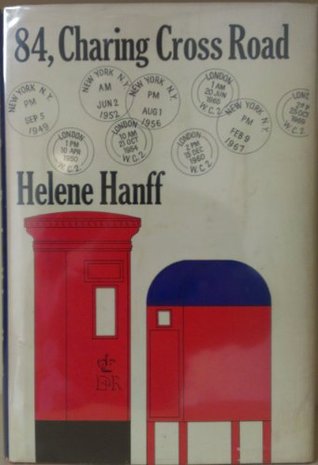
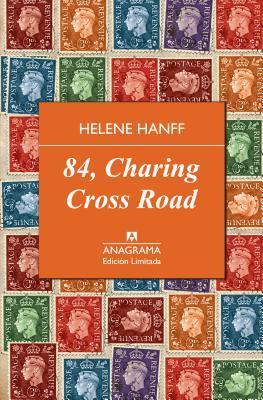
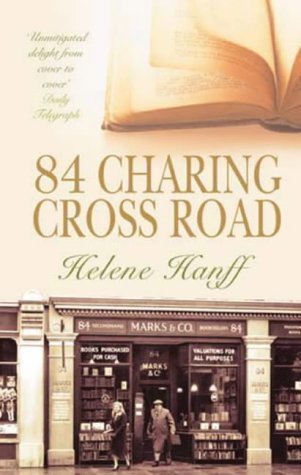
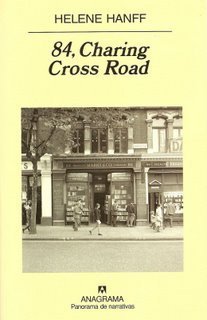
It’s fun to see how many covers and versions there are of this book! Sadly, it does not appear that an e-book version is available in the US. Still, the book covers are quite fun to compare and enjoy:
There’s also a movie version (1987), starring Anthony Hopkins and Anne Bancroft — can’t wait to check it out!
This was another of those weeks where quiet time was hard to find — so rather than trying to get through a full novel, I kept my audiobook listening limited to short stories and novellas. The results were mostly positive! Here’s a quick round-up of what I listened to and what I thought:
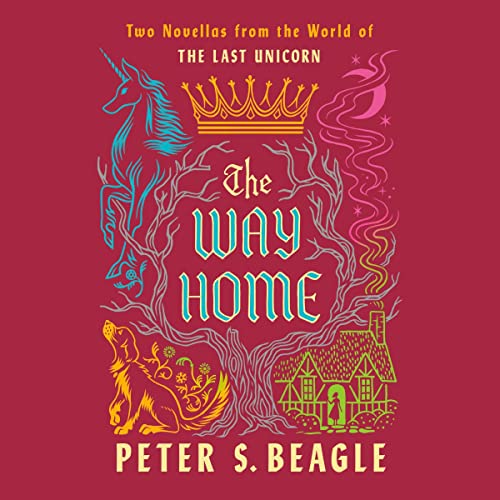
Renowned author Peter S. Beagle returns to the world of The Last Unicorn in this resonant and moving two-novella collection, featuring the award-winning “Two Hearts” and the brand-new “Sooz.”
The Last Unicorn is one of fantasy’s most revered classics, beloved by generations of readers and with millions of copies in print. Revisiting the world of that novel, Beagle’s long-awaited Hugo and Nebula-Awards-winning “Two Hearts” introduced the irrepressible Sooz on a quest to save her village from a griffin, and explored the bonds she formed with unforgettable characters like the wise and wonderful Molly Grue and Schmendrick the Magician.
In the never-before-published “Sooz,” the events of “Two Hearts” are years behind its narrator, but a perilous journey lies ahead of her, in a story that is at once a tender meditation on love and loss, and a lesson in finding your true self.
The Way Home is suffused with Beagle’s wisdom, profound lyricism, and sly wit; and collects two timeless works of fantasy.
I read Peter S. Beagle’s classic fantasy tale The Last Unicorn about a year ago, and loved the characters, the setting, and the storytelling. There’s also a lovely graphic novel version — out of print and hard to find at a reasonable price, but fortunately, my library had a copy.
The Way Home, published in 2023, is a bind-up of two novellas. Two Hearts was originally published in 2006 (and won both the Nebula and Hugo awards); Sooz is a new work published for this edition.
Two Hearts is lovely. It’s the story of nine-year-old Sooz, who’s brokenhearted by the losses inflicted on her village by a marauding griffin — and with perfectly reasonable nine-year-old logic, decides that the only solution is to go find the king herself and ask him to come save the day. Sooz’s journey takes her to King Lir, introduced in The Last Unicorn as a young prince. Here, he’s an old, old man who spends most of his time dozing on his throne… but dons his armor one last time because a brave girl asks him to. Two other familiar characters, Schmendrick and Molly Grue, add warmth and comfort to the story. It’s all quite wonderful.
Sooz works less well. In this novella, Sooz is 17-years-old, and discovers on her birthday that her parents had another daughter before she was born — a beautiful little girls named Jenia who went off to live with the faeries (or “Dreamies” as she calls them) and never came back. Sooz knows in her heart that it’s her destiny to find Jenia and bring her home. What follows is a quest into a land of magic and terrors, in which Sooz finds a true ally, loses parts of herself, and comes to terms with who she herself truly is.
To be honest, Sooz drags quite a bit. The audio narrator does a very nice job with the tone and the characters, and creates a dreamlike experience for the listener, but the story itself is very drawn out, and I struggled to pay attention on and off throughout the story.
[SPOILER]: There’s a rape scene (more implied than graphic, but it’s clear what’s happened) that in my opinion is completely unnecessary and very out of place in a fantasy tale. The story can hold darkness without adding in sexual assault. I was disturbed that the author felt this was something that needed to be included — surely, some other sort of bad experience could have befallen the character to shake her up and make her realize the danger she was in.
Overall, I’d say that Two Hearts is absolutely worth a listen, especially for anyone who’s read and loved The Last Unicorn. I’m on the fence about Sooz. There are some interesting elements, but it just didn’t hold my interest as a whole, and that one scene makes it difficult to say that this is a story I’d recommend.
Penguin Audio: 5 hours, 22 minutes Rating:
⭐⭐⭐⭐
Rating: 3.5 out of 5.
Sally has recently left an unfulfilling job to volunteer at a living history museum, where she is assigned to the Death House. Every day, she dons Victorian mourning garb and describes traditional funeral services to tourists. It sounds depressing as hell, but for Sally, it’s less depressing than her tepid marriage to her childhood sweetheart.
This becomes all too clear when she accidentally travels through time and space to a liminal world where the ghosts of the living history museum haunt its grounds. There, she meets and falls hard for Victorian-era pretty boy Nathaniel. Their heady, romantic encounters douse Sally in the sad reality that her marriage is anything but and leave her tempted to join Nathaniel permanently in his realm.
Is Sally’s marriage literally a fate worse than death, or is there another way altogether?
When I stumbled across an audiobook short story by Rachel Harrison — author of such fantastic books as Black Sheep, Sharp Teeth, and Cackle — I knew I had to give it a listen. What fun! In this quick, tightly drawn tale, a disaffected young woman dresses up in Victorian mourning clothes to give living history museum tours, then accidentally finds herself in a ghost-filled limbo on the same grounds. Sally and Nathaniel fall instantly in love, and he proposes to her on the spot, but there really is only one way for Sally to stay with him forever. Is it worth it?
This ghostly story is eerie and has some great supernatural elements, but is also terrific in the way it shows a young woman recognizing the stagnation of her married life and the need to take control of her own destiny. Definitely worth checking out!
Audible Original; 47 minutes Rating:
⭐⭐⭐⭐⭐
Rating: 4.5 out of 5.
An android who knows nothing besides his work in a factory is given one final week to explore the world before he is forced to undergo mandatory reprogramming in this bittersweet precursor to TJ Klune’s In the Lives of Puppets.
This was a funny choice for me, because I didn’t love In the Lives of Puppets as much as I expected to (given that I’ve been head over heels for everything else I’ve read by TJ Klune). And if I didn’t love the novel, why would I expect a better outcome with its prequel?
But all’s well that ends well: I’m so happy I decided to give Reduce! Reuse! Recycle! a try.
The story is fairly straightforward: Douglas is an android who’s faithfully carried out his factory work and followed all the rules for the ten years of his existence. For his final week before being rebooted, he’s granted a pass that gives him the freedom to leave the factory and explore life in the world of humans. As he spends time in parks and streets and markets and more, he sees birds and colors and people, hears music and starts to dance, and reads countless books — including a hidden book of philosophy by René Descartes, which gets him thinking about who and what he is.
This story is sheer joy — it has plenty of sadness too, but the writing is gorgeous, and it’s exhilarating to see the world from Douglas’s point of view. The audiobook narrator rocks. A highly recommended listening experience.
Macmillan Audio: 1 hours, 27 minutes Rating:
⭐⭐⭐⭐⭐
Rating: 5 out of 5.
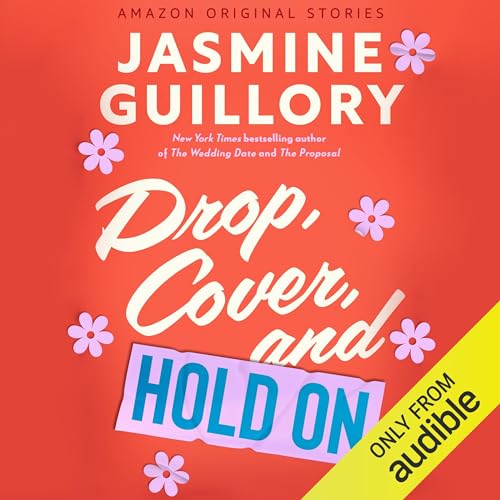
It takes nothing less than a fateful natural disaster to throw two opposites together in a ground-shakingly charming short story by the New York Times bestselling author of Drunk on Love.
This Valentine’s Day, Daisy Murray has her heart set on binge-watching rom-coms. Instead, an earthquake traps her inside a bakery with its impossibly rude and insufferably handsome owner and head baker. They already have a history: she’s always smiled, he’s always scowled. Where better to finally get to know each other than amid the disaster? Then again, they have no choice. Besides, it could have its sweet, undeniable, and unpredictable perks.
Jasmine Guillory’s Drop, Cover, and Hold On is part of The Improbable Meet-Cute, irresistibly romantic stories about finding love when and where you least expect it. They can be read or listened to in one sitting. Let’s make a date of it.
I don’t know that I have much to say about this short story. The synopsis says it all! Main character Daisy gets trapped inside her favorite bakery — alongside the very hot bakery owner — when an earthquake hits. She thinks he hates her… but maybe his scowly face has distracted her from realizing that he always has her favorite pastries available on the days she usually stops in?
This story is sweet (ha!), flirty, and fun. It won’t rock your world (earthquake pun time!!), but the description of the baked goods hooked me almost as much as the chemistry between the characters. It’s a fun, quick listen.
Audible Original: 1 hours, 5 minutes Rating:
⭐⭐⭐⭐
Rating: 3.5 out of 5.
Not too bad for a week when I didn’t think I’d have time for audiobooks! I don’t usually gravitate toward short stories, but this week, this selection was just what I needed.
Title: Even Though I Knew the End Author: C. L. Polk Publisher: Tor Publication date: November 8, 2022 Length: 136 pages Genre: Fantasy Source: Review copy courtesy of the publisher via NetGalley Rating:
⭐⭐⭐⭐
Rating: 3.5 out of 5.
A magical detective dives into the affairs of Chicago’s divine monsters to secure a future with the love of her life. This sapphic period piece will dazzle anyone looking for mystery, intrigue, romance, magic, or all of the above.
An exiled augur who sold her soul to save her brother’s life is offered one last job before serving an eternity in hell. When she turns it down, her client sweetens the pot by offering up the one payment she can’t resist―the chance to have a future where she grows old with the woman she loves.
To succeed, she is given three days to track down the White City Vampire, Chicago’s most notorious serial killer. If she fails, only hell and heartbreak await.
In this noir-ish novella, Helen Brandt is a private investigator who specializes in occult-related crime scenes. She’s also a woman who, years earlier, sold her soul in exchange for her mortally-wounded brother’s life.
With only days left before her bargain comes due, all Helen wants is private time with the woman she loves. But when a particularly gruesome murder takes place, she’s pulled into a battle between demonic forces, powerful magicians, and fallen angels.
As a novella, the action by necessity is fast-paced, and the storytelling moves quickly from one set-piece to another. I’m not that big a fan of stories about bargains with the devil or battles between angels and demons, but what really sucked me in was the love story and the desperate need for just a bit more time.
The title comes from Helen’s thoughts about The Great Gatsby, and the essence of love and hope:
Jay Gatsby knew a lot about hope. Hope felt a little painful, on account of it not being a sure thing. In fact, there was almost no hope for him, which made that tiny flashing light all the more precious. I’d read this book a dozen times, two dozen. I always held my breath, waiting for Daisy to come to him. Jay hoped every single time, and I hoped right along with him, even though I knew the end.
A week after finishing this short but powerful story, I couldn’t tell you the specifics about the outcome of the murder plot… but I absolutely remember how Helen and Edith’s love story made me feel. Even when the end is inevitable, even when a deal with the devil is coming due, Helen will savor every moment, because every moment with the woman she loves is worth much more than the pain of thinking about losing it.
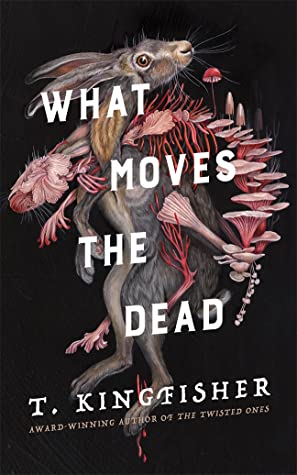
Title: What Moves the Dead Author: T. Kingfisher Publisher: Tor Nightfire Publication date: July 12, 2022 Print length: 176 pages Genre: Horror Source: Review copy courtesy of the publisher via NetGalley Rating:
⭐⭐⭐⭐⭐
Rating: 5 out of 5.
From the award-winning author of The Twisted Ones comes a gripping and atmospheric retelling of Edgar Allan Poe’s classic “The Fall of the House of Usher.”
When Alex Easton, a retired soldier, receives word that their childhood friend Madeline Usher is dying, they race to the ancestral home of the Ushers in the remote countryside of Ruritania.
What they find there is a nightmare of fungal growths and possessed wildlife, surrounding a dark, pulsing lake. Madeline sleepwalks and speaks in strange voices at night, and her brother Roderick is consumed with a mysterious malady of the nerves.
Aided by a redoubtable British mycologist and a baffled American doctor, Alex must unravel the secret of the House of Usher before it consumes them all.
I’m convinced that the coming apocalypse will be the work of killer fungi. There are certainly enough works of horror fiction to back me up! What Moves the Dead further cements my belief that fungi are the creepiest life form there is. Prove me wrong!
What Moves the Dead is a twisted retelling of Edgar Allan Poe’s The Fall of the House of Usher. As in the original, the main character is summoned to a dark, disturbing, decrepit mansion located on the shores of a dark, scary tarn (lake), where a childhood friend cares for his dying sister and seeks companionship and support in their looming disaster.
In What Moves the Dead, Poe’s unnamed narrator is replaced by Lieutenant Alex Easton, a retired “sworn” soldier from the country of Gallacia, who once served as Roderick Usher’s officer during wartime, and who even earlier was close friends with Madeline Usher. Alex is shocked and horrified at the sight of the siblings, who appear gaunt, withered, and years older than their actual age. Madeline truly does seem to be on the verge of death, and Roderick appears unwell himself. The entire house and surrounding countryside (and that darned tarn) seem menacing, perhaps even poisonous.
Alex arrives at the house to find an American doctor already in residence, whose brashness eventually gives way to common cause. Dr. Denton doesn’t quite know what’s ailing Madeline either, but she does appear to be on the point of death.
Alex also meets Eugenia Potter, an Englishwoman whose chief passion in life is mycology (and who fumes against the stupid men-only rule of the English scientific societies of the time). Alex, Denton, and Potter all share the belief that something is wrong, not just with the Ushers but with the natural world too. What’s up with all the strangely-behaving hares in the area?
This short work is delightfully, deliciously creepy! The house is moldy, there are awful looking mushrooms all over the grounds, and the lake is stagnant and gross and seems too terrible to want to be anywhere near. I’ve read enough creepy fungi horror stories to have a pretty good sense of where the story would end up, but it was so much fun getting there, and the author still managed to surprise me time after time with all the crazy, strange, awful details.
Beyond the horror plotline, other delights await. Alex’s background in Gallacia is too good to reveal in a review, but trust me when I say that the explanations of how the Gallacian language adapts gender and pronoun formations based not just on biology but also on station in life, age, and other factors is absolutely wonderful and so fascinating. I’d read a whole book just about that!
Miss Potter is a secondary character, but she’s lots of fun, as is the reveal of who her one of her family members is. (I’m not telling!)
When I requested a review copy of What Moves the Dead, it was based on (a) how much I’ve loved everything else I’ve read by this amazing author and (b) the gorgeously creepy cover (*shudder*). I hadn’t realized at the time that this book would be a retelling of The Fall of the House of Usher — I actually didn’t know that until I started What Moves the Dead and happened to finally read the Goodreads blurb.
At that point, I took a small detour to read Poe’s story, which isn’t very long (the edition I read was 36 pages). I’m glad I did. It gave me great context for What Moves the Dead, and made it really fun to compare and contrast the two versions of the story, especially the character portrayals, the explanations, and the outcomes.
Note: The Fall of the House of Usher is easy to find online at no cost! Here’s one resource, and there are free versions available for Kindle too.
What Moves the Dead is an excellent read, perhaps not for the squeamish — but if you enjoy creepy, understated horror, definitely check it out!
In Adrian Tchaikovsky’s Elder Race, a junior anthropologist on a distant planet must help the locals he has sworn to study to save a planet from an unbeatable foe.
Lynesse is the lowly Fourth Daughter of the queen, and always getting in the way.
But a demon is terrorizing the land, and now she’s an adult (albeit barely) and although she still gets in the way, she understands that the only way to save her people is to invoke the pact between her family and the Elder sorcerer who has inhabited the local tower for as long as her people have lived here (though none in living memory has approached it).
But Elder Nyr isn’t a sorcerer, and he is forbidden to help, for his knowledge of science tells him the threat cannot possibly be a demon…
This stunning, inventive, beautifully crafted novella is a living, breathing embodiment of Arthur C. Clarke’s Third Law:
Any sufficiently advanced technology is indistinguishable from magic.
In Elder Race, Lynesse Fourth Daughter, daughter of the queen of Lannesite, takes the forbidden trail up the mountain to the Tower of Nyrgoth Elder, the revered sorcerer who has not been seen for generations. Lynesse is not taken seriously by her mother or older sisters, all of whom prefer to focus on trade and diplomacy rather than indulge Lynesse’s flights of fancy. But Lynesse has heard refugees from outlying lands plea for help after their towns and forests were overrun by a demon, and she’s determined to take action, even if her mother won’t.
That’s the opening set-up of Elder Race. It feels like the start of an epic quest, and hurray for girl power too!
Stop reading here if you want to avoid spoilers completely, because there’s a doozy coming…
Ready?
The next chapter is told from the perspective of Nyrgoth Elder… and it turns everything upside down. It turns out that his name is really Nyr Illim Tevitch, and he’s not a sorcerer. Nyr is an anthropologist with Earth’s Explorer Corps, and he’s there in his remote outpost to study and observe the local populations.
Thousands of years earlier, Earth sent out generation ships to colonize planets throughout the universe. And some thousands of years after that, groups of scientists followed to check on how the colonies turned out. Nyr was a part of one of these expeditions, and after his fellow scientists were recalled to Earth, he was left behind, the sole member of the expedition remaining to continue their studies.
The problem is, he hasn’t heard back from Earth in centuries. Nyr stays alive through advanced science, including long periods of sleeping in suspended animation. He last awoke a century earlier, and broke one of the cardinal rules of anthropologists by getting involved with the local people. His mission is to study and report; by mingling with the people, he’s potentially contaminating the study.
When Lynesse and her companion Esha show up at his tower, there begins a remarkable story of cultural differences and miscommunications. The early colonies on the planet were rudimentary, starting life over without technology. Their culture is agrarian and feudal and deeply superstitious. Anything unexplainable is attributed to magic and demons and sorcerers. And so even when Nyr tries to explain himself, the language gap between the cultures makes it literally impossible for him to translate the term scientist — every word he tries to use comes out as some form of magician or sorcerer or wizard.
“It’s not magic,” he insisted, against all reason. “I am just made this way. I am just of a people who understand how the world works.”
“Nyrgoth Elder,” Esha said slowly. “Is that not what magic is? Every wise man, every scholar I have met who pretended to the title of magician, that was their study. They sought to learn how the world worked, so that they could control and master it. That is magic.”
As their quest proceeds, Nyr goes against every principle of his training, as he realizes that he can actually serve a different purpose:
I am only now, at the wrong end of three centuries after loss of contact, beginning to realise just how broken my own superior culture actually was. They set us here to make exhaustive anthropological notes on the fall of every sparrow. But not to catch a single one of them. To know, but very emphatically not to care.
I can’t even begin to explain how gorgeously crafted this slim book is. Particularly mind-blowing is a chapter in which Nyr tells Lynesse and Esha the story of how his people came to the planet millennia ago. On the same page, in parallel columns, we read Nyr’s science-based story and right next to it, the same story as it’s heard by Lynesse in the context of her own culture and language. It’s a remarkable writing achievement, and just so fascinating to read.
Also fascinating is Elder Race‘s treatment of depression and mental health, which for Nyr is managed through the use of advanced technology that allows him to separate from his feelings — but not permanently. He can shut off feeling his feelings, but is still aware that they’re there, and can only go so long before he has to let down the wall and experience the emotions that have been walled away. The descriptions of dealing with depression are powerful, as is the way he explains knowing the depression is waiting for him, even in moments when he’s not living it.
I absolutely loved the depiction of a tech-free culture’s interpretation of advanced scientific materials and equipment, and the way the books chapters, alternating between Lynesse and Nyr’s perspectives, bring the cultural divide to life.
Elder Race is beautifully written and expertly constructed. The balancing act between science fiction and fantasy is just superb. This book should not be missed!