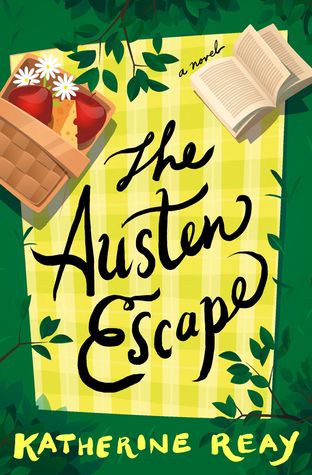
Take A Peek Book Review: The Austen Escape by Katherine Reay

“Take a Peek” book reviews are short and (possibly) sweet, keeping the commentary brief and providing a little peek at what the book’s about and what I thought.
 

Synopsis:

(via Goodreads)

After years of following her best friend’s lead, Mary Davies finds a whimsical trip back to Austen’s Regency England paves the way towards a new future.

Mary Davies lives and works in Austin, Texas, as an industrial engineer. She has an orderly and productive life, a job and colleagues that she enjoys—particularly a certain adorable, intelligent, and hilarious consultant. But something is missing for Mary. When her estranged and emotionally fragile childhood friend Isabel Dwyer offers Mary a two-week stay in a gorgeous manor house in Bath, Mary reluctantly agrees to come along, in hopes that the holiday will shake up her quiet life in just the right ways. But Mary gets more than she bargained for when Isabel loses her memory and fully believes that she lives in Regency England. Mary becomes dependent on a household of strangers to take care of Isabel until she wakes up.

With Mary in charge and surrounded by new friends, Isabel rests and enjoys the leisure of a Regency lady. But life gets even more complicated when Mary makes the discovery that her life and Isabel’s have intersected in more ways that she knew, and she finds herself caught between who Isabel was, who she seems to be, and the man who stands between them. Outings are undertaken, misunderstandings play out, and dancing ensues as this triangle works out their lives and hearts among a company of clever, well-informed people who have a great deal of conversation.

My Thoughts:

Although I’ve enjoyed other books by this author, The Austen Escape never particularly grabbed me. It’s very reminiscent of Austenland, although here, the Austen experience isn’t played for laughs. Instead, it’s a luxurious retreat for people of means, a chance to live in Austen’s world. The guests dress up, have dinner gatherings, dance, ride, and are treated as esteemed guests. They’re encouraged, but not required, to adopt the personae of Austen’s characters, although the point of this is a little lost on me. Maybe it’s the execution, but I couldn’t particularly see how it mattered if one guest was supposed to be Emma Woodhouse and another Catherine Morland. None of them enacted enough of their characters’ stories or personalities to make a difference.

The key issue for me is that Mary, the main character, never actually gelled for me. I liked (adored) that the lead female here is an engineer, a tech superstar with a drive to succeed and a brain that thinks of the world in scientific terms at all times. That’s really awesome, truly. But (yes, there’s a but), Mary didn’t click for me as a person. We get a lot of explanation, but I didn’t quite see what her issues are. Why is she hesitant to pursue (or accept pursuit from) the man she likes? Why has she never traveled? How does she feel about Isabel’s presence in her life, and why has never addressed this before now?

The synopsis is a little deceptive too. Isabel doesn’t get conked on the head and lose her memory — instead (minor spoiler) she has a sort of nervous break from reality after an emotional blow, and her doctor from home advises Mary to keep an eye on Isabel, play along, and wait for her to snap out of it. I’m sorry, but this seems like terrible advice.

The Austen escape — the luxury vacation — does seem pretty amazing, but even there, I’m not sure in truth how much fun it would be. There are only five other guests when Mary and Isobel arrive, and the options for a true Austen adventure, with socializing and balls and fancy dinner, seems very limited. I think I would have been bored silly within about 48 hours.

The story itself held my attention, and I read the entire book in about a day and a half. It’s a fun read, but the lack of connection to the main character makes this a book that I can finish and not look back at. All in all, I’d say The Austen Escape is enjoyable light entertainment, but on the deeper, emotional level the author seems to be aiming for, it just doesn’t work.

Interested in this author? Check out my reviews of:
Dear Mr. Knightley
Lizzy & Jane
The Brontë Plot
_________________________________________

The details:

Title: The Austen Escape
Author: Katherine Reay
Publisher: Thomas Nelson
Publication date: November 7, 2017
Length: 320 pages
Genre: Contemporary fiction
Source: Review copy courtesy of the publisher via NetGalley

**Save

Save

Save

Save

Save

Save

Save

Book Review: La Belle Sauvage (The Book of Dust, volume 1) by Philip Pullman

Eleven-year-old Malcolm Polstead and his dæmon, Asta, live with his parents at the Trout Inn near Oxford. Across the River Thames (which Malcolm navigates often using his beloved canoe, a boat by the name of La Belle Sauvage) is the Godstow Priory where the nuns live. Malcolm learns they have a guest with them, a baby by the name of Lyra Belacqua . . .

Welcome back to the wonderful world first introduced in the amazing trilogy, His Dark Materials (which I recently wrote about, here). After 17 long years, Philip Pullman takes us back to the alternate reality of an Oxford, England in which the church is in control, people are accompanied by animal-shaped daemons who are really a part of them, like a visible soul that they can converse with, witches are real, and a strange particle known as Dust has everyone in a tizzy.

La Belle Sauvage, the first book in Pullman’s new trilogy (The Book of Dust), is a prequel to the events of The Golden Compass and the rest. Anyone who’s read His Dark Materials knows (and loves) Lyra, the preteen heroine who’s brave and clever and ultimately responsible for saving the world.

In La Belle Sauvage, Lyra is a baby — a helpless character, but still very much at the center of the action. The main character here is a boy named Malcolm, an innkeeper’s son with a heart of gold. Malcolm is a smart, inquisitive boy with the mind of a potential scholar, even though he’s probably destined to run the inn when he’s grown. Malcolm works hard at the inn, serving customers and helping his parents, and in his spare time also does whatever odd jobs are needed by the nuns of the Godstow Priory across the river. And when Malcolm has any time left over, he takes his canoe, La Belle Sauvage, out on the rivers and canals to explore and see all there is to see.

When the nuns take in baby Lyra and offer her sanctuary, Malcolm becomes her instant protector, madly in love with the adorable baby and her equally adorable baby daemon. But the Consistorial Court of Discipline (CCD) is out to get Lyra, along with a deranged former scholar with a criminal past, and Malcolm comes to believe that only he can keep her safe and get her to her father, Lord Asriel, for protection. When a huge storm unleashes massive flooding, Malcolm and Alice, a girl who works at the inn as well, rescue Lyra from the waters engulfing the priory and set off in the canoe, with all sorts of dangerous foes determined to catch them and take Lyra away, no matter what it takes.

Oh my, is this a good book! The adventure is top-notch. We have spies galore, and Malcolm first becomes involved when he inadvertently witnesses the capture of a member of the anti-Church spy ring by agents of the CCD. We also see the creeping terror as the Church’s iron-fisted rule takes over school and society, as school children are encouraged to join a religious league and inform on their parents, friends, neighbors, and teachers — anyone who steps away from the approved teachings of the Church or dares to break the increasingly harsh rules imposed by the CCD.

Malcolm is a terrific main character. He’s smart and daring, always looking to learn, but loyal to his parents and the nuns, and not afraid of working hard. He’s kind and patient, but ready to step up and be fierce when needed. He and Alice start off as enemies, but as they flee with Lyra, they become allies and then true friends.

Lyra, of course, is adorable. She doesn’t do much, but all the action swirls around her. It’s fascinating to see an infant in this world — something we never see in the original trilogy. What we learn in The Book of Dust is that babies have baby daemons, who are also rather helpless and cute and dependent on others for care. Lyra’s daemon Pan takes the form of various small animals — among them kittens and chicks — and curls up to nap with Lyra, each giving comfort to the other. Lyra and Pan babble together in their own language, and somehow it’s just amazing to see how Pullman plays out the concept of daemons in the context of early childhood development.

I wondered how Pantalaimon got his name — I’d assumed while reading The Golden Compass that the person must name his or her daemon, but in La Belle Sauvage, one of the nuns tells Malcolm what Lyra’s daemon’s name is. So is the daemon named by the parent at the same time as the child? I guess it must be so, since the daemon has a name before the child can talk, but it struck me as surprising — I kind of expected the naming of the daemons to have something to do with the person’s inner truth, or some such thing, rather than to be imposed from an external source. This is something I’d definitely like to know more about!

There are some cool connections to the world of His Dark Materials. I thought Malcolm’s name was familiar… and with good reason. In the novella Lyra’s Oxford, which takes place a couple of years after The Amber Spyglass, Lyra encounters a Professor Polstead, who is described as “stout, ginger-haired, affable; more inclined to be friendly to Lyra than she was to return the feeling.” It’s Malcolm! I’m so happy to know that he’s still a part of Lyra’s life later on, even though she doesn’t know his significance or how he saved her life. I hope we’ll learn more in later books in The Book of Dust. Other familiar faces are (of course) Lord Asriel and Mrs. Coulter, Lyra’s parents, as well as the gyptian Farder Coram and the scholar Hannah Relf.

I absolutely loved the world-building in La Belle Sauvage. Even though this world is familiar from the earlier trilogy, we get to see aspects of the society that are new, through new and different sets of eyes. As I mentioned, the characters are phenomenal, especially Malcolm, but even the more minor characters are distinctive and memorable.

The action is thrilling, especially once the flood comes and Malcolm and Alice begin their adventure on the river. The two show amazing courage and stamina, sacrificing everything for the sake of little Lyra. Their experiences are often truly terrifying, but their essential goodness and bravery keeps them going even when it seems like they’ll never reach safety.

The author never talks down to his audience, and as in the original trilogy, brain power is required. There’s talk of physics and theology and particles and matter, and scholars are among the most esteemed characters. Philip Pullman’s characters value intelligence and curiosity, and reading his books is anything but a mindless pursuit. The ideas and concepts here demand that the reader put some effort in — all well worth it.

Ah, such a good read! Really, what more can I say? I cannot wait to continue the trilogy, and will be eagerly stalking The Book of Dust‘s Goodreads page for the first hint of a publication date for the second book (which, according to Goodreads, will be called The Secret Commonwealth).

If you read His Dark Materials, you simply must read La Belle Sauvage. And it probably goes without saying, but for anyone who hasn’t read the first trilogy, go do it now! Get thee to a bookstore or library and grab a copy of The Golden Compass! It’ll rock your world.

One final note: The book is marketed as young adult fantasy and is published by the children’s division of the publisher, but as with His Dark Materials, I have a hard time defining this book by its intended audience. It’s a great book, period. For anyone. And for anyone who cares about such things, I’d say the tone here is skewed slightly older, as there are hints of more adult content in the context of the actions of a terrible villain, and there’s even an f-bomb, which I don’t believe occurs at all in His Dark Materials. Regardless, La Belle Sauvage is beautifully written and is another excellent chapter in an exciting series of fantasy novels — and should be read by adults and smart kids of all ages!

_________________________________________

The details:

Title: La Belle Sauvage (The Book of Dust, volume 1)
Author: Philip Pullman
Publisher: Alfred A. Knopf Books for Young Readers
Publication date: October 19, 2017
Length: 464 pages
Genre: Fantasy/young adult
Source: Purchased

Save

Save

Save

Save

Save

Save

Save

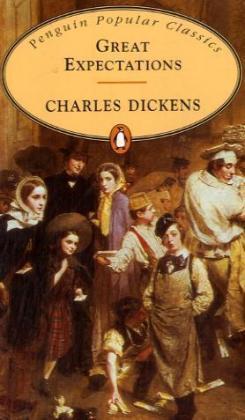
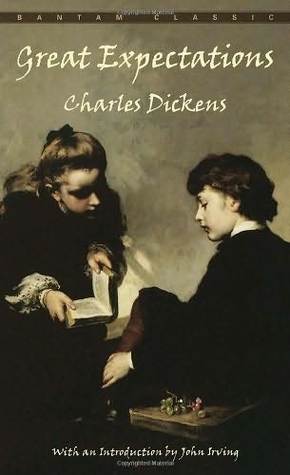
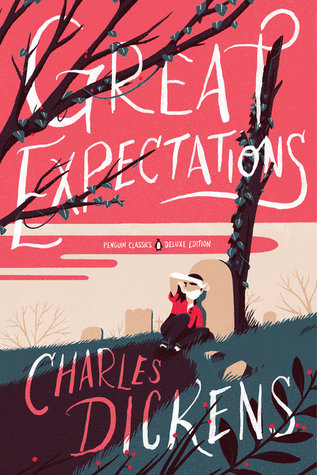
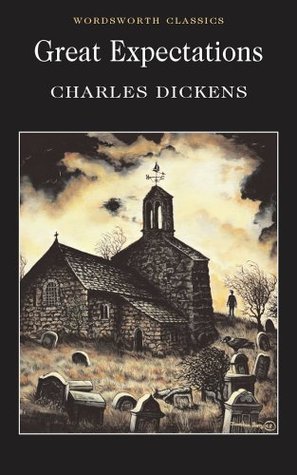
Charles Dickens, Serial Reader, and me

First things first, yo:

I FINISHED GREAT EXPECTATIONS!

And as expected, it was great!

For years now, I’ve been saying “one of these days”, I want to read Great Expectations. And it never happened. But why wait for “one of these days”? In the words of Rent:

I finally buckled down a little over a week ago, and decided to use my handy-dandy Serial Reader app. Serial Reader, in case you don’t know, is an awesome app that delivers public domain reading material via daily installments, usually taking no longer than 10 – 15 minutes each to read. (I wrote first wrote about it here, if you want to know more.)

But as it turns out, I’m a pretty impatient reader, and if I’m hooked, I’m hooked, and it’s impossible to put the brakes on. So yes, I started Great Expectations via Serial Reader, and within two days I was reading ahead, getting through 3 – 4 installments each day instead of just one. Still, there are 74 installments in all, and I figured I’d take my leisurely time and enjoy Great Expectations in little bite-sized pieces over the next couple of months.

Wrong.

Apparently, I suck at Serial Reader. I got into the story, and once I was into the story, I abandoned everything else I was reading so I could just keep reading more and more. And while I have a paperback edition of Great Expectations and a Kindle edition, I ended up sticking with Serial Reader all the way through to the end.

(Could it be because of the little words of encouragement and the praise every time I finished an installment? Yes, you’ve got me. I’m a sucker for badges and affirmations.)

In terms of the book itself, there really isn’t any reason for me to write a review of Great Expectations, is there? The plot summary:

Dickens’s magnificent novel of guilt, desire, and redemption: The orphan Pip’s terrifying encounter with an escaped convict on the Kent marshes, and his mysterious summons to the house of Miss Havisham and her cold, beautiful ward Estella, form the prelude to his “great expectations.” How Pip comes into a fortune, what he does with it, and what he discovers through his secret benefactor are the ingredients of his struggle for moral redemption.

I  loved the characters and the setting, and I loved seeing Pip’s development from boyhood to manhood, and his ethical and emotional growth as he understands the wrongs he’s done and seeks ways to improve himself, ultimately realizing that it’s more important to be honest and fair and appreciative than to be a monied gentleman.

It’s been a long time since I’ve read any Dickens (my only previous Dickens being A Tale of Two Cities), and I’d forgotten how delightful his writing is. When we think of classics, we tend to think stuffy and dry and old-fashioned. I was not at all prepared for how funny Charles Dickens is! His writing is so clever, and the way he uses metaphors, physical descriptions of characters, and characters names as tools for making the people and events feel fully-fleshed is pretty amazing.

Oh, those names! The best (as in, more ridiculous) here is Mr. Pumblechook — can’t you just tell from that name that he’s a pretentious fool? Joe is as sweet and simple as his name, and of course a character named Estella is glamorous and unreachable. I couldn’t help loving Mr. Wemmick, who cares for his elderly father and refers to him as “the Aged”. Just fabulous.

In any case, while I didn’t stick with the serial approach, I’m sure I’ll continue to give it a shot for future reading. Now that I’ve read Great Expectations, I really want to expand my Dickens knowledge! A goal might be to read one of his novels per year… admitting now that I’m terrible at sticking to reading goals, but this feels doable and realistic and FUN, so who knows?


Meanwhile, I’d really love to check out the 2012 movie vesion of Great Expectations, with Helena Bonham Carter as Miss Havisham. How perfect does that sound? Has anyone seen it? Any thoughts to share?

As for my progress with the Serial Reader app, here’s what I’ve used it for so far, in the year since I first gave it a try:

And despite my inability to still to just one installment per day, as the gods of Serial Reader intended, I still find it a really easy and motivating way to get around to reading those big, intimidating books that feel like too big a commitment to start.

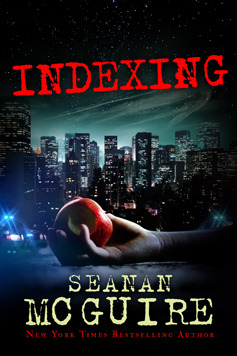
Audiobook Review: Indexing by Seanan McGuire


“Never underestimate the power of a good story.”

Good advice…especially when a story can kill you.

For most people, the story of their lives is just that: the accumulation of time, encounters, and actions into a cohesive whole. But for an unfortunate few, that day-to-day existence is affected—perhaps infected is a better word—by memetic incursion: where fairy tale narratives become reality, often with disastrous results.

That’s where the ATI Management Bureau steps in, an organization tasked with protecting the world from fairy tales, even while most of their agents are struggling to keep their own fantastic archetypes from taking over their lives. When you’re dealing with storybook narratives in the real world, it doesn’t matter if you’re Snow White, Sleeping Beauty, or the Wicked Queen: no one gets a happily ever after.

Indexing is New York Times bestselling author Seanan McGuire’s new urban fantasy where everything you thought you knew about fairy tales gets turned on its head.

Indexing is a fun take on a dangerous situation — memetic incursions, in which fairy tale narratives intrude into the real world, activating people into playing out their pre-programmed stories with potentially disastrous results. A Sleeping Beauty stumbles into a metropolitan hospital, and suddenly everyone in the facility is plunged into a deep sleep. Snow Whites have a hard time avoiding poison, and a wise Snow White will never, ever eat an apple. A Pied Piper with a flute in her hands can wreak havoc simply by playing the right song.

It’s up to the field team at the ATI Management Bureau to head off these incursions and keep the world safe (and happily ignorant) from the narrative’s dangerous intrusions. The main character is Henrietta Marchen, better known as Henry, who is a not-yet-activated Snow White — and yes, that means that she has skin as white as snow and lips as red as blood, which in real life makes her look pretty scary as opposed to Disney-princess adorable. Henry’s team includes Sloane, a decades-old evil stepsister who seems to forever be a petulant teen, Jeff, the team archivist who’s also a part of the shoemaker and the elves narrative, and PR dude Andy, who isn’t touched by the narrative at all (although he does have a close encounter with a Frog Prince).

The plot takes the team through a variety of emergencies, where they rush in to save the world from the weirdly dangerous fairy tales that pop up with increasing frequency. It’s up to the team to figure out why the incursions are happening at an unusually high rate. Someone is messing with the narrative itself, and if they can’t find and stop the perpetrator, reality itself is doomed.

Indexing is quite an enjoyable read. Despite the fairy tale subject, it’s a gritty urban fantasy, with bloody deaths and salty language. (My favorite is when Sloane, abrasive and obnoxious but loyal in her own caustic way, refers to Henry as “Snow Bitch”.) The memetic incursions are always surprising, as the author takes classic fairy tales and makes it plain just how deadly their effect could be if transposed to the modern world and set loose.

Narrator Mary Robinette Kowal does a great job of capturing the personalities of the main characters such as Henry, Sloane, and newbie Demi, although she struggles to do convincing male voices. You know how some audiobook narrators can convey both genders in such a way that you absolutely forget that you’re listening to a woman doing a male character or vice versa? That doesn’t happen here. I found it a bit distracting whenever the narrator would lower her voice for the portrayals of Jeff and especially Andy — they sounded artificial, and it consistently took me out of the story.

That said, the narrator’s version of Henry was excellent, especially when Henry’s inner Snow White takes the lead. Just by the voice, you can absolutely tell which part of Henry’s personality is dominant at the moment. And I loved her nasty Valley Girl voice for Sloane — so offensive and pissed off, really pretty perfect.

The plot of Indexing does take some puzzling through, as the concept of the narrative isn’t always entirely clear. The explanations of various occurrences and their resolutions are occasionally overly convoluted, and I felt the world-building could have used just a smidge more fleshing out.

All in all, though, Indexing is really a fun experience, and listening to the audiobook kept me engaged and entertained for all the hours I spent with it. I’m looking forward to starting the sequel!

_________________________________________

The details:

Title: Indexing
Author: Seanan McGuire
Narrator: Mary Robinette Kowal
Publisher: 47North
Publication date: May 21, 2013
Length (print): 420 pages
Length (audiobook): 12 hours, 5 minutes
Genre: Urban fantasy
Source: Purchased

Save

Save

Save

Save

Save

Save

Save

Save

Save

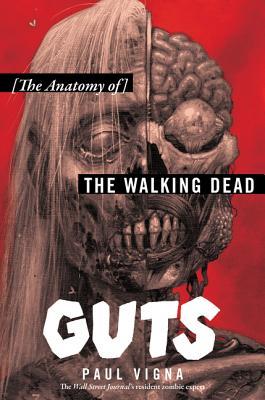
Book Review: Guts: The Anatomy of the Walking Dead by Paul Vigna

In this first and only guide to AMC’s exceptional hit series The Walking Dead, the Wall Street Journal’s Walking Dead columnist celebrates the show, its storylines, characters, and development, and examines its popularity and cultural resonance.

From its first episode, The Walking Dead took fans in the United States and across the world by storm, becoming the highest-rated series in the history of cable television. After each episode airs, Paul Vigna writes a widely read column in which he breaks down the stories and considers what works and what doesn’t, and tries to discern the small details that will become larger plot points.

So how did a basic cable television show based on Robert Kirkman’s graphic comic series, set in an apocalyptic dog-eat-dog world filled with flesh-eating zombies and even scarier human beings, become a ratings juggernaut and cultural phenomenon? Why is the show such a massive hit? In this playful yet comprehensive guide, Vigna dissect every aspect of The Walking Dead to assess its extraordinary success.

In the vein of Seinfeldia,Vigna digs into the show’s guts, exploring its roots, storyline, relevance for fans and the wider popular culture, and more. He explores how the changing nature of television and media have contributed to the show’s success, and goes deep into the zombie genre, delineating why it’s different from vampires, werewolves, and other monsters. He considers why people have found in zombies a mirror for their own fears, and explains how this connection is important to the show’s popularity. He interviews the cast and crew, who share behind-the-scenes tales, and introduces a cross-section of its diverse and rabid viewership, from fantasy nerds to NFL stars. Guts is a must have for every Walking Dead fan.


I’ve only recently become a convert to the cult of The Walking Dead. After years of turning up my nose, I finally broke down and gave it a try this past spring, and immediately became completely hooked. I binge-watched the entire series to date within about 2 months (not bad for 99 episodes!), and read all of the graphic novels as well. So naturally, when I heard about Guts, I had to read it, and the timing couldn’t be better, as season 8 of The Walking Dead starts TOMORROW. *jumping up and down and hyperventilating with anticipation*

Guts is a truly fascinating book about the show, examining it from all angles and giving thoughtful consideration to its popularity and relevance in today’s world. The author includes recaps of the major events of each season so far, and covers the show’s history, the background of Robert Kirkman, who created the comic series and is an executive producer of the TV series, some anecdotes from behind the scenes, and the ups and downs of production, including the still-ongoing lawsuit by the first showrunner, Frank Darabont, against AMC.

The book also includes interactions with fans, including some observations from a day at Walker Stalker Con, a fan event at which fans interact with cast and crew. The description of the vibe at Walker Stalker shows the deep impact of The Walking Dead on its devoted fan base.

Most interestingly, author Paul Vigna goes deeper than the pop culture tidbits (such as fan favorites, iconic weaponry, and best episodes) to show the philosophical underpinnings of The Walking Dead, connecting the show’s impact to sociopolitical and economic climate of the era. He examines the religious themes that find their way into the show, as well as the political constructs of the various societies and the ways in which both Maslow’s hierarchy and Hobbesian views on the natural state of man can be discussed in relation to themes of community and family as shown in TWD.

Some random and various pieces from the book:

Hobbes argues that the natural state of man, as in a state without the collar of a central government, is one where every man is at war with every other man. There is no industry or security, no artistic pursuits, just the “continual fear and danger of violent death, and the life of man, solitary, poor, nasty, brutish, and short,” Hobbes writes… In Hobbes’s argument, people enter a social contract and surrender some of their personal freedoms in exchange for the kind of security and permanence that will release them from the terror of that brutish life in the wild.

Like giving up their endless wandering to join the community of Alexandria, right?

On political structures in TWD:

What seems to matter most is that a leader in the post-zombie apocalypse is decisive… Negan and the Governor are homicidal and suicidal, but they are also decisive. Negan may be as liable to throw you into an oven as feed you a spaghetti dinner, but in his decisiveness, he can bring some sense of comfort — so long as you don’t cross him.

Acknowledging that “Rick has made enough mistakes to fill a book,”, the author comments:

Now, I don’t have a problem with Rick making mistakes. It wouldn’t be realistic for him to make the right choice every single time. Rick’s greatest quality, apart from an uncanny survival instinct, is the ability to simply choose. In a world where life is measured in hours and days rather than decades, that is an essential quality to have.

Further thoughts:

The biggest key to survival, really, is how quickly you can shed your old morality and discover a new one.

And finally, a quote from the season 7 finale, spoken by Maggie, that sums up the essence of TWD. This is who the main characters are and what they do — and what makes us love them:

To sacrifice for each other, to suffer, to stand, to grieve, to give, to love, to live, to fight for each other.

This is what Rick, Maggie, and all the other characters in Alexandria, the Hilltop, and the Kingdom represent, and why we keep tuning in, season after season.

If you’re a fan of The Walking Dead and happen to be inclined to dig in and go beyond the blood and gore, definitely pick up a copy of Guts. It’s a quick, interesting read, with just the right mix of plot points and food for thought.

_________________________________________

The details:

Title: Guts: The Anatomy of the Walking Dead
Author: Paul Vigna
Publisher: Dey Street Books
Publication date: October 3, 2017
Length: 336 pages
Genre: Non-fiction/entertainment/pop culture
Source: Library

Save

Save

Save

Save

Save

Save

Save

Audiobook awesomeness: His Dark Materials trilogy by Philip Pullman

Over the last two months, I’ve had one of my most delightful experiences with audiobooks. I decided to revisit the world of the His Dark Materials trilogy, since (a) it’s been many, many years since I read the books, and (b) a new book is coming out this fall. (THIS WEEK! NOW!!!)

It’s hard to believe that it’s been 17 years (!!) since the publication of The Amber Spyglass, the 3rd book in the trilogy (following The Golden Compass and The Subtle Knife). I remember being blown away by these books upon first read, but after all these years, I was fuzzy on the details.

Side note: I choose to disregard the existence of the Golden Compass movie, which utterly failed to capture the essence of the books and characters. But that’s an issue best left in the past…

So what was so special about these audiobooks?

For starters, they’re full-cast recordings. Oddly enough, full-cast audiobooks don’t usually appeal to me. When I’ve tried them before, I tend to feel removed from the story — maybe because it’s more like listening to a dramatization than like reading an actual book.

Whatever the reason, this time around, I just loved it. Philip Pullman takes the role of narrator, and he’s marvelous. His reading of his own work is nuanced and expressive, and he infuses his lines with wit, humor, and when needed, sorrow and intensity. Beyond Pullman himself, the rest of the cast is simply terrific. I don’t know who these voice actors are, but their talent is huge! The voice of Lyra was perfect — young, intense, brave, emotional — and Will was spot-on too, fierce, loving, worried, daring. Probably most magnificent was the voice of Iorek Byrnison — I don’t think I’ve ever heard such a deep, rumbly voice on an audiobook. If a polar bear could speak English and deigned to have a conversation with one of us puny humans, I bet that’s exactly what he’d sound like. Other stand-outs are the voices of Texas aeronaut Lee Scoresby and the often wicked but strangely sympathetic Mrs. Coulter.

Now, if you’ve read these books, you know that an important part of Pullman’s world building is the presence of daemons — a corporeal, animal being who represents each person’s true inner being. Every human in Lyra’s world has a daemon, and the shape they take is often quite representative of the nature of the person. Children’s daemon’s can change shape at will, until they child reaches puberty, at about which time the daemon settles into his or her final shape. Worth noting, too, is that a daemon is always the opposite gender of the person it’s attached to — so Lyra’s daemon Pantalaimon is male. On the audiobooks, the daemons who have speaking roles are voiced in ways completely appropriate to their personalities. The absolute best is Lee’s daemon Hester, a jackrabbit with a feminine Western twang.

As for the story, I’m kind of assuming that anyone bothering to read this post is already familiar with the amazing world of His Dark Materials. For those who aren’t familiar, here are the brief plot summaries from Goodreads:

Book 1 – The Golden Compass (also published under the title Northern Lights):

Here lives an orphaned ward named Lyra Belacqua, whose carefree life among the scholars at Oxford’s Jordan College is shattered by the arrival of two powerful visitors. First, her fearsome uncle, Lord Asriel, appears with evidence of mystery and danger in the far North, including photographs of a mysterious celestial phenomenon called Dust and the dim outline of a city suspended in the Aurora Borealis that he suspects is part of an alternate universe. He leaves Lyra in the care of Mrs. Coulter, an enigmatic scholar and explorer who offers to give Lyra the attention her uncle has long refused her. In this multilayered narrative, however, nothing is as it seems. Lyra sets out for the top of the world in search of her kidnapped playmate, Roger, bearing a rare truth-telling instrument, the alethiometer. All around her children are disappearing—victims of so-called “Gobblers”—and being used as subjects in terrible experiments that separate humans from their daemons, creatures that reflect each person’s inner being. And somehow, both Lord Asriel and Mrs. Coulter are involved.

Book 2 – The Subtle Knife:

Lost in a new world, Lyra finds Will—a boy on the run, a murderer—a worthy and welcome ally. For this is a world where soul-eating Specters stalk the streets and witches share the skies with troops of angels.

Each is searching—Lyra for the meaning of Dark Matter, Will for his missing father—but what they find instead is a deadly secret, a knife of untold power. And neither Lyra nor Will suspects how tightly their lives, their loves, and their destinies are bound together… until they are split apart.

Book 3 – The Amber Spyglass:

The Amber Spyglass brings the intrigue of The Golden Compass and The Subtle Knife to a heart-stopping end, marking the final volume of His Dark Materials as the most powerful of the trilogy.

Along with the return of Lyra, Will, Mrs. Coulter, Lord Asriel, Dr. Mary Malone, and Iorek Byrnison the armored bear, come a host of new characters: the Mulefa, mysterious wheeled creatures with the power to see Dust; Gallivespian Lord Roke, a hand-high spymaster to Lord Asriel; and Metatron, a fierce and mighty angel. So, too, come startling revelations: the painful price Lyra must pay to walk through the land of the dead, the haunting power of Dr. Malone’s amber spyglass, and the names of who will live–and who will die–for love. And all the while, war rages with the Kingdom of Heaven, a brutal battle that–in its shocking outcome–will uncover the secret of Dust. Philip Pullman deftly brings the cliff-hangers and mysteries of His Dark Materials to an earth-shattering conclusion–and confirms his fantasy trilogy as an undoubted and enduring classic.

It’s funny how certain things stick in your mind — or my mind, anyway. I absolutely remembered about Dust and daemons, about Lord Asriel and Mrs. Coulter, the Mulefa, Metatron, and more. What I didn’t remember was the sheer power of this story. What starts out feeling mostly like a children’s book (albeit a children’s book with gifted-level vocabulary) by the end has transformed into an epic tale that shares universal truths about love, honesty, the nature of good and evil, devotion, betrayal, friendship, and freedom.

The emotional impact by the end is enormous. I clearly remembered being devastated by the end of the trilogy, and yet I was still pretty much hit over the head with an anvil all over again while listening by the intensity of the heart-ache the characters experience. It’s simply lovely and tragic and uplifting, all at the same time.

As an added bonus, Pullman later published two shorter works set in the same world: Lyra’s Oxford, which takes place two years after the conclusion of The Amber Spyglass, and Once Upon a Time in the North, which is set about 35 years earlier, showing the first eventful meeting of Lee Scoresby and Iorek Byrnison. Both of these novellas are available as audiobooks, and like the main trilogy, are highly enriched by the full-cast recording. (It’s definitely worth getting the hard copies as well, as the physical editions include wonderful woodcut illustrations and all sorts of bits and pieces of ephemera related to His Dark Materials — writing scraps, maps, ballooning guides, postcards, and even a board game.)

Finally, there’s a short story available either as an e-book or audiobook. The Collectors is very creepy, and I’d say listen to the audio version. Bill Nighy does a fabulous job with the narration, and it only takes about a half hour, but is definitely worth it.

I realize that this is by no means a comprehensive book review of His Dark Materials and the associated works. And it’s not meant to be. Really, I’ve just gotten completely swept away by these wonderful audiobooks, and I couldn’t keep it to myself a moment longer!

Especially for anyone thinking about reading the upcoming new release, La Belle Sauvage, going back to His Dark Materials via audiobook will be a huge treat, absolutely worth the time.

Needless to say, for anyone who hasn’t read these books at all yet, please do! His Dark Materials is one of those trilogies usually shelved with children’s fiction, but which truly transcends the age or genre labels. These books are just plain good fantasy literature; they transport us to multiple alternate worlds but never lose their human heart.


____________________________________

Books in the series:
The Golden Compass (1995)
The Subtle Knife (1997)
The Amber Spyglass (2000)
Lyra’s Oxford (2003)
Once Upon a Time in the North (2008)
The Collectors (2014)
NEW: La Belle Sauvage (The Book of Dust, book 1) – to be released 10/19/2017

Save

Save

Save

Save

Save

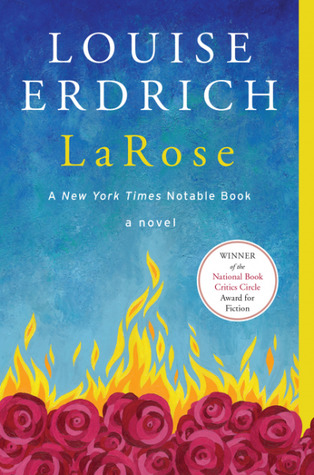
Take A Peek Book Review: LaRose by Louise Erdrich

“Take a Peek” book reviews are short and (possibly) sweet, keeping the commentary brief and providing a little peek at what the book’s about and what I thought.

Synopsis:

(via Goodreads)

In this literary masterwork, Louise Erdrich, the bestselling author of the National Book Award-winning The Round House and the Pulitzer Prize nominee The Plague of Doves wields her breathtaking narrative magic in an emotionally haunting contemporary tale of a tragic accident, a demand for justice, and a profound act of atonement with ancient roots in Native American culture.

North Dakota, late summer, 1999. Landreaux Iron stalks a deer along the edge of the property bordering his own. He shoots with easy confidence—but when the buck springs away, Landreaux realizes he’s hit something else, a blur he saw as he squeezed the trigger. When he staggers closer, he realizes he has killed his neighbor’s five-year-old son, Dusty Ravich.

The youngest child of his friend and neighbor, Peter Ravich, Dusty was best friends with Landreaux’s five-year-old son, LaRose. The two families have always been close, sharing food, clothing, and rides into town; their children played together despite going to different schools; and Landreaux’s wife, Emmaline, is half sister to Dusty’s mother, Nola. Horrified at what he’s done, the recovered alcoholic turns to an Ojibwe tribe tradition—the sweat lodge—for guidance, and finds a way forward. Following an ancient means of retribution, he and Emmaline will give LaRose to the grieving Peter and Nola. “Our son will be your son now,” they tell them.

LaRose is quickly absorbed into his new family. Plagued by thoughts of suicide, Nola dotes on him, keeping her darkness at bay. His fierce, rebellious new “sister,” Maggie, welcomes him as a co-conspirator who can ease her volatile mother’s terrifying moods. Gradually he’s allowed shared visits with his birth family, whose sorrow mirrors the Raviches’ own. As the years pass, LaRose becomes the linchpin linking the Irons and the Raviches, and eventually their mutual pain begins to heal.

But when a vengeful man with a long-standing grudge against Landreaux begins raising trouble, hurling accusations of a cover-up the day Dusty died, he threatens the tenuous peace that has kept these two fragile families whole.

Inspiring and affecting, LaRose is a powerful exploration of loss, justice, and the reparation of the human heart, and an unforgettable, dazzling tour de force from one of America’s most distinguished literary masters.

My Thoughts:

A beautiful, complicated, stunning book by the masterful Louise Erdrich! What a powerful follow-up to her award-winning The Round House (review).

LaRose is a story about family, loss, retribution, and atonement. It shows the complex connections between parents and children, and the unusual ways in which new families can be formed and held together. LaRose also demonstrates the power of old wounds, never fully healed, to affect people’s actions and emotions years after the fact.

The author weaves in the story of earlier generations in the family, each with its own LaRose, showing the challenges of growing up in the reservation and boarding school systems, and the lasting impact of tradition on people being forced to assimilate.

The characters in LaRose are well-drawn and unforgettable. There’s Landreaux’s family, with his smart, loving daughters who take in Maggie and declare her their sister too. And there’s LaRose himself, a good, loving boy who is put in an impossible situation — and, impossibly, grows, thrives, and gives his two families what they need, while also forging his own strong connection to the spirit world. Myriad other characters flesh out the community and give life to the ties that bind the various characters together.

LaRose is unusual and beautifully written. Highly recommended.

_________________________________________

The details:

Title: LaRose
Author: Louise Erdrich
Publisher: Harper Perennial
Publication date: May 10, 2016
Length: 400 pages
Genre: Contemporary fiction
Source: PurchasedSave

Save

Save

Save

Book Review: Sleeping Beauties by Stephen King and Owen King

In this spectacular father-son collaboration, Stephen King and Owen King tell the highest of high-stakes stories: what might happen if women disappeared from the world of men?

In a future so real and near it might be now, something happens when women go to sleep; they become shrouded in a cocoon-like gauze. If they are awakened, if the gauze wrapping their bodies is disturbed or violated, the women become feral and spectacularly violent; and while they sleep they go to another place. The men of our world are abandoned, left to their increasingly primal devices. One woman, however, the mysterious Evie, is immune to the blessing or curse of the sleeping disease. Is Evie a medical anomaly to be studied, or is she a demon who must be slain? Set in a small Appalachian town whose primary employer is a women’s prison, Sleeping Beauties is wildly provocative and gloriously absorbing.


Sleeping Beauties has one simple message:

Men bad. Women good.

It takes 702 pages to get there, but that does seem to be the point. Not that it’s not fun along the way, but subtle, this book ain’t.

In the town of Dooling, somewhere in the Appalachias, the women’s prison is the main local employer. Between the town and the prison, we meet a heap of characters — so many characters, in fact, that the book opens with a four-page listing of characters and their descriptions — which, believe me, is necessary if you want to make it through this massive book with any shred of sanity remaining intact. The vast cast of characters includes the sheriff and her husband (the prison psychiatrist), sheriff’s deputies, prison guards, prisoners, high school bullies, and all sorts of other townsfolk.

The onset of the Aurora plague (named for Sleeping Beauty in the fairy tales) is pretty fascinating stuff. Worldwide, women are falling asleep, and once they do, they become encased in a filmy cocoon. They sleep, seemingly permanently, in these cocoons unless someone foolish (usually a man) decides to try to get them out, in which case they awaken with homicidal intent, murder whoever disturbed them, and then fall back to sleep as the cocoon reestablishes itself around the sleepers.

Major freak-outs ensue. What’s causing this, and what can be done? While some women give in to the inevitable, others become determined not to sleep at all, turning to all sorts of legal and illegal stimulants to stay awake, from super-powered coffee to crystal meth. As the days wear on, regular life all but disappears, and the men who are left behind turn to violence and chaos.

Small town dynamics suddenly take on huge significance. Sides are drawn up, and to a certain extent, the law of the jungle takes over. Those who are strong, survive. The physically or mentally weaker of the men are pushed aside, and as power is extended to those who should never, ever have it, we can feel the threat-level creep up into the danger zone.

I can’t say I was ever bored while reading this book, but really, it’s much too big for its own good. “Overstuffed” is the word that came to mind, especially as I neared the halfway point and realized that the amount left would be equivalent to reading yet another full novel. I don’t think we need quite so many backstories for quite so many characters. Not all of it is important, and a more honed narrative might have helped the narrative feel sharper and more focused.

I’m not sure that the end makes a whole lot of sense, but I often feel that way with Stephen King books (and yes, I’m a big fan). There are many unanswered questions about the why and how of the Aurora plague. Why do we get the resolution that we get? Because we do. Why is this the answer to Aurora? Because it is.

Still, Sleeping Beauties is filled with small and big moments of adrenaline-pumping suspense, with everyday scenes carrying extraordinary hints of menace and violence. As is typical of King novels, the huge number of characters comes together to give us the flavor of the community — although I’ll be honest and admit that I stopped bothering to distinguish between handfuls of the more minor characters as the story progressed.

Overall, I enjoyed Sleeping Beauties, but don’t think it’s Stephen King’s best work by a long shot. The message, as I mentioned at the top of the review, is really pretty basic and obvious, and at times I felt like I was being beaten over the head by the senseless need for violence exhibited by men in crisis, especially as contrasted by the peace and cooperation shown on the women’s side of the equation.

For a look at how Stephen King and Owen King worked together on Sleeping Beauties, check out this piece in a recent Entertainment Weekly.

_________________________________________

The details:

Title: Sleeping Beauties
Author: Stephen King and Owen King
Publisher: Scribner
Publication date: September 26, 2017
Length: 702 pages
Genre: Horror/fantasy
Source: Purchased

Save

Save

Save

Save

Save

Save

Save

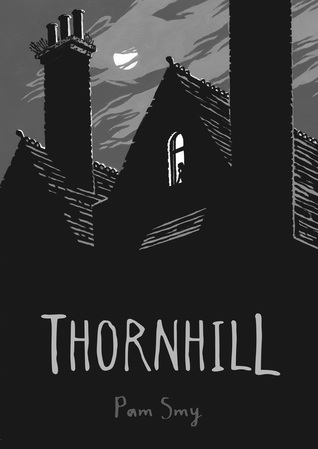
Book Review: Thornhill by Pam Smy

Parallel stories set in different times, one told in prose and one in pictures, converge as Ella unravels the mystery of the girl next door.

1982: Mary is a lonely orphan at the Thornhill Institute For Children at the very moment that it’s shutting its doors. When her few friends are all adopted or re-homed and she’s left to face a volatile bully alone, her revenge will have a lasting effect on the bully, on Mary, and on Thornhill itself.

2016: Ella has just moved to a new town where she knows no one. From her room on the top floor of her new home, she has a perfect view of the dilapidated, abandoned Thornhill Institute across the way, where she glimpses a girl in the window. Determined to befriend the girl, Ella resolves to unravel Thornhill’s shadowy past


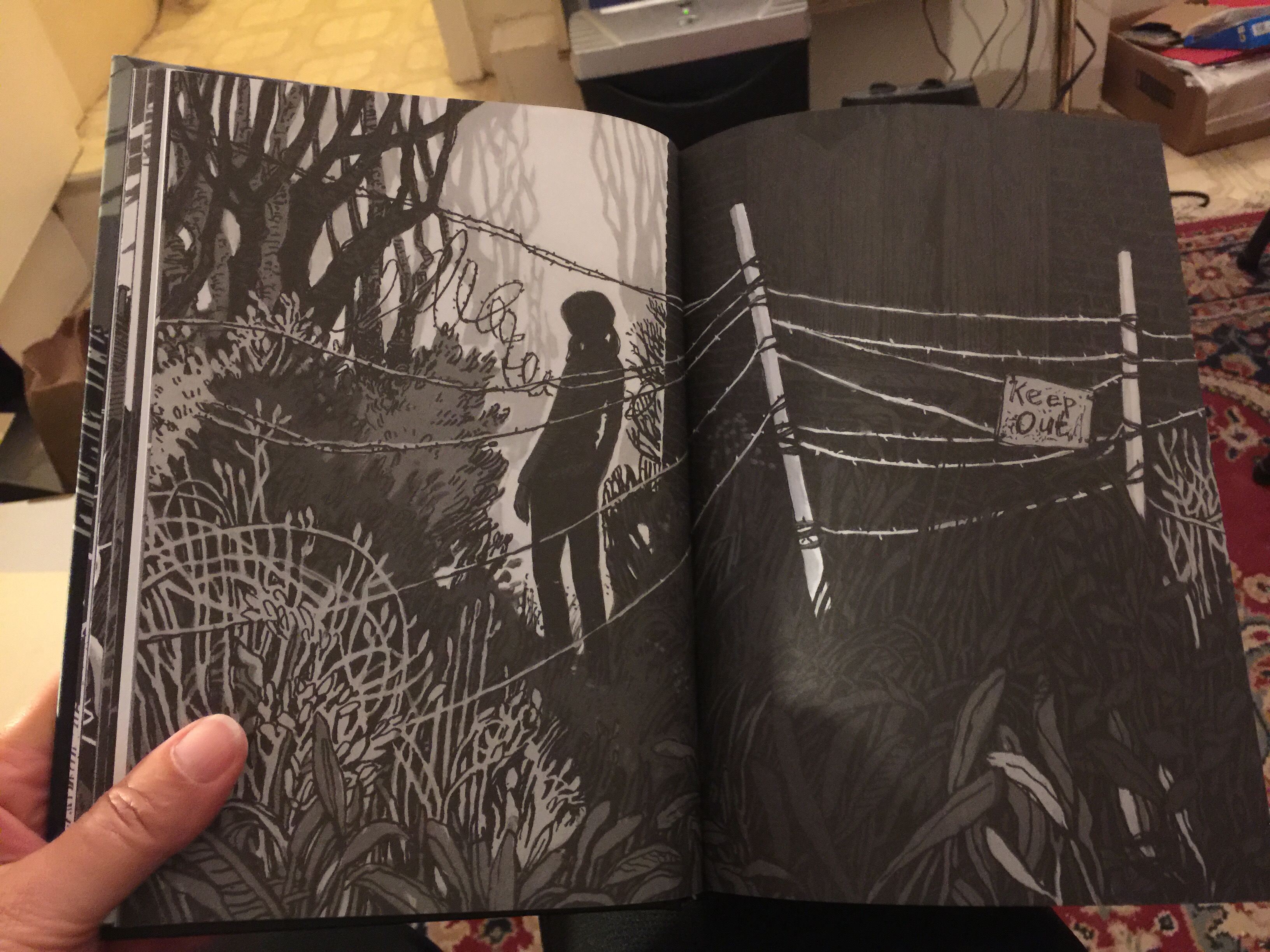
Oh my, this was a great read! Very much reminiscent of the style of Brian Selznick, Thornhill is told both in words, via Mary’s diary, and in pictures, via illustrations of Ella’s experiences. Author/illustrator Pam Smy does an incredible job of moving the story forward through the black and white illustrations from Ella’s world, which are stark and evocative and ever-so-ghostly.

The tale told through Mary’s diary is heartbreaking, and the first-person narrative is particularly effective. We see how Mary is an outcast even among outcasts, friendless in this home for unwanted girls, locking herself away in her own private sanctuary to escape the insidious, cruel attention of the house bully. Mary constructs a whole world for herself with her books and her carefully crafted puppets, but even this sanctuary ends up being violated. It’s wrenching to read of Mary’s pain, and all too easy to understand how her pain turns to anger and then to a burning need for revenge.

Meanwhile, Ella’s story is sad in its own way. Through the pictures on her walls, we come to understand that Ella’s mother has died and that she’s being raised in this new home and new town by a father who’s usually absent. No wonder Ella becomes fascinated by the spooky house she can see from her window and the mystery of the light she sees shining from the attic window.

Thornhill is a spooky, powerful, and quite definitely sad story of two girls from different times, bound together by loneliness. It’s haunting in all the right ways, and I simply loved the use of words and pictures to tell one complete story.

_________________________________________

The details:

Title: Thornhill
Author: Pam Smy
Publisher: Roaring Brook Press
Publication date: August 29, 2017
Length: 544 pages
Genre: Ghost story/illustrated/young adult
Source: Library

Save

Save

Save

Save

Save

Save

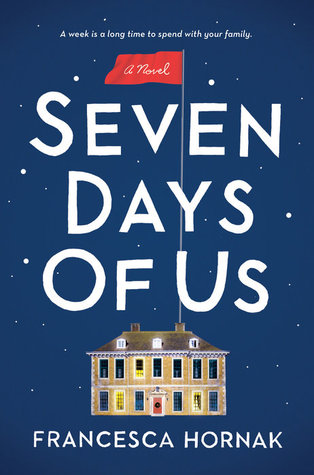
Take A Peek Book Review: Seven Days of Us by Francesca Hornak

“Take a Peek” book reviews are short and (possibly) sweet, keeping the commentary brief and providing a little peek at what the book’s about and what I thought.

Synopsis:

(via Goodreads)

A warm, wry, sharply observed debut novel about what happens when a family is forced to spend a week together in quarantine over the holidays…

It’s Christmas, and for the first time in years the entire Birch family will be under one roof. Even Emma and Andrew’s elder daughter—who is usually off saving the world—will be joining them at Weyfield Hall, their aging country estate. But Olivia, a doctor, is only coming home because she has to. Having just returned from treating an epidemic abroad, she’s been told she must stay in quarantine for a week…and so too should her family.

For the next seven days, the Birches are locked down, cut off from the rest of humanity—and even decent Wi-Fi—and forced into each other’s orbits. Younger, unabashedly frivolous daughter Phoebe is fixated on her upcoming wedding, while Olivia deals with the culture shock of being immersed in first-world problems.

As Andrew sequesters himself in his study writing scathing restaurant reviews and remembering his glory days as a war correspondent, Emma hides a secret that will turn the whole family upside down.

In close proximity, not much can stay hidden for long, and as revelations and long-held tensions come to light, nothing is more shocking than the unexpected guest who’s about to arrive…

My Thoughts:

Seven Days of Us is an entertaining, quick read about a family forced into isolation together — a perfect setting for secrets to emerge and for walls to come down. Phoebe and Olivia rediscover the sisterly affection that’s been absent since childhood; Andrew and Olivia finally come to understand one another’s obsessions and sacrifices; Emma and Andrew confront the iciness that’s taken hold in their marriage. Meanwhile, Phoebe’s fiancé crashes the quarantine, as does an American who ends up being the long-lost illegitimate son Andrew never knew he had.

The story moves along at a smart pace, with each character getting bits and pieces of the story. The main chapters focus on the seven days of quarantine, while within each day, there are sections devoted to the different characters, each section showing the time and the location within the house — which lends the narrative a claustrophobic air that’s appropriate for the involuntary intimacy and close quarters experienced by the family.

I do wish the author had included some sort of introduction explaining the quarantine rules. Why would a doctor treating epidemic patients be allowed back into England, passing through a major aiport, in order to go into quarantine with her family? Is this a normal protocol? Sure, readers could Google it, but it would have been helpful to have a bit of context, considering that this is the major plot driver of the entire book.

My interest never flagged, but certain plot developments (no spoilers here!) were completely obvious, and a tragic turn toward the end of the book seemed both jarring and unnecessary.

Overall, I recommend Seven Days of Us. It’s a pleasant, amusing story of family dynamics, and the ups and downs of the relationships between parents and children, between siblings, and between spouses definitely ring true.

_________________________________________

The details:

Title: Seven Days of Us
Author: Francesca Hornak
Publisher: Berkley
Publication date: October 17, 2017
Length: 368 pages
Genre: Contemporary fiction
Source: Review copy courtesy of the publisher via NetGalleySave

Save

Save

Save

Save

Save