Saga and Neverwhere: Cool-looking stuff that I read this week

Instead of writing lengthy reviews (as I have a tendency to do), I thought I’d share quick looks at two of my reading obsessions from this past week.

SAGA by Brian K. Vaughan and Fiona Staples:

I love Lying Cat. And that’s the truth.

What can I say about the glories of the Saga series? In a nutshell, this comic series tells the story of two star-crossed lovers, Alana and Marko. Their worlds have been at war for generations, and when they desert their respective armies and begin life on the run together, they’re hunted and despised by both sides. The world of Saga is utterly wonderful, with bizarre beings such as Lying Cat, a race of robots with TV screens for heads, an adorable little seal-like creature who’s dangerous AF, and so much more. The artwork is astounding, with a mind-blowing array of gorgeous, strange, and often disgusting creatures and people and planets. The storyline is intense and always surprising, with plenty of danger and violence, but also some truly funny dialogue and situations.

Take note that Saga is definitely NSFW — between gory violence and explicit illustrations of sex acts and genitalia, this isn’t something you want your coworkers reading over your shoulders. (Unless they’re very cool coworkers, but you might be at risk of violating some company policies… )

Saga is available as standard comic editions, but I prefer to wait and read the trade-paperback editions. The 8th paperback volume just came out this month, which is what prompted my Saga binge this week — I re-read #5, then continued straight through 6, 7, and 8. There are also deluxe hardcover editions available, and if I’m ever feeling super rich, I will absolutely treat myself to those as well.

Saga is amazing, people! Don’t miss out.

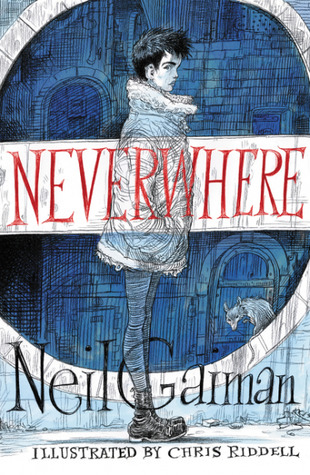
NEVERWHERE by Neil Gaiman, with illustrations by Chris Riddell

Neverwhere is a classic Neil Gaiman fantasy, originally written as a teleplay for BBC in 1996 before being turned by Gaiman into a novel… which he then continued to tinker with over the years, until now, more than 20 years since its inception, Neverwhere has been published in the author’s “preferred” version of the text, with gorgeous, haunting black-and-white illustrations by the talented Chris Riddell throughout the book.

Neverwhere is the story of Richard Mayhew, an every-man who stumbles out of his normal life and into the dark, hidden, magical world of London Below. Swept away from everything and everyone he thought he knew, Richard finds himself embarking on a quest with the Lady Door, a bodyguard named Hunter, and the mysterious yet dashing Marquis de Carabas. As they avoid the deadly assassins Mr. Croup and Mr. Vandemar, Richard and his comrades journey through sewers and non-existent underground platforms, meet angels and beasts, and visit the Floating Market. Finally, when Richard has a chance to return to his former life, he has to decide whether he really wants “normal” after all.

I originally read Neverwhere years ago, and gave it only 3-stars at the time. To be honest, I’m not entirely sure that I even finished it, since the last half of so of the book seemed completely new to me. The illustrations here really add to the story, bringing the strange characters to life and adding interest and intrigue to practically every page.

At its heart, Neverwhere is a portal story, where a character steps from our world into something new and different, facing dangers but also encountering wonders beyond imagination. Perhaps my appreciation for this type of tale has grown over the years, but I did enjoy the story a lot more this time around — and the illustrations definitely helped me get into the strange world of Neverwhere in a new and marvelous way.

For more on the artist’s process of illustrating Neverwhere, see this article. And below, enjoy a few snippets of pages from the book. (Click to view larger versions).

This slideshow requires JavaScript.

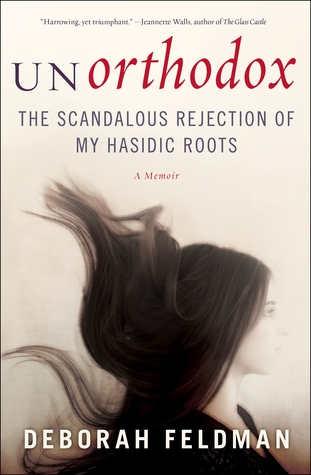
Audiobook Review: Unorthodox: The Scandalous Rejection of My Hasidic Roots by Deborah Feldman


The instant New York Times bestselling memoir of a young Jewish woman’s escape from a religious sect, in the tradition of Ayaan Hirsi Ali’s Infidel and Carolyn Jessop’s Escape, featuring a new epilogue by the author.

The Satmar sect of Hasidic Judaism is as mysterious as it is intriguing to outsiders. In this arresting memoir, Deborah Feldman reveals what life is like trapped within a religious tradition that values silence and suffering over individual freedoms.

Deborah grew up under a code of relentlessly enforced customs governing everything from what she could wear and to whom she could speak to what she was allowed to read. It was stolen moments spent with the empowered literary characters of Jane Austen and Louisa May Alcott that helped her to imagine an alternative way of life. Trapped as a teenager in a sexually and emotionally dysfunctional marriage to a man she barely knew, the tension between Deborah’s desires and her responsibilities as a good Satmar girl grew more explosive until she gave birth at nineteen and realized that, for the sake of herself and her son, she had to escape.

Unorthodox is a fascinating look into a world that’s largely unknown and hidden. The insular Satmar Hasidic community in which Deborah was raised has no tolerance for outside influence or interference, and at the same time, leaves no room for individuality or privacy.

All aspects of life are strictly governed, from what to wear to how to speak to what to eat to when to have sex with your husband. As a child, Deborah’s world revolved around family — the grandparents who raised her, the strict aunt who dictated every step of Deborah’s upbringing and education. Even so, Deborah was different, which can be unforgiveable among the Satmar — her father was either “crazy” or “retarded”, depending on who you asked, and her mother left the Satmar world when she left her unhappy marriage, leaving young Deborah behind.

As Deborah grows, she follows the rules carefully, always fearful of the contant watchful eyes and incessant gossip in their close-knit community, yet also yearning to expand her horizons. She sneaks forbidden books from a library from a different neighborhood, hiding Harry Potter and A Tree Grows in Brooklyn under her mattress, and takes the subway into Manhattan to be dazzled by the glimpse of another kind of life.

Still, Deborah does what is expected of her, married at age 17 to a groom she barely knows, enjoying the trappings of being a bride even while the horrible reality of her situation is driven home. The chapter on Deborah’s introduction to marriage is horrifying. Prior to the wedding, Deborah takes the mandatory “bride classes” that all Satmar girls take, learning essential requirements about going to the mikveh (ritual bath), about being unclean for two weeks due to her period (and the ridiculous steps women have to take before being considered clean enough to resume marital relations), how to run a good Jewish home, and then finally, in the last lesson, what sex is and what’s expected of her.

The sex talk Deborah gets is less than informative:

A man and a woman’s bodies were created like two interlocking puzzle pieces, she says. I hear her describe a hallway with walls, leading to a little door, which open to a womb, the mekor, she calls it, “the source.” I can’t imagine where an entire system like that could be positioned. She tries to tell me about the passageway that leads to “the source,” how this passageway is entered, demonstrating with her forefinger inserted into the ring of the thumb and forefinger of her other hand, and making ridiculous thrusting motions. I’m guessing that that motion is referring to the part where they click into place. Still, I can’t see where that spot, that entryway, can exist on my own body. As far as I know, the place where the pee comes out isn’t that stretchy. I finally stop her.

“Um, I don’t have that,” I say, giggling nervously.

The girls of the community are kept so utterly ignorant of their own bodies that she has no comprehension of having a vagina! Things go from bad to worse, as the couple is unable to consummate their marriage for a full year, as clumsy fumbling leads to frustration, which leads to deep anxiety and tension on Deborah’s part, making her physically unable to relax enough to permit her husband to complete the act. It’s horrible to hear the suffering that this young girl endures, with emotional damage heaped on top of physical suffering.

Finally, after becoming a mother at age 19, Deborah begins to secretly seek an outlet for her unfulfilled yearning for independence and knowledge, enrolling in classes, learning to drive, and venturing outside of her community and its heavy expectations. The more she encounters of the outside world, the more strongly she’s convinced that her future lies elsewhere. Ultimately, she finds a way to start a new life for herself and her young son, and finds the freedom she’s longed for all her life.

The narrative is intimate and informative, as Deborah walks us through the phases of a girl’s life, from early education through puberty and into young adulthood, when the entire focus becomes making a good match. We see the structures in place to enforce obedience and strict adherence to the religious rules that govern all aspects of life. The imbalance between the sexes is laughable — a woman’s life has as its purpose creating a home for her husband and raising children. There’s no room for individuality, and people with other interests are either shunned or, like Deborah and her mother before her, must leave entirely in order to have a life that feels true.

The audiobook, narrated by Rachel Botchan, captures the dialogue and the patterns of conversations quite well, as well as conveying the Yiddish terms that are peppered throughout the book. The narration flows nicely, and gives the listener a real sense of Deborah’s inner life, moods, and emotional struggles.

Quibbles:

While I found the story overall quite powerful, there are a few aspects that stuck out and were problems for me.

  • While talking about how unhappy she is in her marriage, Deborah states that she’d never be able to leave without leaving her son behind, because the rabbinical courts would never allow a Satmar woman to leave and take a child with her. Yet in the end, Deborah and her husband decide to divorce, and Deborah leaves with their son. How? Why was she allowed to take the child? What was the legal process? Was there some sort of agreement put into place? There’s no explanation offered, and considering that she pointed this out as a reason for her feeling trapped in her marriage, I needed to get some of information about why this worked out for her.
  • The author has a tendency to ascribe emotions to people based on her interactions with them, and this often rings false. When she goes to the mikveh for the first time in preparation for her wedding, she decides that the attendant “thinks she is better than I am” based on the tone of her voice, and later, when she feels embarrassed during the highly personal inspection that’s entailed, she says:

The attendant’s face is stern, but there is a faint whiff of triumph about her movements… She’s baiting me.

It all comes across as a big case of projection, as far as I can tell. Yes, the ritual is invasive and scary for a young woman who’s never been naked in front of others before and who has no knowledge of her own body, but the author presents the attendant’s feelings as facts, rather than showing that it’s her interpretation of what she sees. And this comes across in several places in the book — Deborah makes assumptions about other’s feelings and motivations, but we have no reason to think that she’s actually right.

  • I would have liked more explanation about Deborah and her husband Eli’s financial situation, as she describes them struggling to afford the basics, and yet they spend an enormous amount of time (and, I assume, money) visiting doctors and therapists and other specialists regarding their sexual difficulties, and later, for prenatal treatment once the pregnancy becomes high-risk. I assume the families support the couple, but it would have been good to have a better understanding of where the money they spent came from.


Wrapping it all up:

Unorthodox is a powerful story that provides a startling look into a world that must seem utterly alien to anyone with a secular upbringing. While there are areas that could use more factual grounding and additional information, overall this book provides quite a lot of detail into what constitutes childhood, adolescence, and young adulthood in the Satmar community. It’s easy to understand how an intelligent girl who questions everything and thirsts for knowledge would feel stifled, and perhaps the most remarkable thing is that the author survived in this world for as long as she did.

_________________________________________

The details:

Title: Unorthodox: The Scandalous Rejection of My Hasidic Roots
Author: Deborah Feldman
Narrator: Rachel Botchan
Publisher: Simon Schuster
Publication date: October 2, 2012
Length (print): 272 pages
Length (audiobook): 10 hours, 31 minutes
Genre: Memoir
Source: Purchased

Save

Save

Save

Save

Save

Save

Save

Save

Save

Save

Save
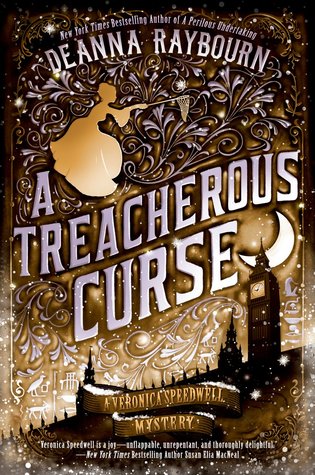
Take A Peek Book Review: A Treacherous Curse (Veronica Speedwell, #3) by Deanna Raybourn

“Take a Peek” book reviews are short and (possibly) sweet, keeping the commentary brief and providing a little peek at what the book’s about and what I thought.


Synopsis:

(via Goodreads)

Members of an Egyptian expedition fall victim to an ancient mummy’s curse in a thrilling Veronica Speedwell novel from the New York Times bestselling author of the Lady Julia Grey mysteries. 
 
London, 1888. As colorful and unfettered as the butterflies she collects, Victorian adventuress Veronica Speedwell can’t resist the allure of an exotic mystery—particularly one involving her enigmatic colleague, Stoker. His former expedition partner has vanished from an archaeological dig with a priceless diadem unearthed from the newly discovered tomb of an Egyptian princess. This disappearance is just the latest in a string of unfortunate events that have plagued the controversial expedition, and rumors abound that the curse of the vengeful princess has been unleashed as the shadowy figure of Anubis himself stalks the streets of London.

But the perils of an ancient curse are not the only challenges Veronica must face as sordid details and malevolent enemies emerge from Stoker’s past. Caught in a tangle of conspiracies and threats—and thrust into the public eye by an enterprising new foe—Veronica must separate facts from fantasy to unravel a web of duplicity that threatens to cost Stoker everything. . . .

My Thoughts:

This series is so much fun! I’ve written lengthier reviews of the first two Veronica Speedwell books (A Curious Beginning and A Perilous Undertaking), so I’ll keep this one brief. Veronica Speedwell, a (mostly) proper Victorian lady with a penchant for butterflies, scientific expeditions, and hot men, once again becomes embroiled in solving a mystery in order to stave off potential disgrace for her partner Stoker. The plot involves a mummy’s curse, shady explorers, Egyptian gods… and perhaps most importantly, figures from Stoker’s dark past.

The mystery itself is quite fun, and it’s satisfying to get some of the answers we’ve been waiting for about Stoker’s dismal reputation and the scandal that haunts him. Veronica and Stoker still have that red-hot (but unfulfilled) chemistry between them, and the door is definitely open for further adventures and further romantic entanglement.

Veronica is a terrific heroine, and the books in the series feature just the right combination of danger, adventure, and witty dialogue. Highly recommended!

_________________________________________

The details:

Title: A Treacherous Curse (Veronica Speedwell, #3)
Author: Deanna Raybourn
Publisher: Berkley
Publication date: January 16, 2018
Length: 352 pages
Genre: Mystery/historical fiction
Source: Review copy courtesy of the publisher via NetGalley

**Save

Save

Save

Save

Save

Save

Save

Book Review: I Am Not Your Perfect Mexican Daughter by Erika L. Sánchez


Perfect Mexican daughters do not go away to college. And they do not move out of their parents’ house after high school graduation. Perfect Mexican daughters never abandon their family.

But Julia is not your perfect Mexican daughter. That was Olga’s role.

Then a tragic accident on the busiest street in Chicago leaves Olga dead and Julia left behind to reassemble the shattered pieces of her family. And no one seems to acknowledge that Julia is broken, too. Instead, her mother seems to channel her grief into pointing out every possible way Julia has failed.

But it’s not long before Julia discovers that Olga might not have been as perfect as everyone thought. With the help of her best friend Lorena, and her first kiss, first love, first everything boyfriend Connor, Julia is determined to find out. Was Olga really what she seemed? Or was there more to her sister’s story? And either way, how can Julia even attempt to live up to a seemingly impossible ideal?

I Am Not Your Perfect Mexican Daughter is a moving, disturbing, and vibrant story of a girl trying to find her own way while under the out-sized pressure of family expectations, poverty, and inner city life.

Julia is a gifted student whose dream is to become a writer. Thanks to the mentorship of a dedicated English teacher, she may have a shot at college — anywhere, so long as it’s away — and a full scholarship.

But Julia’s parents just don’t understand, and since Olga’s death, Julia is reminded over and over again that she’s not what her parents want her to be. She’s not content to be at home, and chafes under the harsh curfews and ceaseless surveillance of her life. Julia’s mother cleans houses of rich people and her father works a fatiguing job in a candy factory. Both undocumented, they crossed the border from Mexico before their daughters’ births, so while the girls are both US citizens, the threat of deportation hangs over the family every waking moment.

The descriptions of the family’s poverty are heartbreaking, and so is the despair Julia feels over the lack of freedom and trust she experiences on a daily basis. She yearns to break free, to pursue her education, to be something and someone different — but she faces constant punishments and groundings every time she steps out of line, and finally gets to a breaking point.

This book deals with the pain of family secrets — everyone in Julia’s family has something they’ve chosen not to share. As she learns more about her parents and her sister, Julia discovers that the bland or hard surfaces hide painful pasts and secrets that could be truly destructive if brought to life. Julia’s understanding of her own family deepens as she learns more, and she starts finally to understand where the harshness and rules and need for control really come from.

I thought the book was very well written, with a sense of immediacy conveyed through Julia’s narrative. We see the world through Julia’s eyes, and understand how the world affects her own sense of self. The way she’s viewed by outsiders because she’s poor and Mexican, the way the boys at home and at school look at her body rather than looking at her as a person, the way her parents see her as untrustworthy because she doesn’t fit the image of a “perfect” daughter the way Olga did — all of these drive Julia’s suffering and the damage to her self-image.

There’s a section of the book that’s set in Mexico, as Julia is sent to visit her relatives there, and while the descriptions of the village are colorful, this interlude felt like it meandered a bit to me. Still, if the point was to show that even in situations that seem cheerful and safe on the surface, there is still darkness underneath, then it’s effective as well.

Overall, I Am Not Your Perfect Mexican Daughter is a powerful read that really moved me, even while making me very uncomfortable in many parts too. It’s definitely not like anything else I’ve read, and Julia’s distinctive voice is a delight. Touching on subjects such as economic disadvantage, cultural insensitivity and prejudice, sexual health, and mental health, it’s an ambitious book packed with heavy topics, but manages to still keep rays of hope alive as Julia finds her way forward. I’m so happy that I made time to read this book, and definitely recommend it.

_________________________________________

The details:

Title: I Am Not Your Perfect Mexican Daughter
Author: Erika L. Sánchez
Publisher: Knopf Books for Young Readers
Publication date: October 17, 2017
Length: 352 pages
Genre: Young adult
Source: Purchased

Save

Save

Save

Save

Save

Save

Save

Save

Save

Save

Save

Book Review: Paperbacks from Hell: The Twisted History of ’70s and ’80s Horror Fiction by Grady Hendrix

Take a tour through the horror paperback novels of the 1970s and ’80s . . . if you dare. Page through dozens and dozens of amazing book covers featuring well-dressed skeletons, evil dolls, and knife-wielding killer crabs! Read shocking plot summaries that invoke devil worship, satanic children, and haunted real estate! Horror author and vintage paperback book collector Grady Hendrix offers killer commentary and witty insight on these trashy thrillers that tried so hard to be the next Exorcist or Rosemary’s Baby. It’s an affectionate, nostalgic, and unflinchingly funny celebration of the horror fiction boom of two iconic decades, complete with story summaries and artist and author profiles. You’ll find familiar authors, like V. C. Andrews and R. L. Stine, and many more who’ve faded into obscurity. Plus recommendations for which of these forgotten treasures are well worth your reading time and which should stay buried.


A must for horror fans. This book traces the history of all sorts of insane horror trends from the 70s and 80s, and makes some fascinating connections between the crises of the times (inflation, environmental issues, HIV/AIDS) and the rise and fall of horror publishing themes and crazes. The author’s commentary is often snarky and truly funny — but the real highlight of Paperbacks from Hell is the amazing assortment of cheesy, disgusting, disturbing book covers. Some are iconic (Jaws, The Omen, Flowers in the Attic), and some just head-shakingly awful — but put them all together, and it’s a truly entertaining look back at horror’s not-so-distant past.

Take a look at just a small sampling of the amazing books featured in Paperbacks from Hell:

_________________________________________

The details:

Title: Paperbacks from Hell: The Twisted History of ’70s and ’80s Horror Fiction
Author: Grady Hendrix
Publisher: Quirk
Publication date: September 19, 2017
Length: 256 pages
Genre: Horror/non-fiction
Source: Review copy courtesy of Quirk Books

Save

Save

Save

Save

Save

Save

Book Review: 180 Seconds by Jessica Park


Some people live their entire lives without changing their perspective. For Allison Dennis, all it takes is 180 seconds…

After a life spent bouncing from one foster home to the next, Allison is determined to keep others at arm’s length. Adopted at sixteen, she knows better than to believe in the permanence of anything. But as she begins her third year in college, she finds it increasingly difficult to disappear into the white noise pouring from her earbuds.

One unsuspecting afternoon, Allison is roped into a social experiment just off campus. Suddenly, she finds herself in front of a crowd, forced to interact with a complete stranger for 180 seconds. Neither she, nor Esben Baylor, the dreamy social media star seated opposite her, is prepared for the outcome.

When time is called, the intensity of the experience overwhelms Allison and Esben in a way that unnerves and electrifies them both. With a push from her oldest friend, Allison embarks on a journey to find out if what she and Esben shared is the real thing—and if she can finally trust in herself, in others, and in love.

In 180 Seconds, we experience Allison’s life through her first-person perspective. She has a wonderful adoptive father, Simon, and a best friend Steffi, but apart from these two, Allison travels through life alone. After her years as a foster child, she’s built sturdy walls around herself, and feels safest when those walls are intact. Even with Simon, Allison keeps a distance. He’s warm and loving and supportive, but after all she’s been through, Allison has a hard time trusting that it won’t just all go away suddenly. Better to never let someone close than to risk it and then get hurt.

Steffi, though, is Allison’s soul-sister. They met in a foster home, and over the years, even though separated by circumstances outside their control, they’ve never lost their bond. Steffi, never adopted, attends college on the West Coast while Allison is in Maine, but they keep in constant contact. Steffi is outgoing, bubbly, and mama-bear fierce when it comes to protecting Allison from anyone and everything that might hurt her.

When Allison meets Esben in that fateful 180-second experiment, she’s shattered by the experience. During those three minutes, her walls come crashing down and she and Esben connect in a way that’s immediately shocking and intimate. Of course, being the age of technology, those 180 seconds make her internet-famous, and Allison finds that her private bubble has been blown apart and the world wants in. And then too, she has to figure out Esben — did he feel it too? Is this connection real?

As Allison and Esben finally meet for real and begin to talk, Allison finds herself opening up for the first time in her life. As she comes out of her shell, she and Esben begin a gentle development of a relationship that’s unlike anything she’s ever experienced, and the positive energy she feels lets her take risks, shut off the white noise in her earbuds, and actually reach out and let the world in.

What I liked:

The characters are really wonderful. Allison is fragile and introverted to the point of unhealthiness — but it’s understandable based on what we learn about her childhood and the amount of rejection she experienced growing up. It’s hard to see her keep Simon at a distance. He’s an amazing person who just knew Allison was meant to be his daughter, and he provides her with a safe and nurturing home and so much unconditional love, asking nothing in return. I loved seeing their relationship deepen as Allison’s ability to trust and accept love expands over the course of the novel.

Steffi is a strong, kick-ass young woman, but even she has vulnerabilities that she tries to hide. Steffi’s secrets because central to the plot in the latter part of the book, and I won’t say anything to divulge them here, but just be warned that boxloads of Kleenex are imperative for this book.

Allison’s blossoming is believable and well-written. You can practically feel the glow spreading within her as bit by bit, her relationship with Esben allows her to open up to life and its possibilities and to start believing in herself.

Minor quibbles:

There’s nothing I actually didn’t like about 180 Seconds, but I do have just a couple of minor issues with the book.

My major issue is that Esben is really too perfect. He’s a lovely person, but there are times when it’s just too much. He’s always sensitive, always respectful, always exactly what Allison needs — plus he’s super hot and sexy and has a heart of gold. This is a guy who uses social media for good, so when he finds out that a little girl’s birthday party is going to be a bust, he takes to social media to make sure she has a birthday princess extravaganza. He’s just SO GOOD all the time, and it makes him seem not quite human at times.

My other complaint is that for the first half or so of the book, it feels pretty episodic, without much dramatic tension or building plot. In each chapter, Allison has some new situation to confront or an event to participate in with Esben, and they deal with it, and she learns something, and it’s all good. None of it is boring or pointless, but it starts feeling like just one nice interlude after another.

Wrapping it all up:

I started 180 Seconds as an audiobook, but when I got within about 2 hours of the end, I had to switch to print so I could move faster and get through the rest of the story. Plus, I’ll be honest — this is another one of those audiobooks that probably should not be listened to in public. I got to a certain part and was taken completely by surprise and began seriously ugly crying… while I was driving my car. Not good!

I’m really not going to go further into the plot or explain my ugly crying jag or anything that happens in the last third. It’s heartbreaking and yet also quite heartwarming… in other words, it gives your heart a work-out!

180 Seconds is a lovely book filled with sympathetic, enjoyable characters and complex relationships. Highly recommended.

Also by this author: Flat-Out Love

_________________________________________

The details:

Title: 180 Seconds
Author: Jessica Park
Publisher: Skyscape
Publication date: April 25, 2017
Length: 300 pages
Genre: Young adult
Source: Purchased

Save

Save

Save

Save

Save

Save

Save

Save

Save

Save

Save

Take A Peek Book Review: Future Home of the Living God by Louise Erdrich

“Take a Peek” book reviews are short and (possibly) sweet, keeping the commentary brief and providing a little peek at what the book’s about and what I thought.


Synopsis:

(via Goodreads)

The world as we know it is ending. Evolution has reversed itself, affecting every living creature on earth. Science cannot stop the world from running backwards, as woman after woman gives birth to infants that appear to be primitive species of humans. Thirty-two-year-old Cedar Hawk Songmaker, adopted daughter of a pair of big-hearted, open-minded Minneapolis liberals, is as disturbed and uncertain as the rest of America around her. But for Cedar, this change is profound and deeply personal. She is four months pregnant.

Though she wants to tell the adoptive parents who raised her from infancy, Cedar first feels compelled to find her birth mother, Mary Potts, an Ojibwe living on the reservation, to understand both her and her baby’s origins. As Cedar goes back to her own biological beginnings, society around her begins to disintegrate, fueled by a swelling panic about the end of humanity.

There are rumors of martial law, of Congress confining pregnant women. Of a registry, and rewards for those who turn these wanted women in. Flickering through the chaos are signs of increasing repression: a shaken Cedar witnesses a family wrenched apart when police violently drag a mother from her husband and child in a parking lot. The streets of her neighborhood have been renamed with Bible verses. A stranger answers the phone when she calls her adoptive parents, who have vanished without a trace. It will take all Cedar has to avoid the prying eyes of potential informants and keep her baby safe.

A chilling dystopian novel both provocative and prescient, Future Home of the Living God is a startlingly original work from one of our most acclaimed writers: a moving meditation on female agency, self-determination, biology, and natural rights that speaks to the troubling changes of our time.

My Thoughts:

While often disturbing, this book doesn’t flesh out its dystopian vision well enough to make a true impact. The concept of evolution running backwards isn’t really explored or explained. True, the story is told through the eyes of its main character, Cedar, and she can only tell what she herself knows — but that narrow viewpoint limits the reader’s ability to grasp the outside events and understand how the world could change so dramatically in so short a time. Within mere months, pregnant women are hunted, tracked, and imprisoned, forced into reproductive centers with no choice but to bear and then lose children.

Meanwhile, Cedar’s exploration of family, roots, and faith meander and lack coherence. The book is at its best during its most harrowing sections, when Cedar is on the run or in the midst of an elaborate escape plot. Her inner monologues and writings on religion take away from the building tension.

It’s a shame, because the big-picture concept could be intriguing if we had more information on why it’s happening, or really, a better view of what actually is happening. Instead, it’s a little bit Handmaid’s Tale but without the urgency or connection of that classic. Overall, I walked away disappointed by a book I’d been so eager to read.

_________________________________________

The details:

Title: Future Home of the Living God
Author: Louise Erdrich
Publisher: Harper
Publication date: November 14, 2017
Length: 267 pages
Genre: Speculative/science fiction
Source: Purchased

**Save

Save

Save

Save

Save

Save

Save

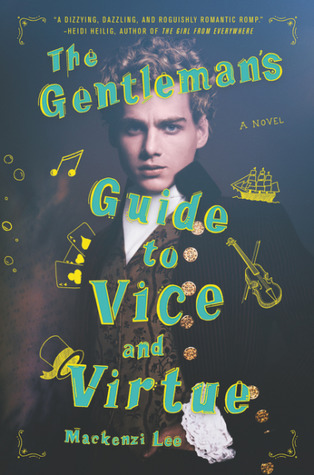
Take A Peek Book Review: The Gentleman’s Guide to Vice and Virtue by Mackenzi Lee

“Take a Peek” book reviews are short and (possibly) sweet, keeping the commentary brief and providing a little peek at what the book’s about and what I thought.


Synopsis:

(via Goodreads)

Henry “Monty” Montague was born and bred to be a gentleman, but he was never one to be tamed. The finest boarding schools in England and the constant disapproval of his father haven’t been able to curb any of his roguish passions—not for gambling halls, late nights spent with a bottle of spirits, or waking up in the arms of women or men.

But as Monty embarks on his Grand Tour of Europe, his quest for a life filled with pleasure and vice is in danger of coming to an end. Not only does his father expect him to take over the family’s estate upon his return, but Monty is also nursing an impossible crush on his best friend and traveling companion, Percy.

Still it isn’t in Monty’s nature to give up. Even with his younger sister, Felicity, in tow, he vows to make this yearlong escapade one last hedonistic hurrah and flirt with Percy from Paris to Rome. But when one of Monty’s reckless decisions turns their trip abroad into a harrowing manhunt that spans across Europe, it calls into question everything he knows, including his relationship with the boy he adores.

My Thoughts:

What fun! The Gentleman’s Guide to Vice and Virtue is part silly adventure story, part surprisingly moving look into the life of a young man of privilege who suffers the constant abuse and humiliation of a cruel father and who can never fully pursue his true love, who just happens to be his best friend. Most of all, this is a light-hearted romp through Europe as our trio of heroes are pursued by highwaymen, pirates, alchemists, and other assorted bad guys during an accidental misadventure. Along they way, they each learn to share their inner hopes and fears, and dare to start envisioning a life other than the one planned out for them.

The characters are quirky and engaging, the narrative flows nicely, and the plot itself is quite tasty and exciting. And while there are some deeper thoughts on the role of women in that society, the lack of a place for people outside the norm, and the devastating impact of parental disapproval, there’s also bravery and sacrifice and love and romance, and it all makes for a delicious read.

_________________________________________

The details:

Title: The Gentleman’s Guide to Vice and Virtue
Author: Mackenzi Lee
Publisher: Katherine Tegen Books
Publication date: June 27, 2017
Length: 513 pages
Genre: Young adult
Source: Library

**Save

Save

Save

Save

Save

Save
Save

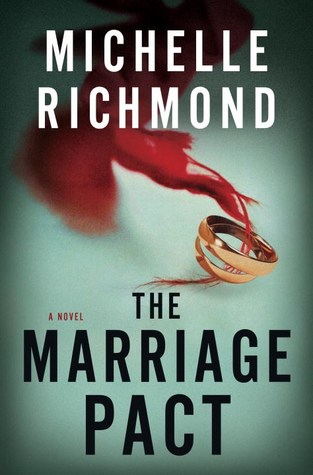
Book Review: The Marriage Pact by Michelle Richmond


Newlyweds Alice and Jake are a picture-perfect couple. Alice, once a singer in a well-known rock band, is now a successful lawyer. Jake is a partner in an up-and-coming psychology practice. Their life together holds endless possibilities. After receiving an enticing wedding gift from one of Alice’s prominent clients, they decide to join an exclusive and mysterious group known only as The Pact.

The goal of The Pact seems simple: to keep marriages happy and intact, and most of its rules make sense: Always answer the phone when your spouse calls. Exchange thoughtful gifts monthly. Plan a trip together once per quarter. . . .

Never mention The Pact to anyone.

Alice and Jake are initially seduced by the glamorous parties, the sense of community, their widening social circle of like-minded couples–and then one of them breaks the rules. The young lovers are about to discover that for adherents to The Pact, membership, like marriage, is for life, and The Pact will go to any lengths to enforce that rule. For Jake and Alice, the marriage of their dreams is about to become their worst nightmare.

The premise of this book sounded intriguing: A mysterious, secretive club, with complicated rules and requirements, dedicated to enhancing and strengthening marriage. Alice and Jake join the Pact mostly on a whim — they’re amused by the sense of formality and ritual during the initial sales pitch, and sign the contract without a moment’s hesitation. After all, if they sign now, they’ll be just in time to attend the big fancy party coming up.

Uh oh. Never sign without reading the fine print! Alice, a lawyer, really should know better.

Alice and Jake soon learn that there’s a dark side to the Pact. First tip should have been the manual — a huge volume containing endless rules about how to behave in the marriage — and long lists of punishments, graded misdeamenors to felonies — for marital infractions big and small. The couple simply doesn’t take any of it seriously. They act like it’s a silly game. No one actually MEANS any of this stuff, right?

Wrong.

They realize quickly enough that crimes like lack of focus on the marriage carry a penalty, such as relatively benign mandatory counseling sessions with a more senior Pact member, or required early-morning workout sessions with a trainer when one’s weight falls outside the prescribed limits. Yes, there are weigh-ins. Shudder.

The penalties escalate with the severity of the crime against the marriage, and before they know it, Alice is being manacled and shackled and carted off to a prison facility in the Nevada desert. And that’s just the tip of the iceberg. Too late, Jake and Alice realize that the Pact is not a game at all… and that there’s no way out.

What I liked:

The premise is certainly different, I’ll grant the book that. It’s intriguing at the start to wonder about the true agenda of the Pact. As each consequence become harsher than the previous one, the suspense ratchets up. The book moves quickly, and the tension continues to mount as the book proceeds. Who can be trusted? Where can they turn? Is the danger real? There’s definitely a lot to keep us going.

I liked Alice and Jake as characters, although I need to counter that by saying that they’re way too smart to end up in the situation they find themselves in.

And stretching for anything else positive to say — well, I did like the author’s use of the San Francisco setting. Every time Jake describes which route he took from his house, I can picture the turn-by-turn directions, and I enjoyed seeing “my” beach, Ocean Beach, feature into the plot.


What I didn’t like:

Oh, where to start?

My biggest issue, and the one that will pretty much keep me from recommending this book, is that it pretty quickly changes from being dark to being outright sadistic. Yes, people, the punishments include all sorts of sadistic, painful torture and humiliation, and that is so NOT what I thought I was signing up for. The book became frankly unpleasant by the last third. I don’t mind creepy thrillers — but this isn’t that. The Marriage Pact gets into detailed descriptions of horrible acts involving pain and loss of control and cruelty for the sake of cruelty.

Beyond the awfulness of those parts, the plot itself doesn’t hold together. I made light of it earlier, but really, these are two well-educated people who should absolutely know better than to sign contracts on the spot, as if they’re buying a timeshare that they’ll regret later. There’s every indication right from the start that they’re getting involved in something big and scary, and they just ignore the warning signs and sign on the dotted line. Sheesh.

Also, hate to say it, but the Pact just never made sense to me. It’s filled with rich and powerful people, the implication being that if you ever try to leave or expose the Pact, they have the power and the reach to destroy your careers, your reputations, and possibly even your chance of staying alive. But why? The Pact is dedicated to the preservation of marriage. Fine. But what drives all these people to enforce it and be loyal to it? It’s not about money or power — it seems to be only about dedication to the Pact itself. The rituals of punishment, coupled with the loyalty of Pact members, just doesn’t add up.


Wrapping it all up:

Reading The Marriage Plot is like watching a train wreck. It’s a horrible sight, but I had a hard time looking away. I did want to know what would happen next and whether Alice and Jake would find a way out. Also, the truly sadistic, torture-ific parts don’t come until later in the book, and by that time I was too far in to walk away without finishing. I guess not everyone will be as bothered by those parts as I was, but that’s definitely not what I thought I was signing up for when I started this book.

_________________________________________

The details:

Title: The Marriage Pact
Author: Michelle Richmond
Publisher: Bantam
Publication date: July 25, 2017
Length: 432 pages
Genre: Thriller
Source: Library

Save

Save

Save

Save

Save
Save

Save

Save

Save

Save

Save

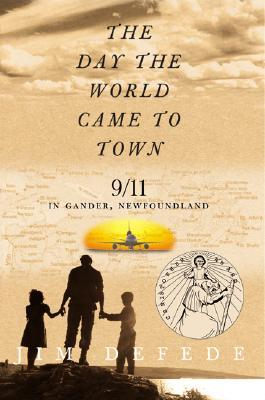
Audiobook Review: The Day the World Came to Town: 9/11 in Gander, Newfoundland by Jim DeFede


When 38 jetliners bound for the United States were forced to land at Gander International Airport in Canada by the closing of U.S. airspace on September 11, the population of this small town on Newfoundland Island swelled from 10,300 to nearly 17,000. The citizens of Gander met the stranded passengers with an overwhelming display of friendship and goodwill. As the passengers stepped from the airplanes, exhausted, hungry and distraught after being held on board for nearly 24 hours while security checked all of the baggage, they were greeted with a feast prepared by the townspeople. Local bus drivers who had been on strike came off the picket lines to transport the passengers to the various shelters set up in local schools and churches. Linens and toiletries were bought and donated. A middle school provided showers, as well as access to computers, email, and televisions, allowing the passengers to stay in touch with family and follow the news.

Over the course of those four days, many of the passengers developed friendships with Gander residents that they expect to last a lifetime. As a show of thanks, scholarship funds for the children of Gander have been formed and donations have been made to provide new computers for the schools. This book recounts the inspiring story of the residents of Gander, Canada, whose acts of kindness have touched the lives of thousands of people and been an example of humanity and goodwill.

I can’t say enough good things about this moving, uplifting book. It documents human goodness and kindness in the face of tragedy, and is, pure and simple, a marvelous listening experience.

As the book opens, we meet an assortment of passengers and crew members from the 38 planes, as well as some of the locals in Gander. The initial chapters recount the start of these flights from Europe to various points in the United States, and the slowly spreading news that some sort of catastrophe in the US has forced a closure of all US airspace, requiring all planes in the air to land elsewhere. Gradually, the pilots and then the passengers start to learn about the terrorist attacks. The fear and disbelief and outrage are palpable, as is the very real fear that — given all the unknowns of events still occurring — there could be terrorists on board any of the planes still in the air.

As the planes land in Gander, we see the amazing efforts and generosity of the townspeople, both those in official capacities as mayor or police officer or customs official, and those who are simply people whose hearts are open to the strangers who arrive by the thousands in their small town.

The acts of kindness are beautiful to hear described. Townspeople drop off towels and linens by the carload at the shelters, with no thought of getting them back. Local pharmacists work round the clock to contact passengers’ physicians around the globe so that they can get copies of their prescriptions and make sure they have their needed medications. Local animal shelter volunteers care for the stranded animals who’d been in transit in the airplane cargo holds. A local retailer is instructed by headquarters to give the “plane people” everything they need, no money necessary. Toys are delivered, so that every single child from the planes has a new toy to play with. When it’s discovered that two Orthodox Jews are among the passengers, extraordinary efforts are made to make sure kosher food is delivered for them. The care and love, given so freely to complete strangers, is just beautiful.

Two of the most moving stories are about passengers going through extreme stress in an already stressful situation. First, there’s the couple returning from visiting relatives abroad whose son is a New York firefighter. They know he was likely one of the first responders who entered the towers, and through the time of their stay in Gander, his fate remained unknown. Second, there’s a couple from Texas on the way home from weeks in Kazakhstan where they’d just adopted a daughter. What should have been her first entry into the US and an introduction to her new life turns into an extended stay in a shelter with parents she barely knows. In both cases, as with really everyone there, the support they receive is heartwarming and unforgettable.

The book is filled with story after story of the amazing interactions between the “plane people” and the “Newfies”. The book was published just about a year after 9/11, and the author includes some follow-up in the epilogue to let us know how certain people’s lives changed since those fateful days. I’d love to know now, so many years later, how they’re doing, and whether the bonds formed in Gander have stayed strong over the years.

The Day the World Came to Town is an amazing listen. No matter how many years have gone by, the images from 9/11 remain indelible. and I found it particularly chilling to listen to the chapters which described the initial attacks and the various ways in which the passengers and flight crews heard the news. Despite the sorrow of the tragedy, this book is a lovely reminder of the good that exists in the world and the huge difference small acts can make.

Side notes:

First, a big thank you to author Dana Stabenow, whose review of this book on her blog is what made me find a copy in the first place!

Second, the musical Come From Away, now on Broadway, is also based on the events in Gander during the week of 9/11. I’ve heard such wonderful things about the show! I really hope to get to New York in the coming year — and if I do, seeing Come From Away will be high on my “must” list!

_________________________________________

The details:

Title: The Day the World Came to Town: 9/11 in Gander, Newfoundland
Author: Jim DeFede
Narrator: Ray Porter
Publisher: William Morrow
Publication date: September 3, 2002
Length (print): 256 pages
Length (audiobook): 6 hours, 27 minutes
Genre: Non-fiction
Source: Purchased (Audible)

Save

Save

Save

Save

Save

Save

Save

Save

Save

Save

Save