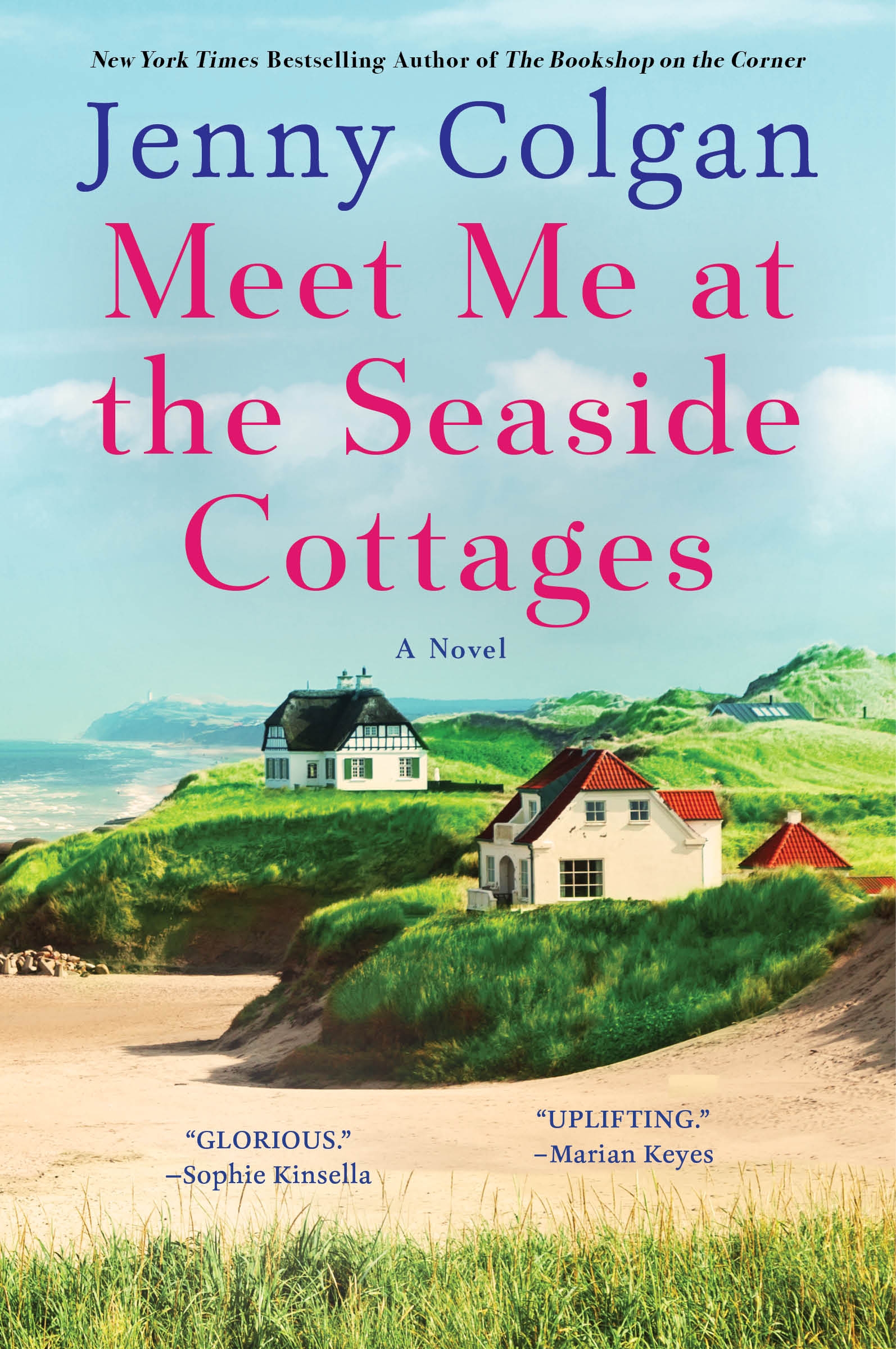
Audiobook Review: Meet Me at the Seaside Cottages by Jenny Colgan

Title: Meet Me at the Seaside Cottages
Author: Jenny Colgan
Narrator: Eilidh Beaton
Publisher: Avon
Publication date: June 16, 2026
Print length: 352 pages
Audio length: 11 hours, 44 minutes
Genre: Contemporary fiction
Source: Purchased (audiobook); E-book ARC from the publisher/NetGalley
Rating:

Rating: 3.5 out of 5.

EVERYONE IS SEARCHING FOR THEIR PERFECT HOUSE. BUT HOME IS REALLY WHERE THE HEART IS…

Janey Carter has a lot to be grateful for—a home by the sea in the Scottish isles, a job that she loves, two kids who have successfully launched, and a network of kind and supportive friends. But since her husband left, her confidence has taken a nosedive. And then, out of the blue, her thirty-year-old daughter Essie announces she’s moving back home. Janey loves Essie dearly, but she was never the easiest to live with, and Janie has been enjoying the empty nest life.

Yes, Essie Carter has just lost her job, can’t afford her rent in Edinburgh, and her boyfriend isn’t ready to commit. She hates to admit defeat and isn’t wild about moving back to the remote island community where she was raised. But maybe the sea air will clear her head?

No sooner is Essie back under her mother’s roof than an unusual opportunity pops up: the shabby and unloved Seaside Cottages next door come up for sale. Janey has some experience renovating the island’s famous stone fisherman’s cottages, Essie needs something to do, and they could both use a little Air B&B income to warm their pockets. Mother and daughter slowly bond over the shared challenge, which delivers some much-needed revelations for Essie, and offers Janey a surprise second chance at love as well.

If a house can be brought back to life, along with the community around it, then so can a heart …

Jenny Colgan’s books can be counted on to provide a lovely escape to a charming small town, humorous challenges as well as interesting relationship dynamics, and simply gorgeous landscapes — which may induce hallucinations of chucking it all and running away to a sweet little Scottish village on the northern coast!

In Meet Me at the Seaside Cottages, the heart of the story is a mother-daughter relationship that just as prickly now as when Essie was in her teens. Janey is a mid-50s audiologist who loves her job, loves her community, loves the tiny cottage she’s made her home, and loves her adult children… although a bit of distance is best. Essie, around 30, fled their small town of Carso as soon as she could, preferring a life in the business world, with posh social events and gorgeous clothes (and a gorgeous financier boyfriend) in Edinburgh. Essie has never gotten over her parents’ divorce, for which she mainly blames Janey… even though it was her father who cheated and ultimately left for another woman.

Janey loves Essie, but Essie treats her with scorn and can’t really be bothered answering most of her texts. But as the story opens, Essie learns that her banking firm is relocating to Switzerland and she’s being let go. Sure, she had a well-paying job in finance, but she didn’t see this coming and has no savings. With housing in Edinburgh either impossible to find or exorbitantly priced, she can’t afford to stay — so full of dread and misery, she heads back to Carso, to her mom’s tiny cottage, to regroup and (hopefully) get back to a job and “real life” in Edinburgh as soon as humanly possible.

Meanwhile, Janey is slowly coming out of her shell socially. She has very good friends and is well liked and appreciated within the community, but she hasn’t dared dip her toes back into the dating pool since the divorce. She feels old and unattractive, and the dating apps aren’t exactly enticing. When she encounters a very nice man at a pub quiz, she’s interested in someone for the first time, and thanks to a pregnant dog in distress (and a very ungainly batch of puppies), Janey has a strangely quirky reason to interact with this man. Who wouldn’t want to bond over pupppies?

While Janey is delightful, Essie is hard to warm to. She returns to Carso full of despair and feeling hopeless, which she expresses through disdain of the of the town and absolute nastiness toward her mother. She loosens up eventually, once she gets involved in assisting a local with rehabbing the cottages next door — finding purpose and a potential romance along the way — but meanwhile, she can be a total pill.

There’s not exactly a ton of plot in Meet Me at the Seaside Cottages, but that’s okay. The setting, the tone, the characters — these are the reasons we pick up Jenny Colgan novels, after all! I enjoyed seeing the interwoven relationships within the community, and very much enjoyed Janey and her day to day life, as well as the slow dawning of a new romance for her.

I struggled with the mother-daughter relationship, not that it might not be realistic, but just that Essie’s behavior makes her so unlikeable for much of the story. I recognize that she lashes out at her mother because of her own traumas, but it’s just unpleasant to have to see, and made me less interested in following her through the chapters about her adjustment and transformation. (Then again, demographic-wise, I’m much more aligned with Janey than Essie. Perhaps a reader in Essie’s age range might feel more sympathetic toward her?)

It’s interesting to see how the author weaves economic challenges into the story. People in Carso can’t find housing, because outsiders keep scooping up properties and converting them to vacation rentals for people from the cities, who swoop in, don’t shop at or patronize local businesses, and drive rents sky-high for the people who actually live there. Essie experiences the same in Edinburgh, where she’s constantly exposed to the have/have-not divide and lives in a state of envy over all the gorgeous flats she’ll never be able to afford. While the overarching story is very much centered on the lives of the characters, much of the plot is informed by the financial challenges they experience and the interest in property — for both locals and the wealthy investors who see money rather than people when they look at Carso.

A note on the audiobook: Eilidh Beaton is wonderful. She narrates many of Jenny Colgan’s books, and has a talent for voicing an array of characters, adding just the right humorous touches, and evoking the feel of the place and its people.

Meet Me at the Seaside Cottages is a sweet, light story about mothers and daughters, and about life in a changing community whose people are anxiously trying to hold onto the qualities that make their world so special. The storyline overall is gentle and entertaining. Don’t pick up this book expecting much in the way of action — but if you enjoy interesting characters, beautiful settings, and small town goings-on (and puppies!), this makes a lovely option for good escapist reading.

Note: Amazon and Goodreads indicate that this book is part of the Mure series. It’s not. There’s really no connection at all, other than a location that’s in the same general vicinity. This book does include characters from Close Knit and The Summer Skies, but only in passing — there’s no actual impact on the story here, so no need to read these novels in any particular order.

Purchase linksAmazon – Bookshop.org – Libro.fm
Disclaimer: When you make a purchase through one of these affiliate links, I may earn a small commission, at no additional cost to you.
Book Review: Black Woods Blue Sky by Eowyn Ivey

Title: Black Woods Blue Sky
Author: Eowyn Ivey
Publisher: Random House
Publication date: February 4, 2025
Length: 320 pages
Genre: Contemporary fiction
Source: Review copy courtesy of the publisher via NetGalley
Rating:

Rating: 4 out of 5.

Pulitzer Prize finalist and New York Times bestselling author of The Snow Child Eowyn Ivey returns to the mythical landscapes of Alaska with an unforgettable dark fairy tale that asks the question: Can love save us from ourselves?

Birdie’s keeping it together; of course she is. So she’s a little hungover, sometimes, and she has to bring her daughter, Emaleen, to her job waiting tables at an Alaskan roadside lodge, but she’s getting by as a single mother in a tough town. Still, Birdie can remember happier times from her youth, when she was free in the wilds of nature.

Arthur Neilsen, a soft-spoken and scarred recluse who appears in town only at the change of seasons, brings Emaleen back to safety when she gets lost in the woods. Most people avoid him, but to Birdie, he represents everything she’s ever longed for. She finds herself falling for Arthur and the land he knows so well.

Against the warnings of those who care about them, Birdie and Emaleen move to his isolated cabin in the mountains, on the far side of the Wolverine River.

It’s just the three of them in the vast black woods, far from roads, telephones, electricity, and outside contact, but Birdie believes she has come prepared. At first, it’s idyllic and she can picture a happily ever after: Together they catch salmon, pick berries, and climb mountains so tall it’s as if they could touch the bright blue sky. But soon Birdie discovers that Arthur is something much more mysterious and dangerous than she could have ever imagined, and that like the Alaska wilderness, a fairy tale can be as dark as it is beautiful.

Black Woods, Blue Sky is a novel with life-and-death stakes, about the love between a mother and daughter, and the allure of a wild life—about what we gain and what it might cost us.

Black Woods, Blue Sky is a creative take on motherhood and the longing for freedom, set in the remote mountains of Alaska, with a fairy tale feel that lends the story a dark, otherworldly undertone.

Birdie is a young single mother working at the bar of a roadside Alaska lodge, often drinking too much, hooking up with random men, and mostly just getting by. She’s devoted to six-year-old Emaleen, even though she sometimes leaves Emaleen sleeping alone in their cabin while she works. She’s doing the best she can, but life is hard and full of frustration. Birdie aches for something more — and daydreams about the mountain peaks she sees from the picnic table out back of the lodge.

When quiet, scarred Arthur retrieves a lost Emaleen from the woods, his gentleness and strangeness appeal to Birdie. Their talks turn into more, and eventually, Birdie and Emaleen go off to live with Arthur in his remote cabin.

It was strange, no one knowing where they were in that immense wilderness. Like free-falling.

At first, it’s perfect. The cabin is in rough shape, and Birdie delights in turning it into a home, cleaning it and making it cozy and safe for the three of them. Sure, Arthur disappears at nights and won’t talk about where he goes, but when he’s home, he’s attentive and kind, and he introduces Birdie and Emaleen to the wonders of the land, the animals, and the wildflowers that surround them.

Birdie wanted to be at ease in her own skin. She wanted to be content. All those afternoons, she’d sat on that picnic table behind the lodge and daydreamed about taking Emaleen away, across the Wolverine River, up into the mountains. Now they were here, and she should be entirely happy. But the hours were circling and meandering and bleeding into each other, and it was like the wilderness had the pull of a dangerous eddy.

Their wilderness idyll takes a dark turn eventually, and the final third of the book follows Emaleen as a college graduate, returning to Alaska for the first time in over a decade, confronting her past and coming to terms with her memories and the truth of what happened up on their mountain.

Black Woods Blue Sky is a hard book to describe. It starts slowly, but a particular revelation about a third of the way into the book takes this book in an unexpected, startling direction. Without saying more about that, all I can share is that the grit and hard work of wilderness living is interspersed with a fairy tale-like element that makes the entire story feel every-so-slightly off-kilter: We’re in our own world, but not quite.

I loved the natural setting and the author’s evocative descriptions. The writing is stellar, and made me yearn for my own little cabin in the wilderness (but perhaps with fewer deadly animals and life-threatening hazards around every turn).

It was the golden hour, the low sun casting a glow that turned the colors to richer shades — the brilliant magenta of the fireweed blossoms, the leafy green across the hayfields and the dark green of the forest with it spruce and cottonwood and birch. In the distance, the evening light brought the mountains into heightened relief so that the rock faces and ravines and jagged, snowy peaks stood out vividly. The air was warm and gentle, and everything was quiet, except for the echoing, lovely trill of the hermit thrush songbirds.

The side characters who interact with Birdie and Emaleen are a mixed bag — they’re supposed to be important to the main characters, but I didn’t always have a very good sense of who they were as individuals. Birdie is a bit of an enigma; her ache for meaning in her life and her passion for living freely are clearly shown, but it’s hard to approve of the choices she makes when they so clearly put Emaleen at risk over and over again.

Black Woods Blue Sky is fascinating and tricky and moving. It’s a book that begs to be discussed — it would make a fantastic pick for a book group book. Readers who loved The Snow Child will love this book too. Its blend of nature and fantasy, plus its focus on parents and children, is affecting and thought-provoking, and it’s a reading experience that stays with you even after reading the final pages and closing the covers.

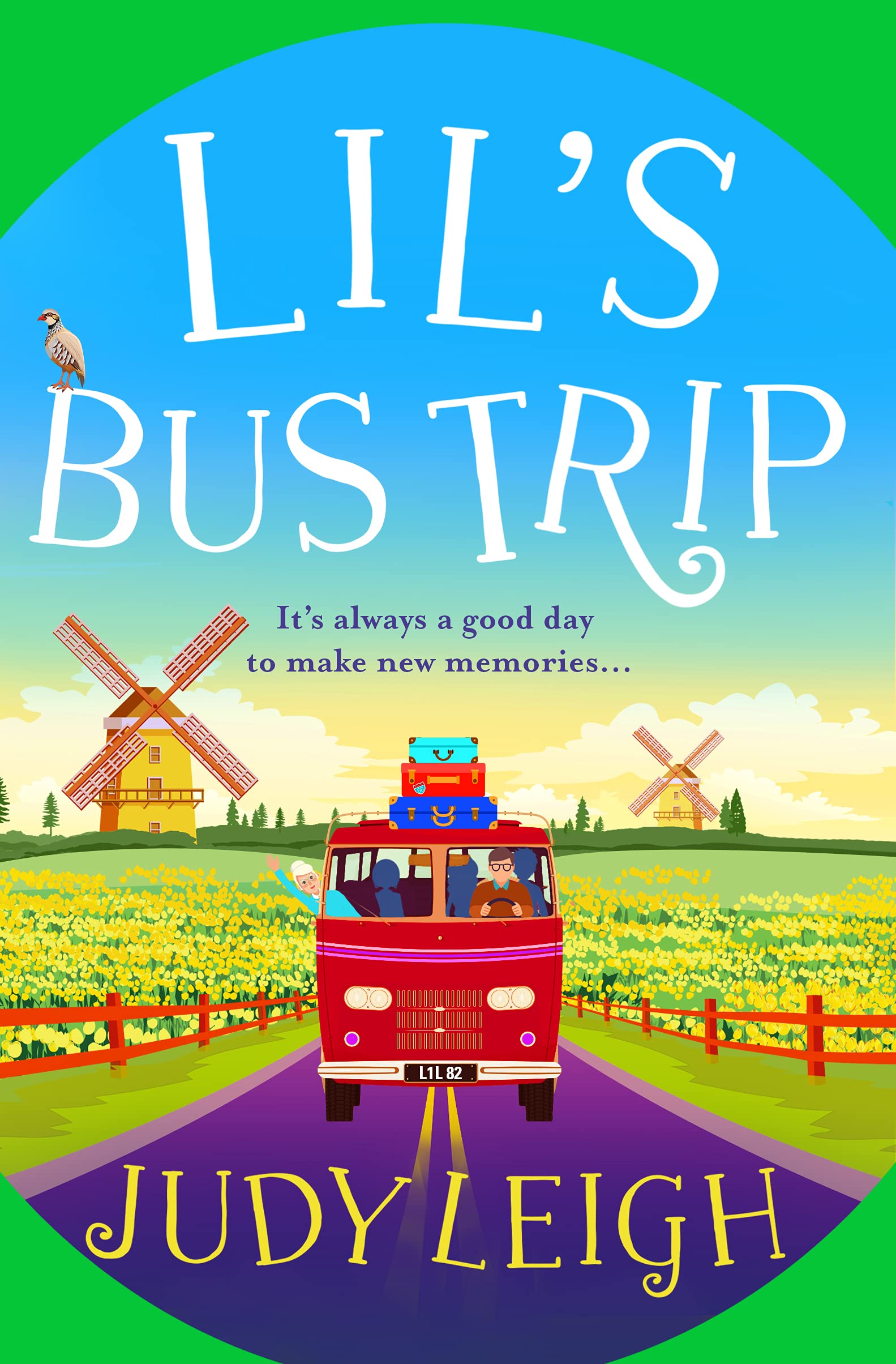
Audiobook Review: Lil’s Bus Trip by Judy Leigh

Title: Lil’s Bus Trip
Author: Judy Leigh
Narrator: Julie Mullen
Publisher: Boldwood Books
Publication date: August 26, 2021
Print length: 350 pages
Audio length: 10 hours 36 minutes
Genre: Contemporary fiction
Source: Purchased
Rating:

Rating: 4 out of 5.

From the USA Today bestselling author of Five French Hens and The Old Girls’ Network comes a story of the journey of a lifetime across Europe in pursuit of memories, love, and new adventures. It’s always a good time for a road trip…

When 82-year-old Lil decides to book herself, her 65-year-old daughter, Cassie, and her friend Maggie on a bus trip across Europe, she hopes for a little adventure to counteract the monotony of life.

Along with three members of the Salterley Tennis Club and the Jolly Weaver football team, whose ideas of a good time are rather different to Lil’s and strikingly at odds with each other’s, the merry band of travellers set out on their great adventure.

From moving moments on the beaches of Normandy, outrageous adventures in Amsterdam, to the beauty of Bruges and gastronomic delights of France, the holiday is just the tonic Lil, Maggie and Cassie needed.

And as the time approaches for them to head home, Lil makes an unexpected discovery – even in her advancing years, men are like buses – there isn’t one for ages then two come along at once. Is Lil ready to share her golden years, and can the ladies embrace the fresh starts that the trip has given them. Or is it just too late to change…

Judy Leigh’s books can be counted on to provide cheery scenarios, heart-warming encounters, and memorable (and often feisty) older women as the main characters — and Lil’s Bus Trip is yet another terrific listening experience!

Lil’s life is perfectly nice, if not exceptionally exciting. She lives in a pleasant senior community, has good friends, and is very close to her daughter Cassie, whom she’s raised on her own after becoming unexpectedly pregnant as an unwed teen. But couldn’t they both use a little adventure for a change?

When a friend from the local pub decides to organize and lead a European road trip, Lil decides it’s just what she and Cassie need. What’s more, Lil’s best friend and next-door neighbor Maggie is slowly suffocating from neglect, as her husband mainly ignores her and sits watching TV all day, so Lil practically forces her along as well. Joining them on their trip are a group of younger folks from a local football team, the pub owner and his elderly father, and a trio of snobs from the tennis club who insist they’re only interested in culture and intellectual pursuits.

As the trip gets underway, the group gets to experience both serious moments — such as the beaches of Normandy — as well as silly mishaps… like what happens when the three oldest members of the group order a brownie to go with their coffee in an Amsterdam coffeeshop.

There’s actually not a ton of plot to describe, other than the highlights of the road trip itself. And yet, there’s something so warm and delightful about this audiobook. I was apprehensive at the beginning about there being so many characters, but ultimately, the twelve people on the mini-bus are each developed over the course of the story, so that by the end, it feels like we’ve been hanging out with a group of our own friends.

The adventures on the road are lots of fun, and there are more serious moments too, as the various characters have opportunities to rethink their lives back home and come to terms with what they want (or don’t want). For Lil especially, it’s a chance to look back at a life lived on her own terms, but often lived alone, and consider whether it’s too late to take a chance on loving someone new.

The audiobook narrator rises to the challenge of voicing the twelve travelers, and bringing them all to distinct life… along with several other memorable people they meet along the way. For me, a jarring note was that the narrator adds in the vocal effects described… so if it’s stated that a character laughs, the narrator laughs… or coughs… or takes a deep breath. I find this approach a bit annoying, but I’m sure some listeners like that sort of thing. (Also, Cassie is a singer, and when she performs in the book, the narrator sings Cassie’s songs, rather than just reading the words. Again, whether you’ll enjoy this is a matter of taste and preference. She does a perfectly respectable job with the singing, but it’s not my cup of tea.)

Still, audio/narration preferences aside, I did really have a great time with this sweet story. Listening to Lil’s Bus Trip is the audiobook equivalent of a warm blanket and a cup of hot cocoa. It’s comforting and pleasant, not particularly dramatic, but so easy to sink into and enjoy.

This is now my 4th book by Judy Leigh, and it won’t be my last! Fortunately, she has a good-sized backlist for me to dig into while waiting for her next new release!

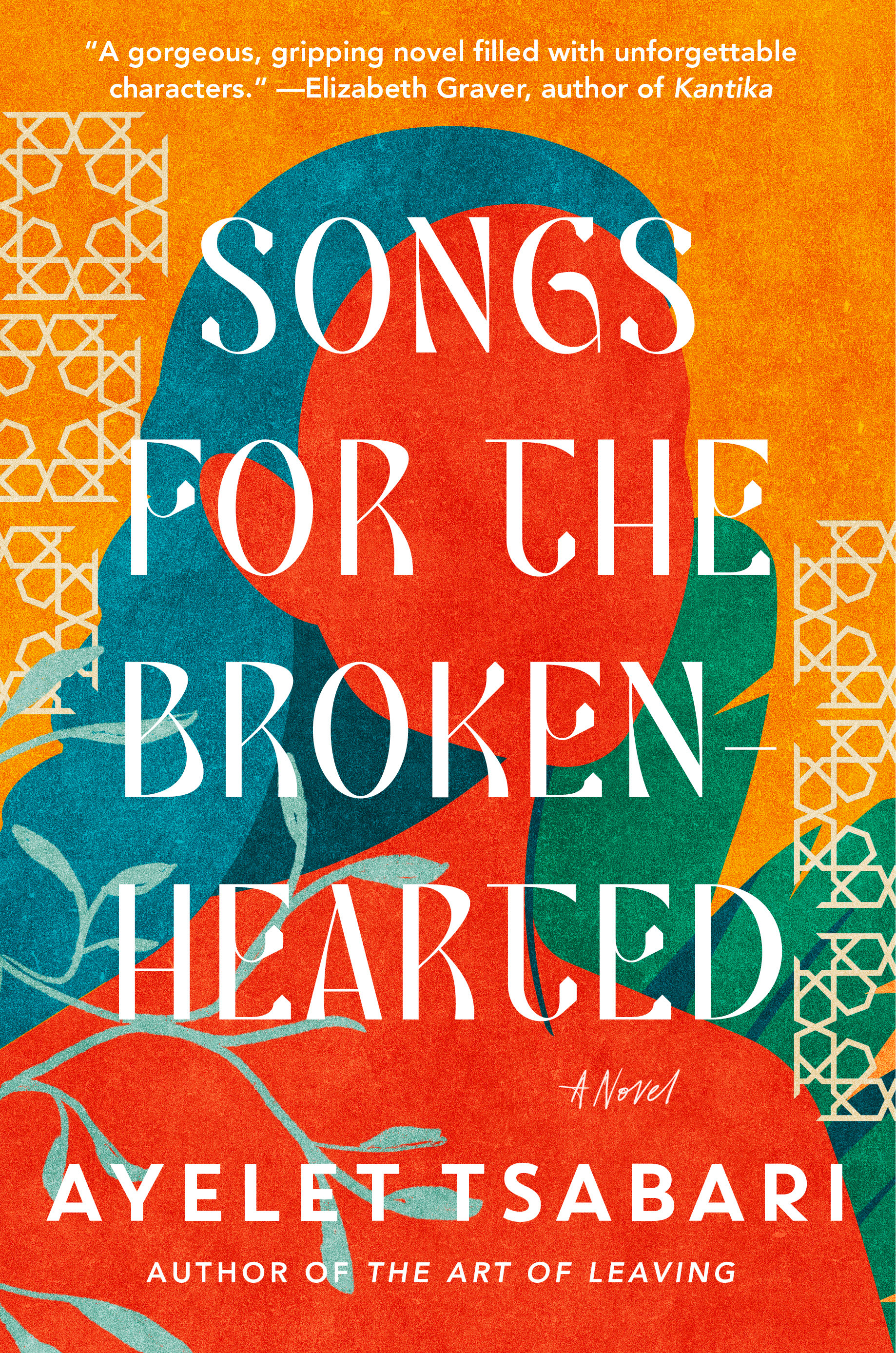
Book Review: Songs for the Broken-Hearted by Ayelet Tsabari

Title: Songs for the Broken-Hearted
Author: Ayelet Tsabari 
Publisher: Random House
Publication date: September 10, 2024
Length: 352 pages
Genre: Historical fiction
Source: Review copy courtesy of the publisher via NetGalley
Rating:

Rating: 5 out of 5.

A young Yemeni Israeli woman learns of her mother’s secret romance in a dramatic journey through lost family stories, revealing the unbreakable bond between a mother and a daughter—the debut novel of an award-winning literary voice.

“A gorgeous, gripping novel filled with unforgettable characters.”—Elizabeth Graver, author of Kantika

1950. Thousands of Yemeni Jews have immigrated to the newly founded Israel in search of a better life. In an overcrowded immigrant camp in Rosh Ha’ayin, Yaqub, a shy young man, happens upon Saida, a beautiful girl singing by the river. In the midst of chaos and uncertainty, they fall in love. But they weren’t supposed to; Saida is married and has a child, and a married woman has no place befriending another man.

1995. Thirty-something Zohara, Saida’s daughter, has been living in New York City—a city that feels much less complicated than Israel, where she grew up wishing that her skin was lighter, that her illiterate mother’s Yemeni music was quieter, and that the father who always favored her was alive. She hasn’t looked back since leaving home, rarely in touch with her mother or sister, Lizzie, and missing out on her nephew Yoni’s childhood. But when Lizzie calls to tell her their mother has died, she gets on a plane to Israel with no return ticket.

Soon Zohara finds herself on an unexpected path that leads to shocking truths about her family—including dangers that lurk for impressionable young men and secrets that force her to question everything she thought she knew about her parents, her heritage, and her own future.

Songs for the Broken-Hearted is a beautiful look into women’s lives, intergenerational misunderstandings and traumas, and the hidden histories of women’s communities and their art. Above all, it’s the story of a woman processing grief over the loss of a mother she never fully knew, learning more about herself through learning about her mother’s life.

It’s 1995, and Zohara is on a break from her doctoral program in New York, vacationing in Thailand, when she’s summoned back home to Israel with the news that her mother Saida has died. The youngest daughter in this Yemeni Israeli family, Zohara has felt disconnected from her homeland and her family, and has never really known her mother in a deep way.

Upon her return, Zohara is confronted by just how much she may have missed, as she begins to learn more about Saida’s role within the family and community, and discovers tapes of her beautiful singing. As Zohara eventually learns, Saida wrote her own songs — and within the world of Yemeni Jewish women, singing is the art form that allows expression, creativity, and emotion, especially important for the immigrant generation who arrived in Israel with limited or no knowledge of Hebrew and were illiterate, as learning was the domain of men.

Through Zohara, we learn more about the history of the Yemeni community within Israel, and as we meet others in her family, we also see the extreme political upheaval of the time. The Oslo accords had only recently been signed, and while Yitzhak Rabin is seen as a hero by some, there’s an increasingly strident and violent opposition building, deeply opposed to the planned concessions of the peace process.

Meanwhile, interspersed with Zohara’s experiences, we have chapters sets in 1950, told from the perspective of Yakub, a young man who meets Saida in the immigrant camp to which they’re assigned upon arrival in Israel from Yemen. Amidst the squalor and deprivations of the camp and the discrimination experienced by the new immigrants, Yakub and Saida find an unexpected connection, as he hears her singing by the river, and they bond over their love of words.

Through Yakub and Saida’s story, as well as the dominant storyline focused on Zohara, we get an inside view of the experience of Yemeni immigrants to Israel, including the horrifying (and real) events surrounding the disappearance of Yemeni children and other children of Jewish immigrants from Arab countries. And yet, there’s also the uplifting elements as we see more of the Yemeni culture, from food to music to family traditions, language, observances, and more.

Songs for the Broken-Hearted is truly a beautiful book, telling a powerful story about family connections and secrets, and showing how grief in its many forms can change the course of individual lives and carry down through generations.

Zohara’s story is affecting, and while it can be frustrating as a reader to see this smart woman make unwise choices, we can easily understand how her loss turns her life upside down and leads her down unexpected paths. Grief also leads to renewed hope, as only through her loss does Zohara come to discover and then immerse herself in the world of women’s songs that was so important to Saida. Through these songs and the community of women who keep them alive, Zohara finds new meaning, learns deeper truths about her mother, and even manages to reignite the passion missing from her academic life.

As Zohara reimmerses herself in family, she also reengages with Israel itself, and is there to witness the upheaval and divisions that culminate in Rabin’s assassination. It’s very heavy, and for readers familiar with that chapter of history, the inevitability of the coming violence can be very painful to experience alongside the characters.

What I loved most about Songs for the Broken-Hearted is the tangible, evocative way the author shares the Yemeni culture. References to specific foods and spices, particular singers and pieces of music — all bring this world to life in a way that feels immersive and immediate.

Songs for the Broken-Hearted is powerful on so many levels, and is an absorbing work of fiction that pulls the reader in right from the start. I loved the cultural aspects as well as the exploration of family bonds, the relationships between mothers and children, and the process of grief and healing.

Highly recommended.

Songs for the Broken-Hearted is author Ayelet Tsabari’s debut novel. She’s previously published a collection of stories (The Best Place on Earth), and a memoir, The Art of Leaving, which I’d especially like to read.

For a taste of Yemeni women’s music, check out the samples below (or search for Yemenite music by Ofra Haza or Gila Beshari, as a starting place — there’s much more available with a bit of looking):

Book Review: Hula by Jasmin ‘Iolani Hakes

Title: Hula
Author: Jasmin ‘Iolani Hakes
Publisher: HarperVia
Publication date: May 2, 2023
Length: 400 pages
Genre: Historical/contemporary fiction
Source: Library
Rating:

Rating: 4 out of 5.

Set in Hilo, Hawai’i, a sweeping saga of tradition, culture, family, history, and connection that unfolds through the lives of three generations of women–a brilliant blend of There, There and Sharks in the Time of Saviors that is a tale of mothers and daughters, dance and destiny, told in part in the collective voice of a community fighting for its survival

“There’s no running away on an island. Soon enough, you end up where you started.”

Hi’i is the youngest of the legendary Naupaka dynasty, only daughter of Laka, once the pride of Hilo; granddaughter of Hulali, Hula matriarch on the Big Island. But the Naupka legacy is in jeopardy, buckling under the weight of loaded silences and unexplained absences, most notably the sudden disappearance of Laka when Hi’i was a child. Hi’i dreams of healing the rifts within her family by becoming the next Miss Aloha Hula–and prove herself worthy of carrying on the family dynasty. She demonstrates her devotion to her culture through hula–the beating heart of her people expressed through the movement of her hips and feet.

Yet she has always felt separate from her community, and the harder she tries to prove she belongs–dancing in the halau until her bones ache–the wider the distance seems to grow. Soon, fault lines begin to form, and secrets threaten to erupt. Everyone wants to know, Hi’i most of all: what really happened when her mother disappeared, and why haven’t she and her grandmother spoken since? When a devastating revelation involving Hi’i surfaces, the entire community is faced with a momentous decision that will affect everyone–and determine the course of Hi’i’s future.

Part incantation, part rallying cry, Hula is a love letter to a stolen paradise and its people. Told in part by the tribal We, it connects Hawaii’s tortured history to its fractured present through the story of the Naupaka family. The evolution of the Hawaiian Sovereignty movement is reflected in the journeys of these defiant women and their community, in whose struggle we sense the long-term repercussions of blood quantum laws and colonization, the relationship between tribe and belonging, and the universal question: what makes a family?

Hula is a complex, multi-layered story about family, history, and heritage. I read this for a book discussion (coming in a couple of weeks), after having it on my to-read list since it was released last year. I’m glad to have read it, and even more glad to be able to look forward to sharing thoughts and responses with the book group.

Hilo’s no place for soft feet. Gotta build calluses. Then a girl can run on lava.

In Hula, the narrative is often presented through the community’s eyes, using the “we” voice to explain the dynamics within the Naupauka family and the changing world of the community itself. The history of Hawaii’s colonization and the dismantling of the monarchy is crucial to the story, and through the community’s narration, we’re presented with important people and events from the past which directly impact the unfolding events in the lives of the characters.

The novel itself revolves around Hi’i, first as a child, then as a grown woman. Hi’i is described as being different from the start. Her mother Laka disappeared as a teen, then came back with baby Hi’i with no explanation. Hi’i doesn’t look Hawaiian, with her red hair and green eyes and her susceptibility to sunburn, and yet, she’s soon absorbed by the rhythms of life in Hilo. Still, when Hi’i insists on learning hula, something sacred within her people’s lives and of central importance within the Naupauka family, Laka fears what may come of it.

Secrets abound, especially in terms of Laka’s past and Hi’i’s origins. Eventually, we learn more, but it takes the entire book for these secrets to be shared fully between Hulali (Laka’s mother), Laka, and Hi’i herself.

Mother and daughter had picked up where they’d left off, a fight that had been going on since the time the first navigators were in their canoes charting the stars to find the islands.

The writing is beautiful and often visceral. The dialogue and descriptions have a flow to them, although the heavy usage of Hawaiian words and phrases can present a challenge to a reader. (I kept Google Translate open while reading, and it helped a lot, despite some failures around idiom or intent.)

One by one the dancers shifted into the shape of the wind rattling the branches, the rain pattering upon the grasses, the dew dripping from the leaves. Stethoscopes pressed to Hawai`i’s heart. Through them Hi`i could hear it beating.

Given the book’s title, I’d expected more about hula as a dance form to feature within the story. It’s important, but not as central or dominant as I’d expected. Instead, the family dynamics and the politics around sovereignty, Hawaiian Homelands, and various government actions are what drive the story.

Nothing is spoon-fed to the reader, so for me, it was both eye-opening and occasionally frustrating to have to figure out what was going on and what the political elements actually meant. It also made me realize that I should make an effort to read more non-fiction about Hawaii’s history and the ongoing current struggles among the Native Hawaiian population to reclaim land and autonomy.

They had stolen a finger, then a hand. Then an arm, a shoulder, a hip, a leg, and soon the entire body. Now they wanted our breath, our soul.

The story of the generations of women — their complicated relationships, the concepts of belonging and responsibility, the traditions and expectations — was the most compelling element of Hula for me. I found the sections about Laka’s past and Hi’i’s adult life the most emotionally engaging, although adult Laka is hard to know and didn’t feel entirely consistent to me as a character.

Some loose ends remain at the end of the book, but overall, I appreciated how the author weaves together so many characters and plot points to create a cohesive, meaningful whole.

Hula is not an easy book to read, and requires a lot of concentration to get through, but it’s worth the effort. It left me wanting to know more, and that’s always a good sign about a book’s impact. Hula makes a reader think as well as feel, and leaves a lasting impression.

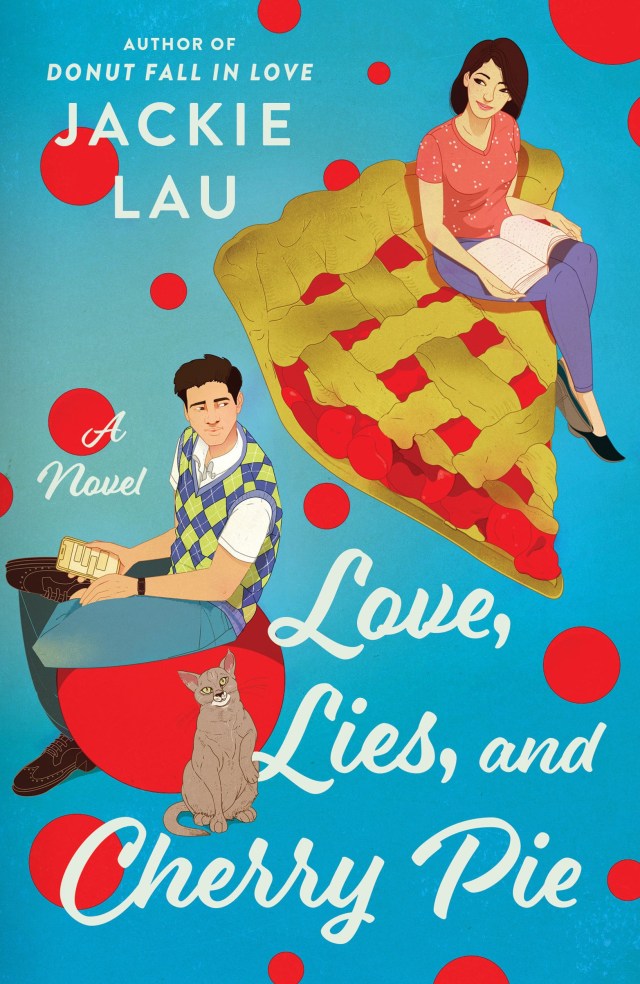
Book Review: Love, Lies, and Cherry Pie by Jackie Lau

Title: Love, Lies, and Cherry Pie
Author: Jackie Lau
Publisher: Berkley
Publication date: May 7, 2024
Length: 352 pages
Genre: Contemporary romance
Source: Review copy courtesy of the publisher via NetGalley
Rating:

Rating: 4 out of 5.

A charming rom-com about a young woman’s desperate attempts to fend off her meddling mother…only to find that maybe mother does know best.

Mark Chan this. Mark Chan that.

Writer and barista Emily Hung is tired of hearing about the great Mark Chan, the son of her parents’ friends. You’d think he single-handedly stopped climate change and ended child poverty from the way her mother raves about him. But in reality, he’s just a boring, sweater-vest-wearing engineer, and when they’re forced together at Emily’s sister’s wedding, it’s obvious he thinks he’s too good for her.

But now that Emily is her family’s last single daughter, her mother is fixated on getting her married and she has her sights on Mark. There’s only one solution, clearly : convince Mark to be in a fake relationship with her long enough to put an end to her mom’s meddling. He reluctantly agrees.

Unfortunately, lying isn’t enough. Family friends keep popping up at their supposed dates—including a bubble tea shop and cake-decorating class—so they’ll have to spend more time together to make their relationship look real. With each fake date, though, Emily realizes that Mark’s not quite what she assumed and maybe that argyle sweater isn’t so ugly after all…

In this cute fake-dating romance, Emily realizes that the best way to get her mother to stop pushing Mark Chan on her… is to pretend to date Mark Chan. Emily is the only unmarried daughter in her large family, and she knows that all her immigrant parents want is for her to have a steady, successful career, own a nice home, and marry an eligible man. That’s not asking too much, is it?

Unfortunately for her mother’s dreams, Emily, while a published author, still has to work as a barista to make rent on her shared apartment, and struggles to find time and energy to finish edits on her second novel and finally develop the great new idea she has for her next book. She’s well aware that she’s a disappointment, and it’s hard to take… and the fact that Mark Chan is the perfect guy that every Chinese parents dreams of is not helping matters. Finally pushed too far, Emily proposes a fake-dating scenario, and surprisingly, Mark agrees.

But just pretending to go on dates isn’t working, since Emily’s mom has eyes and ears everywhere, and soon the couple realizes that they’ll have to actually go on dates together in order to keep up the charade. As they spend time together, Emily starts to realize that there might be more to Mark than she assumed (the fact that he has an adorable cat named Ms. Margaret Muffins certainly helps), and… gasp… are they actually developing feelings? But that would mean that her mother (another gasp!) is right!

Love, Lies, and Cherry Pie is a funny, engaging blast that’s easy to tear through in a day. Emily’s varied predicaments had me laughing out loud, and I really enjoyed seeing the world through her eyes. There’s a lot going on beneath the humor and silliness, including dealing with more serious issues around parental expectations, family pressure, and how easy it is to misinterpret other people’s actions, no matter how well meaning they are.

My only quibbles with this book are (a) I don’t necessarily felt like I got the best handle on Mark as a person — he’s a delicious fake (then real) boyfriend, but his personality remained a bit of a cipher, and (b) the big crisis that’s obligatory at the end of any contemporary romance here felt a bit uneventful. Thankfully, the crisis isn’t about a huge misunderstanding between Emily and Mark, but even so, it’s something that feels unimportant to me, and has a weirdly magnified effect.

Putting those two minor issues aside, I thoroughly enjoyed this book! Having read the author’s two previous novels (Donut Fall in Love and The Stand-Up Groomsman), I wasn’t surprised by how much fun this book is. Jackie Lau is great at creating engaging, funny characters and putting them in relatable but over-the-top situations.

If you enjoy light-hearted romance with plenty of humor — plus great exploration of family dynamics and expectations — definitely check out Love, Lies, and Cherry Pie.

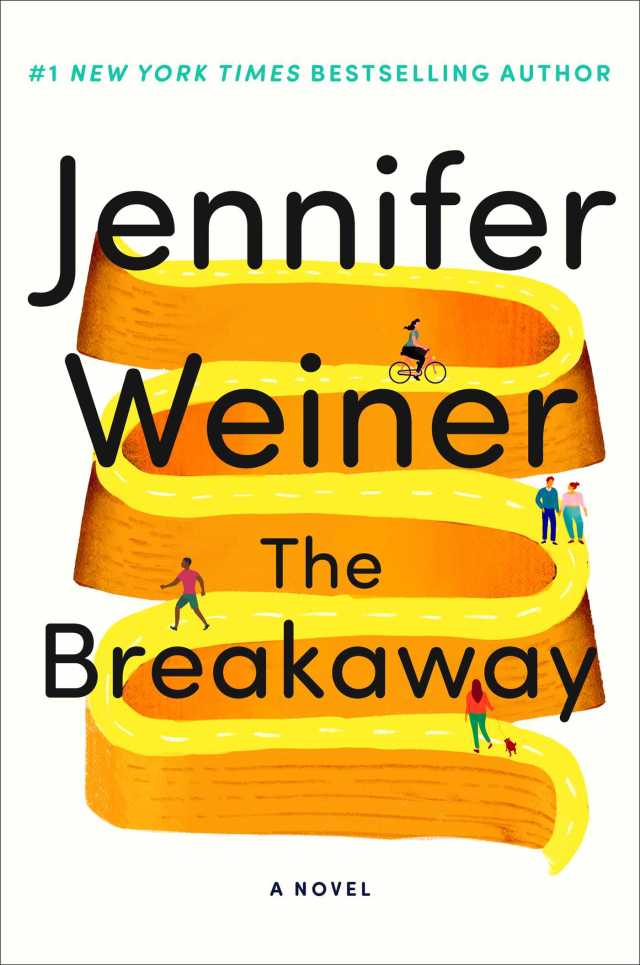
Audiobook Review: The Breakaway by Jennifer Weiner

Title: The Breakaway
Author: Jennifer Weiner
Narrator: Nikki Blonsky, Santino Fontana, Jenni Barber, Soneela Nankani, Joy Osmanski
Publisher: Atria Books
Publication date: August 29, 2023
Print length: 400 pages
Audio length: 13 hours, 30 minutes
Genre: Contemporary fiction
Source: Purchased (audiobook); E-book ARC from the publisher/NetGalley
Rating:

Rating: 4.5 out of 5.

From #1 New York Times bestselling author Jennifer Weiner comes a warmhearted and empowering new novel about love, family, friendship, secrets, and a life-changing journey.

Thirty-three-year-old Abby Stern has made it to a happy place. True, she still has gig jobs instead of a career, and the apartment where she’s lived since college still looks like she’s just moved in. But she’s got good friends, her bike, and her bicycling club in Philadelphia. She’s at peace with her plus-size body—at least, most of the time—and she’s on track to marry Mark Medoff, her childhood summer sweetheart, a man she met at the weight-loss camp that her perpetually dieting mother forced her to attend. Fifteen years after her final summer at Camp Golden Hills, when Abby reconnects with a half-his-size Mark, it feels like the happy ending she’s always wanted.

Yet Abby can’t escape the feeling that some­thing isn’t right…or the memories of one thrilling night she spent with a man named Sebastian two years previously. When Abby gets a last-minute invi­tation to lead a cycling trip from NYC to Niagara Falls, she’s happy to have time away from Mark, a chance to reflect and make up her mind.

But things get complicated fast. First, Abby spots a familiar face in the group—Sebastian, the one-night stand she thought she’d never see again. Sebastian is a serial dater who lives a hundred miles away. In spite of their undeniable chemistry, Abby is determined to keep her distance. Then there’s a surprise last-minute addition to the group: her mother, Eileen, the woman Abby blames for a lifetime of body shaming and insecurities she’s still trying to undo.

Over two weeks and more than seven hundred miles, strangers become friends, hidden truths come to light, a teenage girl with a secret unites the riders in unexpected ways…and Abby is forced to reconsider everything she believes about herself, her mother, and the nature of love.

In Jennifer Weiner’s wonderful new novel, we spend time with Abby Stern, a smart woman in her 30s who’s comfortable in her body, happiest on a bicycle, and questioning whether her seemingly perfect boyfriend of two years is actually perfect for her.

Abby has spent her life subject to her mother’s constant criticism of her size and weight, and was even forced to spend three summers at a “fat camp”. But as an adult, Abby knows that her active lifestyle keeps her healthy, and refuses to chase diet fads or deny herself the pleasure of good food in pursuit of the elusive slimness everyone thinks she should want.

As for her love life, Abby is adored by her podiatrist boyfriend Mark, and she knows she can have a good life with him, but she’s hesitant about taking the next step. Something seems to be missing. On the verge of having to make a decision about moving in with Mark, Abby is offered a last-minute job leading a two-week bike trip from Manhattan to Niagara Falls, and although nervous about it, she decides that this might be just what she needs to clear her head, escape for a little while, and even have a little fun.

As the group assembles, Abby gets two shocks: Her mother has joined the trip, and so has Sebastian, the gorgeous guy she had an out-of-character one-night-stand with a couple of years earlier. She’s never forgotten how amazing the night with Sebastian was, even though she never expected to see him again. What’s even more shocking to Abby is how delighted Sebastian seems to be to see her, and how excited he is at the idea of spending time with her.

The story is told largely through Abby’s perspective, although we also get sections from Sebastian’s point of view, as well as shorter interludes from others on the trip. Sebastian’s chapters are interesting, as we get to see what’s going on in his head and understand the backstory of his sudden social media infamy, and also powerful are chapters focused on a teen girl and her mother.

I loved seeing Abby in her element, and I truly appreciated the portrayal of her as someone comfortable in her body and embracing health without focusing on her weight. Abby is a great example of body positivity as well as empowerment, and as we see her developing plans for the next stages of her life, I was impressed by her goal of empowering younger girls through cycling education and riding.

One secondary plotline involves the women of the bike trip coming together to support a teen girl, enabling her to access the health care and choices she’d be denied in her home state. The sense of community and the way the women all participated in keeping the teen safe were lovely and inspiring to read about.

And of course, there’s a romantic element which works really well, although in some ways, the love story aspects are less important than the soul-searching and self-discovery that several of the characters undergo throughout the book. Also really fun? The bike trip itself! Apparently, I’m a sucker for a good outdoor adventure tale, and even though I haven’t been on a bike in years, the trip sounded just wonderful to me.

The audiobook has several narrators, but Abby and Sebastian’s voices are of course dominant throughout the story. Abby is voiced by Nikki Blonsky (who starred in the Hairspray movie), and Sebastian is voiced by Santino Fontana (the original Greg in Crazy Ex-Girlfriend). Both are terrific.

Jennifer Weiner is one of my must-read authors at this point, and The Breakaway absolutely delivers. I think I still have a few of her earlier books to get to , and I’ll certainly be reading whatever she writes next.

The Breakaway is enjoyable, entertaining, and emotionally moving and satisfying. Highly recommended.

Book Review: Mika in Real Life by Emiko Jean

Title: Mika in Real Life
Author: Emiko Jean
Publisher: William Morrow
Publication date: August 2, 2022
Length: 384 pages
Genre: Contemporary fiction
Source: Purchased
Rating:

Rating: 5 out of 5.

One phone call changes everything.

At thirty-five, Mika Suzuki’s life is a mess. Her last relationship ended in flames. Her roommate-slash-best friend might be a hoarder. She’s a perpetual disappointment to her traditional Japanese parents. And, most recently, she’s been fired from her latest dead-end job.

Mika is at her lowest point when she receives a phone call from Penny—the daughter she placed for adoption sixteen years ago. Penny is determined to forge a relationship with her birth mother, and in turn, Mika longs to be someone Penny is proud of. Faced with her own inadequacies, Mika embellishes a fact about her life. What starts as a tiny white lie slowly snowballs into a fully-fledged fake life, one where Mika is mature, put-together, successful in love and her career.

The details of Mika’s life might be an illusion, but everything she shares with curious, headstrong Penny is real: her hopes, dreams, flaws, and Japanese heritage. The harder-won heart belongs to Thomas Calvin, Penny’s adoptive widower father. What starts as a rocky, contentious relationship slowly blossoms into a friendship and, over time, something more. But can Mika really have it all—love, her daughter, the life she’s always wanted? Or will Mika’s deceptions ultimately catch up to her? In the end, Mika must face the truth—about herself, her family, and her past—and answer the question, just who is Mika in real life?

Perfect for fans of Kiley Reid’s Such a Fun Age, Gayle Honeyman’s Eleanor Oliphant is Completely Fine, and Rebecca Serle’s In Five Years, Mika in Real Life is at once a heart-wrenching and uplifting novel that explores the weight of silence, the secrets we keep, and what it means to be a mother.

In this brilliant new novel by from Emiko Jean, the author of the New York Times bestselling young adult novel Tokyo Ever After, comes a whip-smart, laugh-out-loud funny, and utterly heartwarming novel about motherhood, daughterhood, and love—how we find it, keep it, and how it always returns.

I loved Emiko Jean’s YA duology Tokyo Ever After and Tokyo Dreaming, and had my eye on this adult novel ever since I first saw it announced. Finally, I had the opportunity to read it… and loved it.

In Mika in Real Life, Mika’s life really is a mess. She lives with her best friend in a house that’s a disaster zone, doesn’t speak to her parents, has lost yet another meaningless job, and has no romantic life to speak of. Mika’s thoughts are haunted by memories and what-ifs. At age 19, she gave a baby daughter up for adoption, and not a day goes by when she doesn’t think of Penny with longing and love.

When Penny contacts Mika out of the blue, Mika is delighted. She’s received annual letters from Penny’s adoptive parents with updates on her life, but nothing prepares her for the joy of connecting with this vibrant teen. As they progress from phone calls and texts to regular FaceTime chats, Penny wants to know more and more about Mika’s life — but Mika feels like more and more of a failure. She just wants to be someone Penny can be proud of, and begins fudging details, only to be thrown into a panic when Penny announces she’s coming to Portland for a visit in two weeks.

A rational response might be to own up to the deception, but instead Mika doubles down. With the help of her friends, she creates a fake life to show Penny, including everything from having her ex pose as her current (and very loving) boyfriend to borrowing an artist’s workspace to stage an opening for what she’s described as her very own gallery. As expected, the lies all blow up in Mika’s face and threaten to permanently ruin her developing relationship with Penny and her father Thomas.

While I cringed throughout this section — because of course it was all going to go wrong! — fortunately, this is not the ultimate storyline of the entire book. Instead, from this point, Mika ends up reexamining her life, her relationships, and how she got to this point. Yes, it’s a terrible moment, but we can understand Mika’s choices and root for her to make amends.

There’s so much more going on this book, and it’s deep and powerful. Without getting into spoiler territory, the more we learn about Mika’s childhood as well as her pregnancy, the more we see how much sorrow and pain Mika carries, and why the choices she’s made feel out of her own control so much of the time. She’s had to cope the best she could, not always well or in a way that’s rational or healthy, but she’s survived, and that’s a lot.

I loved seeing Mika’s bumpy road to connecting with Penny, as well as seeing the lovely friendship she has with her best friend. Mika’s troubled relationship with her own mother is very sad, but well explained. The deeper story about the traumas in Mika’s past and her ongoing struggles is very thoughtful, emotional, and powerful. I also appreciated how sensitively the cultural issues related to the adoption were handled — it’s clear that Penny’s adoptive parents were loving and nurturing, but they also were either unable or unwilling to give her the exposure to her Japanese heritage that teen Penny is hungry for.

Another powerful theme running throughout Mika in Real Life is about mother-daughter relationships, and how the disappointments, deferred dreams, and painful moments of one generation can spill over into the next. Seeing Mika recognize and then attempt to break the cycle of disapproval and living for another person’s dreams is very relatable and emotional.

“How does this end? Mika wondered. Not how she wanted it to. She thought of Caroline dressing Penny in clothes that matched her own. Of Hiromi forcing Mika to take dance lessons. How mothers see their daughters as echos, as do-overs, as younger versions of themselves who might have the life they didn’t or have the same life as they did, but better. But children aren’t second chances, Mika realized with a start. It was unfair for Hiromi to believe her desires should live inside Mika. Children are made to take a parent’s love and pass it along.”

The synopsis describes Mika in Real Life as “laugh-out-loud funny” — and I’d say, no, it isn’t. There are definitely some lighter, funny moments, but this book is much more on the thoughtful, moving side. I’d hate for someone to approach it expecting humor to be dominant and then feel let down. “Heart-wrenching and uplifting” is far more accurate, as are “whip-smart” and “utterly heartwarming”.

I listened to the audiobook, and loved the narrator’s gifted depiction of Mika’s internal life, as well as the well-voiced characters surrounding Mika, especially Penny. The narration also offers the experience of hearing the Japanese words and phrases spoken accurately, which I really appreciated.

Overall, this is a powerful depiction of resilience and love, with memorable characters and a strong, well-developed plot. Highly recommended.

Book Review: California Golden by Melanie Benjamin

Title: California Golden
Author: Melanie Benjamin
Publisher: Delacorte Press
Publication date: August 8, 2023
Length: 368 pages
Genre: Historical fiction
Source: Review copy courtesy of the publisher via NetGalley
Rating:

Rating: 3.5 out of 5.

Two sisters navigate the turbulent, euphoric early days of California surf culture in this dazzling saga of ambition, sacrifice, and longing for a family they never had, from the New York Times bestselling author of The Aviator’s Wife

Southern California, 1960s: endless sunny days surfing in Malibu, followed by glittering neon nights at Whisky A-Go-Go. In an era when women are expected to be housewives, Carol Donelly is breaking the mold as a legendary female surfer struggling to compete in a male-dominated sport–and her daughters, Mindy and Ginger, bear the weight of her unconventional lifestyle.

The Donnelly sisters grow up enduring their mother’s absence–physically, when she’s at the beach, and emotionally, the rare times she’s at home. To escape questions about Carol’s whereabouts–and chase their mom’s elusive affection–they cut school to spend their days in the surf. From her first time on a board, Mindy shows a natural talent, but Ginger, two years younger, feels out of place in the water.

As they grow up and their lives diverge, Mindy and Ginger’s relationship ebbs and flows. Mindy finds herself swept up in celebrity, complete with beachside love affairs, parties at the Playboy Club, and USO tours to Vietnam. Meanwhile, Ginger–desperate for a community of her own–is tugged into the vibrant counterculture of drugs and cults. Through it all, their sense of duty to each other survives, as the girls are forever connected by the emotional damage they carry from their unorthodox childhood.

A gripping, emotional story set at a time when mothers were expected to be Donna Reed, not Gidget, California Golden is an unforgettable novel about three women living in a society that was shifting as tempestuously as the breaking waves.

Content warning: Parental neglect, child abandonment, partner abuse, cults, violence.

In California Golden, a legacy of neglectful parenting leads sisters Mindy and Ginger to the Southern California surf culture of the 1960s. Ignored and starved for affection by their mother Carol, whose own dreams were cut short by an unplanned pregnancy and the marriage that followed, the sisters throw themselves into surfing as a way to follow their mother and make sure she doesn’t abandon them completely. But while Mindy takes to surfing almost instinctively and displays a huge talent for it, Ginger struggles to keep up.

Over time, Mindy becomes a champion surfer, a surfing stand-in for the stars of beach party movies, and a spokesmodel for sponsors keen to have her sunny good looks and popularity attached to their brands. As Mindy becomes more involved with the club and music scene, Ginger instead gets caught up in the personal aura of a self-proclaimed “Surf God”, a charismatic beach bum who deplores surfing’s commercialization and who demands absolute devotion.

As years go by, Mindy and Ginger are pulled farther and farther apart by their different worlds — Mindy immersed in celebrity and stardom, while Ginger falls deeper into an abusive, all-encompassing relationship that leaves her powerless and penniless.

Meanwhile, Carol seems to live in her own world, always resentful of the sacrifices she had to make for the sake of motherhood, and wanting more than anything to reclaim her own body and her own passions.

With the Vietnam War ramping up and the surfing craze finally passing its peak, the lives of these three women intersect again and again, not always in ways that they’d expected or wanted.

Through these characters, California Golden shows the incredibly strong pressure (and hypocritical stances) imposed on women of the late 1950s and 1960s — to fit in, to become wives and mothers, to put men and children first, and to always do it with a smile. Carol is a hard person to sympathize with, but when later in the book, we get more of the story of her younger years, it’s clear that she faced a no-win situation where every last ounce of agency was stripped away from her. It’d hard to feel sorry for a neglectful mother, but at least we get to see how she ended up where she did.

The dynamic between Mindy and Ginger is complicated and sad, and it’s excruciating to see Ginger become pulled further and further into abuse, neglect, and a cult-like life revolving around drug smuggling and obedience.

The depiction of SoCal surf culture is evocative, although Mindy’s time in the music and celebrity life of the Sunset Strip feels somewhat repetitive of other books set in that era — the surf elements feel new and fresh, but the rest less so.

I appreciated the web of relationships and connections, but would have liked certain romantic connections to have more time to grow and breathe, and a conflict over racism isn’t especially well developed. I got the sense at various points that this book was trying to cram in too many iconic elements of the 1960s, sometimes to the point of overwhelming the central focus on the sisters and their mother.

The chapters focused on Mindy and Ginger’s childhood are so hard to read, so that when we do finally get the opportunity late in the book to learn about events from Carol’s perspective, it’s too late to salvage much in the way of good feelings toward her… but at least we get the chance to understand, even if we don’t condone or feel much empathy.

Reading California Golden, it’s impossible not to be grateful for reliable birth control and freedom of choice, endangered as that may be. If you want to convince someone that pregnancy and childbirth are traumatic, you might want to give them a copy of this book.

After a slow start (hampered by some weird chronology early on), the book begins to pick up steam — so while I wasn’t sure about it at first, by the midpoint, I was hooked and couldn’t put the book down. While I eventually got very caught up in the characters’ lives, I felt the ending tried to shoe-horn in too much, and left me with questions that I couldn’t ignore, despite the deliberate emotional fireworks.

Overall, I found California Golden entertaining, but questioned some of the plot choices, and didn’t feel that certain 1960s touchpoints added anything new or fresh to the book. It’s an interesting work of historical fiction, and for anyone interested in the era, it’s worth checking out.

Book Review: The Woman Beyond the Sea by Sarit Yishai-Levi

Title: The Woman Beyond the Sea
Author: Sarit Yishai-Levi
Translated by: Gilah Kahn-Hoffmann
Publisher: Amazon Crossing
Publication date: March 21, 2023 (originally published in Hebrew in 2019)
Print length: 413 pages
Genre: Historical fiction
Source: Purchased

Rating: 3.5 out of 5.

A mesmerizing novel about three generations of women who have lost each other—and the quest to weave them back into a family.

An immersive historical tale spanning the life stories of three women, The Woman Beyond the Sea traces the paths of a daughter, mother, and grandmother who lead entirely separate lives, until finally their stories and their hearts are joined together.

Eliya thinks that she’s finally found true love and passion with her charismatic and demanding husband, an aspiring novelist—until he ends their relationship in a Paris café, spurring her suicide attempt. Seeking to heal herself, Eliya is compelled to piece together the jagged shards of her life and history.

Eliya’s heart-wrenching journey leads her to a profound and unexpected love, renewed family ties, and a reconciliation with her orphaned mother, Lily. Together, the two women embark on a quest to discover the truth about themselves and Lily’s own origins…and the unknown woman who set their stories in motion one Christmas Eve.

Content warning: Suicide, rape, childhood neglect and abandonment

Sarit Yishai-Levi is the author of The Beauty Queen of Jerusalem, an immersive novel about a Sephardic family in 20th century Israel, which has been adapted into an addictive Netflix series (and just when are we getting season 3???).

In her new novel, The Woman Beyond the Sea, we open in the 1970s with Eliya, a woman in her mid-20s who has been used and then dumped by her self-centered husband. Eliya completely falls apart, and her parents Shaul and Lily are at a loss about how to help her.

Lily herself is a strange and troubled woman. Abandoned at a convent as a newborn, she was raised by nuns with no knowledge of her past, no family and no connections. After running away from the convent as a teen, she bounces from one temporary living arrangement to another until she finally meets Shaul, a man who adores her and offers her a future that she never thought she’d have. But Lily, raised without love or family, doesn’t know how to trust or give love, and after experiencing a particularly harsh tragedy, is unable to raise Eliya with a mother’s love.

The cycle of strangled feelings and alienation continue until Eliya is able, after enduring her own psychological crises, to bridge the distance between herself and her mother. After great struggle, Eliya and Lily finally join together to understand Lily’s past and to search for the answers that have always been missing.

The Woman Beyond the Sea is quite intense emotionally, and the two women, Eliya and Lily, are not kind to themselves or to each other. It’s disturbing to see how much hurt they carry internally and the ways they hurt one another.

My reactions to this book are mixed. I loved the setting and the time period, loved seeing Tel Aviv through the characters’ experiences, loved the elements of culture that permeate the characters’ lives.

I didn’t love the writing style — although I wonder if some of this is a translation issue. Originally published in Hebrew, there are phrases and expressions that feel clunky or awkward here in English — but I know just enough Hebrew to pick up occasional moments where certain colloquial expressions in the original language might have felt more natural. (Sadly, I definitely do not have enough Hebrew to read an entire novel!)

Beyond the translation issues, the storytelling itself is not in a style that particularly works for me. Especially in the first half, chapters are painfully long (30 – 60 pages), and the narrative jumps chronologically within a character’s memories — so a character remembering her early married life will interrupt these thoughts to remember something from her school days, and then perhaps interrupt yet again for an earlier memory before coming back to the original set of thoughts. It’s confusing and often hard to follow, and kept me from feeling truly connected to the characters until much later in the book.

There’s a terrific twist and big reveal late in the book that really redeemed the reading experience for me and pulled me in completely. Truly fascinating, although I can’t say a single thing about it without divulging things better not known in advance.

Still, even this high point in the book is offset by some unforgivably cruel shaming and harsh judgments about actions taken to survive and situations outside of a character’s control. Again, I don’t want to reveal details, but I was really angered by the words used by certain characters and found their reactions totally unacceptable and awful.

Overall, there’s a compelling story at the heart of The Woman Beyond the Sea and I always wanted to know more. And yet, the problematic elements and weirdly structured storytelling left me frustrated too often to rate this book higher than 3.5 stars.

A note on content warnings: I don’t typically include these, but felt the topics of suicide and rape need to be called out in advance, for readers who are triggered by or prefer to avoid these topics.