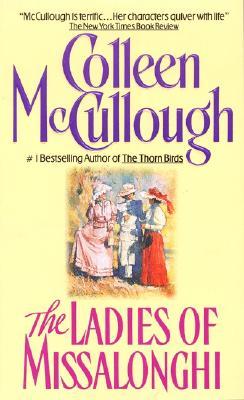
Book Review: The Ladies of Missalonghi by Colleen McCullough

Title: The Ladies of Missalonghi
Author: Colleen McCullough
Publisher: HarperCollins
Publication date: 1987
Length: 192 pages
Genre: Historical fiction
Source: Purchased
Rating:

Rating: 3.5 out of 5.

Sometimes fairy tales can come true–even for plain, shy spinsters like Missy Wright. Neither as pretty as cousin Alicia nor as domineering as mother Drusilla, she seems doomed to a quiet life of near poverty at Missalonghi, her family’s pitifully small homestead in Australia’s Blue Mountains. But it’s a brand new century–the twentieth–a time for new thoughts and bold new actions. And Missy Wright is about to set every self-righteous tongue in the town of Byron wagging. Because she has just set her sights on a mysterious, mistrusted, and unsuspecting stranger… who just might be Prince Charming in disguise.

After coming across a mention of The Ladies of Missalonghi online, I decided to give it a try once I saw the audiobook available via my library. This short book is enjoyable in many ways, but it also shows its age a bit, and has a troubling reputation as well. (See my quibbles section below…)

Set in the early 1900s in a small town in Australia, The Ladies of Missalonghi focuses on the sad little family living in a run-down house named Missalonghi on the shabby side of town. The town of Byron is dominated by the Hurlingford family, who own pretty much all of the desirable land and every local business. The nasty truth of the family is that thanks to an edict from its founding father who first established Byron, only males in the family inherit financially, while women descendents get a house and five acres of land. However, the houses and land have become worse and worse over the generations, and Hurlingford women who don’t marry well, become widowed, or (gasp) remain spinsters are doomed to a life of poverty and dependence.

Main character Missy Wright lives with her widowed mother Drusilla and her elderly aunt Octavia, and the three eke out the barest of livings. Missy is considered plain and unmarriageable, long past whatever youthful prime she might have had. To economize, the women dress in brown (appropriate for any occasion, and it doesn’t show dirt), have a very fixed routine of household chores, and rely on the condescending patronage of their richer relatives for meager treats and hand-outs.

When Missy meets a rough-hewn stranger and learns that he’s bought land in the adjacent valley, her imagination takes off — especially thanks to the romantic novels the town’s new librarian has been sharing with her. After a mild health scare, Missy decides to take matters into her own hands, throw off the burden of obedience and family deference, and pursue a life of adventure and love… even if she has to scheme and lie to get it.

While engaging in many ways, I do need to point out a few quibbles:

SPOILERS AHEAD

As I mentioned earlier, the book’s age shows in some of the depictions and dialogue. I don’t have a problem with historical fiction portraying an era’s inherent sexual inequalities, hang-ups, class issues, etc, but I actually feel that this book smacks a little too heavily of the 1980s. Published in 1987, The Ladies of Missalonghi has a love interest who’s the stereotypical bad boy in many ways, coming out with statements and attitudes that just wouldn’t fly today… and in historical fiction written now, I think authors tend to make their heroes a little less sexist/asshole-ish. If that makes any sense.

BIG SPOILER: There’s a weird supernatural element that’s revealed toward the end that makes no sense at all, bringing a ghost into the mix in the strangest way possible, then using that ghost as the explanation for Missy’s pursuit of freedom. Seriously, I don’t get it at all. The ghost in question appears as a real person to Missy, and provides Missy with books, legal documents, a new dress and hat, and even comes to tea at Missalonghi, where she interacts with Drusilla and Octavia. Again… I don’t get it.

Finally, I need to point out the plagiarism allegations that plague this book, specifically, that Colleen McCullough basically took the plot of The Blue Castle by L. M. Montgomery, tweaked it a bit and moved it to Australia, and published it as her own. Colleen McCullough denied the allegations, but suggested that “subconscious recollection” was at play — that she must have read the book at some point and inadvertently incorporated elements without realizing where they’d come from. The stories track so closely (with key differences being that Missy’s mother is kind and loving, and that Missy knows that her health crisis isn’t real and lies to her love interest) that it’s impossible to believe that the similarities are purely accidental.

Having read The Blue Castle recently, the shared plot elements are very obvious — and I have to say, if I had to choose between the two books, The Blue Castle wins hands-down.

END OF SPOILERY QUIBBLES

All that aside, there’s plenty to like about The Ladies of Missalonghi. There are some clever twists as Missy begins to assert herself, including her scheming to undermine the terrible male relatives who neglect and cheat the vulnerable women of the family. The descriptions of the setting are lovely, and there are moments of clever dialogue and sly social digs that make it fun.

The audiobook is narrated by Davina Porter, known to Outlander fans as the wonderful narrator of all Outlander series audiobooks, and she’s always a treat to listen to.

Overall, I’m not sorry to have read The Ladies of Missalonghi and I enjoyed listening to it, but the troublesome aspects make it a hard book to truly love.

And I have to say, the whole “marriage due to a medical crisis that turns out to be false” plot is handled much better in The Blue Castle, as is so much else about the basics of the plot.
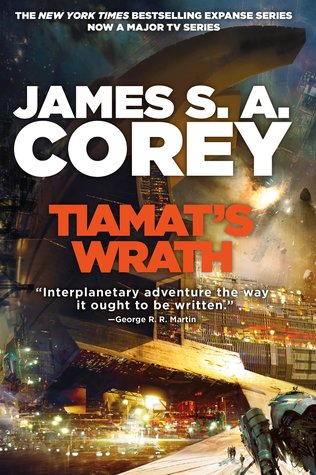
Book Review: Tiamat’s Wrath (The Expanse, #8) by James S. A. Corey

Title: Tiamat’s Wrath
Series: The Expanse, #8
Author: James S. A. Corey
Publisher: Orbit
Publication date: March 26, 2019
Length: 537 pages
Genre: Science fiction
Source: Purchased
Rating:

Rating: 5 out of 5.

Thirteen hundred gates have opened to solar systems around the galaxy. But as humanity builds its interstellar empire in the alien ruins, the mysteries and threats grow deeper.

In the dead systems where gates lead to stranger things than alien planets, Elvi Okoye begins a desperate search to discover the nature of a genocide that happened before the first human beings existed, and to find weapons to fight a war against forces at the edge of the imaginable. But the price of that knowledge may be higher than she can pay.

At the heart of the empire, Teresa Duarte prepares to take on the burden of her father’s godlike ambition. The sociopathic scientist Paolo Cortázar and the Mephistophelian prisoner James Holden are only two of the dangers in a palace thick with intrigue, but Teresa has a mind of her own and secrets even her father the emperor doesn’t guess.

And throughout the wide human empire, the scattered crew of the Rocinante fights a brave rear-guard action against Duarte’s authoritarian regime. Memory of the old order falls away, and a future under Laconia’s eternal rule — and with it, a battle that humanity can only lose – seems more and more certain. Because against the terrors that lie between worlds, courage and ambition will not be enough… 

I’m not sure how much point there is in my writing reviews of the books in this series at this point. Tiamat’s Wrath is #8, and it’s amazing… but I don’t want to talk too much about the plot, and honestly, if you haven’t read any of the books, none of this is going to make any sense.

But trust me, this is a fabulous series, and #8 — the 2nd to last novel!! — is as excellent as I’d expected.

In this book, the underground begins to fight back against the overwhelming might of the Laconian Empire. Against the backdrop of intrigue and rebellion and intergalactic battles, we once again become immersed in the lives of the featured characters — including our beloved core crew, but also a couple of new lead characters who are surprising and who take the story in unanticipated directions.

The plot shifts between the various systems connected by the ring gates and the capitol buildings of Laconia. As the battles range, the dangers mount — but the most dangerous force is the ancient alien civilization that the Laconian High Consul has been intentionally poking. (Don’t poke the bear!!) The humans have wars to wage, but it’s this other force that ultimately may bring humanity to its demise.

Stakes are high, and the action is dramatic, but once again it’s the more intimate stories of the characters that touch me and intrigue me and, in some cases, leave me gasping and wiping my eyes.

It’s a rare talent in the world of sci-fi fiction that can strike at such an emotional level while still keeping the plot and action tearing along at an incredibly fast pace. The Expanse series continues to keep this balanced approach going, even this deep into the storyline, which is probably why I love it so much.

That, and I just adore the characters.

Once I started, I simply couldn’t stop, and tore through this hefty book as quickly as I possibly could (while still taking time for work and sleep). I do intend to enforce a break for myself at this point… must read other books before racing ahead to the end of the series!

When I do continue…

Next up for me will be the novella Auberon, a 78-page novella that takes place either during or after the events of Tiamat’s Wrath. (It’s listed as #8.5 on Goodreads, but I haven’t wanted to look too deeply into the plot details before I read it.)

And after Auberon… it’ll be on to the final book in the series! I’m really not ready for it to end.

Book Review: Persepolis Rising (The Expanse, #7) by James S. A. Corey

Title: Persepolis Rising
Series: The Expanse, #7
Author: James S. A. Corey
Publisher: Orbit
Publication date: December 5, 2017
Length: 608 pages
Genre: Science fiction
Source: Purchased
Rating:

Rating: 5 out of 5.

In the thousand-sun network of humanity’s expansion, new colony worlds are struggling to find their way. Every new planet lives on a knife edge between collapse and wonder, and the crew of the aging gunship Rocinante have their hands more than full keeping the fragile peace.

In the vast space between Earth and Jupiter, the inner planets and belt have formed a tentative and uncertain alliance still haunted by a history of wars and prejudices. On the lost colony world of Laconia, a hidden enemy has a new vision for all of humanity and the power to enforce it.

New technologies clash with old as the history of human conflict returns to its ancient patterns of war and subjugation. But human nature is not the only enemy, and the forces being unleashed have their own price. A price that will change the shape of humanity — and of the Rocinante — unexpectedly and forever… 

Seven books in, this series continues to take my breath away!

The sixth book, Babylon’s Ashes, leaves off at a satisfying stopping point (which may be why the TV show ends the story there). A vast war has come to an end, and there’s new hope for peaceful and productive coexistence, with new governing and coordination structures in place to bring the various factions together. And all of our heroes are well and happy! It’s certainly tempting to stop right there…

But I just had to see what the authors had in store for us next. And whew, it’s a lot!

Persepolis Rising opens almost 30 years after the events of Babylon’s Ashes — and boy, is it disconcerting. Our beloved crew on board the Rocinante is still going strong, but rather than being the young(ish), brash group we’ve come to know, they’re all middle-aged (and then some). And yet, the gang is still together, and it’s wonderful! Sure, they’re older, but they’re still amazing, and their lives are going well.

And we just know that can’t last, right?

Over 30 years earlier, as human colonists explored the vast new systems opened to them, a group of Martian military leaders absconded with a bunch of warships through the ring gate to the Laconia system, then closed off all contact with the rest of the human population. Since then, wars and skirmishes and struggles continued without them, and most people didn’t think about them very often, especially once the last war (which they contributed to) came to an end.

The Laconians have not been idle all these years. Instead, under the leadership of their high consul, they’ve been developing highly advanced warships and weaponry using ancient alien tech — and as Persepolis Rising opens, the Laconian Empire is ready for intergalactic domination.

As the Laconian ships reenter shared space, their domination is undeniable and unpreventable, and their victory over any resistance is absolutely ensured from the get-go. This new dictatorship presents itself as nice and reasonable, declaring that all people everywhere are now Laconians, and anyone who resists isn’t fighting for freedom, but is merely a criminal disobeying the empire’s laws.

The action accelerates at a breathtaking pace, but as is typical of these books, the scenes of space warfare and high-speed action are balanced by more personal moments with the central characters. It’s a skillful presentation that centers the high stakes drama on the people at its heart, and it works incredibly well.

I know I’ve raved about all the books in this series, so my 5 enthusiastic stars for Persepolis Rising surely isn’t a surprise. The series is phenomenal. I had a little hesitation about starting such a long book this week, but once I started, I could barely come up for air.

By the end, I was on the edge of my seat, as well as wiping away a few tears and practically panicking over certain unresolved plot threads… so is it any wonder it took me no longer than 10 minutes to realize I absolutely had to keep going?

So yes, I’ve already started book #8, Tiamat’s Wrath, and at this point, I’d say it’s a pretty safe bet that I’m going to want to keep going straight through to the final book from there.

The books of the Expanse series are not easy. They’re huge, densely packed with detail and plot developments. You can’t read these books without your attention fully engaged — believe me, it just won’t work! That said, it’s well worth the effort and the time to enjoy and absorb each new addition to the ongoing saga. I’m loving these books, and while I’m dying to see how it all turns out, I know I’ll also be sad to reach the end of the journey.

Book Review: Where the Lost Wander by Amy Harmon

Title: Where the Lost Wander
Author: Amy Harmon
Publisher: Lake Union Publishing
Publication date: April 28, 2020
Length: 343 pages
Genre: Historical fiction
Source: Review copy via NetGalley; audiobook purchased via Audible
Rating:

Rating: 4.5 out of 5.

In this epic and haunting love story set on the Oregon Trail, a family and their unlikely protector find their way through peril, uncertainty, and loss.

The Overland Trail, 1853: Naomi May never expected to be widowed at twenty. Eager to leave her grief behind, she sets off with her family for a life out West. On the trail, she forms an instant connection with John Lowry, a half-Pawnee man straddling two worlds and a stranger in both.

But life in a wagon train is fraught with hardship, fear, and death. Even as John and Naomi are drawn to each other, the trials of the journey and their disparate pasts work to keep them apart. John’s heritage gains them safe passage through hostile territory only to come between them as they seek to build a life together.

When a horrific tragedy strikes, decimating Naomi’s family and separating her from John, the promises they made are all they have left. Ripped apart, they can’t turn back, they can’t go on, and they can’t let go. Both will have to make terrible sacrifices to find each other, save each other, and eventually…make peace with who they are.

Where the Lost Wander is a beautiful story of love and tragedy, set in the era of westward expansion and wagon trains.

We know from the prologue that terrible events are coming, as we see a group of wagons attacked by a band of Shoshoni warriors, leaving all dead except Naomi and her infant brother, who are taken captive. How this came about, who these people are, and what happens next will be revealed over the course of the story that follows.

Naomi May is a young woman traveling west with her parents and younger brothers as part of a large wagon train. At St. Joseph in Missouri, their point of departure, she meets John Lowry, a young man of mixed heritage who’ll be traveling with the train, along with his prized set of breeding mules.

As the wagon train makes its slow journey, they face danger from every direction — perilous river crossings, cholera, accidents, hostile encounters with other travelers — but along the way, Naomi and John grow closer, falling in love despite their own personal backstories. I came to care deeply about these characters and to wish for their happiness, but experienced a growing sense of dread as well, knowing from the prologue that tragedy was coming, but not knowing when.

Where the Lost Wander is beautifully written, full of emotion as well as history. The author strikes a good balance in presenting both the dreams and desires of the emigrants and the devastating impact of the white man’s encroachment onto Native lands. The tribes encountered are portrayed with sensitivity, and we get to know certain people as individuals, giving us entry into a way of life that’s under constant threat.

Naomi and John’s story, from initial attraction to trust and longing and finally, to love and commitment, is moving and well-told. Given the era and the setting, we know this cannot be a happy, pain-free story, but I couldn’t stop hoping for good outcomes and peace for these characters, even in the most dire of situations.

Overall, this is a well-researched, vivid depiction of a time in America’s history that’s in many ways well-known, but here, presented with so much more nuance and perspective than in typical tales of the Old West. Highly recommended.

Via Amy Harmon’s author website: https://www.authoramyharmon.com/wherethelostwander.html

A note on the audiobook: The audiobook (11 hours, 46 minutes) is narrated by Lauren Ezzo and Shaun Taylor-Corbett, who read as Naomi and John. It’s a lovely performance, with each one capturing the emotions of their characters and giving dramatic, expressive expression to the more descriptive passages. I enjoyed it very much, and while I referred back to the print version for clarity on places and people, I’m glad I chose to experience this book via audio.

Book Review: One Italian Summer by Rebecca Serle

Title: One Italian Summer
Author: Rebecca Serle
Publisher: Atria
Publication date: March 1, 2022
Length: 272 pages
Genre: Contemporary fiction
Source: Review copy via NetGalley
Rating:

Rating: 3 out of 5.

When Katy’s mother dies, she is left reeling. Carol wasn’t just Katy’s mom, but her best friend and first phone call. She had all the answers and now, when Katy needs her the most, she is gone. To make matters worse, their planned mother-daughter trip of a lifetime looms: two weeks in Positano, the magical town Carol spent the summer right before she met Katy’s father. Katy has been waiting years for Carol to take her, and now she is faced with embarking on the adventure alone.

But as soon as she steps foot on the Amalfi Coast, Katy begins to feel her mother’s spirit. Buoyed by the stunning waters, beautiful cliffsides, delightful residents, and, of course, delectable food, Katy feels herself coming back to life.

And then Carol appears—in the flesh, healthy, sun-tanned, and thirty years old. Katy doesn’t understand what is happening, or how—all she can focus on is that she has somehow, impossibly, gotten her mother back. Over the course of one Italian summer, Katy gets to know Carol, not as her mother, but as the young woman before her. She is not exactly who Katy imagined she might be, however, and soon Katy must reconcile the mother who knew everything with the young woman who does not yet have a clue.

When Katy’s mother dies, Katy is wrecked — which is completely to be expected. She reflects on how her mother was her person, the one she turned to for everything, who knew her better than anyone.

My mother, you see, is the great love of my life. She is the great love of my life, and I have lost her.

Beyond that, she also relied on her mother for everything, even as an adult. Carol knew how to do everything well — cooking, decorating, planning, socializing, running a life — and as Katy acknowledges to herself throughout the book, because she had Carol at the center of her life, she never really learned how to do much of anything without her.

How could she do this to me? How could she tell me year over year that it was okay, that I didn’t need to know, that I didn’t need to have all the answers, because I had her? How could she make herself so indispensible, so much a part of my life, my very heart — so woven into the fabric of who I am — only to leave? Didn’t she know? Didn’t she know that one day I’d be left without her?

This is problematic in a lot of ways, not least because Katy has been married for years. She and Eric met and fell in love in college, got married, and bought a house just 15 minutes away from Katy’s parents. Carol’s advice and involvement has been central to their marriage as well. Katy just doesn’t know who she is without her mother, and in the months leading up to Carol’s death, everything falls apart, to the point that Katy tells Eric that she’s done with their marriage.

Going to Italy on what was supposed to be the ultimate mother-daughter trip, mere weeks after Carol’s death, is an emotionally momentous undertaking for Katy. They’d always dreamed of going together, so Carol could show Katy the place that meant so much to her as a young woman. Arriving on her own, Katy is immediately wowed by the beauty of Positano, and settles in to soak up the surroundings and try to create one more connection with her mother.

But as the synopsis says, as Katy sets out the next day, she meets a woman in the hotel lobby who is all too familiar: It’s Carol, at age 30 — living in Positano, carefree, beautiful, and without a clue as to Katy’s identity. Once she recovers from the shock, Katy is determined to take this strange opportunity to know her mother in a whole new way, and the women strike up a friendship.

Meanwhile, Katy also explores Positano, meeting people, experiencing the sun, the food, and the sea, and developing a connection to an attractive man she meets at her hotel. As the days pass, she balances her time with Carol and Adam, and delves deeper into her own feelings about where she is in her life and what might come next.

That’s a lot of synopsis, so I’ll hit pause and share some thoughts.

There’s a lot to love about One Italian Summer… and seriously, where do I sign up for this exact trip to Italy? I want to stay in that specific hotel, meet those people, eat that food, go to those beaches. Now. It all sounds incredibly gorgeous and delicious and amazing.

But…

I have a lot of “buts” about this book.

Carol and Katy’s mother-daughter relationship is beautiful in many ways. They love each other and are completely devoted to one another, and that’s lovely. But the more we learn, the less healthy it seems. Carol is too central to Katy’s life — everything she has or does seems connected back to Carol in some way, and even her marriage to Eric keeps Katy’s parents, especially Carol, firmly at its center. Even small-ish things, like why they never actually cook — it’s because their home-cooked meals always happen at Carol’s house, and Carol never taught anyone in her life, Katy or her own husband, to manage without her.

Now, as for central concept of this novel, in which Katy encounters Carol as a younger woman…

There are hints (like the selection of books on the hotel’s shelves) that Katy is somehow spending time 30 years in the past, but it takes her an awfully long time to figure that part out. She just accepts Carol’s presence and doesn’t think much further about it, although it’s pretty obvious to the reader. (Aha, so that’s why Adam has never heard of the movie Jurassic Park and she can’t reach Eric when she tries to call him!)

Katy just accepts that she’ll be able to spend time with Carol as a gift, and that’s that. Yet, Carol has her own life in Positano, which means that Katy has plenty of time on her own too. She follows the itinerary that real-world Carol created for the two of them and connects to her mother’s memory through what she experiences, but she also has plenty of time for Adam.

Spoilers ahead! Does it count as cheating if it happens 30 years in the past in a weird alternate pocket of time? I’d say yes, but it doesn’t seem to trouble Katy all that much. And it’s not at all clear whether what happens during this Italian vacation will carry through to Katy’s present. Is there a man out there who has memories of the young woman he had a fling with in Italy all those years earlier?

Beyond the Adam storyline — well, it’s nice that Katy gets both closure and a new perspective on who her mother was. As she spends time with young Carol, she learns new facts about her mother’s life that she’d never known, and also has time to understand that Carol always had parts of her life that didn’t revolve around Katy.

In some ways, it’s a moving look at loss and grieving, and how the loss of a loved one can force someone to take a fresh look at everything in their life. There are some moments of reflection that I found startlingly real and emotionally honest.

But…

Bottom line, this book makes no sense. I can’t go with a storyline that takes place “because magic” without any explanation whatsoever. Why is Katy experiencing this time 30 years in the past? How is she able to be there? Why did it start and why did it end?

Your guess is as good as mine. There’s no explanation. And I can’t just shrug and accept it as just the way things happened — not when it’s clear that this wasn’t a dream state or alternate reality or coma-dream or even a time slip in the fabric of the world. It just happens, and then it stops, and Katy just accepts it all.

On a more positive note, the author has a lovely way with words, bringing tastes and sounds and smells to life quite vividly. The Italy of Katy’s visit is beautifully described and presented — it’s an immersive experience just reading about it.

I’ve enjoyed Rebecca Serle’s two other books for adults (The Dinner List and In Five Years), although even in both of these, there’s a magical element that happens to advance the plot but has no real explanation. Somehow, this aspect bothered me much more in One Italian Summer than it did in the other books.

Overall, there are a lot of enjoyable aspects to this book, but the plot holes kept me from fully engaging. On top of that, what I initially felt was an incredibly beautiful mother-daughter relationship was revealed to be less healthy than I first imagined, and that left a somewhat bitter taste in my mouth. Still, it’s a quick and often emotionally engaging read, and I do appreciate the author’s ability to cast a spell with her writing. I’ll look forward to whatever she writes next.

Audiobook Review: Gwendy’s Final Task by Stephen King and Richard Chizmar


Title: Gwendy’s Final Task
Authors: Stephen King and Richard Chizmar
Narrator: Marin Ireland
Publisher: Gallery Books
Publication date: February 15, 2022
Print length: 408 pages
Audiobook length: 7 hours, 23 minutes
Genre: Thriller
Source: Review copy (ebook) via NetGalley; audiobook purchased via Chirp
Rating:

Rating: 5 out of 5.

When Gwendy Peterson was twelve, a stranger named Richard Farris gave her a mysterious box for safekeeping. It offered treats and vintage coins, but it was dangerous. Pushing any of its seven coloured buttons promised death and destruction.

Years later, the button box re-entered Gwendy’s life. A successful novelist and a rising political star, she was once more forced to deal with the temptations that the box represented—an amazing sense of wellbeing, balanced by a terrifyingly dark urge towards disaster.

With the passing of time, the box has grown ever stronger and evil forces are striving to possess it. Once again, it is up to Gwendy Peterson, now a United States Senator battling the early symptoms of Alzheimer’s Disease, to keep it from them. At all costs. But where can you hide something from such powerful entities?

Gwendy’s Final Task is a wildly suspenseful and at the same time deeply moving novel in which ‘horror giants’ (Publishers Weekly) Stephen King and Richard Chizmar take us on a journey from Castle Rock to another famous cursed Maine city to the MF-1 space station, where Gwendy must execute a secret mission to save the world. And, maybe, all worlds.

Gwendy is back, and this time, she’s going out on her own terms.

Gwendy’s Final Task is the third in the unusual, bizarre, frightening, and inspiring trilogy focusing on a powerful central character, Gwendy Peterson, and the strange box that’s become inextricably intertwined with the main events of her notable life.

[I won’t recap the first two novellas, but if you’re interested, see my reviews of Gwendy’s Button Box and Gwendy’s Magic Feather to catch up on the backstory.]

Here in book #3, time has passed, and we’re now a few years in the future. It’s 2026, the COVID-19 pandemic has passed, although its impact is still felt, and 64-year-old Senator Gwendy Peterson is about to be launched into space on a privately funded mission to MF-1, the Many Flags Space Station in orbit around Mars. As a US Senator, she’s one of two civilian passengers on the mission — the other being Gareth Winston, the billionaire whose corporation provides the big bucks needed to further the US space project.

Gwendy also has a secret, or actually, two secrets. With her, in a sealed cased marked “confidential”, is the button box that’s followed her all her life. The presence of this confidential case piques the curiosity of her teammates, but she’s keeping its contents to herself. Also kept secret is Gwendy’s early onset Alzheimer’s. She’s faking it as best as she can, but there are days when she can’t even remember how to tie her shoes. As she prepares for launch, Gwendy can only hope that she can hold it together long enough to accomplish her final task.

As the story progresses, we learn more about how the box reentered her life for the third and final time, what her mission truly is, and what she’s done to prepare for it. We also learn more about the challenges and heartbreaks Gwendy has endured to get to this point. I couldn’t help but admire her for her dedication and perseverance — most of us would likely have given up in the same circumstances, but not Gwendy.

The plot moves forward at a fast pace, alternating between the recent past building up to the mission and the days onboard the space station during the mission itself. We see Gwendy’s struggles to keep her mind together, to focus on her task, and to both reassure the crew members about her own stability and to evade the suspicious behavior of the resident billionaire, who seems to be encroaching more and more into Gwendy’s personal space as the days go by.

The two previous Gwendy stories have been novellas, so I was curious going into Gwendy’s Final Task to see whether a full-length novel would fit with the mood and style of the previous installments. Fortunately, yes, it does — this 400+ page novel absolutely delivers, but never feels overstuffed or unnecessarily drawn out.

I love Gwendy as a person by this point, having seen her all the way from early teens through to her mid-60s. She’s strong, fierce, and determined, with an unbreakable moral core and a deep love for her family. She’s also been through a lot, and I felt her pain so keenly as she reflects on her losses and struggles to keep hold of her memories just a little bit longer.

While initially I though the premise far-fetched (how exactly would a Senator with Alzheimer’s ever make it through the intense screening required for a space mission?), eventually, it all makes sense. And even before I got to an explanation that helped connect the dots, I was immersed enough in the story to push my skepticism way to the side, so it never stopped me from enjoying the story as it unfolded.

For long-time King fans, there are lots of references to amuse and delight. There are plot points centered around the town of Derry, Maine (including a local’s description of hearing voices coming from the drains and another’s tale of being chased by a clown), and later, references to the Dark Tower as well. [Note: I never did get through the whole Dark Tower series, but I think I got the point here anyway.]

The audiobook narration is terrific. Marin Ireland is a gifted narrator, capturing Gwendy’s inner voice as well as describing the surroundings and events. She brings the crew members and ground control into the story very well, and gives an immediacy to all descriptions and dialogues. This is a change in narrator from the first two Gwendy audiobooks, but it didn’t feel jarring, and overall, was very well done.

There are creepy moments, one decidedly gross/icky scene, and plenty of existential dread and overarching terror. Still, by the end of the book, I was feeling very emotional about Gwendy herself and the conclusion of the story. Despite the horror and the thrills, the biggest takeaway for me was the heartbreaking beauty of Gwendy’s journey, and that’s really saying something.

This is a convincing and well-plotted conclusion to an unusual and inventive trilogy, and I’m so glad to have been along for the journey.

Book Review: Spelunking Through Hell (InCryptid, #11) by Seanan McGuire

Title: Spelunking Through Hell
Series: Incryptid, #11
Author: Seanan McGuire
Publisher: DAW
Publication date: March 1, 2022
Length: 352 pages
Genre: Urban fantasy
Source: Review copy courtesy of the publisher via NetGalley
Rating:

Rating: 3.5 out of 5.

Now in trade paperback, the eleventh book in the fast-paced InCryptid urban fantasy series returns to the mishaps of the Price family, eccentric cryptozoologists who safeguard the world of magical creatures living in secret among humans.

Love, noun:

1. An intense feeling of deep affection; may be romantic, filial or platonic.

Passion, noun:

1. A strong or barely controllable emotion.

2. Enthusiasm, interest, desire.

3. See also “obsession.”

It’s been fifty years since the crossroads caused the disappearance of Thomas Price, and his wife, Alice, has been trying to find him and bring him home ever since, despite the increasing probability that he’s no longer alive for her to find. Now that the crossroads have been destroyed, she’s redoubling her efforts. It’s time to bring him home, dead or alive.

Preferably alive, of course, but she’s tired, and at this point, she’s not that picky. It’s a pan-dimensional crash course in chaos, as Alice tries to find the rabbit hole she’s been missing for all these decades—the one that will take her to the man she loves.

Who are her allies? Who are her enemies? And if she manages to find him, will he even remember her at this point?

It’s a lot for one cryptozoologist to handle. 

It’s almost spring, and that means it’s time for another installment in the ongoing adventures of the Price-Healy family… yes, another InCryptid book is here! (Annoying some fans by switching to trade paperback size rather than sticking with mass market… so now my paperback editions won’t match??? But that’s beside the point when it comes to a review, so onward we go.)

The InCryptid series follows the adventures of the sprawling Price and Healy clan, a large extended family dedicated to studying and preserving the lives of cryptids — non-human beings who (usually) live peacefully among the humans, but who are hunted by the merciless and powerful Covenant simply for existing. Yes, there are also cryptids who do unpleasant things like eating humans, and in those cases, the Prices are a force to be feared… hence their very murdery reputation.

Up to now in the series, the books have focused on members of the current young adult family members — siblings Verity, Alexander, and Antimony (Annie), as well as their cousin Sarah. There are plenty of references to other relatives, and their parents and other cousins and family-by-extension pop in and play different roles as well. One of the more mythological members of the family, whom we’ve seen in action really just once so far, is grandmother Alice.

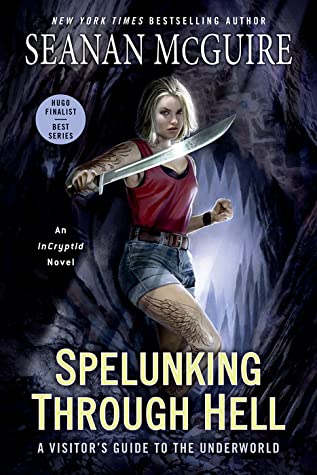
Now look at the book cover image again. That’s Alice! Does she look like a grandma to you?

Alice was a young woman in the 1950s, which is when she lost her beloved husband Thomas to a bad bargain with the crossroads. Granted, he made the bargain to save Alice’s life, so he deserves a little slack for having made it. From the time of Thomas’s disappearance, Alice has been obsessed with finding him — so much so that she’s spent over fifty years as an interdimensional traveler, tracking down every clue and random hint that could possibly lead her to her husband.

Of course, to do so, she’s had to leave her family behind, so her two children resent the hell out of her and her grandchildren know her more from the family legends than from actual relationships… but she can’t give up. Along the way, she has used whatever means necessary to preserve her youth and health so that she could keep going, which is why she looks and feels more or less like a 19-year-old.

All that is backstory. Here, in Spelunking Through Hell, Alice is the main character, and we join her on her desperate journey to find Thomas. It’s been 50 years, and her hope is starting to wear thin. At this point, she’d even accept proof of his death — she’s just about ready to stop. But then a new clue from an unexpected source gives her one more angle to try, and so she sets out one last time to travel to a dying dimension that’s supposedly inaccessible… but Alice is nothing but persistent.

And so what if she doesn’t have an exit strategy? So long as she finds Thomas — even if he is about 80 years old by now — they can figure out what comes next together.

Spelunking Through Hell is yet another fun romp with the Price clan, although we really don’t see many members of the family other than Alice. This makes the tale fresh, but also feels somewhat less engaging, since Alice has never been a main character before and there isn’t a ton to build on in terms of what we know about her or what it’s like to see the world through her eyes.

Like the rest of the Prices, Alice is always fully armed, ready for a fight, and full of quips. She’s funny, fierce, and reckless, and also has no problem pushing herself past injury and excruciating pain, so long as it’s in service of her obsession with finding Thomas.

The plot occasionally feels a little draggy — it does take quite a while to get to the target world — and while I enjoyed the book, I have to say that my lack of familiarity with Alice as an individual made this book slightly less wonderful as a reading experience as compared to earlier books in the series.

Side note on InCryptids: This is a huge expanded world, and it’s supported by many, many short stories available through the author’s website and via Patreon. That’s nice… but also frustrating. Apparently, if I’d been keeping up with all the Price short stories, I would be very invested in Alice and Thomas and would know pretty much everything about their courtship, romance, and early years together. But I haven’t! And that feels problematic for me. Yes, I can make an effort to go get caught up (and I probably will, once I figure out the order the stories should be read in) — but I do think the books alone should tell a complete story, and in this case, I felt like I was always missing key pieces of information.

That said, I did enjoy the book overall, and Seanan McGuire’s writing keeps it fun even while the blood is flowing:

And I, an asshole, had done enough woolgathering for one… day? Evening? Afternoon? There were no windows, and massive blood loss always throws off my sense of time.

I’d rather be married to a man fifty years older than I am than see him go through what I’ve willingly done to myself for his sake, what he never would have asked or expected me to do. It’s always easier to set yourself on fire than to allow someone else to burn for you.

I wanted to avoid being caught at any cost, since one solid snap of those claws could have me down a limb, or possibly down an entire torso. I like my torso. It’s where I keep my lungs.

The Haspers not currently engaged began to run in my direction, forming a nicely unified pack. I like a unified pack. I like the way is splashes when you lob a grenade into the middle of it, and I like it even better when none of its component parts knows what a grenade is, so they react like you’ve just thrown a rock or something. To be nonspecific.

Spelunking Through Hell includes the bonus novella And Sweep Up the Wood, which tells the story of a key turning point in the early years of Alice and Thomas’s relationship. It’s very good and very emotional (plus, you know, plenty of guns and explosives — after all, Alice in involved), and it’s a great way to wrap up this installment of the series.

The InCryptid series itself is going strong, and overall, I love it! I do wish this one had drawn me in a bit more, but I can’t really complain. The Price-Healy clan is amazing (and there are religious mice, who make every scene they’re in 1000% better), and I can’t wait for more of the story. The big question is — who will #12 be about?

As I’ve said in pretty much every review of this series, definitely start at the beginning with with Discount Armageddon. This series is full of great characters and terrific world-building. It’s easy to get hooked!

**Save

Save

Save

Save

Save

Save

Save

Book Review: An Impossible Impostor (Veronica Speedwell, #7) by Deanna Raybourn

Title: An Impossible Impostor
Series: Veronica Speedwell, #7
Author: Deanna Raybourn
Publisher: Berkley
Publication date: February 15, 2022
Length: 336 pages
Genre: Historical fiction
Source: Review copy courtesy of the publisher via NetGalley
Rating:

Rating: 4 out of 5.

While investigating a man claiming to be the long-lost heir to a noble family, Veronica Speedwell gets the surprise of her life in this new adventure from the New York Times bestselling and Edgar Award-nominated author Deanna Raybourn.

London, 1889. Veronica Speedwell and her natural historian beau Stoker are summoned by Sir Hugo Montgomerie, head of Special Branch. He has a personal request on behalf of his goddaughter, Euphemia Hathaway. After years of traveling the world, her eldest brother, Jonathan, heir to Hathaway Hall, was believed to have been killed in the catastrophic eruption of Krakatoa a few years before.

But now a man matching Jonathan’s description and carrying his possessions has arrived at Hathaway Hall with no memory of his identity or where he has been. Could this man truly be Jonathan, back from the dead? Or is he a devious impostor, determined to gain ownership over the family’s most valuable possessions–a legendary parure of priceless Rajasthani jewels? It’s a delicate situation, and Veronica is Sir Hugo’s only hope.

Veronica and Stoker agree to go to Hathaway Hall to covertly investigate the mysterious amnesiac. Veronica is soon shocked to find herself face-to-face with a ghost from her past. To help Sir Hugo discover the truth, she must open doors to her own history that she long believed to be shut for good.

A new installment in the deliciously smart Veronica Speedwell series is always cause for delight, and book #7 is no exception.

Veronica and Stoker are a well-established couple at this point, but they’ve lost none of their spark or chemistry. Their passion continues to simmer, and they’re fulfilled by their work together on the natural history collection of Lord Rosemorran. But when Sir Hugo Montgomerie of Scotland Yard asks a favor, he’s awfully hard to ignore, and their peaceful moments are interrupted by a call to adventure.

Our fearless duo sets off to the Hathaway estate to discover whether the long-presumed dead eldest son has miraculously returned — which would have enormous ramifications for his surviving siblings, especially the brother who has legally inherited in his stead.

Veronica and Stoker discover a situation much more complicated than expected, further muddled by Veronica’s own distant past which included an acquaintance with the missing Hathaway son. While uncovering the truth, Veronica and Stoker once again end up in mortal peril, fighting for their lives, solving multiple mysteries, and using their wits to find solutions.

It’s all very charming, and the adventure itself is fun even while taking a while to build up stakes. Once our favorite couple are themselves in danger, of course it all escalates and becomes much more dramatic — but even then, the banter and sexy glances and innuendo continue.

I had a few qualms about a certain plot complication which the romantic in me found upsetting, but never fear, it’s more or less resolved by book’s end. The mystery is tied up nicely, although Veronica and Stoker are left in a status that’s less settled than in previous books… so can I have #8 now please???? (Sadly, no — I expect it’ll be another year’s wait for the next one).

As in all the books in this series, the humor is silly and fun, and Veronica is a treat — a fierce, intelligent woman of science who’s not afraid to follow her own path, including becoming romantically and physically involved with a man who’s very much her partner and equal.

And really, when else would we get to read a book that includes such delightful words and phrases as “fritillary”, “amatory arts”, “passamenterie”, “osculatory”, and “inanition”? Not to mention a quick little aside in which a character educates us on the origins of the bandanna?

An Impossible Impostor is just a super fun adventure. Each book in the series goes by too quickly, and I always tell myself to slow down and savor them… but I never do. An Impossible Impostor could potentially work as a stand-alone mystery. The key players and background are explained well enough to be able to follow along. But, I don’t really recommend this approach — you’d be missing out on all the delicious history of Veronica and Stoker’s relationship, as well as their individual backstories, and truly, those are too good to miss!

If you want to get to know Veronica Speedwell, I’d say start with book #1, A Curious Beginning. I’m pretty sure you’ll be hooked! And isn’t it nice to know that there are already another six books to enjoy after that one?

This series has become one of my favorites. Check it out!

Book Review: One Night on the Island by Josie Silver

Title: One Night on the Island
Author: Josie Silver
Publisher: Ballantine Books
Publication date: February 15, 2022
Length: 368 pages
Genre: Contemporary romance
Source: Review copy via NetGalley
Rating:

Rating: 3.5 out of 5.

Spending her thirtieth birthday alone is the last thing that dating columnist Cleo wanted, but she is going on a self-coupling quasi-sabbatical–at the insistence of her boss–in the name of re-energizing herself and adding a new perspective to her column. The remote Irish island she’s booked is a far cry from London, but at least it’s a chance to hunker down in a luxury cabin and indulge in some quiet, solitary self-care while she figures out her next steps in her love life and her career.

Mac is also looking forward to some time to himself. With his life in Boston deteriorating in ways he can’t bring himself to acknowledge, his soul searching has brought him to the same Irish island in search of his roots and some clarity. Unfortunately, a mix-up with the bookings means both solitude seekers have reserved the same one-bedroom hideaway on exactly the same dates.

Instantly at odds with each other, Cleo and Mac don’t know how they’re going to manage until the next weekly ferry arrives. But as the days go by, they no longer seem to mind each other’s company quite as much as they thought they would…

Written with Josie Silver’s signature warmth, charm and insights into the human heart, One Night on the Island explores the meaning of home, the joys of escape and how the things we think we want are never the things we really need.

Oh, dear. Based on the number of 5-star gushing reviews already posted on Goodreads, this is going to be a minority opinion. Dare I say it? I actually liked this book… but hearts and flowers and best thing ever? No.

A quick overview: Cleo is a dating and romance writer living in London, with a big, busy life that’s pretty hollow at its core. Her editor pushes her to try something radical as her 30th birthday approaches: Head to a remote island off the coast of Ireland and plan a self-partnering ceremony. Essentially, she’ll be stepping off the dating merry-go-round and focus on committing to herself.

Meanwhile, Mack (spelled with a “k” in the book, not as shown above in the synopsis I pulled from Goodreads) is seeking peace and connection with his roots. He grew up hearing stories about Salvation Island from the grandmother who was born there. He’s a devoted husband and father whose wife has pulled away. Now separated for a year, he’s in constant pain hoping to be allowed back into the life he once had, and thinks it would be best for him and his two boys if he stopped hovering around and gave his wife space to figure out what she wants. He’s a gifted photographer, so his time away will also give him an opportunity to explore Salvation the way he’s always wanted to.

In a very cutesy meet-cute, Mack and Cleo are both booked into Otter Lodge, a secluded (not luxury, per the synopsis) cottage on a secluded area of the island. Neither is willing, or even able, to change their plans, since it’ll be a week until the next boat back to the mainland, and there are simply no other accommodations on the island.

With no choice, they settle in and establish rules, going so far as to draw a chalk line down the middle of the cottage. But as their forced togetherness continues, they start to share pieces of themselves with a stark honesty that’s missing from their normal lives, and at the same time, begin to connect with the quirky residents of Salvation. (Of course they’re quirky. Aren’t all small-town community residents quirky in romance novels? Hearts of gold, too, and with open arms for strangers, because that happens in real life.)

Anyway… you can see where this is going. Cleo and Mack make an incredible connection, Cleo finds the inner peace and meaning she’d been missing, and Mack comes to realizations about his marriage, his children, and where he belongs.

I liked the story well enough, and tore through it. It’s a fast read, and I enjoyed Cleo and Mack’s routines and interactions and the sparks that build between them. But, my cynical side couldn’t stay quiet long enough for me to ignore certain issues, either.

First, and this is possibly a complaint more about the book’s marketing rather than the story itself… but the title is terrible and is completely misleading. This isn’t about ONE NIGHT on an island. The point is, Mack and Cleo spend weeks in each other’s company, and it’s the slow, steady accumulation of familiarity and their ability to share pieces of themselves and express themselves honestly as they build trust that finally bring them together emotionally. It’s not at all about just one night. Sheesh.

Second, the set-up is confusing. This is one of the rare reading experiences that’s much better in its second half than in its first. When Cleo’s editor pushes her to go to Salvation, there’s no discussion of parameters or for how long. Cleo’s expenses and lodging are being paid for by the magazine (nice!), and from their initial conversation, I thought it would be for a weekend, or at most, a week. But no, it’s actually for months! Whose work would pay for them to go away like that to write columns about self-partnering? For a 29-year-old who writes a dating column, this seems incredibly unrealistic, and the lack of specificity about Cleo’s plans made it confusing when she and Mack were trying to hash out who had stronger claims to the cabin.

My biggest quibble is the whole stuck-together trope in play here. And I know, it’s a romance, and we’re supposed to just go with it. But honestly, think about it. If you found out you were going to have to spend even one night, let alone a week or longer, in a completely isolated cabin with a man who’s a total stranger, what would you do? I’d be running for the hills, probably begging some kind townsperson to let me sleep on their couch until the next boat home. I had to wonder — if Mack hadn’t been age-appropriate and gorgeous, would Cleo have agreed to this arrangement? It doesn’t make any sense, and of course I understand that this is the foundation of the entire story… but maybe that’s why I can’t go any higher than 3.5 stars.

On a positive note, I did enjoy how feelings and connection developed between the two main characters, and I liked having chapters from both of their points of view. I also appreciated how their time at Salvation enabled each of them to center their own needs and priorities within their relationship, not forcing either one to drop everything or fundamentally change who they are or what they want for the other. And finally, I love Mack’s devotion to his children and their well-being, putting their needs above everything else, including his desire to be with Cleo. His overarching decision-making process focuses on the boys, and that’s right and good in a very heart-warming way.

I looked back at my reviews of this author’s two previous books, and I have to say that perhaps this author and I just aren’t a match made in heaven. The pattern, based on three books now, seems clear — I like the writing style and many of the elements about the characters, and it’s easy to get swept up in the romance of it all… but too many of the finer details and plot points don’t stand up to the cold light of day when I apply my logical brain to them.

One Night on the Island (ugh, that title!) is an engaging, quick read, but I can’t say I ever believed in the wonder and romance of it all quite enough to override the pieces that didn’t work for me. Despite not completely loving it, I liked it well enough to recommend as a feel-good getaway from the daily grind.

Audiobook Review: The Blue Castle by L. M. Montgomery

Title: The Blue Castle
Author: L. M. Montgomery
Narrator: Barbara Barnes
Publisher: G. P. Putnam’s Sons
Publication date: 1926
Print length: 249 pages
Audio length: 8 hours, 3 minutes
Genre: Classic fiction
Source: Purchased
Rating:

Rating: 5 out of 5.

All her life, Valancy Stirling lived on a quiet little street in an ugly little house and never dared to contradict her domineering mother and her unforgiving aunt. At 29, she’s never been in love, and her only consolation has been the forbidden books of John Foster and her daydreams of the Blue Castle.

Then, one day, she gets a letter and decides that things need to change. For the first time in her life, she does exactly what she wants to and says exactly what she feels. At first, her family thinks she’s gone around the bend, but soon, she discovers a surprising new world, full of love and adventures far beyond her most secret dreams.

The Blue Castle has been on my to-read/to-listen list for several years now. Ever since reading Anne of Green Gables a few years ago (making up for what was clearly a major deficiency in my childhood reading), I’ve been committed to reading more and more by L. M. Montgomery. And while I’ve now read the full Anne series as well as the Emily trilogy, I still hadn’t quite gotten to The Blue Castle… until now.

I associate L. M. Montgomery with writing charming, heartfelt tales about girls whose sense of wonder and imagination enables then to see the world in such a glorious, optimistic light. The Blue Castle, though, is about a grown woman, and I was curious to see how the author presents a story about an adult.

In The Blue Castle, the main character is Valancy Stirling, whose 29th birthday represents a dramatic turning point for her. Valancy lives with her mother and elderly cousin in a stifling, rule-bound, drab house, completely under her mother’s thumb. The family considers Valancy a somewhat pitiable old maid at this point. She’s never been known as a beauty, has paled in comparison with her lovely younger cousin Olivia, and has never been expected to do anything with her life but be obedient, laugh at her uncle’s awful jokes, and be meek all her life.

One her birthday, Valancy decides to secretly see the local doctor about a strange feeling she occasionally gets in her chest. The doctor is forced to rush off due to a family emergency, but days later, she gets a letter from him, regretfully informing her that she has a fatal heart condition and may have months, but certainly no more than a year left to live.

It’s bitter news for Valancy, who mourns not her impending death, but the fact that she has never lived. And so, with nothing left to lose, she decides to throw caution to the wind and finally, better late than never, live a real life.

Her actions and demeanor shock her family, who are convinced that she’s gone “dippy” — and when Valancy crosses what they see as an unforgiveable line, they decide to pretend that she’s dead.

Meanwhile, Valancy finds unexpected joy by embracing a new, adventurous life, seeking out people and places that make her happy, throwing aside society’s rules and soaking in the beauty of the natural world and the pleasure of companionship based on respect and friendship and being open to experience.

I won’t give away too much of the plot. I’d imagine that in 1926, when the book was published, the surprises that come toward the end of the story might truly have been new and unexpected. As a 21st century reader, I absolutely saw most of the twists coming… but that’s okay. The joy is in the journey to get there, not in unraveling the plot points and figuring out just how Valancy’s story might end.

Valancy is a delightful main character, smart and open and loving, and I found her sass and bravery absolutely fabulous, once she makes the decision to remove herself from the rules and drudgery of her former life.

As in other L. M. Montgomery books, the setting is terrific. The Anne and Emily books are all set on Prince Edward Island, but the setting of The Blue Castle is the fictional area of Lake Mistawis, which apparently corresponds to the real Lake Muskoka in Ontario. In particular, Valancy’s home on an island on the lake is my ideal of a perfect little hideaway, simple and warm, surrounding by lakes and forests, and just such a lovely dream location.

The audiobook narration is quite good, capturing the officiousness of Valancy’s various relatives, as well as her own good nature and open attitude. Yes, some of the dialogue and phrases and terms of endearment sound hokey and outdated… but they’re from the 1920s, so of course they seem a little out of place now. Still, it’s a sweet and fast and enjoyable listen, and I’m so glad I finally experienced this lovely story.

And an added positive — I have at least three more of L. M. Montgomery’s books on my shelves! I’m looking forward to reading them all.

The cover of the 1980s edition, which cracks me up. I mean, the sweater tied over the shoulders! Absolutely wrong for the character… but so dorkily delightful all the same.