The Monday Check-In ~ 1/18/2021

cooltext1850356879 My Monday tradition, including a look back and a look ahead — what I read last week, what new books came my way, and what books are keeping me busy right now. Plus a smattering of other stuff too.

Life.

We need these words more than ever this year.

Meanwhile, just sitting here counting the days until January 20th.

In family news, my husband got his vaccine this past weekend! I’m so happy. I know I probably have months to wait to get vaccinated myself, but it’s a relief that at least one family got it.

What did I read during the last week?

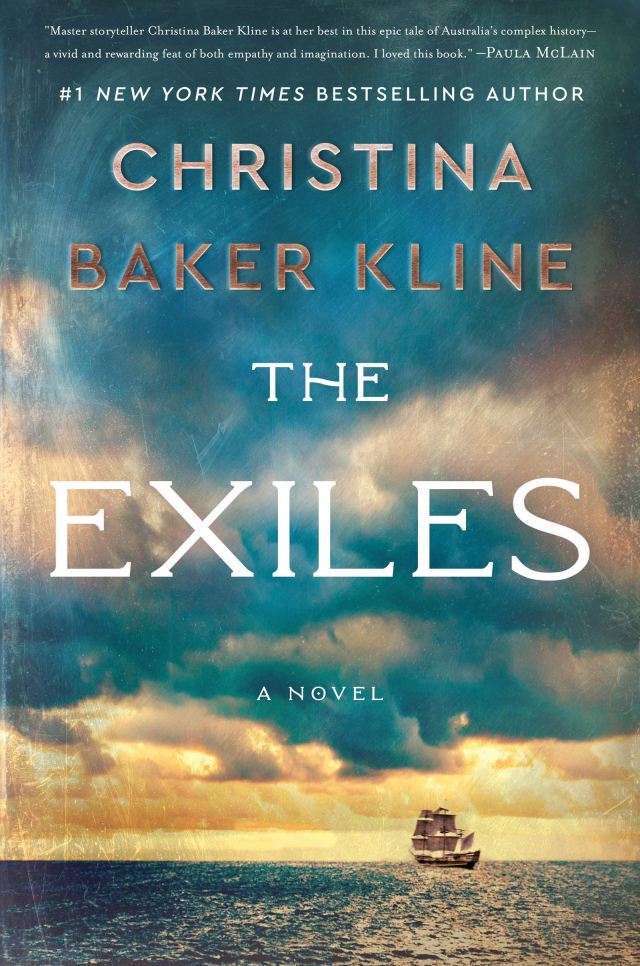
The Exiles by Christina Baker Kline: Five-star historical fiction – my review is here.

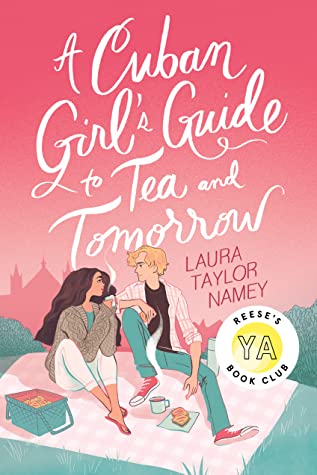
A Cuban Girl’s Guide to Tea and Tomorrow by Laura Taylor Namey: I had mixed feelings about this YA read. My review is here.

The Giver of Stars by Jojo Moyes: I ended up really enjoying this audiobook. My review is here.

I ended up DNFing two ARCs this past week — just couldn’t get into either one. Life’s too short to force myself to read something that isn’t working for me!

Pop culture & TV:

I decided to reactivate my Hulu subscription after taking a pause for most of the past year. First up: The Great! I’ve watched about half, and it’s awesome.

Also, random fun fact: I took a Jane Austen quiz, and apparently this is the man for me:

Interesting…

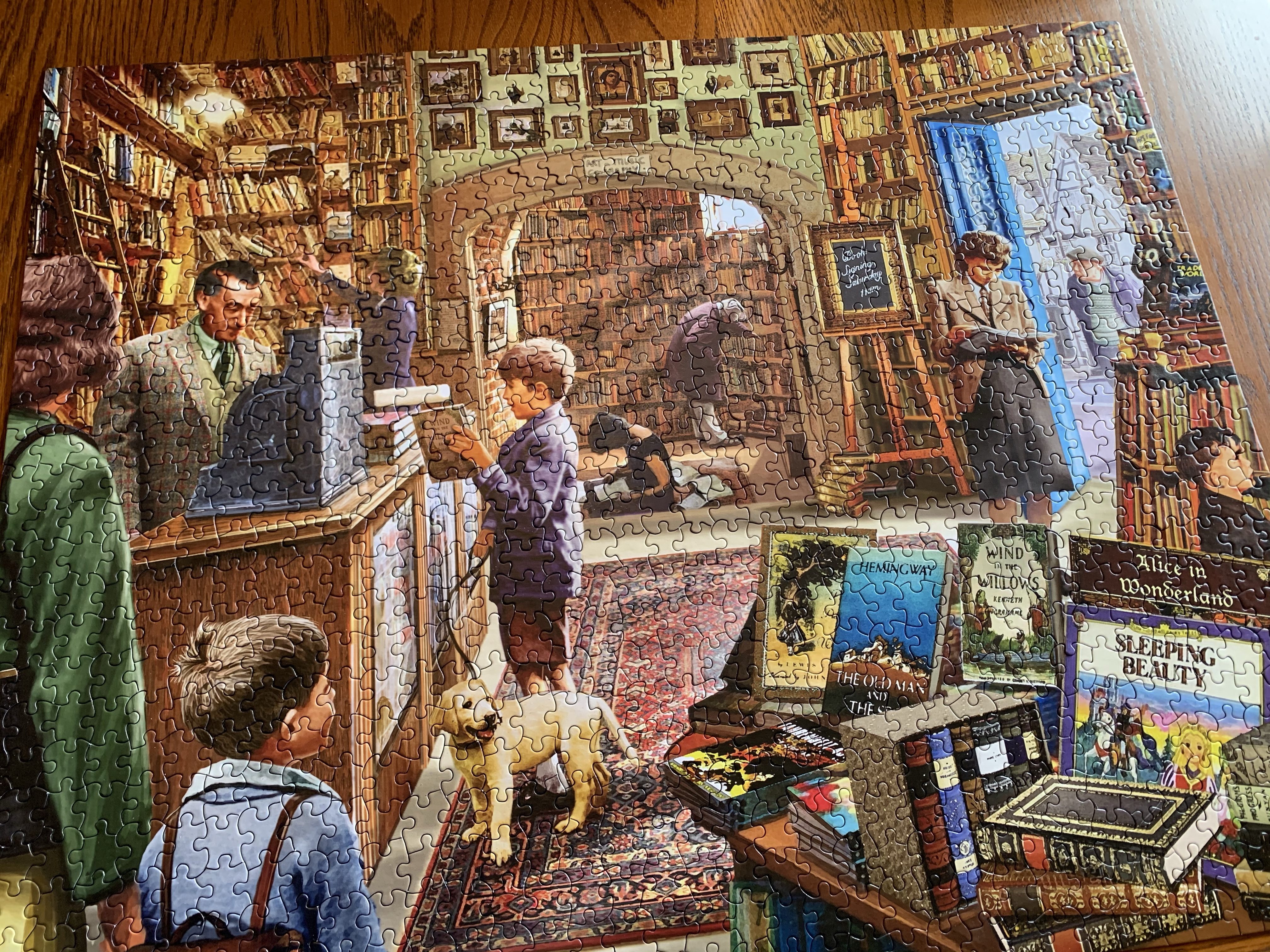
Puzzle of the week:

Upstairs, downstairs… I really liked this one.

Fresh Catch:

Two new non-fiction books this week:

After finishing The Exiles, I decided an actual history book about Australia would be a good idea — looking forward to starting The Fatal Shore soon. 

What will I be reading during the coming week?

Currently in my hands:

Nemesis Games by James S. A. Corey: The 5th book in the Expanse series. It’s so good! This book is big and chunky, but it’s zooming by. I have about 100 pages to go… but since I have a day off, I’m hoping to wrap it up today.

Now playing via audiobook:

The Viscount Who Loved Me by Julia Quinn: I wasn’t actually planning to continue with the Bridgertons series right away (this is #2), but the library had the audiobook available to borrow with no wait time, so why not? I’ll be starting this today.

Ongoing reads:
  • Outlander Book Club is re-reading Outlander! We’re reading and discussing one chapter per week. This week: Chapter 32, “Hard Labor”. Just about 3/4 of the way done, and I’m getting anxious, because I know what’s left, and it’s not happy.
  • Our current classic read is part 2 of Don Quixote. My book group is reading and discussing three chapters per week. We’re at about 60% by now, and I’m struggling to keep up.
  • I’m slowly reading The Heroine’s Journey by Gail Carriger. It’s fascinating, but I’m limiting myself to just a few chapters per week, which I’m finding is what works for me when it comes to non-fiction.

So many books, so little time…

boy1

Audiobook Review: The Giver of Stars by Jojo Moyes

Title: The Giver of Stars
Author: Jojo Moyes
Narrator:  Julia Whelan
Publisher: Pamela Dorman Books
Publication date: October 8, 2019
Print length: 388 pages
Audio length: 13 hours 52 minutes
Genre: Historical fiction
Source: Purchased
Rating:

Rating: 4.5 out of 5.

From the author of Me Before You, set in Depression-era America, a breathtaking story of five extraordinary women and their remarkable journey through the mountains of Kentucky and beyond.

Alice Wright marries handsome American Bennett Van Cleve hoping to escape her stifling life in England. But small-town Kentucky quickly proves equally claustrophobic, especially living alongside her overbearing father-in-law. So when a call goes out for a team of women to deliver books as part of Eleanor Roosevelt’s new traveling library, Alice signs on enthusiastically.

The leader, and soon Alice’s greatest ally, is Margery, a smart-talking, self-sufficient woman who’s never asked a man’s permission for anything. They will be joined by three other singular women who become known as the Packhorse Librarians of Kentucky.

What happens to them–and to the men they love–becomes an unforgettable drama of loyalty, justice, humanity and passion. These heroic women refuse to be cowed by men or by convention. And though they face all kinds of dangers in a landscape that is at times breathtakingly beautiful, at others brutal, they’re committed to their job: bringing books to people who have never had any, arming them with facts that will change their lives.

Based on a true story rooted in America’s past, The Giver of Stars is unparalleled in its scope and epic in its storytelling. Funny, heartbreaking, enthralling, it is destined to become a modern classic–a richly rewarding novel of women’s friendship, of true love, and of what happens when we reach beyond our grasp for the great beyond.

Over a year ago, I wrote a post questioning whether we really needed another book about the Depression-era Kentucky pack hours librarians, after having read the excellent The Book Woman of Troublesome Creek. A variety of sources had identified concerns about he similarities of this book and The Giver of Stars, which was published later in the same year.

At the time, I wasn’t sure that I wanted to read another book on the same historical subject, particularly given some of the questions raised. However, I finally got around to The Giver of Stars after all, and I have to admit, it’s really good.

In The Giver of Stars, we’re introduced to the small town of Baileyville, Kentucky through the eyes of Alice Van Cleve, a young Englishwoman recently married to Bennett Van Cleve, the son of one of the wealthiest and most influential local men. Alice’s starry-eyed approach to marriage is shattered by the absolute lack of affection from Bennett and his constant deferral to his father, in whose house they live and who controls every aspect of their lives.

At a town meeting, a local woman introduces the idea of starting up a pack horse library as part of a WPA project spearheaded by First Lady Eleanor Roosevelt. While many townsfolk (mostly men) are scandalized, Alice is quick to volunteer, needing to find a purpose and an occupation to take her away from her domestic unhappiness.

The librarians, led by outspoken Margery O’Hare, ride up into the mountains on their mules and horses to deliver books and magazines to the families living there. The job is strenuous and difficult, but rewarding. The women of the library are clearly changing lives with each contact and each delivery.

Alice’s father-in-law is not one to tolerate disobedience, and he takes a particular dislike to Margery’s flouting of traditional feminine roles, painting her as an evil influence to anyone who’ll listen. Mr. Van Cleve owns the local mine that employs much of the adult male population of the area, and he has his own doubtful interests to protect, especially once he suspects Margery of promoting pro-union activism and helping the mountain folk to find ways to thwart his intended mine expansion. His anger becomes more and more dangerous to Alice, Margery, and the existence of the library itself.

The Giver of Stars is an absorbing read, with unique characters we come to care about a great deal, and a nice mix of focus on their personal lives with the bigger picture drama of life in Baileyville and its gossip, natural and man-made dangers, and good-old-boy politics.

The audiobook is lovely, with narration by the talented Julia Whelan, who brings the characters to life, but also beautifully narrates the more descriptive passages about the Kentucky landscapes and the quality of life in the hills.

So, I hereby take back my skepticism about this book! While there are some similarities to The Book Woman of Troublesome Creek (apart the most obvious, the choice of general subject matter), there was nothing that particularly jumped out at me while I was listening the The Giver of Stars enough to be disturbing or distracting.

Yes, I guess we really did need two books about pack horse librarians! Both are terrific. My main recommendation would be to read them with some time in between, so each can be appreciated on its own merits. I’m glad I finally gave The Giver of Stars a try!

Book Review: A Cuban Girl’s Guide to Tea and Tomorrow by Laura Taylor Namey

Title: A Cuban Girl’s Guide to Tea and Tomorrow
Author: Laura Taylor Namey
Publisher: Atheneum
Publication date: November 10, 2020
Length: 320 pages
Genre: Young adult fiction
Source: Purchased
Rating:

Rating: 3 out of 5.

Love & Gelato meets Don’t Date Rosa Santos in this charming, heartfelt story following a Miami girl who unexpectedly finds love—and herself—in a small English town.

For Lila Reyes, a summer in England was never part of the plan. The plan was 1) take over her abuela’s role as head baker at their panadería, 2) move in with her best friend after graduation, and 3) live happily ever after with her boyfriend. But then the Trifecta happened, and everything—including Lila herself—fell apart.

Worried about Lila’s mental health, her parents make a new plan for her: Spend three months with family friends in Winchester, England, to relax and reset. But with the lack of sun, a grumpy inn cook, and a small town lacking Miami flavor (both in food and otherwise), what would be a dream trip for some feels more like a nightmare to Lila…until she meets Orion Maxwell.

A teashop clerk with troubles of his own, Orion is determined to help Lila out of her funk, and appoints himself as her personal tour guide. From Winchester’s drama-filled music scene to the sweeping English countryside, it isn’t long before Lila is not only charmed by Orion, but England itself. Soon a new future is beginning to form in Lila’s mind—one that would mean leaving everything she ever planned behind.

A Cuban Girl’s Guide to Tea and Tomorrow was one of Reese Witherspoon’s YA book club picks, and I can see a lot of what makes it appealing — romance, family, grief and recovery, friendship, and cultural diversity and celebration.

The girl of the title is Lila Reyes, a 17-year-old with a broken heart who has suffered too many losses in too short a period of time. Her boyfriend breaks up with her, her best friends makes plans to work in Ghana after graduation without telling Lila, and most devastating of all, Lila’s beloved abuela dies unexpectedly.

Her abuela was the heart and soul of the family, and she taught Lila everything she knew about food and baking. Lila’s plans were set in stone already — after graduation, she and her older sister Pilar would take over the management of the family bakery. But when Lila’s grief leads her down a self-destructive path, her worried family sends her to a small town in England to spend the summer with a cousin at her family’s inn.

Lila is mad and resentful at first, and so stubborn that she refuses to alter her Miami dress code of tank tops and strappy sandals, even when confronted with chilly English weather. Slowly, though, Lila finds the beginnings of a routine for herself, baking her special Cuban pastries and treats in the inn’s kitchen, becoming friends with a local musician and her group, and getting to know Orion Maxwell, a lovely local who is determined to show Lila all the best sites and tastes of Winchester.

The story is sweet and occasionally moving, as Lila, Orion, and others deal with sorrows and challenges, and learn the various ways true friends can hold each other up when they need it most. And oh, the food! Each chapter is filled to the brim with Lila’s nonstop cooking and baking, and it all sounds amazing! Take me to her bakery now, please, so I can fill my stomach with absolutely everything!

So why only 3 stars? (And, I’ll be honest, I wavered between 2.5 and 3 for quite a while.) It’s simple — I just couldn’t get into the author’s writing style.

You know how in some books, the sentence structure or use of words is so unique or special that it makes you stop and admire it while you’re reading? This isn’t that. Instead, I was constantly pausing because I was befuddled by the odd syntax and use of language, and had to try to puzzle out what certain descriptions and phrases actually meant:

Blond hair — a dark variety his creator dyed in a murky rain puddle — curls slightly on top of a cropped cut.

Before my mouth even closes, my words strike faces.

Gray, dim, shade — those are the colors on his face before he thumbs his chin and half-smiles for me.

My culture also has too much wanting to die out in the new.

Miami. The third heart on this pavement, trying to love me harder.

The story is nice and moves pretty quickly, but I just didn’t love it enough to want to rave about it, and the writing issue definitely affected my overall enjoyment.

Recommended for the amazing food and the tribute to Cuban Miami culture, but not a must-read.

Audiobook Review: The Exiles by Christina Baker Kline

Title: The Exiles
Author: Christina Baker Kline
Narrator:  Caroline Lee
Publisher: Custom House
Publication date: August 24, 2020
Print length: 370 pages
Audio length: 10 hours 17 minutes
Genre: Historical fiction
Source: Purchased
Rating:

Rating: 5 out of 5.

The author of the #1 New York Times bestseller Orphan Train returns with an ambitious, emotionally resonant novel that captures the hardship, oppression, opportunity and hope of a trio of women’s lives in nineteenth-century Australia.

Seduced by her employer’s son, Evangeline, a naïve young governess in early nineteenth-century London, is discharged when her pregnancy is discovered and sent to the notorious Newgate Prison. After months in the fetid, overcrowded jail, she learns she is sentenced to “the land beyond the seas,” Van Diemen’s Land, a penal colony in Australia. Though uncertain of what awaits, Evangeline knows one thing: the child she carries will be born on the months-long voyage to this distant land.

During the journey on a repurposed slave ship, the Medea, Evangeline strikes up a friendship with Hazel, a girl little older than her former pupils who was sentenced to seven years transport for stealing a silver spoon. Canny where Evangeline is guileless, Hazel — a skilled midwife and herbalist – is soon offering home remedies to both prisoners and sailors in return for a variety of favors.

Though Australia has been home to Aboriginal people for more than 50,000 years, the British government in the 1840s considers its fledgling colony uninhabited and unsettled, and views the natives as an unpleasant nuisance. By the time the Medea arrives, many of them have been forcibly relocated, their land seized by white colonists. One of these relocated people is Mathinna, the orphaned daughter of the Chief of the Lowreenne tribe, who has been adopted by the new governor of Van Diemen’s Land.

In this gorgeous novel, Christina Baker Kline brilliantly recreates the beginnings of a new society in a beautiful and challenging land, telling the story of Australia from a fresh perspective, through the experiences of Evangeline, Hazel, and Mathinna. While life in Australia is punishing and often brutally unfair, it is also, for some, an opportunity: for redemption, for a new way of life, for unimagined freedom. Told in exquisite detail and incisive prose, The Exiles is a story of grace born from hardship, the unbreakable bonds of female friendships, and the unfettering of legacy.

It’s been a few days since I finished listening to this fascinating, moving, and well-written story, and I feel like I’m still catching my breath.

In The Exiles, author Christina Baker Kline tells a powerful story of women displaced by the rules of others, struggling to survive and to find a place to call home. While the story is uplifting, it’s often so heartbreaking that it made me want to stop and sit quietly for a while to regroup and get my emotions under control.

The book starts by focusing on two very different characters: First, we meet Mathinna. At the opening of the story, she’s eight years old, already living in a sort of exile along with her tribe, who’ve been removed from their lands and forced to relocate to the harsher landscape of Flinders Island. Even there, their lives aren’t peaceful. They’re ruled by British governors, forced to adopt English speech and dress, and limited in their abilities to live as their people always have. When young Mathinna catches the visiting governor’s wife’s attention during a schoolchildren’s performance, Mrs. Franklin decides that Mathinna will be her next experiment. With no consent needed, Governor and Mrs. Franklin leave instruction for Mathinna to be brought to Van Diemen’s Land (now Tasmania), to be raised in their home as a test subject — to see if “savages” can be civilized enough to fit into proper society.

At the same time, back in London, we meet Evangeline Stokes, the inexperienced, orphaned daughter of a vicar, who seeks work as a governess with a wealthy family in order to survive after her father’s death. Evangeline is seduced and impregnated by the elder son of the family which employs her, and after she’s found with his ring in her possession, she’s arrested and imprisoned. (He, of course, is such a cad that he never lifts a finger to help her.)

Evangeline is sentenced to transportation, and begins the harrowing four-month sea voyage from England to Australia. To survive, she forges friendships with some of the other women convicts, but the voyage itself is dangerous, as are some of the crewmen onboard the ship.

During the voyage, the character Hazel is introduced as well — a teen girl convicted of robbery, after her alcoholic mother sent her out to pickpocket for their survival. Hazel is a trained and gifted midwife, and her skills become invaluable to Evangeline and the other women on the ship, as well as providing Hazel with a way to improve her own life once she arrives in Van Diemen’s land.

The relationships among the women are complex and important. While their backgrounds vary widely, all find themselves at the mercy of an unfair justice system that deprives them of their voices and their freedoms. As becomes very clear, poor and powerless women have no one to defend them, and no ability to contest or avoid the judgments handed down against them. And as one woman points out to Evangeline, it’s not just about punishment — as British colonizes the Australian territory, they need more women to build a society with, so why not solve two problems at once?

The story alternates in sections between the experiences of Evangeline, Hazel, and the other convicts, and the strange and awful half-life Mathinna is forced into. Again, here is a young woman with no voice and no power, treated as an object of curiosity and a plaything, but all too easily cast aside when her novelty wears off.

All of these women truly are exiles, removed from their homes and families, given no choice about where they’ll go or how they’ll live, forced to give up everything they’ve known and start over in a foreign land. In Mathinna’s case, of course, it’s not just the story of a personal tragedy but the tragedy of a people, as British colonization decimates the lives of the native people of Australia.

The Exiles is a beautiful and powerful read. I don’t want to talk too much about the individual characters and what becomes of them, because the specific storylines are best discovered by reading the book. Overall, this is a tragic and lovely story, and it left me wanting to learn more about the actual history of Australian settlement.

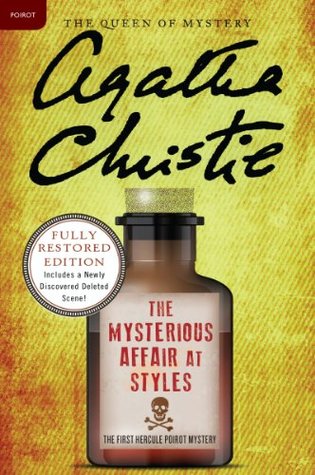
Shelf Control #251: The Mysterious Affair at Styles by Agatha Christie

Shelves final

Welcome to Shelf Control — an original feature created and hosted by Bookshelf Fantasies.

Shelf Control is a weekly celebration of the unread books on our shelves. Pick a book you own but haven’t read, write a post about it (suggestions: include what it’s about, why you want to read it, and when you got it), and link up! For more info on what Shelf Control is all about, check out my introductory post, here.

Want to join in? Shelf Control posts go up every Wednesday. See the guidelines at the bottom of the post, and jump on board!

Title: The Mysterious Affair at Styles
Author: Agatha Christie
Published: 1920
Length: 208 pages

What it’s about (synopsis via Goodreads):

Who poisoned the wealthy Emily Inglethorp and how did the murderer penetrate and escape from her locked bedroom? Suspects abound in the quaint village of Styles St. Mary—from the heiress’s fawning new husband to her two stepsons, her volatile housekeeper, and a pretty nurse who works in a hospital dispensary.

With impeccable timing, and making his unforgettable debut, the brilliant Belgian detective Hercule Poirot is on the case.

How and when I got it:

I picked up a Kindle edition a couple of years ago.

Why I want to read it:

After reading the excellent new novel by Marie Benedict, The Mystery of Mrs. Christie, my interest in Agatha Christie is definitely piqued! I’ve only read one of her books so far, but I’ve been intending to read more.

The Mysterious Affair at Styles is Agatha Christie’s first published novel, and it’s also the book where she introduced Hercule Poirot. I feel like this would be a great starting place for me, and if I enjoy it (as I suspect I will), I can pick and choose more of her works to read.

Are you an Agatha Christie fan? Any recommendations on which books to read? Particular favorites?

Please share your thoughts!


__________________________________

Want to participate in Shelf Control? Here’s how:

  • Write a blog post about a book that you own that you haven’t read yet.
  • Add your link in the comments or link back from your own post, so I can add you to the participant list.
  • Check out other posts, and…

Have fun!

Top Ten Tuesday: Bookish Resolutions for 2021

snowy10

Top Ten Tuesday is a meme hosted by That Artsy Reader Girl, featuring a different top 10 theme each week. This week’s topic is Resolutions/Hopes for 2021.

I’m not a big fan of making resolutions. I’ve been around enough years to know that most don’t stick. But I’m not opposed to setting a few goals, so…

Here are some low-key bookish goals for 2021:

Read whatever I feel like. Okay, I say this every year… and every year it’s worth repeating. It’s easy to get caught up in ARCs and reading schedules, and that’s fine — but I know what makes me happiest is to read whatever I want, whenever I want. And reading is for happiness, right?

Resist the urge to over-request. I’m looking at you, NetGalley request button! I love NetGalley, and I so appreciate how wonderful it is to have access to all these amazing early review copies! But I need to keep better perspective, and not allow myself to overwhelm my to-read plans with nothing but ARCs.

Organize my bookshelves — again! — and donate the never-gonna-read books and the read-’em-but-don’t-need-to-keep-’em books to the library (once their donation center reopens).

Stick to my series reading plans for 2021! Subject to change, of course, but I do want to get to the books and series that I set as my priorities.

Updated to add: After this post was already up and published, I realized I forgot one goal! So, my late addition is… Tackle one or two of the heftier non-fiction books on my shelves (mostly a variety of history books) by reading them in small bites, just a few chapters per week. Slow and steady, so I get to enjoy them without feeling like I’m missing out on reading fiction too.

And a couple of blogging goals too:

Update my Book Blog Meme Directory page. It’s been a while since I’ve gone through and checked all the links, made sure all the listed memes are still current, etc. It’s clean-up time!

Go through old posts to make sure that images and links still work. This is a big, tedious job, but if I do it in little bites over the course of the year, it should be okay.

What are your bookish, non-bookish, or blogging resolutions for this year? Whatever you’re resolving or hoping for, I’m wishing you all a happy and healthy year. It can only get better, right?

The Monday Check-In ~ 1/11/2021

cooltext1850356879 My Monday tradition, including a look back and a look ahead — what I read last week, what new books came my way, and what books are keeping me busy right now. Plus a smattering of other stuff too.

Life.

What a week. What is there really to say?

But…

In family news, it was my daughter’s birthday! I haven’t seen her in over a year, which makes me really sad, but we still managed to connect… and she did really like all the cozy gifts I sent her!

What did I read during the last week?

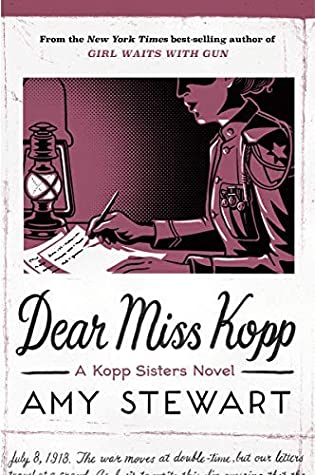
Dear Miss Kopp by Amy Stewart: The 6th book in the terrific Kopp Sisters series! My review is here.

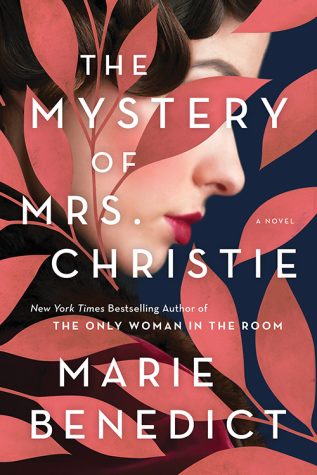
The Mystery of Mrs. Christie by Marie Benedict: Powerful historical fiction based on a mysterious episode from Agatha Christie’s life. My review is here.

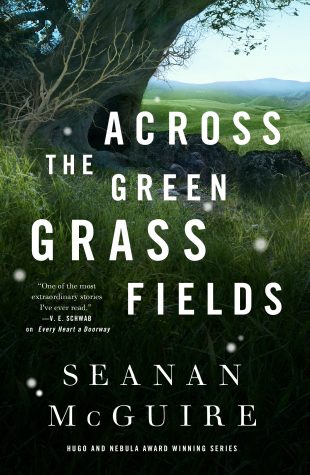
Across the Green Grass Fields by Seanan McGuire: The 6th book in the fantastic Wayward Children series. Loved it! My review is here.

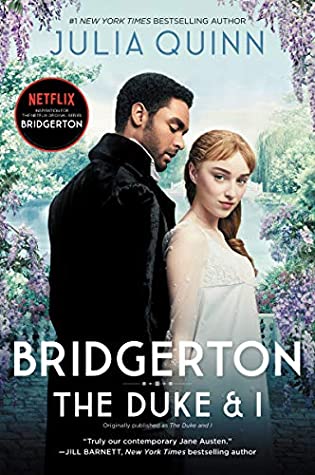
The Duke & I by Julia Quinn: Well, of course I needed to start reading the books behind Bridgerton! And yes, I’m going to keep going. My review of book 1 is here.

Pop culture & TV:

This was definitely a week that called for mindless, distracting TV, and my favorite viewing was The History of Swear Words on Netflix. It’s six short episodes, and so much fun. Needless to say, if hearing swear words used and discussed bothers you, this isn’t for you — and don’t watch the trailer!

Puzzle of the week:

Another fun one!

Fresh Catch:

A bunch of different books I’d ordered all arrived this week:


What will I be reading during the coming week?

Currently in my hands:

The Lost Manuscript by Cathy Bonidan: Just getting started!

Now playing via audiobook:

The Exiles by Christina Baker Kline: Almost done – review to follow.

Ongoing reads:

Outlander Book Club is re-reading Outlander! We’re reading and discussing one chapter per week. This week: Chapter 31, “Quarter Day”.

Our current classic read is part 2 of Don Quixote. My book group is reading and discussing three chapters per week. Plodding along…

So many books, so little time…

boy1

Book Review: The Duke & I (Bridgertons, #1) by Julia Quinn

Title: The Duke & I (Bridgertons, #1)
Author: Julia Quinn
Publisher: Avon
Publication date: 2000
Length: 433 pages
Genre: Historical romance
Source: Purchased
Rating:

Rating: 4 out of 5.

From New York Times bestselling author Julia Quinn comes the first novel in the beloved Regency-set world of her charming, powerful Bridgerton family, now a series created by Shonda Rhimes for Netflix.

In the ballrooms and drawing rooms of Regency London, rules abound. From their earliest days, children of aristocrats learn how to address an earl and curtsey before a prince—while other dictates of the ton are unspoken yet universally understood. A proper duke should be imperious and aloof. A young, marriageable lady should be amiable…but not too amiable.

Daphne Bridgerton has always failed at the latter. The fourth of eight siblings in her close-knit family, she has formed friendships with the most eligible young men in London. Everyone likes Daphne for her kindness and wit. But no one truly desires her. She is simply too deuced honest for that, too unwilling to play the romantic games that captivate gentlemen.

Amiability is not a characteristic shared by Simon Basset, Duke of Hastings. Recently returned to England from abroad, he intends to shun both marriage and society—just as his callous father shunned Simon throughout his painful childhood. Yet an encounter with his best friend’s sister offers another option. If Daphne agrees to a fake courtship, Simon can deter the mamas who parade their daughters before him. Daphne, meanwhile, will see her prospects and her reputation soar.

The plan works like a charm—at first. But amid the glittering, gossipy, cut-throat world of London’s elite, there is only one certainty: love ignores every rule…

After binge-watching Bridgerton on Netflix, how could I resist reading the book that inspired the series? I’m not a big romance reader, and when I do read romance, it tends to be contemporary. But giving into my Bridgerton obsession, I dove into The Duke & I, and finished it in one day!

First, for the TV viewers: No, this is not an integrated society as in the Netflix series. The Duke & I is pretty traditional Regency-era romance, dukes and earls and the gossip of the ton, very solidly white. (Not in my imagination, of course — once you’ve encountered the TV version of Simon Bassett, there’s no way you’ll ever envision him as anyone else!)

Back to the book: The Duke & I has a very traditional romance feel to it, and let’s keep in mind that it was originally published 20 years ago! Daphne Bridgerton is the 4th child of the large Bridgerton family, which very conveniently names its children alphabetically, so it’s easy to keep track of who’s who. The oldest daughter, Daphne is now in her second season out in society, and while she’s received marriage proposals, not a single one has appealed to her. Having grown up with three older brothers, Daphne is perhaps too comfortable with the males of the species, so she’s seen as a great girl and a good friend, but not a romantic prospect. (Men can be stupid.)

Simon, the new Duke of Hastings, is the epitome of eligible bachelors, and “ambitious mamas” are continuously throwing their marriageable daughters at him. Simon is very good friends with Daphne’s oldest brother Anthony, and when he encounters Daphne dealing with an insistent suitor, he’s happy to come to her aid. The two form an agreement: By pretending to be courting, Simon will avoid the mamas, and Daphne will become instantly more alluring to other men, who will now appreciate her more after seeing Simon’s interest. (Again, men can be stupid).

Of course, their fake relationship leads to real feelings, but there’s a catch. Simon has sworn never to marry or have children, as a sort of posthumous revenge on his abusive father who treated Simon horribly and only cared about the continuation of the Basset family line. Simon has sworn to deny his late father’s ultimate goal by letting the family name die with him. Daphne, on the other hand, having grown up in a large, loving family, yearns for a family of her own.

After a compromising encounter, a duel, threats by her brothers, and all sorts of drama, Daphne and Simon do end up marrying. But while their honeymoon is a blissful sexual awakening for Daphne, all is not wine and roses. Simon has told Daphne that he can’t have children, but when she discovers that his “can’t” really means “won’t”, their young marriage in on the brink of collapse.

Okay, so anyone who’s interested in the book or in the TV series knows that there a major controversy about Daphne’s action and the issue of consent. So, I’ll throw up a big spoiler alert before going further.

SPOILERS AHEAD!!

He shifted restlessly, and Daphne felt the strangest, most intoxicating surge of power. He was in her control, she realized. He was asleep, and probably still more than a little bit drunk, and she could do whatever she wanted with him. She could have whatever she wanted.

The most controversial scene in the book is one in which Simon comes home very drunk, after the two have had a major falling out. Daphne gets a very belated lesson on how babies are actually made, and realizes that Simon has been pulling out when they have sex in order to make sure she doesn’t become pregnant. Daphne initiates sex, and Simon, though drunk, is a willing participant, until they get close to climax, at which point Daphne does not let him pull out as usual. He feels betrayed, and leaves her.

The TV version takes away the issue of Simon being drunk, but does still have Daphne take control of the situation so that Simon can’t pull out when he wants to. Again, he feels betrayed.

If you look on Goodreads or elsewhere, there’s a lot of discussion about whether Daphne raped Simon in this scene. I have mixed feelings. The sex act itself is consensual. You could argue that Simon was too drunk to consent, but in the context of their marriage, which has included a lot of very enthusiastic sex up to this point, I think it’s hard to make the case that Simon was not a willing participant.

Was she right to force him to finish inside her? Well, no, she did take away his choice there. But I think it’s a more nuanced situation.

Daphne was utterly and completely ignorant about sex prior to her marriage. She had absolutely no idea about the specifics of having babies, other than knowing that it happens during marriage. Daphne’s mother Violet comes to give her “the talk” the night before the wedding, and completely fails to give her any actual, specific information. No mention of body parts or anatomy, no discussion of how it all works, and nothing about how babies are made.

It’s only a housemaid’s random comment about “seed” and a “womb” that lead Daphne to start piecing things together, and to understand that Simon is choosing to “spill” his seed outside her (ugh, romance euphemisms). She feel betrayed by Simon, who let her believe that he was physically unable to father children, rather than explaining anything to her with honesty. And Simon absolutely knew that Daphne was clueless about how it all worked — he does a very good job of introducing her to sexual pleasure, but deliberately doesn’t explain things to her that would work against his own intentions.

So, yes, Daphne is wrong to do what she did — but Simon is wrong too, and Daphne’s mother essentially created the potential for this conflict by allowing her daughter to enter marriage with no knowledge about “the marital act” whatsoever.

END SPOILERS

Beyond all that, however, I can’t deny that The Duke & I was a compelling and enjoyable read. The characters are lots of fun, especially Daphne’s older brothers, who are fiercely protective and also very funny.

As I mentioned, I’m not much of a romance reader, and some of the descriptions and language are a bit over the top for me:

His face was quite simply perfection. It took only a moment to realize that he put all of Michelangelo’s statues to shame.

Her legs snaked around his, pulling him ever closer to the cradle of her femininity.

LOL. Cradle of femininity? That’s definitely a new one for me!

Still, there’s no denying I enjoyed this book, problematic issues aside. There’s a lot of fault to go around, and also, this book was written 20 years ago. I’d hope that a writer today would make different choices about how to depict Daphne and Simon’s key conflict.

As a fan of the TV version, I missed all of the non-Daphne, non-Simon plot elements concerning Eloise, the brothers, etc. But, as far as I can tell, these plots are all addressed in other books in the Bridgertons series. Eight books, eight siblings… each gets their own story!

Will I continue reading the Bridgertons books? Well… who am I kidding? Of course I will! As much as this isn’t my preferred genre, I do love the characters and want to read more about them. Onward!

Book Review: Across the Green Grass Fields (Wayward Children, #6) by Seanan McGuire

Title: Across the Green Grass Fields (Wayward Children, #6)
Author: Seanan McGuire
Publisher: Tor
Publication date: January 12, 2021
Length: 176 pages
Genre: Fantasy
Source: ARC via Netgalley; hardcover purchased

Rating: 4.5 out of 5.

A young girl discovers a portal to a land filled with centaurs and unicorns in Seanan McGuire’s Across the Green Grass Fields, a standalone tale in the Hugo and Nebula Award-wining Wayward Children series.

“Welcome to the Hooflands. We’re happy to have you, even if you being here means something’s coming.”

Regan loves, and is loved, though her school-friend situation has become complicated, of late.

When she suddenly finds herself thrust through a doorway that asks her to “Be Sure” before swallowing her whole, Regan must learn to live in a world filled with centaurs, kelpies, and other magical equines―a world that expects its human visitors to step up and be heroes.

But after embracing her time with the herd, Regan discovers that not all forms of heroism are equal, and not all quests are as they seem…

A new Wayward Children book is always cause for celebration, and Across the Green Grass Fields is no exception.

In this book, the 6th in the series, we’re introduced to a young girl named Regan. She has lovely, loving parents, and is crazy about horses and riding lessons. At school, she originally had two best friends, Heather and Laurel, but when Heather dared to express interest in something Laurel deemed un-girl-like, Heather became shunned — and Regan learned her lesson. To retain her place as Laurel’s best friend, conformity is all that matters. She has to embrace Laurel’s strict rules about what girls do and don’t do and do and don’t like, if she wants to not end up like poor Heather.

Laurel was one of the “lucky ones,” according to the girls who flocked around her in their ribbons and flounces, praising her developing breasts like they were something she’d accomplished through hard work and personal virtue, not hormones and time.

But when Regan learns an unexpected truth from her parents, she makes the awful mistake of confiding in Laurel, and then realizes that she’s just blown up her own world. Distraught, Regan runs away into the woods, where she sees an unusual door, with the words “Be Sure”. In that moment, Regan is sure that anything would be better than where she is now, and she steps through into an entirely new world.

In the Hooflands, Regan is the only human in a world peopled by different hooved species — unicorns, centaurs, kelpies, and more. She is taken in by a family of centaurs, who adopt her as one of their own and love her fiercely. With the love of the centaurs, Regan grows and thrives — missing her parents, of course, but feeling more and more that she’s finally found a place to just be herself, a place that feels like a real home. And it’s Chicory, the centaur daughter, who shows Regan what a real friend can be:

In Chicory, she had finally found a friend who liked her for who she was, not for how well she fit an arbitrary list of attributes and ideals.

The only downside is that everyone in the Hooflands believes that humans have a destiny. Humans show up rarely, but when they do, they’re meant to save the world…. and then they disappear. No one really knows the how and why of it all, but all believe that sooner or later, Regan will have to confront the Queen of the Hooflands and do whatever it is that’s needed to save the world.

Destiny wasn’t real. Destiny was for people like Laurel, who could pin everything they had to an idea that the world was supposed to work in a certain way, and refuse to let it change. If these people said her destiny was to see the Queen, she would prove them wrong. She wasn’t their chosen one. She was just Regan, and as Regan, she ran.

Through her years in the Hooflands, Regan learns about listening to people and seeing beyond their surfaces, about true friendship and family, among making choices and remaining true to oneself, and about accepting and appreciating oneself, putting aside the unrealistic notions of “normal” and “destiny”. Regan learns to be Regan, and sees that she can be strong and pursue the people and activities that make her feel whole and good.

Across the Green Grass Fields is the first book in the Wayward Children series that does not include the Home for Wayward Children at all, although I imagine that that’s where Regan will be headed next. None of the characters from previous books pop up here either, so this book really can be read as a stand-alone. Still, it fits into the great world of the Wayward Children series, with its portal worlds and missing children and quests for meaning and one’s true place. Obviously, as a fan of the series, I’d recommend starting from the beginning and reading them all!

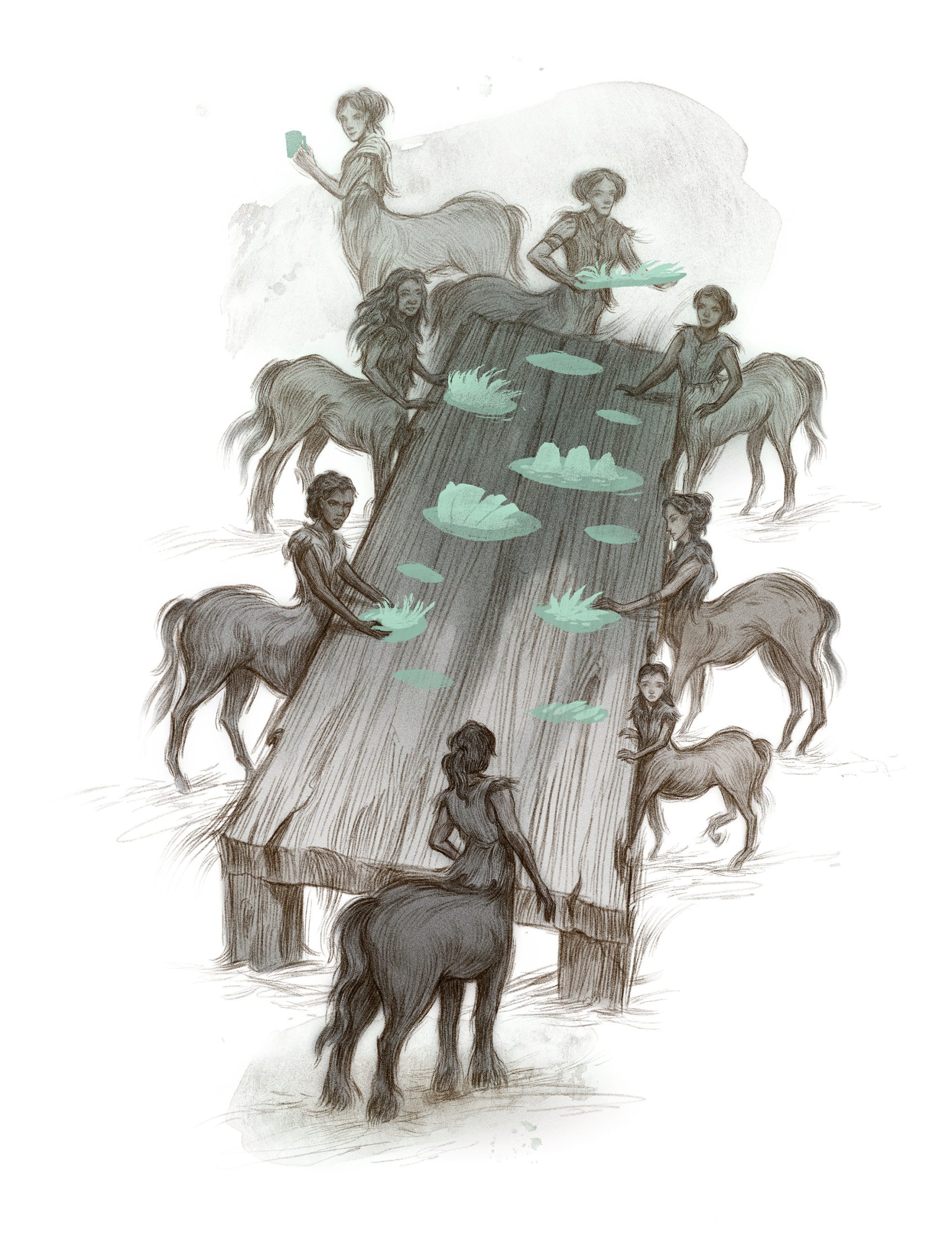
Across the Green Grass Fields includes illustrations by the amazingly talented Rovina Cai, and although I haven’t received my hard copy of the book yet, I’m already enchanted by the images available on Tor’s website, including this one of the centaur family:

Illustration by Rovina Cai; from Tor.com

The Wayward Children series as a whole is a delightful, magical experience, and Across the Green Grass Fields introduces a wonderful new world and heroine. Highly recommended.

Book Review: The Mystery of Mrs. Christie by Marie Benedict

Title: The Mystery of Mrs. Christie
Author: Marie Benedict
Publisher: Sourcebooks Landmark
Publication date: December 29, 2020
Length: 288 pages
Genre: Historical fiction
Source: Review copy courtesy of the publisher via NetGalley
Rating:

Rating: 5 out of 5.

Marie Benedict, the beloved New York Times bestselling author of The Only Woman in the Room, uncovers the untold story of Agatha Christie’s mysterious eleven day disappearance.

In December 1926, Agatha Christie goes missing. Investigators find her empty car on the edge of a deep, gloomy pond, the only clues some tire tracks nearby and a fur coat left in the car—strange for a frigid night. Her husband and daughter have no knowledge of her whereabouts, and England unleashes an unprecedented manhunt to find the up-and-coming mystery author. Eleven days later, she reappears, just as mysteriously as she disappeared, claiming amnesia and providing no explanations for her time away.

The puzzle of those missing eleven days has persisted. With her trademark exploration into the shadows of history, acclaimed author Marie Benedict brings us into the world of Agatha Christie, imagining why such a brilliant woman would find herself at the center of such a murky story.

What is real, and what is mystery? What role did her unfaithful husband play, and what was he not telling investigators?

A master storyteller whose clever mind may never be matched, Agatha Christie’s untold history offers perhaps her greatest mystery of all. 

In this fascinating new release, author Marie Benedict creates an Agatha Christie-worthy mystery out of a real-life mystery from Christie’s own life.

Agatha Christie really did disappear for eleven days in 1926, and when she was located, her missing days were attributed to amnesia. That was it — a rather vague and unsatisfying resolution to a headline-making missing person story. (Read more about the actual events, here.)

But what really happened? Is there more to the story than meets the eye? In The Mystery of Mrs. Christie, we get a tantalizing view of a possible (and highly entertaining) answer.

The novel follows two narrative streams in alternating chapters: Agatha’s courtship and marriage to Archie Christie, told from Agatha’s perspective starting in 1912, and Agatha’s disappearance in 1926, told from Archie’s point of view. As the two weave together, we come to understand Agatha’s brilliance, and just how much of herself she sacrificed in order to please her moody, controlling husband.

I laughed at his rare joke, a mad cackle that I knew was a mistake the moment it escaped my lips. It sounded brash and overreactive, and Archie wouldn’t like it. It smacked of disorderly emotions.

I really don’t want to give too much away, so I won’t talk about outcomes at all. What I will highlight is the shock and dismay I felt reading Agatha’s narration of how she devoted herself to her husband, pushing down her own successes, her natural vivacity, and even her love for her daughter in order to cater to a man who demanded to be constantly at the center of his wife’s attention. It’s heartbreaking.

On those nights when I longed to hold my baby in my arms, even sleep with her in my bed, I told myself that this distance was necessary practice. How else could I ensure that Archie maintained his position at the center of my affections?

Even after her beloved mother dies, Agatha is made to feel responsible for neglecting Archie and causing his infidelity:

It was likely my fault that he’d become fascinated with Nancy. Hadn’t Mummy always warned me never to leave my husband alone for too long? And hadn’t I emotionally and physically abandoned him this summer in my grief? Even when he was in Spain, he knew my heart and mind weren’t with him but lost to my sorrow over Mummy.

Argh. It’s just so upsetting to see this amazing woman tie herself in knots as a result of her husband’s passive-aggressive, emotionally manipulative and abusive behavior. He even manages to suck the joy out of Agatha’s early writing successes, making her feel unsupportive of her husband if she became too happy about her publishing contracts and the beginnings of her fame.

I mostly write because I adore creating worlds and puzzles, and I want to succeed at it wildly. But ambition is a dirty word when it’s used by women; it’s decidedly unladylike, in fact.

The author weaves together the historical facts to create a police procedural crime investigation in the chapters set in 1926. If it starts to feel like we’re in an Agatha Christie novel, well, kudos to Marie Benedict! She employs Agatha’s wittiness and intelligence to create a puzzle out of Agatha’s own life. According to The Mystery of Mrs. Christie, Agatha first started writing her stories as a result of a dare from her sister, who just didn’t believe that Agatha could create an unsolvable puzzle for readers — so naturally, she had to prove her sister wrong. As in an Agatha Christie mystery, this book delivers clever plotting and intriguing twists that manage to surprise and delight.

I was a little hesitant about reading The Mystery of Mrs. Christie, as I’ve only read one Agatha Christie novel (And Then There Were None), although I’ve seen adaptations of several others. I needn’t have worried. The Mystery of Mrs. Christie is perfectly accessible for a Christie novice like myself, and I imagine that it’ll be very enjoyable for the great lady’s more ardent fans too.

And now, of course, I need to read more Agatha Christie books! Do you have any favorites? Where should I start? I’m also definitely going to want to read more by Marie Benedict! So far, I’ve only listened to an audiobook novella written by her, Agent 355, and I loved it.
For anyone who’s a Christie fan, or for those who just enjoy a good literary puzzle with a strong, smart woman at its center, I highly recommend The Mystery of Mrs. Christie.