Book Review: Odd & True by Cat Winters

Trudchen grew up hearing Odette’s stories of their monster-slaying mother and a magician’s curse. But now that Tru’s older, she’s starting to wonder if her older sister’s tales were just comforting lies, especially because there’s nothing fantastic about her own life—permanently disabled and in constant pain from childhood polio.

In 1909, after a two-year absence, Od reappears with a suitcase supposedly full of weapons and a promise to rescue Tru from the monsters on their way to attack her. But it’s Od who seems haunted by something. And when the sisters’ search for their mother leads them to a face-off with the Leeds Devil, a nightmarish beast that’s wreaking havoc in the Mid-Atlantic states, Tru discovers the peculiar possibility that she and her sister—despite their dark pasts and ordinary appearances—might, indeed, have magic after all.

I became oddly (*snort* ODDly!) enchanted by this story of two sisters, although it was less the magical storytelling that captured me, but rather the relationship between Od and Tru and the secrets that lay between them.

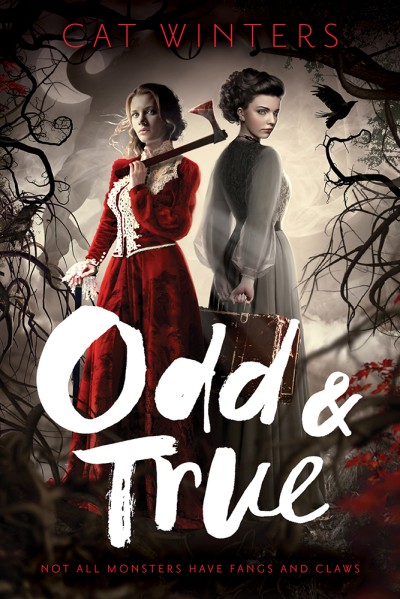
I went into Odd & True with somewhat false expectations, based on early synopses and the cover picture. I definitely expected something about monster hunters! Instead, Odd & True is more complicated and nuanced than I would have thought, and ultimately conveys some lovely sentiments about family and belonging.

Od and Tru, when we first meet them, live in a plain Oregon home with their straight-laced, strict Aunt Viktoria and her husband William. Od is five years older than Tru, and has been Tru’s protector since both their parents left them years earlier. Tru suffers terrible pain in her leg as a result of polio as a toddler, and to distract her from her suffering, Od tells Tru stories of their past. She tells her the story of the day of her birth, when she was born in a castle and her uncle the magician came to visit, stories about their mother setting out to battle monsters in the deep, dark woods, and stories of their artist father traveling the world to seek his fortune.

Tru believes it all, and grows up with no doubt that monsters exist in the world, and must be warded off by charms and amulets and spells, as well as by the special monster-hunting weapons in the family’s special traveling case.

In alternating chapters, we get the sisters’ views of their world… and once we start hearing from Odette, it becomes increasingly clear that the magical tales she spins for Tru are just a sugar-coated version of the darker truths of their childhood and their parents’ lives.

As the story progressed, I became more and more engrossed in Odette’s part of the story, and perhaps as a consequence, I found it harder to buy into Tru’s view of life and her fantastical belief in myths and legends. Still, I really appreciated the sisters’ devotion to one another, and the various threads do come together nicely by the end.

I had a hard time getting truly caught up in the story at first, but gradually it grabbed me, and I ended up liking it very much. I really admire the way the author weaves together the two viewpoints to create a picture of a family that’s mired it its own myths.

I’ve decided I’d rather be foolish than ordinary. I’d rather risk chasing monsters that might not exist, searching for [deleted spoiler] I’m not meant to find, than to believe we’re nothing more than mundane creatures, steeped in ordinary lives… Please trust me when I insist that it is too soon for you to turn your back on spellbinding wonders.

Odd & True is the story of two young women who refuse to let their lives be dictated by what they “should” be and do. It’s about taking risks and being brave, facing danger even when you feel weak, and not letting anyone put you into a box. It’s quite a lovely read, and I think fans of Cat Winters, as well as those new to her wonderful books, will enjoy Odd & True very much.

Interested in this author? Check out these additional reviews:
The Uninvited
The Cure for Dreaming
In the Shadow of Blackbirds
The Steep & Thorny Way

_________________________________________

The details:

Title: Odd & True
Author: Cat Winters
Publisher: Amulet Books
Publication date: September 12, 2017
Length: 358 pages
Genre: Young adult
Source: Purchased

Save

Save

Save

Save

Save

Save

Save

Take A Peek Book Review: The Café by the Sea by Jenny Colgan

“Take a Peek” book reviews are short and (possibly) sweet, keeping the commentary brief and providing a little peek at what the book’s about and what I thought.


Synopsis:

(via Goodreads)

Years ago, Flora fled the quiet Scottish island where she grew up — and she hasn’t looked back. What would she have done on Mure? It’s a place where everyone has known her all her life, where no one will let her forget the past. In bright, bustling London, she can be anonymous, ambitious… and hopelessly in love with her boss.

But when fate brings Flora back to the island, she’s suddenly swept once more into life with her brothers — all strapping, loud, and seemingly incapable of basic housework — and her father. Yet even amid the chaos of their reunion, Flora discovers a passion for cooking — and find herself restoring dusty little pink-fronted shop on the harbour: a café by the sea.

But with the seasons changing, Flora must come to terms with past mistakes — and work out exactly where her future lies…

My Thoughts:

The Café by the Sea is a sweet, fluffy treat of a book — not especially deep or filling, but enjoyable the whole way through. I enjoyed the setting — a beautiful, isolated Scottish island where everyone knows everyone else, and where, sadly, the younger generation doesn’t see much of a future. When Flora arrives back on the island for a work assignment, she instigates changes that will ultimately lead to the rejuvenation of the island, by convincing a billionaire about to open an exclusive resort to hire and source locally.

The work assignment is also the means for Flora to finally get noticed by her boss, an icy playboy lawyer with a tragic past who never allows emotions to seep to the surface. Honestly, the love story didn’t click for me. Flora, a paralegal in a prestigious law firm, has had a hopeless crush on Joel for years, and although it’s not giving away too much to say that the island has a profound effect on him as well, I couldn’t figure out what Flora saw in him in the first place, other than his amazing good looks. Meanwhile, there’s a potential love interest on the island, but that part of the story doesn’t get a whole lot of attention, so it’s pretty clear early on which way things are going.

I loved the parts of the story about Flora reconnecting with her father and brothers, coming to terms with a loss in the family several years earlier, and reconnecting with the people and natural beauty of Mure. However, I was a little unsure about some of Flora’s decision-making regarding her career and her future. When we meet her, she’s working as a paralegal with an eye toward becoming a fully qualified lawyer, but her actual work in law seems to fall by the wayside as she becomes more and more involved in using her family’s history to open up and run an amazing café in the center of town. Was she never really all that interested in becoming a lawyer? It seems that she’s just fallen into this new life, and I would have liked to have her at least think about what it might mean to walk away from her professional plans and change course like this.

Still, this is really a charming book, with a gorgeous setting, interesting, quirky characters and a plot that hits some emotional notes without ever losing its sense of romance and light. When you’re looking for something to lift your spirits, check out The Café by the Sea!

_________________________________________

The details:

Title: The Café by the Sea
Author: Jenny Colgan
Publisher: William Morrow
Publication date: June 27, 2017
Length: 416 pages
Genre: Contemporary fiction
Source: Library

**Save

Save

Save

Save

Save

Save

Save

Book Review: Into the Drowning Deep by Mira Grant

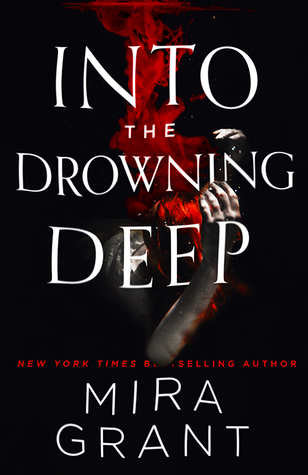
Seven years ago, the Atargatis set off on a voyage to the Mariana Trench to film a “mockumentary” bringing to life ancient sea creatures of legend. It was lost at sea with all hands. Some have called it a hoax; others have called it a maritime tragedy.

Now, a new crew has been assembled. But this time they’re not out to entertain. Some seek to validate their life’s work. Some seek the greatest hunt of all. Some seek the truth. But for the ambitious young scientist Victoria Stewart this is a voyage to uncover the fate of the sister she lost.

Whatever the truth may be, it will only be found below the waves.

But the secrets of the deep come with a price.


Mermaids are real. They are dangerous. And they are very, very hungry.

I really loved the 2015  novella Rolling in the Deep (review), so I was thrilled when I learned that a full-length novel was to follow. I was also a little nervous — the novella was so perfectly constructed and so utterly disturbing. Could the novel live up to the promise of the novella?

The answer is a resounding yes.

Into the Drowning Deep picks up seven years later, when the tragic loss of the Atargatis is remembered as a personal devastation by some, and derided as a hoax by many others. Imagine Network, responsible for the first voyage, is determined to redeem its less-than-respectable reputation and commissions a huge, elaborate research vessel to go back out to he Mariana Trench and find proof that the events shown on the found footage from the Atargatis were real. The new ship, the Melusine, is filled with top scientists and researchers in fields of oceanography, oceanographic acoustics, marine biology, organic chemistry, and more. It’s also staffed by Imagine’s corporate henchman and the network’s quirky/geeky/adorable TV personality, who’s there to record everything that happens for the sake of the inevitable documentary to follow up on the voyage.

My first thought as I read about the Melusine’s voyage: Are these people nuts? Everyone from the Atargatis died, brutally, eaten by sea creatures with big sharp teeth and a hunter’s instinct for tracking down prey. Why on earth would sane people intentionally choose to go back there?

Well. Science. Vengeance. Money. Fame.

The mystery of the creatures caught on film on the Atargatis is simply too alluring to resist. The scientists all dream of prize-worthy glory, seeing the new voyage as a chance to prove the existence of an unknown species, to find something truly new and introduce it to the world. And there are those with personal stakes as well, including Tory, the scientist whose sister Anne perished seven years earlier and who has been chasing her sister’s shadow for all the years since.

Let’s just say that pretty much what we knew would happen, happens. Yes, the mermaids attack again — but this time the people are at least a little more prepared than the first time around, and although the bloody mayhem is intense and brutal, there’s also progress in understanding more about the nature of the creatures — what they are, how they function, and even the rudiments of how they communicate. It’s all quite brilliant — bloodily so.

I love Mira Grant’s writing. She manages to create interesting characters — some to root for, some to despise — and then throw them into situations that challenge them, threaten them, and cause them to either rise to the occasion or be consumed by their own worst character flaws. And yes, “consumed” is an appropriate word, since bad decisions quickly lead to becoming mermaid chow.

One (of many) brilliant aspects of this book is that it’s set just slightly forward into the future, but not by much. The action takes place in 2022, and the author paints a picture of a world already feeling the ugly effects of climate change. The changing ocean temperatures and resulting changes in the ocean ecosystem directly influence what happens in Into the Drowning Deep. It’s not preachy, just presented as inevitable result of the direction we’re heading in now. Definitely provides food for thought, and should make us all pause… and worry.

While the ending was rich and satisfying and edge-of-the-seat suspenseful, I think the door is open for the story to continue… and I really hope it does. I want more! I want to see what happens next with the characters left alive at the end of the story (definitely fewer than there were at the start!), and how the world chooses to deal with the mermaids now that their existence is proven beyond doubt.

Reading this book gave me chills, in all the best ways. A few tidbits for your reading pleasure:

Had they looked, they might not have seen anything. Daryl was inexperienced compared to Gregory, and more, he was letting his nerves get the better of him; he was seeing danger in every corner, and allowing it to blind him to the danger that was actually lurking. He would have seen the smooth sweep of the hull, the fruit of human labor and innovation, intended to protect them from the dangerous waters. He would have seen how high up he was, and how far the mermaids would need to climb, and felt this rendered him safe, somehow. Protected, sheltered, like a small fish choosing to believe the coral reef can offer genuine protection from the jaws of the eel, the arms of the octopus.

(The door would not protect them; the door was not enough. The door was wood and riveted steel and it was not enough. Tory had known that even before they’d run past the first shattered door. The cabin beyond had been dark, but not dark enough; there was blood on the door, and blood mixed into the slime onthe deck outside, and none of them were safe. Not here, not anywhere.)

Do I think they found mermaids?

Yes. Of course I do.

And I think the mermaids ate them all.

And finally, one from the perspective of the mermaids:

Where there was one of these things, there were always others. The delicate, delicious things that died so easily never traveled alone. Their schools varied in number from few to many, but they never traveled alone.

Deep beneath the waves, the hungry turned their eyes upward, toward the promise of plenty, and began to prepare.

_________________________________________

The details:

Title: Into the Drowning Deep
Author: Mira Grant
Publisher: Orbit
Publication date: November 14, 2017
Length: 512 pages
Genre: Horror
Source: Review copy courtesy of Orbit

Save

Save

Save

Save

Save

Save

Save

Audiobook Review: Reflections (Indexing, #2) by Seanan McGuire


“For her to love me, she had to be willing to kill me. Anything else would show that her heart was untrue.”

The struggle against not-so-charming storybook narratives isn’t the only complicating factor in Henrietta “Henry” Marchen’s life. As part of the ATI Management Bureau team protecting the world from fairy tales gone awry, she’s juggling her unwanted new status as a Snow White, dealing with a potentially dangerous Pied Piper, and wrangling a most troublesome wicked stepsister—along with a budding relationship with Jeff, her teammate.

But when a twisted, vicious Cinderella breaks out of prison and wreaks havoc, things go from disenchanted to deadly. And once Henry realizes someone is trying to use her to destroy the world, her story becomes far from over—and this one might not have a happily ever after.

Indexing: Reflections is New York Times bestselling author Seanan McGuire’s continuing new urban fantasy, where everything you thought you knew about fairy tales gets turned on its head.

Book 2 of the fabulous Indexing series is just as fun and dangerous as the first! The story continues, as Henry’s field team is back out there fighting the good fight to keep fairy tale narratives from killing lots of innocent people. The gang is back together, along with a few new folks (including the HR lady who also happens to be a Bluebeard’s Wife).

It’s not all silly games, though — the stories become dark very quickly, and the various characters, especially Henry and the ever-fascinating Sloane, must face down the demons of their darkest secrets and the scary bad guys of their pasts in order to save the day and save themselves.

Sloane is technically a secondary character, but in Reflections, she gets to take the first-person narrative for several chapters, and she’s a hoot, particularly in the audiobook, where her voice comes across as a potty-mouthed, spoiled, super cranky Valley Girl. Kudos to narrator Mary Robinette Kowal for making Sloane just so excellent.

The voice-work throughout is pretty terrific, only faltering a bit for some of the male characters. This didn’t bother me as much in the 2nd book, because overall the narration is just so compelling and captivating, really capturing the humor and the tension and the darkness so convincingly.

I really ended up loving both of the Indexing books, and want more! Will there be more? Please tell me there will be more! While Reflections comes to a very satsifying conclusion after a truly epic adventure, there’s plenty of room for further adventures of Henry and her field team.

See my review of book #1, Indexing, here.

_________________________________________

The details:

Title: Indexing
Author: Seanan McGuire
Narrator: Mary Robinette Kowal
Publisher: 47North
Publication date: January 12, 2016
Length (print): 325 pages
Length (audiobook): 12 hours, 18 minutes
Genre: Urban fantasy
Source: Purchased

Save

Save

Save

Save

Save

Save

Save

Save

Save

Novella Review: Romancing the Werewolf by Gail Carriger


Werewolf in trouble…

Biffy, newly minted Alpha of the London Pack, is not having a good Christmas. His Beta abandoned him, his werewolves object to his curtain choices, and someone keeps leaving babies on his doorstep.

Professor Randolph Lyall returns home to London after twenty years abroad, afraid of what he might find. With his pack in chaos and his Alpha in crisis, it will take all his Beta efficiency to set everything to rights. Perhaps, in the process, he may even determine how to mend his own heart.

New York Times bestselling author Gail Carriger presents a charming gay love story set in her popular steampunk Parasolverse. Featuring the long-awaited reunion between everyone’s favorite quietly capable Beta and the werewolf Alpha dandy who let him slip away. This sweet romance is full of unexpected babysitting, holiday decorations, and no small amount of pining.

Delicate Sensibilities?
Contains men who love other men and have waited decades to do so.

Wait, where does this one fit?
The Supernatural Society novellas stand alone and may be read in any order. But if you’re a stickler, this story chronologically follows Imprudence and ties specifically to events in Timeless. Look for surprise appearances from popular side characters and the occasional strategic application of italics.

What a treat!

I love, love, love the world of Gail Carriger’s Parasol Protectorate (and also the Finishing School series and The Custard Protocol series), with their remarkable mix of supernatural shenanigans, intrigue, mayhem, and manners. The novella Romancing the Werewolf reunites two wonderful characters from the Parasol-verse, Biffy — the dandy who wanted to be a vampire but ended up an Alpha werewolf — and Lyall, the 400-year-old Beta werewolf who takes responsibility for the woes of the world and his beloved pack.

Here, Lyall finally comes home after 20 years away to resume his place as pack Beta… and to figure out if the connection between him and Biffy has stood the test of time during their years apart. Meanwhile, Biffy has the power of an Alpha but is so new in the role that he constantly second-guesses himself, and wonders if perhaps a romance with his Beta isn’t exactly appropriate any longer.

For fans of Carriger’s worlds, this novella is a total delight. The romance is sweet, sexy, and adorable — but before Biffy and Lyall manage to figure out where they stand, they also have to deal with all sorts of chaos involving the babies that keep getting left on their doorstep. There are plenty of laughs involving the pack and their sense of style (and inability to deal with infants), and some more serious moments as well as the pack settles into their new home and their new leadership.

I don’t think readers without a basic familiarity with the Parasol-verse will have an easy time following the story — but that just means that if you haven’t read the Parasol Protectorate yet, now is the perfect time to go ahead. (Let’s face it, it’s ALWAYS the right time for the Parasol Protectorate!)

Such a wonderful gift to Gail Carriger’s readers! If you love her characters and stories, get this one NOW.
_________________________________________

The details:

Title: Romancing the Werewolf
Author: Gail Carriger
Publisher: Gail Carriger LLC
Publication date: November 5, 2017
Length: 140 pages
Genre: Supernatural/steampunk/romance
Source: Purchased

**Save

Save

Save

Save

Save

Save

Save

Book Review: Artemis by Andy Weir

Jazz Bashara is a criminal.

Well, sort of. Life on Artemis, the first and only city on the moon, is tough if you’re not a rich tourist or an eccentric billionaire. So smuggling in the occasional harmless bit of contraband barely counts, right? Not when you’ve got debts to pay and your job as a porter barely covers the rent.

Everything changes when Jazz sees the chance to commit the perfect crime, with a reward too lucrative to turn down. But pulling off the impossible is just the start of her problems, as she learns that she’s stepped square into a conspiracy for control of Artemis itself—and that now, her only chance at survival lies in a gambit even riskier than the first.


I suppose I should acknowledge up front that it was practically impossible that Andy Weir’s second novel would measure up to his hugely successful first novel, The Martian. I mean, The Martian was amazing, plain and simple. It was fresh, it was new, it was smart, and it was highly entertaining.

So how does an author follow up such a tremendous hit?

Well, in this case, with a book that’s fun and light, but feels a little too familiar to really leave much of a mark.

In Artemis, Jazz (short for Jasmine) is a criminal-lite — she smuggles contraband while working as a porter, plans to become a wealthy EVA (extravehicular activity) tour guide, and meanwhile works odd jobs that are not quite legit in order to pay for her coffin-like bed chamber. (Calling it an apartment would be way overselling it.) Jazz seems to be well-connected, and while avoiding getting on the bad side of what passes for the law in Artemis, she drinks, avoids her observant Muslim father, and is something of a wise-ass.

When a mega-rich tycoon offers her a million slugs (moon currency) to carry out a dangerous, shady bit of sabotage, she sees a way to finally pay off some long-standing debts and improve her standard of living, but of course, nothing goes as planned. And when that escapade turns into a fiasco, she’s pulled into a worsening situation that involves murder, organized crime, and even more dangerous missions. If Jazz is caught, she’ll face deportation back to Earth, which would absolutely suck for her, since she’s lived on the moon since age six and wouldn’t be able to handle Earth’s gravity.

That’s the plot in a nutshell. Jazz is a survivor, and she manages to get on people’s bad sides constantly, and yet charms them into helping her anyway. She comes up with some clever plans, but naturally what ever can go wrong, does go wrong.

The book reads like a moon-based heist caper, like Ocean’s Eleven in a space bubble. We’ve got a scrappy gang applying their various skills to pull off one big job, making millions, disrupting a bunch of bad guys, and making sure that their little world ends up better than it started. Sure, there’s science and space involved — instead of robbing a casino, for example, here they’re trying to blow up a smelting plant, but it’s the same basic idea.

It all feels familiar somehow. As a science fiction reader, I’ve read other books about life on other planets with humans living in biospheres. I’ve seen plenty of caper flicks. So yes, putting those elements together is fun, and Artemis is definitely entertaining, but it doesn’t have that outrageous spark that powered The Martian.

Jazz herself is a bit problematic, verging on tokenism. Kudos for putting a Muslim woman in the main character role, and certainly her relationship with her father and the conflict between his beliefs and her approach to life are interesting — but she seems very cookie cutter to me. I didn’t get a feel for who she is beneath the surface facts — independent, mid-twenties, rebellious, daring… but when, for example, she ends up kissing one of the male characters toward the end of the book, it was completely out of the blue. I had no idea she had any interest in him, but it’s just that kind of story where you know the main character has to have a love interest, and the only question is which of the available characters will be it.

I enjoyed the time spent reading Artemis, but at the same time, it’s not a book that will stick with me now that I’m done. Still, I like Andy Weir’s writing and use of science to tell a story, and look forward to seeing what he does next.

_________________________________________

The details:

Title: Artemis
Author: Andy Weir
Publisher: Crown Publishing Group
Publication date: October 3, 2017
Length: 384 pages
Genre: Science fiction
Source: Review copy courtesy of the publisher via NetGalley

Save

Save

Save

Save

Save

Save

Save

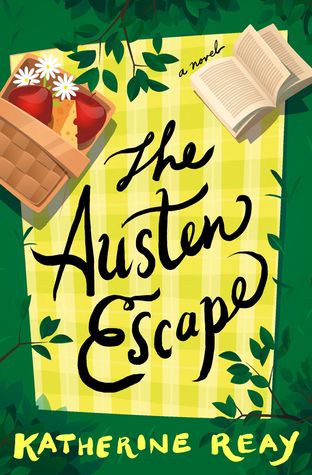
Take A Peek Book Review: The Austen Escape by Katherine Reay

“Take a Peek” book reviews are short and (possibly) sweet, keeping the commentary brief and providing a little peek at what the book’s about and what I thought.


Synopsis:

(via Goodreads)

After years of following her best friend’s lead, Mary Davies finds a whimsical trip back to Austen’s Regency England paves the way towards a new future.

Mary Davies lives and works in Austin, Texas, as an industrial engineer. She has an orderly and productive life, a job and colleagues that she enjoys—particularly a certain adorable, intelligent, and hilarious consultant. But something is missing for Mary. When her estranged and emotionally fragile childhood friend Isabel Dwyer offers Mary a two-week stay in a gorgeous manor house in Bath, Mary reluctantly agrees to come along, in hopes that the holiday will shake up her quiet life in just the right ways. But Mary gets more than she bargained for when Isabel loses her memory and fully believes that she lives in Regency England. Mary becomes dependent on a household of strangers to take care of Isabel until she wakes up.

With Mary in charge and surrounded by new friends, Isabel rests and enjoys the leisure of a Regency lady. But life gets even more complicated when Mary makes the discovery that her life and Isabel’s have intersected in more ways that she knew, and she finds herself caught between who Isabel was, who she seems to be, and the man who stands between them. Outings are undertaken, misunderstandings play out, and dancing ensues as this triangle works out their lives and hearts among a company of clever, well-informed people who have a great deal of conversation.

My Thoughts:

Although I’ve enjoyed other books by this author, The Austen Escape never particularly grabbed me. It’s very reminiscent of Austenland, although here, the Austen experience isn’t played for laughs. Instead, it’s a luxurious retreat for people of means, a chance to live in Austen’s world. The guests dress up, have dinner gatherings, dance, ride, and are treated as esteemed guests. They’re encouraged, but not required, to adopt the personae of Austen’s characters, although the point of this is a little lost on me. Maybe it’s the execution, but I couldn’t particularly see how it mattered if one guest was supposed to be Emma Woodhouse and another Catherine Morland. None of them enacted enough of their characters’ stories or personalities to make a difference.

The key issue for me is that Mary, the main character, never actually gelled for me. I liked (adored) that the lead female here is an engineer, a tech superstar with a drive to succeed and a brain that thinks of the world in scientific terms at all times. That’s really awesome, truly. But (yes, there’s a but), Mary didn’t click for me as a person. We get a lot of explanation, but I didn’t quite see what her issues are. Why is she hesitant to pursue (or accept pursuit from) the man she likes? Why has she never traveled? How does she feel about Isabel’s presence in her life, and why has never addressed this before now?

The synopsis is a little deceptive too. Isabel doesn’t get conked on the head and lose her memory — instead (minor spoiler) she has a sort of nervous break from reality after an emotional blow, and her doctor from home advises Mary to keep an eye on Isabel, play along, and wait for her to snap out of it. I’m sorry, but this seems like terrible advice.

The Austen escape — the luxury vacation — does seem pretty amazing, but even there, I’m not sure in truth how much fun it would be. There are only five other guests when Mary and Isobel arrive, and the options for a true Austen adventure, with socializing and balls and fancy dinner, seems very limited. I think I would have been bored silly within about 48 hours.

The story itself held my attention, and I read the entire book in about a day and a half. It’s a fun read, but the lack of connection to the main character makes this a book that I can finish and not look back at. All in all, I’d say The Austen Escape is enjoyable light entertainment, but on the deeper, emotional level the author seems to be aiming for, it just doesn’t work.

Interested in this author? Check out my reviews of:
Dear Mr. Knightley
Lizzy & Jane
The Brontë Plot
_________________________________________

The details:

Title: The Austen Escape
Author: Katherine Reay
Publisher: Thomas Nelson
Publication date: November 7, 2017
Length: 320 pages
Genre: Contemporary fiction
Source: Review copy courtesy of the publisher via NetGalley

**Save

Save

Save

Save

Save

Save

Save

Book Review: La Belle Sauvage (The Book of Dust, volume 1) by Philip Pullman

Eleven-year-old Malcolm Polstead and his dæmon, Asta, live with his parents at the Trout Inn near Oxford. Across the River Thames (which Malcolm navigates often using his beloved canoe, a boat by the name of La Belle Sauvage) is the Godstow Priory where the nuns live. Malcolm learns they have a guest with them, a baby by the name of Lyra Belacqua . . .

Welcome back to the wonderful world first introduced in the amazing trilogy, His Dark Materials (which I recently wrote about, here). After 17 long years, Philip Pullman takes us back to the alternate reality of an Oxford, England in which the church is in control, people are accompanied by animal-shaped daemons who are really a part of them, like a visible soul that they can converse with, witches are real, and a strange particle known as Dust has everyone in a tizzy.

La Belle Sauvage, the first book in Pullman’s new trilogy (The Book of Dust), is a prequel to the events of The Golden Compass and the rest. Anyone who’s read His Dark Materials knows (and loves) Lyra, the preteen heroine who’s brave and clever and ultimately responsible for saving the world.

In La Belle Sauvage, Lyra is a baby — a helpless character, but still very much at the center of the action. The main character here is a boy named Malcolm, an innkeeper’s son with a heart of gold. Malcolm is a smart, inquisitive boy with the mind of a potential scholar, even though he’s probably destined to run the inn when he’s grown. Malcolm works hard at the inn, serving customers and helping his parents, and in his spare time also does whatever odd jobs are needed by the nuns of the Godstow Priory across the river. And when Malcolm has any time left over, he takes his canoe, La Belle Sauvage, out on the rivers and canals to explore and see all there is to see.

When the nuns take in baby Lyra and offer her sanctuary, Malcolm becomes her instant protector, madly in love with the adorable baby and her equally adorable baby daemon. But the Consistorial Court of Discipline (CCD) is out to get Lyra, along with a deranged former scholar with a criminal past, and Malcolm comes to believe that only he can keep her safe and get her to her father, Lord Asriel, for protection. When a huge storm unleashes massive flooding, Malcolm and Alice, a girl who works at the inn as well, rescue Lyra from the waters engulfing the priory and set off in the canoe, with all sorts of dangerous foes determined to catch them and take Lyra away, no matter what it takes.

Oh my, is this a good book! The adventure is top-notch. We have spies galore, and Malcolm first becomes involved when he inadvertently witnesses the capture of a member of the anti-Church spy ring by agents of the CCD. We also see the creeping terror as the Church’s iron-fisted rule takes over school and society, as school children are encouraged to join a religious league and inform on their parents, friends, neighbors, and teachers — anyone who steps away from the approved teachings of the Church or dares to break the increasingly harsh rules imposed by the CCD.

Malcolm is a terrific main character. He’s smart and daring, always looking to learn, but loyal to his parents and the nuns, and not afraid of working hard. He’s kind and patient, but ready to step up and be fierce when needed. He and Alice start off as enemies, but as they flee with Lyra, they become allies and then true friends.

Lyra, of course, is adorable. She doesn’t do much, but all the action swirls around her. It’s fascinating to see an infant in this world — something we never see in the original trilogy. What we learn in The Book of Dust is that babies have baby daemons, who are also rather helpless and cute and dependent on others for care. Lyra’s daemon Pan takes the form of various small animals — among them kittens and chicks — and curls up to nap with Lyra, each giving comfort to the other. Lyra and Pan babble together in their own language, and somehow it’s just amazing to see how Pullman plays out the concept of daemons in the context of early childhood development.

I wondered how Pantalaimon got his name — I’d assumed while reading The Golden Compass that the person must name his or her daemon, but in La Belle Sauvage, one of the nuns tells Malcolm what Lyra’s daemon’s name is. So is the daemon named by the parent at the same time as the child? I guess it must be so, since the daemon has a name before the child can talk, but it struck me as surprising — I kind of expected the naming of the daemons to have something to do with the person’s inner truth, or some such thing, rather than to be imposed from an external source. This is something I’d definitely like to know more about!

There are some cool connections to the world of His Dark Materials. I thought Malcolm’s name was familiar… and with good reason. In the novella Lyra’s Oxford, which takes place a couple of years after The Amber Spyglass, Lyra encounters a Professor Polstead, who is described as “stout, ginger-haired, affable; more inclined to be friendly to Lyra than she was to return the feeling.” It’s Malcolm! I’m so happy to know that he’s still a part of Lyra’s life later on, even though she doesn’t know his significance or how he saved her life. I hope we’ll learn more in later books in The Book of Dust. Other familiar faces are (of course) Lord Asriel and Mrs. Coulter, Lyra’s parents, as well as the gyptian Farder Coram and the scholar Hannah Relf.

I absolutely loved the world-building in La Belle Sauvage. Even though this world is familiar from the earlier trilogy, we get to see aspects of the society that are new, through new and different sets of eyes. As I mentioned, the characters are phenomenal, especially Malcolm, but even the more minor characters are distinctive and memorable.

The action is thrilling, especially once the flood comes and Malcolm and Alice begin their adventure on the river. The two show amazing courage and stamina, sacrificing everything for the sake of little Lyra. Their experiences are often truly terrifying, but their essential goodness and bravery keeps them going even when it seems like they’ll never reach safety.

The author never talks down to his audience, and as in the original trilogy, brain power is required. There’s talk of physics and theology and particles and matter, and scholars are among the most esteemed characters. Philip Pullman’s characters value intelligence and curiosity, and reading his books is anything but a mindless pursuit. The ideas and concepts here demand that the reader put some effort in — all well worth it.

Ah, such a good read! Really, what more can I say? I cannot wait to continue the trilogy, and will be eagerly stalking The Book of Dust‘s Goodreads page for the first hint of a publication date for the second book (which, according to Goodreads, will be called The Secret Commonwealth).

If you read His Dark Materials, you simply must read La Belle Sauvage. And it probably goes without saying, but for anyone who hasn’t read the first trilogy, go do it now! Get thee to a bookstore or library and grab a copy of The Golden Compass! It’ll rock your world.

One final note: The book is marketed as young adult fantasy and is published by the children’s division of the publisher, but as with His Dark Materials, I have a hard time defining this book by its intended audience. It’s a great book, period. For anyone. And for anyone who cares about such things, I’d say the tone here is skewed slightly older, as there are hints of more adult content in the context of the actions of a terrible villain, and there’s even an f-bomb, which I don’t believe occurs at all in His Dark Materials. Regardless, La Belle Sauvage is beautifully written and is another excellent chapter in an exciting series of fantasy novels — and should be read by adults and smart kids of all ages!

_________________________________________

The details:

Title: La Belle Sauvage (The Book of Dust, volume 1)
Author: Philip Pullman
Publisher: Alfred A. Knopf Books for Young Readers
Publication date: October 19, 2017
Length: 464 pages
Genre: Fantasy/young adult
Source: Purchased

Save

Save

Save

Save

Save

Save

Save

Charles Dickens, Serial Reader, and me

First things first, yo:

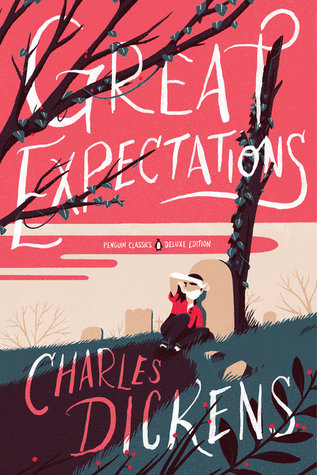
I FINISHED GREAT EXPECTATIONS!

And as expected, it was great!

For years now, I’ve been saying “one of these days”, I want to read Great Expectations. And it never happened. But why wait for “one of these days”? In the words of Rent:

I finally buckled down a little over a week ago, and decided to use my handy-dandy Serial Reader app. Serial Reader, in case you don’t know, is an awesome app that delivers public domain reading material via daily installments, usually taking no longer than 10 – 15 minutes each to read. (I wrote first wrote about it here, if you want to know more.)

But as it turns out, I’m a pretty impatient reader, and if I’m hooked, I’m hooked, and it’s impossible to put the brakes on. So yes, I started Great Expectations via Serial Reader, and within two days I was reading ahead, getting through 3 – 4 installments each day instead of just one. Still, there are 74 installments in all, and I figured I’d take my leisurely time and enjoy Great Expectations in little bite-sized pieces over the next couple of months.

Wrong.

Apparently, I suck at Serial Reader. I got into the story, and once I was into the story, I abandoned everything else I was reading so I could just keep reading more and more. And while I have a paperback edition of Great Expectations and a Kindle edition, I ended up sticking with Serial Reader all the way through to the end.

(Could it be because of the little words of encouragement and the praise every time I finished an installment? Yes, you’ve got me. I’m a sucker for badges and affirmations.)

In terms of the book itself, there really isn’t any reason for me to write a review of Great Expectations, is there? The plot summary:

Dickens’s magnificent novel of guilt, desire, and redemption: The orphan Pip’s terrifying encounter with an escaped convict on the Kent marshes, and his mysterious summons to the house of Miss Havisham and her cold, beautiful ward Estella, form the prelude to his “great expectations.” How Pip comes into a fortune, what he does with it, and what he discovers through his secret benefactor are the ingredients of his struggle for moral redemption.

I  loved the characters and the setting, and I loved seeing Pip’s development from boyhood to manhood, and his ethical and emotional growth as he understands the wrongs he’s done and seeks ways to improve himself, ultimately realizing that it’s more important to be honest and fair and appreciative than to be a monied gentleman.

It’s been a long time since I’ve read any Dickens (my only previous Dickens being A Tale of Two Cities), and I’d forgotten how delightful his writing is. When we think of classics, we tend to think stuffy and dry and old-fashioned. I was not at all prepared for how funny Charles Dickens is! His writing is so clever, and the way he uses metaphors, physical descriptions of characters, and characters names as tools for making the people and events feel fully-fleshed is pretty amazing.

Oh, those names! The best (as in, more ridiculous) here is Mr. Pumblechook — can’t you just tell from that name that he’s a pretentious fool? Joe is as sweet and simple as his name, and of course a character named Estella is glamorous and unreachable. I couldn’t help loving Mr. Wemmick, who cares for his elderly father and refers to him as “the Aged”. Just fabulous.

In any case, while I didn’t stick with the serial approach, I’m sure I’ll continue to give it a shot for future reading. Now that I’ve read Great Expectations, I really want to expand my Dickens knowledge! A goal might be to read one of his novels per year… admitting now that I’m terrible at sticking to reading goals, but this feels doable and realistic and FUN, so who knows?


Meanwhile, I’d really love to check out the 2012 movie vesion of Great Expectations, with Helena Bonham Carter as Miss Havisham. How perfect does that sound? Has anyone seen it? Any thoughts to share?

As for my progress with the Serial Reader app, here’s what I’ve used it for so far, in the year since I first gave it a try:

And despite my inability to still to just one installment per day, as the gods of Serial Reader intended, I still find it a really easy and motivating way to get around to reading those big, intimidating books that feel like too big a commitment to start.

Audiobook Review: Indexing by Seanan McGuire


“Never underestimate the power of a good story.”

Good advice…especially when a story can kill you.

For most people, the story of their lives is just that: the accumulation of time, encounters, and actions into a cohesive whole. But for an unfortunate few, that day-to-day existence is affected—perhaps infected is a better word—by memetic incursion: where fairy tale narratives become reality, often with disastrous results.

That’s where the ATI Management Bureau steps in, an organization tasked with protecting the world from fairy tales, even while most of their agents are struggling to keep their own fantastic archetypes from taking over their lives. When you’re dealing with storybook narratives in the real world, it doesn’t matter if you’re Snow White, Sleeping Beauty, or the Wicked Queen: no one gets a happily ever after.

Indexing is New York Times bestselling author Seanan McGuire’s new urban fantasy where everything you thought you knew about fairy tales gets turned on its head.

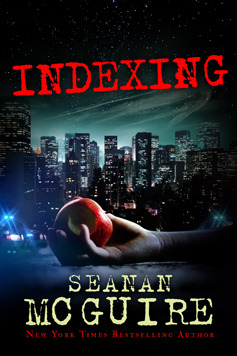
Indexing is a fun take on a dangerous situation — memetic incursions, in which fairy tale narratives intrude into the real world, activating people into playing out their pre-programmed stories with potentially disastrous results. A Sleeping Beauty stumbles into a metropolitan hospital, and suddenly everyone in the facility is plunged into a deep sleep. Snow Whites have a hard time avoiding poison, and a wise Snow White will never, ever eat an apple. A Pied Piper with a flute in her hands can wreak havoc simply by playing the right song.

It’s up to the field team at the ATI Management Bureau to head off these incursions and keep the world safe (and happily ignorant) from the narrative’s dangerous intrusions. The main character is Henrietta Marchen, better known as Henry, who is a not-yet-activated Snow White — and yes, that means that she has skin as white as snow and lips as red as blood, which in real life makes her look pretty scary as opposed to Disney-princess adorable. Henry’s team includes Sloane, a decades-old evil stepsister who seems to forever be a petulant teen, Jeff, the team archivist who’s also a part of the shoemaker and the elves narrative, and PR dude Andy, who isn’t touched by the narrative at all (although he does have a close encounter with a Frog Prince).

The plot takes the team through a variety of emergencies, where they rush in to save the world from the weirdly dangerous fairy tales that pop up with increasing frequency. It’s up to the team to figure out why the incursions are happening at an unusually high rate. Someone is messing with the narrative itself, and if they can’t find and stop the perpetrator, reality itself is doomed.

Indexing is quite an enjoyable read. Despite the fairy tale subject, it’s a gritty urban fantasy, with bloody deaths and salty language. (My favorite is when Sloane, abrasive and obnoxious but loyal in her own caustic way, refers to Henry as “Snow Bitch”.) The memetic incursions are always surprising, as the author takes classic fairy tales and makes it plain just how deadly their effect could be if transposed to the modern world and set loose.

Narrator Mary Robinette Kowal does a great job of capturing the personalities of the main characters such as Henry, Sloane, and newbie Demi, although she struggles to do convincing male voices. You know how some audiobook narrators can convey both genders in such a way that you absolutely forget that you’re listening to a woman doing a male character or vice versa? That doesn’t happen here. I found it a bit distracting whenever the narrator would lower her voice for the portrayals of Jeff and especially Andy — they sounded artificial, and it consistently took me out of the story.

That said, the narrator’s version of Henry was excellent, especially when Henry’s inner Snow White takes the lead. Just by the voice, you can absolutely tell which part of Henry’s personality is dominant at the moment. And I loved her nasty Valley Girl voice for Sloane — so offensive and pissed off, really pretty perfect.

The plot of Indexing does take some puzzling through, as the concept of the narrative isn’t always entirely clear. The explanations of various occurrences and their resolutions are occasionally overly convoluted, and I felt the world-building could have used just a smidge more fleshing out.

All in all, though, Indexing is really a fun experience, and listening to the audiobook kept me engaged and entertained for all the hours I spent with it. I’m looking forward to starting the sequel!

_________________________________________

The details:

Title: Indexing
Author: Seanan McGuire
Narrator: Mary Robinette Kowal
Publisher: 47North
Publication date: May 21, 2013
Length (print): 420 pages
Length (audiobook): 12 hours, 5 minutes
Genre: Urban fantasy
Source: Purchased

Save

Save

Save

Save

Save

Save

Save

Save

Save