Series check-in: October Daye, books 2 & 3


October Daye is the main character in Seanan McGuire’s ongoing urban fantasy series (conveniently known as the October Daye series), which is set mainly in the San Francisco Bay Area (yay!) and includes all sorts of full-blood and mixed-blood denizens of the world of Faerie. October — Toby — is half fae, half human; in this world, someone of mixed blood is called a changeling, and Toby exemplifies the complicated lives that changelings lead: She has some magical abilities, but they tend to take a toll on her physically. She can’t pass for human without casting an illusion, but she doesn’t belong fully in the Summerlands — the lands of faerie beyond the mortal world.

Toby is also a hero, much as she might dislike the label. As a sworn knight to her liege lord Sylvester, ruler of Shadowed Hills, she fights on his behalf and rights wrongs when needed, usually putting herself into grave danger along the way.

The series kicks off with Rosemary & Rue (reviewed here), a book that sets the stage in terms of world-building. I’ve now read books 2 and 3 in the series (both published 2010), and can (happily) report that the story continues to be fun and exciting and even a little bit heart-breaking along the way.

In A Local Habitation, Toby is sent by Sylvester to investigate an odd situation in the neighboring land ruled by his niece, which happens to be situated on top of/alongside Fremont, California, right in Silicon Valley. The land in question is housed inside a tech company. Weird, right? Something is going on inside the cubicles besides office politics, and what should have been a relatively simple visit turns into a deadly hunt for a killer. And naturally, Toby’s own life is on the line alongside everyone else’s.

In An Artificial Night, fae and human children are stolen by Blind Michael’s wild hunt, and Toby is the only one with a shot at rescuing them before they’re permanently changed into damaged creatures bound to the Ride. The story is quite dark, both because it’s children at risk and because the danger to Toby seems inescapably fatal. The odds of her returning from her travels into Blind Michael’s lands are slim to none, and as the book progresses, it’s harder and harder to believe that Toby will survive.

Of course, I’m well aware that there are another 8 or 9 books in the series so far, and seeing how it’s Toby’s series, I never quite believed that she stood any chance of dying. Still, she gets hurt in the most creative ways in each book, and it’s a wonder that this woman can still stand, much less breathe, by the end.

I’m thoroughly enjoying Toby as a character as well as the stories overall. The supporting characters are quite delightful, especially Sylvester and his wife Luna; Lily, the undine who presides over the Japanese Tea Gardens in Golden Gate Park; Quentin, the teen-aged pureblood learning to be a knight; and the one who stands the best chance of becoming everyone’s book boyfriend, Tybalt, the smirking, dangerous, and sexy King of Cats. (Note: He’s not a cat. He’s a Cait Sidhe, which according to the October Daye Wiki, are “cat shapeshifters. They are ruled by no court but their own after petitioning Oberon for independence. They control the forgotten places and walk the shadows. The Cait Sidhe live in loose alliances called Courts, which each answer to a single King or Queen. The rulers ascend by a trial of combat.”

I’m assuming that Tybalt is the slow-burn love interest of the series, although so far there’s just some unacknowledged chemistry between him and Toby. I’m betting that their simmering interactions will get hotter and hotter as the books progress. (But if you’ve read the books, don’t tell me if I’m right!)

I do still have some unanswered questions about Toby’s backstory and how she came to be Sylvester’s knight in the first place, and it seems like there’s still a lot more to learn about Toby’s mother — especially since fae folk refer to Toby as “Amandine’s daughter” constantly, as if this has great meaning.

This being an urban fantasy series, some of the more predictable elements are really more issues with UF tropes than complaints about the series. Things like Toby being in danger every time she turns around, Toby always being the one to battle the bad guys, even though she has less power than the purebloods, Toby having some sort of undefined mystique in the fae world, and the plethora of enemies who want to do her in. And of course, the fact that as the main character, we know that she’ll come out okay in the end.

The language and terminology and speech patterns used in the books in quite fun, but I am getting a little tired of Toby’s constant use of either “Root and Branch!” or “Oak and Ash!” as interjections. (Yes, they’re kind of cute, but Toby says them A LOT.)

That being said, it’s definitely exciting to see Toby come to turns with past hurts, build alliances, and face the reality of her role as a hero. I’m dying to see what happens next, and will definitely be continuing the series.

I’ve been listening to the audiobooks so far (hence any misspellings of character/creature/place names in this post — sorry!), and have loved the narration by Mary Robinette Kowal. Unfortunately, my library doesn’t have audio versions of the next few books in the series, so I’ll be switching to paper. I’ll miss the great voices and accents, but on the plus side, I’ll probably be able to move through the books a lot faster.

If you’re an urban fantasy fan, definitely check out the October Daye series! It’s fast-paced, exciting, and with plenty of twists and turns to keep you reading for hours on end.

Save

Save

Save

Save

Save

Save

Save

Save

Save

Rise: The Complete Newsflesh Collection by Mira Grant

Rise is a collection of eight novellas and short stories that are set within the world of the Newsflesh trilogy. (See my wrap-up post about Newsflesh here. Short version: Amazing.)

So what’s inside Rise? And should you read it? Read on for mini-reviews of each story… and as for whether you should read it, my answer is an unqualified YES… but only after you read the complete trilogy, or at least, enough to appreciate the context of these stories.

Onward…

The first few stories in the Rise collection are set at the very beginning of the Rising – and this is something we never see in the main books of the Newsflesh trilogy. Newsflesh is set decades after the onset of the initial Kellis-Amberlee outbreak, and while we learn through the characters’ conversations and memories what happened at that time, it’s something quite different to read the author’s stories set during the Rising. These stories are awful in their inevitability – we know what’s coming, and we know that nothing will stop it.

Countdown

It began nowhere. It began everywhere. It began without warning; it began with all the warning in the world. It could have been prevented a thousand times over. There was nothing that anyone could have done.

A chilling timeline of the end of the world, showing the last of the pre-Rising days and how the disaster came on step by step. In the Newsflesh novels, the events of 2014 are almost 30 years in the past. Here, in Countdown, we see first-hand what actually happened that awful summer, from the optimism of a potential cancer cure to an irreversible act of ecoterrorism, all leading to the mutation and spread of a pandemic that changed the world forever. We meet some familiar characters, and also see the people who are basically the founding fathers of the Kellis-Amberlee virus – the creators of the Kellis cure, meant to cure the common cold, and Marburg Amberlee, an engineered virus that can defeat even the most dire of terminal cancer cases. Countdown is scary and dramatic and gave me the biggest case of dread. We know what’s going to happen, but watching it unfold and knowing there’s no chance that it won’t end the way that it does is still somehow crazily fascinating and terrible.

Everglades 

The shortest piece in the collection, Everglades is a view of campus life in the first days after the reality of the zombie apocalypse has hit home, as seen through the eyes of a young grad student who recognizes the cruelty of the natural world. It’s a short, sad, and even beautiful story.

San Diego 2014: The Last Stand of the California Browncoats

As Mira Grant points out in her introduction to this story, San Diego Comic Con is almost a perfect place to stage an outbreak. You have thousands of people crammed into a confined space, many costumed or so heavily made-up that it’s impossible to gauge their actual condition. There’s little to no cell reception inside the convention hall, so once disaster strikes, communication between those trapped and the outside world effectively ceases. And as we know from countless zombie TV shows and movies, all it takes is one infected person locked inside with everyone else to start a chain reaction. This story shows how the very last Comic Con turned from geeky delight to bloody mayhem, and the bravery of the assorted fanboys and fangirls who made a last stand.

The stories from this point forward take place after the events in the Newsflesh trilogy, or at least, close enough to them that a knowledge of those events is needed – and people who haven’t read the trilogy will end up with massive spoilers. That said, the next batch of stories are:

How Green This Land, How Blue This Sea

Before the Rising, guns were verboten on airplanes, carried only by government agents and representatives of local law enforcement. Now most passengers flew armed, and the flight attendants carried more weapons than your average Irwin. It’s funny how the world can change when no one’s looking.

In which our beloved head Newsie Mahir heads off to Australia to get a first-hand view of how that country and continent made it through the Rising. Australia is still Australia, meaning that it’s a country full of people who are used to living alongside deadly wildlife, and their approach to security in the post-Rising world is vastly different from the paranoid, fear-based approach adopted everywhere else.

“Why would someone who didn’t like the law live out here?” I asked. “Wouldn’t it be easier to move into the city, where there’s less risk of surprise zombie kangaroos?”

The story is entertaining and presents a view of a very different mentality, in a land where animal conservation still matters, even when those animals may amplify, turn into zombies, and eat you. A story that includes zombie kangaroos and wombats can’t help being a blast to read.

The Day the Dead Came To Show and Tell

It was a small, claustrophobic space. The shelves were packed with basic school supplies: paper, crayons, extra ammunition, formalin, bleach.

This story was the hardest to read in the collection. It just hits way too close to home right now. This story is about an outbreak in an elementary school, and unfolds moment by moment as the infection spreads, the school goes into lockdown, and one first-grade teacher faces the unthinkable as she tries to save her children. It’s awful. Fascinating and so well written, but awful just the same. With the seemingly never-ending wave of school shootings in this country, reading this story is just heart-breaking and way too relevant.

Please Do Not Taunt the Octopus

Dr. Shannon Abbey is one of the many great side characters in the Newsflesh trilogy, and in this story, we get to spend a little more time with her in her secret mad scientist lair. Dr. Abbey is smart, a little crazy, and lots of fun, and her story here collides with another character seen in an earlier piece in Rise. Plus, we get to see Joe the massive mastiff and Barney the octopus – two big plusses.

“I’m a mad scientist, aren’t I? We all have master plans. Without them, we’d just be faintly disgruntled scientists who think we really ought to form a committee to discuss our grievances.”

The next two (and final two) stories in Rise are new to this collection, the only two not to have been previously published either in anthologies or stand-alone versions.

All the Pretty Little Horses

All the Pretty Little Horses takes us back once again to the early days of the Rising. The year is 2018, and we’re back with Michael and Stacy Mason, who’ve become famous for their radio broadcasts giving survival tips and offering encouragement during the really bad years. Now that the world is starting to find a new normal, Stacy is plunged into depression, desperately mourning the young son lost  in the early days of the Rising. This story shows how the Masons became the people we meet in the Newsflesh trilogy, hardened stars of the blogosphere who’ll do anything for ratings. And while this story didn’t truly make me like them, at least it shows a bit more of the desperation that turned them into the people they became.


And finally…

Coming To You Live

This is it. The story we’ve all been waiting for. It’s about Shaun and Georgia, and… well, I’m just not going to say a word about it. No matter what I say, it’ll be spoilery. Let’s just say that it was a perfect end piece for the collection, and it left me just as in love with the characters and the overarching world of Newsflesh as before, or may just a smidge more.

And that’s all, folks!

Rise is essential reading for fans of Newsflesh – and if you’ve made it this far in my lengthy post, I’m assuming you’re a fan too! I’m a little bit heartbroken to have reached the end. Yes, I know there’s still the 2016 novel Feedback to read, but it’s not about the characters I know and love, and I’m just not ready to go there yet. I’ll read it eventually (or maybe even later this week), but for now I just want to bask in the glory of all things Newsflesh, and the amazing stories in Rise, just a little bit longer.

_________________________________________

The details:

Title: Rise: The Complete Newsflesh Collection
Author: Mira Grant
Publisher: Orbit
Publication date: June 21, 2016
Length: 816 pages (mass market paperback)
Genre: Horror/science fiction
Source: Purchased

Series wrap-up: The Newsflesh trilogy by Mira Grant

Wow.

I just finished binge-reading Mira Grant’s amazing trilogy, Newsflesh (consisting of Feed, Deadline, and Blackout), and all I can say is — what the hell took me so long? I’d been hearing for years that these books are must-reads. What in the bloody hell was my problem?

Sigh. Better late than never, right?

The fact is, for whatever reason, I must have head my head under a rock in 2010, 2011, and 2012… but here it is, the opening months of 2018, and I’m soooooo darned happy that I finally devoured these books.

For the uninitiated: What’s it all about?

As the blurb for Feed says:

The year was 2014. We had cured cancer. We had beaten the common cold. But in doing so we created something new, something terrible that no one could stop.

Short version: A zombie uprising. When the viruses meant to cure cancer and the cold accidentally mingle upon release into the world, they combine into something deadly, known as Kellis-Amberlee, a virus that causes the dead to rise and eat people. But somehow, humanity survives — a smaller, more frightened, vastly security conscious slice of humanity, but still, the rising has been overcome, and life goes on, although the world is permanently changed.

In the world of Newsflesh, the most reliable source of news in a dangerous and secretive world is the blogging community. After all, they were the first to tell the truth when mainstream media outlets called the initial reports of zombies merely Internet hoaxes. If not for the bloggers, the realization of what was really happening, and what it would take to stay alive, might have come too late. Now, 20+ years after the rising, bloggers are the stars of the media and the most trusted source of news, and our main characters, brother and sister Shaun and Georgia Mason, are the cream of the crop.

Shaun and Georgia live for the truth and the truth alone. Their lives become infinitely more complicated when they’re chosen to be embedded with a candidate on the presidential campaign trail. Shaun and Georgia see this as a huge ratings boost, a way to finally reach the top tier and go independent. They don’t expect to be drawn into a shadow world of conspiracies and danger, risking everything they stand for as well as each other and their teams of trusted colleagues.

I really don’t want to give too much away, so I won’t go into detail about the series as a whole or where the plot goes. Suffice it to say that the plot twists always caught me off guard, and for a book about the zombie apocalypse, there were way more laughs and tears than I would have imagined. I came to love the characters, not just Shaun and Georgia, but also their friends and allies who fight by their side and share their commitment to the truth, no matter what. Okay, I loved Shaun and Georgia 10x more than anyone else, but that’s just because they’re so completely awesome.

I’ll admit that the scientific/medical/virological jargon and discussions often warped my brain, as I had to super-concentrate to decipher what the hell these people were trying to say. The effort is worth it. Mira Grant has put together a scary, crazy, complicated world, where viruses are deadly, but so is ignorance and inattention.

I’ve read complaints about the repetition of certain details throughout the books, particularly how the characters constantly have to undergo blood tests every time they enter or exit just about any place. I, for one, think this is fabulous. It’s the very repetition of the constant blood tests, and how the characters treat them as a normal fact of life, that shows us just how very different this world is. Safety is never taken for granted. Knowing one’s status as uninfected only lasts until the next test — you never know when you might become infected, or when the virus living inside you might spontaneously amplify (meaning you go full zombie with no apparent triggering event). The blood tests are just one small element in these masterfully constructed books that show us what a world might be like after the unthinkable becomes a reality.

Let’s also stop to appreciate the snappy dialogue and funny bits throughout the books. Shaun and Georgia and the rest of their team have the kind of closeness that means they know each other to the core, and that’s conveyed through their banter and ability to finish one another’s thoughts and read the fear and worries underneath the jokes and quips. And plus, there are just some things that are so awful that they’re funny. Okay, like a zombie bear. Or being afraid of zombie raccoons. I mean, that’s funny stuff!

I tore through these books, and just could not stop. I really and truly loved them, start to finish, and I’m thrilled to learn that there are more stories in the Newsflesh world! First, there’s a collection of various stories originally released as separate e-novellas (Rise, published 2016). Also in 2016, Grant published the novel Feedback, which is apparently set during the same period as Feed, but focusing on different characters. I’m less excited for that one (did I mention my love for Shaun and Georgia yet?), but I’ll read it anyway, because right this very minute, having just finished Blackout, I’m absolutely not ready to leave this world behind.

For anyone, like me, who didn’t have the brains (zombie joke!) to jump on board when Feed was first released… well, it’s never too late. I loved this trilogy, and I hope you will too!

_________________________________

Book details:

Feed – 599 pages, published 2010
Deadline – 584 pages, published 2011
Blackout – 512 pages, published 2012

Save

Take A Peek Book Review: By the Book by Julia Sonneborn

“Take a Peek” book reviews are short and (possibly) sweet, keeping the commentary brief and providing a little peek at what the book’s about and what I thought.

Synopsis:

(via Goodreads)

An English professor struggling for tenure discovers that her ex-fiancé has just become the president of her college—and her new boss—in this whip-smart modern retelling of Jane Austen’s classic Persuasion.

Anne Corey is about to get schooled.

An English professor in California, she’s determined to score a position on the coveted tenure track at her college. All she’s got to do is get a book deal, snag a promotion, and boom! She’s in. But then Adam Martinez—her first love and ex-fiancé—shows up as the college’s new president.

Anne should be able to keep herself distracted. After all, she’s got a book to write, an aging father to take care of, and a new romance developing with the college’s insanely hot writer-in-residence. But no matter where she turns, there’s Adam, as smart and sexy as ever. As the school year advances and her long-buried feelings begin to resurface, Anne begins to wonder whether she just might get a second chance at love.

Funny, smart, and full of heart, this modern ode to Jane Austen’s classic explores what happens when we run into the demons of our past…and when they turn out not to be so bad, after all.

My Thoughts:

Hmm. I tore through By the Book, and definitely had a good time while I was reading it. At the same time, for a book being billed as a retelling of Persuasion, it’s pretty loose when it comes to making the plot stick.

Anne spends much of the book in a relationship with a smarmy writer who drops lines about being on the front lines in Fallujah and his battle-related PTSD, but it’s just so clear from the get-go that he’s a con artist and a fraud. When Adam makes a comment to Anne about Rick’s shady past, I couldn’t help but wonder how Darcy and Wickham sneaked into Persuasion! Anne is a decent protagonist, a smart woman who’s chose her professional career over love (although the history of her break-up with Adam on the eve of their college graduation didn’t make a whole lot of sense to me.) Of course, as a retelling, the ending is inevitable — but if I didn’t know Persuasion, I wouldn’t have been convinced that Anne had actually been mooning over Adam and regretting their break-up the whole time. When they do finally declare their love, it’s about as out of the blue as it gets.

Still, I wouldn’t want to imply that this isn’t a fun read. Anne’s best friend Larry is a hoot, even if his romantic indulgences are ill-advised. The big blockbuster movie that’s all the rage is called Jane Vampire (a supernatural version of Jane Eyre, of course), and it becomes a pretty silly recurring subject throughout the book. Anne’s family life is messy and has a realistic ring to it, and I enjoyed seeing campus life through a professor’s eyes, showing that behind the intellectual, scholarly facades are real people, looking for love and friendship and just a little bit of fun once in a while.

Don’t expect anything too deep, and don’t expect an Austen retelling that’s particularly attached to the original — but given those caveats, By the Book is an entertaining, funny, and even charming read.

_________________________________________

The details:

Title: By the Book
Author: Julia Sonneborn
Publisher: Gallery Books
Publication date: February 6, 2018
Length: 384 pages
Genre: Contemporary fiction
Source: Review copy courtesy of the publisher via NetGalley

**Save

Save

Save

Save

Save

Save

Save

Take A Peek Book Review: As Bright As Heaven by Susan Meissner

“Take a Peek” book reviews are short and (possibly) sweet, keeping the commentary brief and providing a little peek at what the book’s about and what I thought.


Synopsis:

(via Goodreads)

From the acclaimed author of Secrets of a Charmed Life and A Bridge Across the Ocean comes a new novel set in Philadelphia during the Spanish flu epidemic of 1918, which tells the story of a family reborn through loss and love.

In 1918, Philadelphia was a city teeming with promise. Even as its young men went off to fight in the Great War, there were opportunities for a fresh start on its cobblestone streets. Into this bustling town, came Pauline Bright and her husband, filled with hope that they could now give their three daughters–Evelyn, Maggie, and Willa–a chance at a better life.

But just months after they arrive, the Spanish Flu reaches the shores of America. As the pandemic claims more than twelve thousand victims in their adopted city, they find their lives left with a world that looks nothing like the one they knew. But even as they lose loved ones, they take in a baby orphaned by the disease who becomes their single source of hope. Amidst the tragedy and challenges, they learn what they cannot live without–and what they are willing to do about it.

As Bright as Heaven is the compelling story of a mother and her daughters who find themselves in a harsh world, not of their making, which will either crush their resolve to survive or purify it.

My Thoughts:

When we hear about the flu pandemic of 1918, we can be blown away by the number — as many as 50 million people died, many more than the number who died on the battlefields of World War I. In As Bright As Heaven, this unfathomable global catastrophe is made personal as we see the flu and its devastating impact through the experiences of one family. The Bright family, having already suffered the loss of an infant to a heart condition some months earlier, relocates to Philadelphia from the countryside so that the father can start a new career as partner and heir to his uncle’s funeral home business. For the mother Pauline and her three daughters, it’s a chance at a new life in a new city, moving away from the location of their recent heartbreak and starting over.

Between living in the family quarters of the funeral home, the continuing war in Europe, and then the onslaught of the flu, the family can’t escape death. Through the eyes of Pauline and each of the girls, we see the darkness of the time period as loss piles upon loss, with no rhyme or reason for who lives and who dies.

The story of the Spanish Flu pandemic is tragic and fascinating, but I found the individual characters and their perspectives less compelling than I would have hoped. Perhaps having so many narrators — not just Pauline, but also the three daughters, one of whom is only nine years old — dilutes the immediacy. The book gets off to a slow start, although the pace picks up quite a bit from about 40% onward, once the flu begins to spread and the family’s life begins to change. The subplot about the orphaned baby adds some suspense, but it’s fairly simple to see where that storyline is going.

I liked the characters well enough, and overall thought this was a fine read about an interesting time period. I can’t really put my finger on why the book as a whole just didn’t particularly grab me.

_________________________________________

The details:

Title: As Bright As Heaven
Author: Susan Meissner
Publisher: Berkley Books
Publication date: February 6, 2018
Length: 400 pages
Genre: Historical fiction
Source: Review copy courtesy of the publisher via NetGalley

**Save

Save

Save

Save

Save

Save

Save

Book Review: The Glass Forest by Cynthia Swanson


From the New York Times bestselling author of The Bookseller comes a gripping literary suspense novel set in the 1960s about a deeply troubled family and three women who will reveal its dark truths.

In the autumn of 1960, Angie Glass is living an idyllic life in her Wisconsin hometown. At twenty-one, she’s married to charming, handsome Paul, and has just given birth to a baby boy. But one phone call changes her life forever.

When Paul’s niece, Ruby, reports that her father, Henry, has committed suicide, and that her mother, Silja, is missing, Angie and Paul drop everything and fly to the small upstate town of Stonekill, New York to be by Ruby’s side.

Angie thinks they’re coming to the rescue of Paul’s grief-stricken young niece, but Ruby is a composed and enigmatic seventeen-year-old who resists Angie’s attempts to nurture her. As Angie learns more about the complicated Glass family, staying in Henry and Silja’s eerie and ultra-modern house on the edge of the woods, she begins to question the very fabric of her own marriage.

Through Silja’s flashbacks, Angie’s discovery of astonishing truths, and Ruby’s strategic dissection of her parents’ state of affairs, a story of love, secrets, and ultimate betrayal is revealed.

My thoughts:

The Glass Forest is a multi-layered look beneath the surface of a family, slowly peeling away the facade to reveal the deep, dark secrets and hidden truths. Told through alternating chapters focusing on Angie, Ruby, and Silja, we get multiple timelines, all converging by the end to show the truth behind Henry’s death and Silja’s disappearance.

The three main female characters — Angie, Ruby, and Silja — are well-drawn; not always likeable, but despite their flaws, they all possess an inner strength that helps them survive. Silja is a particularly sympathetic character, as we see how the years of her marriage change her. Angie, years younger, seems to be following in Silja’s footsteps to an extent in the early days of her marriage; barely twenty-one, she rushed into marriage with someone who seemed to be the man of her dreams, and only later starts to realize that there might be more to know about him. And Ruby, the teen daughter left behind by Silja and Henry, seems to be a mysterious, secretive girl — but as we find out, there’s a lot more to Ruby than meets the eye.

I really don’t want to say much about the plot, because it’s full of so many surprises, all deftly handled with a masterful set-up. There are shocking developments, but looking back, I can find the little breadcrumbs scattered through the earlier parts of the story that lay the groundwork for the bigger moments later on. The story as a whole is so well done, building to an ending that’s very much unexpected, but that absolutely fits.

I know I’m being deliberately vague here, but really, I just don’t want to ruin the reading experience for anyone. The Glass Forest is a compelling read that got harder and harder to put down, the farther I read. This would make an excellent book group choice — because I promise, when you finish reading it, you’ll be dying for someone to discuss it with!

I rarely go back to the beginning of a book once I finish. The Glass Forest is a rare exception where I ended up skimming back through the entire book once I’d finished to find all the hints and details that didn’t seem all that important the first time through — and ended up amazed all over again by how well put together the story is.

I loved Cynthia Swanson’s previous novel, The Bookseller. The Glass Forest is another winner. Check it out.

_________________________________________

The details:

Title: The Glass Forest
Author: Cynthia Swanson
Publisher: Touchstone
Publication date: February 6, 2018
Length: 352 pages
Genre: Contemporary fiction
Source: Review copy courtesy of Touchstone

Save

Save

Save

Save

Save

Save

Save

Save

Save

Save

Save

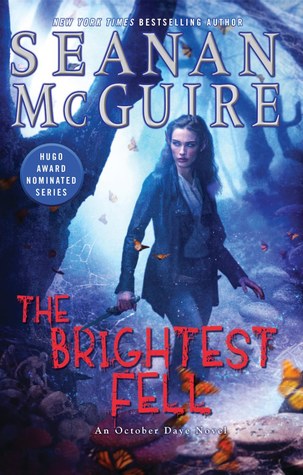
Audiobook Review: Rosemary and Rue by Seanan McGuire


October “Toby” Daye, a changeling who is half human and half fae, has been an outsider from birth. After getting burned by both sides of her heritage, Toby has denied the Faerie world, retreating to a “normal” life. Unfortunately for her, the Faerie world has other ideas…

The murder of Countess Evening Winterrose pulls Toby back into the fae world. Unable to resist Evening’s dying curse, which binds her to investigate, Toby must resume her former position as knight errant and renew old alliances. As she steps back into fae society, dealing with a cast of characters not entirely good or evil, she realizes that more than her own life will be forfeited if she cannot find Evening’s killer.

Rosemary and Rue  is the first book in the ongoing October Daye series — and as the first book, it has a lot of heavy lifting to do, in terms of establishing characters, building a world, and setting up the rules of the supernatural system that dictates the possibilities of plot from the starting point onward. Fortunately, Seanan McGuire is supremely talented and inventive, and in Rosemary and Rue, she’s more than up to the challenge of creating a world we’ll want to stay in.

Set in and around San Francisco, R&R starts with a pretty ominous set-up for Toby (October) in the prologue. While chasing her liege lord’s enemy (who’s also his twin brother), Toby walks into a trap and loses the next fourteen years of her life. I won’t say why or how — it’s just too much fun to find out for yourself.

We re-meet Toby in chapter one after she’s returned to a version of her former life, having sworn off anything to do with the world of the fae, determined to live as simply human and ignore the other half of her changeling identity. She’s been burned too badly and has lost far too much to be able to stomach the idea of returning to the intricate systems of fae courts and allegiances and territories. But Evening’s murder sucks her back in against her will, and soon enough Toby is brought face to face with old allies, lovers, and enemies. Her own life is on the line as she tries to solve the murder. If she fails, Evening’s dying curse will take Toby’s life as well.

The plot of R&R follows Toby’s search for clues and her reinvolvement with characters from her past, some well-meaning, some clearly not. As a changeling, Toby’s magical abilities are only so-so, and each time she engages with a pureblood, she’s at risk. As you’d expect in an  urban fantasy series, Toby is a smart-ass, tough woman with her own set of abilities, not least a talent for thinking on her feet, reading a room, and figuring out how to get what she wants. Still, she has vulnerabilities too, both physical and emotional, and she certainly suffers throughout the book as all sorts of baddies are out to get her and stop her investigation.

I love Toby as a character, and love the odd assortment of changelings and purebloods we meet along the way. Also excellent is the use of San Francisco as a setting. While some of the location descriptions didn’t quite gel with the reality of the area, others (such as the use of the Japanese Tea Garden in Golden Gate Park) are just brilliant.

I have to give a shout-out to the most endearing and adorable magical creature in the book, a “rose goblin” named Spike. Picture a cat with thorns instead of fur, and you have the basic idea. Just loved it.

I did wish that Toby’s backstory was spelled out in a little more concrete detail. As with many urban fantasy stories, we start in the middle of the action and learn about Toby’s difficult past through various references as we go along. It’s enough to give a general timeline, but I still have questions. What does it mean that she’s a knight? What was the process to become one? How did she first join Sylvester’s court? Maybe future volumes in the series will provide more specifics.

Even thought the solution to the murder wasn’t that difficult to guess, I still enjoyed the revelations, Toby’s realizations about the various people in her life, and the reasons behind the events. The plot is fast-paced and exciting, and I enjoyed the adventure start to finish.

Narrator Mary Robinette Kowal brings her talents to the variety of characters, with accents and intonations and pitches that distinguish them and make it easy to identify the speaker at any given point — not always easy in audiobooks. As with the Indexing books, she does a great job of making the story flow, and I enjoyed her depiction of Toby’s inner life.

Rosemary and Rue was really a fun listen, and I’m planning on diving right in with book #2.

Note: Woo hoo! I’ve started another series from my reading goals list for 2018!
_________________________________________

The details:

Title: Rosemary and Rue
Author: Seanan McGuire
Narrator: Mary Robinette Kowal
Publisher: DAW Books
Publication date: September 1, 2009
Length (print): 346 pages
Length (audiobook): 11 hours, 20 minutes
Genre: Urban fantasy
Source: Purchased

Save

Save

Save

Save

Save

Save

Save
Save

Save
Book Review: The Great Alone by Kristin Hannah


Alaska, 1974.
Unpredictable. Unforgiving. Untamed.
For a family in crisis, the ultimate test of survival.

Ernt Allbright, a former POW, comes home from the Vietnam war a changed and volatile man. When he loses yet another job, he makes an impulsive decision: he will move his family north, to Alaska, where they will live off the grid in America’s last true frontier.

Thirteen-year-old Leni, a girl coming of age in a tumultuous time, caught in the riptide of her parents’ passionate, stormy relationship, dares to hope that a new land will lead to a better future for her family. She is desperate for a place to belong. Her mother, Cora, will do anything and go anywhere for the man she loves, even if means following him into the unknown.

At first, Alaska seems to be the answer to their prayers. In a wild, remote corner of the state, they find a fiercely independent community of strong men and even stronger women. The long, sunlit days and the generosity of the locals make up for the Allbrights’ lack of preparation and dwindling resources.

But as winter approaches and darkness descends on Alaska, Ernt’s fragile mental state deteriorates and the family begins to fracture. Soon the perils outside pale in comparison to threats from within. In their small cabin, covered in snow, blanketed in eighteen hours of night, Leni and her mother learn the terrible truth: they are on their own. In the wild, there is no one to save them but themselves.

In this unforgettable portrait of human frailty and resilience, Kristin Hannah reveals the indomitable character of the modern American pioneer and the spirit of a vanishing Alaska―a place of incomparable beauty and danger. The Great Alone is a daring, beautiful, stay-up-all-night story about love and loss, the fight for survival, and the wildness that lives in both man and nature.

The Great Alone is many things — a portrait of life in rugged Alaska, a story of the damage done by war, a tale of the horrible secrets lurking underneath a family’s facade… and also, a story of love and devotion and commitment.

We first meet Leni as a 13-year-old who never fits in anywhere, thanks to her parents’ inability to settle. Ever since her father returned from his years as a POW in Vietnam, Leni has been pulled from home to home and school to school, as her father’s instability and nightmares make him unable to keep a job or stay put for very long. Meanwhile, Leni’s mother Cora remains madly in love with her husband Ernt, and constantly tells Leni that she wishes she could remember how he was before. Out of options, Ernt comes up with a seemingly crazy idea — they’ll move to Alaska, to a plot of land left him by a war buddy, and live off the land, off the grid, as homesteaders.

Leni, of course, has no say in this, just as she has no say in most of what happens in her life. Cora is desperate to find the answer to making Ernt happy again, so off they go in their battered VW bus, completely unprepared for the realities of the life ahead of them. When they finally reach their land in Kaneq, they find a falling-down dirty cabin, and not much else. Fortunately, the neighbors in this tiny community rally around to teach them what they need to know, with an emphasis on the all-important preparations for their first Alaskan winter.

The land and its surroundings are breathtakingly beautiful, of course… but the winter is harsh, leaving the small family isolated in their cabin for months on end. For Leni and Cora, life becomes increasingly dangerous, not because of the natural threats such as wildlife and climate, but because of the man they live with. Ernt does not do well in the dark, under stress, and he takes out his inner demons on Cora.

Over the years, the family becomes intertwined with their neighbors, and Cora and Leni develop deep bonds with their new friends, but Ernt becomes more and more obsessed with survivalism, his paranoia and nightmares becoming more and more intense. Leni grows up in the shadow of domestic violence, witnessing her father’s brutal treatment of Cora, but unable to do anything to stop it.

And as Leni matures, she falls in love with the boy who was her first friend in Alaska — but her father hates his father and everything he stands for, and it’s clear that the relationship must be kept hidden from Ernt before it pushes him into even more violence.

I have to be honest and admit that I wasn’t so sure about this book for the first third or so. I was interested, but it was slow-going. The description of Alaska and what it takes to build a life there are intriguing, of course, but I’ve read other stories about life in Alaska, so this wasn’t exactly new. I had a hard time at first with the viewpoint, as this section of the book is seen mainly through 13-year-old Leni’s eyes, and there was just something a little limiting about that. Still, it was sadly fascinating to see Leni’s experience of her parents’ toxic marriage — the loving moments, when the two were so obsessed with each other that they couldn’t see anyone else — and the explosively painful moments, when Ernt’s rage would boil over into fists and abuse.

Later, when Leni is an older teen, her story becomes much more compelling. Suddenly, I couldn’t put the book down. (Seriously, I read the 2nd 50% of the book in one sitting.) Leni’s love story builds along a Romeo and Juliet trajectory, and while we can see the inevitable tragedy looming ahead, it’s still a shock when Leni’s life is turned upside down.

In some ways, the story of Ernt’s violence is simply tragic. It’s hard not to hate him as the years go by and his craziness and violence escalate — but there’s an element of pity, too. In today’s world, his PTSD would be recognized for what it is and he’d be able to get help. In the early 1970s, just back from hellish years as a captive in Vietnam, not only was there no psychological help, but he also was subject to the derision of anti-war America when he returned. It might be easy to view Ernt as simply an evil character, but we can’t. He is horrible and abusive and destructive, but his horror stems from his own status as a victim of war and torture. We can absolutely condemn his behavior and his treatment of his family, but I can’t help but feel sorrow too for how different this man might have been without the trauma of Vietnam.

The depiction of domestic violence is harrowing but has a ring of truth. At that time, there was much less support for “battered women”, and a woman who fought back could easily end up either dead or behind bars, without much in the way of legal defense or public awareness. Seeing Leni’s need to protect her mother, and Cora’s inability to find a way to leave, is painful and tragic.

At the same time, I loved the way Leni’s life in Alaska grows. She becomes a part of the community, part of Alaska itself, and this stays with her and changes her in deep and unalterable ways.

I won’t say more about the love story or its outcome, other than WOW and SOB and TEARS and… well, read it yourself to find out!

The Great Alone is powerful and moving, with a unique setting and memorable characters. Check it out.

_________________________________________

The details:

Title: The Great Alone
Author: Kristin Hannah
Publisher: St. Martin’s Press
Publication date: February 6, 2018
Length: 448 pages
Genre: Contemporary fiction
Source: Review copy courtesy of the publisher via NetGalley

Save

Save

Save

Save

Save

Save
Save

Save

Save
Save
Save
Novella: The Only Harmless Great Thing by Brooke Bolander


In the early years of the 20th century, a group of female factory workers in Newark, New Jersey slowly died of radiation poisoning. Around the same time, an Indian elephant was deliberately put to death by electricity in Coney Island.

These are the facts.

Now these two tragedies are intertwined in a dark alternate history of rage, radioactivity, and injustice crying out to be righted. Prepare yourself for a wrenching journey that crosses eras, chronicling histories of cruelty both grand and petty in search of meaning and justice.

The Only Harmless Great Thing is weird and wonderful, cruel and beautiful. Can you possibly believe that two awful chapters from history — the “radium girls” and an electrocuted elephant — would fit together in one story? Author Brooke Bolander pulls off this seemingly impossible task in a new novella that almost defies description — you just need to experience it.

The narration shifts between elephant and human characters, in language that’s often hauntingly strange and beautiful.

At night, when the moon shuffles off behind the mountain and the land darkens like wetted skin, they glow. There is a story behind this. No matter how far you march, O best beloved mooncalf, the past will always drag around your ankle, a snapped shackle time cannot pry loose.

The human parts of the story are heart-breaking and outrage-inducing… but so are the elephants’ sections. As I read, the story of the radium factory workers’ treatment left me feeling furious. The involvement of elephants in the radium story is startling but makes sense in this alternate world in which humans and elephants converse via sign language, and the elephant language (Proboscidian) is taught in universities.

Then came the Atomic Elephant Hypothesis.

The Only Harmless Great Thing is a quick but powerful read, unusual and a little crazy and definitely something that will stick in my mind for quite some time. It made me angry and sad, and also made me think. Highly recommended.

But chains can be snapped, O best beloved mooncalf. Sticks can be knocked out of a Man’s clever hands. And one chain snapping may cause all the rest to trumpet and stomp and shake the trees like a rain-wind coming down the mountain, washing the gully muddy with bright lightning tusks and thunderous song.

PS – The story of Topsy, the elephant electrocuted at Coney Island, is changed and reinvented here in this novella — but yes, there was a real Topsy, and she really was put to death in 1903 by being electrocuted in front of a crowd as part of a public spectacle. It’s a horrible story that seems too outrageous to be true, but sadly, it really happened. You can read more about Topsy’s awful fate here.

PPS – Reading this novella reminded me that I picked up a copy of the non-fiction book The Radium Girls (winner of the 2017 Goodreads Choice Award for history and biography), and really need to read it!

_________________________________________

The details:

Title: The Only Harmless Great Thing
Author: Brooke Bolander
Publisher: Tor
Publication date: January 23, 2018
Length: 96 pages
Genre: Alternate history
Source: Purchased

Save

Save

Save

Save

Save

Save

Save

Save

Save

Save

Save

Book Review: Still Me by Jojo Moyes


From the #1 New York Times bestselling author Jojo Moyes, a new book featuring her iconic heroine of Me Before You and After You, Louisa Clark

Louisa Clark arrives in New York ready to start a new life, confident that she can embrace this new adventure and keep her relationship with Ambulance Sam alive across several thousand miles. She steps into the world of the superrich, working for Leonard Gopnik and his much younger second wife, Agnes. Lou is determined to get the most out of the experience and throws herself into her new job and New York life.

As she begins to mix in New York high society, Lou meets Joshua Ryan, a man who brings with him a whisper of her past. Before long, Lou finds herself torn between Fifth Avenue where she works and the treasure-filled vintage clothing store where she actually feels at home. And when matters come to a head, she has to ask herself: Who is Louisa Clark? And how do you reconcile a heart that lives in two places?

Funny, romantic, and poignant, Still Me follows Lou as she navigates how to stay true to herself, while pushing to live boldly in her brave new world.

Still Me is the third Louisa Clark story, taking the young woman we know and love and putting her in a decidedly new and strange environment — New York’s Upper East Side.

In the beautiful Me Before You, Louisa’s life changes through her relationship with Will Traynor, a man she loves but cannot save. In After You, we see Louisa grieve and suffer, finally starting to rebuild a new version of a life as she allows new friends and connections into her world and begins to open up to the possibility of a new love.

Still Me picks up right where After You leaves off, as Louisa leaves her family and new boyfriend Sam behind in England to accept a job working for a super posh family in New York. The Gopniks are incredibly rich and live a life of utter luxury and intense busy-ness, with husband and wife requiring personal assistants to keep their days on track and to get them from one charity event to another. Lou’s role is to be Agnes’s companion as well as assistant, providing reassurance and steadiness to the young wife who is scorned by the more established society matrons.

Lou and Sam plan to continue their relationship, but as we all know, long-distance relationships are tough, no matter the good intentions. Misunderstandings crop up. Communication is strained. Sam’s visits to New York never seem to work out as wonderfully as planned. And then a disastrous visit home leads to even more trouble.

Meanwhile, back in New York, Lou’s career as a companion takes an unexpected turn… but soon new opportunities and friendships come her way. And Lou — finally, slowly — begins to understand that she has the opportunity Will always wanted for her: the chance to decide for herself who she will be, and what she wants her life to look like.

I won’t say any more about the plot — who wants to give away the good stuff? Louisa is, as always, an original — a funky, upbeat, unusual young woman who’s headstrong, loving, creative, and assertive; who also drinks too much when nervous, rolls with the punches, but is decidedly vulnerable too. Will Traynor will always be an indelible influence on her life, but Sam holds her heart… or does he? And is he as devoted to her as she’d like him to be?

Still Me introduces some memorable, delightful new characters, especially Mrs. DeWitt — the feisty, slightly mean old woman who lives down the hall from the Gopniks — and her dog Dean Martin, a pug who’s got just as much of a bite as his owner.

In her New York setting, Louisa gets a new chance to shine, whether wearing her unique style of outrageous fashion or finding her way around Fifth Avenue. It’s fun and heartening to see “our” Lou turn into this new version of herself, whistling for cabs like a New York pro.

In some ways, Still Me could almost be a stand-alone. There are many sections that read like a fish-out-of-water story. Take one small-town English girl and place her in the world of New York billionaires — it’s bound to be entertaining. And yet, for those of us who have read the earlier books, it’s especially heart-warming to see the unsure, broken-hearted heroine of Me Before You finally coming out the other side of a world of grief and taking steps toward becoming who she’s meant to be.

Still Me wraps up a lovely trilogy that’s full of pathos, humor, warmth, and characters who feel like real people, flawed but lovable all the same. I’d love to think that Jojo Moyes might continue writing about Louisa Clark — I haven’t seen anthing that says, one way or the other, whether Still Me is the end of Louisa’s story. I hope not! I think I’d be happy following Lou through the many glorious years ahead of her. Still, if Still Me is the final Louisa Clark book, we can all take satisfaction in seeing the life Louisa has built for herself by the end of the book, and imagine the great things yet to come.

_________________________________________

The details:

Title: Still Me
Author: Jojo Moyes
Publisher: Pamela Dorman Books
Publication date: January 30, 2018
Length: 400 pages
Genre: Contemporary fiction
Source: Review copy courtesy of the publisher via NetGalley

Save

Save

Save

Save

Save

Save

Save

Save

Save

Save

Save