Book Review: The Teller of Small Fortunes by Julie Leong

Title: The Teller of Small Fortunes
Author: Julie Leong
Publisher: Ace
Publication date: November 5, 2024
Length: 336 pages
Genre: Fantasy
Source: Review copy courtesy of the publisher via NetGalley

Rating: 4 out of 5.

A wandering fortune teller finds an unexpected family in this warm and wonderful debut fantasy, perfect for readers of Travis Baldree and Sangu Mandanna.

Tao is an immigrant fortune teller, traveling between villages with just her trusty mule for company. She only tells “small” fortunes: whether it will hail next week; which boy the barmaid will kiss; when the cow will calve. She knows from bitter experience that big fortunes come with big consequences…

Even if it’s a lonely life, it’s better than the one she left behind. But a small fortune unexpectedly becomes something more when a (semi) reformed thief and an ex-mercenary recruit her into their desperate search for a lost child. Soon, they’re joined by a baker with a knead for adventure, and—of course—a slightly magical cat.

Tao sets down a new path with companions as big-hearted as her fortunes are small. But as she lowers her walls, the shadows of her past are closing in—and she’ll have to decide whether to risk everything to preserve the family she never thought she could have.

Cozy fantasy is having a moment — and I’m here for it! What’s not to love about tales of friendship and magic, usually with baked goods, cats, and other comfort symbols in the mix?

The Teller of Small Fortunes fits wonderfully into this cozy trend, with its emphasis on being true to those you love, being kind, and looking for good outcomes for as many people as possible.

As the book opens, Tao is a traveling fortune-teller — but as she makes clear, she only tells small fortunes. She provides simple, plain truths to the people who seek her advice; nothing life or death, just small visions of a person’s next steps, something to help them along their way.

We also learn that Tao is on the run. A Shinn (an ethnicity standing in for Chinese-born) in the land of Eshtera (essentially, a Caucasian-dominant kingdom), Tao stands out wherever she goes, and is often eyed with suspicion. When Tao was a child, her mother married an Eshteran nobleman and left Shinara behind. Tao has grown up with wealth and comfort, but never love or acceptance, and as her magical powers became apparent, was about to be forced into servitude in the Guild of mages. She fled before that could happen, and spends her time alone, on the road, always moving from village to village, fearful of the Guild catching up to her.

Tao’s life changes when she meets two travelers she initially takes for highwaymen. Instead, she learns that Mash and Silt are, respectively, a mercenary and a (mostly) reformed thief, searching for Mash’s young daughter who’s been missing for six months. When Tao reads Mash’s fortune, she sees a vision of father and daughter together, which gives Mash a much-needed infusion of hope. The trio decide to journey on together for a little while, and soon, a baker named Kina joins the traveling band.

… [H]er voice rose through the great room like the scent of fresh-baked pie, explaining the various intricacies of Lindisian baking, as the four of them finished a hearty and thoroughly warming supper, awash in the glow of a good day and the hopes of what tomorrow might bring.

Much of the story is about the group’s adventures on the road, as they search for Mash’s daughter, encounter kind and not-so-kind people during their travels, and ultimately, return to the kingdom’s capital where Tao must confront her fate.

The Teller of Small Fortunes is a quick, light read. There are some moments of danger, but the overall vibe is so warm and gentle that we never truly have to fear a bad outcome. The characters are given room to shine and to grow as individuals. Their companionship allows them to understand themselves, reflect, and to find ways to do and be better.

Plenty of small details stand out and add fun and warmth. Kina’s baking is absolutely delicious… but for whatever reason, anything she bakes looks terrible. The ongoing descriptions of her misshapen scones are really funny, but also, hearing about the smells of cinnamon and sugar made me ready to eat anything that comes out of her oven (regardless of how it looks).

Tao’s approach to fortune-telling is also lovely — her approach is gentle and honest, without hocus-pocus or showmanship. She has a gift, uses it to support herself, and helps people whenever she can.

The emphasis on found family and true friendship lends the book a deeper message beyond the fantasy story — while the fantasy elements are nicely established as well. Even the elements that are set up at the start as terrible or fear-inducing or threatening end up being not quite so bad, all in all.

“A troll,” repeated Mash grimly, hefting his mace out of its belt loop. “Did it attack you? Threaten violence; seize your goods?”

“Eh? No, of course not. It’s worse than that,” said the farmer. “It went and philosophized at us!”

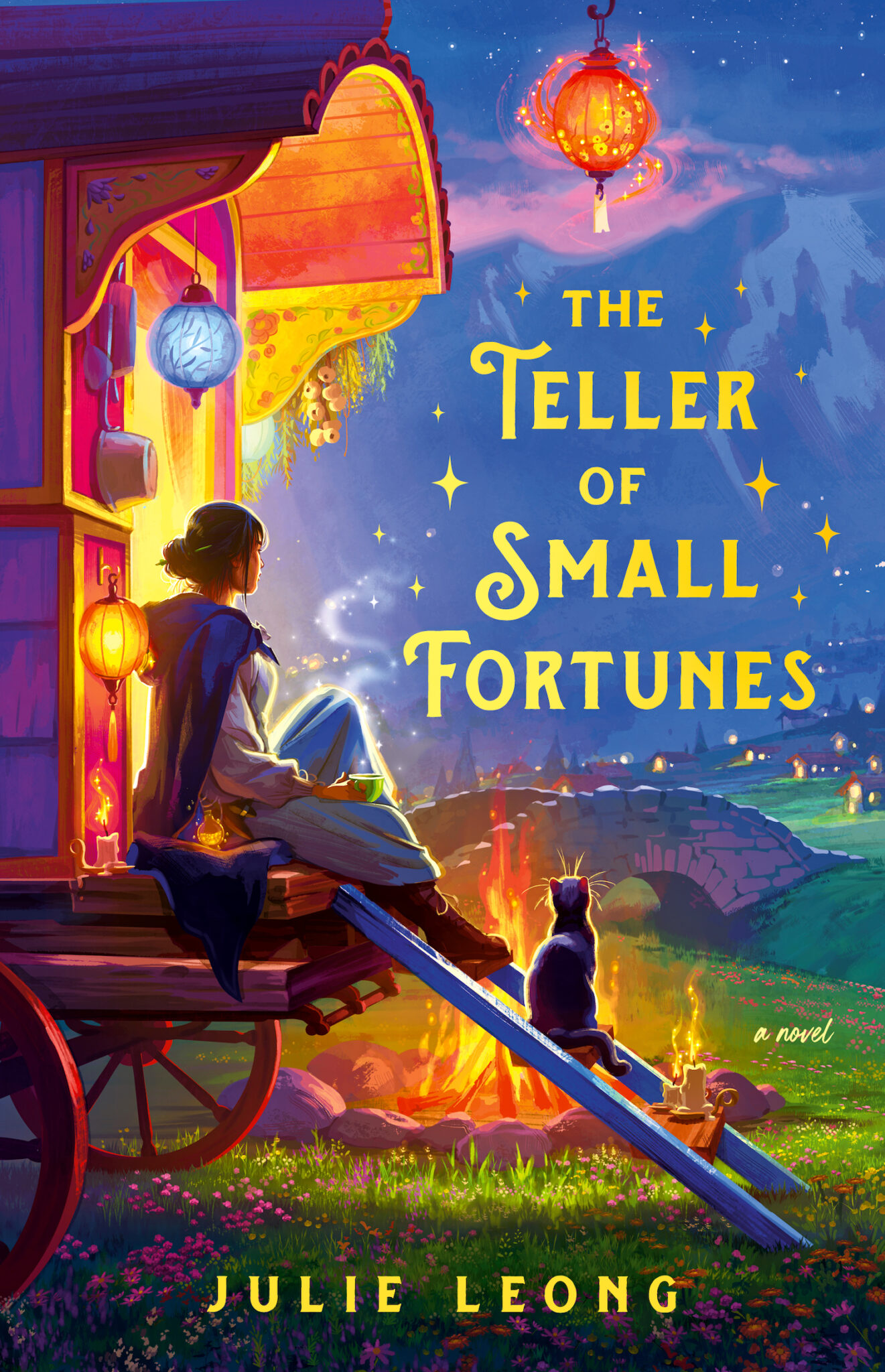
The Teller of Small Fortunes has relatively low stakes, but a very big heart. It’s cozy and gentle, through and through, and makes for a sweet read. I was drawn to this book because of its beautiful, colorful cover, but stayed for the warmth of the story itself. If you’re looking for a bookish antidote to stress and gloom, The Teller of Small Fortunes is a great choice.

Book Review: Somewhere Beyond the Sea by TJ Klune

Title: Somewhere Beyond the Sea
Series: Cerulean Chronicles, #2
Author: TJ Klune
Publisher: Tor Books
Publication date: September 10, 2024
Length: 416 pages
Genre: Fantasy
Source: Purchased
Rating:

Rating: 5 out of 5.

Somewhere Beyond the Sea is the hugely anticipated sequel to TJ Klune’s The House in the Cerulean Sea, one of the best-loved and best-selling fantasy novels of the past decade.

A magical house. A secret past. A summons that could change everything.

Arthur Parnassus lives a good life built on the ashes of a bad one.

He’s the master of a strange orphanage on a distant and peculiar island, and he hopes to soon be the adoptive father to the six dangerous and magical children who live there.

Arthur works hard and loves with his whole heart so none of the children ever feel the neglect and pain that he once felt as an orphan on that very same island so long ago. He is not alone: joining him is the love of his life, Linus Baker, a former caseworker in the Department In Charge of Magical Youth. And there’s the island’s sprite, Zoe Chapelwhite, and her girlfriend, Mayor Helen Webb. Together, they will do anything to protect the children.

But when Arthur is summoned to make a public statement about his dark past, he finds himself at the helm of a fight for the future that his family, and all magical people, deserve.

And when a new magical child hopes to join them on their island home—one who finds power in calling himself monster, a name that Arthur worked so hard to protect his children from—Arthur knows they’re at a breaking point: their family will either grow stronger than ever or fall apart.

Welcome back to Marsyas Island. This is Arthur’s story.

I absolutely loved The House in the Cerulean Sea, and I’m happy to report that the newly released follow-up book, Somewhere Beyond the Sea, is just as lovely and wonderful as the first book.

In The House in the Cerulean Sea, Linus Baker is the main character — a caseworker with the Department in Charge of Magical Youth (DICOMY) who is sent to evaluate the Marsyas Island orphanage, run by the kindly Arthur Parnassus.

Somewhere Beyond the Sea is Arthur’s story, showing his past as well as his continuing story after the events of the first book. As we pick up from where we left off, Arthur and Linus are in love, and are happily providing a warm, safe home for the magical children in their care. But outside forces are aligned against them and seem poised to rip apart everything they’ve built.

Once again, we get to spend time with the wonderful children of Marsyas, who are joined by a new addition, a yeti named David. David is funny, dramatic, and enjoys scaring people (just for fun — he doesn’t have a mean bone in his body) — yet he’s also sensitive, and cries ice cubes when he’s upset.

The child at the center of much of the action, and whose mere existence sends DICOMY into a tizzy, is Lucy… short for Lucifer. Lucy is the Antichrist… but he’s also a seven-year-old child who loves old-timey music and needs comforting when his nightmares strike.

Lucy also gets some of the funniest lines in the book:

“Are we going to sleep in the forest?” Lucy asked, tugging on his pant leg. “I’ve always wanted to see if there were night monsters. I bet they’re big with fangs and claws and filled with rage that only subsides when sucking out the marrow from the bones of unsuspecting—”

“There will be no marrow sucking,” Linus said sternly.

Lucy hung his head, shoulders slumped. “Yet another thing we can’t do with bones. What’s the point of even having bones if we don’t get to play with them?”

“Anarchy!” Lucy shrieked, eyes burning red. “Chaos! Buffets with a never-ending supply of macaroni and cheese! Hellfire!”

The evil representative of DICOMY who arrives at Marsyas to inspect the home and the children is absolutely awful, and is startlingly reminiscent of Dolores Umbridge, which I can only assume is entirely deliberate on the part of the author. (Read his afterward to understand his thoughts on J. K. Rowling).

The lesson proceeded with minimal interruption, usually from Miss Marblemaw coughing pointedly or clearing her throat when Linus or the children said something that she obviously did not approve of. Linus attempted to ignore her, but the longer the lesson went on—going from the wide and mysterious world of mathematics to history—the more Miss Marblemaw made a nuisance of herself, muttering under her breath as she scribbled on her clipboard.

TJ Klune’s writing is, once again, imaginative and funny and heartwarmingly sweet. The characters shine with warmth and humor, and the relationship between Linus and Arthur is romantic and loving and oh-so-perfect.

The ultimate showdown between the forces who want to shut down Marsyas and control the children and all magic, versus Arthur, Linus, and the people of Marsyas village, is a wonder. It’s pure delight to see the townspeople rally around the magical children and declare them a part of their community. Somewhere Beyond the Sea shows found family at its best.

Somewhere Beyond the Sea is a lovely, cozy read, with both surface-level entertainment and deeper emotional impact. If you loved The House in the Cerulean Sea (didn’t we all?), Somewhere Beyond the Sea is a must-read.

Book Review: Light from Uncommon Stars by Ryka Aoka

Title: Light from Uncommon Stars
Author: Ryka Aoki
Publisher: Tor
Publication date: September 28, 2021
Length: 384 pages
Genre: Science fiction / fantasy
Source: Purchased
Rating:

Rating: 3 out of 5.

A defiantly joyful adventure set in California’s San Gabriel Valley, with cursed violins, Faustian bargains, and queer alien courtship over fresh-made donuts.

Shizuka Satomi made a deal with the devil: to escape damnation, she must entice seven other violin prodigies to trade their souls for success. She has already delivered six. When Katrina Nguyen, a young transgender runaway, catches Shizuka’s ear with her wild talent, Shizuka can almost feel the curse lifting. She’s found her final candidate. But in a donut shop off a bustling highway in the San Gabriel Valley, Shizuka meets Lan Tran, retired starship captain, interstellar refugee, and mother of four. Shizuka doesn’t have time for crushes or coffee dates, what with her very soul on the line, but Lan’s kind smile and eyes like stars might just redefine a soul’s worth. And maybe something as small as a warm donut is powerful enough to break a curse as vast as the California coastline.

As the lives of these three women become entangled by chance and fate, a story of magic, identity, curses, and hope begins, and a family worth crossing the universe for is found.

Light from Uncommon Stars has been on my to-read shelf for a few years now, and even though I picked up a Kindle edition a while back, it’s taken me until now to finally read it. And while I sped through it and enjoyed the reading experience, my overall reaction is… mixed.

There is a lot going on in Light from Uncommon Stars. The three main characters are a transgender teen runaway, a violin teacher who made a deal with the devil many years earlier, and an alien starship captain hiding from intergalactic war in a donut shop. The characters come together in strange, quirky, and even touching circumstances, while also having individual challenges to overcome.

Katrina, the young runaway, is the most affecting of the characters. Escaping a cruel, abusive family and a world that judges and mistreats her, she has only her battered violin for comfort.

Yet, this student, this human being, had been forsaken not for ambition, nor revenge, nor even love, but for merely existing?

Who needs the Devil when people can create a hell like this themselves?

When Shizuka meets her in a park, she recognizes that Katrina may be the final protégé needed to fulfill her bargain — she needs to deliver one more soul to Hell in order to redeem her own soul. But as Shizuka starts to teach Katrina and provide her with a home, the protectiveness she feels for her student may prevent her from living up to the deal she’s made.

Meanwhile, Shizuka also meets Lan, the space-captain-turned-donut-shop-owner, and feels an unexpected connection — but Lan has her own family to protect and worry about as well, and can’t quite get why music is all that important to Shizuka.

There’s also a woman carrying out her family’s legacy of repairing violins, a nasty toad-like demon, Shizuka’s lovely housekeeper/confidante, and many, many more characters.

Light from Uncommon Stars has some important messages about belonging, kindness, fitting in, and treasuring one another. It recognizes that cruelty abounds in the world, yet beauty can still be found by those who are open to it.

The characters, especially Katrina, are quite special, and each of them is interesting in their own right, as well as in connection to one another. Again, Katrina’s journey is especially compelling, as she finally recognizes her own beauty in a world that tells her she doesn’t deserve it.

Her tonality had been honed by a lifetime of being concerned with her voice. Her fingerings were liquid, born of years of not wanting her hands to make ugly motions. And her ability to play to a crowd, project emotion, follow physical cues? Katrina had trained in that most of all.

The focus on music is where the book loses me along the way — there’s just so much about the composition and structure of violins, how they work, different pieces of music, composers, what the music means… honestly, it just doesn’t interest me that much, which meant that for big chunks of the book, I felt like an outsider looking in.

As I mentioned, there’s a LOT going on in this book… and for me, it was too much. Deals with the devil and extraterrestrials, cursed bows and spaceships? Plus, violin lessons and competitions and secrets of the violin-building trade? It’s all a bit messy, and doesn’t ever quite fully click into one coherent whole.

I do need to mention that the descriptions of the wide variety of food — Vietnamese, Mexican, Chinese — junk food and donuts and breads, and much, much more — is all mouth-watering and adds a richness to the characters’ experience that brings the Southern California setting to vivid life.

I expected to love this book — it’s gotten so much hype, and is blurbed by a bunch of authors I love, including T. J. Klune and John Scalzi, among others. I read the book quickly and felt absorbed enough to want to see how it would all work out… but taken as a whole, Light from Uncommon Stars was not the glorious reading experience I expected. Perhaps this just wasn’t the book for me. In any case, I’m glad to have read it, but couldn’t help feeling a bit let down.

Book Review: A Sorceress Comes to Call by T. Kingfisher

Title: A Sorceress Comes to Call
Author: T. Kingfisher
Publisher: Tor Books
Publication date: August 6, 2024
Print length: 336 pages
Genre: Fantasy
Source: Review copy courtesy of the publisher via NetGalley

Rating: 4.5 out of 5.

A dark retelling of the Brothers Grimm’s Goose Girl, rife with secrets, murder, and forbidden magic

Cordelia knows her mother is unusual. Their house doesn’t have any doors between rooms, and her mother doesn’t allow Cordelia to have a single friend—unless you count Falada, her mother’s beautiful white horse. The only time Cordelia feels truly free is on her daily rides with him. But more than simple eccentricity sets her mother apart. Other mothers don’t force their daughters to be silent and motionless for hours, sometimes days, on end. Other mothers aren’t sorcerers.

After a suspicious death in their small town, Cordelia’s mother insists they leave in the middle of the night, riding away on Falada’s sturdy back, leaving behind all Cordelia has ever known. They arrive at the remote country manor of a wealthy older man, the Squire, and his unwed sister, Hester. Cordelia’s mother intends to lure the Squire into marriage, and Cordelia knows this can only be bad news for the bumbling gentleman and his kind, intelligent sister.

Hester sees the way Cordelia shrinks away from her mother, how the young girl sits eerily still at dinner every night. Hester knows that to save her brother from bewitchment and to rescue the terrified Cordelia, she will have to face down a wicked witch of the worst kind.

New T. Kingfisher books are always a reason to celebrate, and A Sorceress Comes to Call is no exception.

In this fairy tale (with a tinge of horror), Cordelia is the 14-year-old daughter of a cruel sorceress named Evangeline. To the outside world, Evangeline is a pretty, respectable woman, who presents herself as a genteel widow with a marriageable daughter. (Among other despicable acts, she claims Cordelia is 17 and ready to find a husband). But Cordelia lives in constant fear and torment: Evangeline’s powers enable her to make Cordelia “obedient” — she can control Cordelia’s body and force her to behave as she wishes, leaving Cordelia’s mind alert, aware, and helpless to overcome Evangeline’s control.

When Evangeline sets her sights on a wealthy man, intending to marry him, gain control, and then use her new riches and power to get an even more highly stationed husband for Cordelia — all with the intent of adding to her own wealth and power — Cordelia has no choice but to go along.

The Squire, Samuel, lives with his sister Hester on his comfortable estate. Both in their 50s and never married, they’re content with their lives and their circle of friends. Evangeline’s arrival disrupts their peaceful lives, and while Hester’s intuition immediately labels Evangeline as “Doom”, she’s unexpectedly sympathetic toward Cordelia. Cordelia, Hester senses, is innocent — in many ways. She has no choice about complying with her mother’s schemes, but as Hester befriends her, Cordelia starts to realize that she has to find a way to protect these kind people from the evil that awaits.

The story is full of wonderful fairy-tale-esque moments and devices, but the characters themselves are what make this book especially delightful. Hester in particular is a hoot, but so are her other close friends — all women on the more mature side, perhaps disregarded by society and viewed as silly or unimportant older women, but with sharp wit, keen intelligence, and nerves of steel.

Evangeline and her horse/familiar Falada are evil, but they’re sly and devious, and not easily defeated. The story builds to a scary, dramatic confrontation, and some elements of the action toward the end have more of a horror feel to them — but it’s all quite exciting and delicious to read, and I loved seeing how the good guys have each other’s backs.

A Sorceress Comes to Call is such a satisfying, engaging read! The characters are superb, and made me care deeply about all the magic-laden ups and downs of the story.

T. Kingfisher’s fantasy/fairy tale stories are among my favorites, and A Sorceress Comes to Call is a terrific addition. Highly recommended.

Book Review: The Lost Story by Meg Shaffer

Title: The Lost Story
Author: Meg Shaffer
Publisher: Ballantine Books
Publication date: July 16, 2024
Print length: 352 pages
Genre: Fantasy
Source: Review copy courtesy of the publisher via NetGalley

Rating: 5 out of 5.

Inspired by C. S. Lewis’s The Chronicles of Narnia, this wild and wondrous novel is a fairy tale for grown-ups who still knock on the back of wardrobes—just in case—from the author of The Wishing Game.

As boys, best friends Jeremy Cox and Rafe Howell went missing in a vast West Virginia state forest, only to mysteriously reappear six months later with no explanation for where they’d gone or how they’d survived.

Fifteen years after their miraculous homecoming, Rafe is a reclusive artist who still bears scars inside and out but has no memory of what happened during those months. Meanwhile, Jeremy has become a famed missing persons’ investigator. With his uncanny abilities, he is the one person who can help vet tech Emilie Wendell find her sister, who vanished in the very same forest as Rafe and Jeremy.

Jeremy alone knows the fantastical truth about the disappearances, for while the rest of the world was searching for them, the two missing boys were in a magical realm filled with impossible beauty and terrible danger. He believes it is there that they will find Emilie’s sister. However, Jeremy has kept Rafe in the dark since their return for his own inscrutable reasons. But the time for burying secrets comes to an end as the quest for Emilie’s sister begins. The former lost boys must confront their shared past, no matter how traumatic the memories.

Alongside the headstrong Emilie, Rafe and Jeremy must return to the enchanted world they called home for six months—for only then can they get back everything and everyone they’ve lost.

Let’s cut right to the chase: The Lost Story is a break-out 5-star read for me!

I went into this reading adventure without expectations. I hadn’t read the author’s previous novel, and didn’t know a whole lot about The Lost Story, other than blurbs about this being a Narnia for grown-ups.

And yes, that’s kind of true… and it’s also its own wonderful experience entirely.

In The Lost Story, the central mystery focuses on two lost-then-found boys. As teens, Rafe and Jeremy disappeared on a school outing to Red Crow State Forest in West Virginia, only to reappear — suddenly, and without explanation — six months later. For Rafe, the missing months are simply gone from his memory. Jeremy sticks to an undetailed story: they were lost, managed to survive, and then were rescued.

Fifteen or so years later, the boys are men in their mid-thirties. Jeremy has achieved fame as a missing person finder, carrying out seemingly impossible rescues in hopeless situations. Rafe, on the other hand, lives alone in a cabin in the woods, preferring to cut himself off from the world. Jeremy and Rafe have had no contact since their return, despite formerly being best of friends.

They’re brought back into one another’s lives when Emilie contacts Jeremy, asking for help in locating her long-lost sister Shannon — a person Emilie only recently learned even existed. Shannon was lost in the same woods as Jeremy and Rafe, but years earlier, and was long ago presumed dead. But Emilie feels a desperate need to know more. and Jeremy agrees to help her — only if Rafe joins in as well.

As the trio journeys from Red Crow into a magical realm beyond their own, their story hits traditional quest beats while also offering an original take on the magical portal genre. One fascinating element is the fact that the characters are adults. We’ve learned from Narnia and other fantasy classics that children are best suited to these portal journeys — a sense of innocence is essential to crossing over and being being open to the reality of alternate worlds. Seeing adult characters embrace the magic, even while acknowledging the unlikelihood of it all, adds a unique flavor to the tale.

Where to even begin to explain just how wonderful this book is? I don’t want to reveal much up front, but as the synopsis makes clear, there are other worlds involved, and the answers to the mysteries of these disappearances involve magic and otherworldly forces.

When you begin to question your sanity, remind yourself that the fact that something impossible happened doesn’t mean it didn’t happen.

There’s joy and sorrow, love and friendship, adventure and danger — all this and more awaits Jeremy, Rafe, and Emilie as they set out on their quest. The quest itself is filled with wonder and beauty, but even more special is the relationships discovered and revealed as the characters move fully into a world beyond their own.

Reading The Lost Story is a beautiful, funny, emotional, transporting experience. I never expected to fall for this book the way I did. I just wish I could live in Jeremy, Rafe, and Emilie’s world a bit longer. Highly recommended.

Now that I’ve read The Lost Story, I’m eager to read the author’s debut novel, The Wishing Game… just as soon as I can fit it into my reading schedule.

Fun side note: After finishing The Lost Story, I read the author bio and discovered that Meg Shaffer is married to author Andrew Shaffer, who has written some supremely silly parodies and novels (including the Obama/Biden mystery books). I can only imagine how entertaining their dinner table conversations must be!

Book Review: The Hob’s Bargain by Patricia Briggs

Title: The Hob’s Bargain
Author: Patricia Briggs
Publisher: Ace Fantasy
Publication date: 2001
Length: 288 pages
Genre: Fantasy
Source: Purchased
Rating:

Rating: 3 out of 5.

Beauty and The Beast

Hated and feared, magic was banished from the land. But now, freed from the spells of the wicked bloodmages, magic—both good and evil—returns. And Aren of Fallbrook feels her own power of sight strengthen and grow…

Overcome by visions of mayhem and murder, Aren vows to save her village from the ruthless raiders who have descended upon it—and killed her family. With the return of wildlings to the hills and forests, she strikes a bargain with the Hob, a magical, human-like creature imbued with the power of the mountains. But the Hob is the last of his kind. And he will exact a heavy price to defend the village—a price Aren herself must pay…

I adore the Mercy Thompson and Alpha & Omega series by Patricia Briggs — intricately plotted urban fantasy with stand-out characters, relationships, and group dynamics, high stakes, and even plenty of humor. Each new release is an event to celebrate!

I’ve always been curious about the author’s earlier works. Prior to Mercy, she’d published a few different fantasy books — a couple of duologies and a four-book series — and one stand-alone, The Hob’s Bargain. And while I’ve had The Hob’s Bargain on my shelf for years now, this week was the week when I finally decided to read it.

The book starts with a bang: Aren wakes up the morning after her wedding night feeling happy and hopeful, only to be struck by a vision. Aren has the sight, something she’s kept hidden all her life, since mages are hunted down and forced to either join the evil Bloodmages who support the land’s rulers through death magic or be executed. Aren’s vision is too late to prevent what she sees: A horde of raiders descends upon her peaceful village, and kills everyone who opposes them. Within a few short hours, Aren loses her parents, her pregnant sister, and her husband.

From here, conditions in Fallbrook get even worse. A binding that has kept the land’s natural magic under tight control is removed, and the resulting earthquake causes mountains to fall, shutting off all passages in and out of the village. The wildlings — magical creatures of the earth, forests, rivers, and mountains — begin to stir, and they’re not happy with the humans. Fallbrook is threatened by both the wildlings and the continued presence of the raiders. Once Aren reveals her sight and her access to magical gifts, she finds herself despised by many of the villagers — but also in a position where she may be the only one who can save them.

The Hob’s Bargain is an entertaining read, although the plot and characters feel a tad underbaked and rushed. At various points, I found myself confused by new developments or statements, not entirely clear how we got from point A to point B.

Still, it’s quite fun to read this early book and see seeds of themes and patterns that feature in the Mercy-verse — different types of magic and magical beings, the way humans and non-humans interact, and the dynamics between humans with powers and those without.

Overall, I’m glad to have read The Hob’s Bargain — but for those looking to experience the joys of a Patricia Briggs book, I strongly urge you to jump straight to Moon Called, the very first Mercy book. I can pretty much guarantee that once you read one, you won’t want to stop.

For a complete reference guide to all Patricia Briggs book, see here.

And enjoy these other covers for The Hob’s Bargain:

Book Review: Aftermarket Afterlife (InCryptid, #13) by Seanan McGuire

Title: Aftermarket Afterlife
Series: Incryptid, #13
Author: Seanan McGuire
Publisher: DAW
Publication date: March 5, 2024
Length: 368 pages
Genre: Urban fantasy
Source: Review copy courtesy of the publisher via NetGalley
Rating:

Rating: 4 out of 5.

Seanan McGuire’s New York Times -bestselling and Hugo Award-nominated urban fantasy InCryptid series continues with the thirteenth book following the Price family, cryptozoologists who study and protect the creatures living in secret all around us

Mary Dunlavy didn’t intend to become a professional babysitter. Of course, she didn’t intend to die, either, or to become a crossroads ghost. As a babysitting ghost, she’s been caring for the Price family for four generations, and she’s planning to keep doing the job for the better part of forever.

With her first charge finally back from her decades-long cross-dimensional field trip, with a long-lost husband and adopted daughter in tow, it’s time for Mary to oversee the world’s most chaotic family reunion. And that’s before the Covenant of St. George launches a full scale strike against the cryptids of Manhattan, followed quickly by an attack on the Campbell Family Carnival.

It’s going to take every advantage and every ally they have for the Prices to survive what’s coming—and for Mary, to avoid finding out the answer to a question she’s never wanted to know: where does a babysitting ghost go when she runs out of people to take care of?

In the 13th installment in the weird and wonderful world of Seanan McGuire’s InCryptid series, the Price-Healy family is back… and things are not going well at all.

My recap from the previous book in the series still holds true:

The InCryptid series is a big, sprawling, interconnected story about the varied and sundry members of the Price/Healy clan — humans (mostly) who specialize in cryptozoology, the study and preservation of non-human people who live among us here on Earth. The arch-enemies of the Price gang (and all non-human species) is the Covenant, a powerful organization dedicated to hunting down and eliminating all cryptids — ostensibly to protect humans, but really, at this point, it’s more from deeply ingrained hatred and a desire to rid the world of everything non-human.

The series covers a lot of ground, and as it’s progressed, different family members have had the starring roles in different books. We’ve had books mainly focused on siblings Verity, Alex, and Antimony, and also their cousin Sarah, and their grandparents Alice and Thomas, but Aftermarket Afterlife is the first book where the family babysitter, Mary Dunlavy, is in the central role.

Up to now, Mary has been a featured side character, always present one way or another in the family’s lives, but usually never in more than a few key scenes from book to book. In Aftermarket Afterlife, we’re finally able to experience the Price-Healy clan through Mary’s eyes, and it’s a fascinating journey.

Mary died about a hundred years earlier, but that hasn’t stopped her from carrying out her duties as the family’s babysitter. She may be a ghost, but she’s good at her job! By appearance, she’s a teen girl (with startling white hair and eerie eyes), and her afterlife’s purpose is caring for the children of the Price family… even when those children are now fully grown and have children of their own. Mary can assume solid form (so she can tend the children in her care), but can also discorporate to pass through other dimensions. Most important among her ghostly abilities, she can hear when one of her children calls for her no matter where they are, and can instantly blink out from wherever she is and appear by their side.

In Aftermarket Afterlife, the Covenant is amping up their attacks on cryptid locations in North America, zeroing in on known and suspected allies of the Price clan. It’s only a matter of time before they find the family’s secret compound outside of Portland. The Prices are seemingly outnumbered, but they don’t give up easily, and soon Mary becomes essential to the family’s plan to take the fight to the Covenant.

“Hi. I’m the babysitter. And you scared my kids.”

This book starts a bit slowly, as Mary blips from one point to another, gathering intel and figuring out where everyone is. Pretty much all the family members we’ve come to know over the course of the series show up in this one, so there’s a lot of setting the scene before the action before more sharply focused. By the midpoint, however, it’s full speed ahead. The family suffers some tragic losses, and as they’re left reeling, Mary’s role as caregiver becomes even more important.

I do love this series, although thirteen books in, there is a LOT to remember and keep track of. As the various characters have changed and evolved over the series, and different higher powers have come and gone, the underlying mythology has gotten even more complicated.

“I liked it better when we weren’t all wrapped up in gods and weird divinities,” said Sam.

Honestly, same. There are more godly beings affecting the world of the Incryptid series, and it can be a little mind-boggling at times.

Aftermarket Afterlife is a particularly entertaining outing — I really enjoyed Mary as narrator. Her worldview, as a ghost, is of course quite different from that of the living family members.

You might think being dead would make death easier for me to deal with. You would be so very wrong.

I won’t go too far into plot details. For those who’ve kept up with the series, you’ll want to see it unfold without knowing much in advance. For those unfamiliar with the series, this is all likely sounding like gibberish anyway!

Aftermarket Afterlife is another terrific adventure with the Price-Healy family. I loved getting to see so many of my favorite characters once again, and really enjoyed getting to know Mary so much more through this story. The book ends with the family essentially in the middle of a war against the Covenant, and I can’t wait to see what happens next.

As with other books in the Incryptid series, this one includes a novella at the end, Dreaming of You in Freefall, which takes place shortly after the events of Aftermarket Afterlife. There’s absolutely nothing I can say about it without divulging a major spoiler from the main book — but trust me, it’s a really good one, and you’ll want to read it right away.

The Incryptid series is not one to jump into at a random point. There’s so much backstory to learn, so many family members, and so many types of cryptids, as well as an overarching plot that’s been building from the beginning of the series. I do hope more people will read the Incryptid books… but if you do decide to give them a try, start with book #1, Discount Armageddon.

**Save

Save

Save

Save

Save

Save

Save

Book Review: The Parliament by Aimee Pokwatka

Title: The Parliament
Author: Aimee Pokwatka
Publisher: Tordotcom
Publication date: January 16, 2024
Length: 361 pages
Genre: Horror/fantasy
Source: Review copy courtesy of the publisher via NetGalley
Rating:

Rating: 4.5 out of 5.

The Birds meets The Princess Bride in this tale of friendship, responsibility, and the primal force of nature.

“Murder owls are extreme,” Jude said. “What’s more extreme than murder owls?”

Madeleine Purdy is stuck in her home town library.

When tens of thousands of owls descend on the building, rending and tearing at anyone foolish enough to step outside, Mad is tasked with keeping her students safe, and distracted, while they seek a solution to their dilemma.

Perhaps they’ll find the inspiration they seek in her favorite childhood book, The Silent Queen….

With food and fresh water in low supply, the denizens of the library will have to find a way out, and soon, but the owls don’t seem to be in a hurry to leave…

The Parliament is a story of grief and missed opportunities, but also of courage and hope.

And of extremely sharp beaks.

Awww, look at the cute owl on the cover!

Kidding. That’s a murder owl. Not cute!

And ignore what the synopsis says about The Princess Bride — that might seem to indicate that this book is full of whimsy and silliness, and it’s nothing of the sort.

Let’s get back to the murder owls.

When Mad Purdy agrees to teach a kids’ chemistry workshop — making bath bombs — as a favor to her former best friend who works at the local library in their hometown, she has no idea what she’s in for. She’s already moved away to put distance between herself and the site of her worst memories, but in the name of friendship, agrees to do this one thing.

But that one thing, meant to just be one brief event, turns into days of waking nightmares, as the library is surrounded by millions of tiny owls. Maybe one on its own is cute. This swarm is far from it, as the trapped inhabitants learn after watching the owls descend on the first person to venture outside. It isn’t pretty.

Mad expected to be in and out in one hour, boundaries firmly in place. Instead, she’s thrust into the role of protector, keeping the kids physically and emotionally safe, or as safe as they can be, given that food, water, and medicine are running out, and the outside world seems to have no clue how to rescue them.

To keep the kids distracted, Mad begins to read to them from her favorite book, The Silent Queen — which seems to show up in the library just when needed. No one has ever heard of it before, but for Mad, it was a lifesaver through the worst days of trauma during her childhood. The story of a young queen who isolates herself in a tower, but finally has to step out of her safe zone to save her people, may seem a little on the nose, but it doesn’t feel heavy-handed. The story gives the kids something to focus on, and meanwhile starts forcing Mad out of her own inner fortress.

The Parliament can be terribly frightening, and while there are several scenes of gruesome attacks when a few people are foolish enough to venture outside, much of the horror is psychological. The people inside the library are trapped, cut off (there’s no wifi or cell service, thanks to the owl swarm), and utterly reliant on one another and whatever scraps of supplies they can scavenge. Meanwhile, the few attempts at solutions that come from outside the library seem doom to failure, and worse, put the people inside the library in even greater danger.

This book is fascinating, and the story-within-a-story approach (chapters of The Silent Queen alternate with chapters focusing on the library) keeps us on the edge of our seats with both pieces of the narrative. The Silent Queen reads like a fairy tale/fantasy quest, and it’s both lovely and dramatic. The main story, within the library itself, conveys all the terror and claustrophobia of being trapped with a bunch of strangers, with a clock ticking and no rescue on the way.

Mad herself survived a terrible incident at age eleven, and that’s impacted every aspect of her life ever since. She’s taught herself a thousand useless, random tricks and survival skills, but at the expense of allowing herself to connect with others or let anyone really know her. This may make her the perfect person for helping the children in the library, but she has to get past her own trauma before she can truly start connecting with them.

My only quibble with The Parliament, and it’s a minor one, is that there are too many adult characters in the library to keep track of. We have Mad and her best friend Farrah and her former friend and love interest Nash, but there are also librarians and a book group and some seniors and, well, they start blurring together. Ultimately, I was more interested in the kids as individuals than in the glimpses we get of the adults, and so I didn’t bother trying to keep most of them straight in my mind. Like I said, this is a pretty minor issue, and ultimately didn’t keep me from being totally engrossed in the book.

Overall, The Parliament is a fascinating read, and once I started, I just couldn’t stop. The main story and the fantasy story within it work together in complicated and surprising ways, and as the tension ratchets up, I was on the edge of my seat. The author does a terrific job of keeping the action intense and frightening, while also letting us inside the characters’ experiences and providing a look at the long-lasting effects of trauma and survivor’s guilt.

Highly recommended.

Book Review: Iron Flame by Rebecca Yarros

Title: Iron Flame
Series: The Empyrean, #2
Author: Rebecca Yarros
Publisher: Entangled Publishing
Publication date: November 7, 2023
Length: 884 pages (Kindle edition)
Genre: Fantasy
Source: Purchased

Rating: 2.5 out of 5.

“The first year is when some of us lose our lives. The second year is when the rest of us lose our humanity.” —Xaden Riorson

Everyone expected Violet Sorrengail to die during her first year at Basgiath War College—Violet included. But Threshing was only the first impossible test meant to weed out the weak-willed, the unworthy, and the unlucky.

Now the real training begins, and Violet’s already wondering how she’ll get through. It’s not just that it’s grueling and maliciously brutal, or even that it’s designed to stretch the riders’ capacity for pain beyond endurance. It’s the new vice commandant, who’s made it his personal mission to teach Violet exactly how powerless she is–unless she betrays the man she loves.

Although Violet’s body might be weaker and frailer than everyone else’s, she still has her wits—and a will of iron. And leadership is forgetting the most important lesson Basgiath has taught her: Dragon riders make their own rules.

But a determination to survive won’t be enough this year.

Because Violet knows the real secret hidden for centuries at Basgiath War College—and nothing, not even dragon fire, may be enough to save them in the end.

TL;DR version of a review: It’s Fourth Wing, but with torture!

Okay, there isn’t necessarily torture throughout the ENTIRE book, but there’s enough. And really, this book is basically the same as the first in the series, just… more.

In my review of Fourth Wing, I shared my unpopular opinion (liked, didn’t love it), and now I’m back with what I’m sure is an unpopular opinion of Iron Flame. This time around, I can’t even truly say that I liked the book.

(You’d be justified in asking why I bothered with the 2nd in a series if I didn’t love the 1st. The answer is — I was interested enough that I wanted to see what happened next… but I don’t think I’ll be repeating the experience when the 3rd book comes out).

Iron Flame picks up immediately after the events of Fourth Wing, continuing the story of Violet Sorrengail, her true love Xaden, their dragons, their war college, the evil secrets kept by their government, and a scary outside force that threatens everything. I’m not going to bother going deeper into the plot than that — there’s lots of action, lots of opaque talk about magical history, runes, wards, etc, and romantic complications that feel very unnecessary.

Violet and Xaden are madly in love in that heightened, desperate, dramatic way that’s a staple of fantasy romance, but they have some deep failures in their ability to communicate (which is ironic, considering that their dragons’ mating bond gives the two of them the ability to speak mind to mind). Violet resents Xaden keeping secrets, but he’s clearly keeping the secrets in order not to endanger other people, which is reasonable for a rebellion leader — especially since Violet is in frequent contact with someone who can read minds through touch, and can’t be guaranteed to avoid him. Yet Violet considers the secret-keeping a deal-breaker, and the couple spend much too much time holding themselves apart, feeling all sorts of tormented yearning (and unfulfilled lust).

As in Fourth Wing, this book feels mostly like YA, but with explicit sex scenes that aren’t the least bit sexy. And I’m sorry, but is the use of the word “claiming” in regard to kissing supposed to be hot? As in:

The feel of his tongue flicking against mine, then claiming, stroking, is a flame to a tinderbox, and I catch fire.

I vote no.

The writing overall is uneven, full of f-bombs and modern-speak in a way that’s jarring in a fantasy world of dragons and swords and runes. This bit made me laugh:

“… And then I’d kick his ass, partially because that’s what I do when someone challenges me, and more importantly for implying there’s any other future besides the one where you and I are endgame.”

Shouldn’t that be #endgame? The book often feels like it’s missing hashtags, or the fantasy-world equivalent of texts and TikTok.

One thing I did appreciate — there’s a point in the book where Violet and her squad are talking with gryphon riders from across the border, supposed enemies who’ve become secret allies. And it turns out in their training, if they fail… they go do something else. One of the things that irritated me no end in Fourth Wing is the acceptance that cadets trying to become dragon riders die throughout their time at the war college — death weeds out the people who aren’t strong enough to succeed. It makes no sense — surely all these talented young adults could better serve their country by joining other branches of the military, rather than dying or being killed by one another?

Maren nods, then points between Sloane and me. “And before you ask, it’s you all who are the weird ones, killing cadets on your conscription day.”

I draw back, letting her words sink in.

“Technically, they’re candidates,” Sloane mutters. “We’re only cadets once we cross.”

“Well, I guess that makes it better,” Maren quips sarcastically.

Okay, clearly, this book didn’t work for me. It’s overly long — it often feels like we’re experiencing every single day right alongside Violet, from breakfast to getting dressed to what she reads and studies.

There’s also the issue of just how much of a chosen one Violet is. She’s the most powerful rider, she has the most powerful signet (magical ability), she’s bonded with not one but two dragons, she’s in the most extremely passionate relationship with the hottest guy, she’s the only one who reads just the right archaic language to figure out the key to saving the kingdom… it goes on and on and on.

The worldbuilding continues to be inconsistent and opaque. Lots of terms and concepts get thrown around (wielding, imbuing, signets, runes, wards) but not necessarily clearly explained or used consistently, new rules seem to pop up out of nowhere for how various magical elements work, and the geopolitics remain as muddy as in the first book.

My final complaint (although yes, I could keep going) is that action sequences are not particularly well written. I found so many of the battle and adventure/quest scenes hard to follow — there always felt like pieces were missing and that the spatial relationships (especially during in-flight dragon battles) didn’t make sense.

I realized by the middle of the book that I just wasn’t enjoying it, but having made it that far, I was determined to finish. And I did, but it was quite a slog to get to the end. As with Fourth Wing, this book ends on a cliffhanger revelation… but by that point, I’d stopped caring.

I can’t see myself continuing with the series. I’m mildly curious about how it might work out, but not enough to subject myself to another 600 – 800 page tome. Maybe I’ll just wait for someone else to read it and give me a recap!

I know these books have legions of devoted fans… clearly, that doesn’t include me.

Book Review: Bookshops & Bonedust by Travis Baldree

Title: Bookshops & Bonedust
Author: Travis Baldree
Publisher: Tor Books
Publication date: November 7, 2023
Length: 352 pages
Genre: Fantasy
Source: Review copy courtesy of the publisher via NetGalley
Rating:

Rating: 4 out of 5.

When an injury throws a young, battle-hungry orc off her chosen path, she may find that what we need isn’t always what we seek.

In Bookshops & Bonedust, a prequel to Legends & LattesNew York Times bestselling author Travis Baldree takes us on a journey of high fantasy, first loves, and second-hand books.

Viv’s career with the notorious mercenary company Rackam’s Ravens isn’t going as planned.

Wounded during the hunt for a powerful necromancer, she’s packed off against her will to recuperate in the sleepy beach town of Murk—so far from the action that she worries she’ll never be able to return to it.

What’s a thwarted soldier of fortune to do?

Spending her hours at a beleaguered bookshop in the company of its foul-mouthed proprietor is the last thing Viv would have predicted, but it may be both exactly what she needs and the seed of changes she couldn’t possibly imagine.

Still, adventure isn’t all that far away. A suspicious traveler in gray, a gnome with a chip on her shoulder, a summer fling, and an improbable number of skeletons prove Murk to be more eventful than Viv could have ever expected.

I adored Legends & Lattes, and so I was thrilled to get a chance to read the author’s next book, a prequel called Bookshops & Bonedust. Is cozy fantasy a genre already? Because if it wasn’t before, thanks to Travis Baldree, it definitely is now.

In Bookshops & Bonedust, we spend time once again with Viv, the hero of Legends & Lattes. Here, she’s much younger, just starting out in her career as a mercenary. She’s big, strong, and can wield a saber with ease — but unfortunately, lacks the experience to know when to hold back, and ends up gravely injured. The head of her crew plants Viv in a nowhere town to recuperate, with a vague promise to come pick her up once she’s healed and they’re passing back through.

At first, Viv is frustrated and bored, as well as in pain from her serious leg wound. She’s unable to perform at the physical level she’s used to, and the town has absolutely nothing going on. While hobbling around the outskirts on her crutches and feeling miserable, she comes two establishments of note: The Sea-Song Bakery, giving off the most delicious smells, and a decrepit, dusty old bookstore called Thistleburr, owned by a rattkin named Fern and her gryphet companion, who seems primarily to want to bite Viv.

Viv would naturally have just moved on, but Fern — wise in way of a seasoned bookseller — convinces Viv to try one of her books. Viv scoffs… but then devours the book, and is back for more. An unlikely friendship springs up between the two, and since Viv has time on her hands, before too long she’s made it her mission to help Fern spruce up the shop and drum up fresh business.

Viv’s peaceful, if temporary, life in Murk is interrupted by the appearance of a suspicious-looking stranger, and before too long she’s back to battling necromancers. Meanwhile, she accumulates a variety of new friends and allies — plus a very sweet love interest — and coincidentally becomes an avid reader as well.

Bookshops & Bonedust is oodles of fun. I love how the author weaves current fads into his stories — so here, for example, in an effort to catch the eye of would-be book browsers, Fern packages books in plain wrappers and writes keywords on the outside (“Swordfights. Beheadings. Betrayals”). It’s a blind date with a book! If you think this is a cute idea in our own world’s bookstores, just wait until you see it in this fantasy setting.

For me, Legends & Lattes will always be #1, but Bookshops & Bonedust is a great follow-up, with the same spirit of adventure and coziness that made the first book such a treat. Fans of Legends & Lattes will absolutely want to read this book… and given that this is a prequel, it’s a perfectly fine starting place for anyone new to the overarching world of the series.

Perfect for lovers of bookstores, pastries… and orcs with swords.