Audiobook Review: Romantic Hero by Kirsty Greenwood

Title: Romantic Hero
Author: Kirsty Greenwood
Narrator: Amy James-Kelly & Jared Zeus
Publisher: Berkley
Publication date: June 16, 2026
Print length: 368 pages
Audio length: 8 hours 24 minutes
Genre: Contemporary romance
Source: Review copy via NetGalley; audiobook via Audible
Rating:

Rating: 4 out of 5.

A heartbroken romance novelist is forced to address her writer’s block when the villainous cowboy character from her books shows up in the real world, desperately in need of his own Happily Ever After. . . from the bestselling author of GMA book club pick The Love of My Afterlife.

Gertie Bickerstaff writes happily-ever-afters for a living. . . . Or she did, until her own love life fell apart. Now her ex is thriving, her deadline is looming, and she can’t write a single word.

The last thing Gertie needs is more drama—like waking up to find a confused and rugged cowboy on her sofa. And not just any cowboy, but River Oakley, the villain from her unfinished novel. Somehow very real . . . and very shirtless.

River wants to go home. Gertie wants her life back. So they strike a deal: he’ll use his cunning ways to help her win back her ex, she’ll finish the novel, and, surely, he’ll return to whatever world he rode in from.

But as River Oakley proves to be so much more than just the bad guy, Gertie has to choose: the ending she thought she wanted . . . or the plot twist she never saw coming.

Another winning rom-com from the very talented Kirsty Greenwood! After loving The Love of My Afterlife (a GMA Book Club pick from 2024), I was more than ready to dive into her 2026 release, Romantic Hero.

The setup is delicious: Gertie is the bestselling author of the Bedlam Creek romance series, set in a small town in Texas (where London-based Gertie has never actually been). Gertie’s always felt so connected to her characters that it felt as if they were speaking to her… but as the deadline looms for the final book in the series (cue the long-awaited proposal scene!), they’ve gone silent. She suffers from horrendous writer’s block and can’t write a word.

Gertie’s long-term boyfriend, supposedly the love of her life, dumped her four weeks earlier (claiming that he’s been feeling “emotionally apathetic” and in need of a “break”, not a break-up), and she’s been an utter ball of misery ever since. When Gertie’s eccentric neighbor decides that what Gertie needs is help from the universe, she’s desperate enough to go along with a rooftop manifestation ceremony. To no avail, alas…

… or did it work after all? Because the next day, Gertie wakes to find a supremely gorgeous and very shirtless cowboy on her couch, who is utterly befuddled as to how he got there. The last thing he remembers is falling asleep under a tree out in the meadow of his ranch — and oh, his name is River Oakley. As in, the villain of Gertie’s series, the antagonist constantly thwarting her heroine’s quest to reclaim her family ranch and find true love. But how could he possibly be THAT River Oakley?

Still, there’s no denying that he exactly fits the description of the man Gertie has written about. Awkward! After much back and forth, they accept the unbelievable yet seemingly undeniable fact that he is the man from her books, and that he very much needs to get back to his own world. The two come up with a hypothesis: Gertie somehow summoned River during her manifestation ceremony, and he’s here to help her get her ex back, since reuniting with Henry was her secret plea to the universe.

And yet… as Gertie and River spend time together, they click in ways neither expected. Gertie is forced to admit that while the River in her books is a scoundrel, the flesh-and-blood (and very hot) version of him has hidden depths and sensitivity… and also comes to realize that Henry is not the ideal man she’d thought he was.

Romantic Hero is such a fun, entertaining read (and listen)! Gertie and River are both great characters, and their chemistry sparkles. The story is funny, with plenty of banter that’s both silly and sexy — and yet, there are emotional moments that hit as well, as Gertie is forced to come to terms with her sister’s death years earlier and to realize that she threw herself into the relationship with Henry rather than actually deal with her terrible grief.

The story moves in unexpected directions, as we learn just why and how River showed up and what this means for Gertie’s writing career. While it seems hopeless that Gertie and River — people from two totally separate worlds — could ever have a future together, the author manages to find a conclusion that both works from a story perspective and feels utterly satisfying.

Audiobook narrators Amy James-Kelly and Jared Zeus bring the characters to glorious life. His Texas drawl as River is delightful, and Amy James-Kelly handles the overall narration as well as Gertie’s voice with a lovely sense of animation.

Overall, the story itself as well as the audiobook listening experience are both highly recommended. What a great bit of happy summer reading!

Purchase linksAmazon – Bookshop.org – Libro.fm
Disclaimer: When you make a purchase through one of these affiliate links, I may earn a small commission, at no additional cost to you.


Book Review: Not With a Bang by Temi Oh

Title: Not With a Bang
Author: Temi Oh
Publisher: Saga Press
Publication date: July 14, 2026
Length: 352 pages
Genre: Science fiction
Source: Review copy courtesy of the publisher via NetGalley
Rating:

Rating: 3.5 out of 5.

Station Eleven meets Leave the World Behind in this family drama at the end of the world about a crumbling household’s attempts to find their way back to each other amidst a cataclysmic event.

“Our father had imagined the end of the world so often that, for a while, he believed that he summoned it.”

The Minton family is in crisis. After losing his job, Marcus begins stockpiling cans, running evacuation drills and digging a doomsday bunker in the back garden. At the same time, his daughters are unravelling in their own ways – Chantale is being haunted by dreams of disaster, and Briar’s obsession with a missing classmate draws her deeper into the seductive world of a UFO cult. Meanwhile, no one is aware of the diagnosis their mother has been trying to keep hidden.

When, on the morning of the eldest daughter’s wedding, an extinction-level event tears the world apart, the Mintons must fight their way through a devastated city—back to safety, survival, and each other.

What is expected to be a once-in-a-lifetime, awe-inducing astronomical event — a planet, or possibly moon or asteroid, expected to pass by Earth so closely as to be visible — turns cataclysmic in Not With a Bang. And yet, despite the catastrophe that turns life on Earth into “before” and “after”, the story here is very much about a family — what brings them together and what tears them apart.

Marcus and Kim Minton have four daughters. Their oldest, Aaliyah, is about to be married at age 22. Briar, 17, and Tanice, 15, are both in high school, and their little sister Chantal is only 7. After losing his job as a police officer years earlier, Marcus has become an obsessed prepper, building a bunker in the backyard, stocking it with food and supplies to sustain his family for at least a year, and drilling the girls on emergency evacuations through middle-of-the-night alarms.

And yet, when the real thing comes along, none of the planning seems to matter. On the day of Aaliyah’s wedding, the family is scattered across London in various stages of getting ready. In the aftermath of destruction and chaos, alone and in groups, they must find their way back home, avoiding threats from their changed surroundings as well as from other people.

The book has an interesting storytelling approach. Chapters focus on relaying events through different family members’ experiences, and yet, Briar’s voice narrates throughout. As she explains in the opening chapter:

Almost everything I didn’t live through, I would learn later from witness reports and testimonies. I have examined everything in its entirety, more than once. Some things I can only imagine. Like my father’s expression the morning it happened.

We never forget that it’s Briar telling us the story, even as we move through third-person accounts focused on other people — so chapters may open with lines such as:

Tanice could tell it was about to happen before I did. She’d seen it more times than she cared to count.

And while Briar will share her insights during this chapter and others, the focus is on the person whose chapter it is; in this case, what Tanice did and felt and observed during these moments. We’re led to understand that all of this represents the family members’ memories, as shared with Briar at some future point.

The actual event (or the Event, as many refer to it) is terrifying and leaves utter ruin in its wake. Some pieces of society collapse immediately, while a few emergency services and official organizations seem to have been prepared in advance. The explanations related to what exactly has happened and what it represents come slowly over the course of the book; I didn’t feel that it all made sense, but I was willing to accept it for the sake of the overall story.

Not With a Bang is oddly compelling. From chapter to chapter and from character to character, I was always eager to see what might be next. A sense of danger looms over every scene. From Briar’s narration, we can rest assured that the family will survive somehow, even in the moments when this seems most questionable. After all, how could she be telling us what they all went through if she hadn’t had the opportunity in the “after” to find out?

This guarantee of the family’s safety does diminish the stakes to an extent, although that’s not to say that they come through the Event unscathed. Clearly, life will never be the same. Seeing how they all reach one another, and what they have to do to survive and overcome deadly obstacles, is what propels the reading experience forward and keeps the reader hooked until the end.

With a potential extinction-level event as the catalyst, you might expect more of a science fiction focus — but at its heart, Not With a Bang is the story of a family. Their struggles before, during, and after the Event form the narrative arc, but their interwoven dynamics — the hurts, resentments, and anger built up over all the preceding years — provide the central elements of the story. The parents’ fracturing marriage, the girls’ sense of abandonment as related to their mother’s earlier career choices, the selfish, misguided, or desperate actions of the older daughters — these are the pivot points as the narrative unfolds. The Event is the catalyst for the family members to confront their complicated relationships, come to certain realizations, and redefine themselves as they move forward.

Briar’s storyline is often frustrating, as she becomes entangled with an alien-worshipping cult who believe that the Event is a harbinger of the aliens’ arrival and turn to near-death experiences to try to make contact. While her involvement with the group starts as a way to discover the truth about a classmate’s disappearance, it becomes more complicated as she finds a sense of acceptance and belonging, and begins to question whether their beliefs could be real. She makes some truly terrible decisions, allowing the cult to pull her away from the relative safety of her family and their bunker, and puts herself in mortal danger in a way that doesn’t feel necessary.

Overall, I found Not With a Bang interesting and absorbing, but perhaps not entirely successful. Using a cataclysmic event to tell the story of a family is an inventive approach, and yet, I wished for just a bit more focus on the events themselves — digressions into the oldest daughter’s teen tennis career, for example, take up more space that seemed needed and pull focus from the family’s struggles to survive.

I’m glad to have read Not With a Bang, despite the elements that dragged the story down for me. The narrative style and voice is fresh and certainly different from other apocalyptic books that I’ve read. The story may not satisfy fans of hard science fiction, but readers looking for a character-focused story with a world-changing disaster as a catalyst will find plenty to appreciate and savor.

Purchase linksAmazon – Bookshop.org – Libro.fm
Disclaimer: When you make a purchase through one of these affiliate links, I may earn a small commission, at no additional cost to you.
First Lines Friday 7/24/2026

First Lines Friday is a weekly feature for book lovers created by Wandering Words. What if instead of judging a book by its cover, its author or its prestige, we judged it by its opening lines? Here’s how to join in:

  • Pick a book off your shelf (it could be your current read or on your TBR) and open to the first page.
  • Copy the first few lines, but don’t give anything else about the book away just yet – you need to hook the reader first.
  • Finally… reveal the book!

I’ve been away from home for various reasons for the past several Fridays… but now I’m back, and ready for a FLF post!

This week’s lines are from the July new release that I’ve just started:

So what’s the book?


Not With A Bang by Temi Oh
Release date: July 14, 2026
352 pages

Synopsis:

Station Eleven meets Leave the World Behind in this family drama at the end of the world about a crumbling household’s attempts to find their way back to each other amidst a cataclysmic event.

“Our father had imagined the end of the world so often that, for a while, he believed that he summoned it.”

The Minton family is in crisis. After losing his job, Marcus begins stockpiling cans, running evacuation drills and digging a doomsday bunker in the back garden. At the same time, his daughters are unravelling in their own ways – Chantale is being haunted by dreams of disaster, and Briar’s obsession with a missing classmate draws her deeper into the seductive world of a UFO cult. Meanwhile, no one is aware of the diagnosis their mother has been trying to keep hidden.

When, on the morning of the eldest daughter’s wedding, an extinction-level event tears the world apart, the Mintons must fight their way through a devastated city—back to safety, survival, and each other.


I enjoyed this author’s 2019 novel, Do You Dream of Terra-Two?, and I’m excited to be starting this new release.

Does this sound like something you’d enjoy?

Happy Friday! Wishing everyone a great weekend!

Book Review: Habits of the Sea by Shea Ernshaw

Title: Habits of the Sea
Author: Shea Ernshaw
Publisher: Atria
Publication date: July 7, 2026
Length: 304 pages
Genre: Magical realism
Source: Review copy courtesy of Atria
Rating:

Rating: 5 out of 5.

The second adult novel from New York Times bestselling author Shea Ernshaw, in which a woman rediscovers the mythical island she stumbled upon as a child—and the man she once met who apparently hasn’t aged—and must choose between the life she’s built and a love that defies the laws of time and nature.

The night Clay Lockhart’s wife dies, a violent storm tears their home—and the eight hectares of land beneath it—away from the Scottish coast, sending it adrift into the Atlantic. Thirty years later, twelve-year-old Ellie Mills discovers the fabled floating island off the coast of Nova Scotia and finds Clay still living in the weatherworn farmhouse perched on its highest hill.

When the island vanishes overnight, Ellie is left questioning whether it ever existed at all. But decades later, the island resurfaces—and Ellie, now in her thirties, returns, determined to uncover the truth. What she finds is even stranger: Clay hasn’t aged a single day.

Faced with the impossible, Ellie learns that some mysteries aren’t meant to be solved—and that a life shaped by wonder may hold more promise than one bound by certainty.

With her signature atmospheric, lyrical prose, Shea Ernshaw offers us an original work of folklore with a masterful modern touch. A haunting tale, Habits of the Sea spans centuries and coastlines, journeys through time and memory, and redefines the very meaning of love itself.

Habits of the Sea is a lushly written, beautifully emotional story about a love powerful enough to cross the boundaries of time, and even more so, about what it means to choose love over and over again.

This lovely book opens with a devastating scene. On a stormy night in 1952, on an island in the
Outer Hebrides of Scotland, a grief-stricken man buries his wife and stillborn babies. By the next morning, the storm is gone — and so is the piece of land where his house and farm once stood. There’s no wreckage to be found; it’s as if the land itself has broken off and disappeared.

Over the years, the legend of Saltwell Island spreads — how Clay Lockhart’s grief was so intense that it split the ground apart. Fishermen and sailors would share the story of spotting:

… the newly formed island with its white house perched atop a stony outcropping, drifting out into the farthest reaches of the deep gray Atlantic.

Many years later, in 2007, 12-year-old Ellie Mills is living with her grandmother in a small coastal village in Nova Scotia when she hears a strange noise during a storm. Running outside, she sees what she assumes to be a shipwreck stuck against the rocks along their harbor, and without much thought, takes their small boat out to investigate. But it’s not a shipwreck — it’s an island, drifted up on the rocks. And there, Ellie encounters Clay Lockhart, a man who appears to be in his 30s. She spends just a few hours on the island, warming up after sailing through the rainstorm, but when she returns home, a full week has passed.

Ellie’s life is forever changed. No one believes her tale of a floating island, and she’s mocked by her friends and sent for psychiatric care by the adults who believe she’s created a fantasy as an explanation for a traumatic event. And over the years that follow, Ellie manages to convince herself that her journey to Saltwell Island wasn’t real.

But almost twenty years later, having left Nova Scotia and her troubled past behind, Ellie hears that the fabled island has been spotted by a passing cruise ship way off in the Atlantic. Needing to settle her own mind once and for all, she flies off to the last known location… and once again, finds Saltwell Island — and Clay Lockhart, who hasn’t aged a day.

The heart and soul of Habits of the Sea revolves around Ellie’s connection to Clay, and to the life and love they gradually discover together. The longer Ellie finds herself on Saltwell, the more she’s able to see how so much of her adult life was an attempt to shelter herself from risk, to protect herself from the possibility that perhaps she did once experience something extraordinary. To Clay, it’s only been a year since an odd little girl first washed up on his island; clearly, Saltwell Island has become separated not only from the land it was once attached to, but from time itself.

A thread of passion and purpose runs through every moment of Ellie’s time with Clay. Even before love develops, there’s a connection between them, and Ellie feels grounded in this strange place more than she’s every been anywhere else.

I sleep now each night as if I’ve never really slept a day before this. A restfulness that feels childlike, something from a storybook: She slept so deeply that even the wolves could not wake her. And when she finally rose with the sun she was restored to who she was always meant to be. It’s the kind of sleep that I won’t be able to describe once I’m back in the real world. There are no words for it. Unless you’ve felt it, unless you’ve been pulled into your dreams like sinking below a waterline.

Life on the island is simple and wonderful. Ellie and Clay tend the gardens, chickens, and sheep. They live peacefully, relying on the bounty of the sea and the island for sustenance. The island drifts where the sea takes it; there’s no navigation or power to control its voyaging. Some seas are calm, some full of danger. There are warmer days as they drift south and pull mangos from trees along the shores, and bitterly cold days where they rely on the cellar full of preserved foods to get by, until they drift again to someplace more nurturing of growing things once again.

As time passes, Ellie is faced with unbearable choices. She knows that time passes differently on the island — how long has she been gone from the “real” world? What does this mean for her grandmother and the almost-fiancé she left behind? If she can find a way to get back to a mainland somehow, should she? But how can she leave Clay and everything he’s come to mean to her? In a deeply visceral way, Ellie is forced to reckon with understanding who she is and where she truly belongs, and must grapple with a choice about sacrifice and destiny before committing to a future — because she knows that if she leaves the island, she’ll likely never have the chance to find it — and Clay — again.

Maybe we’re not meant to know what’s right or wrong. To know which path to choose. Which life. Maybe the no-knowing is the point. Because maybe we’re meant to be a little reckless.

Habits of the Sea has a Brigadoon-ish feel at times — Saltwell Island is a mystical, fairy tale-like place that magically appears for a brief time before disappearing off into the unknown. How can someone leave the place they feel truly alive, knowing they may be leaving it forever? I was reminded in certain ways of Outlander as well, where a character displaced from her own time must decide in which world she truly belongs.

The sense of building emotional entanglement is gorgeously written. We readers can feel how complicated Ellie’s inner life has become — the conflicted sense of loyalty, the desire, the questions about belonging, obligation, and fulfillment. The pull between Ellie and Clay feels real and true; their connection leaps off the page.

He breathes and the air seems to change — subtly, like a sudden drop in barometric pressure, atoms dividing, seconds splitting. The line between before and after unspools. Right from wrong. Him from me. It all feels perilous. And unnamable.

In the latter part of the book, the storyline seems to veer from magical realism — the unworldliness, a place out of time, almost like a visit to a faerie kingdom — toward speculative fiction, as the plot moves in a direction that surprised me, yet makes complete sense in the grand scheme of the overall narrative. Without going into detail, while I didn’t expect this, I ended up feeling that the book as a whole operates on a grand scale that absolutely brings every bit of the characters’ arcs to a point of perfect resolution.

Habits of the Sea is a book that will be haunting my thoughts and dreams for a long time to come. With gorgeous writing, a plot that wraps a reader in layers of a reality that’s magical yet intensely tangible, and characters who we come to care about deeply, this is a book filled with wonder and beauty. Once I started, I never wanted to look away.

Don’t miss this incredible reading experience.

Purchase linksAmazon – Bookshop.org – Libro.fm
Disclaimer: When you make a purchase through one of these affiliate links, I may earn a small commission, at no additional cost to you.
Book Review: The Calamity Club by Kathryn Stockett

Title: The Calamity Club
Author: Kathryn Stockett
Publisher: Spiegel & Grau
Publication date: May 5, 2026
Length: 656 pages
Genre: Historical fiction
Source: Purchased
Rating:

Rating: 4.5 out of 5.

In 1933 Oxford, Mississippi, Prohibition is on the wane, and the Great Depression is tightening its grip. Poor and rich folks alike have fallen on hard times, even as the old social order remains. For women on the margins, the options are few and the price of dignity and self-determination is unbearably high.

Eleven-year-old Meg, one of the unadoptable “big girls” at the Lafayette County Orphan Asylum, fights each day to keep her spirit unbowed. Birdie, unmarried and outspoken, has come to Oxford on a mission to ask her social-climbing sister to help the struggling family she’s left behind. And Charlie is a woman with a past, running low on luck but driven by fire, fury, and grit. When their fates converge, they come up with an audacious plan to take back control of their lives. Together, they form an unlikely sisterhood—but in a place and time where hypocrisy is rife, women’s freedom is fragile, and making an enemy can have dire consequences, will the price they pay for their outrageous risk-taking be too high?

The Calamity Club will make you laugh, cry, and cheer—an epic testament to resilience, friendship, and the fierce, funny women who know that calamity can be the spark of new beginnings. This is Kathryn Stockett at her most confident, heartfelt, and hilarious—the triumphant return of one of the most beloved storytellers of our time.

In Kathryn Stockett’s new — BIG — novel, it’s 1933 in Oxford, Mississippi, and even the wealthiest of families are seeing their homes and livelihoods slip away, while those who’ve never had much now have even less. Foreclosures and job losses are everywhere. The roads are lined with people who can’t pay their rents or taxes and have been forced out of their homes. In this setting, we meet remarkable characters who’ve had their own shares of misfortunes and yet remain determined to find a way through.

Meg is a very smart 11-year-old whose single mother went out to the store two years earlier and never returned. Since then, Meg has lived at the Lafayette County Orphan Asylum for Girls (know simply as the Orphan), a dismal place filled with babies, toddlers, and big girls. Families looking to adopt are invited to attend View Days, where the little ones get snapped up instantly, but the big girls tend to find new homes only if they can prove useful. The Orphan is run by volunteer society ladies, headed by chairwoman Garnett Pittman, who rules the roost with an iron fist and who has an intense, particular dislike for Meg.

Meg is one of two point-of-view characters in The Calamity Club; the other is Birdie Calhoun, an unmarried 24-year-old from the Delta who comes to Oxford to beg her sister Frances — who married wealthy Rory Tartt without even inviting her family to the wedding — for the money needed to pay the back taxes on their mother and grandmother’s home. Frances lives in style at the grand Tartt mansion and tries hard to hide her poor background, and is none too pleased by Birdie’s arrival. However, as Birdie soon learns, even the Tartts are not immune to economic realities, and she soon finds herself with more than one family to save from utter ruin.

Meg and Birdie meet at the Orphan, where Frances volunteers and offers Birdie’s bookkeeping services in an effort to impress Garnett. Birdie is horrified to discover that Meg has been pulled out of school due to a perceived act of disrespect, and spends her days sitting in a moldy room with no distractions or social interactions. As the two spend time together, Birdie becomes determined to improve Meg’s living conditions, which becomes yet another uphill struggle as she also attempts to find money for her family and save Frances’s lovely, somewhat oblivious mother-in-law from losing everything she holds dear.

When Charlie — a woman with important connections to others in the story — shows up asking Birdie for help, she’s able to offer help herself around the Tartt household… and she also has a plan to pull all of them out of financial ruin. If you read any reviews or synopses of The Calamity Club, you’ll likely come across the details of this plan, but just in case…

SPOILERS AHEAD

Charlie’s plan is to open a “dime-a-dance” club at the Tartt estate, sure to attracting the hundreds of college boys arriving for a new school year in Oxford. Mrs. Tartt agrees to the plan, with nostalgia for the days when she and her late husband hosted glamorous dance parties on their back lawn. What Mrs. Tartt doesn’t realize (and what Birdie and Charlie struggle to hide from her) is that the dance club will be a front for a very different sort of club — one that’s likely to bring in much more money than dances ever could.

When you opened a brothel in a town with thirteen churches, surely it was natural to find peril in every move.

With Birdie handling the business end, Charlies brings in old acquaintances to offer the talent for the club, and with the help of a local woman who’s determined to attend medical school even when no one seems to want to admit female students, they’re up and running. Not without complications or very great risks, of course, but as the money starts piling up, there’s hope in sight for all of these women for the first time in years.

The Calamity Club, at well over 600 pages, is a big doorstopper of a book, which may lead potential readers to hesitate about picking it up. I’m so glad I didn’t! Despite the length, it never lags, although it takes a good long while — more than half the book! — to get to the “club” part of the plot. I hadn’t read any detailed synopses prior to starting the book, and had no idea what was coming, and for me, this was just perfect. I enjoyed watching the story unfold without expectations, and found something to savor in each new turn of the plot.

The Calamity Club deals with many serious and disturbing topics, including eugenics and the forced sterilization of those considered “feebleminded” — which, according to the morality movement of the time, included unmarried woman having babies out of wedlock. The author provides historical context in her notes at the end, a chilling reminder of just how awful a society that dictates standards of women’s behavior can be.

The treatment of the orphans is very disturbing as well, and while Meg perseveres with gritty determination, it’s easy to see how these discarded girls have no one on their side and very little chance of ever finding a safe landing spot. Add to this the bleak landscape of the Depression, and the world of The Calamity Club can seem intensely dire — and yet, this is a book with joy and laughter as well.

It was stuffy in here and hot and prostitutes kept getting in my way, but it was nice to have the company while I cooked everybody breakfast.

Birdie is a wonderful character, and her narration offers a smart, sharp take on the world around her and the people in it. She’s remarkably kind and supportive, with a deeply ingrained instinct to protect the people she cares for — even her spoiled sister, who seems mainly unworthy of such devotion. The assorted women of the “club” each have their own backstory and reasons for being where they are, and I loved Virginia (the aspiring doctor) and Mrs. Tartt, among others.

The Calamity Club pulled me in right from the start, and I really only have minor quibbles. First, there’s the character of Garnett Pittman, who as the villain of the piece, veers on a cartoonish sort of bad-guy status. She’s so evil that her actions lose the element of surprise — we expect that she’ll do the worst thing in any given situation.

My additional quibbles are plot-related. While the ending wraps up all storylines, a few threads are left dangling or allowed to drift off. I would have liked more certainty about certain characters’ probable futures. More significantly, I expected something much more dire to unfold before the end — some sort of cataclysmic event or disaster or tragedy — and that just doesn’t happen. As I said, there’s a conclusion that ties it all together, but the big climactic moment I was expecting, based on a sense of looming peril, didn’t actually arrive.

Overall though, I truly enjoyed The Calamity Club. The setup — the time and place and historical context — is so well conveyed that it’s immediately compelling. The characters grab hold and make a reader care; I felt invested in their lives and needed to keep turning the pages to see what was in store for each of them.

Don’t be put off by the page count! While reading The Calamity Club does take a time commitment, it’s easy to get involved and feel totally immersed. With writing that offers snappy dialogue, compelling situations, and a plot that zips along, the 600+ pages fly by. The Calamity Club is a must-read for summer 2026.

Purchase linksAmazon – Bookshop.org – Libro.fm
Disclaimer: When you make a purchase through one of these affiliate links, I may earn a small commission, at no additional cost to you.
Audiobook Review: Meet Me at the Seaside Cottages by Jenny Colgan

Title: Meet Me at the Seaside Cottages
Author: Jenny Colgan
Narrator: Eilidh Beaton
Publisher: Avon
Publication date: June 16, 2026
Print length: 352 pages
Audio length: 11 hours, 44 minutes
Genre: Contemporary fiction
Source: Purchased (audiobook); E-book ARC from the publisher/NetGalley
Rating:

Rating: 3.5 out of 5.

EVERYONE IS SEARCHING FOR THEIR PERFECT HOUSE. BUT HOME IS REALLY WHERE THE HEART IS…

Janey Carter has a lot to be grateful for—a home by the sea in the Scottish isles, a job that she loves, two kids who have successfully launched, and a network of kind and supportive friends. But since her husband left, her confidence has taken a nosedive. And then, out of the blue, her thirty-year-old daughter Essie announces she’s moving back home. Janey loves Essie dearly, but she was never the easiest to live with, and Janie has been enjoying the empty nest life.

Yes, Essie Carter has just lost her job, can’t afford her rent in Edinburgh, and her boyfriend isn’t ready to commit. She hates to admit defeat and isn’t wild about moving back to the remote island community where she was raised. But maybe the sea air will clear her head?

No sooner is Essie back under her mother’s roof than an unusual opportunity pops up: the shabby and unloved Seaside Cottages next door come up for sale. Janey has some experience renovating the island’s famous stone fisherman’s cottages, Essie needs something to do, and they could both use a little Air B&B income to warm their pockets. Mother and daughter slowly bond over the shared challenge, which delivers some much-needed revelations for Essie, and offers Janey a surprise second chance at love as well.

If a house can be brought back to life, along with the community around it, then so can a heart …

Jenny Colgan’s books can be counted on to provide a lovely escape to a charming small town, humorous challenges as well as interesting relationship dynamics, and simply gorgeous landscapes — which may induce hallucinations of chucking it all and running away to a sweet little Scottish village on the northern coast!

In Meet Me at the Seaside Cottages, the heart of the story is a mother-daughter relationship that just as prickly now as when Essie was in her teens. Janey is a mid-50s audiologist who loves her job, loves her community, loves the tiny cottage she’s made her home, and loves her adult children… although a bit of distance is best. Essie, around 30, fled their small town of Carso as soon as she could, preferring a life in the business world, with posh social events and gorgeous clothes (and a gorgeous financier boyfriend) in Edinburgh. Essie has never gotten over her parents’ divorce, for which she mainly blames Janey… even though it was her father who cheated and ultimately left for another woman.

Janey loves Essie, but Essie treats her with scorn and can’t really be bothered answering most of her texts. But as the story opens, Essie learns that her banking firm is relocating to Switzerland and she’s being let go. Sure, she had a well-paying job in finance, but she didn’t see this coming and has no savings. With housing in Edinburgh either impossible to find or exorbitantly priced, she can’t afford to stay — so full of dread and misery, she heads back to Carso, to her mom’s tiny cottage, to regroup and (hopefully) get back to a job and “real life” in Edinburgh as soon as humanly possible.

Meanwhile, Janey is slowly coming out of her shell socially. She has very good friends and is well liked and appreciated within the community, but she hasn’t dared dip her toes back into the dating pool since the divorce. She feels old and unattractive, and the dating apps aren’t exactly enticing. When she encounters a very nice man at a pub quiz, she’s interested in someone for the first time, and thanks to a pregnant dog in distress (and a very ungainly batch of puppies), Janey has a strangely quirky reason to interact with this man. Who wouldn’t want to bond over pupppies?

While Janey is delightful, Essie is hard to warm to. She returns to Carso full of despair and feeling hopeless, which she expresses through disdain of the of the town and absolute nastiness toward her mother. She loosens up eventually, once she gets involved in assisting a local with rehabbing the cottages next door — finding purpose and a potential romance along the way — but meanwhile, she can be a total pill.

There’s not exactly a ton of plot in Meet Me at the Seaside Cottages, but that’s okay. The setting, the tone, the characters — these are the reasons we pick up Jenny Colgan novels, after all! I enjoyed seeing the interwoven relationships within the community, and very much enjoyed Janey and her day to day life, as well as the slow dawning of a new romance for her.

I struggled with the mother-daughter relationship, not that it might not be realistic, but just that Essie’s behavior makes her so unlikeable for much of the story. I recognize that she lashes out at her mother because of her own traumas, but it’s just unpleasant to have to see, and made me less interested in following her through the chapters about her adjustment and transformation. (Then again, demographic-wise, I’m much more aligned with Janey than Essie. Perhaps a reader in Essie’s age range might feel more sympathetic toward her?)

It’s interesting to see how the author weaves economic challenges into the story. People in Carso can’t find housing, because outsiders keep scooping up properties and converting them to vacation rentals for people from the cities, who swoop in, don’t shop at or patronize local businesses, and drive rents sky-high for the people who actually live there. Essie experiences the same in Edinburgh, where she’s constantly exposed to the have/have-not divide and lives in a state of envy over all the gorgeous flats she’ll never be able to afford. While the overarching story is very much centered on the lives of the characters, much of the plot is informed by the financial challenges they experience and the interest in property — for both locals and the wealthy investors who see money rather than people when they look at Carso.

A note on the audiobook: Eilidh Beaton is wonderful. She narrates many of Jenny Colgan’s books, and has a talent for voicing an array of characters, adding just the right humorous touches, and evoking the feel of the place and its people.

Meet Me at the Seaside Cottages is a sweet, light story about mothers and daughters, and about life in a changing community whose people are anxiously trying to hold onto the qualities that make their world so special. The storyline overall is gentle and entertaining. Don’t pick up this book expecting much in the way of action — but if you enjoy interesting characters, beautiful settings, and small town goings-on (and puppies!), this makes a lovely option for good escapist reading.

Note: Amazon and Goodreads indicate that this book is part of the Mure series. It’s not. There’s really no connection at all, other than a location that’s in the same general vicinity. This book does include characters from Close Knit and The Summer Skies, but only in passing — there’s no actual impact on the story here, so no need to read these novels in any particular order.

Purchase linksAmazon – Bookshop.org – Libro.fm
Disclaimer: When you make a purchase through one of these affiliate links, I may earn a small commission, at no additional cost to you.

Book Review: The Midnight Train by Matt Haig

Title: The Midnight Train
Author: Matt Haig
Publisher: Viking
Publication date: May 26, 2026
Length: 296 pages
Genre: Fantasy
Source: Purchased
Rating:

Rating: 4.5 out of 5.

When your life flashes before your eyes, where would you stop?

No one can change the past, but the Midnight Train can take you there. The chance to re-live the moments that meant most. To see what kind of person you really were.

For Wilbur his best days were with Maggie, the love of his life. On his honeymoon in Venice.

Before he gave it all away.

He wishes he could go back and live differently. But to do so risks everything . . .

A magical, time-travelling love story, from the world of The Midnight Library.

As The Midnight Train opens, it’s 1974, and Wilbur and Maggie are on their honeymoon in Venice. They’re young, in love, and have their whole lives in front of them. They promise to love one another forever.

They talked and talked, as though a relationship was really just a conversation that never wants to end.

And then we readers turn the page. Wilbur is 81 years old, and it’s the day he dies. And we learn that he and Maggie have been divorced for years, although he still has their wedding photo on display in his house. He clearly still loves her. What went wrong?

Upon dying, Wilbur is summoned to board a train — the Midnight Train — that takes him back through scenes from his life. To reach eternity, where he’ll exist forever and be reunited with everyone he’s ever cared about, he first has to revisit his life, getting off the train to witness significant moments, then reboarding as the train carries him onward. He can only observe, not change things — this is an opportunity to see all the places in his life where his decisions and actions set him on certain paths, and to understand where and how he might have chosen differently.

The incredibly annoying thing about being dead was that you got all your priorities in order, just when it was too late to do anything about them.

The journey is difficult. While Wilbur has the joy of seeing his first meetings with Maggie and how they fell in love, he also must revisit the most painful moments as well, when he lost important people in his life, responded from a place of fear, and made some crucially bad decisions. The further Wilbur travels, the more he wonders: Could he actually interact with his younger self? Knowing all the ways in which he failed, can he try to course-correct? And should he, if it means that he’ll be giving up eternity?

He had lived long enough to know that time and meaning were not shared out equally. Some personal eras were relatively empty. The temporal equivalent of air. And then you would come across a day—or even a minute—and it would have a whole decade’s worth of weight. It would be everything. It would have the power to change an entire life.

The Midnight Train is a moving look at what it means to live fully, and how working toward some unknowable future can mean not fully inhabiting the present. Wilbur is a well-meaning person who loves his wife devotedly, and yet lets the pain of past losses drive him in a way that brings financial success while losing what really matters along the way. Wilbur and Maggie start off so clearly meant for one another, with such brightness ahead of them. It’s painful to see them losing their connection, not through ill intent, but through distraction and ambition and a misdirected focus.

The magical elements of The Midnight Train work well as a conduit for Wilbur’s journey back through his own life. It doesn’t have to make perfect sense, and indeed, we’re told that each person experiences their journey in a way that’s personal to them. Traveling alongside Wilbur, we see the heartbreaking losses of his younger years and can understand the fear and guilt that stays with him, even as we wish for things to turn out differently.

The Midnight Train is a companion of sorts to the author’s 2020 novel, The Midnight Library. You don’t have to have read the first book to appreciate this one, although an important character from The Midnight Library plays a role here. Both books deal with themes related to finding meaning in life, but come at this theme from different angles. Each approach is fascinating — as the author states in his acknowledgments, the two books can be seen as being in conversation with one another.

I found The Midnight Train to be a fast, engaging read with an emotional core that feels true. Wilbur’s journey conveys profound messages about appreciating the life in front of us, but these messages never feel preachy or overly sentimental. There’s a beauty to Wilbur’s experiences and the wisdom that he finally finds at the end of his life. We’re left with a lovely sort of hope as we reach the final pages and see how his story turns out.

I highly recommend The Midnight Train. A lively writing style with humor mixed in alongside the sadness and seriousness make this a thoroughly enjoyable reading experience, and there are plenty of life lessons to be absorbed along the way — not to mention a love story that’s sweet and powerful.

Purchase linksAmazon – Bookshop.org – Libro.fm
Disclaimer: When you make a purchase through one of these affiliate links, I may earn a small commission, at no additional cost to you.
Top Ten Tuesday: Most Anticipated Books Releasing in the Second Half of 2026

Top Ten Tuesday is a meme hosted by That Artsy Reader Girl, featuring a different top 10 theme each week. This week’s topic is Most Anticipated Books Releasing in the Second Half of 2026.

So many to look forward! Plus all the other books already on my shelves that I still need to read! How will I ever keep up?

Here are ten books scheduled for release from July through December that I’m looking forward to:

  • The Amateur by Chris Bohjalian (8/4/2026)
  • Daggerbound by T. Kingfisher (8/25/2026)
  • Kiss Slay Replay by Rachel Harrison (9/1/2026)
  • Exit Party by Emily St. John Mandel (9/15/2026)
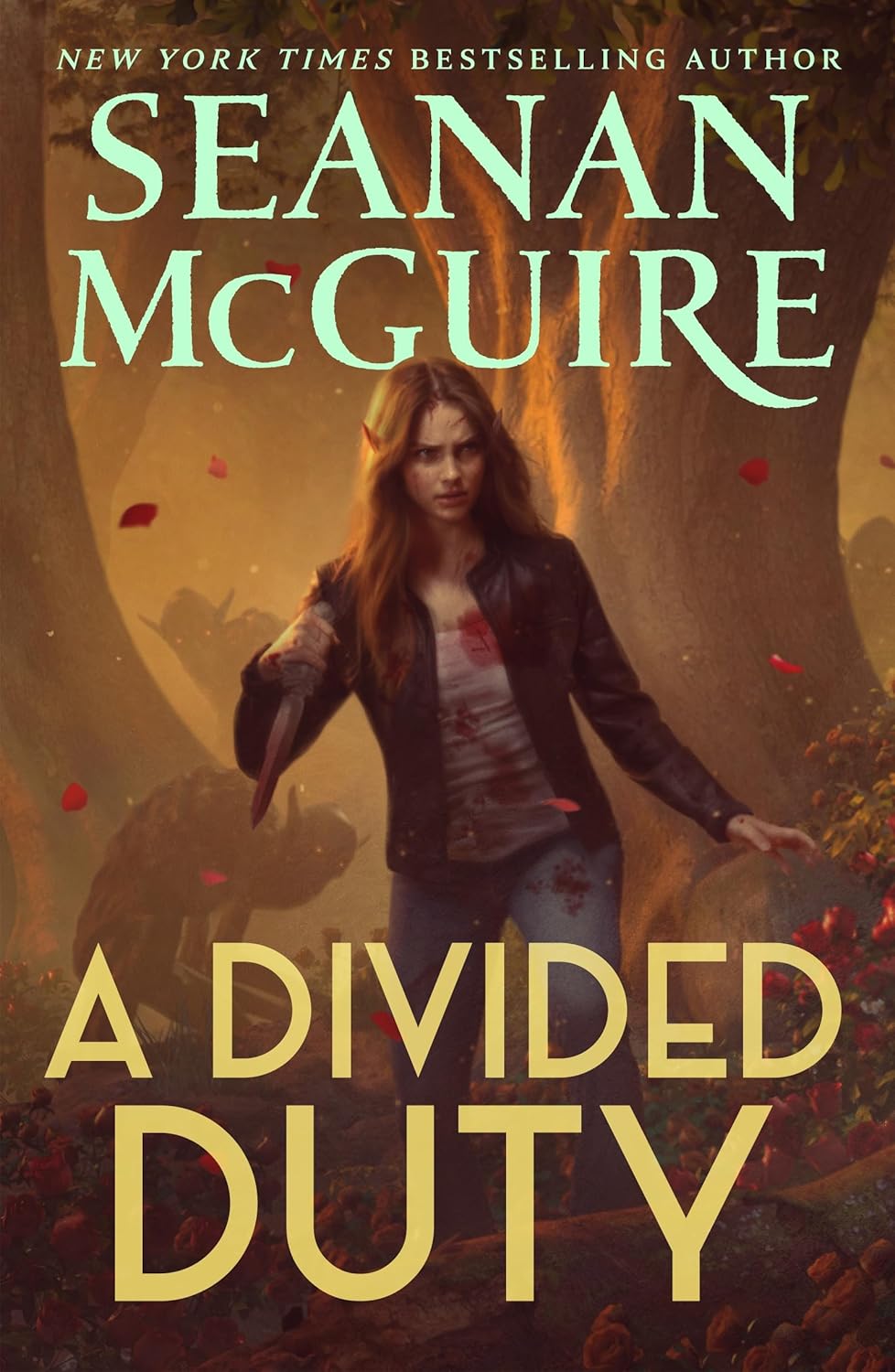
  • A Divided Duty (October Daye, #20) by Seanan McGuire (9/29/2026)
  • Life Out of Order by Audrey Niffenegger (10/6/2026)
  • Dive Bar at the End of the Road by Kelley Armstrong (10/6/2026)
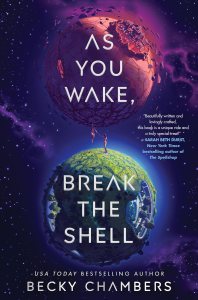
  • As You Wake, Break the Shell by Becky Chambers (10/13/2026)
  • Eight Ways to Say I Love You by Amanda Elliot (10/27/2026)
  • Murmuration by TJ Klune (11/17/2026)

What upcoming new releases are you most excited for? Please share your TTT links!

Save

Save

Save

Save

First Lines Friday 6/26/2026

First Lines Friday is a weekly feature for book lovers created by Wandering Words. What if instead of judging a book by its cover, its author or its prestige, we judged it by its opening lines? Here’s how to join in:

  • Pick a book off your shelf (it could be your current read or on your TBR) and open to the first page.
  • Copy the first few lines, but don’t give anything else about the book away just yet – you need to hook the reader first.
  • Finally… reveal the book!

This week’s lines are from an upcoming July release that sounds eerie and atmospheric:

I got so caught up in this opening that I just had to share the first two paragraphs!

Vocab time: Snell
Scottish / Northern English Dialect (Adjective)
Meaning: Quick, active, sharp, or bitterly severe.
Context: It is most commonly used to describe piercingly cold or biting weather (e.g., “a snell wind smote us”) or a witty, sharp remark.

So what’s the book?


Habits of the Sea by Shea Ernshaw
Release date: July 7, 2026
304 pages

Synopsis:

A new adult novel from New York Times bestselling author Shea Ernshaw, in which a woman rediscovers the mythical island she stumbled upon as a child—and the man she once met who apparently hasn’t aged.

The night Clay Lockhart’s wife dies, a violent storm tears their home—and the eight hectares of land beneath it—away from the Scottish coast, sending it adrift into the Atlantic. Thirty years later, twelve-year-old Ellie Mills discovers the fabled floating island off the coast of Nova Scotia and finds Clay still living in the weatherworn farmhouse perched on its highest hill.

When the island vanishes overnight, Ellie is left questioning whether it ever existed at all. But decades later, the island resurfaces—and Ellie, now in her thirties, returns, determined to uncover the truth. What she finds is even stranger: Clay hasn’t aged a single day.

Faced with the impossible, Ellie learns that some mysteries aren’t meant to be solved—and that a life shaped by wonder may hold more promise than one bound by certainty.

With her signature atmospheric, lyrical prose, Shea Ernshaw offers us an original work of folklore with a masterful modern touch. A haunting tale, Habits of the Sea spans centuries and coastlines, journeys through time and memory, and redefines the very meaning of love itself.


I’ve read two previous novels by Shea Earnshaw, including the excellent A History of Wild Places — so I was delighted to win a copy of Habits of the Sea in a Goodreads giveaway, and can’t wait to get started.

Does this sound like something you’d enjoy?

Happy Friday! Wishing everyone a great weekend!

Book Review: The Children by Melissa Albert

Title: The Children
Author: Melissa Albert
Publisher: Bramble
Publication date: June 2, 2026
Length: 416 pages
Genre: Fantasy/Horror
Source: Library
Rating:

Rating: 4.5 out of 5.

An intoxicating, haunting new novel from New York Times bestselling author Melissa Albert, in which the estranged adult children of a legendary author, written into their dead mother’s beloved fantasy series, contend with the vine-like creep of legacy, memory, and magic.

Guinevere Sharpe has two childhoods.

In one, she lives in the wooded shadow of her family’s isolated Vermont farmhouse; in the other, the pages of her mother’s world-famous Ninth City books, where her magical adventures have made her a household name. In reality, Guinevere’s childhood isn’t the enchanted idyll her mother’s readers imagine: she and her older brother are growing up near-feral, unwashed and underfed, escaping each day to the lichen-clotted woods they’ve made their playland. As Edith Sharpe’s books explode into epic popularity, the threats of a rural childhood give way to the escalating perils of fame—until the night it all goes up in flames, leaving Edith’s series unfinished and her children the sole survivors.

Now an adult coasting on her mother’s name, Guinevere is mid-promotion for a ghostwritten memoir when her estranged brother, an artist who has until now spurned his family’s legacy, announces an upcoming installation titled Mother. As rumors swirl around a death connected to his last show, unsettling recollections from Guinevere’s childhood begin to surface. Her public facade starts to crack, forcing her to confront the questions she’s spent the last twenty years running from: What really happened the night of the fire? And what dark history lies behind their mother’s creative genius?

Wise to the mythic weight childhood memories gather over time, The Children whispers to you from the hallway outside your bedroom, lights flickering as you turn the pages of a book that didn’t seem so scary a moment ago. It’s a story for anyone who’s ever revisited an old favorite and found it cast in a darker light, the line separating magic and memory blurring as the gap widens between the authors we imagined and the people they turn out to be.

The Children is a creepy, haunting tale that drew me in practically from page 1 and never let me go. I found myself immersed in this story about the children of a bestselling author — whose childhood was anything but the ideal dream portrayed to the public.

Edith Sharpe writes the children’s fantasy series, The Ninth City, at the family’s rural Vermont home, an isolated place known as the Farmhouse, surrounded by forests and orchards, miles from anywhere. As Edith’s fame grows, so too does the never-ending streams of stars and artists and wannabes who gravitate into Edith’s orbit. Edith’s children, however, never asked for or agreed to the fame that they’re forced into by their mother, who gives her main characters her children’s names. The world thinks they know Ennis and Guinevere Sharpe, the brave, clever brother and sister who star in the series. Only Ennis and Guin know the truth about their childhood — one in which they essentially grew up wild and untended, cared for only by one another while their parents indulged in a life of creative frenzies, dissipated parties, and a general lack of interest about their children’s wellbeing.

As adults, Guin and Ennis have been estranged for twenty years, ever since the horrific night of a fire that destroyed their world and thrust them into very different lives. Now in her early 30s, Guin has been living off her mother’s legacy, in terms of both her inheritance and being part of the publicity machine that keeps Edith Sharpe on the bestseller list year after year. While promoting her own memoir — a whitewashed, ghost-written, surface-level and sunny depiction that bears little resemblance to the truth — Guin learns that Ennis will be opening a new art installation entitled “Mother”, and is immediately consumed by the need to reconnect with him… and to find out whether he’s finally decided to break his silence on Edith Sharpe after all these years.

As Guin goes off the rails, ruining her carefully constructed publicity tour through unpredictable and ill-advised interviews, she’s thrust back into childhood memories she’s worked so hard to ignore or deny.

The story unfolds through modern-day chapters, in which adult Guin spins out of control in her search for meaning and for Ennis, woven among chapters going back to the siblings’ childhood, from arriving at the Farmhouse when Guin was five years old to the final disaster when she was eleven. There’s a certain beauty to some elements of their early years, as they run wild, unhindered in their exploration of the forests, with no rules and little to no guidance about their daily lives. They’re supposedly home-schooled, but they’re not. They’re fed… when someone remembers, or when they fend for themselves. Their father, a gifted actor who was forced out of the spotlight due to scandal, is a shining, glorious creature… until he’s not; until something, somehow causes him to lose bits and pieces of himself and fade into a failed has-been.

And then there’s Edith, a woman who’s never been predictable, married young to an older man, and an uninvolved mother even at the best of times. But something happens at the Farmhouse. Guin loves the house, except for the sinister 3rd floor room where Edith writes. And Edith writes in frenzied bursts, clacking away on her typewriter with no interruptions allowed.

The sense of menace is pervasive throughout The Children. We may not know exactly why, but we know from the start that very bad things have happened. At the same time, we know that the Ninth City books were life-changing for their millions of fans, and that Guin and Ennis are seen as heroes, standing in for Edith and the world she created even as they attempt to live their own lives. The neglect that Guin and Ennis live through is disturbing in and of itself, but add to that the sense that something other is going on, something very much not right, and the chills ratchet up higher and higher.

While I had guesses about the mysteries of The Children, I never did quite manage to figure it all out, and I’d guess that most readers end up in the same boat. The revelations near the end of the book are mind-blowing, yet tie the entire story together in a way that makes a frightening sort of sense. I simply couldn’t put the book down; each chapter is stunning in its own way. I cringed quite a bit over adult Guin’s choices and actions, but there’s no denying that she follows a path that seem practically foreordained. The childhood chapters are more deeply disturbing and impactful, but the entire book works so well together that it’s impossible to point out any moments where the story lags or loses focus.

I’d say that my only complaint about The Children has more to do with my reading experience than with the book itself. I tore through the final third or so in such a mad dash to get to the end that I’m afraid that I may not have absorbed it all as deeply as I might have if I’d taken my time. I can definitely see going back for a reread to savor it more slowly and pick up the themes and hints I might have missed along the way the first time through.

The Children is one of this summer’s biggest, buzziest books… and it’s well worth giving in to the hype and giving it a chance! Creepy, scary, disturbing, and compelling, this story will stick with you long after the final pages.

Want to know more? Check out these great reviews:
Tammy at Books, Bones & Buffy
Krysta at Pages Unbound

Purchase linksAmazon – AudibleBookshop.orgLibro.fm
Disclaimer: When you make a purchase through one of these affiliate links, I may earn a small commission, at no additional cost to you.