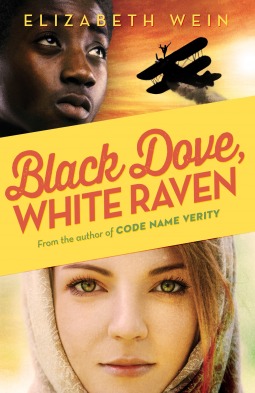
Take A Peek Book Review: Black Dove, White Raven by Elizabeth Wein

“Take a Peek” book reviews are short and (possibly) sweet, keeping the commentary brief and providing a little peek at what the book’s about and what I thought.


Black Dove White Raven 2

Synopsis:

(via Goodreads)

Rhoda and Delia are American stunt pilots who perform daring aerobatics to appreciative audiences. But while the sight of two girls wingwalking – one white, one black – is a welcome novelty in some parts of the USA, it’s an anathema in others. Rhoda and Delia dream of living in a world where neither gender nor ethnicity determines their life. When Delia is killed in a tragic accident, Rhoda is determined to make that dream come true. She moves to Ethiopia with her daughter, Em, and Delia’s son, Teo.

Em and Teo have adapted to scratching a living in a strange land, and feel at home here; but their parents’ legacy of flight and the ability to pilot a plane places them in an elite circle of people watched carefully by the Ethiopian emperor, Haile Selassie, who dreams of creating an air force for his fledgling nation. As Italy prepares for its invasion of Ethiopia, Em and Teo find themselves inextricably entangled in the crisis — and they are called on to help.

My Thoughts:

Sigh. I was so looking forward to this book, having absolutely loved (and been emotionally wrecked by) Code Name Verity and Rose Under Fire, also by Elizabeth Wein. Sadly, this new book simply does not measure up.

The synopsis is a bit misleading, for starter. Delia’s accident happens quite early in the story, and we get only a few glimpses of Rhoda and Delia’s friendship and flying adventures. Most of the book takes place in Ethiopia, after Rhoda brings Teo and Em there to start a new life. The book is told via Emilia and Teo’s flight logs, as they record their flying lessons plus their impressions of everything going on around them. While there are interesting snippets, in many ways the overall story feels disjointed and choppy. I didn’t feel that Rhoda’s plans were clearly established, and the ups and downs of their life in Ethiopia are conveyed in choppy episodes that don’t add up to a cohesive whole.

As an added distraction, the book seems to presuppose a certain amount of knowledge of the history of Ethiopia in the 1930s — and I’d guess that most of the target audience would have not the slightest clue. (I relied on Wikipedia to get a basic foundation for appreciating the geopolitics of the time, but how many YA readers would take the time to do this?)

There are some very interesting moments in Black Dove, White Raven, along with a series of dramatic and horrifying events toward the end of the book, but mostly it was a long haul that lacked a real sense of rhythm and flow.

_________________________________________

The details:

Title: Black Dove, White Raven
Author: Elizabeth Wein
Publisher: Electric Monkey
Publication date: March 5, 2015
Length: 480 pages
Genre: Historical fiction/young adult fiction
Source: Purchased

Take A Peek Book Review: In Falling Snow by Mary-Rose MacColl

“Take a Peek” book reviews are short and (possibly) sweet, keeping the commentary brief and providing a little peek at what the book’s about and what I thought.

In Falling Snow

Synopsis:

(via Goodreads)

Iris Crane’s tranquil life is shattered when a letter summons memories from her bittersweet past: her first love, her best friend, and the tragedy that changed everything. Iris, a young Australian nurse, travels to France during World War I to bring home her fifteen-year-old brother, who ran away to enlist. But in Paris she meets the charismatic Dr. Frances Ivens, who convinces Iris to help establish a field hospital in the old abbey at Royaumont, staffed entirely by women—a decision that will change her life. Seamlessly interwoven is the story of Grace, Iris’s granddaughter in 1970s Australia. Together their narratives paint a portrait of the changing role of women in medicine and the powerful legacy of love.

My Thoughts:

In Falling Snow was my book club’s pick for March, and chances are it would never have crossed my radar otherwise. Written by an Australian author, In Falling Snow creates a fictional portrait of life at Royaumont, a real-life field hospital run by a completely female staff during World War I. I found the historical elements of this book the most compelling, witnessing the amazing bravery of the women doctors, nurses, orderlies, and drivers who refused to be pushed aside or belittled, who didn’t accept that women weren’t skilled or tough enough to perform surgery and treat wounded soldiers. The fact that this hospital really existed as described is so inspiring, and I was thrilled to read the author’s afterword with citations of her non-fiction sources.

The fictional characters and the structure of the novel are only middling successful, in my opinion. The storyline shifts between Iris as an old woman and her granddaughter Grace, an Australian obstetrician, and Iris’s memories of her war-time experiences at Royaumont. We’re meant to focus on Iris’s friendship with a fellow hospital staffer named Violet; Iris abruptly cut ties with all of her friends from that time immediately after the war, and it’s around Violet that her thoughts circle, but I didn’t feel the chapters on life at the hospital ever really convinced me that their friendship was so exceptionally special.

Iris is tormented by guilt over her younger brother Tom, and learning his fate and what it meant for Iris is one of the more compelling parts of the story. Early on, I was much more interested in Grace and her family, but her story comes and goes throughout the book and loses steam somehow, even though all the pieces come together by the end.

Overall, I’d say this historical novel is quite interesting in parts, but lacks momentum until about the last third of the book, making big pieces of it feel like a slog. I can’t quite put my finger on why, but there’s an odd detachment in long sections of the book. The events of Iris’s experience are described, but I couldn’t get any sense of feeling from them. On the positive side, the elements of the war experiences taken from the historical record are fascinating and horrifying, especially reading about the senseless deaths and terrible experiences of the young men who suffered so horribly in the trenches and battlefields. By the end, the revelation of the secrets that Iris carries throughout her life is a good one, and helps make sense of certain pieces of the novel that seemed random or disconnected.

In Falling Snow takes a bit of patience in parts, but ultimately, I’m glad to have read it. I recommend In Falling Snow for anyone interested in women’s roles in medicine and in reading about World War I- era history.

_________________________________________

The details:

Title: In Falling Snow
Author: Mary-Rose MacColl
Publisher: Penguin
Publication date: 2012
Length: 448 pages
Genre: Historical fiction
Source: Purchased

Book Review: The Scarlet Pimpernel by Baroness Emmuska Orczy

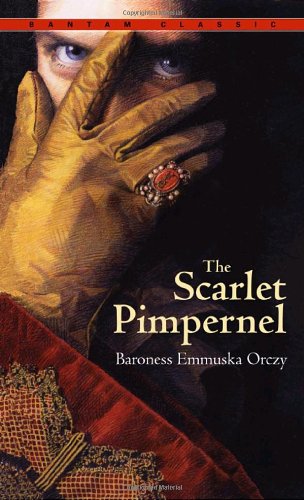
Scarlet Pimpernel2The Scarlet Pimpernel by Baroness Emmuska Orczy debuted as a stage play in 1903, and was subsequently rewritten as a novel. Reading The Scarlet Pimpernel, it’s hard to miss the dramatic flourishes and beats; the reader can practically see the moments when a character enters from the wings or hides behind some stage prop.

I had only ever heard of the book in passing and had never seen any of the many movie adaptations when my book group picked The Scarlet Pimpernel as our classic read. I really had no idea what to expect, other than a vague impression of dashing swordfights à la Errol Flynn.

The Scarlet Pimpernel is set during the Terror following the French Revolution, when members of the French aristocracy could be sent to the guillotine for crimes as innocuous as a remembered insult given to a passing stranger years earlier. The Scarlet Pimpernel is the nom de guerre of a heroic mystery man who, with a league of comrades, rescues the aristos from under the noses of the French citoyens who seek their deaths. Tales of the Scarlet Pimpernel’s daring escapades inspire hero worship back in England, and his true identity is the most sought-after secret among the French police who seek to capture and make a lesson of him.

SP1The main focus of the book, however, is not the hero himself, but a young woman named Marguerite Blakeney, revered as the most beautiful and “cleverest” woman in all of Europe. She is married to Sir Percy Blakeney, described as a jovial but essentially stupid fop, who is lazy, impeccably dressed and groomed, very wealthy, and always the life of the party.

Marguerite becomes embroiled in intrigue when a French agent, Chauvelin, corners her and threatens her beloved brother, himself a former French republican now turned against the cruelties of the Revolution. If Marguerite wants to save Armand’s life, she must aid Chauvelin by tracking down the Scarlet Pimpernel, infiltrating his inner circle, and informing on him. Only upon the Pimpernel’s arrest will her brother be returned safely to her loving arms.

Much woe ensues, full of breast-beating, doubt, anguish, betrayal, protestations of love, feelings of terrible guilt, and a cliffside ambush and rescue full of a number of true cliff-hangers.

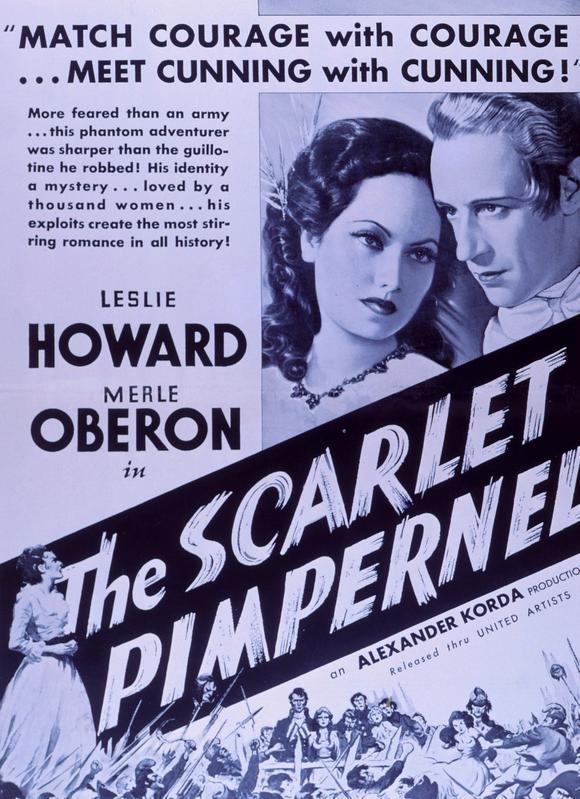
TScarlet-Pimpernel-Posterhe Scarlet Pimpernel is not a long book, but is chock-full of action. In The Scarlet Pimpernel, we can see the forerunner of many modern dramatic tropes: the damsel in distress, the hero with the hidden identity, laughing in the face of danger, the foolish police captain always one step behind, victory snatched from the jaws of defeat. As a period piece, it’s quite interesting. I was amused imaging how new and daring some of these set pieces must have seemed to the contemporary audiences at the time of publication.

Certain aspects seemed rather laughable to me as a modern reader. If I had to hear one more time about Marguerite’s beauty or her unmatched cleverness, I might have pulled my hair out. Really, she seemed like kind of a ninny a lot of the time. She dithers and moans, she ignores her husband or thinks badly of him, only later to realize that he’s truly the love of her life. Her inner monologue is given to melodramatic, self-centered fancies, imagining dying in her lover’s arms as the ultimate happiness. Um, wouldn’t it be better for you both to survive? Just a thought.

SP2My book group takes a chapter-a-week approach to our classic reads, and in this case, I think the pacing worked against my overall enjoyment of the book. The chapters are fairly short, and the plot moves forward only incrementally from chapter to chapter. By reading only one chapter each week, I think we basically had too much time to find and focus on the silliness and melodrama of the characters (particularly Marguerite), rather than enjoying it as a whole.

Do I recommend The Scarlet Pimpernel? Yes, I do. I think, had I read it all the way through in a day or two, I would have become caught up in the race to elude Chauvelin, the Pimpernel’s daring, and Marguerite’s attempts to save the day (even though I tend to think that she mostly mucks things up, rather than actually helping anybody). Although the attitudes and overall writing style are quite dated (and easy to poke fun at), the story itself is nicely entertaining. Overall, I was glad to have read it, although I won’t be tracking down any of the numerous sequels.

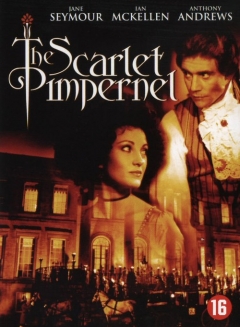
Meanwhile, I look forward to checking out a few of the many film adaptations, most notably the 1934 version starring Leslie Howard and the 1982 film starring Jane Seymour as Marguerite and Ian McKellen as Chauvelin.

_________________________________________

The details:

Title: The Scarlet Pimpernel
Author: Baroness Emmuska Orczy
Publisher: varied (available free for Kindle)
Publication date: 1903
Length: 264 pages
Genre: Classic/adventure
Source: Purchased

Book Review: Dead Heat by Patricia Briggs

dead heatIf you’ve ever visited my blog before, chances are you’ve seen me raving about Patricia Briggs and the detailed, layered, rich world she’s created in her novels. Patricia Briggs is probably best know for her Mercy Thompson series (which I love more than words can say!) — and fortunately for her devoted readers, she’s also given us a wonderful spin-off series, the Alpha & Omega novels.

And… after a wait of three years, we finally have Dead Heat, the 4th book in the series. Worth the wait? You bet. (Thank you, Ms. Briggs!)

In a nutshell, the Alpha & Omega books center around main characters Charles and Anna Cornick. Charles is the 3rd most dominant werwolf in North America, and the only born — not made — werewolf, thanks to his Native American mother’s magical talents. Charles has inherited his werewolf nature and scary strength from his father, the ruler of the wolves, and a gift for magic from his mother. Charles is feared by all, as he’s been given the role of enforcer and assassin, sent by his father to keep the peace and keep werewolves in line.

The Alpha & Omega series is driven by Charles’s relationship with his wife and mate, Anna, a rare Omega werewolf who has the power to soothe anyone she encounters. Over the course of the series, Anna has grown from scared, brutalized victim into a powerful yet gentle presence whose unique talents make her a perfect partner for Charles.

Okay, I’ll just say it: I love these two. Their love story is special, I love their dynamic as a couple, and they bring out the best in each other. Plus, only Anna allows Charles the room to let his gentler, loving side out. He’s strong and terrifying, but he’s also a total sweetie who’s madly in love with his wife.

Charles just stared at her.

“You know that, right?” she said. “Most people stay out of your way, but the defenseless ones, the hurt ones, they just sort of gradually slide into your shadow. Not where you’ll notice them too much — but you keep the bad things away.”

He still didn’t say anything. She buttoned her jeans and then took the two steps to press against him.”We know,” she whispered to him. “We who have been hurt, we know what evil looks like. We know you make us safe.”

He didn’t say anything, but his arms came around her and she knew that she had told him something he didn’t know — and that it mattered.

Each of the Alpha & Omega books revolves around a central mystery which Charles and Anna must help to solve. In Dead Heat, someone has targeted the human family of an Alpha werewolf in Arizona at the same time that Charles and Anna are visiting to purchase a new horse. While protecting the family, they realize that a dangerous fae is involved and is most likely responsible for the disappearances of children from the area over the course of decades. Charles and Anna team up with both FBI and supernatural law enforcement specialists to track down the bad guy (a very, very bad guy) and make sure that no other children become its prey.

I don’t want to give anything away, so I won’t go any further in describing the plot. Suffice to say, Dead Heat absolutely lived up to my expectations and had me furiously turning pages (when I wasn’t cursing the fact that I didn’t have the time to just read straight through without stopping). The action and adventure are pulse-pounding, and the stakes couldn’t be higher. There’s tension and drama, yet at the same time, Briggs keeps the banter and love between Charles and Anna at the forefront, so that we still get to savor the little, lovely moments between them that are the heart of these wonderful novels.

Adding a nice touch to the book is the introduction of Charles’s old friend Joseph, a Navajo and son of a werewolf, who is in the process of dying an old man’s death when the book starts. Joseph’s extended family covers generations and brings together some new and interesting angles, adding new depths to what we know of Charles and his past and introducing some great characters. I hope we’ll see more of this group in future books!

My only complaint about this book is that it takes place almost entirely in Arizona, and I missed the Montana setting of earlier books, as well as the Montana pack and its familiar characters. While Charles’s father Bran is always in the background in both series, I would have loved to see a bit more of him in Dead Heat, as he’s one of my very favorite characters. Still, the Arizona storyline gets an A+ as far as I’m concerned, which more than compensates for my minor little complaints.

Actually, I do have one additional complaint: I want more! The book wraps up when the mystery of the fae is resolved, but I wanted more of Charles and Anna! They’re at an interesting point in their relationship (I’m being intentionally vague here), and I want to see what happens next. Plus, the downside of reading these books as soon as they’re released is the excruciatingly long wait (okay, it’s only a year, but it feels longer!) for the next book, either in this series or in the Mercy Thompson series.

I can’t say it often enough: If you enjoy urban fantasy, and require your series to include well-defined characters, compelling story arcs, and an altogether unforgettable, fully-formed world, then you must check out Patricia Briggs’s Mercy Thompson and Alpha & Omega series. Go in order, take it slowly, and enjoy. I don’t know anyone who’s started these books who hasn’t become hooked. Quality writing, amazing characters, fantastic plots. What more could you want?

** A word of clarification: While Dead Heat is the 4th Alpha & Omega novel, the story actually starts with a novella called Alpha and Omega, available as a stand-alone e-book or in two different collections, On the Prowl and Shifting Shadows. Be sure to start with the novella or you’ll be missing the crucial beginning to the story. Spoken by one who learned the hard way!**

_________________________________________

The details:

Title: Dead Heat (Alpha and Omega, #4)
Author: Patricia Briggs
Publisher: Ace
Publication date: March 3, 2015
Length: 336 pages
Genre: Urban fantasy
Source: Purchased

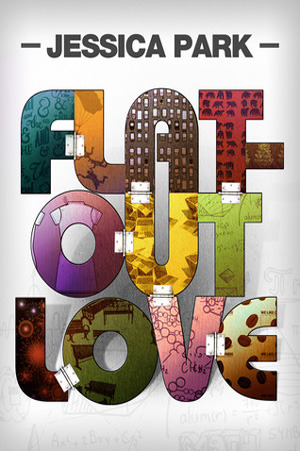
Book Review: Flat-Out Love by Jessica Park

Flat-Out LoveIn Flat-Out Love, college freshman Julie learns an important life lesson: Never rent an apartment sight-unseen via Craigslist.

When Julie arrives in Boston from small-town Ohio to start her college adventure, she’s in for a rude awakening. The apartment she’s rented (and paid for via cashier’s check — not smart) doesn’t exist… although there is a bustling burrito place at the same address. Left on the sidewalk with all of her suitcases and no place to go, Julie is taken in by the family of her mother’s college roommate, although the two have been out of touch for years.

Julie is welcomed into their large home, and despite the family’s oddities, finds it warm and comfortable. Odd? You bet… especially the life-size cardboard cut-out that the youngest, 13-year-old Celeste, takes with her wherever she goes. Flat Finn looks just like real Finn, the absent oldest brother who, Julie is told, is busy traveling the world on a non-stop adventure combining volunteer work and thrill-seeking. Flat Finn sits at the dinner table with the family, comes in the car to drive Celeste to and from school, and watches over Celeste when she sleeps at night.

When it turns out that there simply are no affordable apartments to be had and the dorms are all full, Julie’s temporary refuge turns into a permanent arrangement for the year. The family loves having Julie around, and she forms a tight friendship with middle brother Matt, a self-proclaimed geek studying at MIT who lives at home and seems to be Celeste’s main caretaker. Meanwhile, Julie also finds Finn on Facebook and strikes up an online friendship with him… which turns into a flirtation… which turns into a whole lot more.

But why is Celeste so socially awkward and friendless? Why are the parents almost never around? What IS up with Flat Finn, and why will no one explain to Julie? What it with all the underlying weirdness?

Flat-Out Love is a fast-paced read filled with humor as well as sorrows. The Watkins family members clearly have secrets and painful incidents in their past, but author Jessica Park handles it all with a light touch. There’s no needless melodrama here — we see everything through Julie’s eyes, with a mixture of amusement, bafflement, and frustration. Julie truly cares about the family, and is able to slowly gain Celeste’s trust and help bring her out of her shell, and yet she’s still kept in the dark about all of the reasons for the family’s problems, up to and including Flat Finn.

There’s a love triangle, which in many books is enough to send me running for the hills, but it’s actually handled quite well here. Julie spends almost every day with Matt and has a close connection with him, but Finn is the one who makes her feel more, despite never having met him.

An underlying story about Julie’s absentee father and their strained relationship is underdeveloped and feels rather tangential to the whole story. Other than that, the author does a nice job of capturing the excitement of the freshman year experience, including new friends, a new city, the chance to break away from the social pressures of high school and start fresh, and the joy of finding classes and professors who inspire you.

I did pretty much guess the family secret right away (really, it wasn’t hard), but that in no way detracts from the enjoyment of the story — and I still found myself gobbling up the final chapters to get all the details and see how it would all turn out.

The dialogue is funny and breezy, and I liked the little touches such as Facebook status updates from the different characters and ongoing commentary on Matt’s choice of geeky T-shirts.

I was interested to note that Flat-Out Love was self-published via Amazon. I always assume that self-published books won’t appeal to me, but Flat-Out Love showed me that I should perhaps expand my horizons a bit!

I definitely recommend Flat-Out Love. It’s a great choice for anyone looking for a quick and light read that mixes quirky humor with real emotion. I understand there’s a companion novella (Flat-Out Matt) and a sequel (Flat-Out Celeste), and I hope to track down both.

_________________________________________

The details:

Title: Flat-Out Love
Author: Jessica Park
Publisher: Amazon Children’s Publishing
Publication date: 2011
Length: 389 pages
Genre: Young adult contemporary fiction
Source: Library

Take A Peek Book Review: Fairest: Levana’s Story by Marissa Meyer

“Take a Peek” book reviews are short and (possibly) sweet, keeping the commentary brief and providing a little peek at what the book’s about and what I thought. This week’s “take a peek” book:

Fairest_Cinder

Synopsis:

(via Goodreads)

In this stunning bridge book between Cress and Winter in the bestselling Lunar Chronicles, Queen Levana’s story is finally told.

Mirror, mirror on the wall,
Who is the fairest of them all?

Fans of the Lunar Chronicles know Queen Levana as a ruler who uses her “glamour” to gain power. But long before she crossed paths with Cinder, Scarlet, and Cress, Levana lived a very different story – a story that has never been told . . . until now.

My Thoughts:

This slim novel is sure to please fans of the Lunar Chronicles books, finally giving us the backstory of just how Queen Levana ended up so crazy evil. Of course, it will also frustrate fans of the Lunar Chronicles, being so short and including a tease for the next (and final) novel in the series, Winter, due out in November.

In Fairest, we learn about Levana’s horrific childhood with her cruel and deranged sister Channary, and see how Levana, to a certain extent, never stood a chance of being a decent, well-adjusted person. The Lunar ability to create glamours and hide one’s true face is put to full use, as Levana uses a series of mind-tricks in her desperate search for love and happiness. But love that is coerced isn’t love, and Levana’s path from her teen years until the point when her story meshes with the Cinder timeline can be seen as one long, twisted, downward spiral.

There are places where I felt pity for Levana, perhaps even understanding. How could someone raised as she was be expected to turn out with any hint of a moral compass? Still, the sympathy is pretty quickly destroyed as Levana’s mad quest leads her to greater and greater acts of horrifying cruelty and devastation.

The hardcover edition of Fairest includes the first three chapters of Winter, which I decided not to read. I’d rather wait until I have the entire book in my hands!

Fairest answers a lot of questions about Levana’s past and the history of Lunar-Earthen politics and war. If you’ve read the first three books in the series, you’ll absolutely want to read Fairest as well. And for anyone who hasn’t given this series a try yet… jump on board! I was very late to the party, thinking that all the hype around the series couldn’t really hold up, but I was — happily — proven wrong. I really love this series, and can’t wait to read the conclusion… despite hating the idea of getting to the end!

Want to know more? Read my posts on Cinder and my Lunar Chronicles series binge.

_________________________________________

The details:

Title: Fairest: Levana’s Story
Author: Marissa Meyer
Publisher: Feiwel & Friends
Publication date: January 27, 2015
Length: 222 pages
Genre: Young adult/science fiction
Source: Library

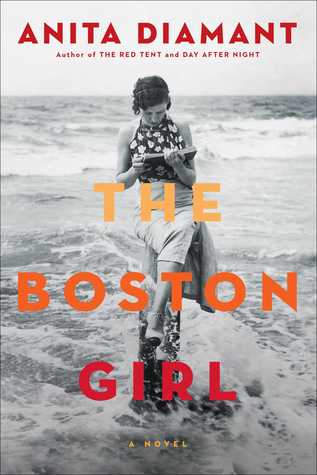
Book Review: The Boston Girl by Anita Diamant

Boston GirlIn 1985, 85-year-old Addie Baum sets out to tell her granddaughter the story of her life… and what a life it is.

Addie was born in Boston in the early 1900s to immigrant parents, living in a cold-water tenement apartment in a poor neighborhood, with no money and only the prospect of hard work ahead of her. And yet, Addie manages to create a glorious life for herself. Through the local settlement house, she meets girls her own age as a young teen, and is soon included in their Saturday Club, where she’s given the encouragement and support to think, explore, and become the person she wants to be.

The Boston Girl is the first-person narrative of the story of a young Jewish girl’s search for independence, education, friendship, and love. We see Addie blossoming as she steps outside of the confines of her family home, creating connections to women that will last her whole life, and jumping into “modern” American life and embracing all it has to offer.

This isn’t some sort of flapper story or a tale of an outrageously outsized individual. Addie is a good girl, and smart too. She doesn’t break all the rules or flout society’s expectations; instead, she uses her brains and her good heart to create for herself the life she wants. She pursues an education when she can afford it, she works hard and is a good daughter, she is loyal to her friends and sees them through rough times. Her mind is open, and while she understands the world of her parents, she’s not stuck in it.

My reaction to The Boston Girl? I loved it.

The Boston Girl is a quiet book. There’s no major dramatic arc or exciting climax, no life-threatening adventure or thrilling heroics. It’s the story of a woman’s life, and it reads like exactly what it is: a grandmother telling her granddaughter all the bits and pieces of her past, bringing to life the faces and places that might previously have only been brief mentions in family lore.

Addie’s voice is sharp and smart, and also quite funny:

My mother took one look and said it made me look like a meeskeit, ugly. That hurt my feelings and made me so mad, I told her I wasn’t going to talk to her unless she used English. And by the way, she knew enough to understand every piece of gossip she heard in the grocery store.

I said it was for her own good. “What if you had an emergency and I wasn’t there?”

“So then I’ll be dead and you’ll be sorry,” she said, in Yiddish, of course.

And on romance, as told to her granddaughter:

You know, if one of my daughters had told me she was going to marry a man she’d only known for a week I would have locked her in her room. But we weren’t kids. I was twenty-five and he was twenty-nine. We were completely sure. And obviously we were right.

Aaron didn’t tell his parents he was in town that weekend. Only Ruth knew. He slept on her couch Friday night, and Saturday night she stayed with a girlfriend so we could be alone, just the two of us, for the whole night.

I’ll leave it at that.

To be honest, I often felt like I was listening to my own grandmother’s stories (although a bit hipper and less judgmental!), and perhaps that’s why this novel really spoke to me the way it did.

You know, Ava, it’s good to be smart, but kindness is more important. Oh dear, another old-lady chestnut to stitch on a sampler. Or maybe one of those cute little throw pillows.

The Boston Girl is a lovely, enjoyable, and quick read. Addie is a wonderful narrator, and hearing her story made me feel like I was being transported to another time. It’s a loving tribute to an earlier generation, especially to the teachers, social workers, and social reformers of the 1920s who made so much possible for the generations of women who followed.

This is the sort of book that makes me want to buy copies for at least a handful of family members and friends. There’s so much here that people I know will relate to! Especially for those of us who grew up with Jewish grandmothers… but really, for anyone who appreciates learning about the joys and struggles of the women who came of age in the early part of the 20th century, this is a book not to be missed.

_________________________________________

The details:

Title: The Boston Girl
Author: Anita Diamant
Publisher: Scribner
Publication date: December 9, 2014
Length: 320 pages
Genre: Historical fiction
Source: Library

Fields & Fantasies presents… Station Eleven by Emily St. John Mandel

Welcome to the January/February pick for the Fields & Fantasies book club! Each month or so, in collaboration with my wonderful co-host Diana of Strahbary’s Fields, we’ll pick one book to read and discuss. Today, we’re looking at Station Eleven by Emily St. John Mandel:
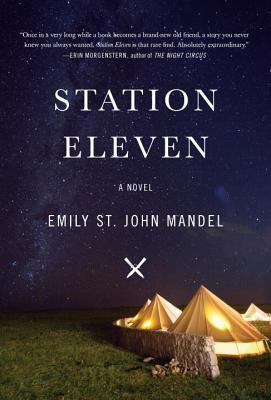
station elevenSynopsis (Goodreads):

An audacious, darkly glittering novel set in the eerie days of civilization’s collapse, Station Eleven tells the spellbinding story of a Hollywood star, his would-be savior, and a nomadic group of actors roaming the scattered outposts of the Great Lakes region, risking everything for art and humanity.

One snowy night Arthur Leander, a famous actor, has a heart attack onstage during a production of King Lear. Jeevan Chaudhary, a paparazzo-turned-EMT, is in the audience and leaps to his aid. A child actress named Kirsten Raymonde watches in horror as Jeevan performs CPR, pumping Arthur’s chest as the curtain drops, but Arthur is dead. That same night, as Jeevan walks home from the theater, a terrible flu begins to spread. Hospitals are flooded and Jeevan and his brother barricade themselves inside an apartment, watching out the window as cars clog the highways, gunshots ring out, and life disintegrates around them.

Fifteen years later, Kirsten is an actress with the Traveling Symphony. Together, this small troupe moves between the settlements of an altered world, performing Shakespeare and music for scattered communities of survivors. Written on their caravan, and tattooed on Kirsten’s arm is a line from Star Trek: “Because survival is insufficient.” But when they arrive in St. Deborah by the Water, they encounter a violent prophet who digs graves for anyone who dares to leave.

Spanning decades, moving back and forth in time, and vividly depicting life before and after the pandemic, this suspenseful, elegiac novel is rife with beauty. As Arthur falls in and out of love, as Jeevan watches the newscasters say their final good-byes, and as Kirsten finds herself caught in the crosshairs of the prophet, we see the strange twists of fate that connect them all. A novel of art, memory, and ambition, Station Eleven tells a story about the relationships that sustain us, the ephemeral nature of fame, and the beauty of the world as we know it.

My two cents:

It’s always such a terrific gift when a book surprises you in all the right ways. Such was the case for me with Station Eleven. I’d seen some reviews, I’d seen it on many of the “Best of” lists for 2014, and I’d heard the hype. At the same time, the initial synopses I’d read all focused on a traveling Shakespeare company in a post-apocalyptic world. For whatever reason, I assumed the Shakespearean framework would shape the entire novel, so that we’d follow the company from settlement to settlement, seeing their performances and making some sort of symbolic connection between the classic plays and the new world.

It was really a thrill for me to discover that Station Eleven is so much more. Station Eleven takes a truly frightening tale of a global pandemic that kills off most of humanity, and weaves into it a story about human connection, random meaning, and the elusive nature of relationships.

The Georgia flu wipes out human life on Earth almost instantly. In this age of international travel, we’re all only one contaminated airline passenger away from disaster, and Station Eleven lets the pandemic play out to its awful, inevitable conclusion. The narrative of the novel jumps in time between the outbreak of the pandemic, the path of the Traveling Symphony twenty years later, and the earlier history of Arthur Leander, possibly the last man on Earth to attract attention for his death prior to the catastrophe.

It’s hard to explain just what’s so wonderful about Station Eleven. The plotting is elegant, with connections between characters and events that only become apparent later on. The descriptions of the post-apocalyptic world are chilling, and yet the mixed sense of wonder and boredom that the new generations feel toward old stuff (electronics, phones, and all the other pieces of our technology that twenty years later are dusty museum pieces) is almost funny to read about, with a hint of the bittersweet as well. The writer is able to convey a sense of nostalgia for our own times by showing how little so much of what we have now will matter later on. There’s horror for the death and destruction, as well as an edge of mystery as we try to see just how all the different story threads are intertwined.

Above all, Station Eleven is filled with beautiful writing.

Miranda opened her eyes in time to see the sunrise. A wash of violent color, pink and streaks of brilliant orange, the container ships on the horizon suspended between the blaze of the sky and the water aflame, the seascape bleeding into confused visions of Station Eleven, its extravagant sunsets and its indigo sea. The lights of the fleet fading into morning, the ocean burning into sky.

In little moments, we see the awe-inspiring vision of a world without people and what the death of our civilization might look like. No alien invasion, no nuclear war, no second ice age — just a disease working its deadly way through the entire population of the planet over the course of a few short weeks.

Despite the end of life as we know it, life goes on, and the book seems to emphasize above all the way the people’s lives, woven together, form something that’s greater than just the individual. There’s still hope and beauty, and those who understand that are the ones who manage to keep hold of an idea of a future that means something. Station Eleven is sad and gorgeous and, oddly, not depressing. There’s a strange sense of nobility and purpose folded into the survivors’ determination to keep going, to remember, and to grow again.

If you like your post-apocalyptic novels full of explosions, zombies, and mayhem, this may not be the book for you. But if you appreciate a more thoughtful approach to matters of connection and survival and what it means to be human, definitely give Station Eleven a try.

___________________________________

The Fields & Fantasies chat:

I’ll add a link to Diana’s review shortly. Meanwhile — a Q&A between Diana and me.

Warning: SPOILERS from this point forward. Proceed at your own risk!

Lisa: Did Station Eleven match your expectations?
Diana: I think so. I don’t think I was expecting a whole heck of a lot but I heard that this book was pretty good and I think it lives up to my basic expectations.
Lisa: Did any images from the post-apocalyptic world make a big impression? What sorts of thing really stand out for you?
Diana: Just the way that everything seemed to be so Mad Max-esque with just a touch of Walking Dead. Did you find the premise to be believable?
Lisa: I really did! We have so many health-crisis scares and the media seems to really overreact… and yet, I think it’s really plausible that if there were a bad enough virus, like the flu in Station Eleven, there’s nothing to stop it from spreading globally within days or weeks. The speed of the pandemic in this book was really scary. I loved the descriptions of the world afterward, how quickly everything reverts back to nature and the people become nomads and survivalists.
Lisa: Who were your favorite characters, and why?
Diana: I really loved Kirsten. I liked how resilient she was and how much she loved Shakespeare. She had that good combination of being able to kick ass but yet was still personable. I also really liked Jeevan but I was a bit disappointed that we didn’t get a whole lot of time with him.
Lisa: I loved those two too! I also really liked Miranda — I just found her story so sad, a poor girl who never fit in with the life she ended up with, who spent her whole life working on a comic book that almost no one ever saw. (And which I wish I could see! It sounded amazing.) Also, Arthur’s friend Clark was very cool and understated.
Lisa: Which storylines were you most interested in?
Diana: All of them. She does this wonderful job of starting us at one point spreading out to other various points then bringing it back around into one fantastic place. Was there a storyline that you really liked or that you weren’t too fond of?
Lisa: I thought the whole idea of people stranded at an airport and just staying there for another twenty years was really inventive! I was so entertained by that concept and all the details the author provided to make it feel so real. I wasn’t crazy about the prophet storyline — I didn’t actually think the story needed it, other than for the dramatic element of danger.
Lisa:  Were there any storylines or plot points that you thought were unnecessary or less interesting?
Diana: There wasn’t one that i didn’t like but I would have liked to see more with Jeevan. I really really liked the character but i feel like his story just wasn’t in there enough.
Lisa: What else would you want to know about the world of the future, as portrayed in Station Eleven?
Diana: Were the people who survived just immune to the virus or did they just get lucky enough to not get it. Is there any major attempt to regain civilization. Also did any of the other greats survive?

Lisa: Very good question — was there a reason that the survivors were immune, or did they just not to encounter the virus? I wonder. And we’re left hanging a bit at the end, with the possibility that there could be a return to some of what was lost.

Lisa: How would you describe Station Eleven to someone who hasn’t read it yet?
Diana: It’s far more intellectual than i thought it would be. It’s also more of a drama about the human spirit.


And that wraps it up! Thanks, Diana! It’s a pleasure talking books with you! Let’s do this again next month…

_________________________________________

The details:

Title: Station Eleven
Author: Emily St. John Mandel
Publisher: Knopf
Publication date: September 9, 2014
Length: 333 pages
Genre: Adult fiction
Source: Purchased

_________________________________________


Next for Fields & Fantasies:

9476337Our April book will be Bossypants by Tina Fey.
 

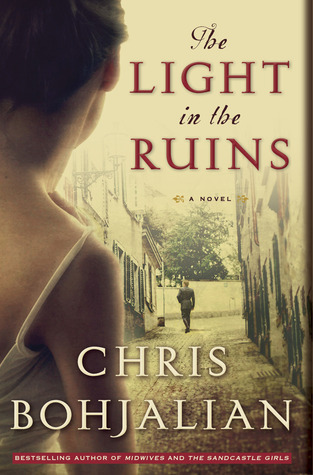
Book Review: The Light in the Ruins by Chris Bohjalian

lightHave I mentioned lately how much I love the Outlander Book Club? Without the OBC’s Book of the Month discussions, I might have procrastinated about reading this book for a while longer… but instead, I read The Light in the Ruins by Chris Bohjalian for our February BOTM pick, and loved it!

The Light in the Ruins is historical fiction set in Italy, with two alternating timelines: 1943-1944, when we meet the Rosati family and learn of their experiences during World War II, and 1955, when the surviving members of the family are being hunted down and brutally murdered by a serial killer with a vendetta.

The Rosatis own a beautiful, luxurious estate, Villa Chimera, in the Tuscan hills, where they live in upper class splendor, enjoying their vineyards, horses, swimming pool, and sweeping vistas. They are linked to museums in both the local town nearby and in Florence by the discovery of Etruscan tombs on their property. The tombs attract the attention of the Nazi officials whose job it is to steal rare and valuable Italian artwork for the benefit of the Reich (or, as they put it, to “protect” the artwork from the war by sending it all back to Berlin for safekeeping).

One Rosati son, Vittore, is a museum curator, and the Germans he works with begin to visit the villa more regularly, at first just to view the tombs, but then as a place to take visitors and enjoy some pampering. The Rosatis are viewed with suspicion and more by the neighboring villagers and gain a reputation as collaborators. Were they forced and intimidated into entertaining the Nazis, or are they enjoying the extra rations and other benefits of staying on the Nazi officers’ good sides?

Meanwhile, youngest daughter Cristina enters into an ill-advised love affair with a young German officer, and daughter-in-law Francesca, known for her sharp tongue and abrasive ways, waits anxiously with her two small children for news of her husband Marco, fighting on the front lines against the Allied invasion.

Cut to 1955, and the Rosatis are being gruesomely murdered, one by one. I won’t go into detail about which family members have survived the war and which are the murder victims. You’ll find all this out in short order if you read the book, and it’s all quite devastating. The investigating police detective is a woman named Serafina, who fought as a partisan during the war and whose wartime experiences and awful injuries intersect with the fate of so many members of the Rosati family.

Meanwhile, in between the 1943 and 1955 chapters, we get snippets of first-person narration told by the killer in a chilling, detached voice, explaining just how he or she butchered his first victim and what he or she has in store for the rest.

The Light in the Ruins has a grim, inevitable feel to its escalating tragedy. The war story is the more compelling of the two storylines, and it becomes increasingly difficult to read as we progress through the books. From the 1955 chapters, we know fairly early on which family members died during the war, and we spend the rest of the book building up to the awful events resulting in their deaths. The writing is all the more powerful because of the dread in each scene; we know something very bad is coming, and can even guess some of it, but it’s still shocking and horrible to read when it arrives.

That said, The Light in the Ruins is an incredibly well-written and smartly paced book. The plot is constantly moving forward, despite the time shifts, and the clues and revelations pile up in a way that feels organic and well-ordered. Interestingly, I didn’t particularly like many of the characters, even the ones we theoretically should feel more sympathetic toward, but that in no way meant that I didn’t feel horror at their fate and their suffering.

Perhaps the only story thread that I didn’t particularly care for was the love story involving Cristina and the German officer, but it’s only one of many pieces of the whole. Otherwise, I found the connections and relationships among the many characters fascinating. If anything, I’d have liked to know a bit more about Serafina, and would be curious to know what her future holds.

The author does not shy away from describing the terrible events that occur in either timeline, and I suppose some readers will feel that the descriptions might be too graphic. I didn’t feel that way — I felt that it was important to know and understand exactly what happened in order to experience the terror of the characters and get a full sense of the tragedy. Still, for readers who are more squeamish or prefer not to see every last detail, this might be good to keep in mind.

As I was reading The Light in the Ruins, I was often reminded of the wonderful book A Thread of Grace by Mary Doria Russell — and was delighted to see Chris Bohjalian’s praise of that book in his acknowledgements. For more reading on Italy during WWII, I highly recommend A Thread of Grace.

Summing it all up: Is there anything Chris Bohjalian can’t write? I’ve now read, written by him, a legal/medial drama (Midwives), a post -disaster first-person story with a teen girl narrator (Close Your Eyes, Hold Hands), one of the spookiest ghost stories I’ve ever read (The Night Strangers), and with The Light in the Ruins, outstanding historical fiction. Clearly, I need to read much more of his work and see what other worlds and genres are contained within his books!

Meanwhile, for an excellent but heart-wrenching slice of historical fiction, I absolutely recommend The Light in the Ruins.

_________________________________________

The details:

Title: The Light in the Ruins
Author: Chris Bohjalian
Publisher: Doubleday
Publication date: July 9, 2013
Length: 309 pages
Genre: Historical fiction
Source: Found at a book swap!

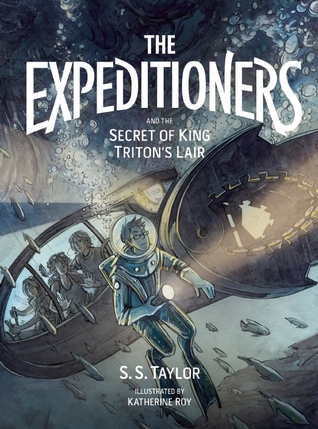
Book Review: The Expeditioners and the Secret of King Triton’s Lair by S. S. Taylor

expedBefore I actually talk about this book, can I just say how exciting it is to finally win a Goodreads First Reads giveaway? Thank you, Goodreads, and thank you, McSweeney’s McMullens! It’s quite a treat to win a book that I would have been eager to read no matter what.

The Expeditioners and the Secret of King Triton’s Lair is the 2nd book in the terrific Expeditioners series, and frankly, I can’t wait for more! Back in 2013, I reviewed the first book, The Expeditioners and the Treasure of Drowned Man’s Canyon, and I was so happy to get book #2 without too huge a wait in between volumes.

The Expeditioners books are set in a steampunk-ish world, where computers have been proven to be failures, travel is steam-driven, and the world that we know turns out to be missing quite a bit — such as all the previously unknown, secret lands. The Bureau of Newly Discovered Lands (BNDL) controls the discoveries and plunders their resources, and the most important people in the new economy may be Explorers of the Realm, who set out on expeditions of all sorts to discover the planet’s secrets, often risking life and limb.

Our main character is Kit West, a teen-aged boy whose father went missing under mysterious circumstances, leaving Kit, older brother Zander, and younger sister M.K. orphans. In the first book, Kit is given a clue left by their father, which propels the siblings on a cross-country adventure to solve the puzzles and cryptic maps strategically hidden by their father.

In the 2nd book, Kit, Zander, and M.K. are students at the Academy, a training ground for the next generation of Explorers. (Think Hogwarts, minus magic, plus gadgets and missions.) Kit is still puzzling over a new map which they found at the end of their first adventure, sure that it contains yet another lead from their father, one that may bring them closer to understanding his secrets and his disappearance. A competition to design and lead the school’s annual expedition leads the three, along with best friend Sukey and arch-nemesis Leo Nackley, to a sea voyage to the equivalent of the Bermuda Triangle. There, Kit believes the unexplainable ocean phenomenon that has led to countless shipwrecks will also reveal their father’s next clue — but Leo Nackley and his powerful father think they’ll discover oil, which in turn will allow the Realm to wage war against other empires by fueling more deadly weapons of destruction.

The Wests and Sukey end up shipwrecked, and that’s not all. The book includes submersibles, pirates, constrictor eels, telepathic turtles, Caribbean islands, and intrigues and conspiracies galore. There’s also a smattering (but not too much) of teen angst, as Kit’s crush on his close friend Sukey turns to hurt and anger when she seems to fall for Zander instead.

One thing I love about the Expeditioners books is how smart and gifted the characters are. Kit is a cartography expert, Zander studies biology and wildlife, M.K., the youngest of the family, is a marvel when it comes to engineering, and Sukey is a talented aviator. Girls are just as strong and competent as the boys, and just as likely to wield a sword against dangerous pirates or fight off a new enemy with an amazing piece of technology. Kit and the gang use their wits to survive and outsmart their opponents, but they never have it easy and nothing comes without new risk.

Black and white illustrations by Katherine Roy enhance the story’s flow and add greatly to the sense of the characters and their world. The inside of the dust cover includes schematics for M.K.’s submersible, and there are maps and old journal pages sprinkled throughout as well.

The action never stops, and while it’s occasionally a chore to keep straight the various government agencies and the geopolitical factions, the main thrust of the story is the West kids and their quest to follow their father’s clues. By the end of this book, there are cracks forming in the siblings’ unwavering commitment to their quest, however, and Kit and his family seem about to be heading off in different directions, scattered by their new assignments and moving forward separately instead of as a team.

Expeditioners #2 (sorry, that’s a lot easier than typing out the full title) has an open-ended conclusion, clearly laying the groundwork for more to come. From what I’ve seen mentioned on a few websites, The Expeditioners is expected to be a six-part series, which means there’s plenty of excitement ahead.

I highly recommend this series for anyone who enjoys kids’ adventure tales — and that includes grown-ups too! My 12-year-old and I made this a joint reading project, and we both loved it. I can see The Expeditioners appealing to Harry Potter fans as well as fans of Philip Pullman’s His Dark Materials trilogy… and as a fan of both, I don’t say that lightly. The Expeditioners has a rich and unusual world for its super-smart and super-engaging characters to explore. I can’t wait to see what’s next!

Want to know more? Check out my review of the first book in the series, and also this great Q&A with author S. S. Taylor.

__________________________________________

The details:

Title: The Expeditioners and the Secret of King Triton’s Lair
Author: S. S. Taylor; illustrated by Katherine Roy
Publisher: McSweeney’s McMullens
Publication date: September 23, 2014
Length: 320 pages
Genre: Children’s fiction (upper middle grade; per Amazon, ages 10 and up)
Source: Goodreads First Reads (I finally won something!)