Book Review: The Martian Contingency (Lady Astronaut, #4) by Mary Robinette Kowal

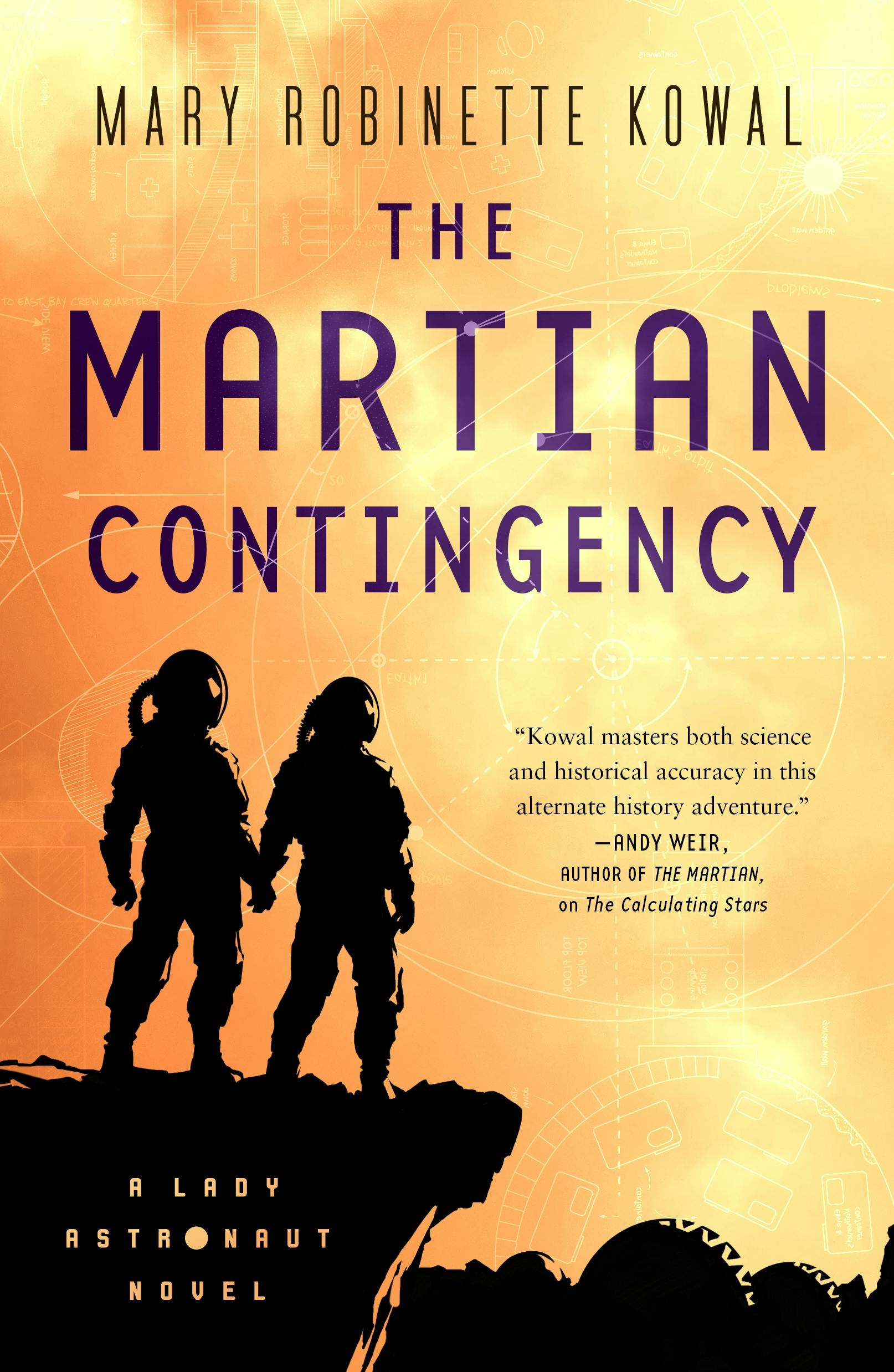
Title: The Martian Contingency
Series: Lady Astronaut, #4
Author: Mary Robinette Kowal
Publisher: Tor Books
Publication date: March 18, 2025
Length: 400 pages
Genre: Science fiction
Source: Review copy courtesy of the publisher via NetGalley
Purchase links: Amazon – Bookshop.org
Rating:

Rating: 4.5 out of 5.

Years after a meteorite strike obliterated Washington, D.C.—triggering an extinction-level global warming event—Earth’s survivors have started an international effort to establish homes on space stations and the Moon.

The next step – Mars.

Elma York, the Lady Astronaut, lands on the Red Planet, optimistic about preparing for the first true wave of inhabitants. The mission objective is more than just building the infrastructure of a habitat – they are trying to preserve the many cultures and nuances of life on Earth without importing the hate.

But from the moment she arrives, something is off.

Disturbing signs hint at a hidden disaster during the First Mars Expedition that never made it into the official transcript. As Elma and her crew try to investigate, they face a wall of silence and obfuscation. Their attempts to build a thriving Martian community grind to a halt.

What you don’t know CAN harm you. And if the truth doesn’t come to light, the ripple effects could leave humanity stranded on a dying Earth…

The Martian Contingency is an outstanding addition to the excellent Lady Astronaut series — and while my understanding was that this was meant to be the 4th and final book in the series, I can’t actually find anything definitive that says that this is the last book.

The first Lady Astronaut book, The Calculating Stars (published 2018), is one of my all-time favorites. To set the stage for those new to the series: This alternate history version of the space race starts with a catastrophic meteor strike in 1952, which obliterates much of the eastern seaboard of the US and plunges the world into an escalating sequence of climate disasters that will, eventually, lead to planet-wide extinction.

In response to the disaster, there’s an international focus on space exploration. Humanity’s future on Earth is doomed; to survive, people must look beyond the planet for new homes. In this version of history, as envisioned by author Mary Robinette Kowal, the space race begins about ten years ahead of real-world historical events, fueled by an urgent, desperate need find solutions to Earth’s life-threatening problems.

Our point-of-view character throughout much of the series is Dr. Elma York, a scientist, mathematician, and WWII-era pilot who becomes one of the first women astronauts — used by NASA and the IAC (International Aerospace Coalition) for publicity purposes, and gaining fame as the “Lady Astronaut”. (Which, by the way, is better than how some refer to the women in the space program — would you want to be called an “astronette”?)

Elma and her husband Nathaniel (also Dr. York — he’s a brilliant engineer) are vital to the emerging space program. Read the earlier books in the series to find out more! Here in The Martian Contingency, Elma and Nathaniel have finally made it to Mars, as part of the Second Mars Expedition. Their job is to build out the Mars base, expanding it and making it safe for future expeditions, with the ultimate goal of creating a livable, viable, long-term home for humans.

Elma is a gifted pilot, an amazing human “computer”, and an adept leader. She’s appointed to the role of deputy administrator for the Mars base, and is devoted to her colleagues and to the mission. But as she settles in on Mars, she starts noticing some oddities — a patched wall that hadn’t been reported, a mural that clearly been painted to cover up something else, hatch marks etched into an airlock. Something must have happened during the First Expedition — something that didn’t make it into the official reports — but no one is talking. As Elma tries to dig, she’s told clearly that it was nothing, that everything is fine, and that she should leave it alone. But as her time on Mars progresses, the aftereffects of whatever happened show up in shocking ways, and have ripple effects that could imperil the people Elma cares about and the entire mission.

The world of this series is brilliantly depicted, as always. The author’s attention to details is meticulous. Each chapter opens with a news article from the era (most fictitious, although she includes one or two tidbits of real news from the same time period) — and even more amazing, indicates the date. What’s so amazing about the date? She provides both the Earth date and the Mars date — read the afterward of the book to learn more about her approach (and the “massive spreadsheet” she used to figure it all out). Not only does she have to provide both sets of dates, but she also layers in the many different cultural and religious holidays observed by the multicultural crew on Mars — it’s an impressive feat.

The Martian Contingency opens in 1970. In the world of these books, the global disaster has sped up not just science, but also social reckonings that came later in our own history. Because the IAC is truly an international presence, certain social issues come to the fore in startling ways — such as the acceptance of women into male-dominated roles, expedited racial integration at a time when being a racist was more normalized (South Africa is still an apartheid state at this time, which has repercussions for the mission), and the slow recognition that humanity’s future off-planet will by necessity include people of all ethnic, racial, religious, and national identities.

One example that provides a powerful storyline in The Martian Contingency centers on abortion rights and a woman’s right to choose. In the IAC, the norm is for each astronaut to be bound by their country of origin’s laws — so if a woman seeking an abortion is from a country that bans it, it would not be available to her, and likewise, a doctor from a country that bans abortions would not legally be allowed to perform the procedure, even if it were legal for the patient to receive it. It’s complicated, and the dilemmas and political pressures involved are remarkably well portrayed.

The heart of The Martian Contingency is Elma’s marriage with Nathaniel. Theirs is a beautiful love story. They’ve gone through disasters together, and have journeyed into space together, and their love never flags, despite stress, disagreements, and the separations forced upon them by their missions. There’s heartache and despair, but overall, a wonderful, mature, mutually beneficial connection that’s lovely to see.

There are times when the plot in The Martian Contingency doesn’t quite progress as evenly as I’d like, especially as relates to uncovering what happened on the First Mars Expedition. I would have liked some of those events to have surfaced and been explained more clearly, and earlier in the story. That’s a minor quibble — it does all come together eventually, and the story works.

One other truly small quibble: There’s a scene late in the book in which Elma and Nathaniel add to quotes etched into a wall in various languages. Elma (whose Judaism is an important part of her identity) adds a Hebrew phrase — but the Hebrew in the book is printed backwards! (The words themselves are fine; the sentence order is printed left to right, rather than right to left, as it should be.) I’ll note here that I read an e-ARC of the book; I’ll provide an update once my hard copy arrives and I cross-check against the finished book.

UPDATE: I’m pleased to report that the Hebrew issue is fixed in the finished version of the book! It now reads right to left… which is right!

For fans of the series, its been a long wait for The Martian Contingency! The previous book, The Relentless Moon, was published in 2020. As I mentioned, it’s not clear whether The Martian Contingency is the final book in the series — but if it is, it’s not a bad place to stop! The story wraps up with a satisfying ending, and while there could definitely be more stories to tell in the world of the Lady Astronaut, The Martian Contingency provides us with a conclusion to the book itself that resolves the key storylines, makes sense overall, and provides hope for the future.

I highly recommend The Martian Contingency — but do start at the beginning of the series with The Calculating Stars. You won’t want to miss a moment!

Final note: This fictional world all started with the short story Lady Astronaut of Mars — a wonderful work of fiction originally published in 2012. It’s a terrific story — and basically, the entire series of novels is a prequel to this story, which is set much later, when Elma is in her 60s and facing impossible choices. You can read Lady Astronaut of Mars online via Reactor Magazine, download a PDF version via the author’s website here, or find it as an e-book standalone as well as in the story collection Word Puppets through any book retailer.

Purchase links: Amazon – Bookshop.org
This post contains affiliate links. If you click and buy, we may earn a small commission at no extra cost to you.

Book Review: The Third Rule of Time Travel by Philip Fracassi

Title: The Third Rule of Time Travel
Author: Philip Fracassi
Publisher: Orbit
Publication date: March 18, 2025
Length: 325 pages
Genre: Science fiction
Source: Review copy courtesy of the publisher via NetGalley
Rating:

Rating: 3.5 out of 5.

Rule One: Travel can only occur to a point within your lifetime.
Rule Two: You can only travel for ninety seconds.
Rule Three: You can only observe.
The rules cannot be broken.

In this riveting science fiction novel from acclaimed author Philip Fracassi, a scientist has unlocked the mysteries of time travel. This is not the story you think you know. And the rules are only the beginning.

Scientist Beth Darlow has discovered the unimaginable. She’s built a machine that allows human consciousness to travel through time—to any point in the traveler’s lifetime—and relive moments of their life. An impossible breakthrough, but it’s not perfect: the traveler has no way to interact with the past. They can only observe.

After Beth’s husband, Colson, the co-creator of the machine, dies in a tragic car accident, Beth is left to raise Isabella—their only daughter—and continue the work they started. Mired in grief and threatened by her ruthless CEO, Beth pushes herself to the limit to prove the value of her technology.

Then the impossible happens. Simply viewing personal history should not alter the present, but with each new observation she makes, her own timeline begins to warp.

As her reality constantly shifts, Beth must solve the puzzles of her past, even if it means forsaking her future.

The Third Rule of Time Travel is a fast-paced, compelling story about (obviously) time travel, altered realities, consequences, and corporate greed. You won’t want to stop once you start… but when you do take the inevitable pause, there’s room enough for some doubts and quibbles to slide in.

Beth Darlow and her late husband Colson have done the seemingly impossible. They’ve created a time travel machine, but it’s not like something out of H. G. Wells or Doctor Who. The “traveler” doesn’t actually — physically — go anywhere at all. Instead, using negative energy, the traveler’s consciousness is sent through a wormhole into their own past. The destination can’t be set in advance; the machine targets a random point in the traveler’s life, where they relive the event they’ve already experienced. It’s like they become a visitor to themselves — they see what’s going on from behind their own eyes, but they’re a second consciousness present in the moment.

The traveling has absolute rules — the traveler is powerless to actually change anything or interact with the moment they’re visiting, and they can only visit for 90 seconds, which is all the machine can sustain. What would happen if they’re not pulled back within 90 seconds? Beth’s not really sure… but the guess is, it would be disastrous for the traveler, and could result in their consciousness never returning to their body.

Years earlier, Beth and Colson sold their machine to the Langan Corporation in order to get the funding investment needed to continue their work. Jim Langan, the CEO, treats them like his prize pet scientists and keeps the money flowing — but something seems to be going wrong at Langan. Fewer and fewer cars are in the employee parking lot, security is even tighter than ever, and long-time colleagues seem to be disappearing as projects are cancelled and departments close. When Jim starts pressuring Beth to move faster and to show the machine to a hand-picked reporter, Beth balks at the idea, but she really has no choice. Forced to travel more often than is safe, Beth’s experiences leave her emotionally battered… and worse, seem to have had consequences that no one expected.

The action in The Third Rule of Time Travel is nonstop, making for a propulsive reading experience. The story is fascinating, and the author does a great job of weaving together Beth’s professional and personal lives. She’s a hard-charging, brilliant scientist, but she’s also devoted to her young daughter and is a loving mother, although getting home from the lab in time for dinner and bedtime with Isabella is a challenge.

As the continued traveling starts to unravel Beth’s life, causing her emotional distress, physical exhaustion, and questions about pieces that seem to have gone missing, the stakes get higher and higher. Traveling via the machine is supposed to be purely observational… but after each round of travel, Beth feels as though something isn’t right. Could the machine have done something unimaginable — could visiting the past have changed Beth’s present?

I mostly enjoyed this book, and really couldn’t stand having to put it down and take breaks for, you know, life and stuff. Still, I had some quibbles, especially later in the book, that make me drop my star rating a bit:

  • The purpose of the machine doesn’t really make sense. Maybe as a first step toward achieving actual time travel, but I fail to see the point of witnessing random past moments for 90 seconds. Call me a skeptic — I didn’t buy how the machine is treated as the most significant scientific achievement of all time.
  • When I read books like this, at some point the science-y bits go over my head and I just have to accept that things like negative energy and quantum entanglement and wormholes make sense as depicted. Even so, the book’s approach to altered realities, with a hint of higher powers and cosmic woo-woo, rang a bit false. Some elements just don’t quite fit together.
  • Certain characters play a role and are never mentioned again; some scenes aren’t quite explained.
  • The CEO, the clear villain of the piece, is so mustache-twirlingly evil by the end that it’s a bit comical. He even gets to do some villain monologuing, and it feels quite over the top.
  • I didn’t buy the ending. Can’t say why, without getting into spoilers, but it all felt a bit neat and convenient..

Okay, that’s a whole bunch of quibbles; hence my 3.5 stars. I enjoyed myself while reading The Third Rule of Time Travel, but my doubts about some of the plot elements kept me at a distance, and the final third or so of the book felt less credible the further along it went.

Still, as someone who’s read a lot of variations on the time travel theme, I was interested in this different approach, and felt invested in the characters’ lives and dilemmas — and couldn’t peel my eyes away once the unintended consequences started to pile up. Readers who enjoy speculative sci-fi — and the brain twistiness of thinking about alternate realities — will likely find plenty to puzzle over and savor with The Third Rule of Time Travel.

Purchase links: Amazon – Bookshop.org
This post contains affiliate links. If you click and buy, we may earn a small commission at no extra cost to you.
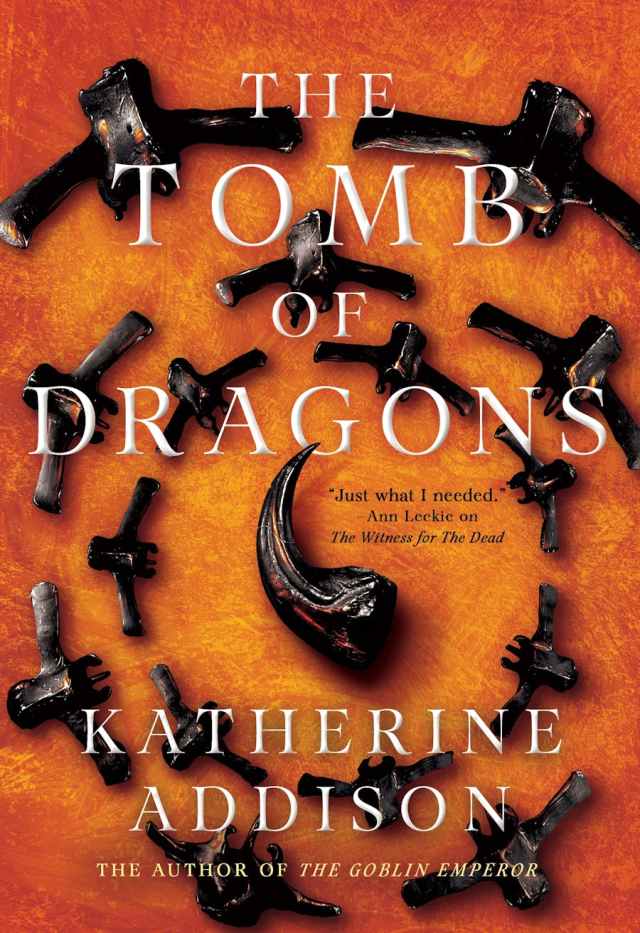
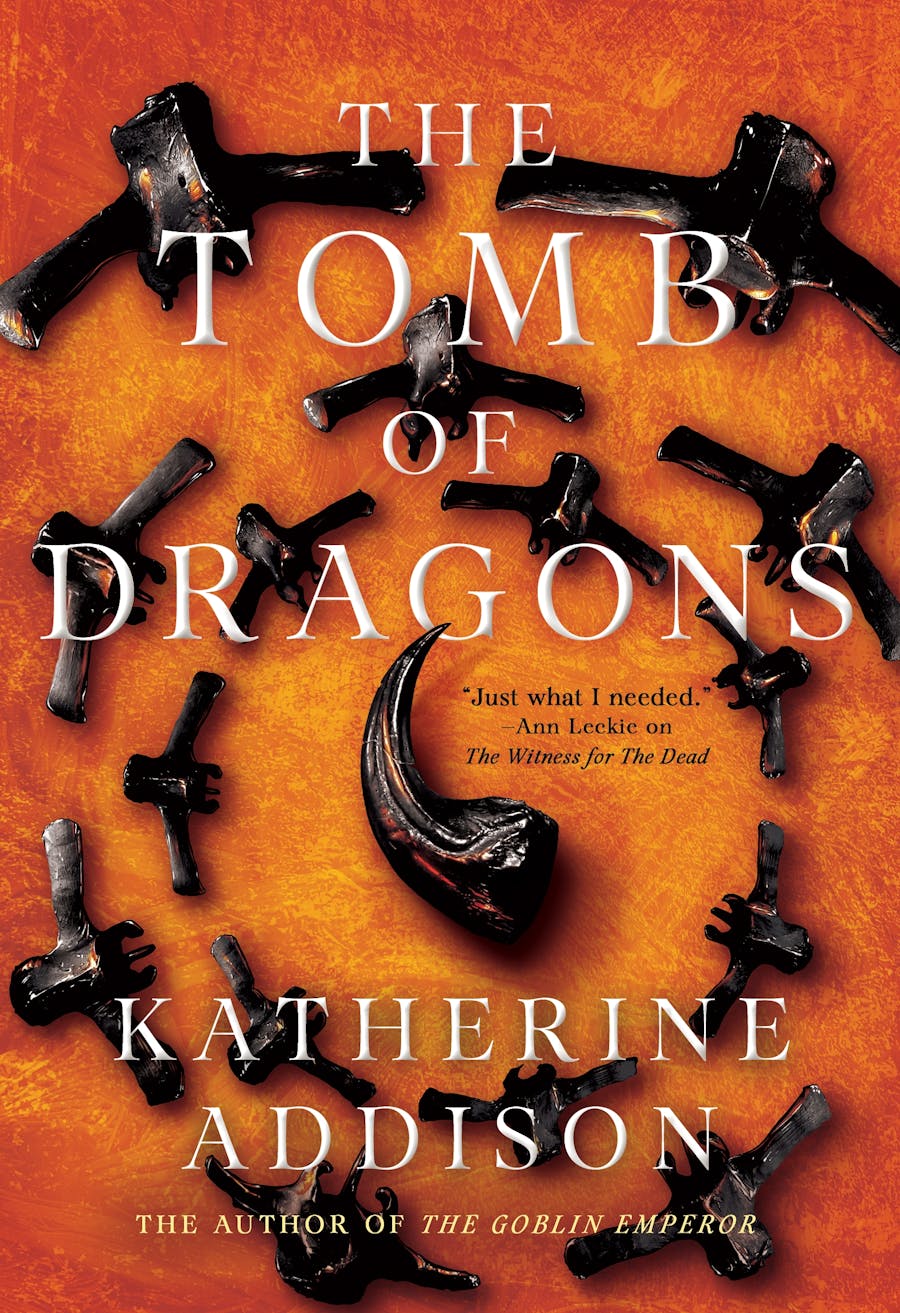
Book Review: The Tomb of Dragons by Katherine Addison

Title: The Tomb of Dragons
Author: Katherine Addison
Publisher: Tor Books
Publication date: March 11, 2025
Length: 352 pages
Genre: Fantasy
Source: Purchased (hardcover); ARC via NetGalley
Rating:

Rating: 4 out of 5.

Thara Celehar has lost his ability to speak with the dead. When that title of Witness for the Dead is gone, what defines him?

While his title may be gone, his duties are not. Celehar contends with a municipal cemetery with fifty years of secrets, the damage of a revethavar he’s terrified to remember, and a group of miners who are more than willing to trade Celehar’s life for a chance at what they feel they’re owed.

Celehar does not have to face these impossible tasks alone. Joining him are his mentee Velhiro Tomasaran, still finding her footing with the investigative nature of their job; Iäna Pel-Thenhior, his beloved opera director friend and avid supporter; and the valiant guard captain Hanu Olgarezh.

Amidst the backdrop of a murder and a brewing political uprising, Celehar must seek justice for those who cannot find it themselves under a tense political system. The repercussions of his quest are never as simple they seem, and Celehar’s own life and happiness hang in the balance.

The Tomb of Dragons is the 3rd book in author Katherine Addison’s Cemeteries of Amalo series (or the 4th book in the Chronicles of Osreth series, depending on how you look at all these inter-related books). The start of it all is the superb book The Goblin Emperor — but the three Cemeteries of Amalo books are set in the same world, which is always a great place to visit.

We first met Thara Celehar in The Goblin Emperor, and have followed him as the main character in The Witness for the Dead and The Grief of Stones. Celehar serves the god Ulis and is a witness for the dead — someone gifted with the ability to speak with the deceased and gain final words, requests, or information from them. His charge then becomes acting on behalf of the deceased, whether to bring peace to their family, settle a dispute, or seek justice for the wrongs committed against them. Celehar is an honest man who’s devoted to his work: As he reminds those who thank him, he follows his calling.

But the end of The Grief of Stones showed Celehar suffering a terrible blow, by which he loses the ability to speak with the dead. Without his calling, he lacks purpose or official status. Still, he has the favor of the top cleric in the empire, who assigns him tasks to carry out on his behalf, and manages to do good for others even when not able to pursue his calling.

The plot becomes complicated when Celehar is kidnapped and forced into a dangerous situation, which soon embroils him in a pursuit of justice that threatens to shake the foundations of the empire. We follow him on his day-to-day tasks and errands, but also on the greater mission that he takes on. The book as a whole is a mix of the mundane with more tension-filled dramatic moments. After a somewhat slow start, the pace picks up quite a bit.

Let’s be clear: You absolutely cannot start with The Tomb of Dragons and hope to get anywhere at all. This series is dense and detailed. The world-building is pretty awe-inspiring, but even the very language is a barrier to getting situated within the books’ world. I don’t think a reader coming to these books without starting with The Goblin Emperor would have the slightest chance of making it past the first page or two.

Don’t believe me?

“We are Thara Celehar, a prelate of Ulis. We have come about the revethmerai of Ulnemenee.”

Got that?

How about…

But that was nonsense. There couldn’t be such a thing as a revethvezvaishor’avar. Could there?

I could go one. From forms of address to official titles to place and ethnicity names, not to mention names of building, families, locations, and religious sects, there is just an overwhelming amount to keep track of. Because it’s been three years since the last book in the series was released, I had a very difficult time readjusting to the language of this world. Fortunately, the addenda to The Goblin Emperor (an explanation of language plus a glossary/guide to people) and a wiki page all helped me through it.

After struggling a bit with the first third or so of The Tomb of Dragons, I found myself pulled back into Celehar’s life and pursuits, and ended up very absorbed by the story. It’s a worthy addition to the series, and for those who’ve read the earlier books, I think it’ll be a hit.

The Tomb of Dragons is apparently the final book in the Cemeteries of Amalo series, and it makes me a bit sad to think that Katherine Addison may be signing off for good from this incredible fantasy world that she’s created. I do hope we’ll see more in the future, perhaps focusing on another character or location within the empire.

Meanwhile, we’ll always have The Goblin Emperor… and although I’ve read it twice already, reading The Tomb of Dragons makes me want to go back to it (at least!) once again.

Book Review: The Jackal’s Mistress by Chris Bohjalian

Title: The Jackal’s Mistress
Author: Chris Bohjalian
Publisher: Doubleday Books
Publication date: March 11, 2025
Length: 336 pages
Genre: Historical fiction
Source: Review copy courtesy of the publisher via NetGalley
Rating:

Rating: 5 out of 5.

In this Civil War love story, inspired by a real-life friendship across enemy lines, the wife of a missing Confederate soldier discovers a wounded Yankee officer and must decide what she’s willing to risk for the life of a stranger, from the New York Times bestselling author of such acclaimed historical fiction as Hour of the Witch and The Sandcastle Girls.

Virginia, 1864—Libby Steadman’s husband has been away for so long that she can barely conjure his voice in her dreams. While she longs for him in the night, fearing him dead in a Union prison camp, her days are spent running a gristmill with her teenage niece, a hired hand, and his wife, all the grain they can produce requisitioned by the Confederate Army. It’s an uneasy life in the Shenandoah Valley, the territory frequently changing hands, control swinging back and forth like a pendulum between North and South, and Libby awakens every morning expecting to see her land a battlefield. 

And then she finds a gravely injured Union officer left for dead in a neighbor’s house, the bones of his hand and leg shattered. Captain Jonathan Weybridge of the Vermont Brigade is her enemy—but he’s also a human being, and Libby must make a terrible decision: Does she leave him to die alone? Or does she risk treason and try to nurse him back to health? And if she succeeds, does she try to secretly bring him across Union lines, where she might negotiate a trade for news of her own husband? 

A vivid and sweeping story of two people navigating the boundaries of love and humanity in a landscape of brutal violence, The Jackal’s Mistress is a heart-stopping new novel, based on a largely unknown piece of American history, from one of our greatest storytellers.

Chris Bohjalian is a prolific author — The Jackal’s Mistress is his 25th novel!! — and while he’s such a great writer that every single book is engrossing, it’s his historical fiction novels that truly draw me in and leave me in awe. Fortunately for me, his 2025 new release is historical fiction, set in the Shenandoah Valley of Virginia during the final year of the Civil War. Put simply: It’s excellent.

And the writing is gorgeous — every description brings the scene to life:

Jonathan Weybridge sat on a camp stool atop the crest of a small hill and watched the elegant tendrils of fog in the ravine, the steepled tips of the fir trees piercing the misty clouds like the finials of a wrought-iron fence.

Libby Steadman, at age 25, works tirelessly at her farm’s gristmill, able to keep herself, her 12-year-old niece Jubilee, and freed married couple Joseph and Sally fed by selling grain to the Confederate army. Libby’s husband Peter freed his family’s slaves immediately after he inherited the farm from this father, but he’s still enough of a Southerner to have joined the rebel army. Now, in the fall of 1864, all Libby knows is that Peter was wounded and taken to a Union prison, but it’s been month since she’s had word of him. The household is in constant peril from marauders, rangers, and deserters, not to mention the battles they can hear from not too far away, and Libby is barely holding on most days.

Jonathan Weybridge is a captain with the Vermont Brigade; he’s a former professor who’d prefer to be home with his wife and sons, his books and students, but ends up fighting on the side of what he knows to be right and just. After a fierce battle, he’s severely wounded, and as the Union army leaves the territory, he’s left behind — abandoned to what will surely be a slow, painful death.

By chance, Sally stumbles across Jonathan, and Libby makes a risky choice. She does what she can only hope a Northern woman might do for Peter: She decides to bring Jonathan back to her own home and see if his life can be saved.

It’s highly doubtful at the start. He’s lost a leg and several fingers on one hand. After days of suffering, with no food or medicine, he’s emaciated, in pain, and has untended, bloody injuries that may never heal. Libby is stubborn, though, and she’s determined to keep him alive.

The story of The Jackal’s Mistress is built around thoughtful character development, and rooted in a firm sense of the time and place in which it’s set. Readers can feel the danger from moment to moment. Hearing hoofbeats is enough to set one’s heart racing — any visitor can mean potential disaster, whether by outright violence or the threat of unintended discovery of the household’s secret. The risk Libby takes is profound, and endangers every one under her roof: Sally and Joseph, although free, are subject to much harsher laws, and would likely be hanged on the spot; Libby would be considered a traitor; and of course, Joseph, at best, would be taken prisoner, although given the state of his health, death is the likely outcome.

[He] has met men like Morgan before. On the surface, they were civilized. And, perhaps, without war they would have remained that way. But war gave them permission to be who they really were, men who were comfortable killing all the kindness and magic and beauty in the world, men whose souls were bleak and, therefore, dangerous.

We’re never asked to sympathize with the Southern cause, and yet, we can feel pity for Libby, caught up in a war she doesn’t believe in, trying to save her home and maintain the far-fetched hope of seeing her husband again someday, and not being able to count on the goodwill of neighbors or the army supposedly fighting for her own side to keep her safe. Her bravery is off the charts, yet believable: She’s an ordinary woman who chooses to do extraordinary things because it’s what she feels she must do.

Jonathan is a wonderful character as well. We feel his pain as well as his helplessness. He’s a man of peace, devoted to literature and education, caught up in terrible violence. He cares about the men under his command, misses his family, and yearns for the end of war. The descriptions of his suffering and helplessness are terrible to read, which is a sign of just how powerfully written this book is. As Jonathan begins to recover, he’s able to interact with Libby and the other members of the household, and each interaction has a spark of life and engagement that bring new facets of the characters’ balancing acts into focus.

The Jackal’s Mistress provides a finely woven blend of introspection, character development, and action sequences. It works remarkably well, and brings to life a handful of people caught up in a terrible time, making choices of conscience that could doom them all at any moment. The book is fascinating, moving, and thought-provoking. It’s impossible to put down

The author’s notes explain the real-life people whose story inspired The Jackal’s Mistress, and provides an interesting look at his research and some recommended resources for further reading. Don’t skip the notes when you finish the novel!

I’d rank The Jackal’s Mistress as one of Chris Bohjalian’s best. While his contemporary thrillers are always compelling, twisty reads, it’s his historical novels that truly capture my imagination and my heart. I highly recommend The Jackal’s Mistress — but you really can’t go wrong with any of his books!

For more historical fiction by this author, check out a few of my favorites:

Book Review: The Love Lyric (The Greene Sisters, #3) by Kristina Forest

Title: The Love Lyric
Series: The Greene Sisters, #3
Author: Kristina Forest
Publisher: Berkley
Publication date: February 4, 2025
Length: 400 pages
Genre: Contemporary romance
Source: Library
Rating:

Rating: 4 out of 5.

An R&B singer and a corporate executive find love that hits the right notes in this romance by Kristina Forest, USA Today bestselling author of The Partner Plot.

Iris Greene used to be a woman with a plan. But all of that changed after she met the love of her life at twenty-four, got pregnant and married…and then became a widow and a single mother all within the span of a year and a half. Now, after years of hustling, Iris is the director of partnerships at a beauty company and raising spunky six-year-old Calla by herself. Despite her busy life, she still can’t help but feel lonely. She just needs to catch her breath—and one night, at her sister’s wedding, when she steps outside to do just that, she sees a certain singer who takes her breath away. . . .

By all accounts, pop R&B singer Angel Hughes has it made. He’s a successful musician and has just scored a brand ambassador deal with an emerging beauty company. But he’s still not fulfilled; he’s not producing songs he’s passionate about, and there’s a gaping hole in his love life. When he visits the Save Face Beauty office to kickstart his campaign, he’s delighted to see Iris, his stylist’s sister—the beautiful woman he’s secretly had a crush on for years.

Despite their obvious attraction to each other, they must stay professional throughout the campaign tour—which doesn’t quite pan out. But when it becomes clear their lives aren’t in sync, can they fall back in step to the same rhythm and beat?

The Love Lyric is the 3rd book in author Kristina Forest’s Greene Sisters trilogy, following The Neighbor Favor and The Partner Plot. The first two books focus on sisters Lily and Violet; here in The Love Lyric, their older sister Iris takes center stage.

Iris is an ambitious career woman, who juggles a successful corporate role with raising a six-year-old on her own, having been widowed when her daughter was still a baby. While still grieving for her beloved husband Terry, Iris has reached a point in her life where maybe, just maybe, she might consider trying to date again. If only the idea of getting on the apps wasn’t so awful.

A few years earlier, she’d crossed paths with Angel, who then was just starting on his rise to pop stardom. He’d made an impression, but Iris hasn’t seen him again until her sister Violet’s wedding. After sharing a moonlit dance with Angel, Iris pulls away, not wanting to risk taking things any further — because Angel is the brand ambassador for her company, and she needs to maintain professional boundaries… but also because he’s a huge celebrity with women practically throwing themselves at his feet. Why would someone like that ever be interested in someone like her?

There’s more to the story, of course. Angel is still adjusting to his own stardom, and while he achieves top of the chart success with each new track, his label pushes back when he tries to make the kind of music — true R&B — that he really cares about. Plus, having come from a strict, religious home, he faces constant criticism and insults from his mother, who sees his public persona as a disgrace, much too far from his gospel roots.

For Iris, there’s a combination of professional frustration, fear of making changes or taking big risks, and most especially, the fear of letting herself care for someone and risk getting hurt.

Still, Angel and Iris so clearly care about one another and have great physical chemistry too — so it’s inevitable that their resistance can only hold out so long. Factor in the intensity of a week-long business trip and the proximity that comes with it, and it’s only a matter of time before they give in to temptation.

Complications ensue — with a celebrity like Angel, things can’t remain a secret forever. Iris is fearful for her job and also very protective of her and her daughter’s privacy. When their secret relationship is exposed, Iris has some very hard choices to make, and must decide what kind of life and future she wants.

The Love Lyric is a very enjoyable wrap-up to the trilogy. We get time with the rest of the Greene family, and it’s lovely to see Lily and Violet both happy with their relationships and their careers. I appreciated seeing the turmoil Iris faces as a single working mother, trying to do the classic balancing act of being everything to everyone, without letting her daughter down or letting her work commitments slip. Iris’s loss and grief are handled respectfully, showing her love for her late husband and how she navigates the possibility of loving again.

Angel and Iris make a great couple, and despite their ups and downs, they’re able to communicate in a way that’s refreshing and honest. When the typical 3rd act breakup that seems standard in so many romance novels occurs here, it’s for reasons that make sense and that are actually discussed — it’s nice to see healthy conversations in a romance, when so many books rely on miscommunication as a plot device!

The Love Lyric is a great read all on its own, as well as a satisfying conclusion to a very good trilogy. What I especially appreciate about these books is the strong family dynamic and the close bond between the sisters, as well as the individual women themselves and how well-drawn their characters are. I just wish they had another sister so the series could continue!

As far as I understand, the Greene Sisters trilogy is author Kristina Forest’s first foray into adult books, after publishing several YA novels. I’ll look forward to reading whatever she writes next!

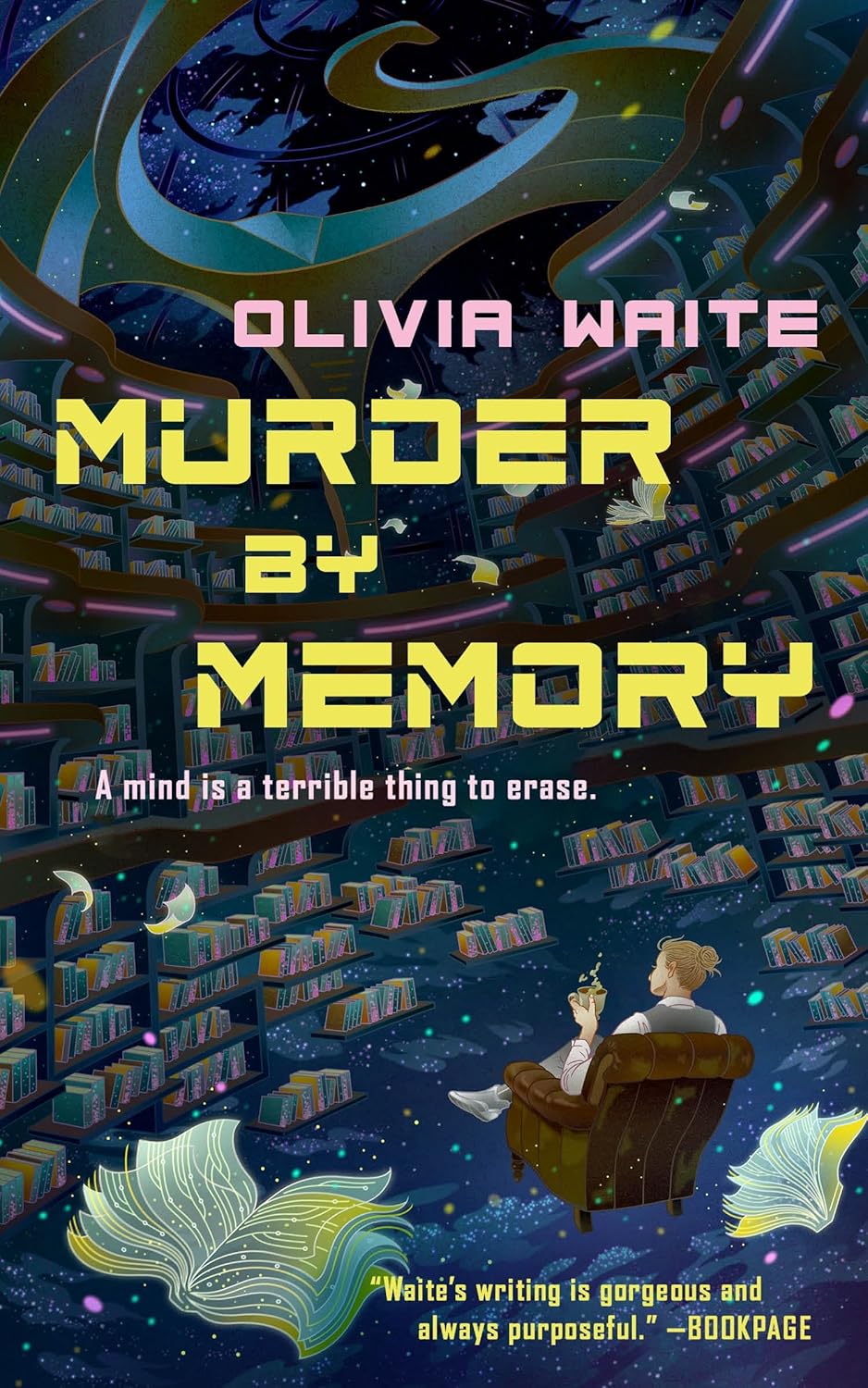
Novella review: Murder by Memory (Dorothy Gentleman, #1) by Olivia Waite

Title: Murder by Memory
Series: Dorothy Gentleman, #1
Author: Olivia Waite
Publisher: Tor Books
Publication date: March 11, 2025
Length: 112 pages
Genre: Science fiction
Source: Review copy courtesy of the publisher via NetGalley
Rating:

Rating: 4 out of 5.

A Memory Called Empire meets Miss Marple in this cozy, spaceborne mystery, helmed by a no-nonsense formidable auntie of a detective.

Welcome to the HMS Fairweather, Her Majesty’s most luxurious interstellar passenger liner! Room and board are included, new bodies are graciously provided upon request, and should you desire a rest between lifetimes, your mind shall be most carefully preserved in glass in the Library, shielded from every danger.

Near the topmost deck of an interstellar generation ship, Dorothy Gentleman wakes up in a body that isn’t hers—just as someone else is found murdered. As one of the ship’s detectives, Dorothy usually delights in unraveling the schemes on board the Fairweather, but when she finds that someone is not only killing bodies but purposefully deleting minds from the Library, she realizes something even more sinister is afoot.

Dorothy suspects her misfortune is partly the fault of her feckless nephew Ruthie who, despite his brilliance as a programmer, leaves chaos in his cheerful wake. Or perhaps the sultry yarn store proprietor—and ex-girlfriend of the body Dorothy is currently inhabiting—knows more than she’s letting on. Whatever it is, Dorothy intends to solve this case. Because someone has done the impossible and found a way to make murder on the Fairweather a very permanent state indeed. A mastermind may be at work—and if so, they’ve had three hundred years to perfect their schemes…

This short, sharp novella presents a murder mystery on board a generation ship — a spaceship a few centuries into a millenium-long journey to a new planet. In the world of the Fairweather (referred to as Ferry), passengers can more or less live forever, by recycling their minds through a series of new bodies once their current body reaches its natural end. Minds are uploaded into the ship’s vast library, and when a new body is needed, the saved memories from a person’s memory book are downloaded and installed into their newest living vessel.

It’s all pretty perfect, except for the day when Dorothy Gentleman, ship’s detective, wakes up in a body that’s not her own. She’d placed herself into a years-long sleep after her last body’s death, but hadn’t intended to come back to life so soon. Now, though, she’s in someone else’s body, with no idea why.

It turns out that her memories have been transferred into the body of a woman named Gloria Vowell, and that Dorothy’s own memory book had been erased, something that shouldn’t have been possible to do. Luckily, there was a backup, but still… something doesn’t add up, and in her role as detective, Dorothy is determined to figure it out.

What follows is a tightly woven tale of a murder investigation, made distinctly odd by the fact that murder isn’t actually permanent on board the Fairweather. Since memories are saved in the library, even a murder victim gets a chance to return to life. Meanwhile, as Dorothy digs, she discovers an intricate pattern of crime going back centuries, along with flaws in the system that Ferry will need to fix if the ship’s way of life is to be maintained.

At just over 100 pages, Murder by Memory is a quick read. It’s written with a nimble touch, immediately immersing the reader into the strange new world of the ship and its way of life (and death). The concept of the memory books and the library is terrific, and the mystery as a whole provides entertainment and food for thought. It did lose me a bit when the focus shifts to unraveling financial records, but fortunately the story moves on quickly and the exact details don’t matter a great deal in the overall scheme of things.

Murder by Memory is apparently the first story in an expected series about Dorothy, and this may explain why it feels like there are several loose threads left dangling at the end of the story — people, concepts, groups that factor into the plot, but seem like they have secrets yet to be revealed. But since there’s more to come, I’m guessing these hints of open questions are intentional, and I already know I’ll want to continue.

Dorothy is a great character, and the fluid concept of age is a piece of what makes her so fascinating. I can’t wait to see what future adventures await her!

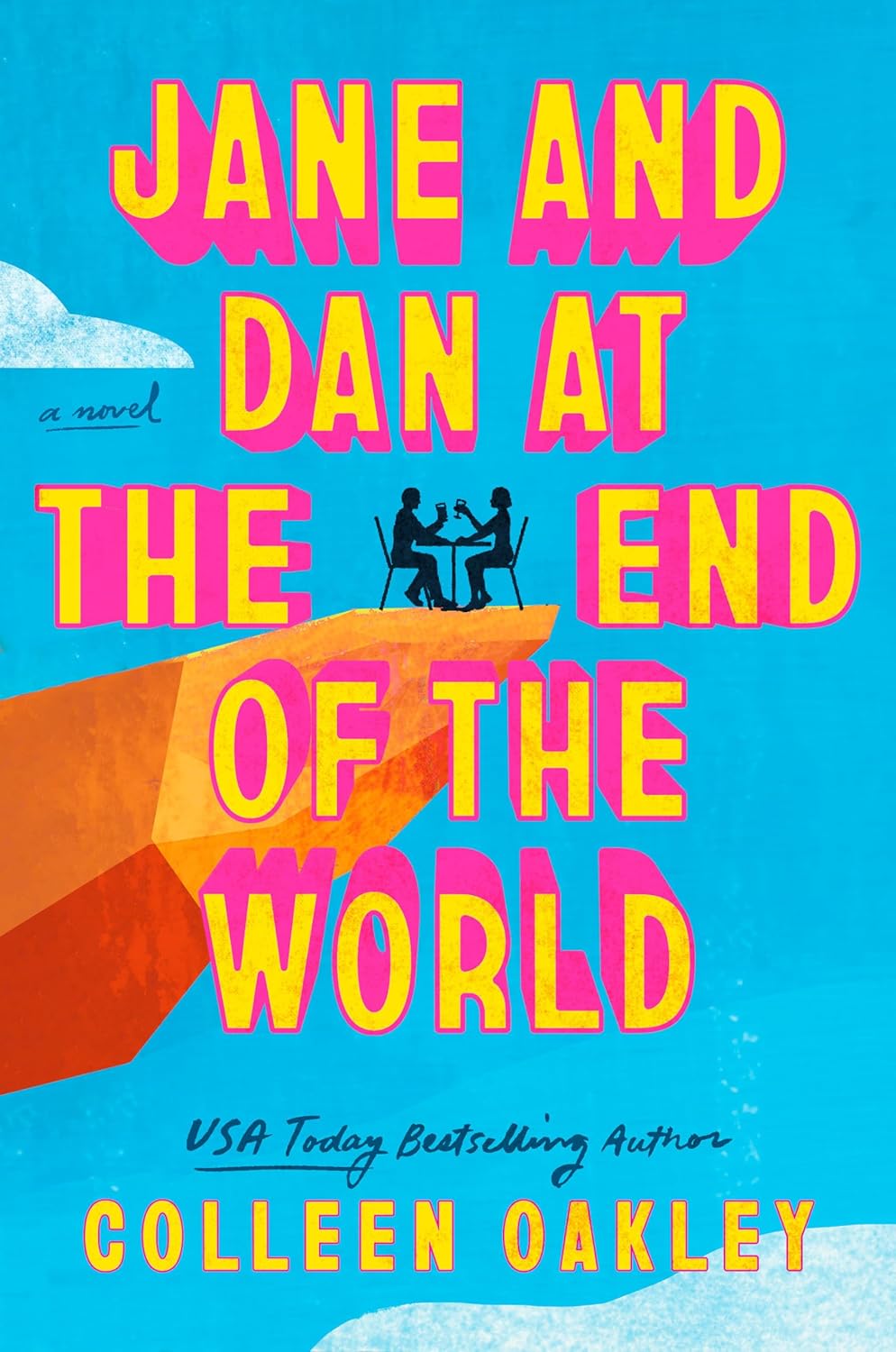
Book Review: Jane and Dan at the End of the World by Colleen Oakley

Title: Jane and Dan at the End of the World
Author: Colleen Oakley
Publisher: Berkley
Publication date: March 11, 2025
Length: 368 pages
Genre: Contemporary fiction
Source: Review copy courtesy of the publisher via NetGalley
Rating:

Rating: 4.5 out of 5.

Date night goes off the rails in this hilariously insightful take on midlife and marriage when one unhappy couple find themselves at the heart of a crime in progress, from the USA Today bestselling author of The Mostly True Story of Tanner & Louise.

Jane and Dan have been married for nineteen years, but Jane isn’t sure they’re going to make it to twenty. The mother of two feels unneeded by her teenagers, and her writing career has screeched to an unsuccessful halt. Her one published novel sold under five hundred copies. Worse? She’s pretty sure Dan is cheating on her. When the couple goes to the renowned upscale restaurant La Fin du Monde to celebrate their anniversary, Jane thinks it’s as good a place as any to tell Dan she wants a divorce.

But before they even get to the second course, an underground climate activist group bursts into the dining room. Jane is shocked—and not just because she’s in a hostage situation the likes of which she’s only seen in the movies. Nearly everything the disorganized and bumbling activists say and do is right out of the pages of her failed book. Even Dan (who Jane wasn’t sure even read her book) admits it’s eerily familiar.

Which means Dan and Jane are the only ones who know what’s going to happen next. And they’re the only ones who can stop it. This wasn’t what Jane was thinking of when she said “’til death do us part” all those years ago, but if they can survive this, maybe they can survive anything—even marriage.

Author Colleen Oakley has quickly become a go-to author for me, and it’s engaging stories like Jane and Dan at the End of the World that keep me coming back.

When Jane and Dan head out to dinner for their 19th anniversary (which he seems to think is their 20th), rather than go to their stand-by date night restaurant, they instead go to the ultra-exclusive, ultra-expensive La Fin du Monde — a chic place located at the top of an isolated cliff along the Pacific coast. (Dan got a gift card… although he’s shocked to learn that the card only covers the cost of the reservation itself, not the thousand-something-dollar meal.)

The couple seems bored and jaded. Jane has heard every joke already. Dan has grown used to Jane’s need to double-check whether she’s unplugged her curling iron every single time they leave the house. But to Dan, it’s all fine. Jane, however, has had enough. She’s discovered texts between Dan and some unknown woman, and this proof of cheating is the final straw. In between their fancy courses, she informs Dan that she wants a divorce.

They don’t get to continue the conversation; a group of masked people with guns bursts in and zipties the guests and restaurant staff. The apparent leader is quickly infuriated to learn that the billionaire he’s been targeting isn’t actually present — instead, his wife and daughter are having dinner alone. What follow is a tense (but also very funny) countdown to a major confrontation, as the disorganized terrorists, frightened and frustrated restaurant guests, and local law enforcement interact, make generally bad decisions, and deal with circumstances none of them could have seen coming.

Well, maybe Jane could. As events unfold, she realizes that they’re strangely similar to the events of her heist novel — which practically no one read, not even Dan (or so she thinks). But as the evening progresses and more and more details line up with her book, Jane has a feeling she knows what’s coming… and knows she needs to get herself and Dan out of there before the big finale.

“For the love of God, [spoiler]’s never read your book,” Dan hisses, confirming Jane’s own thoughts. “No one’s read your book, Jane! This can’t be like your book because no one has read it.”

Meanwhile, right alongside the heist/adventure elements, this is really a story about marriage and family and parenthood. As Jane and Dan think back over their years together, certain truths and observations become clear. I don’t want to go into spoiler territory, so without revealing how these details connect, I’ll just say that Jane’s thoughts about motherhood, raising children and seeing them become their own people, and devoting oneself to family feel absolutely true and honest and real.

Jane often thinks all of the difficulty with parenting can be summed up by one sentence: Am I overreacting? And how 99 percent of the time, the answer is yes, but how is one to know when it’s the 1 percent of the time worrying is warranted?

Plus, the writing is funny! You might not think a hostage situation in a fancy restaurant would provide moments of humor, but in Colleen Oakley’s talented hands, unexpected bursts of laughter creep in when least expected.

Watching someone get shot was nothing like Jane thought it would be. Or nothing like the movies, which were Jane’s only point of reference. (Then again, having sex for the first time was disappointingly nothing like Dirty Dancing had led her to believed it would be, so she’s not sure why she’s surprised.)

Jane and Dan at the End of the World is fast-paced and engaging, and I raced through each chapter, unable to put the book down. Ultimately, while the heist elements are entertaining and really well-done, it’s the characters and their personal stories that drew me in.

Putting it simply: I love this book. With unexpected twists, down-to-earth truths, and a terrific main character to cheer for, it’s joyful and fun and full of life. Don’t miss it!


For more books by this author, check out my reviews of:

Exciting new books for March!

I don’t typically do a new releases post — mainly because it doesn’t usually occur to me! But when I look at my list of this month’s new releases — ARCs and books to purchase and books to add to my TBR — it’s hard not to want to share the excitement.

Here are my top picks:

Already read:

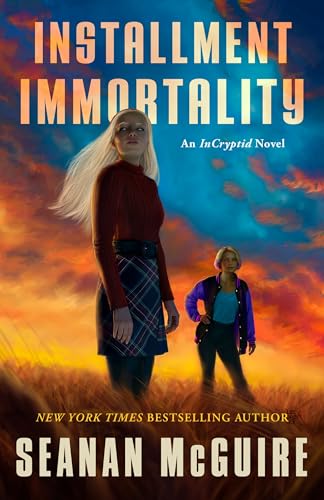
  • Installment Immortality by Seanan McGuire (review)
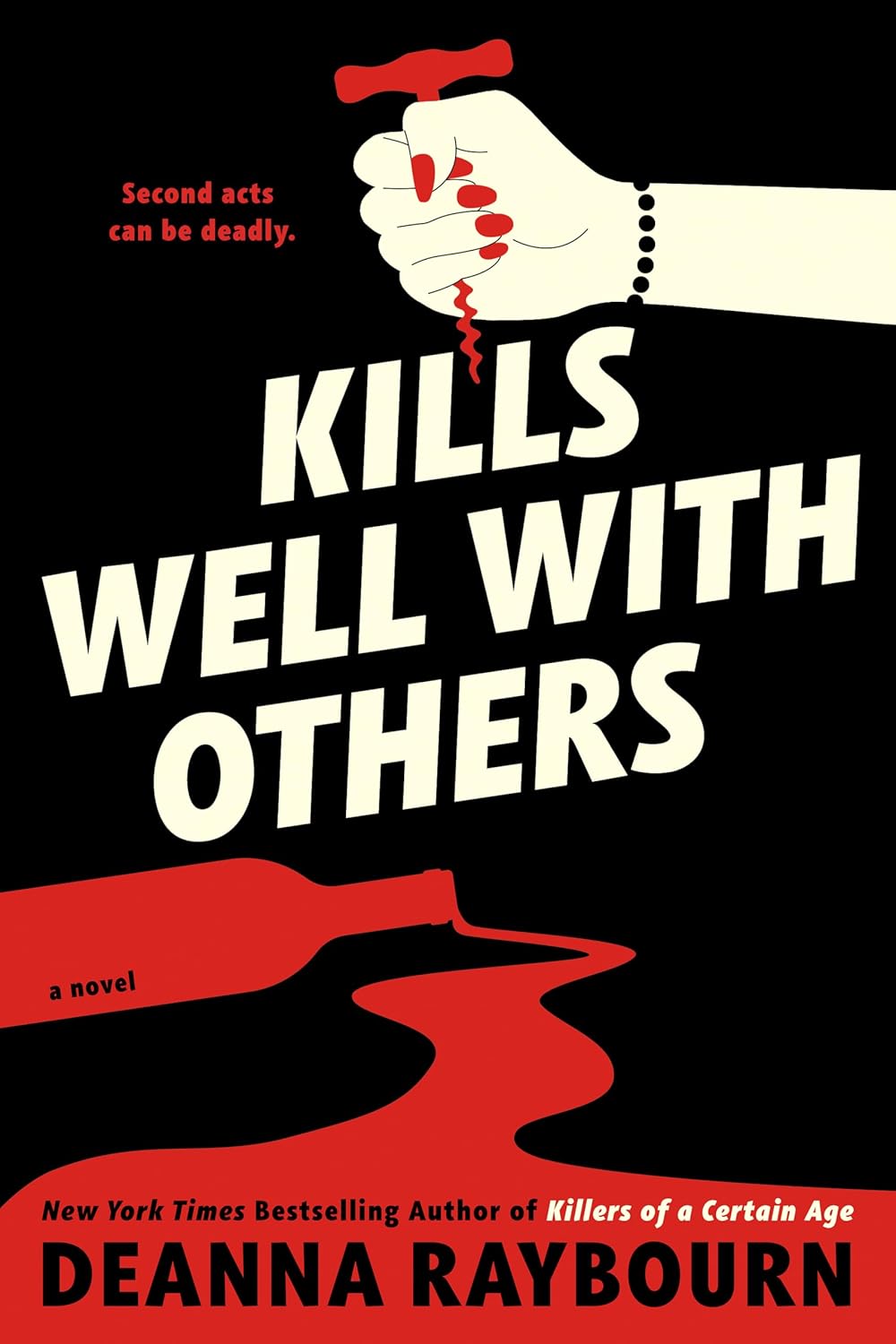
  • Kills Well with Others by Deanna Raybourn (review)

Reading now:

  • Jane and Dan at the End of the World by Colleen Oakley

Upcoming reads (ARCs + library holds + preorders):

  • The King’s Messenger by Susanna Kearsley
  • Sunrise on the Reaping by Suzanne Collins
  • Murder by Memory by Olivia Waite
  • The Third Rule of Time Travel by Philip Fracassi
  • When the Moon Hits Your Eye by John Scalzi
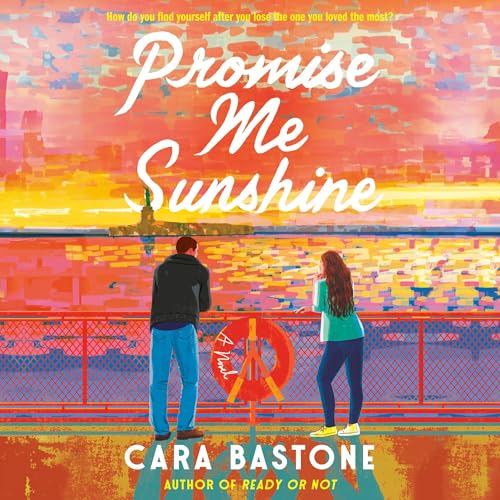
  • Promise Me Sunshine by Cara Bastone
  • The Jackal’s Mistress by Chris Bohjalian
  • The Martian Contingency by Mary Robinette Kowal
  • The Tomb of Dragons by Katherine Addison

Whew. That’s a lot! I’d like to say that I’ll get to all of these before the end of the month, but somehow, I think life may have other plans for me. Plus, I do also need to squeeze in my book group book and Classics Club spin book. (I think I need to go hibernate in a cozy cabin somewhere, just me and a stack of books to read!)

Are any of my March books on your reading list too? What other new releases are you most excited for this month?

Book Review: Installment Immortality (InCryptid, #14) by Seanan McGuire

Title: Installment Immortality
Series: Incryptid, #14
Author: Seanan McGuire
Publisher: Tor Books
Publication date: March 11, 2025
Length: 432 pages
Genre: Urban fantasy
Source: Review copy courtesy of the publisher via NetGalley
Rating:

Rating: 4 out of 5.

Seanan McGuire’s New York Times-bestselling and Hugo Award-nominated InCryptid series continues with a whirlwind adventure….

After four generations of caring for the Price family, Mary Dunlavy has more than earned a break from the ongoing war with the Covenant of St. George. Instead, what she’s getting is a new employer, in the form of the anima mundi, Earth’s living soul made manifest, and a new assignment: to hunt down the Covenant agents on the East Coast and make them stop imprisoning America’s ghosts.

All in a day’s work for a phantom nanny, even one who’d really rather be teaching her youngest charges how to read.

One ghost can’t take on the entire Covenant without backup, which is how she winds up on a road trip with the still-mourning Elsie and the slowly collapsing Arthur, both of whom are reeling in their own way from the loss of their mother. New allies and new enemies await in Worcester, Massachusetts, where the path of the haunting leads.

With the anima mundi demanding results and Mary’s newfound freedom at stake, it’s down to Mary to make sure that everyone gets out of this adventure alive.

It’s been a long afterlife, but Mary Dunlavy’s not ready to be exorcised quite yet.

When you’re on the 14th book in an ongoing series, it feels practically impossible to talk about it in a way that will make sense to anyone who hasn’t been along for the journey. And in fact, even though I have read every one of these books, I needed a serious refresher before feeling ready to dive in. Um, what happened last time around? The details are a little fuzzy…

Fortunately, the narrator of Installment Immortality, ghost babysitter Mary Dunlavy, is just bouncing back from a major trauma and missed quite a bit, so her opening in the first chapter is quite helpful:

All right, this is where I recap. Because we’re dealing with five generations of family history here, and that’s a lot, even when you’ve been there from the beginning. I can’t count on anyone having been here from the beginning anymore, myself included, so I’ll give you the basic shape of things and hope that will be enough to ground you in this glorious ghost story already in progress.

Thanks, Mary!

The first chapter is Mary giving us a speed-recap, and it was just what I needed. (That, plus keeping the Incryptids wiki page bookmarked for easy reference.)

A brief explanation on the series (from my review of one of the earlier books):

The InCryptid series is a big, sprawling, interconnected story about the varied and sundry members of the Price/Healy clan — humans (mostly) who specialize in cryptozoology, the study and preservation of non-human people who live among us here on Earth. The arch-enemies of the Price gang (and all non-human species) is the Covenant, a powerful organization dedicated to hunting down and eliminating all cryptids — ostensibly to protect humans, but really, at this point, it’s more from deeply ingrained hatred and a desire to rid the world of everything non-human.

The series has had several different narrators, most of whom get a couple of books in a row before we move on to the next. Installment Immortality is Mary’s second book, and she picks up right where she left off in the previous book, Aftermarket Afterlife.

The Price-Healy family has inflicted serious harm on the Covenant, and now the Covenant wants payback. They’re trying to get it by rounding up and either destroying or weaponizing ghosts, and Mary’s new boss — the anima mundi, the living spirit of the world — wants it stopped before irreversible damage is done. Mary is tasked with finding these wannabe ghostbusters and doing whatever it takes to shut them down.

Meanwhile, the family is in tatters, having suffered two devastating losses in the last book. No one is operating at full speed, but Mary recognizes that siblings Elsie and Arthur need both a distraction and a purpose, and the three set off on a road trip to carry out her mission.

As we get into the main action of the story, the pace quickens and the stakes get higher and higher. Without going too far into the details, I’ll just say that the suspense becomes intense, and I was on the edge of my seat! You might think that when a main character is a ghost and therefore already dead, there wouldn’t be much risk… and you’d be wrong. Mary faces incredible danger, but her devotion to her kids (yes, Elsie and Arthur are adults, but once Mary has been someone’s babysitter, they’re always going to be her kids, no matter their age) keeps her focuses on her mission and determined to do whatever it takes to protect them.

Installment Immortality is another terrific addition to a great series. It can feel somewhat dense at times — there is A LOT to keep track of. But it’s worth it. With a series this big and sprawling, the mythology and interconnectedness is intense (and seriously, those wikis are essential!), but the emotional payoff of seeing the latest developments for characters we’ve had this much time to get to know and love is really rewarding.

Obviously, starting an ongoing series at book 14 is not going to be a satisfying reading experience. Each book builds upon the one before — so really, the only way to enjoy it is to start at the beginning (Discount Armageddon)… and then keep going!

As for me, I’m all in, and can’t wait for #15!

As with other books in the Incryptid series, this one includes a novella at the end, Mourner’s Waltz. The story features the same main character as in the previous novella, picking up the story several months later. There are strong emotional beats plus a nifty adventure. I can’t talk about it without major spoilers, but it was engaging and lovely… and makes me hope that the next main Incryptid book will bring this character back to center stage.

**Save

Save

Save

Save

Save

Save

Save

Book Review: Kills Well with Others by Deanna Raybourn

Title: Kills Well with Others
Series: Killers of a Certain Age, #2
Author: Deanna Raybourn
Publisher: Berkley
Publication date: March 4, 2025
Length: 368 pages
Genre: Contemporary fiction
Source: Review copy courtesy of the publisher via NetGalley
Rating:

Rating: 4.5 out of 5.

Four women assassins, senior in status—and in age—sharpen their knives for another bloody good adventure in this riotous follow-up to the New York Times bestselling sensation Killers of a Certain Age.

After more than a year of laying low, Billie, Helen, Mary Alice, and Natalie are called back into action. They have enjoyed their rest, but the lack of excitement is starting to chafe: a professional killer can only take so many watercolor classes and yoga sessions before she gets the itch to get back in the game. When they receive a call from Naomi Ndiaye, the head of the elite assassin organization known as the Museum, they are ready tackle the greatest challenge of their careers.

Someone on the inside has compiled a list of important kills committed by Museum agents, all of them connected to a single, shadowy figure, an Eastern European gangster who rules her business empire with an iron fist and plays puppet master in international affairs. Naomi is convinced this criminal queen is bent upon revenge, killing off the agents who attempted to thwart her, and the aging quartet of killers is next.

Together the foursome embark on a wild ride across the globe on the double mission of rooting out the Museum’s mole and hunting down the gangster and her assassin. But their nemesis is unlike any they’ve faced before, and it will take all their experience and a whole lot of luck to get out of this mission alive.

Who knew that we needed novels about women assassins in their 60s? Kills Well with Others is the follow-up to Deanna Raybourn’s 2023 smash hit, Killers of a Certain Age. Both books prove that deadly women… of a certain age… make for excellent entertainment.

The first book was oodles of fun, and now the fabulous four are back for another adventure. Billie, Mary Alice, Helen, and Natalie had more or less retired after the events of the first book. But for Billie at least, retirement — meaning a peaceful life on a Greek island with the man she loves — is making her a bit itchy. Yes, she’s happy, but that sense of purpose (and adrenaline) seems to be missing.

I realized that there are some jobs you leave, but they never leave you. I was playing at being retired because the truth was, I would be a killer until the day I died.

The women are called back into action after a former colleague is murdered, in a way that obviously indicates that this is payback for an assassination they carried out decades earlier. It soon becomes clear that they themselves may be the next targets. Someone is out for revenge, and the team has to figure out who it is, and how to stop them.

There’s enough context provided in Kills Well with Others that a reader could jump right in and follow the story (although I do recommend starting with book one to get the full effect). Essentially, we’re cheering on assassins who work for a non-governmental, international super-secret organization called the Museum, whose purpose is to rid the world of tyrants and cartel honchos and other ultra-bad guys that the more legal approaches can’t seem to touch. I struggled with the morality of the whole concept in book one (am I really rooting for killers???), but ultimately, to enjoy the books, we just have to let that aspect go and take it as a given that these killers are the good guys.

Humanity requires champions, like the knights of old, those who are willing to fight and die, bloody themselves so the others may survive.

That hurdle aside, it’s once again a fast-paced, exciting adventure traveling along with these women as they plot and then dive into action. Their creativity is off the charts, they can fight with whatever they have on hand, and — most entertaining of all — their disguise game is absolutely on point. As they remind us throughout the story, older women tend to be ignored or overlooked or underestimated — so who better to go unnoticed, slip into places where they don’t belong, and get away with murder simply because they don’t appear the least bit threatening or powerful?

The concept is a delight, and the execution (ha!) is terrific. We’re whisked along from ships on the Atlantic to trains through the Balkans, with stops along Venetian canals and Sardinian farmlands. The team is strong and tight-knit, but also bickers and banters just how you’d expect from women who’ve been the closest of friends for 40 years.

Plotwise, the story unfolds with twists upon twists, and plenty of mistaken identities, clues, and red herrings. The women are amazing when they team up, and it’s always a hoot to see the various roles they take on while carrying out a hit or a surveillance mission.

Kills Well with Others is exciting start to finish, and has a very satisfying ending… but clearly, these “women of a certain age” have a lot of fight left in them, and the door seems open (or at least, ajar) for more adventures yet to come. I really enjoyed this outing, and hope Deanna Raybourn will continue the series!