Books & TV: Fungus among us

Having just spent an intensely creepy 80-something minutes watching the series premier of The Last of Us (HBO), I’m now forced to sit here and contemplate just how terrifying fungi can be. If you’re not scared, then you definitely haven’t watched this show… or read any of the books I’m about to talk about!

Photo by Pixabay on Pexels.com

Let’s start with The Last of Us. This show has been getting tons of hype — well deserved! For those who aren’t familiar with the history, The Last of Us started as a videogame (released in 2013) that was absolutely huge — and which is generally considered a giant step forward in gaming in terms of both graphics and storytelling. (For more on the game and its significance, read here — but note that there are spoilers for the overall storyline). I’m not a gamer, so that aspect doesn’t mean a whole lot to me, but I do love a good post-apocalypse story… and this one is a doozy.

Here’s the official trailer from HBO:

Are you scared yet?

After watching the first episode, I naturally starting thinking about the scary-as-hell books I’ve read over the past several years featuring horrific fungi — and thought I’d share the case of the creeps with everyone else!

If you’re into fungal horror (or want to know what books to avoid at all costs), then check out this list. I’ve provided links to my reviews, in case you’re interested.
The Girl with All the Gifts (and the sequel, The Boy on the Bridge) by M. R. Carey:
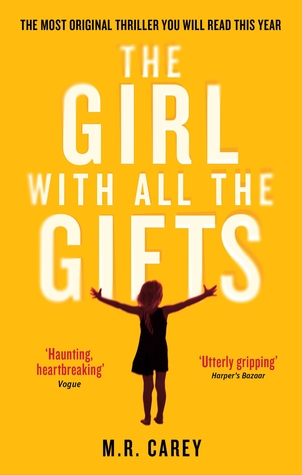
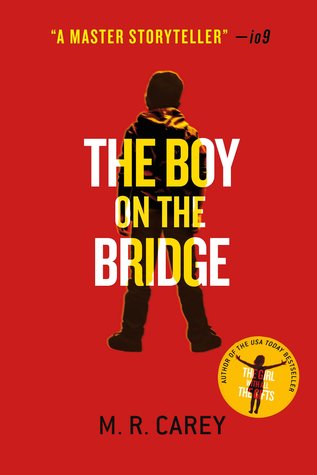
The Girl With All the Gifts was my first exposure to zombie apocalypse via fungus, and man, was it horrifying! It’s a great story — and at the time when it was released, the marketing cleverly didn’t disclose what it was actually about. I expected a story about kids with some sort of paranormal abilities, perhaps, and instead… FUNGAL HORROR. So good…
What Moves the Dead by T. Kingfisher
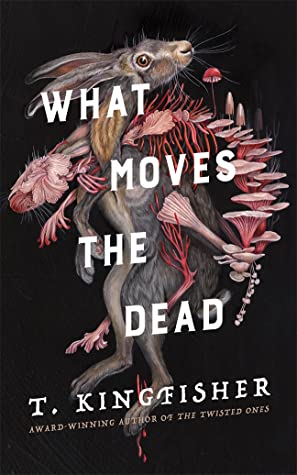
This was a 2022 release, and it’s just amazing (and creep-tastic). A retelling of The Fall of the House of Usher, but with fungi! You’ll never look at a rabbit in quite the same way again.

Mexican Gothic by Silvia Garcia-Moreno
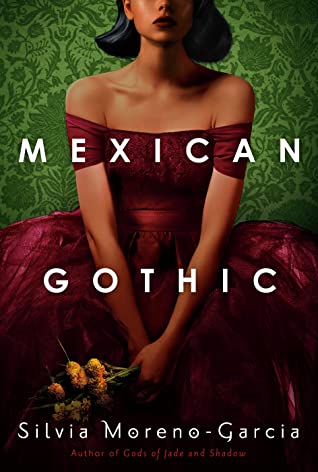
I almost hesitated about including this one, since the very fact that I’m putting it here is entering into spoiler territory… but it’s a prime example of great fungus-based horror!

The Unfamiliar Garden (The Comet Cycle, #2) by Benjamin Percy

This is the 2nd book in the Comet Cycle trilogy (and I’m eagerly awaiting the release of #3!). In these books, a comet that passes close by Earth has a devastating effect on the world as we know it. The first book, The Ninth Metal, relates one aspect of the story, and here in book #2, we see an entirely different set of effects on the natural landscape, including… you guessed it… horrifying fungi! I tend to describe these books more as sci-fi than horror, although there’s plenty of ickiness too.

Those are the examples from my own bookshelves… but there’s more! If you just can’t get enough of deadly fungi, check Fangoria’s list of movies, TV episodes, and books with fungal horror plotlines.

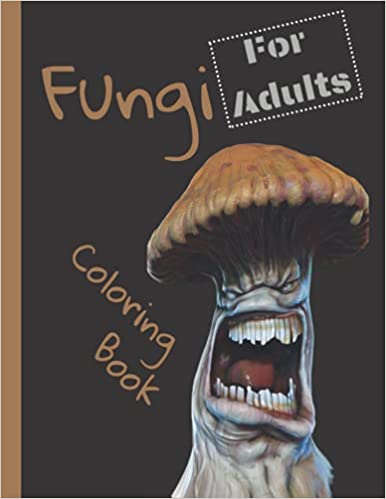
And if you want to start on a less terrifying note, then there’s always this goodie (available via Amazon and elsewhere):
Wow, this is a cheerful post! So now that I’ve shared my selection of frightful fungal horror, I’ll ask you:

Have you read any other horror books with deadly/disgusting/horrifying fungi taking over the world (or at least a corner of it)?

Please share any recommendations… not that I need any further fuel for my nightmares.

Top Ten Tuesday: Bookish Goals for 2023

snowy10

Top Ten Tuesday is a meme hosted by That Artsy Reader Girl, featuring a different top 10 theme each week. This week’s topic is Bookish Goals for 2023.

At the risk of being totally repetitive, I’m basically repurposing the version of this topic that I did in 2021 (apparently, I didn’t bother writing one in 2022!). Year after year, certain basic goals, resolutions, concepts remain true.

I really don’t believe in making resolutions, but I do have some general ideas about how I want to focus my reading in 2023, so here we go:

Read whatever I feel like. Okay, I say this every year… and every year it’s worth repeating! Other than book group reading commitments, I’m going to mostly be sticking to reading without a plan. It’s a wonderful feeling!

Keep ARCS to a minimum. I feel like I’ve been getting better at this. It can be hard to resist requesting every shiny new book that comes up on NetGalley, but I know I’m happiest when I’m not overloaded with obligation books.

Read at least a few of the books/series I highlighted in my series-to-read post for this year.

Tackle at least a few books outside my comfort zone or that will take a bit of extra effort. The main one I have in mind is The Silmarillion (but don’t hold me to it — plans may change!)

For the sake of keeping bad habits in check, don’t hit the Buy Now button for Kindle books just because they’re a price break! I have more books in my Kindle library than I know what to do with. I’m trying to get better at only buying e-books when I’m ready to read them. (This already seems like it’ll be tough to stick with… but it’s worth making the effort.)

And one ongoing task — I should probably reorganize my bookshelves (yet again) and put together a new stack of books to donate. One of these rainy days, I’ll get around to this one!

That’s about it for me. I hope to have a year full of fun, enjoyable reading with very few requirements about when I finish a certain book or what to read in any given moment.

What are your bookish goals for 2023? Wishing everyone a very happy and healthy year… with plenty of great books to read!

The Monday Check-In ~ 1/16/2023

cooltext1850356879

My Monday tradition, including a look back and a look ahead — what I read last week, what new books came my way, and what books are keeping me busy right now. Plus a smattering of other stuff too.

Life.

Rain, rain, rain, and more rain! I think the sun may actually shine a few days later this week… Fingers crossed for good weather — I desperately miss spending time outdoors!

What did I read during the last week?

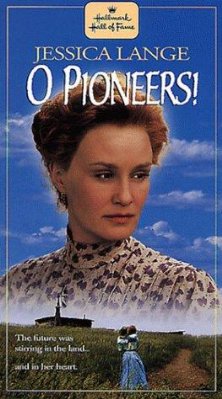
O Pioneers! by Willa Cather: My Classics Club spin book! Finished at the end of the previous week, but it took me a bit to get a review together — see it here.

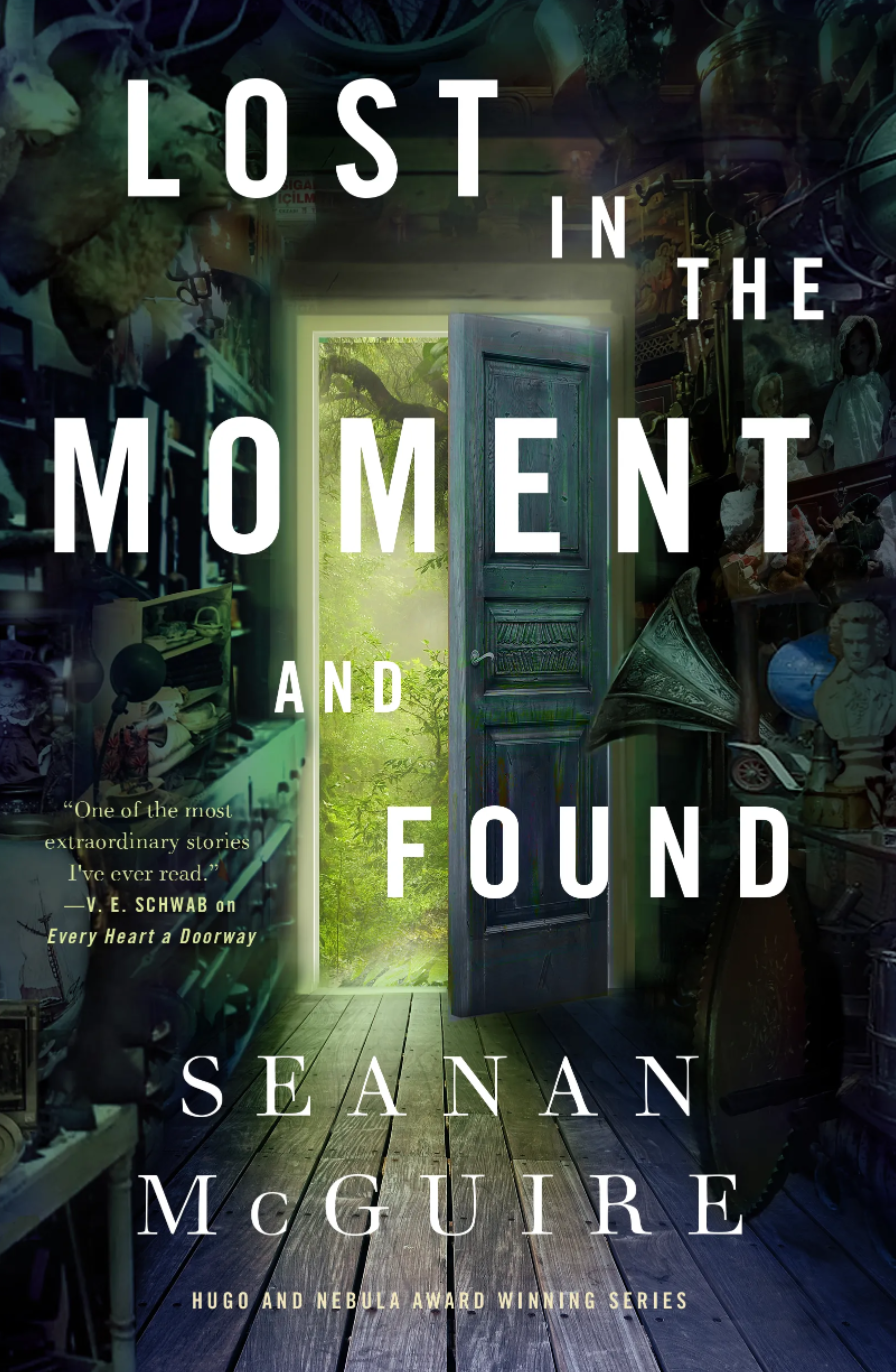
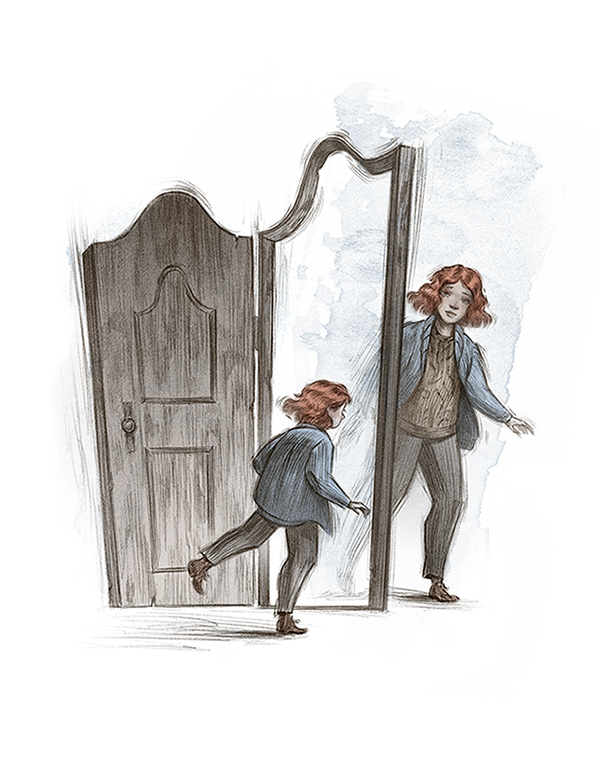
Lost in the Moment and Found by Seanan McGuire: The 8th book in the Wayward Children series. Loved it! My review is here.

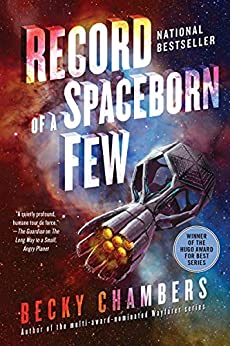
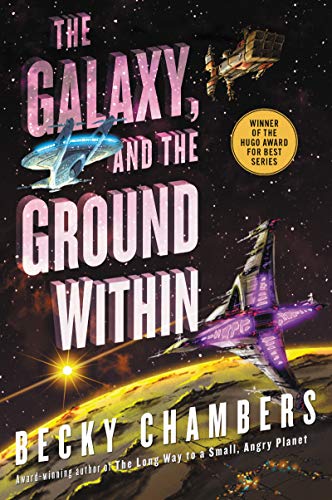
Record of a Spaceborn Few by Becky Chambers: I finished the audiobook (#3 in the Wayfarers series) over the weekend. With each book, the series as a whole seems more and more brilliant. My review is here.

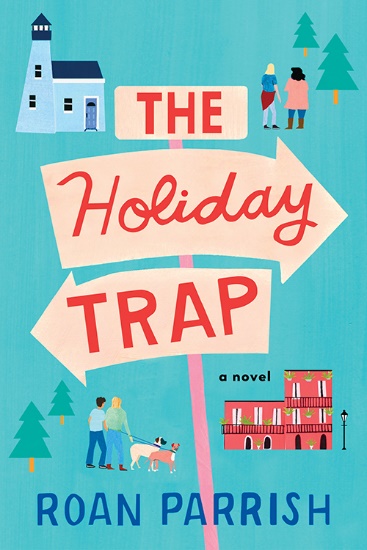
The Holiday Trap by Roan Parrish: A 3-star read. Some cute moments, but also far too many scenes that left me rolling my eyes. My review is here.

Plus, one DNF:

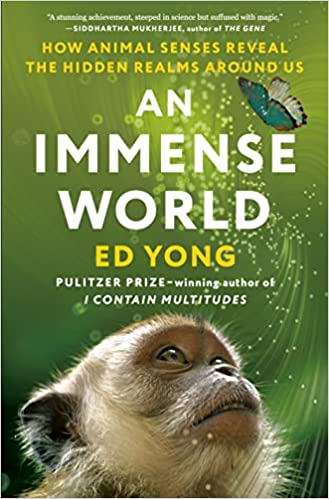
An Immense World by Ed Yong: I got up to page 120 or thereabouts, and that felt like enough. There are some really interesting stories about animal senses, but ultimately reading such a detailed science book just wasn’t for me.

Pop culture & TV:

I ended up watching The Witcher: Blood Origin (Netflix) this past week. Meh. Lots of action, but not terribly compelling as a whole. Maybe they tried to cram too much into four episodes?

Puzzles of the week:

I just started a new puzzle over the weekend:

As you can see, not too much progress yet. So much tiny little detail!! I have a feeling this one will take me a while.

Fresh Catch:

One new book this week:

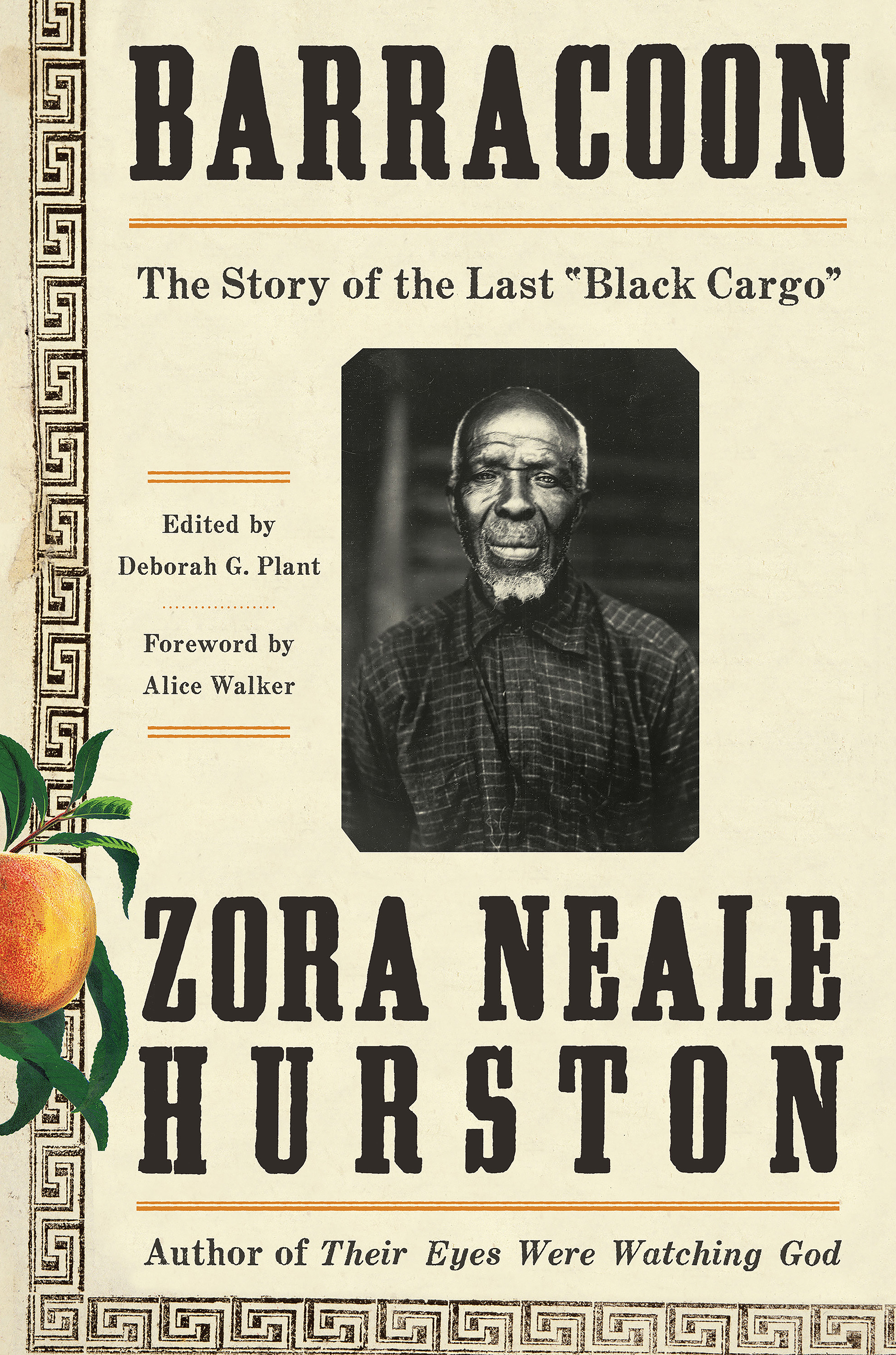
A few of us at work have been talking about possibly doing a group read of this book for Black History Month. Whether that actually happens or not, I do want to read it, so I bought myself a copy!

What will I be reading during the coming week?

Currently in my hands:

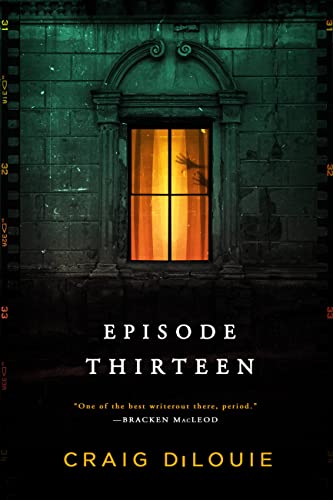
Episode Thirteen by Craig DiLouie: I’ve read about 25% so far, and I’m loving the set-up and early stages of the story.

Now playing via audiobook:

Miss Austen by Gill Hornby. My book group’s pick for January. I have a week to get it done before our discussion! The audiobook is narrated by the fabulous Juliet Stevenson, so I think this will be a fun one.

Ongoing reads:

My longer-term reading commitments:

  • Go Tell the Bees That I Am Gone by Diana Gabaldon: Over at Outlander Book Club, we’re doing a group read of BEES, reading and discussing two chapters per week. Coming up this week: Chapters 92 and 93 (of 155).
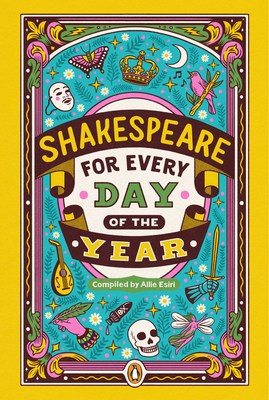
  • Shakespeare for Every Day of the Year by Allie Esiri: Just what the title promises! Shakespeare selections for each day of the calendar. I fell behind this week, then read about five days’ worth over the weekend to catch up. Really enjoyable!
  • A Passage to India by E. M. Forster: This will be my book group’s new classic read. Starting today, we’ll be reading and discussing two chapters per week. I’ve been wanting to read this one for years now, so I’m really excited that the group picked it.

So many books, so little time…

boy1

Book Review: The Holiday Trap by Roan Parrish

Title: The Holiday Trap
Author: Roan Parrish
Publisher: Sourcebooks Casablanca
Publication date: September 6, 2022
Length: 442 pages
Genre: Contemporary romance
Source: Purchased
Rating:

Rating: 3 out of 5.

For fans of Alexandria Bellefleur and Alexis Hall comes a charming, hilarious, and heartwarming LGBTQIA+ romcom about two separate couples finding love over the holidays from acclaimed author Roan Parrish!

Greta Russakoff loves her tight-knit family and tiny Maine hometown, even if they don’t always understand what it’s like to be a lesbian living in such a small world. She desperately needs space to figure out who she is.

Truman Belvedere has just had his heart crushed into a million pieces when he learned that his boyfriend of almost a year has a secret life that includes a husband and a daughter. Reeling from this discovery, all he wants is a place to lick his wounds far, far away from New Orleans.

Enter Greta and Truman’s mutual friend, Ramona, who facilitates a month-long house swap. Over the winter holidays, each of them will have a chance to try on a new life…and maybe fall in love with the perfect partner of their dreams. But all holidays must come to an end, and eventually Greta and Truman will have to decide whether the love they each found so far from home is worth fighting for.

The Holiday Trap has some cute moments, but is far too long and has way too many implausible plot points and annoying characters moments to rise above a 3-star read.

Our two main characters, Greta and Truman, are stuck in lives that clearly aren’t working for them. Greta’s large family is smothering and overly involved and controlling, and living on an island in Maine, there’s really no escaping their endless interference. Truman thinks his life in New Orleans is going well, until he discovers that his boyfriend of one year actually has a family, and Truman is just the bit on the side.

When a mutual friend suggests that they swap places for the holidays, Greta and Truman both agree — because really, it couldn’t be any worse than their current situations. And of course, in their new locations, they each find exactly what they’re looking for — love, community, and purpose.

Greta falls immediately in love with an outspoken, quirky woman who demands honesty and teaches Greta about stating one’s own needs and listening to others. She also finds meaning through a local gardening club, and becomes involved with a community garden and the beekeepers she meets.

Truman arrives on the island with low expectations, but soon discovers that his very favorite author may once have lived there, and then stumbles across the man of his dreams at the local florist shop.

For both, true love seems to arrive within approximately three weeks, so that before their brief swap agreement is even over, they’ve both resolved to make it permanent and start their lives over in their new locations. They’ve also changed themselves in significant ways, learning to speak up and pay attention to what they really want and what makes them happy.

Also (and annoyingly) in this brief time, they find themselves overflowing with amazing new ideas for how to improve their friends’ business ventures, which the friends seem to appreciate and embrace. (If I were in any of the friends’ shoes, I would find this intrusive and presumptuous AF, but hey, maybe that’s just me).

There are sweet interludes and funny moments, but overall, this romance drags on, has too many personal epiphanies crammed into such a short amount of time, and takes its perfect romances far over the edge into not-at-all-believable territory. And the fact that Greta and Truman seem to always have the perfect idea that perfectly solves other people’s challenges… so incredibly annoying.

I’m not sure why this is called The Holiday Trap. It’s not especially about the holidays, other than taking place during December when holidays are happening, and I have no idea what “trap” has to do with anything. Nobody ends up trapped in their new locations or relationships. May The Holiday Swap was already taken?

In terms of steaminess, this book’s sex scenes are graphic, so be aware of that if you prefer understated steam rather than outright step-by-step descriptions of intimate encounters.

Overall, the plot really doesn’t hold up particularly well. Truman is an endearing character and Greta is okay, but their huge personal awakenings and finding of soulmates just don’t feel plausible. The Holiday Trap is good entertainment, but I’ve read a lot better.

Audiobook Review: Record of a Spaceborn Few (Wayfarers, #3) by Becky Chambers

Title: Record of a Spaceborn Few
Series: Wayfarers, #3
Author: Becky Chambers
Narrator:  Rachel Dulude
Publisher: Harper Voyager
Publication date: July 24, 2018
Print length: 368 pages
Audio length: 11 hours, 36 minutes
Genre: Science fiction
Source: Library
Rating:

Rating: 5 out of 5.

Brimming with Chambers’ signature blend of heart-warming character relationships and dazzling adventure, Record of a Spaceborn few is the third standalone installment of the Wayfarers series, set in the sprawling universe of the Galactic Commons, and following a new motley crew on a journey to another corner corner of the cosmos—one often mentioned, but not yet explored.

Return to the sprawling universe of the Galactic Commons, as humans, artificial intelligence, aliens, and some beings yet undiscovered explore what it means to be a community in this exciting third adventure in the acclaimed and multi-award-nominated science fiction Wayfarers series, brimming with heartwarming characters and dazzling space adventure.

Hundreds of years ago, the last humans on Earth boarded the Exodus Fleet in search of a new home among the stars. After centuries spent wandering empty space, their descendants were eventually accepted by the well-established species that govern the Milky Way.

But that was long ago. Today, the Exodus Fleet is a living relic, the birthplace of many, yet a place few outsiders have ever visited. While the Exodans take great pride in their original community and traditions, their culture has been influenced by others beyond their bulkheads. As many Exodans leave for alien cities or terrestrial colonies, those who remain are left to ponder their own lives and futures: What is the purpose of a ship that has reached its destination? Why remain in space when there are habitable worlds available to live? What is the price of sustaining their carefully balanced way of life—and is it worth saving at all?

A young apprentice, a lifelong spacer with young children, a planet-raised traveler, an alien academic, a caretaker for the dead, and an Archivist whose mission is to ensure no one’s story is forgotten, wrestle with these profound universal questions. The answers may seem small on the galactic scale, but to these individuals, it could mean everything.

Argh… again with a misleading synopsis blurb! Why does whoever writes things keep coming back to a “motley crew”? That is SO not what this book is about! Anyway…

Record of a Spaceborn Few is the 3rd installment in the fabulous Wayfarers series, and it leaves me in absolute awe of author Becky Chambers and her vision of this sprawling fictional world. Here, she moves the story to a place we’ve heard about but not seen — the Exodan Fleet.

Many generations earlier, humans left Earth as it became uninhabitable, creating a fleet of homesteader ships that headed out into the galaxy with no idea of an endpoint or destination. Eventually, the human fleet encountered other sapient species, much more advanced in technology and in the social complexities of cross-species relations. After some time, the humans were accepted into the Galactic Commons (kind of like a UN for alien species), and many of the humans of the fleet sought out new homes on already established worlds or set out to colonize new human habitations on unsettled planets.

Not all, though. Many remained with the fleet, where their ancestors had lived already for centuries. Among the ships of the fleet, a shared community of sustainability, common interest, respect for the past, and well-ordered social expectations had been built over time. For the Exodans who stayed with the fleet, they were no longer on a journey — the fleet was home.

Within this setting, we follow the lives of several very different characters — some lifelong residents of the Asteria homesteader ship, some newcomers, some alien visitors. Through each, we learn more about Exodan life, their rituals, their beliefs, and the reality of their day-to-day.

The action starts with an unprecedented tragedy — one of the Exodan ships is destroyed in a freak accident. For the rest of the fleet, this is not only a human tragedy with countless deaths, but also a stark reminder of the potential danger and precariousness of their own homes. As the story moves forward, we see the ripple effect on the different characters, some of whom question their commitment to the fleet and wonder about other options, and some of whom reinvest in making sure that the fleet society has a future.

It’s all quite fascinating. In some ways, life in the fleet reminds me of a traditional kibbutz — communal life, with all jobs valued, each giving back to the community through labor, with shared communal living spaces balanced with family spaces, and a shared responsibility for daily tasks such as cooking, cleaning, and childcare. I was also intrigued by the deeply ingrained ethos of reusing and repurposing. When resources are scarce and the world is a closed system, everything serves a purpose, and nothing can be wasted.

The characters themselves are unique individuals, each with their own interesting lives and sets of joys and worries. These include an archivist, who tends the collective memories of the fleet; a newcomer seeking new meaning after growing up planetside and without connections; a caregiver whose job is to lovingly tend the dead through carefully established rituals; an alien sociologist spending time on the Asteria to study this example of human society, and a teen who isn’t sure where he’s meant to be or what his purpose is. They’re all wonderful, and I can’t say there was any one storyline I preferred over the others.

Record of a Spaceborn Few is loosely connected to the first book in the series, The Long Way to a Small, Angry Planet, as one of the characters is the sibling of the ship captain from the 1st book. Otherwise, this is a stand-alone story within a shared universe. I love how each book in the series opens up a new aspect of life within this fictional universe, broadening our understanding of what life is like for these future humans — among the stars, on a planet, or on a homesteader ship.

While these books are science fiction, there are no raging space battles or chases or high-tech weaponry. The series is about a society, about what it’s like to live in a galaxy where one’s own species is both a novelty and a minority, dependent on the tolerance and generosity of others species. The characters we meet, the choices they make and the dilemmas they face, are far more important to the overall tone and themes of the books than the details of water recycling, propulsion system, or the mechanics of keeping a spaceship working for centuries.

It’s all fascinating, and a remarkable creation. I’ve been listening to the audiobooks — narrator Rachel Delude gives an incredible performance, voicing so many different characters, keeping them distinct and identifiable, and bringing emotion and humor whenever needed. It’s been a terrific listening experience.

I can’t recommend this series strongly enough! Each book is a delight, and each one adds new dimensions to our understanding of the world of the series.

Next in the series: The Galaxy, and the Ground Within

I have one book left in the series — The Galaxy, and the Ground Within — and can’t wait to keep going (although I’ll be sad to finish). After hearing about this series for so long, I’m so glad that I finally made it a point to dig in! I’m just sorry that it took me so long.

Book Review: O Pioneers! by Willa Cather (Classics Club Spin #32)

Title: O Pioneers!
Author: Willa Cather
Publication date: 1913
Length: 159 pages (Kindle edition)
Rating:

Rating: 4.5 out of 5.

Synopsis (Goodreads):

O Pioneers! (1913) was Willa Cather’s first great novel, and to many it remains her unchallenged masterpiece. No other work of fiction so faithfully conveys both the sharp physical realities and the mythic sweep of the transformation of the American frontier—and the transformation of the people who settled it. Cather’s heroine is Alexandra Bergson, who arrives on the wind-blasted prairie of Hanover, Nebraska, as a girl and grows up to make it a prosperous farm. But this archetypal success story is darkened by loss, and Alexandra’s devotion to the land may come at the cost of love itself.

At once a sophisticated pastoral and a prototype for later feminist novels, O Pioneers! is a work in which triumph is inextricably enmeshed with tragedy, a story of people who do not claim a land so much as they submit to it and, in the process, become greater than they were.

And from Wikipedia:

O Pioneers! is a 1913 novel by American author Willa Cather, written while she was living in New York. It was her second published novel. The title is a reference to a poem by Walt Whitman entitled “Pioneers! O Pioneers!” from Leaves of Grass (1855).

O Pioneers! tells the story of the Bergsons, a family of Swedish-American immigrants in the farm country near the fictional town of Hanover, Nebraska, at the turn of the 20th century. The main character, Alexandra Bergson, inherits the family farmland when her father dies, and she devotes her life to making the farm a viable enterprise at a time when many other immigrant families are giving up and leaving the prairie. The novel is also concerned with two romantic relationships, one between Alexandra and family friend Carl Linstrum and the other between Alexandra’s brother Emil and the married Marie Shabata.

O Pioneers! is my most recent Classics Club Spin book, and once again, it’s been a great experience getting that little push to read a book that I might have missed out on otherwise.

Prior to O Pioneers!, the only work of Willa Cather’s that I’ve read was My Antonia, which I read once during high school and again more recently when I came across a copy at a library sale. I loved Cather’s writing style and the sense of beauty that comes through her descriptive passages, and I’ve always meant to seek out more of her books.

O Pioneers! centers on Alexandra Bergson, whom we first meet as a young woman. From the earliest chapters, we understand that she’s the backbone of her family. Her parents arrived on the Nebraska plains years earlier as immigrants, struggling to establish a home and a livelihood in harsh conditions. As the book opens, Alexandra’s father is dying. While she has three brothers — two teens and five-year-old Emil — her father’s dying instructions are clear:

“Boys,” said the father wearily, “I want you to keep the land together and to be guided by your sister… I want no quarrels among my children, and so long as there is one house there must be one head. Alexandra is the oldest, and she knows my wishes. She will do the best she can. If she makes mistakes, she will not make so many as I have made.”

As the book continues, we see Alexandra doing what no one else in the family can. She keeps the farm going, but not only that — she’s determined to do more than scratch by. She learns, thinks, and grows, and despite her brothers’ objection to what they see as risky ventures, Alexandra uses her wits and strategic planning to acquire more land, invest, and ultimately succeed in becoming one of the best established farmers and landowners in the region.

Of course, the older brothers aren’t always content to abide by Alexandra’s decisions. Rather dull-minded and resentful of hard work, they still uphold the manly tradition of being sexist jerks when it comes to their sister:

Oscar reinforced his brother, his mind fixed on the one point he could see. “The property of a family belongs to the men of the family, because they are held responsible, and because they do the work.” Alexandra looked from one to the other, her eyes full of indignation. She had been impatient before, but now she was beginning to feel angry. “And what about my work?” she asked in an unsteady voice.

[…]

Lou turned to Oscar. “That’s the woman of it; if she tells you to put in a crop, she thinks she’s put it in. It makes women conceited to meddle in business.”

Success takes a toll, as Alexandra remains largely alone. She has friends and neighbors and community, and while she seems content with her life, she’s never pursued romantic love of any sort. As she moves through her adult years, she’s devoted to Emil, now a young man, envisioning herself making a future and inheritance for him. Emil, though, like many young people raised on the plains, doesn’t necessarily want a life as a farmer — he attends college, travels, and seems to have a myriad of options available to him. Ultimately, though, a passionate love affair threatens his and Alexandra’s dreams for his future.

O Pioneers! covers about 20 years of the family’s lives, and we see how time changes them all. Through it all, Alexandra remains the steady, devoted head of the family and keeper of the land, and it’s only a tragedy near the end of the story that forces more extreme change upon her.

The writing in O Pioneers! is simply lovely. Willa Cather’s words are spare, but evocative. From her descriptions of the land itself to her illustration of the characters’ lives and thoughts, the words she uses bring the people and place to life.

ONE JANUARY DAY, thirty years ago, the little town of Hanover, anchored on a windy Nebraska tableland, was trying not to be blown away.

But this land was an enigma. It was like a horse that no one knows how to break to harness, that runs wild and kicks things to pieces.

He best expressed his preference for his wild homestead by saying that his Bible seemed truer to him there. If one stood in the doorway of his cave, and looked off at the rough land, the smiling sky, the curly grass white in the hot sunlight; if one listened to the rapturous song of the lark, the drumming of the quail, the burr of the locust against that vast silence, one understood what Ivar meant.

A pioneer should have imagination, should be able to enjoy the idea of things more than the things themselves.

But off there in the cities there are thousands of rolling stones like me. We are all alike; we have no ties, we know nobody, we own nothing. When one of us dies, they scarcely know where to bury him. Our landlady and the delicatessen man are our mourners, and we leave nothing behind us but a frock-coat and a fiddle, or an easel, or a typewriter, or whatever tool we got our living by. All we have ever managed to do is to pay our rent, the exorbitant rent that one has to pay for a few square feet of space near the heart of things. We have no house, no place, no people of our own. We live in the streets, in the parks, in the theatres. We sit in restaurants and concert halls and look about at the hundreds of our own kind and shudder.
The dawn in the east looked like the light from some great fire that was burning under the edge of the world.

One could easily believe that in that dead landscape the germs of life and fruitfulness were extinct forever.

Other versions of O Pioneers!:

As far as I could discover, there’s been just one O Pioneers! film adaptation — a 1992 made-for-TV movie starring Jessica Lange and David Strathairn. I have no idea if it’s easily available, but I’d love to check it out!

Wrapping it all up:

I’m so happy to have finally read this beautiful, powerful book. Many thanks to the Classics Club for inspiring me to read O Pioneers! and other classics!

Can’t wait for the next CCSpin!

Book Review: Lost in the Moment and Found (Wayward Children, #8) by Seanan McGuire

Title: Lost in the Moment and Found
Series: Wayward Children, #8
Author: Seanan McGuire
Publisher: Tor
Publication date: January 10, 2023
Length: 160 pages
Genre: Fantasy
Source: Review copy courtesy of the publisher

Rating: 4.5 out of 5.

A young girl discovers an infinite variety of worlds in this standalone tale in the Hugo and Nebula Award-winning Wayward Children series from Seanan McGuire, Lost in the Moment and Found.

Welcome to the Shop Where the Lost Things Go.

If you ever lost a sock, you’ll find it here.
If you ever wondered about favorite toy from childhood… it’s probably sitting on a shelf in the back.
And the headphones that you swore that this time you’d keep safe? You guessed it….

Antoinette has lost her father. Metaphorically. He’s not in the shop, and she’ll never see him again. But when Antsy finds herself lost (literally, this time), she finds that however many doors open for her, leaving the Shop for good might not be as simple as it sounds.

And stepping through those doors exacts a price.

Lost in the Moment and Found tells us that childhood and innocence, once lost, can never be found.

You might wonder whether, by the 8th book in a series, an author might run out of fresh stories to tell.

If the author is Seanan McGuire, then the answer is — not a chance! In Lost in the Moment and Found, she puts a fresh spin on the ongoing Wayward Children series, once again moving the focus to a completely new character in a completely new circumstance.

While all the Wayward Children books feature children who’ve had lousy childhoods in one way or another, the circumstances here are particularly awful — enough so that the author includes a note prior to the opening of the story:

While all the Wayward Children books have dealt with heavy themes and childhood traumas, this one addresses an all-too-familiar monster: the one that lives in your own home. Themes of grooming and adult gaslighting are present in the early text. As a survivor of something very similar, I would not want to be surprised by these elements where I didn’t expect them.

I just want to offer you this reassurance: Antsy runs. Before anything can actually happen, Antsy runs.

I have to say, I very much appreciated the warning. While the sense of dread builds in the early part of the book, at least I could proceed without fearing the absolute worst. And as the author promises, the main character, Antsy, does in fact run. When her fear and sense of isolation and lack of support gets to the point that she can no longer stand it, she finds a way out and escapes.
… as she got older, she would come to think that the ability to cry was the third thing she’d lost in a single day.

Antsy, at age six, a year after a terrible loss, gains a stepfather whom she never wanted, but she hopes her mother’s happiness will allow her to feel happy too. It doesn’t work that way. Her sense of wrongness and unease whenever she’s around her stepfather only continues to grow. He’s insidious, undermining Antsy in small ways through lies and contradictions, so that Antsy knows that if she goes to her mother with her big worries, she won’t be believed. It’s utterly heartbreaking.

When Antsy finally does reach her breaking point and runs away, she ends up at a strange little thrift shop that she never noticed before, with the words “Be Sure” written over the door frame. Once inside, the door she entered through disappears, and Antsy finds herself in a new home with an odd elderly woman and a talking magpie as companions.

As she stays in this store, she discovers new doors leading to new worlds, where she meets all sorts of strange and fascinating people and brings back more goods for the infinite shelves of the store she lives in. And for a long time, she forgets that there’s anything else out there and doesn’t think to question certain very odd occurrences…
Eventually, Antsy realizes that there’s a steep price to be paid for all the miraculous new worlds she visits — and that she may run out of options sooner than expected. The ending is moving and fitting, very sad, but with a small sliver of hope too.

Yes, I’m being vague!

As in all the Wayward Children books, the writing is simply gorgeous. These stories are never just straight-forward action — there’s a sense of mythic scope embedded in the descriptions of sad, lost children, and loss permeates so much of the storytelling.

The toll of childhood trauma becomes literal here: Antsy’s loss of safety and innocence leads to her new reality in the strange world of endless doors and lost things:

She should have had a childhood, ice cream and matinees and sunshine and cookies, not working in a dusty shop while she grew up faster than she should have been able to, rocketing toward adulthood, spending hours she’d never be able to recover! She should have had time. It was hers, and she had never agreed to give it away.

Antsy’s story is particularly tragic — obviously, no small child should ever have to doubt whether the one person they count on will actually believe them when they speak up. We can cheer Antsy on as she saves herself, but still, we can’t avoid mourning her shattered childhood and sense of faith in family and love.

The Wayward Children books include beautiful drawings by the very talented Rovina Cai. See more at https://www.rovinacai.com/portfolio/wayward-children-series/

As a whole, the Wayward Children series is beautiful, sad, emotional, and full of heartache and redemption. There’s hope and joy to offset the sorrow, but an undercurrent of sadness never quite leaves the stories or their characters.

I love the series, and I’m so happy that Lost in the Moment and Found lives up to my (very high) expectations. Please do start from the beginning if you haven’t read any of these yet! Each book is novella -length, but don’t rush through them — the lovely writing should be savored.

Top Ten Tuesday: Most Anticipated Books Releasing in the First Half of 2023

snowy10

Top Ten Tuesday is a meme hosted by That Artsy Reader Girl, featuring a different top 10 theme each week. This week’s topic is Most Anticipated Books Releasing in the First Half of 2023.

There are plenty to choose from — but here are ten I’m really excited for:

  1. Episode Thirteen by Craig DiLouie (1/24)
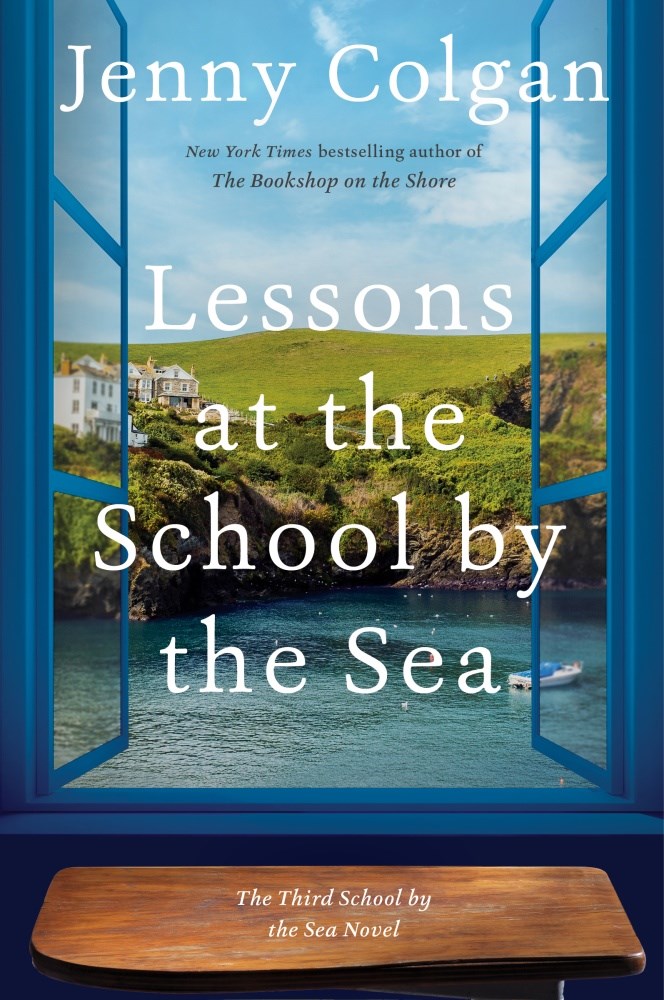
  2. Lessons at the School by the Sea by Jenny Colgan (3/7)
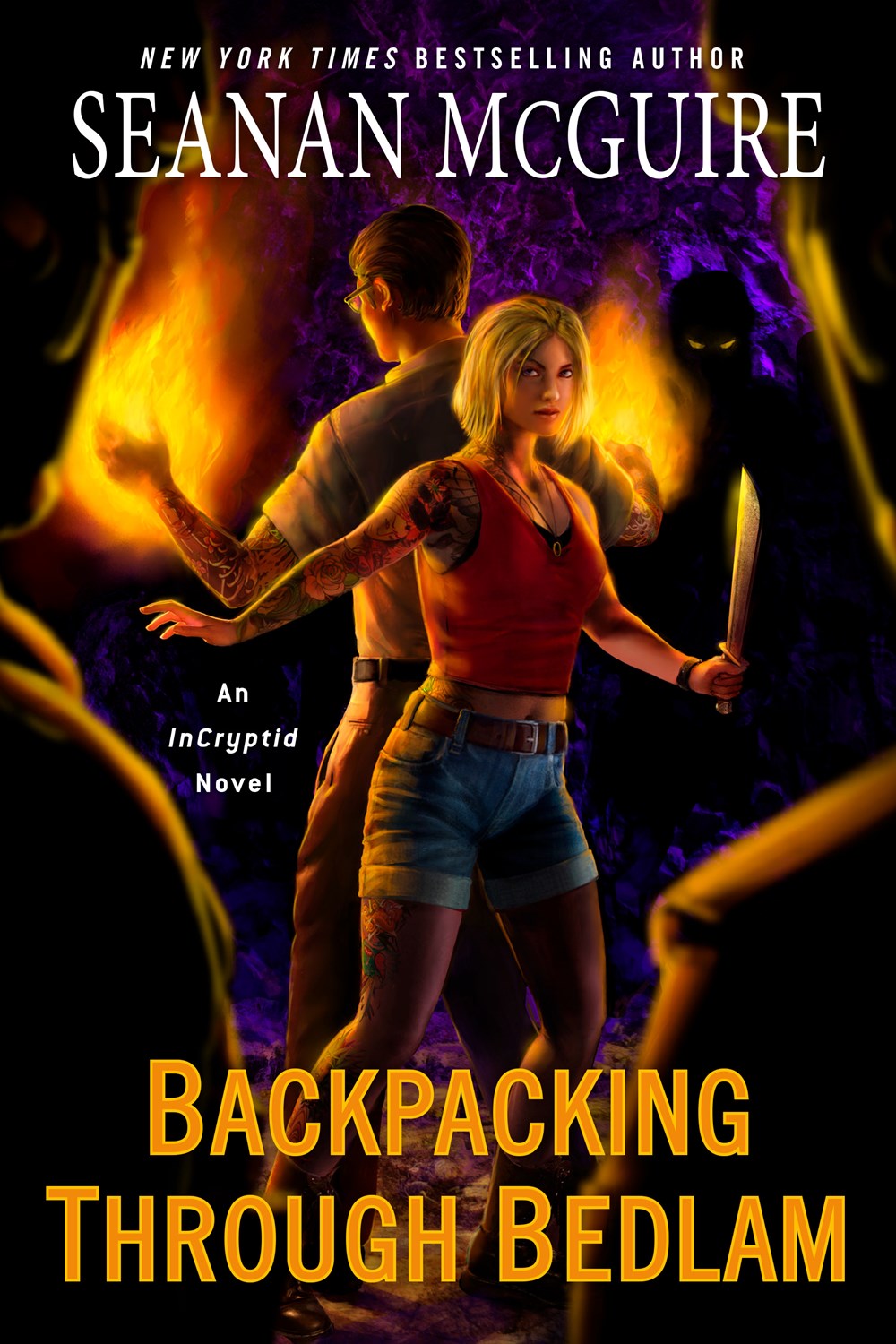
  3. Backpacking Through Bedlam (Incryptids, #12) by Seanan McGuire (3/7)
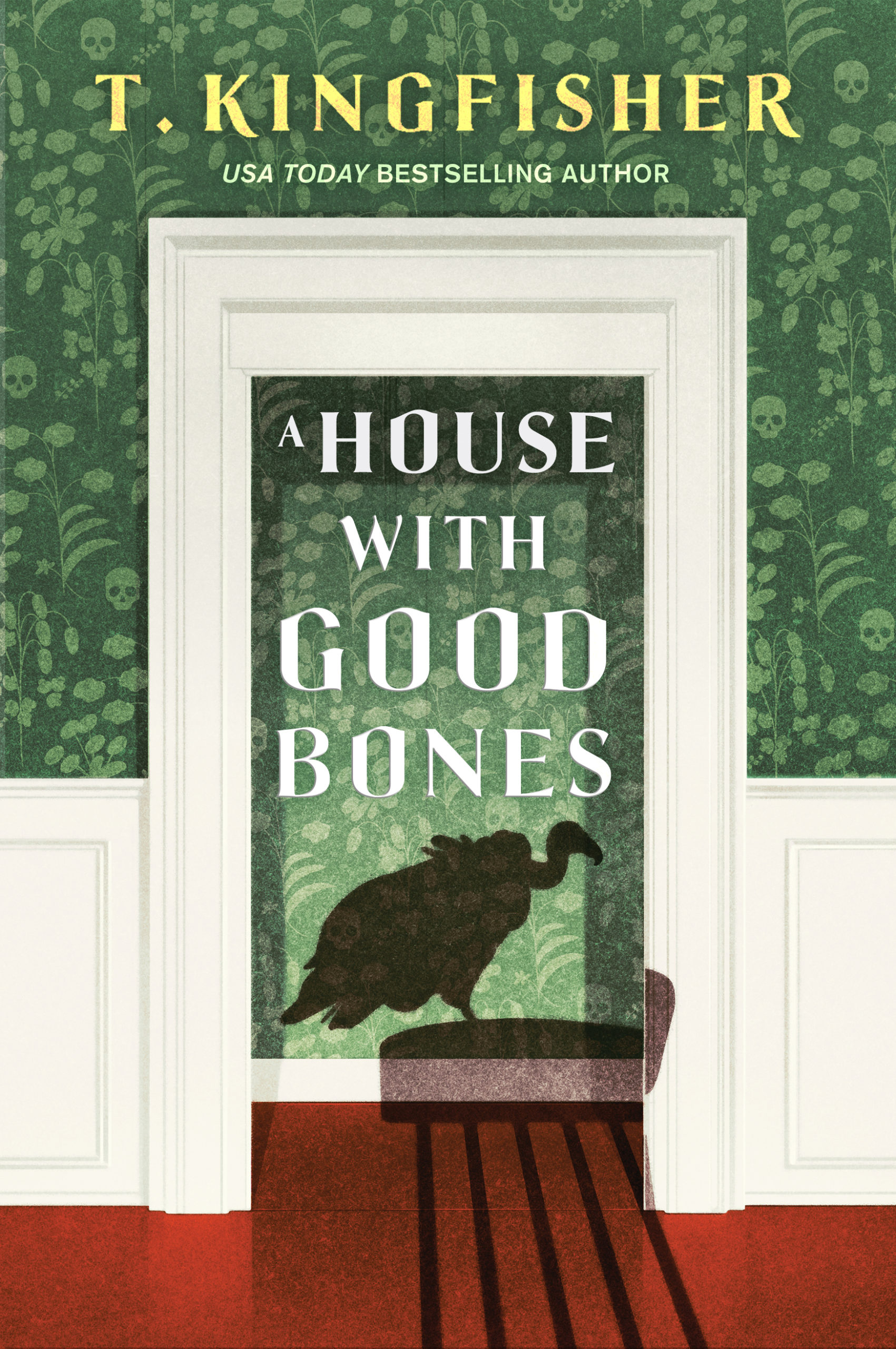
  4. A House With Good Bones by T. Kingfisher (3/28)
  5. The Soulmate by Sally Hepworth (4/4)
  6. Said No One Ever by Stephanie Eding (4/4)
  7. Not the Ones Dead (Kate Shugak, #23) by Dana Stabenow (4/13)
  8. In the Lives of Puppets by TJ Klune (4/25)
  9. Happy Place by Emily Henry (4/25)
  10. Late Bloomers by Deepa Varadarajan (5/2)

What new releases are you most looking forward to over the next six months? Share your links, and I’ll come check out your top 10!

The Monday Check-In ~ 1/9/2023

cooltext1850356879

My Monday tradition, including a look back and a look ahead — what I read last week, what new books came my way, and what books are keeping me busy right now. Plus a smattering of other stuff too.

Life.

This week really flew by! We had huge rainstorms pretty much all week, and even lost power one particularly blustery night. Luckily, today was a mostly sunny day — first day without rain all week! — so I was able to finally enjoy being outdoors. More rain on the way starting tomorrow and all the way through next weekend…

A blogging update:

As I shared last week, I’ve made the decision to step back from my weekly Shelf Control meme. After 7 years and 347 books, I reached the point where I felt like giving myself a break from ongoing commitments, including this one

BUT — Shelf Control is not going away! I’m happy to announce that Mallika at Literary Potpourri has graciously agreed to become the new host. Please join Mallika on Wednesdays to celebrate our unread books (and maybe even commit to reading them!).

What did I read during the last week?

Poster Girl by Veronica Roth: A look at what’s left after the overthrow of a dystopian society. Unique and absorbing — my review is here.

Beyond the Wand by Tom Felton: I loved this audiobook memoir by the actor who played Draco Malfoy in the Harry Potter movies. My review is here.

O Pioneers! by Willa Cather: My Classics Club spin book! I just finished over the weekend; review to follow.

Pop culture & TV:

I binge-watched Kindred (Hulu) this week — it’s so good! I loved the Octavia Butler novel (in fact, I think it was the first Octavia Butler book I ever read). The TV series changes some key elements, but the overall storyline follows much of the book’s main themes and plot points. Definitely worth checking out!

I’m also really loving 1923 (Paramount+). I mean, Harrison Ford and Helen Mirren on my TV screen? In an earlier generation of the Yellowstone family? What’s not to love?

Puzzles of the week:

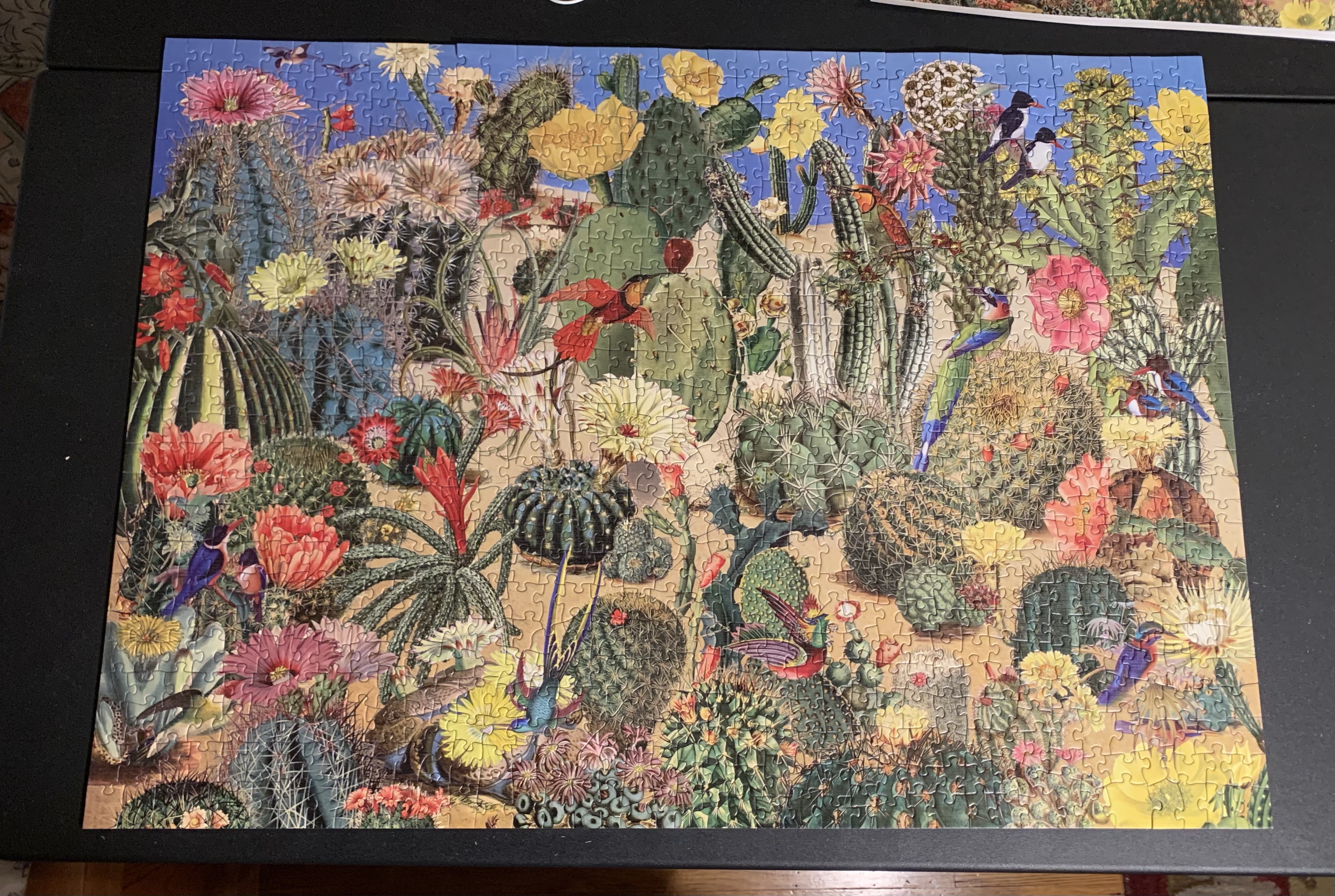
A gorgeous Eeboo puzzle!

This was a tough one! So many tiny details… so many cactus spines! I was totally impressed with myself by the time I finished. (Sorry — once again, I need to point out that this puzzle is much prettier in real life. My lighting and photo abilities are not great).

Fresh Catch:

Two new purchased books, plus one from the library:

I’m especially excited for The Stolen Heir, but I’m looking forward to reading all three.

What will I be reading during the coming week?

Currently in my hands:

Lost in the Moment and Found by Seanan McGuire: The 8th book in the excellent Wayward Children series. Loving it so far — I’ll probably finish later tonight.

Now playing via audiobook:

Record of a Spaceborn Few (Wayfarers, #3) by Becky Chambers. Back to the Wayfarers series! I probably should have started my next book group book this week… but my library request for this book just came in, and I couldn’t resist.

Ongoing reads:

My longer-term reading commitments:

  • Go Tell the Bees That I Am Gone by Diana Gabaldon: Over at Outlander Book Club, we’re doing a group read of BEES, reading and discussing two chapters per week. Coming up this week: Chapters 90 and 91 (of 155).
  • An Immense World by Ed Yong: An interesting science book, but sometimes a little too heavy on the technical details. I’m trying to read this in steady little chunks, since I’m not very good at reading non-fiction straight through. I’m not sure I’ll make it all the way to the end, but for now, I’m sticking with it. Progress so far: page 115/464
  • Shakespeare for Every Day of the Year by Allie Esiri: Just what the title promises! Shakespeare selections for each day, and my plan is to keep up, all year long!

So many books, so little time…

boy1

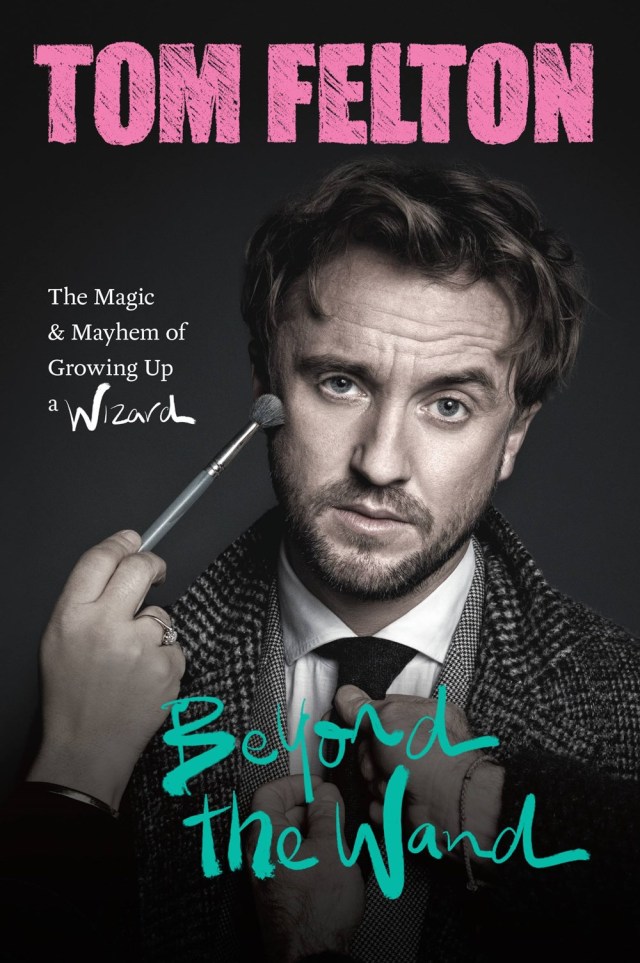
Audiobook Review: Beyond the Wand: The Magic & Mayhem of Growing Up a Wizard by Tom Felton

Title: Beyond the Wand: The Magic & Mayhem of Growing Up a Wizard
Author: Tom Felton
Narrator: Tom Felton
Publisher: Grand Central Publishing
Publication date: October 18, 2022
Print length: 286 pages
Audio length: 6 hours, 36 minutes
Genre: Memoir
Source: Library
Rating:

Rating: 4.5 out of 5.

They called for a break, and Gambon magicked up a cigarette from out of his beard. He and I were often to be found outside the stage door, having ‘a breath of fresh air’, as we referred to it. There would be painters and plasterers and chippies and sparks, and among them all would be me and Dumbledore having a crafty cigarette.

From Borrower to wizard, Tom Felton’s adolescence was anything but ordinary. His early rise to fame saw him catapulted into the limelight aged just twelve when he landed the iconic role of Draco Malfoy in the Harry Potter films.

Speaking with candour and his own trademark humour, Tom shares his experience of growing up on screen and as part of the wizarding world for the very first time. He tells all about his big break, what filming was really like and the lasting friendships he made during ten years as part of the franchise, as well as the highs and lows of fame and the reality of navigating adult life after filming finished.

Prepare to meet a real-life wizard.

Draco speaks!

In Beyond the Wand, actor Tom Felton shares stories from his early childhood, the Potter years, and beyond. Unlike some of the seriously dire and disturbing celebrity memoirs of the past year, Beyond the Wand is a mostly upbeat, light-hearted romp through the life of an actor whose professional work will forever be defined by the sneering Slytherin he portrayed so well.

Significantly younger than his three older brothers, Tom grew up with a healthy dose of love and fun, but also humility — his brothers were always happy to cut him down to size before celebrity could go to his head. After roles in two smaller films, Tom’s life changed forever when he was cast as Draco Malfoy… without ever having read the Harry Potter books. (His description of the audition scene, where he had to fake knowledge of the story — and failed — is very funny).

His descriptions of the early years of filming are sweet, humorous, and eye-opening. There’s nothing scandalous here, don’t worry! Tom shares stories of on-set experiences, filming challenges, and lots of fun little stories — for example, his grandfather, acting as Tom’s required on-set chaperone, had such an impressive white beard that director Chris Columbus ended up casting him as a Hogwarts professor!

Because Draco was a lower-profile character than the big three of Harry, Hermione, and Ron, Tom’s profile as a star was somewhat lower-key as well. And because he had fewer scenes over all, he was able to continue attending his Muggle school in between filming, which he credits with enabling him to have a semi-normal childhood. Yes, he had a lead role in one of the biggest movie franchises ever, but he also had regular school, friends, and older brothers to keep him grounded (and occasionally get him into trouble as well).

The tone of Beyond the Wand is light and funny. Listening to the audiobook is a pleasure — he narrates his own story, and speaks it all as if he were hanging out with you and telling stories. It feels accessible and personal, and he injects a sense of fun into it all.

One of the elements I really appreciated in Beyond the Wand was Tom’s depiction of the older cast of Harry Potter and their influence on him and his child co-stars. As he describes, walking onto set as a 12-year-old, he had no idea of the stature of the adult cast members. And yet, over time, he came to realize just how fortunate he was to act alongside actors such as Richard Harris, Maggie Smith, and Alan Rickman. He shares plenty of lovely anecdotes about their interactions with the children, their influence, and their generosity, and he also pays loving tribute to the cast members no longer with us, which is quite touching.

It’s only in the last couple of chapters that we get to anything darker, as he describes his post-Potter Hollywood years, his sense of loss of direction, a brief period of alcohol abuse, and struggles with mental health. The focus is mostly on the positive, though — on the importance of being able to get help without shame, and the value he’s found in seeking treatment when needed.

Other than those chapters, the tone is very fun and full of larks, and overall, Beyond the Wand is a really enjoyable listen. Even for huge Potter fans, there are plenty of behind-the-scenes tidbits shared here that will be new and fresh. (Nothing scandalous — it’s all good fun, with a sense of Tom’s enjoyment at being a bit of a rascal.)

This would be a great gift for any adult who grew up on Potter. Tom Felton presents his story with humor and modesty, as well as deep appreciation for the experiences he’s had and the people he’s worked with. He comes across as very human and not overly impressed with his own celebrity — it’s a friendly, chummy memoir about a boy who ended up following a very unusual path. Lots of fun — definitely recommended.