A whale, an app, and me; or, how I finished reading Moby Dick in 79 easy pieces

Hast seen the white whale?
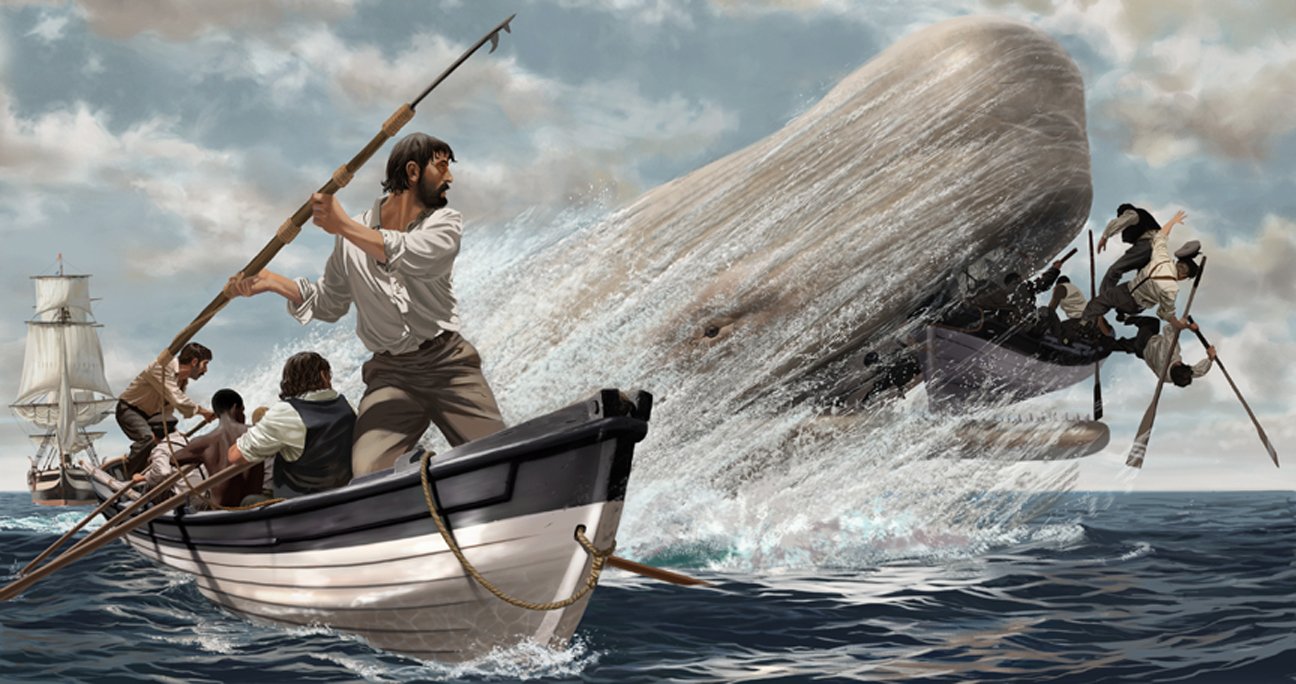
moby-dick-3I have!

I conquered that whale, and good.

Yes, after spending all of my reading life up to now saying, “I should probably read Moby Dick one of these days” but knowing in my heart that I never actually would… I DID IT!

Thanks to the glory of the Serial Reader app (read about it here), I have finally conquered the American classic that I never expected to read.

moby-dick_fe_title_pageSerial Reader is an app that lets you pick a public domain book to “subscribe” to. Each day, a new installment is ready to go. I got kind of used to waking up in the morning and seeing the friendly “Ahoy!” messages (I kid you not) letting me know that the new daily reading chunk was ready and waiting. Each day’s reading was typically short enough to read in 10 – 15 minutes.

Is 10 – 15 minutes something I could spare? Absolutely.

Let’s face it — the idea of reading Moby Dick or certain other massive classics is just way too daunting. I’m not afraid of the content, but I do know myself well enough to know that I’ll push my way through while constantly aching to go back to something that doesn’t feel like I’ve given myself an assignment.

But 10 – 15 minutes? Heck, I could do that over my morning coffee (which is exactly what I did most days).

I did read ahead at least a few days per week, so rather than taking 79 days to read, I finished the book in more like 60, I think.
whales-1472984_1280You probably want to know – how was it? I mean, was the book actually good?

The answer is YES. Surprise, surprise — it’s even funny at parts. Herman Melville can tell a tale, I tell you.

Of course, there are huge chunks in the middle where we have chapter after chapter about whale anatomy, the parts of whaling ships, descriptions of the jobs of every person on board a whaling ship… on and on and on. The early chapters are about our narrator Ishmael, and there are some delightful moments when he befriends the “cannibal” Queequeg, although I was sorry to see their bromance fade from the storyline as the book progresses. Really, if you took out all the parts about categorizing and labeling whale parts, the story of the Pequod and its mad captain Ahab would probably only be about a third as long as Moby Dick is in its entirety.

As to the method of reading the book, the Serial Reader approach has its pros and cons.

PROS: I read the damn book! I really don’t believe I ever would have done it otherwise. The app kept me motivated, with its scoring and little achievement badges and daily encouragements with each segment completed.

CONS: While I read the book (hurray!), I don’t believe I came even close to fully appreciating it. I read it quickly, and it was a very surface-level read. I didn’t dive into the symbolism, the structure, the themes, the references — I read it purely for story. I suppose someone could use the app and still take the time for a deeper dive into each installment, but I didn’t. I approached this read as a limited time commitment, with its allotted 10 – 15 minutes per day, and that’s all I was willing to give.

in-the-heart-of-the-sea-whale-xlarge-large_transrp36ti1mfcyr8pmus2fhb17hoduspm84eyl8thpmrlk

Do I recommend it? Again, yes and no.

The Serial Reader app is a great way to tackle books that you might not ordinarily read. But as for Moby Dick, I do believe that I would have gotten much more out of it if I’d read an annotated version, or even looked through an illustrated edition with diagrams of all the whale anatomy and other goodies.

Will I use Serial Reader again?

Oh, I think so. Maybe not right away. I think I need a little free reading time where I’m not keeping up with quite so many narrative threads at once. (See my post about my reading saturation point, here.)

Likewise, I don’t know if I’d want to tackle such a big book this way again. At some points, it really did feel like a chore, and I’m pretty much opposed to anything that makes reading feel like work, not play.

But I do see the value in using the app to make a challenging read more bite-sized and manageable. I could see myself using the app for some classic sci-fi, like Jules Verne or H. G. Wells, or even some random short stories. As for longer classic fiction, I’m not sure. I’ve been saying I want to read Great Expectations for years now and still haven’t done it, so Serial Reader could be the way to get it done — but I think I’ll get more out of it as a reader if I treat it like any other book I want to read, sitting down with the book and a bookmark, and not starting anything else until I’m done… rather than treating it like an assignment with a daily deadline.
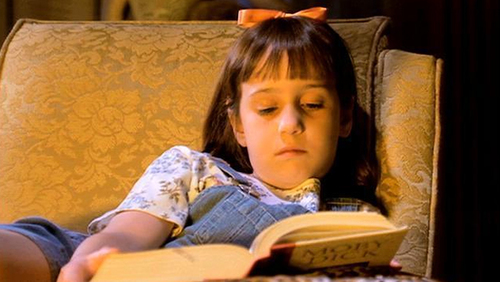
matilda-moby-dick

Meanwhile, back to Moby Dick

I read it, and I enjoyed it, and I’ve been thinking about it quite a bit ever since I finished this week. The book has such a reputation as a heavy, overwhelming read, and I was surprised to find that it’s actually fun, entertaining, moving, and at times, laugh-out-loud funny. Sure, the science is a bit (oh, 150 years or so) behind the times, but for when it was written, it’s really quite remarkable. So what if Melville considers whales to be fish? I’d venture to say that what he presented was deemed accurate at the time.

So, consider me a fan. I met the white whale, and survived to tell the tale.
Save

Save

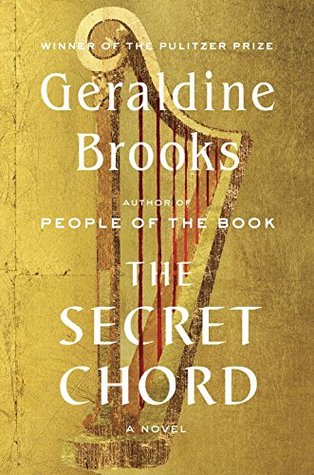
Take A Peek Book Review: The Secret Chord by Geraldine Brooks

“Take a Peek” book reviews are short and (possibly) sweet, keeping the commentary brief and providing a little peek at what the book’s about and what I thought.

secret-chord

Synopsis:

(via Goodreads)

Peeling away the myth to bring the Old Testament’s King David to life in Second Iron Age Israel, Brooks traces the arc of his journey from obscurity to fame, from shepherd to soldier, from hero to traitor, from beloved king to murderous despot and into his remorseful and diminished dotage.

The Secret Chord provides new context for some of the best-known episodes of David’s life while also focusing on others, even more remarkable and emotionally intense, that have been neglected.  We see David through the eyes of those who love him or fear him—from the prophet Natan, voice of his conscience, to his wives Mikhal, Avigail, and Batsheva, and finally to Solomon, the late-born son who redeems his Lear-like old age. Brooks has an uncanny ability to hear and transform characters from history, and this beautifully written, unvarnished saga of faith, desire, family, ambition, betrayal, and power will enthrall her many fans.


My Thoughts:

Sadly, The Secret Chord wasn’t nearly as engaging as it should have been.

Geraldine Brooks is an amazing writer, but good writing alone isn’t enough to elevate this book to a must-read. I think part of the problem is the perspective. The story of King David should be exciting and dramatic — but in The Secret Chord, we only rarely see first-hand drama. The book is narrated in the first-person voice of the prophet Natan, and a great deal of his narration consists of him relaying stories told to him by others. So, rather than seeing David’s early victories or the intrigues, we often get other characters telling Natan about these events. I always felt that I was seeing the story from a distance, rather than becoming immersed in it.

Additionally, the chronology of the novel is full of jumps and out of sequence bits and pieces. We start with David as an aging king, then jump back in time as we hear stories about his youth and Natan’s, then come back to the original time period, then angle off into stories of David’s earlier relationships, then pick back up again and move forward. It’s muddled — and I felt that the mixed-up timeline was yet another factor, on top of the distanced storytelling voice, that kept me from ever feeling that I truly got a picture of David, which is the entire point of the book.

As a side issue, I was frustrated while reading by a presumption of knowledge of places and names. The author chooses to use the Hebrew versions of the more commonly Anglicized Biblical names, so that Solomon is Shlomo, Saul is Shaul, the tribe of Benjamin is referred to as the Binyaminites, etc. This wasn’t a huge problem for me, but on top of this, the places are not easily connected with their modern day equivalents, so only someone familiar with Biblical geography would know that Yebus is the ancient version of modern-day Jerusalem, where Moab and Mitzrayim are, or be able to connect other unusual place-names with their 21st century locations.

[Note: I received an ARC of this book via a Goodreads giveaway. I just now looked up the book on Amazon, and I see that the finished book includes a glossary of characters and maps of ancient Israel — these would have been incredibly helpful to have while I was reading the book.]

Such a pity, overall. The story should be fascinating, and in truth, there are some moments of beauty and of horror that make for compelling reading. Unfortunately, though, there just aren’t enough of these.

I’m a huge fan of three of Geraldine Brooks’s books: Year of Wonders, March, and People of the Book. The Secret Chord isn’t boring, but it also doesn’t rise to the high level I’d expected.

As for the subject, King David, nothing will ever replace my fondness for the late Joseph Heller’s marvelous God Knows.

_________________________________________

The details:

Title: The Secret Chord
Author: Geraldine Brooks
Publisher: Viking
Publication date: October 6, 2015
Length: 302 pages
Genre: Historical/Biblical fiction
Source: Won in a Goodreads giveaway!

Save

Thursday Quotables: Harry Potter and the Order of the Phoenix

quotation-marks4

Welcome back to Thursday Quotables! This weekly feature is the place to highlight a great quote, line, or passage discovered during your reading each week.  Whether it’s something funny, startling, gut-wrenching, or just really beautifully written, Thursday Quotables is where my favorite lines of the week will be, and you’re invited to join in!

NEW! Thursday Quotables is now using a Linky tool! Be sure to add your link if you have a Thursday Quotables post to share.

hp5

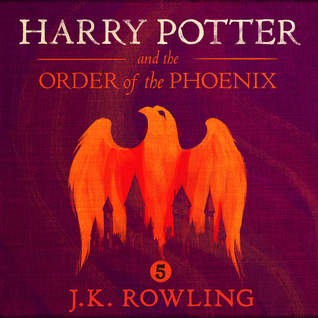
Harry Potter and the Order of the Phoenix by J. K. Rowling
(published 2003)

It’s never not a good time to revisit Harry at Hogwarts. I’m having a blast listening to the audiobook of HP5. And sure, Harry spends a lot of time feeling angry and ignored, and some very bad things that I refuse to think about happen later on… but meanwhile, there are also all sorts of gems along the way.

“Don’t you understand how Cho’s feeling at the moment?” she asked.

“No,” said Harry and Ron together.

Hermione sighed and laid down her quill.

“Well, obviously, she’s feeling very sad, because of Cedric dying. Then I expect she’s feeling confused because she liked Cedric and now she likes Harry, and she can’t work out who she likes best. Then she’ll be feeling guilty, thinking it’s an insult to Cedric’s memory to be kissing Harry at all, and she’ll be worrying about what everyone else might say about her if she starts going out with Harry. And she probably can’t work out what her feelings toward Harry are anyway, because he was the one who was with Cedric when Cedric died, so that’s all very mixed up and painful. Oh, and she’s afraid she’s going to be thrown off the Ravenclaw Quidditch team because she’s been flying so badly.”

A slightly stunned silence greeted the end of this speech, then Ron said, “One person can’t feel all that at once, they’d explode.”

“Just because you’ve got the emotional range of a teaspoon doesn’t mean we all have,” said Hermione nastily, picking up her quill again.

What lines made you laugh, cry, or gasp this week? Do tell!

If you’d like to participate in Thursday Quotables, it’s really simple:

  • Write a Thursday Quotables post on your blog. Try to pick something from whatever you’re reading now. And please be sure to include a link back to Bookshelf Fantasies in your post (http://www.bookshelffantasies.com), if you’d be so kind!
  • Click on the linky button (look for the cute froggie face) below to add your link.
  • After you link up, I’d love it if you’d leave a comment about my quote for this week.
  • Be sure to visit other linked blogs to view their Thursday Quotables, and have fun!

Shelf Control #57: Firehouse

Shelves final

Welcome to the newest weekly feature here at Bookshelf Fantasies… Shelf Control!

Shelf Control is all about the books we want to read — and already own! Consider this a variation of a Wishing & Waiting post… but looking at books already available, and in most cases, sitting right there on our shelves and e-readers.

Want to join in? See the guidelines and linky at the bottom of the post, and jump on board! Let’s take control of our shelves!

cropped-flourish-31609_1280-e1421474289435.png

My Shelf Control pick this week is:

firehouseTitle: Firehouse
Author: David Halberstam
Published: 2003
Length: 208 pages

What it’s about (synopsis via Goodreads):

“In the firehouse, the men not only live and eat with each other, they play sports together, go off to drink together, help repair one another’s houses, and, most important, share terrifying risks; their loyalties to each other must, by the demands of the dangers they face, be instinctive and absolute.”

So writes David Halberstam, one of America’s most distinguished reporters and historians, in this stunning New York Times bestselling book about Engine 40, Ladder 35, located on the West Side of Manhattan near Lincoln Center. On the morning of September 11, 2001, two rigs carrying thirteen men set out from this firehouse: twelve of them would never return.

Firehouse takes us to the epicenter of the tragedy. Through the kind of intimate portraits that are Halberstam’s trademark, we watch the day unfold–the men called to duty while their families wait anxiously for news of them. In addition, we come to understand the culture of the firehouse itself: why gifted men do this; why, in so many instances, they are eager to follow in their fathers’ footsteps and serve in so dangerous a profession; and why, more than anything else, it is not just a job, but a calling.

This is journalism-as-history at its best, the story of what happens when one small institution gets caught in an apocalyptic day. Firehouse is a book that will move readers as few others have in our time.

How I got it:

I found it at a library sale.

When I got it:

About 3 – 4 years ago.

Why I want to read it:

To be honest, the cover caught my eye while I was browsing the sale. At the time, I didn’t realize this book was focusing on 9/11 — I saw Halberstam’s name, and remembering reading one of his books during college, so I picked it up. I’m not usually much of a non-fiction reader, but given the subject matter, the author, and the relatively short length of the book, this is one that I think I really do need to make time to read, and soon.

__________________________________

Want to participate in Shelf Control? Here’s how:

  • Write a blog post about a book that you own that you haven’t read yet.
  • Add your link below!
  • And if you’d be so kind, I’d appreciate a link back from your own post.
  • Check out other posts, and have fun!

For more on why I’ve started Shelf Control, check out my introductory post here, or read all about my out-of-control book inventory, here.

And if you’d like to post a Shelf Control button on your own blog, here’s an image to download (with my gratitude, of course!):

Shelf Control

Save

Save

Top Ten Tuesday: Ten creepy, gross, scary horror books for getting in the Halloween mood

halloweentop10

Happy (almost) Halloween!

Top Ten Tuesday is a meme hosted by The Broke and the Bookish, featuring a different top 10 theme each week. This week’s topic is a Halloween freebie!

I’ve decided to focus on great books to scare or give the willies. To mix things up, I’m highlighting five books that I’ve read, and five from my TBR list:

Icky, squicky, creepy, scary books that I’ve read (with links to my reviews):

picmonkey-collage2

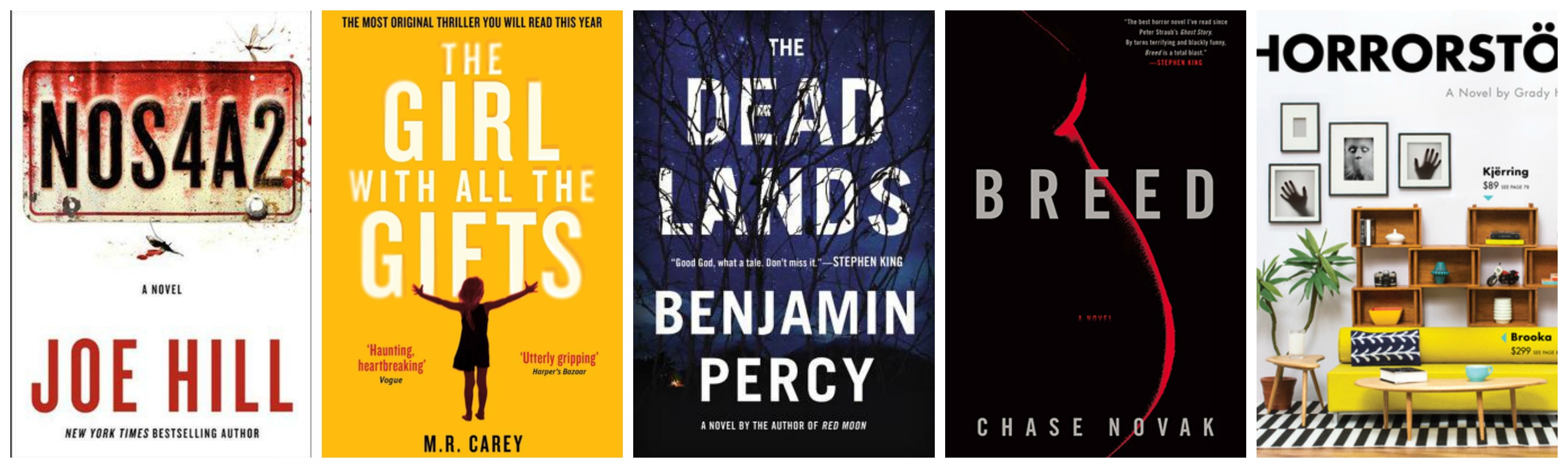
NOS4A2 by Joe Hill (review)

The Girl with All the Gifts by M. R. Carey (review)

The Dead Lands by Benjamin Percy (review)

Breed by Chase Novak (review)

Horrorstör by Grady Hendrix (review)

Creepy, chilling, horrifying-sounding books that I really want to read:

picmonkey-collage3

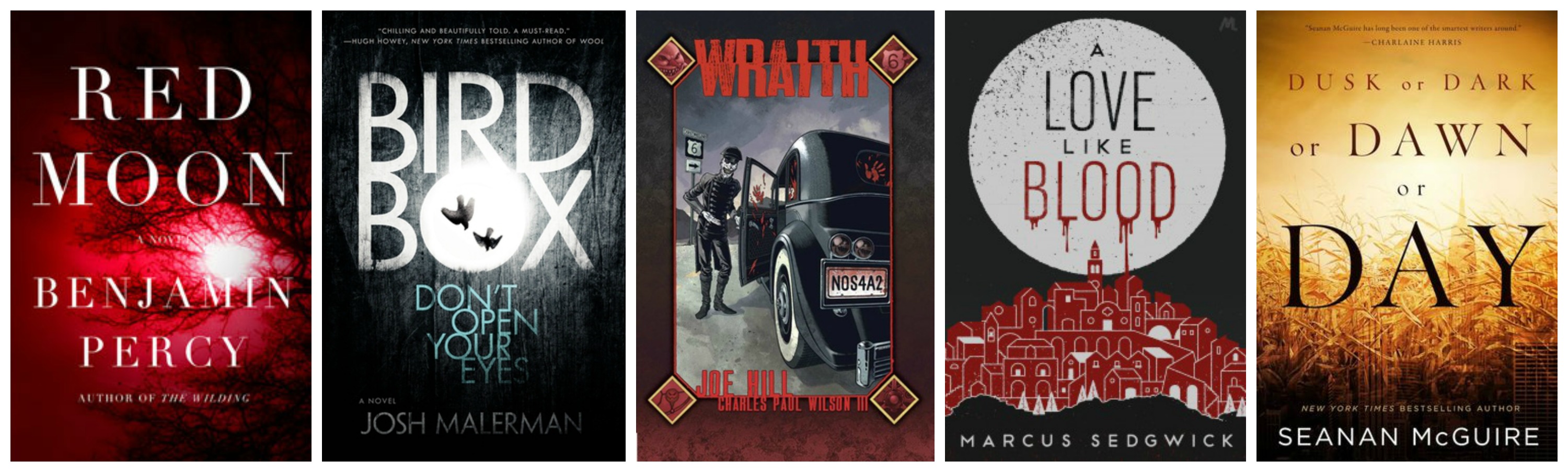
Red Moon by Benjamin Percy

Bird Box by Josh Malerman

Wraith by Joe Hill

A Love Like Blood by Marcus Sedgwick

Dusk or Dark or Dawn or Day by Seanan McGuire

What scary books do you love to recommend? What’s on your Halloween TTT? Share your link, please, and I’ll come check out your top 10!

If you enjoyed this post, please consider following Bookshelf Fantasies! And don’t forget to check out my regular weekly features, Shelf Control and Thursday Quotables. Happy reading!

♥♥♥♥♥♥♥♥

Do you host a book blog meme? Do you participate in a meme that you really, really love? I host a Book Blog Meme Directory, and I’m always looking for new additions! If you know of a great meme to include — or if you host one yourself — please drop me a note on my Contact page and I’ll be sure to add your info.

Save

Save

Save

Save

Save

Save

Save

Save

Save

Save

The Monday Check-In ~ 10/24/2016

cooltext1850356879 My Monday tradition, including a look back and a look ahead — what I read last week, what new books came my way, and what books are keeping me busy right now. Plus a smattering of other stuff too.

What did I read last week?

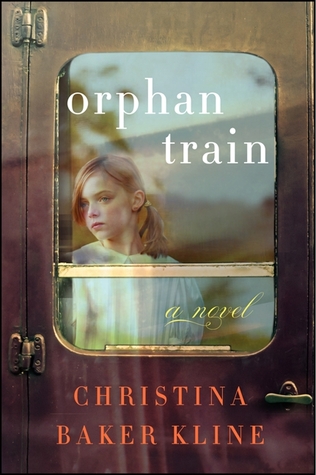
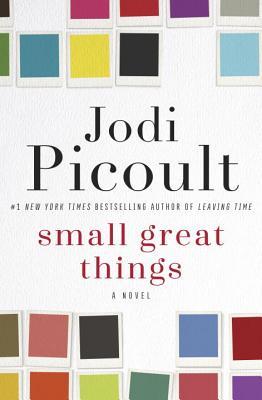
orphan-trainsmall great things

Orphan Train by Christina Baker Kline: Done! This was a book group book, and I’m so glad I actually read our book this month with time to spare. Check out my review, here.

Small Great Things by Jodi Picoult: Done! My review is here.

Pop culture goodness:

hedwig

I actually went out! Once in a while, I do something other than read or work. My husband and I went to the theater to see the touring production of Hedwig and the Angry Inch, and had a great time. Darren Criss was terrific in the lead role.

Fresh Catch:

No new books this week. Shocking, right?

What will I be reading during the coming week?

Currently in my hands:
 secret-chord

The Secret Chord by Geraldine Brooks: I won this in a Goodreads giveaway almost a year ago. I’ve loved almost everything I’ve read by Geraldine Brooks, but it’s taken me a while to feel like I wanted to sit down with this one and give it a shot. However, I’m trying to finish up a book group reading challenge for the year, and my last remaining category is a novel set earlier than 1500 AD. Something Biblical should count, right? In any case, I’m just getting started with this novel about King David. I’ll let you all know how it goes!

Now playing via audiobook:

hp5

Harry Potter and the Order of the Phoenix by J. K. Rowling: There’s not much better than listening to Harry Potter while driving around or out for a walk. Even though I choke up a bit every time there’s a scene with Sirius…

Ongoing reads:

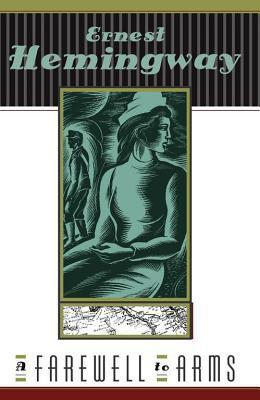
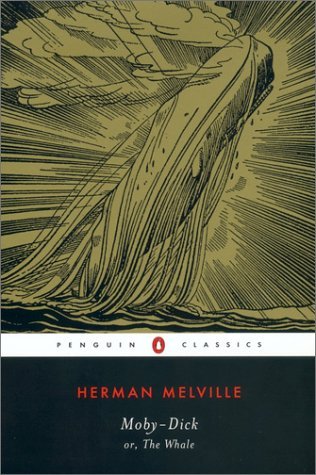
MOBYFarewell to Arms 2Moby Dick

With my book group (2 chapters per week of each):

  • Written in My Own Heart’s Blood by Diana Gabaldon
  • A Farewell To Arms by Ernest Hemingway

Via the Serial Reader app (read about it here):

  • Moby Dick by Herman Melville:  — 94% done! I’m so close to the end — should be finished this week!

So many books, so little time…

boy1Save

Save

Save

Save

Save

Save

Save

Save

Save

Save

Save

Save

Save

Save

Save

Save

Save

Save

Save

Save

Save

Save

Save

Save

Save

Save

Save

Save

Save

Save

Save

Save

Save

Save

Save

Save

Save

Save

Save

Save

Save

Save

Save

Book Review: Small Great Things by Jodi Picoult

small great things

Ruth Jefferson is a labor and delivery nurse at a Connecticut hospital with more than twenty years’ experience. During her shift, Ruth begins a routine checkup on a newborn, only to be told a few minutes later that she’s been reassigned to another patient. The parents are white supremacists and don’t want Ruth, who is African American, to touch their child. The hospital complies with their request, but the next day, the baby goes into cardiac distress while Ruth is alone in the nursery. Does she obey orders or does she intervene?

Ruth hesitates before performing CPR and, as a result, is charged with a serious crime. Kennedy McQuarrie, a white public defender, takes her case but gives unexpected advice: Kennedy insists that mentioning race in the courtroom is not a winning strategy. Conflicted by Kennedy’s counsel, Ruth tries to keep life as normal as possible for her family—especially her teenage son—as the case becomes a media sensation. As the trial moves forward, Ruth and Kennedy must gain each other’s trust, and come to see that what they’ve been taught their whole lives about others—and themselves—might be wrong.

With incredible empathy, intelligence, and candor, Jodi Picoult tackles race, privilege, prejudice, justice, and compassion—and doesn’t offer easy answers. Small Great Things is a remarkable achievement from a writer at the top of her game.


This is another example of a book that I tore through and couldn’t put down… but with time passing after finishing the book, I find my reaction to it shifting the more I think about it.

The story itself is completely absorbing. We have three point-of-view characters: Ruth, the African-American nurse; Turk, the White Supremacist father; and Kennedy, the white public defender who describes herself early on as someone who doesn’t see color (race) at all.

It’s an interesting approach. We often see the same sets of interactions through more than one person’s eyes, so that when Kennedy makes a point about how supportive she is and how she’s devoted herself to defending people of color, Ruth perceives these statements as coming from a woman of privilege who does not even recognize how her privilege pervades her own life. This leads to interactions throughout the book in which Kennedy is caught short, forced to recognize the unacknowledged racism that informs her life, despite considering herself a force for good and a champion of social justice.

Picoult makes many good and important points in this novel about the way privilege and racism go hand in hand, and how people with privilege seem not to recognize that for one person to succeed because of their skin color and economic status, someone else must not. Where I think Picoult is on somewhat shaky ground is in her chapters using Ruth’s POV. While any author should be able to write convincingly through the voice of his/her characters, whether or not they have anything in common personally with those characters, the use of Ruth’s voice here occasionally made me uncomfortable.

Should a white author be able to write as a black character? Yes, of course. And yet, so much of Ruth’s POV is focused on her experiences as a black woman, explaining how her life has been shaped by boxes society assigns her and the implicit racism in her daily encounters. At some points, it started to feel like appropriation to me. Picoult is essentially explaining blackness to her readers — presumably, a mostly white audience — and it can feel disingenuous.

At the same time, I understand from a few blog mentions I’ve seen that the publisher made early copies of the novel available without the author being disclosed (the concept was #ReadWithoutPrejudice), and I wonder about that experience. Might I have felt differently about Ruth’s voice if I didn’t know the identity of the author? It’s possible.

On the other hand, I didn’t have a problem with her portrayal of Turk, the white supremacist who is also a grieving father and devoted, loving husband. Understanding from within his mind how his life has led him to this point and how he became such a strong believer and advocate for hate is fascinating and informative, and also scary as hell.

Kennedy feels like a pretty typical Picoult lawyer. She’s a working mother, a dedicated professional looking for her opportunity to take on a case she feels passionately about, and thinks she knows about justice in America by virtue of her work as a public defender. Ruth forces her to confront her own assumptions and biases and tear down a bit of the wall that keeps her from seeing just how her white privilege has enabled her to be the person she is now.

In terms of the plot, it’s a doozy of a set-up. At the parents’ request, a note is added to the baby’s medical file saying that no African American personnel are to touch the baby. But Ruth is the only African American staff member in the labor and delivery ward, so this is clearly an order targeted specifically at Ruth, and only Ruth. I wish the book had explored the legalities of this a bit more. Hospitals honor patients’ requests, when reasonable — but this seems so blatantly unreasonable that it never should have stood as an order to begin with.

I had a hard time accepting that the criminal case could or would go forward as described. There was no evidence against Ruth to begin with, and the rush to judgment against her seems simply unrealistic. I just wasn’t convinced at all by the set-up of the legal case.

Further, Kennedy tells Ruth repeatedly that race is never brought into the courtroom — that it’s a sure-fire way to alienate the jury, and that it JUST ISN’T DONE. That may be, but I wish Picoult had fleshed this out a bit more with examples or explanations. This becomes a turning point in the trial, and only knowing that it’s not done because Kennedy says so doesn’t really drive home the real-life situation. I wanted to know — is this a plot device, or is this really borne out in real-life courtrooms? As it was written, I wasn’t really convinced, and like Ruth, didn’t buy that there wouldn’t be merit in telling the story as it played out in terms of the race relations of the people involved.

Finally, there’s a plot twist at the very end. I haven’t read every single Jodi Picoult novel, but I’ve read enough to know that a huge twist is pretty standard for her books. I won’t get into what the twist is in Small Great Things, but I will say that I thought it was rather unbelievable and unnecessary. The story didn’t need it, and the timing and delivery were just odd.

Overall, I’d say that Small Great Things is a fast and compelling read, but that it left me feeling like I’d been lectured to in a way that detracts a bit from the power of the story. The story itself is complicated and twisty, although there are so many side elements thrown in (the charismatic TV personality, the darker skinned sister who chooses to refuse the path that Ruth has taken, the wealthy white family that Ruth’s mother worked for as a maid for 50 years) that by the end, the courtroom scenes, which should be the dramatic climax of the book, feel a little rushed and curtailed.

From reading the author’s notes at the end of the book, it’s clear that Picoult poured her heart and soul into her research for this book, and has embarked on her own personal journey to recognize the inherent racism that’s a part of white privilege. I don’t doubt her sincerity at all, but all this earnestness doesn’t necessarily translate into great fiction. When the storyline takes a back seat to the message, it can start feeling overly preachy. I was fascinated by the unfolding story and become involved in Ruth’s struggles and her quest for true justice, but the use of POVs and the shoe-horning in of everything Picoult has learned about race in America weaken the power of the legal drama at the center of the narrative.

Still, I’d say that Picoult’s fanbase will of course love Small Great Things, and I’d recommend it to others as well. Jodi Picoult’s books are always thought-provoking, and she’s a master when it comes to taking even abhorrent characters and showing their humanity. She lets us see Turk and his wife as bereaved parents, and their pain is no less real and heartfelt than anyone else’s, despite the fact that they’re absolutely revolting in every other way. This, I think, is a great example of the power of Picoult’s writing: She takes us inside lives and minds we might otherwise never see, and always manages to show us the sparks of humanity to be found in the most unexpected places.

Save

_________________________________________

The details:

Title: Small Great Things
Author: Jodi Picoult
Publisher: Ballantine Books
Publication date: October 11, 2016
Length: 480 pages
Genre: Contemporary fiction
Source: Review copy courtesy of the publisher via NetGalley

Save

Save

Save

Save

Book Review: Orphan Train by Christina Baker Kline

orphan-train

The author of Bird in Hand and The Way Life Should Be delivers her most ambitious and powerful novel to date: a captivating story of two very different women who build an unexpected friendship: a 91-year-old woman with a hidden past as an orphan-train rider and the teenage girl whose own troubled adolescence leads her to seek answers to questions no one has ever thought to ask.

Nearly eighteen, Molly Ayer knows she has one last chance. Just months from “aging out” of the child welfare system, and close to being kicked out of her foster home, a community service position helping an elderly woman clean out her home is the only thing keeping her out of juvie and worse.

Vivian Daly has lived a quiet life on the coast of Maine. But in her attic, hidden in trunks, are vestiges of a turbulent past. As she helps Vivian sort through her possessions and memories, Molly discovers that she and Vivian aren’t as different as they seem to be. A young Irish immigrant orphaned in New York City, Vivian was put on a train to the Midwest with hundreds of other children whose destinies would be determined by luck and chance.

The closer Molly grows to Vivian, the more she discovers parallels to her own life. A Penobscot Indian, she, too, is an outsider being raised by strangers, and she, too, has unanswered questions about the past. As her emotional barriers begin to crumble, Molly discovers that she has the power to help Vivian find answers to mysteries that have haunted her for her entire life – answers that will ultimately free them both.

Rich in detail and epic in scope, Orphan Train is a powerful novel of upheaval and resilience, of second chances, of unexpected friendship, and of the secrets we carry that keep us from finding out who we are.

It’s astonishing to me that until I read this book, I knew nothing about this important piece of American history. Over a span of 75 years, approximately 200,000 children, mostly orphaned and homeless, were transported from New York and other East Coast cities to farmland in the Midwest, where they were offered up for adoption via town hall meetings at stops along the rail lines. Some children found loving adoptive families and permanent homes; it appears that many, however, were treated as little better than manual labor or indentured servants, wanted for their ability to work but not adequately fed, sheltered, or schooled, much less given the love and support they most strongly needed.

In Orphan Train, we meet 91-year-old Vivian, who emigrated to America from Ireland as a young girl. When a tragic tenement fire leaves her all alone, she’s soon shipped out on the orphan train, ending up in some horrific circumstances in Minnesota — first, as an underfed worker in what was essentially a seamstress sweatshop, and then, as a poorly treated resident of an impoverished family farm, where abuse lurks around every corner. Thanks to a kind school teacher, she does eventually find her way forward through education and through the support of a kind older couple who provide her with all they’d once hoped to provide to their own deceased child.

When we first meet the elderly Vivian, it’s through the eyes of contemporary foster child Molly, who is just one breath away from being locked up in juvie at age 17 for the shocking crime of stealing a copy of Jane Eyre from the public library. As Molly fulfills her mandated community service hours by helping Vivian clean her attic, it becomes clear that the two women, young and old, have more in common than they realize. With each box of mementos that Molly opens and reviews with Vivian, a piece of Vivian’s history is remembered and reexamined. Through their connection, each helps the other come to terms with their pasts and think about new ways of envisioning and creating a future.

My entire life has felt like chance. Random moments of loss and connection. This is the first one that feels, instead, like fate.

I really enjoyed Orphan Train, although perhaps “enjoyed” isn’t quite the right term. The stories of Molly and Vivian are both heartbreaking in their own ways. While Molly, as a foster child in 21st century Maine, isn’t handed over into servitude, she does go through a series of foster homes, largely finding herself with people who see her as a chore or a duty, or worse, a source of a paycheck from social services. She’s unloved and unwanted, and gets used to traveling light and protecting herself by driving others away before they can reject her. Molly’s pain is palpable and real, and I wanted so desperately for her to finally find a place to belong and someone to really cherish her for herself.

Likewise, with Vivian, the loss and sorrow she endures is unimaginable. At the time at which she becomes an orphan, children have no voice and no rights, and it’s shocking as a modern reader to see how casually the children are handed over to any stranger who comes along and picks them. The deprivation, physical and emotional, that Vivian suffers is quite hard to read, especially keeping in mind that she’s not yet even a teen when the worst parts of her experience take place.

The way the two story threads weave together to create a whole is fascinating and well thought-out. The dual time line approach is pretty common right now in historical fiction, but in the case of Orphan Train, I think it succeeds because each time line gives us a central character to really care for. Vivian’s story is perhaps a touch more compelling, but I think a big reason for that is the fact that it’s so unusual and, for me at least, mostly unknown prior to reading this story. With Molly, while her story is sad and moving, it doesn’t have the same sense of discovery of a chapter of history that Vivian’s story does. Still, both pieces shed light on shameful practices and conditions of foster and abandoned children, and the two story elements together complement each other quite well.

I had one quibble with the storyline of this book, but in the interest of avoiding spoilers, I won’t go into specifics. Keeping things vague, I’ll just say that Vivian makes a huge decision in the latter part of the book, when she’s a young woman, that I didn’t find particularly believeable. Given the way her life is at the time in question, I do think she’d have had other choices and should have had enough support in her life to at least take the time to consider her options. It’s a huge turning point that affects the rest of Vivian’s life, and yet she makes it quickly and at a time of great vulnerability. I just didn’t buy it.

That aside, I loved reading Orphan Train. I found the history fascinating, and loved the two main characters, Molly and Vivian. It’s the kind of book that leaves you desperately hoping that the people you’ve come to know will go on to find happiness in their lives.

Orphan Train is a book that will stay with me. I’m so glad my book group decided to read it this month! I just know we’ll have plenty to talk about.

_________________________________________

The details:

Title: Orphan Train
Author: Christina Baker Kline
Publisher: William Morrow
Publication date: April 2, 2013
Length: 278 pages
Genre: Contemporary and historical fiction
Source: Purchased

Thursday Quotables: Small Great Things

quotation-marks4

Welcome back to Thursday Quotables! This weekly feature is the place to highlight a great quote, line, or passage discovered during your reading each week.  Whether it’s something funny, startling, gut-wrenching, or just really beautifully written, Thursday Quotables is where my favorite lines of the week will be, and you’re invited to join in!

NEW! Thursday Quotables is now using a Linky tool! Be sure to add your link if you have a Thursday Quotables post to share.

small great things

Small Great Things by Jodi Picoult
(published 2016)

I’ve only read 10% of Jodi Picoult’s newest novel, but I can tell already that this book will be both disturbing and thought-provoking. I really like this passage from an early chapter, from the point of view of a labor and delivery nurse:

A mother has nine months to get used to sharing the space where her heart is; for a father it come on sudden, like a storm that changes the landscape forever.

What lines made you laugh, cry, or gasp this week? Do tell!

If you’d like to participate in Thursday Quotables, it’s really simple:

  • Write a Thursday Quotables post on your blog. Try to pick something from whatever you’re reading now. And please be sure to include a link back to Bookshelf Fantasies in your post (http://www.bookshelffantasies.com), if you’d be so kind!
  • Click on the linky button (look for the cute froggie face) below to add your link.
  • After you link up, I’d love it if you’d leave a comment about my quote for this week.
  • Be sure to visit other linked blogs to view their Thursday Quotables, and have fun!

Shelf Control #56: Tigers in Red Weather

Shelves final

Welcome to the newest weekly feature here at Bookshelf Fantasies… Shelf Control!

Shelf Control is all about the books we want to read — and already own! Consider this a variation of a Wishing & Waiting post… but looking at books already available, and in most cases, sitting right there on our shelves and e-readers.

Want to join in? See the guidelines and linky at the bottom of the post, and jump on board! Let’s take control of our shelves!

cropped-flourish-31609_1280-e1421474289435.png

My Shelf Control pick this week is:

tigers-in-red-weatherTitle: Tigers in Red Weather
Author: Liza Klaussmann
Published: 2012
Length: 353 pages

What it’s about (synopsis via Goodreads):

Nick and her cousin, Helena, have grown up sharing sultry summer heat, sunbleached boat docks, and midnight gin parties on Martha’s Vineyard in a glorious old family estate known as Tiger House. In the days following the end of the Second World War, the world seems to offer itself up, and the two women are on the cusp of their ‘real lives’: Helena is off to Hollywood and a new marriage, while Nick is heading for a reunion with her own young husband, Hughes, about to return from the war.

Soon the gilt begins to crack. Helena’s husband is not the man he seemed to be, and Hughes has returned from the war distant, his inner light curtained over. On the brink of the 1960s, back at Tiger House, Nick and Helena—with their children, Daisy and Ed—try to recapture that sense of possibility. But when Daisy and Ed discover the victim of a brutal murder, the intrusion of violence causes everything to unravel. The members of the family spin out of their prescribed orbits, secrets come to light, and nothing about their lives will ever be the same.

Brilliantly told from five points of view, with a magical elegance and suspenseful dark longing, Tigers in Red Weather is an unforgettable debut novel from a writer of extraordinary insight and accomplishment.

How I got it:

I bought the Kindle edition.

When I got it:

At least two or three years ago, on a day when there was a Kindle price drop.

Why I want to read it:

I remember reading a few positive reviews, and the description really appeals to me. The post-war era should make for some great dramatic challenges, and the family dynamics sound fascinating.

__________________________________

Want to participate in Shelf Control? Here’s how:

  • Write a blog post about a book that you own that you haven’t read yet.
  • Add your link below!
  • And if you’d be so kind, I’d appreciate a link back from your own post.
  • Check out other posts, and have fun!

For more on why I’ve started Shelf Control, check out my introductory post here, or read all about my out-of-control book inventory, here.

And if you’d like to post a Shelf Control button on your own blog, here’s an image to download (with my gratitude, of course!):

Shelf Control

Save

Save