Audiobook Review: The Eyes of the Dragon by Stephen King


“Once, in a kingdom called Delain, there was a king with two sons….”

Thus begins one of the most unique tales that master storyteller Stephen King has ever written—a sprawling fantasy of dark magic and the struggle for absolute power that utterly transforms the destinies of two brothers born into royalty. Through this enthralling masterpiece of mythical adventure, intrigue, and terror, you will thrill to this unforgettable narrative filled with relentless, wicked enchantment, and the most terrible of secrets….

I originally read The Eyes of the Dragon ages ago, probably not long after its release in the late 80s. And honestly, I didn’t remember much about it, other than (a) it was a real departure for Stephen King at that point, and (b) I liked it.

Why did I decide to revisit this story? I’m not really sure what brought it back to my attention — I think maybe it popped up on my Audible recommendation list? In any case, the audiobook caught my eye right when I was in between listens and I decided to give it a try. Great choice!

The Eyes of the Dragon, as far as I can tell, is one of King’s early departures from writing straight-up horror. It’s not a horror story at all — instead, it’s fantasy set in a far-off kingdom, where an evil magician is determined to thrust the land into chaos and bloodshed in order to satisfy his own dark purposes.

King Roland the Good is an okay king, kind but not particularly effective, and perhaps a little too under the sway of his advisor, the magician Flagg. Roland has two sons — his heir, Peter, and a younger son, Thomas, who grows up in his older brother’s shadow, always plagued by feelings of inadequacy and jealousy as he watches Peter grow into a fine, beloved young man. When Flagg’s schemes end with Peter falsely imprisoned on charges of murdering his father, Thomas gains the throne, but he’s guided in all things by Flagg, who uses Thomas’s weakness to destabilize the country. But Peter is strong and smart, and doesn’t give up so easily…

Such a terrific story! I was completely enthralled by this tale of loyalty, royalty, friendship, betrayal, and the evil that threatens to undermine families and kingdoms. The characters are so well drawn, showing shades of personality and motivation, and finding hidden dimensions in characters that might otherwise seem like a stock type.

The audiobook is narrated by actor Bronson Pinchot, and he’s wonderful. He captures the folksy nature of the storytelling (as the book’s narrative voice often interjects the narrator’s own opinions and speaks directly to the reader/listener), and also does an amazing job with the voices, from old King Roland to timid Dennis the butler to upright Peter, and of course, most especially, the insidiously scary Flagg.

The Eyes of the Dragon is an excellent adventure — don’t miss it!

_________________________________________

The details:

Title: The Eyes of the Dragon
Author: Stephen King
Narrator: Bronson Pinchot
Publisher: Scribner
Publication date: February 2, 1987
Print length: 484 pages
Audiobook length: 10 hours, 23 mintues
Genre: Fantasy
Source: Purchased

Book Review: Middlegame by Seanan McGuire


Meet Roger. Skilled with words, languages come easily to him. He instinctively understands how the world works through the power of story.

Meet Dodger, his twin. Numbers are her world, her obsession, her everything. All she understands, she does so through the power of math.

Roger and Dodger aren’t exactly human, though they don’t realise it. They aren’t exactly gods, either. Not entirely. Not yet.

Meet Reed, skilled in the alchemical arts like his progenitor before him. Reed created Dodger and her brother. He’s not their father. Not quite. But he has a plan: to raise the twins to the highest power, to ascend with them and claim their authority as his own.

Godhood is attainable. Pray it isn’t attained.

Y’all know how much I love Seanan McGuire, right? I mean, I have gobbled up pretty much everything of hers that’s come my way, and I haven’t been disappointed yet. And I’m not now.

Which is to say… I thought Middlegame was weird and challenging, and I loved it.

Let me start by adding that the synopsis above doesn’t feel very accurate to me. Yes, Roger and Dodger are twins… kind of. But I don’t think the books itself refers to attaining godhood. So I’m glad I didn’t read the synopsis very carefully before starting, because it might have created some bizarre expectations that definitely would have gone unfulfilled.

In Middlegame, Dodger and Roger are creations, but they spend most of their lives not knowing this. They were created by a powerful alchemist, himself a creation of a powerful, game-changing alchemist, and they have a specific purpose in life — to manifest the alchemical concept of the Doctrine of Ethos.

Huh?

Yup, that was my reaction… but the confusion is part of the experience of this book, and I was happy to just go with it. Roger and Dodger each have a gift — language for Roger, math for Dodger. Raised on opposite sides of the country by adoptive parents, they discover a psychic connection as young children, and as they grow up, their bond develops, strengthens, and becomes powerful, dangerous, and more and more inexplicable. Meanwhile, Reed and his allies monitor the pair carefully, charting their progress toward manifestation, making sure to keep them apart when their progress threatens the greater goals of the project.

It’s all just so twisty and timey-wimey and mind-bending and GOOD. And as always, I love Seanan McGuire’s writing. Does she have a bit of Roger’s ability to create reality through her words? All signs point to yes.

I won’t go into a lot of detail, mainly because I just finished this long, complicated book and I’m still sifting through it all in my mind. There’s a lot to puzzle through and unravel. So rather than digging further into plot threads, I’ll share some lines and quotes that jumped out at me as I was reading:

…and she can no more conceive of failure than a butterfly can conceive of calculus.

Roger thinks that’s the trouble with grownups. The more effort they put into deciding what kids are going to do or think or be, the more things so wrong for them.

People who say “sticks and stones may break my bones, but words will never hurt me” don’t understand how words can be stones, hard and sharp-edge and dangerous and capable of doing so much more harm than anything physical. […] Words can be whispered bullet-quick when no one’s looking, and words don’t leave blood or bruises behind. Words disappear without a trace. That’s what makes them so powerful. That’s what makes them so important.

That’s what makes them hurt so much.

You can’t skip to the end of the story just because you’re tired of being in the middle.

Everything is perfect. Everything is doomed.

On and on they go, the shorthand becoming more extreme, the air going hot and heavy around them, like an electric storm rolling in, like another fire getting ready to ignite, a fire that needs no flame but only the constant friction between the two halves of something which has never, in all the long years of their lives, been fully realized.

Roger has never understood the math that calls to her, but he feels it now, thrumming in his veins like a promise of miracles to come. Dodger has never grasped the need to put a name to the things she knows to be true, but she understands it now, and accepts the names he throws her way gladly, transforming them through the alchemy of her observations before she throws them back to him.

Here’s one that makes my brain ache:

She knows that, as surely as she knows that every second takes away more of her slim opportunity to escape becoming the future self of a girl she, as yet, never was.

And on a slightly lighter note:

“Wake up,” he says. “We need to let my terrifying ex-girlfriend tell us how we’re supposed to manifest a primal force of reality before asshole alchemists set us the fuck on fire.”

I really don’t think there’s much I can say or add that will do justice to the headlong rush of tragedy, violence, excitement, and true deep emotion that mixes together in Middlegame. So I’ll just wrap by saying that this is an awesome adventure of a read, and I’m sure I’m going to want to read it again after my mind relaxes.

Oh, and I love the fact that one of the super-powerful alchemists wrote a best-selling children’s fantasy book series, full of magical quests along the lines of a Narnia/Fillory tale — but that these stories really are code for alchemical inquiries into controlling the powers of the universe. Which made me wonder just a bit if there’s more to, I don’t know, Harry Potter? than meets the eye…

Extra gold points for great use of San Francisco landmarks (Sutro Baths!)… and how can you not love a book that includes the phrase killer death alchemists as if it’s a normal thing to say?

Seanan McGuire fans, rest assured — our beloved author strikes again, and it’s fabulous.

_________________________________________

The details:

Title: Middlegame
Author: Seanan McGuire
Publisher: Tor
Publication date: May 7, 2019
Length: 528 pages
Genre: Science fiction/fantasy
Source: Purchased (and also, review copy via NetGalley)

**Save

Save

Save

Save

Save

Save

Save

Shelf Control #164: Lilli de Jong by Janet Benton

Shelves final

Welcome to Shelf Control — an original feature created and hosted by Bookshelf Fantasies.

Shelf Control is a weekly celebration of the unread books on our shelves. Pick a book you own but haven’t read, write a post about it (suggestions: include what it’s about, why you want to read it, and when you got it), and link up! For more info on what Shelf Control is all about, check out my introductory post, here.

Want to join in? Shelf Control posts go up every Wednesday. See the guidelines at the bottom of the post, and jump on board!

cropped-flourish-31609_1280-e1421474289435.png

A little note for 2019: For the next short while, I think I’ll focus specifically on books I’ve picked up at our library’s fabulous annual sales. With all books $3 or less, it’s so hard to resist! And yet, they pile up, year after year, so it’s a good idea to remind myself that these books are living on my shelves.

cropped-flourish-31609_1280-e1421474289435.png

Title: Lilli de Jong
Author: Janet Benton
Published: 2017
Length: 352 pages

What it’s about (synopsis via Goodreads):

A young woman finds the most powerful love of her life when she gives birth at an institution for unwed mothers in 1883 Philadelphia. She is told she must give up her daughter to avoid lifelong poverty and shame. But she chooses to keep her.

Pregnant, left behind by her lover, and banished from her Quaker home and teaching position, Lilli de Jong enters a home for wronged women to deliver her child. She is stunned at how much her infant needs her and at how quickly their bond overtakes her heart. Mothers in her position face disabling prejudice, which is why most give up their newborns. But Lilli can’t accept such an outcome. Instead, she braves moral condemnation and financial ruin in a quest to keep herself and her baby alive.

Confiding their story to her diary as it unfolds, Lilli takes readers from an impoverished charity to a wealthy family’s home to the streets of a burgeoning American city. Drawing on rich history, Lilli de Jong is both an intimate portrait of loves lost and found and a testament to the work of mothers. “So little is permissible for a woman,” writes Lilli, “yet on her back every human climbs to adulthood.”

How and when I got it:

LIBRARY SALE!

Why I want to read it:

Something about the description on the back cover absolutely drew me in. I do enjoy historical fiction, and I’m always up for reading about women’s struggles to control their own lives in difficult times. This novel sounds powerful and moving, and I’m excited to rediscover it on my shelves!

What do you think? Would you read this book?

Please share your thoughts!

__________________________________

Want to participate in Shelf Control? Here’s how:

  • Write a blog post about a book that you own that you haven’t read yet.
  • Add your link in the comments!
  • If you’d be so kind, I’d appreciate a link back from your own post.
  • Check out other posts, and…

Have fun!

Save

Save

Save

Save

Save

Save

Save

Save

Save

Save

Save

Save

Save

The Monday Check-In ~ 4/29/2019

cooltext1850356879 My Monday tradition, including a look back and a look ahead — what I read last week, what new books came my way, and what books are keeping me busy right now. Plus a smattering of other stuff too.

What did I read during the last week?

The Raven’s Tale by Cat Winters: Gothic historical fiction about the younger days of Edgar Allan Poe and his muse. My review is here.

Burn Bright by Patricia Briggs: I finished my audiobook re-read, and loved it so much!

Storm of Locusts by Rebecca Roanhorse: The excellent sequel to Trail of Lightning. My review is here.

Fresh Catch:

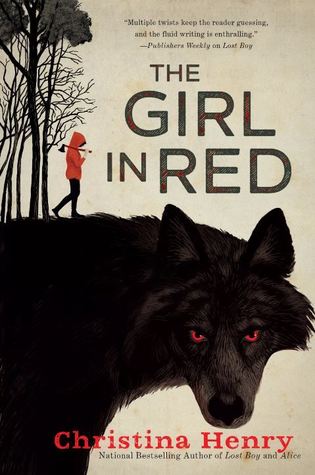
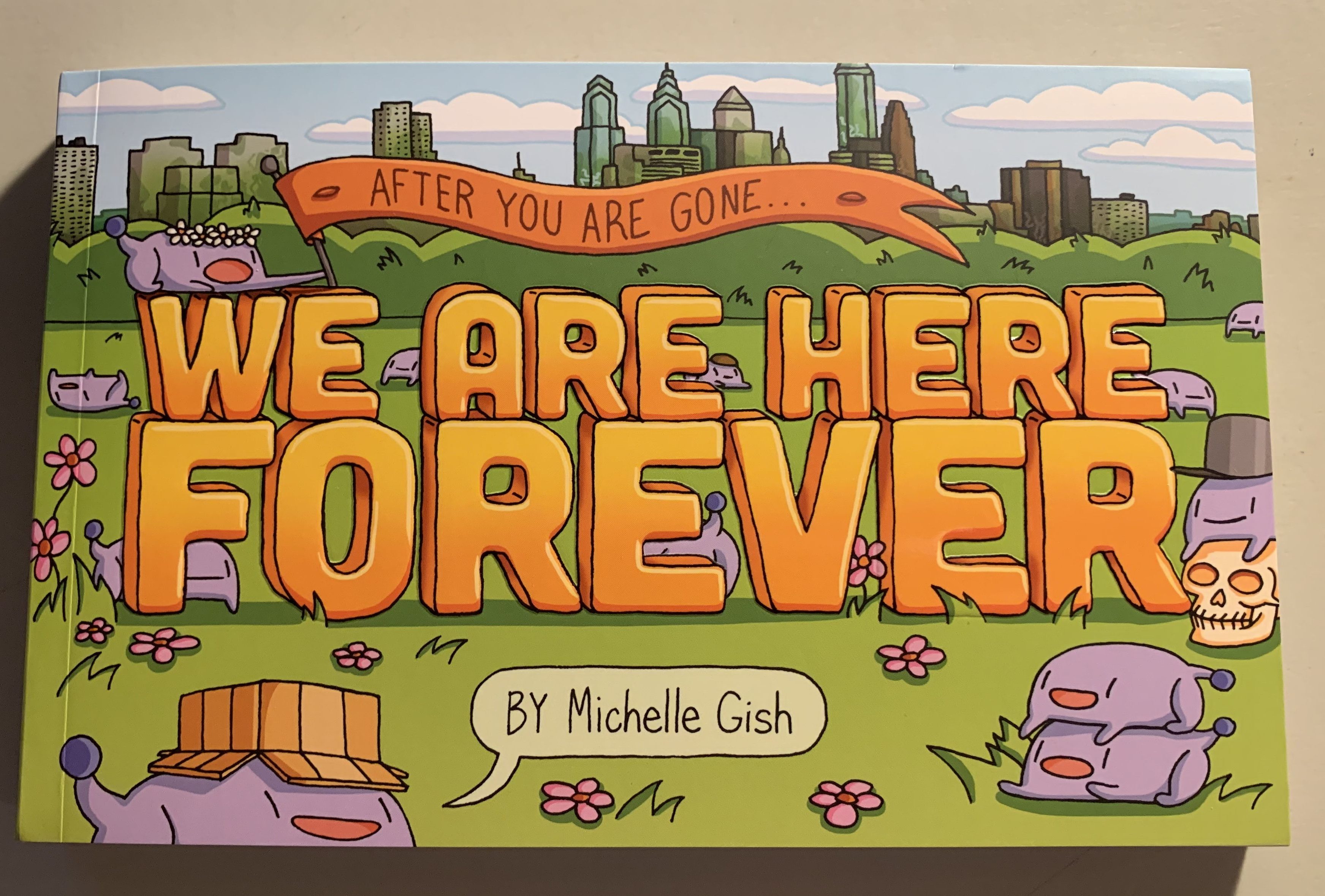
Two shiny new books this week:

What will I be reading during the coming week?

Currently in my hands:

Middlegame by Seanan McGuire: Yeah, I guess you might say that I’m a little obsessed when it comes to this author. As in, give me all her books. NOW. I’m excited to be starting her newest (although I’ll admit that I felt a little daunted when I picked it up to start reading and realized it was over 500 pages.)

Now playing via audiobook:

The Eyes of the Dragon by Stephen King: It must be over 20 years since I first read this book. The audiobook is narrated by Bronson Pinchot, and is just so, so good! I’ve listened to about 60%, should finished up this coming week.

Ongoing reads:

Three ongoing reads at the moment:

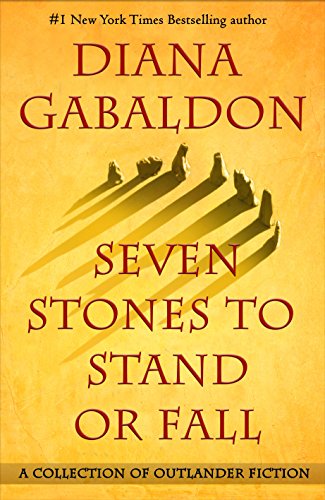
  • Besieged by Diana Gabaldon, from the Seven Stones To Stand or Fall collection — a group read for my Outlander book group, two sections of the story per week.
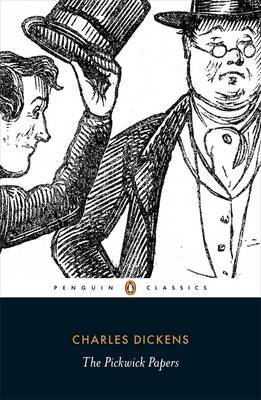
  • The Pickwick Papers by Charles Dickens — my book group’s newest classic selection. We’re reading and discussing two chapters per week… and since this book is over 800 pages, we’ll be doing so for quite some time. Great fun so far!
  • Tortall: A Spy’s Guide –– a collection of writings and notes related to Tamora Pierce’s kingdom of Tortall. It’s pretty entertaining, but I prefer reading it in small pieces, since it’s not actually a novel to be read straight through.

So many books, so little time…


boy1

Bookish musings: Life after death for a Kindle library?

What happens to my Kindle books when I die?

Not (I hope) that that’s imminent or anything… but my family was discussing giving away books, and one thing led to another, and this is the question that bubbled to the surface.

It all started with hearing about an acquaintance who was moving to a smaller home, and decided to give away all her non-essential books by inviting friends over for a book giveaway. She’d already sequestered her must-keep books, so she basically had a party where her shelves were open for plunder, and ended up loving seeing her friends from all different parts of her life come together over a love of books. Nice.

Of course, my husband then straight up suggested that I do the same thing! Um, no. Because (a) we’re not moving and (b) I don’t need the space my books take up for something else and (c) THEY’RE MY BOOKS AND I LOVE THEM AND I’M NOT GETTING RID OF THEM. Period.

But then we got to talking about the (hopefully) long-distant future… and I’m clear on my wishes. When I die, my lovely daughter, my partner in crime (ya know, if reading obsessively counts as a crime — which, no, it doesn’t) gets first pick on all books in the house, and once she’s done, she should first invite over a set of my book-loving friends to choose what they want, then donate the rest to the public library.

See? All nice and tidy.

Then I starting thinking about my Kindle. I currently have 817 books in my Kindle library. (Ssh, don’t ask me how many I’ve actually read.) All 817 represents some cost, because most were not free, even if I do tend to buy my e-books when there are price drops.

But do I really own the books on my Kindle? Sadly, the answer is no.

According to the Kindle terms of service on the Amazon website:

Use of Kindle Content. Upon your download or access of Kindle Content and payment of any applicable fees (including applicable taxes), the Content Provider grants you a non-exclusive right to view, use, and display such Kindle Content an unlimited number of times (for Subscription Content, only as long as you remain an active member of the underlying membership or subscription program), solely through a Kindle Application or as otherwise permitted as part of the Service, solely on the number of Supported Devices specified in the Kindle Store, and solely for your personal, non-commercial use. Kindle Content is licensed, not sold, to you by the Content Provider.

The red highlighting is my addition, but the point is, when we “buy” an e-book, we’re actually just paying for the right to view the content, but the content doesn’t become our property in the way that a physical paperback does. We can’t give it away when we’re done reading it or if we end up not liking it. We can lend a title, but with limits — not all titles are lendable, and the ones that are can only be loaned for a certain length of time, and only one time. (See this article for more on lending Kindle books).

Which brings me back to my question about what happens to my e-book collection after I die? Can I bequeath my e-books to a loved one?

I’m guessing not. Based on skimming through a bunch of random articles (thanks, interwebs!), as far as I can tell, the only thing I actually own is my Kindle device. If I don’t own the content (which, again, we apparently pay for the right to use, but don’t get the right to say it belongs to us), then it’s not mine to pass along to the next generation. Which doesn’t really feel great to me, considering that each and every e-book on my reader represents a sunk cost that, at the time, I considered a purchase — just like the money I spend on all the paperbacks and hardcovers scattered around my house.

The work-around, I suppose, is all about the physical device. Theoretically, anything downloaded to my Kindle should stay there indefinitely (especially if the wifi is turned off). If I hand someone my fully-loaded Kindle as a gift, then they can read all my stuff as if they were me.

So, I guess that my loved ones who live on after I’m gone can enjoy my e-books on my devices… and just to be safe, I should probably leave them all my account info (user ID and password) when I hand them my Kindle device from my deathbed (ooh, I’m getting morbid here). I may be gone, but my Amazon account can live on! But no, my e-books don’t become theirs, and if they lose my device and/or my account information, they’ll be out of luck.

How do you think about your e-books? Do you consider them yours? I’d be interested in hearing others’ thoughts on this… and let me know if I’ve gotten something wrong when it comes to “life after death” for my Kindle books!

For more on the topic of e-book ownership:
Do We Really Own Our Digital Possessions?
There is a Psychological Divide Over E-book Ownership

Take A Peek Book Review: Storm of Locusts (The Sixth World, #2) by Rebecca Roanhorse

“Take a Peek” book reviews are short and (possibly) sweet, keeping the commentary brief and providing a little peek at what the book’s about and what I thought.

Synopsis:

(via Goodreads)

It’s been four weeks since the bloody showdown at Black Mesa, and Maggie Hoskie, Diné monster hunter, is trying to make the best of things. Only her latest bounty hunt has gone sideways, she’s lost her only friend, Kai Arviso, and she’s somehow found herself responsible for a girl with a strange clan power.

Then the Goodacre twins show up at Maggie’s door with the news that Kai and the youngest Goodacre, Caleb, have fallen in with a mysterious cult, led by a figure out of Navajo legend called the White Locust. The Goodacres are convinced that Kai’s a true believer, but Maggie suspects there’s more to Kai’s new faith than meets the eye. She vows to track down the White Locust, then rescue Kai and make things right between them.

Her search leads her beyond the Walls of Dinétah and straight into the horrors of the Big Water world outside. With the aid of a motley collection of allies, Maggie must battle body harvesters, newborn casino gods and, ultimately, the White Locust himself. But the cult leader is nothing like she suspected, and Kai might not need rescuing after all. When the full scope of the White Locust’s plans are revealed, Maggie’s burgeoning trust in her friends, and herself, will be pushed to the breaking point, and not everyone will survive.

My Thoughts:

I loved Trail of Lightning, the first book in Rebecca Roanhorse’s The Sixth World series, and Storm of Locusts is an amazing follow-up! Picking up right from where book #1 left off, the story rejoins Maggie after the big fight at Black Mesa, where she battled a Navajo god and seemingly lost her only friend. Now, mere weeks later, she’s healing emotionally and physically, when she’s called on by a sometimes-ally to help with a bounty hunt that goes badly wrong. After the bloody incident, Maggie has a new responsibility, her ally’s niece Ben, a teen girl with clan powers of her own.

Immediately on the heels of this event comes news that Kai has been kidnapped, and Maggie is soon on the trail of a cult leader whose powers include the ability to summon and control hordes of locusts. Gross. And scary. Storm of Locusts ends up as a road trip/quest kind of book, as Maggie, Ben, and Rissa, sister of the boy kidnapped along with Kai, set out to track their missing friends and get vengeance on the White Locust. For the first time in these books, their search takes them outside the walls of Dinétah and into the greater world beyond the Navajo people’s protected lands, where corruption and extreme danger come in many forms, and where despite the strangeness of the new reality, the gods still have powers too.

I’m really adoring The Sixth World series, its characters, legends, and world-building, the mix of old traditions and a new post-apocalyptic landscape. Author Rebecca Roanhorse has a magical, masterful touch with her storytelling, creating a people and society that feel real and lived-in. Maggie is a terrific, layered, conflicted heroine, a total win as a lead character. I want much more of her story! The book ends with a final scene that makes it clear that Maggie’s troubles are far from over, which is fine with me — more trouble for Maggie means more excellent stories for us to enjoy.

Can’t wait for #3!

_________________________________________

The details:

Title: Storm of Locusts (The Sixth World, #2)
Author: Rebecca Roanhorse
Publisher: Saga Press
Publication date: April 23, 2019
Length: 230 pages
Genre: Speculative/dystopian science fiction
Source: Purchased

**Save

Save

Save

Save

Save

Save

Save

Take A Peek Book Review: The Raven’s Tale by Cat Winters
“Take a Peek” book reviews are short and (possibly) sweet, keeping the commentary brief and providing a little peek at what the book’s about and what I thought.
 

Synopsis:

(via Goodreads)

Seventeen-year-old Edgar Poe counts down the days until he can escape his foster family—the wealthy Allans of Richmond, Virginia. He hungers for his upcoming life as a student at the prestigious new university, almost as much as he longs to marry his beloved Elmira Royster. However, on the brink of his departure, all his plans go awry when a macabre Muse named Lenore appears to him. Muses are frightful creatures that lead Artists down a path of ruin and disgrace, and no respectable person could possibly understand or accept them. But Lenore steps out of the shadows with one request: “Let them see me!”

My Thoughts:

In The Raven’s Tale, muses are considered dangerous to the soul, yet at the same time, they’re acknowledged to exist. The Sunday sermon exhorts the congregation to “Silence your muses!” lest they lead you into temptation and keep you from pursuing an honest, hardworking, upright life. Such is the world in which we meet young Edgar Allan Poe, a 17-year-old devoted to poetry whose foster father wants to see him settled in the family business as a clerk. It’s all about respectability!

Poor Eddy! He’s consumed by thoughts of a deadly Richmond theater fire from eleven years earlier, and from his obsession with the fire, his muse emerges into life. His attention makes her more and more real, a girl of smoke and ashes who assumes human form and accompanies Edgar through the streets and in his home, leading him to greater and greater devotion to his writing. Edgar’s goal is to escape his awful father and begin his university studies, where he hopes to achieve greatness through his poetry — but the dream is on the verge of slipping away as his financial situation becomes dire and he’s forced into debt and out of control gambling in a futile attempt to pay for his fees.

The idea of personification of muses is an interesting one (and there’s also a secondary muse, who represents Poe’s forays into satire). We see how Edgar becomes consumed by his obsessions with his art, and if we didn’t know that his friends and family are all able to see his muses as well, we might think he’d tumbled into madness.

The concept is unique and inventive. The author weaves together her extensive research into Poe’s youth with her flights of fancy in his interactions with the muse. Sprinkled throughout are both lines from what will become his published work and other rhymes and verses that are written by Cat Winters in the style of Edgar Allan Poe. It’s fun to see the use of his style, and seems credible that his great works could have started in bits and pieces, with all sorts of variations, as they do here.

Overall, I thought The Raven’s Tale mostly (but not totally) successful. It’s an interesting and engaging read, but the reality of the muses was not entirely believable. I’m not sure that the balance between established history and invented fantasy really works well, but as someone not previously familiar with Poe’s early years, I found the parts based on real-life events especially interesting.

The writing takes on all sorts of rhythms and moods that feel true to the Poe of popular imagination, and that makes reading The Raven’s Tale a treat (despite some of the plot bumps).

Whenever I’m not writing, time trudges forward with the maddening, mortifying, miserable, morose, moribund pace of a funeral procession.

Don’t you just love that line?

_________________________________________

The details:

Title: The Raven’s Tale
Author: Cat Winters
Publisher: Amulet Books
Publication date: April 16, 2019
Length: 368 pages
Genre: Historical fiction
Source: Purchased

**Save

Save

Save

Save

Save

Save

Save

Shelf Control #163: The Light of Paris by Eleanor Brown

Shelves final

Welcome to Shelf Control — an original feature created and hosted by Bookshelf Fantasies.

Shelf Control is a weekly celebration of the unread books on our shelves. Pick a book you own but haven’t read, write a post about it (suggestions: include what it’s about, why you want to read it, and when you got it), and link up! For more info on what Shelf Control is all about, check out my introductory post, here.

Want to join in? Shelf Control posts go up every Wednesday. See the guidelines at the bottom of the post, and jump on board!

cropped-flourish-31609_1280-e1421474289435.png

A little note for 2019: For the next short while, I think I’ll focus specifically on books I’ve picked up at our library’s fabulous annual sales. With all books $3 or less, it’s so hard to resist! And yet, they pile up, year after year, so it’s a good idea to remind myself that these books are living on my shelves.

cropped-flourish-31609_1280-e1421474289435.png

Title: The Light of Paris
Author: Eleanor Brown
Published: 2016
Length: 336 pages

What it’s about (synopsis via Goodreads):

The miraculous novel from the New York Times-bestselling author of The Weird Sisters–a sensation beloved by critics and readers alike.

Madeleine is trapped–by her family’s expectations, by her controlling husband, and by her own fears–in an unhappy marriage and a life she never wanted. From the outside, it looks like she has everything, but on the inside, she fears she has nothing that matters.

In Madeleine’s memories, her grandmother Margie is the kind of woman she should have been–elegant, reserved, perfect. But when Madeleine finds a diary detailing Margie’s bold, romantic trip to Jazz Age Paris, she meets the grandmother she never knew: a dreamer who defied her strict, staid family and spent an exhilarating summer writing in cafes, living on her own, and falling for a charismatic artist.

Despite her unhappiness, when Madeleine’s marriage is threatened, she panics, escaping to her hometown and staying with her critical, disapproving mother. In that unlikely place, shaken by the revelation of a long-hidden family secret and inspired by her grandmother’s bravery, Madeleine creates her own Parisian summer–reconnecting to her love of painting, cultivating a vibrant circle of creative friends, and finding a kindred spirit in a down-to-earth chef who reminds her to feed both her body and her heart.

Margie and Madeleine’s stories intertwine to explore the joys and risks of living life on our own terms, of defying the rules that hold us back from our dreams, and of becoming the people we are meant to be.

How and when I got it:

LIBRARY SALE!

Why I want to read it:

Eleanor Brown’s first novel, The Weird Sisters, was an absolute favorite of mine (and now that I think of it, I really should reread it). I’ve always wanted to read more by this author. I love the description of The Light of Paris — especially the discoveries about the grandmother’s life and Madeleine’s attempt to create a Paris of her own. I’m actually really excited to discover this on my shelf this week. I can’t wait to read it!

What do you think? Would you read this book?

Please share your thoughts!

__________________________________

Want to participate in Shelf Control? Here’s how:

  • Write a blog post about a book that you own that you haven’t read yet.
  • Add your link in the comments!
  • If you’d be so kind, I’d appreciate a link back from your own post.
  • Check out other posts, and…

Have fun!

Save

Save

Save

Save

Save

Save

Save

Save

Save

Save

Save

Save

Save

Top Ten Tuesday: The first ten books I reviewed on my blog

tulips-65036_1280

Top Ten Tuesday is a meme hosted by That Artsy Reader Girl, featuring a different top 10 theme each week. This week’s topic is The First Ten Books I Reviewed — and while the description for the topic leaves it up to the individual whether to include formal reviews or blurbs online or simple reactions, well, anywhere, I thought I’d focus on my very first ten book review posts from when I started blogging. Yeah, I’d probably write most of them a bit differently now, all these years later, but it is kind of fun to look back and remember the books that excited me all those years ago!

My first ten reviews:

1) Shadow of Night by Deborah Harkness (review)

2) Code Name Verity by Elizabeth Wein (review)

3) Talullah Rising (The Last Werewolf, #2) by Glen Duncan (review)

4) Heading Out to Wonderful by Robert Goolrick (review)

5) The Revisionists by Thomas Mullen (review)

6) Why We Broke Up by Daniel Handler and Maira Kalman (review)

7) Magic For Beginners by Kelly Link (review)

8) Ocean’s Surrender by Denise Townsend (review)

9) Some Kind of Fairy Tale by Graham Joyce (review)

10. Ashfall by Mike Mullin (review)

What were your earliest reviews? Please share your links!

♥♥♥♥♥♥♥♥

Do you host a book blog meme? Do you participate in a meme that you really, really love? I’m building a Book Blog Meme Directory, and need your help! If you know of a great meme to include — or if you host one yourself — please drop me a note on my Contact page and I’ll be sure to add your info!

The Monday Check-In ~ 4/22/2019

cooltext1850356879 My Monday tradition, including a look back and a look ahead — what I read last week, what new books came my way, and what books are keeping me busy right now. Plus a smattering of other stuff too.

What did I read during the last week?

An American Marriage by Tayari Jones: A book group book. My review is here.

Kingdom of Needle & Bone by Mira Grant: Another awesomely chilling novella from one of my favorite authors. My review is here.

I read a total of ELEVEN short stories by Seanan McGuire about the amazing character Tybalt from the October Daye series — find out more here.

Aaaaaaand… I finally finished reading this gorgeous book about Hamilton! If you have Hamil-fans in your life, this would be a perfect gift, trust me.

Fresh Catch:

Two new books this week! I had to have a copy of the new release from Cat Winters (which I’m just starting). And even though I’ve already read the stories in American Hippo, once I saw this paperback edition, I just NEEDED it.

What will I be reading during the coming week?

Currently in my hands:

The Raven’s Tale by Cat Winters: I’ve loved every book I’ve read by Cat Winters so far! High hopes for this one.

Now playing via audiobook:

Burn Bright by Patricia Briggs: A re-read via audio, because I love the worlds created by Patricia Briggs and want to immerse myself again before her new book comes out in May!

Ongoing reads:

My Outlander book group is continuing our Lord John read-along with two Lord John (or Lord John-adjacent) stories from the Seven Stones to Stand or Fall collection. We’re reading the story Besieged right now.

And — time to start a new classic! My book group’s new classic read is The Pickwick Papers by Charles Dickens, starting this week. We’re reading and discussing two chapters per week… and since this book is over 800 pages, we’ll be doing so for quite some time. Wish me luck!

I’m also indulging my love for Tamora Pierce’s fantasy world of Tortall by dipping in and out of Tortall: A Spy’s Guide, which isn’t a novel exactly — it’s a collection of writings and notes by Pierce’s characters explaining what it takes to become an expert spy, as well as personal correspondence between the characters. It’s all good fun, but I’m finding I appreciate it better in small chunks rather than trying to read straight through.

So many books, so little time…


boy1