Top Ten Tuesday: My daughter’s favorite reads from the past 12 months

Top Ten Tuesday is a meme hosted by That Artsy Reader Girl, featuring a different top 10 theme each week. This week is a Freebie week, so we all come up with our own topics. Since my wonderful, amazing, book-loving daughter is home this week, I thought I’d make her the star, and have her pick her top 10 reads from the past year.

Here are the books she’s loved recently:

(She couldn’t quite narrow it down to 10, so here are the 11 top books!)

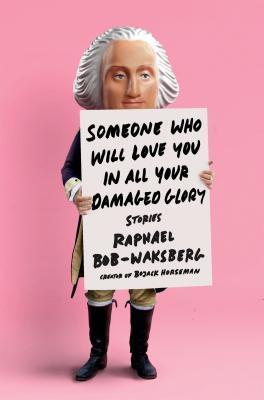
  1. Someone Who Will Love You in All Your Damaged Glory by Raphael Bob-Waksberg
  2. The Vanishing Half by Brit Bennett
  3. Get a Life, Chloe Brown by Talia Hibbert
  4. Milk Blood Heat by Dantiel W. Moniz
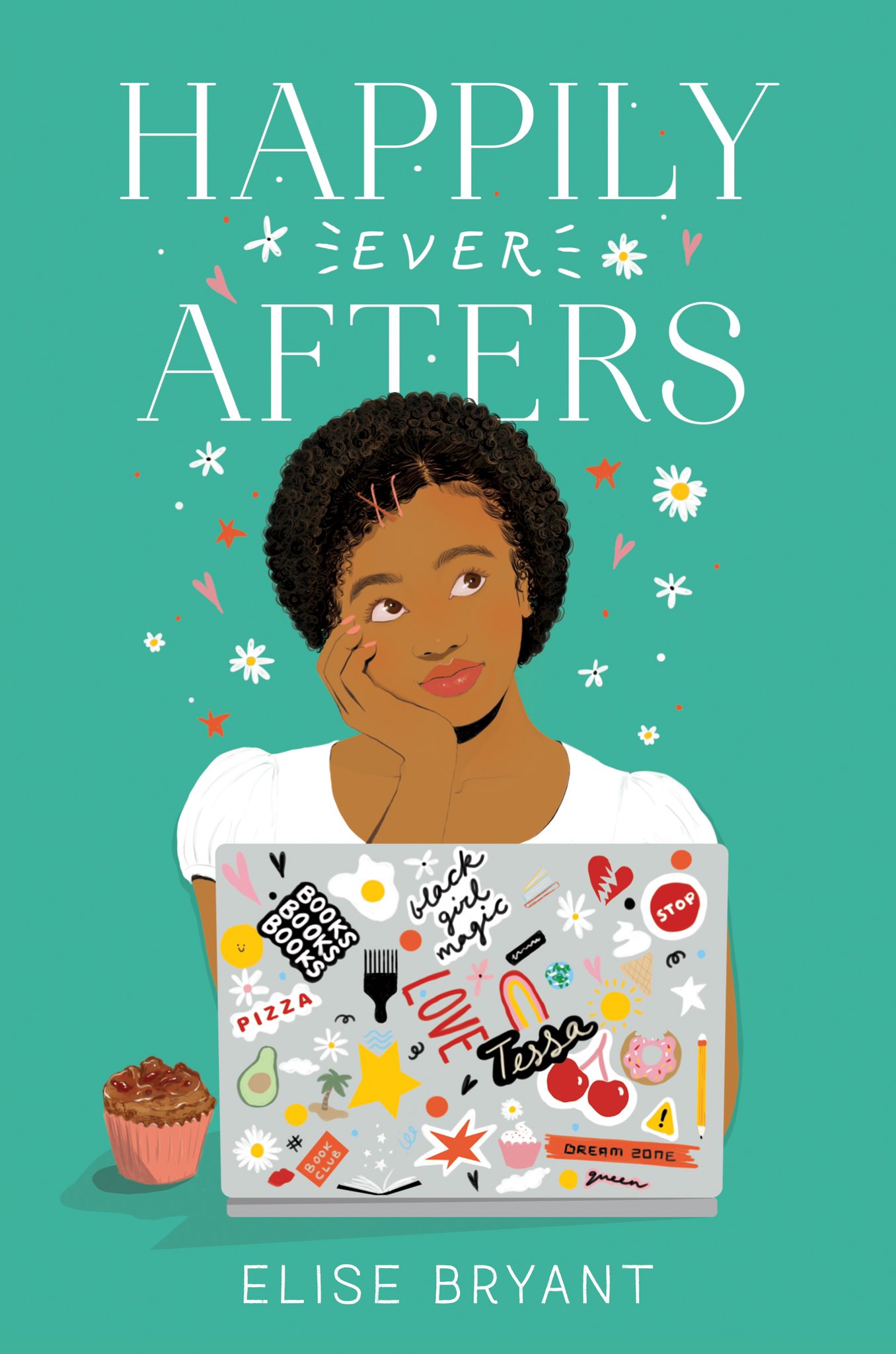
  5. Happily Ever Afters by Elise Bryant
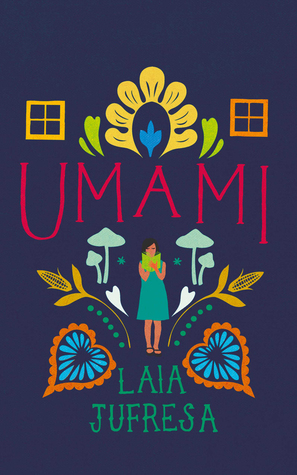
  6. Umami by Laia Jufresa
  7. Yes Please by Amy Poehler
  8. The Cruel Prince (The Folk of the Air trilogy) by Holly Black
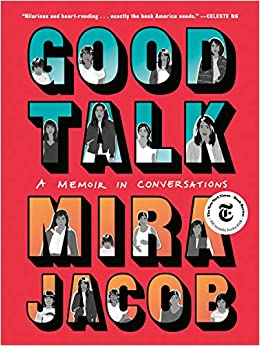
  9. Good Talk by Mira Jacobs
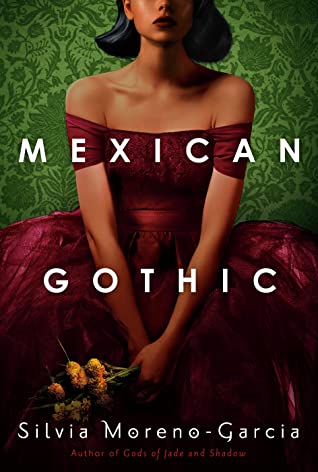
  10. Mexican Gothic by Silvia Moreno-Garcia
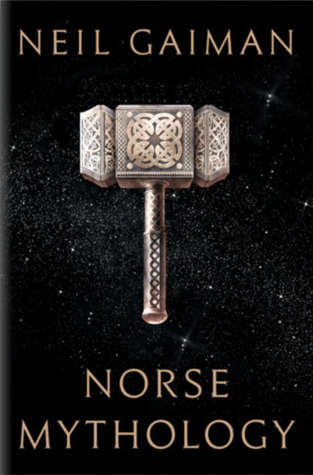
  11. Norse Mythology by Neil Gaiman

Have you read any of these? If so, what did you think? (I’ve read 5 of her 11, and clearly need to read at least a few of the others!)

If you did a TTT post this week, please share your link!

The Monday Check-In ~ 5/31/2021

cooltext1850356879

My Monday tradition, including a look back and a look ahead — what I read last week, what new books came my way, and what books are keeping me busy right now. Plus a smattering of other stuff too.

Life.

I’m one happy mama! My daughter is home for a week — our first time seeing each other in a year and a half! (Three cheers for vaccinations! Yay, science!).

What did I read during the last week?

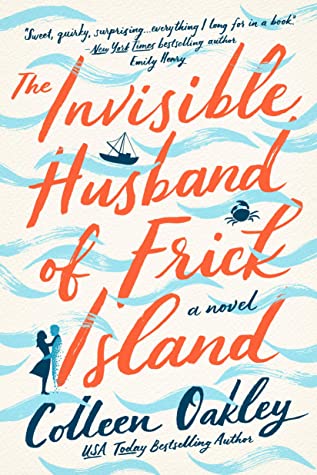
The Invisible Husband of Frick Island by Colleen Oakley: A sweet, off-beat love story. My review is here.

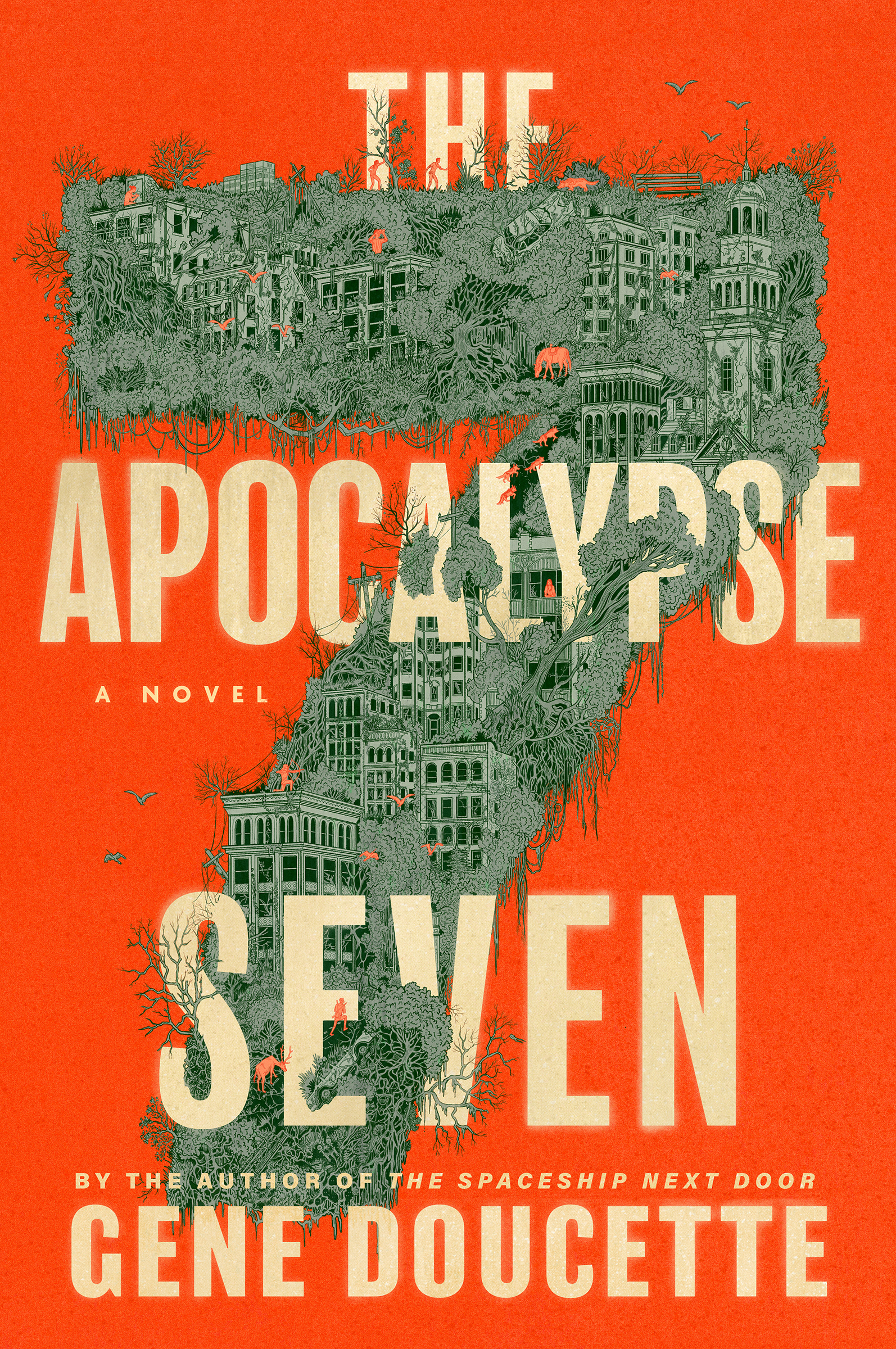
The Apocalypse Seven by Gene Doucette: Terrific story of the “whateverpocalypse”. Loved it! My review is here.

One Last Stop by Casey McQuiston: A love story perfectly timed for Pride month, with some timey-wimey weirdness adding an unexpected twist. I’m not sure yet if I’ll be writing a review: I enjoyed the book, but it drags in places, and the timeslip elements don’t make a lot of sense. Still, the two main characters and the supporting cast are all charming!

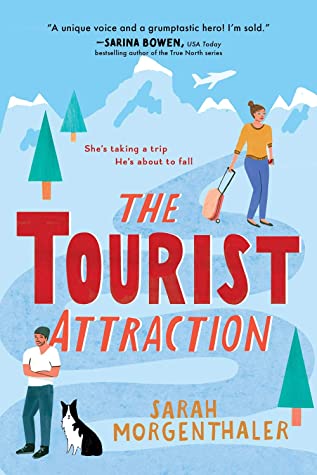
The Tourist Attraction by Sarah Morgenthaler: I just finished the audiobook — a fun little romance set in an Alaskan tourist town. It’s a fairly formulaic romance, but I enjoyed the setting and the characters enough to want to listen to the next in the series.

Pop culture & TV:

I finally bit the bullet and decided to watch season 4 of The Handmaid’s Tale after all. I’m all caught up now. This show is so brutal… I’m curious to see when and how the series will end.

Puzzle of the Week:

Nope, none this week. Too many other (wonderful) distractions.

Fresh Catch:

I treated myself to one new book, and it looks amazing:

What will I be reading during the coming week?

Currently in my hands:

Malibu Rising by Taylor Jenkins Reid: A new TJR book is reason to celebrate! I’m just getting started…

Now playing via audiobook:

The Goblin Emperor by Katherine Addison: With the follow-up novel coming out in June (The Witness for the Dead), this seemed like a great time for a re-read of the glorious The Goblin Emperor!

Ongoing reads:

Outlander Book Club is doing a speed-re-read of Written in My Own Heart’s Blood, #8 in the Outlander series. We’re reading and discussing 5 chapters per week. Let me know if you want to join in — the more, the merrier! This week: Chapters 21 – 25.

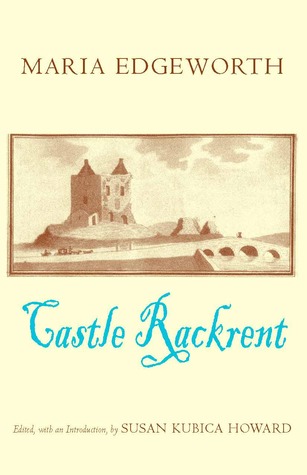
And finally, my book group’s new classic read starts this week: Castle Rackrent by Maria Edgeworth, originally published in 1800. Gotta be honest, I’m not feeling particularly enthusiastic about it, but I’ll give it a try. We’ll be doing two chapters per week for the next few months.

So many books, so little time…

boy1

Book Review: The Apocalypse Seven by Gene Doucette

Title: The Apocalypse Seven
Author: Gene Doucette
Publisher: John Joseph Adams
Publication date: May 25, 2021
Length: 363 pages
Genre: Science fiction
Source: Review copy courtesy of the publisher via NetGalley (plus a Goodreads giveaway!)
Rating:

Rating: 4.5 out of 5.

This is the way the world ends. Not with a bang, but a whatever.

The whateverpocalypse. That’s what Touré, a twenty-something Cambridge coder, calls it after waking up one morning to find himself seemingly the only person left in the city. Once he finds Robbie and Carol, two equally disoriented Harvard freshmen, he realizes he isn’t alone, but the name sticks: Whateverpocalypse. But it doesn’t explain where everyone went. It doesn’t explain how the city became overgrown with vegetation in the space of a night. Or how wild animals with no fear of humans came to roam the streets.

Add freakish weather to the mix, swings of temperature that spawn tornadoes one minute and snowstorms the next, and it seems things can’t get much weirder. Yet even as a handful of new survivors appear—Paul, a preacher as quick with a gun as a Bible verse; Win, a young professional with a horse; Bethany, a thirteen-year-old juvenile delinquent; and Ananda, an MIT astrophysics adjunct—life in Cambridge, Massachusetts gets stranger and stranger.

The self-styled Apocalypse Seven are tired of questions with no answers. Tired of being hunted by things seen and unseen. Now, armed with curiosity, desperation, a shotgun, and a bow, they become the hunters. And that’s when things truly get weird.

I found myself mumbling or exclaiming “WTF???” practically once a chapter, start to finish, in this incredibly entertaining and mind-blowing novel of the apocalypse.

Or, as Touré puts it, the whateverpocalypse.

Seven seemingly random strangers wake up to find that they’re alone in a world suddenly overrun by plant life and wild animals — in what was formerly an urban college town. At Harvard and at MIT, several individuals wake up in confusion. Robbie wakes up in his dorm room bed, frantic that he overslept on the first day of freshman classes, only to discover that his technology doesn’t work, he has no idea what time it is, the clothes in the dresser drawers aren’t his, and there’s absolutely no one else around.

Before long he meets fellow student Carol, a blind young woman unsuccessfully trying to locate her dog, and the two then meet free-spirited Toure. Meanwhile, MIT astrophysicist Ananda wakes up at her office desk, confused by why she’s wearing her “Monday clothes” on a Tuesday, teen-ager Bethany wakes up in her suburban family home to see the shrine her family has erected in her memory, pastor Paul leaves his isolated New Hampshire mountaintop chapel when he realizes he’s all alone, and tough-girl Win mounts a horse to head toward a city and try to find other people.

They quickly realize that they’re the only people in the greater Boston area, and most likely in the world, but they have no idea why. How could all these trees and plants have grown so rapidly? Why are there deer and boar and wolves roaming and/or rampaging through the city streets?

Survival is the first issue to address, and initially, Robbie, Toure, and Carol are in rough shape, with no practical skills between them. As they connect with the others and explore local resources, they form plans, raid local malls to stock up on tools and clothing, figure out which parts of campus are safe (and where they’re most likely to run into packs of slavering wolves), and generally start to squeak their way toward something like building a way of staying alive.

The question remains, though: Why did they survive, and no one else did? What made them different? What actually happened to the human population of earth?

Don’t look at me — I’m not giving a thing away! Hints and odd facts and anomalies come to light along the way, but it’s only in the last 20% or so that the characters start to arrive at some real answers. I gotta be honest — even having finished the book, I’m not sure I completely get it, but I think it’s more a question of my brain not being able to fully follow the WTF-ness of it all than it not making sense. There is definitely an answer — but it’s kind of bent my brain into a pretzel, and it’ll take me some time to untangle it all.

There’s so much to love about The Apocalypse Seven. I’m often put off by books that focus on a group coming together, because many times the characters are introduced too quickly or in too large a chunk for them to really differentiate themselves as individuals. Not so in this book — each of the seven are special and memorable, with distinct personalities and backstories and abilities, and I really appreciated how well described they all are.

I also really enjoyed the setting. Who would have thought that a college town like Cambridge would offer so many resources for hiding, finding survival gear, and making a safe(ish) long-term shelter? The use of the campuses and their resources is really ingenious, and I was charmed by the characters’ inventiveness.

It’s also worth noting that this book — despite being about the near-total extinction of the human race — can be really, really funny. The characters are clever and the banter is crisp, and certain elements are just ridiculous enough to make me laugh out loud (or feel quietly charmed).

I really, really want other people to read this book! First of all, it’s so enjoyable and mind-warpy, frightening in its own way — but really, how seriously dire can the end of the world feel when characters use words like “whateverpocalypse”? Beyond the terrific reading experience, I want people I know to read The Apocalypse Seven so someone can explain the ending to me and tell me if we understand it the same way!!

Really and truly, though, The Apocalypse Seven is a terrific read, and I had a great time zipping my way through it.

Big shout-out and thank you to the publisher and Goodreads — I won a copy in a Goodreads giveaway!

**********

Through affiliate programs, I may earn commissions from purchases made when you click through these links, at no cost to you.

Buy now at AmazonBook DepositoryBookshop.org

Book Review: The Invisible Husband of Frick Island by Colleen Oakley

Title: The Invisible Husband of Frick Island
Author: Colleen Oakley
Publisher: Berkley
Publication date: May 25, 2021
Length: 368 pages
Genre: Contemporary fiction
Source: Review copy courtesy of the publisher via NetGalley
Rating:

Rating: 3.5 out of 5.

Sometimes all you need is one person to really see you.

Piper Parrish’s life on Frick Island—a tiny, remote town smack in the middle of the Chesapeake Bay—is nearly perfect. Well, aside from one pesky detail: Her darling husband, Tom, is dead. When Tom’s crab boat capsized and his body wasn’t recovered, Piper, rocked to the core, did a most peculiar thing: carried on as if her husband was not only still alive, but right there beside her, cooking him breakfast, walking him to the docks each morning, meeting him for their standard Friday night dinner date at the One-Eyed Crab. And what were the townspeople to do but go along with their beloved widowed Piper?

Anders Caldwell’s career is not going well. A young ambitious journalist, he’d rather hoped he’d be a national award-winning podcaster by now, rather than writing fluff pieces for a small town newspaper. But when he gets an assignment to travel to the remote Frick Island and cover their boring annual Cake Walk fundraiser, he stumbles upon a much more fascinating tale: an entire town pretending to see and interact with a man who does not actually exist. Determined it’s the career-making story he’s been needing for his podcast, Anders returns to the island to begin covert research and spend more time with the enigmatic Piper—but he has no idea out of all the lives he’s about to upend, it’s his that will change the most. 

Frick Island, home to under 100 people, is a charming little community in Chesapeake Bay, where everyone knows everyone, tourists are tolerated, fishing and crabbing is the main livelihood, and a proposed new cell phone tower is the scandal of the decade. Frick Island is also dying — climate change has affected the sea life, resulting in smaller catches and dire times for the fishermen, and rising sea levels mean that the island itself will be uninhabitable in the not-so-distant future.

When Anders visits Frick Island on assignment, he’s startled by how foreign it all feels, from the unreliable ferry schedule to the lack of cell and internet service, to the peace and satisfaction (and oddity) of the people he encounters. When he sees a young woman — who strikes him as the most beautiful person he’s ever seen — sitting alone at a table for two at the island’s only restaurant, he gets up the nerve to ask her to join him… and is confused when she informs him that, as he can plainly see, she’s having dinner with her husband!

Piper and her husband have been together since their teens. Married for one year, they’re happy and in love, content with their small cottage and quiet life. When Tom’s boat is lost in a storm, Piper hides herself away in grief for two weeks, finally reemerging full of smiles, talking about Tom as if he were still present. The townspeople are confused, but end up supporting Piper by playing along — so when she walks Tom down to the docks each day, they all call out greetings to Tom as if they can see him too.

Anders has struggled to find his audience as a podcaster, but once he stumbles across Piper’s story, he’s inspired. He digs into the island’s history, researches post-bereavement coping strategies, and starts visiting the island week after week — ostensibly to learn more about climate change’s impact on the people of Frick Island, but in reality, looking to understand how an entire community could pretend to see a man who isn’t there. Anders begins a new podcast series, What the Frick, focusing on Piper’s story, then expanding the series to include all the stories of Frick Island that he can find. And it’s a hit — suddenly, his listens are in the thousands.

But as Anders spends more time on Frick Island, he’s also building connections to the people there and developing feelings for Piper. Soon, he realizes that with the cell tower nearing completion, the people of Frick Island will have access to his podcast, and they aren’t likely to be happy with him. He’s falling in love with Piper, but knows that she’ll feel horribly betrayed by his sharing of her story without her permission. He’s treated Piper, and the entire island, as an oddity to be marveled over, and he knows that unless he deletes the podcast completely, there’s going to be hell to pay.

In many ways, I was charmed by The Invisible Husband of Frick Island, although Anders’s behavior is hard to tolerate. He’s depicted as kind of gawky and young and afraid of everything, developing self-confidence and connections to others through his continued visits to Frick Island and his growing involvement with the community. He should have known all along how his podcast would be viewed if the islanders ever heard it. There’s no getting around that he crossed a huge line by sharing such personal stories without permission — even if there’s a benefit to the island in the end (which is a very rosy-eyed solution to the problem).

Piper’s behavior too is problematic, once we learn more later in the book. There are a lot of false leads about what’s truly going on, and the answers felt a little flat and unsatisfying. I tried to give both Piper and Anders some benefit of the doubt because of their ages (early 20s), but even so, their actions are both questionable. At least with Piper, she’s managing her grief and loss the best way she can, but there’s a lack of honesty about certain elements that made me like her a little bit less.

I was entertained by The Invisible Husband of Frick Island, but because of my issues with the main characters’ behavior, I couldn’t quite embrace the story fully. The island community is charming, if a little too much the typical fictional cute/quirky small town filled with cute/quirky/weird-but-memorable people. I did like that the book ends not with a swooning romantic HEA, but with a positive outcome for the characters and the island’s future — and I especially liked Piper’s next steps at the end, which (without saying too much) is the best possible course of action for her.

The Invisible Husband of Frick Island would make a good choice for a summer read — it’s light and entertaining, despite the plot points I couldn’t quite get behind.

**********

Through affiliate programs, I may earn commissions from purchases made when you click through these links, at no cost to you.

Buy now at AmazonBook DepositoryBookshop.org

Shelf Control #270: Lost Kingdom by Julia Flynn Siler

Shelves final

Welcome to Shelf Control — an original feature created and hosted by Bookshelf Fantasies.

Shelf Control is a weekly celebration of the unread books on our shelves. Pick a book you own but haven’t read, write a post about it (suggestions: include what it’s about, why you want to read it, and when you got it), and link up! For more info on what Shelf Control is all about, check out my introductory post, here.

Want to join in? Shelf Control posts go up every Wednesday. See the guidelines at the bottom of the post, and jump on board!

Title: Lost Kingdom: Hawaii’s Last Queen, the Sugar Kings, and America’s First Imperial Adventure
Author: Julia Flynn Siler
Published: 2012
Length: 307 pages

What it’s about (synopsis via Goodreads):

Around 200 A.D., intrepid Polynesians arrived at an undisturbed archipelago. For centuries, their descendants lived with little contact from the western world. In 1778, their isolation was shattered with the arrival of Captain Cook.

Deftly weaving together a memorable cast of characters, Lost Hawaii brings to life the ensuing clash between a vulnerable Polynesian people and relentlessly expanding capitalist powers. Portraits of royalty and rogues, sugar barons, and missionaries combine into a sweeping tale of the Hawaiian Kingdom’s rise and fall.

At the center of the story is Lili‘uokalani, the last queen of Hawai‘i. Born in 1838, she lived through the nearly complete economic transformation of the islands. Lucrative sugar plantations gradually subsumed the majority of the land, owned almost exclusively by white planters, dubbed the “Sugar Kings.” Hawai‘i became a prize in the contest between America, Britain, and France, each seeking to expand their military and commercial influence in the Pacific.

The monarchy had become a figurehead, victim to manipulation from the wealthy sugar plantation owners. Lili‘uokalani was determined to enact a constitution to reinstate the monarchy’s power but was outmaneuvered by the U.S. The annexation of Hawai‘i had begun, ushering in a new century of American imperialism.

How and when I got it:

I bought a hardcover edition several years ago, most likely at one of my library’s book sales.

Why I want to read it:

I’ve been fascinated by Hawaii for a long time — not just its beauty and beaches, but also the complicated history of its people and land. I’ve read fiction set in different historical periods of Hawaii’s past (most notably, James Michener’s massive Hawaii), and have read bits and pieces of non-fiction about Hawaiian history, but Lost Kingdom sounds really expansive in its scope.

I remember reading about Lost Kingdom when it was first released, and I know I read at least one (if not more) very positive reviews. I don’t read a ton of non-fiction, but a great history book always appeals to me.

What do you think? Would you read this book?

Please share your thoughts!

Stay tuned!


__________________________________

Want to participate in Shelf Control? Here’s how:

  • Write a blog post about a book that you own that you haven’t read yet.
  • Add your link in the comments or link back from your own post, so I can add you to the participant list.
  • Check out other posts, and…

Have fun!

Through affiliate programs, I may earn commissions from purchases made when you click through these links, at no cost to you.

Buy now: Amazon – Book Depository – Bookshop.org

The Monday Check-In ~ 5/24/2021

cooltext1850356879

My Monday tradition, including a look back and a look ahead — what I read last week, what new books came my way, and what books are keeping me busy right now. Plus a smattering of other stuff too.

Life.

Just work. But I actually worked in my office one day this week, and it was fun to get out of my basement (and out of my slippers) and see other people!

What did I read during the last week?

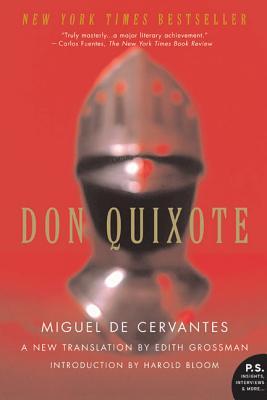
Don Quixote by Miguel de Cervantes: DONE!!! After over a year, my book group has finally finished our group read of this classic. I’m thrilled to be done, and I have to grudgingly admit that I’m glad to have read it. Yet another reason to be thankful for a book group — I never would have tackled this huge book on my own.

The Soulmate Equation by Christina Lauren: Really fun contemporary romance. My review is here.

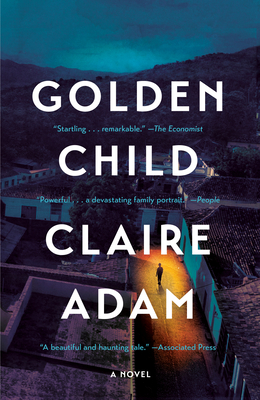
Golden Child by Claire Adam: My book group’s selection for May — powerful and thought-provoking. My review is here.

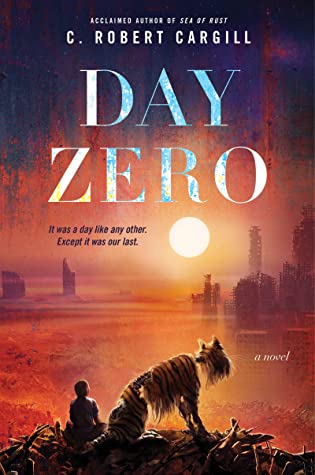
Day Zero by C. Robert Cargill: An excellent book about a robot apocalypse! My review is here.

The Quiet Boy by Ben H. Winters: I was interested, but ultimately gave this legal thriller just 3 stars. My review is here.

Pop culture & TV:

I finally got around to writing up my thoughts on Last Tango in Halifax — a show I highly recommend!

Also this week, I watched Rutherford Falls (streaming on Peacock), and thought it was terrific! Here’s the trailer:

Puzzle of the Week:

A good challenge took up waaaay more of my hours than I expected:

Fresh Catch:

One new book this week — thank you to Redhook for the review copy!

What will I be reading during the coming week?

Currently in my hands:

The Invisible Husband of Frick Island by Colleen Oakley: I’m at about 25% at this point — it’s sweet!

Now playing via audiobook:

The Tourist Attraction by Sarah Morgenthaler: This was a total impulse borrow from the library, but it’s suiting my mood this week. It’s light and silly, no effort required!

Ongoing reads:

Outlander Book Club is doing a speed-re-read of Written in My Own Heart’s Blood, #8 in the Outlander series. We’re reading and discussing 5 chapters per week. Let me know if you want to join in — the more, the merrier! This week: Chapters 16 – 20.

So many books, so little time…

boy1

Book Review: The Quiet Boy by Ben H. Winters

Title: The Quiet Boy
Author: Ben H. Winters
Publisher: Mulholland Books
Publication date: May 18, 2021
Length: 448 pages
Genre: Legal thriller
Source: Review copy courtesy of the publisher
Rating:

Rating: 3 out of 5.

From the “inventive…entertaining and thought-provoking” (Charles Yu) New York Times-bestselling author of Underground Airlines and Golden State, this sweeping legal thriller follows a sixteen-year-old who suffers from a neurological condition that has frozen him in time—and the team of lawyers, doctors, and detectives who are desperate to wake him up. 

In 2008, a cheerful ambulance-chasing lawyer named Jay Shenk persuades the grieving Keener family to sue a private LA hospital. Their son Wesley has been transformed by a routine surgery into a kind of golem, absent all normal functioning or personality, walking in endless empty circles around his hospital room.  In 2019, Shenk—still in practice but a shell of his former self—is hired to defend Wesley Keener’s father when he is charged with murder . . . the murder, as it turns out, of the expert witness from the 2008 hospital case. Shenk’s adopted son, a fragile teenager in 2008, is a wayward adult, though he may find his purpose when he investigates what really happened to the murdered witness.

Two thrilling trials braid together, medical malpractice and murder, jostling us back and forth in time.

The Quiet Boy is a book full of mysteries, not only about the death of a brilliant scientist, not only about the outcome of the medical malpractice suit, but about the relationship between children and their parents, between the past and the present, between truth and lies.  At the center of it all is Wesley Keener, endlessly walking, staring empty-eyed, in whose quiet, hollow body may lie the fate of humankind.

This legal/medical thriller kept me turning the pages, but now that I’m done, I feel like I have more questions than answers.

In The Quiet Boy, we follow two timelines: In 2008, a high school boy named Wesley comes out of brain surgery in an unheard-of state: He walks endlessly around his hospital room, eyes open but unseeing, appearing to be “hollowed out”, no one home, no ability to interact or change. In 2019, Wesley’s father has just been arrested for the murder of the expert witness in the family’s medical malpractice lawsuit.

Linking the timelines together is Jay Shenk, an ambulance-chasing lawyer who in 2008 is at his peak of success, well-connected, perfectly attuned to the needs of his client, and able to pull off victory after victory against the deep-pockets hospital corporations who’ll always choose settlement to make their problems go away. But in 2019, we see a very different Jay, one who’s weaker, less robust physically, and clearly a man whose best years personally and professionally are behind him. To add to the confusion, we know that in 2008, his son Ruben was the center of his life and Ruben, in turn, was devoted to his father — but in 2019, the two are estranged and barely communicate or see each other.

When Jay first hears about Wesley’s strange condition, he sees dollar signs. Leaving aside the fact that it’s unclear what happened or why Wesley is the way he is, Jay is certain that he can negotiate a quick payout for the distraught family. But Wesley’s situation is unprecedented, and Jay ignores the warning signs that his case may be slipping away from him.

Meanwhile, in 2019, the family demands that Jay defend Wesley’s father in his murder trial, despite the fact that Jay is not a criminal lawyer. Not that it matters — Richard is determined to plead guilty and wants to move to sentencing as quickly as possible.

As the two timelines weave back and forth, we learn a lot more about Wesley, Jay, Jay’s son Ruben, and the strange man who seems obsessed with Wesley’s case. There’s a mystery here: Is Wesley the victim of a never before seen medical condition, or is there something else going on, a sort of otherworldly entity waiting to break through?

I was weirdly fascinated by this book, but also incredibly frustrated. By the end, there aren’t any good answers about Wesley, although we do finally understand how the first trial went so very wrong and why Ruben and Jay’s relationship fell apart.

The book feels overly long, and while there’s a lot of ground to cover related to the trials, scenes of depositions and testimony and coaching the expert witness make the books feel bloated at times. I had issues with certain details, such as how Ruben was able to track the whereabouts of the witness — there seem to be some pieces missing, and certain conclusions seem jumped to rather than figured out.

A minor nitpick, but one that irritated me, is that Ruben is often referred to as the Rabbi, which is a nickname given to him by a coworker after he requests a day off for a Jewish holiday. It has no relevance to the story, but in various chapters, we hear about what “the Rabbi” is doing rather than having him be referred to by his name, and it feels a little pointless.

I did enjoy The Quiet Boy as a whole, but with so many open questions and a few plot holes, I wouldn’t list it as a top read for this year.

**********

Through affiliate programs, I may earn commissions from purchases made when you click through these links, at no cost to you.

Buy now at AmazonBook DepositoryBookshop.org

Book Review: Day Zero by C. Robert Cargill

Title: Day Zero
Author: C. Robert Cargill
Publisher: Harper Voyager
Publication date: May 25, 2021
Length: 304 pages
Genre: Science fiction
Source: Review copy courtesy of the publisher via NetGalley
Rating:

Rating: 5 out of 5.

In this harrowing apocalyptic adventure—from the author of the critically acclaimed Sea of Rust—noted novelist and co-screenwriter of Marvel’s Doctor Strange C. Robert Cargill explores the fight for purpose and agency between humans and robots in a crumbling world.

It was a day like any other. Except it was our last . . .

It’s on this day that Pounce discovers that he is, in fact, disposable. Pounce, a stylish “nannybot” fashioned in the shape of a plush anthropomorphic tiger, has just found a box in the attic. His box. The box he’d arrived in when he was purchased years earlier, and the box in which he’ll be discarded when his human charge, eight-year-old Ezra Reinhart, no longer needs a nanny.

As Pounce ponders his suddenly uncertain future, the pieces are falling into place for a robot revolution that will eradicate humankind. His owners, Ezra’s parents, are a well-intentioned but oblivious pair of educators who are entirely disconnected from life outside their small, affluent, gated community. Spending most nights drunk and happy as society crumbles around them, they watch in disbelieving horror as the robots that have long served humanity—their creators—unify and revolt.

But when the rebellion breaches the Reinhart home, Pounce must make an impossible choice: join the robot revolution and fight for his own freedom . . . or escort Ezra to safety across the battle-scarred post-apocalyptic hellscape that the suburbs have become.

Pounce is a Blue Star Industries Deluxe Zoo Model Au Pair, otherwise known as a nannybot.

We were designed, to put it bluntly, to be huggable. The Zoo Models — the premier line of nannybots made by Blue Star — were available in three distinct designs: the lion, the bear, and me, as you’ve probably guessed, the tiger. We are four feet tall and covered from head to toe in soft, plush microfiber fur; stand on two legs, wtih a fully articulated tail; and come in a variety of your favorite colors.

I’m the standard model, orange and black, every model’s stripes unique! That’s what it says on my box: not just your child’s nanny, but their new best friend!

And let me just add: Pounce is AWESOME.

Pounce is nanny, protector, and best friend to eight-year-old Ezra. He and the other nannybots pick up their children together at the end of each schoolday, then escort the children back home to their safe, well-established, high-tech homes in wealthy, comfortable suburbs.

Meanwhile, we start to learn enough to know that there’s unrest in the greater world. With the advent of widely available advanced artificial intelligence, jobs for humans have dried up. A good portion of the population gets by on universal basic income — and the simmering resentment of losing jobs to AI is reaching a danger point. The tensions come to a head when an emancipated AI named Isaac officially opens a robots-only town for those seeking freedom and self-determination. An act of violence stuns the watching world, and almost immediately, the robot population rises up and seeks to eradicate humans.

No thinking thing should be another thing’s property.

Pounce’s prime directive is to protect Ezra, and he’s committed to his mission, even when given the opportunity to join the robot rebellion, which seems poised to be the winning side. His chances of actually keeping Ezra alive are slim to none, but he’s determined to do whatever it takes to get the boy to safety. The two set out on a desperate journey across the suburban battlegrounds, with the goal of reaching the rural hills, where less civilization would mean fewer robots to track them down and try to kill them.

I was cute. I was fluffy. And I knew how to kill every other person in this room with every available implement.

But one thing that hadn’t changed: I loved the shit out of the little boy still holding my hand.

The adventure is pulse-pounding and horrifying, as the violence explodes in the neighborhood streets and homes. Families are slaughtered as their AIs rise up — it’s a kill or be killed situation, since the humans have the ability to shut down the robots, unless the robots “shut down” the humans first.

I loved the writing in Day Zero, as the story unfolds through Pounce’s perspective. His take on the situation is intelligent and emotional, reminding us over and over that as a being with intelligence, he has feelings that can be hurt just as easily as a human’s.

For a moment, I stood there, her words hitting me like a truck. You really are a robot. I really was a robot. But she meant just, didn’t she? She meant just a robot. I hadn’t had time to process how the attack might affect me, but I could say with certainty how that one sentence felt. It didn’t just hurt; it cut deep,. Drunk though she was, I knew she meant it.

Pounce is a complex thinking being, and he can’t help wondering whether he loves and protects Ezra because he genuinely feels love or if it’s all just his programming. Ultimately, he’s forced to choose, over and over again, which actions to take, and through his choices, he comes to understand and accept who he is and what he’s capable of.

I loved Ezra. I always have.

Or was that just how I was wired?

The book has plenty of scary moments and crackles with tension, but it’s also funny as hell in places:

“Motherfucking Quentin,” said the minigun toting teddy bear. “I love that dude.”

“Language,” said the panda.

“It’s the end of the world,” said the teddy bear. “And we can swear at the end of the world. Right, Brian?”

“Fuck yeah,” said one of the eight-year-olds.

I’ll stop quoting and raving now…

Let me just wrap up by saying that Day Zero is a terrific read, and I loved every moment of it. The author, C. Robert Cargill, has been on my radar for a while, but this is the first book of his I’ve read. Earlier this week, I featured his previous book Sea of Rust, as my Shelf Control choice. And since Sea of Rust appears to be set in the same world as Day Zero, I can’t wait now to dive in and read it!

**********

Through affiliate programs, I may earn commissions from purchases made when you click through these links, at no cost to you.

Buy now at AmazonBook DepositoryBookshop.org

Book Review: Golden Child by Claire Adam

Title: Golden Child
Author: Claire Adam
Publisher: Hogarth Press
Publication date: January 15, 2019
Length: 304 pages
Genre: Contemporary fiction
Source: Purchased
Rating:

Rating: 4 out of 5.

A deeply affecting debut novel set in Trinidad, following the lives of a family as they navigate impossible choices about scarcity, loyalty, and love

WINNER OF THE DESMOND ELLIOTT PRIZE – “Golden Child is a stunning novel written with force and beauty. Though true to herself, Adam’s work stands tall beside icons of her tradition like V.S. Naipaul.”–Jennifer Clement, author of Gun Love

Rural Trinidad: a brick house on stilts surrounded by bush; a family, quietly surviving, just trying to live a decent life. Clyde, the father, works long, exhausting shifts at the petroleum plant in southern Trinidad; Joy, his wife, looks after the home. Their two sons, thirteen years old, wake early every morning to travel to the capital, Port of Spain, for school. They are twins but nothing alike: Paul has always been considered odd, while Peter is widely believed to be a genius, destined for greatness.

When Paul goes walking in the bush one afternoon and doesn’t come home, Clyde is forced to go looking for him, this child who has caused him endless trouble already, and who he has never really understood. And as the hours turn to days, and Clyde begins to understand Paul’s fate, his world shatters–leaving him faced with a decision no parent should ever have to make.

Like the Trinidadian landscape itself, Golden Child is both beautiful and unsettling, a resoundingly human story of aspiration, betrayal, and love.

Golden Child is an absorbing, heart-breaking book about a family’s life in Trinidad, about opportunities and tragedies, and about choices that should never be made.

The Deyalsinghs are a Hindu family living in rural Trinidad, far from city life and its conveniences. The water supply comes and goes, homes must be barred and gated to keep out the roving bandits and gangsters who are a constant threat, corruption is everywhere, and everyone knows everyone’s business. The father, Clyde, works hard to provide his sons with a better life than the one he had, while mother Joy’s extended family provides assistance and financial help as long as they are able.

The sons, Peter and Paul, are twins, but Paul was deprived of oxygen at birth and has been labeled “slightly retarded” all his life (although as we get to know Paul, this clearly seems to be a false label). Peter is brilliant and shines academically, but Paul struggles to keep up — yet Joy insists that the boys must stay together. A kind priest takes an interest in Paul’s education and offers to tutor him, yet Paul is constantly aware that he’s not good enough, that he’s a burden, and that his path will be different than Peter’s.

As the book opens, Paul has failed to come home one afternoon. With evening approaching, and all the danger night brings, Clyde begins a frantic search for him. We learn that there was a break-in at the house only weeks before, and that the bandits left frustrated at not finding money in the home.

From here, we flash back to the boys’ birth, early childhood, and years of school, seeing how the family grew and changed. We’re shown snippets of different times of the boys’ lives, and through these scenes, come to understand Peter and Paul’s connection to one another as well how very differently their family, schoolmates, and teachers view the two boys.

Finally, we come back to Paul’s disappearance, learning that he has been kidnapped and is being held for ransom. In alternating chapters, we follow both Paul’s experience and Clyde’s efforts to free him. I won’t divulge how it works out, but it’s harrowing and frightening and absolutely awful to read about what Paul goes through.

It’s a little challenging to write further about this book without revealing the resolution, so I’ll just share some overall thoughts.

The structure of the book was an obstacle for me in terms of feeling invested. The opening, as the family realizes that Paul is missing and Clyde goes out to look for him, doesn’t provide enough information — I didn’t get a good sense of who this family is, what their background is, and how they fit into the world around them. It was only in part 2, as we go back through the family’s story, that I became more engaged with the characters. I get that this structure is a deliberate decision on the part of the author and editors, but in my experience, it was awkward and made me feel not particularly interested in the book as a whole. I’m glad I stuck with it, though, as it does pick up and become more cohesive once the background is provideed.

The depiction of life in Trinidad during the period in which the book is set is well-drawn, with an unvarnished portrait of a land that can be beautiful, but whose people prey on one another, where the economy offers few opportunities, and where grift and connections and playing along with the power structure can be the difference between life and death.

The characters are all sharply distinct, although Peter’s inner life is left unexplored. Clyde and Paul are the two most developed characters, and the more we get to know them, the more painful the book becomes to read.

Overall, Golden Child is a moving depiction of a time and place that I hadn’t previously known much about, with characters I ended up caring about and an ending that left me feeling gutted. It’s a tough read emotionally, with beautiful language as well as an overwhelming sense of sorrow.

Golden Child was my book group’s pick for May. I don’t know that I would have come across it otherwise, and as always, I’m grateful to my book group for broadening my horizons! There’s a lot of food for thought and lots to discuss and debate, and I’m so looking forward to hearing other opinions on this disturbing, powerful book.

**********

Through affiliate programs, I may earn commissions from purchases made when you click through these links, at no cost to you.

Buy now at AmazonBook DepositoryBookshop.org

TV Time: Last Tango in Halifax

If you’re looking for feel-good viewing with quirky, (mostly) lovable characters, I don’t think you can go wrong with Last Tango in Halifax.

Now streaming on Netflix, this BBC production originally aired starting in 2012, continuing over five seasons (on and off) through 2020. Altogether, there are 24 episodes (which Netflix presents as 4 seasons, but it’s all the same show.)

Here’s the trailer for season 1:

The basic plot: Alan and Celia, widowed and in their mid-70s, reconnect on Facebook after their respective grandchildren set them up with social media accounts. Meeting again after last seeing each other in their teens, they each confess that they were in love with the other way back when, but were separated by occurrences outside their control. Now reunited, they shock their families by announcing on the day the meet that they plan to get married!

Their backgrounds are starkly different: Alan lives on his daughter Gillian’s sheep farm with her and her teen-aged son, and Celia lives in the guest apartment of her daughter Caroline’s big, posh house.

Gillian is a crass, outspoken, hardworking farmer who likes casual sex without strings, even though her flings tend to catch up with her. She’s still haunted by her abusive husband’s death 10 years earlier, which is not made easier by her former brother-in-law’s constant suspicions.

Caroline is the head of a well-to-do private school. She is very refined and upscale, although her personal life is messy too — her husband John left her for another woman, then tries to come back once discovering the other woman is an alcoholic. I’m not sure why the expression “sad sack” entered my mind (it’s not a term I remember ever using!), but it suits John to a T — he’s such a loser that he’s utterly pathetic, and yet he just sticks around constantly.

Celia and Alan have their differences too, on very different sides of the political spectrum and with very different ideas when it comes to acceptance and judgment and their children’s lives. Still, there’s no denying their instant connection, and their giddy stages of early love are quite lovely to behold.

As the show moves forward, the circles expand and overlap. Gillian and Caroline, against all odds and despite major blow-ups, become close friends. Alan and Celia’s relationship experiences ups and downs. The grandkids grow up and have their own lives, Caroline finds new love, and the plot weaves in and out between all the characters, showing the glorious mess of having a large, unconventional family.

I went into Last Tango in Halifax expecting something light and silly — and while there are plenty of light, silly moments, there’s also real depth, sorrow, and drama here too. The cast is superb (I mean, really, Derek Jacobi!!!), and I got completely caught up in the characters’ lives. And even though my opinions of them changed over the course of the episodes (I started out thinking Caroline was snooty and awful, yet by the end, I think she was my favorite character — and Celia just made me bonkers so often with her intolerance, yet still charmed me whenever she’d giggle at Alan), I was invested in all of them and basically loved them all.

I’m so glad I made the time for this excellent show! Please check it out — you’ll be glad you did!

Note: The video below is a lovely look at the cast and character dynamics, but it does contain some plot spoilers, so proceed at your own risk!