Book Review: My Brilliant Career by Miles Franklin (Classics Club Spin #42)

Title: My Brilliant Career
Author: Miles Franklin
Publication date: 1901
Length: 228 pages
Rating:

Rating: 4.5 out of 5.

The fierce, irreverent novel of aspiration and rebellion that is both a cornerstone of Australian literature and a feminist classic

Miles Franklin began the candid, passionate, and contrary My Brilliant Career when she was only sixteen, intending it to be the Australian answer to Jane Eyre . But the book she produced-a thinly veiled autobiographical novel about a young girl hungering for life and love in the outback-so scandalized her country upon its appearance in 1901 that she insisted it not be published again until ten years after her death.

And the synopsis from another edition:

Trapped on her parents’ farm in the hardscrabble Australian outback, sixteen-year-old Sybylla Melvyn loves the bush but not the toil it brings. She longs for refinement, and most of all she longs to achieve great things.

Suddenly she falls under the gaze of wealthy, handsome Harry Beecham and finds herself choosing between the conventional path of marriage and her plans for a ‘brilliant career’.

I don’t remember exactly how I became aware of My Brilliant Career, but once it caught my eye, I just knew I needed to add it to my Classics Club Spin list. I’m so glad that the most recent spin landed on this Australian classic!

This was life—my life—my career, my brilliant career! I was fifteen—fifteen! A few fleeting hours and I would be old as those around me.

In My Brilliant Career, teen-aged Sybylla has little to no say in her own life. One of many children, she experiences a severe downturn in her family’s fortunes when her father’s poor business decisions cause then to lose their vast land holdings and move to a smaller, less promising farm. Things go from bad to worse as their father continues to lose money and livestock, and then drink away what little money remains. When a drought leads to even more ruin, Sybylla is sent to live with her grandmother several days’ journey away, where she finally has the opportunity to explore music, books, and a more rewarding and enjoyable life.

While there, Sybylla catches the eye of a wealthy, attractive nearby landowner. We might expect a whirlwind romance to follow, but Sybylla absolutely does not fit the mold of a romantic heroine. She’s mean and dismissive, considers herself ugly, does not wish to be courted, and both yearns to awaken heightened emotions in her suitor and dreads declarations of love, repeatedly (and harshly) rejecting any talk of marriage. Sybylla doesn’t know exactly where her future lies, but she doesn’t see herself finding happiness as a respectable wife, and certainly doesn’t believe that she could make a husband happy, no matter how much he might believe he loves her.

My Brilliant Career is remarkable for its narrative tone, as well as for the unusualness of its main character and her decisions. This book is considered a groundbreaking classic of Australian fiction as well as of feminist literature. Published under a pseudonym when the author was just 21 years old, this debut novel was the first of many books and other writings to follow in the author’s career.

For more on the significance of My Brilliant Career: https://www.nma.gov.au/defining-moments/resources/my-brilliant-career

I loved the writing, especially Sybylla’s orneriness and humor. Her descriptions of her surroundings can be stunning, evoking the time and place with precision, and using Australian lingo that’s sure to both amuse and befuddle non-Australian readers.

Beyond that, Sybylla’s way of thinking is unique, and I loved the way she expresses herself:

I am afflicted with the power of thought, which is a heavy curse. The less a person thinks and inquires regarding the why and the wherefore and the justice of things, when dragging along through life, the happier it is for him, and doubly, trebly so, for her.

My mother is a good woman—a very good woman—and I am, I think, not quite all criminality, but we do not pull together. I am a piece of machinery which, not understanding, my mother winds up the wrong way, setting all the wheels of my composition going in creaking discord.

Girls! girls! Those of you who have hearts, and therefore a wish for happiness, homes, and husbands by and by, never develop a reputation of being clever. It will put you out of the matrimonial running as effectually as though it had been circulated that you had leprosy. So, if you feel that you are afflicted with more than ordinary intelligence, and especially if you are plain with it, hide your brains, cramp your mind, study to appear unintellectual—it is your only chance.

On making my first appearance before my lover, I looked quite the reverse of a heroine. My lovely hair was not conveniently escaping from the comb at the right moment to catch him hard in the eye, neither was my thrillingly low sweet voice floating out on the scented air in a manner which went straight to his heart, like the girls I had read of. On the contrary, I much resembled a female clown.

The ending of the book startled me, not because it ends with high drama, but rather because the character rejects what seems like her best prospect for change, and chooses to remain in the same family routine of working to scratch out a living on the land. I puzzled over the final chapter quite a bit and reread it several times before feeling satisfied that I got the point.

Overall, I’m really pleased that my most recent spin landed on My Brilliant Career. It makes me eager to explore more Australian fiction of the 20th century — please share any recommendations!

A reading note: I read this book via a free edition available for Kindle… and it was absolutely plagued with typos. If you’re considering reading My Brilliant Career, I’d recommend checking the library for a print edition or an e-book edition from a traditional publisher!

Book Review: The Thursday Murder Club by Richard Osman

Title: The Thursday Murder Club
Author: Richard Osman
Publisher: Penguin
Publication date: 2020
Length: 382 pages
Genre: Mystery
Source: Library
Rating:

Rating: 4.5 out of 5.

In a peaceful retirement village, four unlikely friends meet up once a week to investigate unsolved murders.

But when a brutal killing takes place on their very doorstep, the Thursday Murder Club find themselves in the middle of their first live case. Elizabeth, Joyce, Ibrahim and Ron might be pushing eighty but they still have a few tricks up their sleeves.

Can our unorthodox but brilliant gang catch the killer before it’s too late?

I am very late to the party… but I’m glad to have finally arrived! It’s true — The Thursday Murder Club is just as much fun as everyone says.

This entertaining novel centers around a mismatched group of friends at a luxurious senior residence in the countryside who, for fun, devote their leisure time to solving cold case murders. The cases become much less cold when two murders connected to the property occur. Now, the Thursday Murder Club has a real-time case to investigate, much to the consternation of the local police, who always seem to be at least a step behind our gang of seniors.

The characters are terrific — a woman who would appear to have had an adventure-filled life as some sort of secret agent, a nurse, a psychiatrist, and a notorious rabble-rouser, plus the various other friends, relatives and acquaintances who fill out the population at Coopers Chase. Not everything is as it seems, and as the story progresses, many long-held secrets are revealed — some tied to the recent murders, and some not.

The tone is upbeat, even while discussing murders and other crimes and scandals, and I loved the motley assortment of personalities and skills and interests that the main characters present.

The Thursday Murder Club is delightfully entertaining, and I can’t wait to continue with the series!

Purchase linksAmazon – Audible audiobook – Bookshop.orgLibro.fm
Disclaimer: When you make a purchase through one of these affiliate links, I may earn a small commission, at no additional cost to you.
Book Review: The House Saphir by Marissa Meyer

Title: The House Saphir
Author: Marissa Meyer
Publisher: Faber & Faber
Publication date: November 4, 2025
Length: 432 pages
Genre: Young adult fantasy
Source: Library
Rating:

Rating: 3 out of 5.

This is the tale of Bluebeard as it’s never been told before–a romantasy murder mystery.

Mallory Fontaine is a fraud. Though she comes from a long line of witches, the only magic she possesses is the ability to see ghosts, which is rarely as useful as one would think. She and her sister have maintained the family business, eking out a paltry living by selling bogus spells to gullible buyers and conducting tours of the infamous mansion where the first of the Saphir murders took place.

Mallory is a self-proclaimed expert on Count Bastien Saphir—otherwise known as Monsieur Le Bleu—who brutally killed three of his wives more than a century ago. But she never expected to meet Bastien’s great-great grandson and heir to the Saphir estate. Armand is handsome, wealthy, and convinced that the Fontaine Sisters are as talented as they claim. The perfect mark. When he offers Mallory a large sum of money to rid his ancestral home of Le Bleu’s ghost, she can’t resist. A paid vacation at Armand’s country manor? It’s practically a dream come true, never mind the ghosts of murdered wives and the monsters that are as common as household pests.

But when murder again comes to the House Saphir, Mallory finds herself at the center of the investigation—and she is almost certain the killer is mortal. If she has any hope of cashing in on the payment she was promised, she’ll have to solve the murder and banish the ghost, all while upholding the illusion of witchcraft.

But that all sounds relatively easy compared to her biggest challenge: learning to trust her heart. Especially when the person her heart wants the most might be a murderer himself.

I had high hopes for The House Saphir — I’m always up for a good fairy tale retelling, and I loved this author’s Lunar Chronicles series. Unfortunately, weak world-building, odd word choices, and an unconvincing plot all resulted in a reading experience that was squarely so-so.

The story revolves around Mallory, a con artist from a line a witches who lost her own powers due to a spell gone wrong during her youth. Now, she and her sister support themselves through fake card readings and unauthorized tours of a supposedly haunted house (complete with cheap knock-off heirlooms that they sell to their gullible customers). Not everything is fake, however; the one magical gift that Mallory still has left is the ability to see and communicate with ghosts. At the Saphir mansion, home of the notorious murderer known as Monsieur Le Bleu, Mallory communicates with Trephine, the first of his three murdered wives.

After a botched tour, Mallory and her sister end up hired by Armand Saphir, descendent of the murderer, to rid his country estate of the evil spirit of Le Bleu. And despite having no actual ability to carry out an exorcism, they take the job. After all, money is tight, and they’ve been threatened with arrest for fraud. So… take the job, fake it for a while, get paid, and take off.

All sorts of complications ensue. The world of The House Saphir include an array of monsters, who’ve apparently reentered the mortal realm once the veil fell years earlier. There’s a religion that worships the seven gods, and witches and magic are quite real. But it all is rather muddled. The religion, the monsters, the common beliefs, the reasons for why things are as they are — nothing gets much explanation, and feels like the thinnest of plot scaffolding, only there to explain Mallory’s actions.

I was baffled by the setting. This is a fictional world, European-esque but not actually Europe or countries that exist in our world — but characters have French names and speak French, and a visiting magician named Constantino speaks Italian (“buona sera!”). Why?

One relatively minor thing that bugged me throughout — the author’s use of the word “boy” when talking about a young man. When Mallory pounces on someone coming up behind her, she’s startled to see a “boy”, which made me assume this was someone in the 10 -12 year old range. Nope — the various “boys” Mallory encounters all appear to be upwards of 18 or thereabouts. Annoying, and this took me right out of the story each time.

Overall, I was underwhelmed by the plot and character development, and found the action sequences pretty messy as well. On a positive note, I enjoyed the ghost wives quite a bit, and appreciated that their scenes tended to add a touch of humor to otherwise grim events.

The House Saphir appears to be a stand-alone, although I could imagine a spin-off involving the monster hunters. Perhaps future books might provide more substance for the world-building.

Purchase linksAmazon – Audible audiobook – Bookshop.orgLibro.fm
Disclaimer: When you make a purchase through one of these affiliate links, I may earn a small commission, at no additional cost to you.
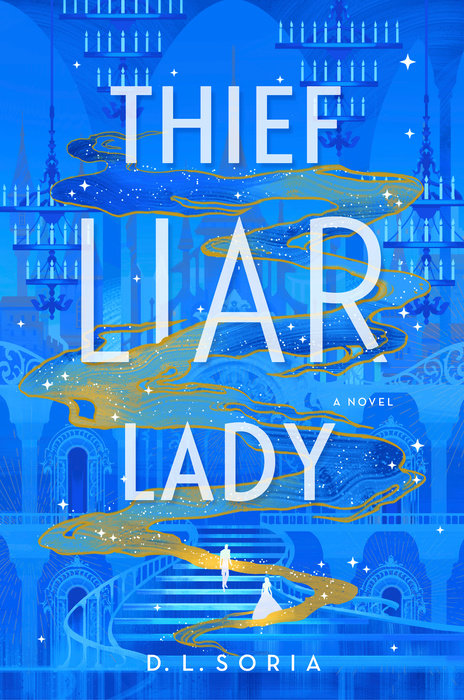
Book Review: The Berry Pickers by Amanda Peters

Title: The Berry Pickers
Author: Amanda Peters
Publisher: Penguin
Publication date: April 4, 2023
Length: 295 pages
Genre: Historical fiction
Source: Purchased
Rating:

Rating: 4.5 out of 5.

One family’s deepest pain. Another family’s darkest secret.

On a hot day in 1960s Maine, six-year-old Joe watches his little sister Ruthie, sitting on her favourite rock at the edge of the blueberry fields, while their family, Mi’kmaq people from Nova Scotia, pick fruit. That afternoon, Ruthie vanishes without a trace. As the last person to see her, Joe will be forever haunted by grief, guilt, and the agony of imagining how his life could have been.

In an affluent suburb nearby, Norma is growing up as the only child of unhappy parents. She is smart, precocious, and bursting with questions she isn’t allowed to ask – questions about her missing baby photos; questions about her dark skin; questions about the strange, vivid dreams of campfires and warm embraces that return night after night. Norma senses there are things her parents aren’t telling her, but it will take decades to unravel the secrets they have kept buried since she was a little girl.

The Berry Pickers is an exquisitely moving story of unrelenting hope, unwavering love, and the power of family – even in the face of grief and betrayal.

Once again, I have my book group to thank for leading me to The Berry Pickers, a moving story about family secrets, loss, and a search for truth.

On an ordinary summer day in Maine, four-year-old Ruthie disappears as her family picks berries in the nearby fields. Ruthie’s brother Joe, age six, is the last to see her, sitting on a rock finishing a sandwich while he runs off to chase birds. Both will be forever changed by that day.

Joe is haunted by the guilt he carries, feeling that if only he hadn’t left his sister in that moment, tragedy could have been avoided. Their family — mother and father, older sister and two brothers — search tirelessly for Ruthie, but they’re also obligated to the owner of the berry fields where they work each summer. Eventually, they must continue their work, and at the end of the summer, they head back to their home in Nova Scotia with deep holes in their hearts.

Meanwhile, in alternating chapters, we hear from Norma. As a young girl, raised in a practically silent house by a distant father and an overprotective, mentally fragile mother, Norma has been told that the images that come to her of a different mother and a family around a campfire are just dreams. As she grows up, she accepts this version of reality, although she continues to record these dreams in her journals, but she remains skeptical of some of the answers her parents provide when she asks questions. Why is her skin so much browner than theirs? Because she had an Italian great-grandfather. Why are there no baby pictures of her? Because they lost everything in a fire when she was little.

We understand right away that Norma is Ruthie — this isn’t a spoiler! — but it takes much of the book to unravel how Norma ended up where she is. Meanwhile, through their separate narratives, we see Joe and Norma’s lives unfold, and how deeply both are affected by the pain of Ruthie’s loss and everything that followed.

The Berry Pickers is a beautifully written and deeply affecting book. The tragedy that befalls Joe and Ruthie’s family is terrible, but so is the lack of support and resources available in the immediate aftermath. A Mi’kmaq family who come to Maine each summer for farmwork in the berry fields, they’re dismissed by the local police who provide only cursory help. The farm owner too offers lip-service sympathy before reminding them to get back to work. Again and again, we see how the local community and law enforcement see them as other and not worth much effort, and even to blame for the tragedies that come their way, including a terrible incident years later. Joe ends up spending much of his adult life alone, carrying heavy burdens of rage and guilt, and while we may question his decisions, we can understand why he feels he is doing what is necessary.

Norma’s life is easier, on the surface. She grows up in a financially secure home, gets a good education, pursues an academic career — but she’s always adrift, always carrying the weight of her mother’s fears and manipulations, and the overwhelming sense of sadness that pervades their home. Norma’s Aunt June provides love, support, and kindness, but is also complicit in the big lies at the heart of Norma’s family.

We spend much of The Berry Pickers waiting to see how Joe and Norma’s stories will eventually intersect. It’s worth the wait. The ways in which their lives parallel one another, include a significant near miss, make this story especially heart-wrenching. Joe is a flawed man with deep regrets, but we can’t help love him anyway and wish that he could forgive himself much sooner. Norma’s life is driven by the secrets and lies that have surrounded her since her earliest days. The burden she bears leads her to a lonely life, and we ache for her as she suffer her own losses.

The Berry Pickers presents each character’s story with grace and empathy. While this is a story with deep wounds at its heart, the storytelling doesn’t feel oppressively heavy. By using Joe and Norma’s voices, we’re taken along with them through their lives, experiencing their ups and downs, and coming to know each of them in a meaningful way. There are funny and joyful moments too, and the payoff for this journey provides a beautiful ending.

The Berry Pickers is a powerful book that shouldn’t be missed. Highly recommended!

Purchase linksAmazon – Audible audiobook – Bookshop.orgLibro.fm
Disclaimer: When you make a purchase through one of these affiliate links, I may earn a small commission, at no additional cost to you.
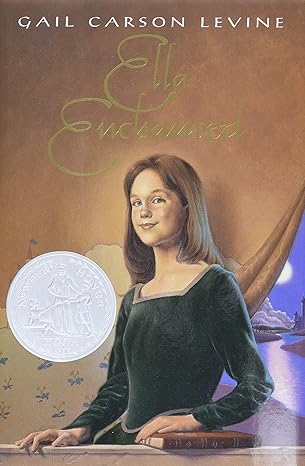
Book Review: A Stranger in Town (Rockton, #6) by Kelley Armstrong

Title: A Stranger in Town
Series: Rockton, #6
Author: Kelley Armstrong
Publisher: Minotaur Books
Publication date: February 2, 2021
Length: 359 pages
Genre: Thriller/mystery
Source: Purchased
Rating:

Rating: 4.5 out of 5.

In the next riveting thriller from #1 New York Times bestselling author Kelley Armstrong, the paranoia increases – along with the stakes – as the town of Rockton tries to solve the latest mystery at their door.

Detective Casey Duncan has noticed fewer and fewer residents coming in to the hidden town of Rockton, and no extensions being granted. Her boyfriend, Sheriff Eric Dalton, presumes it’s the natural flux of things, but Casey’s not so sure. It seems like something bigger is happening in the small town they call home.

When an injured hiker stumbles from the woods, someone who seems to have come to the Yukon for a wilderness vacation but instead is now fighting for her life, it’s all hands on deck. What – or who – attacked this woman, and why?

With the woman unconscious, and no leads, Casey and Eric don’t know where the threat is coming from. Plus, the residents of their deeply secretive town are uneasy with this stranger in their midst. Everyone in Rockton wants this mystery solved – and fast.

The Rockton series by Kelley Armstrong has been excellent since the very first book, and it’s a thrill to see the connecting story threads weave together here in the 6th book, leading toward an end point still to come in the 7th and final book in the series. A Stranger in Town builds on everything that’s come before it, provides a mystery of its own to solve, and answers questions that have been percolating since the very beginning.

Once again, a quick recap of the series premise:

Rockton is a secret hidden town in the Yukon wilderness, a haven for those seeking extreme shelter from dangers in their real lives — or those who’ve committed some sort of wrongdoing and need a place to start over. Rockton, population 200, is filled with an uneasy mix of crime victims and white-collar criminals — although as Sheriff Eric Dalton and Detective Casey Butler come to discover, the town council is willing to defy its own rules for a price and allow more dangerous people to take advantage of Rockton’s protection.

A Stranger in Town starts with a frightening discovery. In the forest surrounding Rockton, Casey and Eric stumble across a severely injured hiker. She appears to be a well-provisioned but inexperienced tourist, one of the many who pay to be dropped in the Yukon for a wilderness adventure — and like many before her, finds herself in over her head. But as Casey and Eric quickly discover, this hiker wasn’t injured in a fall or animal attack — she appears to have been gravely wounded by hostiles, the pack of “wild” people, seemingly feral or deranged, who live in the forest and pose a continual threat to Rockton and other settlements. What’s more, the hiker was one of a group of four; her companions’ bodies are found nearby.

The attack highlights yet again how dangerous the hostiles are, to the point where the council — the wealthy advisory board that controls and funds Rockton from afar — are ready to shut everything down and dismantle the town, much to Casey and Eric’s dismay. But Casey has had her suspicions about the hostiles from the very beginning of her time in Rockton, and these new murders, and the council’s reaction, give her even more incentive to finally find the long-hidden answers.

If it sounds like I’m being vague… well, that’s intentional! The plot and mystery and clues are all so intricate that to talk about any in detail would mean spoiling the fun of discovering them for yourselves. What I loved about A Stranger in Town, as with the rest of the series, is seeing how the characters interact in each new situation, how much the relationships among the town residents have evolved, and how astutely Casey sees into the truth of the issues and incidents that complicate their lives.

On top of the excellent mystery and the strength of the depiction of the town’s residents, the relationship between Eric and Casey continues to be a delight. They are two strong, intelligent, complicated people. Their personal baggage can cause difficulty when it comes to their feelings and communications, yet their commitment to one another allows them to view situations, and one another, with honesty and fairness. It’s fascinating to see them work through their inner qualms and self-doubt, and to allow themselves to trust in the strength of their love even in moments of serious danger or conflict.

The plot of A Stranger in Town is terrific, and the book is impossible to put down. The mystery at hand is resolved, and there are startling revelations that go way back into Rockton’s history and explain the present challenges the town faces. This book sets up what’s sure to be a dynamite series finale, and I can’t wait to get to it!

The Rockton series ends with book #7. After that, I plan to dive into the spin-off Haven’s Rock series. Next up for me:

Book #7, The Deepest of Secrets

Interested in this series? Check out my reviews of the previous books:
City of the Lost (Rockton, #1)
A Darkness Absolute (Rockton, #2)

This Fallen Prey (Rockton, #3)
Watcher in the Woods (Rockton, #4)
Alone in the Wild (Rockton, #5)

Purchase linksAmazon – AudibleBookshop.org – Libro.fm
Disclaimer: When you make a purchase through one of these affiliate links, I may earn a small commission, at no additional cost to you.
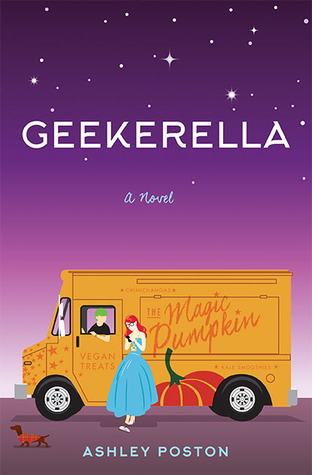
Audiobook Review: Britt-Marie Was Here by Fredrik Backman

Title: Britt-Marie Was Here
Author: Fredrik Backman
Narrator: Joan Walker
Publisher: Atria Books
Publication date: 2016
Print length: 324 pages
Audio length: 9 hours 18 minutes
Genre: Contemporary fiction
Source: Library
Rating:

Rating: 3 out of 5.

From the best-selling author of the “charming debut” (PeopleA Man Called Ove and My Grandmother Asked Me to Tell You She’s Sorry, a heartwarming and hilarious story of a reluctant outsider who transforms a tiny village and a woman who finds love and second chances in the unlikeliest of places.

Britt-Marie can’t stand mess. She eats dinner at precisely the right time and starts her day at six in the morning because only lunatics wake up later than that. And she is not passive-aggressive. Not in the least. It’s just that sometimes people interpret her helpful suggestions as criticisms, which is certainly not her intention.

But at 63, Britt-Marie has had enough. She finally walks out on her loveless 40-year marriage and finds a job in the only place she can: Borg, a small, derelict town devastated by the financial crisis. For the fastidious Britt-Marie, this new world of noisy children, muddy floors, and a roommate who is a rat (literally) is a hard adjustment.

As for the citizens of Borg, with everything that they know crumbling around them, the only thing that they have left to hold on to is something Britt-Marie absolutely loathes: their love of soccer. When the village’s youth team becomes desperate for a coach, they set their sights on her. She’s the least likely candidate, but their need is obvious, and there is no one else to do it.

Thus begins a beautiful and unlikely partnership. In her new role as reluctant mentor to these lost young boys and girls, Britt-Marie soon finds herself becoming increasingly vital to the community. And, even more surprisingly, she is the object of romantic desire for a friendly and handsome local policeman named Sven. In this world of oddballs and misfits, can Britt-Marie finally find a place where she belongs?

Zany and full of heart, Britt-Marie Was Here is a novel about love and second chances and about the unexpected friendships we make that teach us who we really are and the things we are capable of doing.

After finishing Fredrik Backman’s most recent book, My Friends — a true masterpiece — I decided to go back and read the remaining couple of his books that I’d somehow missed. But now that I’ve read Britt-Marie Was Here, I realize that his earlier books may not work for me quite as well as the more recent ones.

In Britt-Marie Was Here, we meet the prickly, socially awkward Britt-Marie who, after 40 years of marriage, leaves her husband and decides to start a life of her own. She’s spent all these year catering to her husband and keeping their home spotless, and has simply taken his word for it when he tells her that she’s not good with people. Now, she’s determined to find her own path, and starts by hounding the poor woman at the unemployment office until she’s finally offered the only available position — acting as caretaker for an abandoned community center slated for closure shortly, in the forgotten, run-down town of Borg.

Borg is miles from nowhere, and seems to mainly consist of a pizzeria that’s also the local grocery store, post office, and car repair shop. The recreation center is just next door, and in just as desperate need of cleaning as the pizzeria, so Britt-Marie gets to work. She’s incredibly awkward and rubs the locals the wrong way right from the start — and yet, she’s not fazed when the curious local kids show up to check her out. Somehow, almost against her will, she gets involved, and soon, she’s formed abrasive yet fond relationships with the adults of Borg while also getting roped into acting as the kids’ soccer coach.

If you like your stories quirky and heart-warming, then there’s a lot you’ll enjoy about Britt-Marie Was Here. Backman’s storytelling is always a delight, and his wordplay and descriptions are just as clever as we’d expect. I especially love how this author captures so much depth about life and emotions in seemingly simple sentences:

She has not run down the stairs like this since she was a teenager, when your heart reaches the front door before your feet.

However… Plotwise, Britt-Marie Was Here feels a little bland. I’ve read plenty of books already about outsiders finding connection and community in a peculiar small town, so this book didn’t especially stand out for me. What’s more, I found the timeline hard to believe: Britt-Marie spends three weeks in Borg, and somehow manages to change everyone’s lives for the better, create new hope for the children and their soccer team, and encourage the townsfolk to become their best selves. In three weeks? As I said, perhaps I’ve just read too many of these outsiders-transform-a-community stories, but I just wasn’t buying it.

On top of my issues with the story, I really struggled with the audiobook narration. The narrator’s delivery was a challenge for me, especially the rhythm and tone of her speaking voice. Something about it just didn’t click, and I often found myself puzzling over what I’d just heard or having to go back and repeat sections — or double-check them against the printed edition.

This is a cute story, and there are some moments I truly enjoyed, but between the narration and the sense of having read too many similar stories already, Britt-Marie Was Here was only a so-so audiobook experience for me.

I do think the author’s style and subject matter have developed spectacularly over the years, and his later books feel much deeper to me. I believe I have just one more of his early novels, and possibly a few shorter pieces, left to read, but after Britt-Marie, I’ll probably hold off for a while before delving further into his backlist.

Purchase linksAmazon – Audible – Bookshop.org – Libro.fm
Disclaimer: When you make a purchase through one of these affiliate links, I may earn a small commission, at no additional cost to you.
Save

Book Review: Children of Time (Children of Time, #1) by Adrian Tchaikovsky

Title: Children of Time
Series: Children of Time, #1
Author: Adrian Tchaikovsky
Publisher: Orbit
Publication date: June 4, 2015
Length: 600 pages
Genre: Science fiction
Source: Purchased
Rating:

Rating: 5 out of 5.

A race for survival among the stars… Humanity’s last survivors escaped earth’s ruins to find a new home. But when they find it, can their desperation overcome its dangers?

WHO WILL INHERIT THIS NEW EARTH?

The last remnants of the human race left a dying Earth, desperate to find a new home among the stars. Following in the footsteps of their ancestors, they discover the greatest treasure of the past age—a world terraformed and prepared for human life.

But all is not right in this new Eden. In the long years since the planet was abandoned, the work of its architects has borne disastrous fruit. The planet is not waiting for them, pristine and unoccupied. New masters have turned it from a refuge into mankind’s worst nightmare.

Now two civilizations are on a collision course, both testing the boundaries of what they will do to survive. As the fate of humanity hangs in the balance, who are the true heirs of this new Earth?

Children of Time is a big, detailed, complex work of science fiction. It requires focus and concentration… and is absolutely worth the effort.

In Children of Time, humanity’s time on Earth has come to an end. While expanding out beyond the solar system and exploring other worlds, factions at home and throughout Earth’s space colonies go from adversarial politics to all-out war. The few remnants of humans on Earth find ways to survive an ice age, only to discover, as the ice finally recedes, that the ice actually protected life from the toxins that now doom them all to extinction — unless they can recreate the ancient tech of their space-faring ancestors and journey to a new planet to start again.

Meanwhile, the earlier humans’ space exploration included an ambitious terraforming agenda, journeying to far-flung solar systems to seed likely planets with the potential for new homes for humanity. As we learn early on, though, even this undertaking comes to ruin due to the factionalism and wars that devastate life on Earth.

One scientist heading a terraforming project succeeds, however… in a way. The pioneer of a project known as exaltation, Dr. Avrana Kern’s mission is to seed a terraformed planet with monkeys and a nanovirus to speed their evolution — then have the humans remain in suspension for centuries until the monkeys have evolved enough to support human settlement on their planet. But thanks to the war between humans, something goes very, very wrong with her plans.

Without giving too much away, I’ll just say that the story of what happens on this planet is utterly fascinating. Essentially, an unintended species is infected by the nanovirus — and over the course of Children of Time, we see an intensely interesting version of human evolution as played out by another species entirely. Thanks to the relatively short life span of this species, many generations pass over the course of the decades and centuries that follow — and we see them evolved from basic hunting skills to complex reasoning, strategy, building, communication, religious ideology, and eventually, highly advanced biochemistry and technology.

Meanwhile, in alternating chapters, we see the final remnants of the human race aboard the ark ship Gilgamesh, following the star maps and recovered documents of the last space-exploring humans in a desperate search to locate the old terraformed planets. Because they mainly exist in suspension, millennia pass during the Gilgamesh’s journey. We see familiar characters as they come out of suspension, often after decades or centuries have passed, in order to deal with new threats or discoveries. The concepts of time and what constitutes a life span are investigated in strange and wonderful new ways.

I don’t want to go too far into specifics, as there’s a real joy in seeing just how inventively the author spins out this story. The chapters alternate between life on the Gilgamesh and life on the planet, and it’s done so well that by the time the inevitable conflict between the two arrives near the end of the book, it’s impossible for a reader to favor one side over the other.

I’m thrilled that I’ve finally read Children of Time. Despite the book’s length, it’s so engrossing that the pages just fly by. For science fiction fans, this book is a must!

There are two more volumes in the series currently available, with a fourth set for publication in early 2026. On the one hand, Children of Time does wrap up very well, so I’d say it’s perfectly fine and satisfying to approach it as a single-volume stand-alone. On the other hand, I enjoyed Children of Time so much that I’m eager to read more set in this sci-fi universe!

Purchase linksAmazon – Audible audiobook – Bookshop.org 
Disclaimer: When you make a purchase through one of these affiliate links, I may earn a small commission, at no additional cost to you.
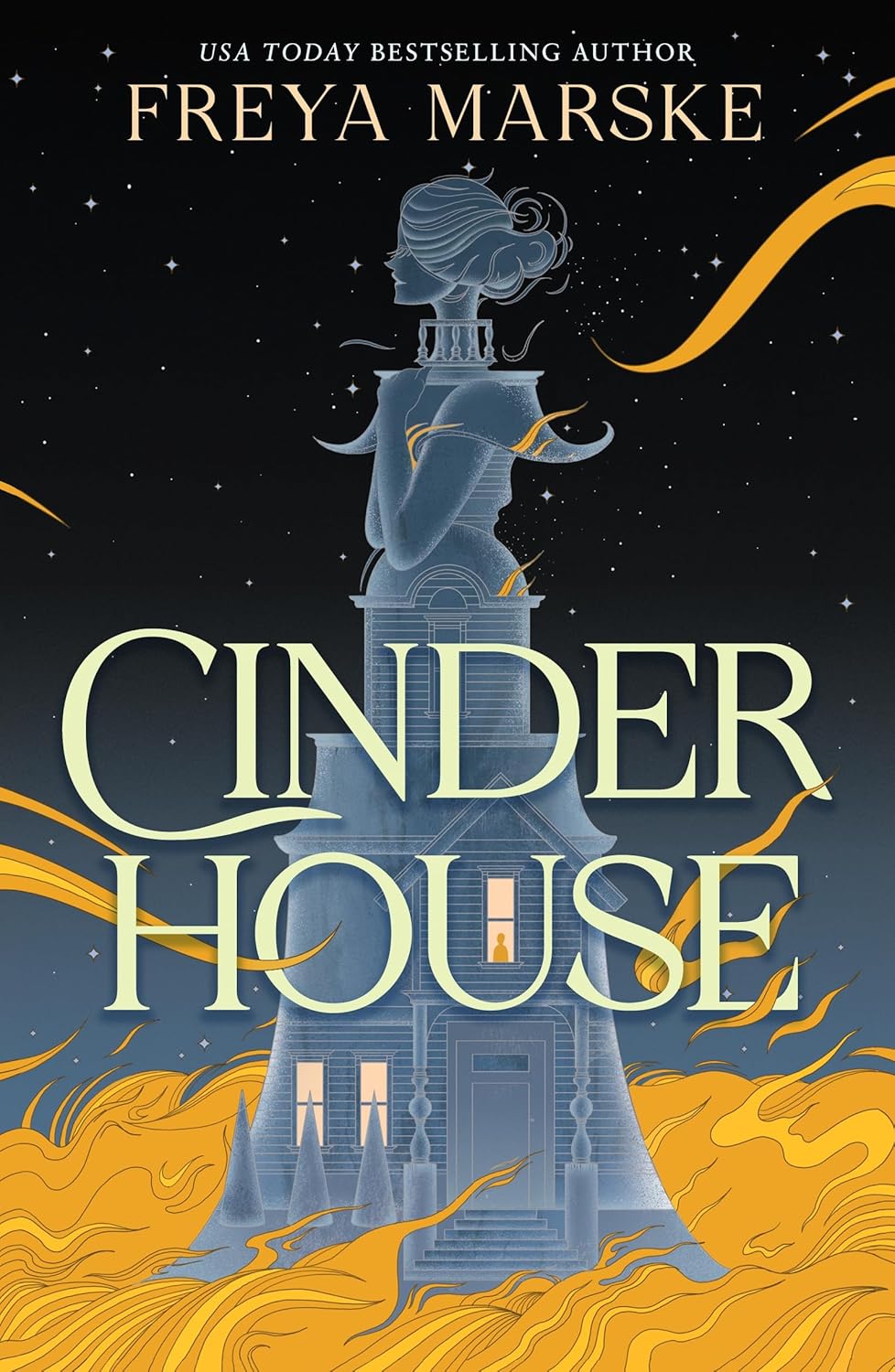
Book Review: Witchcraft for Wayward Girls by Grady Hendrix

Title: Witchcraft for Wayward Girls
Author: Grady Hendrix
Publisher: Berkley
Publication date: January 14, 2025
Length: 482 pages
Genre: Horror
Source: Purchased
Rating:

Rating: 5 out of 5.

There’s power in a book…

They call them wayward girls. Loose girls. Girls who grew up too fast. And they’re sent to the Wellwood Home in St. Augustine, Florida, where unwed mothers are hidden by their families to have their babies in secret, give them up for adoption, and most important of all, to forget any of it ever happened.

Fifteen-year-old Fern arrives at the home in the sweltering summer of 1970, pregnant, terrified and alone. Under the watchful eye of the stern Miss Wellwood, she meets a dozen other girls in the same predicament. There’s Rose, a hippie who insists she’s going to find a way to keep her baby and escape to a commune. And Zinnia, a budding musician who knows she’s going to go home and marry her baby’s father. And Holly, a wisp of a girl, barely fourteen, mute and pregnant by no-one-knows-who.

Everything the girls eat, every moment of their waking day, and everything they’re allowed to talk about is strictly controlled by adults who claim they know what’s best for them. Then Fern meets a librarian who gives her an occult book about witchcraft, and power is in the hands of the girls for the first time in their lives. But power can destroy as easily as it creates, and it’s never given freely. There’s always a price to be paid…and it’s usually paid in blood.

Grady Hendrix writes marvelously inventive horror novels, with psychological and physical terrors around every corner. Here in Witchcraft for Wayward Girls, the greatest horror is not in the supernatural elements, but in the treatment of the pregnant teens sent in disgrace to the Wellwood Home.

“You are here because you acted like a barnyard animal,” Miss Wellwood said. “You took the glory of your womanhood and threw it in the mud.”

The girls at the home are young, and at the complete mercy of their families, the staff of the home, and the doctors. They are never allowed to forget just how awful they are, how little they matter, and how little control they have over anything that happens to their bodies. They are all utterly ignorant as well — they know what they did to get pregnant, but have no idea what childbirth actually entails.

“You all don’t need to worry yourselves about what’s going to happen when you go to the hospital,” he said. “Because it’s none of your business. You just do what the doctors say and you’ll be fine.”

Fern is distraught when her father angrily bustles her off the home and leaves her there without even a good-bye. “Fern” isn’t even her name — all girls are given new names upon arrival, to preserve anonymity and to make the entire experience as separate from their real lives as possible. All Fern wants is to go home, to forget this ever happened, and to get back to her school, her friends, and the senior play.

But the harsh realities of pregnancy are impossible to ignore, especially once Fern witnesses another girl go into early labor in the bathroom and has to face the awful truth of what lies ahead for her. When the biweekly book mobile shows up, Fern asks the librarian for a book on what really happens during childbirth — which would be considered contraband at the home, where pleasant middle grade books seem to be the only allowed reading material.

The book the librarian passes along is anything but benign children’s fiction. Instead, she hands Fern is a hidden copy of a book titled How to Be a Groovy Witch (how awesome is that?!?!). The book’s contents are mostly incomprehensible, but Fern, Rose, Zinnia, and Holly are able to figure out a spell to cure Zinnia’s unrelenting morning sickness… by transferring it to someone else, with shockingly effective results.

The girls are drawn in by the lure of witchcraft and the power it promises, not seeing until it’s too late that nothing is given for free.

In this world there is one truth: everything has a price, and every price must be paid. Perhaps you will not pay it today, maybe you can put it off until tomorrow, but one day there will be a knock at your door in the middle of the night, a voice in the darkness beside your bed, a letter laid upon the table when you believe yourself to be alone, and it will contain a bill that must be paid, and you will pay it in blood.

Witchcraft for Wayward Girls is an absolutely compelling read. It’s a little on the longer side, but it flies by. The girls’ terror and helplessness feel palpable, and the book is a stark reminder of how far we’ve come in so many ways… and how awful it would be to move backward.

There are several gross-out scenes resulting from the girls’ spells, as well as scenes of supernatural power and strange, other-worldly phenomena. Some parts can be truly scary. And yet, the most horrifying scene is a hospital delivery. Nothing goes wrong medically, but it’s a detailed, horrible depiction of what labor and delivery in the 1970s entailed for so many women. That, to me, is the truly disturbing part of this book. Well, that, plus the girls’ utter lack of agency, the casual cruelty of the adults controlling them, and the soul-crushing sense of shame forced on them from every direction.

They said she could go back to her old life. They said it wouldn’t hurt. They said she’d never have to think about it again. They lied.

I loved the girls’ character development, and how each of them struggles to find strength to face their own particular hell. The girls’ power truly lies in their connection and support of one another, even more so than in the gifts they discover through the book and the librarian’s coven. Despite their individual suffering, they still find joy and friendship, as they band together to take back control and figure out how to survive.

Witchcraft for Wayward Girls is a moving, powerful, absorbing read. The depiction of the historical time and place feels spot-on. 1970s slang and attitudes provide some needed moments of fun and entertainment, despite the overall seriousness of the subject matter. (It’s shocking to see the pregnant girls constantly smoking cigarettes… but hey, it’s 1970!)

Grady Hendrix writes terrific horror, always with unique, clever twists and set-ups. I believe I have one more of his books yet to read (and I’m looking forward to it!); meanwhile, I’m thrilled that I finally got my hands on Witchcraft for Wayward Girls. Highly recommended.

For more by this author:
Horrorstör
My Best Friend’s Exorcism
Paperbacks from Hell: The Twisted History of ’70s and ’80s Horror Fiction
We Sold Our Souls
The Final Girl Support Group
The Southern Book Club’s Guide to Slaying Vampires

Purchase linksAmazon – Audible audiobook – Bookshop.org – Libro.fm
Disclaimer: When you make a purchase through one of these affiliate links, I may earn a small commission, at no additional cost to you.
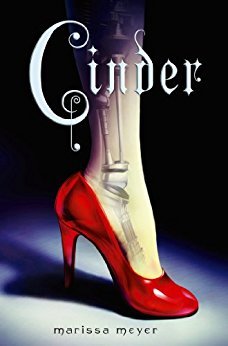
Audiobook Review: Elizabeth of East Hampton (For the Love of Austen, #2) by Audrey Bellezza and Emily Harding

Title: Elizabeth of East Hampton
Series: For the Love of Austen, #2
Author: Audrey Bellezza and Emily Harding
Narrators: Brittany Pressley and Teddy Hamilton
Publisher: Gallery Books
Publication date: August 6, 2024
Print length: 384 pages
Audio length: 9 hours 54 minutes
Genre: Contemporary romance
Source: Library
Rating:

Rating: 4 out of 5.

This fresh and whip-smart modern retelling of Jane Austen’s classic Pride and Prejudice transports you to summer in the Hamptons, where classes clash, rumors run wild, and love has a frustrating habit of popping up where you least expect it.

It’s a truth universally acknowledged—well, by Elizabeth Bennet anyway—that there’s nothing worse than summer in the Hamptons. She should know: she’s lived out there her whole life. Every June, her hometown on the edge of Long Island is inundated with rich Manhattanites who party until dawn and then disappear by September. And after twenty-five years, Lizzy wants to leave, too.

But after putting her own dreams on hold to help save her family’s failing bakery, she’s still surfing the same beach every morning and waiting for something, anything, to change. She’s not holding her breath though, not even when her sister starts flirting with the hot new bachelor in town, Charlie Pierce, and he introduces Lizzy to his even hotter friend.

Will Darcy is everything Lizzy Bennet is not. Aloof, arrogant…and rich. Of course, he’s never cared about money. In fact, it’s number one on his long list of things that irk him. Number two? His friend Charlie’s insistence on setting him up with his new girlfriend’s sharp-tongued sister. Lizzy Bennet is all wrong for him, from her money-hungry family to her uncanny ability to speak to him as bluntly as he does everyone else. But then maybe that’s why he can’t stop thinking about her.

Lizzy is sure Will hates everybody. He thinks she willfully misunderstands them. Yet, just as they strike an uneasy truce, mistakes threaten Charlie and Jane’s romance, with Will and Lizzy caught in the undertow. Between a hurricane and a hypocritical aunt, a drunken voicemail and a deceptive party promoter, the two must sift through the gossip and lies to protect the happiness of everyone they love—even if it means sacrificing their own. But when the truth also forces them to see each other in an entirely new light, they must swallow their pride to learn that love is a lot like surfing: sometimes the only way to survive is to let yourself fall.

Back in September — on a vacation that seems like it happened waaaaaay too long ago — I read this author duo’s first Austen spin, Emma of 83rd Street. It was a lot of fun, but at the time, I wasn’t sure about continuing the series, fearing I’d get tired of rich New Yorkers in a big hurry, despite the Austen themes.

Well, I’m back to say that I dove back in after all, and I’m glad I did! Elizabeth of East Hampton is a clever, engaging retelling of Pride and Prejudice, which admirably succeeds in relocating Elizabeth and Darcy to the Hampton shores… and even turns Lizzy into a surfer!

Lizzy is one of five Bennet sisters, and she’s taken responsibility for running her family bakery ever since her father’s stroke earlier in the year, even though that’s meant deferring her dream of enrolling in Columbia’s prestigious journalism program. Family comes first — although the Bennets can be hard to take, especially the intensely needy and oblivious Mrs. Bennet, party girl Lydia, and environmental activist Mary.

When Charlie Pierce walks into Bennet Bakery with his friend Will Darcy, the Bennet family’s lives are turned upside down. Charlie is renting an extremely expensive East Hampton beach house (beach mansion would be more accurate) — and he’s instantly smitten with Lizzy’s sweet older sister Jane. Unlike Charlie and Jane, Lizzy and Darcy do not click… their antagonism is clear right from the start.

Elizabeth of East Hampton follows the major P&P beats, but with charming twists. It’s often disconcerting to see Austen tales transposed into modern settings, where plot points like looking for wealthy husbands can seem jarring, to say the least. Here, though, the authors really succeed at keeping the bones and feel of the original while making the modern-day story make sense.

The focus is not marriage, but love. Lizzy and Darcy’s chemistry is apparent from the start, even if they don’t realize it. The dynamic of ridiculously wealthy people summering in the Hamptons vs the local folks trying to make a living off the tourist who invade their town for a few months every year works really well at conveying themes of class differences and snobbery. The Bennet family’s dynamics are really entertaining — casting Mary as a rebel activist is a hoot.

It’s quite fun to figure out how the various characters fit into the Austen framework. Some key Austen characters are missing here (no Mr. Collins, and Darcy is an only child, so no Georgiana either). The replacement for Lady Catherine de Bourgh is really entertaining, and the Wickham stand-in is just as sleazy as you’d expect. (No spoilers from me, but I loved that the Wickham scandal unfolds really differently than in P&P).

The audiobook narrators are terrific, although I don’t always love Teddy Hamilton’s line delivery. Still, the alternating chapters from Lizzy and Darcy’s perspectives provide great insights into their actions, and the audio experience zips along and keeps things lively.

I’ll share the same complaint I had while listening to Emma of 83rd Street — I prefer my Austen retellings with closed bedroom doors, thank you very much! There’s something really disturbing about having to endure explicit sex scenes with Jane Austen characters, even if these are modern-day versions of them. I do not need to know what Darcy and Lizzy get up to in bed (or on the floor… or in the kitchen…)

That quibble aside, I had a lot of fun with Elizabeth of East Hampton (and enjoyed seeing George and Emma pop in for quick visits too). At this point, I can safely say that I’ll be picking up the next book just as soon as my library gets a copy!

Next in series: Anne of Avenue A (a Persuasion retelling)

Purchase linksAmazon – Audible – Bookshop.org – Libro.fm
Disclaimer: When you make a purchase through one of these affiliate links, I may earn a small commission, at no additional cost to you.

Save

Book Review: The Everlasting by Alix E. Harrow

Title: The Everlasting
Author: Alix E. Harrow
Publisher: Tor
Publication date: October 28, 2025
Length: 320 pages
Genre: Fantasy
Source: Review copy courtesy of the publisher via NetGalley
Rating:

Rating: 5 out of 5.

From Alix E. Harrow, the New York Times bestselling author of Starling House, comes a moving and genre-defying quest about the lady-knight whose legend built a nation, and the cowardly historian sent back through time to make sure she plays her part–even if it breaks his heart.

Sir Una Everlasting was Dominion’s greatest hero: the orphaned girl who became a knight, who died for queen and country. Her legend lives on in songs and stories, in children’s books and recruiting posters―but her life as it truly happened has been forgotten.

Centuries later, Owen Mallory―failed soldier, struggling scholar―falls in love with the tale of Una Everlasting. Her story takes him to war, to the archives―and then into the past itself. Una and Owen are tangled together in time, bound to retell the same story over and over again, no matter what it costs.

But that story always ends the same way. If they want to rewrite Una’s legend―if they want to tell a different story–they’ll have to rewrite history itself.

The Everlasting by Alix E. Harrow is a beautifully written, slow-burn heartbreaker, with time twists that are truly mind-boggling. After finishing the book a few days ago, I’m still trying to put all the pieces together, but I’m also just basking in the overall feel of the story.

The story of Dominion had many villains over the years, shifting along with the borders of her empire, and many storytellers. But it only ever had one hero, and her name was Una Everlasting.

The country of Dominion has a long, bloody history of war and conquest. Generations of soldiers return home damaged mentally and physically, if they return home at all. Historian Owen Mallory is one of these, suffering recurring trauma and carrying scars from his time at the front. Now, he devotes his time to research the foundational national mythology of Dominion — the story of Sir Una Everlasting, the greatest knight the country has ever known.

“In order to have a future worth fighting for, you must have a past worth remembering.”

Everyone knows the story of Una, a young orphan who found greatness after pulling a legendary sword from a tree, then pledging herself to find for her queen and country. Hers is a tale of strength, courage, and devotion. From her battles to her seemingly impossible quests to her tragic death, the tale of Sir Una Everlasting has motivated and inspired the people of Dominion for centuries.

When a mysterious book arrives on Owen’s desk, it seems to hold the answers to his obsessive research: It’s impossible… but it appears to be the story of Una, written in her own time. Such a thing has never been found before, or even rumored to exist. The arrival of the book plunges Owen into a journey through time, as he ends up transported back into Una’s lifetime — where he discovers that there is more to the story than he ever could have imagined.

The intricate storytelling is best experienced without too much information in advance, as seeing it unfold is part of the book’s power. I went into The Everlasting knowing nothing more than what was in the book’s cover blurbs… and found myself both shocked and entranced as the story unfolded.

The Everlasting conveys several powerful themes; among the most fascinating is the power of shared legends to shape history. Countries experience a sense of shared pride in their foundational stories. But what happens when those stories have holes in them, or when the glorious past is perhaps not so glorious after all? The Everlasting shows the power of these stories to motivate, but also to be used to manipulate. In the hands of corrupt, power-seeking leaders, tales of sacrifice and nobility can be the excuse needed to conquer, kill, and engage in endless wars.

The Everlasting is also a love story, which isn’t obvious at the beginning. There’s a slow awakening, a sense of devotion and yearning that builds over time, and ultimately, a gorgeous connection that’s a meeting of hearts, souls, and bodies. And yet, a sense of tragedy hangs over the love story. By the time the love between the characters fully blossoms, we already know that there can be no happy endings for these two.

I love you by then, or would soon, or always had.

In terms of the reading experience, I found the opening chapters a bit slow, but once the book arrives and Owen gets drawn into Una’s story, it’s un-put-down-able. A few oddities make the reading experience challenging but worthwhile: Large chunks of the story are written in the second person, but in places, the person telling the story changes. I had to stop at several points to remind myself of who was narrating a particular section and who the “you” was.

The main challenging aspect is the time factor. Time loops in all sorts of interesting ways, and the weaving and changing of history becomes more and more complicated as the story progresses. I couldn’t always quite make the “how” of it all make sense… but I also couldn’t look away. The puzzle pieces do fit, but at some point, I stopped trying to apply logic to certain elements and just let myself be swept away by the lush, gorgeous writing.

I highly recommend The Everlasting. It’s a remarkable piece of writing, with powerful messages about power, propaganda, and corruption, told through the vehicle of an achingly beautiful love story. This is a story that will stick with me for a long time to come.

Purchase linksAmazon – Audible audiobook – Bookshop.org – Libro.fm
Disclaimer: When you make a purchase through one of these affiliate links, I may earn a small commission, at no additional cost to you.