Audiobook Review: Gwendy’s Final Task by Stephen King and Richard Chizmar


Title: Gwendy’s Final Task
Authors: Stephen King and Richard Chizmar
Narrator: Marin Ireland
Publisher: Gallery Books
Publication date: February 15, 2022
Print length: 408 pages
Audiobook length: 7 hours, 23 minutes
Genre: Thriller
Source: Review copy (ebook) via NetGalley; audiobook purchased via Chirp
Rating:

Rating: 5 out of 5.

When Gwendy Peterson was twelve, a stranger named Richard Farris gave her a mysterious box for safekeeping. It offered treats and vintage coins, but it was dangerous. Pushing any of its seven coloured buttons promised death and destruction.

Years later, the button box re-entered Gwendy’s life. A successful novelist and a rising political star, she was once more forced to deal with the temptations that the box represented—an amazing sense of wellbeing, balanced by a terrifyingly dark urge towards disaster.

With the passing of time, the box has grown ever stronger and evil forces are striving to possess it. Once again, it is up to Gwendy Peterson, now a United States Senator battling the early symptoms of Alzheimer’s Disease, to keep it from them. At all costs. But where can you hide something from such powerful entities?

Gwendy’s Final Task is a wildly suspenseful and at the same time deeply moving novel in which ‘horror giants’ (Publishers Weekly) Stephen King and Richard Chizmar take us on a journey from Castle Rock to another famous cursed Maine city to the MF-1 space station, where Gwendy must execute a secret mission to save the world. And, maybe, all worlds.

Gwendy is back, and this time, she’s going out on her own terms.

Gwendy’s Final Task is the third in the unusual, bizarre, frightening, and inspiring trilogy focusing on a powerful central character, Gwendy Peterson, and the strange box that’s become inextricably intertwined with the main events of her notable life.

[I won’t recap the first two novellas, but if you’re interested, see my reviews of Gwendy’s Button Box and Gwendy’s Magic Feather to catch up on the backstory.]

Here in book #3, time has passed, and we’re now a few years in the future. It’s 2026, the COVID-19 pandemic has passed, although its impact is still felt, and 64-year-old Senator Gwendy Peterson is about to be launched into space on a privately funded mission to MF-1, the Many Flags Space Station in orbit around Mars. As a US Senator, she’s one of two civilian passengers on the mission — the other being Gareth Winston, the billionaire whose corporation provides the big bucks needed to further the US space project.

Gwendy also has a secret, or actually, two secrets. With her, in a sealed cased marked “confidential”, is the button box that’s followed her all her life. The presence of this confidential case piques the curiosity of her teammates, but she’s keeping its contents to herself. Also kept secret is Gwendy’s early onset Alzheimer’s. She’s faking it as best as she can, but there are days when she can’t even remember how to tie her shoes. As she prepares for launch, Gwendy can only hope that she can hold it together long enough to accomplish her final task.

As the story progresses, we learn more about how the box reentered her life for the third and final time, what her mission truly is, and what she’s done to prepare for it. We also learn more about the challenges and heartbreaks Gwendy has endured to get to this point. I couldn’t help but admire her for her dedication and perseverance — most of us would likely have given up in the same circumstances, but not Gwendy.

The plot moves forward at a fast pace, alternating between the recent past building up to the mission and the days onboard the space station during the mission itself. We see Gwendy’s struggles to keep her mind together, to focus on her task, and to both reassure the crew members about her own stability and to evade the suspicious behavior of the resident billionaire, who seems to be encroaching more and more into Gwendy’s personal space as the days go by.

The two previous Gwendy stories have been novellas, so I was curious going into Gwendy’s Final Task to see whether a full-length novel would fit with the mood and style of the previous installments. Fortunately, yes, it does — this 400+ page novel absolutely delivers, but never feels overstuffed or unnecessarily drawn out.

I love Gwendy as a person by this point, having seen her all the way from early teens through to her mid-60s. She’s strong, fierce, and determined, with an unbreakable moral core and a deep love for her family. She’s also been through a lot, and I felt her pain so keenly as she reflects on her losses and struggles to keep hold of her memories just a little bit longer.

While initially I though the premise far-fetched (how exactly would a Senator with Alzheimer’s ever make it through the intense screening required for a space mission?), eventually, it all makes sense. And even before I got to an explanation that helped connect the dots, I was immersed enough in the story to push my skepticism way to the side, so it never stopped me from enjoying the story as it unfolded.

For long-time King fans, there are lots of references to amuse and delight. There are plot points centered around the town of Derry, Maine (including a local’s description of hearing voices coming from the drains and another’s tale of being chased by a clown), and later, references to the Dark Tower as well. [Note: I never did get through the whole Dark Tower series, but I think I got the point here anyway.]

The audiobook narration is terrific. Marin Ireland is a gifted narrator, capturing Gwendy’s inner voice as well as describing the surroundings and events. She brings the crew members and ground control into the story very well, and gives an immediacy to all descriptions and dialogues. This is a change in narrator from the first two Gwendy audiobooks, but it didn’t feel jarring, and overall, was very well done.

There are creepy moments, one decidedly gross/icky scene, and plenty of existential dread and overarching terror. Still, by the end of the book, I was feeling very emotional about Gwendy herself and the conclusion of the story. Despite the horror and the thrills, the biggest takeaway for me was the heartbreaking beauty of Gwendy’s journey, and that’s really saying something.

This is a convincing and well-plotted conclusion to an unusual and inventive trilogy, and I’m so glad to have been along for the journey.
Book Review: Spelunking Through Hell (InCryptid, #11) by Seanan McGuire

Title: Spelunking Through Hell
Series: Incryptid, #11
Author: Seanan McGuire
Publisher: DAW
Publication date: March 1, 2022
Length: 352 pages
Genre: Urban fantasy
Source: Review copy courtesy of the publisher via NetGalley
Rating:

Rating: 3.5 out of 5.

Now in trade paperback, the eleventh book in the fast-paced InCryptid urban fantasy series returns to the mishaps of the Price family, eccentric cryptozoologists who safeguard the world of magical creatures living in secret among humans.

Love, noun:

1. An intense feeling of deep affection; may be romantic, filial or platonic.

Passion, noun:

1. A strong or barely controllable emotion.

2. Enthusiasm, interest, desire.

3. See also “obsession.”

It’s been fifty years since the crossroads caused the disappearance of Thomas Price, and his wife, Alice, has been trying to find him and bring him home ever since, despite the increasing probability that he’s no longer alive for her to find. Now that the crossroads have been destroyed, she’s redoubling her efforts. It’s time to bring him home, dead or alive.

Preferably alive, of course, but she’s tired, and at this point, she’s not that picky. It’s a pan-dimensional crash course in chaos, as Alice tries to find the rabbit hole she’s been missing for all these decades—the one that will take her to the man she loves.

Who are her allies? Who are her enemies? And if she manages to find him, will he even remember her at this point?

It’s a lot for one cryptozoologist to handle. 

It’s almost spring, and that means it’s time for another installment in the ongoing adventures of the Price-Healy family… yes, another InCryptid book is here! (Annoying some fans by switching to trade paperback size rather than sticking with mass market… so now my paperback editions won’t match??? But that’s beside the point when it comes to a review, so onward we go.)

The InCryptid series follows the adventures of the sprawling Price and Healy clan, a large extended family dedicated to studying and preserving the lives of cryptids — non-human beings who (usually) live peacefully among the humans, but who are hunted by the merciless and powerful Covenant simply for existing. Yes, there are also cryptids who do unpleasant things like eating humans, and in those cases, the Prices are a force to be feared… hence their very murdery reputation.

Up to now in the series, the books have focused on members of the current young adult family members — siblings Verity, Alexander, and Antimony (Annie), as well as their cousin Sarah. There are plenty of references to other relatives, and their parents and other cousins and family-by-extension pop in and play different roles as well. One of the more mythological members of the family, whom we’ve seen in action really just once so far, is grandmother Alice.

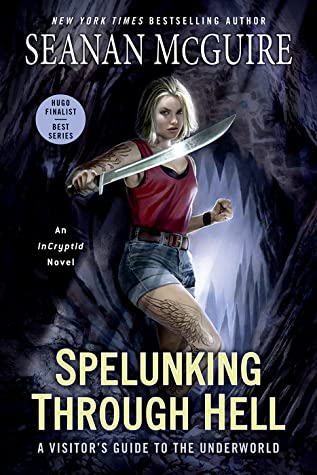
Now look at the book cover image again. That’s Alice! Does she look like a grandma to you?

Alice was a young woman in the 1950s, which is when she lost her beloved husband Thomas to a bad bargain with the crossroads. Granted, he made the bargain to save Alice’s life, so he deserves a little slack for having made it. From the time of Thomas’s disappearance, Alice has been obsessed with finding him — so much so that she’s spent over fifty years as an interdimensional traveler, tracking down every clue and random hint that could possibly lead her to her husband.

Of course, to do so, she’s had to leave her family behind, so her two children resent the hell out of her and her grandchildren know her more from the family legends than from actual relationships… but she can’t give up. Along the way, she has used whatever means necessary to preserve her youth and health so that she could keep going, which is why she looks and feels more or less like a 19-year-old.

All that is backstory. Here, in Spelunking Through Hell, Alice is the main character, and we join her on her desperate journey to find Thomas. It’s been 50 years, and her hope is starting to wear thin. At this point, she’d even accept proof of his death — she’s just about ready to stop. But then a new clue from an unexpected source gives her one more angle to try, and so she sets out one last time to travel to a dying dimension that’s supposedly inaccessible… but Alice is nothing but persistent.

And so what if she doesn’t have an exit strategy? So long as she finds Thomas — even if he is about 80 years old by now — they can figure out what comes next together.

Spelunking Through Hell is yet another fun romp with the Price clan, although we really don’t see many members of the family other than Alice. This makes the tale fresh, but also feels somewhat less engaging, since Alice has never been a main character before and there isn’t a ton to build on in terms of what we know about her or what it’s like to see the world through her eyes.

Like the rest of the Prices, Alice is always fully armed, ready for a fight, and full of quips. She’s funny, fierce, and reckless, and also has no problem pushing herself past injury and excruciating pain, so long as it’s in service of her obsession with finding Thomas.

The plot occasionally feels a little draggy — it does take quite a while to get to the target world — and while I enjoyed the book, I have to say that my lack of familiarity with Alice as an individual made this book slightly less wonderful as a reading experience as compared to earlier books in the series.

Side note on InCryptids: This is a huge expanded world, and it’s supported by many, many short stories available through the author’s website and via Patreon. That’s nice… but also frustrating. Apparently, if I’d been keeping up with all the Price short stories, I would be very invested in Alice and Thomas and would know pretty much everything about their courtship, romance, and early years together. But I haven’t! And that feels problematic for me. Yes, I can make an effort to go get caught up (and I probably will, once I figure out the order the stories should be read in) — but I do think the books alone should tell a complete story, and in this case, I felt like I was always missing key pieces of information.

That said, I did enjoy the book overall, and Seanan McGuire’s writing keeps it fun even while the blood is flowing:

And I, an asshole, had done enough woolgathering for one… day? Evening? Afternoon? There were no windows, and massive blood loss always throws off my sense of time.

I’d rather be married to a man fifty years older than I am than see him go through what I’ve willingly done to myself for his sake, what he never would have asked or expected me to do. It’s always easier to set yourself on fire than to allow someone else to burn for you.

I wanted to avoid being caught at any cost, since one solid snap of those claws could have me down a limb, or possibly down an entire torso. I like my torso. It’s where I keep my lungs.

The Haspers not currently engaged began to run in my direction, forming a nicely unified pack. I like a unified pack. I like the way is splashes when you lob a grenade into the middle of it, and I like it even better when none of its component parts knows what a grenade is, so they react like you’ve just thrown a rock or something. To be nonspecific.

Spelunking Through Hell includes the bonus novella And Sweep Up the Wood, which tells the story of a key turning point in the early years of Alice and Thomas’s relationship. It’s very good and very emotional (plus, you know, plenty of guns and explosives — after all, Alice in involved), and it’s a great way to wrap up this installment of the series.

The InCryptid series itself is going strong, and overall, I love it! I do wish this one had drawn me in a bit more, but I can’t really complain. The Price-Healy clan is amazing (and there are religious mice, who make every scene they’re in 1000% better), and I can’t wait for more of the story. The big question is — who will #12 be about?

As I’ve said in pretty much every review of this series, definitely start at the beginning with with Discount Armageddon. This series is full of great characters and terrific world-building. It’s easy to get hooked!

**Save

Save

Save

Save

Save

Save

Save

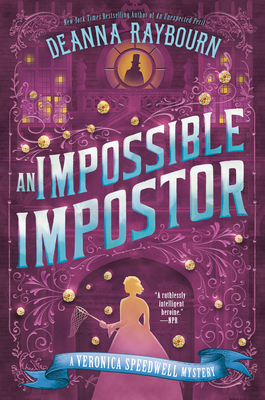
Book Review: An Impossible Impostor (Veronica Speedwell, #7) by Deanna Raybourn

Title: An Impossible Impostor
Series: Veronica Speedwell, #7
Author: Deanna Raybourn
Publisher: Berkley
Publication date: February 15, 2022
Length: 336 pages
Genre: Historical fiction
Source: Review copy courtesy of the publisher via NetGalley
Rating:

Rating: 4 out of 5.

While investigating a man claiming to be the long-lost heir to a noble family, Veronica Speedwell gets the surprise of her life in this new adventure from the New York Times bestselling and Edgar Award-nominated author Deanna Raybourn.

London, 1889. Veronica Speedwell and her natural historian beau Stoker are summoned by Sir Hugo Montgomerie, head of Special Branch. He has a personal request on behalf of his goddaughter, Euphemia Hathaway. After years of traveling the world, her eldest brother, Jonathan, heir to Hathaway Hall, was believed to have been killed in the catastrophic eruption of Krakatoa a few years before.

But now a man matching Jonathan’s description and carrying his possessions has arrived at Hathaway Hall with no memory of his identity or where he has been. Could this man truly be Jonathan, back from the dead? Or is he a devious impostor, determined to gain ownership over the family’s most valuable possessions–a legendary parure of priceless Rajasthani jewels? It’s a delicate situation, and Veronica is Sir Hugo’s only hope.

Veronica and Stoker agree to go to Hathaway Hall to covertly investigate the mysterious amnesiac. Veronica is soon shocked to find herself face-to-face with a ghost from her past. To help Sir Hugo discover the truth, she must open doors to her own history that she long believed to be shut for good.

A new installment in the deliciously smart Veronica Speedwell series is always cause for delight, and book #7 is no exception.

Veronica and Stoker are a well-established couple at this point, but they’ve lost none of their spark or chemistry. Their passion continues to simmer, and they’re fulfilled by their work together on the natural history collection of Lord Rosemorran. But when Sir Hugo Montgomerie of Scotland Yard asks a favor, he’s awfully hard to ignore, and their peaceful moments are interrupted by a call to adventure.

Our fearless duo sets off to the Hathaway estate to discover whether the long-presumed dead eldest son has miraculously returned — which would have enormous ramifications for his surviving siblings, especially the brother who has legally inherited in his stead.

Veronica and Stoker discover a situation much more complicated than expected, further muddled by Veronica’s own distant past which included an acquaintance with the missing Hathaway son. While uncovering the truth, Veronica and Stoker once again end up in mortal peril, fighting for their lives, solving multiple mysteries, and using their wits to find solutions.

It’s all very charming, and the adventure itself is fun even while taking a while to build up stakes. Once our favorite couple are themselves in danger, of course it all escalates and becomes much more dramatic — but even then, the banter and sexy glances and innuendo continue.

I had a few qualms about a certain plot complication which the romantic in me found upsetting, but never fear, it’s more or less resolved by book’s end. The mystery is tied up nicely, although Veronica and Stoker are left in a status that’s less settled than in previous books… so can I have #8 now please???? (Sadly, no — I expect it’ll be another year’s wait for the next one).

As in all the books in this series, the humor is silly and fun, and Veronica is a treat — a fierce, intelligent woman of science who’s not afraid to follow her own path, including becoming romantically and physically involved with a man who’s very much her partner and equal.

And really, when else would we get to read a book that includes such delightful words and phrases as “fritillary”, “amatory arts”, “passamenterie”, “osculatory”, and “inanition”? Not to mention a quick little aside in which a character educates us on the origins of the bandanna?

An Impossible Impostor is just a super fun adventure. Each book in the series goes by too quickly, and I always tell myself to slow down and savor them… but I never do. An Impossible Impostor could potentially work as a stand-alone mystery. The key players and background are explained well enough to be able to follow along. But, I don’t really recommend this approach — you’d be missing out on all the delicious history of Veronica and Stoker’s relationship, as well as their individual backstories, and truly, those are too good to miss!

If you want to get to know Veronica Speedwell, I’d say start with book #1, A Curious Beginning. I’m pretty sure you’ll be hooked! And isn’t it nice to know that there are already another six books to enjoy after that one?

This series has become one of my favorites. Check it out!

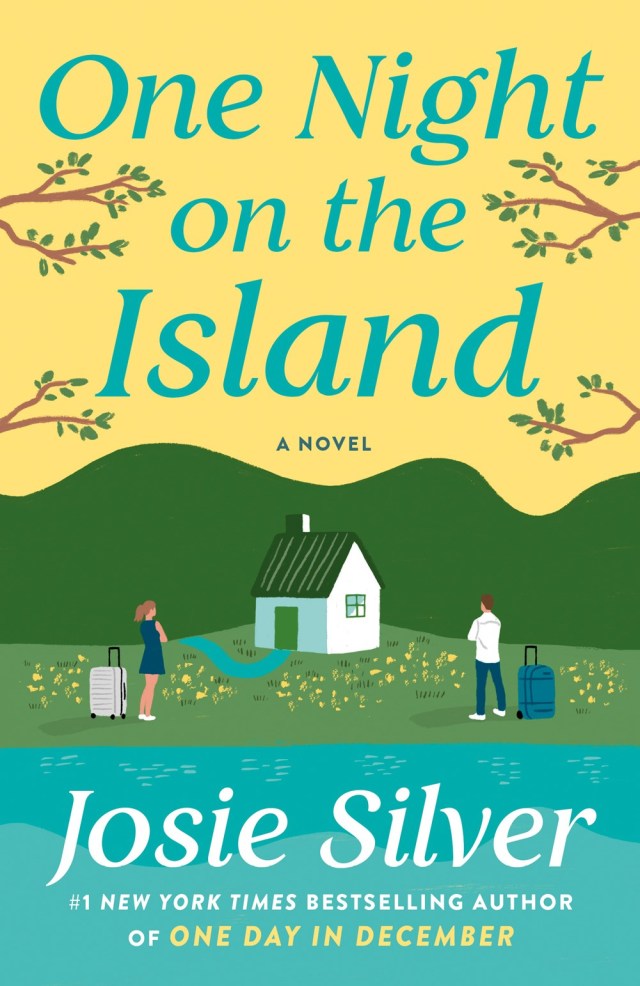
Book Review: One Night on the Island by Josie Silver

Title: One Night on the Island
Author: Josie Silver
Publisher: Ballantine Books
Publication date: February 15, 2022
Length: 368 pages
Genre: Contemporary romance
Source: Review copy via NetGalley
Rating:

Rating: 3.5 out of 5.

Spending her thirtieth birthday alone is the last thing that dating columnist Cleo wanted, but she is going on a self-coupling quasi-sabbatical–at the insistence of her boss–in the name of re-energizing herself and adding a new perspective to her column. The remote Irish island she’s booked is a far cry from London, but at least it’s a chance to hunker down in a luxury cabin and indulge in some quiet, solitary self-care while she figures out her next steps in her love life and her career.

Mac is also looking forward to some time to himself. With his life in Boston deteriorating in ways he can’t bring himself to acknowledge, his soul searching has brought him to the same Irish island in search of his roots and some clarity. Unfortunately, a mix-up with the bookings means both solitude seekers have reserved the same one-bedroom hideaway on exactly the same dates.

Instantly at odds with each other, Cleo and Mac don’t know how they’re going to manage until the next weekly ferry arrives. But as the days go by, they no longer seem to mind each other’s company quite as much as they thought they would…

Written with Josie Silver’s signature warmth, charm and insights into the human heart, One Night on the Island explores the meaning of home, the joys of escape and how the things we think we want are never the things we really need.

Oh, dear. Based on the number of 5-star gushing reviews already posted on Goodreads, this is going to be a minority opinion. Dare I say it? I actually liked this book… but hearts and flowers and best thing ever? No.

A quick overview: Cleo is a dating and romance writer living in London, with a big, busy life that’s pretty hollow at its core. Her editor pushes her to try something radical as her 30th birthday approaches: Head to a remote island off the coast of Ireland and plan a self-partnering ceremony. Essentially, she’ll be stepping off the dating merry-go-round and focus on committing to herself.

Meanwhile, Mack (spelled with a “k” in the book, not as shown above in the synopsis I pulled from Goodreads) is seeking peace and connection with his roots. He grew up hearing stories about Salvation Island from the grandmother who was born there. He’s a devoted husband and father whose wife has pulled away. Now separated for a year, he’s in constant pain hoping to be allowed back into the life he once had, and thinks it would be best for him and his two boys if he stopped hovering around and gave his wife space to figure out what she wants. He’s a gifted photographer, so his time away will also give him an opportunity to explore Salvation the way he’s always wanted to.

In a very cutesy meet-cute, Mack and Cleo are both booked into Otter Lodge, a secluded (not luxury, per the synopsis) cottage on a secluded area of the island. Neither is willing, or even able, to change their plans, since it’ll be a week until the next boat back to the mainland, and there are simply no other accommodations on the island.

With no choice, they settle in and establish rules, going so far as to draw a chalk line down the middle of the cottage. But as their forced togetherness continues, they start to share pieces of themselves with a stark honesty that’s missing from their normal lives, and at the same time, begin to connect with the quirky residents of Salvation. (Of course they’re quirky. Aren’t all small-town community residents quirky in romance novels? Hearts of gold, too, and with open arms for strangers, because that happens in real life.)

Anyway… you can see where this is going. Cleo and Mack make an incredible connection, Cleo finds the inner peace and meaning she’d been missing, and Mack comes to realizations about his marriage, his children, and where he belongs.

I liked the story well enough, and tore through it. It’s a fast read, and I enjoyed Cleo and Mack’s routines and interactions and the sparks that build between them. But, my cynical side couldn’t stay quiet long enough for me to ignore certain issues, either.

First, and this is possibly a complaint more about the book’s marketing rather than the story itself… but the title is terrible and is completely misleading. This isn’t about ONE NIGHT on an island. The point is, Mack and Cleo spend weeks in each other’s company, and it’s the slow, steady accumulation of familiarity and their ability to share pieces of themselves and express themselves honestly as they build trust that finally bring them together emotionally. It’s not at all about just one night. Sheesh.

Second, the set-up is confusing. This is one of the rare reading experiences that’s much better in its second half than in its first. When Cleo’s editor pushes her to go to Salvation, there’s no discussion of parameters or for how long. Cleo’s expenses and lodging are being paid for by the magazine (nice!), and from their initial conversation, I thought it would be for a weekend, or at most, a week. But no, it’s actually for months! Whose work would pay for them to go away like that to write columns about self-partnering? For a 29-year-old who writes a dating column, this seems incredibly unrealistic, and the lack of specificity about Cleo’s plans made it confusing when she and Mack were trying to hash out who had stronger claims to the cabin.

My biggest quibble is the whole stuck-together trope in play here. And I know, it’s a romance, and we’re supposed to just go with it. But honestly, think about it. If you found out you were going to have to spend even one night, let alone a week or longer, in a completely isolated cabin with a man who’s a total stranger, what would you do? I’d be running for the hills, probably begging some kind townsperson to let me sleep on their couch until the next boat home. I had to wonder — if Mack hadn’t been age-appropriate and gorgeous, would Cleo have agreed to this arrangement? It doesn’t make any sense, and of course I understand that this is the foundation of the entire story… but maybe that’s why I can’t go any higher than 3.5 stars.

On a positive note, I did enjoy how feelings and connection developed between the two main characters, and I liked having chapters from both of their points of view. I also appreciated how their time at Salvation enabled each of them to center their own needs and priorities within their relationship, not forcing either one to drop everything or fundamentally change who they are or what they want for the other. And finally, I love Mack’s devotion to his children and their well-being, putting their needs above everything else, including his desire to be with Cleo. His overarching decision-making process focuses on the boys, and that’s right and good in a very heart-warming way.

I looked back at my reviews of this author’s two previous books, and I have to say that perhaps this author and I just aren’t a match made in heaven. The pattern, based on three books now, seems clear — I like the writing style and many of the elements about the characters, and it’s easy to get swept up in the romance of it all… but too many of the finer details and plot points don’t stand up to the cold light of day when I apply my logical brain to them.

One Night on the Island (ugh, that title!) is an engaging, quick read, but I can’t say I ever believed in the wonder and romance of it all quite enough to override the pieces that didn’t work for me. Despite not completely loving it, I liked it well enough to recommend as a feel-good getaway from the daily grind.

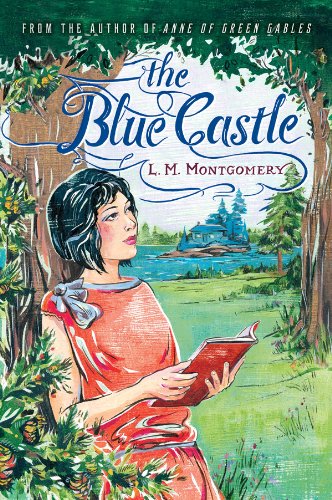
Audiobook Review: The Blue Castle by L. M. Montgomery

Title: The Blue Castle
Author: L. M. Montgomery
Narrator: Barbara Barnes
Publisher: G. P. Putnam’s Sons
Publication date: 1926
Print length: 249 pages
Audio length: 8 hours, 3 minutes
Genre: Classic fiction
Source: Purchased
Rating:

Rating: 5 out of 5.

All her life, Valancy Stirling lived on a quiet little street in an ugly little house and never dared to contradict her domineering mother and her unforgiving aunt. At 29, she’s never been in love, and her only consolation has been the forbidden books of John Foster and her daydreams of the Blue Castle.

Then, one day, she gets a letter and decides that things need to change. For the first time in her life, she does exactly what she wants to and says exactly what she feels. At first, her family thinks she’s gone around the bend, but soon, she discovers a surprising new world, full of love and adventures far beyond her most secret dreams.

The Blue Castle has been on my to-read/to-listen list for several years now. Ever since reading Anne of Green Gables a few years ago (making up for what was clearly a major deficiency in my childhood reading), I’ve been committed to reading more and more by L. M. Montgomery. And while I’ve now read the full Anne series as well as the Emily trilogy, I still hadn’t quite gotten to The Blue Castle… until now.

I associate L. M. Montgomery with writing charming, heartfelt tales about girls whose sense of wonder and imagination enables then to see the world in such a glorious, optimistic light. The Blue Castle, though, is about a grown woman, and I was curious to see how the author presents a story about an adult.

In The Blue Castle, the main character is Valancy Stirling, whose 29th birthday represents a dramatic turning point for her. Valancy lives with her mother and elderly cousin in a stifling, rule-bound, drab house, completely under her mother’s thumb. The family considers Valancy a somewhat pitiable old maid at this point. She’s never been known as a beauty, has paled in comparison with her lovely younger cousin Olivia, and has never been expected to do anything with her life but be obedient, laugh at her uncle’s awful jokes, and be meek all her life.

One her birthday, Valancy decides to secretly see the local doctor about a strange feeling she occasionally gets in her chest. The doctor is forced to rush off due to a family emergency, but days later, she gets a letter from him, regretfully informing her that she has a fatal heart condition and may have months, but certainly no more than a year left to live.

It’s bitter news for Valancy, who mourns not her impending death, but the fact that she has never lived. And so, with nothing left to lose, she decides to throw caution to the wind and finally, better late than never, live a real life.

Her actions and demeanor shock her family, who are convinced that she’s gone “dippy” — and when Valancy crosses what they see as an unforgiveable line, they decide to pretend that she’s dead.

Meanwhile, Valancy finds unexpected joy by embracing a new, adventurous life, seeking out people and places that make her happy, throwing aside society’s rules and soaking in the beauty of the natural world and the pleasure of companionship based on respect and friendship and being open to experience.

I won’t give away too much of the plot. I’d imagine that in 1926, when the book was published, the surprises that come toward the end of the story might truly have been new and unexpected. As a 21st century reader, I absolutely saw most of the twists coming… but that’s okay. The joy is in the journey to get there, not in unraveling the plot points and figuring out just how Valancy’s story might end.

Valancy is a delightful main character, smart and open and loving, and I found her sass and bravery absolutely fabulous, once she makes the decision to remove herself from the rules and drudgery of her former life.

As in other L. M. Montgomery books, the setting is terrific. The Anne and Emily books are all set on Prince Edward Island, but the setting of The Blue Castle is the fictional area of Lake Mistawis, which apparently corresponds to the real Lake Muskoka in Ontario. In particular, Valancy’s home on an island on the lake is my ideal of a perfect little hideaway, simple and warm, surrounding by lakes and forests, and just such a lovely dream location.

The audiobook narration is quite good, capturing the officiousness of Valancy’s various relatives, as well as her own good nature and open attitude. Yes, some of the dialogue and phrases and terms of endearment sound hokey and outdated… but they’re from the 1920s, so of course they seem a little out of place now. Still, it’s a sweet and fast and enjoyable listen, and I’m so glad I finally experienced this lovely story.

And an added positive — I have at least three more of L. M. Montgomery’s books on my shelves! I’m looking forward to reading them all.

The cover of the 1980s edition, which cracks me up. I mean, the sweater tied over the shoulders! Absolutely wrong for the character… but so dorkily delightful all the same.

Audiobook Review: A Season for Second Chances by Jenny Bayliss

Title: A Season for Second Chances
Author: Jenny Bayliss
Narrator: Ell Potter
Publisher: G. P. Putnam’s Sons
Publication date: October 19, 2021
Print length: 448 pages
Audio length: 12 hours, 11 minute
Genre: Contemporary romance
Source: Library
Rating:

Rating: 3.5 out of 5.

A charmingly quirky seaside town offers a recently separated restauranteur a fresh start and possibly a new lease on love in A Season for Second Chances, by the author of The Twelve Dates of Christmas.

Annie Sharpe’s spark for life has fizzled out. Her kids are grown up, her restaurant is doing just fine on its own, and her twenty-six-year marriage has come to an unceremonious end. Untethered for the first time in her adult life, she finds a winter guardian position in a historic seaside home and decides to leave her city life behind for a brand-new beginning.

When she arrives in Willow Bay, Annie is enamored by the charming house, the invigorating sea breeze, and the town’s rich seasonal traditions. Not to mention, her neighbors receive her with open arms–that is, all except the surly nephew of the homeowner, whose grand plans for the property are at odds with her residency. As Christmas approaches, tensions and tides rise in Willow Bay, and Annie’s future seems less and less certain. But with a little can-do spirit and holiday magic, the most difficult time of her life will become…a season for second chances.

A Season for Second Chances is a sweet, good-natured book about finding a new purpose and a new love when least expected.

When Annie walks in on her husband having sex (a) in the restaurant they co-own (b) with a younger woman who (c) is a member of the wait staff, Annie has had enough. Max is a serial cheater who’s managed to convince Annie to stay time and time again, but now she’s finally done. After taking a few weeks to hibernate, she finds an ad for someone to live in and care for a seaside home over the winter, and throwing aside any doubts, Annie jumps in.

The house is utterly charming, in an equally charming small town. The home’s owner is an elderly woman whose nephew is trying to convince her to sell the property to a developer, throwing historical preservationists into a tizzy. Annie finds the house and town just what she needs, and soon decides she needs a project — reopening (with the owner’s blessing) the bistro and coffee kiosk on the property that have been shuttered for years.

Annie’s immediate tiff with the nephew naturally develops into an enemies-to-lovers situation (very sweetly). As she settles into small town life, she makes friends and finds a new direction for her life, but then must find a way to make it permanent. There are ups and downs in Annie’s love life as well as in her pursuit of her new home and business in Willow Bay, but as you’d imagine, there’s a happy ending — and despite a near tragedy close to the end, it’s never in doubt that Annie’s life will turn out to be wonderful.

This is an enjoyable book — it has all the elements you’d expect in this sorts of story: quirky characters, new friendships, sexual tension, a dashingly good-looking man with a gruff exterior but a heart of gold. I can’t say the plot holds many surprises, but it’s pleasant and upbeat, which we can all use once in a while.

The audiobook is quite lovely, with terrific narration that captures the various character’s expressions, opinions, and personalities. The story itself goes on a bit longer than it perhaps needs to, and I did occasionally get impatient with scenes about house repairs and setting up the cafe, but overall, it kept me good company on long walks and my commute!

I liked that the main characters are adults in their 40s with grown children, who bring a certain level of earned skepticism to romance and wooing. The ex-husband is a jerk, even when he’s (pathetically) trying to get Annie back, and it was lots of fun seeing Annie put him in his place. The near-tragic accident towards the end of the story seems a bit unnecessary, but it fits the standard romance beats in terms of throwing a big wrench into events before getting to the happy ending.

Overall, this was a good choice for a week when I needed some light, happy entertainment!

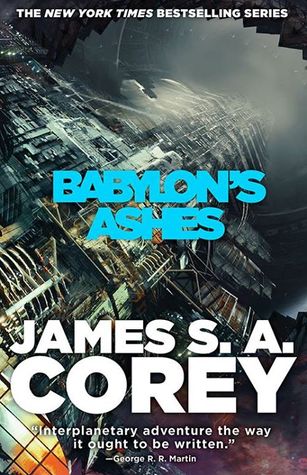
Book Review: Babylon’s Ashes (The Expanse, #6) by James S. A. Corey

Title: Nemesis Games
Series: The Expanse, #6
Author: James S. A. Corey
Publisher: Orbit
Publication date: October 24, 2017
Length: 576 pages
Genre: Science fiction
Source: Purchased
Rating:

Rating: 5 out of 5.

The sixth novel in James S. A. Corey’s New York Times bestselling Expanse series–now a major television series from Syfy!

A revolution brewing for generations has begun in fire. It will end in blood.

The Free Navy – a violent group of Belters in black-market military ships – has crippled the Earth and begun a campaign of piracy and violence among the outer planets. The colony ships heading for the thousand new worlds on the far side of the alien ring gates are easy prey, and no single navy remains strong enough to protect them.

James Holden and his crew know the strengths and weaknesses of this new force better than anyone. Outnumbered and outgunned, the embattled remnants of the old political powers call on the Rocinante for a desperate mission to reach Medina Station at the heart of the gate network.

But the new alliances are as flawed as the old, and the struggle for power has only just begun. As the chaos grows, an alien mystery deepens. Pirate fleets, mutiny, and betrayal may be the least of the Rocinante‘s problems. And in the uncanny spaces past the ring gates, the choices of a few damaged and desperate people may determine the fate of more than just humanity.

I’ve spent the past week in the midst of galactic war, and it may take me a while to recover!

I had to psych myself up to read Babylon’s Ashes, the 6th book in the Expanse series. The series is huge in scope, and the books themselves are pretty huge too — large, chunky books dense with ships and space and rail guns and trajectories and science fiction terminology… and I have to say, I’ve enjoyed the hell out of each and every one.

It’s difficult at this point to separate the experience of reading the books from that of watching the (outstanding) TV series. The overarching storyline of Babylon’s Ashes matches up with the events of the 6th and final season. For the TV version, it does feel like the storyline comes to a reasonable stopping place — although there are clearly plenty more adventures that could be told, since there are three more books in the series. I finally dove into Babylon’s Ashes after finishing the 6th season, and meshing the two different approaches created a terrific reading experience.

In Babylon’s Ashes, all hell has broken loose. The solar system’s political balance has been violently upset by a ferocious attack on Earth (see Nemesis Games, book #5) that’s wiped out huge swathes of the population and left the planet with an unsustainable future. This is just part of the plan for Marco Inaros, leader of the Free Navy, the Belter military arm whose goal is to establish Belter dominance and defeat Earth and Mars once and for all.

And while the Free Navy, as the symbol of an historically oppressed people’s rise to freedom, has some claim to a righteous cause, it soon becomes clear that its main function is to further advance Marco’s enormous narcissism and personal vendettas. As he denies food, air, and water supplies to his own people — who are desperately in need — for the sake of political power plays, his supporters begin to question his methods, and the Free Navy develops fractures just when it’s starting to seem surer of victory.

Meanwhile, people like the crew of the Rocinante — our heroes!! — are out fighting the good fight, not just for Earth or Mars or the Belt, but for the sake of humanity having a shot at a future.

This book is just as detailed as the earlier ones, and it takes a great deal of concentration to follow the huge cast of characters, the planets, the political factions, and the mechanics of it all. That said, it’s worth it! I loved every moment, despite having to rely on various fandom wikis to figure out who some of the more obscure characters were and just where they might have shown up previously.

The action is thrilling and scary. I have to admit that it was helpful for me to have watched the TV series, because I’m not sure how well I could have envisioned the space battles and types of ships and weapons and stations without it. That said, it’s all described in marvelous detail, and my inner sci-fi geek enjoyed the hell out of it.

Another element that’s different (but great) about the books is how they take into account the laws of physics and the vastness of space. In the TV series, when a space battle happens, it’s all super fast and immediate — but as the book makes clear, just because one ship is burning fast to ambush another, they still have to travel to get there, so it may take weeks before a planned assault happens. Somehow, that sense of time and distance being factored into the action makes it feel more realistic (but I understand that it wouldn’t work very well on TV to have to interrupt the action to allow for lengthy travel times).

This is not a series to just jump into in the middle, in case that’s not obvious, so if you’re interested, start at the beginning with Leviathan Wakes. I mean, it MIGHT be possible to pick up the story at this point after watching it on TV, but I still think it would be confusing, and why would you want to miss out on the satisfaction of reading the whole thing?

For those who’ve been watching the TV series, the reading experience will be different from here on out, because after Babylon’s Ashes, there will be no TV seasons to mirror the books in the series. We’re in uncharted territory, people! And while the TV version makes changes to characters, places, and events, it’s been close enough to give a good representation of each book’s major plotlines and action sequences. As I move forward to #7, I’m faced with the reality that from now on, there will be no screen action to accompany my reading… so I’ll have to envision all the dramatic torpedoes and rail guns and space maneuvering in my head. I hope I’m up to the challenge!

Now that I’ve finished Babylon’s Ashes, the only thing holding me back from continuing straight on to the next book is how BIG the books all are, and the fact that I do have other books to read! That said, I’m not going to let too much time go by either — I’m hoping to finish the remaining books in the series by the end of this year (but don’t hold me to it!)

Next up for me in the Expanse series:

Strange Dogs: A novella that takes place sometime around or after the events of Babylon’s Ashes

Persepolis Rising: Book #7!

Audiobook Review: We Sold Our Souls by Grady Hendrix

The hardcover edition

Title: We Sold Our Souls
Author: Grady Hendrix
Narrator: Carol Monda
Publisher: Quirk Books
Publication date: September 18, 2018
Print length: 336 pages
Audio length: 9 hours, 1 minute
Genre: Horror
Source: Purchased
Rating:

Rating: 5 out of 5.

In the 1990s, heavy metal band Dürt Würk was poised for breakout success — but then lead singer Terry Hunt embarked on a solo career and rocketed to stardom as Koffin, leaving his fellow bandmates to rot in rural Pennsylvania.

Two decades later, former guitarist Kris Pulaski works as the night manager of a Best Western – she’s tired, broke, and unhappy. Everything changes when she discovers a shocking secret from her heavy metal past: Turns out that Terry’s meteoric rise to success may have come at the price of Kris’s very soul.

This revelation prompts Kris to hit the road, reunite with the rest of her bandmates, and confront the man who ruined her life. It’s a journey that will take her from the Pennsylvania rust belt to a Satanic rehab center and finally to a Las Vegas music festival that’s darker than any Mordor Tolkien could imagine. A furious power ballad about never giving up, even in the face of overwhelming odds, We Sold Our Souls is an epic journey into the heart of a conspiracy-crazed, paranoid country that seems to have lost its very soul…where only a girl with a guitar can save us all.

As the book’s back cover proclaims:

METAL NEVER RETREATS. METAL NEVER SURRENDERS. METAL NEVER DIES.

We Sold Our Souls is about horror and metal and creativity and determination. It’s a little crazy, pretty freaking dark, and has some really icky moments… and yet, I found myself just loving this audiobook.

And hey, I’m not even a metal fan! But reading this book made me wish there was a soundtrack to go with it.

In We Sold Our Souls, we meet middle-aged Kris Pulaski — broken down, hopeless, leading a dead-end life. Once upon a time, she was a rising star along with her bandmates in Dürt Würk. But that was a long time ago, and she hasn’t even picked up a guitar in six years. But when Kris spots a billboard proclaiming the return of Koffin for one last tour, everything changes. Fired up by rage, Kris sets out to reconnect with her old bandmates and reclaim a piece of her past.

For Kris and the rest of Dürt Würk, success was once within reach. They were opening for Slayer, finally moving from seedy dive bars into the world of arena rock concerts — but then their lead singer Terry Hunt betrayed them all, convincing them all to sign contracts that guaranteed his own mega stardom but left them all in the dust. The problem is, Kris can’t quite remember what happened on “contract night”, and neither can anyone else. What really went on during the hours they all lost that night?

The answer is right there in the book’s title, but how they got there and what happens next makes this book so entertaining and hypnotic.

Dürt Würk’s mythology as Terry Hunt’s failed first band includes the story of their never-released album Troglodyte, rumored to have been a masterpiece yet supposedly destroyed and buried forever. As Kris sets on a quest to stop Terry and the evil fueling his success, it’s the music and lyrics of Troglodyte that give her the strength and courage to keep going, and she’s convinced that Troglodyte holds the key to finally getting back what was stolen from her.

I loved reading about Kris’s musical journey, from teaching herself guitar in her basement as a teenager, playing until her fingers bled, through building a band and launching their career. We really get to feel the rush of finding oneself in music, feeling the emotions and rage and beauty pour out through their songs.

The book is sprinkled throughout with the lyrics to the Troglodyte tracks, and hearing them recited in the audiobook (alas, not sung or with music to go with) made the experience a total treat. It’s dark, dark, dark, but oddly fascinating.

Black Iron Mountain is cold, cold, cold
The language they speak is old, old, old
And their lies are made of gold

Iron rain is falling
On the bodies of the slain
The Blind King keeps calling
Trapped inside a coffin made of pain

There are a few scenes that made me want to squirm right out of my body, being very gross and disturbing (and boy is that weird to listen to), but on the whole, the horror is more often expressed through slow builds and unseen terror than through outright gore (although there’s that too). Needless to say, maybe not a good choice if you’re squeamish.

The narrator’s voice comes across as raspy and a bit damaged, kind of how I’d imagine Kris would sound after all those years of hard living. The plot zips along, cleverly intercutting radio interviews about Koffin and Dürt Würk with scenes following Kris’s journey toward either vengeance or redemption.

I admit to being a tiny bit confused by a few things toward the end, but that’s okay. Overall, this book cast a spell on me and completely sucked me in. And look, I’ll never be a metal fan, but I am very much a fan of Kris Pulaski, guitar goddess extraordinaire!

We Sold Our Souls is a lot of fun — I’ve had a copy on my shelves for a few years now, and I’m glad I finally gave it a chance.

The paperback cover – so awesome that I want this edition too!

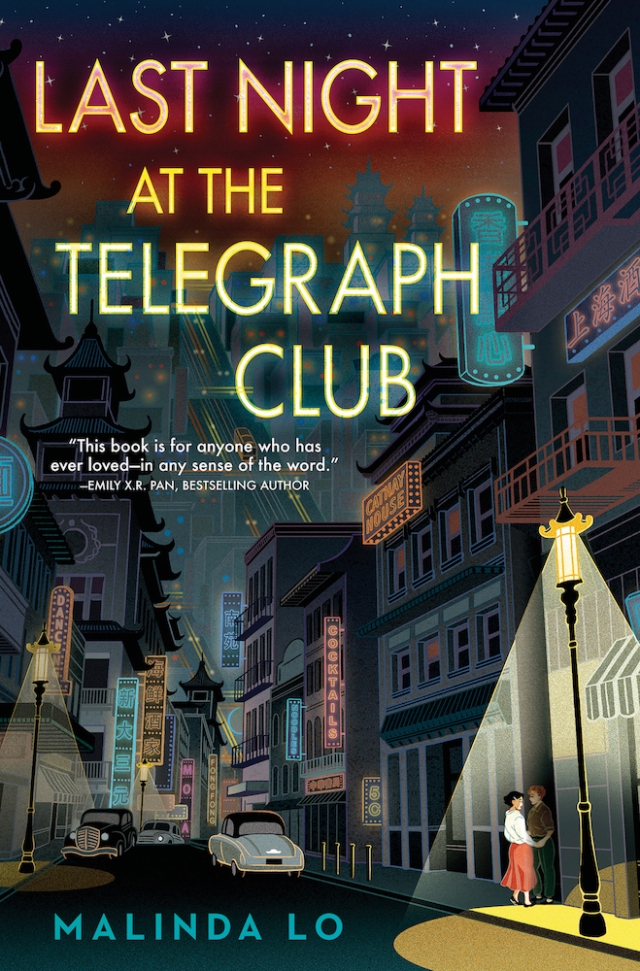
Book Review: Last Night at the Telegraph Club by Malinda Lo

Title: Last Night at the Telegraph Club
Author: Malinda Lo
Publisher: Dutton Books for Young Readers
Publication date: January 19, 2021
Length: 416 pages
Genre: Young adult / historical fiction
Source: Purchased
Rating:

Rating: 5 out of 5.

A story of love and duty set in San Francisco’s Chinatown during the Red Scare.

“That book. It was about two women, and they fell in love with each other.” And then Lily asked the question that had taken root in her, that was even now unfurling its leaves and demanding to be shown the sun: “Have you ever heard of such a thing?”

Seventeen-year-old Lily Hu can’t remember exactly when the question took root, but the answer was in full bloom the moment she and Kathleen Miller walked under the flashing neon sign of a lesbian bar called the Telegraph Club.

America in 1954 is not a safe place for two girls to fall in love, especially not in Chinatown. Red-Scare paranoia threatens everyone, including Chinese Americans like Lily. With deportation looming over her father—despite his hard-won citizenship—Lily and Kath risk everything to let their love see the light of day.

Last Night at the Telegraph Club is a beautiful, sensitively told story of a young woman in 1950s San Francisco, discovering her sexuality, finding first love, and navigating her place in the world of Chinatown and beyond.

Lily Hu is a high school senior who loves math, science, and reading Arthur C. Clarke. She’s fascinated by the idea of rockets and space, and dreams of one day working alongside her aunt at the Jet Propulsion Lab. Lily is the oldest child of a Chinese-American family living in San Francisco’s Chinatown, and her world revolves around the neighborhood and its community. While she attends a nearby high school, her friends and her activities are all based in Chinatown too — until she starts to get to know Kathleen, a girl in her advanced math classes.

Lily and Kathleen — or Kath, as she prefers to be called — begin to form a tentative friendship after Kath accidentally picks up a newspaper ad that Lily had saved, a promo for a male impersonator’s appearance at a nightclub. Kath mentions that she’s been to the Telegraph Club once, and the two girls agree to sneak out late one night and go together.

Meanwhile, Lily is unsure what to make of the feelings stirred in her when she reads about Tommy Andrews, the nightclub performer, or when she spies a pulp novel at the local drugstore that features two scantily clad women on the cover. When she and Kath finally make it to the Telegraph Club, Lily’s eyes are opened, seeing women together in clearly romantic relationships.

As Lily’s story progresses, she and Kath explore their feelings and learn more about the secret underworld of gay life in San Francisco. At the same time, the “red scare” is bringing fear to Chinatown, as even naturalized or American-born Chinese people are threatened with deportation and pressured to inform on others. When Lily’s father’s naturalization papers are confiscated during questioning about communist activity in Chinatown, the danger strikes home, and Lily is confronted by the potential consequences her own actions could have on her family.

Last Night the Telegraph Club is a moving coming of age and coming out story, and also a well-researched and eye-opening look at a particular time and place in 20th century history. The author shares a great deal of information at the end of the book about her research, her intentions, who she interviewed, and even provides a wide-ranging bibliography for those who want to learn more.

As she points out, there isn’t a lot written about Asian lesbians in historical fiction. The topics covered within this book are a unique blend of LGBTQ+, Asian American, and San Francisco history, and they work together spectacularly.

Lily is a fabulous main character. She’s not flashy or outrageous by any means. A studious, smart girl devoted to her family, she’s really never stepped foot out of line prior to this point in her life. She struggles with the conflict between her identity, her emotions and desires, and her family duty. Lily is portrayed as a sensitive girl who might have truly thrived in the modern era, but because of the time and culture in which she’s born, there is no easy answer for her.

As a non-native San Franciscan myself, I’m always interested in learning more about the history of my adopted city, and Last Night at the Telegraph Club delivers. While many of the places and neighborhoods are the same, the city has changed in dramatic ways since then. I loved seeing all the familiar streets and landmarks mentioned as Lily and Kath and others explore the city, and appreciate that they venture beyond the areas often covered in popular media to include lesser known spots too, such as one of my own favorite places:

Judy had fallen in love with Ocean Beach the first time she saw it almost four years ago, right after she first arrived in San Francisco.

Although as Lily herself later reflects, you can’t always count on the weather:

She suspected it would be freezing out by Ocean Beach

On a more serious note, the response of Lily’s family to learning about her orientation is sadly typical of the time, but still incredibly painful to read:

“There are no homosexuals in this family,” she said, the words thick with disgust.

… and …

“There are studies,” her father said. “You’re too young for this. This is a phase.”

My only quibble with this book is that I wished for a little more at the end, between the last full chapter and the book’s epilogue. I can’t say much without entering spoiler territory, but I wish the events of the last chapter had been carried forward longer to show what happened in the ensuing months. The epilogue wraps the story up very well, but it’s almost too abrupt in its resolution. Still, overall, I’m happy with how things were resolved for the various characters, and felt so invested in Lily’s well-being that I wish I could check back in with her to see how her life turned out 10, 20, and 30 years down the road.

Last Night at the Telegraph Club is engrossing, moving, and sensitive, with memorable characters and a fast-moving plot that manages to convey so much, so well. Highly recommended.

Book Review: Shit Cassandra Saw by Gwen E. Kirby

Title: Shit Cassandra Saw
Author: Gwen E. Kirby
Publisher: Penguin
Publication date: January 11, 2022
Length: 288 pages
Genre: Short stories
Source: Purchased
Rating:

Rating: 3.5 out of 5.

Margaret Atwood meets Buffy in these funny, warm, and furious stories of women at their breaking points, from Hellenic times to today.

Cassandra may have seen the future, but it doesn’t mean she’s resigned to telling the Trojans everything she knows. In this ebullient collection, virgins escape from being sacrificed, witches refuse to be burned, whores aren’t ashamed, and every woman gets a chance to be a radioactive cockroach warrior who snaps back at catcallers. Gwen E. Kirby experiments with found structures–a Yelp review, a WikiHow article–which her fierce, irreverent narrators push against, showing how creativity within an enclosed space undermines and deconstructs the constraints themselves. When these women tell the stories of their triumphs as well as their pain, they emerge as funny, angry, loud, horny, lonely, strong protagonists who refuse be secondary characters a moment longer. From “The Best and Only Whore of Cym Hyfryd, 1886” to the “Midwestern Girl [who] is Tired of Appearing in Your Short Stories,” Kirby is playing and laughing with the women who have come before her and they are telling her, we have always been this way. You just had to know where to look.

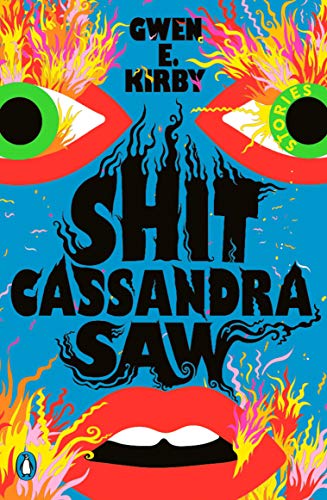
Please do judge a book by its cover… at least in this case. Shit Cassandra Saw‘s cover is bright, almost eye-searing, and clearly puts the reader on notice that it’s time to shake things up.

This collection of short stories covers times and settings from the ancient world to the contemporary, mixing in fantastical elements with pieces that are all too real. The women in these stories are angry, despondent, and tired of being ignored or mistreated or threatened. Told through a variety of styles and voices, the stories work as a collection by playing with perception and tropes, and letting women’s voices shout out clearly.

All that being said, some of the stories in Shit Cassandra Saw worked better for me than others. In general, I really liked the historical pieces, although a few of the contemporary stories really appealed as well.

My favorites include:

A Few Normal Things That Happen A Lot: My absolute favorite of the bunch, and it’s so weird and wonderful. From the opening lines:

A woman walks down the street and a man tells her to smile. When she smiles, she reveals a mouthful of fangs. She bites off the man’s hand, cracks the bones and spits them out, and accidentally swallows his wedding ring, which gives her indigestion.

… it’s clear that nothing here is normal, although yes, the story is about things that happen a lot. Random men telling women to smile. Creepy dudes on subways exposing themselves. Male joggers following maybe a bit too closely. Unwanted comments about appearance. All those little moments that are really so common that every woman has experienced them in one way or another.

In this story, the author does an amazing job of portraying how fear of these moments pervades women’s lives, turning simple things like a walk from one’s car to the front door into something to plan and consider — and then shows how that might all turn around, given a few sci-fi-flavored twists.

This story is also available to read online via TinHouse.

Shit Cassandra Saw That She Didn’t Tell the Trojans Because At That Point Fuck Them Anyway: A short piece that’s just so well done, about all the things Cassandra could tell Trojans about, but:

She is tired of speaking to listening ears. The listening ears of the men who think her mad drive her to madness.

It ends on an oddly uplifting note, as Cassandra’s thoughts turn to all the things she wishes she could tell the women of Troy about too, things that would make them happy if they only knew.

And briefly:

Scene in a Public Park at Dawn, 1892: About two women duelists, very short, but I really liked it.

There are other stories I liked too, and a few that kind of clunked, but overall, it’s a great collection, and I really enjoyed the variety of topics and styles. Many of the stories were previously published elsewhere; some are available through the original online sites were they appeared, and some are original to this collection.

Fun fact: I might never have stumbled across this book or thought twice about it until I happened to click on a link to a story on LitHub, motivated solely by the fact that the image for the article was a scene from Pride & Prejudice & Zombies, which is a movie that I love an irrational amount. Once I clicked through and read Gwen E. Kirby’s thoughts on the movie and how its “stabbiness” empowers the women in it, I was sold!

This sort of stylized violence, stabbiness if you will, emerges in my writing as a fascination with women from history who fight and with contemporary women who wish they could. Stabbiness makes me wonder how violence in these very specific contexts can feel affirming, even as violence is the thing being defied.

You can read the article here.

As I’ve mentioned countless times on this blog, I really don’t consider myself a short story reader, and I don’t typically have the patience to read an entire book of stories. With Shit Cassandra Saw, I took a slower approach, reading just one or two stories per day, and found the entire experience really enjoyable. I’m glad I took the time to appreciate this book. If you like your stories on the weird side with a strong feminist theme throughout, check out this collection!