Book Review: A Connecticut Yankee in King Arthur’s Court by Mark Twain (Classics Club Spin #31)

Title: A Connecticut Yankee in King Arthur’s Court
Author: Mark Twain
Publication date: 1889
Rating:

Rating: 4.5 out of 5.

Synopsis (Goodreads):

One of the greatest satires in American literature, Mark Twain’s ‘A Connecticut Yankee in King Arthur’s Court’ begins when Hank Morgan, a skilled mechanic in a nineteenth-century New England arms factory, is struck on the head during a quarrel and awakens to find himself among the knights and magicians of King Arthur’s Camelot. The ‘Yankee’ vows brashly to “boss the whole country inside of three weeks” and embarks on an ambitious plan to modernize Camelot with 19th c. industrial inventions like electricity and gunfire. It isn’t long before all hell breaks loose!

Written in 1889, ‘A Connecticut Yankee in King Arthur’s Court’ is one of literature’s first genre mash-ups and one of the first works to feature time travel. It is one of the best known Twain stories, and also one of his most unique. Twain uses the work to launch a social commentary on contemporary society, a thinly veiled critique of the contemporary times despite the Old World setting.

While the dark pessimism that would fully blossom in Twain’s later works can be discerned in ‘A Connecticut Yankee in King Arthur’s Court, ‘ the novel will nevertheless be remembered primarily for its wild leaps of imagination, brilliant wit, and entertaining storytelling.

And from Wikipedia:

A Connecticut Yankee in King Arthur’s Court is an 1889 novel by American humorist and writer Mark Twain. The book was originally titled A Yankee in King Arthur’s Court. Some early editions are titled A Yankee at the Court of King Arthur.

In the book, a Yankee engineer from Connecticut named Hank Morgan receives a severe blow to the head and is somehow transported in time and space to England during the reign of King Arthur. After some initial confusion and his capture by one of Arthur’s knights, Hank realizes that he is actually in the past, and he uses his knowledge to make people believe that he is a powerful magician. He attempts to modernize the past in order to make people’s lives better, but in the end he is unable to prevent the death of Arthur and an interdict against him by the Catholic Church of the time, which grows fearful of his power.

Twain wrote the book as a burlesque of Romantic notions of chivalry after being inspired by a dream in which he was a knight himself, severely inconvenienced by the weight and cumbersome nature of his armor. It is a satire of feudalism and monarchy that also celebrates homespun ingenuity and democratic values while questioning the ideals of capitalism and outcomes of the Industrial Revolution. It is among several works by Twain and his contemporaries that mark the transition from the Gilded Age to the Progressive Era of socioeconomic discourse. It is often cited as a formative example of the time travel genre.

A Connecticut Yankee in King Arthur’s Court is my fall 2022 Classics Club Spin book, and once again, I’m delighted that the CCSpin has given me reason to finally read a classic that I might never have considered otherwise.

Way back in my middle school days, Tom Sawyer and Huck Finn were both required reading, and that was about it in terms of my experience with Mark Twain. Still, I’d been more or less familiar with the general plot of this book as well as The Prince and the Pauper, which have both been adapted and retold in countless formats over the years.

1889 frontispiece by Daniel Carter Beard, restored

In Connecticut Yankee, a “modern” man of the 1880s finds himself transported back in time to the world of King Arthur. Being a proud Yankee, our narrator isn’t content to just find a way to fit in and survive, but instead decides to bring 19th century civilization to life a full thirteen centuries early.

First, seeing the power that Merlin holds over King Arthur and his court, the narrator proclaims himself to be an even greater magician, and uses his 19th century scientific knowledge to create supposed miracles — for example, using dynamite and fireworks — to astound and frighten everyone there. Quickly, he is given the title of “the Boss”, second only to Arthur himself in power and authority.

From there, the Boss begins a plan to introduce modern technology to the kingdom, instituting factories, newspapers, electricity, schools, currency, and more. Determined to improve health and sanitation, he introduces soap, then has the knights roam the countryside carrying advertising shingles to promote it! Of course, obstacles arise, and the Boss finds himself challenged and inconvenienced many times throughout his adventures, but his knowledge of unknown mechanics, science, and communication techniques help him triumph, again and again.

The writing in Connecticut Yankee is sly, sardonic, and often outright funny. From the earliest chapters, I was charmed and entertained, as in this encounter with a young boy as the narrator enters the court at Camelot:

He arrived, looked me over with a smiling and impudent curiosity; said he had come for me, and informed me that he was a page.

“Go ‘long,” I said, “you ain’t more than a paragraph.”

Mark Twain satirizes and skewers concepts of class throughout the book, as the main character — while appreciative of Arthur himself — is determined to do away with nobility, chivalry, and all the inherent injustices of a societal order that holds some people to be better than others.

Intellectual ‘work’ is misnamed; it is a pleasure, a dissipation, and is its own highest reward. The poorest paid architect, engineer, general, author, sculptor, painter, lecturer, advocate, legislator, actor, preacher, singer, is constructively in heaven when he is at work; and as for the magician with the fiddle-bow in his hand, who sits in the midst of a great orchestra with the ebbing and flowing tides of divine sound washing over him – why, certainly he is at work, if you wish to call it that, but lord, it’s a sarcasm just the same. The law of work does seem utterly unfair – but there it is, and nothing can change it: the higher the pay in enjoyment the worker gets out of it, the higher shall be his pay in cash also.

The application of justice, as portrayed in this book, is particularly brutal, and there’s one especially heartbreaking scene of a young desperate mother’s punishment that’s truly haunting.

Still, even during scenes of great violence or inhumanity, Twain’s humor shines through. Even the more serious situations are lightened by his skill with words, and I couldn’t help laughing at so many of the small little lines and comments that are thrown in throughout the story.

His head was an hour-glass; it could stow an idea, but it had to do it a grain at a time, not the whole idea at once.

A Connecticut Yankee in King Arthur’s Court is an early example of a time-travel novel, and while the genre has certainly changed over the years, it’s a fun look at the concept. Mark Twain does it well, showing both the influence of the 19th century on Arthurian times and offering a solid set of circumstances to explain why history continue on as expected.

There have been many, many movie and TV adaptations of this story over the years, including a musical version from 1949 starring Bing Crosby, a 1989 TV movie starring Keshia Knight-Pulliam, and a really strange-looking 1995 movie called A Young Connecticut Yankee in King Arthur’s Court, starring Michael York as Merlin and featuring a guitar-playing teen in the lead role.

I’d decided to read Connecticut Yankee via the Serial Reader app — which I did — but instead of sticking to just one 10-minute installment per day, I got caught up in the story and finished well ahead of the October 30th deadline. I expected to be interested in the story, but I didn’t realize just how entertaining it would turn out to be.

I’m really glad to have read A Connecticut Yankee in King Arthur’s Court. I’m not sure that I’d pick up more Mark Twain immediately, but I think at some point, I’ll want to read more of his works, perhaps venturing into some of his non-fiction writing.

Are you a Mark Twain fan? Which of his books would you recommend?

Once again, I’m so happy that I decided to participate in the Classics Club Spin! Looking forward to the next one!
Travel reading wrap-up (fall 2022): A batch of mini-reviews — all sorts of love!

I’m back from a one-week trip, which was fabulous… and while I read quite a bit, I don’t have energy just yet to write full-length reviews. So… here’s a quick look at what I read while I was away. Lots of love stories — some dramatic, one that’s utterly silly, and one charmer that includes love, friendship, and pure delight. Read on if you want to know more!


Drunk on Love by Jasmine Guillory: A steamy story of workplace romance, set amidst the wineries of Napa Valley. Margot Noble, co-owner of a family winery, has a one-night stand with a hot guy she meets at a bar, only to discover the next day that he’s her new employee. The book explores the intense connection and chemistry between Margot and Luke, but also delves into family dynamics, career frustrations and expectations, and issues around honesty and self-awareness. The romance is steamy but also sweet, and I loved the dynamics between Margot and Luke.

Rating:

Rating: 4 out of 5.

Heading Over the Hill by Judy Leigh: I’ve been seeing other bloggers’ rave reviews for Judy Leigh’s books for quite a while now, and finally had the chance to experience one for myself! Pure delight — this is the story of Dawnie and Billy, a married couple in their early seventies, who decide to move to a new town and focus on starting over again, just the two of them. Between his Harley and her colorful wigs, they’re a shock to their conservative neighbors, but soon end up making a huge, positive impact on everyone they encounter. The story is engaging, funny, but also quite heartfelt — there are elements that explores the characters’ sorrows as well as joys, and at one point, it even brought me to tears. Overall, I loved it — and I just wish I had a Dawnie in my life!!

Rating:

Rating: 4.5 out of 5.


Dial A for Aunties by Jesse Q. Sutanto: After having this paperback on my shelf for about a year, I finally picked it up — and I have to say, this is quintessential vacation reading! Super silly, not at all intellectually challenging, and just oodles of fun. When Meddy and her meddlesome aunties get involved in an over-the-top Chinese-Indonesian wedding, they also find themselves dealing with an inconvenient corpse, stolen jewels, and the reappearance of Meddy’s college boyfriend — her one true love and the one who got away. The escapades here are preposterous and outrageously unbelievable… but so much fun to read and laugh over! I will definitely be picking up the next book in the series, Four Aunties and a Wedding.

Rating:

Rating: 4 out of 5.

Where We End & Begin by Jane Igharo: This is the most dramatic and serious of my batch of vacation books — the story of Dunni and Obinna, high school sweethearts with an intense bond who were cruelly separated by their families, as they reunite at a friends’ wedding in Nigeria twelve years later. With alternating timelines showing their present reconnection and the traumatic events of their past, the book gives us a deep understanding of how these two characters ended up where they are. I loved the exploration of the class differences in their society and how their families’ histories influenced how they were treated, as well as the insights into their individual decision-making and struggles. There are some truly painful revelations, as well as lovely moments of connection and understanding. This is a beautiful, sad, complicated story, well worth checking out.

Rating:

Rating: 4.5 out of 5.

What a week! I enjoyed every book I read… now comes the hard part — deciding what to read next!

Save

Save

Save

Save

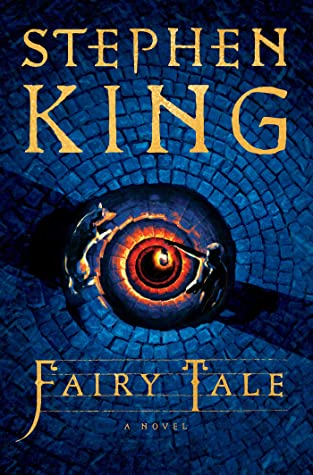
Book Review: Fairy Tale by Stephen King

Title: Fairy Tale
Author: Stephen King
Publisher: Scribner
Publication date: September 6, 2022
Length: 608 pages
Genre: Fantasy
Source: Purchased
Rating:

Rating: 4.5 out of 5.

Legendary storyteller Stephen King goes deep into the well of his imagination in this spellbinding novel about a seventeen-year-old boy who inherits the keys to a parallel world where good and evil are at war, and the stakes could not be higher—for their world or ours.

Charlie Reade looks like a regular high school kid, great at baseball and football, a decent student. But he carries a heavy load. His mom was killed in a hit-and-run accident when he was ten, and grief drove his dad to drink. Charlie learned how to take care of himself—and his dad. Then, when Charlie is seventeen, he meets Howard Bowditch, a recluse with a big dog in a big house at the top of a big hill. In the backyard is a locked shed from which strange sounds emerge, as if some creature is trying to escape. When Mr. Bowditch dies, he leaves Charlie the house, a massive amount of gold, a cassette tape telling a story that is impossible to believe, and a responsibility far too massive for a boy to shoulder.

Because within the shed is a portal to another world—one whose denizens are in peril and whose monstrous leaders may destroy their own world, and ours. In this parallel universe, where two moons race across the sky, and the grand towers of a sprawling palace pierce the clouds, there are exiled princesses and princes who suffer horrific punishments; there are dungeons; there are games in which men and women must fight each other to the death for the amusement of the “Fair One.” And there is a magic sundial that can turn back time.

A story as old as myth, and as startling and iconic as the rest of King’s work, Fairy Tale is about an ordinary guy forced into the hero’s role by circumstance, and it is both spectacularly suspenseful and satisfying.

In Fairy Tale, master author Stephen King takes a kind-hearted 17-year-old and sends him on an epic quest to battle forces of evil and save a kingdom.

Also, there’s a very good dog. And because I know this is important for many readers to know up front: The dog will be fine! (Stories that treat book doggos badly can be a deal-breakers for many readers, so now you can rest easy and proceed).

Charlie is a strong, self-reliant boy who loves his father, but he’s also had to shoulder far too heavy a burden in his short life. After his mother’s tragic death, his father became lost to alcoholism, and Charlie had to care for himself and his father through the dark years until his father finally found sobriety. For all that, Charlie is remarkably well-adjusted, but he does think back with regret on the mean-spirited pranks and cruel behaviors he indulged in during the worst of days.

When he hears a dog barking from behind the large, spooky house on the hill, he intends to just move on, until he hears a faint voice crying for help. Charlie discovers Mr. Bowditch, the old man who lives alone in the house, severely injured in the backyard. He calls for help, then makes a decision that this perhaps is his opportunity to atone for the bad behavior in his past, and becomes completely devoted to Mr. Bowditch and his elderly dog Radar.

While Mr. Bowditch is hospitalized, Charlie takes on caring for Radar, and begins work on cleaning and repairing the house. After Mr. Bowditch is released, it’s Charlie who takes on the responsibility of daily care, going far above and beyond would might be expected of a teenager (or even most adults). Through their time together, the two become very close, but Mr. Bowditch holds onto his secrets tightly — although he does tell Charlie how to access his safe and the bucket full of gold pellets stored within, and how to exchange the pellets for the money needed to pay the hospital bills.

When Mr. Bowditch suffers a fatal heart attack some months later, Charlie and his father are shocked to learn that Charlie has inherited the house, the property, and everything it contains. Even more shocking is the cassette tape Mr. Bowditch has left, telling Charlie a strange tale about a journey to a hidden world and the magical device there that allows one to regain youth and health. With Radar in sharp decline, Charlie realizes that following the instructions on the tape might be his only option for saving Radar’s life. And so the quest begins.

Fairy Tale in many ways embodies the traditional Hero’s Journey, with Charlie receiving a call to action, setting out on a quest, gaining allies along the way, sinking to darkest depths (in this case, spending weeks/months (?) in a literal dungeon), before finding redemption and reemergence. It’s brilliantly constructed — we can see the framework and understand what King is doing, while still becoming totally immersed in the magical and dangerous world that Charlie enters.

At the same time, Charlie himself recognizes the influence of stories and how they seep through worlds into realities. Rumpelstiltskin, the Goose Girl, the Little Mermaid, Jack and the Beanstalk — all are present in some variation here, not as literal retellings but as universal tropes that inform the reality that Charlie now finds himself in.

Based on the synopsis, I’d expected the portal elements to kick in pretty early in the story, but in fact, it’s not until around 30% that Charlie first ventures through the passage to the alternate world. The first third of the story is devoted to Charlie’s family’s backstory and his growing relationship with Mr. Bowditch (and Radar!). This is really effective, as it grounds everything that follows in a realistic beginning in our own world, and gives a solid basis for why Charlie acts as he does, both his devotion to providing care to Mr. Bowditch and his actions on his portal adventure.

The flow does seem to lag for a bit in the middle of the story. As I mentioned, there’s a dungeon involved, and Charlie’s time imprisoned there drags on long enough that my interest flagged. Likewise, the sections about Charlie and his fellow prisoners being forced to train for and then compete in a Hunger Games-like tournament to the death felt overly long and drawn out.

Those elements aside, the plot is mostly fast-paced, full of surprises, odd-ball and quirky characters, memorable settings, and a superbly crafted sense of wonder and menace that hangs over every step of Charlie’s journey. Charlie himself is wonderful — smart, caring, and sensitive, but flawed enough that he’s not too good to be true.

Fairy Tale is a big, thick book, but absolutely worth the time and attention. I was captivated, often scared on behalf of the characters, and fully invested in the outcome and the stakes. The world Charlie visits is fascinating, and I would have loved to have spent even more time exploring it at the conclusion of the quest.

Wrapping this up… I highly recommend Fairy Tale! It’s a treat for King fans, but also an easily accessible entry point for those who haven’t read his books before or who feel that his books are too terrifying for them! Yes, there are some frights and scary beings, and as I said, plenty of menace, but this book doesn’t have the absolute terror of, say, Pet Sematary or It.

Fairy Tale is both a coming-of-age story and a tale of a mythical, magical adventure, and it’s a wonderfully engaging read, start to finish. Don’t miss it!

Audiobook Review: Travel by Bullet (The Dispatcher, #3) by John Scalzi

Title: Travel by Bullet
Series: The Dispatcher, #3
Author: John Scalzi
Narrator:  Zachary Quinto
Publisher: Audible Originals
Publication date: September 1, 2022
Print length: n/a
Audio length: 3 hours, 43 minutes
Genre: Science fiction
Source: Purchased
Rating:

Rating: 4.5 out of 5.

The Audible and New York Times best-selling “Dispatcher” series returns with a brand-new mystery, performed by Zachary Quinto.

The world has changed. Now, when someone is murdered, they almost always come back to life—and there are professionals, called “dispatchers,” who kill in order to save lives, to give those near the end a second chance. Tony Valdez is a dispatcher, and he has never been busier.

But for as much as the world has changed, some things have stayed the same. Greed, corruption and avarice are still in full swing. When Tony is called to a Chicago emergency room by an old friend and fellow dispatcher, he is suddenly and unwillingly thrown into a whirlpool of schemes and plots involving billions of dollars, with vast caches of wealth ranging from real estate to cryptocurrency up for grabs.

All Tony wants to do is keep his friend safe. But it’s hard to do when friends keep secrets, enemies offer seductive deals, and nothing is ever what it seems. The world has changed… but the stakes are still life and death.

I hadn’t been aware that a third Dispatcher audiobook was on the way, so I was surprised in the best way to see it available on Audible this month!

In the sci-fi/speculative world of the Dispatcher series, death has become much more optional. Death by natural causes is still death, but if someone is murdered, in 999 cases out of 1,000, the murdered person pops back into life with a “reset”, waking up someplace they feel safe — usually their own home — back in the condition they were in several hours earlier.

In this brave new world, professional Dispatchers are trained and licensed to turn natural deaths into murders, all for the sake of saving lives. A person on the verge of death from cardiac arrest, for example, gets a professionally administered bullet to their brain, and (unless they’re that 1 in 1,000 exception), they end up totally fine. I mean, they should probably go see a doctor ASAP for that heart condition, but they’re alive and have a chance to remain that way.

In Travel by Bullet, things have changed yet again in all sorts of interesting ways. The role of Dispatchers has been around for about 10 years at this point, and our main character, Tony Valdez, is tired. The world has been going through the pandemic for the past couple of years, and new laws have been instituted that give families the right to demand a dispatch for their dying relatives, meaning that Dispatchers are now employed full time in hospitals and are kept incredibly busy.

The problem is, for someone on a ventilator approaching death, a reset by dispatch isn’t really going to fix things. The patient will wake up in their own bed in a condition from a few hours earlier, but as in all dispatches, they travel without anything but their bodies — no clothes, and most importantly in these cases, no equipment. Often, desperate families who demand a dispatch are dooming their relatives to pain and confusion and inevitable death, but without the benefit of hospital staff to ease the journey. Tony spends much of his time trying to talk families out of using his services, but at the end of the day, he is required by law to perform if that’s what the family wants.

His daily grind is interrupted when a friend and fellow dispatcher is brought into the ER, on the verge of death and asking specifically for Tony. Tony knows that this person has been involved in the shadier side of dispatching, and the circumstances of the accident that brought him to the hospital are very sketchy.

Tony reluctantly gets drawn into his friend’s mess, and ends up at the center of a conspiracy that draws in the Chicago PD, the FBI, mobsters, VC billionaires, and assorted hoodlums. Tony becomes increasingly threatened as he struggles to keep his friend safe while not alienating other allies or putting his life and livelihood into grave danger.

It’s all very quick-paced and complicated, with crypto-wallets changing hands, billionaires behaving horrendously, and Dispatchers being used in some truly awful business settings (as well as providing the “travel by bullet” concept that gives this story its name).

In my review of the 2nd book, Murder by Other Means, I wrote:

At just barely 3 hours, this audiobook is perfect for a quick entertainment. The action is fast-paced, and the narration is terrific. The vibe is noir, but with enough weird elements to let you know you’re living in a Scalzi world. I had to keep reminding myself that this wasn’t a Dresden book (minus the magic) — it’s that kind of smart, quick urban storytelling.

The same is absolutely true here! (Sorry, I don’t usually quote myself…)

Travel by Bullet is slightly longer, but still under 4 hours. Actor Zachary Quinto is marvelous when it comes to voicing Tony and handling the storytelling. His narration absolutely nails the noir vibe of the entire story, and it all just works.

I would recommend starting with the first book in this series, The Dispatcher, in order to get a good feel for the world of dispatching and its rules and quirks — but since they’re all relatively short, you’ll speed through them in no time!

Note: Travel by Bullet is an Audible exclusive as of now. The first two books in the series were also originally Audible-only, but were later released in print format too, so I’d assume that eventually, this one will be as well. For now, though, if you want to experience Travel by Bullet, Audible is the only option.

Audiobook Review: Mr. Perfect on Paper by Jean Meltzer

Title: Mr. Perfect on Paper
Author: Jean Meltzer
Narrator: Dara Rosenberg
Publisher: Mira
Publication date: August 9, 2022
Print length: 387 pages
Audio length: 10 hours 27 minutes
Genre: Contemporary romance
Source: Library
Rating:

Rating: 3 out of 5.

From the author of The Matzah Ball comes a pitch-perfect romcom following a third-generation Jewish matchmaker who unwittingly finds her own search for love thrust into the spotlight…

The perfect Jewish husband should be:
* A doctor or lawyer (preferably a doctor)
* Baggage-free (no previous marriages, no children)
* And of course—he must be Jewish

As the creator and CEO of the popular Jewish dating app J-Mate, matchmaker Dara Rabinowitz knows the formula for lasting love—at least, for everyone else. When it comes to her own love life, she’s been idling indefinitely. Until her beloved bubbe shares Dara’s checklist for “The Perfect Jewish Husband” on national television and charming news anchor Chris Steadfast proposes they turn Dara’s search into must-see TV.

As a non-Jewish single dad, Chris doesn’t check any of Dara’s boxes. But her hunt for Mr. Perfect is the ratings boost his show desperately needs. If only Chris could ignore his own pesky attraction to Dara—a task much easier said than done when Dara starts questioning if “perfect on paper” can compete with how hard she’s falling for Chris…

Jean Meltzer, author of 2021’s The Matzah Ball, is back with another Jewish-themed romance, this one depicting a young Jewish matchmaker’s search for her own true love.

Dara Rabinowitz is the powerhouse CEO of J-Mate, the super successful Jewish dating app she created inspired by her mother and grandmother’s careers as matchmakers. Knowing what makes a good match, as well as being a hugely talented coder, is the secret to Dara’s rise to corporate stardom. Dara lives with generalized anxiety disorder, which she’s quite open about, and manages her high-pressure life through coping and calming strategies as well as medication.

Dara is devoted to her darling grandmother, bubbe Miriam, whom she considers her best friend — but Miriam wants to see Dara happily married and exploring life. When Miriam goes off-script on a TV appearance and shares a private list of Dara’s requirements for her perfect husband (written one night while drinking with her sister), Dara is utterly humiliated… until the video clip goes viral, the show’s rating skyrocket, and suddenly everyone wants more of Dara.

The show’s host, Chris (handsome, non-Jewish, and a widowed father of a tween girl) is enchanted by Dara, and sees her as a potential key to saving his floundering show. Reluctantly, Dara agrees to his proposal: He’ll use her app and algorithms to find her nice Jewish men who are “Mr. Perfect on Paper” — checking all the boxes on her list — and she’ll allow the show to follow her on her dates.

What could go wrong?

Obviously, plenty. Dara encounters one dating disaster after another… and meanwhile, even once she meets a man who might really be her perfect match, she can’t quite shake her attraction and feelings for Chris himself. Chris, too, feels drawn to Dara, but he knows he’s not what she wants. But what if????

Dara and Chris are both sensitively portrayed and well developed. I really felt like I got to know each of them, with attention paid to their family backgrounds and the tragedies and struggles they’ve each endured. Chris’s story is particularly sad, and his dedication to being the best dad he can be, while navigating the tricky world of dealing with a pre-teen girl, is quite moving.

Dara and Chris have good chemistry, and I appreciated how genuine their care and concern for one another is. While denying to themselves that they could ever be romantically involved, they do both consider themselves friends, and they’re truly there for one another in the way that real friends should be.

Some elements of the book just didn’t work as well for me, however. Based on this book as well as her previous one, it seems that this author’s approach to conveying humor is to create slapstick moments where everything goes wrong. Maybe some readers will find these moments funny (such as Dara ending up dunking her head into a barrel of water in the middle of a date in order to get away from a pesky bumblebee), but honestly, I tend to find them too silly and embarrassing and over the top.

I had to question some of the Jewish elements too. Dara is devoted to her religion and her people, which is nice to see, but some of her choices in regard to the TV show seem questionable — for example, allowing the camera crew to come to synagogue on Yom Kippur and follow the date that arranged for her at the break fast. I doubt any synagogue would actually allow a camera crew to set up and film on the holiday, and the idea of having a blind date at a break fast after a day of fasting seems like a set-up for disaster (which is exactly how it ends up).

The audiobook was mostly enjoyable, but the narrator seemed to struggle with some of the Jewish/Hebrew/Yiddish terms and names, and that was very distracting to me. Still, when the characters are in more natural or relaxed setting, the narration flows well, and I liked the scenes with Chris and his daughter very much.

Overall, Mr. Perfect on Paper is light entertainment with a sweet story to tell. The characters are bright spots, very engaging and sympathic, but on the downside, the predictable nature of the plot and the occasional cringe-worthy pratfalls and dating disasters keep this book from being totally successful. It’s fun, but I had to overlook a lot of my quibbles in order to appreciate the good stuff.

Audiobook Review: Birds of California by Katie Cotugno

Title: Birds of California
Author: Katie Cotugno
Narrator: Julia Whelan
Publisher: Harper Perennial
Publication date: April 26, 2022
Print length: 288 pages
Audio length: 7 hours 49 minutes
Genre: Contemporary fiction
Source: Library
Rating:

Rating: 3.5 out of 5.

Former child actor Fiona St. James dropped out of the spotlight after a spectacularly public crash and burn. The tabloids called her crazy and self-destructive and said she’d lost her mind. Now in her late twenties, Fiona believes her humiliating past is firmly behind her. She’s finally regained a modicum of privacy, and she won’t let anything–or anyone–mess it up.

Unlike Fiona, Sam Fox, who played her older brother on the popular television show Birds of California, loves the perks that come with being a successful Hollywood actor: fame, women, parties, money. When his current show gets cancelled and his agent starts to avoid his calls, the desperate actor enthusiastically signs on for a Birds of California revival. But to make it happen, he needs Fiona St. James.

Against her better judgment, Fiona agrees to have lunch with Sam. What happens next takes them both by surprise. Sam is enthralled by Fiona’s take-no-prisoners attitude, and Fiona discovers a lovable goofball behind Sam’s close-up-ready face. Long drives to the beach, late nights at dive bars… theirs is the kind of kitschy romance Hollywood sells. But just like in the rom-coms Fiona despises, there’s a twist that threatens her new love. Sam doesn’t know the full story behind her breakdown. What happens when she reveals the truth?

Sparks fly and things get real in this sharply sexy and whip-smart romantic comedy set against the backdrop of a post #metoo Hollywood from New York Times bestselling author Katie Cotugno–page-turning escapist fun in the spirit of Beach Read, The Kiss Quotient, and Red, White and Royal Blue.

In Birds of California, former star and tabloid bad-girl Fiona has left her acting days firmly in the past, preferring a quiet life tending to her father and sister, working in the family print shop, and avoiding the spotlight. Of course, it’s hard to actually forget her past when not a day goes by without being recognized, but for the most part, Fiona lives a private, quiet, hidden life.

Until one day, her ex-agent calls out of the blue with big news: There’s going to be a reboot of Birds of California, the show that made Fiona a breakout teen star, and the production wants her in it. Fiona wants no part of it — but then Sam Fox, her former co-star shows up at the print shop on a mission to change her mind. Fiona still is adamantly opposed to doing the show… but she’s less opposed to spending time with Sam.

The two start to connect, and rediscover a chemistry that was cut short back in their teen days, but of course, misunderstandings and hidden secrets arise and threaten to tear them apart, just as they’re growing closer.

Birds of California is billed as a romantic comedy, and yes, there are some funny moments, but a lot of it really has to do with the damage done to Fiona as a rising Hollywood star hounded by tabloids and paparazzi. The romance between Fiona and Sam is dynamic and worth cheering for, but I did wish they’d each open up and be honest a lot sooner than they did.

Mild plot spoilers ahead…

Mostly, my lasting impression of Birds of California has to do with its brushing up against toxic Hollywood culture and the #metoo movement. It’s pretty clear early on that Fiona didn’t publicly self-destruct for no reason — she was a young girl who wasn’t adequately protected and who was victimized by the people and studios that should have kept her safe. Unfortunately, while the book eventually makes clear what actually happened to her, it focuses so much on the current-day romance between Fiona and Sam that the past isn’t explored sufficiently.

I would have liked a little more attention at the end of the story, after Fiona finally tells Sam about her experiences, on what happens next and why. I would REALLY have liked to see the fall-out and (hopefully) justice that must be coming for the people who so seriously mistreated Fiona — the story ends with wheels set in motion, but no concrete consequences.

Overall, I enjoyed the characters and the story, and the audiobook narration — by Julia Whelan, one of my very favorite narrators — makes it both fun and heartfelt. I wish there had been a bit more substance beneath the romance, including more development of the more serious aspects of the story, but still, Birds of California is an entertaining read with fresh, funny, authentic characters to root for.

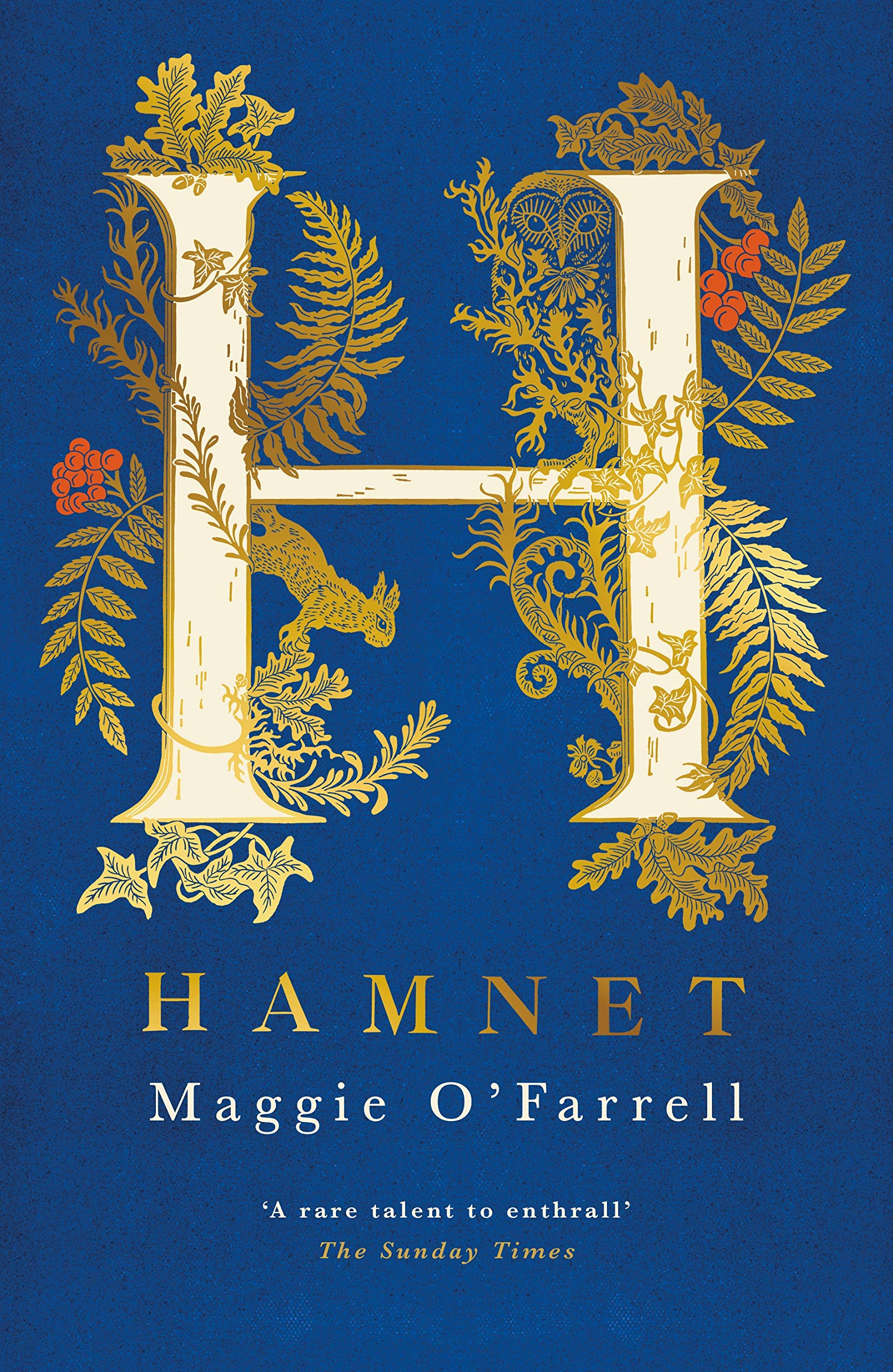
Book Review: Hamnet by Maggie O’Farrell

Title: Hamnet
Author: Maggie O’Farrell
Publisher: Tinder Press
Publication date: March 31, 2020
Length: 372 pages
Genre: Historical fiction
Source: Purchased
Rating:

Rating: 5 out of 5.

Drawing on Maggie O’Farrell’s long-term fascination with the little-known story behind Shakespeare’s most enigmatic play, Hamnet is a luminous portrait of a marriage, at its heart the loss of a beloved child.

Warwickshire in the 1580s. Agnes is a woman as feared as she is sought after for her unusual gifts. She settles with her husband in Henley street, Stratford, and has three children: a daughter, Susanna, and then twins, Hamnet and Judith. The boy, Hamnet, dies in 1596, aged eleven. Four years or so later, the husband writes a play called Hamlet.

Award-winning author Maggie O’Farrell’s new novel breathes full-blooded life into the story of a loss usually consigned to literary footnotes, and provides an unforgettable vindication of Agnes, a woman intriguingly absent from history.

New York Times Notable Book (2020), Best Book of 2020: GuardianFinancial TimesLiterary Hub, and NPR.

Hamnet is a powerful, emotional, beautifully written story about grief, mourning, and sorrow. Also, Shakespeare.

In Hamnet, the main point-of-view character is Agnes, although we do get passages from the perspectives of Agnes’s children and husband too. Agnes is gifted with sight and special powers. A talented healer, she can also see people’s futures simply by touching them. About herself, she has one clear vision: She will be the mother of two children.

When Agnes meets her husband, the son of a disreputable glovemaker and Latin tutor to her stepbrothers, they’re immediately drawn to one another, and eventually marry. Agnes can see her husband’s unhappiness casting a shadow over their lives. He lacks purpose, a means of fulfilling his own pursuits — so she sends him off to London, ostensibly to further his father’s business interests there. They plan for him to get settled, then send for Agnes and their children.

But all does not go as intended. Already the parents of a healthy girl, Agnes soon delivers not the 2nd child she expects, but a 2nd and 3rd. The twins are a girl and a boy, the girl born so weak and fragile that she was not expected to survive. She names the babies Hamnet and Judith, and they are inseparable. It soon becomes clear that moving to London will never be an option for Agnes and her children — Judith’s health is too delicate to allow her to live in a crowded, dirty city. And so Agnes and her husband live apart, with him returning for visits when he can, although he’s achieving success as a playwright and creating a separate life for himself in the world of theater.

But Agnes can never quite forget her own vision, of herself as the mother of two children.

She fears her foresight; she does. She remembers with ice-cold clarity the image she had of two figures at the foot of the bed where she will meet her end. She now knows that it’s possible, more than possible, that one of her children will die, because children do, all the time. But she will not have it. She will not. She will fill this child, these children, with life. She will place herself between them and the door leading out, and she will stand there, teeth bared, blocking the way. She will defend her three babes against all that lies beyond this world. She will not rest, not sleep, until she knows they are safe. She will push back, fight against, undo the foresight she has always had, about having two children. She will. She knows she can.

When “pestilence” — the Black Death — reaches the family’s home in Stratford, it’s Judith who is stricken. But Hamnet will not abide the idea of losing his twin, and eventually, he is lost while Judith survives. Agnes and the family are plunged into the horrors of loss, the devastating death of a child punching a hole through the fabric of their lives.

In Hamnet, Shakespeare himself is never named (he’s always the husband or the father or the son), but we know who we’re reading about. It feels appropriate for him to be presented in this way — if the story were about him, his life and career would overshadow all the rest. Here, though, it’s a story about a family, and especially about a mother, trying to find a way to live in the shadow of unbearable grief. The father’s way of dealing with the loss, through the power of his words, is just one aspect of what the family experiences.

The writing in Hamnet is absolutely gorgeous. I’m not usually a fan of “literary” fiction, but this novel is an exception for me. The carefully constructed characters, the lyrical descriptions of their world and their lives, and even the passages describing the transmission of the plague are all presented in a way that’s beautiful and haunting and powerful.

Hamnet is a special book, and I’m so glad my book group chose it for this month’s discussion. Once again, thanks to the group, I’ve read an excellent book I might otherwise have missed!

Very highly recommended.

To read more about Hamnet:

New York Times review (written by Geraldine Brooks)
NPR review
Washington Post review

Audiobook Review: The Kaiju Preservation Society by John Scalzi

Title: The Kaiju Preservation Society
Author: John Scalzi
Narrator: Wil Wheaton
Publisher: Tor
Publication date: March 15, 2022
Print length: 272 pages
Audio length: 8 hours 2 minutes
Genre: Science fiction
Source: Purchased
Rating:

Rating: 4.5 out of 5.

The Kaiju Preservation Society is John Scalzi’s first standalone adventure since the conclusion of his New York Times bestselling Interdependency trilogy.

When COVID-19 sweeps through New York City, Jamie Gray is stuck as a dead-end driver for food delivery apps. That is, until Jamie makes a delivery to an old acquaintance, Tom, who works at what he calls “an animal rights organization.” Tom’s team needs a last-minute grunt to handle things on their next field visit. Jamie, eager to do anything, immediately signs on.

What Tom doesn’t tell Jamie is that the animals his team cares for are not here on Earth. Not our Earth, at at least. In an alternate dimension, massive dinosaur-like creatures named Kaiju roam a warm and human-free world. They’re the universe’s largest and most dangerous panda and they’re in trouble.

It’s not just the Kaiju Preservation Society that’s found its way to the alternate world. Others have, too–and their carelessness could cause millions back on our Earth to die.

If you’re looking for highly dramatic science fiction with dire stakes, intricate world-building, and mind-boggling technology… this is not that book.

BUT… if you’re looking for a super fun sci-fi romp that’s funny and fast and full of f-bombs and smart-asses, well, look no further!

The Kaiju Preservation Society is a feel-good story (yes, really) about an alternate-dimension earth where gigantic creatures known as kaiju are powered by internal biological nuclear reactors, everything in the environment wants to eat people, and a team of adrenaline-junkie scientists and grunts work to keep the kaiju safe, and to keep our Earth safe from them.

It’s 2020, New York is on the verge of lockdown as COVID hits, and Jamie Gray, expecting a promotion at work, is instead laid off, joining the ranks of food-delivery drivers during the pandemic. A chance encounter with an old friend leads to a job offer with KPS, an organization devoted to the welfare of “large animals”, as they explain to Jamie during the interview.

Before he can reconsider, Jamie is whisked off to a secret location (in Greenland, of all places!), where he and a few other newbies are ushered through a dimensional portal into an alternate world, where scientists work to study and preserve kaiju life. Jamie’s job, as he reminds people repeatedly, is to “lift things” — he’s one of the few non-scientists at the base, but he’s a good guy, a hard worker, and indeed, good at lifting things, and he’s soon fully immersed in the crazy life of KPS.

The action is non-stop, and it’s a wild world into which we (and Jamie) are thrown — there are tree crabs and giant parasites and swarms of flying insects, all of which would love to eat people. Not to mention the kaiju themselves, who are scary and huge and have a tendency to explode under certain circumstances.

When bad guys show up, the action gets even heavier, but the banter and humor never flag, even when our scrappy band of heroes face death at every turn. I mean, it’s pretty clear that the good guys will win, but the fun is in seeing just how that comes about.

I always love John Scalzi’s books, and The Kaiju Preservation Society feels like a throwback to the style and attitude of some of his earlier books (which I happen to adore), such as the ridiculously entertaining The Android’s Dream.

The audiobook is narrated by Wil Wheaton, who does many of Scalzi’s books, and is amazingly talented when it comes to narrating action and multiple character voices. He projects tons of humor, even when our lead characters are confronted by gigantic creatures that may eat them — even their fear and hysteria come across as funny.

I really appreciated that the audiobook included the author’s note at the end — many don’t, which is a pet peeve of mine. Here, it was incredibly helpful and enlightening to hear about the author’s experiences in 2020 and 2021, and why and how he ended up writing this particular book during the pandemic.

All in all, I’d say that The Kaiju Preservation Society has to be one of my most fun listening experiences of the year! If you have low tolerance for salty language and progressive politics, this may not be the best choice for you — but those obstacles definitely don’t apply to me, and I loved every moment!

John Scalzi is a go-to, must-read author for me, and The Kaiju Preservation Society is a total win. Coincidentally, just this week, his publisher announced his next upcoming novel, Starter Villain, to be released in June 2023. Sign me up!!


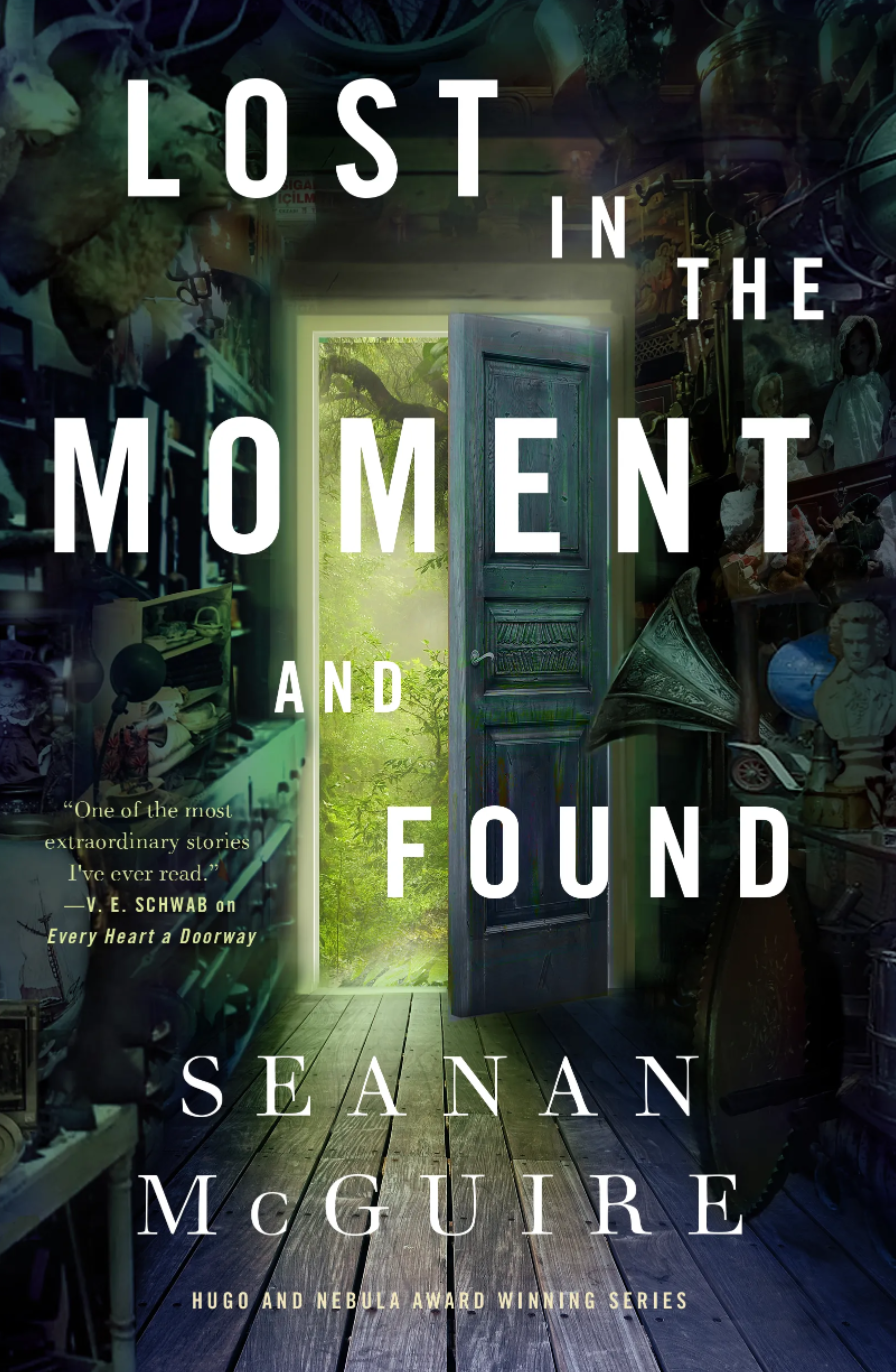
Book Review: Be the Serpent (October Daye, #16) by Seanan McGuire

Title: Be the Serpent
Series: October Daye, #16
Author: Seanan McGuire
Publisher: DAW
Publication date: August 30, 2022
Print length: 384 pages
Genre: Urban fantasy
Source: Purchased
Rating:

Rating: 5 out of 5.

October Daye is finally something she never expected to be: married. All the trials and turmoils and terrors of a hero’s life have done very little to prepare her for the expectation that she will actually share her life with someone else, the good parts and the bad ones alike, not just allow them to dabble around the edges in the things she wants to share. But with an official break from hero duties from the Queen in the Mists, and her family wholly on board with this new version of “normal,” she’s doing her best to adjust.

It isn’t always easy, but she’s a hero, right? She’s done harder.
Until an old friend and ally turns out to have been an enemy in disguise for this entire time, and October’s brief respite turns into a battle for her life, her community, and everything she has ever believed to be true.

The debts of the Broken Ride are coming due, and whether she incurred them or not, she’s going to be the one who has to pay.

Includes an all-new bonus novella! 

Some long-term ongoing fantasy series overstay their welcome. And then there’s October Daye, a series that 100% proves that there’s no such thing as too much or too long, so long as the writing and the plot make it worthwhile.

And in the name of Oberon himself, I’m here to declare that the 16th October Daye book blew me away, caught me in its spell, and will haunt me for the coming year (until #17 comes along).

In Be the Serpent, we pick up two months after the events of the previous book, When Sorrows Come. That book brought the long-awaited wedding of Toby and Tybalt — and being a book about October Daye, hero of the realm and a total bad-ass knight, it also brought plenty of bloodshed, mayhem, attempted overthrow of a kingdom, and an assortment of awful bad guys.

But hey, it ended with happiness! Toby and Tybalt are married — and in book #16, Be the Serpent, they’re living together in wedded bliss. I’m a little peeved that we didn’t actually get to see them enjoying their Disneyland honeymoon (I’d pay good money to see Tybalt on the Dumbo ride), but they had fun, and that’s what counts.

Happiness doesn’t last long, however. As the story opens, a hearing in the Kingdom of the Mists is just concluding when the children of Toby’s closest childhood friend begin to scream as if in dire pain. Rushing to their family home, Toby discovers a scene of blood and heartbreak. It’s almost too much to bear, and how can Toby share such terrible news with her dearest friend?

As the plot unfolds, true terror is revealed. And I really can’t say much more about the plot than that, because it’s a doozy and it took my breath away. What I will say is that events occur that upend Faerie as we know it, and that tie together storylines that go all the way back to the first book in the series.

The ending is a total gutpunch as well, and I can’t think of another book in the series that ended without our heroes being (at least temporarily) in a fairly good or at least safe place. The ending here is upsetting and nightmare-inducing, and I think I’m going to spend the next year really mad at Seanan McGuire for leaving me in such an upset state!

The book includes a bonus novella, Such Dangerous Seas, which is also deeply dark and sorrowful. (As opposed to the novella at the end of When Sorrows Come, which was basically a fun romp through Toby and Tybalt’s wedding reception — which now feels like a brief shining moment of joy before the horrors of Faerie came crashing back down). Such Dangerous Seas features the sea witch, the Luidaeg, one of my favorite characters — but it’s a terribly sad story about her earlier years and the awful things that happened to her.

Be the Serpent is shocking, heart-breaking, and scary as hell. It’s also yet another brilliant showcase for our hero Toby and her chosen family, who band together no matter what. Whatever happens to these characters, they love one another unreservedly, and their family ties, commitment, and loyalty are big pieces of what makes this series so special.

Having to wait a year for the next book is going to be terrible for my well-being! And I guess that’s a pretty clear indication of just how great Be the Serpent is. If you’re an October Daye fan, you’re probably already reading it!

And I’ll say, yet again, that if you haven’t read the October Daye series yet, you’re missing out on something special. Start from the beginning (Rosemary and Rue) — you won’t be able to stop!

Book Review: Killers of a Certain Age by Deanna Raybourn

Title: Killers of a Certain Age
Author: Deanna Raybourn
Publisher: Berkley
Publication date: September 6, 2022
Length: 368 pages
Genre: Contemporary fiction
Source: Review copy courtesy of the publisher via NetGalley
Rating:

Rating: 3.5 out of 5.

Older women often feel invisible, but sometimes that’s their secret weapon.

They’ve spent their lives as the deadliest assassins in a clandestine international organization, but now that they’re sixty years old, four women friends can’t just retire – it’s kill or be killed in this action-packed thriller.

Billie, Mary Alice, Helen, and Natalie have worked for the Museum, an elite network of assassins, for forty years. Now their talents are considered old-school and no one appreciates what they have to offer in an age that relies more on technology than people skills.

When the foursome is sent on an all-expenses paid vacation to mark their retirement, they are targeted by one of their own. Only the Board, the top-level members of the Museum, can order the termination of field agents, and the women realize they’ve been marked for death.

Now to get out alive they have to turn against their own organization, relying on experience and each other to get the job done, knowing that working together is the secret to their survival. They’re about to teach the Board what it really means to be a woman–and a killer–of a certain age.

Just because a woman hits 60, it doesn’t mean she’s weak or powerless. And the women of Killers of a Certain Age are here to make sure we don’t forget it!

In this action-rich thriller by the talented Deanna Raybourn, the four women at the heart of the story should be enjoying the celebratory luxury cruise marking their retirement — but when they spot a fellow assassin from the shadowy organization they work for hidden among the ship’s crew, they realize they’ve been targeted, and soon enter a fight for their lives.

As the foursome evade death through all sorts of clever, daring, inventive means, they know that the kill order must have come from the top, and in their world, as the blurb says, it’s kill or be killed. Banding together, they plot, scheme, and fight to take out the Museum’s Directors. With their own lives on the line, one mistake could mean the end for all of them.

Killers of a Certain Age is a fast-paced adventure, with the four main character at its heart using their mad skills, cunning, and whatever tools they have at hand to turn their own assassinations back on their adversaries and, they hope, finally leave the business behind them for good.

Each woman is given a backstory, although some are more fleshed out than others. The Museum, we’re told, was originally founded in the aftermath of the second World War, with the purpose of finding and eliminating the many Nazis who managed to slink away and evade justice. Over the years, the Museum’s mission expanded to include drug lords and criminal masterminds. Unaffiliated and uncontrolled by any one government, the Museum is a well-funded, top secret, highly powerful organization that moves through the world via stealth and surveillance, and takes out those deemed the highest threats.

Now, to enjoy Killers of a Certain Age, we readers have to put aside any qualms about the morality of an extra-legal assassination organization. We’re clearly meant to root for Billie, Mary Ann, Helen, and Natalie, and to understand that they see themselves as forces of good. Yes, they clean up the rot that pervades the world and evades more traditional types of justice. But at the end of the day, they’re women who’ve spent 40 years traveling the world and murdering people. I can’t bring myself to feel sorry about them dispensing justice to Nazis and cartel bosses… but I can’t say I’m entirely comfortable with this either.

Still, accepting that these are our heroines, it’s certainly fun to cheer for their success, especially when they take advantage of other people’s views of older women to be able to slip into places unseen and unchallenged.

There are some funny moments (such as the women using a menopause-tracking app with animated kitten avatars as a way to communicate without being tracked), but overall, it’s not a particularly funny book (which readers coming from the world of the author’s Veronica Speedwell mystery series may be expecting). The characters are memorable, and I loved reading a story where women “of a certain age” not only matter, but truly kick ass, take names, and make a difference.

The underlying concept — four assassins as the heroes of a story — still doesn’t sit entirely well with me, but overall, this is a fun, fast, exciting read. Kind of like a female James Bond squad, but with murder. If you don’t take it too seriously and just go with the concept, it works!