Novella review: Arch-Conspirator by Veronica Roth


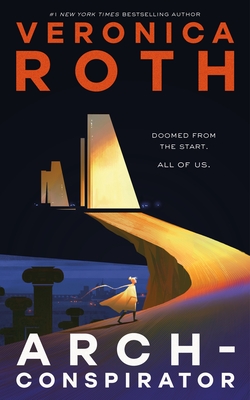
Title: Arch-Conspirator
Author: Veronica Roth
Publisher: Tor Books
Publication date: February 21, 2023
Length: 128 pages
Genre: Science fiction
Source: Review copy via the publisher
Rating:

Rating: 4.5 out of 5.

From dystopian visionary and bestselling phenomenon Veronica Roth comes a razor-sharp reimagining of Antigone. In Arch-Conspirator, Roth reaches back to the root of legend and delivers a world of tomorrow both timeless and unexpected.

Outside the last city on Earth, the planet is a wasteland. Without the Archive, where the genes of the dead are stored, humanity will end.

Passing into the Archive should be cause for celebration, but Antigone’s parents were murdered, leaving her father’s throne vacant. As her militant uncle Kreon rises to claim it, all Antigone feels is rage. When he welcomes her and her siblings into his mansion, Antigone sees it for what it really is: a gilded cage, where she is a captive as well as a guest.

But her uncle will soon learn that no cage is unbreakable. And neither is he.

This slim novella is tautly written and beautiful presented. Word to the wise: It does help to have a passing familiarity with the classic story of Antigone before reading Arch-Conspirator… but I suppose it would work even without reference to the source.

In this dystopian reimagining of the tale, humanity has reached the brink of its own end. The planet is mostly uninhabitable. There’s one city left; outside it is the wilderness. All goods are scarce, buildings are decaying, and blowing dust covers everything. The only hope for humanity’s future is the Archive, where genetic material taken from people after death is stored. A quasi-religious value is attached to these Archives — the stored samples represent immortality for the dead, a way of saving and then resurrecting their souls.

It was hard to imagine a time when it hadn’t been this way — when plants grew untended in the wild, maintained by their own seeds spreading; when the plains beyond the city were overrun with animals that we had not bred ourselves; when genes persisted through the generations, presenting a person with their grandmother’s brow, their great-grandfather’s jaw. Everything required effort now. Everything required editing.

Antigone and her siblings are considered soulless abominations — their parents conceived them naturally, rather than going through genetic manipulation to achieve best results. They’re scorned and shunned, but as the living children of the murdered king and queen, they also represent power and legitimacy. With their uncle Kreon, now the ruler, looking to consolidate power and squash all attempts at rebellion, it’s only a matter of time until Antigone herself is caught at the center of the resulting devastation.

Arch-Conspirator is chilling to read. Being aware of the basics of the classic story, I knew that this would be a story with a tragic ending. Feeling the inevitable looming makes every page an exercise in suspense and sadness. Author Veronica Roth weaves this brief tale together with gorgeous writing and precise plotting. The end took my breath away!

Book Review: The Grief of Stones by Katherine Addison

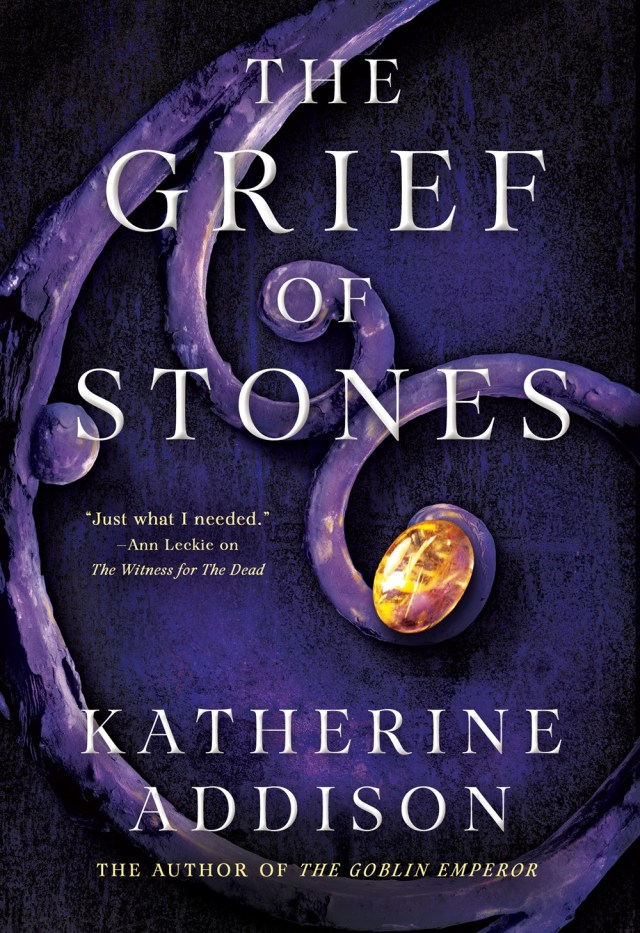
Title: The Grief of Stones
Author: Katherine Addison
Publisher: Tor Books
Publication date: June 14, 2022
Length: 245 pages
Genre: Fantasy
Source: Purchased
Rating:

Rating: 4 out of 5.

In The Grief of Stones, Katherine Addison returns to the world of The Goblin Emperor with a direct sequel to The Witness For The Dead

Celehar’s life as the Witness for the Dead of Amalo grows less isolated as his circle of friends grows larger. He has been given an apprentice to teach, and he has stumbled over a scandal of the city—the foundling girls. Orphans with no family to claim them and no funds to buy an apprenticeship. Foundling boys go to the Prelacies; foundling girls are sold into service, or worse.

At once touching and shattering, Celehar’s witnessing for one of these girls will lead him into the depths of his own losses. The love of his friends will lead him out again.

I really enjoyed The Grief of Stones, but at the same time, I’m not sure whether there’s any point in posting a review! This book is not a starting point. If you haven’t read The Goblin Emperor and The Witness for the Dead, then there’s absolutely no way to follow what goes on in this book.

Also, side note: If you haven’t read The Goblin Emperor… well, what are you waiting for?? Rush right out and grab a copy! It’s THAT good.

Anyway…

In The Grief of Stones, we continue onward with main character Thara Celehar. Thara is a Witness for the Dead — he can interact with the deceased after death by making contact with the body, gaining access to their final thoughts and experiences. Through his calling, he’s able to ask questions on behalf of family members, and even the police. He offers grace, compassion, and closure, and is very good at what he does. He’s also an essentially lonely man, haunted by events from his past, and is often seen as a person deserving of awe but also fear by ordinary people.

The story opens soon after the events of The Witness for the Dead, in which he solved a murder case involving a talented but greedy opera singer. In this new book, Thara is petitioned by a grieving marquess three months after his wife’s death of an apparent heart attack. The widower believes, without proof, that his wife was actually murdered, and asks Thara to discover the truth.

Thara’s investigation leads him to a shady underground world of pornographers and to the discovery of abuse at a school for foundling girls. The more he learns, the more he realizes that someone needs to give voice to those who are powerless. But his investigations also put him in personal danger.

This is a fascinating story, and Thara remains a wonderfully complex character. In this book, he gains an apprentice, and also develops his growing friendship (and perhaps more?) with the director of one of the city’s opera houses.

Although a bit slow at the start, the story quickly picks up steam, and by the time Thara ends up in a situation of grave peril, it’s particularly breathtaking. I actually found myself very upset and scared on his behalf, and having finished the book, I just wish I had a sequel in my hands already to see how Thara’s situation develops.

As I mentioned earlier, I don’t see this working — at all! — for anyone who hasn’t read the previous books. The language and society would likely be utterly impenetrable.

The passage to the ulimeire was only partly invested with revethmerai…

That’s just one random sample — but if that doesn’t make sense to you, that’s a pretty good sign that you won’t enjoy reading The Grief of Stones.

The naming conventions and language in the world of The Goblin Emperor are complex, and even as someone who’s read the previous two books twice each, I struggled a lot to keep all the various character names straight in The Grief of Stones — for whatever reason, even more than with the other books, which is why I ended up giving this one a 4-star rating.

Goodreads lists a next book, The Tomb of Dragons, but without a release date. I hope it’s not too long a wait! (And I’d love to see one of these books at least visiting Maia (The Goblin Emperor), but I’m guessing that’s unlikely).

Overall, I’m glad to have read The Grief of Stones and to have spent more time with Thara Celehar… but the end result is that I’m now dying for another re-read of The Goblin Emperor!

Audiobook Review: Spare by Prince Harry

Title: Spare
Author: Prince Harry
Narrator: Prince Harry
Publisher: Random House
Publication date: January 10, 2023
Print length: 410 pages
Audio length: 15 hours, 39 minutes
Genre: Memoir
Source: Audible (hardcover from library)
Rating:

Rating: 4 out of 5.

It was one of the most searing images of the twentieth century: two young boys, two princes, walking behind their mother’s coffin as the world watched in sorrow—and horror. As Princess Diana was laid to rest, billions wondered what Prince William and Prince Harry must be thinking and feeling—and how their lives would play out from that point on.

For Harry, this is that story at last.

Before losing his mother, twelve-year-old Prince Harry was known as the carefree one, the happy-go-lucky Spare to the more serious Heir. Grief changed everything. He struggled at school, struggled with anger, with loneliness—and, because he blamed the press for his mother’s death, he struggled to accept life in the spotlight.

At twenty-one, he joined the British Army. The discipline gave him structure, and two combat tours made him a hero at home. But he soon felt more lost than ever, suffering from post-traumatic stress and prone to crippling panic attacks. Above all, he couldn’t find true love.

Then he met Meghan. The world was swept away by the couple’s cinematic romance and rejoiced in their fairy-tale wedding. But from the beginning, Harry and Meghan were preyed upon by the press, subjected to waves of abuse, racism, and lies. Watching his wife suffer, their safety and mental health at risk, Harry saw no other way to prevent the tragedy of history repeating itself but to flee his mother country. Over the centuries, leaving the Royal Family was an act few had dared. The last to try, in fact, had been his mother. . . .

For the first time, Prince Harry tells his own story, chronicling his journey with raw, unflinching honesty. A landmark publication, Spare is full of insight, revelation, self-examination, and hard-won wisdom about the eternal power of love over grief.

I know there’s been a lot of general chitchat online about Prince Harry basically oversaturating the market with multiple presentations of his story. There was the Oprah interview that more or less kicked things off, the multi-part Netflix series Harry & Meghan, and now, the release of his memoir, Spare. Given how much coverage has already been dedicated to this royal couple, is a book really necessary? Is there anything new that hasn’t already been shared? Yes, and yes.

In Spare, Prince Harry narrates his life (literally, for those listening to the audiobook), essentially starting with the devastation of Princess Diana’s tragic death in 1997. For Harry, a boy of just twelve years old, her death was beyond comprehension. In fact, as we see in Spare, he spent years deeply believing that his mother was actually in hiding, just waiting for the moment when it would be safe to reunite with her boys. Throughout the section of Spare that covers his youth, he refers to his mother’s “disappearance”, never her “death”. It’s chilling, to say the least.

The book is divided roughly into thirds, covering his childhood and youth, his army service, and his relationship with Meghan. The first third, Out of the Night that Covers Me, is the most powerful, and actually brought me to tears several times. Strip away the Royal Family trappings, and what we have is the story of a boy suffering a tremendous loss and not having the support or resources to deal with it. The events, as they unfold through Harry’s memories, are overwhelming, baffling, painful, and isolating.

As the narrative moves into Harry’s teen and young adult years, he covers his growing devotion to working and living in Africa, his search for meaning and purpose, his experiences in the army (in the book’s second section, Bloody, But Unbowed), and the ongoing strains of his family relationships, especially with his father and brother.

And finally, section three of the book, Captain of My Soul, gets into his romance with Meghan, the viciousness of the media attacks on her, and the couple’s departure from official royal life. Most of this is familiar already, but it’s still interesting to hear Harry’s perspective and gain new insights on the internal struggles he experienced and the painful interactions with the family members he should have been able to count on.

I listened to the audiobook, which I think is the way to go. Prince Harry does the narration, and of course, it’s especially moving to hear him tell his own story.

For the most part, I found him sympathetic and straightforward. Yes, I suppose we could scoff at the “poor me” aspect of it all — after all, being royal is the ultimate state of privilege, isn’t it? He acknowledges all of this, and yet also points out the absolute weirdness of suddenly being cut off after a lifetime of trained dependency. His father isn’t just his father, he’s also his boss, his business manager, and the controller of all of his funds. Harry points out that he’s never carried money or placed an order online. What kind of way to live is that? (He does mention that he has an inheritance from his mother that he and Meghan didn’t want to touch, since they wanted it to be for their children… which, okay, that’s a nice goal, but then it’s hard to feel too sorry for them when Harry gets into the extremely high cost of security, then mentions buying their perfect home in Santa Barbara).

Still, there’s a sadness throughout when it comes to telling the story of being part of an emotionally withholding family — a family that’s also a business and an institution, where closest relationships come with heavy strings and expectations and requirements, but not a whole lot of space for difference or grief or nonconformity. It’s hard to imagine the enormous pressure of being under constant scrutiny and harassment — Harry’s harshest stories and commentary are leveled at the corrupt media and the “paps” who show no mercy when it comes to getting a story or a photo, even when these stories and photos put people’s lives at risk.

Overall, I found the storytelling powerful, honest, and unflinching. Harry is open about his own flaws, his emotional struggles, and his doubts and fears. He very clearly explains and illustrates, over and over again, the ongoing impact of his mother’s death and how that informs his worldview, as well as his unending need to keep his wife and children safe at all costs, even if that means breaking with his own family and all that being royal entails.

Of course, media coverage has been focused on the big “reveals” (such as misunderstandings between Kate and Meghan, the fuss over Meghan’s wedding tiara, etc), but in actuality, Spare is at its most affecting as the story of loss, grief, and family.

Well worth reading, and I highly recommend the audio version.

Book Review: Emily Wilde’s Encyclopaedia of Faeries by Heather Fawcett

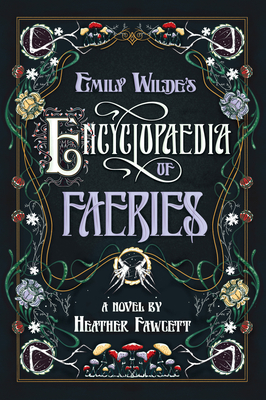
Title: Emily Wilde’s Encyclopaedia of Faeries
Author: Heather Fawcett
Publisher: Del Rey Books
Publication date: January 10, 2023
Length: 336 pages
Genre: Fantasy
Source: Review copy courtesy of the publisher via NetGalley
Rating:

Rating: 4 out of 5.

A curmudgeonly professor journeys to a small town in the far north to study faerie folklore and discovers dark fae magic, friendship, and love, in this heartwarming and enchanting fantasy.

Cambridge professor Emily Wilde is good at many things: She is the foremost expert on the study of faeries. She is a genius scholar and a meticulous researcher who is writing the world’s first encyclopaedia of faerie lore. But Emily Wilde is not good at people. She could never make small talk at a party–or even get invited to one. And she prefers the company of her books, her dog, Shadow, and the Fair Folk to other people.

So when she arrives in the hardscrabble village of Hrafnsvik, Emily has no intention of befriending the gruff townsfolk. Nor does she care to spend time with another new arrival: her dashing and insufferably handsome academic rival Wendell Bambleby, who manages to charm the townsfolk, get in the middle of Emily’s research, and utterly confound and frustrate her.

But as Emily gets closer and closer to uncovering the secrets of the Hidden Ones–the most elusive of all faeries–lurking in the shadowy forest outside the town, she also finds herself on the trail of another mystery: Who is Wendell Bambleby, and what does he really want? To find the answer, she’ll have to unlock the greatest mystery of all–her own heart.

In this tale of professors and faeries, Emily Wilde is an introverted scholar who’d much rather be left to her own devices than be forced to (gasp!) chitchat with the locals at the tavern. Much to her dismay, this is exactly the situation she’s forced into when she travels to the land of Ljosland to study the Hidden Ones – the final type of fae she needs to document in order to finish her masterpiece, an exhaustive encyclopaedia of all types of faerie.

Emily’s antisocial tendencies initially cause offense among the locals, but when her colleague Wendell arrives to join (or take credit for?) her studies, he immediately charms everyone and smooths over Emily’s blunders. He’s gorgeous and charming and sets Emily’s teeth on edge, but he soon transforms their rented hovel into a cozy cottage and gets access to people’s help and their stories which had previously been denied her.

While Emily’s goal is to study, not interfere, she soon becomes aware of trouble in the little village. A couple lives in torment, and Emily soon realizes it’s because their true child has been replaced by a faerie changeling. What’s more, abductions of village youth by the fae are on the rise, and the villagers have given up hope of ever seeing their loved ones again. As potential romance blooms between Emily and Wendell, Emily decides to set things right with the village by seeking out and confronting the dangerous Faerie King — but her chances of walking away from the encounter are very doubtful.

Told through Emily’s journal, we read about her arrival in Hrafnsvik, the initial enmity of the villagers, her first contact with a helpful brownie, and the complications that stem from Wendell’s arrival. As time passes, she documents her research success and challenges, her interactions with the people of Hrafnsvik, and the irritation (and secret attraction) she feels for Wendell. We also see her document her risky forays into the faerie kingdom, as well as the dismay she feels as she becomes ensnared by enchantments and loses track of time… and perhaps loses track of herself as well.

Although the beginning is a bit slow, eventually Emily’s story picks up steam. Her actions are very determined and brave, even while taking foolhardy risks. Although Emily depicts Wendell in her journal with a great sense of annoyance, it’s easy to see through her irritation and to find Wendell just as charming and delightful as she secretly sees him.

I enjoyed the inventiveness of the story, the setting, and the characters very much. I did feel that the device of telling the story through Emily’s journal became a hindrance in the latter half of the story. There’s a lack of suspense in the storytelling — if Emily is writing the story of a dangerous escape in her journal, then we know right away that she DID escape… so while the details may be exciting, there’s no question about the outcome. (I also felt confused after the big climactic moment — because Emily’s description of the event ends after she leaves the scene, yet I wanted to know what happened next in the scene she left! Sorry, being deliberately vague to avoid spoilers…)

Overall, Emily Wilde’s Encyclopaedia of Faeries is a captivating, entertaining read. I wished for a bit more in spots, but still enjoyed reading it. There’s a planned sequel, and since several plot points are left unresolved at the end of this book, I’ll be on the lookout for #2!

Audiobook Review: Miss Austen by Gill Hornby

Title: Miss Austen
Author: Gill Hornby
Narrator:  Juliet Stevenson
Publisher: Flatiron Books
Publication date: January 23, 2020
Print length: 288 pages
Audio length: 10 hours, 56 minutes
Genre: Historical fiction
Source: Purchased
Rating:

Rating: 4.5 out of 5.

Whoever looked at an elderly lady and saw the young heroine she once was?

England, 1840. For the two decades following the death of her beloved sister, Jane, Cassandra Austen has lived alone, spending her days visiting friends and relations and quietly, purposefully working to preserve her sister’s reputation. Now in her sixties and increasingly frail, Cassandra goes to stay with the Fowles of Kintbury, family of her long-dead fiancé, in search of a trove of Jane’s letters. Dodging her hostess and a meddlesome housemaid, Cassandra eventually hunts down the letters and confronts the secrets they hold, secrets not only about Jane but about Cassandra herself. Will Cassandra bare the most private details of her life to the world, or commit her sister’s legacy to the flames?

Moving back and forth between the vicarage and Cassandra’s vibrant memories of her years with Jane, interwoven with Jane’s brilliantly reimagined lost letters, Miss Austen is the untold story of the most important person in Jane’s life. With extraordinary empathy, emotional complexity, and wit, Gill Hornby finally gives Cassandra her due, bringing to life a woman as captivating as any Austen heroine.

What a lovely book! I have to admit that prior to reading Miss Austen, I’ve never really spent much time reading about Jane Austen’s life beyond the occasional article or Wikipedia page. I love her novels, but somehow never found myself wanting to look beyond into the author’s actual life.

In Miss Austen, we learn about Jane and the larger Austen family through the eyes of Jane’s older sister Cassandra. As the story begins, Cassandra journeys to Kintbury in 1840, ostensibly to help Isabella Fowle pack up the vicarage after her father’s death, but in reality, Cassandra has a different mission: She knows that Jane frequently wrote to Isabella’s mother Eliza, and she worries that unless she intervenes, potentially damaging personal correspondence of Jane’s may end up in the wrong hands, possibly tarnishing her public reputation.

Note: Throughout this book, lines from Hamilton kept popping into my head: Who lives, who dies, who tells your story? Who gets to tell a person’s story, who decides what to keep private and what to make public — these questions are very relevant to Cassandra’s main plot arc in the 1840 chapters of the book.

Using a split timeline, we follow Cassandra’s quest as an older woman to retrieve Jane’s letters. Through flashback chapters, we also see Cassandra’s journey from young woman to older spinster, always with Jane first and foremost in her mind.

As a younger woman, Cassandra became engaged to Tom Fowle (Eliza’s brother). Over the moon in love, the two were eager to wed, but agreed that a long engagement would be prudent. However, tragedy prevents the marriage from taking place, and from that point forward, the course of Cassandra’s life is set.

As the years progress and the fortunes of the Austens rise and fall, we see Cassandra’s devotion to Jane, as she protects her, nurtures her, and cares for her during her spells of melancholy (which today would likely be diagnosed as depression). The sisters’ love is quite beautiful to read about, and eventually, they and their cousin Martha find happiness in their lives as three single women setting up a home together.

I won’t go into a ton of detail here, but suffice to say, the characters are well-drawn, and the circumstances of Jane and Cassandra’s life together invokes some sadness, even during their happier years. There were moments when I almost wished I wasn’t reading historical fiction about real people: Certain plot points had me practically begging for a different outcome, but knowing that key elements of the Austens’ lives really couldn’t be changed (you know, since they were real people!), it was frustratingly sad to see possible love and joy slip away time after time.

Still, I was also captivated by the sisters’ wit and humor, by the clever dialogue created for Jane, and by the family’s tradition of having Jane read her works in progress to the family each evening. Again, seeing how I’d never read an actual biography of Jane Austen, the depiction of her writing challenges and successes was quite informative, and based on what I’ve looked up since, largely sticks to the facts as they’re known.

I need to give a huge hurrah to the terrific audiobook narration by Juliet Stevenson. What a treat! A few years ago, I went on an Austen audiobook binge, and five of the six I listened to were narrated by Juliet Stevenson. She’s amazing. Having her narrate Miss Austen made this an especially delightful experience. Because I’m used to hearing her narrate Austen’s characters, it felt like slipping back into those worlds listening to her voice this story as well. And I had to chuckle when certain obnoxious family members (especially a self-satisfied sister-in-law) were voiced so similarly to particularly annoying Austen characters. (Mrs. Elton from Emma is one who came immediately to mind… which made me wonder, was that character perhaps inspired by Jane’s real family member?)

I’ve had my eye on Miss Austen since it came out in 2020, but hadn’t gotten around to it until my book group selected it for this month’s group read. So, once again, enormous gratitude to my book group for leading me to yet another terrific reading experience!

I very much enjoyed Miss Austen. Highly recommended for Jane Austen fans!

PS – Now that I’ve read Miss Austen, I’m much more interested in a good Jane Austen biography! Any recommendations?

Book Review: Ms. Demeanor by Elinor Lipman

Title: Ms. Demeanor
Author: Elinor Lipman
Publisher: Harper Perennial
Publication date: January 10, 2023
Length: 304 pages
Genre: Contemporary fiction
Source: Purchased
Rating:

Rating: 3.5 out of 5.

From one of America’s most beloved contemporary novelists, a delicious and witty story about love under house arrest

Jane Morgan is a valued member of her law firm–or was, until a prudish neighbor, binoculars poised, observes her having sex on the roof of her NYC apartment building. Police are summoned, and a punishing judge sentences her to six months of home confinement. With Jane now jobless and rootless, trapped at home, life looks bleak. Yes, her twin sister provides support and advice, but mostly of the unwelcome kind. When a doorman lets slip that Jane isn’t the only resident wearing an ankle monitor, she strikes up a friendship with fellow white-collar felon Perry Salisbury. As she tries to adapt to life within her apartment walls, she discovers she hasn’t heard the end of that tattletale neighbor–whose past isn’t as decorous as her 9-1-1 snitching would suggest. Why are police knocking on Jane’s door again? Can her house arrest have a silver lining? Can two wrongs make a right?

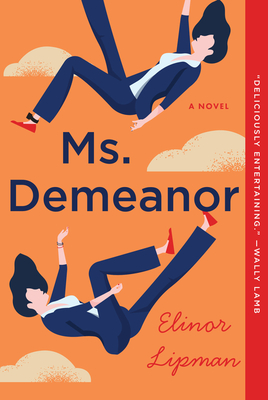
It’s been years since I read an Eleanor Lipman novel, but when I stumbled across Ms. Demeanor at a book store and got a look at the cover, I just couldn’t resist.

In Ms. Demeanor, Jane Morgan owns a fabulous New York apartment in a posh building, has a successful law career, and a slightly overbearing but very loving twin sister. When Jane has a spontaneous hook-up with an associate from her firm late one night… on the roof of her building!! … her neatly ordered life comes crashing down. The two are arrested for public indecency after a neighbor calls the police. Instead of a slap-on-the-wrist fine (which her associate gets), she’s sentenced to six months of home confinement, along with an ankle monitor to make sure she doesn’t leave the premises.

She loses her job and has her license to practice law suspended, so ends up amusing herself by creating TikToks where she follows recipes from centuries-old cookbooks. (Boiled onions as a dish? Um, no thanks.) Jane is actually a good cook, though, and one thing leads to another — meaning that she meets the other ankle-monitor-wearing building resident and is pressured (by her twin Jackleen) into catering dinners for him three times a week.

Jane and Perry have an awkward business arrangement, which soon turns into more of a friendship. After all, if she’s bringing him meals and sticking around to take home the dishes, she might as well stay for a glass of wine, right? And maybe eat dinner with him too? And… more?

Meanwhile, the nosy neighbor from the penthouse across the street, who originally called 911 after seeing Jane’s midnight tryst through binoculars, ends up having more to her story than Jane originally thought. Soon enough, there’s a mysterious death, stuck-up Polish siblings with expired visas, and a love-starved endodontist to deal with. (I know, it sounds like a lot).

The tone of Ms. Demeanor is smart and flippant. Jane is very blunt about just about everything, can talk her way in or out of all sorts of questionable situations, and becames TikTok famous for her no-holds-barred life narratives that accompany her cooking videos.

The plot zips along with some truly ridiculous twists and turns. It’s all in good fun (but — warning — be careful not to injure yourself from too much eye-rolling).

It took me a bit to get into the writing style, which initially threw me off with some unusual phrasing choices, but I quickly got into the rhythm and started to appreciate Jane and Jackleen’s gift with banter.

I tried to suspend judging the characters too harshly — but it was hard at points not to scoff at the relative ease of home confinement in a luxury co-op. Obviously, this book is intended to be humorous, but I couldn’t help but think how dramatically different this story would be if the characters involved didn’t have quite as enormous an amount of privilege as Jane and Perry do.

Ms. Demeanor really can’t be taken too seriously. It’s fun and entertaining, and a very quick read. I’d recommend this as a nice break in between heavier reads.

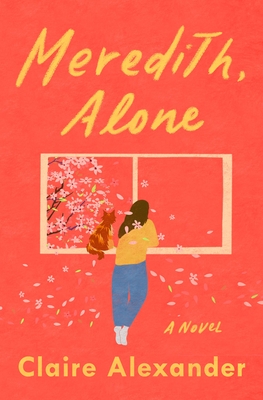
Book Review: Meredith, Alone by Claire Alexander

Title: Meredith, Alone
Author: Claire Alexander
Publisher: Grand Central Publishing
Publication date: November 1, 2022
Length: 368 pages
Genre: Contemporary fiction
Source: Review copy courtesy of the publisher via NetGalley
Rating:

Rating: 4 out of 5.

She has a full-time remote job and her rescue cat Fred. Her best friend Sadie visits with her two children.  There’s her online support group, her jigsaw puzzles and favorite recipes, her beloved Emily Dickinson, the internet, the grocery delivery man.  Also keeping her company are treacherous memories of an unstable childhood, the estrangement from her sister, and a traumatic event that had sent her reeling.

But something’s about to change. Whether Meredith likes it or not, the world is coming to her door.   Does she have the courage to overcome what’s been keeping her inside all this time? 

Meredith, Alone surprised me in all sorts of good ways. Based on the cover, I expected a fairly upbeat, quirky story, but it’s so much more than that.

Meredith lives alone with her cat Fred, and hasn’t left her home in over three years. As the book starts, we see Meredith having a panic attack one day while trying to leave for work, but then we jump ahead and learn she hasn’t left her house in the years since then. And really, in this day and age of online everything, she doesn’t actually need to. She orders in whatever she needs, she’s a freelance writer so she can work and support herself from home, and she gets regular visits from her best friend Sadie (who’s also available for veterinary emergencies), so she’s not entirely devoid of human contact.

In fact, at the start of the book, Meredith comes across as unusual, a bit obsessive about routine, but mostly okay with her life. She exercises every day, is an excellent cook, does jigsaw puzzles constantly, reads, and keeps herself busy. She observes her Glasgow neighborhood from her window, and opens her backdoor to look at the trees and birds. She’s content, more or less.

But as the book progresses, we learn more about Meredith’s past and why she’s been estranged from her mother and sister for all these years. Growing up, Meredith and Fiona were inseparable, providing each other with the love and support they were denied by their emotionally manipulative and abusive mother. It’s almost impossible to fathom why Meredith would have shut Fee out of her life, when clearly, she’s always been the most important person in her world.

Meredith’s calm routine is broken up by the intrusion of two new people: Tom, a volunteer with an organization that arranges visits with shut-ins, and Celeste, a young woman who strikes up a friendship with Meredith via their online support group. As Meredith gets to know each of them, she also starts to open up about her past. Between her new friendships and her tentative early work with a therapist, Meredith’s worldview starts to change… including the possibility of finally making it out her front door.

Meredith, Alone includes memories of trauma and abuse, and is terribly sad in so many ways. At the same time, Meredith herself is a caring, intelligent woman who’s just trying to cope. Despite all of her anguish and pain, she still manages to create a life for herself (and Fred), and it’s clearly not ideal, but it’s what she needs during those years to get by.

It’s lovely to see her start to emerge and reconsider her life. Having new friends allows her to explore her experiences and what they’ve cost her, and gives her incentive to try to push past her initial reluctance and skepticism about therapy. I appreciate how honestly Meredith’s experiences with anxiety and panic attacks are portrayed. Nothing is sugar-coated; her trauma and its aftereffects feel real.

Meredith, Alone is touching, often very sad, yet ends in a place of hope and optimism. I really loved Meredith as a character, and felt glad for her to have wonderful people such as Tom, Celeste, and Sadie in her life.

I wish I’d made note of how I first came across this book — I know I saw a very positive review on another blog, but I can’t remember which one! In any case, I’m so glad I came across that review, because otherwise I might have missed out on this lovely book.

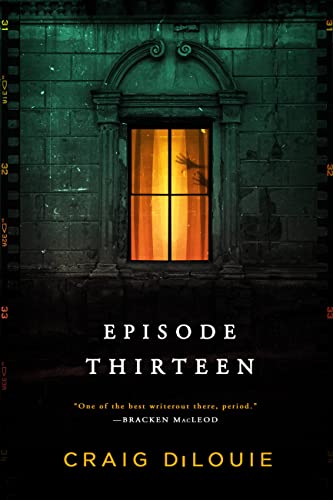
Book Review: Episode Thirteen by Craig DiLouie

Title: Episode Thirteen
Author: Craig DiLouie
Publisher: Redhook
Publication date: January 24, 2023
Length: 467 pages
Genre: Horror
Source: Review copy via the publisher
Rating:

Rating: 4.5 out of 5.

A ghost-hunting reality TV crew gain unprecedented access to an abandoned and supposedly haunted mansion, which promises a groundbreaking thirteenth episode, but as they uncover the secret history of the house, they learn that “reality” TV might be all too real — in Bram Stoker Award nominated author Craig DiLouie’s latest heart pounding novel of horror and psychological suspense.

Fade to Black is the newest hit ghost hunting reality TV show. It’s led by husband and wife team Matt and Claire Kirklin and features a dedicated crew of ghost-hunting experts.

Episode Thirteen takes them to Matt’s holy grail: the Paranormal Research Foundation. This crumbling, derelict mansion holds secrets and clues about the bizarre experiments that took place there in the 1970s. It’s also, undoubtedly, haunted, and Matt hopes to use their scientific techniques and high tech gear to prove it. 

But, as the house begins to slowly reveal itself to them, proof of an afterlife might not be everything Matt dreamed of. 

A story told in broken pieces, in tapes, journals, correspondence, and research files, this is the story of Episode Thirteen — and how everything went horribly wrong.

This book was always going to be a must-read for me. I’ve read Craig DiLouie’s three most recent novels and loved them all (despite how disturbing they all are). Not only that — haunted house + found records + unexplained disappearances = just what I want in a scary book!

In Episode Thirteen, we follow the crew of Fade to Black, a ghost-hunting reality show with a twist that sets it apart. Each episode features examination of a supposed haunting, led by star and true believer Matt Kirklin — but with Matt’s wife Claire Kirklin, a scientist with a Ph.D. in physics, there to debunk every finding and offer explanations for every finding. It’s been a winning formula among fans, but of course the network honchos want bigger excitement and bigger ratings if the show is to get a second season.

As we learn from the outset, something goes terribly wrong during the filming of the show’s 13th episode. Matt and Claire, along with the tech team of Kevin and Jake, plus Jessica, an actress hired by the network to make the show more popularly appealing, investigate Foundation House in Virginia for this episode. Foundation House is infamous for the disappearance of a group of paranormal investigators in the 1970s, who mixed new age mumbo jumbo with startlingly cruel psychological experiments and plenty of hallucinogenic drugs. No answer has ever been found about this group’s fate.

In Episode Thirteen, Matt hopes to capture evidence of the supposed haunting rumored to have taken place in the house — but the crew gets much, much more. As they spend more time in the house, strange events build upon each other, promising a television episode unlike anything ever before seen… but only if they themselves survive.

Told through the crews’ journals, text messages, transcripts of video footage, and other documentation, we follow the events as they unfold. The journals especially give us insight into each character’s inner doubts and fears, what they believe, and what they want. As the book progresses, we see them all become sucked into the paranormal events they’re there to investigate, risking more and more not just for the sake of a TV show, but to pursue the inescapable obsession to find the truth that builds within each characters.

There’s a fascinating creepiness to the way the story unfolds. We learn about events through the various written records, rather than by reading a straight-forward narrative. At first, I found this somewhat distancing — but as the book progresses, the inclusion of the crew’s journals provides the deeper characters insights that might otherwise be missing. In fact, it ends up being a clever device for having an omniscient viewpoint. At various times throughout the book, we’re privy to each character’s private thoughts and doubts, and this greatly expands our understanding of why they act as they do.

Of course, as in any haunted house book, inside I was screaming at the characters as they made one dangerous or foolhardy decision after another. No, don’t go down into the dark well! No, don’t enter the scary tunnel! WHY WOULD YOU DO THESE THINGS? But, this is where obsession comes into play. These characters aren’t stupid. They understand that it would be safer to walk away, but their need to know overrides all elements of caution or common sense.

One of the plot elements that I considered a plot hole throughout the latter half of the book (I won’t say what, because it’s pretty spoilery) gets very neatly resolved right at the end, and it made me appreciate the author’s cleverness all over again.

This is not a good book to read late at night! I wasn’t scared exactly, but the building sense of dread and disaster meant that I couldn’t put the book down — and since my routine is to read in bed before falling asleep, I found myself reluctantly stopping once I realized how late it was, only to be absolutely wide awake and fully alert.

Craig DiLouie writes disturbing, strange books that stay with the reader long after finishing the final pages. Episode Thirteen is no exception. Fascinating even when the sense of nearby doom is nearly overwhelming, and what an ending!! Definitely check it out… but maybe check your fear of darkness and closed spaces before you enter.

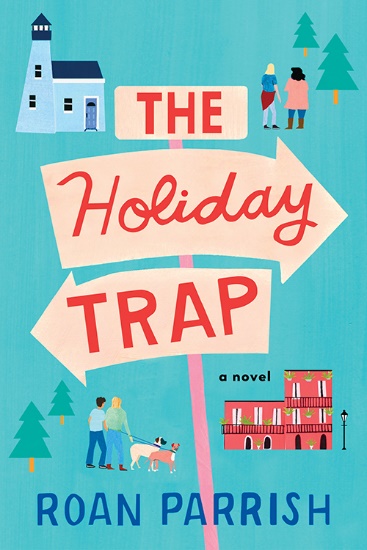
Book Review: The Holiday Trap by Roan Parrish

Title: The Holiday Trap
Author: Roan Parrish
Publisher: Sourcebooks Casablanca
Publication date: September 6, 2022
Length: 442 pages
Genre: Contemporary romance
Source: Purchased
Rating:

Rating: 3 out of 5.

For fans of Alexandria Bellefleur and Alexis Hall comes a charming, hilarious, and heartwarming LGBTQIA+ romcom about two separate couples finding love over the holidays from acclaimed author Roan Parrish!

Greta Russakoff loves her tight-knit family and tiny Maine hometown, even if they don’t always understand what it’s like to be a lesbian living in such a small world. She desperately needs space to figure out who she is.

Truman Belvedere has just had his heart crushed into a million pieces when he learned that his boyfriend of almost a year has a secret life that includes a husband and a daughter. Reeling from this discovery, all he wants is a place to lick his wounds far, far away from New Orleans.

Enter Greta and Truman’s mutual friend, Ramona, who facilitates a month-long house swap. Over the winter holidays, each of them will have a chance to try on a new life…and maybe fall in love with the perfect partner of their dreams. But all holidays must come to an end, and eventually Greta and Truman will have to decide whether the love they each found so far from home is worth fighting for.

The Holiday Trap has some cute moments, but is far too long and has way too many implausible plot points and annoying characters moments to rise above a 3-star read.

Our two main characters, Greta and Truman, are stuck in lives that clearly aren’t working for them. Greta’s large family is smothering and overly involved and controlling, and living on an island in Maine, there’s really no escaping their endless interference. Truman thinks his life in New Orleans is going well, until he discovers that his boyfriend of one year actually has a family, and Truman is just the bit on the side.

When a mutual friend suggests that they swap places for the holidays, Greta and Truman both agree — because really, it couldn’t be any worse than their current situations. And of course, in their new locations, they each find exactly what they’re looking for — love, community, and purpose.

Greta falls immediately in love with an outspoken, quirky woman who demands honesty and teaches Greta about stating one’s own needs and listening to others. She also finds meaning through a local gardening club, and becomes involved with a community garden and the beekeepers she meets.

Truman arrives on the island with low expectations, but soon discovers that his very favorite author may once have lived there, and then stumbles across the man of his dreams at the local florist shop.

For both, true love seems to arrive within approximately three weeks, so that before their brief swap agreement is even over, they’ve both resolved to make it permanent and start their lives over in their new locations. They’ve also changed themselves in significant ways, learning to speak up and pay attention to what they really want and what makes them happy.

Also (and annoyingly) in this brief time, they find themselves overflowing with amazing new ideas for how to improve their friends’ business ventures, which the friends seem to appreciate and embrace. (If I were in any of the friends’ shoes, I would find this intrusive and presumptuous AF, but hey, maybe that’s just me).

There are sweet interludes and funny moments, but overall, this romance drags on, has too many personal epiphanies crammed into such a short amount of time, and takes its perfect romances far over the edge into not-at-all-believable territory. And the fact that Greta and Truman seem to always have the perfect idea that perfectly solves other people’s challenges… so incredibly annoying.

I’m not sure why this is called The Holiday Trap. It’s not especially about the holidays, other than taking place during December when holidays are happening, and I have no idea what “trap” has to do with anything. Nobody ends up trapped in their new locations or relationships. May The Holiday Swap was already taken?

In terms of steaminess, this book’s sex scenes are graphic, so be aware of that if you prefer understated steam rather than outright step-by-step descriptions of intimate encounters.

Overall, the plot really doesn’t hold up particularly well. Truman is an endearing character and Greta is okay, but their huge personal awakenings and finding of soulmates just don’t feel plausible. The Holiday Trap is good entertainment, but I’ve read a lot better.

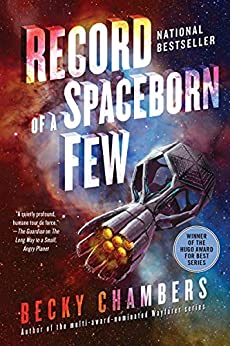
Audiobook Review: Record of a Spaceborn Few (Wayfarers, #3) by Becky Chambers

Title: Record of a Spaceborn Few
Series: Wayfarers, #3
Author: Becky Chambers
Narrator:  Rachel Dulude
Publisher: Harper Voyager
Publication date: July 24, 2018
Print length: 368 pages
Audio length: 11 hours, 36 minutes
Genre: Science fiction
Source: Library
Rating:

Rating: 5 out of 5.

Brimming with Chambers’ signature blend of heart-warming character relationships and dazzling adventure, Record of a Spaceborn few is the third standalone installment of the Wayfarers series, set in the sprawling universe of the Galactic Commons, and following a new motley crew on a journey to another corner corner of the cosmos—one often mentioned, but not yet explored.

Return to the sprawling universe of the Galactic Commons, as humans, artificial intelligence, aliens, and some beings yet undiscovered explore what it means to be a community in this exciting third adventure in the acclaimed and multi-award-nominated science fiction Wayfarers series, brimming with heartwarming characters and dazzling space adventure.

Hundreds of years ago, the last humans on Earth boarded the Exodus Fleet in search of a new home among the stars. After centuries spent wandering empty space, their descendants were eventually accepted by the well-established species that govern the Milky Way.

But that was long ago. Today, the Exodus Fleet is a living relic, the birthplace of many, yet a place few outsiders have ever visited. While the Exodans take great pride in their original community and traditions, their culture has been influenced by others beyond their bulkheads. As many Exodans leave for alien cities or terrestrial colonies, those who remain are left to ponder their own lives and futures: What is the purpose of a ship that has reached its destination? Why remain in space when there are habitable worlds available to live? What is the price of sustaining their carefully balanced way of life—and is it worth saving at all?

A young apprentice, a lifelong spacer with young children, a planet-raised traveler, an alien academic, a caretaker for the dead, and an Archivist whose mission is to ensure no one’s story is forgotten, wrestle with these profound universal questions. The answers may seem small on the galactic scale, but to these individuals, it could mean everything.

Argh… again with a misleading synopsis blurb! Why does whoever writes things keep coming back to a “motley crew”? That is SO not what this book is about! Anyway…

Record of a Spaceborn Few is the 3rd installment in the fabulous Wayfarers series, and it leaves me in absolute awe of author Becky Chambers and her vision of this sprawling fictional world. Here, she moves the story to a place we’ve heard about but not seen — the Exodan Fleet.

Many generations earlier, humans left Earth as it became uninhabitable, creating a fleet of homesteader ships that headed out into the galaxy with no idea of an endpoint or destination. Eventually, the human fleet encountered other sapient species, much more advanced in technology and in the social complexities of cross-species relations. After some time, the humans were accepted into the Galactic Commons (kind of like a UN for alien species), and many of the humans of the fleet sought out new homes on already established worlds or set out to colonize new human habitations on unsettled planets.

Not all, though. Many remained with the fleet, where their ancestors had lived already for centuries. Among the ships of the fleet, a shared community of sustainability, common interest, respect for the past, and well-ordered social expectations had been built over time. For the Exodans who stayed with the fleet, they were no longer on a journey — the fleet was home.

Within this setting, we follow the lives of several very different characters — some lifelong residents of the Asteria homesteader ship, some newcomers, some alien visitors. Through each, we learn more about Exodan life, their rituals, their beliefs, and the reality of their day-to-day.

The action starts with an unprecedented tragedy — one of the Exodan ships is destroyed in a freak accident. For the rest of the fleet, this is not only a human tragedy with countless deaths, but also a stark reminder of the potential danger and precariousness of their own homes. As the story moves forward, we see the ripple effect on the different characters, some of whom question their commitment to the fleet and wonder about other options, and some of whom reinvest in making sure that the fleet society has a future.

It’s all quite fascinating. In some ways, life in the fleet reminds me of a traditional kibbutz — communal life, with all jobs valued, each giving back to the community through labor, with shared communal living spaces balanced with family spaces, and a shared responsibility for daily tasks such as cooking, cleaning, and childcare. I was also intrigued by the deeply ingrained ethos of reusing and repurposing. When resources are scarce and the world is a closed system, everything serves a purpose, and nothing can be wasted.

The characters themselves are unique individuals, each with their own interesting lives and sets of joys and worries. These include an archivist, who tends the collective memories of the fleet; a newcomer seeking new meaning after growing up planetside and without connections; a caregiver whose job is to lovingly tend the dead through carefully established rituals; an alien sociologist spending time on the Asteria to study this example of human society, and a teen who isn’t sure where he’s meant to be or what his purpose is. They’re all wonderful, and I can’t say there was any one storyline I preferred over the others.

Record of a Spaceborn Few is loosely connected to the first book in the series, The Long Way to a Small, Angry Planet, as one of the characters is the sibling of the ship captain from the 1st book. Otherwise, this is a stand-alone story within a shared universe. I love how each book in the series opens up a new aspect of life within this fictional universe, broadening our understanding of what life is like for these future humans — among the stars, on a planet, or on a homesteader ship.

While these books are science fiction, there are no raging space battles or chases or high-tech weaponry. The series is about a society, about what it’s like to live in a galaxy where one’s own species is both a novelty and a minority, dependent on the tolerance and generosity of others species. The characters we meet, the choices they make and the dilemmas they face, are far more important to the overall tone and themes of the books than the details of water recycling, propulsion system, or the mechanics of keeping a spaceship working for centuries.

It’s all fascinating, and a remarkable creation. I’ve been listening to the audiobooks — narrator Rachel Delude gives an incredible performance, voicing so many different characters, keeping them distinct and identifiable, and bringing emotion and humor whenever needed. It’s been a terrific listening experience.

I can’t recommend this series strongly enough! Each book is a delight, and each one adds new dimensions to our understanding of the world of the series.

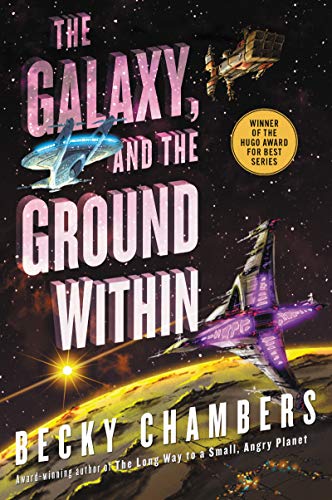
Next in the series: The Galaxy, and the Ground Within

I have one book left in the series — The Galaxy, and the Ground Within — and can’t wait to keep going (although I’ll be sad to finish). After hearing about this series for so long, I’m so glad that I finally made it a point to dig in! I’m just sorry that it took me so long.