
Book Review: Exit Party by Emily St. John Mandel

Title: Exit Party
Author: Emily St. John Mandel
Publisher: Picador
Publication date: September 15, 2026
Length: 320 pages
Genre: Science fiction
Source: Purchased
Rating:

Rating: 4.5 out of 5.

From the bestselling author of Station Eleven, Exit Party is Emily St. John Mandel’s epic new story of crimes committed and loves lost across worlds and decades.

2031. America is at war with itself, but for the first time in weeks there is some hope: the Republic of California has been declared, the curfew in Los Angeles is lifted, and everyone in the city is going to a party.

Ari, newly released from prison, arrives with her friend Gloria just as a fragile new era begins. But there are people at the party who shouldn’t be there. Something is very wrong…

Years later, living a different life in Paris, Ari remains haunted by that night. Whatever happened at the party fractured her sense of reality – and may hold the key to a very different world.

Freedom and surveillance, art and survival, love and loss in a broken world: Exit Party is the electrifying new novel from Emily St. John Mandel.

Emily St. John Mandel’s books are always startling and practically impossible to describe. They have to be experienced; there’s a sense of wonder that comes with seeing her stories unfold on the page. Exit Party is another fine example of her strange, lyrical storytelling.

In 2031, the United States is no more. After a coup d’état, the country has fractured into a myriad of territories and republics and city-states. As the story opens, war has ended — at least for the moment — in Los Angeles, and people are ready to celebrate. The main character is Ari, recently released after an eighteen-year prison sentence, who lives in LA with her roommate Gloria. Gloria had intended to bring Ari to a friend’s party, but has a hard time leaving the apartment; Ari — after a lifetime of premonitions that come true — feels strongly that they need to attend.

The party is fun at first, but odd things happen. A woman Ari’s never met calls her by the name on her birth certificate — a name she never uses — and then seems to appear in a completely different outfit moments later. Another woman looks almost exactly like Gloria, and Ari sees more things that she can’t explain. Later, the party’s host disappears, and is never heard from again.

Following the party, Ari’s life goes on, as she move from place to place, in and out of danger, finding new ways to survive and making new connections, navigating a world of militias and checkpoints and violence. The mysteries surrounding that party never really leave her mind, and we see how the ripple effects follow her across decades.

All this is in the “A-Side” section of Exit Party; the book’s second half is “B-Side”, and without going into too much detail, it provides a look at a very different version of the world. In “B-Side”, there’s no longer a United States — instead, there’s the State, a surveillance based country in which life is supposedly safe, because it’s absolutely controlled. There’s no war, because the Service knows and sees everything and stops problems before they start. There’s a connection to Ari’s story; let’s leave it at that.

Exit Party is astounding in all the right ways. The parallels between the halves of the book are a joy to discover, a puzzle to unravel and muse over. Characters weave in and out of both halves, some fully fleshed out and alive, some who make brief but memorable appearances before disappearing again. Both halves show worlds that seems awful in their own ways, yet it’s intriguing to see how events play out in both, and scarily possible to imagine a path from our own world to these other versions.

My one minor quibble with this book is that despite how much I loved the writing and was fascinated by the complex storytelling, I often felt emotionally disengaged. I was interested in the characters, but not actually connected to them on a deeper level. The plot threads are woven together beautiful and I was intrigued by the characters’ lives and experiences; I just didn’t feel that I was in the story alongside them, if that makes any sense.

Despite that, I was very absorbed throughout my time with Exit Party. The author’s writing casts a spell, and the book as a whole is a fascinating journey. Highly recommended for fans of the author as well as for readers new to her work.

Interested in this author? Check out my review of more books by Emily St. John Mandel:
Station Eleven
The Glass Hotel
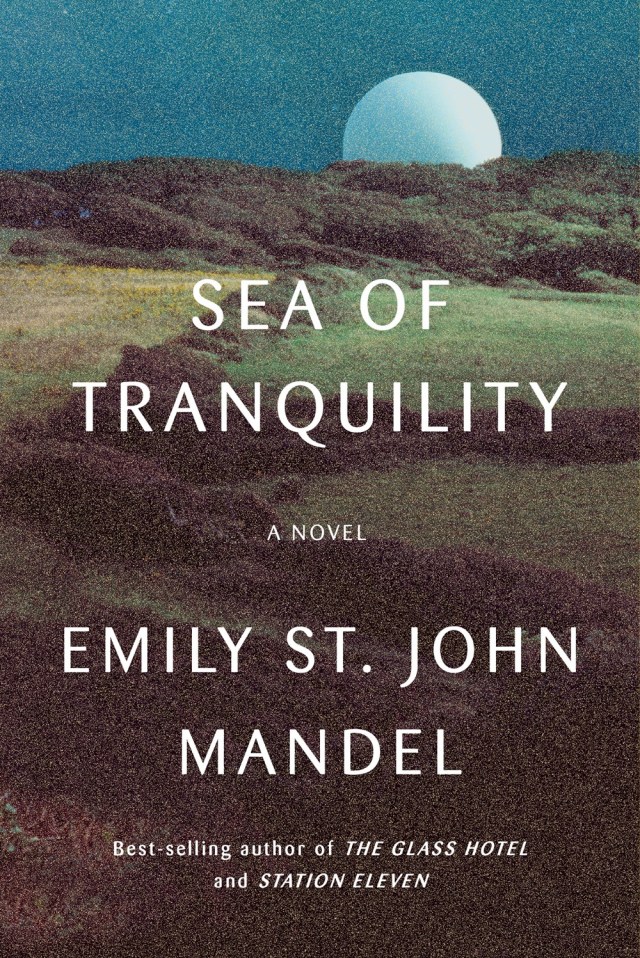
Sea of Tranquility

Purchase links: Amazon – Bookshop.org – Libro.fm
Disclaimer: When you make a purchase through one of these affiliate links, I may earn a small commission, at no additional cost to you.

Top Ten Tuesday: Most Anticipated Books Releasing in the Second Half of 2026

Top Ten Tuesday is a meme hosted by That Artsy Reader Girl, featuring a different top 10 theme each week. This week’s topic is Most Anticipated Books Releasing in the Second Half of 2026.

So many to look forward! Plus all the other books already on my shelves that I still need to read! How will I ever keep up?

Here are ten books scheduled for release from July through December that I’m looking forward to:

  • The Amateur by Chris Bohjalian (8/4/2026)
  • Daggerbound by T. Kingfisher (8/25/2026)
  • Kiss Slay Replay by Rachel Harrison (9/1/2026)
  • Exit Party by Emily St. John Mandel (9/15/2026)
  • A Divided Duty (October Daye, #20) by Seanan McGuire (9/29/2026)
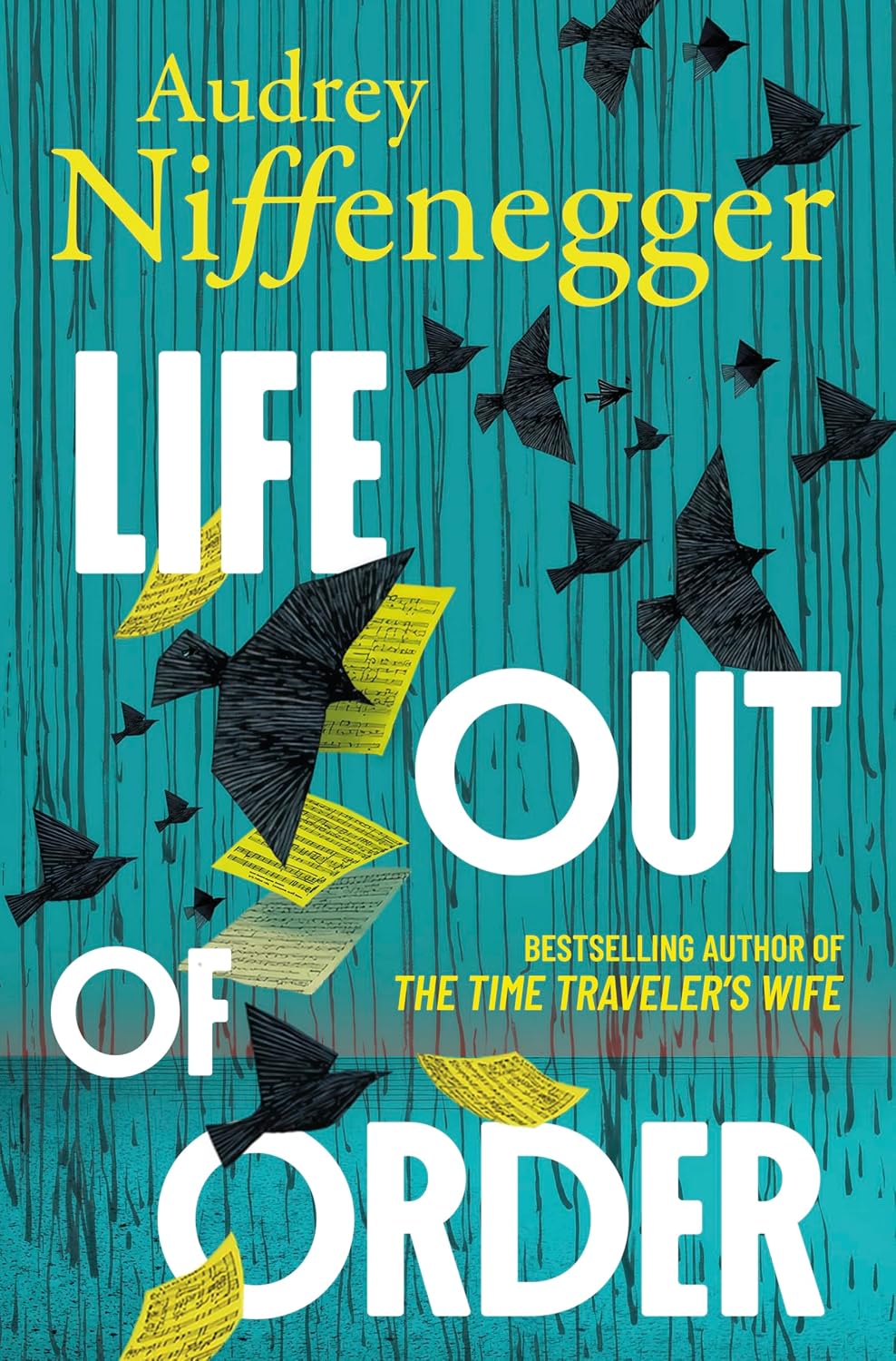
  • Life Out of Order by Audrey Niffenegger (10/6/2026)
  • Dive Bar at the End of the Road by Kelley Armstrong (10/6/2026)
  • As You Wake, Break the Shell by Becky Chambers (10/13/2026)
  • Eight Ways to Say I Love You by Amanda Elliot (10/27/2026)
  • Murmuration by TJ Klune (11/17/2026)

What upcoming new releases are you most excited for? Please share your TTT links!

Save

Save

Save

Save

Book Review: The Glass Hotel by Emily St. John Mandel

Title: The Glass Hotel
Author: Emily St. John Mandel
Publisher: Knopf
Publication date: March 24, 2020
Length: 302 pages
Genre: Contemporary fiction
Source: Purchased
Rating:

Rating: 5 out of 5.

From the award-winning author of Station Eleven, an exhilarating novel set at the glittering intersection of two seemingly disparate events–a massive Ponzi scheme collapse and the mysterious disappearance of a woman from a ship at sea.

Vincent is a bartender at the Hotel Caiette, a five-star lodging on the northernmost tip of Vancouver Island. On the night she meets Jonathan Alkaitis, a hooded figure scrawls a message on the lobby’s glass wall: Why don’t you swallow broken glass. High above Manhattan, a greater crime is committed: Alkaitis is running an international Ponzi scheme, moving imaginary sums of money through clients’ accounts. When the financial empire collapses, it obliterates countless fortunes and devastates lives. Vincent, who had been posing as Jonathan’s wife, walks away into the night. Years later, a victim of the fraud is hired to investigate a strange occurrence: a woman has seemingly vanished from the deck of a container ship between ports of call.

In this captivating story of crisis and survival, Emily St. John Mandel takes readers through often hidden landscapes: campgrounds for the near-homeless, underground electronica clubs, the business of international shipping, service in luxury hotels, and life in a federal prison. Rife with unexpected beauty, The Glass Hotel is a captivating portrait of greed and guilt, love and delusion, ghosts and unintended consequences, and the infinite ways we search for meaning in our lives.

Once again, I find myself practically speechless after finishing a book by Emily St. John Mandel. Earlier this year, I was transfixed by the beauty of Sea of Tranquility. That book, however, was published after The Glass Hotel, and as I learned while reading Sea of Tranquility, there is a certain amount of cross-over between the two books. Naturally, I had to see what The Glass Hotel was all about.

As in her other books, the author weaves together seemingly disparate story threads and characters to create an intricate, interconnected whole. As the synopsis explains, the basic framework of the novel involves a vastly wealthy man whose fortune is built on a Ponzi scheme and his relationship with a woman whom he meets at the bar of a remote luxury hotel. As Vincent and Jonathan’s lives come together, we also see snippets of their pasts, as well as scenes involving other people caught up in their orbit. Some connections are clear, such as their various family members, but others are connected by circumstances, coincidences, random encounters, and chance overlaps at particular times and places.

The writing is gorgeous, sharp, and evocative. A recurring theme throughout centers on worlds within worlds. Vincent thinks of her years with Jonathan as her life in the “kingdom of money”. Jonathan, imprisoned for the remainder of his life, imagines what he calls his counterlife, a life that he inhabits in his mind that lets him experience the other ways his life might have gone, had he only gone different places or taken different actions.

At one point, a friend of Vincent’s tells her:

I was trying to figure out why my life felt more or less the same in Singapore as it did in London, and that’s when I realized that money is its own country.”

A man who loses everything due to the Ponzi, now living a nomadic RV life at a time when he and his wife thought they’d be comfortably retired, contemplates that:

… they were citizens of a shadow country that in his previous life he’d only dimly perceived… He’d seen the shadow country, its outskirts and signs, he’d just never thought he’d have anything to do with it.

Another man who goes from hopeless addiction to triumph in a music career shares:

“I stepped through the looking glass into a strange new world where people actually listened to my music.” […] The condition of having landed in an unimaginable life was something he thought she might know something about.

As in Sea of Tranquility, the connections and overlapping lives are what make this book so fascinating, as do the intriguing characters and the sense of inevitability about the events and their outcomes.

I simply can’t say enough good things about The Glass Hotel. Now that I’ve read it, I feel an urgent need to re-read Sea of Tranquility (even though I just read it a few months ago).

I truly loved this book, and simply couldn’t put it down once I started.

Book Review: Sea of Tranquility by Emily St. John Mandel

Title: Sea of Tranquility
Author: Emily St. John Mandel
Publisher: Knopf
Publication date: April 5, 2022
Length: 272 pages
Genre: Science fiction
Source: Purchased
Rating:

Rating: 5 out of 5.

The award-winning, best-selling author of Station Eleven and The Glass Hotel returns with a novel of art, time travel, love, and plague that takes the reader from Vancouver Island in 1912 to a dark colony on the moon five hundred years later, unfurling a story of humanity across centuries and space.

Edwin St. Andrew is eighteen years old when he crosses the Atlantic by steamship, exiled from polite society following an ill-conceived diatribe at a dinner party. He enters the forest, spellbound by the beauty of the Canadian wilderness, and suddenly hears the notes of a violin echoing in an airship terminal–an experience that shocks him to his core.

Two centuries later a famous writer named Olive Llewellyn is on a book tour. She’s traveling all over Earth, but her home is the second moon colony, a place of white stone, spired towers, and artificial beauty. Within the text of Olive’s best-selling pandemic novel lies a strange passage: a man plays his violin for change in the echoing corridor of an airship terminal as the trees of a forest rise around him.

When Gaspery-Jacques Roberts, a detective in the black-skied Night City, is hired to investigate an anomaly in the North American wilderness, he uncovers a series of lives upended: The exiled son of an earl driven to madness, a writer trapped far from home as a pandemic ravages Earth, and a childhood friend from the Night City who, like Gaspery himself, has glimpsed the chance to do something extraordinary that will disrupt the timeline of the universe.

A virtuoso performance that is as human and tender as it is intellectually playful, Sea of Tranquility is a novel of time travel and metaphysics that precisely captures the reality of our current moment.’

I’m not sure how to even begin describing the beauty of Sea of Tranquility. The writing here is so precise, and the narrative arc so carefully constructed, that I was spellbound from start to finish.

Part of me hesitates to describe the plot at all, other than what’s already shared in the book’s synopsis. I read the book without first reading anything about it, and I’m so happy that I did. Letting the wonder unfold around you is really the best way to experience Sea of Tranquility.

But to give a brief idea — the various sections of the book occur in completely separately timelines and locations. From 1912, across time and space all the way to the 2400s, there are vignettes — some very short, some with more detail and length — delving into specific actions and moments in the lives of the characters.

As you might guess, there is a connection that ties all these vignettes together eventually. As each piece slotted into place, I experienced continuous “aha” moments as elements became clearer. And while some concepts are more mind-blowing than others, there’s a sense throughout that there’s more to the book, and more to our lives, than we could possibly even hope to truly understand.

If you haven’t yet read Sea of Tranquility, then what I’ve written probably makes little sense, but I truly don’t want to discuss specifics and risk lessening the pleasure of discovery for anyone considering reading the book.

At under 300 pages, Sea of Tranquility is easy to get through quickly, but the images and ideas linger long after reading the final lines. This is my first 5-star read of 2023, and will absolutely be going on my “favorites” list.

In case it’s not obvious: Highly recommended.