Fields & Fantasies presents… Station Eleven by Emily St. John Mandel

Welcome to the January/February pick for the Fields & Fantasies book club! Each month or so, in collaboration with my wonderful co-host Diana of Strahbary’s Fields, we’ll pick one book to read and discuss. Today, we’re looking at Station Eleven by Emily St. John Mandel:
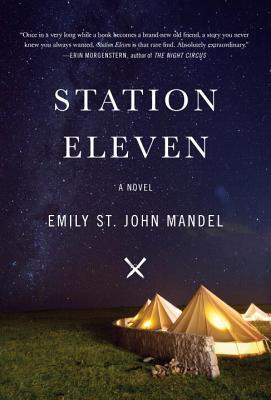
station elevenSynopsis (Goodreads):

An audacious, darkly glittering novel set in the eerie days of civilization’s collapse, Station Eleven tells the spellbinding story of a Hollywood star, his would-be savior, and a nomadic group of actors roaming the scattered outposts of the Great Lakes region, risking everything for art and humanity.

One snowy night Arthur Leander, a famous actor, has a heart attack onstage during a production of King Lear. Jeevan Chaudhary, a paparazzo-turned-EMT, is in the audience and leaps to his aid. A child actress named Kirsten Raymonde watches in horror as Jeevan performs CPR, pumping Arthur’s chest as the curtain drops, but Arthur is dead. That same night, as Jeevan walks home from the theater, a terrible flu begins to spread. Hospitals are flooded and Jeevan and his brother barricade themselves inside an apartment, watching out the window as cars clog the highways, gunshots ring out, and life disintegrates around them.

Fifteen years later, Kirsten is an actress with the Traveling Symphony. Together, this small troupe moves between the settlements of an altered world, performing Shakespeare and music for scattered communities of survivors. Written on their caravan, and tattooed on Kirsten’s arm is a line from Star Trek: “Because survival is insufficient.” But when they arrive in St. Deborah by the Water, they encounter a violent prophet who digs graves for anyone who dares to leave.

Spanning decades, moving back and forth in time, and vividly depicting life before and after the pandemic, this suspenseful, elegiac novel is rife with beauty. As Arthur falls in and out of love, as Jeevan watches the newscasters say their final good-byes, and as Kirsten finds herself caught in the crosshairs of the prophet, we see the strange twists of fate that connect them all. A novel of art, memory, and ambition, Station Eleven tells a story about the relationships that sustain us, the ephemeral nature of fame, and the beauty of the world as we know it.

My two cents:

It’s always such a terrific gift when a book surprises you in all the right ways. Such was the case for me with Station Eleven. I’d seen some reviews, I’d seen it on many of the “Best of” lists for 2014, and I’d heard the hype. At the same time, the initial synopses I’d read all focused on a traveling Shakespeare company in a post-apocalyptic world. For whatever reason, I assumed the Shakespearean framework would shape the entire novel, so that we’d follow the company from settlement to settlement, seeing their performances and making some sort of symbolic connection between the classic plays and the new world.

It was really a thrill for me to discover that Station Eleven is so much more. Station Eleven takes a truly frightening tale of a global pandemic that kills off most of humanity, and weaves into it a story about human connection, random meaning, and the elusive nature of relationships.

The Georgia flu wipes out human life on Earth almost instantly. In this age of international travel, we’re all only one contaminated airline passenger away from disaster, and Station Eleven lets the pandemic play out to its awful, inevitable conclusion. The narrative of the novel jumps in time between the outbreak of the pandemic, the path of the Traveling Symphony twenty years later, and the earlier history of Arthur Leander, possibly the last man on Earth to attract attention for his death prior to the catastrophe.

It’s hard to explain just what’s so wonderful about Station Eleven. The plotting is elegant, with connections between characters and events that only become apparent later on. The descriptions of the post-apocalyptic world are chilling, and yet the mixed sense of wonder and boredom that the new generations feel toward old stuff (electronics, phones, and all the other pieces of our technology that twenty years later are dusty museum pieces) is almost funny to read about, with a hint of the bittersweet as well. The writer is able to convey a sense of nostalgia for our own times by showing how little so much of what we have now will matter later on. There’s horror for the death and destruction, as well as an edge of mystery as we try to see just how all the different story threads are intertwined.

Above all, Station Eleven is filled with beautiful writing.

Miranda opened her eyes in time to see the sunrise. A wash of violent color, pink and streaks of brilliant orange, the container ships on the horizon suspended between the blaze of the sky and the water aflame, the seascape bleeding into confused visions of Station Eleven, its extravagant sunsets and its indigo sea. The lights of the fleet fading into morning, the ocean burning into sky.

In little moments, we see the awe-inspiring vision of a world without people and what the death of our civilization might look like. No alien invasion, no nuclear war, no second ice age — just a disease working its deadly way through the entire population of the planet over the course of a few short weeks.

Despite the end of life as we know it, life goes on, and the book seems to emphasize above all the way the people’s lives, woven together, form something that’s greater than just the individual. There’s still hope and beauty, and those who understand that are the ones who manage to keep hold of an idea of a future that means something. Station Eleven is sad and gorgeous and, oddly, not depressing. There’s a strange sense of nobility and purpose folded into the survivors’ determination to keep going, to remember, and to grow again.

If you like your post-apocalyptic novels full of explosions, zombies, and mayhem, this may not be the book for you. But if you appreciate a more thoughtful approach to matters of connection and survival and what it means to be human, definitely give Station Eleven a try.

___________________________________

The Fields & Fantasies chat:

I’ll add a link to Diana’s review shortly. Meanwhile — a Q&A between Diana and me.

Warning: SPOILERS from this point forward. Proceed at your own risk!

Lisa: Did Station Eleven match your expectations?
Diana: I think so. I don’t think I was expecting a whole heck of a lot but I heard that this book was pretty good and I think it lives up to my basic expectations.
Lisa: Did any images from the post-apocalyptic world make a big impression? What sorts of thing really stand out for you?
Diana: Just the way that everything seemed to be so Mad Max-esque with just a touch of Walking Dead. Did you find the premise to be believable?
Lisa: I really did! We have so many health-crisis scares and the media seems to really overreact… and yet, I think it’s really plausible that if there were a bad enough virus, like the flu in Station Eleven, there’s nothing to stop it from spreading globally within days or weeks. The speed of the pandemic in this book was really scary. I loved the descriptions of the world afterward, how quickly everything reverts back to nature and the people become nomads and survivalists.
Lisa: Who were your favorite characters, and why?
Diana: I really loved Kirsten. I liked how resilient she was and how much she loved Shakespeare. She had that good combination of being able to kick ass but yet was still personable. I also really liked Jeevan but I was a bit disappointed that we didn’t get a whole lot of time with him.
Lisa: I loved those two too! I also really liked Miranda — I just found her story so sad, a poor girl who never fit in with the life she ended up with, who spent her whole life working on a comic book that almost no one ever saw. (And which I wish I could see! It sounded amazing.) Also, Arthur’s friend Clark was very cool and understated.
Lisa: Which storylines were you most interested in?
Diana: All of them. She does this wonderful job of starting us at one point spreading out to other various points then bringing it back around into one fantastic place. Was there a storyline that you really liked or that you weren’t too fond of?
Lisa: I thought the whole idea of people stranded at an airport and just staying there for another twenty years was really inventive! I was so entertained by that concept and all the details the author provided to make it feel so real. I wasn’t crazy about the prophet storyline — I didn’t actually think the story needed it, other than for the dramatic element of danger.
Lisa:  Were there any storylines or plot points that you thought were unnecessary or less interesting?
Diana: There wasn’t one that i didn’t like but I would have liked to see more with Jeevan. I really really liked the character but i feel like his story just wasn’t in there enough.
Lisa: What else would you want to know about the world of the future, as portrayed in Station Eleven?
Diana: Were the people who survived just immune to the virus or did they just get lucky enough to not get it. Is there any major attempt to regain civilization. Also did any of the other greats survive?

Lisa: Very good question — was there a reason that the survivors were immune, or did they just not to encounter the virus? I wonder. And we’re left hanging a bit at the end, with the possibility that there could be a return to some of what was lost.

Lisa: How would you describe Station Eleven to someone who hasn’t read it yet?
Diana: It’s far more intellectual than i thought it would be. It’s also more of a drama about the human spirit.


And that wraps it up! Thanks, Diana! It’s a pleasure talking books with you! Let’s do this again next month…

_________________________________________

The details:

Title: Station Eleven
Author: Emily St. John Mandel
Publisher: Knopf
Publication date: September 9, 2014
Length: 333 pages
Genre: Adult fiction
Source: Purchased

_________________________________________


Next for Fields & Fantasies:

9476337Our April book will be Bossypants by Tina Fey.
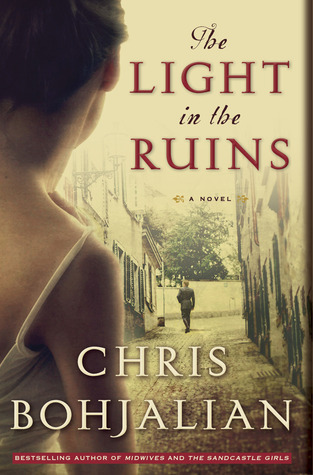
 

Book Review: The Light in the Ruins by Chris Bohjalian

lightHave I mentioned lately how much I love the Outlander Book Club? Without the OBC’s Book of the Month discussions, I might have procrastinated about reading this book for a while longer… but instead, I read The Light in the Ruins by Chris Bohjalian for our February BOTM pick, and loved it!

The Light in the Ruins is historical fiction set in Italy, with two alternating timelines: 1943-1944, when we meet the Rosati family and learn of their experiences during World War II, and 1955, when the surviving members of the family are being hunted down and brutally murdered by a serial killer with a vendetta.

The Rosatis own a beautiful, luxurious estate, Villa Chimera, in the Tuscan hills, where they live in upper class splendor, enjoying their vineyards, horses, swimming pool, and sweeping vistas. They are linked to museums in both the local town nearby and in Florence by the discovery of Etruscan tombs on their property. The tombs attract the attention of the Nazi officials whose job it is to steal rare and valuable Italian artwork for the benefit of the Reich (or, as they put it, to “protect” the artwork from the war by sending it all back to Berlin for safekeeping).

One Rosati son, Vittore, is a museum curator, and the Germans he works with begin to visit the villa more regularly, at first just to view the tombs, but then as a place to take visitors and enjoy some pampering. The Rosatis are viewed with suspicion and more by the neighboring villagers and gain a reputation as collaborators. Were they forced and intimidated into entertaining the Nazis, or are they enjoying the extra rations and other benefits of staying on the Nazi officers’ good sides?

Meanwhile, youngest daughter Cristina enters into an ill-advised love affair with a young German officer, and daughter-in-law Francesca, known for her sharp tongue and abrasive ways, waits anxiously with her two small children for news of her husband Marco, fighting on the front lines against the Allied invasion.

Cut to 1955, and the Rosatis are being gruesomely murdered, one by one. I won’t go into detail about which family members have survived the war and which are the murder victims. You’ll find all this out in short order if you read the book, and it’s all quite devastating. The investigating police detective is a woman named Serafina, who fought as a partisan during the war and whose wartime experiences and awful injuries intersect with the fate of so many members of the Rosati family.

Meanwhile, in between the 1943 and 1955 chapters, we get snippets of first-person narration told by the killer in a chilling, detached voice, explaining just how he or she butchered his first victim and what he or she has in store for the rest.

The Light in the Ruins has a grim, inevitable feel to its escalating tragedy. The war story is the more compelling of the two storylines, and it becomes increasingly difficult to read as we progress through the books. From the 1955 chapters, we know fairly early on which family members died during the war, and we spend the rest of the book building up to the awful events resulting in their deaths. The writing is all the more powerful because of the dread in each scene; we know something very bad is coming, and can even guess some of it, but it’s still shocking and horrible to read when it arrives.

That said, The Light in the Ruins is an incredibly well-written and smartly paced book. The plot is constantly moving forward, despite the time shifts, and the clues and revelations pile up in a way that feels organic and well-ordered. Interestingly, I didn’t particularly like many of the characters, even the ones we theoretically should feel more sympathetic toward, but that in no way meant that I didn’t feel horror at their fate and their suffering.

Perhaps the only story thread that I didn’t particularly care for was the love story involving Cristina and the German officer, but it’s only one of many pieces of the whole. Otherwise, I found the connections and relationships among the many characters fascinating. If anything, I’d have liked to know a bit more about Serafina, and would be curious to know what her future holds.

The author does not shy away from describing the terrible events that occur in either timeline, and I suppose some readers will feel that the descriptions might be too graphic. I didn’t feel that way — I felt that it was important to know and understand exactly what happened in order to experience the terror of the characters and get a full sense of the tragedy. Still, for readers who are more squeamish or prefer not to see every last detail, this might be good to keep in mind.

As I was reading The Light in the Ruins, I was often reminded of the wonderful book A Thread of Grace by Mary Doria Russell — and was delighted to see Chris Bohjalian’s praise of that book in his acknowledgements. For more reading on Italy during WWII, I highly recommend A Thread of Grace.

Summing it all up: Is there anything Chris Bohjalian can’t write? I’ve now read, written by him, a legal/medial drama (Midwives), a post -disaster first-person story with a teen girl narrator (Close Your Eyes, Hold Hands), one of the spookiest ghost stories I’ve ever read (The Night Strangers), and with The Light in the Ruins, outstanding historical fiction. Clearly, I need to read much more of his work and see what other worlds and genres are contained within his books!

Meanwhile, for an excellent but heart-wrenching slice of historical fiction, I absolutely recommend The Light in the Ruins.

_________________________________________

The details:

Title: The Light in the Ruins
Author: Chris Bohjalian
Publisher: Doubleday
Publication date: July 9, 2013
Length: 309 pages
Genre: Historical fiction
Source: Found at a book swap!

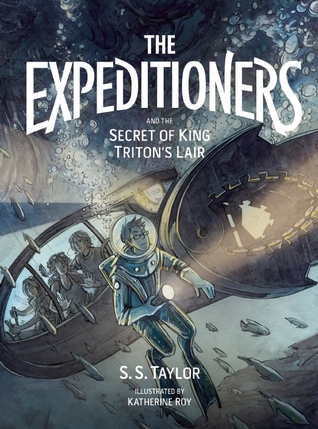
Book Review: The Expeditioners and the Secret of King Triton’s Lair by S. S. Taylor

expedBefore I actually talk about this book, can I just say how exciting it is to finally win a Goodreads First Reads giveaway? Thank you, Goodreads, and thank you, McSweeney’s McMullens! It’s quite a treat to win a book that I would have been eager to read no matter what.

The Expeditioners and the Secret of King Triton’s Lair is the 2nd book in the terrific Expeditioners series, and frankly, I can’t wait for more! Back in 2013, I reviewed the first book, The Expeditioners and the Treasure of Drowned Man’s Canyon, and I was so happy to get book #2 without too huge a wait in between volumes.

The Expeditioners books are set in a steampunk-ish world, where computers have been proven to be failures, travel is steam-driven, and the world that we know turns out to be missing quite a bit — such as all the previously unknown, secret lands. The Bureau of Newly Discovered Lands (BNDL) controls the discoveries and plunders their resources, and the most important people in the new economy may be Explorers of the Realm, who set out on expeditions of all sorts to discover the planet’s secrets, often risking life and limb.

Our main character is Kit West, a teen-aged boy whose father went missing under mysterious circumstances, leaving Kit, older brother Zander, and younger sister M.K. orphans. In the first book, Kit is given a clue left by their father, which propels the siblings on a cross-country adventure to solve the puzzles and cryptic maps strategically hidden by their father.

In the 2nd book, Kit, Zander, and M.K. are students at the Academy, a training ground for the next generation of Explorers. (Think Hogwarts, minus magic, plus gadgets and missions.) Kit is still puzzling over a new map which they found at the end of their first adventure, sure that it contains yet another lead from their father, one that may bring them closer to understanding his secrets and his disappearance. A competition to design and lead the school’s annual expedition leads the three, along with best friend Sukey and arch-nemesis Leo Nackley, to a sea voyage to the equivalent of the Bermuda Triangle. There, Kit believes the unexplainable ocean phenomenon that has led to countless shipwrecks will also reveal their father’s next clue — but Leo Nackley and his powerful father think they’ll discover oil, which in turn will allow the Realm to wage war against other empires by fueling more deadly weapons of destruction.

The Wests and Sukey end up shipwrecked, and that’s not all. The book includes submersibles, pirates, constrictor eels, telepathic turtles, Caribbean islands, and intrigues and conspiracies galore. There’s also a smattering (but not too much) of teen angst, as Kit’s crush on his close friend Sukey turns to hurt and anger when she seems to fall for Zander instead.

One thing I love about the Expeditioners books is how smart and gifted the characters are. Kit is a cartography expert, Zander studies biology and wildlife, M.K., the youngest of the family, is a marvel when it comes to engineering, and Sukey is a talented aviator. Girls are just as strong and competent as the boys, and just as likely to wield a sword against dangerous pirates or fight off a new enemy with an amazing piece of technology. Kit and the gang use their wits to survive and outsmart their opponents, but they never have it easy and nothing comes without new risk.

Black and white illustrations by Katherine Roy enhance the story’s flow and add greatly to the sense of the characters and their world. The inside of the dust cover includes schematics for M.K.’s submersible, and there are maps and old journal pages sprinkled throughout as well.

The action never stops, and while it’s occasionally a chore to keep straight the various government agencies and the geopolitical factions, the main thrust of the story is the West kids and their quest to follow their father’s clues. By the end of this book, there are cracks forming in the siblings’ unwavering commitment to their quest, however, and Kit and his family seem about to be heading off in different directions, scattered by their new assignments and moving forward separately instead of as a team.

Expeditioners #2 (sorry, that’s a lot easier than typing out the full title) has an open-ended conclusion, clearly laying the groundwork for more to come. From what I’ve seen mentioned on a few websites, The Expeditioners is expected to be a six-part series, which means there’s plenty of excitement ahead.

I highly recommend this series for anyone who enjoys kids’ adventure tales — and that includes grown-ups too! My 12-year-old and I made this a joint reading project, and we both loved it. I can see The Expeditioners appealing to Harry Potter fans as well as fans of Philip Pullman’s His Dark Materials trilogy… and as a fan of both, I don’t say that lightly. The Expeditioners has a rich and unusual world for its super-smart and super-engaging characters to explore. I can’t wait to see what’s next!

Want to know more? Check out my review of the first book in the series, and also this great Q&A with author S. S. Taylor.

__________________________________________

The details:

Title: The Expeditioners and the Secret of King Triton’s Lair
Author: S. S. Taylor; illustrated by Katherine Roy
Publisher: McSweeney’s McMullens
Publication date: September 23, 2014
Length: 320 pages
Genre: Children’s fiction (upper middle grade; per Amazon, ages 10 and up)
Source: Goodreads First Reads (I finally won something!)

Take A Peek Book Review: Treasure Island by Robert Louis Stevenson

“Take a Peek” book reviews are short and (possibly) sweet, keeping the commentary brief and providing a little peek at what the book’s about and what I thought. This week’s “take a peek” book:

TI collage

Treasure Island by Robert Louis Stevenson
(originally published 1883)

Synopsis:

(via Goodreads)

Originally conceived as a story for boys, Stevenson’s novel is narrated by the teenage Jim Hawkins, who outwits a gang of murderous pirates led by that unforgettable avatar of immorality, Long John Silver. Admired by Mark Twain, Rudyard Kipling, and (reluctantly) Henry James, the story has the dreamlike quality of a fairy tale. It has worked its way into the collective imagination of more than five generations of readers, young and old alike, gaining the power of myth.

The most popular pirate story ever written in English, featuring one of literature’s most beloved “bad guys,” Treasure Island has been happily devoured by several generations of boys—and girls—and grownups. Its unforgettable characters include: young Jim Hawkins, who finds himself owner of a map to Treasure Island, where the fabled pirate booty is buried; honest Captain Smollett, heroic Dr. Livesey, and the good-hearted but obtuse Squire Trelawney, who help Jim on his quest for the treasure; the frightening Blind Pew, double-dealing Israel Hands, and seemingly mad Ben Gunn, buccaneers of varying shades of menace; and, of course, garrulous, affable, ambiguous Long John Silver, who is one moment a friendly, laughing, one-legged sea-cook . . .and the next a dangerous pirate leader!

The unexpected and complex relationship that develops between Silver and Jim helps transform what seems at first to be a simple, rip-roaring adventure story into a deeply moving study of a boy’s growth into manhood, as he learns hard lessons about friendship, loyalty, courage and honor—and the uncertain meaning of good and evil.


My Thoughts:

For a fairly slim book (my edition had 190 pages), it sure took me a while to finish this classic tale of pirates, treasure maps, and treachery. Treasure Island wasn’t a stay-up-all-night, can’t-put-it-down read for me — but it was definitely entertaining and well worth reading.

It’s kind of hilarious, in a way, to read this quintessential pirate story, in light of Pirates of the Caribbean, Black Sails, and even Spongebob Squarepants, and realize that Treasure Island was written at a time when pirate stories weren’t clichéd yet. In Treasure Island, the guy with a wooden leg exclaiming “Shiver me timbers!” while a parrot perches on his shoulder isn’t a joke; he’s honest-to-blazes scary. Doubloons, pieces of eight, cutlasses, buried treasure, the black spot, pointing skeletons used as road signs — here’s where to go to find where they entered popular culture.

It seems practically silly to review a classic like Treasure Island. It’s a classic for a reason! But, bottom line: I’m glad that I finally dug up a copy and took the time to read it. It’s a fun, fast-paced adventure, providing a glimpse into a by-gone era of storytelling — and next time International Talk Like a Pirate Day rolls around, I’ll have something to think about besides these guys:

hqdefault FILM Depp 2

or this:

ljs_old_store

or even my current pirate obsession:

Black Sails 2014

_________________________________________

The details:

Title: Treasure Island
Author: Robert Louis Stevenson
Publisher: Varied (available free for Kindle)
Publication date: 1883
Length: 190 pages
Genre: Classic adventure story
Source: Purchased

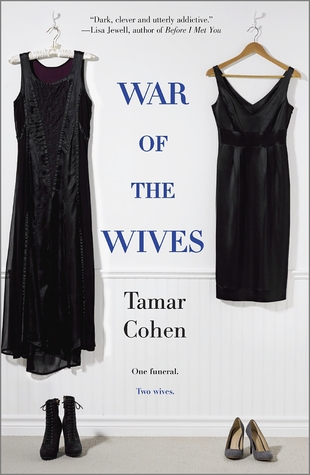
Book Review: War of the Wives by Tamar Cohen

War of the WivesSelena and her husband have been happily married for close to thirty years and have three children. Lottie and her husband have been married for seventeen years and have one teen-aged daughter. Both women wish their husband could be home more often, but understand that his demanding job is important to him. Both look forward to the moment when he walks back in the door after his latest business trip to Dubai.

And both show up as the newly bereaved widow when Simon Busfield is laid to rest after a fatal drowning.

Yes, Simon was a busy guy. He lived in London with Selena in a beautiful, posh home, keeping Selena in fashionable clothing and expensive getaways to their house in Tuscany. Simon also lived with Lottie in a smaller flat, after living with her in Dubai for most of their marriage. Wife #1 knew nothing of wife #2, and vice versa. But an untimely death lets out all the secrets, and to say that chaos ensues is an understatement.

I’ll be honest: My first thought upon reading the synopsis was “Hmm. Sounds like a Lifetime movie.” I’m pleased to say that War of the Wives is a lot more than that.

In War of the Wives, author Tamar Cohen skillfully gives each wife a voice that’s distinct and true. We often get both women’s viewpoints on the same situation, and it’s enlightening to see how two people can interpret a statement or gesture so very differently. In what must be a very difficult feat, the author creates two sympathetic characters, almost daring us to take sides. And the truth is, it’s really impossible. Neither woman is culpable. Lottie didn’t know she was sleeping with a married man. Neither intentionally set out to steal the other’s husband. The guilty party here is Simon, but he’s no longer around to blame, so of course it’s the women who have to pick up the pieces.

There’s plenty of pain and remorse, doubts and anger. Both women remember Simon as a loving husband and father. Was one life a lie? Can Simon be faulted for loving both of his families so much that he couldn’t give either up? (Of course he can! Selfish beast.)

Selena and Lottie are wrecked not just emotionally, but financially too. The homes, the lifestyles, the luxuries all have to go. The legalities and taxes and mortgages are so intertwined that neither woman can walk away from the other, and so they have to navigate their post-Simon lives together, hating it every step of the way.

I do feel that the title of the book is a bit misleading. When I first saw the title War of the Wives, I expected cat fights, public scenes of bitchiness, scheming and nastiness. But that’s not what happens. The book ultimately is less about two women battling each other and more about them figuring out how their lives took such wrong turns and how to rebuild.

There’s a mystery here too: Simon died under suspicious circumstances — did he really just fall into the river, or did he commit suicide? Or was he pushed? Just what sort of shady business dealings was he involved in? Who keeps sending Selena all these random spam texts and emails? Who broke into Lottie’s flat? It all comes together by the end, and it definitely was not what I expected… which is a very good thing.

I love a book that keeps me guessing, that gives me plenty of clues but none that make an outcome obvious. The inner lives of Selena and Lottie are fascinating to read about, and I was invested in both women, their struggles to rebuild, to be good mothers, and to stand on their own two feet. Because they really were the victims of their husband’s deceptions, it’s easy to relate to both women and want both to find happiness and get a fresh start.

War of the Wives is a compulsively readable novel with a dark streak amidst the scenes of domesticity. I enjoyed the writing, the characters, and the unexpected plot twists. Author Tamar Cohen does a great job of taking a melodramatic, seemingly made-for-TV set-up and giving it an original spin that keeps the reader guessing.

Final note: Tamar Cohen is a new-to-me author, but I’ve now heard from other bloggers that she has some other can’t-miss books as well — and I’m looking forward to checking them out!

_________________________________________

The details:

Title: War of the Wives
Author: Tamar Cohen
Publisher: Mira
Publication date: January 27, 2015 (originally published in UK in 2012)
Length: 384 pages
Genre: Adult contemporary fiction
Source: Review copy courtesy of Mira via NetGalley


Blog Tour & Book Review: Girl Runner by Carrie Snyder

girl runnerI’m delighted to be participating in the blog tour celebrating the release of an inspiring new novel: Girl Runner by Carrie Snyder.

Girl Runner is the story of Aganetha Smart, a Canadian farm girl who gains a brief moment in the spotlight when she wins gold for Canada running the 800 meter race in the 1928 Amsterdam Olympics.

When we first meeting Aganetha, however, she is 105 years old, living in a hazy dream-state in a nursing home, alone and forgotten by the world, having outlived her entire family and anyone who ever knew her. With the unexpected arrival of a young man and woman, Aganetha finds herself bundled up for a supposed family visit with these two strangers, who proceed to drive her to her family’s old farm.

As she travels the familiar roads, Aggie’s thoughts return to her early days. Bit by bit, we learn of her family’s tumultuous past, the sibling love and tensions that featured throughout her life, and that small period of time in which Aggie was a star.

From early childhood, Aggie ran so fast she was practically flying, and her need to run is a core piece of her soul. In fact, as she tells us through her fractured memories, Aggie kept running until midway through her 90s, when a final family tragedy seems to have sapped her of her drive to run once and for all.

Through Aggie’s reminiscences, we gain a picture of what life was like for young women in Canada in the 1920s, with a heady mix of independence in the big city, the glory of being selected for the national Olympic team, and the pain of love gone wrong and friendship betrayed.

As we move further into the story, Aggie reveals secrets upon secrets, until the deepest, darkest mystery of her lonely life is finally unearthed. Through her memories, we get a glimpse of the life of a strong woman who achieved great things yet never had what she most wanted.

Girl Runner is a moving story that seems simple at the outset, yet eventually moves into the complicated territory of a large family with criss-crossing needs, deceptions, joys, and shames. Each new memory unravels yet another thread in the mystery of Aganetha’s life and helps us understand how she lived so long and yet ended up so lost and alone.

I did find the time jumps somewhat distracting. The story bounces between modern-day Aggie, wheelchair bound in the nursing home, and her memories of the past — but her memories come in a jumble, not chronologically. I suppose this makes sense, in that we’re seeing the events of the past as they resurface in this very old woman’s confused mind — so of course, it’s not linear and neatly spelled out.

While this approach works in finally revealing the full story by the end of the book, it does make it a bit challenging for the reader to unknot the storylines and put together the pieces into a coherent, logical picture.

However, it’s worth sticking it out. While the narrative jumps take some getting used to, once the story hits its stride, it flows nicely and quickly. By the end, I couldn’t stop reading. I just had to know what really happened and how it all fit together.

Told in language that’s brisk but personal, Girl Runner is an intriguing family story as well as a tribute to pioneering girl athletes and the obstacles along their path to glory. Despite its long time arc, spanning about 90 years, Girl Runner is less than 300 pages in length. It’s not a long book, but it is deep and emotional, and I recommend it to anyone who might enjoy an historical novel built around a strong, enigmatic woman.

About the Author:

Carrie-SnyderCarrie Snyder’s Girl Runner is shortlisted for the 2014 Rogers Writers’ Trust Fiction Prize. Her previous book, The Juliet Stories, was shortlisted for the prestigious Governor General’s Literary Award and named one of the Globe and Mail‘s Top 100 Books of the Year. Her first book, the short story collection Hair Hat, was shortlisted for the Danuta Gleed Award for Short Fiction. A mother of four, Carrie lives with her family in Waterloo, Ontario, Canada.

Find out more about Carrie at her website, and follow her on Twitter and Facebook.

_________________________________________

The details:

Title: Girl Runner
Author: Carrie Snyder
Publisher: Harper
Publication date: February 3, 2015
Length: 288 pages
Genre: Adult fiction (contemporary/historical)
Source: Review copy courtesy of TLC Book Tours

tlc logoFor further information, stop by TLC Book Tours to view other blog tour hosts.

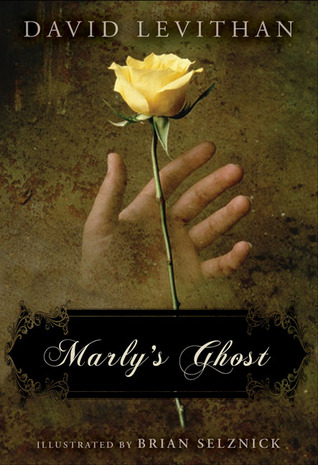
Book Review: Marly’s Ghost by David Levithan

Marly's GhostIf you ask me, David Levithan can pretty much do no wrong. I’ve now read at least a handful of books either written or co-written by this author, and I’ve love just about all of them.

I recently came across a review of Marly’s Ghost over at Chrissi Reads, and my curiosity was immediately piqued.

Marly’s Ghost was originally published in 2005, but it looks like a new edition is being published in the UK by Egmont Publishing.

This slim novel is a retelling of A Christmas Carol by Charles Dickens, and it’s a retelling in the truest sense of the word. The original story doesn’t just provide a launching pad for a new idea; instead, Marly’s Ghost faithfully follows the original, practically scene by scene, but transposes it into a modern love story that’s both incredibly sad and unexpectedly uplifting.

In Marly’s Ghost, Ben is bitterly mourning the death of his beloved girlfriend Marly, who died four months earlier after a long and painful battle with cancer. Marly was the center of Ben’s world, and without her, he sees no point in anything. He pushes away his friends, sees only bleakness in everything around him, and has a special sort of derision for Valentine’s Day. Marly’s death, to Ben, is proof that love is a crock. It can’t last, it only breaks you when it’s gone, and it can’t be worth pursuing if it only leads to pain.

On the eve of Valentine’s Day, when Ben has once again cruelly rebuffed his best friend’s attempts to connect and has needlessly lashed out at a couple in the early stages of love, he retreats to his room to surround himself with his loss and seek isolation. But his isolation is shattered when Marly’s ghost appears, weighed down by chains forged from a charm bracelet containing every memento of their time together. Ben’s grief is holding her and not letting her find peace. Marly warns Ben that he will be visited by three spirits… and, well, if you’ve ever read or seen a production of A Christmas Carol, you have a pretty good idea of what’s to come.

Ben is visited by the spirits of Valentine’s Day past, present, and future, and each shows Ben a piece of himself and illuminates his effect on those around him. Above all else, Marly wanted Ben to promise not to give up, and the spirits have come to hold him to his promise.

This slim novel brought me to tears at various points. It’s a terribly sad story of loss and suffering, made worse by the characters’ young ages, and yet it’s a pleasure to read as well. David Levithan refers to this book as a “remix” of A Christmas Carol, and that’s an apt description. He sticks to the basics of the original story, but turns it into something new and emotionally rich. The modern-day characters fit easily into the framework of the classic story, and Ben’s transformation from bitterness to hope is believable and lovely.

The book is further enhanced by black and white illustrations by the masterful Brian Selznick, who models his drawings on the illustrations found in the original edition of A Christmas Carol.

I recommend this book highly, for fans of the author and illustrator, for those who love A Christmas Carol, or for anyone who enjoys a well-written, honest look at love and loss. I borrowed this book from the library, but I think I need to own a copy for myself! Marly’s Ghost, along with David Levithan’s The Lover’s Dictionary, proves that in the hands of a gifted author, good things really do come in small packages.

With thanks to Chrissi for inspiring me to track down a copy of this book!

_________________________________________

The details:

Title: Marly’s Ghost
Author: David Levithan
Publisher: Penguin
Publication date: Originally published 2005
Length: 208 pages
Genre: Young adult fiction
Source: Library

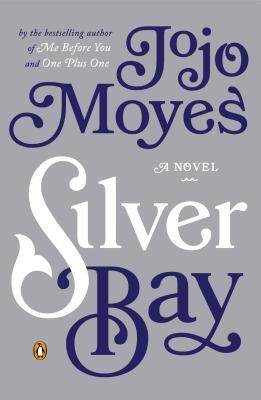
Book Review: Silver Bay by Jojo Moyes

Silver BaySilver Bay is an older work by bestselling author Jojo Moyes, originally published in 2007 and re-released in the US in fall of 2014. And while Silver Bay is perhaps not quite as tear-inducing as Me Before You, it certainly fits in with the author’s talent for portraying unusual relationships full of tragedy and redemption.

Silver Bay is a sleepy little coastal town in Australia, known for its harbor full of marine life, its ramshackle old hotels, and its whale-watching expeditions. Liza and her daughter Hannah live in Liza’s aunt Kathleen’s inn, which has been in her family for over 70 years. Liza keeps to herself, takes tourists out on her boat, and socializes each evening on the front porch of the inn with the other “whale chasers”.

But then Englishman Mike Dormer shows up on a secret mission, exploring Silver Bay as a possible development site for a luxury resort. Mike’s job is to secure the location and smooth out any local resistance to the plan so that his wheeler-dealer boss can pin down the venture capitalists’ money and make boatloads of money himself. Mike doesn’t count on the connection he starts to feel for the small town, the local folks, and most especially, for Liza herself.

But Liza has her own secrets too, and she’s not looking for love or anything like it. What’s more, when the truth about Mike’s mission comes to light, Liza, Kathleen, and all of the Silver Bay people feel betrayed by Mike… but his own beliefs have been shaken as well. Ultimately, it’s up to Mike to reverse the damage done and try to save not just the town, but the friendships that have come to matter so much to him.

I found the beginning of Silver Bay a bit slow. The book has multiple narrators, and after a brief introduction told by Kathleen, we spend the first long chapter of the book looking through the eyes of 10-year-old Hannah. This did not feel like a wise choice to me; it’s a book for adults, and the child viewpoint was by necessity somewhat weak and narrow. Once Mike is introduced, the story opens up in scope, and as I got a bit further into it, I was hooked.

The storyline itself isn’t particularly unique. I feel like I’ve seen the basic footprint of the story in other books or movies: Small town, outside big business coming to ruin things, quirky locals banding together to fight the good fight, etc. The love story too proceeds along mostly predictable lines. Of course, Mike falls in love with Liza. Of course, her secret, tragic past keeps her from being able to open up. Of course, Mike’s business dealings threaten all of the relationships he’s built.

All that being said, there’s a lot going for Silver Bay as well. There are some truly delightful supporting characters, especially tough old Aunt Kathleen and her would-be beau Nino, fellow whale-chasers Greg, Yoshi, and Lance, and even Liza’s daughter Hannah, who ultimately takes a big hand in helping to save the town.

What would a Jojo Moyes book be without a tragedy? Yes, the secret from Liza’s past that eventually comes to light is awful and terribly sad… and yes, I did get a bit teary in the final third of the book. The author does a masterful job of giving just enough hints along the way to let us know that the secret is a doozy, and once revealed, it’s impossible not to feel for Liza and her sad story.

Again, I saw the ending coming from about a mile away, but that’s okay. Having a pretty good idea of how it would all work out didn’t detract from my enjoyment of the book. It’s a quick read, and after the first several chapters, it’s a book that will pull you in and make you care.

This isn’t my favorite Jojo Moyes book, but it’s a good choice for fans who’ve read all of her more recent novels and want more.

Interested in this author? Check out my reviews of other books by Jojo Moyes:
The Girl You Left Behind
One Plus One
The Ship of Brides
Me Before You
The Last Letter From Your Lover

_________________________________________

The details:

Title: Silver Bay
Author: Jojo Moyes
Publisher: Penguin Books
Publication date: Originally published in UK in 2007
Length: 338 pages
Genre: Contemporary fiction
Source: Library

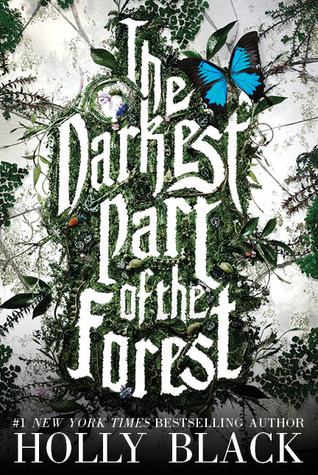
Take A Peek Book Review: The Darkest Part of the Forest by Holly Black

“Take a Peek” book reviews are short and (possibly) sweet, keeping the commentary brief and providing a little peek at what the book’s about and what I thought. This week’s “take a peek” book:

darkest part

Synopsis:

(via Goodreads)

Children can have a cruel, absolute sense of justice. Children can kill a monster and feel quite proud of themselves. A girl can look at her brother and believe they’re destined to be a knight and a bard who battle evil. She can believe she’s found the thing she’s been made for.

Hazel lives with her brother, Ben, in the strange town of Fairfold where humans and fae exist side by side. The faeries’ seemingly harmless magic attracts tourists, but Hazel knows how dangerous they can be, and she knows how to stop them. Or she did, once.

At the center of it all, there is a glass coffin in the woods. It rests right on the ground and in it sleeps a boy with horns on his head and ears as pointed as knives. Hazel and Ben were both in love with him as children. The boy has slept there for generations, never waking.

Until one day, he does…

As the world turns upside down, Hazel tries to remember her years pretending to be a knight. But swept up in new love, shifting loyalties, and the fresh sting of betrayal, will it be enough?

My Thoughts:

I find myself not quite knowing what to say about this unusual, lovely book. I love the juxtaposition of the modern world, with its IPods and high school parties, alongside the hidden world of the Folk who live in the deep, dark forest. In fact, the opening lines create such a magical aura that it’s a bit jarring to realize that this story is set in a 21st century real-world town with ordinary teens who drive cars, drink beer in the woods, go to football games, buy vintage clothing, and have all the usual rivalries, gossip, and tensions you’d see in any young adult novel.

And yet, in the town of Fairfold, residents know that there are other beings in the forest, and it’s best to be wary. Every child knows the rules, such as never saying “thank you” to a fairy or eating any food offered. It’s just tourists, flocking to what’s known as a kitschy destination with cutesy, magic-themed main street shops, who get into trouble, finding their money replaced by leaves or, in more recent years, being subjected not just to harmless pranks but to actual life-threatening danger.

Hazel and Ben have grown up with the stories and know the ropes. They’re also each crazily infatuated with the sleeping prince in the glass coffin in the woods, and have concocted all sorts of fantasies about him and his world. As the story progresses, we learn much more about Hazel and her secrets, and what she’s done to help her brother, despite all the warnings and scary-sounding rhymes.

While the book is a bit odd at first, introducing plot points as facts already known (so that I kept having to flip back and say, “wait, when did that happen?”), it eventually settles into a logic and rhythm that work. The everyday lives alongside the magical, and the writing too can veer from the commonplace to the enchanted in the blink of an eye.

I loved the strange interplay between waking life and dreams, and I especially loved how traditional fairy tale gender roles are turned on their heads. A girl is the wielder of a powerful sword, defending family and all those who need her strength. A boy can find true love by waking a sleeping prince.

Meanwhile, there are changelings, goblins, a terrifying Alderking, and a creature so consumed by the loss of her true love that she literally becomes a monster.

In The Darkest Part of the Forest, author Holly Black creates a spell-binding tale of sibling love, bravery and devotion, with language that weaves its own magical enchantment.

_________________________________________

The details:

Title: The Darkest Part of the Forest
Author: Holly Black
Publisher: Little, Brown Books for Young Readers
Publication date: January 13, 2015
Length: 336 pages
Genre: Young adult fantasy
Source: Purchased

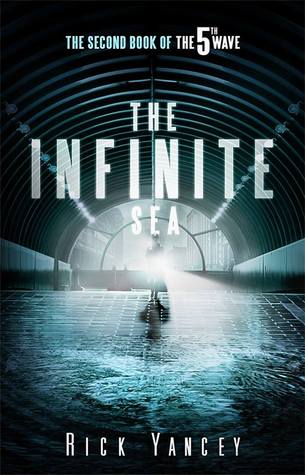
Book Review: The Infinite Sea by Rick Yancey

infinite seaThis is the second book in a series, so here come the warnings:

SPOILER ALERT: This is the follow-up book to The 5th Wave. Events from The 5 Wave will be discussed! So, need I say it? If you haven’t read The 5th Wave, now would be a good time to look away. (Better yet, go get a copy of The 5th Wave! It’s good.)

KINDA SPOILER-ISH ALERT: There are some elements from The Infinite Sea that I’ll have to talk about in order to write any sort of review. I’ll try not to go into a tremendous amount of detail, but if you prefer to know nothing about what happens, well, here’s another good time to look away.

And that concludes the housekeeping portion of this post. Moving on…

In The 5th Wave, the subject matter is nothing less than the destruction of the human race at the hands of alien invaders. Over the course of an apocalyptic few months, 98% of Earth’s population has been killed in all sort of horrifying ways. The story focuses on a handful of survivors, each on their own, trying not only to stay alive themselves, but to save or sustain the people they love.

The Infinite Sea picks up pretty much right after the big, blow-out ending of The 5th Wave. Our little band of survivors is hunkered down in an old, abandoned motel, waiting for whatever comes next, listening to the rats in the walls. (The rats are important — more on this later.)

What else? Well, that’s mostly it.

In The 5th Wave, our main three point of view characters are Cassie, Ben, and Evan. Each has his or her own intense story to tell, with a unique viewpoint on the events unfolding. In The Infinite Sea, the perspective expands to include chapters narrated by several other characters. Does this help broaden the view of life after the invasion? Not really.

It’s not that I wasn’t interested in what happened in The Infinite Sea. I was. But at the same time, the story somehow feels narrow, almost claustrophobic.

Part of what really impressed me in The 5th Wave was the epic scale. As seen through the eyes of our POV characters, the destruction is devastatingly huge, yet also intimate in that the impact of the invasion is highly personal. Family members die cruel, bloody deaths. Trusted adults betray in horrible, mind-breaking, soul-damaging ways. Safe havens turn out to be hell on earth. Humans yearn for companionship, but safety lies only in isolation. The loss each character experiences, especially Cassie, is enormous not just for the character, but because of what it means for the entirety of human life.

Compared to all that, The Infinite Sea feels small. In a most literal sense, it is: Going by my physical copies of both books,  The Infinite Sea is about 150 pages shorter than The 5th Wave. The invasion is still underway, but not much has changed. We spend all of this second book holed up with our group of characters, waiting for the next awful thing to happen. The relationships barely move forward, and they have very little to do other than hide and speculate – and talk and talk and talk.

The endless talk is yet another piece that works less well for me in The Infinite Sea. In The 5th Wave, the language is often highly dramatic, much more figurative than you might expect out of the mouths of teens dealing with disaster, but somehow it matches the grand tone of the entire book. Sadly, in The Infinite Sea, the language tends toward an overuse of imagery and metaphor, and rather than feeling epic, it ends up sounding like borderline mumbo-jumbo.

I understood. In the safe room, a billion upraised faces populating the infinite, and the eyes that sough mine, and the question in those eyes too horrible to put into words, Will I live? It’s all connected. The Others understood that, understood it better than most of us. No hope without faith, no faith without hope, no love without trust, no trust, without love. Remove one and the entire human house of cards collapses.

It’s all about a search for meaning in disaster, but the discussions go in circle upon circle: There are rats in the walls. Are we the rats? Is the Earth the inhabited house the aliens want to move into? Why not kill all the rats? Why leave some rats alive? There’s the rock problem: Why not just use a big rock (i.e., a meteor) to wipe out all life? Why embed aliens inside the humans? Why play all the mind games? Why, why, why… this books amounts to a never-ending litany of characters discussing “why” — but unfortunately, we end with little more understanding than we had at the beginning of the book.

Another problem: In what felt like a baffling shift to me, the entire second half of the book is focused on Ringer, a character in a supporting role in The 5th Wave. We barely know her; we never saw her point of view in the first book. An awful lot of space is devoted to Ringer’s experience, trapped and cut off from the other characters, and it’s a weird shift in emphasis. Cassie was established in The 5th Wave as our primary character, yet she and the rest of her entourage are absent for almost half of this book. Ringer’s story adds some knowledge to the mix, but it’s kind of jarring to have the book split like this, with two stories that don’t fit together.

The Infinite Sea is clearly the bridge book in this trilogy. We need to get from the introduction of the disaster in The 5th Wave to the final resolution in the 3rd, yet-to-be-published book, but other than as a connection from point A to point B, The Infinite Sea adds very little to the world-building or the story arc of the series. By the end of this second book, I would have expected to understand much more about the reasons for the invasion and the strategies employed by the invaders. Instead, the only real progress is that the characters are beginning to understand that there’s a lot that they don’t know, that there has to be more to what to the invaders want, and that there are major pieces of the strategy that remain to be figured out.

The more I write about The Infinite Sea, the more I realize how unsatisfying I found it. With very little story progression or character growth and very little in the way of unraveling the mysteries of the alien plan, it’s very difficult to point out much that’s gained by reading The Infinite Sea, other than a reshuffling of the chessboard and a set-up for a finale. Perhaps this series should have been two power-house books instead of a trilogy with a tepid middle. I’m hoping that the final book, supposedly to be released in September, will blow the story out of the water.

The 5th Wave was amazing. I suppose if you want to find out what happens next, you have to read The Infinite Sea. But unless something is revealed early on in book #3 that demonstrates how the events of #2 matter, I’d say that The Infinite Sea is a mostly unimportant interlude that comes nowhere near to matching the power and scale of The 5th Wave. Proceed with caution — or perhaps wait until the release of the 3rd book and read it as an introduction to #3. Read on its own, as the eagerly anticipated sequel to a fantastic first book, The Infinite Sea disappoints.

_________________________________________

The details:

Title: The Infinite Sea
Author: Rick Yancey
Publisher: Putnam Juvenile
Publication date: September 14, 2014
Length: 320 pages
Genre: Young adult/science fiction
Source: Purchased