Shelf Control #308: Hench by Natalie Zina Walschots

Shelves final

Welcome to Shelf Control — an original feature created and hosted by Bookshelf Fantasies.

Shelf Control is a weekly celebration of the unread books on our shelves. Pick a book you own but haven’t read, write a post about it (suggestions: include what it’s about, why you want to read it, and when you got it), and link up! For more info on what Shelf Control is all about, check out my introductory post, here.

Want to join in? Shelf Control posts go up every Wednesday. See the guidelines at the bottom of the post, and jump on board!

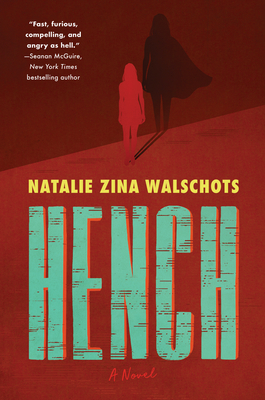
Title: Hench
Author: Natalie Zina Walschots
Published: 2020
Length: 401 pages

What it’s about (synopsis via Goodreads):

Anna does boring things for terrible people because even criminals need office help and she needs a job. Working for a monster lurking beneath the surface of the world isn’t glamorous. But is it really worse than working for an oil conglomerate or an insurance company? In this economy?

 As a temp, she’s just a cog in the machine. But when she finally gets a promising assignment, everything goes very wrong, and an encounter with the so-called “hero” leaves her badly injured.  And, to her horror, compared to the other bodies strewn about, she’s the lucky one.

So, of course, then she gets laid off.

With no money and no mobility, with only her anger and internet research acumen, she discovers her suffering at the hands of a hero is far from unique. When people start listening to the story that her data tells, she realizes she might not be as powerless as she thinks.

Because the key to everything is data: knowing how to collate it, how to manipulate it, and how to weaponize it. By tallying up the human cost these caped forces of nature wreak upon the world, she discovers that the line between good and evil is mostly marketing.  And with social media and viral videos, she can control that appearance.

It’s not too long before she’s employed once more, this time by one of the worst villains on earth. As she becomes an increasingly valuable lieutenant, she might just save the world.

A sharp, witty, modern debut, Hench explores the individual cost of justice through a fascinating mix of Millennial office politics, heroism measured through data science, body horror, and a profound misunderstanding of quantum mechanics. 

How and when I got it:

I won a copy in a Goodreads giveaway in 2020.

Why I want to read it:

Because I won it and I feel like I should?

One the one hand, I like the sound of the some of the more sci-fi/dystopian elements. On the other hand, I’m not always wowed by books that focus on the workworld and office frustrations. Still, the mix of both makes this book sound like it could be fun, and at the very least, pretty different from most of what I’ve been reading lately.

I’m seeing everything from 2 to 5 star ratings on Goodreads, with an average of 4.06. I’m a little concerned that some of the reader friends I tend to be most aligned with in terms of reading tastes have given this book low ratings or even DNFd it.

So, I’m seriously on the fence about this one. I do feel a certain amount of obligation when it comes to reading books I’ve won… but I suppose it’s not that important anymore, given that a year and a half have now gone by.

What do you think? Would you read this book?

Please share your thoughts!

PS – And if you’ve read Hench, please offer some opinions as well!


__________________________________

Want to participate in Shelf Control? Here’s how:

  • Write a blog post about a book that you own that you haven’t read yet.
  • Add your link in the comments or link back from your own post, so I can add you to the participant list.
  • Check out other posts, and…

Have fun!

Shelf Control #307: When We Were Magic by Sarah Gailey

Shelves final

Welcome to Shelf Control — an original feature created and hosted by Bookshelf Fantasies.

Shelf Control is a weekly celebration of the unread books on our shelves. Pick a book you own but haven’t read, write a post about it (suggestions: include what it’s about, why you want to read it, and when you got it), and link up! For more info on what Shelf Control is all about, check out my introductory post, here.

Want to join in? Shelf Control posts go up every Wednesday. See the guidelines at the bottom of the post, and jump on board!

Title: When We Were Magic
Author: Sarah Gailey
Published: 2020
Length: 352 pages

What it’s about (synopsis via Goodreads):

A moving, darkly funny novel about six teens whose magic goes wildly awry from Magic for Liars author Sarah Gailey, who Chuck Wendig calls an “author to watch.”

Keeping your magic a secret is hard. Being in love with your best friend is harder.

Alexis has always been able to rely on two things: her best friends, and the magic powers they all share. Their secret is what brought them together, and their love for each other is unshakeable—even when that love is complicated. Complicated by problems like jealousy, or insecurity, or lust. Or love.

That unshakeable, complicated love is one of the only things that doesn’t change on prom night.

When accidental magic goes sideways and a boy winds up dead, Alexis and her friends come together to try to right a terrible wrong. Their first attempt fails—and their second attempt fails even harder. Left with the remains of their failed spells and more consequences than anyone could have predicted, each of them must find a way to live with their part of the story.

How and when I got it:

I bought the hardcover as soon as it was released.

Why I want to read it:

Um… because it’s by Sarah Gailey?

Seriously, ever since this author’s first American Hippo book (River of Teeth) came out in 2017, I knew they were an author for me! The hippo books were weird and wonderful in all the right ways, and since then, I’ve read and loved three other books by this author (Magic for Liars, The Echo Wife, and Upright Women Wanted).

So why haven’t I read When We Were Magic yet? No idea and no good excuse, other than the usual “my bookshelves are overflowing and I have a thousand ARCs to read and HELP” refrain. I just haven’t picked this book up to read yet, and I’m mad at myself for taking so long, because I know I want to read it!

Beyond the author, I just really like the synopsis — teens and witchcraft and friendship and love. What’s not to like?

One of the reasons I picked this book for this’s week Shelf Control post is just to remind myself that it’s about time to finally get to it.

What do you think? Would you read this book?

Please share your thoughts!


__________________________________

Want to participate in Shelf Control? Here’s how:

  • Write a blog post about a book that you own that you haven’t read yet.
  • Add your link in the comments or link back from your own post, so I can add you to the participant list.
  • Check out other posts, and…

Have fun!

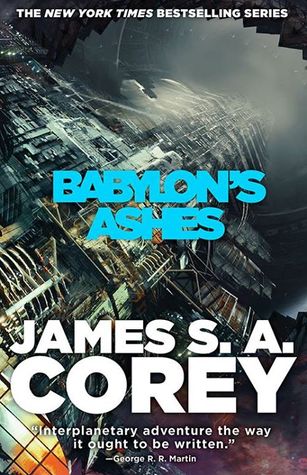
Book Review: Babylon’s Ashes (The Expanse, #6) by James S. A. Corey

Title: Nemesis Games
Series: The Expanse, #6
Author: James S. A. Corey
Publisher: Orbit
Publication date: October 24, 2017
Length: 576 pages
Genre: Science fiction
Source: Purchased
Rating:

Rating: 5 out of 5.

The sixth novel in James S. A. Corey’s New York Times bestselling Expanse series–now a major television series from Syfy!

A revolution brewing for generations has begun in fire. It will end in blood.

The Free Navy – a violent group of Belters in black-market military ships – has crippled the Earth and begun a campaign of piracy and violence among the outer planets. The colony ships heading for the thousand new worlds on the far side of the alien ring gates are easy prey, and no single navy remains strong enough to protect them.

James Holden and his crew know the strengths and weaknesses of this new force better than anyone. Outnumbered and outgunned, the embattled remnants of the old political powers call on the Rocinante for a desperate mission to reach Medina Station at the heart of the gate network.

But the new alliances are as flawed as the old, and the struggle for power has only just begun. As the chaos grows, an alien mystery deepens. Pirate fleets, mutiny, and betrayal may be the least of the Rocinante‘s problems. And in the uncanny spaces past the ring gates, the choices of a few damaged and desperate people may determine the fate of more than just humanity.

I’ve spent the past week in the midst of galactic war, and it may take me a while to recover!

I had to psych myself up to read Babylon’s Ashes, the 6th book in the Expanse series. The series is huge in scope, and the books themselves are pretty huge too — large, chunky books dense with ships and space and rail guns and trajectories and science fiction terminology… and I have to say, I’ve enjoyed the hell out of each and every one.

It’s difficult at this point to separate the experience of reading the books from that of watching the (outstanding) TV series. The overarching storyline of Babylon’s Ashes matches up with the events of the 6th and final season. For the TV version, it does feel like the storyline comes to a reasonable stopping place — although there are clearly plenty more adventures that could be told, since there are three more books in the series. I finally dove into Babylon’s Ashes after finishing the 6th season, and meshing the two different approaches created a terrific reading experience.

In Babylon’s Ashes, all hell has broken loose. The solar system’s political balance has been violently upset by a ferocious attack on Earth (see Nemesis Games, book #5) that’s wiped out huge swathes of the population and left the planet with an unsustainable future. This is just part of the plan for Marco Inaros, leader of the Free Navy, the Belter military arm whose goal is to establish Belter dominance and defeat Earth and Mars once and for all.

And while the Free Navy, as the symbol of an historically oppressed people’s rise to freedom, has some claim to a righteous cause, it soon becomes clear that its main function is to further advance Marco’s enormous narcissism and personal vendettas. As he denies food, air, and water supplies to his own people — who are desperately in need — for the sake of political power plays, his supporters begin to question his methods, and the Free Navy develops fractures just when it’s starting to seem surer of victory.

Meanwhile, people like the crew of the Rocinante — our heroes!! — are out fighting the good fight, not just for Earth or Mars or the Belt, but for the sake of humanity having a shot at a future.

This book is just as detailed as the earlier ones, and it takes a great deal of concentration to follow the huge cast of characters, the planets, the political factions, and the mechanics of it all. That said, it’s worth it! I loved every moment, despite having to rely on various fandom wikis to figure out who some of the more obscure characters were and just where they might have shown up previously.

The action is thrilling and scary. I have to admit that it was helpful for me to have watched the TV series, because I’m not sure how well I could have envisioned the space battles and types of ships and weapons and stations without it. That said, it’s all described in marvelous detail, and my inner sci-fi geek enjoyed the hell out of it.

Another element that’s different (but great) about the books is how they take into account the laws of physics and the vastness of space. In the TV series, when a space battle happens, it’s all super fast and immediate — but as the book makes clear, just because one ship is burning fast to ambush another, they still have to travel to get there, so it may take weeks before a planned assault happens. Somehow, that sense of time and distance being factored into the action makes it feel more realistic (but I understand that it wouldn’t work very well on TV to have to interrupt the action to allow for lengthy travel times).

This is not a series to just jump into in the middle, in case that’s not obvious, so if you’re interested, start at the beginning with Leviathan Wakes. I mean, it MIGHT be possible to pick up the story at this point after watching it on TV, but I still think it would be confusing, and why would you want to miss out on the satisfaction of reading the whole thing?

For those who’ve been watching the TV series, the reading experience will be different from here on out, because after Babylon’s Ashes, there will be no TV seasons to mirror the books in the series. We’re in uncharted territory, people! And while the TV version makes changes to characters, places, and events, it’s been close enough to give a good representation of each book’s major plotlines and action sequences. As I move forward to #7, I’m faced with the reality that from now on, there will be no screen action to accompany my reading… so I’ll have to envision all the dramatic torpedoes and rail guns and space maneuvering in my head. I hope I’m up to the challenge!

Now that I’ve finished Babylon’s Ashes, the only thing holding me back from continuing straight on to the next book is how BIG the books all are, and the fact that I do have other books to read! That said, I’m not going to let too much time go by either — I’m hoping to finish the remaining books in the series by the end of this year (but don’t hold me to it!)

Next up for me in the Expanse series:

Strange Dogs: A novella that takes place sometime around or after the events of Babylon’s Ashes

Persepolis Rising: Book #7!

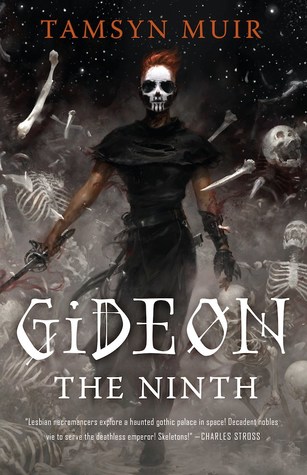
Shelf Control #305: Gideon the Ninth by Tamsyn Muir

Shelves final

Welcome to Shelf Control — an original feature created and hosted by Bookshelf Fantasies.

Shelf Control is a weekly celebration of the unread books on our shelves. Pick a book you own but haven’t read, write a post about it (suggestions: include what it’s about, why you want to read it, and when you got it), and link up! For more info on what Shelf Control is all about, check out my introductory post, here.

Want to join in? Shelf Control posts go up every Wednesday. See the guidelines at the bottom of the post, and jump on board!

Title: Gideon the Ninth
Author: Tamsyn Muir
Published: 2019
Length: 448 pages

What it’s about (synopsis via Goodreads):

The Emperor needs necromancers.

The Ninth Necromancer needs a swordswoman.

Gideon has a sword, some dirty magazines, and no more time for undead bullshit.

Brought up by unfriendly, ossifying nuns, ancient retainers, and countless skeletons, Gideon is ready to abandon a life of servitude and an afterlife as a reanimated corpse. She packs up her sword, her shoes, and her dirty magazines, and prepares to launch her daring escape. But her childhood nemesis won’t set her free without a service.

Harrowhark Nonagesimus, Reverend Daughter of the Ninth House and bone witch extraordinaire, has been summoned into action. The Emperor has invited the heirs to each of his loyal Houses to a deadly trial of wits and skill. If Harrowhark succeeds she will become an immortal, all-powerful servant of the Resurrection, but no necromancer can ascend without their cavalier. Without Gideon’s sword, Harrow will fail, and the Ninth House will die.

Of course, some things are better left dead.

How and when I got it:

I bought a paperback at some point in the last two years (and picked up book #2, Harrow the Ninth, too).

Why I want to read it:

I remember seeing tons of reviews for this book when it came out, most using the tagline lesbian necromancers in space — and yes, that definitely grabbed my attention! I have reader friends who became obsessed with this book (and its sequel), although I’ve definitely seen my share of negative reviews as well.

This does seem like something I’d love, and I’m excited to read it. I think the only reason I haven’t so far is that when I first planned to get started, I got a little intimidated by what seemed like a lot of world-building to absorb up front, and I just wasn’t in the right state of mind to focus at that moment. But now I’m ready!

The third book, Nona the Ninth, comes out later this year, so this seems like a good time to finally dive in.

What do you think? Have you read this book, and if so, do you recommend it? Or if you haven’t read it, does this sound like something you’d want to read?

Please share your thoughts!


__________________________________

Want to participate in Shelf Control? Here’s how:

  • Write a blog post about a book that you own that you haven’t read yet.
  • Add your link in the comments or link back from your own post, so I can add you to the participant list.
  • Check out other posts, and…

Have fun!

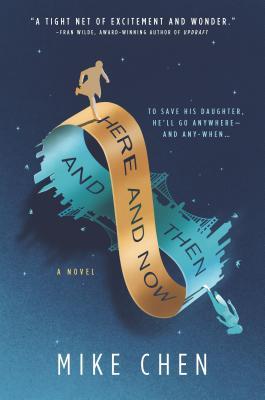
Shelf Control #302: Here and Now and Then by Mike Chen

Shelves final

Welcome to Shelf Control — an original feature created and hosted by Bookshelf Fantasies.

Shelf Control is a weekly celebration of the unread books on our shelves. Pick a book you own but haven’t read, write a post about it (suggestions: include what it’s about, why you want to read it, and when you got it), and link up! For more info on what Shelf Control is all about, check out my introductory post, here.

Want to join in? Shelf Control posts go up every Wednesday. See the guidelines at the bottom of the post, and jump on board!

Title: Here and Now and Then
Author: Mike Chen
Published: 2019
Length: 336 pages

What it’s about (synopsis via Goodreads):

To save his daughter, he’ll go anywhere—and any-when…

Kin Stewart is an everyday family man: working in IT, trying to keep the spark in his marriage, struggling to connect with his teenage daughter, Miranda. But his current life is a far cry from his previous career…as a time-traveling secret agent from 2142.

Stranded in suburban San Francisco since the 1990s after a botched mission, Kin has kept his past hidden from everyone around him, despite the increasing blackouts and memory loss affecting his time-traveler’s brain. Until one afternoon, his “rescue” team arrives—eighteen years too late.

Their mission: return Kin to 2142, where he’s only been gone weeks, not years, and where another family is waiting for him. A family he can’t remember.

Torn between two lives, Kin is desperate for a way to stay connected to both. But when his best efforts threaten to destroy the agency and even history itself, his daughter’s very existence is at risk. It’ll take one final trip across time to save Miranda—even if it means breaking all the rules of time travel in the process.

A uniquely emotional genre-bending debut, Here and Now and Then captures the perfect balance of heart, playfulness, and imagination, offering an intimate glimpse into the crevices of a father’s heart and its capacity to stretch across both space and time to protect the people that mean the most.

How and when I got it:

This is yet another book that’s sitting in my Kindle library — I must have added it a couple of years ago.

Why I want to read it:

I actually have three books by this author on my Kindle!! So, apparently I really like the sound of his stories… but just haven’t gotten around to reading them yet.

In terms of Here and Now and Then… well, guess how I feel about time travel fiction?

I love the plot idea of a time traveler getting stuck in the wrong time — and the fact that this happens in 1990s San Francisco is a big plus for me! I’m intrigued by the main character’s dilemma, having to balance the needs of two different families in two different time periods. Reading the synopsis after some time has passed since I first came across this book, I’m hooked all over again! Clearly, this needs to be a priority book for me in 2022.

What do you think? Would you read this book?

Please share your thoughts!


__________________________________

Want to participate in Shelf Control? Here’s how:

  • Write a blog post about a book that you own that you haven’t read yet.
  • Add your link in the comments or link back from your own post, so I can add you to the participant list.
  • Check out other posts, and…

Have fun!

Book Review: Elder Race by Adrian Tchaikovsky

Title: Elder Race
Author: Adrian Tchaikovsky
Publisher: Tordotcom
Publication date: November 16, 2021
Length: 201 pages
Genre: Science fiction
Source: Purchased

Rating: 5 out of 5.

In Adrian Tchaikovsky’s Elder Race, a junior anthropologist on a distant planet must help the locals he has sworn to study to save a planet from an unbeatable foe.

Lynesse is the lowly Fourth Daughter of the queen, and always getting in the way.

But a demon is terrorizing the land, and now she’s an adult (albeit barely) and although she still gets in the way, she understands that the only way to save her people is to invoke the pact between her family and the Elder sorcerer who has inhabited the local tower for as long as her people have lived here (though none in living memory has approached it).

But Elder Nyr isn’t a sorcerer, and he is forbidden to help, for his knowledge of science tells him the threat cannot possibly be a demon… 

This stunning, inventive, beautifully crafted novella is a living, breathing embodiment of Arthur C. Clarke’s Third Law:

Any sufficiently advanced technology is indistinguishable from magic.

In Elder Race, Lynesse Fourth Daughter, daughter of the queen of Lannesite, takes the forbidden trail up the mountain to the Tower of Nyrgoth Elder, the revered sorcerer who has not been seen for generations. Lynesse is not taken seriously by her mother or older sisters, all of whom prefer to focus on trade and diplomacy rather than indulge Lynesse’s flights of fancy. But Lynesse has heard refugees from outlying lands plea for help after their towns and forests were overrun by a demon, and she’s determined to take action, even if her mother won’t.

That’s the opening set-up of Elder Race. It feels like the start of an epic quest, and hurray for girl power too!

Stop reading here if you want to avoid spoilers completely, because there’s a doozy coming…

Ready?

The next chapter is told from the perspective of Nyrgoth Elder… and it turns everything upside down. It turns out that his name is really Nyr Illim Tevitch, and he’s not a sorcerer. Nyr is an anthropologist with Earth’s Explorer Corps, and he’s there in his remote outpost to study and observe the local populations.

Thousands of years earlier, Earth sent out generation ships to colonize planets throughout the universe. And some thousands of years after that, groups of scientists followed to check on how the colonies turned out. Nyr was a part of one of these expeditions, and after his fellow scientists were recalled to Earth, he was left behind, the sole member of the expedition remaining to continue their studies.

The problem is, he hasn’t heard back from Earth in centuries. Nyr stays alive through advanced science, including long periods of sleeping in suspended animation. He last awoke a century earlier, and broke one of the cardinal rules of anthropologists by getting involved with the local people. His mission is to study and report; by mingling with the people, he’s potentially contaminating the study.

When Lynesse and her companion Esha show up at his tower, there begins a remarkable story of cultural differences and miscommunications. The early colonies on the planet were rudimentary, starting life over without technology. Their culture is agrarian and feudal and deeply superstitious. Anything unexplainable is attributed to magic and demons and sorcerers. And so even when Nyr tries to explain himself, the language gap between the cultures makes it literally impossible for him to translate the term scientist — every word he tries to use comes out as some form of magician or sorcerer or wizard.

“It’s not magic,” he insisted, against all reason. “I am just made this way. I am just of a people who understand how the world works.”

“Nyrgoth Elder,” Esha said slowly. “Is that not what magic is? Every wise man, every scholar I have met who pretended to the title of magician, that was their study. They sought to learn how the world worked, so that they could control and master it. That is magic.”

As their quest proceeds, Nyr goes against every principle of his training, as he realizes that he can actually serve a different purpose:

I am only now, at the wrong end of three centuries after loss of contact, beginning to realise just how broken my own superior culture actually was. They set us here to make exhaustive anthropological notes on the fall of every sparrow. But not to catch a single one of them. To know, but very emphatically not to care.

I can’t even begin to explain how gorgeously crafted this slim book is. Particularly mind-blowing is a chapter in which Nyr tells Lynesse and Esha the story of how his people came to the planet millennia ago. On the same page, in parallel columns, we read Nyr’s science-based story and right next to it, the same story as it’s heard by Lynesse in the context of her own culture and language. It’s a remarkable writing achievement, and just so fascinating to read.

Also fascinating is Elder Race‘s treatment of depression and mental health, which for Nyr is managed through the use of advanced technology that allows him to separate from his feelings — but not permanently. He can shut off feeling his feelings, but is still aware that they’re there, and can only go so long before he has to let down the wall and experience the emotions that have been walled away. The descriptions of dealing with depression are powerful, as is the way he explains knowing the depression is waiting for him, even in moments when he’s not living it.

I absolutely loved the depiction of a tech-free culture’s interpretation of advanced scientific materials and equipment, and the way the books chapters, alternating between Lynesse and Nyr’s perspectives, bring the cultural divide to life.

Elder Race is beautifully written and expertly constructed. The balancing act between science fiction and fantasy is just superb. This book should not be missed!

Shelf Control #301: Too Like the Lightning by Ada Palmer

Shelves final

Welcome to Shelf Control — an original feature created and hosted by Bookshelf Fantasies.

Shelf Control is a weekly celebration of the unread books on our shelves. Pick a book you own but haven’t read, write a post about it (suggestions: include what it’s about, why you want to read it, and when you got it), and link up! For more info on what Shelf Control is all about, check out my introductory post, here.

Want to join in? Shelf Control posts go up every Wednesday. See the guidelines at the bottom of the post, and jump on board!

Title: Too Like the Lightning (Terra Ignota, #1)
Author: Ada Palmer
Published: 2016
Length: 433 pages

What it’s about (synopsis via Goodreads):

Mycroft Canner is a convict. For his crimes he is required, as is the custom of the 25th century, to wander the world being as useful as he can to all he meets. Carlyle Foster is a sensayer–a spiritual counselor in a world that has outlawed the public practice of religion, but which also knows that the inner lives of humans cannot be wished away.

The world into which Mycroft and Carlyle have been born is as strange to our 21st-century eyes as ours would be to a native of the 1500s. It is a hard-won utopia built on technologically-generated abundance, and also on complex and mandatory systems of labeling all public writing and speech. What seem to us normal gender distinctions are now distinctly taboo in most social situations. And most of the world’s population is affiliated with globe-girdling clans of the like-minded, whose endless economic and cultural competition is carefully managed by central planners of inestimable subtlety. To us it seems like a mad combination of heaven and hell. To them, it seems like normal life.

And in this world, Mycroft and Carlyle have stumbled on the wild card that may destablize the system: the boy Bridger, who can effortlessly make his wishes come true. Who can, it would seem, bring inanimate objects to life…

How and when I got it:

I picked up the Kindle edition about three years ago.

Why I want to read it:

I’ve been keeping my eye on this series ever since I first stumbled across it. Now complete, with four books in total, I have fewer excuses for not starting!

The series overview, from the publisher’s website:

Just this week, I shared my series reading goals for 2022, and I didn’t think to include this one — but I do still intend to get to these books. I’m intriguing by the sound of the world and the political structures, and want to know more about the conspiracy and the special child.

What do you think? Would you read this book (and/or the series)?

Please share your thoughts!


__________________________________

Want to participate in Shelf Control? Here’s how:

  • Write a blog post about a book that you own that you haven’t read yet.
  • Add your link in the comments or link back from your own post, so I can add you to the participant list.
  • Check out other posts, and…

Have fun!

Book Review: The Unfamiliar Garden (The Comet Cycle, #2) by Benjamin Percy

Title: The Unfamiliar Garden
Series: The Comet Cycle
Author: Benjamin Percy
Publisher: Mariner Books
Publication date: January 4, 2022
Length: 224 pages
Genre: Science fiction
Source: Review copy courtesy of the publisher via NetGalley
Rating:

Rating: 4 out of 5.

The night the sky fell, Jack and Nora Abernathy’s daughter vanished in the woods. And Mia’s disappearance broke her parents’ already fragile marriage. Unable to solve her own daughter’s case, Nora lost herself in her work as a homicide detective. Jack became a shell of a man; his promising career as a biologist crumbling alongside the meteor strikes that altered weather patterns and caused a massive drought.

It isn’t until five years later that the rains finally return to nourish Seattle. In this period of sudden growth, Jack uncovers evidence of a new parasitic fungus, while Nora investigates several brutal, ritualistic murders. Soon they will be drawn together by a horrifying connection between their discoveries—partnering to fight a deadly contagion as well as the government forces that know the truth about the fate of their daughter.

Award-winning author Benjamin Percy delivers both a gripping science fiction thriller and a dazzling examination of a planet—and a marriage—that have broken. 

The Comet Cycle, a three-part look at the effects of a devastating meteor fall, began with the 2021 release of The Ninth Metal (reviewed here). The premise of this trilogy is chilling: A comet passes by earth, close enough that people around the globe gather to celebrate and enjoy the beautiful sight. But… a year later, Earth’s orbit takes the planet through the comet’s debris field, and it’s here that things go terribly wrong.

Earth is inundated with meteors and meteorites, and beyond the immediate destruction of the massive impacts, the biology and chemical makeup of the planet is forever changed.

In The Ninth Metal, we see the effect of the introduction of a strange, never-before-seen metal into the world of humans. Known as omnimetal, this element has strange properties that change the world in terms of huge leaps forward in technology as well as changing the economy, power balances, and in some cases, humans themselves.

In the 2nd book, The Unfamiliar Garden, the action moves from the Minnesota setting of the 1st book to the Seattle and Northwest rainforest area. The main characters are Jack, a professor of biology specializing in mycology, and Nora, Jack’s ex-wife, a neuro-atypical detective with the Seattle PD. Five years earlier, as the meteorites were striking Earth, their 8-year-old daughter Mia disappeared while out in the forest with Jack. No trace was ever found.

Now, after a long drought, rains have returned to the area, and with the rain comes a huge growth spurt for fungi and other plant matter. Also, and maybe not coincidentally, Nora’s department faces a rash of gruesome murders and seemingly ordinary people having sudden psychotic breaks.

As their work overlaps, Jack and Nora have to join forces to try to understand what’s causing this outbreak of violence, and along the way, may finally get answers to the mystery of their daughter’s disappearance.

The Unfamiliar Garden is a fast-paced, tautly-written thriller with sinister government agents, alien organisms, and a wave of bizarre illness and madness. Through Jack and Nora, we see the way the baffling clues start to form patterns, while also getting a sense of the horror of finding oneself in the midst of what’s actually happening.

Without giving too much away, let me just say… fungi = ewwwwww. I’ve now read several books in which fungi in some way or another basically spell the end of human life as we know it, and honestly, it’s terrifying!!

There are some scenes that are pretty gross, so this book may not be for you if you have a weak stomach and a low tolerance for an ick factor.

I found it fascinating, and I loved the relatively short length, which meant that the storytelling stays lean and propulsive throughout. I also love how each book in this trilogy focuses on a different geographic area and a different aspect of the comet’s aftermath.

Book #3, The Sky Vault, will be released in June 2022. I can’t wait!

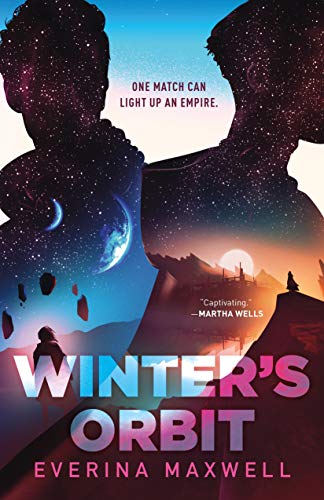
Book Review: Winter’s Orbit by Everina Maxwell

Title: Winter’s Orbit
Author: Everina Maxwell
Publisher: Tor Books
Publication date: February 2, 2021
Length: 432 pages
Genre: Science fiction
Source: Review copy courtesy of the publisher via NetGalley
Rating:

Rating: 3.5 out of 5.

Ancillary Justice meets Red, White & Royal Blue in Everina Maxwell’s exciting debut.

While the Iskat Empire has long dominated the system through treaties and political alliances, several planets, including Thea, have begun to chafe under Iskat’s rule. When tragedy befalls Imperial Prince Taam, his Thean widower, Jainan, is rushed into an arranged marriage with Taam’s cousin, the disreputable Kiem, in a bid to keep the rising hostilities between the two worlds under control.

But when it comes to light that Prince Taam’s death may not have been an accident, and that Jainan himself may be a suspect, the unlikely pair must overcome their misgivings and learn to trust one another as they navigate the perils of the Iskat court, try to solve a murder, and prevent an interplanetary war… all while dealing with their growing feelings for each other.

Ugh, ignore the bit in the synopsis about Ancillary Justice meeting Red, White & Royal Blue. I assume that’s just meant to make sure anyone who glances at this book knows that (1) it’s in space! and (b) there’s a royal match between two male characters. But there’s so much more to this book, and it’s worth looking beyond marketing blurbs to learn more.

Winter’s Orbit takes place in the Iskat Empire, seven planets bound together by treaties and ruled by the Emperor from the system’s dominant planet Iskat. The Empire, though, is but a small system in the known universe, which is ruled by the Resolution and accessed by the Iskat Empire through one single space/time link. (Bear with me.)

Every twenty years, the Empire re-ups with the Resolution through a formal ceremony. Without the official reestablishment of the treaty, the Iskat Empire would be on its own, unprotected, and subject to invasion by the powerful armies of the huge conglomerates that control other galaxies. In other words, the Resolution treaty is vital to the Empire’s survival.

A key piece of the treaty renewal is passing muster by the Resolution’s Auditor, an inspector who comes to verify that the planets of the Empire are maintaining their treaties with Iskat appropriately and without conflict. And here’s where the person-focused aspects of the plot come into play.

Treaties within the Empire are cemented by political marriages. In the case of the small planet Thea, it’s through the marriage of Thean representative Jainan to Prince Taam of Iskat’s royal family. When Taam is killed in an accident only months before the treaty renewal, it’s imperative that a new political marriage is arranged. Enter Prince Kiem, the ne’er-do-well, dissolute, party boy of the royal family. He’s not at all interested in a political marriage, particularly to the grieving partner of his dead cousin, but duty calls — and it’s an order directly from the Emperor, so really, there’s no choice.

Where Winter’s Orbit is at its best is in the depiction of Kiem and Jainan’s relationship, from its awkward beginning through all sorts of turmoil and misunderstanding, until finally they break through their miscommunications and cross-purposes and start to truly talk to one another.

Kiem and Jainan are both complex characters, and they alternate POV chapters, so we get to know their inner workings, their doubts and fears, well before either of them start to grasp what the other is experiencing. It works very well — even though we readers may cringe at how badly they’re bungling their attempts to connect, it helps that we’re let into their thoughts and feelings and understand WHY they’re having such a hard time.

If you strip away the sci-fi trappings, in many ways this book can be compared to any novel about arranged marriages. Whether it’s the Tudor reign or books about imperial Japan or any other powerful dynastic settings, there’s something compelling and awful about people’s lives being used for political advantage, but it’s certainly been a reality for generations. I think this is why Winter’s Orbit works so well. It’s not an alien concept to think that Kiem and Jainan’s feelings about a forced marriage would not count — the partnership is for alliance and control and political purposes. Feelings are secondary, if even that.

Given that context, I loved the developing emotional connection between Kiem and Jainan. They’re each wonderful, and I really appreciated the sweetness of their growing bonds and their consideration of one another. The book also explores issues of abuse and trauma, and handles it very well, sensitively showing how it affects the pair’s attempts at connection and intimacy.

The more external plot, about conspiracies and political maneuvering, assassination attempts, rogue military officers, and more, is fast-paced and has plenty of action. There’s never a dull moment.

However… I do wish the world-building in this book had been better explained. You can see by my clumsy attempts at plot summary above that the greater world of Winter’s Orbit is complicated, and we’re thrown into the action from the start, having to piece together the significance of the Empire’s structure, the Resolution, the Auditor, the remnants, and more. To be honest, I’m not sure how much I got it all. I had to make a conscious decision not to worry about the details and just focus on the people aspects, but still, there are pieces that did (and still do) confuse me, and I feel like a little more exposition early on would have helped a great deal.

Beyond that issue, though, I greatly enjoyed Winter’s Orbit. The characters and their relationship are terrific, there’s a low-key explanation of how gender identity works in this world that I found very interesting, and the plot does maintain strong tension in the key dramatic moments.

This is a strong debut by a talented author, and I look forward to reading whatever she writes next.

**********

Through affiliate programs, I may earn commissions from purchases made when you click through these links, at no cost to you.

Buy now at Book Depository – Bookshop.orgBarnes & Noble

Novella review: One Day All This Will Be Yours by Adrian Tchaikovsky

Apparently, it’s Novella November! Who knew? Not me!

In any case, Novella November is a thing, and that means my timing is spot on, as I’ve been enjoying a few novellas this week.

Here’s a quick look at the first one I finished:


Title: One Day All This Will Be Yours
Author: Adrian Tchaikovsky
Publisher: Solaris
Publication date: March 2, 2021
Length: 144 pages
Genre: Science fiction
Source: Library
Rating:

Rating: 5 out of 5.

The bold new work from award-winning author Adrian Tchaikovsky  – a smart, funny tale of time-travel and paradox

Welcome to the end of time. It’s a perfect day.

Nobody remembers how the Causality War started. Really, there’s no-one to remember, and nothing for them to remember if there were; that’s sort of the point. We were time warriors, and we broke time.

I was the one who ended it. Ended the fighting, tidied up the damage as much as I could.

Then I came here, to the end of it all, and gave myself a mission: to never let it happen again.

A totally trippy take on time travel and the end of the world. Our unnamed narrator is the sole survivor of the Causality War, in which too many competing factions realized that the ultimate weapon isn’t a nuke — it’s a time machine.

And then they used them, because that’s what you always do with the ultimate weapons that you swear you’ll never, ever use. You get your retaliation in first. Sooner or later, you preemptively deploy your deterrent just in case the other side aren’t deterred by it.

Don’t trust your adversaries? Go back in time and wipe out the pieces of their history that made them a threat in the first place. And once one set of people with a time machine realize its potential and actually use it, so does everyone else. It’s all very circular and paradoxical and made my head spin round quite a bit, but this book is oh-so-much fun to read.

I don’t want to give away any of the delightful little surprises, but trust me — you’ll want to experience the main character’s pillaging of the past for entertainment and farming supplies, his ruthless yet “nothing personal” approach to dealing with unwanted visitors, and his training of trusty sidekick Miffly.

The story is mind-bending and funny and plausible in the weirdest of ways, and the writing absolutely cracked me up.

My main complaint? The hardcover version of this book was a limited release, now sold out, and copies are available on EBay and elsewhere for $80 and up. And yes, I could buy the Kindle edition, but I really, really would love to have a physical copy on my shelves. Ah well. A reader can dream, right?

Meanwhile… this is the first book I’ve read by Adrian Tchaikovsky. I have no idea if it’s at all typical of his works, but I’d love to explore further. If you’ve read any books by this author that you’d particularly recommend, please let me know!