Book Review: The Unfamiliar Garden (The Comet Cycle, #2) by Benjamin Percy

Title: The Unfamiliar Garden
Series: The Comet Cycle
Author: Benjamin Percy
Publisher: Mariner Books
Publication date: January 4, 2022
Length: 224 pages
Genre: Science fiction
Source: Review copy courtesy of the publisher via NetGalley
Rating:

Rating: 4 out of 5.

The night the sky fell, Jack and Nora Abernathy’s daughter vanished in the woods. And Mia’s disappearance broke her parents’ already fragile marriage. Unable to solve her own daughter’s case, Nora lost herself in her work as a homicide detective. Jack became a shell of a man; his promising career as a biologist crumbling alongside the meteor strikes that altered weather patterns and caused a massive drought.

It isn’t until five years later that the rains finally return to nourish Seattle. In this period of sudden growth, Jack uncovers evidence of a new parasitic fungus, while Nora investigates several brutal, ritualistic murders. Soon they will be drawn together by a horrifying connection between their discoveries—partnering to fight a deadly contagion as well as the government forces that know the truth about the fate of their daughter.

Award-winning author Benjamin Percy delivers both a gripping science fiction thriller and a dazzling examination of a planet—and a marriage—that have broken. 

The Comet Cycle, a three-part look at the effects of a devastating meteor fall, began with the 2021 release of The Ninth Metal (reviewed here). The premise of this trilogy is chilling: A comet passes by earth, close enough that people around the globe gather to celebrate and enjoy the beautiful sight. But… a year later, Earth’s orbit takes the planet through the comet’s debris field, and it’s here that things go terribly wrong.

Earth is inundated with meteors and meteorites, and beyond the immediate destruction of the massive impacts, the biology and chemical makeup of the planet is forever changed.

In The Ninth Metal, we see the effect of the introduction of a strange, never-before-seen metal into the world of humans. Known as omnimetal, this element has strange properties that change the world in terms of huge leaps forward in technology as well as changing the economy, power balances, and in some cases, humans themselves.

In the 2nd book, The Unfamiliar Garden, the action moves from the Minnesota setting of the 1st book to the Seattle and Northwest rainforest area. The main characters are Jack, a professor of biology specializing in mycology, and Nora, Jack’s ex-wife, a neuro-atypical detective with the Seattle PD. Five years earlier, as the meteorites were striking Earth, their 8-year-old daughter Mia disappeared while out in the forest with Jack. No trace was ever found.

Now, after a long drought, rains have returned to the area, and with the rain comes a huge growth spurt for fungi and other plant matter. Also, and maybe not coincidentally, Nora’s department faces a rash of gruesome murders and seemingly ordinary people having sudden psychotic breaks.

As their work overlaps, Jack and Nora have to join forces to try to understand what’s causing this outbreak of violence, and along the way, may finally get answers to the mystery of their daughter’s disappearance.

The Unfamiliar Garden is a fast-paced, tautly-written thriller with sinister government agents, alien organisms, and a wave of bizarre illness and madness. Through Jack and Nora, we see the way the baffling clues start to form patterns, while also getting a sense of the horror of finding oneself in the midst of what’s actually happening.

Without giving too much away, let me just say… fungi = ewwwwww. I’ve now read several books in which fungi in some way or another basically spell the end of human life as we know it, and honestly, it’s terrifying!!

There are some scenes that are pretty gross, so this book may not be for you if you have a weak stomach and a low tolerance for an ick factor.

I found it fascinating, and I loved the relatively short length, which meant that the storytelling stays lean and propulsive throughout. I also love how each book in this trilogy focuses on a different geographic area and a different aspect of the comet’s aftermath.

Book #3, The Sky Vault, will be released in June 2022. I can’t wait!
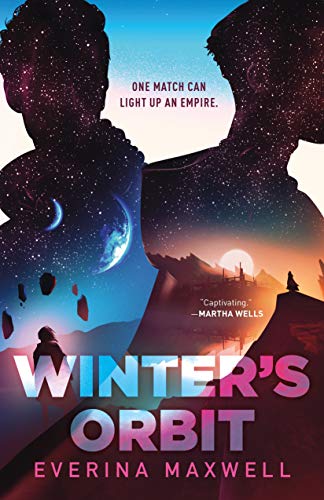
Book Review: Winter’s Orbit by Everina Maxwell

Title: Winter’s Orbit
Author: Everina Maxwell
Publisher: Tor Books
Publication date: February 2, 2021
Length: 432 pages
Genre: Science fiction
Source: Review copy courtesy of the publisher via NetGalley
Rating:

Rating: 3.5 out of 5.

Ancillary Justice meets Red, White & Royal Blue in Everina Maxwell’s exciting debut.

While the Iskat Empire has long dominated the system through treaties and political alliances, several planets, including Thea, have begun to chafe under Iskat’s rule. When tragedy befalls Imperial Prince Taam, his Thean widower, Jainan, is rushed into an arranged marriage with Taam’s cousin, the disreputable Kiem, in a bid to keep the rising hostilities between the two worlds under control.

But when it comes to light that Prince Taam’s death may not have been an accident, and that Jainan himself may be a suspect, the unlikely pair must overcome their misgivings and learn to trust one another as they navigate the perils of the Iskat court, try to solve a murder, and prevent an interplanetary war… all while dealing with their growing feelings for each other.

Ugh, ignore the bit in the synopsis about Ancillary Justice meeting Red, White & Royal Blue. I assume that’s just meant to make sure anyone who glances at this book knows that (1) it’s in space! and (b) there’s a royal match between two male characters. But there’s so much more to this book, and it’s worth looking beyond marketing blurbs to learn more.

Winter’s Orbit takes place in the Iskat Empire, seven planets bound together by treaties and ruled by the Emperor from the system’s dominant planet Iskat. The Empire, though, is but a small system in the known universe, which is ruled by the Resolution and accessed by the Iskat Empire through one single space/time link. (Bear with me.)

Every twenty years, the Empire re-ups with the Resolution through a formal ceremony. Without the official reestablishment of the treaty, the Iskat Empire would be on its own, unprotected, and subject to invasion by the powerful armies of the huge conglomerates that control other galaxies. In other words, the Resolution treaty is vital to the Empire’s survival.

A key piece of the treaty renewal is passing muster by the Resolution’s Auditor, an inspector who comes to verify that the planets of the Empire are maintaining their treaties with Iskat appropriately and without conflict. And here’s where the person-focused aspects of the plot come into play.

Treaties within the Empire are cemented by political marriages. In the case of the small planet Thea, it’s through the marriage of Thean representative Jainan to Prince Taam of Iskat’s royal family. When Taam is killed in an accident only months before the treaty renewal, it’s imperative that a new political marriage is arranged. Enter Prince Kiem, the ne’er-do-well, dissolute, party boy of the royal family. He’s not at all interested in a political marriage, particularly to the grieving partner of his dead cousin, but duty calls — and it’s an order directly from the Emperor, so really, there’s no choice.

Where Winter’s Orbit is at its best is in the depiction of Kiem and Jainan’s relationship, from its awkward beginning through all sorts of turmoil and misunderstanding, until finally they break through their miscommunications and cross-purposes and start to truly talk to one another.

Kiem and Jainan are both complex characters, and they alternate POV chapters, so we get to know their inner workings, their doubts and fears, well before either of them start to grasp what the other is experiencing. It works very well — even though we readers may cringe at how badly they’re bungling their attempts to connect, it helps that we’re let into their thoughts and feelings and understand WHY they’re having such a hard time.

If you strip away the sci-fi trappings, in many ways this book can be compared to any novel about arranged marriages. Whether it’s the Tudor reign or books about imperial Japan or any other powerful dynastic settings, there’s something compelling and awful about people’s lives being used for political advantage, but it’s certainly been a reality for generations. I think this is why Winter’s Orbit works so well. It’s not an alien concept to think that Kiem and Jainan’s feelings about a forced marriage would not count — the partnership is for alliance and control and political purposes. Feelings are secondary, if even that.

Given that context, I loved the developing emotional connection between Kiem and Jainan. They’re each wonderful, and I really appreciated the sweetness of their growing bonds and their consideration of one another. The book also explores issues of abuse and trauma, and handles it very well, sensitively showing how it affects the pair’s attempts at connection and intimacy.

The more external plot, about conspiracies and political maneuvering, assassination attempts, rogue military officers, and more, is fast-paced and has plenty of action. There’s never a dull moment.

However… I do wish the world-building in this book had been better explained. You can see by my clumsy attempts at plot summary above that the greater world of Winter’s Orbit is complicated, and we’re thrown into the action from the start, having to piece together the significance of the Empire’s structure, the Resolution, the Auditor, the remnants, and more. To be honest, I’m not sure how much I got it all. I had to make a conscious decision not to worry about the details and just focus on the people aspects, but still, there are pieces that did (and still do) confuse me, and I feel like a little more exposition early on would have helped a great deal.

Beyond that issue, though, I greatly enjoyed Winter’s Orbit. The characters and their relationship are terrific, there’s a low-key explanation of how gender identity works in this world that I found very interesting, and the plot does maintain strong tension in the key dramatic moments.

This is a strong debut by a talented author, and I look forward to reading whatever she writes next.

**********

Through affiliate programs, I may earn commissions from purchases made when you click through these links, at no cost to you.

Buy now at Book Depository – Bookshop.org – Barnes & Noble

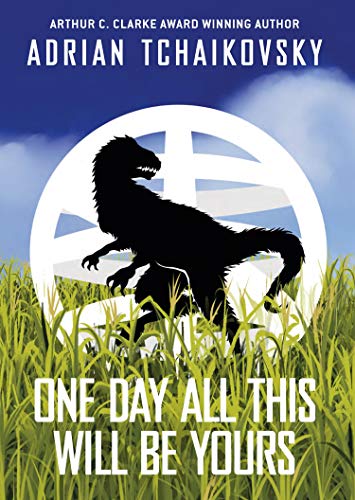
Novella review: One Day All This Will Be Yours by Adrian Tchaikovsky

Apparently, it’s Novella November! Who knew? Not me!

In any case, Novella November is a thing, and that means my timing is spot on, as I’ve been enjoying a few novellas this week.

Here’s a quick look at the first one I finished:


Title: One Day All This Will Be Yours
Author: Adrian Tchaikovsky
Publisher: Solaris
Publication date: March 2, 2021
Length: 144 pages
Genre: Science fiction
Source: Library
Rating:

Rating: 5 out of 5.

The bold new work from award-winning author Adrian Tchaikovsky  – a smart, funny tale of time-travel and paradox

Welcome to the end of time. It’s a perfect day.

Nobody remembers how the Causality War started. Really, there’s no-one to remember, and nothing for them to remember if there were; that’s sort of the point. We were time warriors, and we broke time.

I was the one who ended it. Ended the fighting, tidied up the damage as much as I could.

Then I came here, to the end of it all, and gave myself a mission: to never let it happen again.

A totally trippy take on time travel and the end of the world. Our unnamed narrator is the sole survivor of the Causality War, in which too many competing factions realized that the ultimate weapon isn’t a nuke — it’s a time machine.

And then they used them, because that’s what you always do with the ultimate weapons that you swear you’ll never, ever use. You get your retaliation in first. Sooner or later, you preemptively deploy your deterrent just in case the other side aren’t deterred by it.

Don’t trust your adversaries? Go back in time and wipe out the pieces of their history that made them a threat in the first place. And once one set of people with a time machine realize its potential and actually use it, so does everyone else. It’s all very circular and paradoxical and made my head spin round quite a bit, but this book is oh-so-much fun to read.

I don’t want to give away any of the delightful little surprises, but trust me — you’ll want to experience the main character’s pillaging of the past for entertainment and farming supplies, his ruthless yet “nothing personal” approach to dealing with unwanted visitors, and his training of trusty sidekick Miffly.

The story is mind-bending and funny and plausible in the weirdest of ways, and the writing absolutely cracked me up.

My main complaint? The hardcover version of this book was a limited release, now sold out, and copies are available on EBay and elsewhere for $80 and up. And yes, I could buy the Kindle edition, but I really, really would love to have a physical copy on my shelves. Ah well. A reader can dream, right?

Meanwhile… this is the first book I’ve read by Adrian Tchaikovsky. I have no idea if it’s at all typical of his works, but I’d love to explore further. If you’ve read any books by this author that you’d particularly recommend, please let me know!

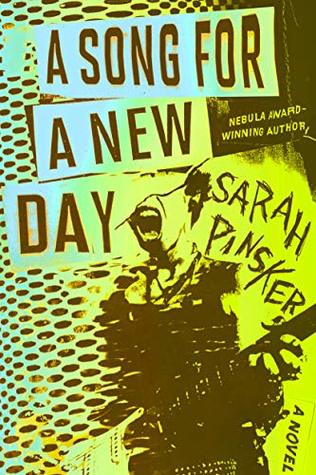
Shelf Control #290: A Song For A New Day by Sarah Pinsker

Shelves final

Welcome to Shelf Control — an original feature created and hosted by Bookshelf Fantasies.

Shelf Control is a weekly celebration of the unread books on our shelves. Pick a book you own but haven’t read, write a post about it (suggestions: include what it’s about, why you want to read it, and when you got it), and link up! For more info on what Shelf Control is all about, check out my introductory post, here.

Want to join in? Shelf Control posts go up every Wednesday. See the guidelines at the bottom of the post, and jump on board!

Title: A Song For a New Day
Author: Sarah Pinsker
Published: 2019
Length: 384 pages

What it’s about (synopsis via Goodreads):

In this captivating science fiction novel from an award-winning author, public gatherings are illegal making concerts impossible, except for those willing to break the law for the love of music, and for one chance at human connection.

In the Before, when the government didn’t prohibit large public gatherings, Luce Cannon was on top of the world. One of her songs had just taken off and she was on her way to becoming a star. Now, in the After, terror attacks and deadly viruses have led the government to ban concerts, and Luce’s connection to the world—her music, her purpose—is closed off forever. She does what she has to do: she performs in illegal concerts to a small but passionate community, always evading the law.

Rosemary Laws barely remembers the Before times. She spends her days in Hoodspace, helping customers order all of their goods online for drone delivery—no physical contact with humans needed. By lucky chance, she finds a new job and a new calling: discover amazing musicians and bring their concerts to everyone via virtual reality. The only catch is that she’ll have to do something she’s never done before and go out in public. Find the illegal concerts and bring musicians into the limelight they deserve. But when she sees how the world could actually be, that won’t be enough.

How and when I got it:

I bought the Kindle edition over a year ago.

Why I want to read it:

I first heard about this book when it won the 2019 Nebula Award for best novel, and must have grabbed a copy when there was a price break at some point after that. At the time of its release and award spree, I thought it sounded like a fascinating dystopian read, but not necessarily something that felt connected to real life.

Whoo boy. Fast forward to our ongoing pandemic, and this book feels practically prescient! Not leaving the house, not being out in public, bans on gatherings, no concerts? Check, check, check, and check!

Granted, the circumstances in the book are different… but not all that different, if deadly viruses are part of what triggers this sort of shutdown.

I’m still curious about this book and would like to read it, but I’ve also pretty consistently shied away from books that feel too closely connected to pandemics, so my reader instincts on this one are very mixed. On the one hand, I do think it sounds great! But on the other hand, now might not be the best time.

What do you think? Would you read this book?

Please share your thoughts!


__________________________________

Want to participate in Shelf Control? Here’s how:

  • Write a blog post about a book that you own that you haven’t read yet.
  • Add your link in the comments or link back from your own post, so I can add you to the participant list.
  • Check out other posts, and…

Have fun!

Book Review: Any Sign of Life by Rae Carson

Title: Any Sign of Life
Author: Rae Carson
Publisher: Greenwillow Books
Publication date: October 12, 2021
Length: 384 pages
Genre: Young adult – Science fiction
Source: Review copy courtesy of the publisher via NetGalley
Rating:

Rating: 3.5 out of 5.

When a teenage girl thinks she may be the only person left alive in her town—maybe in the whole world—she must rely on hope, trust, and her own resilience.

Paige Miller is determined to take her basketball team to the state championship, maybe even beyond. But as March Madness heats up, Paige falls deathly ill. Days later, she wakes up attached to an IV and learns that the whole world has perished. Everyone she loves, and all of her dreams for the future—they’re gone.

But Paige is a warrior, so she pushes through her fear and her grief. And as she gets through each day—scrounging for food, for shelter, for safety—Paige encounters a few more young survivors. Together, they might stand a chance. But as they struggle to endure their new reality, they learn that the apocalypse did not happen by accident. And that there are worse things than being alone.

Any Sign of Life opens to a scenario that hits a little too close to home in 2021, when we still can’t say that the coronavirus pandemic is behind us. In this YA sci-fi novel, our current pandemic is a memory from the past for the characters. As the book begins, we meet main character Paige Miller as she awakens from a coma to confront a world wholly different from the one she thought she knew.

Paige wakes up to discover an IV in her arm and her family’s dead bodies in her house. As she ventures out away from the horror, she encounters nothing but more horror. Every home in her neighborhood contains dead people — she appears to be the only one left alive. After liberating a neighbor’s dog from their locked house, Paige and Emmaline set out to scrounge for supplies and figure out if anyone else has survived.

What seems from the beginning to be a story about a horrific virus that’s wiped out nearly all of humanity takes a turn as Paige starts to realize that this virus couldn’t have been naturally occuring. As far as she can tell, it killed people worldwide in only a week, and that just doesn’t make sense. When Paige meets Trey, another teen survivor, they start to put the pieces together, and realize that humankind didn’t just die out — it was exterminated.

Figuring out how this happened, and desperately fighting for a slim chance at survival, Paige and Trey’s journey leads them to a handful of other survivors and a small chance at making a difference in what seems to be a losing battle to hang onto a world that might still be fit for human life.

Any Sign of Life is both a story of the end of the world as we know it and a tale of a fight for survival. There are exciting action sequences as well as plenty of strategizing about how to survive — and whether there’s a reason to survive. The author gives the characters individuality and personality, as well as giving them each a backstory and inner depth.

Paige, as the POV character, is strong-willed and capable, but also carries the pain of her lost family with her always. Trey is also a great character, and all of the characters we meet are mourning someone they loved.

While the action sequence toward the end of the book is a little confusing, it’s still gripping to read, and I couldn’t help holding my breath while rooting for the good guys to succeed. The book ends on a positive note, but the future still looks grim — and I couldn’t help wondering whether a sequel will be coming along at some point. The ending works, but there’s plenty of room for more of the story to be told.

Any Sign of Life is an engaging read, once I got past the fact that what I thought would be a story about surviving a worldwide plague ended up being about a different sort of threat completely. Not giving too much away, the revelations about the cause of the virus and what the future might hold didn’t wow me, because I feel like I’ve read plenty of stories along these lines already,

Still, I liked the characters and the particular episodes involved in their survival, and have no problem recommending this book to anyone who enjoys post-apocalyptic YA fiction.

**********

Through affiliate programs, I may earn commissions from purchases made when you click through these links, at no cost to you.

Buy now at Amazon – Book Depository – Bookshop.org

Book Review: Feral Creatures by Kira Jane Buxton

Title: Feral Creatures
Author: Kira Jane Buxton
Publisher: Grand Central Publishing
Publication date: August 24, 2021
Length: 368 pages
Genre: Speculative fiction/ horror
Source: Review copy courtesy of the publisher via NetGalley
Rating:

Rating: 4 out of 5.

In this stunning follow-up to Hollow Kingdom, the animal kingdom’s “favorite apocalyptic hero”is back with a renewed sense of hope for humanity, ready to take on a world ravaged by a viral pandemic (Helen Macdonald).

Once upon an apocalypse, there lived an obscenely handsome American crow named S.T. . . .

When the world last checked-in with its favorite Cheeto addict, the planet had been overrun by flesh-hungry beasts, and nature had started re-claiming her territory from humankind. S.T., the intrepid crow, alongside his bloodhound-bestie Dennis, had set about saving pets that had become trapped in their homes after humanity went the way of the dodo. 

That is, dear reader, until S.T. stumbled upon something so rare—and so precious—that he vowed to do everything in his power to safeguard what could, quite literally, be humanity’s last hope for survival. But in a wild world plagued by prejudiced animals, feather-raising environments, new threats so terrifying they make zombies look like baby bunnies, and a horrendous dearth of cheesy snacks, what’s a crow to do?

Why, wing it on another big-hearted, death-defying adventure, that’s what! Joined by a fabulous new cast of animal characters, S.T. faces many new challenges plus his biggest one yet: parenthood. .

A quick take on this book:

I feel like I should write a proper review, but I’m not sure I have a lot to say. I absolutely loved Hollow Kingdom, which introduced us to ST and his post-apocalyptic world of rotting humans, domestic animals waiting to be freed, and tigers wandering the streets of Seattle.

In this follow up, ST is once again our narrator, with chapters narrated by whales, spiders, and cats thrown into the mix. The story picks up with ST now in Alaska, having found the last remaining MoFo (human) — a small baby girl with no one to raise her but ST and his friends. ST is determined to protect Dee no matter what, hiding her away from the world and keeping her safe — but by isolating her, is he depriving her of the ability to discover her own true nature?

Through the raucous escapades of ST and allies, the action moves from Alaskan wilderness to the Bering Sea and back to Seattle, with deeply funny and illuminating encounters with orcas and owls and polar bears along the way. But all is not well in the wild kingdom. Trees are dying, and the MoFos seem to have evolved from shambling zombies into Changed Ones — animal/human hybrids who are freakin’ scary and weird AF.

ST’s narration is fabulous as always, a mix of vulgarity, impressive vocabulary, insightful introspection, and crazy digressions. The writing in Feral Creatures veers between emotional impact and laugh-inducing craziness from moment to moment.

In a once-beautiful winery that was now a den of doom, with fur fizzed up and an arched spine, stood a domestic shorthair cat. A fire starter. The Bruce Lee of felines. A tabby that had sired an entire generation of Seattleite cats — generation FU — and was probably singlehandedly responsible for the eradication of at least one entire songbird species. There was Genghis, with greasy punk rock fur and an arthritic gait purchased at heavy discount from the Ministry of Silly Walks. There wasn’t a bison brave enough to tell him that the earth’s twirling had caught up with him.

I enjoyed a lot about this book… and yet at times, I just couldn’t wait to be done. Maybe because this is a sequel, there’s less room for surprise and delight based on the premise, and the story’s action starts to feel drawn-out and repetitive at times. Even while loving the writing, I did have to continually pull myself back from the brink of boredom when chapters went on too long, and even found myself considering DNFing at times.

I’m glad I stuck with it, though. Even when I grew tired of parts of the story, something amazing (like the arrival of a heard of musk oxen) would pull me back in.

I was experiencing acute déjà poo — the feeling that I’d heard this crap before.

Definitely read Hollow Kingdom first — but if you loved that book, then you’ll want to read Feral Creatures too. My impatience with the book may have more to do with my own reading mood than with the book itself, so take a look and see what you think!

**********

Through affiliate programs, I may earn commissions from purchases made when you click through these links, at no cost to you.

Buy now at Amazon – Book Depository – Bookshop.org

Shelf Control #282: The Book of Strange New Things by Michael Faber

Shelves final

Welcome to Shelf Control — an original feature created and hosted by Bookshelf Fantasies.

Shelf Control is a weekly celebration of the unread books on our shelves. Pick a book you own but haven’t read, write a post about it (suggestions: include what it’s about, why you want to read it, and when you got it), and link up! For more info on what Shelf Control is all about, check out my introductory post, here.

Want to join in? Shelf Control posts go up every Wednesday. See the guidelines at the bottom of the post, and jump on board!

Title: The Book of Strange New Things
Author: Michel Faber
Published: 2014
Length: 528 pages

What it’s about (synopsis via Goodreads):

It begins with Peter, a devoted man of faith, as he is called to the mission of a lifetime, one that takes him galaxies away from his wife, Bea. Peter becomes immersed in the mysteries of an astonishing new environment, overseen by an enigmatic corporation known only as USIC. His work introduces him to a seemingly friendly native population struggling with a dangerous illness and hungry for Peter’s teachings—his Bible is their “book of strange new things.” But Peter is rattled when Bea’s letters from home become increasingly desperate: typhoons and earthquakes are devastating whole countries, and governments are crumbling. Bea’s faith, once the guiding light of their lives, begins to falter.

Suddenly, a separation measured by an otherworldly distance, and defined both by one newly discovered world and another in a state of collapse, is threatened by an ever-widening gulf that is much less quantifiable. While Peter is reconciling the needs of his congregation with the desires of his strange employer, Bea is struggling for survival. Their trials lay bare a profound meditation on faith, love tested beyond endurance, and our responsibility to those closest to us.

Marked by the same bravura storytelling and precise language that made The Crimson Petal and the White such an international success, The Book of Strange New Things is extraordinary, mesmerizing, and replete with emotional complexity and genuine pathos. 

How and when I got it:

I bought the paperback edition in 2015.

Why I want to read it:

I picked up this book after a friend strongly (and repeatedly!) recommended it. I’m always up for good science fiction, and stories about space travel, humanity exploring other planets, first contact with other beings, etc really appeal to me.

That said, this book does strike me as being more “literary” than I’d typically be drawn to, and it’s also over 500 pages, which is a negative for me these days. Maybe because I always feel so behind with my reading, it really takes a lot to make me want to start a book that’s this long.

But, as I said, my friend was pretty insistent at the time that I absolutely needed to read this book. I also have a copy of of The Crimson Petal and the White by the same author, which I’ve also heard raves about.

What do you think? Would you read this book? Have you read anything by this author?

Please share your thoughts!


__________________________________

Want to participate in Shelf Control? Here’s how:

  • Write a blog post about a book that you own that you haven’t read yet.
  • Add your link in the comments or link back from your own post, so I can add you to the participant list.
  • Check out other posts, and…

Have fun!

Through affiliate programs, I may earn commissions from purchases made when you click through these links, at no cost to you.

Buy now: Amazon – Book Depository – Bookshop.org

Shelf Control #275: Resistance is Futile by Jenny T. Colgan

Shelves final

Welcome to Shelf Control — an original feature created and hosted by Bookshelf Fantasies.

Shelf Control is a weekly celebration of the unread books on our shelves. Pick a book you own but haven’t read, write a post about it (suggestions: include what it’s about, why you want to read it, and when you got it), and link up! For more info on what Shelf Control is all about, check out my introductory post, here.

Want to join in? Shelf Control posts go up every Wednesday. See the guidelines at the bottom of the post, and jump on board!

Title: Resistance is Futile
Author: Jenny T. Colgan
Published: 2015
Length: 336 pages

What it’s about (synopsis via Goodreads):

Connie thinks she’s never met anyone quite like Luke Beith before.

She has no idea how right she is.

As a high-ranking mathematician in a male-dominated field – with bright red hair – Connie’s used to being considered a little unusual.

But she’s nowhere near as peculiar as Luke, who is recruited to work alongside her on a top-secret code breaking project.

Just what is this bizarre sequence they’re studying? It isn’t a solution to the global energy crisis. It isn’t a new wavelength to sell microwave ovens. The numbers are trying to tell them something . . . and it seems only Luke knows what.

The truth is out there. Will Connie dare to find it?

In this whirlwind adventure, Sunday Times bestselling author Jenny Colgan boldly goes where no author has gone before . . .

How and when I got it:

I picked up a used paperback copy a couple of years ago.

Why I want to read it:

I first came across Resistance is Futile via a recommendation from a book blogger (and I’m totally blanking on who it was — so if it was you, please let me know!). Jenny T. Colgan is the not-so-secret pseudonym for author Jenny Colgan, who’s an absolute favorite of mine. She writes wonderfully sweet and lovely romantic stories, always in wonderful settings, and usually with lots of amazing food. With the “T” in the middle, she writes lots of Doctor Who novelizations, plus a few other more science-fiction-y contemporary stories. And this is one of those!

It does sound odd and quirky and like so much fun! And what’s not to love about a novel starring a mathematician?

What do you think? Would you read this book?

Please share your thoughts!


__________________________________

Want to participate in Shelf Control? Here’s how:

  • Write a blog post about a book that you own that you haven’t read yet.
  • Add your link in the comments or link back from your own post, so I can add you to the participant list.
  • Check out other posts, and…

Have fun!

Through affiliate programs, I may earn commissions from purchases made when you click through these links, at no cost to you.

Buy now: Amazon – Book Depository – Bookshop.org

Book Review: The World Gives Way by Marissa Levien

Title: The World Gives Way
Author: Marissa Levien
Publisher: Redhook
Publication date: June 15, 2021
Length: 380 pages
Genre: Science fiction
Source: Review copy courtesy of the publisher
Rating:

Rating: 3.5 out of 5.

In a near-future world on the brink of collapse, a young woman born into servitude must seize her own freedom in this glittering debut with a brilliant twist; perfect for fans of Station Eleven, Karen Thompson Walker, and Naomi Alderman.

In fifty years, Myrra will be free.

Until then, she’s a contract worker. Ever since she was five, her life and labor have belonged to the highest bidder on her contract–butchers, laundries, and now the powerful, secretive Carlyles.

But when one night finds the Carlyles dead, Myrra is suddenly free a lot sooner than she anticipated–and at a cost she never could have imagined. Burdened with the Carlyles’ orphaned daughter and the terrible secret they died to escape, she runs. With time running out, Myrra must come face to face with the truth about her world–and embrace what’s left before it’s too late.

A sweeping novel with a darkly glimmering heart, The World Gives Way is an unforgettable portrait of a world in freefall, and the fierce drive to live even at the end of it all.

Based on the synopsis, I expected a dystopian world of class wars and enforced servitude. And yes, that is what’s going on here, but also…

[SPOILER ALERT FOR BIG REVEAL AT END OF FIRST CHAPTER]

[BUT IS IT REALLY A SPOILER IF YOU FIND OUT IN THE FIRST CHAPTER???]

Here’s the spoiler…

The world is a spaceship.

Yup. This is a science fiction novel, and I had no idea before I picked it up!!

Now that that’s out of the way…

Myrra Dal is indentured to the Carlyle family, thanks to a contract signed by her great-grandmother. It’s a work contract that’s binding for not just the original contract signer, but for generations to follow. Myrra is the last in the chain. There are fifty years left on her contract, and then she’ll be free. Of course, this isn’t really a comfort to Myrra: A woman in her 20s, she doesn’t relish the idea of being old by the time she’s released from the contract, but she has no options. Contracts are completely binding and are enforced by the government’s security bureau, which tracks down those who try to escape. Rumor has it that there are executions, but no one really knows for sure.

And back to that spaceship thing: The world of the The World Gives Way is a huge space ship (which the book refers to as “the world the ship” and people just think of as the world). It’s been traveling for centuries, and is expected to reach their planetary destination within fifty years. It’s implied that the Earth was on its way to becoming uninhabitable when the ship was built and launched, and finding a home on board sounds like it was something available to the privileged and wealthy, plus all the workers needed to support a comfortable lifestyle during the lengthy journey.

When I say that the ship is huge, I really mean it. It’s described as being about the size of Switzerland! Which (I looked up for comparison) is equivalent to about Vermont and New Hampshire combined, or closer to home for me, about the size of the Bay Area. (I absolutely couldn’t grasp the size until I had something more familiar to compare it to.)

The world of the ship includes large cities, resort getaways, mountains, deserts, and seas. It really is a world unto itself. For those who can afford it, there are luxuries and extravagances. For everyone else, there’s work and a daily drudge.

As the novel opens, Myrra’s employer, Imogene Carlyle, summons Myrra to the roof of their penthouse. Imogene intends to jump, and wants Myrra to promise to care for her baby, Charlotte. She tells Myrra a huge secret, known only to the top tier of politicians (such as her husband) and government scientists — there’s a breach in the outer hull of the ship, and despite months of study and efforts, there’s no way to repair it. The ship is doomed, expected to breach completely within the next few months. Imogene and Marcus have decided to end their lives now, leaving Charlotte in Myrra’s care. And then she jumps.

Myrra can’t quite believe what’s happened or what she’s just heard, but after searching Marcus’s office, she’s convinced. Taking money from the Carlyle’s safe, she escapes with Charlotte, heading out on the run in search of temporary freedom, alone with the knowledge of the inescapable end of the world.

From here, we also meet Tobias, a rookie cop with a burdened family history who’s assigned the Myrra Dal runaway case as his big opportunity to prove himself. Since no one knows why the Carlyles committed suicide, or if it might even be murder, Myrra is not only an escaped contract worker but also a suspect in their deaths and the kidnapping of their daughter. Tobias and his older partner are hot on Myrra’s trail, following leads that take them to Palmer, an underwater domed city, and onward from there.

Meanwhile, the world begins to show signs of doom. There are more and more frequent “earthquakes”, causing damage, then city-ending destruction, and other strange phenomena as well. Buildings collapse and people are killed, and finally, the government has no choice but to share the horrible news.

But what good does knowing do when there’s no escape? The world the ship is alone is space, years away from any known destination or safe harbor. As the end nears, all Myrra can do is continue her journey, trying to find some sort of solution for Charlotte, and almost inadvertently looking for a semblance of peace for herself.

The World Gives Way has a sense of inevitability about it. As interspersed chapters tell us, the end is indeed coming. These small interludes, in between the chapters focusing on Myrra and Tobias, show us how different parts of the world experience the end and what happens to the people there. It’s awful, because we know all along that there’s only one way the story can end — the world does in fact give way.

That said, Myrra and Tobias’s parallel and then joined journeys are fascinating and moving to read. Their experiences combine elements of an adventure story — daring escapes, near misses, constant danger, clever ruses — with introspective moments about their lives, their pasts, and their hopes, now shown to be out of reach.

As with other books about the end of the world, it can be a very melancholy read, as we know that no matter how much we might wish otherwise, all the characters we meet are doomed. Still, their journey is powerful and and I was very caught up in seeing how their experiences would change them. Would they find peace? Would they make new discoveries? Would they find a way out for Charlotte? I won’t tell here, but I found the ending sad, satisfying, and oddly right, in its own way.

I will say that my brain could never quite grasp the enormity of the world the ship. How can there be a space ship the size of Switzerland? There are only brief descriptions of the overall shape and design of the container of the world — the ship’s hulls, its cylindrical shape, its rotational access — but my mind just never quite got how there could be an entire world, with geographical features like seas and mountains, inside a ship. (That said, I was fine with reading Discworld, in which the entire world travels through space on the back of a giant turtle… but hey, that’s fantasy!)

Despite not being able to come to terms with the size and features of the ship itself, I did enjoy the attempt to picture it all, and couldn’t help but admire the author’s inventiveness in creating such a strange, weird world. Besides the physical aspects of the world, I thought it was also very clever to create such a stratified society, with the ultra-privileged wealthy few dominating the lives of so many contract workers and free working class people. It’s literally an entire world created to support the privilege of those able to afford a new life on a new planet, and the social structure really is fascinating.

The World Gives Way is a little inconsistent in tone, with its ups and downs of action and emotion, but I did like it very much. It wasn’t what I expected, but it ends up really delivering an engrossing and thought-provoking reading experience.

**********

Through affiliate programs, I may earn commissions from purchases made when you click through these links, at no cost to you.

Buy now at Amazon – Book Depository – Bookshop.org

Book Review: Rabbits by Terry Miles

Title: Rabbits
Author: Terry Miles
Publisher: Del Rey
Publication date: June 8, 2021
Length: 448 pages
Genre: Science fiction
Source: Review copy courtesy of the publisher via NetGalley
Rating:

Rating: 2.5 out of 5.

Conspiracies abound in this surreal and yet all-too-real technothriller in which a deadly underground alternate reality game might just be altering reality itself, set in the same world as the popular Rabbits podcast.

It’s an average work day. You’ve been wrapped up in a task, and you check the clock when you come up for air–4:44 pm. You go to check your email, and 44 unread messages have built up. With a shock, you realize it is April 4th–4/4. And when you get in your car to drive home, your odometer reads 44,444. Coincidence? Or have you just seen the edge of a rabbit hole?

Rabbits is a mysterious alternate reality game so vast it uses our global reality as its canvas. Since the game first started in 1959, ten iterations have appeared and nine winners have been declared. Their identities are unknown. So is their reward, which is whispered to be NSA or CIA recruitment, vast wealth, immortality, or perhaps even the key to unlocking the secrets of the universe itself. But the deeper you get, the more deadly the game becomes. Players have died in the past–and the body count is rising.

And now the eleventh round is about to begin. Enter K–a Rabbits obsessive who has been trying to find a way into the game for years. That path opens when K is approached by billionaire Alan Scarpio, the alleged winner of the sixth iteration. Scarpio says that something has gone wrong with the game and that K needs to fix it before Eleven starts or the whole world will pay the price.

Five days later, Scarpio is declared missing. Two weeks after that, K blows the deadline and Eleven begins. And suddenly, the fate of the entire universe is at stake.

I’m not sure I’m actually up to the task of righting a Rabbits review, but I’ll give it a shot!

Rabbits is both the name of this novel and the name of the game within the novel. Rabbits — the game — is secretive and mysterious. No one knows for sure if it actually exists, who created it, how you play, who has played, or how you win. Yet there are countless online discussion groups devoted to Rabbits, as well as countless die-hard gamers who live and breathe for the opportunity to find out more and maybe even get to play.

K, the main character of the book, holds regular workshops on Rabbits in a Seattle arcade, where he reveals rare recordings and shares the lore of the game. It’s all based on rumors and hearsay and dark web conspiracies, but K is more successful than most. Gifted since birth with the ability to see and recognize patterns and connections, he’s highly skilled when it comes to recognizing the anomalies and seeming coincidences that are so crucial to Rabbits.

K also presents as being somewhat imbalanced, losing time, having strange freakouts, and becoming so obsessed with clues and the game that he forgets to eat or sleep. As the book opens, K receives a strange warning from a tech billionaire rumored to be a winner of an earlier iteration of the game. He states that there’s something wrong with the game, that it’s up to K to fix it, and that if he doesn’t, the world may be doomed. No pressure though!

We follow K and his maybe-girlfriend Chloe through a baffling series of symbols, puzzles, and patterns as they work to solve the riddle of Rabbits and, hopefully, to keep the multiverse from imploding. Reading Rabbits, I couldn’t help thinking that it’s sort of a Da Vinci Code kind of mystery wrapped up in gamer-speak, with a techno-thriller pace and edge to it all.

Rabbits is incredibly confusing, and to be honest, I don’t think I could actually tell you what Rabbits — the game — actually is or how someone wins. The book is convoluted as heck, although I can’t say it doesn’t have enjoyable moments. The mindfuckery is leavened by funny dialogue and pop culture references — in between all the parts that left me scratching my head and utterly bewildered. More often than not, I found myself incredibly impatient with all the twists and turns, and I just couldn’t suspend disbelief enough to buy into the idea that these hidden clues could actually make sense to a real person.

I think maybe I’m just not the right audience for Rabbits. The book is long, and while there are some fun passages and escapades, overall it didn’t make a whole lot of sense to me. I will say, though, that it’s made me hypersensitive right now to patterns and coincidences… like why do I always happen to be glancing at a clock when it’s 9:20?

Maybe it’s the game. Maybe I’m playing and I don’t even know it!

Final note: Rabbits is also the name of a podcast created by the novel’s author, Terry Miles. I haven’t listened to it, and understand from the book’s marketing that it’s not necessary to have listened to the podcast to read the book — but it’s also about the game Rabbits. The podcast can be found at: https://www.rabbitspodcast.com/

**********

Through affiliate programs, I may earn commissions from purchases made when you click through these links, at no cost to you.

Buy now at Amazon – Book Depository – Bookshop.org