Book Review: The Berry Pickers by Amanda Peters

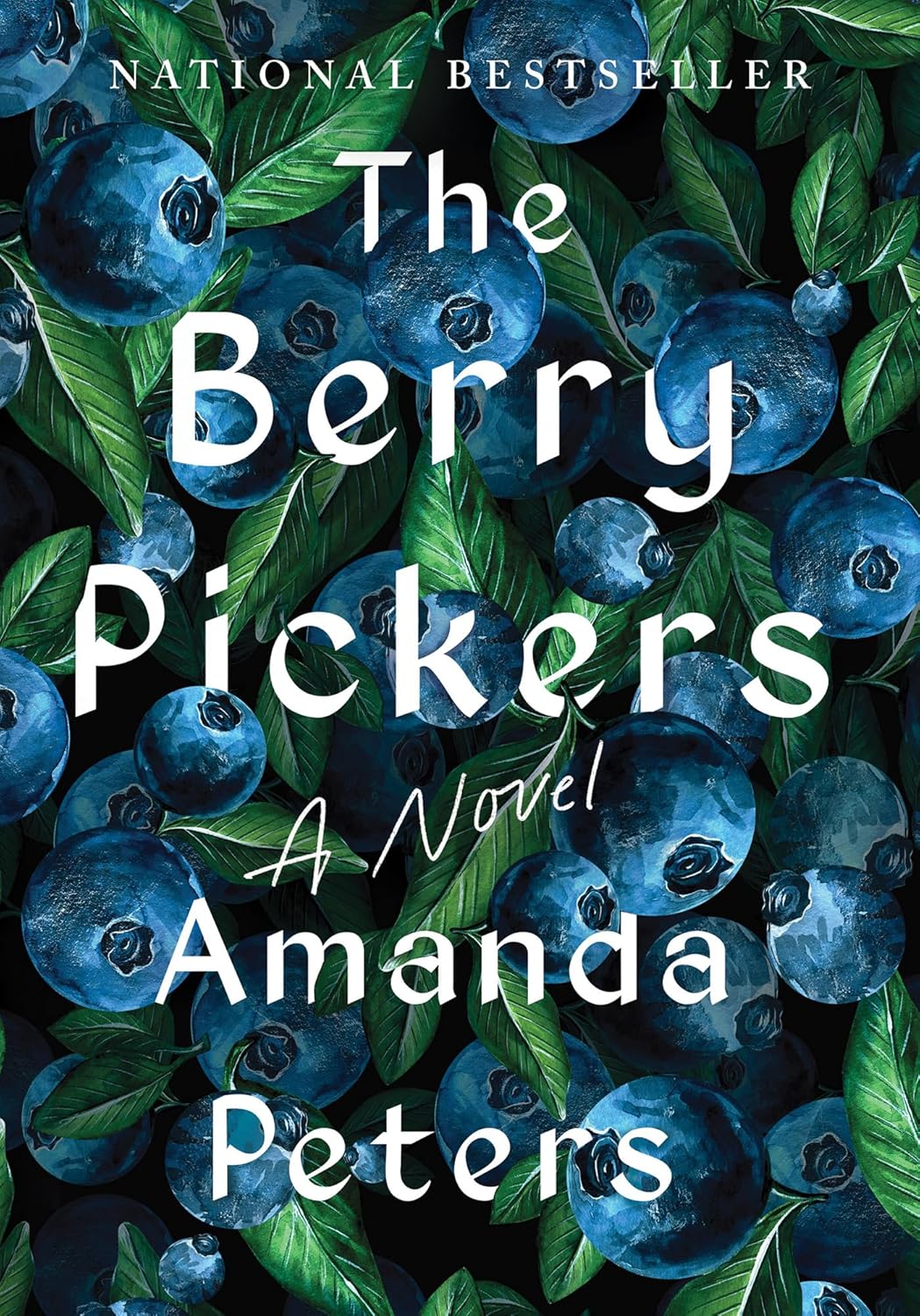
Title: The Berry Pickers
Author: Amanda Peters
Publisher: Penguin
Publication date: April 4, 2023
Length: 295 pages
Genre: Historical fiction
Source: Purchased
Rating:

Rating: 4.5 out of 5.

One family’s deepest pain. Another family’s darkest secret.

On a hot day in 1960s Maine, six-year-old Joe watches his little sister Ruthie, sitting on her favourite rock at the edge of the blueberry fields, while their family, Mi’kmaq people from Nova Scotia, pick fruit. That afternoon, Ruthie vanishes without a trace. As the last person to see her, Joe will be forever haunted by grief, guilt, and the agony of imagining how his life could have been.

In an affluent suburb nearby, Norma is growing up as the only child of unhappy parents. She is smart, precocious, and bursting with questions she isn’t allowed to ask – questions about her missing baby photos; questions about her dark skin; questions about the strange, vivid dreams of campfires and warm embraces that return night after night. Norma senses there are things her parents aren’t telling her, but it will take decades to unravel the secrets they have kept buried since she was a little girl.

The Berry Pickers is an exquisitely moving story of unrelenting hope, unwavering love, and the power of family – even in the face of grief and betrayal.

Once again, I have my book group to thank for leading me to The Berry Pickers, a moving story about family secrets, loss, and a search for truth.

On an ordinary summer day in Maine, four-year-old Ruthie disappears as her family picks berries in the nearby fields. Ruthie’s brother Joe, age six, is the last to see her, sitting on a rock finishing a sandwich while he runs off to chase birds. Both will be forever changed by that day.

Joe is haunted by the guilt he carries, feeling that if only he hadn’t left his sister in that moment, tragedy could have been avoided. Their family — mother and father, older sister and two brothers — search tirelessly for Ruthie, but they’re also obligated to the owner of the berry fields where they work each summer. Eventually, they must continue their work, and at the end of the summer, they head back to their home in Nova Scotia with deep holes in their hearts.

Meanwhile, in alternating chapters, we hear from Norma. As a young girl, raised in a practically silent house by a distant father and an overprotective, mentally fragile mother, Norma has been told that the images that come to her of a different mother and a family around a campfire are just dreams. As she grows up, she accepts this version of reality, although she continues to record these dreams in her journals, but she remains skeptical of some of the answers her parents provide when she asks questions. Why is her skin so much browner than theirs? Because she had an Italian great-grandfather. Why are there no baby pictures of her? Because they lost everything in a fire when she was little.

We understand right away that Norma is Ruthie — this isn’t a spoiler! — but it takes much of the book to unravel how Norma ended up where she is. Meanwhile, through their separate narratives, we see Joe and Norma’s lives unfold, and how deeply both are affected by the pain of Ruthie’s loss and everything that followed.

The Berry Pickers is a beautifully written and deeply affecting book. The tragedy that befalls Joe and Ruthie’s family is terrible, but so is the lack of support and resources available in the immediate aftermath. A Mi’kmaq family who come to Maine each summer for farmwork in the berry fields, they’re dismissed by the local police who provide only cursory help. The farm owner too offers lip-service sympathy before reminding them to get back to work. Again and again, we see how the local community and law enforcement see them as other and not worth much effort, and even to blame for the tragedies that come their way, including a terrible incident years later. Joe ends up spending much of his adult life alone, carrying heavy burdens of rage and guilt, and while we may question his decisions, we can understand why he feels he is doing what is necessary.

Norma’s life is easier, on the surface. She grows up in a financially secure home, gets a good education, pursues an academic career — but she’s always adrift, always carrying the weight of her mother’s fears and manipulations, and the overwhelming sense of sadness that pervades their home. Norma’s Aunt June provides love, support, and kindness, but is also complicit in the big lies at the heart of Norma’s family.

We spend much of The Berry Pickers waiting to see how Joe and Norma’s stories will eventually intersect. It’s worth the wait. The ways in which their lives parallel one another, include a significant near miss, make this story especially heart-wrenching. Joe is a flawed man with deep regrets, but we can’t help love him anyway and wish that he could forgive himself much sooner. Norma’s life is driven by the secrets and lies that have surrounded her since her earliest days. The burden she bears leads her to a lonely life, and we ache for her as she suffer her own losses.

The Berry Pickers presents each character’s story with grace and empathy. While this is a story with deep wounds at its heart, the storytelling doesn’t feel oppressively heavy. By using Joe and Norma’s voices, we’re taken along with them through their lives, experiencing their ups and downs, and coming to know each of them in a meaningful way. There are funny and joyful moments too, and the payoff for this journey provides a beautiful ending.

The Berry Pickers is a powerful book that shouldn’t be missed. Highly recommended!

Purchase linksAmazon – Audible audiobook – Bookshop.orgLibro.fm
Disclaimer: When you make a purchase through one of these affiliate links, I may earn a small commission, at no additional cost to you.

Book Review: Witchcraft for Wayward Girls by Grady Hendrix

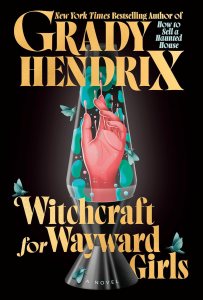
Title: Witchcraft for Wayward Girls
Author: Grady Hendrix
Publisher: Berkley
Publication date: January 14, 2025
Length: 482 pages
Genre: Horror
Source: Purchased
Rating:

Rating: 5 out of 5.

There’s power in a book…

They call them wayward girls. Loose girls. Girls who grew up too fast. And they’re sent to the Wellwood Home in St. Augustine, Florida, where unwed mothers are hidden by their families to have their babies in secret, give them up for adoption, and most important of all, to forget any of it ever happened.

Fifteen-year-old Fern arrives at the home in the sweltering summer of 1970, pregnant, terrified and alone. Under the watchful eye of the stern Miss Wellwood, she meets a dozen other girls in the same predicament. There’s Rose, a hippie who insists she’s going to find a way to keep her baby and escape to a commune. And Zinnia, a budding musician who knows she’s going to go home and marry her baby’s father. And Holly, a wisp of a girl, barely fourteen, mute and pregnant by no-one-knows-who.

Everything the girls eat, every moment of their waking day, and everything they’re allowed to talk about is strictly controlled by adults who claim they know what’s best for them. Then Fern meets a librarian who gives her an occult book about witchcraft, and power is in the hands of the girls for the first time in their lives. But power can destroy as easily as it creates, and it’s never given freely. There’s always a price to be paid…and it’s usually paid in blood.

Grady Hendrix writes marvelously inventive horror novels, with psychological and physical terrors around every corner. Here in Witchcraft for Wayward Girls, the greatest horror is not in the supernatural elements, but in the treatment of the pregnant teens sent in disgrace to the Wellwood Home.

“You are here because you acted like a barnyard animal,” Miss Wellwood said. “You took the glory of your womanhood and threw it in the mud.”

The girls at the home are young, and at the complete mercy of their families, the staff of the home, and the doctors. They are never allowed to forget just how awful they are, how little they matter, and how little control they have over anything that happens to their bodies. They are all utterly ignorant as well — they know what they did to get pregnant, but have no idea what childbirth actually entails.

“You all don’t need to worry yourselves about what’s going to happen when you go to the hospital,” he said. “Because it’s none of your business. You just do what the doctors say and you’ll be fine.”

Fern is distraught when her father angrily bustles her off the home and leaves her there without even a good-bye. “Fern” isn’t even her name — all girls are given new names upon arrival, to preserve anonymity and to make the entire experience as separate from their real lives as possible. All Fern wants is to go home, to forget this ever happened, and to get back to her school, her friends, and the senior play.

But the harsh realities of pregnancy are impossible to ignore, especially once Fern witnesses another girl go into early labor in the bathroom and has to face the awful truth of what lies ahead for her. When the biweekly book mobile shows up, Fern asks the librarian for a book on what really happens during childbirth — which would be considered contraband at the home, where pleasant middle grade books seem to be the only allowed reading material.

The book the librarian passes along is anything but benign children’s fiction. Instead, she hands Fern is a hidden copy of a book titled How to Be a Groovy Witch (how awesome is that?!?!). The book’s contents are mostly incomprehensible, but Fern, Rose, Zinnia, and Holly are able to figure out a spell to cure Zinnia’s unrelenting morning sickness… by transferring it to someone else, with shockingly effective results.

The girls are drawn in by the lure of witchcraft and the power it promises, not seeing until it’s too late that nothing is given for free.

In this world there is one truth: everything has a price, and every price must be paid. Perhaps you will not pay it today, maybe you can put it off until tomorrow, but one day there will be a knock at your door in the middle of the night, a voice in the darkness beside your bed, a letter laid upon the table when you believe yourself to be alone, and it will contain a bill that must be paid, and you will pay it in blood.

Witchcraft for Wayward Girls is an absolutely compelling read. It’s a little on the longer side, but it flies by. The girls’ terror and helplessness feel palpable, and the book is a stark reminder of how far we’ve come in so many ways… and how awful it would be to move backward.

There are several gross-out scenes resulting from the girls’ spells, as well as scenes of supernatural power and strange, other-worldly phenomena. Some parts can be truly scary. And yet, the most horrifying scene is a hospital delivery. Nothing goes wrong medically, but it’s a detailed, horrible depiction of what labor and delivery in the 1970s entailed for so many women. That, to me, is the truly disturbing part of this book. Well, that, plus the girls’ utter lack of agency, the casual cruelty of the adults controlling them, and the soul-crushing sense of shame forced on them from every direction.

They said she could go back to her old life. They said it wouldn’t hurt. They said she’d never have to think about it again. They lied.

I loved the girls’ character development, and how each of them struggles to find strength to face their own particular hell. The girls’ power truly lies in their connection and support of one another, even more so than in the gifts they discover through the book and the librarian’s coven. Despite their individual suffering, they still find joy and friendship, as they band together to take back control and figure out how to survive.

Witchcraft for Wayward Girls is a moving, powerful, absorbing read. The depiction of the historical time and place feels spot-on. 1970s slang and attitudes provide some needed moments of fun and entertainment, despite the overall seriousness of the subject matter. (It’s shocking to see the pregnant girls constantly smoking cigarettes… but hey, it’s 1970!)

Grady Hendrix writes terrific horror, always with unique, clever twists and set-ups. I believe I have one more of his books yet to read (and I’m looking forward to it!); meanwhile, I’m thrilled that I finally got my hands on Witchcraft for Wayward Girls. Highly recommended.

For more by this author:
Horrorstör
My Best Friend’s Exorcism
Paperbacks from Hell: The Twisted History of ’70s and ’80s Horror Fiction
We Sold Our Souls
The Final Girl Support Group
The Southern Book Club’s Guide to Slaying Vampires

Purchase linksAmazon – Audible audiobook – Bookshop.org – Libro.fm
Disclaimer: When you make a purchase through one of these affiliate links, I may earn a small commission, at no additional cost to you.

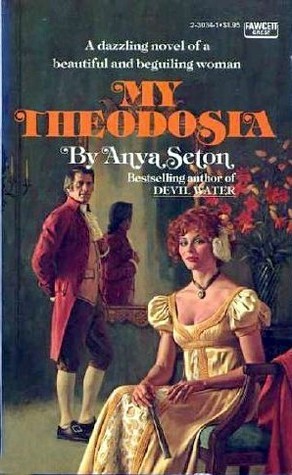
Book Review: My Theodosia by Anya Seton

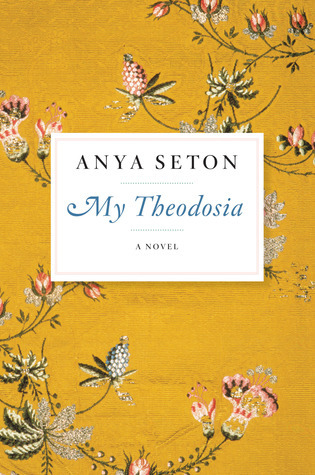
Title: My Theodosia
Author: Anya Seton
Publication date: 1941
Length: 418 pages
Genre: Historical fiction
Source: Purchased
Rating:

Rating: 2.5 out of 5.

Anya Seton’s bestselling first novel, originally published in 1941, captures all the drama of the short life of Theodosia Burr (1783-1813).

Theodosia’s father is Aaron Burr–Thomas Jefferson’s vice president, most famous for his great duel with Alexander Hamilton. With charm and tenderness, he holds sway over young Theodosia’s heart, but his arrogance forces her to choose between the man he insists she marry and her love for a young soldier who will turn out to play a decisive role in her father’s fate. Persuaded by Aaron that she will soon be crowned princess of the Kingdom of Mexico as a result of his treasonable plans, she is received like royalty on Blennerhassett Island, only to end up trying to exonerate him as he awaits trial in a Richmond jail, repudiated by his fickle son-in-law and friends.

Theodosia remains a haunting figure in American history, still lovely, still imperious, never vanquished.

To be honest, the name Theodosia would have meant nothing to me before the Hamilton era… and of course, once my book group selected this historical novel about Aaron Burr’s daughter, this was all I could think of:

My Theodosia opens with Theodosia Burr’s 17th birthday. She’s the pretty, vivacious daughter of Aaron Burr, a man with unlimited ambitions and the highest of standards for his beloved daughter. He oversees every aspect of her upbringing, demanding excellence in her studies, perfect beauty, and social graces to help move all his own machinations forward.

She was flesh of his flesh, an infinitely dear projection of himself.

As Theo will soon learn, while he loves her immensely, he’s also keenly focused on making sure that her future marriage will be advantageous for him, including providing a source of wealth to keep his expensive lifestyle afloat and help propel him into the Presidency.

Theo, meanwhile, adores and idolizes her father, while also basking in the attention and admiration that surrounds her. While she may not want the marriage Aaron decides upon, she obeys her father’s wishes in this as in all things. By age 18, Theo is married to Joseph Alston, a wealthy plantation owner from South Carolina who has the funds and the political clout to further Aaron’s political ambitions.

My Theodosia follows Theo through the ten years between her marriage and her untimely death, with Aaron’s life and scandals as the backdrop to all of Theo’s own feelings, desires, and plans. No matter what else occurs in her life, her father always is her priority, to the detriment of her marriage and her security. Key events, such as the Hamilton duel, happen mainly off the page, and we experience these through Theo’s eyes, as she worries for Aaron, rushes to his defense whenever she can, and makes his well-being and reputation her primary objectives.

1941 edition

Reading this book over 80 years after its original publication, I found it difficult to enjoy. Theo and Aaron’s relationship is problematic and dysfunctional in so many ways. Theo’s overriding dedication to Aaron feels unhealthy, and his focus and molding of her is disturbing.

He did not quite admit it to himself, but he would have opposed any match with a man whom she passionately desired. He had no intention of transferring her devotion from himself to another. Her worship was the sweetest thing in life.

Most difficult for me as a modern reader is the casual racism that permeates the book. We might expect a slave-owner such as Joseph (and the rest of his family) to hold abhorrent views, but even Aaron and Theo, supposedly more enlightened New Yorkers, use the n-word freely and invoke all sorts of degrading and disparaging language in reference to the slaves and servants of color in their lives. I suppose some might argue that the author was attempting to evoke the prevailing attitudes of the time she was portraying, and perhaps that was more acceptable at the time of publication, but reading the book today, it’s awful — no two ways about it.

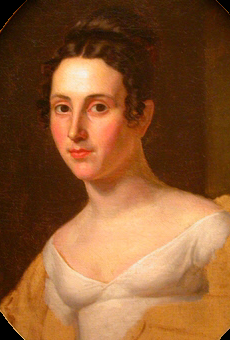
Portrait by John Vanderlyn, c. 1815–1820

While the storytelling style is immersive, I often found myself wondering about sources and historical accuracy. There’s a brief author’s note, but it doesn’t shed much light on how much of the story is substantiated through historical documentation and how much is embroidered or speculative. (For example, the idea that the passionate yet unfulfilled love of Theodosia’s life was Meriweather Lewis is, as far as I can tell, an invention of the author’s and is not supported by historical evidence.)

1976 paperback edition

My Theodosia was Anya Seton’s first novel. I understand that many of her subsequent books are quite beloved. However, based on my experiences with My Theodosia, I don’t feel particularly compelled to explore her works any further.

As for My Theodosia itself, I can’t say I particularly recommend it. On the one hand, it’s an informative look at the life of a woman I knew nothing about, and through her, a look into the character and life of Aaron Burr beyond his Hamilton-related infamy. On the other hand, the racism, sexism, and uncomfortable father-daughter relationship make this an unpleasant reading experience overall. If not for my upcoming book group discussion, I most likely would have put the book aside and not finished it.

I’d be curious to hear from anyone who’s read other books by Anya Seton. Are there any you recommend? And if you’ve read My Theodosia, I’d love to hear your perspective as well.

Purchase linksAmazon – AudibleBookshop.org – Libro.fm
Disclaimer: When you make a purchase through one of these affiliate links, I may earn a small commission, at no additional cost to you.

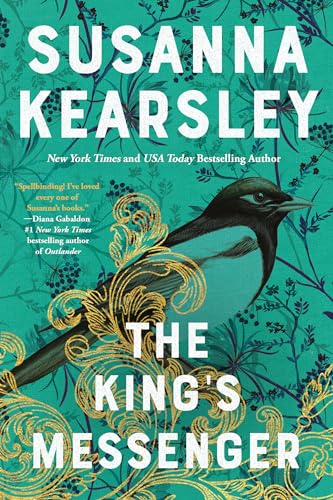
Book Review: The King’s Messenger by Susanna Kearsley

Title: The King’s Messenger
Author: Susanna Kearsley
Publisher: Sourcebooks Landmark
Publication date: March 4, 2025
Length: 352 pages
Genre: Historical fiction
Source: Purchased
Rating:

Rating: 5 out of 5.

For fans of Diana Gabaldon and Philippa Gregory, courtly rivalry and intrigue…
 
1613:  King James – sixth of Scotland, first of England, son of Mary, Queen of Scots – has unified both countries under one crown. But the death of his eldest son, Henry, has plunged the nation into mourning, as the rumours rise the prince was poisoned.
 
Andrew Logan’s heard the rumours, but he’s paid them little heed. As one of the King’s Messengers he has enough secrets to guard, including his own. In these perilous times, when the merest suggestion of witchcraft can see someone tortured and hanged, men like Andrew must hide well the fact they were born with the Sight.
 
He’ll need all his gifts, though, when the king sends Andrew north to find and arrest Sir David Murray, once Prince Henry’s trusted courtier, and bring him a prisoner to London to stand trial before the dreaded Star Chamber.
 
A story of treachery, betrayal and love…

And the blurb from a different edition:

New York Times, USA Today and international bestselling author Susanna Kearsley explores romance, court alliances, and the limits of one’s duty in this rich story of an ordinary man in service to a treacherous king, and the mission that brings him to love and his true calling.

In 1613, King James sends his messenger Andrew Logan to Scotland to arrest his late son’s close advisor Sir David Moray. Accompanied by his aloof neighbor Phoebe Westaway, Andrew slowly untangles the real point of his mission—to frame Sir David for Prince Henry’s death. But Andrew is unwilling to bring an innocent man into a treacherous betrayal.

Andrew’s feisty and lovely neighbor Phoebe Westaway has always been stand-offish to Andrew, having heard malicious gossip against him. But as they journey to Scotland and back, Phoebe has the opportunity to see Andrew for the honorable and loyal man that he is, and her change of heart may open new possibilities for them once their mission is complete.

Susanna Kearsley is a must-read author for me. Her books are beautiful depictions of well-developed characters embroiled in significant historical periods, and I’ve loved them all so far. Her 2025 release, The King’s Messenger, is another excellent tale that kept me hooked from start to finish.

The King’s Messenger is set in England in1613, during the reign of King James I. As the story opens, his eldest son and heir, Prince Henry, has recently died, a tragedy for the kingdom as well as for those who loved him. Rumor has it that his death wasn’t natural — was he poisoned?

Andrew Logan is a King’s Messenger, a man whose job it is to carry out tasks on behalf of the king, delivering and receiving messages, but also, when necessary, making arrests and taking people into custody. Following Prince Henry’s death, Andrew is summoned before the king and charged with a new assignment: He’s to journey to Scotland and arrest Sir David Moray, Henry’s closest companion and beloved mentor and friend, and deliver him to London for trial. Sir David is being charged with the prince’s murder — but he’s not without friends at court, and they have a very different viewpoint of what actually happened.

Phoebe Westaway is Andrew’s neighbor, and the two have a quarrelsome, contentious relationship, fueled by Phoebe’s dislike of Andrew over what may have been a misunderstanding years earlier. Phoebe’s father is a scrivener (scribe), and he’s ordered to accompany Andrew on his mission and record everything that Sir David says during their journey back to London. But Mr. Westaway is ailing, and Phoebe worries that the arduous journey will endanger his health, so she insists on going with him. Andrew disapproves, but his Second Sight shows him that she does in fact go with them, and he knows that what he Sees can’t be changed — and so these three end up traveling together through Scotland and back toward London, escorting a prisoner who seems more and more to have been unfairly framed for a crime he simply could not have committed.

The plot of The King’s Messenger nicely balances the intrigue surrounding Henry’s death, the journey through Scotland and England, as the travelers face dangers from their surroundings, pursuers, and suspicious strangers, and the interpersonal dynamics among the group. Andrew starts by viewing David as his prisoner, but over time, he starts to understand who David is as a man. We see Andrew adjust his attitude and treatment of David due to the growing respect he has for him, as well as the growing suspicion that he’s being used as a pawn in a plot he’s only starting to become aware of.

Phoebe and Andrew also see a shift in their relationship, going from mistrust and tension to tentative appreciation, and finally, a more emotional bond. Phoebe has to overcome old prejudices to appreciate who Andrew truly is, and Andrew can only reveal so much to Phoebe while keeping his oaths and the secrecy of his position.

The story is told through chapters from several different characters’ viewpoints, including Andrew, David, Phoebe, and even Queen Anna, wife of King James and mother of Henry. Each voice is distinct, and lends an important insight into this complicated web of partial truths and competing motives.

I was a bit nervous at the start of the book, as this is not a historical period with which I had much familiarity ahead of time. I needn’t have worried: Without any sort of heavy-handed exposition, the author weaves enough context and information into the narrative to ease the reader into the story. It never felt hard to follow, and in fact, I ended up really enjoying learning more about this time and its royal dramas.

Overall, I loved The King’s Messenger. The journey is exciting, and I was entirely caught up in the characters’ relationships, risks, and plans. The King’s Messenger has a satisfying conclusion, remaining true to known history while also feeling very appropriate for what we come to know of the characters.

The author provides quite a bit of information in her closing notes about her research and sources, including distinguishing between what is known of the historical figures and events. Many of the main characters, including Andrew and Phoebe, are fictional creations, but they’re so well developed and situated that they feel totally natural in their roles interacting with historical figures such as David Moray and the King and Queen.

Susanna Kearsley’s books never let me down, and The King’s Messenger is no exception. The Moray family figures in several of her other books, set in slightly later time periods, but it’s not necessary to have read them in order to appreciate The King’s Messenger.

Highly recommended for fans of historical fiction. Don’t miss it!

Purchase linksAmazon – Bookshop.orgLibro.fm
Disclaimer: When you make a purchase through one of these affiliate links, I may earn a small commission, at no additional cost to you.

Book Review: Atmosphere by Taylor Jenkins Reid

Title: Atmosphere
Author: Taylor Jenkins Reid
Publisher: Ballantine Books
Publication date: June 3, 2025
Length: 352 pages
Genre: Historical fiction
Source: Purchased
Rating:

Rating: 4.5 out of 5.

From the #1 New York Times bestselling author of The Seven Husbands of Evelyn Hugo and Daisy Jones & The Six comes an epic new novel set against the backdrop of the 1980s Space Shuttle program about the extraordinary lengths we go to live and love beyond our limits.

Joan Goodwin has been obsessed with the stars for as long as she can remember. Thoughtful and reserved, Joan is content with her life as a professor of physics and astronomy at Rice University and as aunt to her precocious niece, Frances. That is, until she comes across an advertisement seeking the first women scientists to join NASA’s Space Shuttle program. Suddenly, Joan burns to be one of the few people to go to space.

Selected from a pool of thousands of applicants in the summer of 1980, Joan begins training at Houston’s Johnson Space Center, alongside an exceptional group of fellow candidates: Top Gun pilot Hank Redmond and scientist John Griffin, who are kind and easy-going even when the stakes are highest; mission specialist Lydia Danes, who has worked too hard to play nice; warm-hearted Donna Fitzgerald, who is navigating her own secrets; and Vanessa Ford, the magnetic and mysterious aeronautical engineer, who can fix any engine and fly any plane.

As the new astronauts become unlikely friends and prepare for their first flights, Joan finds a passion and a love she never imagined. In this new light, Joan begins to question everything she thinks she knows about her place in the observable universe.

Then, in December of 1984, on mission STS-LR9, everything changes in an instant.

Fast-paced, thrilling, and emotional, Atmosphere is Taylor Jenkins Reid at her best: transporting readers to iconic times and places, with complex protagonists, telling a passionate and soaring story about the transformative power of love, this time among the stars.

Taylor Jenkins Reid is one of my go-to authors; I know I’m in for an emotional, immersive reading experience when I pick up one of her books. And with Atmosphere, her terrific writing and character development are set within a topic that always fascinates me: NASA and the development of America’s space program — and especially, how women are (or are not) included within that program.

Atmosphere‘s main character is Joan Goodwin, an astronomer who looks to the stars for insights into life on Earth and humanity’s role within the universe. It’s the 1980s, and NASA is preparing to develop its new space shuttle program. In a huge departure, NASA is — for the first time — accepting applications for women to join its upcoming astronauts cohorts. Joan doesn’t hesitate: She applies immediately, and eventually, is accepted.

But women in the space program are still rarities, and each of them finds that they represent not just themselves, but all women. As one of Joan’s peers comments as they watch Sally Ride launch into space:

“If Sally so much as sneezes at the wrong time, everyone will blame it on the fact that she’s a woman. And then none of us will go up there for a very long time.”

Joan is very much aware:

There were four men on that shuttle. But every American woman was.

Joan has more in her life than the intense training and commitment required to qualify as an astronaut. She’s a devoted aunt, helping raise the young daughter that her selfish sister seems to resent. Joan’s sister Barbara takes Joan for granted, acting as though Joan’s career is a personal affront when it causes her to be less available for babysitting and school pick-ups.

The heart of Atmosphere is Joan’s romantic life, or rather, her growing understanding of why she’s never experienced true love and why shouldn’t couldn’t bring herself to accept a marriage proposal from her high school boyfriend, despite her family’s pressure. When Joan meets Vanessa Ford, another astronaut candidate in her training group, she’s immediately drawn to her. Joan and Vanessa’s friendship slowly develops into something more, and as the women fall deeply in love, they must balance their relationship with the realities of government service in that era. The need to hide is very real; any hint of their relationship would be enough to permanently end their dreams of making it into space.

Atmosphere is structured with a now/then split timeline: As the book opens, it’s December 1984, and Joan is serving a shift as CAPCOM — the voice of Mission Control — while a crew on the space shuttle prepares for what should be a relatively simple satellite launch. And then things go horribly wrong, and Joan is forced to remain calm and provide guidance while a crew of her close friends — and Vanessa — are at risk of never returning to Earth at all.

Interspersed with the “now” chapters focusing on the unfolding disaster, the “then” chapters go back seven years, and follow Joan from her initial application to acceptance into the astronaut program, through her years of training and up to her first space mission. We follow the incredibly rigorous requirements and grueling training she experiences, and witness the competition and comaraderie among the astronaut candidates, as well as the baked-in sexism that the woman astronauts face on a daily basis.

Beyond that, we see Joan and Vanessa’s love story unfold. It’s sweet and passionate and deeply sincere, yet tinged with the necessity of hiding and living very different lives behind closed doors and in public.

Joan studied the thin blue, hazy circle that surrounded the Earth. The atmosphere was so delicate, nearly inconsequential. But it was the very thing keeping everyone she loved alive.

Atmosphere is beautifully written, and evokes the excitement of the space program as well as the social pressures and prejudices of the era. The characters are sharply drawn and sympathetic, and the chapters showing the backstory leading up to the disaster that frames the book are engrossing and highly engaging.

The shuttle disaster is gut-wrenching to read about. From our modern-day perspective, we readers are naturally all too aware of the real-life Challenger and Columbia disasters; we know all too well that the events unfolding on the page are most likely to end in tragedy. It’s impossible to look away; I found myself holding my breath and on edge whenever this piece of the storyline resumed, and was surprised by how intensely emotional I became by the end.

Overall, Atmosphere is an uplifting, highly compelling read. Truly, my only quibble is that I wanted more at the very end, which I felt wrapped up a little bit too abruptly. I would have loved one more chapter, or perhaps an epilogue, to gain a sense of closure in terms of the characters I’d come to care about so deeply.

Still, that’s really a minor complaint. I loved the book as a whole, and highly recommend Atmosphere for anyone looking for a fascinating, emotional read with unforgettable characters and historical elements that resonate today.

Purchase linksAmazon – Bookshop.orgLibro.fm
Disclaimer: When you make a purchase through one of these affiliate links, I may earn a small commission, at no additional cost to you.

Book Review: Bury Our Bones in the Midnight Soil by V. E. Schwab

Title: Bury Our Bones in the Midnight Soil
Author: V. E. Schwab
Publisher: Tor
Publication date: June 10, 2025
Length: 544 pages
Genre: Fantasy/historical
Source: Purchased
Rating:

Rating: 5 out of 5.

From V. E. Schwab, the #1 New York Times bestselling author of The Invisible Life of Addie LaRue: a new genre-defying novel about immortality and hunger.

This is a story about hunger.
1532. Santo Domingo de la Calzada.
A young girl grows up wild and wily—her beauty is only outmatched by her dreams of escape. But María knows she can only ever be a prize, or a pawn, in the games played by men. When an alluring stranger offers an alternate path, María makes a desperate choice. She vows to have no regrets.

This is a story about love.
1827. London.
A young woman lives an idyllic but cloistered life on her family’s estate, until a moment of forbidden intimacy sees her shipped off to London. Charlotte’s tender heart and seemingly impossible wishes are swept away by an invitation from a beautiful widow—but the price of freedom is higher than she could have imagined.

This is a story about rage.
2019. Boston.
College was supposed to be her chance to be someone new. That’s why Alice moved halfway across the world, leaving her old life behind. But after an out-of-character one-night stand leaves her questioning her past, her present, and her future, Alice throws herself into the hunt for answers . . . and revenge.

This is a story about life—
how it ends, and how it starts.

Bury Our Bones in the Midnight Soil is the vampire book I didn’t know I needed. In this hefty, intricate book, author V. E. Schwab weaves together three characters’ voices and experiences, spanning centuries, to create an epic tale of love, need, hunger, and regret.

We open with Maria, a girl growing up in 16th century Spain, whose only possible future is getting married and having babies. As a young woman, she finds a way to ensure a promising marriage to a viscount, then realizes that her marriage is not the path to freedom that she’d anticipated. After meeting a mysterious, youthful widow with an apothecary shop near her husband’s estate, she’s given the key to a new life.

Charlotte, in 19th century England, is sent to her aunt’s home in London for the Season, mainly to learn how to be a proper, marriageable young woman after being caught kissing her best friend. Charlotte finds the etiquette and corsets equally restrictive, and none of the men she encounters at the endless balls interest her — but the beautiful widow Sabine is intriguing, and their friendship blooms into something much more.

Alice is a modern-day Harvard freshman, attending college in Boston far from her home in Scotland, hoping to reinvent herself after leaving behind painful family secrets. But Alice is still the shy, isolated girl she’s always been, even in her new setting, until she attends a party and decides to be bold — and ends up completely transformed in ways she neither anticipated nor consented to.

Never walk alone at night, they tell you, if you’re a girl.

And it isn’t fair.

Because the night is when the world is quiet.

The night is when the air is clear.

This is a vampire story, and it doesn’t take a huge leap of imagination on the reader’s part to understand how these characters’ stories connect. The beauty lies in seeing it all unfold. Each character’s past is carefully established, pieced out bit by bit in overlapping timelines and alternating chapters. There are elements kept hidden, only revealed as the story progresses, and these work especially well to explain events we may think we understand — but may not have the entire picture of.

Alice may be the most sympathetic of the main characters. She’s given no choice in what happens to her, and her rage and dismay are completely understandable. Of course, we could also consider Maria and Charlotte as not particularly having choices either: They make the decisions that propel them into their new lives — but each is so hemmed in by society’s restrictions that a radical departure is the only way to free themselves.

We may expect Sabine to be the villain of the piece, and she does many villainous things… but she’s not at all one-dimensional. No matter how terrible her later actions are, we never lose some sense of compassion for her. We know her backstory, and know what she’s experienced. There’s a reason (multiple reasons) she becomes who she becomes; we may hate what she does, but we know how she got there.

Without giving away any further plot points, I’ll just point out that the writing in Bury Our Bones in the Midnight Soil is lush and delicious, vivid enough to want to sink into, dreamy and evocative, yet also propulsive. This is a long book, but it never lags. I always wanted to know more, and hated to have to pause when real life pulled me away.

I read the author’s debut adult novel, The Invisible Life of Addie LaRue, several years ago, and loved it. Bury Our Bones in the Midnight Soil is another beautiful, imaginative story that’s a completely immersive reading experience. I haven’t read any of the author’s young adult novels or series, but I know I need to!

I enjoyed every moment of my reading journey through the world of Bury Our Bones in the Midnight Soil, and found myself fascinated by the characters, their lives, and their choices. Don’t miss this incredible book!

Purchase linksAmazon – Bookshop.orgLibro.fm
Disclaimer: When you make a purchase through one of these affiliate links, I may earn a small commission, at no additional cost to you.

Audiobook Review: Great Big Beautiful Life by Emily Henry

Title: Great Big Beautiful Life
Author: Emily Henry
Narrator: Julia Whelan
Publisher: Berkley
Publication date: April 22, 2025
Print length: 432 pages
Audio length: 12 hours, 2 minutes
Genre: Romance
Source: Purchased
Rating:

Rating: 4.5 out of 5.

Two writers compete for the chance to tell the larger-than-life story of a woman with more than a couple of plot twists up her sleeve in this dazzling and sweeping new novel from Emily Henry.

Alice Scott is an eternal optimist still dreaming of her big writing break. Hayden Anderson is a Pulitzer-prize winning human thundercloud. And they’re both on balmy Little Crescent Island for the same reason: To write the biography of a woman no one has seen in years–or at least to meet with the octogenarian who claims to be the Margaret Ives. Tragic heiress, former tabloid princess, and daughter of one of the most storied (and scandalous) families of the 20th Century.

When Margaret invites them both for a one-month trial period, after which she’ll choose the person who’ll tell her story, there are three things keeping Alice’s head in the game.

One: Alice genuinely likes people, which means people usually like Alice—and she has a whole month to win the legendary woman over.

Two: She’s ready for this job and the chance to impress her perennially unimpressed family with a Serious Publication

Three: Hayden Anderson, who should have no reason to be concerned about losing this book, is glowering at her in a shaken-to-the core way that suggests he sees her as competition.

But the problem is, Margaret is only giving each of them pieces of her story. Pieces they can’t swap to put together because of an ironclad NDA and an inconvenient yearning pulsing between them every time they’re in the same room.

And it’s becoming abundantly clear that their story—just like the tale Margaret’s spinning—could be a mystery, tragedy, or love ballad…depending on who’s telling it.

Emily Henry’s books are quintessential summer reads, and her newest, Great Big Beautiful Life, is no exception. In fact, this book features an historical element that her books typically do not, and at least for this reader, the result is a richer, deeper experience than I’d originally anticipated.

Margaret Ives, the descendant of the powerful, legendary House of Ives, is the last remaining heir to the Ives media empire, which grew from the success of Margaret’s great-grandfather in exploration and mining. By the time Margaret was born, her family controlled the media, had influence everywhere, and was known for its scandals as much as for their wealth and power. But as we’re told, Margaret disappeared from the public view decades earlier, and no one has heard from her since. Still, the public fascination with the Ives family has never truly faded, and speculation continues to bubble up over what really happened to Margaret and her late husband, the wildly popular singer Cosmo Sinclair (dubbed the “Poor Man’s Elvis”).

When writer Alice Scott follows an anonymous tip and locates Margaret, now in her 80s and living alone on a small island off the coast of Georgia, she submits a book proposal and Margaret agrees to hear her out. But when she arrives at Margaret’s door, she finds another author has been invited as well — Hayden Anderson, whose previous book just won a Pulitzer. Alice is dismayed, but Margaret is quick to inform them that they’re both in the running: She’ll meet with each of them, separately and for equal amounts of time, over the next 30 days, after which they’ll each get a chance to make their pitch, and she’ll choose one of them to write her story. Alice isn’t happy with the set-up, but this could be the opportunity of a lifetime, much too good to walk away from. After signing detailed NDAs, Alice and Hayden are in, and they begin their interviews with Margaret.

As the novel progresses, we get chapters focused on Margaret’s story, where we learn her family’s twisty, hidden past — where they started, how their fortune grew, and the fights, scandals, affairs, and mysteries that plagued them ever since.

Meanwhile, Alice and Hayden go from competitors to something like colleagues — unable to share the details of their interviews (those NDAs!!), but still giving one another encouragement and support through their mutual, bizarre process. As they spend time together, their professional respect turns into friendship and attraction, and while they initially resist, their feelings grow in a way that can’t be ignored.

The structure of Great Big Beautiful Life is a lovely balancing act, bringing interest and forward momentum to both Margaret’s story and the contemporary romance between Alice and Hayden. I must admit, however, that the further I got in the book, the more I wanted to stick with Margaret! She’s a fascinating character with a deeply engrossing family story — if only the book about her life were real, I’d absolutely want to read it!

The romance elements are nicely done, although at some point I lost a bit of patience for the will-they-won’t-they dynamic, as well as the somewhat odd insistence that they not sleep together until after the book proposals are done and Margaret makes her choice… because what this actually means is that they become very heavily sexually involved, but refrain from intercourse. Ummm… from my point of view, this is a very silly distinction. But okay…

Alice’s family life and her challenging relationship with her mother comes into play, as does Hayden’s own family background. They have hurdles to overcome if they want a future together, and meanwhile, while they can’t share the details of what Margaret has revealed to them, each has the feeling that she’s not being entirely honest with them. But why agree to a biography and then lie about key elements?

I listened to the audiobook version, narrated by the amazing Julia Whelan — and through her storytelling, the characters and events absolutely shine. She’s an incredibly gifted narrator, and has an uncanny knack for convincing me that I’m listening to individual people, not one person voicing multiple characters. Her depiction of Margaret is especially lovely and powerful.

I really enjoyed Great Big Beautiful Life, and highly recommend it. As I mentioned, I wasn’t quite as invested in Alice and Hayden’s contemporary storyline — it’s a good enough romance, and I enjoyed it, but some of the tension between them felt unnecessary. (However, I did appreciate that the obligatory 3rd act breakup actually made sense and felt like it was based on a realistic, unsolvable problem). For me, Margaret’s story is the true heart and soul of this book, and it’s wonderful. I would happily spend much more time exploring her secrets, her triumphs, and her heartbreaks.

To sum it all up… Great Big Beautiful Life is a wonderful reading and listening experience! Don’t miss it.

Read-alikes:

Great Big Beautiful Life has themes and story arcs that reminded me of a few other terrific books I’ve read — so if this book appeals to you, consider one of these as well:

  • If you like the poor-little-rich-girl aspect of the story, try… The Thirteenth Husband by Greer Macallister: Historical fiction about an heiress with an incredible life full of scandals and excitement.
  • If you like the idea of an elderly woman with a secretive past getting two people to vie to discover the truth, try… Drop Dead by Lily Chu: Lighthearted romance featuring writers competing to discover a famously reclusive woman’s secrets, following clues scattered throughout her outrageously lavish estate.
  • If you like a story about celebrities living in the public eye but hiding secrets, try… The Seven Husbands of Evelyn Hugo by Taylor Jenkins Reid: The secret stories behind a Hollywood star’s many marriages, finally revealed in the star’s late-in-life interview with a journalist.

Purchase linksAmazon – Bookshop.org – Libro.fm
Disclaimer: When you make a purchase through one of these affiliate links, I may earn a small commission, at no additional cost to you.

Book Review: What Kind of Paradise by Janelle Brown

Title: What Kind of Paradise
Author: Janelle Brown
Publisher: Random House
Publication date: June 3, 2025
Length: 368 pages
Genre: Thriller/historical fiction
Source: Review copy courtesy of the publisher via NetGalley
Rating:

Rating: 4.5 out of 5.

A teenage girl breaks free from her father’s world of isolation in this exhilarating novel of family, identity, and the power we have to shape our own destinies—from the New York Times bestselling author of Pretty Things and Watch Me Disappear

The first thing you have to understand is that my father was my entire world.

Growing up in an isolated cabin in Montana in the mid-1990s, Jane knows only the world that she and her father live in: the woodstove that heats their home, the vegetable garden where they try to eke out a subsistence existence, the books of nineteenth-century philosophy that her father gives her to read in lieu of going to school. Her father is elusive about their pasts, giving Jane little beyond the facts that they once lived in the Bay Area and that her mother died in a car accident, the crash propelling him to move Jane off the grid to raise her in a Thoreau-like utopia.

As Jane becomes a teenager she starts pushing against the boundaries of her restricted world. She begs to accompany her father on his occasional trips away from the cabin. But when Jane realizes that her devotion to her father has made her an accomplice to a horrific crime, she flees Montana to the only place she knows to look for answers about her mysterious past, and her mother’s death: San Francisco. It is a city in the midst of a seismic change, where her quest to understand herself will force her to reckon with both the possibilities and the perils of the fledgling Internet, and where she will come to question everything she values.

In this sweeping, suspenseful novel from bestselling author Janelle Brown, we see a young woman on a quest to understand how we come to know ourselves. It is a bold and unforgettable story about parents and children; nature and technology; innocence and knowledge; the losses of our past and our dreams for the future.

TL;DR: What if the Unabomber had a daughter?

In this thriller by Janelle Brown, set during the early days of the Silicon Valley internet boom, an increasingly unhinged father steals his young daughter away to live in an isolated cabin in Montana. There, he drills her on philosophy, teaches her to hunt and farm, and conducts evacuation practices through secret tunnels. Above all, he raises her to embrace his own world view:

“Companionship is a crutch. Learning to be alone is the most critical life skill of all — haven’t I taught you that? Because when you rely on other people, for emotional support or intellectual engagement or entertainment or just survival, you are weak. You are vulnerable. Because it means that you will suffer when it’s taken away — and it inevitably will be. You should never rely on anyone.”

From the age of four, Jane’s life is contained within the walls of the cabin and the surrounding forests, and centers on her father. He’s her teacher and protector, and as she grows, he trains her to follow in his footsteps, indoctrinating her on his anti-technology theories, and eventually, involving her in creating his manifesto and in his quest to rid the world of advanced tech, which he sees as dooming the human race.

Jane believes whole-heartedly in her father — for a while. But as she grows up, she has the opportunity to access a TV, and later, the internet (after her father brings her a how-to guide for HTML and instructs her to create a website for his manifesto). As she gains access to the outside world, she begins to wonder whether her faith in her father is flawed, whether his teachings are correct, and whether she’s actually more of a prisoner than someone being protected.

After her father involves her in an act of violence, she flees — but the world outside her cabin is dangerous and baffling, and Jane is forced into difficult situations and hard decisions. Meanwhile, through Jane’s experiences, we see the rise of tech in its glory days, filled with hope and inspiration as well as dire warnings about the destruction of humanity.

What Kind of Paradise is fascinating on both the personal and global levels. Jane herself is an immediately sympathetic character. When she parrots her father’s teachings, we know it’s because that’s all she knows and has been taught. When she takes ill-advised actions, we know that she has no idea what the consequences might be. Due to her extremely sheltered upbringing, she doesn’t see red flags where most others might, and misses essential clues and warnings that could potentially save her from disasters.

The book offers an insightful look into the competing mindsets during the early days of the internet boom. On the one hand, tech gurus speak rapturously about the upcoming changes:

An economic boom due to new technological breakthroughs will enable everyone to join the middle class, so that there are no more working poor. The proliferation of new media will allow truth to disseminate in new ways through new voices bringing an end to widespread ignorance. A rise of liberalism due to a connected global citizenry will usher in the New Enlightenment and the end of fascism and authoritarianism.

On the other hand, we have the doomsday prophecies of Jane’s father, warning that human reliance on machines and computers will spell the end of civilization as we know it:

The world today has lost its mind, and it can all be traced back to the rise of technology. The consequence of the ever-forward march of “progress” has been a society whose citizens are greatly suffering and aren’t even aware of it. The more we continue to replace a life of value with “virtual” life, the less satisfaction we derive from our existence, resulting in a world in which citizens are anesthetized by pharmaceuticals and entertainment living entirely in their heads rather in in a tangible, physical world.

Beyond the philosophical considerations, What Kind of Paradise is a tightly constructed thriller that keeps character-driven perspectives at the heart of the narrative. Yes, a crime is being unraveled, but it’s really Jane’s journey that drives the story and pulls the reader in.

Drawing from the real-life terror of the Unabomber and the ensuing manhunt, What Kind of Paradise has a ripped-from-the-headlines feel, while also expanding the actual story in a compelling direction. What if the bomber didn’t live a life of complete isolation? What if there was a child involved? How would the child of such a person develop and learn? The action and character-driven elements of this story combine to provide a compelling, thoughtful, and high-adrenaline read.

Purchase linksAmazon – Bookshop.org
Disclaimer: When you make a purchase through one of these affiliate links, I may earn a small commission, at no additional cost to you.

Book Review: Death at a Highland Wedding (A Rip Through Time, #4) by Kelley Armstrong

Title: Death at a Highland Wedding
Series: A Rip Through Time, #4
Author: Kelley Armstrong
Publisher: Minotaur Books
Publication date: May 20, 2025
Length: 336 pages
Genre: Historical fiction/mystery
Source: Review copy courtesy of the publisher via Netgalley
Rating:

Rating: 4.5 out of 5.

Death at a Highland Wedding is the fourth installment in New York Times bestselling author Kelley Armstrong’s gripping Rip Through Time Novels.

After slipping 150 years into the past, modern-day homicide detective Mallory Atkinson has embraced her new life in Victorian Scotland as housemaid Catriona Mitchel. Although it isn’t what she expected, she’s developed real, meaningful relationships with the people around her and has come to love her role as assistant to undertaker Dr. Duncan Gray and Detective Hugh McCreadie.

Mallory, Gray, and McCreadie are on their way to the Scottish Highlands for McCreadie’s younger sister’s wedding. The McCreadies and the groom’s family, the Cranstons, have a complicated history which has made the weekend quite uncomfortable. But the Cranston estate is beautiful so Gray and Mallory decide to escape the stifling company and set off to explore the castle and surrounding wilderness. They discover that the groom, Archie Cranston, a slightly pompous and prickly man, has set up deadly traps in the woods for the endangered Scottish wildcats, and they soon come across a cat who’s been caught and severely injured. Oddly, Mallory notices the cat’s injuries don’t match up with the intricacies of the trap. These strange irregularities, combined with the secretive and erratic behavior of the groom, put Mallory and Duncan on edge. And then when one of the guests is murdered, they must work fast to uncover the murderer before another life is lost.

New York Times bestselling author Kelley Armstrong’s unique time travel mystery series continues to entertain as Mallory adjusts to life in the 1870s.

How to talk about the 4th book in a series? I’m tempted to simply say: Read this. It’s good! But no, I’ll attempt to explain why its so good, and why this is a must-read series.

Death at a Highland Wedding is the 4th full-length novel in Kelley Armstrong’s excellent A Rip Through Time series. (There are also a few novellas that serve as little side treats in between the main books).

In this series, Mallory Atkinson, 21st century homicide detective, accidentally crosses through a time anomaly and finds herself in Victorian Era Edinburgh, inhabiting the body of a beautiful but deceitful young housemaid. Four books into the series, the housemaid’s employer has accepted the weird-but-true fact that the person who looks like his maid is actually a highly trained, highly independent detective from 150 years in the future. Mallory has been “promoted” to assistant to her employer, Duncan Grey, an undertaker, trained physician, and lover of science and scientific inquiry. Because Duncan assists his best friend Hugh McCreadie with police investigations, Mallory is able to be of service — and introduces them to all sorts of 21st century forensic procedures not even dreamed of in Victorian times.

As Death at a Highland Wedding opens, Mallory has been living in this time period for about a year, and the household, along with Hugh, is taking a vacation of sorts. An old friend of Duncan and Hugh’s is getting married at his Highlands estate, and this is an opportunity for Mallory to experience yet another aspect of her new life.

At the estate, however, things quickly go off the rails. First, there’s an unpleasant groundskeeper who sets wickedly dangerous traps all over the property. There’s also some tension amongst the party attending the wedding, as former lovers and friends and connections intertwine in uncomfortable ways. The entire wedding is on the verge of cancellation once a dead body is discovered — it’s the best man, killed while out at night wearing the groom’s coat. Who was the true intended victim, what was the motive, and who could have carried out the violent act?

Hugh, Duncan, and Mallory seem like the obvious team to solve the mystery, but the young, inexperienced local constable has jurisdiction, and doesn’t want outside interference. When he bungles the process — badly — our trio undertake their own investigation on the down-low, trying to solve the murder while not letting the constable know what they’re up to.

In a house full of potential suspects and plenty of motives, Mallory et al have almost too many trails to follow. There are red herrings galore, and plenty of scandals to unearth — and naturally, the closer they get to the truth, the more they themselves are in danger.

Ah, this book is such delicious fun! First, the mystery itself is surprisingly twisted. What at first seems like a classic country house murder mystery is revealed to be that, but dialed up to eleven. I loved the fact that my guesses continually turned out to be wrong! Every time I was sure I knew who was particularly shady or dishonest or underhanded, something else popped up to steer me in a different direction. It’s a treat to read a mystery and not see the big reveals coming.

Second, and for me, the absolute best, is the ongoing delight of seeing Mallory navigate her new world. In previous books, it seemed that she’d have an option to return to her own time, but here, she’s fully convinced that she’s where she needs to be. There’s a slow-burn romance with Duncan, which is complicated for many reasons, and they’re both thoughtful enough to avoid bad decisions or letting their emotions cloud their judgment.

Then there’s the fun of Mallory using her 21st century police tactics in this setting — for example, explaining how (and why) to cordon off a crime scene or doing a rudimentary version of taking fingerprints. Seeing the cultures collide and the sharing of tactics and knowledge keeps the storytelling funny in dark moments, and gives Mallory a chance to shine and be appreciated for who she is.

As you can see, I love this series! As I’ve said in all of my reviews so far, you really must start at the beginning! Yes, this one might work as a stand-alone if you’re only interested in the murder mystery itself, but I honestly don’t think the book as a whole would make a ton of sense. The series is just so good — so dive into book #1, and keep going!

Now that I’ve finished Death at a Highland Wedding, I’ll be eagerly awaiting the next installment in the series. Highly recommended!

Purchase linksAmazon – Bookshop.org – Libro.fm
Disclaimer: When you make a purchase through one of these affiliate links, I may earn a small commission, at no additional cost to you.

For more in this series:
A Rip Through Time
The Poisoner’s Ring
Disturbing the Dead
Schemes & Scandals (novella)

Book Review: The Nightingale by Kristin Hannah

Title: The Nightingale
Author: Kristin Hannah
Publisher: St. Martin’s Press
Publication date: January 29, 2015
Length: 593 pages
Genre: Historical fiction
Source: Purchased
Rating:

Rating: 5 out of 5.

FRANCE, 1939

In the quiet village of Carriveau, Vianne Mauriac says goodbye to her husband, Antoine, as he heads for the Front. She doesn’t believe that the Nazis will invade France…but invade they do, in droves of marching soldiers, in caravans of trucks and tanks, in planes that fill the skies and drop bombs upon the innocent. When a German captain requisitions Vianne’s home, she and her daughter must live with the enemy or lose everything. Without food or money or hope, as danger escalates all around them, she is forced to make one impossible choice after another to keep her family alive.

Vianne’s sister, Isabelle, is a rebellious eighteen-year-old girl, searching for purpose with all the reckless passion of youth. While thousands of Parisians march into the unknown terrors of war, she meets Gäetan, a partisan who believes the French can fight the Nazis from within France, and she falls in love as only the young can…completely. But when he betrays her, Isabelle joins the Resistance and never looks back, risking her life time and again to save others.

With courage, grace and powerful insight, bestselling author Kristin Hannah captures the epic panorama of WWII and illuminates an intimate part of history seldom seen: the women’s war. The Nightingale tells the stories of two sisters, separated by years and experience, by ideals, passion and circumstance, each embarking on her own dangerous path toward survival, love, and freedom in German-occupied, war-torn France–a heartbreakingly beautiful novel that celebrates the resilience of the human spirit and the durability of women. It is a novel for everyone, a novel for a lifetime.

Author Kristin Hannah has written several powerful works of historical fiction over the past few years, all of which I’ve loved and felt transported by. Somehow I’d missed reading The Nightingale until now. Finally, ten years after its original publication, I’ve now made a point of reading this compelling story.

The Nightingale takes place in France during World War II, following the timeline of the Nazi occupation to show the lives of two sisters and their divergent experiences during the war.

Vianne and Isabelle are ten years apart in age and miles apart in terms of their relationship as the book opens. Vianne is a wife and mother living in Carriveau, a small country village. She’s blissfully in love with her husband Antoine, and takes joy in her eight-year-old daughter Sophie, a miracle child born after a string of miscarriages. Meanwhile, Isabelle is an impetuous and hot-headed teen, constantly in trouble, always either escaping from or getting kicked out of her latest boarding school.

As children, after their mother’s death, they were essentially abandoned by their grieving, alcoholic father. But Vianne, caught up in her own grief and then struggling with the loss of pregnancy after pregnancy, didn’t have space in heart to love her little sister. The bond between the two seemed irreparably broken.

When the Nazi occupation of France begins, the sisters’ lives change dramatically. Antoine is called to military service and Vianne is left alone to tend to their home and their daughter. Isabelle is sent to take shelter with Vianne, but she yearns for purpose and adventure, not life on a farm. When Isabelle connects with an underground network fighting to carry out secret operations against the Nazis, her life changes yet again. While Vianne believes Isabelle has run off for some ill-advised, irresponsible love affair, Isabelle is actually setting out on a course of heroism and sacrifice, risking her own life over and over again to fight for freedom and justice.

Without going too much more deeply into the plot, I’ll just summarize by saying that The Nightingale balances the sisters’ stories by showing each of their struggles, triumphs, and losses during the war. It’s a devastating look at an awful period, and while many of us have read stories of this time before, this book’s focus on women’s lives under Nazi occupation — and the sacrifices they make in order to not only survive, but to save others as well — conveys an intimacy and fresh perspective that stand out.

It was interesting for me to note how my own sympathies and interests change over the course of the book. Perhaps because we meet Vianne first, I assumed she was our main POV character. When Isabelle first appears, we largely see her through Vianne’s eyes — young, reckless, self-centered. It was easy to feel annoyed by her, and to feel that her impetuous decisions put Vianne’s family at risk. As the book progresses, however, Isabelle takes on a much larger role, sharing the spotlight and growing into the person she always wanted to be. Isabelle throws herself into danger repeatedly, but her devotion and bravery are real. While she and Vianne are sometimes adversaries — even with life and death consequences — we know enough about each woman to understand her action and motivations, even when they don’t actually understand one another.

Kristin Hannah has clearly done a huge amount of research for this book, which I understand represents a major turning point in her writing career — her pivot into historical fiction. It was fasacinating to read her notes at the end and to learn about some of the historical figures who served as inspiration for her, including Andrée de Jongh, a Belgian resistance fighter during WWII who is credited with saving hundreds of downed airmen and other Allied soldiers by smuggling them across the Pyrenees from France into Spain.

The Nightingale is beautifully written and powerfully told, depicting the absolute horrors that the characters lived through, but also showing the beauty of their love for each other, their families, and even the strangers they save. It’s not an easy read, but it’s important and has a deep impact that I know will last.

The Nightingale was originally published in 2015. Earlier this year, the publisher released a 10th anniversary special hardcover edition, which is lovely. The Nightingale is also available in paperback, e-book, and audiobook formats.

A look at the 10th anniversary edition of The Nightingale

Purchase linksAmazon – Bookshop.orgLibro.fm
Disclaimer: When you make a purchase through one of these affiliate links, I may earn a small commission, at no additional cost to you.

For more by this author, check out my reviews:

I have not yet read any of Kristin Hannah’s earlier works. If you have recommendations, please let me know!