Book Review: Enormous Wings by Laurie Frankel

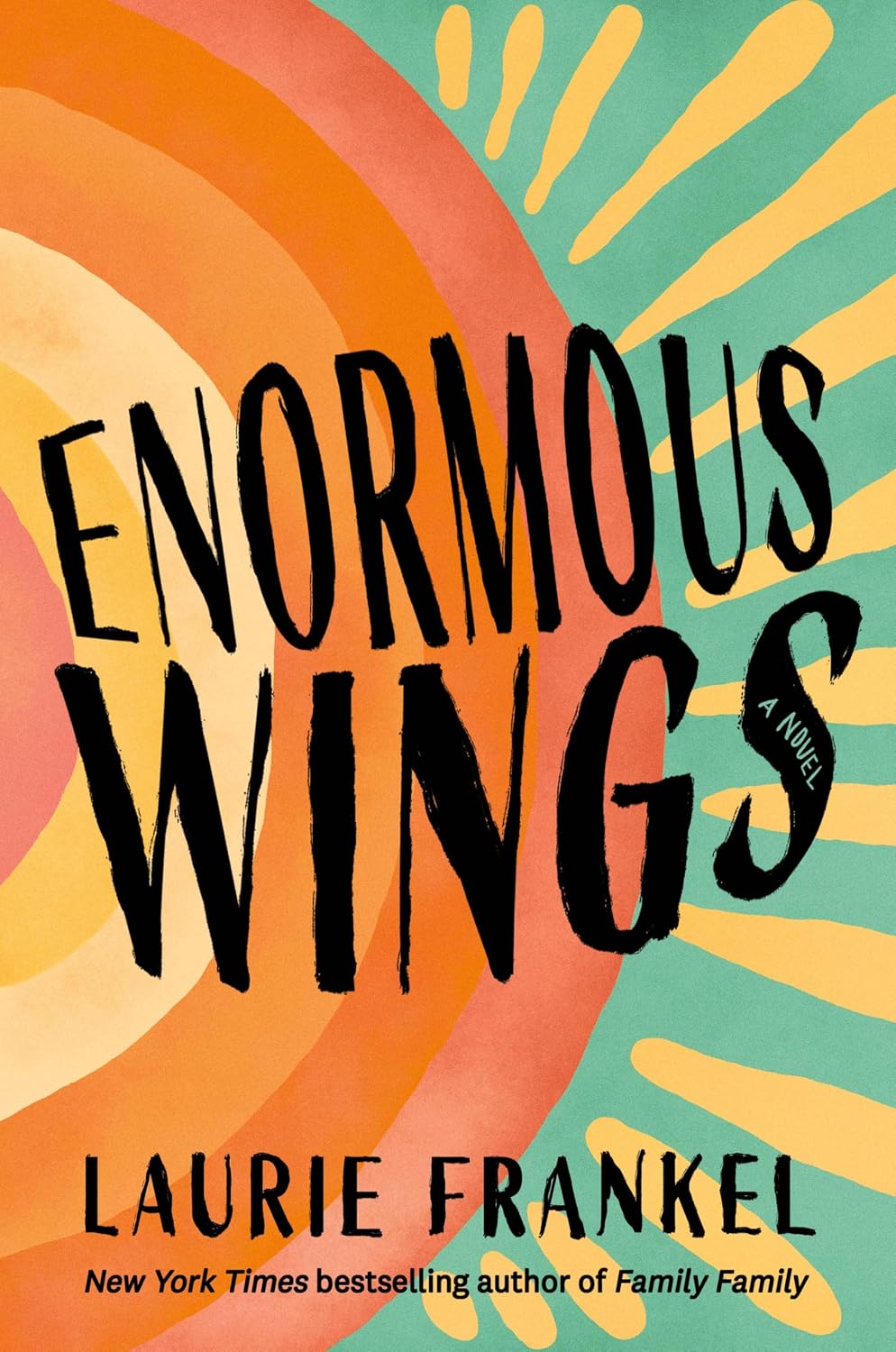
Title: Enormous Wings
Author: Laurie Frankel
Publisher: Henry Holt and Co.
Publication date: May 5, 2026
Length: 304 pages
Genre: Contemporary fiction
Source: Library
Rating:

Rating: 4.5 out of 5.

From the beloved New York Times bestselling author Laurie Frankel, an exuberant and timely new novel

At seventy-seven, Pepper Mills is too old to be a stranger in a strange land. She didn’t choose the Vista View Retirement Community of Austin, Texas—that would be her three grown children—but when she grudgingly moves in, she not only makes new friends, she falls in love. Then the exhaustion, vomiting, and confusion start. She fears it’s cancer, dementia, a stroke. But a raft of tests later, the news is even more shocking: She’s pregnant.

As word gets out, everyone wants a piece of her: the press and paparazzi, activists and medical researchers, belly-rubbers and rubber-neckers all descending on Vista View while Pepper struggles to determine her next move. Soon she has some hard decisions to make—and some she’s not allowed to make.

Enormous Wings is an urgent novel about female agency and bodily autonomy, morality and mortality. It’s about what happens when you don’t get to choose anymore. It’s about motherhood and family, sex and love and friendship, and how those bedrocks—even so late in the day—can still change, and then change everything.

The TL;dr synopsis of this book might just be: Pregnant 77-year old! But if you read no further than those few words, you’ll be missing out.

And yes, I’ll admit that it was exactly those click-bait-y words that caught my attention — but once I picked up the book, I realized that I was in for a delightful, nuanced, lovely reading treat, one that’s thoughtful and funny, quirky yet with pathos and urgency too.

Pepper Mills, age 77, reluctantly moves into a senior living community in her Texas town after a minor fender bender results in her adult children taking away her driving license. Pepper is a bright, lively woman, a retired English teacher who’s a stickler for grammar, and a devoted (and truly amazing) grandmother. She has not been, until now, dependent or restricted, and her entry into the world of senior living doesn’t bode well, until she meets the man next door. Moth (short for Timothy) is sweet and charming, and sparks fly almost instantly… something Pepper never expected after this many decades without any sort of romance in her life.

When she starts feeling woozy and nauseated several weeks later, she assumes it’s just part of the whole package of physical symptoms that come with aging — but eventually, a trip to the doctor reveals the shocking, no-way-this-can-be-true diagnosis: She’s pregnant. Aftre testing and more testing, the pregnacy is confirmed over and over again but, her doctor is certain, her aging body definitely is not equipped to sustain a pregnancy, and a miscarriage is expected any day now. Except it never happens.

Instead, Pepper finds herself stuck in the most absurd of situations. Obviously, she can’t possibly have a baby at her age. Except she lives in Texas, where abortion is not an option. And no, she doesn’t meet the definition of the loophole for saving a mother’s life — she doesn’t seem likely to sustain or survive a pregnancy, but she’s not actively dying from it either, so that’s that.

Dr. Blankman leaned forward from his corner. “Your mother is not in immediate danger. She’s not crashing or bleeding out. She’s not even in pain. She seems, in fact, to be having an entirely normal pregnancy.”

“She’s seventy-seven.”

“But apart from that.”

But apart from the eruption, how did you like living in Pompeii?

Pepper and her children plan a trip out of state to get her the care she needs, but she finds herself stuck without even that option once word of her condition is leaked to the media, turning her into an instant celebrity, with mobs of paparazzi parked outside Vista View tracking her every move.

Now, you may feel like the entire premise is ridiculous, but the book provides enough of an explanation (related to Pepper’s medical history) that I was willing to accept it. Is it realistic or medically accurate? Maybe not… but it was enough to satisfy me and let me enjoy the story without feeling the need to nitpick.

Pepper is an absolute gem of a character. I loved her intelligence, her humor, her devotion to friends and family, and her insistence on being treated like a person with agency. She may be older, but that doesn’t mean anyone has the right to infantilize her. The rest of the cast of characters is fantastic too. Moth is lovely as can be, Pepper’s children are interesting and involved and somewhat ornery at times, but totally in their mother’s corner. One of the most wonderful relationships in the book is between Pepper and her 15-year-old granddaughter Lola — their connection is funny and sweet and strong… and I couldn’t help laughing every time Pepper tried to decipher Lola’s emoji-based communications.

Seeing events unfold through Pepper’s perspective allows the narrative to retain her unique tone, which is often a bit sassy and wry, even as her experiences take darker turns. The extreme nature of Pepper’s predicament provides an interesting lens through which to look at the devastating impact of laws that have been enacted since the overturning of Roe v. Wade. Enormous Wings centers an outrageous situation — a pregnant 77-year-old! — as a window into the lack of choice and agency facing any woman in a state that’s outlawed abortion access.

The title of the book is a call-out to a short story by Gabriel García Márquez, A Very Old Man with Enormous Wings, which Pepper thinks of as she’s confronted both by people seeing her as a miracle and those viewing her as some sort of freak:

People aren’t good at recognizing the hand of God in the aged or unsavory. We like our miracles gold and glowing, not gray, not noisome, not mortal.

I’d never encountered the Márquez story before, but Enormous Wings has made me curious enough to want to check it out.

Enormous Wings takes a hard look at how restrictive laws limit women’s ability to control their own lives, bodies, and futures. By having a woman like Pepper as the main character, the author is able to illustrate the absurdity and cruelty that women (and girls) subject to these laws must live through.

Beyond that, the book also provides some beautiful reflections on life and living, aging and dying, cherishing loved one, and being present through daily challenges and joys. I loved Pepper’s voice and her outlook, and had a wonderful time getting to know the funny, caring people in her life. Highly recommended.

Purchase linksAmazon – Bookshop.org – Libro.fm
Disclaimer: When you make a purchase through one of these affiliate links, I may earn a small commission, at no additional cost to you.
Book Review: Where the Girls Were by Kate Schatz

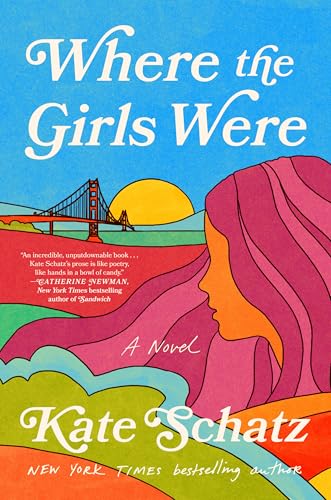
Title: Where the Girls Were
Author: Kate Schatz
Publisher: The Dial Press
Publication date: March 3, 2026
Length: 368 pages
Genre: Historical fiction
Source: Review copy courtesy of the publisher via NetGalley
Rating:

Rating: 4.5 out of 5.

In this electrifying and heartfelt historical coming-of-age novel, set against the tumultuous backdrop of 1960s San Francisco, a pregnant teenager reckons with womanhood and agency after being sent to a home for unwed mothers.

It’s 1968, and the future is bright for seventeen-year-old Elizabeth “Baker” She’s the valedictorian of her high school, with a place at Stanford in the fall and big dreams of becoming a journalist. But the seductive free-spirited San Francisco atmosphere seeps into her carefully-planned, strait-laced life in the form of a hippie named Wiley. At first, letting loose and letting herself fall in love for the first time feels incredible. But then, everything changes.

Pregnancy hits Baker with the force of whiplash—in the blink of an eye, she goes from good girl to fallen woman, from her family’s shining star to their embarrassing secret. Sent to a home for unwed mothers, Baker finds herself trapped in an old Victorian house packed with a group of pregnant girls who share her shame and fear. As she reckons with her changing body, lack of choice, and uncertain future, Baker finds unexpected community and empowerment among the “girls who went away.”

Where the Girls Were is a timely unearthing of a little-known moment in American history, when the sexual revolution and feminist movement collided with the limits of reproductive rights—and society’s expectations of women. As Baker finds her strength and her voice, she shows us how to step into your power, even when the world is determined to keep you silent.

Where the Girls Were is a powerful look at the changing world of young women in the late 1960s, centered on high school senior Baker — the bright, ambitious daughter of a suburban family that hides financial woes behind a veneer of pool parties and social engagements and neighborhood clubs. Baker is her parents’ pride and joy — until she ends up pregnant after her first sexual encounters with a hippie named Wiley.

Devastated and in denial, Baker first attempts to access an abortion through an underground provider, but is scared off before she can go through with it. When she finally confesses to her parents, her mother secures her a spot at a home for unwed mothers in San Francisco, where she’ll stay for the remainder of her pregnancy. Meanwhile, Baker’s family concocts a cover story for her: She’ll be spending a semester in Paris, before returning in the spring to start at Stanford.

At the home, Baker is surrounded by other pregnant teens, all with their own stories to tell. The girls are not allowed outside except for supervised walks — for which they put on fake wedding rings, so as not to scandalize the neighbors. The longer Baker stays at the home, the more she comes to understand about her limited choices, and how little control she has over her own body or decisions about her baby.

“We can tell you’re confused. But let me remind you: you got yourself into this situation. We are helping you out of it. Do you realize how lucky you are to be here?”

Where the Girls Were offers a spot-on depiction of the convergence of 1950s morality and 1960s rebellion. Baker’s world is full of political unrest and anti-war protests and the “turn on, tune in, drop out” mentality, but the free love vibe doesn’t last once pregnancy roles around. And how free can these girls truly be without safe access to either birth control or abortion rights? Baker and the other girls at the home have their choices taken away from them by their families, who seem to value appearance and saving face much more than the feelings or well-beings of their daughters.

Because what she realizes as she talks to the other girls is that she’s not as isolated as she’d believed. She’s not the only one to feel this, to have this happen. Other girls are angry and ashamed. Other girls are embarrassed. Other girls are full of rage. Other girls know how she feels, even if they don’t talk much.

I found Where the Girls Were to be a compelling, moving read, with a realistic depiction of the era and with a main character to truly care about. We get to really know Baker and understand her struggles and her inner life. Seeing her navigate life in the home and figure out how to stand up to those who try to manipulate her is quite inspiring.

At the same time, it’s shocking to see how little information even a well-educated girl like Baker has. Yes, she knows the basics about how pregnancies come about, but she has no information about pregnancy itself — how it progresses, what to expect, what labor entails — not to mention a very fundamental lack of knowledge about how to avoid pregnancy other than being a “good girl”.

Two very minor quibbles to note: First, I wish the ending had been a little less ambiguous. I can understand why the author chose to leave the story where it ends, but I would have appreciated a more definite wrap-up. (Not going into details here in order to avoid spoiling anything…) Second (and this is largely my own reading pet peeve, not necessarily a flaw in the book), I tend not to like when books introduce a large group of characters at once. Here, Baker meets all the girls at the home in one big round of introductions, and perhaps as a result, all but a few particular girls seem to blend together. I wished for a bit more to distinguish some of the girls who figured more as background characters.

Those quibbles aside, I enjoyed this book very much, and strongly recommend it for anyone who enjoys historical fiction, women’s history, and/or fiction set during the 1960s. The story and main character are both terrific and make a big impression.

Reading note: This is actually my 2nd book within a year about a home for unmarried pregnant girls set during roughly the same time period. The other, Witchcraft for Wayward Girls by Grady Hendrix, is a horror novel, but the two books share many of the same themes and feature girls in similar circumstances. Really interesting to compare and contrast!

For further reading: In the author’s notes, she references a non-fiction book, The Girls Who Went Away: The Hidden History of Women Who Surrendered Children for Adoption in the Decades Before Roe v. Wade by Ann Fessler. Sounds fascinating! I’ve added this to my TBR, and hope to track down a copy. Find out more, here.

Purchase linksAmazon – Audible audiobook – Bookshop.orgLibro.fm
Disclaimer: When you make a purchase through one of these affiliate links, I may earn a small commission, at no additional cost to you.
Book Review: A Spark of Light by Jodi Picoult

The warm fall day starts like any other at the Center—a women’s reproductive health services clinic—its staff offering care to anyone who passes through its doors. Then, in late morning, a desperate and distraught gunman bursts in and opens fire, taking all inside hostage.

After rushing to the scene, Hugh McElroy, a police hostage negotiator, sets up a perimeter and begins making a plan to communicate with the gunman. As his phone vibrates with incoming text messages he glances at it and, to his horror, finds out that his fifteen-year-old daughter, Wren, is inside the clinic.

But Wren is not alone. She will share the next and tensest few hours of her young life with a cast of unforgettable characters: A nurse who calms her own panic in order save the life of a wounded woman. A doctor who does his work not in spite of his faith but because of it, and who will find that faith tested as never before. A pro-life protester disguised as a patient, who now stands in the cross hairs of the same rage she herself has felt. A young woman who has come to terminate her pregnancy. And the disturbed individual himself, vowing to be heard.

Told in a daring and enthralling narrative structure that counts backward through the hours of the standoff, this is a story that traces its way back to what brought each of these very different individuals to the same place on this fateful day.

Jodi Picoult—one of the most fearless writers of our time—tackles a complicated issue in this gripping and nuanced novel. How do we balance the rights of pregnant women with the rights of the unborn they carry? What does it mean to be a good parent? A Spark of Light will inspire debate, conversation . . . and, hopefully, understanding.

In A Spark of Light, Jodi Picoult presents yet another ripped-from-the-headlines scenario: At the last remaining clinic that provides abortions in the state of Mississippi, women seeking services must brave a gauntlet of protesters to get inside the doors, where they’re treated with kindness, despite the convoluted laws that dictate timing, method, and communications around care. But on the day this story unfolds, the normal tensions and emotions are disrupted by a gunman who bursts into the clinic, shooting indiscriminately and taking hostages, so blinded by his own rage that he feels no compassion for the people whose lives he’s endangering.

We see events through the eyes of multiple characters: The doctor, who flies from state to state to perform the services that give women choices; the teen seeking birth control for the first time; the older woman who trusts the clinic staff to help her understand a medical diagnosis; the woman seeking an abortion; the relative there as an escort, and more. The author has chosen an unusual approach to this story: Instead of starting at the beginning of the day and taking us through it step by step, the narrative starts at the end, at the climax of the hostage situation. From there, the story moves backward, hour by hour, so that with each chapter, we learn a little more about the people involved, the events that have already happened, and how these different people all ended up in this crisis together.

I have mixed feelings about the backwards chronology. There are plenty of “aha” moments with each chapter, as another piece of the puzzle slides into place. So THAT’s why this person came to the clinic! So THAT’s why this other character acted this way! So THAT’s how these scenarios are connected. As with all of the Picoult books I’ve read, there’s a fairly large twist toward the end that further explains things. But does this work in terms of the actual power of the story? Well, for me, not so much. Yes, it’s satisfying to see the pieces come together, yet the horrific opening scenes would have been more powerful if I’d actually felt like I knew the people involved. Instead, we start with a bunch of strangers in a terrible situation, and have to work through each chapter, each going backward by one hour, in order to get to know their backstories, their personalities, and their motivations.

At the same time, A Spark of Light does a good job of making the various sides of the reproductive rights battle comprehensible. The author does not depict anti-choice protesters as mindless fanatics. Instead, as we get to know characters from all sides of the issue, we’re given insight into why they believe what they believe. Whether we agree with a particular character’s viewpoint or not, we come out of this reading experience at least understanding why a person could feel what they do, and even more importantly, get to understand how a person’s individual experiences and struggles often play into the stance they take as adults.

To be clear, there’s a sharp distinction between belief and action, and the author in no way supports the actions of the shooter in this story. What he does is unforgivable. Still, there’s a backstory provided, to explain how a man might snap and take such extreme action. I have to say that this is where the story feels weakest to me: I don’t really buy the chain of events that led this man, in the blink of an eye, to change from family man to mass murderer.

In the author’s notes at the end of the book, the author provides some fascinating statistics about abortion law and how it’s changed, the restrictions placed on women who need care, and the ways in which choice continues to be curtailed. She also makes compelling arguments for the need for greater access to contraception and healthcare in order to reduce the need for abortions. She draws on interviews with countless medical providers, political advocates from both sides of the issues, and women who’ve contemplated or chosen termination of pregnancies, and presents a powerful portrait of what this means for the people involved.

A Spark of Light is though-provoking and absorbing. While I do feel that the backwards chronology is not effective, I still found myself caught up in the characters’ lives by the end of the book. This book has both dramatic action and interesting moral dilemmas, and is sure to be a hit with Picoult’s many fans.

Warning: In addition to the gun violence, some readers may find the graphic description of the abortion process particularly disturbing. 

Save

_________________________________________

The details:

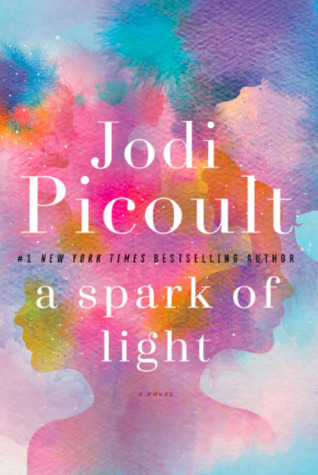
Title: A Spark of Light
Author: Jodi Picoult
Publisher: Ballantine Books
Publication date: October 2, 2018
Length: 352 pages
Genre: Contemporary fiction
Source: Library

Save

Save

Save

Save