Book Review: Plain Bad Heroines by Emily M. Danforth

Title: Plain Bad Heroines
Author: Emily M. Danforth
Publisher: William Morrow
Publication date: October 20, 2020
Length: 608 pages
Genre: Horror
Source: Purchased
Rating:

Rating: 4 out of 5.

The award-winning author of The Miseducation of Cameron Post makes her adult debut with this highly imaginative and original horror-comedy centered around a cursed New England boarding school for girls—a wickedly whimsical celebration of the art of storytelling, sapphic love, and the rebellious female spirit.

Our story begins in 1902, at The Brookhants School for Girls. Flo and Clara, two impressionable students, are obsessed with each other and with a daring young writer named Mary MacLane, the author of a scandalous bestselling memoir. To show their devotion to Mary, the girls establish their own private club and call it The Plain Bad Heroine Society. They meet in secret in a nearby apple orchard, the setting of their wildest happiness and, ultimately, of their macabre deaths. This is where their bodies are later discovered with a copy of Mary’s book splayed beside them, the victims of a swarm of stinging, angry yellow jackets. Less than five years later, The Brookhants School for Girls closes its doors forever—but not before three more people mysteriously die on the property, each in a most troubling way.

Over a century later, the now abandoned and crumbling Brookhants is back in the news when wunderkind writer, Merritt Emmons, publishes a breakout book celebrating the queer, feminist history surrounding the “haunted and cursed” Gilded-Age institution. Her bestselling book inspires a controversial horror film adaptation starring celebrity actor and lesbian it girl Harper Harper playing the ill-fated heroine Flo, opposite B-list actress and former child star Audrey Wells as Clara. But as Brookhants opens its gates once again, and our three modern heroines arrive on set to begin filming, past and present become grimly entangled—or perhaps just grimly exploited—and soon it’s impossible to tell where the curse leaves off and Hollywood begins.

A story within a story within a story and featuring black-and-white period illustrations, Plain Bad Heroines is a devilishly haunting, modern masterwork of metafiction that manages to combine the ghostly sensibility of Sarah Waters with the dark imagination of Marisha Pessl and the sharp humor and incisive social commentary of Curtis Sittenfeld into one laugh-out-loud funny, spellbinding, and wonderfully luxuriant read.

This 600+ page book almost defies description, but I’ll give it a shot!

“I wish some one would write a book about a plan bad heroine so that I might feel in real sympathy with her.” – Mary MacLane

Plain Bad Heroines is a story-within-a-story book, with interlocking characters and motifs that center on the (supposedly) cursed and/or haunted grounds of the Brookhants School for Girls — an early 20th century institution for the education of society girls, located on a wooded estate in upper-crust Rhode Island.

Mary MacLane

In 1902, students Clara and Flo are inspired by the writings of (real-life) Mary MacLane and form a secret society, the Plain Bad Heroines, to celebrate her work and her life. Clara and Flo are in love, but after a disastrous trip home and a ride back to school with her judgmental cousin, Clara storms off into the woods to meet up with Flo, only for both girls to meet a ghastly end by being attacked by swarms of yellow jackets.

In our own timeline, the events from 1902 gain new notoriety after Merritt Emmons publishes The Happenings at Brookhants at the age of sixteen. Now years later, the book is being made into a film by an edgy director, with superstar “celesbian” Harper Harper committed to star as Flo. Merritt is on board as a producer, and she’s not pleased when Audrey Wood, a B-list actor who bombed her audition in a major way, is cast as Clara.

As the production cast and crew settle in to film on location at Brookhants, weird things start to happen, and there’s much more going on than can be easily explained. Is the place truly haunted? Or is this Hollywood manipulation at its most devious?

The plot weaves backward and forward in time, cutting between the modern-day movie storyline and the complicated relationships between Harper, Merritt, and Audrey, and the timeline that includes the aftermath of Clara and Flo’s deaths and the impact on Libbie, the school headmistress, and her lover, Alex (Alexandra).

There’s so much more to both pieces of the story than is readily apparent, and the author carefully layers on more and more hints and explanations, constantly deepening the story and shifting its direction and meaning.

Plain Bad Heroines is proudly, unabashedly queer, and its (plain, bad) heroines make no attempts to follow anyone’s rules but their own. They love as they please, and take inspiration from Mary MacLane’s own bold pronouncements when they need courage. The relationships are intricate and shifting, in both timelines, and the character refuse to be cookie-cutter types — author Emily M. Danforth does an amazing job of managing such a large cast and making sure each individual character has a life and personality of her own.

This book is BIG, and it takes concentration, but I could not stop reading once I started. The writing style is clever and filled with footnotes and commentary that are snarky and funny and informative. There are also dire and tragic happenings — and this IS a horror story too, with plenty of creepy, spine-tingling moments.

Black and white illustrations throughout the book add to the overall mood and make reading this book feel like an experience.

Yellow jackets are scary anyway, but now, having read Plain Bad Heroines, I’m pretty sure I’m terrified of them. Read the book — you’ll see what I mean.

I really only have two complaints about Plain Bad Heroines, and the first is not with the story itself but with the layout. Whoever picked the typeface for this book should have paid more attention to the asterisks that lead to the footnotes — I almost never saw them (they’re tiny), and had to constantly go back and search the page to see where the footnotes connect to.

My second complaint is a larger one, which is that I wasn’t completely satisfied with the ending. It leaves a bunch of unanswered questions, and I’m a little frustrated that certain elements didn’t get more clarity and resolution.

Still, this is overall a marvelous and unique book, and I laughed and shivered my way through it. The final scene takes place at the Cannes Festival premiere of The Happenings at Brookhants, and all I could think was, damn! I wish this was a real movie, because it would be fascinating to see how it all worked out.

Plain Bad Heroines is a terrific read. Don’t miss it!

To learn more about the real Mary MacLane, visit The Mary MacLane Project.
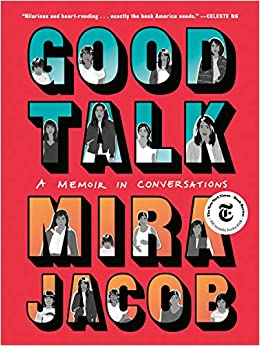
Graphic Reaction: Good Talk by Mira Jacob

Title: Good Talk: A Memoir in Conversations
Author: Mira Jacob
Publisher: One World
Publication date: March 26, 2019
Length: 349 pages
Genre: Graphic memoir
Source: Purchased
Rating:

Rating: 5 out of 5.

Mira Jacob’s touching, often humorous, and utterly unique graphic memoir takes readers on her journey as a first-generation American. At an increasingly fraught time for immigrants and their families, Good Talk delves into the difficult conversations about race, sex, love, and family that seem to be unavoidable these days.

Inspired by her popular BuzzFeed piece “37 Difficult Questions from My Mixed-Raced Son,” here are Jacob’s responses to her six-year-old, Zakir, who asks if the new president hates brown boys like him; uncomfortable relationship advice from her parents, who came to the United States from India one month into their arranged marriage; and the imaginary therapy sessions she has with celebrities from Bill Murray to Madonna. Jacob also investigates her own past, from her memories of being the only non-white fifth grader to win a Daughters of the American Revolution essay contest to how it felt to be a brown-skinned New Yorker on 9/11. As earnest and moving as they are sometimes laugh-out-loud funny, these are the stories that have formed one American life.

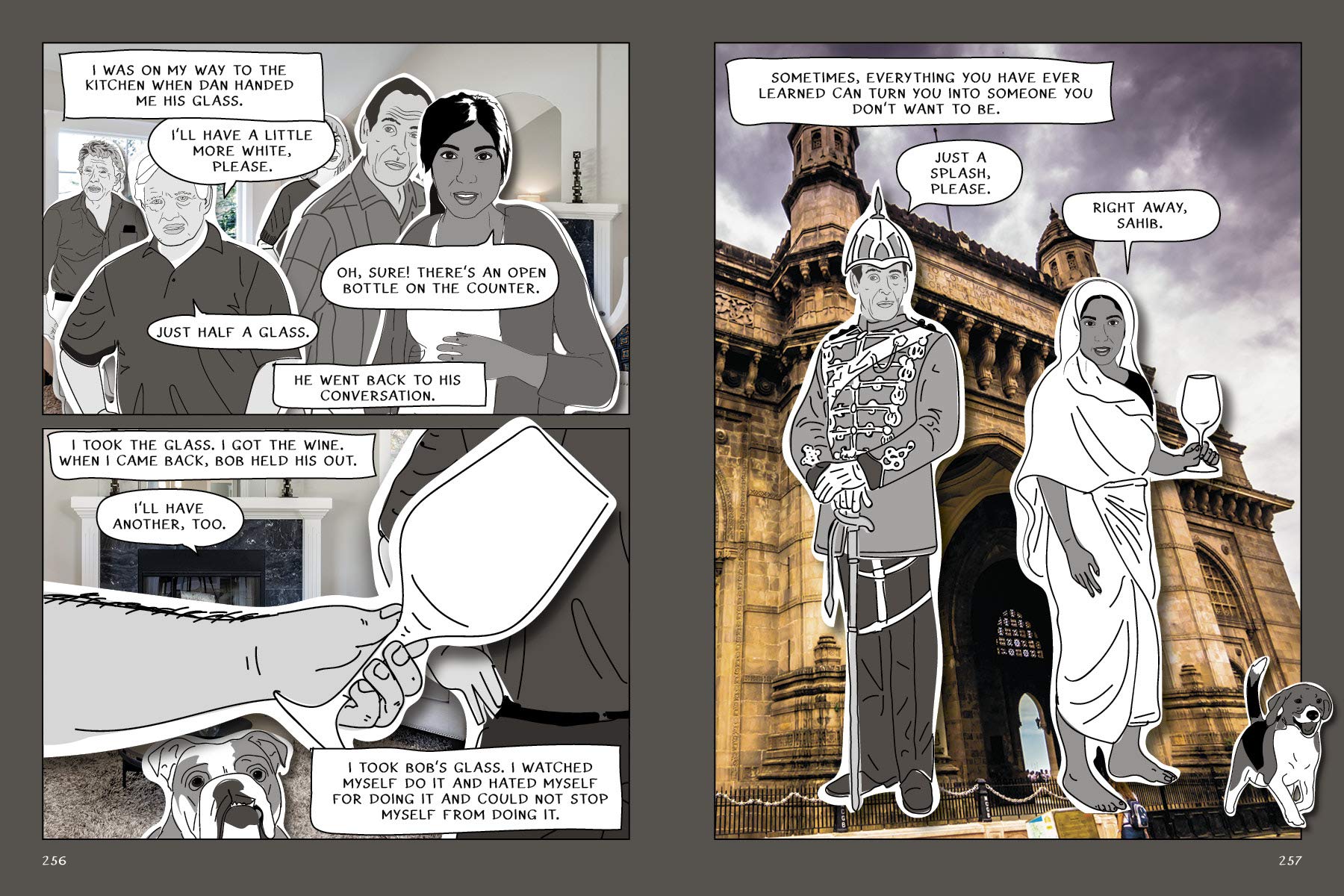
I can’t think of a more timely book to read this week — on the eve of a monumentally important election — than Mira Jacob’s Good Talk. In this graphic memoir, the author shares conversations between her and her six-year-old (and later, eight-year-old) son, her husband, her in-laws, her parents, her friends, and all sorts of other relatives and acquaintances. Through these conversations, she explores what it means to have brown skin in America, and how she hopes to help her mixed-race child navigate a world that still doesn’t know how to stop treating people as others.

From her son’s early obsession with Michael Jackson up through the 2016 election, she navigates the strange and treacherous landscape of race in America, using drawn characters against photographic backgrounds to highlight a variety of conversations that are funny while also sad, startling, and infuriating.

This is a quick read, but so lovely and warm and powerful. I will definitely want to read more by this author!

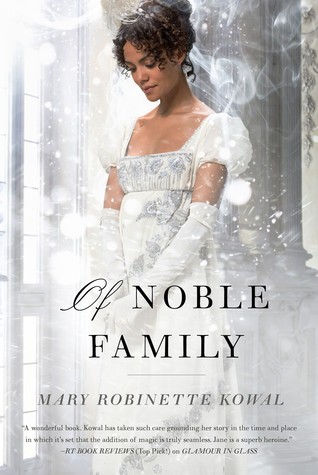
Audiobook Review: Of Noble Family by Mary Robinette Kowal — and so we reach the end of the amazing Glamourist Histories series!

Title: Of Noble Family (Glamourist Histories, #5)
Author: Mary Robinette Kowal
Narrators:  Mary Robinette Kowal, Prentice Onayemi, Robin Miles
Publisher: Tor Books
Publication date: April 28, 2015
Print length: 572 pages
Audio length: 15 hours
Genre: Fantasy
Source: Purchased
Rating:

Rating: 5 out of 5.

The final book of the acclaimed Glamourist Histories is the magical adventure that might result if Jane Austen walked on the darker side of the Regency…

Jane and Vincent have finally gotten some much-needed rest after their adventures in Italy when Vincent receives word that his estranged father has passed away on one of his properties in the West Indies. His brother, who manages the estate, is overwhelmed, and no one else in his family can go. Grudgingly, out of filial duty the couple decide to go.

The sea voyage is long and Jane spends enough time unable to perform glamour that towards the end of the trip she discovers that she is with child. They are overjoyed, but when they finally arrive at the estate to complete what they expect to be routine legal tasks, they realize that nearly everything they came expecting to find had been a lie. Also, the entire estate is in disarray, with horrifying conditions and tensions with the local slave population so high that they are close to revolt.

Jane and Vincent’s sense of peril is screaming out for them to flee, but Vincent cannot stand to leave an estate connected with his family in such a condition. They have survived many grand and terrifying adventures in their time, but this one will test their skills and wits more than any they have ever encountered before, this time with a new life hanging in the balance.

Allow me to wipe away my tears before I start writing my review…

Not that this book itself is heart-breaking (although it does have its moments) — but simply because I’ve now reached the end of the Glamourist Histories series, and I’m so sad to be done! Over the course of these five books, Jane and Vincent have become so dear to me, and I just hate to leave them and their world behind.

In Of Noble Birth, Jane and Vincent must undertake a sea voyage to the Caribbean, to the Hamilton estate on the island of Antigua, after Vincent receives word that his father has died. His elder brother, the heir to the estate, has been injured in an accident and is unable to travel, so calls upon Vincent to go retrieve their father’s will and settle the family’s affairs in Antigua.

After an arduous journey, during which Jane discovers her pregnancy, they arrive at the Hamilton estate to discover unwelcome surprise after unwelcome surprise. The couple, thanks to Lord Verbury’s manipulations, is unable to leave, and are forced into staying at the plantation, at least until Jane can safely deliver her baby.

Once there, they find deplorable conditions amongst the slave population, a lack of appropriate medical care, an untrustworthy overseer, and a household staff who bear a remarkable resemblance to Vincent and his brothers. Jane and Vincent have a lot on their plates, including Jane’s worrying health, the deceit of the overseer, and the ongoing aftereffects of Vincent’s horribly cruel and abusive upbringing.

While Jane and Vincent are honorable and well-intentioned, they still make mistakes, although they try their best to rectify their errors and to support and protect the people enslaved by Vincent’s father. The severity of the conditions is portrayed sensitively yet without shying away, and I appreciate that Jane is once again not perfect but is given room to learn from her errors.

Glamour itself takes a backseat to the conditions on the plantation and Jane and Vincent’s efforts to protect the people there and improve their lives. There are plenty of new characters, many of whom are quite delightful, and we get an introduction (alongside Jane) to non-European approaches to glamour thanks to the elder women of the plantation.

As with previous books, I felt absolutely drenched with anxiety whenever my beloved Jane and Vincent were in danger, and in particular, Jane’s experiences with a devastatingly high risk pregnancy had me in tears.

Without offering egregious spoilers, I’m happy to say that the series has a perfectly happy conclusion… despite leaving me wanting more, more, more.

Mary Robinette Kowal again narrates her novel, although this time around she’s joined by two additional narrators, Robin Miles (who’s so amazing as the narrator of the Binti books) voicing the women of Antigua, and Prentice Onayemi doing all the male voices. It was a little jarring to me to have someone besides MRK herself narrating, especially having listened to the series pretty much straight through — and this is most noticeable for the voice of Vincent, since I’d gotten quite used to the author’s version. Still, after I got past the initial shock, I finally adjusted and ended up enjoying the listening experience very much.*

*Although the male narrator’s voice for one elderly character sounded an awful lot like Voldemort, which was more than a little distracting! Then again, it’s a truly despicable character, so I suppose it fits.

I also need to mention that Mary Robinette Kowal tends to sneak in little geeky moments throughout the books, not usually too obvious — usually just a wink to pop culture fans. This one made me laugh out loud:

She sighed to cover her agitation. “You are insufferable.”

“I prefer ‘inscrutable.’” He smiled, softening a little at her teasing tone, and because she had allowed the change of topic.

“Inexplicable would be more accurate.”

“Inconceivable!”

She rested her hand on her ever-increasing stomach. “Not any longer.”

He laughed and kissed her on the forehead. “I do not think that word means what you think it means.”

“Humph!” But Jane was delighted that she had managed to make him laugh. 

I can’t say enough good things about The Glamourist Histories as a whole. I’m so glad that I finally read/listened to them, and loved experiencing them all in a row, as one cohesive story. The world of glamour is amazingly rich, and Jane and Vincent are simply unforgettable. I know the author is supposedly done with this world… but if she ever goes back to it, I’ll be first in line to get my hands on future books!

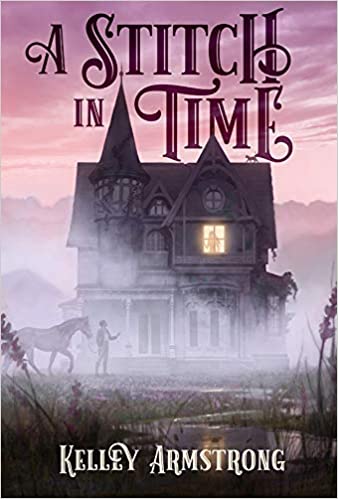
Book Review: A Stitch in Time by Kelley Armstrong

Title: A Stitch in Time
Author: Kelley Armstrong
Publisher: Subterranean Press
Publication date: October 31, 2020
Length: 336 pages
Genre: Time slip/ghost story
Source: Review copy courtesy of the publisher via NetGalley
Rating:

Rating: 4 out of 5.

Thorne Manor has always been haunted…and it has always haunted Bronwyn Dale. As a young girl, Bronwyn could pass through a time slip in her great-aunt’s house, where she visited William Thorne, a boy her own age, born two centuries earlier. After a family tragedy, the house was shuttered and Bronwyn was convinced that William existed only in her imagination.

Now, twenty years later Bronwyn inherits Thorne Manor. And when she returns, William is waiting.

William Thorne is no longer the boy she remembers. He’s a difficult and tempestuous man, his own life marred by tragedy and a scandal that had him retreating to self-imposed exile in his beloved moors. He’s also none too pleased with Bronwyn for abandoning him all those years ago.

As their friendship rekindles and sparks into something more, Bronwyn must also deal with ghosts in the present version of the house. Soon she realizes they are linked to William and the secret scandal that drove him back to Thorne Manor. To build a future, Bronwyn must confront the past. 

Who doesn’t love a good time-slip/haunted house/ghost story romance? I was ready to love this book from page 1.

At age 38, Bronwyn is an established history professor, a widow of eight years, and the new owner of Thorne Manor, the Yorkshire estate she’s just inherited from her great-aunt. Some of her happiest memories are from her summers at Thorne Manor, but also, some of her worst.

As a small child, Bronwyn finds a time slip, allowing her to travel back in time 200 years to play with William, a boy her age who lives in the house. At age five, her family chalks up her William experiences to having an imaginary friend. After an absence of ten years due to her parents’ divorce, Bronwyn returns at age 15, and once again slips back and forth in time. This time around, William is also 15, and their friendship begins to blossom into love. But a family tragedy occurs in Bronwyn’s time, and she leaves Thorne Manor, seemingly for good.

As the story opens, adult Bronwyn arrives back at the manor once more. She’s convinced herself that her time with William wasn’t real, so she’s startled by a vivid dream where she wakes up in his bed. Soon, she realizes that the time slips are real after all, and she is able to reconnect with William, who is now an adult as well.

William at first is angry and tries to send her away, believing she abandoned him all those years ago. As they spend time together, he’s able to understand why she disappeared from his life, and their reunion quickly becomes passionate as they fall back into the love that started so many years earlier.

There are complications. Bronwyn, in her own time, sees ghosts. She encounters three very distinct ghosts, and all seem to have messages for her. Are they trying to warn her or scare her away?

In William’s time, she learns that he’s retreated to his country home in part because of scandal and rumors. His younger sister has disappeared, his best friend’s wife has disappeared and is presumed dead, and his former fiancée is missing as well. Gossip depicts William as a murderous mad lord, luring victims to their death on the moors. Can any of this be true? Bronwyn doesn’t believe William is capable of murder, but clearly, someone killed the people who haunt her own time, and she’s determined to learn the truth and free the spirits of the dead.

Ah, what a fun, captivating read! Yes, a big suspension of disbelief is required, but that’s to be expected in a novel where the main plot hinges on slipping through time.

I loved that Bronwyn is a mature, professional woman with a clear head on her shoulders. She’s smart and reasonable, and has also suffered in her life. She understands love and loss, and while William was her first love, he wasn’t her only love. It’s also pretty cool to see her enjoy her time in William’s world not just as a romantic interlude, but as an amazing experience as an historian, learning all she can about daily life in that era from first-hand experience.

The mystery is really well constructed and kept me guessing. The author does such a skillful job of sprinkling clues and red herrings that my suspicions really were all over the place, and I definitely went down the wrong path in my mind. I was pleased with the resolution and how well the answers fit together with what we’d learned about the various characters.

William and Bronwyn have great chemistry and mutual respect. I love that even when they’re trying to figure out what a future together might look like, Bronwyn never considers giving up her own world to live in his. She values her career, her independence, and her friends and family — she’ll spend as much time with William as she can, but she won’t make him her entire world. And to his credit, he doesn’t ask that of her.

I did find the time-slipping a little too easy. Bronwyn can basically slip back and forth at will, so that it starts to feel practically ordinary. If William has a busy day ahead, she’ll plan to pop back home to take care of her kitten and return for dinner. It starts to sound as if she’s just going down the road, rather than jumping back and forth across centuries.

Also, I had to laugh that Bronwyn has her smartphone with her when she time-slips, and that William just accepts that she can take photos and play music with her bizarre little device. And, the fact that William has apparently added to his fortune by investing based on what he learned about the future from 15-year-old Bronwyn… ummm, okay.

Still, I will freely admit that my secretly-a-sucker-for-a-good-romance heart really enjoyed the love story, and I got very caught up in the ghosts and murder mystery too.

A Stitch in Time is, plain and simple, a sweep-you-up kind of romantic tale, with great gothic elements to make it so much more.

I’ve never read any books by this author before now, but I understand that she’s a prolific urban fantasy writer and that A Stitch in Time was a big departure for her. Well done! Goodreads lists this book as the first of two, which confuses me a little because the story has a very satisfactory ending.

Still, if the story of Thorne Manor, William and Bronwyn, and time slips continues? I’ll be there for it.

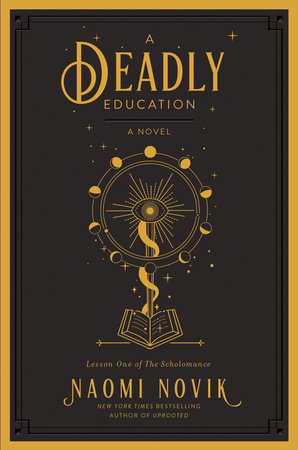
Book Review: A Deadly Education by Naomi Novik

Title: A Deadly Education (The Scholomance, #1)
Author: Naomi Novik
Publisher: Del Rey Books
Publication date: September 29, 2020
Length: 336 pages
Genre: Fantasy
Source: Purchased
Rating:

Rating: 3 out of 5.

Lesson One of the Scholomance: Learning has never been this deadly.

A Deadly Education is set at Scholomance, a school for the magically gifted where failure means certain death (for real) — until one girl, El, begins to unlock its many secrets.

There are no teachers, no holidays, and no friendships, save strategic ones. Survival is more important than any letter grade, for the school won’t allow its students to leave until they graduate… or die! The rules are deceptively simple: Don’t walk the halls alone. And beware of the monsters who lurk everywhere.

El is uniquely prepared for the school’s dangers. She may be without allies, but she possesses a dark power strong enough to level mountains and wipe out millions. It would be easy enough for El to defeat the monsters that prowl the school. The problem? Her powerful dark magic might also kill all the other students. 

Unlike Hogwarts, Scholomance is a magical school that no one in their right mind would want to attend. Everything there wants to kill you, it seems. Evil magical creatures, known as maleficaria, lurk everywhere, drooling over the chance to eat some yummy young wizards. Students never go anywhere alone, and even with companions, death is literally around every corner.

Be careful taking food in the cafeteria line — it might be poisonous. Don’t be first or last into a room. Don’t sit near air vents. Try not to shower too often — there’s no telling what might come up through the drain.

And if you actually make it through all four years, there’s still no guarantee of survival. Graduation from Scholomance involves fighting your way out through a mass of deadly maleficaria waiting at the gate, and in typical years, only a fraction survive.

If all this sounds terrifying and exhausting… it is. Given the grisly death waiting around every corner, you might be wondering why this school exists in the first place and why any reasonable parent might send their children there. The answer is that while students’ lives are in danger 24/7 at the school, they’re still slightly more protected there (the school exists in an alternate dimension only barely tethered to the real world) than at home, since apparently young magical people are so packed full of deliciousness that they’d be under constant attack with little protection if they remained with their families.

El, short for Galadriel, seems to have an affinity for power and dark magic, and finds terrible spells of mass destruction at her fingertips all the time. She has to make a conscious effort to avoid doing harm. She’s also prickly and seems to give off an aura of evil, even though she’s not, so she’s pretty friendless, and that leaves her vulnerable.

That changes, though, when school hero Orion Lake saves her life a few times. Suddenly, the wealthy, established kids who belong to enclaves (big, secure settlements of magical people) want to include El in their circles, as a way of getting Orion on their sides. El is more interested in true allies than sucking up to get into an enclave, and she’s also more than a little irritated that everyone assumes Orion keeps saving her because they’re dating. So there’s that.

When I said that Scholomance is exhausting, that applies to the experience of reading it as well. It’s so unrelentingly claustrophic that the reading experience, for me at least, just isn’t fun. I got tired of chapter after chapter showing all the ways the students could die. Scholomance sounds like a terrible place, and there are practically no lighter moments within the book to break up all the looming deadly attacks.

The author does a good job of showing the awfulness of the experience of being there, but I can’t say that I needed to read quite that much about it. I didn’t feel like I got a good sense of what drives El or why she has such an affinity for darkness and destruction. We learn about a prophecy that says she’ll basically destroy the whole world, but I still felt like there was something about her personality that didn’t quite click. Likewise, we get to know some things about El’s eventual circle of friends, including Orion, but I didn’t get a good feel for who they actually are as people.

After publication, the author was called out for racial insensitivity due to a paragraph about the perils of dreadlocks. She’s apologized, and the paragraph will be revised in future printings. I believe her when she says it was unintentional, but it’s hard to understand how a book can go through the editing and publication process and not have something like that caught. (And really, if the same content was included, but with a reference to long hair instead of dreadlocks, it would have gotten the same point across without feeding into racial sterotypes.)

I had to wonder about a particular passage:

I got angry all over again, and I looked at him straight-on and hissed — when I’m really angry, it’s a hiss, even if there’re no actual sibilants involved — “We didn’t.”

Why did that passage catch my eye? Because I’ve been reading Terry Pratchett’s Discworld books, and recently highlighted this bit in my review of The Light Fantastic:

Another voice, dry as tinder, hissed, “You would do well to remember where you are.” It should be impossible to hiss a sentence with no sibilants in it, but the voice made a very good attempt.

Homage? Coincidence? I’m not sure, but it definitely jumped out at me.

Anyway…

While the book felt like a slog for at least the first half (seriously, the constant threat of death is TIRING), I eventually got caught up in the adventure enough to race through to the end.

A Deadly Education is book one of the Scholomance trilogy, with book two, The Last Graduate, due out in July 2021. At this point, I’m on the fence about whether to continue. I mean, probably yes? But I guess I prefer my magical boarding schools with at least an ounce of cheer. Scholomance is dark, dark, dark. I’ll need a good long break before I’d want to revisit it.

Mini-reviews: Three short takes on short-ish reads (or listens)

I managed to squeeze in a few quick and short books this week, in between a heavier book club pick and a book requiring more concentration than I anticipated. Here are my quick takes!

_____________________________________________

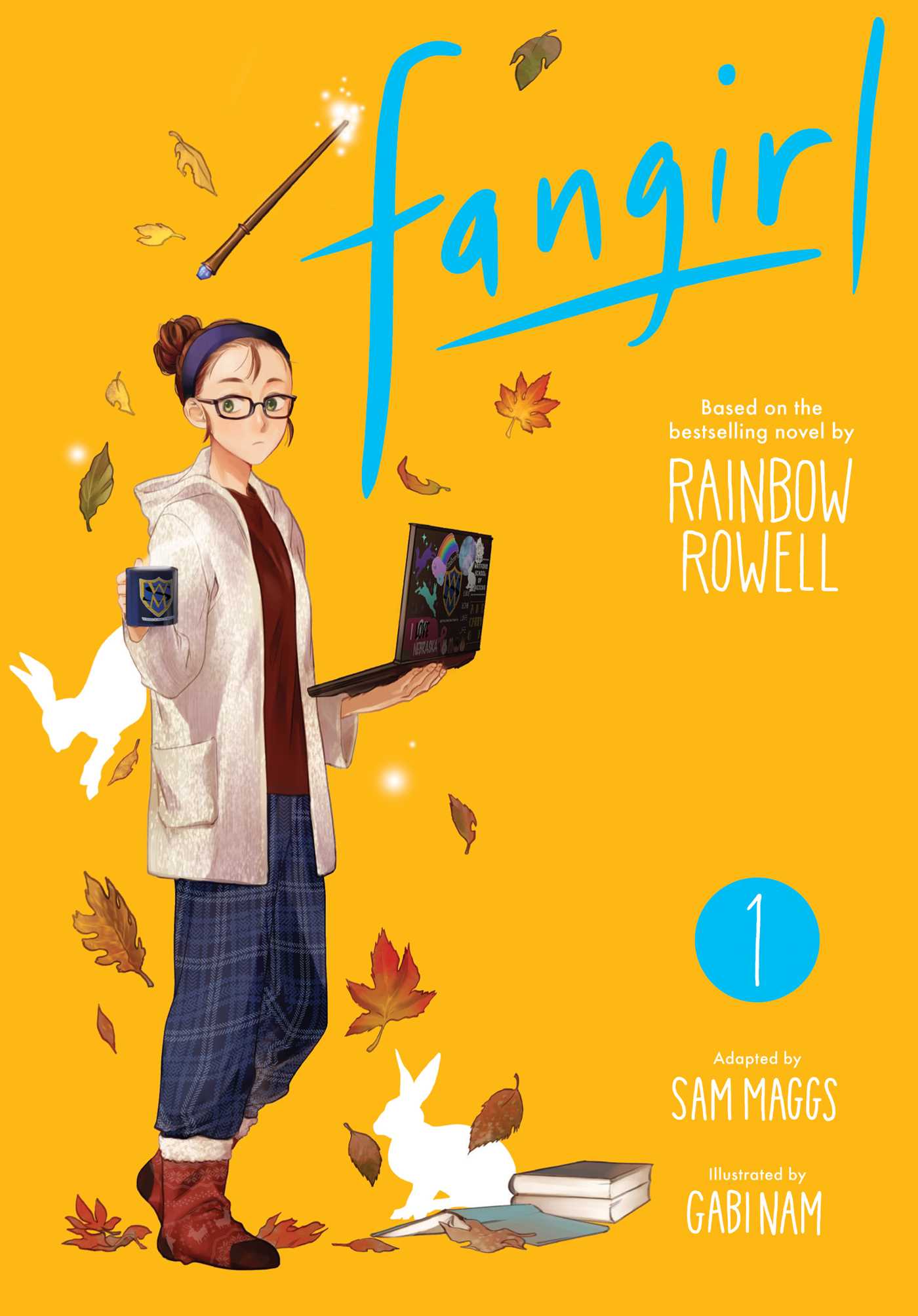
Title: Fangirl (Manga), Volume 1
Author: Rainbow Rowell, Sam Maggs, Gabi Nam
Published: 2020
Length: 216 pages

The manga adaptation of the beloved novel by #1 Bestselling author Rainbow Rowell!
New York Journal of Books

Cath is a Simon Snow fan. Okay, everybody is a Simon Snow fan, but for Cath, being a fan is her life. Cath’s sister has mostly grown away from fandom, but Cath just can’t let go. Now that they’re in college, Cath must decide if she’s ready to start living her own life. But does she even want to if it means leaving Simon Snow behind?

Cath doesn’t need friends IRL. She has her twin sister, Wren, and she’s a popular fanfic writer in the Simon Snow community with thousands of fans online.  But now that she’s in college, Cath is completely outside of her comfort zone. There are suddenly all these new people in her life. She’s got a surly roommate with a charming boyfriend, a writing professor who thinks fanfiction is the end of the civilized world, a handsome new writing partner … And she’s barely heard from Wren all semester!

The Fangirl manga is everything I could hope for! I loved the Fangirl novel when it came out, as well as the spin-off Simon Snow books. In the manga, it’s a wonderful chance to revisit the Fangirl characters all over again. The illustrations are clever, and the dialogue and pacing is well done. I really felt like Cath and Levi’s characters came across loud and clear.

My only complaint is that the story stops in the middle! This is volume 1 (of I don’t know how many), and it felt really jarring to have to stop just when I was getting into it.

Still, so much fun! But now, I immediately want to (a) reread Fangirl (the novel), (b) reread Carry On, and (c) know when the 2nd volume of the manga is coming out! Please let it be soon!

_____________________________________________

Title: Serpentine
Author: Philip Pullman
Published: 2020
Length: 80 pages

A brand new short story set in the world of His Dark Materials and The Book of Dust by master storyteller, Philip Pullman.

Serpentine
 is a perfect gift for every Pullman fan, new and old.

‘Lyra Silvertongue, you’re very welcome . . . Yes, I know your new name. Serafina Pekkala told me everything about your exploits’

Lyra and her daemon Pantalaimon have left the events of His Dark Materials far behind.

In this snapshot of their forever-changed lives they return to the North to visit an old friend, where we will learn that things are not exactly as they seem . . .

Illustrated throughout by Tom Duxbury, the perfect re-entry for fans of His Dark Materials and a wonderful companion to The Book of Dust.

This is a slim, hardcover volume, beautifully highlighted by woodcut-style black and white illustrations, that tells a story about Lyra and Pan set after the events of The Amber Spyglass (and before the subsequent events in the Book of Dust series).

Lyra and Pan are still dealing with their changed relationship, so terribly affected by the trauma of The Amber Spyglass. They’re still together, but everything is different. In Serpentine, it seems as though they’re finally starting to face their new reality together.

This is a lovely little book, and those invested in His Dark Materials will want to read it — but it feels a little slight to take up a hardcover of its own (and sell at a hardcover price).

(For what it’s worth, I’m glad to own it — it will look quite handsome on the shelf next to Lyra’s Oxford and Once Upon a Time in the North, two other small but lovely installments in the greater world of the series.)

_____________________________________________

Title: Once More Upon a Time
Author: Roshani Chokshi
Published: 2020
Audiobook length: 3 hours, 26 minutes

A dazzling fairy tale about falling in love again by The New York Times best-selling author of The Star-Touched Queen and The Gilded Wolves.

Once upon a Time, there was a king and queen in a land called Love’s Keep who once loved one another, but alas, no more. Without love, they were doomed to be ousted from their kingdom at the end of a year and a day.

A year and a day passed.

This is where their story starts.

Imelda and Ambrose can’t remember why they got married. A year and a day ago, Ambrose consulted a witch, trading their love to save Imelda’s life—and they’ve been stuck with one another ever since. When that same witch pays them a visit on the day they lose their kingdom, she promises to make their deepest wishes come true in exchange for a simple favor and a short journey. With nothing left to lose, Imelda and Ambrose agree. But, over the course of their enchanted road trip peppered with a delirious cloak, cannibals, and at least one honey badger, something magical happens…little by little, step by step, they regain what they had forgotten.

They remember why they fell in love.

When the end of their journey nears and they confront parting ways forever, a new decision faces them. Will Imelda and Ambrose choose their deepest wishes, or will they choose each other—again?

I stumbled across this fairy tale audiobook while poking around on Audible and thought it would make a nice break in between longer listens. And I was right!

Once More Upon a Time is a light, fun fairy tale that takes a happily ever after that wasn’t, and turns that into a starting place. The two main characters are king and queen of a kingdom which magically dictates that it can only be ruled by people experiencing true love. The problem is, while Ambrose and Imelda were madly in love when they married, their love was traded away for a cure for Imelda’s accidental poisoning. Ever since, they’ve been living as strangers, aware that they must have once loved each other, but unable to remember what it felt like.

Forced to leave their kingdom, they’re offered a quest, with the promise of having whatever they want at the end. Ambrose wants a kingdom, Imelda wants freedom… but what they get turns out to be just what they need.

Some of the fairy tale elements work better than others, and some are just downright silly and unconvincing, but still, this was a nice, quick listen with some sweet touches.

_____________________________________________

Of these three, I’d say my favorite was Fangirl, but I enjoyed the other two as well. Have you read or listened to any short fiction lately? Please share anything you’d like to recommend!

Audiobook Review: Valour and Vanity by Mary Robinette Kowal

Title: Valour and Vanity (Glamourist Histories, #4)
Author: Mary Robinette Kowal
Narrator:  Mary Robinette Kowal
Publisher: Tor Books
Publication date: April 29, 2014
Print length: 405 pages
Audio length: 10 hours, 12 minutes
Genre: Fantasy
Source: Purchased
Rating:

Rating: 4.5 out of 5.

Acclaimed fantasist Mary Robinette Kowal has enchanted many fans with her beloved novels featuring a Regency setting in which magic–known here as glamour–is real. In Valour and Vanity, master glamourists Jane and Vincent find themselves in the sort of a magical adventure that might result if Jane Austen wrote Ocean’s Eleven.

After Melody’s wedding, the Ellsworths and Vincents accompany the young couple on their tour of the continent. Jane and Vincent plan to separate from the party and travel to Murano to study with glassblowers there, but their ship is set upon by Barbary corsairs while en route. It is their good fortune that they are not enslaved, but they lose everything to the pirates and arrive in Murano destitute.

Jane and Vincent are helped by a kind local they meet en route, but Vincent is determined to become self-reliant and get their money back, and hatches a plan to do so. But when so many things are not what they seem, even the best laid plans conceal a few pitfalls. The ensuing adventure is a combination of the best parts of magical fantasy and heist novels, set against a glorious Regency backdrop.

More fun with Jane and Vincent! Yes, I’m hooked on this series. Listening to the audiobook for #4, Valour and Vanity, was just as much fun as the first three. I’m only sad that there’s just one more left!

In Valour and Vanity, we’re treated to a high calibre caper. The synopsis is right to describe it as something out of Ocean’s Eleven!

Following a disastrous sea voyage in which they lose all their money and possessions, Jane and Vincent arrive in Venice penniless. To make matters more difficult, their intended host, Lord Byron, has left town on romantic pursuits, leaving Jane and Vincent with no place to go and no funds to pay for lodging or even a fresh set of clothes. Fortunately, a fellow traveler from their ship offers them his generous assistance…

And clearly, there’s more to the story, but I’m not going to give any spoilers! Let’s just say that there are twists and turns, all sorts of sneaky double-dealing, plus helpful nuns, a brave puppeteer*, gondola chases (yes, you can in fact have a chase scene with gondolas!), glass-blowing, and so much more.

*Fun fact: Author Mary Robinette Kowal is a professional puppeteer, so her inclusion of a heroic puppet-master here is just delightful.

Once again, Jane and Vincent are a terrific twosome. They’re unconventional, incredibly talented, and very much in love. They also feel real in the way that they face difficulties and disagreements, react emotionally, talk things through, and find ways to move forward. They don’t have to be perfect around each other — they love each other passionately and accept each other exactly as they are.

The Venice setting is new and different for this series, and provided a great setting for a plot where Jane and Vincent have to navigate without any of their usual allies or safety nets. The action is fast-paced, and the schemes are just oh-so-clever.

One sure sign that you’ve become overly involved as a reader is when you can’t stand for bad things to happen to beloved characters, even if the bad things lead to exciting storylines. This was my only problem with Valour and Vanity — I’m so in love with Jane and Vincent that it upsets me too much when their well-being is threatened, so even though the caper aspects of the story are really fun, I was also incredibly tense throughout! I just needed to know that the characters I care about would come out okay in the end. (Yes, of course they do. After all, we still need to get to book #5!)

This series continues to be a delight, and I can’t wait to start the final book, Of Noble Family. Well… I’m actually dreading it, because I don’t want the series to be over… but still, I have to know what happens next!

For an interesting look at the author’s puppetry career and her transition to writing, check out this article.

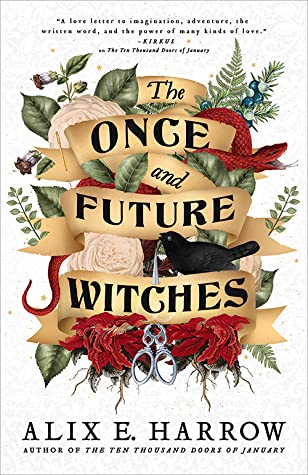
Book Review: The Once and Future Witches by Alix E. Harrow

Title: The Once and Future Witches
Author: Alix E. Harrow
Publisher: Orbit
Publication date: October 13, 2020
Length: 528 pages
Genre: Historical fiction/fantasy
Source: Review copy courtesy of the publisher via NetGalley

Rating: 5 out of 5.

In 1893, there’s no such thing as witches. There used to be, in the wild, dark days before the burnings began, but now witching is nothing but tidy charms and nursery rhymes. If the modern woman wants any measure of power, she must find it at the ballot box.

But when the Eastwood sisters–James Juniper, Agnes Amaranth, and Beatrice Belladonna–join the suffragists of New Salem, they begin to pursue the forgotten words and ways that might turn the women’s movement into the witch’s movement. Stalked by shadows and sickness, hunted by forces who will not suffer a witch to vote-and perhaps not even to live-the sisters will need to delve into the oldest magics, draw new alliances, and heal the bond between them if they want to survive.

There’s no such thing as witches. But there will be.

Alix E. Harrow’s debut novel, The Ten Thousand Doors of January, was one of my favorite reads last year, so it’s a pleasure to have another amazing experience with her newest book, The Once and Future Witches.

The Once and Future Witches takes place in 1893, in a world similar to our own, but with some key differences. Chief among these is the history of witchcraft — a plague and a purge some years earlier have resulted in the complete annihilation of witches or witchcraft, or so the men in power would like people to believe.

While the knowledge and power of witches seem to be lost, grandmothers and mothers still pass down to their daughters the little words and ways that make life easier, from simple spells to help with cleaning or harvest to healing rituals and ways to escape from someone who means you ill. In this world, what we’d call fairy tales are known as witch tales, and they’re regarded as simple folklore, merely children’s entertainment. But for the women who tell the stories, they know there’s something more hidden in the simple words and songs.

Our main characters are the three Eastwood sisters — Beatrice Belladonna, Agnes Amaranth, and James Juniper. While raised on a family farm, they now as adults find themselves drawn together in the town of New Salem after a long separation caused by their abusive father.

When the three sisters are reunited, Bella inadvertently triggers a momentary return of the lost ways, creating both a public scare and an inspiration for women who long for more. The story is set at a time when women are rallying for the right to vote, and workers’ rights are also front and center in the wake of awful mill and factory conditions and the abject poverty of New Salem’s underclass.

The Eastwood sisters soon lead a growing underground movement of women who are willing to risk everything to rediscover their own power and make a place for themselves in their world. But there are forces working against them, who will use whatever means necessary to silence their voices and make sure they keep to their approved places.

This is a powerful, uplifting, and complicated read. At over 500 pages, the story is intricate, with ample detail on the world of New Salem, the sisters’ histories, the witch-tales handed down, and the allies and friends they make in the battle for their rights and their lives. The writing is beautiful, with magical realism in its imagery mixed with the brutality of the slums and factories and the tired lives of the women looking for more.

I love how the quest to reclaim witchcraft melds so well with the fight for the vote, for equal rights and better working conditions. The characters here are distinct and memorable — upright librarian Bella and her unexplored passions, independent Agnes and her devotion to protecting what’s hers, Juniper with her fierce, feral nature and her readiness to fight. The sisters are amazing, as are the other women (and one man) who populate their story.

Likewise, the relationships between the sisters is gorgeously depicted. There is a lifetime’s worth of hurt and betrayal and resentment between them, but beneath all that, there’s also the bonds of sisterhood and love. As truths emerge that shed light on misconceptions about their shared pasts, they have to deal with their bitterness and pain in order to wage their fight for power and freedom.

I can’t say enough good things about The Once and Future Witches. It has to be read and experienced to really get what it’s all about. While it took me a few tries to get past the early chapters, I think that was mostly due to my distracted mind rather than the book itself. Once I shut out the world and really focused, I just couldn’t put it down.

A perfect October read. Don’t miss it!

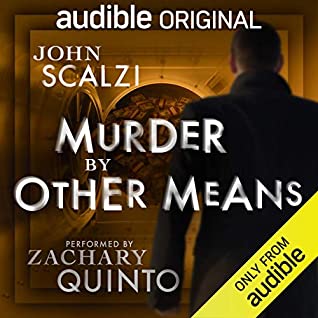
Audiobook Review: Murder by Other Means by John Scalzi

Title: Murder by Other Means
Author: John Scalzi
Narrator:  Zachary Quinto
Publisher: Audible Originals
Publication date: September 10, 2020
Print length: n/a
Audio length: 3 hours, 3 minutes
Genre: Science fiction
Source: Purchased
Rating:

Rating: 4.5 out of 5.

From Hugo and Audie Award-winning author John Scalzi comes an exciting sequel to The New York Times best-selling, number one Audible hit The Dispatcher, performed by the incomparable Zachary Quinto.

Welcome to the new world, in which murder is all but a thing of the past. Because when someone kills you, 999 times out of 1,000, you instantly come back to life. In this world, there are dispatchers—licensed killers who step in when you’re at risk of a natural or unintentional death. They kill you—so you can live.

Tony Valdez is used to working his job as a dispatcher within the rules of the law and the state. But times are tough, and more and more Tony finds himself riding the line between what’s legal and what will pay his bills. After one of these shady gigs and after being a witness to a crime gone horribly wrong, Tony discovers that people around him are dying, for reasons that make no sense…and which just may implicate him.

Tony is running out of time: to solve the mystery of these deaths, to keep others from dying, and to keep himself from being a victim of what looks like murder, by other means.

If you’re looking for a quick audio listen that’s a noir/sci-fi treat, you have to check out this new audiobook by John Scalzi!

Murder By Other Means is the newly released sequel to The Dispatcher. Both are terrific. These Audible Originals are written by John Scalzi, narrated by Zachary Quinto, and just so much fun.

In the world of these books, death has been (mostly) defeated. For some unfathomable reason, as of about 10 years earlier, anyone who is murdered instantly zips back to life back in their own home, naked, and completely unharmed. This is not true, though, for natural or accidental deaths (basically, anything non-murdery). Die without murder, and dead is dead.

Hence, the rise of a profession known as Dispatchers. Say you’re going into surgery for a risky procedure — well then, keep a dispatcher on hand, so if things go wrong, one quick bullet in the brain will send you home again. There’s the 1 in 1000 chance that the dispatching won’t work, but most people are willing to take that chance.

In these audiobooks, our main character is Tony Valdez. Time are tough, and there aren’t as many legit dispatcher jobs these days, so when Tony is offered something that’s not entirely by the book, but that pays piles of cash, he does the job. And then things get screwy. After witnessing a robbery at his local bank branch, complete with dead and not-so-dead bodies, Tony is implicated, and when one of the investigating detectives ends up dead too, things go from bad to worse.

Tony has to figure out how to clear his name, get the cops off his back, and solve a puzzle regarding a slew of deaths in the city that can’t be murder… but they sure seem like they are.

At just barely 3 hours, this audiobook is perfect for a quick entertainment. The action is fast-paced, and the narration is terrific. The vibe is noir, but with enough weird elements to let you know you’re living in a Scalzi world. I had to keep reminding myself that this wasn’t a Dresden book (minus the magic) — it’s that kind of smart, quick urban storytelling.

Murder By Other Means includes enough stage-setting that you can listen to it without being completely lost, but it makes a lot more sense to listen to The Dispatcher first, to gain a full picture of what life in a death-less world feels like.

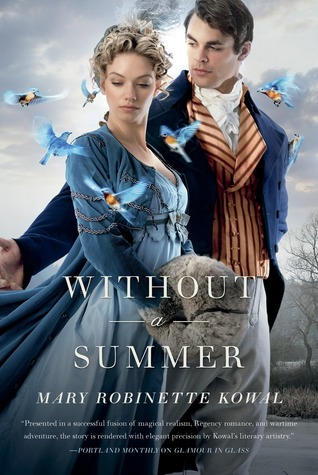
Audiobook Review: Without A Summer by Mary Robinette Kowal

Title: Without a Summer (Glamourist Histories, #3)
Author: Mary Robinette Kowal
Narrator:  Mary Robinette Kowal
Publisher: Tor Books
Publication date: April 2, 2013
Print length: 361 pages
Audio length: 8 hours, 35 minutes
Genre: Fantasy
Source: Purchased
Rating:

Rating: 4.5 out of 5.

Up-and-coming fantasist Mary Robinette Kowal enchanted fans with award-winning short stories and beloved novels featuring Regency pair Jane Ellsworth and Vincent. In Without a Summer the master glamourists return home, but in a world where magic is real, nothing—even the domestic sphere—is quite what it seems.

Jane and Vincent go to Long Parkmeade to spend time with Jane’s family, but quickly turn restless. The year is unseasonably cold. No one wants to be outside and Mr. Ellsworth is concerned by the harvest, since a bad one may imperil Melody’s dowry. And Melody has concerns of her own, given the inadequate selection of eligible bachelors. When Jane and Vincent receive a commission from a prominent family in London, they decide to take it, and take Melody with them. They hope the change of scenery will do her good and her marriage prospects—and mood—will be brighter in London.

Once there, talk is of nothing but the crop failures caused by the cold and increased unemployment of the coldmongers, which have provoked riots in several cities to the north. With each passing day, it’s more difficult to avoid getting embroiled in the intrigue, none of which really helps Melody’s chances for romance. It’s not long before Jane and Vincent realize that in addition to getting Melody to the church on time, they must take on one small task: solving a crisis of international proportions.

My love affair continues! Book #3 in Mary Robinette Kowal’s The Glamourist Histories is just a captivating as the first two. I simply love the story and the characters and the storytelling!

In Without A Summer, the weather is unseasonably cold, with snow lingering into May and June. Unhappy, desperate people need someone to blame, and so they blame the coldmongers — the glamourists who are skilled in providing cooling for people with fevers, for overly warm indoors during the summer, and to help grocers keep their produce longer. But as any knowledgeable glamourist can attest, it is simply impossible for glamour to affect the weather. Even the relatively smaller amounts of glamour worked by the coldmongers often leads to severe injury or death.

In the midst of the weather crisis, Jane and Vincent travel to London to work on a commission. They bring along Jane’s younger sister Melody, who lacks society or any prospects of a match on her parents’ country estate.

Jane and Vincent soon find themselves involved in intrigue, with a suspected plot involving both the coldmongers and Melody’s Irish Catholic suitor. What’s more, the couple encounter Vincent’s estranged father while in London — a hateful man with lots of power, who clearly wants to make Vincent pay for separating himself from the family and his father’s toxic influence.

The plot quickly becomes complicated and suspenseful, and by the final section of the book, I found myself incredibly worked up and tense with worry over Jane and Vincent’s fate. Rationally, I knew that — with two more books in the series — they’d surely be okay in the end. Still, until reaching the resolution of the high stakes drama, I was fairly terrified over seeing them in mortal peril.

As with the other books in the series, I found this one delightful. Beyond the action of the main plotlines, I just love seeing Jane and Vincent together. Too often, stories of romance end with the wedding ceremony. In The Glamourist Histories, we get to see what a devoted, happy, passionate marriage looks like. Jane and Vincent are deeply in love, enjoy a robust physical relationship, and have a true partnership as equals, pursuing their chosen professions together with grace and trust.

A nice surprise in Without A Summer is getting to see Melody as something other than the pretty, shallow girl she’s been portrayed as so far. Here, she shows surprising intellectual depth and curiosity, as well as commitment and bravery that are quite admirable. It’s a nifty trick of the author’s to make us share Jane’s surprise at Melody’s underlying strength and seriousness — having seen her through Jane’s eyes, we’ve only seen her as the sum of her face, her flirtations, and her standing as the pampered little sister.

Another aspect that bothered me at first, but ultimately made me appreciate the writing all the more, is seeing Jane as flawed. She’s always so strong and good, but in Without A Summer, she allows her unknowing prejudices to influence her interpretation of the events she witnesses. It’s not malicious on her part, but it’s still there, and puts certain characters in grave danger that might otherwise have been discovered or averted sooner.

The audiobook narration, courtesy of the author herself, is wonderful as always. I love her presentation of Jane, Vincent, Melody, and especially some of the young coldmongers they encounter.

I do love this series, and book #3 is a fabulous story. I can’t wait to continue!