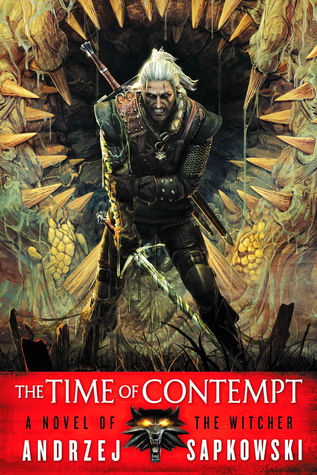
Audiobook Review: The Time of Contempt by Andrzej Sapkowski

Title: The Time of Contempt (The Witcher, #2)
Author: Andrzej Sapkowski
Narrator: Peter Kenny
Publisher: Orbit
Publication date: 2013 (first published 1995)
Print length: 331 pages
Audio length: 11 hours, 55 minutes
Genre: Fantasy
Source: Purchased
Rating:

Rating: 3 out of 5.

Geralt is a witcher: guardian of the innocent; protector of those in need; a defender, in dark times, against some of the most frightening creatures of myth and legend. His task, now, is to protect Ciri. A child of prophecy, she will have the power to change the world for good or for ill — but only if she lives to use it.

A coup threatens the Wizard’s Guild.
War breaks out across the lands.
A serious injury leaves Geralt fighting for his life…
… and Ciri, in whose hands the world’s fate rests, has vanished…

The Witcher returns in this sequel to Blood of Elves.

It’s always confusing to try to keep track of the book of the Witcher series — an explanation is always necessary.

The Time of Contempt is the 4th book in the Witcher world, but it’s considered The Witcher #2, because it’s the second novel — the first two books are interwoven short stories, but they rightfully should be considered books 1 and 2. Anyhoo…

The Time of Contempt picks back up with the story of Geralt of Rivia, the Witcher of the series’ title, his ward/foster daughter Ciri, and the enchantress Yennefer. Our main characters spend most of their time separated from one another, but always trying to to reconnect or find a way to save the others.

Ciri is young and impetuous, trained as a Witcher but also with her own magical powers. In the company of Yennefer, she’s traveling to Aretuza, the academy for young enchantresses, where she’ll be enrolled as a novice. Meanwhile, Yennefer plans to attend a conclave of mages, where intrigue and alliances and plotting take center stage. Geralt is in pursuit of both, aware that there are terrible forces trying to locate and control Ciri, if not outright kill her.

It all goes to hell, as the conclave turns into a massive battleground. After briefly being reunited, the main trio is once again separated, with Geralt left critically injured, Yennefer’s whereabouts unknown, and Ciri isolated and forced to survive danger after danger.

If you’ve read this far in the Witcher series, none of this will be terribly surprising. The series thrives on thrusting the main characters into horrible danger over and over again. It’s at its strongest when we see them using their skills and their wits to outmaneuver, outfight, and outthink their opponents.

In The Time of Contempt, a lot of time is spent on political wrangling, and that’s where the story frequently lost me. There are kingdoms, kings, the kings’ mages, borders, fortresses, and all are seemingly at odds or in cahoots or shifting loyalties or betraying one another. It’s a lot, and maybe especially because I listened to the audiobook, I had an awfully hard time trying to keep all the players straight.

At the same time, I do truly love the narration of the audiobooks. Narrator Peter Kenny does a fabulous job with the characters, and I especially love hearing him do Geralt and the bard Dandelion. He also does a great Ciri and Yennefer, and excels at all the various accents the supporting characters of different countries and races speak in.

Overall, I have very mixed feelings about The Time of Contempt. There are some compelling new developments, but too much time is spent away from the main characters, and that’s where my attention and interest inevitably drop off. I found the politics too confusing to follow via audio, but fortunately, there’s a huge Witcher fandom and I counted on the various wikis to clarify matters for me whenever I lost track of who was who and which side they were on.

I do want to continue the series, and I have a hard time imagining sticking to the print version, since I’d really miss the sound of Geralt’s voice. Still, I’m a little hesitant, because I can only imagine that as the plot progresses, it’ll only get more complicated, and potentially all that much more difficult to follow.

If you’ve read the Witcher books, I’d love a little advice: Continue with the audiobooks, or switch to print? I guess the bigger question is whether it’s worth continuing with the series at all, but my gut is telling me yes! And how could I stop now?

Book Review: Near the Bone by Christina Henry

Title: Near the Bone
Author: Christina Henry
Publisher: Berkley Books
Publication date: April 13, 2021
Length: 336 pages
Genre: Horror
Source: Review copy courtesy of the publisher via NetGalley
Rating:

Rating: 4.5 out of 5.

A woman trapped on a mountain attempts to survive more than one kind of monster, in a dread-inducing horror novel from the national bestselling author Christina Henry.

Mattie can’t remember a time before she and William lived alone on a mountain together. She must never make him upset. But when Mattie discovers the mutilated body of a fox in the woods, she realizes that they’re not alone after all.

There’s something in the woods that wasn’t there before, something that makes strange cries in the night, something with sharp teeth and claws.

When three strangers appear on the mountaintop looking for the creature in the woods, Mattie knows their presence will anger William. Terrible things happen when William is angry.

There is a menacing, eerie feel to Near the Bone right from the start, and the cover absolutely nails it. Near the Bone is the story of Mattie, a 20-year-old woman living in isolation on a snowy mountain with her husband William. Mattie cooks, cleans, checks the snares — always under William’s watchful eye. Every night, she does her other wifely duties, because as William reminds her each day, a man has to have sons.

The plot bursts into action when Mattie finds the body of a fox on a trail near their cabin. It’s been killed and mutilated, but not eaten. What predator would do such a thing? When Mattie explains her find to William, he takes her with him to explore further, and they find tracks and claw marks huger than anything a bear might leave behind. What new animal has shown up on the mountain?

As they soon discover, it’s something other, not just a monster. It’s enormous, dangerous, and sentient. It has rituals and territories, and seems to have left them a warning to stay away.

But as the author so deftly illustrates, the creature isn’t the only monster on the mountain.

I should pause here for some content warnings, which I tend not to include, but feel like it’s essential for this book.

Content: Includes kidnapping, rape, assault, emotional and physical abuse. And yes, those are all human actions.

When it comes to the creature, we see horror-story elements such as eviscerated and dismembered bodies — but honestly, if you read horror, this isn’t going to be the most shocking part of the story. Gross, yes, but not terrible the way the human-induced horror is.

The arrival of strangers on the mountain escalates the action. Mattie knows that she’ll be punished if William thinks she’s been talking to the strangers. They’re a trio of college friends exploring a “sighting” of a “cryptid” that they’ve read about online. They think this will be fun — but Mattie feels compelled to warn them away.

Meanwhile, memories start to return for Mattie — memories of her childhood, an earlier life where she had a mother and a sister and was happy. With the help of the outsiders, who recognize her from news coverage, she’s able to piece together the awful truth of the last twelve years of her life, and begins to plan her escape. But can she get off the mountain when there are two dangerous predators hunting her down?

I feel like I could talk about this book for hours, but at the same time, I’m already skating at the edge of spoiler-ville and don’t want to go too far. Near the Bone is incredibly upsetting and scary and utterly enthralling. I tore through this book in about a day and a half — I felt so personally invested in Mattie’s story and absolutely had to know if she’d find safety.

The story of her life with William and the ongoing abuse — captivity, control, beatings, sexual assault, withholding of food — is very, very hard to read. It does have a ripped-from-the-headlines feel, bringing up memories of the recent cases in the news of women escaping their captors after many, many years. Mattie considers herself a mouse, weak and powerless, but over the course of the novel, as her memories return, she finds an inner strength and determination that helps her finally take action.

This book is not going to be for everyone. As I said, the more traditional horror elements aren’t the parts that were hardest for me to read. It’s been a couple of days since I finished, and I still can’t get Mattie’s story out of my head.

I think the only thing that leaves me a touch unsatisfied is the lack of clear explanation of the creature. By the end of the book, there have been glimpses, but not a full look, and we’re left not knowing exactly what it was. I know this is intentional, but I wanted to know! There’s a message there about heeding warnings and staying away from places you shouldn’t go — my impression is that the creature only went after the humans when they disturbed its territory, and then of course there was hell to pay.

Ultimately, the true monster on the mountain is William. We can understand the creature as “other”, with behaviors and patterns that make sense for it, even though they’re deadly to whoever crosses its path. William, though, is human, and we’re left with a picture of evil that’s hard to shake.

Near the Bone is a fantastic read, very disturbing but impossible to put down. Mattie is someone to root for, and while I felt enormous sympathy and sorrow for her, I also was left with high admiration for her ability to survive, help others, and keep going in the face of terrible circumstances. The book ends on a high note, despite all the horror, and I was happy to be able to leave the books with a sense of hope after all the awful things that occurred.

I strongly recommend Near the Bone, but with the caveat that the content won’t be for everyone.

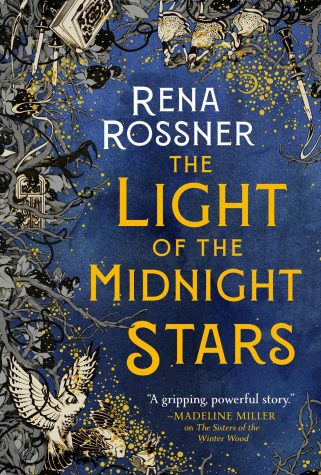
Book Review: The Light of the Midnight Stars by Rena Rossner

Title: The Light of the Midnight Stars
Author: Rena Rossner
Publisher: Redhook
Publication date: April 13, 2021
Length: 432 pages
Genre: Fantasy
Source: Review copy courtesy of the publisher via NetGalley
Rating:

Rating: 2.5 out of 5.

An evocative combination of fantasy, history, and Jewish folklore, The Light of the Midnight Stars is fairytale-inspired novel from the author of The Sisters of the Winter Wood.

Deep in the Hungarian woods, the sacred magic of King Solomon lives on in his descendants. Gathering under the midnight stars, they pray, sing and perform small miracles – and none are more gifted than the great Rabbi Isaac and his three daughters. Each one is blessed with a unique talent – whether it be coaxing plants to grow, or predicting the future by reading the path of the stars.

When a fateful decision to help an outsider ends in an accusation of witchcraft, fire blazes through their village. Rabbi Isaac and his family are forced to flee, to abandon their magic and settle into a new way of life. But a dark fog is making its way across Europe and will, in the end, reach even those who thought they could run from it. Each of the sisters will have to make a choice – and change the future of their family forever.

I so wanted to love this book, but unfortunately, it just didn’t work out that way.

In The Light of the Midnight Stars, we meet a devout Jewish family living in the village of Trnava in the 14th century. The family has three daughters — Hannah, Sarah, and Levana — and each has her own special gifts. Their father is a Rabbi and a practitioner of ancient magics handed down through King Solomon’s descendants. This magic protects the community, yet as an ominous black mist intrudes on the village and the surrounding areas, the Jewish community’s gifts raise suspicion and anger among their neighbors.

Told through the perspectives of the three daughters, we learn about each girl’s gift, her frustrations and challenges, and see them each find (and lose) love in different ways. When the family is forced to flee after a tragedy, they finally emerge from a journey through the deep woods and start a new life in a new land, posing as simple village folk, hiding their Jewish heritage and powers.

While there are some lovely moments of magic and some beautiful descriptions of the natural world, the overall storyline is convoluted and overstuffed. In the author’s notes at the end, she discusses being influenced by family stories, folktales, fairy tales, medieval history, and more. It’s too much — the book has a “kitchen sink” feel, as in, everything was included, nothing left out but the kitchen sink.

At various slower-moving points, I was sorely tempted to DNF, but then I’d come across a particularly moving or interesting chapter, and hoped that I’d reached a turning point. As I said earlier, there are some especially good moments and some truly tragic, heartbreaking events — but there is also way too much symbolism, allegory, and magical flights of fancy for my taste, and as a result, I couldn’t completely invest in the story.

It’s too bad. I loved the author’s previous novel, The Sisters of the Winter Wood, and had such high hopes for this one. I did enjoy the characters of the sisters (well, mostly the two older sisters — the youngest one just confused me), but overall, the book just didn’t gel into one coherent story and followed too many wandering tangents for me to really love it.

The author is clearly quite gifted and has a terrific imagination, so I won’t give up — I’ll definitely keep an eye out for her future books.

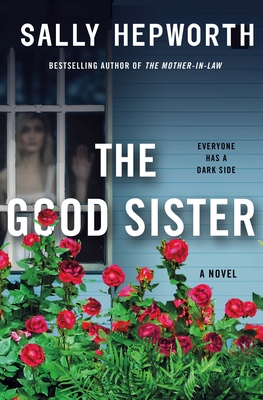
Book Review: The Good Sister by Sally Hepworth

Title: The Good Sister
Author: Sally Hepworth
Publisher: St. Martin’s Press
Publication date: April 13, 2021
Length: 320 pages
Genre: Thriller
Source: Review copy courtesy of the publisher via NetGalley
Rating:

Rating: 4.5 out of 5.

From the outside, everyone might think Fern and Rose are as close as twin sisters can be: Rose is the responsible one and Fern is the quirky one. But the sisters are devoted to one another and Rose has always been Fern’s protector from the time they were small.

Fern needed protecting because their mother was a true sociopath who hid her true nature from the world, and only Rose could see it. Fern always saw the good in everyone. Years ago, Fern did something very, very bad. And Rose has never told a soul. When Fern decides to help her sister achieve her heart’s desire of having a baby, Rose realizes with growing horror that Fern might make choices that can only have a terrible outcome. What Rose doesn’t realize is that Fern is growing more and more aware of the secrets Rose, herself, is keeping. And that their mother might have the last word after all.

I have not been disappointed in a Sally Hepworth book yet, and The Good Sister is no exception! Talk about a page-turner! I couldn’t put the book down, and finished this compelling story in one day.

Rose and Fern are adult sisters who’ve only had each other to rely on for as long as they can remember. Rose is calm and responsible and protective; Fern has sensory issues and struggles to understand the nuances of interpersonal communications, completing missing nonvisual cues and unable to take words as anything but literal.

When Rose shares with Fern her heartache over infertility, Fern decides to have a baby for Rose. And when she meets a sweet guy at the library where she works, Fern realizes that he’s a good candidate for the baby’s father.

Things don’t always go as expected, and as Fern becomes attached to the man she calls Wally, Rose becomes uneasy about the relationship and the feeling that Fern is pulling away from her.

Man, this book is hard to talk about without entering spoiler territory!

Told through Rose’s diary entries and Fern’s first-person narration, we learn bits and pieces about the sisters’ bond, their painful childhood, and their memories of their mother. We also learn more about why and how Fern became so dependent on Rose, and why neither of them consider Fern to be reliable or trustworthy.

It’s only as we get deeper into the story that we start to realize that neither sister is telling the whole story, and that what we’re hearing might not be the true picture of certain key events. Puzzling out the pieces and figuring out what’s true and what’s a lie makes this an incredibly engrossing read.

I especially loved Fern’s character. She’s unusual and has certain needs when it comes to interacting with the world, but she’s also very loving in her own odd way. And hey, she’s a librarian! And a really great one — despite her outward prickliness and tendency to ignore people who ask for help with the library photocopier, she’s terrific at helping people find what they need, whether it’s the right book or a bit of distraction, a way to calm down or even just some basic toiletries so they can use the public showers.

The plot of The Good Sister has some very clever twists and turns, and honestly, I just could not stop reading once I started. I won’t say more about the story, because it’s just too much fun to experience it without advance clues or information. Sally Hepworth has written yet another engrossing story with memorable characters, and I heartily enjoyed it. Don’t miss The Good Sister!

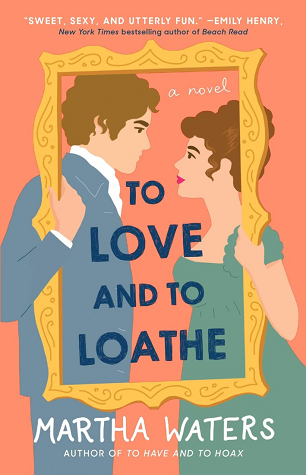
Book Review: To Love and To Loathe by Martha Waters

Title: To Love and To Loathe (The Regency Vows, #2)
Author: Martha Waters
Publisher: Atria
Publication date: April 6, 2021
Length: 384 pages
Genre: Historical fiction/romance
Source: Review copy courtesy of the publisher via NetGalley
Rating:

Rating: 3.5 out of 5.

The widowed Diana, Lady Templeton and Jeremy, Marquess of Willingham are infamous among English high society as much for their sharp-tongued bickering as their flirtation. One evening, an argument at a ball turns into a serious wager: Jeremy will marry within the year or Diana will forfeit one hundred pounds. So shortly after, just before a fortnight-long house party at Elderwild, Jeremy’s country estate, Diana is shocked when Jeremy appears at her home with a very different kind of proposition.

After his latest mistress unfavorably criticized his skills in the bedroom, Jeremy is looking for reassurance, so he has gone to the only woman he trusts to be totally truthful. He suggests that they embark on a brief affair while at the house party—Jeremy can receive an honest critique of his bedroom skills and widowed Diana can use the gossip to signal to other gentlemen that she is interested in taking a lover.

Diana thinks taking him up on his counter-proposal can only help her win her wager. With her in the bedroom and Jeremy’s marriage-minded grandmother, the formidable Dowager Marchioness of Willingham, helping to find suitable matches among the eligible ladies at Elderwild, Diana is confident her victory is assured. But while they’re focused on winning wagers, they stand to lose their own hearts.

To Love and To Loathe is author Martha Waters’s follow up to last year’s To Have and To Hoax, and I’m happy to report that the fun is back!

In TH&TH (sorry, I just can’t handle typing the titles over and over again), the story focused on a married couple Violet and James, and their love-match-turned-hate-match… and what came next. As part of the story, we also met the closest friends of the estranged couple, and here in TL&TL, two of their friends take center stage.

Lady Diana, in her mid-twenties, is a wealthy widow who has no need for a husband in order to live well. Six years earlier, in her first social season, she was desperate to marry, having been raised on the charity of an aunt and uncle. Diana was forced to be decidedly mercenary in her approach to the marriage market, much to the amusement of Jeremy, Lord Willingham, who couldn’t see beyond the surface to understand Diana’s true circumstances.

Years later, Jeremy has a confirmed reputation as a rake, seducing a steady stream of willing married women, enjoying sexual flings and remaining completely unavailable emotionally. But now that Jeremy, a second son, has inherited the family title that should have gone to his late brother, the family expects him to settle down and live up to his responsibilities. Jeremy is one of Diana’s brother’s closest friends, and Jeremy and Diana have bantered and bickered their entire lives.

But now, as adults with more at stake, there’s the potential that they could help each other out. Jeremy’s darling masculine ego has been dealt a blow by his most recent mistress, and Diana is thinking of expanding her social engagements to possibly include a lover. They agree to liaise at Jeremy’s upcoming country house party, where there will be time and opportunity for late-night dalliances.

I don’t think it’s at all a spoiler to say that Jeremy and Diana quickly discover that there’s more to their connection than friendship and banter. Their sexual spark is connected to emotions that bubble up as they spend time together, and they each must face the fact that there’s more on the line than just their bedroom connection.

Of course, there are complications, including another single young woman introduced as a possible future bride for Jeremy, but who harbors her own set of surprises. Violet and James are in attendance at the party, as is Emily, the 3rd member of Violet and Diana’s close friendship circle. I’d guess that if there’s a book #3 (and I hope there will be!), we’ll finally focus on Emily’s sad romantic situation and see her find true love too.

To Love and To Loathe is a fun, clever historical romance, and while some of the complications seemed a little more drawn-out than strictly needed, it’s quite an entertaining read. I really enjoyed the characters’ banter, as well as the witty/snarky/innuendo-laden moments.

With Willingham, at the moment, it seemed that little effort would have to be expended in the seduction. He was directing his charm at her so forcefully that she was surprised her legs hadn’t fallen open of their own accord.

“Do remove yourself from my settee, Willingham,” she said briskly, proceeding to rearrange her skirts with such gusto that the man had no choice but to retreat to an armchair to avoid the risk of suffocation by muslin.

And a favorite:

For heaven’s sake, it was breakfast time. She hadn’t known that thoughts this inappropriate were possible this early in the day.

If you’re looking for a light, romantic escape with charming characters, definitely check out To Have and To Hoax AND To Love and To Loathe. (TL&TL works just fine on its own, but might as well read them both!)

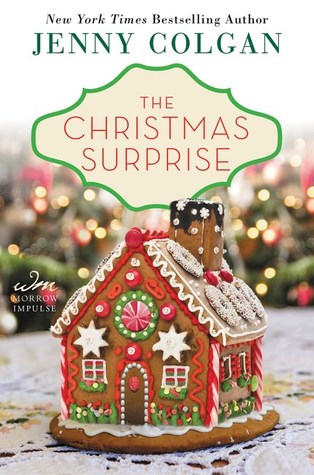
Audiobook Review: The Christmas Surprise by Jenny Colgan

Title: The Christmas Surprise (Rosie Hopkins’ Sweetshop, #3)
Author: Jenny Colgan
Narrator: Pearl Hewitt
Publisher: William Morrow
Publication date: 2014
Print length: 272 pages
Audio length: 8 hours 51 minutes
Genre: Contemporary fiction
Source: Library
Rating:

Rating: 3 out of 5.

From the New York Times bestselling author of Little Beach Street Bakery and The Bookshop on the Corner comes a delightful holiday tale full of sweetness, love, heartbreak, and happiness—perfect for fans of Debbie Macomber and Elin Hilderbrand.

Rosie Hopkins, newly engaged, is looking forward to an exciting year in the little English sweetshop she owns. But when fate deals Rosie and her boyfriend Stephen a terrible blow, threatening everything they hold dear, it’s going to take all their strength and the support of their families and their friends to hold them together.

After all, don’t they say it takes a village to raise a child?

Perhaps I was pushing my luck with a SECOND Christmas-themed book, but since the books in question are the 2nd and 3rd books in a trilogy featuring characters and a setting I love, it was awfully hard to resist.

Note: Some spoilers ahead, since otherwise I can’t really talk about the book, the series, and why I felt the way I did about this 3rd book.

The Christmas Surprise picks up right after Christmas at Rosie Hopkins’ Sweetshop. Rosie and Stephen are newly engaged and blissfully happy in their little cottage next to the sweetshop in their country village of Lipton. Their close friends are engaged too and planning a fancy wedding, the sweetshop is thriving, Stephen is loving his teaching job at the village school, and Rosie’s great-aunt Lillian is ruling the roost at her senior living home. All is well.

But not for long.

After a surprise pregnancy (about which Rosie and Stephen are elated) ends in miscarriage, Rosie is plunged into despair, especially upon learning that a future pregnancy will be extremely unlikely without intervention such as IVF — way beyond their means.

A surprising email leads them in a new direction. Years earlier, Stephen had volunteered with Doctors Without Borders as a teacher in an African village, and he’s heard from his contact there that the young daughter of a family he became close with is expecting a baby, and the family would like him to be the godfather. Stephen and Rosie begin raising funds for the village and the family within their own small community, but then decide that a trip to visit might be just the thing to break them out of their low times.

It wasn’t a shock by any means to see how this all turned out.

The book of course ends on a happy, jolly note, with just about everyone getting a sweet and happy “ever after”, but it does take some effort to get there. Rosie and Stephen face financial challenges that seem to drive a wedge between them, there’s a major disagreement over medical treatment for their baby, and ongoing difficulty with Stephen’s aristocratic mother’s seeming indifference and coldness toward their new little family.

Naturally, there are also tears of joy, village-wide celebrations that include moments of chaos and comedy and silliness, and plenty of laughs and small-town craziness to go around.

Overall, I enjoyed the book, but felt a bit on edge with the Africa storyline. First off, it’s always just “Africa” — as if the continent is one big entity. Why not identify a country? The descriptions are all generic outsider views — the bustle and color, the heat, the lack of modern amenities in a remote village. Rosie and Stephen swooping in and saving the day smacks of white saviourism, and when a snooty mom back in Lipton refers to Rosie’s actions as “colonial privilege”, I didn’t think she was far off.

I mean, of course it was lovely that they adopted this newborn who was essentially given up on by his birth family, but it felt a little too pat and condescending for my comfort — even though it did result in the happiness that the characters were so desperately in need of.

I’m not sorry I read/listened to this book, since I really do enjoy the characters and the entire town of Lipton, and was happy to see everything wrapped up with a pretty bow by the end. Still, it stretched my tolerance in parts and the ultra-happy ending, while predictable, was also a bit too pat and deliberately joyful for my taste.

Then again, there was simply no way I wasn’t going to finish the trilogy, and ultimately, it’s been a fun, sweet reading and listening experience. I can’t say no to Jenny Colgan books, and I’m glad to have spent time with Rosie and her adorable little sweetshop!

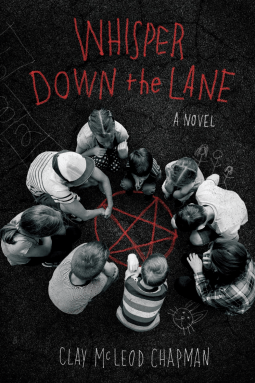
Book Review: Whisper Down the Lane by Clay McLeod Chapman

Title: Whisper Down the Lane
Author: Clay McLeod Chapman
Publisher: Quirk
Publication date: April 6, 2021
Length: 304 pages
Genre: Psychological thriller
Source: Review copy courtesy of the publisher via NetGalley
Rating:

Rating: 3.5 out of 5.

Inspired by the McMartin preschool trials and the Satanic Panic of the ‘80s, the critically acclaimed author of The Remaking delivers another pulse pounding, true-crime-based horror novel.

Richard doesn’t have a past. For him, there is only the present: a new marriage to Tamara, a first chance at fatherhood to her son Elijah, and a quiet but pleasant life as an art teacher at Elijah’s elementary school in Danvers, Virginia. Then the body of a rabbit, ritualistically murdered, appears on the school grounds with a birthday card for Richard tucked beneath it. Richard doesn’t have a birthday—but Sean does . . .

Sean is a five-year-old boy who has just moved to Greenfield, Virginia, with his mother. Like most mothers of the 1980s, she’s worried about bills, childcare, putting food on the table . . . and an encroaching threat to American life that can take the face of anyone: a politician, a friendly neighbor, or even a teacher. When Sean’s school sends a letter to the parents revealing that Sean’s favorite teacher is under investigation, a white lie from Sean lights a fire that engulfs the entire nation—and Sean and his mother are left holding the match.

Now, thirty years later, someone is here to remind Richard that they remember what Sean did. And though Sean doesn’t exist anymore, someone needs to pay the price for his lies. 

If you’re of a certain age, you remember hearing about the McMartin preschool scandal of the 1980s, in which the staff of a family-run preschool was accused of hundreds of counts of abuse and of participating in Satanic rituals with the children in their care. It was horrifying, gross… and untrue. All of the accused were acquitted… but do we remember the acquittals? Or do we remember the accusations? I think the answer is self-evident.

In Whisper Down the Lane, Richard is an elementary school art teacher, newly married to another teacher, and hoping to adopt the stepson who’s also one of his students. Richard comes across as kind but a little odd when we first meet him, with his mind often wandering away, not really fond of small talk or collegial chitchat with coworkers.

Richard is also Sean, but his memories of being Sean have been repressed down to nothingness. As Sean, at age five, he first confirmed his worried mother’s suspicions about his kindly kindergarten teacher, and eventually became the star witness in the hugely publicized case against several teachers accused of horrifying abuse and Satanic practices. And as in real-life, the case eventually fell apart, but the damage done to those accused was indelible.

Richard’s memories of Sean start creeping back after some weird, unexplainable incidents begin to occur around him, starting with an eviscerated bunny on the school field and escalating from there. Finally, as Richard himself faces accusations of abuse, we readers have to wonder whether the tightly sealed borders between Richard and Sean have finally eroded enough to push Richard over the edge into madness and unspeakable acts.

There is a lot going on here, and plenty to challenge and disgust the book’s readers. As the Sean pieces of the narrative make clear, the children who provided witness testimony during the Satanic panic were pushed and manipulated by the adults in their lives — parents, police, and psychologists — to deliver the answers the adults were looking for. The author skillfully places us inside Sean’s mind, so we can see how his desire to please his mother led to statements later used to condemn his teacher in the court of public opinion.

It’s horrible, pure and simple, to see the lives destroyed, and equally horrible to see how these young children were introduced to topics well beyond their ability to digest, being spoon-fed details that led them to confirm drug-fueled orgies, sacrifices, graveyard rituals, and more.

As Richard’s memories intrude into his daily life, he does act in ways that would appear crazy and even dangerous to those around him. As I read the book, I couldn’t see how there could possibly be another answer but that Richard had had a breakdown and was actually responsible for the events happening around him… and I won’t say whether I was right or wrong!

I did go into Whisper Down the Lane expecting a horror story, and while there are elements that shade in that direction, this book is more a story of psychological terror than out-and-out horror. I thought the ending was clever and surprising, and I did not see it coming.

That said, because I expected horror, I felt a little let down by parts of the story and the solutions to the central mysteries, but that may be due more to the marketing and positioning of the book than any fault of the book itself.

Certainly, Whisper Down the Lane is a fast, compelling read. Once I got started, I just could not stop. The jumps back and forth between Sean and Richard are so disturbing, and the recounting of the Satanic abuse case and Sean’s role in it is truly awful to read about — even more so knowing it’s based on real cases from the 1980s.

Whisper Down the Lane is a creepy tale that’s impossible to put down or stop thinking about. Be prepared for a dark, sleep-interrupting read. Highly recommended, but not if you’re looking for light entertainment!

Book Review: The Fall of Koli by M. R. Carey

Title: The Fall of Koli (Ramparts trilogy, #3)
Author: M. R. Carey
Publisher: Orbit
Publication date: March 23, 2021
Length: 560 pages
Genre: Science fiction
Source: Review copy courtesy of the publisher
Rating:

Rating: 5 out of 5.

The Fall of Koli is the third and final novel in the breathtakingly original Rampart trilogy – set in a strange and deadly world of our own making.

The world that is lost will come back to haunt us . . .

Koli has come a long way since being exiled from his small village of Mythen Rood. In his search for the fabled tech of the old times, he knew he’d be battling strange, terrible beasts and trees that move as fast as whips. But he has already encountered so much more than he bargained for.

Now that Koli and his companions have found the source of the signal they’ve been following – the mysterious “Sword of Albion” – there is hope that their perilous journey will finally be worth something.

Until they unearth terrifying truths about an ancient war . . . and realise that it may have never ended.

It’s been a long time since I’ve felt as immersed in a strange new world as I did reading the Koli trilogy, which wraps up with the newly released The Fall of Koli.

The trilogy follows the journey of Koli, a young man just past boyhood who is exiled from his small village after being accused of stealing tech — which the villagers believe only “wakes” for people who truly deserve it. Cast out from the life he’s always known, Koli eventually forms a small tribe with Ursala, a loner medical woman who wanders from settlement to settlement to offer her healing skills, and Cup, a girl who was originally Koli’s hostage but eventually becomes his devoted friend. Guiding them all is Monono, the self-aware AI who protects the trio and her own freedom.

In The Fall of Koli, our heroes encounter a ship from the before times and discover secrets related to the Unfinished War of over 300 years earlier that basically destroyed civilization and may yet lead to the end of humankind. Meanwhile, back in Koli’s home village, his former love interest Spinner has grown into a woman of political stature and leadership who must find a way for the people of Mythen Rood to battle a much larger invading force.

I can’t say enough about how masterfully built Koli’s world is. The author creates a landscape in which everything wants to kill people — trees can and do kill, as do a vast number of creeping, crawling, and flying creatures. The very world seems to reject people, and as Ursala points out, with human settlements so small and scattered, the human gene pool is on the verge of becoming unsustainable. Dead tech still remains, but the surviving humans mostly look upon it as magical creations that are beyond human comprehension, and therefore, the few people who can use tech must be specially chosen or gifted.

Koli’s language is strange and oddly beautiful, and I couldn’t help but wonder at how much effort it must have taken for the author to not only create these speech patterns, but to sustain them convincingly throughout.

I won’t say much about the plot or the ending — but wow, the plot is terrific and wow, the ending is perfect. I was completely on edge during certain scenes, and practically couldn’t breathe, was occasionally super mad at the author for having certain things happen, but by the end breathed deeply again and felt like things turned out exactly as they should have.

The Koli trilogy is a gorgeous, weird, unsettling ride, start to finish. It’s one of the best science fiction / speculative fiction works I’ve read in years. SO highly recommended. Read these books!

Book Review: Wild Sign (Alpha & Omega, #6) by Patricia Briggs

Title: Wild Sign (Alpha & Omega, #6)
Author: Patricia Briggs
Publisher: Ace
Publication date: March 16, 2021
Length: 368 pages
Genre: Urban fantasy
Source: Purchased
Rating:

Rating: 4.5 out of 5.

Mated werewolves Charles Cornick and Anna Latham must discover what could make an entire community disappear — before it’s too late — in this thrilling entry in the #1 New York Times bestselling Alpha and Omega series.

In the wilds of the Northern California mountains, all the inhabitants of a small town have gone missing. It’s as if the people picked up and left everything they owned behind. Fearing something supernatural might be going on, the FBI taps a source they’ve consulted in the past: the werewolves Charles Cornick and Anna Latham. But Charles and Anna soon find a deserted town is the least of the mysteries they face.

Death sings in the forest, and when it calls, Charles and Anna must answer. Something has awakened in the heart of the California mountains, something old and dangerous — and it has met werewolves before. 

March is such a wonderful time of year — because every March, there’s a new Patricia Briggs book! This year’s new release is book #6 in her Alpha & Omega series, while last year gave us a new Mercy Thompson book. Both series are amazing (and are connected), and I love them to pieces. So, three cheers for March and the release of Wild Sign!

In Wild Sign, we start with a moment of domestic joy for Charles and Anna, two fierce werewolves who are mated, married, and madly in love. I will never get tired of seeing them together and enjoying their undeniable chemistry.

Their sweet time together is interrupted by a knock on the door — it’s two FBI agents, unexpectedly showing up on pack territory, presenting them with a mystery that they need help with, as well as proposing an ongoing alliance between them and the werewolves.

The mystery is relevant to the pack because it occurred on land owned by the pack: In an off-the-grid settlement in the wilds of a California wilderness, a small town of people has completely disappeared without a trace. There’s no evidence that the residence have resettled elsewhere — no one has heard from any of them in months, and no sign of them can be found. Something otherworldly may be at play, and since the land is pack-owned, that makes it pack business.

Accompanied by dangerous (but funny) pack member Tag, Charles and Anna set off to investigate what happened to the people of Wild Sign, what lurks in the mountains there, and how to stop the evil forces that seem to be at play.

The adventure is immediate, as is the danger, and there were moments that really and truly set me on edge, particularly as Anna seems to be at risk and the threat to her is huge. The story behind what happened at Wild Sign is creepy, and Patricia Briggs masterfully unfolds the horror in a way that lets it build slowly until a terrifying picture emerges.

There’s a surprise twist in the epilogue that apparently has the fan community all a-buzz, but I actually thought it was a pretty cool development that will certainly have repercussions in both the Alpha & Omega and Mercy books down the line. I won’t say more about it, but it’s definitely a lot to think about!

I love Charles and Anna so much as characters, and love the rest of their pack too. Wild Sign also gives us some long-withheld backstory on key characters Bran and Leah, which I found fascinating, and I can wait to see what happens next for all of them.

The Alpha & Omega series is absolutely wonderful, and I just can’t get enough. The first book in the series is actually a novella, and it’s one of my favorite pieces of urban fantasy writing of all time. If you haven’t had the pleasure of reading these books yet, I highly recommend picking up a copy of Alpha and Omega!

For readers who are already fans of the series, of course you’ll want to read Wild Sign. Trust me, you won’t be disappointed! Another fantastic read in a fantastic series. My only complaint is having to wait another year for the next book in this world!

Audiobook Review: Christmas at Rosie Hopkins’ Sweetshop by Jenny Colgan

Title: Christmas at Rosie Hopkins’ Sweetshop
Author: Jenny Colgan
Narrator: Lucy Price-Lewis
Publisher: William Morrow
Publication date: 2013
Print length: 368 pages
Audio length: 8 hours 31 minutes
Genre: Contemporary fiction
Source: Purchased
Rating:

Rating: 4.5 out of 5.

Rosie Hopkins is looking forward to Christmas in the little Derbyshire village of Lipton, buried under a thick blanket of snow. Her sweetshop is festooned with striped candy canes, large tempting piles of Turkish Delight, crinkling selection boxes and happy, sticky children. She’s going to be spending it with her boyfriend, Stephen, and her family, flying in from Australia. She can’t wait.

But when a tragedy strikes at the heart of their little community, all of Rosie’s plans for the future seem to be blown apart. Can she build a life in Lipton? And is what’s best for the sweetshop also what’s best for Rosie?

A Christmas-themed book is such a non-typical reading choice for me — unless it’s a book by Jenny Colgan, and especially if it includes favorite characters and is a follow-up to a favorite book!

I absolutely adored Sweetshop of Dreams, and just needed to keep main character Rosie in my life a little longer, so naturally, I couldn’t resist starting Christmas at Rosie Hopkins’ Sweetshop right away.

This 2nd book in the series (it’s a trilogy) picks up about a year after the events in the first book. Rosie is happily settled in the little town of Lipton, running the town sweetshop, living with her beloved boyfriend Stephen, and feeling happier than she’s ever felt in her her life.

As Christmas approaches, things are looking good. Rosie’s family is about to arrive from Australia (although she hasn’t quite gotten around to telling Stephen yet). Stephen has just started his dream job teaching at the little local primary school. They’re happy in their cozy cottage, and Rosie is relieved to know that her great-aunt Lillian is happy too in her retirement home, where she merrily raises holy hell amongst the old folks and is as feisty as ever.

But tragedy strikes due to a freak accident that injures Stephen and threatens the future of Lipton’s school. As Stephen recovers and Rosie’s family hits town, tensions rise and eventually come to a head. Meanwhile, because of the accident, an elderly man suffering from dementia ends up in Lipton, and appears to have connections to the town that no one could have imagined.

Once again, Jenny Colgan’s book strikes just the right note of joy and love, while blending in dramatic complications and moments of fear. The tensions play out throughout the plot, but we readers can rest easy knowing that the author would never truly leave us in devastation. There are sweet secrets revealed, plenty of feel-good family moments, adorableness from small children, dramatic rescues, and plenty of romantic highlights too.

As the 2nd book in a trilogy, Christmas at Rosie Hopkin’s Sweetshop left me very happy, but also eager to read more about these characters — most of who I’d like to either hang out with or give big hugs to, or both.

This was a quick and cheery listen that also packs in emotional moments and enough worries and sorrow to keep it from going too far over the line into a nonstop sugary utopia. I’ve loved both books about Rosie, and need to start #3 immediately! Highly recommended.