Book Review: The Book of Lost Friends by Lisa Wingate

Title: The Book of Lost Friends
Author: Lisa Wingate
Publisher: Ballantine
Publication date: April 7, 2020
Print length: 388 pages
Genre: Historical fiction
Source: Review copy courtesy of the publisher via NetGalley
Rating:

Rating: 3 out of 5.

A new novel inspired by historical events: a story of three young women on a journey in search of family amidst the destruction of the post-Civil War South, and of a modern-day teacher who rediscovers their story and its connection to her own students’ lives.

Lisa Wingate brings to life stories from actual “Lost Friends” advertisements that appeared in Southern newspapers after the Civil War, as freed slaves desperately searched for loved ones who had been sold off.

Louisiana, 1875 In the tumultuous aftermath of Reconstruction, three young women set off as unwilling companions on a perilous quest: Lavinia, the pampered heir to a now-destitute plantation; Juneau Jane, her illegitimate free-born Creole half-sister; and Hannie, Lavinia’s former slave. Each carries private wounds and powerful secrets as they head for Texas, following dangerous roads rife with ruthless vigilantes and soldiers still fighting a war lost a decade before. For Lavinia and Juneau Jane, the journey is one of inheritance and financial desperation, but for Hannie, torn from her mother and eight siblings before slavery’s end, the pilgrimage westward reignites an agonizing question: Could her long-lost family still be out there? Beyond the swamps lie the seemingly limitless frontiers of Texas and, improbably, hope.

Louisiana, 1987 For first-year teacher Benedetta Silva, a subsidized job at a poor rural school seems like the ticket to canceling her hefty student debt–until she lands in a tiny, out-of-step Mississippi River town. Augustine, Louisiana, seems suspicious of new ideas and new people, and Benny can scarcely comprehend the lives of her poverty-stricken students. But amid the gnarled oaks and run-down plantation homes lies the century-old history of three young women, a long-ago journey, and a hidden book that could change everything.

After reading and enjoying this author’s previous novel (Before We Were Yours), I was excited to get an ARC of The Book of Lost Friends… and yet I left it unread until now, somehow never quite feeling in the mood to get started. So, I was glad when my book group chose The Book of Lost Friends as our July 2022 Book of the Month — finally, a commitment to get me motivated!

Unfortunately, while I finished the book, I can’t say that I loved it. In fact, I’ve been wavering between rating this one 2.5 or 3 stars.

The narrative alternates between a historical timeline set in 1875 and a more modern timeline set in 1987. Both stories are situated in Augustine, Louisiana, and in both timelines, the Gossett family is at the center of the community.

In 1875, the Gossett plantation has been transformed post-war into sharecropper properties, still dominated by the plantation’s former mistress, who seems determined to undermine and cheat the formerly enslaved people now working to secure their own land. Her husband has disappeared to Texas in search of his wayward son, and the future of the land and its people is very much up in the air. The main character, Hannie, ends up accompanying the former master’s two daughters (one white and legitimate, the other biracial and illegitimate) on a dangerous journey to find their father and find the missing documents needed to secure their inheritance. Hannie’s own goal is more personal: To find the missing members of her family, all of whom were sold off while enslaved and stolen by an unscrupulous relative of the plantation owners.

In 1987, the main character is Benny (Benedetta) Silva, a young teacher who accepts a rural posting in exchange for student loan forgiveness. Benny is ill-prepared to teach in a school where there are inadequate resources, apathetic staff, and students who lack the most rudimentary skills or interest needed to pursue an education. Benny is determined to find a way to connect with her students, and begins a research project that puts her at odds with powerful town leaders.

I don’t want to go too far down the road of discussing the dual plots, so I’ll stick to some key concerns and takeaways.

In both timelines, the plot is often confusing and muddled. We alternate chapters between the two timelines, and yet as we pick up a storyline after a chapter away from it, there’s often a gap in the action from where we left off. Intervening events do get explained, but the initial impression is always that something has been missed or that the pieces don’t quite connect.

The family chronologies and connections are not well explained, and neither is the make-up of the town itself or its history. There’s a lot of detail thrown around in the book, but often through exposition rather than incorporation into the plot. The details often felt muddy to me, leading to my feelings of disengagement.

Benny’s role, in my opinion, is problematic. Her character really smacks of white saviorism. She arrives in town as an outsider, and immediate becomes the catalyst for changing the lives of the poor children and disempowered community members of Augustine. Why did it take Benny’s arrival to make this happen? Why was it Benny and the (white) descendants of the Gossett slaveowners who enable the discovery of the town’s history and the revelations that ensue?

I did appreciate learning about the Lost Friends advertisements, which were a real historical phenomenon used by formerly enslaved people to try to track down and reunite with family members. The inclusion of real Lost Friends ads is touching and powerful.

However, overall, the plot didn’t build in a way that connected the dots, and the action sequences and outcomes felt disjointed. I did not feel emotionally involved with the characters, and while certain moments elicit sympathy or sorrow or horror, these responses related more to the general circumstances described rather than being connected to actual care or concern for the specific characters.

I was also turned off by a weirdness to the ending, in which a big revelation about a character’s backstory is shared literally on the last two pages of the book. Why?? It felt awkward and unnecessary — perhaps it was intended to provide an “aha!” moment about the character, but really, it just felt tacked-on and beside the point.

Overall, this was not a great reading experience, and if not for my book group commitment, I probably would not have finished. The “Lost Friends” element is interesting from a historical perspective, but the fictional storylines built up around this element just never made me feel connected or invested.

Final note: I will add that many of my book group friends enjoyed this book more than I did, and one person who is herself an educator commented that she found Benny’s work with the students and the challenges she faced very relatable and well done. In other words… while I didn’t particularly enjoy this book, your mileage may vary!
Audiobook Review: An Island Wedding (Mure, #5) by Jenny Colgan

Title: An Island Wedding
Series: Mure
Author: Jenny Colgan
Narrator:  Eilidh Beaton
Publisher: Avon
Publication date: June 21, 2022
Print length: 400 pages
Audio length: 12 hours, 26 minutes
Genre: Contemporary fiction
Source: Review copy courtesy of the publisher via NetGalley
Rating:

Rating: 4 out of 5.

New York Times bestselling author Jenny Colgan brings us a delightful summer novel that will sweep you away to the remote Scottish island of Mure, where two very different weddings are about to take place…

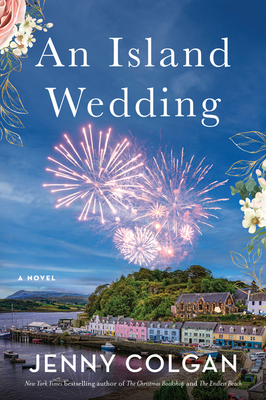
On the little Scottish island of Mure–halfway between Scotland and Norway–Flora MacKenzie and her fiancé Joel are planning the smallest of “sweetheart weddings,” a high summer celebration surrounded only by those very dearest to them.

Not everyone on the island is happy about being excluded, though. The temperature rises even further when beautiful Olivia MacDonald–who left Mure ten years ago for bigger and brighter things–returns with a wedding planner in tow. Her fiancé has oodles of family money, and Olivia is determined to throw the biggest, most extravagant, most Instagrammable wedding possible. And she wants to do it at Flora’s hotel, the same weekend as Flora’s carefully planned micro-wedding.

As the summer solstice approaches, can Flora handle everyone else’s Happy Every Afters–and still get her own?

The 5th installment in Jenny Colgan’s wonderful Mure series brings us back to this beautiful, remote Scottish island. It’s like a reunion with old friends, as we see what our beloved characters are up to now, and for at least some, get to witness the happy event they’ve been building toward over the four previous books.

(For the story so far, see my wrap-up post, here.)

In An Island Wedding, Flora Mackenzie is finally set to marry the man of her dreams. But there’s a problem — Flora, born and bred on Mure, wants to celebrate with everyone, and I do mean EVERYONE. The entire island expects to be at their wedding, from Mrs. Kennedy’s dance school students to the old fishermen who drink away their evenings down at the Harbor’s Rest. But Joel, a product of a lonely childhood in the foster care system, wants only those who truly love them to be with them on their big day — just immediate family, an intimate occasion, and donate all the money that would have gone to a big wedding to the local couple who take troubled youth on outdoor adventures.

What’s Flora to do? She loves Joel, and wants to do what makes him happy… but she can’t help but feeling just a wee bit sad and guilty every time an island neighbor comes up to tell her how much they’re looking forward to her wedding.

Meanwhile, Olivia MacDonald, the beautiful island native who’s now an international Instagram star, has decided to hold her own lavish wedding back home on Mure, in a most likely misguided move to impress her fabulously wealthy, fabulously snooty future in-laws with her connection to an authentic Scottish community. Olivia arrives with an upscale wedding planner in tow, and proceeds to transform The Rock (the hotel Flora manages) and the entire island into the fantasy wedding setting of her dreams.

Most of the book is devoted to the wedding plans, as well as to the ongoing tension between Flora and Joel over their divergent visions for how they’ll get married. I was never truly worried about Flora and Joel — they love each other, and they’ve been through enough so far that I was sure it would all work out — but it was sad to see them at what appeared at times to be an impasse.

The most moving and gripping parts of An Island Wedding have to do with the love story between Lorna, the island’s schoolmistress, and Saif, the Syrian refugee doctor who’s found a new home for himself and his two sons on Mure. Saif’s wife’s fate has been a question mark since the start of the series, and when new information is uncovered, it forces Saif to make an impossible choice. I won’t say too much, but it’s heartbreaking. The terrible sadness of the situation is written so beautifully, and my heart just ached for Lorna, Saif, and for the boys too.

The stakes for the Flora and Olivia storylines never feel terribly high or risky — after all, it’s really mostly to do with wedding plans! Still, it’s fun to follow along and laugh at all the mishaps, miscommunications, and over-the-top wedding arrangements, and the ending left me with a few little tears of happiness. After spending so much time with Flora and Joel over the course of this series, I was ready for them to get all the joy they deserve!

My initial understanding had been that this would be the final Mure book… but actually, I don’t see that stated anywhere, and given that there’s a MAJOR story thread left hanging, I’m hopeful for more! So please, if you happen to meet Jenny Colgan someday, tell her we want MORE MURE. I’m not ready to say good-bye to these wonderful characters and the beautiful island just yet!

Book Review: Tomorrow, and Tomorrow, and Tomorrow by Gabrielle Zevin

Title: Tomorrow, and Tomorrow, and Tomorrow
Author: Gabrielle Zevin
Publisher: Knopf
Publication date: July 5, 2022
Print length: 416 pages
Genre: Contemporary fiction
Source: Review copy courtesy of the publisher via NetGalley
Rating:

Rating: 5 out of 5.

In this exhilarating novel by the best-selling author of The Storied Life of A. J. Fikry two friends–often in love, but never lovers–come together as creative partners in the world of video game design, where success brings them fame, joy, tragedy, duplicity, and, ultimately, a kind of immortality.

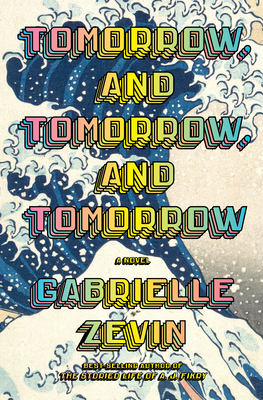
On a bitter-cold day, in the December of his junior year at Harvard, Sam Masur exits a subway car and sees, amid the hordes of people waiting on the platform, Sadie Green. He calls her name. For a moment, she pretends she hasn’t heard him, but then, she turns, and a game begins: a legendary collaboration that will launch them to stardom. These friends, intimates since childhood, borrow money, beg favors, and, before even graduating college, they have created their first blockbuster, Ichigo. Overnight, the world is theirs. Not even twenty-five years old, Sam and Sadie are brilliant, successful, and rich, but these qualities won’t protect them from their own creative ambitions or the betrayals of their hearts.

Spanning thirty years, from Cambridge, Massachusetts, to Venice Beach, California, and lands in between and far beyond, Gabrielle Zevin’s Tomorrow, and Tomorrow, and Tomorrow is a dazzling and intricately imagined novel that examines the multifarious nature of identity, disability, failure, the redemptive possibilities in play, and above all, our need to connect: to be loved and to love. Yes, it is a love story, but it is not one you have read before.

Tomorrow, and Tomorrow, and Tomorrow is the kind of immersive, powerful read that only comes along once in a great while. I found it moving and profound, and even several days after finishing the book, I’m still caught up in thoughts about its themes and images.

Pretty surprising for a book ostensibly about the world of video games, right?

Sam and Sadie first meet as young teens; Sadie stumbles across Sam in a pediatric hospital where he’s a patient and her sister is undergoing cancer treatment. Sadie doesn’t know anything about Sam other than that he’s dealing with a serious injury to his foot — but she doesn’t need to know much more. He’s playing Mario Kart, and she joins in… and instantly, they find a shared language and joy, as well as an escape from their real lives, by gaming together.

From there, they spend 609 hours together (if you read the book, you’ll find out why this matters), but a secret drives them apart, until they meet once again as college students on a cold day in Boston. Their love of gaming hasn’t changed, and they immediately rekindle their mind-meld connection and begin collaborating on a game. Along with Sam’s roommate Marx, a protective loving boy who decides it’s his mission to look after Sam, they embark on a path that will lead them to huge success and fame.

The book follows Sam and Sadie’s rise to gaming stardom while tracing the impact on their friendship. Their connection goes beyond business partnership or being friends — it’s deep and powerful, and yes, it’s love, but it’s not a romantic connection. They are so deeply entwined that any perceived betrayal or slight is felt all the way to the bone. Sam and Sadie are inextricably connected, but they go through periods of intense conflict and estrangement as well.

Over the course of the years covered by Tomorrow, and Tomorrow, and Tomorrow, we learn about their backstories, their families, their traumas, and of course, their brilliance. There’s so much to absorb here about culture, wellness and disability, reality and virtual worlds, intelligence and academia, and more. Sadie, Sam, and Marx are unforgettable characters, beautifully described and developed. We know these people and what makes them tick; we understand their joys and their pain, and when bad things happen, it hurts deeply.

The writing is beautiful, often funny, often pensive, filled with oddball characters in a world that many of us (anyone not involved in gaming and coding) may find alien. We’re given entrance into this world through these characters’ experiences, and it’s fascinating.

Maybe it was the willingness to play that hinted at a tender, eternally newborn part in all humans. Maybe it was the willingness to play that kept one from despair.

One element I loved is how the characters’ worldview is coded to the world of games, so that how they view real life is often described in gaming language (and vice versa). For example, a character involved with someone who’s married reflects:

A wife had been mentioned, as had a son. They didn’t have names, and so they weren’t characters to her, but that didn’t mean they didn’t exist.

The virtual vs real world comparisons continue throughout the book, and I found these fascinating:

How do you preserve the impossible to preserve? Or, in other words, how do you stop time and death? […] What, after all, is a video game’s subtextual preoccupation if not the erasure of mortality?

“I’m going to play until the end of this life.”

“That’s a good philosophy.”

He was tired of having to move so carefully, of having to be so careful. He wanted to be able to skip, for God’s sake. He wanted to be Ichigo. He wanted to surf, and ski, and parasail, and fly, and scale mountains and buildings. He wanted to die a million deaths like Ichigo, and no matter what damage was inflicted on his body during the day, he’d wake up tomorrow, new and whole. He wanted Ichigo’s life, a lifetime of endless, immaculate tomorrows, free of mistakes and evidence of having lived.

… [H]e could remember thinking that the best thing about games is that they could be fairer than life.

“I thought you were worried I was going to die,” Sam said.

“No. You’ll never die. And if you ever died, I’d just start the game again,” Sadie said.

As it turned out, in the late fall of 2001, Mapleworld [an online virtual world/game] was exactly what people craved. A virtual world that was better governed, kinder, and more understandable than their own

You are a gaming person, which is to say you are the kind of person who believes that “game over” is a construction. The game is only over if you stop playing. There is always one more life.

“What is a game?” Marx said. “It’s tomorrow, and tomorrow, and tomorrow. It’s the possibility of infinite rebirth, infinite redemption. The idea that if you keep playing, you could win. No loss is permanent, because nothing is permanent, ever.”

On a more granular level, I was delighted by how many words in this book were new to me! Sometimes, it can be annoying to have to check definitions, but somehow here, I found it eye-opening and challenging, especially in the context of this particular book’s setting and characters. The unfamiliar words tended to be gaming/coding terms that the characters use to express themselves in daily life — it made me feel like I’d entered into their world and been handed yet another insight into how their minds work. (For examples of new-to-me words and their definitions, see below**).

To make a game is to imagine the person playing it.

I wouldn’t have thought I’d love a book that’s ostensibly about video games, or that I’d consider it one of the best books of the year. In fact, I had to give myself a little push to pick up Tomorrow, and Tomorrow, and Tomorrow and get started. Thankfully, I’ve read and loved Gabrielle Zevin’s books before this one and trusted that she’d write something I’d want to read!

Tomorrow, and Tomorrow, and Tomorrow is moving and gorgeous, truly a unique reading experience. The author’s creativity and sensitivity shines through on every page. I’ll be thinking about this book for a long time to come.

**A quick, incomplete guide to words I found fascinating in T&T&T:

  • ligneous: made, consisting of, or resembling wood; woody
  • collogue: talk confidentially or conspiratorially
  • mesomorphic: having a compact and muscular body build
  • kenophobia: an intense fear of empty spaces or voids
  • viridescent: greenish or becoming green
  • ludic: showing spontaneous and undirected playfulness
  • deictic: of, relating to, or denoting a word or expression whose meaning is dependent on the context in which it is used, e.g. here, you, me, that one there, next Tuesday
  • jejune: naïve, simplistic, and superficial
  • anfractuous: sinuous or circuitous
  • echt: authentic and typical

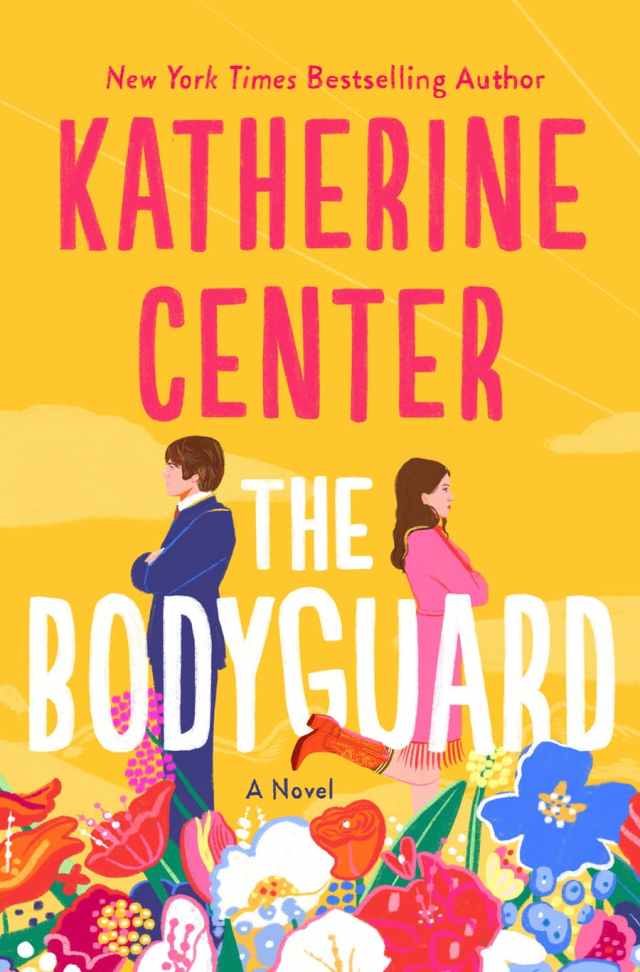
Book Review: The Bodyguard by Katherine Center

Title: The Bodyguard
Author: Katherine Center
Publisher: St. Martin’s Press
Publication date: July 19, 2022
Print length: 320 pages
Genre: Contemporary fiction
Source: Review copy courtesy of the publisher via NetGalley
Rating:

Rating: 4 out of 5.

She’s got his back.

Hannah Brooks looks more like a kindgerten teacher than somebody who could kill you with a wine bottle opener. Or a ballpoint pen. Or a dinner napkin. But the truth is, she’s an Executive Protection Agent (aka “bodyguard”), and she just got hired to protect superstar actor Jack Stapleton from his middle-aged, corgi-breeding stalker.

He’s got her heart.

Jack Stapleton’s a household name—captured by paparazzi on beaches the world over, famous for, among other things, rising out of the waves in all manner of clingy board shorts and glistening like a Roman deity. But a few years back, in the wake of a family tragedy, he dropped from the public eye and went off the grid.

They’ve got a secret.

When Jack’s mom gets sick, he comes home to the family’s Texas ranch to help out. Only one catch: He doesn’t want his family to know about his stalker. Or the bodyguard thing. And so Hannah—against her will and her better judgment—finds herself pretending to be Jack’s girlfriend as a cover. Even though her ex, like a jerk, says no one will believe it.

What could possibly go wrong???

Hannah hardly believes it, herself. But the more time she spends with Jack, the more real it all starts to seem. And there lies the heartbreak. Because it’s easy for Hannah to protect Jack. But protecting her own, long-neglected heart? That’s the hardest thing she’s ever done. 

Katherine Center excels at creating fascinating women as lead characters and placing then in challenging, unusual situations. In The Bodyguard, there’s quite a bit of humor, and yet the heart and emotions of her previous books still shine through.

As the book starts, main character Hannah has just been dumped by her boyfriend, who also happens to be a coworker. Awkward! He’s a total jerk, says terrible things to her, has cheated on her with her best friend… and yet she still needs to see both of them at the office on a daily basis. All Hannah wants is to escape, and begs her boss to send her off on a new assignment, preferably one somewhere on the other side of the world.

But Hannah is a depressed, emotional wreck, and her boss has other plans for her. She’ll stay in Houston working on their new high-profile client’s protection assignment, and if it goes well, she’ll be up for a promotion to head the agency’s new London office.

The assignment is movie star Jack Stapleton, who’s coming home to Texas to be with his mother while she undergoes cancer treatment. Jack has been living off the grid for the last couple of years after a scandal, but he still pops up in the tabloids whenever the paparazzi can track him down and catch shots of him with his latest Hollywood-appropriate girlfriend. But now, Jack is leaving his North Dakota retreat to be with his family, and it’s the agency’s job to keep the crazy stalkers at bay, or preferably, in the dark.

Jack most emphatically does not want a bodyguard, but the studios insist, so he adds his own stipulation: Hannah can protect him, but only by posing as his girlfriend at his parent’s ranch. They simply do not need the stress of knowing he’s in danger, not while they should be focused on his mother’s health.

What follows is equal parts silly and serious. Hannah is small but powerful. She may be able to kill someone with a ballpoint pen, but if she has to fight or injure someone, she’s already failed. Her job is to protect and keep safe, and never let her “principal” anywhere near being in danger. She’s used to being in the background, a serious presence in a pantsuit and an earpiece, not there to be noticed. But to meet Jack’s requirements, she finds herself in a “girlfriend” outfit, sundress and sandals, engaging with his family, holding hands, and even sleeping in the same room as Jack (although, per her insistence, on the floor rather than in his bed).

As the story unfolds, we learn about both Hannah and Jack’s past traumas, which influence so much of who they are now. Hannah’s history with her mother was painful, full of neglect and danger, seeing her mother descend into alcoholism and endure a series of abusive relationships. Jack is haunted by the car accident that killed his younger brother and has driven a wedge between him and his older brother. There’s a secret there, but Jack refuses to discuss it, instead reliving it through regular nightmares. As Hannah spends time with Jack, she sees beyond the Hollywood surface to the vulnerable person underneath, and becomes determined to help him.

The Bodyguard has plenty of light moments too — silly encounters on the ranch, moments of joy and laughter as Jack relaxes around Hannah and gets Hannah to unwind a bit too — as well as scenes of family connection, simple pleasures, and true warmth and emotional reality. At the same time, Hannah second-guesses her growing chemistry with Jack. After all, he’s an actor, and she’s seen him on screen many, many times — she’s knows he’s good at his job. So when he seems to care for her, is it real, or is he just acting?

I really enjoyed Hannah as a character, and loved that this petite woman is a strong, dangerous, accomplished defender who can hold her own, and then some. Her outer toughness and professionalism hides her inner vulnerabilities, but she’s awesome at her job and her abilities are absolutely never in doubt. Seeing her fall for her principal and sort out who Jack is and whether he’s being truthful with her is fascinating, and I loved seeing their relationship blossom.

There are some familiar and well-loved tropes here — fake dating, Hollywood star falling for a regular person, love on a ranch, just one bed, etc. The author does a terrific job of incorporating these elements while also keeping them fresh and new.

One of my very favorite things about The Bodyguard was the laughter. Despite the many scenes and discussions focusing on the character’s painful pasts, they also laugh together — a lot. And when Jack laughs, it’s a full-bodied, all-out experience that strips away all his outer polish and shows his inner good nature, and it’s just so much fun.

A dangerous scenario toward the end of the book brings the story back into a more serious focus and gives Hannah a chance to shine — I was on the edge of my seat! But beyond this situation, the book’s focus is on the relationships — romance, friendship, family — what they mean to the characters, and how Jack and Hannah are changed by them.

The Bodyguard is a refreshing, engaging, light-hearted but also emotional summer read. Don’t miss it!

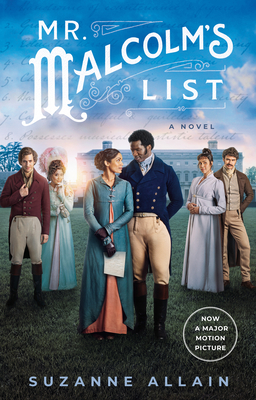
Book Review: Mr. Malcolm’s List by Suzanne Allain

Title: Mr. Malcolm’s List
Author: Suzanne Allain
Publisher: Berkley
Publication date: June 21, 2022 (reissue — originally published 2009)
Print length: 256 pages
Genre: Regency romance
Source: Purchased
Rating:

Rating: 3 out of 5.

It is a truth universally acknowledged that an arrogant bachelor insistent on a wife who meets the strictest of requirements–deserves his comeuppance.

The Honourable Mr. Jeremy Malcolm is searching for a wife, but not just any wife. As the target of matchmaking mothers and desperate debutantes, he’s determined to avoid the fortune hunters and find a near-perfect woman, one who will meet the qualifications on his well-crafted list. But after years of searching, he’s beginning to despair of ever finding this paragon. Until Selina Dalton arrives in town.

Selina, a vicar’s daughter of limited means and a stranger to high society, is thrilled when her friend Julia Thistlewaite invites her to London, until she learns it’s all part of a plot to exact revenge on Mr. Malcolm. Selina is reluctant to participate in Julia’s scheme, especially after meeting the irresistible Mr. Malcolm, who appears to be very different from the arrogant scoundrel of Julia’s description.

But when Mr. Malcolm begins judging Selina against his unattainable standards, Selina decides that she has some qualifications of her own. And if he is to meet them he must reveal the real man behind…Mr. Malcolm’s List.

I feel like I’ve been bombarded by promos for the movie Mr. Malcolm’s List — and before deciding if I wanted to see it, I decided to give the book a try.

In this Regency romance, Mr. Malcolm is a prime catch, but catching him seems unachievable. He has a list, you see, of what he wants in a wife, and one deficiency in a prospective bride is enough to have her dropped from consideration. When one young woman, Julia, takes offense at being jilted for seemingly inconsequential reasons, she decides to take revenge.

Her great plan? Invite a school friend to London, have her captivate Mr. Malcolm, make him fall madly in love with her, and then, when he finally proposes, have his beloved inform him that he does not meet the qualifications of her list. What could possibly go wrong?

Julia’s pawn in this scheme is Selena, a vicar’s daughter who has spent the past three years in service as a companion to an elderly woman. As this woman has recently died, Selena is at loose ends, and is delighted to receive Julia’s invitation to stay with her… until she arrives and learns about Julia’s scheme. Selena is horrified, but also has nowhere else to go. Reluctantly, she agrees to play along, at least for a little while.

When she meets Mr. Malcolm, things become infinitely more complicated, because he’s the most beautiful man she’s ever seen and they seem to connect instantaneously. As they begin to develop feelings, Selena yearns to be free of Julia’s plans, but more and more obstacles crop up to keep her from being honest with Mr. Malcolm. When he does finally learn the truth, it may be too late to salvage the romance that’s sparking between them.

Mr. Malcolm’s List is a quick, light read. I was entertained, but not enthralled. Perhaps I’ve just read too many Regency-set books, but there doesn’t feel that there’s much all that new or different here. Selena is the intelligent, lovely, good heroine; Mr. Malcolm is the dashing ladies’-man with a heart of gold, who just needs the right woman to reform him.

There are house parties and balls and horse-back riding, as well as scandalous moments and worries about reputations and vulgar relations. There’s talk of the season and matches and titles, and impending spinsterhood is always a concern. All pretty much staples of this type of romance, and all present and accounted for.

The story did hold my interest enough for me to want to see it through and find out how it all turns out. The pacing is a little odd at times — moments that seem like they’ll be big overaching secrets looming in the background get resolved or revealed within a paragraph. Julia’s schemes are all very obvious, and the secondary love story lacks any sort of believability or chemistry.

Still, I finished, and did find some scenes and characters amusing. As for the movie… well, it looks like the plot is fairly faithful to the book — but based on the trailer, it also appears that the movie is trying to jump on the Bridgerton bandwagon. Bridgerton‘s diverse casting was new and refreshing and innovative in so many ways. Based solely on the trailer, it would appear that the Mr. Malcolm’s List movie is trying to ride the waves of Bridgerton‘s success by copying their approach to shaking up a Regency setting through diverse casting — and while I’m absolutely in favor of diverse casting, it just seems a little… too duplicative?

Check out the movie trailer:

What do you think? Would you go see Mr. Malcolm’s List? Or does this seem too much like a Bridgerton wannabe?

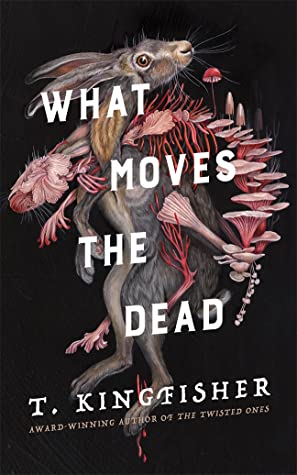
Book Review: What Moves the Dead by T. Kingfisher

Title: What Moves the Dead
Author: T. Kingfisher
Publisher: Tor Nightfire
Publication date: July 12, 2022
Print length: 176 pages
Genre: Horror
Source: Review copy courtesy of the publisher via NetGalley
Rating:

Rating: 5 out of 5.

From the award-winning author of The Twisted Ones comes a gripping and atmospheric retelling of Edgar Allan Poe’s classic “The Fall of the House of Usher.”

When Alex Easton, a retired soldier, receives word that their childhood friend Madeline Usher is dying, they race to the ancestral home of the Ushers in the remote countryside of Ruritania.

What they find there is a nightmare of fungal growths and possessed wildlife, surrounding a dark, pulsing lake. Madeline sleepwalks and speaks in strange voices at night, and her brother Roderick is consumed with a mysterious malady of the nerves.

Aided by a redoubtable British mycologist and a baffled American doctor, Alex must unravel the secret of the House of Usher before it consumes them all.

I’m convinced that the coming apocalypse will be the work of killer fungi. There are certainly enough works of horror fiction to back me up! What Moves the Dead further cements my belief that fungi are the creepiest life form there is. Prove me wrong!

What Moves the Dead is a twisted retelling of Edgar Allan Poe’s The Fall of the House of Usher. As in the original, the main character is summoned to a dark, disturbing, decrepit mansion located on the shores of a dark, scary tarn (lake), where a childhood friend cares for his dying sister and seeks companionship and support in their looming disaster.

In What Moves the Dead, Poe’s unnamed narrator is replaced by Lieutenant Alex Easton, a retired “sworn” soldier from the country of Gallacia, who once served as Roderick Usher’s officer during wartime, and who even earlier was close friends with Madeline Usher. Alex is shocked and horrified at the sight of the siblings, who appear gaunt, withered, and years older than their actual age. Madeline truly does seem to be on the verge of death, and Roderick appears unwell himself. The entire house and surrounding countryside (and that darned tarn) seem menacing, perhaps even poisonous.

Alex arrives at the house to find an American doctor already in residence, whose brashness eventually gives way to common cause. Dr. Denton doesn’t quite know what’s ailing Madeline either, but she does appear to be on the point of death.

Alex also meets Eugenia Potter, an Englishwoman whose chief passion in life is mycology (and who fumes against the stupid men-only rule of the English scientific societies of the time). Alex, Denton, and Potter all share the belief that something is wrong, not just with the Ushers but with the natural world too. What’s up with all the strangely-behaving hares in the area?

This short work is delightfully, deliciously creepy! The house is moldy, there are awful looking mushrooms all over the grounds, and the lake is stagnant and gross and seems too terrible to want to be anywhere near. I’ve read enough creepy fungi horror stories to have a pretty good sense of where the story would end up, but it was so much fun getting there, and the author still managed to surprise me time after time with all the crazy, strange, awful details.

Beyond the horror plotline, other delights await. Alex’s background in Gallacia is too good to reveal in a review, but trust me when I say that the explanations of how the Gallacian language adapts gender and pronoun formations based not just on biology but also on station in life, age, and other factors is absolutely wonderful and so fascinating. I’d read a whole book just about that!

Miss Potter is a secondary character, but she’s lots of fun, as is the reveal of who her one of her family members is. (I’m not telling!)

When I requested a review copy of What Moves the Dead, it was based on (a) how much I’ve loved everything else I’ve read by this amazing author and (b) the gorgeously creepy cover (*shudder*). I hadn’t realized at the time that this book would be a retelling of The Fall of the House of Usher — I actually didn’t know that until I started What Moves the Dead and happened to finally read the Goodreads blurb.

At that point, I took a small detour to read Poe’s story, which isn’t very long (the edition I read was 36 pages). I’m glad I did. It gave me great context for What Moves the Dead, and made it really fun to compare and contrast the two versions of the story, especially the character portrayals, the explanations, and the outcomes.

Note: The Fall of the House of Usher is easy to find online at no cost! Here’s one resource, and there are free versions available for Kindle too.

What Moves the Dead is an excellent read, perhaps not for the squeamish — but if you enjoy creepy, understated horror, definitely check it out!

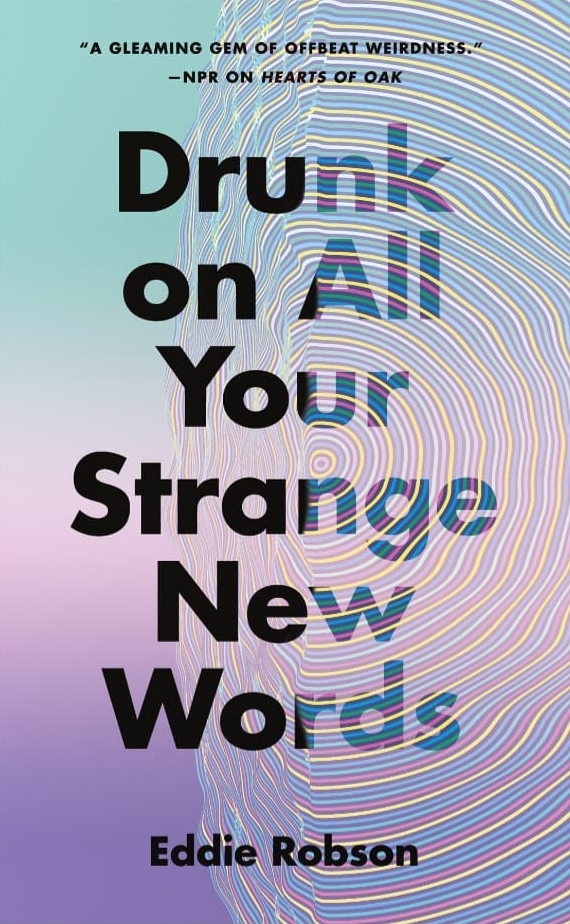
Book Review: Drunk on All Your Strange New Words by Eddie Robson

Title: Drunk on All Your Strange New Words
Author: Eddie Robson
Publisher: Tor
Publication date: June 28, 2022
Print length: 228 pages
Genre: Science fiction
Source: Review copy courtesy of the publisher via NetGalley
Rating:

Rating: 5 out of 5.

Lydia works as translator for the Logi cultural attaché to Earth. They work well together, even if the act of translating his thoughts into English makes her somewhat wobbly on her feet. She’s not the agency’s best translator, but what else is she going to do? She has no qualifications, and no discernible talent in any other field.

So when tragedy strikes, and Lydia finds herself at the center of an intergalactic incident, her future employment prospects look dire–that is, if she can keep herself out of jail!

But Lydia soon discovers that help can appear from the most unexpected source…

Eddie Robson’s previous novel, Hearts of Oak, was a 5-star read for me, so it’s not too surprising that this new book also gets ALL the stars!

In Drunk on All Your Strange New Words, the action takes place in a version of New York at some point in the future, where rising sea levels have devastated most coastal areas, New York exists as a tourist mecca behind sea barriers, and an alien race known as the Logi have established embassies and commerce with the population of Earth.

Main character Lydia works as a translator. The Logi speak mind to mind, and only those with an aptitude for telepathic communication can work in the field. Lydia is highly trained and very good at what she does, and she enjoys her time with “Fitz”, the human name the Logi cultural ambassador goes by. The only downside is that the work of mind-to-mind communication has a chemical side effect equivalent to intoxication, so the longer work hours or more complicated exchanges Lydia carries out, the drunker she becomes.

Can we just pause here to admire what an amazing set-up for the story this is? I’ve never come across anything like it, and I was immediately fascinated by the entire premise.

That’s just the beginning, though. The morning after a particularly challenging night of translation work, Lydia finds Fitz murdered in his study inside the Logi cultural residence. The doors were all locked for the night, only Lydia and Fitz were inside, and Lydia was so drunk from translating that she doesn’t remember anything at all past the middle of the evening. She’s clearly the prime suspect, and to make matters worse, she can’t even say with certainty that she didn’t do it.

The investigation into the murder is incredibly engrossing, with Lydia, the police, and other Logi diplomats carrying out their own inquiries. Lydia checks out clues and seemingly random connections, all of which seem to point to a larger conspiracy… or does it? It’s complicated, to say the least.

Drunk includes deft, intricate plotting, great character profiles, clever dialogue, and a fabulous new version of our world to think about. Grim and dark in many ways, it also includes a renewed interest in hard-copy books, so that’s something to look forward to if this future comes to pass! The author includes technology and slang that are different from our own, but not so impenetrable that it’s hard to follow. The writing is very accessible, and there’s an underlying sense of lightness and humor, even in dark moments, that make this a very enjoyable read.

Bottom line? I loved this book, and couldn’t put it down. Don’t miss it!

Book Review: In the Quick by Kate Hope Day

Title: In the Quick
Author: Kate Hope Day
Publisher: Random House
Publication date: March 2, 2021
Print length: 251 pages
Genre: Science fiction
Source: Purchased
Rating:

Rating: 3.5 out of 5.

June is a brilliant but difficult girl with a gift for mechanical invention who leaves home to begin grueling astronaut training at the National Space Program. Younger by two years than her classmates at Peter Reed, the school on campus named for her uncle, she flourishes in her classes but struggles to make friends and find true intellectual peers. Six years later, she has gained a coveted post as an engineer on a space station—and a hard-won sense of belonging—but is haunted by the mystery of Inquiry, a revolutionary spacecraft powered by her beloved late uncle’s fuel cells. The spacecraft went missing when June was twelve years old, and while the rest of the world seems to have forgotten the crew, June alone has evidence that makes her believe they are still alive.

She seeks out James, her uncle’s former protégé, also brilliant, also difficult, who has been trying to discover why Inquiry’s fuel cells failed. James and June forge an intense intellectual bond that becomes an electric attraction. But the relationship that develops between them as they work to solve the fuel cell’s fatal flaw threatens to destroy everything they’ve worked so hard to create—and any chance of bringing the Inquiry crew home alive.

A propulsive narrative of one woman’s persistence and journey to self-discovery, In the Quick is an exploration of the strengths and limits of human ability in the face of hardship, and the costs of human ingenuity.

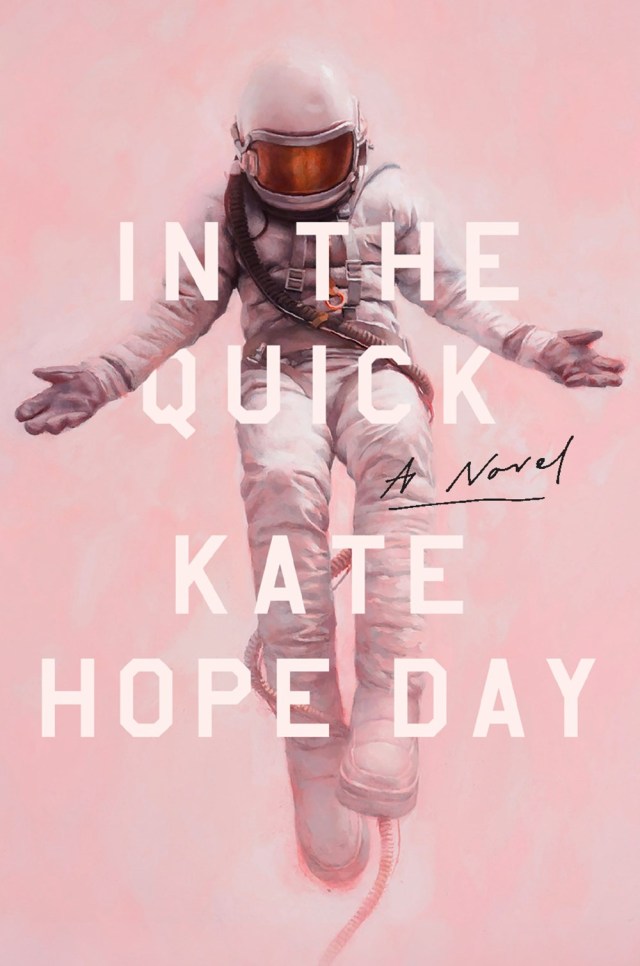
I’m not going to lie — I book this book on a whim based solely and completely on the fact that the pink astronaut cover grabbed my attention in a bookstore and wouldn’t let me walk away!

Much to my surprise, while In the Quick is a science fiction book about a young engineering prodigy whose obsessive need to understand the why of things leads her into a fiercely competitive astronaut program and ultimately, into interplanetary exploration… it’s also a retelling of Jane Eyre. How wild is that?

In In the Quick, June’s beloved uncle, a renowned pioneer in spaceship engineering, dies when June is twelve. He raised her to think, to question, to seek answers, and she delighted in hovering in the background while his students worked with him on challenging prototypes and design projects. But after his death, June is lost in her aunt’s house, unloved and misunderstood — and when the spaceship Inquiry goes dark after a fuel cell failure, June’s worldview is thrown into chaos.

The fuel cells were her uncle’s greatest achievement. What could have gone wrong, and why? Even past the point when the world seems to have concluded that the Inquiry and its crew are lost, June is compelled to seek answers. She soon enrolls at the National Space Program school, determined to forge a path for herself that takes her into space and gives her the knowledge to understand and unravel the mysteries of the failed fuel cells.

June’s journey ultimately takes her to a moon called the Pink Planet, where swirling silt creates a permanently pink atmosphere, and where exposure to the silt results in a hallucinogenic, numbed state. The Pink Planet is an outpost developed as a jumping off point for the vast voyages intended for the Inquiry and its sister ship, but once the Inquiry mission failed, the Pink Planet stations were left in a state of minimal use and shocking disrepair. Once on the Pink Planet, June reconnects with her uncle’s former student James, who is similarly obsessed with June’s uncle’s work. Together, they begin an intense creative phase to finally solve the puzzle of the fuel cells… and to figure out if there truly is any hope still of finding the Inquiry after all this time.

In the Quick is a fairly short book, and it’s a quick read. It’s oddly compelling — the forays into engineering and design are kept to lightly descriptive passages, so the science is never overwhelming for those of us without advanced degrees. The story of June’s growth and education is interesting, although she’s a somewhat hard character to love. We don’t get very deep into her inner life, apart from her never-satisfied quest for knowledge. We know she experiences loss and loneliness, but the friendships she forms along her journey always feel secondary to her scientific obsession.

It’s entertaining to see the Jane Eyre storylines woven into In the Quick. We’re not beaten over the head with them — if someone reading In the Quick hasn’t read Jane Eyre, they’re not going to feel lost or confused in any way. Instead, there are some basic patterns and motifs built into the story (I had to giggle over the opening scene of June reading a book while hidden away in a window seat), and it’s surprising to see how well it all works in a novel of space exploration and interplanetary travel!

I did find the overall plot to have a somewhat flat effect by the end. There are pieces that are never fully explained — in fact, given how central the Pink Planet is to the story, I don’t believe we’re ever told where it is. We know that it’s a moon, despite being named the Pink Planet, but a moon of what?

The book ends, in my opinion, on a very abrupt note, and left me feeling frustrated. Without saying exactly what the ending is, I’ll just say that I wanted more explained about what had transpired over the years since the Inquiry was lost. June’s obsession with the Inquiry leads to her conviction that the crew was still out there somewhere, alive but unable to power their ship or communicate — but if that’s true, how did they survive all these years? The lack of an explanation felt very unsatifsying to me.

If I had to categorize this book, I’d describe it as “literary science fiction”. It’s an interesting, ambitious novel, with themes of classic literature woven into a space story. Overall, I enjoyed reading In the Quick, but for me, I prefer my sci-fi with a lot clearer grounding in the science of it all. I want to understand the details and marvel at how a work of fiction can make it all seem possible. In the Quick is more about the moods and passions and human drives involved, and while it was a good read, it wasn’t 100% my style of science fiction.

Still, I’m glad I gave in to the impulse to grab a copy! In a year where much of my reading is planned well in advance, it was a treat to read on a whim and experience something unexpected. Jane Eyre in space? Well, that was definitely a new, unexpected twist for me, and I’m happy that I gave it a chance.

Book Review: Book Lovers by Emily Henry

Title: Book Lovers
Author: Emily Henry
Publisher: Berkley
Publication date: May 3, 2022
Print length: 377 pages
Genre: Contemporary fiction
Source: Purchased

Rating: 4 out of 5.

One summer. Two rivals. A plot twist they didn’t see coming….

Nora Stephens’ life is books—she’s read them all—and she is not that type of heroine. Not the plucky one, not the laidback dream girl, and especially not the sweetheart. In fact, the only people Nora is a heroine for are her clients, for whom she lands enormous deals as a cutthroat literary agent, and her beloved little sister Libby.

Which is why she agrees to go to Sunshine Falls, North Carolina for the month of August when Libby begs her for a sisters’ trip away—with visions of a small-town transformation for Nora, who she’s convinced needs to become the heroine in her own story. But instead of picnics in meadows, or run-ins with a handsome country doctor or bulging-forearmed bartender, Nora keeps bumping into Charlie Lastra, a bookish brooding editor from back in the city. It would be a meet-cute if not for the fact that they’ve met many times and it’s never been cute.

If Nora knows she’s not an ideal heroine, Charlie knows he’s nobody’s hero, but as they are thrown together again and again—in a series of coincidences no editor worth their salt would allow—what they discover might just unravel the carefully crafted stories they’ve written about themselves.

I’ll keep this brief — at this point, when I see a cute contemporary romance cover and discover the book is by Emily Henry, it’s going to be a must-read for me. Book Lovers caught my eye immediately (I mean, the title alone! who can resist?), and it was a perfect pick for reading during a vacation week.

In Book Lovers, main character Nora is a hard-edged, polished, driven literary agent who is unrelenting when it comes to making deals for her clients. Her nickname is the Shark — but don’t call her that to her face. While she represents highly successful authors, including those who write heart-warming love stories about small-town romances, she knows absolutely where she fits in the trope: She’s the one left behind.

You know how it goes: A big city character heads to a small town for some vague business purpose, falls unexpectedly in love with the local farmer/baker/craftsperson, and gives up city life for a life full of purpose, love, and baked goods in the country — breaking up with their former city boyfriend/girlfriend along the way. And that city boyfriend/girlfriend who gets dumped is Nora. It’s happened to her again and again, and she’s over it.

But Nora also has a soft spot for her younger (and very pregnant) sister, so she reluctantly agrees to a three-week sisters’ trip to a small town in North Carolina, where her sister Libby is determined to milk the experience for every romance-worthy trope possible. What they do not expect is for (a) Nora’s New York business nemesis Charlie to also show up in the same town and (b) for all the sparks that fly between Nora and Charlie.

The plot has much more depth than you might expect. Emily Henry excels at creating funny, quirky, unusual characters, then giving them rich backstories that humanize them and expose the pains and sorrows behind their facades. The same is true here, and it makes Nora much more likable than she initially comes across, so much so that I became very invested in her happiness and well-being.

I liked Nora and Charlie together as a couple — their banter is adorable! And while it takes them a while to get past the outer animosity to their inner deep connection, it’s totally worth the journey. The sisters’ relationship is just as important as the romantic relationship, and I really appreciated how lovingly their connection is portrayed.

The writing is light and fast-paced, but there’s plenty of emotion to unpack too. I truly enjoyed Book Lovers — although I’m a little mad that the author managed to burst the bubble of all my small town romance fantasies! The book trope talk is so much fun, there are plenty of references to real books (which made me really happy), and I love that the author includes “Nora and Libby’s Ultimate Reading List” at the back of the book!

Book Lovers is a perfect choice for a summer beach book! Don’t miss it.

Book Review: Book of Night by Holly Black

Title: Book of Night
Author: Holly Black
Publisher: Tor Books
Publication date: May 3, 2022
Print length: 320 pages
Genre: Urban fantasy
Source: Purchased
Rating:

Rating: 3.5 out of 5.

In Charlie Hall’s world, shadows can be altered, for entertainment and cosmetic preferences—but also to increase power and influence. You can alter someone’s feelings—and memories—but manipulating shadows has a cost, with the potential to take hours or days from your life. Your shadow holds all the parts of you that you want to keep hidden—a second self, standing just to your left, walking behind you into lit rooms. And sometimes, it has a life of its own.

Charlie is a low-level con artist, working as a bartender while trying to distance herself from the powerful and dangerous underground world of shadow trading. She gets by doing odd jobs for her patrons and the naive new money in her town at the edge of the Berkshires. But when a terrible figure from her past returns, Charlie’s present life is thrown into chaos, and her future seems at best, unclear—and at worst, non-existent. Determined to survive, Charlie throws herself into a maelstrom of secrets and murder, setting her against a cast of doppelgängers, mercurial billionaires, shadow thieves, and her own sister—all desperate to control the magic of the shadows.

Holly Black makes her adult debut with Book of Night, a modern dark fantasy of shadowy thieves and secret societies.

I’m going to keep this brief and to the point: Holly Black’s YA faerie-world trilogy The Folk of the Air is one of my favorite fantasy trilogies. I love the characters, the setting, the writing, the plot. So as you can imagine, I was thrilled to hear that this author would be releasing her first adult book this year.

Sadly, it didn’t quite work out for me — although some elements are very good.

In the world of Book of Night, shadow magic has become a fashion trend and a sought-after talent, but there’s a much darker side too. Yes, it’s fun to have your shadow altered to reflect your real self — but shadows have a tendency to get out of control or to become dangerous, especially when fed blood and strengthened with a person’s life force. And then there’s the whole seedy world of stolen shadows, as well as the black market in books of magic — each gloamist (people who work with shadows) wants the best secrets, and they’re fiercely competitive and protective when it comes to books that might reveal even more essential secrets of shadow manipulation.

Main character Charlie Hall is a highly skilled con-woman and thief who left behind her life of crime after a particularly nasty incident endangered not only her own life but that of her sister as well. Still, she can’t ever seem to completely walk away. There are those who know of her skills and want her on their side, and Charlie can’t avoid her old life forever.

The world of Book of Night is dark and grim. Everything is seedy and run-down, with dark bars and pawnshops and danger lurking down every alley. Shadow magic itself seems terrifying, with skilled gloamists being able to “puppet” people via shadows or even choke them to death by sending their shadows down their throats.

There’s a lot that’s fascinating about this world, but at the same time, I found myself utterly confused at times. There are some key people and positions whose roles aren’t fully explained. An entire ruling body is introduced in about a paragraph, and how they work and who they are remains murky at best. The magical system isn’t well enough explained — I found myself confused by the rules, the power structure, and the purpose of some of the magical items introduced throughout the story.

Charlie as a character is fun to ride along with. She’s absolutely a criminal and a bad-ass, but we get chapters from her past that show us how she became what she is. Criminal with a heart of gold, I guess — she’s fiercely loyal to those she loves and wants to keep them safe, but just can’t get away from her past life or find a way to stay on the straight and narrow.

I won’t go too far into further details. For some reason, this book took me a lot longer to read than I expected — maybe because of other factors in my life, but also because I never got to a place where I absolutely couldn’t put the book down. As a result, I never felt truly immersed.

I will say that the ending has some pretty unexpected and cool twists, which raised my overall impression of the book by a lot. Again, no details — you definitely don’t want spoilers! But the final chapters offer a great payoff and some really good surprises (although the pieces of the world that seemed unclear to me remain unclear all the way to the end — there are some things that I just don’t get).

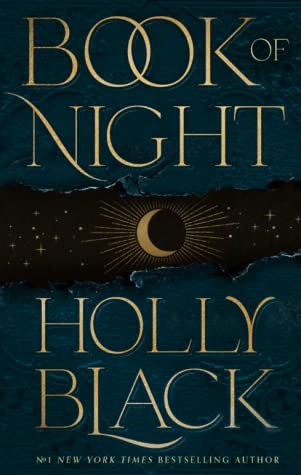
The ending of the book leaves a lot of questions hanging about what’s next for Charlie, so it certainly seems like there will be a sequel. And despite my issues with the world-building, I’m intrigued enough by how the story ended that I’ll want to read that sequel, whenever it shows up!