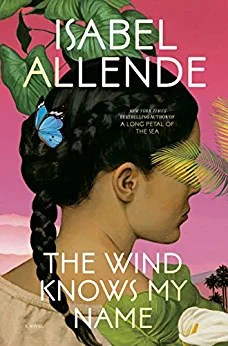
Book Review: The Wind Knows My Name by Isabel Allende

Title: The Wind Knows My Name
Author: Isabel Allende
Publisher: Ballantine Books
Publication date: June 6, 2023
Length: 253 pages
Genre: Historical/contemporary fiction
Source: Purchased
Rating:

Rating: 4 out of 5.

This powerful and moving novel from the New York Times bestselling author of A Long Petal of the Sea weaves together past and present, tracing the ripple effects of war and immigration on one child in Europe in 1938 and another in the United States in 2019.

Vienna, 1938. Samuel Adler was six years old when his father disappeared during Kristallnacht—the night their family lost everything. Samuel’s mother secured a spot for him on the last Kindertransport train out of Nazi-occupied Austria to the United Kingdom, which he boarded alone, carrying nothing but a change of clothes and his violin.

Arizona, 2019. Eight decades later, Anita Diaz, a blind seven-year-old girl, and her mother board another train, fleeing looming danger in El Salvador and seeking refuge in the United States. However, their arrival coincides with the new family separation policy, and Anita finds herself alone at a camp in Nogales. She escapes through her trips to Azabahar, a magical world of the imagination she created with her sister back home.

Anita’s case is assigned to Selena Duran, a young social worker who enlists the help of a promising lawyer from one of San Francisco’s top law firms. Together they discover that Anita has another family member in the United States: Leticia Cordero, who is employed at the home of now eighty-six-year-old Samuel Adler, linking these two lives.

Spanning time and place, The Wind Knows My Name is both a testament to the sacrifices that parents make and a love letter to the children who survive the most unfathomable dangers—and never stop dreaming.

The Wind Knows My Name is a compact but powerful story about lost children, sorrow, and resilience. It’s also quite political, which I didn’t have a problem with, but some may readers may wish to know that the author is very up front in her thoughts on a certain former President and the current, ongoing immigration crisis.

But beyond the politics and the highly charged topics, The Wind Knows My Name is deeply affecting because of the individual characters, their painful childhood experiences, and the way unexpected connections help them forge new paths forward.

The book opens in Vienna, 1938, as the horrors of Kristallnacht unfold. For young Samuel Adler, it’s the night his whole world falls apart. Eventually, to save his life, Samuel’s mother sends him off to England on a train filled with other Jewish children — and while Samuel does go on to live a long and fulfilling life, the early trauma never leaves him.

Later, we meet Leticia, a Salvadoran girl whose father crosses the border into the US with her after their entire family is murdered in the massacre of their small village.

And still later, closer to the present day, we meet Anita — also from El Salvador, cruelly separated from her mother at the border as they seek asylum from extreme danger back home.

As these three people come together, with assistance from Selena, a social worker, and Frank, the ambitious lawyer who finds his true calling in pro bono work helping undocumented children, their complicated pasts offer reflections of commons experiences, even while each has suffered in their own unique and unforgettable way.

At less than 300 pages, The Wind Knows My Name is a fast read, especially as it’s so compelling that it’s difficult to pause and come up for air once you start. Each character’s story is absorbing and tragic, and yet, there are rays of hope in each of their stories as well — even more so as they come together in an unusual but lovely found family.

My main quibble with this book has to do with the storytelling itself. Isabel Allende is a masterful writer and has a beautiful way with words, and she’s highly gifted when it comes to evoking her characters’ inner lives, dreams, and nightmares. However, the writing in this book relies too often on telling rather than showing. Especially in the later chapters, new interludes open with a recitation of what the characters have been doing. We don’t see these events unfold; we hear about them after the fact.

The story itself and what the characters experience is never uninteresting, but there’s a distance because of this narrative approach that left me feeling the emotional impact a little less than I’d expected.

I also felt disappointed that Samuel’s adult life is largely skipped and told in summary after the fact, when we meet up with him again in his 80s. I couldn’t help but feel that there was so much more to see and understand. Given the length of the book, perhaps there wasn’t room to go deeper into the characters’ lives, except in terms of how they all connect, but I wished for more, for Samuel and the others. The Wind Knows My Name might have been more satisfying if it had expanded further on all of the characters and let us go deeper into their worlds.

Overall, however, the events and experiences contained within The Wind Knows My Name are deeply moving, and I came to care deeply about all of its people and the relationships they create and nurture.

Highly recommended.

Book Review: Hula by Jasmin ‘Iolani Hakes

Title: Hula
Author: Jasmin ‘Iolani Hakes
Publisher: HarperVia
Publication date: May 2, 2023
Length: 400 pages
Genre: Historical/contemporary fiction
Source: Library
Rating:

Rating: 4 out of 5.

Set in Hilo, Hawai’i, a sweeping saga of tradition, culture, family, history, and connection that unfolds through the lives of three generations of women–a brilliant blend of There, There and Sharks in the Time of Saviors that is a tale of mothers and daughters, dance and destiny, told in part in the collective voice of a community fighting for its survival

“There’s no running away on an island. Soon enough, you end up where you started.”

Hi’i is the youngest of the legendary Naupaka dynasty, only daughter of Laka, once the pride of Hilo; granddaughter of Hulali, Hula matriarch on the Big Island. But the Naupka legacy is in jeopardy, buckling under the weight of loaded silences and unexplained absences, most notably the sudden disappearance of Laka when Hi’i was a child. Hi’i dreams of healing the rifts within her family by becoming the next Miss Aloha Hula–and prove herself worthy of carrying on the family dynasty. She demonstrates her devotion to her culture through hula–the beating heart of her people expressed through the movement of her hips and feet.

Yet she has always felt separate from her community, and the harder she tries to prove she belongs–dancing in the halau until her bones ache–the wider the distance seems to grow. Soon, fault lines begin to form, and secrets threaten to erupt. Everyone wants to know, Hi’i most of all: what really happened when her mother disappeared, and why haven’t she and her grandmother spoken since? When a devastating revelation involving Hi’i surfaces, the entire community is faced with a momentous decision that will affect everyone–and determine the course of Hi’i’s future.

Part incantation, part rallying cry, Hula is a love letter to a stolen paradise and its people. Told in part by the tribal We, it connects Hawaii’s tortured history to its fractured present through the story of the Naupaka family. The evolution of the Hawaiian Sovereignty movement is reflected in the journeys of these defiant women and their community, in whose struggle we sense the long-term repercussions of blood quantum laws and colonization, the relationship between tribe and belonging, and the universal question: what makes a family?

Hula is a complex, multi-layered story about family, history, and heritage. I read this for a book discussion (coming in a couple of weeks), after having it on my to-read list since it was released last year. I’m glad to have read it, and even more glad to be able to look forward to sharing thoughts and responses with the book group.

Hilo’s no place for soft feet. Gotta build calluses. Then a girl can run on lava.

In Hula, the narrative is often presented through the community’s eyes, using the “we” voice to explain the dynamics within the Naupauka family and the changing world of the community itself. The history of Hawaii’s colonization and the dismantling of the monarchy is crucial to the story, and through the community’s narration, we’re presented with important people and events from the past which directly impact the unfolding events in the lives of the characters.

The novel itself revolves around Hi’i, first as a child, then as a grown woman. Hi’i is described as being different from the start. Her mother Laka disappeared as a teen, then came back with baby Hi’i with no explanation. Hi’i doesn’t look Hawaiian, with her red hair and green eyes and her susceptibility to sunburn, and yet, she’s soon absorbed by the rhythms of life in Hilo. Still, when Hi’i insists on learning hula, something sacred within her people’s lives and of central importance within the Naupauka family, Laka fears what may come of it.

Secrets abound, especially in terms of Laka’s past and Hi’i’s origins. Eventually, we learn more, but it takes the entire book for these secrets to be shared fully between Hulali (Laka’s mother), Laka, and Hi’i herself.

Mother and daughter had picked up where they’d left off, a fight that had been going on since the time the first navigators were in their canoes charting the stars to find the islands.

The writing is beautiful and often visceral. The dialogue and descriptions have a flow to them, although the heavy usage of Hawaiian words and phrases can present a challenge to a reader. (I kept Google Translate open while reading, and it helped a lot, despite some failures around idiom or intent.)

One by one the dancers shifted into the shape of the wind rattling the branches, the rain pattering upon the grasses, the dew dripping from the leaves. Stethoscopes pressed to Hawai`i’s heart. Through them Hi`i could hear it beating.

Given the book’s title, I’d expected more about hula as a dance form to feature within the story. It’s important, but not as central or dominant as I’d expected. Instead, the family dynamics and the politics around sovereignty, Hawaiian Homelands, and various government actions are what drive the story.

Nothing is spoon-fed to the reader, so for me, it was both eye-opening and occasionally frustrating to have to figure out what was going on and what the political elements actually meant. It also made me realize that I should make an effort to read more non-fiction about Hawaii’s history and the ongoing current struggles among the Native Hawaiian population to reclaim land and autonomy.

They had stolen a finger, then a hand. Then an arm, a shoulder, a hip, a leg, and soon the entire body. Now they wanted our breath, our soul.

The story of the generations of women — their complicated relationships, the concepts of belonging and responsibility, the traditions and expectations — was the most compelling element of Hula for me. I found the sections about Laka’s past and Hi’i’s adult life the most emotionally engaging, although adult Laka is hard to know and didn’t feel entirely consistent to me as a character.

Some loose ends remain at the end of the book, but overall, I appreciated how the author weaves together so many characters and plot points to create a cohesive, meaningful whole.

Hula is not an easy book to read, and requires a lot of concentration to get through, but it’s worth the effort. It left me wanting to know more, and that’s always a good sign about a book’s impact. Hula makes a reader think as well as feel, and leaves a lasting impression.

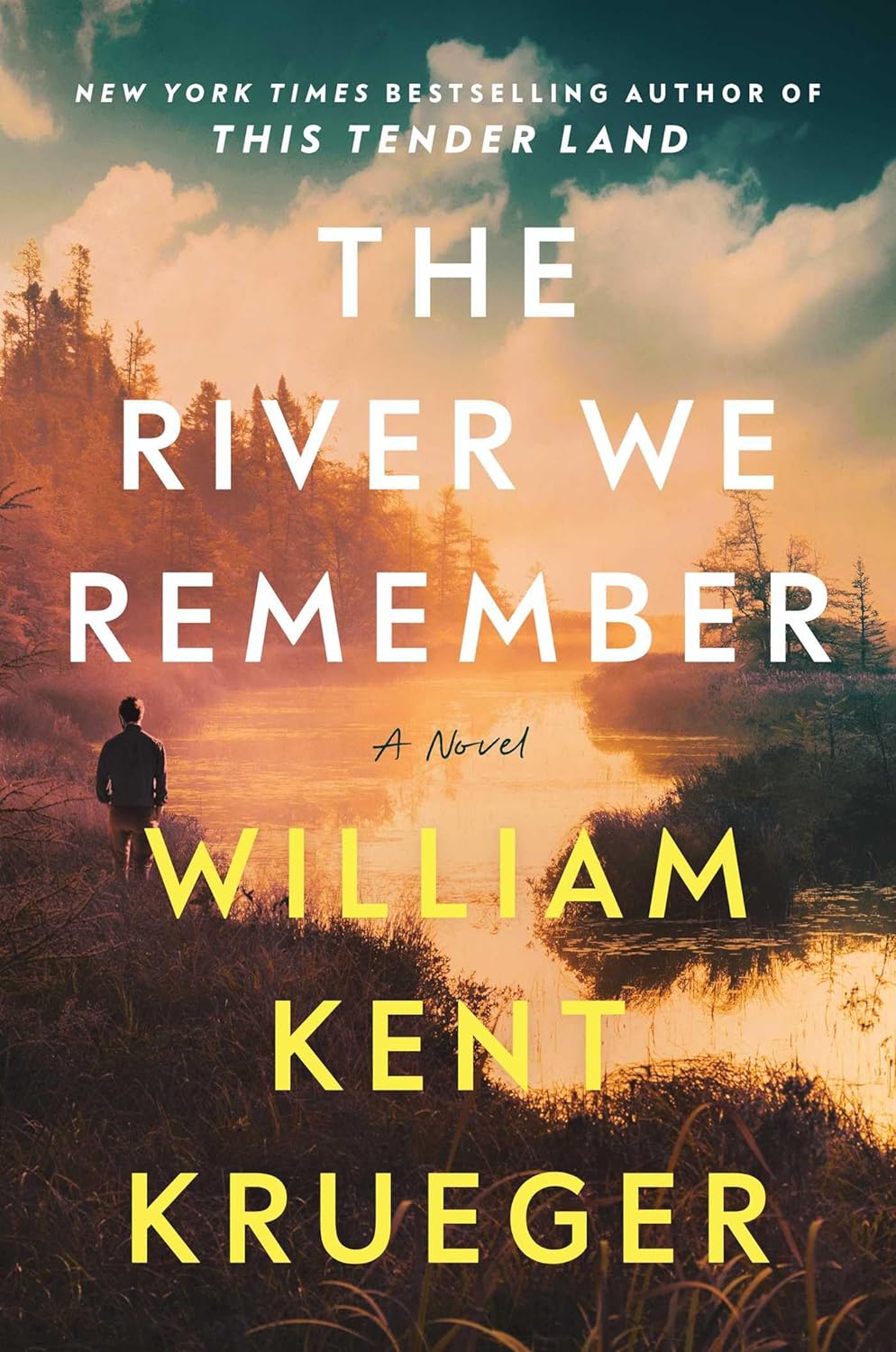
Book Review: The River We Remember by William Kent Krueger

Title: The River We Remember
Author: William Kent Krueger
Publisher: Atria Books
Publication date: September 5, 2023
Length: 421 pages
Genre: Historical fiction
Source: Purchased
Rating:

Rating: 4.5 out of 5.

On Memorial Day in Jewel, Minnesota, the body of wealthy landowner Jimmy Quinn is found floating in the Alabaster River, dead from a shotgun blast. The investigation falls to Sheriff Brody Dern, a highly decorated war hero who still carries the physical and emotional scars from his military service. Even before Dern has the results of the autopsy, vicious rumors begin to circulate that the killer must be Noah Bluestone, a Native American WWII veteran who has recently returned to Jewel with a Japanese wife. As suspicions and accusations mount and the town teeters on the edge of more violence, Dern struggles not only to find the truth of Quinn’s murder but also put to rest the demons from his own past.

Caught up in the torrent of anger that sweeps through Jewel are a war widow and her adolescent son, the intrepid publisher of the local newspaper, an aging deputy, and a crusading female lawyer, all of whom struggle with their own tragic histories and harbor secrets that Quinn’s death threatens to expose.

The River We Remember was my book group’s pick for April, and we were fortunate enough to have a zoom chat with the author. I myself was late in finishing, so I attended the chat having only read half the book… but that’s okay. He was gracious and engaging, the group avoided giving spoilers on the central mystery, and all in all, it was a wonderful event. And then I finished the book the next day!

OUR LIVES AND the lives of those we love merge to create a river whose current carries us forward from our beginning to our end. Because we are only one part of the whole, the river each of us remembers is different, and there are many versions of the stories we tell about the past. In all of them there is truth, and in all of them a good deal of innocent misremembering.

In The River We Remember, a Minnesota community is rocked by the violent death of one of its leading residents. Jimmy Quinn was not loved — not by a long shot — but as the biggest landowner in the area, he was powerful, connected, and in many cases, someone to fear. Lots of people would have had grudges, resentment, even hostility, but was his death murder, suicide, or just a gruesome accident?

The story unfolds through the eyes of multiple characters living in the small town of Jewel. Chief among these is Sheriff Brody Dern, a veteran of WWII with visible and invisible scars and a complicated personal life. At various points, though, we see through the eyes of many different people — there’s a sense of the community being the true main character. All the people we meet — deputies, a diner owner, teen boys, local farmers, a lawyer, a reporter — are connected and have histories that weave together, with their actions affecting one another in an intricate chain of events.

The mystery of Jimmy Quinn’s death is the central plot thread of the novel, but as this unfolds, we encounter themes around war and survival, guilt, growing up with violence, generational trauma, and the ripple effects of hate, bigotry, and racism. There’s also the concept of home — what makes a community, a piece of land, or even a specific person feel like home? Where do people find belonging?

I won’t go further into plot details, but will sum up by saying that while the mystery has a satisfying resolution, the true beauty of this book is the outstanding character depictions. Each of the people we meet are distinct and have complex inner lives that come into play as they interact. The whole is emotional and evocative, allowing the reader to experience the time and place of the story in a way that feels authentic and powerful.

Simply put, The River We Remember is a beautiful novel. This is my third book by this author (I also loved his two other stand-alones, This Tender Land and Ordinary Grace), and I look forward to starting his long-running Cork O’Connor series.

Top Ten Tuesday: Books On My Summer 2020 TBR

Top Ten Tuesday is a meme hosted by That Artsy Reader Girl, featuring a different top 10 theme each week. This week’s topic is Books On My Summer 2020 TBR.

Some of these are new releases, some are books that I already own and just need to make a priority this summer. And I’m embarrassed to say that one of these books was on my summer 2019 TBR list, and I just never got to it.

  1. Peace Talks (Dresden Files, #16) by Jim Butcher
  2. The Unkindest Tide (October Day, #13)  by Seanan McGuire (a reread, but hey– I need to be ready for #14 in September!)
  3. Time After Time by Lisa Grunwald (my book group’s pick for July)
  4. The Relentless Moon (Lady Astronaut, #3) by Mary Robinette Kowal
  5. Blood of Elves (The Witcher series) by Andrzej Sapkowski
  6. Shades of Milk and Honey (The Glamourist Histories, #1) by Mary Robinette Kowal
  7. Midnight Sun by Stephenie Meyer (I know, I know…)
  8. Alice by Christina Henry
  9. Hollow Kingdom by Kira Jane Buxton
  10. Bookish & the Beast by Ashley Poston

What are you planning to read this summer? Please share your links!

Save

Save

Save

Save

Book Review: Such a Fun Age by Kiley Reid

Title: Such a Fun Age
Author: Kiley Reid
Publisher: G. P. Putnam’s Sons
Publication date: December 31, 2019
Length: 320 pages
Genre: Contemporary fiction
Source: Review copy courtesy of the publisher via NetGalley
Rating:

Rating: 4 out of 5.

A striking and surprising debut novel from an exhilarating new voice, Such a Fun Age is a page-turning and big-hearted story about race and privilege, set around a young black babysitter, her well-intentioned employer, and a surprising connection that threatens to undo them both.

Alix Chamberlain is a woman who gets what she wants and has made a living showing other women how to do the same. A mother to two small girls, she started out as a blogger and has quickly built herself into a confidence-driven brand. So she is shocked when her babysitter, Emira Tucker, is confronted while watching the Chamberlains’ toddler one night. Seeing a young black woman out late with a white child, a security guard at their local high-end supermarket accuses Emira of kidnapping two-year-old Briar. A small crowd gathers, a bystander films everything, and Emira is furious and humiliated. Alix resolves to make it right.

But Emira herself is aimless, broke, and wary of Alix’s desire to help. At twenty-five, she is about to lose her health insurance and has no idea what to do with her life. When the video of Emira unearths someone from Alix’s past, both women find themselves on a crash course that will upend everything they think they know about themselves, and each other.

With empathy and piercing social commentary, Such a Fun Age explores the stickiness of transactional relationships, what it means to make someone “family,” the complicated reality of being a grown up, and the consequences of doing the right thing for the wrong reason.

Such a Fun Age? Such a good book!

I’ve been seeing glowing reviews for this book on all sorts of book blogs over the last few weeks, and the hype has only intensified now that Such a Fun Age has been chosen as the newest Reese Witherspoon book club pick.

Debut author Kiley Reid highlights a complex web of issues surrounding race, income inequality, social power, and more in this intriguing look at the intersections of family and privilege.

25-year-old Emira is a college grad who’s at loose ends, never having found her passion or true calling. She makes ends meet — barely — by working as a part-time typist and babysitting three days per week for a precious little almost-three-year-old named Briar.

Briar’s parents, Alix and Peter, are recent transplants from New York to Philadelphia. Alix is a social media influencer who has somehow parlayed her talent for getting corporations to send her free stuff in exchange for media coverage into a career as an inspirational speaker and advocate for women’s voices. She lives for the attention and perceived power, loves the image of herself as an influential, visionary women’s leader, and doesn’t particularly have the attention or patience for a small child.

Alix and Peter are white and affluent; Emira is African American and living payday to payday, relying on her more successful friends’ generosity and worrying about her upcoming 26th birthday when she’ll lose her health insurance coverage as her parents’ dependent.

Emira and Briar have an amazing bond. It’s not that Emira loves kids — she just gets Briar and adores her, and the feeling is mutual.

The action starts as Emira is out partying with friends and gets a frantic call from Alix. There’s an emergency at the house, and they need Emira to come take Briar out for a bit. Yes, it’s 10 pm, but this is truly urgent. Emira agrees, and takes Briar to a favorite location, the snooty upper-class (and very white) neighborhood market, where Briar loves to look at the bins of nuts and teas.

Things go wrong, and quickly. Another shopper is suspicious of the young black girl in the party dress toting around a small blonde child. Security intervenes, and things get ugly, and the incident is captured on video by a do-gooder bystander. The incident is awful and upsetting, and Emira just wants to put it behind her once it’s over.

At the same time, Alix develops an odd fascination with Emira, who is unfailingly polite but not particularly interested in Alix. Alix sees herself in a saviour role, wanting to help Emira, bond with her, enrich her life, and become her bestie. She’d love to convince herself and all her friends that Emira is part of the family. But why this growing obsession? What’s behind her need to know and be involved?

As the story progresses, things get more and more complicated. The point of view shifts between Alix and Emira, so we get very different reads on the same situations. And when an unexpected connection between Alix and Emira’s new boyfriend is revealed, complication escalate even further.

It’s a fascinating story. The characters are multi-faceted and often surprising. Honestly, it’s really difficult to like Alix even a little bit, even understanding some of the pain and difficulty in her background. Emira’s boyfriend Kelley also has issues, and despite seeming like a mostly stand-up guy, there are certainly some questions about his interpretation of events, his motivations, and his choices.

Emira is very much a woman of the times, 20-something, economically unsteady, wanting more but not sure what or how to move forward, torn between practicality, her own interests, and what everyone else seems to think is best for her.

The author captures so much about the chasms in today’s society in terms of race and social status and affluence. She shows the privilege that pervades self-identified liberals’ attitudes and the (perhaps) unwitting arrogance that makes a person of wealth and influence feel that they know how best to help someone with less.

I loved the writing and the zippy dialogue, as well as the plot that races through the story without short-changing the characters and their conflicts. It’s fascinating to see how different characters’ memories and interpretations of the same events can be so wildly different.

I’m not surprised to see this book being picked up as a book group choice both by mega-star clubs like Reese’s and by casual groups too. In fact, that’s my one complaint — where’s a book group when I need it?

It’s maddening to have no one to talk about this book with. There’s so much to discuss and pull apart and argue over! This is a book that I’ll definitely be pushing into the hands of as many of my bookish friends as possible.

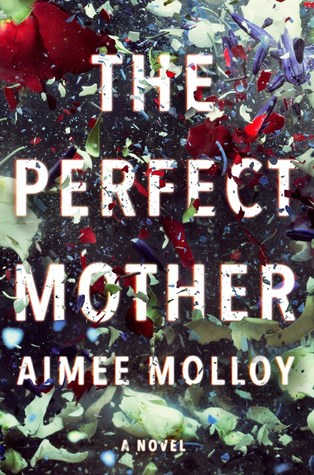
Book Review: The Perfect Mother by Aimee Molloy

An addictive psychological thriller about a group of women whose lives become unexpectedly connected when one of their newborns goes missing.

They call themselves the May Mothers—a collection of new moms who gave birth in the same month. Twice a week, with strollers in tow, they get together in Prospect Park, seeking refuge from the isolation of new motherhood; sharing the fears, joys, and anxieties of their new child-centered lives.

When the group’s members agree to meet for drinks at a hip local bar, they have in mind a casual evening of fun, a brief break from their daily routine. But on this sultry Fourth of July night during the hottest summer in Brooklyn’s history, something goes terrifyingly wrong: one of the babies is abducted from his crib. Winnie, a single mom, was reluctant to leave six-week-old Midas with a babysitter, but the May Mothers insisted that everything would be fine. Now Midas is missing, the police are asking disturbing questions, and Winnie’s very private life has become fodder for a ravenous media.

Though none of the other members in the group are close to the reserved Winnie, three of them will go to increasingly risky lengths to help her find her son. And as the police bungle the investigation and the media begin to scrutinize the mothers in the days that follow, damaging secrets are exposed, marriages are tested, and friendships are formed and fractured.

I feel like I should start this review with a disclaimer:

Thrillers are not my jam. And neither is the so-called mommy-drama genre, where domesticity and gossip and childraising are backdrops for intrigue and danger.

So why did I pick up The Perfect Mother? Easy. My book group made me do it.

This is our book of the month for October, and — feeling guilty for missing the last couple of months — I was determined to participate this time around.

So let’s get to it:

In The Perfect Mother, a group of Brooklyn women who all became new mothers in the same month form an ongoing support and social club, where they exchange online tips and gather at the park for company and (it seemed to me) to compare their little darlings against all the others, and hopefully feel smug and self-satisfied as a result.

Oh dear, I’m not going to be very good at writing this review. Again, forgive me, but the odds of me liking this book were pretty slim from the start.

As the story progresses, a baby is kidnapped from his crib while his mother is out partying with the other women on a rare, adults-only outing. Immediately, there’s recrimination and blame and remorse. How could she leave her baby with a nanny she’d only just met? How could all these new moms be out getting so rip-roaring drunk when they have babies at home? Whose bad idea was it really to even go out in the first place? Why does everyone feel so pressured to be there?

Why are these people so in each others’ business and so damned judgy? Ugh.

Anyway, the mystery proceeds from this point. It turns out that everyone is keeping a secret or ten. Certain characters become overly involved (um, obsessed) with Winnie and her past and her connections and her life. It’s all just toooooo much.

The ending is supposed to be a twist, but is it patting myself on the back too much to say I saw it coming from really early on? Not to be too spoilery, but if you’ve seen The Hand That Rocks the Cradle, you’ll at least have a good hunch about why the kidnapping happened, if not whodunit exactly.

Okay, I’m pretty much sucking at writing this review, but I just don’t think I can maintain my interest long enough to say much more that’s meaningful. But let me attempt to at least inject a little positivity in this thing:

The book does move quickly, and made for an engaging read on a long flight. I wasn’t bored while reading it… just increasingly annoyed by the sniping and the mommy stereotypes and the ridiculousness of some of the relationships.

I guess it’s clear that I didn’t like this book. Oh well, at least I’ve been a faithful book club member this month!

_________________________________________

The details:

Title: The Perfect Mother
Author: Aimee Malloy
Publisher: Harper
Publication date: May 1, 2018
Length: 341pages
Genre: Thriller
Source: Library