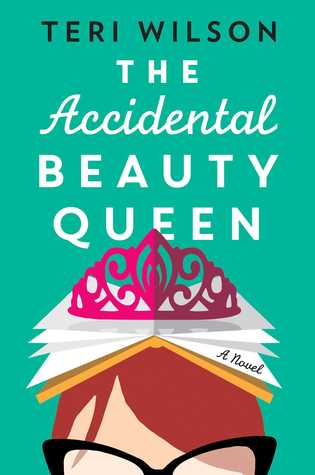
Take A Peek Book Review: The Accidental Beauty Queen by Teri Wilson

“Take a Peek” book reviews are short and (possibly) sweet, keeping the commentary brief and providing a little peek at what the book’s about and what I thought.
Synopsis:

(via Goodreads)

Charlotte Gorman loves her job as an elementary school librarian, and is content to experience life through the pages of her books. Which couldn’t be more opposite from her identical twin sister. Ginny, an Instagram-famous beauty pageant contestant, has been chasing a crown since she was old enough to enunciate the words world peace, and she’s not giving up until she gets the title of Miss American Treasure. And Ginny’s refusing to do it alone this time.

She drags Charlotte to the pageant as a good luck charm, but the winning plan quickly goes awry when Ginny has a terrible, face-altering allergic reaction the night before the pageant, and Charlotte suddenly finds herself in a switcheroo the twins haven’t successfully pulled off in decades.

Woefully unprepared for the glittery world of hair extensions, false eyelashes, and push-up bras, Charlotte is mortified at every unstable step in her sky-high stilettos. But as she discovers there’s more to her fellow contestants than just wanting a sparkly crown, Charlotte realizes she has a whole new motivation for winning.

My Thoughts:

This is a fun, light read — just enough thoughtfulness to offset the goofiness of spray tans, bedazzled ballgowns, and parading in front of judges in a bikini. Charlotte describes her sister Ginny as the “pretty one” — the Meg to her Jo, the Jane to her Lizzie — but in reality, they’re identical twins. There isn’t really a prettier sister — it’s all about self-image and what each sister does with her looks and her talents.

Charlotte is delightfully bookish and nerdy, dropping Harry Potter lines at a moment’s notice, thrilled at the idea of picking up a sorting hat to bring back to the children’s library where she works. Ginny is Instagram-famous and seemingly all about the looks. By having to literally walk in Ginny’s shoes, Charlotte of course learns that there’s more to her sister’s world than she thought, and also discovers elements of herself that she’d buried for years.

It’s all a bit silly and full of wish-fulfillment. In reality, could someone new to pageant life pull off a successful impersonation of an experienced, trained competitor? Does it make any sense that Charlotte could come up with a talent act that not only works, but wins? Of course not.

Still, it’s fun to see Charlotte apply her geekiness to the pursuit of a crown for her sister. Not unpredictably, everything ends up going wrong, but the sisters’ relationship is strengthened by it all. An unnecessary love story adds a romantic element to the plot, but it really doesn’t need to be there.

On the plus side, The Accidental Beauty Queen is a good reminder that all choices are valid, and that women who compete in pageants are not by default shallow mean girls. The book shows the individuality of many of the competitors and allows them to emerge as strong women rather than as stereotypes. Likewise, we see that there are some worthy causes associated with the pageant world, including a fictional organization that mirrors some real-life organizations that organize pageants for disabled, ill, and special needs youth, enabling them to feel proud and beautiful and deserving of appreciation.

I’ve never been interested in pageants (and would have said that I’m turned off by the idea of being judged based on appearances). My overall feelings haven’t changed, but this book did help me see another side. The twin-switch is definitely unrealistic, but it’s a fun bit of fantasy that makes the book an easy, entertaining read.

_________________________________________

The details:

Title: The Accidental Beauty Queen
Author: Teri Wilson
Publisher: Gallery Books
Publication date: December 4, 2018
Length: 304 pages
Genre: Contemporary fiction
Source: Review copy courtesy of Gallery Books and NetGalley
**Save

Save

Save

Save

Save

Save

Save

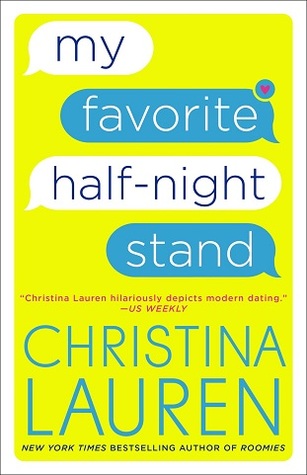
Book Review: My Favorite Half-Night Stand by Christina Lauren

Millie Morris has always been one of the guys. A UC Santa Barbara professor, she’s a female-serial-killer expert who’s quick with a deflection joke and terrible at getting personal. And she, just like her four best guy friends and fellow professors, is perma-single.

So when a routine university function turns into a black tie gala, Millie and her circle make a pact that they’ll join an online dating service to find plus-ones for the event. There’s only one hitch: after making the pact, Millie and one of the guys, Reid Campbell, secretly spend the sexiest half-night of their lives together, but mutually decide the friendship would be better off strictly platonic.

But online dating isn’t for the faint of heart. While the guys are inundated with quality matches and potential dates, Millie’s first profile attempt garners nothing but dick pics and creepers. Enter “Catherine”—Millie’s fictional profile persona, in whose make-believe shoes she can be more vulnerable than she’s ever been in person. Soon “Catherine” and Reid strike up a digital pen-pal-ship…but Millie can’t resist temptation in real life, either. Soon, Millie will have to face her worst fear—intimacy—or risk losing her best friend, forever.

Perfect for fans of Roxanne and She’s the Man, Christina Lauren’s latest romantic comedy is full of mistaken identities, hijinks, and a classic love story with a modern twist. Funny and fresh, you’ll want to swipe right on My Favorite Half-Night Stand.

Okay, I’m now 2 for 2 when it comes to reading Christina Lauren! My Favorite Half-Night Stand is yet another fun, engaging feel-good story about sexy smart people falling awkwardly in love… and I loved the heck out of this story.

Millie is 29, intelligent, adorable, the center of a friend circle consisting of four guys plus her, and she has a great life — except she hasn’t been with anyone romantically or sexually in way too long, and isn’t feeling particularly up to starting down that road again. After childhood losses and some strained family relationships as an adult, Millie prefers to keep her depths bottled up, showing her friends her bubbly outer persona but not letting anyone get under her skin or see too deeply into her soul.

Reid is her best friend, and they spend one very steamy night together — but Reid is looking for a relationship, and Millie can’t quite figure out how to be vulnerable enough to let him get closer to her. When the group decides to join a dating site, it goes pretty much how you might expect. Millie creates a second persona as an attempt to jazz up her profile in a safe way, but when this new profile “Catherine” gets matched with Reid, Millie lets it play out for far too long.

She and Reid have excellent chemistry and definitely heat up the page when they’re together. It’s interesting to see the tables flipped here, where it’s the woman who has a fear of intimacy and the man who’s frustrated by his partner’s insistence on keeping things light.

Told in alternating chapters, we see the events develop from both Millie’s and Reid’s perspectives, and get to see snippets of the online dating messages and group texts as well, which are funny and silly, and help illustrate the group dynamic. Both Millie and Reid are intelligent, sensitive people. I just wished they’d been more upfront with each other sooner. By pretending their nights together were just about the sex, they ended up tangled up in a situation where they both got hurt and risked losing something great. (Of course, as with many of these types of books, if they’d been clearer at the start, we’d have gotten to the HEA within about 50 pages, and then there’d be no story!)

My quibbles with this book are minor. First, everyone is gorgeous and successful in their fields. Not much to complain about, right? But it can be a bit hard to relate to people who are so perfect and flawless. My more serious complaint is that we don’t see enough of Millie at work. She a university professor with a book in the works, and her subject matter — female serial killers — is fascinating. I would have liked to see Millie actually teaching a class or being more active professionally in the book. Yes, we hear about what she does and what her field of research is, but I would have liked to have seen her in that role, so we’d get a clearer picture of her as a strong, brilliant woman, to offset the emphasis on her romantic triumphs and failures.

After reading Josh and Hazel’s Guide to Not Dating (and loving it), I was sold on Christina Lauren and needed more. Now that I’ve read her (their) newest release, I need to go back and read their previous books too. My Favorite Half-Night Stand is a smart and sexy romance that’s a quick read, perfect for a night in — best read with cozy pajamas, a fluffy quilt, and a mug of hot cocoa.

Save

_________________________________________

The details:

Title: My Favorite Half-Night Stand
Author: Christina Lauren
Publisher: Gallery Books
Publication date: December 4, 2018
Length: 384 pages
Genre: Contemporary fiction
Source: Review copy courtesy of Gallery Books and NetGalley

Save

Save

Save

Save

Book Review: Nine Perfect Strangers by Liane Moriarty

Could ten days at a health resort really change you forever? In Liane Moriarty’s latest page-turner, nine perfect strangers are about to find out…

Nine people gather at a remote health resort. Some are here to lose weight, some are here to get a reboot on life, some are here for reasons they can’t even admit to themselves. Amidst all of the luxury and pampering, the mindfulness and meditation, they know these ten days might involve some real work. But none of them could imagine just how challenging the next ten days are going to be.

Frances Welty, the formerly best-selling romantic novelist, arrives at Tranquillum House nursing a bad back, a broken heart, and an exquisitely painful paper cut. She’s immediately intrigued by her fellow guests. Most of them don’t look to be in need of a health resort at all. But the person that intrigues her most is the strange and charismatic owner/director of Tranquillum House. Could this person really have the answers Frances didn’t even know she was seeking? Should Frances put aside her doubts and immerse herself in everything Tranquillum House has to offer – or should she run while she still can?

It’s not long before every guest at Tranquillum House is asking exactly the same question.

Combining all of the hallmarks that have made her writing a go-to for anyone looking for wickedly smart, page-turning fiction that will make you laugh and gasp, Liane Moriarty’s Nine Perfect Strangers once again shows why she is a master of her craft.

Guys, I hate to say it. This book is kind of a mess.

An entertaining mess, most of the time… but a mess all the same.

For way too much of my read, I couldn’t figure out what this book wanted to be. Is it a thriller? Is it a character study? Are we meant to be worried about these people? Amused by them? Even now that I’ve finished, I can’t quite put my finger on what the point of it all was.

The plot here revolves around nine people who, for their own reasons, choose to spend ten days at a health resort that promises personal transformation as an outcome. Some seek weight loss, others rest and healthy eating, others peace and isolation. Over the course of the novel, we get to know more about these nine people as individuals — their challenges, their current situations, and their frustrations. The nine include Frances, the romance writer whose career is in trouble; Tony, a former athlete; Lars, a divorce attorney; Ben and Jessica, a newly rich young couple whose marriage is in trouble; Napoleon, Heather, and Zoe, a couple and their young adult daughter dealing with grief; and Carmel, a divorced mother of four with some serious body-image issues. The character development is somewhat uneven — while we spend a lot of time with Frances, not all are given time to become anything more than a bare-bones type, rather than a fully-drawn person.

The crux of the drama here is Masha, the enigmatic, charismatic owner of Tranquillum, who takes a fanatical interest in ensuring her guests’ transformations, and is determined to introduce her new breakthrough protocol, no matter what.

Masha is the most problematic part of Nine Perfect Strangers. Her actions are bizarre and ominous, and she comes across as almost a cartoon mad scientist/evil genius. Early on, we learn that most of the guests haven’t really done their homework before committing to this non-refundable, highly expensive health retreat, and the information online isn’t particularly helpful — the TripAdvisor reviews seem to be either 1-star or 5-stars, so love it or hate it, I guess. Here’s where I kept getting a thriller vibe — it’s implied from the start that something dark is happening behind the scenes, that Masha’s motives aren’t pure, that the people here will be manipulated or endangered in some way. But at the same time, we spend an awful lot of time learning about everyone’s personal problems and seeing how they hope to change their lives, so it’s never quite clear whether these people are benefiting from their experiences or if they should run screaming into the night.

Masha’s methods take a turn for the crazy, and there’s a huge issue around consent. Trying to be vague here, but once it’s clear what’s going on, the book becomes more and more difficult to read, because these people are in danger from a madwoman and it all goes on for way too long, with some really weird developments along the way. And then it all gets wrapped up neatly in a bow at the end, and the closing chapters focus on the transformations these people all went through… so it’s not really a thriller after all, even though there was a ton of crazy shit going down?

So yeah, a mess. Not to say it’s not readable — I was caught up in the story and tore through it pretty quickly. But still — the characters never felt like much more than cookie-cutter types, the plot veers into territory that makes it unbelievable, and the book as a whole seems to be having an identity crisis.

I’ve enjoyed other books by Liane Moriarty (Big Little Lies and The Husband’s Secret), but Nine Perfect Strangers just isn’t a win for me.

Save

_________________________________________

The details:

Title: Nine Perfect Strangers
Author: Liane Moriarty
Publisher: Flatiron Books
Publication date: November 6, 2018
Length: 453 pages
Genre: Contemporary fiction
Source: Library

Save

Save

Save

Save

Take A Peek Book Review: The Agony House by Cherie Priest

“Take a Peek” book reviews are short and (possibly) sweet, keeping the commentary brief and providing a little peek at what the book’s about and what I thought.

Synopsis:

(via Goodreads)

Denise Farber has just moved back to New Orleans with her mom and step-dad. They left in the wake of Hurricane Katrina and have finally returned, wagering the last of their family’s money on fixing up an old, rundown house and converting it to a bed and breakfast. Nothing seems to work around the place, which doesn’t seem too weird to Denise. The unexplained noises are a little more out of the ordinary, but again, nothing too unusual. But when floors collapse, deadly objects rain down, and she hears creepy voices, it’s clear to Denise that something more sinister lurks hidden here. Answers may lie in an old comic book Denise finds concealed in the attic: the lost, final project of a famous artist who disappeared in the 1950s. Denise isn’t budging from her new home, so she must unravel the mystery-on the pages and off-if she and her family are to survive…

My Thoughts:

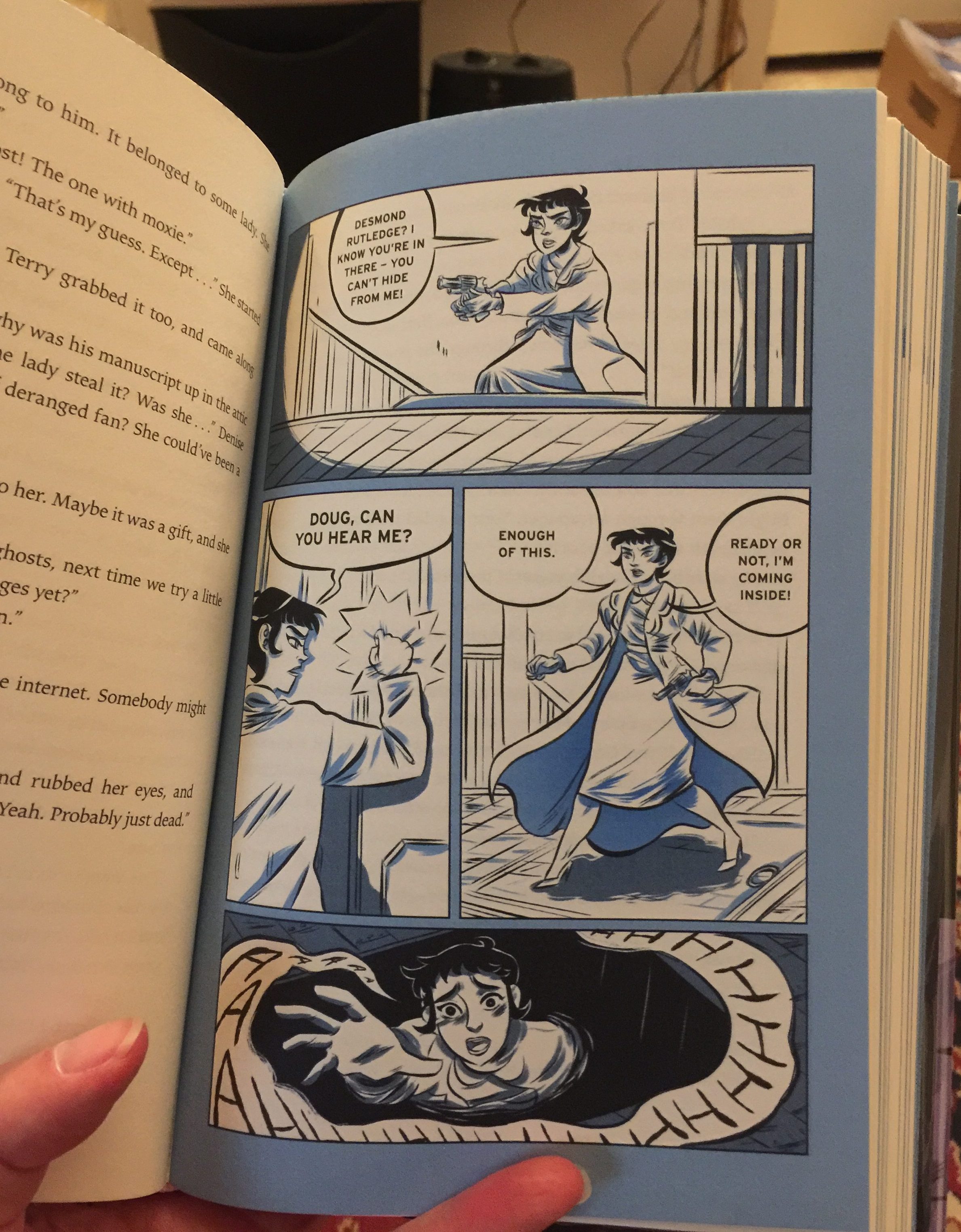
Similarly to her work in the terrific I Am Princess X, in The Agony House author Cherie Priest tells a gripping story with comic book illustrations mixed in to tell a piece of the tale. When Denise discovers the hidden comic book in the creepy attic of her new house (which she bluntly refers to as a “craphole” at all times), the book seems to be a clue to the unexplainable events happening to the family as they try to make the old place livable once again.

Denise is a great main character — clearly very smart, devoted to her family, but unhappy with being dragged away from her friends back in Houston and forced to live in this awful house. As she settles in and gets to know some of the teens in her neighborhood, we get a picture of the devastation left by the Storm (as they refer to it), even after so many years. The book deals with issues around economic hardship, gentrification, and privilege, not in a preachy way, but by showing the struggles and resentments of the characters and the new understandings they need to reach in order to get along. The social lessons here feel organic and important to the story, and I appreciated seeing the characters come to terms with one another in all sorts of interesting ways.

I’d place The Agony House somewhere between middle grade and young adult fiction. The main characters are high school seniors, but the events and the narrative would be fine for younger readers, middle school or above, so long as they’re okay with ghosts and spookiness. I really enjoyed the comic book pages and how they relate to the main story, and thought it was all very cleverly put together. As an adult reader, I saw the plot resolution twist coming pretty early on, but that didn’t lessen the satisfaction of seeing it all work out, and I think it’ll be a great surprise for readers in the target audience.

_________________________________________

The details:

Title: The Agony House
Author: Cherie Priest
Illustrator: Tara O’Connor
Publisher: Arthur A. Levine Books
Publication date: September 25, 2018
Length: 272 pages
Genre: Young adult fiction
Source: Library

**Save

Save

Save

Save

Save

Save

Save

Book Review: Josh & Hazel’s Guide to Not Dating by Christina Lauren

Hazel Camille Bradford knows she’s a lot to take—and frankly, most men aren’t up to the challenge. If her army of pets and thrill for the absurd don’t send them running, her lack of filter means she’ll say exactly the wrong thing in a delicate moment. Their loss. She’s a good soul in search of honest fun.

Josh Im has known Hazel since college, where her zany playfulness proved completely incompatible with his mellow restraint. From the first night they met—when she gracelessly threw up on his shoes—to when she sent him an unintelligible email while in a post-surgical haze, Josh has always thought of Hazel more as a spectacle than a peer. But now, ten years later, after a cheating girlfriend has turned his life upside down, going out with Hazel is a breath of fresh air.

Not that Josh and Hazel date. At least, not each other. Because setting each other up on progressively terrible double blind dates means there’s nothing between them…right?

Ah, what fun! In my head, I don’t think of myself as someone who enjoys contemporary romance reading… but my recent track record seems to prove me wrong, over and over and over again.

Josh & Hazel’s Guide to Not Dating is a totally delicious and enjoyable story about two people who are determined to stay firmly in the friend zone… but we all know that intentions can be very different than what happens in real life.

In alternating chapters narrated by Hazel and Josh, we see these two come together in their late 20s, reunited by Josh’s sister, who just happens to be Hazel’s best friend. Hazel declares to Josh that she’s going to be his best friend too, and things certainly seem to head in that direction.

Let’s talk about Hazel for a moment. She is very out there, and at first, I was a little put off. Would I be able to handle a friend like that — someone who blurts, has no filters, and lives purely in the moment, going with what feels good and not worrying about tidiness or public opinion? She really would be hard to take — and yet, as the book progressed, I came to love her more and more. First of all, Hazel is all heart. She’s an elementary school teacher, for goddess’s sake! She loves 8-year-olds, with all their chaos and creativity and mess. When Josh first sees her in her classroom, he’s reminded of Ms Frizzle, and that’s really so on the nose. She’s a whirlwind of energy and good will, and it’s just impossible not to be charmed.

Josh is a little harder to pin down. He’s the older child of Korean immigrant parents whom he loves, he’s a successful physical therapist, and he’s a serial monogamist. He believes in committed relationships, and likes his world neat and sensible.

Josh and Hazel are clear that they’d be disastrous romantic partners, but they turn into excellent friends. Hazel pushes Josh’s boundaries and makes him laugh; Josh appreciate’s the Hazel-ness of Hazel without ever telling her to tone it down. Their series of blind dates, in which they each set up the other and then go on a double-date, are predictably epic failures, but it takes an awfully long time for Josh and Hazel to acknowledge that they’d rather be with one another than with anyone else.

My typical complaint with contemporary romances is about the communication factor. Surely, in real life, people would be just a little bit clearer about their feelings and intentions, right? There’s a lot of time wasted during which Josh thinks Hazel is interested in an ex-boyfriend and Hazel thinks Josh thinks that she should pursue things with the ex. They’re both wrong, of course, having completely misread each other and not spoken clearly enough to set each other straight. Of course, if everyone said everything they were thinking directly and without delay, there’d be no drama and no big payoff, so there you go.

This book surprised me in all the right ways. Sure, we know exactly where Josh and Hazel are headed, but it’s so much fun to see how they get there. I gobbled up this book in one day, and was left hungry for more. Apparently, I’ve been missing out by never having read this author (actually, two authors writing together) before, but I plan to rectify the situation as soon as I can!

Save

_________________________________________

The details:

Title: Josh & Hazel’s Guide to Not Dating
Author: Christina Lauren
Publisher: Gallery Books
Publication date: September 4, 2018
Length: 309 pages
Genre: Contemporary fiction
Source: Library

Save

Save

Save

Save

Book Review: The Silence of the Girls by Pat Barker

The ancient city of Troy has withstood a decade under siege of the powerful Greek army, which continues to wage bloody war over a stolen woman—Helen. In the Greek camp, another woman—Briseis—watches and waits for the war’s outcome. She was queen of one of Troy’s neighboring kingdoms, until Achilles, Greece’s greatest warrior, sacked her city and murdered her husband and brothers. Briseis becomes Achilles’s concubine, a prize of battle, and must adjust quickly in order to survive a radically different life, as one of the many conquered women who serve the Greek army.

When Agamemnon, the brutal political leader of the Greek forces, demands Briseis for himself, she finds herself caught between the two most powerful of the Greeks. Achilles refuses to fight in protest, and the Greeks begin to lose ground to their Trojan opponents. Keenly observant and coolly unflinching about the daily horrors of war, Briseis finds herself in an unprecedented position, able to observe the two men driving the Greek army in what will become their final confrontation, deciding the fate not only of Briseis’s people but also of the ancient world at large.

Briseis is just one among thousands of women living behind the scenes in this war—the slaves and prostitutes, the nurses, the women who lay out the dead—all of them erased by history. With breathtaking historical detail and luminous prose, Pat Barker brings the teeming world of the Greek camp to vivid life. She offers nuanced, complex portraits of characters and stories familiar from mythology, which, seen from Briseis’s perspective, are rife with newfound revelations. Barker’s latest builds on her decades-long study of war and its impact on individual lives—and it is nothing short of magnificent.

The opening lines of The Silence of the Girls let us know that this is not just a retelling of the glory of Achilles:

Great Achilles. Brilliant Achilles, shining Achilles, godlike Achilles… How the epithets pile up. We never called him any of those things; we call him “the butcher.”

The Silence of the Girls is narrated by Briseis, a noble woman of Lyrnessus who is taken into captivity by the Greeks when her city is sacked during the endless Trojan War. The men, including Briseis’s husband, father, and brothers, are slaughtered. Male children are killed; even pregnant women are run through with swords to prevent them giving birth to sons. The women who survive the attack are now prisoners, slaves and war prizes, at the mercy of their fierce captors.

Briseis is claimed by Achilles, the godlike warrior who leads the Greek armies throughout the long war against Troy. Through Briseis’s eyes, we see the grit and gore behind the glamour of the Greek heroes — men like Achilles, Ajax, and Odysseus, about whom legends and poems and ballads have been written. History is written by the victors — but who writes about the women? The women represented here by Briseis are not fighters. They have everything at stake in the war, but absolutely no power. As the book demonstrates over and over again, the women are the true victims here: They are the ones who are raped as part of the division of loot when a city is sacked; they are the ones forced into servitude; they are the ones sacrificed to appease the gods or to mourn a hero’s death or to settle a score.

This book tells the other side of the story, showing life in camp, the daily struggles of the enslaved women, and how powerless they are to change their own fates. The women are at the mercy of their captors, and their lives have no meaningful security other than what’s given to them and what can easily be taken away.

In The Silence of the Girls, Briseis gives voice to all the silent women victimized by war. These women have been erased from the narrative, so that the story that is told is all about brilliant military conquests and the struggles of men:

What will they make of us, the people of those unimaginably distant times? One thing I do know: they won’t want the brutal reality of conquest and slavery. They won’t want to be told about the massacres of men and boys, the enslavement of women and girls. They won’t want to know we were living in a rape camp. No, they’ll go for something altogether softer. A love story, perhaps? I just hope they manage to work out who the lovers were.

Is this meant to be a direct rebuke to the narrative focus of The Song of Achilles by Madeline Miller, which focuses on the love between Achilles and Patroclus? Having only recently read The Song of Achilles, I must say that it’s jarring to go from that book to The Silence of the Girls. The Song of Achilles is just such a beautifully written book, and I loved the love between Achilles and Patroclus. It’s hard to let go of the glory of that book and re-read the same events through a much different lens, as we’re forced to do in The Silence of the Girls.

I found The Silence of the Girls a powerful read, compelling but brutal and difficult to stomach. The writing is straight-forward, although I was a bit confused by the inclusion of several chapters told from Achilles’s perspective. In a book that’s supposed to be expressing the voices of the women, I wasn’t sure why it was necessary to include his point of view. The events as narrated by Briseis differ in some key ways from their portrayal in The Song of Achilles, so readers of that book should be aware that an open mind is needed.

War is hell… and as The Silence of the Girls makes clear, the hell of war doesn’t stop at the edge of the battlefield. In giving voice to the silent women. The Silence of the Girls unveils a fresh perspective on classic myths and legends, and makes sure that those who suffered aren’t written out of history. Highly recommended.

Save

_________________________________________

The details:

Title: The Silence of the Girls
Author: Pat Barker
Publisher: Doubleday Books
Publication date: September 4, 2018
Length: 291 pages
Genre: Historical fiction
Source: Library

Save

Save

Save

Save

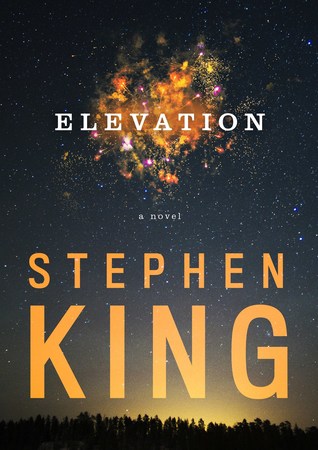
Take A Peek Book Review: Elevation by Stephen King

“Take a Peek” book reviews are short and (possibly) sweet, keeping the commentary brief and providing a little peek at what the book’s about and what I thought.

Synopsis:

(via Goodreads)

The latest from legendary master storyteller Stephen King, a riveting, extraordinarily eerie, and moving story about a man whose mysterious affliction brings a small town together—a timely, upbeat tale about finding common ground despite deep-rooted differences.

Although Scott Carey doesn’t look any different, he’s been steadily losing weight. There are a couple of other odd things, too. He weighs the same in his clothes and out of them, no matter how heavy they are. Scott doesn’t want to be poked and prodded. He mostly just wants someone else to know, and he trusts Doctor Bob Ellis.

In the small town of Castle Rock, the setting of many of King’s most iconic stories, Scott is engaged in a low grade—but escalating—battle with the lesbians next door whose dog regularly drops his business on Scott’s lawn. One of the women is friendly; the other, cold as ice. Both are trying to launch a new restaurant, but the people of Castle Rock want no part of a gay married couple, and the place is in trouble. When Scott finally understands the prejudices they face–including his own—he tries to help. Unlikely alliances, the annual foot race, and the mystery of Scott’s affliction bring out the best in people who have indulged the worst in themselves and others.

My Thoughts:

I’m not sure what to say about Elevation, or even how to categorize it. Is it horror? Not in the jump-scare, things-that-go-bump-in-the-night, monsters-eating-your-face sort of way. But does the idea of losing weight without losing size, and with a day you’ll weigh zero pounds looming, scare you? Then yes, you might call this horror. Or fantasy, in that I’m pretty sure there’s no such documented case of a person being perfectly healthy, losing weight, and causing anything he/she touches to have zero weight — sounds pretty fantastical to me.

All that being said, my main take-away here is that Elevation is a truly excellent read — brief, spare, and finely crafted, with sharply defined characters, mounting tension, and an overall feeling of both well-being and loss permeating the entire story. Scott Carey is a likable guy stuck in a weird situation, who tries to make the best of things by doing his part to make a small difference in the lives of the people he cares for.

And despite the short length of the story, it was plenty of time to get emotionally involved. Was that a lone tear making its way down my cheek as I read the last few pages? I’ll never tell.

Beautifully written, Elevation is a quick, low-commitment read that will leave you feeling — dare I say it? — elevated.

_________________________________________

The details:

Title: Elevation
Author: Stephen King
Publisher: Scribner
Publication date: October 30, 2018
Length: 146 pages
Genre: Fantasy/horror
Source: Purchased

**Save

Save

Save

Save

Save

Save

Save

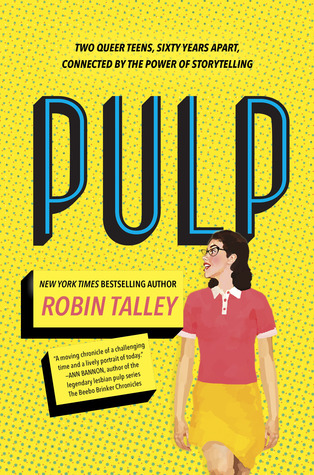
Book Review: Pulp by Robin Talley

In 1955, eighteen-year-old Janet Jones keeps the love she shares with her best friend Marie a secret. It’s not easy being gay in Washington, DC, in the age of McCarthyism, but when she discovers a series of books about women falling in love with other women, it awakens something in Janet. As she juggles a romance she must keep hidden and a newfound ambition to write and publish her own story, she risks exposing herself—and Marie—to a danger all too real.

Sixty-two years later, Abby Zimet can’t stop thinking about her senior project and its subject—classic 1950s lesbian pulp fiction. Between the pages of her favorite book, the stresses of Abby’s own life are lost to the fictional hopes, desires and tragedies of the characters she’s reading about. She feels especially connected to one author, a woman who wrote under the pseudonym “Marian Love,” and becomes determined to track her down and discover her true identity.

In this novel told in dual narratives, New York Times bestselling author Robin Talley weaves together the lives of two young women connected across generations through the power of words. A stunning story of bravery, love, how far we’ve come and how much farther we have to go.

This remarkable book pulls off the tricky feat of making us care about characters in two separate narratives, with neither one feeling like filler or killing time before returning to the important part of the story.

In Pulp, we follow a contemporary storyline about a high school senior, Abby, who is out and proud and very matter-of-fact about how diverse and free her world is. Most of her friends fall somewhere within the queer rainbow, gay, bi, non-binary, and various permutations of all sorts. And it’s all good. Abby is part of a close-knit group of friends who delight in being politically active, attending rallies, fighting for justice, and making demands for society to be better than it is.

Abby’s life is not perfect, though. She still pines for her ex-girlfriend Linh, she’s stuck on her senior project, and her parents are doing a lousy job of hiding their inability to tolerate one another. She chooses the topic of her senior project at the last possible second, deciding to study lesbian pulp fiction of the 1950s and write her own version of these novels, inverting the tropes that were mandatory in the genre.

In the historical timeline, we meet Janet Jones, also a high school senior, whose life is highly regimented by her overly protective and rigid parents and their world of country clubs and social correctness. Janet stumbles across a lesbian pulp paperback, reads it, and realizes that these unnamed feelings of hers are actually shared by other people. She becomes desperate to connect with the author of one of these books, and at the same time, realizes that her feelings toward her best friend Marie are much more than just friendship.

The two narratives intersect in fascinating and unpredictable ways. Janet’s storyline is the more upsetting of the two for much of the book, largely because the world it shows is so hostile and repressive. Pulp does an excellent job of showing the terror of being gay at a time when there were no legal protections or rights for anyone who dared step outside the bounds of “normal”. Set during the Lavender Scare, this novel shows good, decent, hard-working people being hounded out of their families and jobs, spied upon, and having their lives ruined, all because of who they love and how they identify. Being closeted was a necessity, and the danger of discovery drove countless people to deny their own identities out of a desperation for survival.

Through Abby’s eyes, the awfulness of the 1950s for the LGBTQ community is especially vivid, as Abby’s modern perspective is challenged by her research into what others’ lives once were like. Seeing Abby come to realize the importance of the brave people who created new ways to live, form a community, and remain true to the themselves is quite beautiful.

I was less invested in the love story aspects of both Abby and Janet’s arcs, but very much loved getting to know them as people, to appreciate their challenges and strengths, and how each struggled in different ways and at different times to find themselves and to find a way to lead an authentic life.

Pulp is both a great novel and a great lesson on 20th century history. Reading about this chapter in LGBTQ history is moving and upsetting. The world has come so far, and there’s still a long way to go, but I think especially for the target YA audience, Pulp provides a fascinating and important perspective on social action, diversity, and identity.

Save

_________________________________________

The details:

Title: Pulp
Author: Robin Talley
Publisher: Harlequin Teen
Publication date: November 13, 2018
Length: 416 pages
Genre: Young adult fiction
Source: Review copy courtesy of the publisher via NetGalley

Save

Save

Save

Save

YA double feature: What If It’s Us and The Lady’s Guide to Petticoats and Piracy

Two delightful YA books this week! Once again, a big THANK YOU to the public library for being all-around awesome and for getting me my hold books in record time. Here’s my quick take on my YA reading from the past week:


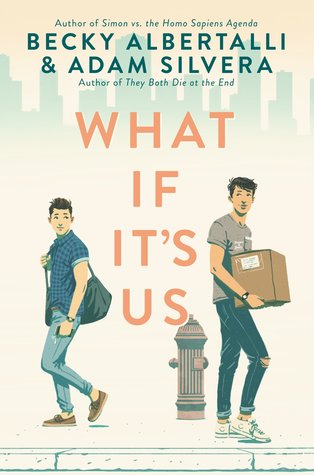
What If It’s Us by Becky Albertalli & Adam Silvera: Two YA authors come together to give us a romantic New York story of first love and do-overs. Arthur is a Georgia boy spending the summer in the big city; Ben is New York born and bred, stuck repeating chemistry in summer school so he can graduate on time. A chance encounter at a post office makes a big impression on both Arthur and Ben — but in the blink of an eye, it’s over, without names or contact info exchanged. But the sparks that flew can’t just die… so each boy does we he can to track the other down — and when, miracle of miracle, they actually find one another again, a sweet romance blooms. What If It’s Us is utterly charming, with plenty of laughs and tears. The ending may disappoint folks who believe in happily-ever-after, but I found it hopeful, grounded in reality but with a definite sense of optimism for whatever might yet happen. And I couldn’t help but love the endless geeky pop culture references, from Hamilton to Harry Potter!

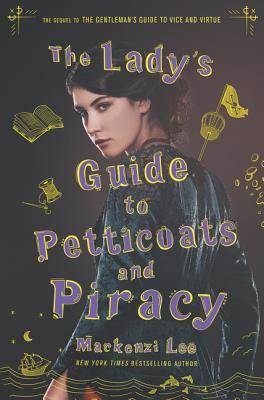
The Lady’s Guide to Petticoats and Piracy by Mackenzi Lee: The sequel to the super fun The Gentleman’s Guide to Vice and Virtue is a treat, shifting the focus from trouble-making Monty and his true love Percy to Felicity, Monty’s younger sister (who was a delight in the first book). Felicity is a scientist and scholar, but with one problem: In the 18th century, no medical school or physician will deign to even consider taking on a female student. But that doesn’t stop Felicity, who is so determined to achieve her dreams that she ends up traipsing all across Europe and getting into all sorts of wild adventures in pursuit of her goals. Along the way, she teams up with two fabulous friends, young women with their own hopes and dreams, and shows just how strong a woman can be. This book has it all — friendship, adventure, feminism, and fun — and is a terrifically entertaining read. I hope there will be more about these characters in the future — I’d love to know how their lives turn out!

Two terrific teen reads! Check ’em out! You don’t have to actually be a young adult (*cough* I’m not! *cough*) to enjoy these.

Book Review: The Wild Dead (The Bannerless Saga, #2) by Carrie Vaughn

A century after environmental and economic collapse, the people of the Coast Road have rebuilt their own sort of civilization, striving not to make the mistakes their ancestors did. They strictly ration and manage resources, including the ability to have children. Enid of Haven is an investigator, who with her new partner, Teeg, is called on to mediate a dispute over an old building in a far-flung settlement at the edge of Coast Road territory. The investigators’ decision seems straightforward — and then the body of a young woman turns up in the nearby marshland. Almost more shocking than that, she’s not from the Coast Road, but from one of the outsider camps belonging to the nomads and wild folk who live outside the Coast Road communities. Now one of them is dead, and Enid wants to find out who killed her, even as Teeg argues that the murder isn’t their problem. In a dystopian future of isolated communities, can our moral sense survive the worst hard times?

The Wild Dead is a sequel to last year’s Bannerless, which I loved. (Check out my review of Bannerless, here.) In Bannerless, author Carrie Vaughn does an amazing job of creating a post-apocalyptic world in which the focus is not on the disaster itself (known here as the Fall), but on life 100 years later. Humanity has survived, and in the Coast Road community (California), life revolves around households — groups of adults who build a home together, a communal dwelling where all are invested in the success of the whole. Communities are groups of households with a central committee and a commitment to the greater good. It’s a mostly agrarian society, where everyone contributes according to their abilities, and all are provided for… provided, that is, that some basic rules are followed.

The guiding principle in this world is producing enough, but not more. Quotas govern all farming, so that no one destroys the scarce natural resources by using up too much, too quickly. Households that demonstrate that they can support themselves may be granted banners, the most coveted reward of all. A Banner is a license to have a baby. A household may earn a banner through hard work and dedication — but a household that tries to skirt the rules may be denied a banner forever.

Enid of Haven is an investigator — the closest thing this society has to law enforcement. In this post-technology world, Enid can’t rely on firearms or fingerprint dusting or forensic science; she has to use her brain and her people skills to ask questions, dig deep, and find the truth of a community’s secrets. Enid is good at her job, but as The Wild Dead opens, she’s mostly annoyed about being called away from her home in Haven to carry out a seemingly pointless investigation right as her household is expecting its first baby.

The investigation is set in the community of Estuary, a marshy, unpleasant location where the people live in uneasy proximity to one another. There’s no true closeness or cooperation in Estuary — the people seem argumentative and suspicious. And while Enid’s case is simply about determining whether an old house should be preserved, the situation becomes complicated by the discovery of a body belonging to an outsider. As the investigation shifts from mediation to a murder case, Enig and her partner Teeg try to find a way to get the people of Estuary to share their secrets.

The Bannerless world is opened up further in this second book in the series. In the first book, the author did an amazing feat of world-building, showing us the Coast Road society, the nature of this post-tech world and how the people live. At the same time, she gives us a glimpse into the history of the Fall and how civilization re-formed in the century since then. In The Wild Dead, we explore further, and learn for the first time about the people who live outside the society of the Coast Road, choosing to live wild and with fewer resources rather than be restricted by the rules that dictate so many basic elements of life, including child-bearing.

The puzzle of the dead body is intriguing, and I enjoyed seeing Enid use her wits and intuition to read the situation in Estuary and finally arrive at the truth. The mystery aspects of the story are quite good, and held my attention from beginning to end. But truly, what I really love about these books is the detailed description of this unique world and how it works, and getting to understand the psychology of a society which has survived what could have been the end and has created a new version of the future.

(In some ways, I’m reminded of The Walking Dead — minus the zombies, of course — particularly the newest season, when the communities have rediscovered non-industrial era technology such as plows and windmills as a way of surviving and building after a disaster. But I digress…)

Enid is a terrific main character — smart, strong, fair, and devoted to her people and to doing what’s right. She’s not perfect, and she struggles with herself quite a bit, but in the end, she’s committed to the essence of being an investigator: helping others, and being kind.

I highly recommend both Bannerless and The Wild Dead. I’m really hoping this will be an ongoing series. I can’t see myself ever getting tired of Enid or her world.

Save

_________________________________________

The details:

Title: The Wild Dead
Author: Carrie Vaughn
Publisher: John Joseph Adams/Mariner Books
Publication date: July 17, 2018
Length: 264 pages
Genre: Speculative fiction
Source: Purchased

Save

Save

Save

Save