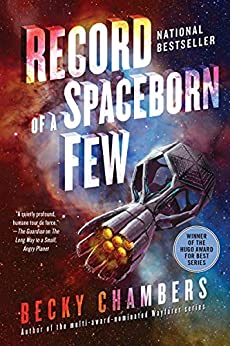
Audiobook Review: Record of a Spaceborn Few (Wayfarers, #3) by Becky Chambers

Title: Record of a Spaceborn Few
Series: Wayfarers, #3
Author: Becky Chambers
Narrator:  Rachel Dulude
Publisher: Harper Voyager
Publication date: July 24, 2018
Print length: 368 pages
Audio length: 11 hours, 36 minutes
Genre: Science fiction
Source: Library
Rating:

Rating: 5 out of 5.

Brimming with Chambers’ signature blend of heart-warming character relationships and dazzling adventure, Record of a Spaceborn few is the third standalone installment of the Wayfarers series, set in the sprawling universe of the Galactic Commons, and following a new motley crew on a journey to another corner corner of the cosmos—one often mentioned, but not yet explored.

Return to the sprawling universe of the Galactic Commons, as humans, artificial intelligence, aliens, and some beings yet undiscovered explore what it means to be a community in this exciting third adventure in the acclaimed and multi-award-nominated science fiction Wayfarers series, brimming with heartwarming characters and dazzling space adventure.

Hundreds of years ago, the last humans on Earth boarded the Exodus Fleet in search of a new home among the stars. After centuries spent wandering empty space, their descendants were eventually accepted by the well-established species that govern the Milky Way.

But that was long ago. Today, the Exodus Fleet is a living relic, the birthplace of many, yet a place few outsiders have ever visited. While the Exodans take great pride in their original community and traditions, their culture has been influenced by others beyond their bulkheads. As many Exodans leave for alien cities or terrestrial colonies, those who remain are left to ponder their own lives and futures: What is the purpose of a ship that has reached its destination? Why remain in space when there are habitable worlds available to live? What is the price of sustaining their carefully balanced way of life—and is it worth saving at all?

A young apprentice, a lifelong spacer with young children, a planet-raised traveler, an alien academic, a caretaker for the dead, and an Archivist whose mission is to ensure no one’s story is forgotten, wrestle with these profound universal questions. The answers may seem small on the galactic scale, but to these individuals, it could mean everything.

Argh… again with a misleading synopsis blurb! Why does whoever writes things keep coming back to a “motley crew”? That is SO not what this book is about! Anyway…

Record of a Spaceborn Few is the 3rd installment in the fabulous Wayfarers series, and it leaves me in absolute awe of author Becky Chambers and her vision of this sprawling fictional world. Here, she moves the story to a place we’ve heard about but not seen — the Exodan Fleet.

Many generations earlier, humans left Earth as it became uninhabitable, creating a fleet of homesteader ships that headed out into the galaxy with no idea of an endpoint or destination. Eventually, the human fleet encountered other sapient species, much more advanced in technology and in the social complexities of cross-species relations. After some time, the humans were accepted into the Galactic Commons (kind of like a UN for alien species), and many of the humans of the fleet sought out new homes on already established worlds or set out to colonize new human habitations on unsettled planets.

Not all, though. Many remained with the fleet, where their ancestors had lived already for centuries. Among the ships of the fleet, a shared community of sustainability, common interest, respect for the past, and well-ordered social expectations had been built over time. For the Exodans who stayed with the fleet, they were no longer on a journey — the fleet was home.

Within this setting, we follow the lives of several very different characters — some lifelong residents of the Asteria homesteader ship, some newcomers, some alien visitors. Through each, we learn more about Exodan life, their rituals, their beliefs, and the reality of their day-to-day.

The action starts with an unprecedented tragedy — one of the Exodan ships is destroyed in a freak accident. For the rest of the fleet, this is not only a human tragedy with countless deaths, but also a stark reminder of the potential danger and precariousness of their own homes. As the story moves forward, we see the ripple effect on the different characters, some of whom question their commitment to the fleet and wonder about other options, and some of whom reinvest in making sure that the fleet society has a future.

It’s all quite fascinating. In some ways, life in the fleet reminds me of a traditional kibbutz — communal life, with all jobs valued, each giving back to the community through labor, with shared communal living spaces balanced with family spaces, and a shared responsibility for daily tasks such as cooking, cleaning, and childcare. I was also intrigued by the deeply ingrained ethos of reusing and repurposing. When resources are scarce and the world is a closed system, everything serves a purpose, and nothing can be wasted.

The characters themselves are unique individuals, each with their own interesting lives and sets of joys and worries. These include an archivist, who tends the collective memories of the fleet; a newcomer seeking new meaning after growing up planetside and without connections; a caregiver whose job is to lovingly tend the dead through carefully established rituals; an alien sociologist spending time on the Asteria to study this example of human society, and a teen who isn’t sure where he’s meant to be or what his purpose is. They’re all wonderful, and I can’t say there was any one storyline I preferred over the others.

Record of a Spaceborn Few is loosely connected to the first book in the series, The Long Way to a Small, Angry Planet, as one of the characters is the sibling of the ship captain from the 1st book. Otherwise, this is a stand-alone story within a shared universe. I love how each book in the series opens up a new aspect of life within this fictional universe, broadening our understanding of what life is like for these future humans — among the stars, on a planet, or on a homesteader ship.

While these books are science fiction, there are no raging space battles or chases or high-tech weaponry. The series is about a society, about what it’s like to live in a galaxy where one’s own species is both a novelty and a minority, dependent on the tolerance and generosity of others species. The characters we meet, the choices they make and the dilemmas they face, are far more important to the overall tone and themes of the books than the details of water recycling, propulsion system, or the mechanics of keeping a spaceship working for centuries.

It’s all fascinating, and a remarkable creation. I’ve been listening to the audiobooks — narrator Rachel Delude gives an incredible performance, voicing so many different characters, keeping them distinct and identifiable, and bringing emotion and humor whenever needed. It’s been a terrific listening experience.

I can’t recommend this series strongly enough! Each book is a delight, and each one adds new dimensions to our understanding of the world of the series.
Next in the series: The Galaxy, and the Ground Within

I have one book left in the series — The Galaxy, and the Ground Within — and can’t wait to keep going (although I’ll be sad to finish). After hearing about this series for so long, I’m so glad that I finally made it a point to dig in! I’m just sorry that it took me so long.


Audiobook Review: We Sold Our Souls by Grady Hendrix

The hardcover edition

Title: We Sold Our Souls
Author: Grady Hendrix
Narrator: Carol Monda
Publisher: Quirk Books
Publication date: September 18, 2018
Print length: 336 pages
Audio length: 9 hours, 1 minute
Genre: Horror
Source: Purchased
Rating:

Rating: 5 out of 5.

In the 1990s, heavy metal band Dürt Würk was poised for breakout success — but then lead singer Terry Hunt embarked on a solo career and rocketed to stardom as Koffin, leaving his fellow bandmates to rot in rural Pennsylvania.

Two decades later, former guitarist Kris Pulaski works as the night manager of a Best Western – she’s tired, broke, and unhappy. Everything changes when she discovers a shocking secret from her heavy metal past: Turns out that Terry’s meteoric rise to success may have come at the price of Kris’s very soul.

This revelation prompts Kris to hit the road, reunite with the rest of her bandmates, and confront the man who ruined her life. It’s a journey that will take her from the Pennsylvania rust belt to a Satanic rehab center and finally to a Las Vegas music festival that’s darker than any Mordor Tolkien could imagine. A furious power ballad about never giving up, even in the face of overwhelming odds, We Sold Our Souls is an epic journey into the heart of a conspiracy-crazed, paranoid country that seems to have lost its very soul…where only a girl with a guitar can save us all.

As the book’s back cover proclaims:

METAL NEVER RETREATS. METAL NEVER SURRENDERS. METAL NEVER DIES.

We Sold Our Souls is about horror and metal and creativity and determination. It’s a little crazy, pretty freaking dark, and has some really icky moments… and yet, I found myself just loving this audiobook.

And hey, I’m not even a metal fan! But reading this book made me wish there was a soundtrack to go with it.

In We Sold Our Souls, we meet middle-aged Kris Pulaski — broken down, hopeless, leading a dead-end life. Once upon a time, she was a rising star along with her bandmates in Dürt Würk. But that was a long time ago, and she hasn’t even picked up a guitar in six years. But when Kris spots a billboard proclaiming the return of Koffin for one last tour, everything changes. Fired up by rage, Kris sets out to reconnect with her old bandmates and reclaim a piece of her past.

For Kris and the rest of Dürt Würk, success was once within reach. They were opening for Slayer, finally moving from seedy dive bars into the world of arena rock concerts — but then their lead singer Terry Hunt betrayed them all, convincing them all to sign contracts that guaranteed his own mega stardom but left them all in the dust. The problem is, Kris can’t quite remember what happened on “contract night”, and neither can anyone else. What really went on during the hours they all lost that night?

The answer is right there in the book’s title, but how they got there and what happens next makes this book so entertaining and hypnotic.

Dürt Würk’s mythology as Terry Hunt’s failed first band includes the story of their never-released album Troglodyte, rumored to have been a masterpiece yet supposedly destroyed and buried forever. As Kris sets on a quest to stop Terry and the evil fueling his success, it’s the music and lyrics of Troglodyte that give her the strength and courage to keep going, and she’s convinced that Troglodyte holds the key to finally getting back what was stolen from her.

I loved reading about Kris’s musical journey, from teaching herself guitar in her basement as a teenager, playing until her fingers bled, through building a band and launching their career. We really get to feel the rush of finding oneself in music, feeling the emotions and rage and beauty pour out through their songs.

The book is sprinkled throughout with the lyrics to the Troglodyte tracks, and hearing them recited in the audiobook (alas, not sung or with music to go with) made the experience a total treat. It’s dark, dark, dark, but oddly fascinating.

Black Iron Mountain is cold, cold, cold
The language they speak is old, old, old
And their lies are made of gold

Iron rain is falling
On the bodies of the slain
The Blind King keeps calling
Trapped inside a coffin made of pain

There are a few scenes that made me want to squirm right out of my body, being very gross and disturbing (and boy is that weird to listen to), but on the whole, the horror is more often expressed through slow builds and unseen terror than through outright gore (although there’s that too). Needless to say, maybe not a good choice if you’re squeamish.

The narrator’s voice comes across as raspy and a bit damaged, kind of how I’d imagine Kris would sound after all those years of hard living. The plot zips along, cleverly intercutting radio interviews about Koffin and Dürt Würk with scenes following Kris’s journey toward either vengeance or redemption.

I admit to being a tiny bit confused by a few things toward the end, but that’s okay. Overall, this book cast a spell on me and completely sucked me in. And look, I’ll never be a metal fan, but I am very much a fan of Kris Pulaski, guitar goddess extraordinaire!

We Sold Our Souls is a lot of fun — I’ve had a copy on my shelves for a few years now, and I’m glad I finally gave it a chance.

The paperback cover – so awesome that I want this edition too!

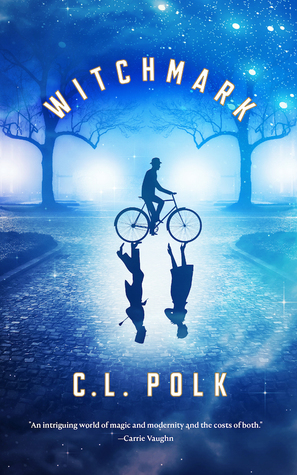
Book Review: Witchmark (The Kingston Cycle, #1) by C. L. Polk

Title: Witchmark
Series: The Kingston Cycle, #1
Author: C. L. Polk
Publisher: Tor
Publication date: June 19, 2018
Length: 318 pages
Genre: Fantasy
Source: Purchased
Rating:

Rating: 3.5 out of 5.

C. L. Polk arrives on the scene with Witchmark, a stunning, addictive fantasy that combines intrigue, magic, betrayal, and romance.

In an original world reminiscent of Edwardian England in the shadow of a World War, cabals of noble families use their unique magical gifts to control the fates of nations, while one young man seeks only to live a life of his own.

Magic marked Miles Singer for suffering the day he was born, doomed either to be enslaved to his family’s interest or to be committed to a witches’ asylum. He went to war to escape his destiny and came home a different man, but he couldn’t leave his past behind. The war between Aeland and Laneer leaves men changed, strangers to their friends and family, but even after faking his own death and reinventing himself as a doctor at a cash-strapped veterans’ hospital, Miles can’t hide what he truly is.

When a fatally poisoned patient exposes Miles’ healing gift and his witchmark, he must put his anonymity and freedom at risk to investigate his patient’s murder. To find the truth he’ll need to rely on the family he despises, and on the kindness of the most gorgeous man he’s ever seen. 

I’ve had my eye on Witchmark for a few years now — I’m so glad I finally sat down with the book and gave it a try!

In Witchmark, we’re introduced to a steampunk-flavored world in which aether lines power lighting and telephones, while average people get around the city on bicycles or in horse-drawn carriages. Witchcraft exists, but it’s divided very sharply along class lines: There is a secret inner circle of nobility with magical powers, known as the Invisibles. They serve the Queen, and keep Aeland protected from storms and natural disasters through quarterly rituals to sing in the seasons.

Invisibles have powers that run through the generations of their families, and in general, there’s one main mage in the family, who uses a lesser-powered family member (known as a Secondary) essentially as a backup battery. The Secondary is magically bound to the family mage, and their own strength is drained as needed in order to power the required spells.

In the lower classes, however, witchcraft is feared and something to be punished. A person accused of witchcraft is tried and examined, and if found guilty, is committed to a witches’ asylum — permanently. It’s a scary, gruesome fate.

The main character in Witchmark is Dr. Miles Singer. A son of the powerful Hensley family, Miles fled home years earlier to join the army and pursue a medical education. He let it be known that he was killed in the vicious war with Laneer; meanwhile, he actually returned home to the city of Kingston, where he works in psychiatric medicine at a veterans’ hospital.

When a dying man, claiming to have been poisoned, identifies Miles as a Starred One — someone gifted with magic — he sets off a chain reaction that leads to Miles becoming embroiled in investigating the possible murder, as well as strange occurrences involving war veterans, otherworldly interest in missing souls, and dire scheming and jockeying for political power among the nobility. He also becomes unwillingly reintroduced to his estranged family and forced to participate in their power plays.

Something sinister is happening behind the scenes, threatening all of Aeland society, and with an unexpected companion, it’s up to Miles to figure it out before it’s too late, even at the risk of his own life.

Witchmark is an engaging read, thanks especially to Miles. Miles is a complex character, with his aristocratic background, his war service and resulting psychological damage, and his commitment to treating and supporting the wounded veterans in his care. His compassion makes him a sympathetic character, one whom it’s easy to root for.

There’s an enigmatic love interest who is very interesting, but I don’t feel as though I understood enough about this individual, their powers, and what they represent.

That brings me to my chief complaint about Witchmark: The world-building is insufficient, from my point of view.

There are a lot of names and terms thrown around — Invisibles, Secondaries, Amaranthines, Solace — which only get minimal explanations. I liked what I saw of this world, but felt like I was missing a deeper knowledge of the types of power, the mystical elements, and more. I often felt like I was trying to catch up, but I think this was because of the lack of specifics in some key areas. I think we’re meant to get a feel for this world and its societies through the plot of the story, but I couldn’t help feeling as though I needed more in order to truly become immersed and connected.

There are two more books in the Kingston Cycle, and I do plan to continue. I like the characters and the overarching story enough to want to see what happens next. I’m hoping that I get deeper into the trilogy, some of the more confusing elements will become clearer.

Book Review: The Blue Salt Road by Joanne M. Harris

Title: The Blue Salt Road
Author: Joanne M. Harris
Illustrated by: Bonnie Helen Hawkins
Publisher: Gollancz
Publication date: November 15, 2018
Length: 215 pages
Genre: Fantasy/fairy tale
Source: Purchased
Rating:

Rating: 5 out of 5.

An earthly nourris sits and sings
And aye she sings, “Ba lilly wean,
Little ken I my bairn’s father,
Far less the land that he staps in.
(Child Ballad, no. 113)

So begins a stunning tale of love, loss and revenge, against a powerful backdrop of adventure on the high seas, and drama on the land. The Blue Salt Road balances passion and loss, love and violence and draws on nature and folklore to weave a stunning modern mythology around a nameless, wild young man.

Passion drew him to a new world, and trickery has kept him there – without his memories, separated from his own people. But as he finds his way in this dangerous new way of life, so he learns that his notions of home, and your people, might not be as fixed as he believed.

Beautifully illustrated by Bonnie Helen Hawkins, this is a stunning and original modern fairytale.

If you love fairy tales and mystical stories, don’t miss this slim, gorgeous book!

The Blue Salt Road is inspired by one of the Child Ballads, which (according to Wikipedia) are “305 traditional ballads from England and Scotland, and their American variants, anthologized by Francis James Child during the second half of the 19th century. Their lyrics and Child’s studies of them were published as The English and Scottish Popular Ballads. The tunes of most of the ballads were collected and published by Bertrand Harris Bronson in and around the 1960s”.

From The Blue Salt Road

This book, based on Child Ballad #113, is the story of a selkie. The selkies swim the northern seas, but one young selkie is drawn to the land of the Folk, the humans of the nearby island. Meanwhile, Flora, a young woman of the island, yearns for a husband who is a prince, and when she sheds tears into the sea, the selkie comes to her as a human, having hidden his seal skin for safekeeping.

But Flora knows the secrets of the women of her island, and she steals his skin so he’ll forget his life in the sea and stay with her always. And oh, it’s just so sad and awful to see him waking up in this new life of his with no memories, but knowing that he’s a man out of place who’ll never belong.

The book is beautifully written, capturing the loveliness and strangeness of the selkie story as well as the passions and family secrets that Flora, her mother, and her grandmother all keep hidden.

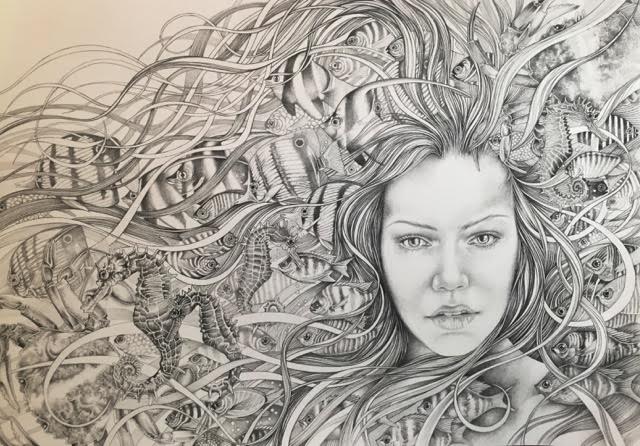
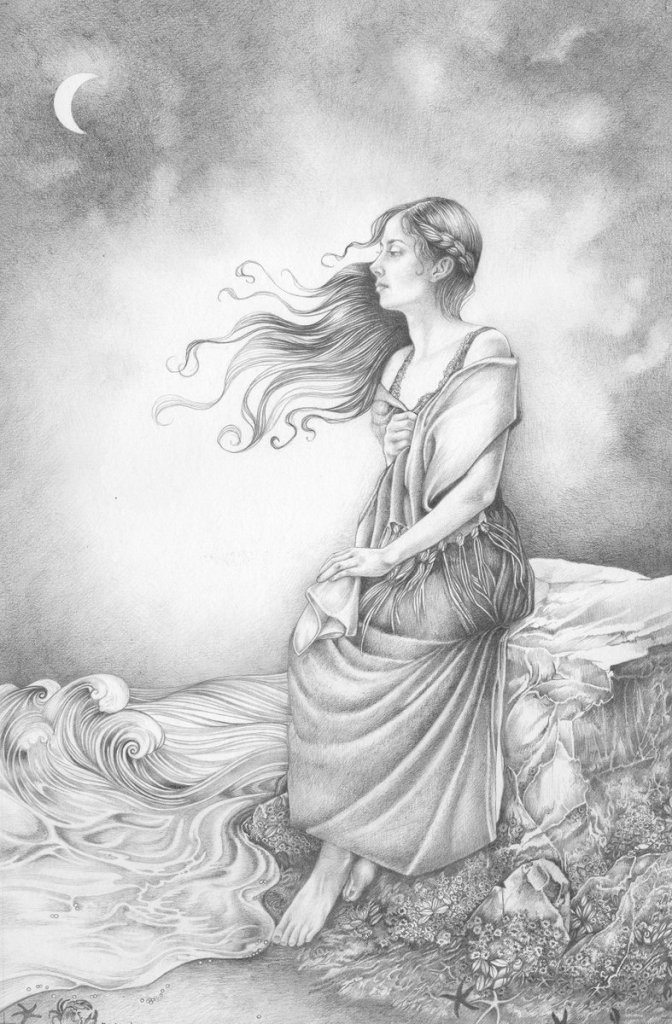
The Blue Salt Road is also beautifully illustrated, with black and white drawings throughout that convey a sense of wonder, magic, and the natural world.

From The Blue Salt Road

This is a quick read, but one to be treasured. I loved The Blue Salt Road, and will cherish my little hardcover edition for years to come!

Book Review: European Travel for the Monstrous Gentlewoman by Theodora Goss

Title: European Travel for the Monstrous Gentlewoman (The Extraordinary Adventures of the Athena Club, #2)
Author: Theodora Goss
Publisher: Saga Press
Publication date: July 10, 2018
Print length: 736 pages
Genre: Fantasy
Source: Purchased
Rating:

Rating: 4 out of 5.

In the sequel to the critically acclaimed The Strange Case of the Alchemist’s Daughter, Mary Jekyll and the rest of the daughters of literature’s mad scientists embark on a madcap adventure across Europe to rescue another monstrous girl and stop the Alchemical Society’s nefarious plans once and for all.

Mary Jekyll’s life has been peaceful since she helped Sherlock Holmes and Dr. Watson solve the Whitechapel Murders. Beatrice Rappaccini, Catherine Moreau, Justine Frankenstein, and Mary’s sister Diana Hyde have settled into the Jekyll household in London, and although they sometimes quarrel, the members of the Athena Club get along as well as any five young women with very different personalities. At least they can always rely on Mrs. Poole.

But when Mary receives a telegram that Lucinda Van Helsing has been kidnapped, the Athena Club must travel to the Austro-Hungarian Empire to rescue yet another young woman who has been subjected to horrific experimentation. Where is Lucinda, and what has Professor Van Helsing been doing to his daughter? Can Mary, Diana, Beatrice, and Justine reach her in time?

Racing against the clock to save Lucinda from certain doom, the Athena Club embarks on a madcap journey across Europe. From Paris to Vienna to Budapest, Mary and her friends must make new allies, face old enemies, and finally confront the fearsome, secretive Alchemical Society. It’s time for these monstrous gentlewomen to overcome the past and create their own destinies. 

Oh, what fun! One of my most enjoyable reads this past year was The Strange Case of the Alchemist’s Daughter, book one in the Athena Club trilogy. In it, we met the daughters of famous men — men who conducted monstrous experiments in the name of science, and left behind daughters bearing the scars of their work.

In book #2, European Travel for the Monstrous Gentlewoman, this found family of heroic women is at it again. They’ve banded together to form a home and a family, finding happiness and belonging that they’ve never had elsewhere. A plea for help from Mary Jekyll’s former governess, Mina Murray, sets the plot in motion. A young woman named Lucinda Van Helsing is missing, and her father, Dr. Van Helsing, is suspected of being in league with the nefarious Society of Alchemists.

This kicks off the Athena Club’s next adventure, as they head to Vienna and then Budapest to rescue Lucinda and reveal the terrible conspiracies at the heart of the Society of Alchemists.

Along the way, there’s travel aboard the Orient Express, a meeting with Irene Adler (of Sherlock Holmes fame), circus performances, a battle with vampires, and a break-in/break-out from an asylum.

Our heroes show the pluck and bravery that make them so special, whether it’s the careful planning of Mary, or Beatrice’s special brand of poison, or Catherine’s claws, or Justine’s strength and moral fiber, they work well together while pursuing the cause of justice and freedom for the victims and survivors of the mad scientists.

I love how author Theodora Goss turns these famous stories on their heads. Mary Shelley’s Frankenstein may have been published as a novel, but the Athena Club understands that it’s a true story, with Justine Frankenstein as living proof. Count Dracula makes a memorable appearance, but he’s not at all the person you’d expect. Sherlock Holmes is one of Mary’s mentors, but he only appears in the beginning parts of the story — it’s Irene Adler whose wits and abilities get a chance to shine.

My only quibble with European Travels is the length. At 700+ pages, it’s a bit of a daunting reading experience, and since the book itself is divided into two parts, perhaps it would have been better as two separate books. I think I might have enjoyed it more if I’d taken a break in between parts I & II — unfortunately, a little reading fatigue set in, so by the end, I was slightly less engaged, and I think that’s due to the size of the book — because the plot itself is exciting and creative throughout.

That’s really just a minor complaint. This book is definitely worth the time and effort!

I would be remiss if I didn’t mention how funny the characters can be. Young Diana Hyde is a bratty, brave teen with no manners, and she can be counted on to disrupt any serious moment by acting out in some outrageous fashion or another. Plus, the writing is just so much fun. The story we’re reading is meant to be Catherine Moreau’s novelization of the Athena Club’s adventures — and at regular intervals, her narrative is interrupted by the other characters adding their own opinions and criticisms of Catherine’s version of events. It’s clever and silly and just so delightful.

As a whole, I loved this book, and I love the series so far. With dynamic, strong, quirky characters and a plot full of intrigue and action, it’s a truly compelling read.

Can’t wait to dive into the third and final book, The Sinister Mystery of the Mesmerizing Girl!

Audiobook Review: Where the Crawdads Sing by Delia Owens

Title: Where the Crawdads Sing
Author: Delia Owens
Narrator: Cassandra Campbell
Publisher: Viking
Publication date: August 14, 2018
Print length: 384 pages
Audio length: 12 hours, 12 minutes
Genre: Contemporary fiction
Source: Purchased
Rating:

Rating: 4.5 out of 5.

For years, rumors of the “Marsh Girl” have haunted Barkley Cove, a quiet town on the North Carolina coast. So in late 1969, when handsome Chase Andrews is found dead, the locals immediately suspect Kya Clark, the so-called Marsh Girl. But Kya is not what they say. Sensitive and intelligent, she has survived for years alone in the marsh that she calls home, finding friends in the gulls and lessons in the sand. Then the time comes when she yearns to be touched and loved. When two young men from town become intrigued by her wild beauty, Kya opens herself to a new life–until the unthinkable happens.

Perfect for fans of Barbara Kingsolver and Karen Russell, Where the Crawdads Sing is at once an exquisite ode to the natural world, a heartbreaking coming-of-age story, and a surprising tale of possible murder. Owens reminds us that we are forever shaped by the children we once were, and that we are all subject to the beautiful and violent secrets that nature keeps.

Where the Crawdads Sing has been on bestseller lists for at least a year now, as far as I can tell. And the fact that this was a Reese’s book club pick doesn’t hurt at all when it comes to creating buzz. So is it worth all the hype?

Now that I’ve read it, I can give an answer: Definitely yes.

Where the Crawdads Sing is lovely, rich, sad, and powerful. It tells the story of Kya Clark, a girl who is abandoned at a very young age and yet manages to raise herself in the North Carolina marsh she calls home.

Kya’s family lives in a shack in the marsh, scrabbling for daily sustenance and terrorized by their abusive, unreliable father. Kya’s older siblings have already left, and as the story opens, Kya is six years old, watching her mother walk away, never to return. Kya is left behind with her father and older brother, but even her brother doesn’t stay long. Soon, it’s just Kya and her father, and he disappears for days on end, or shows up drunk or angry, and simply can’t or won’t care for his child.

And so, from the age of six, Kya raises herself. She loves her home and the marsh and the birds and wildlife that are her truest friends. She scrapes by on the pennies her father provides. Eventually, even he leaves, and she is completely alone, surviving by digging mussels and selling them to the local sundry store owner, a warm and caring man named Jumpin’ who comes to love Kya as a daughter.

Despite the love and support of Jumpin’ and his wife Mabel, Kya is alone. When a truant officer comes to take her to school, Kya only lasts one day, feeling embarassed and tormented by the town kids who call her “Marsh Girl” and make fun of her. From then on, it’s just Kya in the marsh.

She does have one friend, a boy named Tate who once upon a time was friends with her brother. Tate is fascinated by Kya and takes it upon himself to teach her to read, opening up the world of science and biology and learning to her. Kya embarks on her lifelong passion to know and understand the marsh, collecting specimens and documenting them through writing and painting, turning her old shack into a personal natural history museum of sorts.

The story alternates between chapters following Kya’s life from early childhood onward and chapters set later, in 1969, when a local young man is found dead under suspicious circumstances. Chase Andrews had a history with the Marsh Girl, and although there doesn’t seem to be any evidence, she becomes a person of interest in the case, fueled by years of the townspeople’s harsh opinions and suspicions and gossip about her.

While I was less interested in the murder plot for most of the book, by the last third, the two story elements come together as the plot centers around the court case and resolution.

Where the Crawdads Sing is a moving and lyrical reading experience. I loved the descriptions of the marsh and the way the natural world is so much a part of who Kya is and how she looks at life. Kya’s life is horribly sad, yet also beautiful in its own lonely way. It’s incredible to think that a child could survive like that on her own all those years, yet she does. Between her natural intelligence and her lifelong study of her natural surroundings, Kya adapts and manages to thrive, despite her loneliness and sorrow throughout the years.

The audiobook narrator does a very good job of breathing life into the characters, especially Kya, using her voice to show her maturing over the years yet maintaining the core of who she is.

My one issue with the audiobook is that I feel I missed out a bit on certain written passages. Kya is passionate about poetry, and the poems she recites throughout the book are worth spending time on and contemplating a bit, but because I listened to the audiobook, they passed by a little too quickly for actual reflection. I think I’ll need to borrow a print edition so I can page through and spend more time on certain passages.

I won’t get into spoilers, so I can’t say more about the ending than that I was mostly satisfied and that the ending worked out pretty much as I expected despite a few red herrings — although there was at least one loose thread that I would have liked an answer to.

Overall though, the murder/mystery elements are not the most essential part of this book, in my mind. Yes, it was interesting, and yes, I felt that the ending made sense. But the biggest impact for me was the emotional resonance of Kya’s life, her loves, her relationships, and her incredible personal and professional achievements.

Kya is a woman to admire, one who overcomes extreme adversity to carve out a life for herself that’s meaningful and joyful.

Where the Crawdads Sing is a powerful and beautiful book. Highly recommended.

Audiobook Review: Educated by Tara Westover

Title: Educated: A Memoir
Author: Tara Westover
Narrator: Julia Whelan
Publisher: Random House
Publication date: February 20, 2018
Print length: 334 pages
Audio length: 12 hours, 10 minutes
Genre: Memoir
Source: Purchased
Rating:

Rating: 5 out of 5.

Tara Westover was 17 the first time she set foot in a classroom. Born to survivalists in the mountains of Idaho, she prepared for the end of the world by stockpiling home-canned peaches and sleeping with her “head-for-the-hills bag”. In the summer she stewed herbs for her mother, a midwife and healer, and in the winter she salvaged in her father’s junkyard.

Her father forbade hospitals, so Tara never saw a doctor or nurse. Gashes and concussions, even burns from explosions, were all treated at home with herbalism. The family was so isolated from mainstream society that there was no one to ensure the children received an education and no one to intervene when one of Tara’s older brothers became violent.

Then, lacking any formal education, Tara began to educate herself. She taught herself enough mathematics and grammar to be admitted to Brigham Young University, where she studied history, learning for the first time about important world events like the Holocaust and the civil rights movement. Her quest for knowledge transformed her, taking her over oceans and across continents, to Harvard and to Cambridge. Only then would she wonder if she’d traveled too far, if there was still a way home.

Educated is an account of the struggle for self-invention. It is a tale of fierce family loyalty and of the grief that comes with severing the closest of ties. With the acute insight that distinguishes all great writers, Westover has crafted a universal coming-of-age story that gets to the heart of what an education is and what it offers: the perspective to see one’s life through new eyes and the will to change it.

Educated was all the rage in 2018 when it was released, and for the longest time, I didn’t think I’d be interested. A story about someone going to college? Okay… And then I heard that there was a lot of abuse described, and I thought, who needs it?

Well, I’m so glad I finally gave this book a chance!

Educated is a powerful, startling story — and so strange that you probably would find it too far-fetched if it were presented as fiction. In Educated, Tara Westover takes us through the painful, turbulent years of her upbringing in an isolationist, survivalist, fundamentalist family, and then shows how she found a way out, through education and the support of those who believed in her.

Tara and her siblings were nominally home-schooled, but in reality, they were simply unschooled. Her father’s radical beliefs included the notion that public schools were tools of an evil government that wanted to brainwash children, all part of a conspiracy by the Illuminati.

The medical establishment was seen as just as evil, full of poisons and deceit. Tara’s mother believed that even one dose of antibiotics could poison a person’s system for life, and that only her special tinctures and herbal remedies, along with faith healing, could actually purify the body.

Meanwhile, Tara from early childhood worked in the family junkyard alongside her brothers, exposed to horrifyingly dangerous working conditions, forced by her father to use machinery that could easily have left her maimed or dead.

I was constantly shocked by this book, and by what Tara and her siblings lived through. It almost doesn’t make sense that they all survived — through multiple accidents, including two instances of family members being severely burned and several occasions of head injuries — the family steadfastly refused to go to hospitals or see doctors, instead relying on Tara’s mother’s ability to heal at home. I mean, really, the fact that they didn’t all die of tetanus or infections is pretty incredible.

Tara lives through years of abuse at the hands of her volatile older brother, and these sections are particularly hard to read/listen to. She’s called a whore repeatedly, physically punished, and made to feel that she has to play along and not act as if anything serious has happened in order to retain her parents’ love.

Eventually, Tara enrolls at Brigham Young University, never having attended a single day of school before then. Her journey through higher education is fascinating, particularly as she describes waking up to how much she absolutely didn’t know about the world or life away from her family’s mountain in Idaho. (One small example: She was very confused in a freshman history class until she finally figured out that Europe was a continent, not a country.)

The fact that Tara Westover not only graduated college, but continued her education through graduate school, finally earning a Ph.D. at Cambridge seems nothing short of miraculous. Of the seven siblings in her family, three earned doctorates — and the others never graduated from high school.

Educated is an incredibly immersive and engaging book, even though it’s also quite difficult to take, particularly hearing about the ongoing emotional and physical trauma Tara suffered, as well as the continuing psychological torment inflicted by her fundamentalist parents in their determined denial of her reports of abuse.

I listened to the audiobook, and found it powerful and moving. Narrator Julia Whelan conveys so much through her delivery, and made the story feel personal and urgent.

Educated is highly recommended. My husband read it right before I did, and I’m so glad — I can’t imagine reading this book and having no one to talk about it with! This book is completely engrossing, often painful, but ultimately hopeful and uplifting too. Don’t miss it.

Book Review: The Consuming Fire by John Scalzi

Title: The Consuming Fire (The Interdependency, #2)
Author: John Scalzi
Publisher: Tor
Publication date: October 16, 2018
Length: 336 pages
Genre: Science fiction
Source: Purchased
Rating:

Rating: 4 out of 5.

The Consuming Fire―the sequel to the 2018 Hugo Award Best Novel finalist and 2018 Locus Award-winning The Collapsing Empire―an epic space-opera novel in the bestselling Interdependency series, from New York Times bestselling author John Scalzi

The Interdependency―humanity’s interstellar empire―is on the verge of collapse. The extra-dimensional conduit that makes travel between the stars possible is disappearing, leaving entire systems and human civilizations stranded.

Emperox Grayland II of the Interdependency is ready to take desperate measures to help ensure the survival of billions. But arrayed before her are those who believe the collapse of the Flow is a myth―or at the very least an opportunity to an ascension to power.

While Grayland prepares for disaster, others are preparing for a civil war. A war that will take place in the halls of power, the markets of business and the altars of worship as much as it will between spaceships and battlefields.

The Emperox and her allies are smart and resourceful, as are her enemies. Nothing about this will be easy… and all of humanity will be caught in its consuming fire.

If you like scheming and backstabbing, interplanetary exploration, geeky scientists, and kick-ass women, have I got a book for you!

The Consuming Fire is the second book in John Scalzi’s Interdependency trilogy, and it goes ten thousand miles per minute from start to finish. No middle-book doldrums here!

We pick up where we left off at the end of The Collapsing Empire. The Flow is collapsing, meaning that the shortcuts through space-time that allow interplanetary travel are starting to disappear without warning. Planets find themselves completely cut off from the rest of human settlement, and any ships in transit who are unfortunate enough to be caught in a Flow stream when it collapses don’t simply float off into space — they basically just blink out of existence.

How does the Flow work? It’s like a river, except it’s nothing like a river, as the story’s Flow physicists continually remind other characters. So, for mere humans like us (I’m assuming you and I are in this together), just accept the fact that SCIENCE. We wouldn’t understand.

Meanwhile, the people of the Interdependency are crafty and clever and absolutely not to be trusted. Most would (and maybe already have tried to) sell their own grandmothers for a chance at greater power. The leader of the Interdependency, Emperox Grayland II, is a smart, savvy, deceptively calm leader who refuses to bow to the nasty, murderous families who want to unseat her.

There’s plotting and faked deaths and bank fraud, prison assassination attempts (toothbrush and spoon shivs are involved) and space battles, previously undiscovered civilizations, and lots of random hook-ups. The characters are classic Scalzi, smart and full of smart-ass commentary and loads and loads of fun .

The 3rd book in the trilogy, The Last Emperox, was just released, and I’m eagerly waiting for my copy to arrive.

If you enjoy sci-fi with plenty of action and a great sense of humor, then you should absolutely check out this trilogy.

Book Review: The Cruel Prince (Folk of the Air, #1) by Holly Black

Title: The Cruel Prince (Folk of the Air, #1)
Author: Holly Black
Publisher: Little, Brown Books for Young Readers
Publication date: January 2, 2018
Length: 370 pages
Genre: Fantasy
Source: Purchased
Rating:

Rating: 4.5 out of 5.

Of course I want to be like them. They’re beautiful as blades forged in some divine fire. They will live forever.

And Cardan is even more beautiful than the rest. I hate him more than all the others. I hate him so much that sometimes when I look at him, I can hardly breathe.

Jude was seven when her parents were murdered and she and her two sisters were stolen away to live in the treacherous High Court of Faerie. Ten years later, Jude wants nothing more than to belong there, despite her mortality. But many of the fey despise humans. Especially Prince Cardan, the youngest and wickedest son of the High King.

To win a place at the Court, she must defy him–and face the consequences.

As Jude becomes more deeply embroiled in palace intrigues and deceptions, she discovers her own capacity for trickery and bloodshed. But as betrayal threatens to drown the Courts of Faerie in violence, Jude will need to risk her life in a dangerous alliance to save her sisters, and Faerie itself. 

The Cruel Prince is a book that practically everyone but me had already read. But now…

I’m in! I finally read The Cruel Prince, and I can see what all the fuss is about. Call me late to the party, but guys! This book is good!

The book starts off with a horrifying, sad scene: In a normal suburban home, 7-year-old twin sisters Taryn and Jude and their older sister Vivi are lounging about watching TV, when a strange man enters, murders their parents, and steals them away. The man is Madoc, and he is Vivi’s biological father. The mother of the three girls used to dwell in Faerie with him, but she ran off years earlier with the mortal man who became the twins’ father. Now, years later, Madoc has taken what he considers his.

The girls are brought to Faerie and raised among the fae gentry. Vivi, half-fae herself, fits in pretty well, but the twins are always aware of how other they are. They’re mortal, and have no powers. Even worse, they have no innate ability to fight off the magical compulsions and other torments directed at them by their fae classmates.

As the story kicks in, Jude and Taryn are seventeen, still trying to find a way to belong. Madoc has raised them with riches and privilege, but they can never forget that he murdered their parents. Jude wants strength — she wants to prove she belongs in the fae court by becoming a knight. Taryn, on the other hand, wants to secure her place through marriage. And Vivi? She, the one who should belong, wants no part of it at all, instead preferring to sneak back to the human world whenever she can to see her mortal girlfriend and plan a future with her.

Jude and Taryn are constantly tormented by their classmates, especially Prince Cardan and his cronies. But when the king decides to step down and pass along the crown, the intrigue and the danger escalates.

I’m not going to go further into the plot, but let me just say… I was hooked! I could not put this book down once I started. I loved the depiction of Faerie, its beauty and wonders, and how utterly alien and hostile this world would feel to children who didn’t belong.

The casual cruelty of the ruling class is scary and heartless, and I felt awful for Taryn and Jude for having no defenses and no way to stand up for themselves in any meaningful way. And even when some of the crowd appear to be more inclined to be friendly, it seems obvious that no one can be trusted.

Jude is our hero, and she’s awesome. She’s smart and brave, and refuses to scrape and bow, even when that’s the most obvious way to get the bullies off her back. She’s devoted to protecting her family, and doesn’t take the easy way out. I like how she goes through the book having to figure who to trust, and even when forced into pretty bad situations, how to turn those situations to her advantage and achieve her goals.

I definitely want more! I’m really looking forward to reading book #2, and feel pretty safe in predicting that I’ll want to read straight through to the end of the trilogy!

**Save

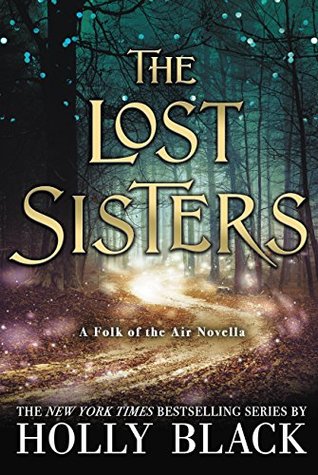
I also really enjoyed The Lost Sisters, a novella that tells about some of the same events from The Cruel Prince, but from Taryn’s perspective.

It’s really interesting to get the other side of parts of the story, and I’m glad I stumbled across it!

And now, on to The Wicked King!Save

Save

Save

Save

Save

Save

Book Review: The Mermaid by Christina Henry

From the author of Lost Boy comes a historical fairy tale about a mermaid who leaves the sea for love and later finds herself in P.T. Barnum’s American Museum as the real Fiji mermaid. However, leaving the museum may be harder than leaving the sea ever was.

Once there was a mermaid who longed to know of more than her ocean home and her people. One day a fisherman trapped her in his net but couldn’t bear to keep her. But his eyes were lonely and caught her more surely than the net, and so she evoked a magic that allowed her to walk upon the shore. The mermaid, Amelia, became his wife, and they lived on a cliff above the ocean for ever so many years, until one day the fisherman rowed out to sea and did not return.

P. T. Barnum was looking for marvelous attractions for his American Museum, and he’d heard a rumor of a mermaid who lived on a cliff by the sea. He wanted to make his fortune, and an attraction like Amelia was just the ticket.

Amelia agreed to play the mermaid for Barnum, and she believes she can leave any time she likes. But Barnum has never given up a money-making scheme in his life, and he’s determined to hold on to his mermaid.

You guys. I LOVED this book.

I was blown away by the story itself, as well as by the gorgeous writing and the passion that comes through on every page.

She loved him almost as much as she loved the sea, and so they were well matched, for he loved the sea almost as much as he loved her. He’d never thought any person could draw him more than the ocean, but the crashing waves were there in her eyes and the salt of the spray was in her skin and there, too, was something in her that the sea could never give. The ocean could never love him back, but Amelia did.

In The Mermaid, we first meet Amelia as a beautiful, wild being of the sea. After being freed from a net by the kind fisherman who finds her, she can’t stop thinking about the look in his eyes, and finds herself leaving the sea to find him. Once reunited, Amelia and Jack fall deeply in love — and while she leaves his seaside shack to swim in the ocean at night, she sees him as her heart and her home… until the day he goes out fishing and doesn’t return.

For ten long years, Amelia watches the sea, mourning yet refusing to believe that her beloved will never return to her. Meanwhile, far off in New York, rumor has reached the ears of P. T. Barnum and his associate Levi Lyman about a beautiful woman in coastal Maine, whom the locals believe to be a mermaid. Barnum dispatches Levi to find her and bring her back to New York, dreaming of the riches that will pour into his pockets once he puts the mermaid on display in his American Museum.

Amelia has other ideas, though. At a time when women defer to men on all matters, Amelia refuses to become any man’s belonging. She sets her own terms and makes the rules for how, when, and how often she’ll be on display. She yearns to travel the world and knows she needs money to do this, which is why she agrees to Levi and Barnum’s plans in the first place — but once she arrives in New York, she begins to realize how difficult it will be to fit into the world of humans and to survive in a crowded, dirty city full of people who see her as a curiosity, or even worse, as an abomination.

“A bird in a cage still knows it’s in a cage, even if the bars are made of gold,” Amelia said softly.

The Mermaid tells a beautiful story of a woman’s strength, while highlighting the devastating circumstances of woman who lack all power in the world. We see friendship, loyalty, and love, as well as greed and disdain and cruelty. Amelia herself is a marvelous character, intelligent and passionate and determined to stand her ground. The magical elements are lovely — mermaids here are not the objectified versions as seen in drawings and sailors’ tattoos, but beings who are indisputably other, not half-fish, half-woman, but people who are wholly something beyond human understanding or definition.

The ocean was a violent place, yes, but it was violence without malice. When a shark ate a sea lion, it did not hate the sea lion. It only wanted to live.

Author Christina Henry draws on the historical record — Barnum really did have an exhibit called the “Feejee Mermaid”, although it was a grotesque fake, not a live woman swimming in a tank of sea water before a mesmerized public — and then builds a story of wonder and magic and love.

I couldn’t help thinking about The Greatest Showman whenever Barnum and wife Charity and the museum appear, although Barnum’s portrayal in The Mermaid is not at all admiring or sympathetic — he’s a greedy con artist looking for the next big attraction, a lousy husband and father, and overall a cold-hearted, scheming man. Still, reading this book made me itch to watch the movie again… and I will, soon.

I really, really loved this book and will want to read it again before too long. Meanwhile, I look forward to reading more by Christina Henry. Earlier this year, I read her newest novel, The Girl in Red, and (big surprise) loved that as well. Time to go back and read her earlier books too!

Click on the image to read my review of this amazing book!

_________________________________________

The details:

Title: The Mermaid
Author: Christina Henry
Publisher: Berkley
Publication date: June 19, 2019
Length: 336 pages
Genre: Fantasy
Source: Purchased