Fields & Fantasies presents… Station Eleven by Emily St. John Mandel

Welcome to the January/February pick for the Fields & Fantasies book club! Each month or so, in collaboration with my wonderful co-host Diana of Strahbary’s Fields, we’ll pick one book to read and discuss. Today, we’re looking at Station Eleven by Emily St. John Mandel:
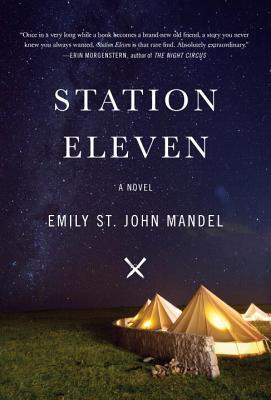
station elevenSynopsis (Goodreads):

An audacious, darkly glittering novel set in the eerie days of civilization’s collapse, Station Eleven tells the spellbinding story of a Hollywood star, his would-be savior, and a nomadic group of actors roaming the scattered outposts of the Great Lakes region, risking everything for art and humanity.

One snowy night Arthur Leander, a famous actor, has a heart attack onstage during a production of King Lear. Jeevan Chaudhary, a paparazzo-turned-EMT, is in the audience and leaps to his aid. A child actress named Kirsten Raymonde watches in horror as Jeevan performs CPR, pumping Arthur’s chest as the curtain drops, but Arthur is dead. That same night, as Jeevan walks home from the theater, a terrible flu begins to spread. Hospitals are flooded and Jeevan and his brother barricade themselves inside an apartment, watching out the window as cars clog the highways, gunshots ring out, and life disintegrates around them.

Fifteen years later, Kirsten is an actress with the Traveling Symphony. Together, this small troupe moves between the settlements of an altered world, performing Shakespeare and music for scattered communities of survivors. Written on their caravan, and tattooed on Kirsten’s arm is a line from Star Trek: “Because survival is insufficient.” But when they arrive in St. Deborah by the Water, they encounter a violent prophet who digs graves for anyone who dares to leave.

Spanning decades, moving back and forth in time, and vividly depicting life before and after the pandemic, this suspenseful, elegiac novel is rife with beauty. As Arthur falls in and out of love, as Jeevan watches the newscasters say their final good-byes, and as Kirsten finds herself caught in the crosshairs of the prophet, we see the strange twists of fate that connect them all. A novel of art, memory, and ambition, Station Eleven tells a story about the relationships that sustain us, the ephemeral nature of fame, and the beauty of the world as we know it.

My two cents:

It’s always such a terrific gift when a book surprises you in all the right ways. Such was the case for me with Station Eleven. I’d seen some reviews, I’d seen it on many of the “Best of” lists for 2014, and I’d heard the hype. At the same time, the initial synopses I’d read all focused on a traveling Shakespeare company in a post-apocalyptic world. For whatever reason, I assumed the Shakespearean framework would shape the entire novel, so that we’d follow the company from settlement to settlement, seeing their performances and making some sort of symbolic connection between the classic plays and the new world.

It was really a thrill for me to discover that Station Eleven is so much more. Station Eleven takes a truly frightening tale of a global pandemic that kills off most of humanity, and weaves into it a story about human connection, random meaning, and the elusive nature of relationships.

The Georgia flu wipes out human life on Earth almost instantly. In this age of international travel, we’re all only one contaminated airline passenger away from disaster, and Station Eleven lets the pandemic play out to its awful, inevitable conclusion. The narrative of the novel jumps in time between the outbreak of the pandemic, the path of the Traveling Symphony twenty years later, and the earlier history of Arthur Leander, possibly the last man on Earth to attract attention for his death prior to the catastrophe.

It’s hard to explain just what’s so wonderful about Station Eleven. The plotting is elegant, with connections between characters and events that only become apparent later on. The descriptions of the post-apocalyptic world are chilling, and yet the mixed sense of wonder and boredom that the new generations feel toward old stuff (electronics, phones, and all the other pieces of our technology that twenty years later are dusty museum pieces) is almost funny to read about, with a hint of the bittersweet as well. The writer is able to convey a sense of nostalgia for our own times by showing how little so much of what we have now will matter later on. There’s horror for the death and destruction, as well as an edge of mystery as we try to see just how all the different story threads are intertwined.

Above all, Station Eleven is filled with beautiful writing.

Miranda opened her eyes in time to see the sunrise. A wash of violent color, pink and streaks of brilliant orange, the container ships on the horizon suspended between the blaze of the sky and the water aflame, the seascape bleeding into confused visions of Station Eleven, its extravagant sunsets and its indigo sea. The lights of the fleet fading into morning, the ocean burning into sky.

In little moments, we see the awe-inspiring vision of a world without people and what the death of our civilization might look like. No alien invasion, no nuclear war, no second ice age — just a disease working its deadly way through the entire population of the planet over the course of a few short weeks.

Despite the end of life as we know it, life goes on, and the book seems to emphasize above all the way the people’s lives, woven together, form something that’s greater than just the individual. There’s still hope and beauty, and those who understand that are the ones who manage to keep hold of an idea of a future that means something. Station Eleven is sad and gorgeous and, oddly, not depressing. There’s a strange sense of nobility and purpose folded into the survivors’ determination to keep going, to remember, and to grow again.

If you like your post-apocalyptic novels full of explosions, zombies, and mayhem, this may not be the book for you. But if you appreciate a more thoughtful approach to matters of connection and survival and what it means to be human, definitely give Station Eleven a try.

___________________________________

The Fields & Fantasies chat:

I’ll add a link to Diana’s review shortly. Meanwhile — a Q&A between Diana and me.

Warning: SPOILERS from this point forward. Proceed at your own risk!

Lisa: Did Station Eleven match your expectations?
Diana: I think so. I don’t think I was expecting a whole heck of a lot but I heard that this book was pretty good and I think it lives up to my basic expectations.
Lisa: Did any images from the post-apocalyptic world make a big impression? What sorts of thing really stand out for you?
Diana: Just the way that everything seemed to be so Mad Max-esque with just a touch of Walking Dead. Did you find the premise to be believable?
Lisa: I really did! We have so many health-crisis scares and the media seems to really overreact… and yet, I think it’s really plausible that if there were a bad enough virus, like the flu in Station Eleven, there’s nothing to stop it from spreading globally within days or weeks. The speed of the pandemic in this book was really scary. I loved the descriptions of the world afterward, how quickly everything reverts back to nature and the people become nomads and survivalists.
Lisa: Who were your favorite characters, and why?
Diana: I really loved Kirsten. I liked how resilient she was and how much she loved Shakespeare. She had that good combination of being able to kick ass but yet was still personable. I also really liked Jeevan but I was a bit disappointed that we didn’t get a whole lot of time with him.
Lisa: I loved those two too! I also really liked Miranda — I just found her story so sad, a poor girl who never fit in with the life she ended up with, who spent her whole life working on a comic book that almost no one ever saw. (And which I wish I could see! It sounded amazing.) Also, Arthur’s friend Clark was very cool and understated.
Lisa: Which storylines were you most interested in?
Diana: All of them. She does this wonderful job of starting us at one point spreading out to other various points then bringing it back around into one fantastic place. Was there a storyline that you really liked or that you weren’t too fond of?
Lisa: I thought the whole idea of people stranded at an airport and just staying there for another twenty years was really inventive! I was so entertained by that concept and all the details the author provided to make it feel so real. I wasn’t crazy about the prophet storyline — I didn’t actually think the story needed it, other than for the dramatic element of danger.
Lisa:  Were there any storylines or plot points that you thought were unnecessary or less interesting?
Diana: There wasn’t one that i didn’t like but I would have liked to see more with Jeevan. I really really liked the character but i feel like his story just wasn’t in there enough.
Lisa: What else would you want to know about the world of the future, as portrayed in Station Eleven?
Diana: Were the people who survived just immune to the virus or did they just get lucky enough to not get it. Is there any major attempt to regain civilization. Also did any of the other greats survive?

Lisa: Very good question — was there a reason that the survivors were immune, or did they just not to encounter the virus? I wonder. And we’re left hanging a bit at the end, with the possibility that there could be a return to some of what was lost.

Lisa: How would you describe Station Eleven to someone who hasn’t read it yet?
Diana: It’s far more intellectual than i thought it would be. It’s also more of a drama about the human spirit.


And that wraps it up! Thanks, Diana! It’s a pleasure talking books with you! Let’s do this again next month…

_________________________________________

The details:

Title: Station Eleven
Author: Emily St. John Mandel
Publisher: Knopf
Publication date: September 9, 2014
Length: 333 pages
Genre: Adult fiction
Source: Purchased

_________________________________________


Next for Fields & Fantasies:

9476337Our April book will be Bossypants by Tina Fey.
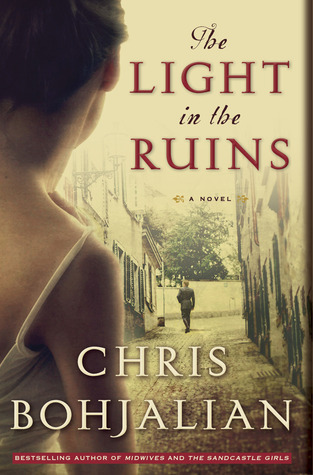
 

Book Review: The Light in the Ruins by Chris Bohjalian

lightHave I mentioned lately how much I love the Outlander Book Club? Without the OBC’s Book of the Month discussions, I might have procrastinated about reading this book for a while longer… but instead, I read The Light in the Ruins by Chris Bohjalian for our February BOTM pick, and loved it!

The Light in the Ruins is historical fiction set in Italy, with two alternating timelines: 1943-1944, when we meet the Rosati family and learn of their experiences during World War II, and 1955, when the surviving members of the family are being hunted down and brutally murdered by a serial killer with a vendetta.

The Rosatis own a beautiful, luxurious estate, Villa Chimera, in the Tuscan hills, where they live in upper class splendor, enjoying their vineyards, horses, swimming pool, and sweeping vistas. They are linked to museums in both the local town nearby and in Florence by the discovery of Etruscan tombs on their property. The tombs attract the attention of the Nazi officials whose job it is to steal rare and valuable Italian artwork for the benefit of the Reich (or, as they put it, to “protect” the artwork from the war by sending it all back to Berlin for safekeeping).

One Rosati son, Vittore, is a museum curator, and the Germans he works with begin to visit the villa more regularly, at first just to view the tombs, but then as a place to take visitors and enjoy some pampering. The Rosatis are viewed with suspicion and more by the neighboring villagers and gain a reputation as collaborators. Were they forced and intimidated into entertaining the Nazis, or are they enjoying the extra rations and other benefits of staying on the Nazi officers’ good sides?

Meanwhile, youngest daughter Cristina enters into an ill-advised love affair with a young German officer, and daughter-in-law Francesca, known for her sharp tongue and abrasive ways, waits anxiously with her two small children for news of her husband Marco, fighting on the front lines against the Allied invasion.

Cut to 1955, and the Rosatis are being gruesomely murdered, one by one. I won’t go into detail about which family members have survived the war and which are the murder victims. You’ll find all this out in short order if you read the book, and it’s all quite devastating. The investigating police detective is a woman named Serafina, who fought as a partisan during the war and whose wartime experiences and awful injuries intersect with the fate of so many members of the Rosati family.

Meanwhile, in between the 1943 and 1955 chapters, we get snippets of first-person narration told by the killer in a chilling, detached voice, explaining just how he or she butchered his first victim and what he or she has in store for the rest.

The Light in the Ruins has a grim, inevitable feel to its escalating tragedy. The war story is the more compelling of the two storylines, and it becomes increasingly difficult to read as we progress through the books. From the 1955 chapters, we know fairly early on which family members died during the war, and we spend the rest of the book building up to the awful events resulting in their deaths. The writing is all the more powerful because of the dread in each scene; we know something very bad is coming, and can even guess some of it, but it’s still shocking and horrible to read when it arrives.

That said, The Light in the Ruins is an incredibly well-written and smartly paced book. The plot is constantly moving forward, despite the time shifts, and the clues and revelations pile up in a way that feels organic and well-ordered. Interestingly, I didn’t particularly like many of the characters, even the ones we theoretically should feel more sympathetic toward, but that in no way meant that I didn’t feel horror at their fate and their suffering.

Perhaps the only story thread that I didn’t particularly care for was the love story involving Cristina and the German officer, but it’s only one of many pieces of the whole. Otherwise, I found the connections and relationships among the many characters fascinating. If anything, I’d have liked to know a bit more about Serafina, and would be curious to know what her future holds.

The author does not shy away from describing the terrible events that occur in either timeline, and I suppose some readers will feel that the descriptions might be too graphic. I didn’t feel that way — I felt that it was important to know and understand exactly what happened in order to experience the terror of the characters and get a full sense of the tragedy. Still, for readers who are more squeamish or prefer not to see every last detail, this might be good to keep in mind.

As I was reading The Light in the Ruins, I was often reminded of the wonderful book A Thread of Grace by Mary Doria Russell — and was delighted to see Chris Bohjalian’s praise of that book in his acknowledgements. For more reading on Italy during WWII, I highly recommend A Thread of Grace.

Summing it all up: Is there anything Chris Bohjalian can’t write? I’ve now read, written by him, a legal/medial drama (Midwives), a post -disaster first-person story with a teen girl narrator (Close Your Eyes, Hold Hands), one of the spookiest ghost stories I’ve ever read (The Night Strangers), and with The Light in the Ruins, outstanding historical fiction. Clearly, I need to read much more of his work and see what other worlds and genres are contained within his books!

Meanwhile, for an excellent but heart-wrenching slice of historical fiction, I absolutely recommend The Light in the Ruins.

_________________________________________

The details:

Title: The Light in the Ruins
Author: Chris Bohjalian
Publisher: Doubleday
Publication date: July 9, 2013
Length: 309 pages
Genre: Historical fiction
Source: Found at a book swap!

Thursday Quotables: The Boston Girl

quotation-marks4

Welcome back to Thursday Quotables! This weekly feature is the place to highlight a great quote, line, or passage discovered during your reading each week.  Whether it’s something funny, startling, gut-wrenching, or just really beautifully written, Thursday Quotables is where my favorite lines of the week will be, and you’re invited to join in!
Boston Girl

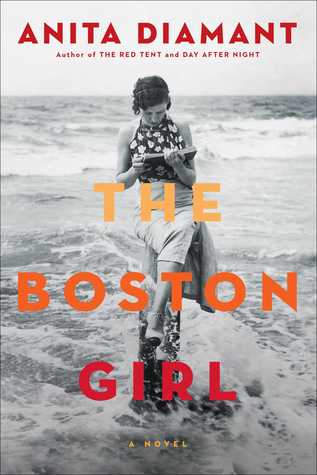
The Boston Girl by Anita Diamant
published December 9, 2014

I really and truly have only just started this book, but I find myself completely charmed by the opening passage:

Ava, sweetheart, if you ask me to talk about how I got to be the woman I am today, what do you think I’m going to say? I’m flattered you want to interview me. And when did I ever say no to my favorite grandchild?

I know I say that to all of my grandchildren and I mean it every single time. That sounds ridiculous or like I’m losing my marbles, but it’s true. When you’re a grandmother you’ll understand.

What lines made you laugh, cry, or gasp this week? Do tell!

If you’d like to participate in Thursday Quotables, it’s really simple:

  • Write a Thursday Quotables post on your blog. Try to pick something from whatever you’re reading now. And please be sure to include a link back to Bookshelf Fantasies in your post (http://www.bookshelffantasies.com), if you’d be so kind!
  • Leave your link in the comments — or, if you have a quote to share but not a blog post, you can leave your quote in the comments too!
  • Visit other linked blogs to view their Thursday Quotables, and have fun!

Top Ten Tuesday: My top 10 bookish problems

Top 10 Tuesday new

Top Ten Tuesday is a meme hosted by The Broke and the Bookish, featuring a different top 10 theme each week. This week’s topic is about our top book-related problems.

I could probably just go with two:

1) Too many books.

2) Not enough time.

Beyond that, I don’t really tend to think of books as problems… but here are some of the things related to my reading habits that can get a bit annoying:

3) I’ve never managed to figure out how to make money from my bookish habits… which means I need a day job to support my reading. Sigh.

4) I think I’ve figured out that being a bookworm is not hereditary. My daughter is an avid, voracious reader. My son will only pick up a book if there’s some sort of threat or bribery involved.

5) I suck at short stories. Even when they’re by a favorite author, my attention wanders and all I can think about is how much longer it’ll take before I can go back to reading a novel.

6) I try to be tolerant, but I must admit that I’m occasionally a book snob. I’m guilty of making snarky comments about other people’s book tastes behind their backs. I’m trying to break myself of this obnoxious habit, though, since I firmly believe that ANY reading is better than NO reading.

7) No matter how many bookshelves I build, I never have enough. I’m constantly hunting for shelf space.

8) Even though I’m a big believer in supporting independent booksellers, the sad truth is that I still take advantage of low prices from online sellers when I’m buying new releases, and shop local mostly for used books and gift items.

9) One of the downsides of reading as much as I do (which is probably not at all unusual among book bloggers) is that the details don’t stick for very long. Ask me about a book I read last week? I can tell you all about it. Ask me about a book I read six months ago? Well… not so much.

10) I’ve gotten super stingy about lending books. I tend not to let my books out of my house anymore. I get really picky about the condition of my books, and I’ve had one too many loaned books come back with rips or stains, or even with corners chewed off by a friend’s cat. (A very cute kitty, so I couldn’t get too mad. She — my friend, not the cat — offered to replace the book, but I declined. Nice offer, though.) And I’m sure I’m not alone in lending out books and never getting them back. So, unless you’re among my select few trusted book people, don’t even ask!

Writing this post makes me realize that it’s about time for me to bring back my Bookish Confessions feature! I’ll have to work on a post or two in the coming weeks.

Meanwhile… I’d love to know what your book-related problems are. Do we have any in common? Please share your links!

If you enjoyed this post, please consider following Bookshelf Fantasies! And don’t forget to check out my regular weekly feature, Thursday Quotables. Happy reading!

♥♥♥♥♥♥♥♥

Do you host a book blog meme? Do you participate in a meme that you really, really love? I’m building a Book Blog Meme Directory, and need your help! If you know of a great meme to include — or if you host one yourself — please drop me a note on my Contact page and I’ll be sure to add your info!


The Monday Check-In ~ 2/16/2015

cooltext1850356879 My Monday tradition, including a look back and a look ahead — what I read last week, what new books came my way, and what books are keeping me busy right now. Plus a smattering of other stuff too.

What did I read last week?

Treasure Islandlight

Treasure Island by Robert Louis Stevenson: Yo ho ho! My review is here.

The Light in the Ruins by Chris Bohjalian: I have about 50 pages left, and it’s so hard to stop!

Off-line:

All of my library holds arrived at once, and now I’m swamped. Isn’t that the way it always works? Meanwhile, I’m watching a lot of TV, which means I’m forced to choose each night between going to bed at a reasonable hour or staying up to read. Guess which choice wins?

Fresh Catch:

The books I bought or borrowed this week…

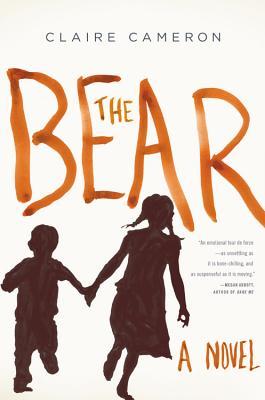
Middlemarch2 The Bear

I’ve decided that this is the year when I’ll finally read Middlemarch. Wish me luck!

I also picked up a copy of The Bear by Claire Cameron, which I’ve had on my wish-list for a while now.

And yes, I brought home a big stack of library books, which I really need to read before I touch anything else.

What will I be reading during the coming week?

Currently in my hands:
Boston GirlLost & Found

The next two books I plan to read are The Boston Girl by Anita Diamant and Lost & Found by Brooke Davis.

Now playing via audiobook:

Moon CalledBlood Bound

For my listening pleasure, I’ve decided that I’m going to stick with re-reading the Mercy Thompson series for the time being. I finished Moon Called early last week and moved straight into the 2nd book in the series, Blood Bound. Apart from one character being portrayed with an accent that was pretty jarring at first, the narration of these books is terrific — and I love the series so much that it’s a real treat to revisit it from the beginning all over again.

Reading with my kiddo:

exped

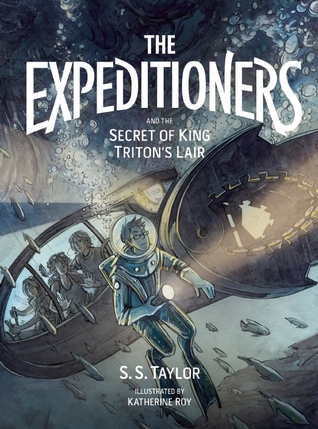
The Expeditioners and the Secret of King Triton’s Lair by S. S. Taylor: My kiddo and I just finished the book over the weekend, and loved it! My review is here; I’ll see if I can get the boy to share some of his thoughts later on as well. We haven’t quite decided what’s next, but we have plenty of great options!

Book club reading:

scarletABOSAAlight

Classic read: The Scarlet Pimpernel by Baroness Emmuska Orczy. (One chapter per week)

A Breath of Snow and Ashes by Diana Gabaldon: Reading and discussing two chapters per week, from now through the end of 2015!

OBC Book of the Month for February: The Light in the Ruins by Chris Bohjalian. The discussion opens February 18th.

Want to join any of the group reads? Let me know and I’ll provide the links!

So many book, so little time…

boy1

Book Review: The Expeditioners and the Secret of King Triton’s Lair by S. S. Taylor

expedBefore I actually talk about this book, can I just say how exciting it is to finally win a Goodreads First Reads giveaway? Thank you, Goodreads, and thank you, McSweeney’s McMullens! It’s quite a treat to win a book that I would have been eager to read no matter what.

The Expeditioners and the Secret of King Triton’s Lair is the 2nd book in the terrific Expeditioners series, and frankly, I can’t wait for more! Back in 2013, I reviewed the first book, The Expeditioners and the Treasure of Drowned Man’s Canyon, and I was so happy to get book #2 without too huge a wait in between volumes.

The Expeditioners books are set in a steampunk-ish world, where computers have been proven to be failures, travel is steam-driven, and the world that we know turns out to be missing quite a bit — such as all the previously unknown, secret lands. The Bureau of Newly Discovered Lands (BNDL) controls the discoveries and plunders their resources, and the most important people in the new economy may be Explorers of the Realm, who set out on expeditions of all sorts to discover the planet’s secrets, often risking life and limb.

Our main character is Kit West, a teen-aged boy whose father went missing under mysterious circumstances, leaving Kit, older brother Zander, and younger sister M.K. orphans. In the first book, Kit is given a clue left by their father, which propels the siblings on a cross-country adventure to solve the puzzles and cryptic maps strategically hidden by their father.

In the 2nd book, Kit, Zander, and M.K. are students at the Academy, a training ground for the next generation of Explorers. (Think Hogwarts, minus magic, plus gadgets and missions.) Kit is still puzzling over a new map which they found at the end of their first adventure, sure that it contains yet another lead from their father, one that may bring them closer to understanding his secrets and his disappearance. A competition to design and lead the school’s annual expedition leads the three, along with best friend Sukey and arch-nemesis Leo Nackley, to a sea voyage to the equivalent of the Bermuda Triangle. There, Kit believes the unexplainable ocean phenomenon that has led to countless shipwrecks will also reveal their father’s next clue — but Leo Nackley and his powerful father think they’ll discover oil, which in turn will allow the Realm to wage war against other empires by fueling more deadly weapons of destruction.

The Wests and Sukey end up shipwrecked, and that’s not all. The book includes submersibles, pirates, constrictor eels, telepathic turtles, Caribbean islands, and intrigues and conspiracies galore. There’s also a smattering (but not too much) of teen angst, as Kit’s crush on his close friend Sukey turns to hurt and anger when she seems to fall for Zander instead.

One thing I love about the Expeditioners books is how smart and gifted the characters are. Kit is a cartography expert, Zander studies biology and wildlife, M.K., the youngest of the family, is a marvel when it comes to engineering, and Sukey is a talented aviator. Girls are just as strong and competent as the boys, and just as likely to wield a sword against dangerous pirates or fight off a new enemy with an amazing piece of technology. Kit and the gang use their wits to survive and outsmart their opponents, but they never have it easy and nothing comes without new risk.

Black and white illustrations by Katherine Roy enhance the story’s flow and add greatly to the sense of the characters and their world. The inside of the dust cover includes schematics for M.K.’s submersible, and there are maps and old journal pages sprinkled throughout as well.

The action never stops, and while it’s occasionally a chore to keep straight the various government agencies and the geopolitical factions, the main thrust of the story is the West kids and their quest to follow their father’s clues. By the end of this book, there are cracks forming in the siblings’ unwavering commitment to their quest, however, and Kit and his family seem about to be heading off in different directions, scattered by their new assignments and moving forward separately instead of as a team.

Expeditioners #2 (sorry, that’s a lot easier than typing out the full title) has an open-ended conclusion, clearly laying the groundwork for more to come. From what I’ve seen mentioned on a few websites, The Expeditioners is expected to be a six-part series, which means there’s plenty of excitement ahead.

I highly recommend this series for anyone who enjoys kids’ adventure tales — and that includes grown-ups too! My 12-year-old and I made this a joint reading project, and we both loved it. I can see The Expeditioners appealing to Harry Potter fans as well as fans of Philip Pullman’s His Dark Materials trilogy… and as a fan of both, I don’t say that lightly. The Expeditioners has a rich and unusual world for its super-smart and super-engaging characters to explore. I can’t wait to see what’s next!

Want to know more? Check out my review of the first book in the series, and also this great Q&A with author S. S. Taylor.

__________________________________________

The details:

Title: The Expeditioners and the Secret of King Triton’s Lair
Author: S. S. Taylor; illustrated by Katherine Roy
Publisher: McSweeney’s McMullens
Publication date: September 23, 2014
Length: 320 pages
Genre: Children’s fiction (upper middle grade; per Amazon, ages 10 and up)
Source: Goodreads First Reads (I finally won something!)

Take A Peek Book Review: Treasure Island by Robert Louis Stevenson

“Take a Peek” book reviews are short and (possibly) sweet, keeping the commentary brief and providing a little peek at what the book’s about and what I thought. This week’s “take a peek” book:

TI collage

Treasure Island by Robert Louis Stevenson
(originally published 1883)

Synopsis:

(via Goodreads)

Originally conceived as a story for boys, Stevenson’s novel is narrated by the teenage Jim Hawkins, who outwits a gang of murderous pirates led by that unforgettable avatar of immorality, Long John Silver. Admired by Mark Twain, Rudyard Kipling, and (reluctantly) Henry James, the story has the dreamlike quality of a fairy tale. It has worked its way into the collective imagination of more than five generations of readers, young and old alike, gaining the power of myth.

The most popular pirate story ever written in English, featuring one of literature’s most beloved “bad guys,” Treasure Island has been happily devoured by several generations of boys—and girls—and grownups. Its unforgettable characters include: young Jim Hawkins, who finds himself owner of a map to Treasure Island, where the fabled pirate booty is buried; honest Captain Smollett, heroic Dr. Livesey, and the good-hearted but obtuse Squire Trelawney, who help Jim on his quest for the treasure; the frightening Blind Pew, double-dealing Israel Hands, and seemingly mad Ben Gunn, buccaneers of varying shades of menace; and, of course, garrulous, affable, ambiguous Long John Silver, who is one moment a friendly, laughing, one-legged sea-cook . . .and the next a dangerous pirate leader!

The unexpected and complex relationship that develops between Silver and Jim helps transform what seems at first to be a simple, rip-roaring adventure story into a deeply moving study of a boy’s growth into manhood, as he learns hard lessons about friendship, loyalty, courage and honor—and the uncertain meaning of good and evil.


My Thoughts:

For a fairly slim book (my edition had 190 pages), it sure took me a while to finish this classic tale of pirates, treasure maps, and treachery. Treasure Island wasn’t a stay-up-all-night, can’t-put-it-down read for me — but it was definitely entertaining and well worth reading.

It’s kind of hilarious, in a way, to read this quintessential pirate story, in light of Pirates of the Caribbean, Black Sails, and even Spongebob Squarepants, and realize that Treasure Island was written at a time when pirate stories weren’t clichéd yet. In Treasure Island, the guy with a wooden leg exclaiming “Shiver me timbers!” while a parrot perches on his shoulder isn’t a joke; he’s honest-to-blazes scary. Doubloons, pieces of eight, cutlasses, buried treasure, the black spot, pointing skeletons used as road signs — here’s where to go to find where they entered popular culture.

It seems practically silly to review a classic like Treasure Island. It’s a classic for a reason! But, bottom line: I’m glad that I finally dug up a copy and took the time to read it. It’s a fun, fast-paced adventure, providing a glimpse into a by-gone era of storytelling — and next time International Talk Like a Pirate Day rolls around, I’ll have something to think about besides these guys:

hqdefault FILM Depp 2

or this:

ljs_old_store

or even my current pirate obsession:

Black Sails 2014

_________________________________________

The details:

Title: Treasure Island
Author: Robert Louis Stevenson
Publisher: Varied (available free for Kindle)
Publication date: 1883
Length: 190 pages
Genre: Classic adventure story
Source: Purchased

Read, skim, or skip?

About two weeks ago, I wrote a post about how following other blogs is key to building community in the blogging world, and yet it can potentially take up so much time that it’s impossible to stay on top of it all and still have any time to work on our own writing projects (not to mention little things like eating, sleeping, and saying hello to our friends and families). You can check it out here if you’d like.

Since I wrote that post (which, by the way, led to some really interesting input and discussion), I’ve been thinking more about the whole issue. I have quite a few blogs that I follow. Some are by people I feel I’ve developed a real connection with; others are blogs that I might visit occasionally or blogs that caught my eye with an especially interesting post or two. Still, the overall traffic can be overwhelming, between my WordPress feed, my Bloglovin’ feed, the daily email digests, and the Twitters links. There simply isn’t a way to read EVERY SINGLE THING, EVERY SINGLE DAY.

I’ve read comments over the past couple of years about people’s blog-reading habits. Some folks say that while they spend the most time writing book reviews, they tend to not read reviews on other people’s blogs. Some prefer discussion posts, some prefer funny pieces, some are all about the memes.

Clearly, not everything is going to be read, or read thoroughly. I’m sure we all have our own approaches to keeping up. I’ve realized that I can divide up my actions into three simple categories:

cooltext1920646192

So how does it all shake out? More or less, these are my habits:

Book reviews:

  • Is it by a blogger whose work I always enjoy? Read.
  • Is it for a book that I read recently, especially one that I liked enough to want to discuss? Read.
  • Is it for a book that I plan to read soon? Skim. (I don’t want to know too much, but I’d still like the general idea of whether you liked it or not.)
  • For a book that’s completely out of my interest zone? Skip.

Memes:

  • A meme I’m participating in? Read… usually.
  • Top Ten Tuesday posts? 90% of the time, if the topic grabs me — Read. The other 10%? No interest in the topic, so I skip.
  • Weekly reading wrap-ups (like It’s Monday. What Are You Reading or WWW Wednesdays, for example): Read.
  • Book hauls, shelf stacking, in the mailboxes: Skip. I’m just not that interested in these unless they’re folded into some other sort of post, like a reading update or a weekly recap.
  • Teasers, random book excerpts, quotes: Read. I like these little snippets, and I’ve found a few good books through these kind of posts that I maybe might have missed otherwise. Plus (shameless plug here), I host a quote meme (Thursday Quotables! Come check it out!), so clearly I like this sort of thing.

Other book stuff:

  • Cover reveals: Skip.
  • Author Q&As: If it’s someone I’m interested in — Read. Someone I’m not familiar with but who seems interesting or quirky: Skim.
  • Chit-chat or discussion posts related to reading, reading habits, etc.: Read. Usually.
  • Month in review posts: Skip. If I’ve been following a blog, then I’ve already seen all the posts for the month, so I don’t need another post summing up what I’ve already seen.
  • Giveaways: Read. Don’t we all love free books?

Bloggy stuff:

  • Technical tips and tricks, like making blog graphics or cool resources for bloggers: Read.
  • Blogging tips, like increasing traffic or considering self-hosting: Skim, to see if there are some good nuggets in there. Skip, if it’s not something I’m considering.
  • Discussion posts about being a blogger: Read, usually, unless it’s a topic I feel I’ve seen time and time again. Still, it’s always interesting to get a fresh take!

Non-bookish stuff:

  • Personal updates: Read. If you’re a book blogger and you take the time to put yourself out there and share your personal moments or challenges, I want to honor that.
  • Other non-bookish miscellany: Read or skim. I entered the blogging world specifically to chat books, and I’m not terribly interested in branching out too far. Still, if someone I talk books with also writes about other topics, chances are I’ll at least check it out to see what’s going on.

Automatic skips:

  • Anything with GIFs. Sorry. I just can’t. I know, I know, people love these. But they make my brain and eyes hurt, and I just can’t enjoy reading anything with GIFs flashing around on the page.
  • Cover reveals.
  • Posts with hard-to-read fonts, colors, or too many typos.
  • Challenges: I don’t do challenges, and reading other people’s challenge update doesn’t seem all that interesting to me.
  • Blog award posts: I seem to have 5 – 10 of these in my feeds each day, and as much as I may love the individuals, I just can’t read these any longer.
  • Rants about Goodreads, author behavior, and blogging/reviewing politics. There’s only so much time in a day, and I’d rather focus on the positive.
  • Wow, I sound like a total grouch, don’t I? I’m not putting down any of the above, really. I know people like different things, and what’s boring or a turn-off to some may be totally hilarious or thought-provoking to others.

Really, the read/skim/ skip division is the only way for me to keep my sanity and not get swamped with all the keeping up I need to do. So don’t hate me if I don’t read your meme posts or LOL over your clever graphics! I’m happy to be an enthusiastic audience for the posts that grab me… and I hope you’ll read the stuff of mine that catches your eye or strikes your fancy — and skip the stuff that bores you!

What type of posts do you always read? What do you skim? What do you skip?

Share your thoughts, please!

Thursday Quotables: Treasure Island

quotation-marks4

Welcome back to Thursday Quotables! This weekly feature is the place to highlight a great quote, line, or passage discovered during your reading each week.  Whether it’s something funny, startling, gut-wrenching, or just really beautifully written, Thursday Quotables is where my favorite lines of the week will be, and you’re invited to join in!
Treasure Island

Treasure Island by Robert Louis Stevenson
(originally published 1883)

I’m feeling very piratey this week. Watch out! I make burst out in a sea shanty before I’m done…

I brooded by the hour together over the map, all the details of which I well remembered. Sitting by the fire in the housekeeper’s room, I approached that island in my fancy, from every possible direction; I explored every acre of its surface; I climbed a thousand times to that tall hill they call the Spyglass, and from the top enjoyed the most wonderful and changing prospects. Sometimes the isle was thick with savages, with whom we fought; sometimes full of dangerous animals that hunted us; but in all my fancies nothing occurred to me so strange and tragic as our actual adventures.

And there’s this little gem, which I’ll have to remember next time I need an indignant comeback:

“Sir,” said Captain Smollett, “with no intention to take offence, I deny your right to put words into my mouth.”

What lines made you laugh, cry, or gasp this week? Do tell!

If you’d like to participate in Thursday Quotables, it’s really simple:

  • Write a Thursday Quotables post on your blog. Try to pick something from whatever you’re reading now. And please be sure to include a link back to Bookshelf Fantasies in your post (http://www.bookshelffantasies.com), if you’d be so kind!
  • Leave your link in the comments — or, if you have a quote to share but not a blog post, you can leave your quote in the comments too!
  • Visit other linked blogs to view their Thursday Quotables, and have fun!

Wishing & Waiting on Wednesday: Depth

There’s nothing like a Wednesday for thinking about the books we want to read! My Wishing & Waiting on Wednesday post is linking up with two fabulous book memes, Wishlist Wednesday (hosted by Pen to Paper) and Waiting on Wednesday (hosted by Breaking the Spine).

This week’s pick:

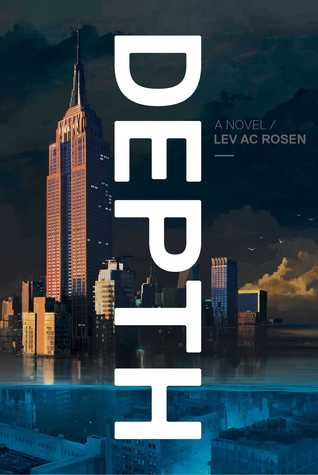
Depth

Depth by Lev A. C. Rosen
(to be released April 28, 2015 )

Synopsis (Goodreads):

In a post-apocalyptic flooded New York City, a private investigator’s routine surveillance case leads to a treasure everyone wants to find – and someone is willing to kill for.

Depth combines hardboiled mystery and dystopian science fiction in a future where the rising ocean levels have left New York twenty-one stories under water and cut off from the rest of the United States. But the city survives, and Simone Pierce is one of its best private investigators. Her latest case, running surveillance on a potentially unfaithful husband, was supposed to be easy. Then her target is murdered, and the search for his killer points Simone towards a secret from the past that can’t possibly be real; but that won’t stop the city’s most powerful men and women from trying to acquire it for themselves, with Simone caught in the middle.

Lev A. C. Rosen’s debut novel, All Men of Genius, consistently makes it onto my list of favorites — and while this sounds completely different in setting and tone, I have complete faith that this upcoming new novel will be impossible to put down!

What are you wishing for this Wednesday?

Looking for some bookish fun on Thursdays? Come join me for my regular weekly feature, Thursday Quotables. You can find out more here — come play!

♥♥♥♥♥♥♥♥

Do you host a book blog meme? Do you participate in a meme that you really, really love? I’m building a Book Blog Meme Directory, and need your help! If you know of a great meme to include — or if you host one yourself — please drop me a note on my Contact page and I’ll be sure to add your info!