Rosie Hopkins is looking forward to Christmas in the little Derbyshire village of Lipton, buried under a thick blanket of snow. Her sweetshop is festooned with striped candy canes, large tempting piles of Turkish Delight, crinkling selection boxes and happy, sticky children. She’s going to be spending it with her boyfriend, Stephen, and her family, flying in from Australia. She can’t wait.
But when a tragedy strikes at the heart of their little community, all of Rosie’s plans for the future seem to be blown apart. Can she build a life in Lipton? And is what’s best for the sweetshop also what’s best for Rosie?
A Christmas-themed book is such a non-typical reading choice for me — unless it’s a book by Jenny Colgan, and especially if it includes favorite characters and is a follow-up to a favorite book!
I absolutely adored Sweetshop of Dreams, and just needed to keep main character Rosie in my life a little longer, so naturally, I couldn’t resist starting Christmas at Rosie Hopkins’ Sweetshop right away.
This 2nd book in the series (it’s a trilogy) picks up about a year after the events in the first book. Rosie is happily settled in the little town of Lipton, running the town sweetshop, living with her beloved boyfriend Stephen, and feeling happier than she’s ever felt in her her life.
As Christmas approaches, things are looking good. Rosie’s family is about to arrive from Australia (although she hasn’t quite gotten around to telling Stephen yet). Stephen has just started his dream job teaching at the little local primary school. They’re happy in their cozy cottage, and Rosie is relieved to know that her great-aunt Lillian is happy too in her retirement home, where she merrily raises holy hell amongst the old folks and is as feisty as ever.
But tragedy strikes due to a freak accident that injures Stephen and threatens the future of Lipton’s school. As Stephen recovers and Rosie’s family hits town, tensions rise and eventually come to a head. Meanwhile, because of the accident, an elderly man suffering from dementia ends up in Lipton, and appears to have connections to the town that no one could have imagined.
Once again, Jenny Colgan’s book strikes just the right note of joy and love, while blending in dramatic complications and moments of fear. The tensions play out throughout the plot, but we readers can rest easy knowing that the author would never truly leave us in devastation. There are sweet secrets revealed, plenty of feel-good family moments, adorableness from small children, dramatic rescues, and plenty of romantic highlights too.
As the 2nd book in a trilogy, Christmas at Rosie Hopkin’s Sweetshop left me very happy, but also eager to read more about these characters — most of who I’d like to either hang out with or give big hugs to, or both.
This was a quick and cheery listen that also packs in emotional moments and enough worries and sorrow to keep it from going too far over the line into a nonstop sugary utopia. I’ve loved both books about Rosie, and need to start #3 immediately! Highly recommended.
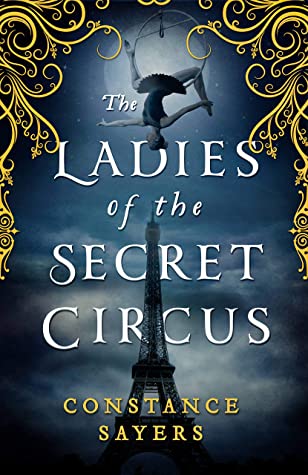
Title: The Ladies of the Secret Circus Author: Constance Sayers Publisher: Redhook Publication date: March 23, 2021 Length: 448 pages Genre: Fantasy Source: Review copy courtesy of the publisher via NetGalley Rating:
⭐⭐⭐
Rating: 3 out of 5.
Paris, 1925: To enter the Secret Circus is to enter a world of wonder-a world where women tame magnificent beasts, carousels take you back in time, and trapeze artists float across the sky. But each daring feat has a cost. Bound to her family’s strange and magical circus, it’s the only world Cecile Cabot knows-until she meets a charismatic young painter and embarks on a passionate love affair that could cost her everything.
Virginia, 2005: Lara Barnes is on top of the world-until her fiancé disappears on their wedding day. Desperate, her search for answers unexpectedly leads to her great-grandmother’s journals and sweeps her into the story of a dark circus and a generational curse that has been claiming payment from the women in her family for generations.
The Ladies of the Secret Circus is a tale of family secrets and a dark heritage — but it doesn’t quite live up to the mysterious air promised by the cover and synopsis.
Lara is eagerly awaiting her wedding to Todd, the man she’s loved since her teens. But her joy turns to heartache when she’s left waiting at the altar on her wedding day. Did he jilt her? Did something happen to him? His abandoned car seems to provide a link to a similar disappearance that occurred 30 years earlier. Dark forces seem to be at play. Could this be related to Lara and her mother Audrey’s talent for magic? Or the fact that their small town in Virginia hasn’t had a single murder case in decades? Or Lara’s strange memories of being visited as a child by an unusual man who made incredible things happen?
In the months that follow, Todd’s fate remains a mystery and Lara starts to rebuild her life, but a gift from her mother sends her on a strange journey. The gift is a small painting that’s been hanging in Audrey’s house for as long as Lara can remember — a portrait of her great-grandmother Cecile as a young circus performer.
When Lara takes the painting to be reframed, the art expert who handles it is astonished to realize that this may be one of the rumored missing paintings by the great Jazz Age artist Emile Giroux. He supposedly painted his masterpiece, a series of three paintings called The Ladies of the Secret Circus, before his death, but no one has ever seen the paintings. If Lara’s painting is authentic, then its value is in the millions, and its discovery will rock the art world.
But as Lara investigates, the connection to ancient magics is revealed, especially once she begins to read Cecile’s long-lost diaries. The diaries tell a story of a mysterious, otherworldly circus that only appears to those who truly seek it, and the strange, damned performers who populate the circus and seemingly can never leave. There’s a connection to Lara’s family, but it’s beyond anything Lara could have expected, and carries huge dangers for her and everyone around her.
While the set-up is promising, the book itself didn’t meet my expectations. Some of this may be me — I seem to have issues with magical circus settings, since apparently I’m the only person in the world who didn’t love The Night Circus. The big revelations in this book about the Secret Circus struck me as too out-there to accept. I have problems with books where the use of magic makes anything and everything possible — at some point, it stops feeling like any rules apply at all.
The connections to Lara’s family are confusing, and the origin of the connection is just kind of dumped on the reader earlier on. The how’s and why’s of it all just didn’t work for me. So many of the more fantastical elements are stated as fact, but without a sense of build-up or setting to make these aspects feel at all plausible. The identities of some of the circus performers are supposed to ground the circus in our own world, but without giving anything away, I’ll just say that these pieces struck me as absurd and funny, rather than dramatic.
I enjoyed the diary entries, with their 1920s Paris setting, but again, the constant name-dropping of artists and authors like Hemingway, Chagall, and Man Ray made me feel distracted and as if the author were trying too hard to make the story real. It just didn’t work for me — somehow the use of real artists in this fictional tale felt out of place and at odds with the story the author was trying to tell.
Sad to say, overall this was a disappointing read for me. I loved the author’s previous book, A Witch in Time, and such high hopes for this one. Unfortunately, The Ladies of the Secret Circus started slowly and never fully pulled me in.
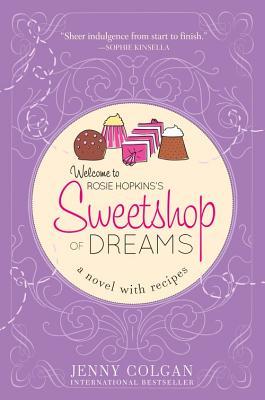
A delicious rom-com about finding yourself and breaking out of routines, The Sweetshop of Dreams is full of tempting desserts, family secrets, and second chances.
Rosie Hopkins has gotten used to busy London life. It’s…comfortable. And though she might like a more rewarding career, and her boyfriend’s not exactly the king of romance, Rosie’s not complaining. And when she visits her Aunt Lilian’s small country village to help sort out her sweetshop, she expects it to be dull at best.
Lilian Hopkins has spent her life running Lipton’s sweetshop, through wartime and family feuds. When her great-niece Rosie arrives to help her with the shop, the last thing Lillian wants to slow down and wrestle with the secret history hidden behind the jars of beautifully colored sweets.
But as Rosie gets Lilian back on her feet, breathes a new life into the candy shop, and gets to know the mysterious and solitary Stephen–whose family seems to own the entire town–she starts to think that settling for what’s comfortable might not be so great after all.
A one-sentence review: I loved this audiobook!
Need more?
Jenny Colgan’s books inevitably lift my spirits and get me deeply involved in her characters’ lives, and Sweetshop of Dreams is no exception.
Rosie is an auxiliary nurse, working busy hospital shifts and living in a small London flat with her boyfriend Gerard, who’s maybe a little too comfortable with their living arrangements. She thinks he’ll propose… eventually… but meanwhile, it’s been years, and he seems perfectly content with the status quo.
But after Rosie’s great-aunt Lilian injures her hip, Rosie’s mother Angie asks her to go stay with Lilian for a little while. Someone needs to get Lilian moved into a care facility and get her ancient sweetshop prepped for sale. And since Angie is currently living in Australia with Rosie’s brother’s family, it falls on Rosie to see to the family obligations in England.
Off Rosie goes to the small country village of Lipton, thinking she’ll be in and out in a matter of weeks. What she finds, though, is that Lilian’s shop hasn’t been opened in a few years, and that Lilian herself is underfed and weak, having stubbornly refused outside help or to leave her cozy little cottage. Rosie dives in, tending to Lilian and cleaning up and reopening the shop — because how can she put it on the market to sell unless she can demonstrate that it’s a viable business?
The longer Rosie stays in Lipton, the more she becomes involved in village life. Even though she sticks out like a sore thumb at first, with her city ways and clothes that can’t withstand the country weather, she eventually makes friends and finds a new purpose in life.
In a dual-timeline approach, we also get little snippets of Lilian’s life during the 1940s, as the young men of the village head to war and Lilian helps her father with the sweetshop. Through these flashbacks, we learn about why Lilian has been alone all these years and what caused the heartbreak she experienced so long ago.
Rosie is a lovely character, upbeat and curious and not afraid to jump in when a pair of hands are needed. Although she’s there for the shop and for Lilian, she also becomes friends with the village doctor, who involves Rosie in his most challenging case — which leads to a whole new set of possibilities for Rosie after she finally dumps her city boyfriend.
I really enjoyed Lilian as a character as well, and found myself so moved by her backstory and her experiences. The book treats Lilian with great respect as she ages, and I found her relationship with Rosie to be just so sweet and lovely.
And the sweetshop!!! Can I just say right now that I’d love to live inside it for a year or so? It sounds so bright and wonderful, full of nostalgic treats and joy and happiness. This book makes village life seem like something idyllic and peaceful and funny and wonderful.
The audiobook narrator, Beverley A. Crick, does a terrific job with Rosie and Lillian, but also masterfully conveys the voices and personalities of the other village residents, from small schoolboy to grumpy old farmers. Listening to this book was such a treat!
Sweetshop of Dreams does include a love story for Rosie, and it’s a good one, but it’s not the sole focus of the book. Instead, this book is a sweet mix of romance, quirky characters, family bonds, and a celebration of community, and it’s utterly enjoyable.
As with the best of Jenny Colgan’s books, Sweetshop of Dreams kept me enchanted by the setting and the people, and left me wanting to spend more time with all of these characters. Luckily for me, there’s a follow-up Christmas book (Christmas at Rosie Hopkins’ Sweetshop), and while I don’t normally read Christmas books, I just can’t resist this one!
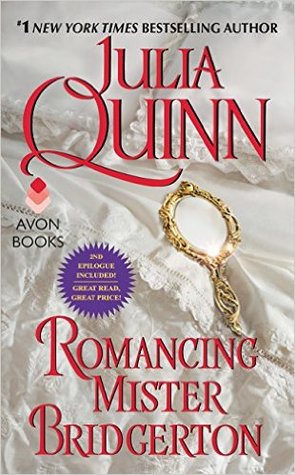
Everyone knows that Colin Bridgerton is the most charming man in London. Penelope Featherington has secretly adored her best friend’s brother for…well, it feels like forever. After half a lifetime of watching Colin Bridgerton from afar, she thinks she knows everything about him, until she stumbles across his deepest secret…and fears she doesn’t know him at all.
Colin Bridgerton is tired of being thought nothing but an empty-headed charmer, tired of everyone’s preoccupation with the notorious gossip columnist Lady Whistledown, who can’t seem to publish an edition without mentioning him in the first paragraph. But when Colin returns to London from a trip abroad he discovers nothing in his life is quite the same – especially Penelope Featherington! The girl haunting his dreams. But when he discovers that Penelope has secrets of her own, this elusive bachelor must decide…is she his biggest threat – or his promise of a happy ending?
Bridgerton books have become my go-to for those times (like long flights) when I want to be entertained, without having to make too much effort. Romancing Mister Bridgerton, the 4th in the series, was a perfect choice for a travel companion for me this week.
This time around, it’s Penelope’s turn to find romance!
While the Bridgertons series revolves around the eight children of the Bridgerton family, each getting a book in which to find true love and marriage, the love interests in each book are just as important as the Bridgerton family member at the center of the action.
In the 4th book, it’s 3rd son Colin Bridgerton who takes center stage. At age 33, everyone agrees that it’s about time for Colin to settle down with a wife and start a family. He’s restless and unfulfilled, though, lacking a greater purpose beyond being a member of the ton and attending social functions. When his restlessness hits, he takes off, and has traveled extensively around the world, returning to England for brief periods before he’s driven to set out again.
Meanwhile, Penelope Featherington, at age 28, is now considered firmly “on the shelf”, having navigated many social seasons without a single proposal to show for it. Best friends with Colin’s younger sister Eloise, Penelope has been a fixture in the Bridgerton household for years. Unbeknownst to Colin, Penelope has also been secretly in love with him for over a decade, but being an overlooked wallflower, she has no hope that Colin will never notice her in any but a brotherly fashion.
Anyone who’s watched the Bridgerton TV series on Netflix will already know what Penelope’s huge secret is… but for those who don’t already know, I’m not spilling the beans! Trust me — it’s huge, and could have a permanent impact on Penelope’s social standing if it ever got out. In book #4, the truth is about to be revealed, and Penelope may not be able to stop it.
Meanwhile, she and Colin are thrown together more frequently, and each begins to learn more about the other and see their previously unnoticed depths, as well as the chemistry that begins to spark between them. Naturally, they fall in love, but (as is the case in all of these books) complications pop up and threaten to derail their blossoming romance.
Romancing Mister Bridgerton is such fun! It’s especially rewarding to get to see Penelope taking center stage — the overlooked girl growing into a confident woman who just needs to learn to use her voice. She’s a terrific romantic heroine, not the classic beauty, but a vibrant, intelligent woman who doesn’t need to be a cookie-cutter replicant of society’s ideal.
Colin has always been a favorite for me, and his sense of humor and playfulness make him funny and relatable to read about. Colin and Penelope make a charming couple, and it made me so happy to see them together!
This book sets up the events of #5 with a sort-of cliffhanger about Bridgerton sister Eloise, so I have a feeling I won’t be waiting too long to continue with the series.
My usual random thoughts:
Years have gone by, and all of a sudden, Hyacinth is out in society! And Gregory is in university! Kids grow up so fast these days.
We learn that Francesca (that’s Bridgerton child #6, for those keeping score) has not only married off-screen but is already widowed. I don’t believe we’ve really seen her much in the books so far, so she feels like a non-entity to me, but I guess she’ll get her turn in a couple more books.
The Bridgerton family dynamics make these books so much fun. It’s delightful to see all the sibling bickering and Violet (Mama Bridgerton) rolling her eyes at her children’s outrageous behavior.
I love that Julia Quinn has created a whole little world among the ton. Even though some people are only mentioned in passing, I feel like a lot of these characters are well enough known by now that I’m exclaiming over who’s gotten married, as if they were actually part of my social circle.
This wouldn’t be a Bridgertons review if I didn’t include at least a few juicy and/or fun selections:
Sex…
When he felt her relax slightly beneath him, he pushed forward a bit more, until he reached the undeniable proof of her innocence.
… and true love…
He smiled, and suddenly she knew that his words were true. Everything would be all right. Maybe not today and maybe not tomorrow, but soon. Tragedy couldn’t coexist in a world with one of Colin’s smiles.
… and some family silliness…
Penelope tried to signal discreetly at her husband, but all her attempts at circumspection were drowned out by Hyacinth’s vigorous wave and holler of, “Colin!”
Violet groaned.
“I know, I know,” Hyacinth said unrepentantly, “I must be more ladylike.”
“If you know it,” Violet said, sounding every inch the mother she was, “then why don’t you do it?”
“What would be the fun in that?”
Ah, these books go down like candy! They’re sweet and fluffy, and I’m enjoying every moment. Even while chuckling over some ridiculous societal affectation or silly romance wording, I’m still having a great time. At this point, I’m all in, and won’t stop reading until every one of those eight Bridgertons is happily married.
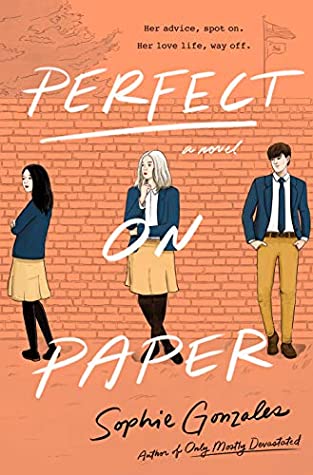
Title: Perfect on Paper Author: Sophie Gonzales Publisher: Wednesday Books Publication date: March 9, 2021 Length: 304 pages Genre: Young adult fiction Source: Review copy courtesy of the publisher via NetGalley Rating:
⭐⭐⭐⭐⭐
Rating: 4.5 out of 5.
In Sophie Gonzales’ Perfect on Paper, Leah on the Offbeat meets To All the Boys I’ve Loved Before: a bisexual girl who gives anonymous love advice to her classmates is hired by the hot guy to help him get his ex back
Her advice, spot on. Her love life, way off.
Darcy Phillips:
• Can give you the solution to any of your relationship woes―for a fee.
• Uses her power for good. Most of the time.
• Really cannot stand Alexander Brougham.
• Has maybe not the best judgement when it comes to her best friend, Brooke…who is in love with someone else.
• Does not appreciate being blackmailed.
However, when Brougham catches her in the act of collecting letters from locker 89―out of which she’s been running her questionably legal, anonymous relationship advice service―that’s exactly what happens. In exchange for keeping her secret, Darcy begrudgingly agrees to become his personal dating coach―at a generous hourly rate, at least. The goal? To help him win his ex-girlfriend back.
Darcy has a good reason to keep her identity secret. If word gets out that she’s behind the locker, some things she’s not proud of will come to light, and there’s a good chance Brooke will never speak to her again.
Okay, so all she has to do is help an entitled, bratty, (annoyingly hot) guy win over a girl who’s already fallen for him once? What could go wrong?
Darcy Phillips is seventeen, well-intentioned, and caught in the act.
A high school junior, Darcy has a thriving business going at her school, offering relationship advice — anonymously — via notes left in an abandoned locker that only she has access to. Students drop their notes, along with the $10 fee, in the locker, and Darcy replies via email with well-researched, supportive advice. Results guaranteed! She offers a refund for failed advice, and is proud of only having to give back the fee once (and even then, blames the failure on the letter writer not providing a full picture of the situation).
But one day, Darcy gets caught by a boy she barely knows as she retrieves the day’s stash of letters from locker 89. He offers her a deal — he’ll keep her secret, but she has to act as his personal relationship coach. He wants his ex-girlfriend back, and wants to hire Darcy to show him how to make it happen. Since he’s offering to pay her for her time, and since keeping the secret is vital, Darcy agrees.
Darcy is an out and proud member of the school’s Q&Q (Queer and Questioning) club, identifying as bi. She’s supportive of her friends, a devoted sister, and very proud of the professionalism she applies to her locker/advice business. But Darcy also has a secret — she’s in love with her best friend Brooke, and when Brooke and a girl interested in her each wrote to the locker the previous year asking for advice on how to move the interest forward, Darcy intentionally sabotaged them out of jealousy. She’s not proud of what she did, and she’s deathly afraid that Brooke would never forgive her if she knew the truth. (Fair point — it was a lousy thing to do.)
Meanwhile, Darcy’s coaching of Brougham helps her get to know him, and while she’s supporting him through his relationship woes, she’s startled to realize she may have feelings for him.
There’s so much to like about Perfect on Paper! The characters are all well-drawn individuals, quirky and unpredictable, and feel very much like real people with real feelings. They’re messy and make bad decisions from time to time, but hey, perfection isn’t reality. Brougham’s home life is terrible despite his wealth, and Darcy’s home life, while full of love, is also not providing her with the support and attention she needs. Perfect on Paper shows that to truly understand someone, it’s necessary to dig deeper, go beyond immediate impressions, and have compassion for the things that may not be obvious.
It’s wonderful to see bi representation presented as thoughtfully as it is with Darcy. Darcy comes across as very confident, and she is in many ways, but she also carries a lot of weight with her around being bi — from being asked if she’s “turning straight” when she gets involved with a boy, to fear that her Q&Q friends won’t accept her as one of them depending on who she dates, to the frustration of having to endlessly explain that being bi doesn’t equate to inability to be in a committed, monogamous relationship. The author does a fabulous job of showing Darcy’s depths and insecurities, as well as the importance of a supportive community.
Overall, I really enjoyed Perfect on Paper. There’s a feeling of lightness to it, even when the characters go through darker moments, and a nice balance of fun and seriousness. Darcy is a terrific main character, but the supporting characters are all wonderful too. Definitely recommended!
For more by this author, check out my review of her 2020 book, Only Mostly Devastated!Sav.
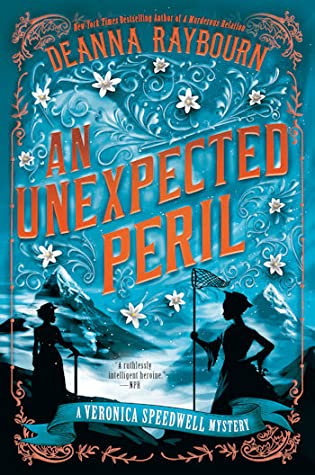
Title: An Unexpected Peril (Veronica Speedwell, #6) Author: Deanna Raybourn Publisher: Berkley Publication date: March 2, 2021 Length: 336 pages Genre: Historical fiction Source: Review copy courtesy of the publisher via NetGalley Rating:
⭐⭐⭐⭐⭐
Rating: 4.5 out of 5.
A princess is missing, and a peace treaty is on the verge of collapse in this new Veronica Speedwell adventure from the New York Times bestselling and Edgar Award-nominated author Deanna Raybourn.
January 1889. As the newest member of the Curiosity Club—an elite society of brilliant, intrepid women—Veronica Speedwell is excited to put her many skills to good use. As she assembles a memorial exhibition for pioneering mountain climber Alice Baker-Greene, Veronica discovers evidence that the recent death was not a tragic climbing accident but murder. Veronica and her natural historian beau, Stoker, tell the patron of the exhibit, Princess Gisela of Alpenwald, of their findings. With Europe on the verge of war, Gisela’s chancellor, Count von Rechstein, does not want to make waves—and before Veronica and Stoker can figure out their next move, the princess disappears.
Having noted Veronica’s resemblance to the princess, von Rechstein begs her to pose as Gisela for the sake of the peace treaty that brought the princess to England. Veronica reluctantly agrees to the scheme. She and Stoker must work together to keep the treaty intact while navigating unwelcome advances, assassination attempts, and Veronica’s own family—the royalty who has never claimed her.
Six books in, the Veronica Speedwell series shows no hint of getting stale or slowing down. In An Unexpected Peril, our intrepid lepidopterist finds herself once again embroiled in a murder investigation, putting her own life at risk as well as that of her hot, devoted, decidedly dangerous lover Stoker.
Veronica is Victorian-era spunk and determination personified. She’s a fearless explorer, a scientist passionately devoted to pursuit of rare butterfly species and the works of Darwin, a devoted sensualist, and a woman who does not back down. So when she and Stoker are commissioned to put together an exhibit dedicated to Alice Baker-Greene, a pioneering mountain climber who died tragically while attempting to summit an alp in the small (and fictional) country of Alpenwald, she finds herself unable to look past evidence that the death was murder.
Meanwhile, Veronica’s noted physical similarity to the princess of Alpenwald comes in handy when the princess disappears and the country’s diplomatic entourage to England recruits Veronica to act as a public stand-in. Naturally, nothing goes quite according to plan, and before long, Veronica and Stoker find themselves — yet again — in mortal danger as they pursue the truth.
The princess watched us in bemusement.
“Do you always take your own attempted murder in your stride?”
I considered this. “The first time is unnerving,” I admitted.
“But when it gets to be habit,” Stoker added, “one must adapt a rational attitude and make certain to eat to keep up one’s strength.”
An Unexpected Peril is a fun romp of a book, with royal glamour, risky adventures, misleading clues, and the deliciously passionate relationship between Veronica and Stoker. Their banter is always funny and outrageous, and their connection and relationship remain unconventional yet deeply loving.
The through-story of the series, related to Veronica’s background and her connection to the British royal family, remains simmering in the background, and I’m sure will be explored further as the series continues. (Book 7 should be released in 2022, and I hope there will be many, many more to come!)
This series is worth starting at the beginning. Veronica is a delightful character, and her adventures never fail to entertain. Start at the beginning (A Curious Beginning), and keep going!
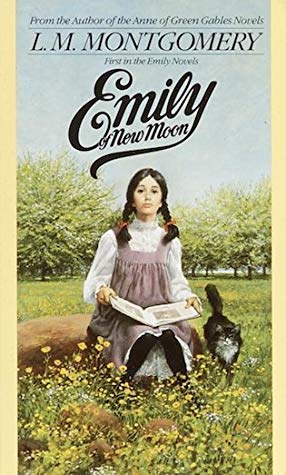
One of my reading goals for 2021 was to read the Emily trilogy by L. M. Montgomery. Check! I just finished up the 3rd book, and I’m still under Emily’s spell. Here’s my reading wrap-up for this lovely trilogy:
Title:Emily of New Moon Published: 1923 Length: 339 pages Rating:
⭐⭐⭐⭐⭐
Rating: 4.5 out of 5.
Emily Starr never knew what it was to be lonely–until her beloved father died. Now Emily’s an orphan, and her mother’s snobbish relatives are taking her to live with them at New Moon Farm. She’s sure she won’t be happy. Emily deals with stiff, stern Aunt Elizabeth and her malicious classmates by holding her head high and using her quick wit. Things begin to change when she makes friends, with Teddy, who does marvelous drawings; with Perry, who’s sailed all over the world with his father yet has never been to school; and above all, with Ilse, a tomboy with a blazing temper. Amazingly, Emily finds New Moon beautiful and fascinating. With new friends and adventures, Emily might someday think of herself as Emily of New Moon.
Emily of New Moon introduces us to the unforgettable Emily Byrd Starr. Orphaned at age 10, Emily is taken in by her late mother’s side of the family, who disowned her mother years earlier when she eloped with Emily’s father. Suddenly uprooted, Emily settles into life at the beautiful New Moon with her spinster aunts, Elizabeth and Laura, and her impish cousin Jimmy. Despite her heartbreak over losing her father, Emily is soon enchanted by the loveliness of the farm and its surroundings, and settles in — with challenges — to her new home.
Emily is feisty and sensitive, speaks her mind, and doesn’t back down. She’s also highly imaginative and inquisitive, and — like Anne in Anne of Green Gables — delights in imbuing the natural world around her with fanciful names and personalities. For the first time in her life, Emily also has friends and classmates, and gets into wonderful adventures with Ilse, Teddy, and Perry. Most of all, Emily lets her secret ambition to become a “poetess” flourish, and uses every scrap of paper she can find to record her poems and stories.
This is a truly lovely book, very similar to Anne of Green Gables in spirit and tone. The author once again gives us a young girl with a sharp, expressive mind and a will of her own as a main character. The book is full of sweetness and whimsy, but we also feel Emily’s sorrow and pain as she navigates a world that isn’t always kind to her. There are memorable characters and escapades, and as in the author’s other works. Prince Edward Island is brought to life through Emily’s eyes.
Emily Starr was born with the desire to write. As an orphan living on New Moon Farm, writing helped her face the difficult, lonely times. But now all her friends are going away to high school in nearby Shrewsbury, and her old-fashioned, tyrannical aunt Elizabeth will only let her go if she promises to stop writing! All the same, this is the first step in Emily’s climb to success. Once in town, Emily’s activities set the Shrewsbury gossips buzzing. But Emily and her friends are confident — Ilse’s a born actress, Teddy’s set to be a great artist, and roguish Perry has the makings of a brilliant lawyer. When Emily has her poems published and writes for the town newspaper, success seems to be on its way — and with it the first whispers of romance. Then Emily is offered a fabulous opportunity, and she must decide if she wants to change her life forever.
The second book in the Emily trilogy covers Emily’s teen years as she attends high school in the nearby town of Shrewsbury. While Emily is desperate to further her education and hone her writing craft, she dreads being forced to board with her judgmental, restrictive Aunt Ruth. Plus, as part of being allowed to attend high school, Emily has had to promise not to write fiction during the three years of her schooling, which is a really tough pill for her to swallow. Still, she has her diaries and her poetry, and starts writing newspaper articles as well.
As the years go by, Emily and her friends grow and have more adventures, and Emily has some initial success as a writer when magazines begin publishing her submissions, sometimes even for money. Meanwhile, she has her first suitors, but her heart really belongs to the boy she’s grown up with.
I really enjoyed book #2, although one of the romantic situations involves a much older cousin-by-marriage and is kind of icky (although Emily, bless her heart, doesn’t understand at all that there’s a romantic interest there.) While he is never inappropriate, his interest is obvious, and seen through today’s lens, it feels way too much like grooming. So icky. (Granted, the book was written 100 years ago, so perspectives on this sort of thing would certainly have been different).
Even as she gets older, Emily is still a dreamer, and it’s lovely to see her view of the world around her. Like Anne (of Green Gables), she sees magic and beauty in the world, and is driven by the need to describe what she experiences through her writing.
By the end of Emily Climbs, Emily has finished school and set her course for the future. It’s charming to see the choices she makes and the life she envisions for herself.
Emily Starr and Teddy Kent have been friends since childhood, and as Teddy is about to leave to further his education as an artist, Emily believes that their friendship is blossoming into something more. On his last night at home, they vow to think of each other when they see the star Vega of the Lyre.
As Emily grows as a writer and learns to deal with the loneliness of having her closest friends gone, life at New Moon changes. Mr. Carpenter, Emily’s most truthful critic and favorite teacher dies (warning Emily, even as he dies to “Beware — of — italics.”). She becomes closer to Dean Priest, even as she fears he wants love when she only has friendship to give. Worst of all, Emily and Teddy become distant as he focuses on building his career and she hides her feelings behind pride.
Oh, this book grabbed me and put my heart through the wringer! So many emotions! Emily grows into her young womanhood in Emily’s Quest, and it’s both sad and inspiring in so many ways.
Although she’s been offered an opportunity to pursue a career in New York, Emily knows in her heart that she belongs at New Moon, and that this is where her joy and creative inspiration live. She continues to live with her aunts and cousin in the family home and enjoys the natural beauty of her world. Her writing gets accepted by more and more magazines, and she actually earns enough to pay back the stuffy aunts and uncles who paid for her earlier education.
But Emily is lonely without her closest friends. She has many suitors, none of whom really stir her feelings enough to accept their proposals. Her older cousin Dean provides companionship, and it’s clear that he loves her. Emily is very fond of him and loves his friendship, but I started to hate him. He’s so disparaging of Emily’s work, to the point that he pretty much eviscerates her:
“Her pretty cobwebs—” ah, there it was. That was all Emily heard. She did not even realize that he was telling her he thought her a beautiful woman.
“Do you think what I write is nothing but cobwebs, Dean?” she asked chokingly.
Dean looked surprised, doing it very well. “Star, what else is it? What do you think it is yourself? I’m glad you can amuse yourself by writing. It’s a splendid thing to have a little hobby of the kind. And if you can pick up a few shekels by it—well, that’s all very well too in this kind of a world. But I’d hate to have you dream of being a Brontë or an Austen—and wake to find you’d wasted your youth on a dream.”
“I don’t fancy myself a Brontë or an Austen,” said Emily. “But you didn’t talk like that long ago, Dean. You used to think then I could do something some day.”
“We don’t bruise the pretty visions of a child,” said Dean. “But it’s foolish to carry childish dreams over into maturity. Better face facts. You write charming things of their kind, Emily. Be content with that and don’t waste your best years yearning for the unattainable or striving to reach some height far beyond your grasp.”
Ugh. If Dean Priest was standing in front of me, I think I’d have to punch him in the face. Because of a series of events that start with Dean telling Emily that her work is basically trash, Emily goes through one of the worst periods of her life, and eventually accepts Dean’s proposal of marriage, thinking she can have a happy life with him. Fortunately, she realizes what we readers have known all along — her heart has always belonged to Teddy Kent, the boy she’s loved since childhood.
Sadly, the course of true love never did run smooth, and there’s more heartbreak ahead. I can’t tell you how completely wrung out my feelings were, reading Emily’s ups and downs, and at times, hurting so much for her that I wanted to go hide with my head under a pillow.
But fear not, there’s a happy ending! I wish the ending had been given a little more time to breathe, but it was joyful nonetheless, and that’s really all I wanted — for Emily to find the happiness she deserves.
Wrapping it all up…
The fact that I was so caught up in Emily’s life shows what a magnificently written set of books this is! There’s something incredibly beautiful about following Emily’s story from girlhood through her teens and into womanhood, seeing all the different stages of her life, and experiencing how her childhood hopes and dreams evolve over time, making her the woman she finally becomes.
It’s a lovely journey, and Emily is a fabulous character. She has the starry-eyed joy that we see in Anne Shirley (Anne of Green Gables), but her story takes its own path. While initially feeling like a similar book about an orphaned girl finding a new family, Emily becomes someone unique and worth knowing in her own right. I love her imagination and joy as a child, and how her love of the world around her infuses her writing and her ability to love others.
The books are filled with memorable quirky characters, and the setting on Prince Edward Island is so lovingly drawn that I could visualize everything Emily sees. (PEI is going to be a travel goal for me!)
I’m so thrilled that I read the Emily trilogy, and I know in my heart that these are books I’ll come back to again and again.
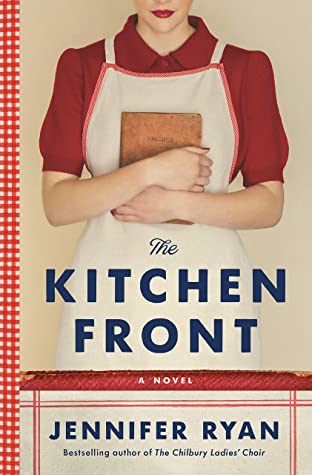
Title: The Kitchen Front Author: Jennifer Ryan Publisher: Ballantine Books Publication date: February 23, 2021 Length: 416 pages Genre: Historical fiction Source: Review copy courtesy of the publisher via NetGalley Rating:
⭐⭐⭐⭐
Rating: 4 out of 5.
In a new World War II-set story from the bestselling author of The Chilbury Ladies’ Choir, four women compete for a spot hosting a wartime cookery program called The Kitchen Front – based on the actual BBC program of the same name – as well as a chance to better their lives.
Two years into WW2, Britain is feeling her losses; the Nazis have won battles, the Blitz has destroyed cities, and U-boats have cut off the supply of food. In an effort to help housewives with food rationing, a BBC radio program called The Kitchen Front is putting on a cooking contest–and the grand prize is a job as the program’s first-ever female co-host. For four very different women, winning the contest presents a crucial chance to change their lives.
For a young widow, it’s a chance to pay off her husband’s debts and keep a roof over her children’s heads. For a kitchen maid, it’s a chance to leave servitude and find freedom. For the lady of the manor, it’s a chance to escape her wealthy husband’s increasingly hostile behavior. And for a trained chef, it’s a chance to challenge the men at the top of her profession.
These four women are giving the competition their all–even if that sometimes means bending the rules. But with so much at stake, will the contest that aims to bring the community together serve only to break it apart?
The Kitchen Front is a fascinating look at World War II’s impact on the women and children back on the home front, who face not battlefield danger but the perils of bombing raids and food shortages.
Set in 1942, the story centers on a competition hosted by the (historically real) BBC radio program The Kitchen Front. The purpose of the program is to promote the creative use of wartime rations, aimed at British housewives struggling to feed their families when so many basics just aren’t to be had. The competition is open to professional cooks, and the prize is a co-hosting role on the radio program.
In the small town of Fenley Village, located not far from London, life is bleak for many of the town’s residents. While rare food items can still be had through the black market, most families get by on their rations and what they can grow in their own gardens. Everything can and must be repurposed, and the creativity required to actually make edible and nutritious food is remarkable.
The four main characters of the story are all very different, and each has her own reason for wanting — or needing — to win the competition. For Audrey, a grieving war widow deeply in debt trying to keep her three sons housed and fed, it’s a chance to finally get back on her feet financially. For her sister Gwendolyn, it’s a way to boost her bullying, wealthy husband’s prestige and keep his anger at bay. For Nell, a kitchen maid who’s finally learning to stand on her own two feet, it’s a dream of a life outside of service. And for Zelda, a Cordon Bleu chef facing sexism in the world of haute cuisine, it’s a means of staking a claim on the professional respect and opportunities that continually elude her.
As the four compete, they form bonds as well, and as secrets are revealed, they come together to form a new family and envision a future that benefits them all.
The book is divided into three sections, corresponding with the three rounds of the competition — starters, main courses, and desserts. In each, we learn more about the four women, and also see the different processes each uses as she invents and creates her dish for the competition. The book includes recipes for all the meals discussed, and it’s truly amazing to learn about the substitutions needed to get by on wartime rations. Who knew that the British government promoted whale meat as an alternative to beef?
I found the aspects of the book related to how the women on the home front used their wits and resources to feed their families really fascinating, and I enjoyed the picture of village life during war, the bonds of the four main characters, and the sense of sisterhood that ultimately makes all of them stronger.
Somehow, though, the overarching plotlines felt a little predictable and bland to me. I liked each of the characters well enough, but they often felt more like types than fully-fleshed out people. Maybe because the focus was split between the four, it didn’t give any one of them the opportunity to fully blossom as a main character.
Still, I enjoyed this book very much. As with her previous novels, especially the wonderful The Chilbury Ladies’ Choir, author Jennifer Ryan uses her meticulous research to bring out the feel of the era, and in this case, to bring out the flavors of family life in wartime England. The story is heartwarming, and gave me a sense of peering behind the headlines of war to see the impact on the people left behind to carry on. A recommended read!
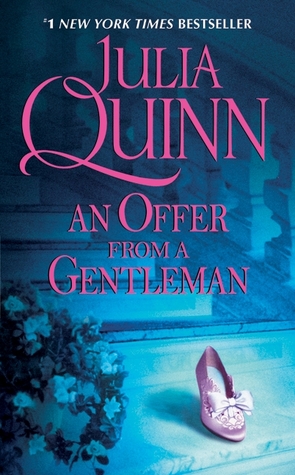
Title: An Offer From A Gentleman (Bridgertons, #3) Author: Julia Quinn Publisher: Avon Publication date: 2001 Length: 390 pages Genre: Historical romance Source: Purchased Rating:
⭐⭐⭐⭐
Rating: 3.5 out of 5.
Will she accept his offer before the clock strikes midnight?
Sophie Beckett never dreamed she’d be able to sneak into Lady Bridgerton’s famed masquerade ball—or that “Prince Charming” would be waiting there for her! Though the daughter of an earl, Sophie has been relegated to the role of servant by her disdainful stepmother. But now, spinning in the strong arms of the debonair and devastatingly handsome Benedict Bridgerton, she feels like royalty. Alas, she knows all enchantments must end when the clock strikes midnight.
Who was that extraordinary woman? Ever since that magical night, a radiant vision in silver has blinded Benedict to the attractions of any other—except, perhaps this alluring and oddly familiar beauty dressed in housemaid’s garb whom he feels compelled to rescue from a most disagreeable situation. He has sworn to find and wed his mystery miss, but this breathtaking maid makes him weak with wanting her. Yet, if he offers his heart, will Benedict sacrifice his only chance for a fairy tale love?
In a world filled with serious books, it’s nice to have fluffy fun like the Bridgertons books to turn to for a bit of escapism every now and then.
In the 3rd book in the series, it’s Benedict Bridgerton’s turn to find love. The Bridgerton family is famous for its eight astonishingly attractive children, conveniently named in alphabetical order. And while the book series started out of order by focusing on Daphne, oldest daughter yet fourth child, the rest of the series remains true to the alphabet. Which brings us to Benedict.
Benedict is the second son — no title, but from an esteemed family and with a very agreeable fortune nonetheless, so now that his elder brother the Viscount is happily married, Benedict is considered prime pickings for the society season.
Meanwhile, we meet poor Sophie Beckett, the unacknowledged illegitimate daughter of an earl. Taken in and raised by her natural father, she’s introduced to the world as his ward, but when the earl remarries, his new wife is shrewd enough to know the truth. Once Sophie’s father dies when she is fourteen, her stepmother Araminta is persuaded to provide a home for Sophie thanks to a strings-attached bequest, but rather than treating her with kindness, Araminta forces Sophie into the role of an overworked servant. Araminta’s daughters aren’t any better, although the younger of the two shows hints of friendliness, despite being too frightened of her mother to actually be nice to Sophie or defend her in any way.
Sophie’s luck finally changes when she gets the opportunity to attend the most anticipated party of the season, a masquerade chez Bridgerton. With help of the family servants, Sophie is dressed up in borrowed finery, dons a mask, and swoops into the ball, immediately catching Benedict’s eye. The two feel an instant spark and spend glorious hours together, only to be separated when Sophie must rush off at midnight, her only chance of making sure that she’ll be home and back in her servant’s clothing before Araminta and the girls arrive home.
Yes, it’s a Cinderella story! I had no idea when I picked up the book, but it became obvious right from the start. And while I might have moaned a bit, it actually became a really fun theme for the book. Author Julia Quinn is skillful enough to play with the underlying fairy tale and keep it fresh while weaving its traditional patterns into the story.
In fact, once we move past the ball and the couple’s inevitable separation, the story becomes even more interesting. The Cinderella-like aspects become quieter background elements, and instead we get to focus on Sophie’s struggles, as she’s treated horribly by Araminta and then thrown out, penniless, to fend for herself. Although she’s the daughter of a noble, she’s forced to seek work as a servant in order to survive, and she shows great strength and courage in dealing with her unfair lot in life.
Naturally, Sophie and Benedict do reconnect, as he rescues her from a threatened rape (what the synopsis above refers to, maddeningly, as “a most disagreeable situation” — argh!). There’s a lot of will-they, won’t-they shenanigans, flirtation, chemistry, desire… but also, an interesting dilemma for both characters due to their very different social stations. Sophie is a housemaid, so the most she could realistically hope for from Benedict would be to be established as his mistress. It’s expected that Benedict marry and produce children, and someone of his status could never marry a servant.
Despite her longing for Benedict, Sophie can’t allow herself to even consider becoming his mistress. She knows the pain of being an unwanted bastard child, and swears that she’ll never have a child under those circumstances. So is there any hope for these two crazy lovebirds? Well, of course there is! This is a romance, after all! Naturally, they’re going to find a way to make it all work out… and have some steamy, decidedly not-society-approved sexytimes too.
An Offer From A Gentleman is a fast, fun read, but doesn’t skimp on sentiment along the way. Beyond the core love story, we get to spend more time with Bridgerton family members, especially the big brood’s mother, Violet, who is wonderful in so many ways. She’s fabulous in how she treats Sophie and stands up for injustice, and I just loved her to pieces in this book.
Sure, I have quibbles… like wouldn’t it have been nice for love to be enough to get Benedict and Sophie to choose each other, without needing the big reveal about being an earl’s daughter to help smooth the way? Granted, not everyone is willing to accept a Bridgerton marrying an illegitimate daughter, but for most, Sophie’s blood connection to nobility raises her high enough to be tolerable — whereas if she were “just” a servant, they could never be admitted into society as a couple.
A few random thoughts on things that stuck out to me while reading this book:
It’s funny seeing the previous books’ main characters (Daphne and Anthony) show up as background characters in this book. They’re married, they’re happy, they have oodles of children — and there’s just nothing else to say about them. So, according to these romances, you stop being interesting once you get married?
The younger Bridgertons are growing up! Gregory and Hyacinth aren’t little children any more, but it will still be weird to see them as romantic leads in books 7 and 8.
It’s really hard not to be mad at how badly poor Sophie was treated all her life, especially by her father. He made sure she had a home once her mother died, but never showed her any affection.
Lady Whistledown continues to be funny and sharp. Here, her updates include news on the “maid wars’, in which Araminta and Lady Featherington steal each others’ servants back and forth.
By including Sophie, we get more of a view into the life of a servant at the time. I was glad to break away from only focusing on the upper class, with servants only appearing when needed to serve.
Is it realistic that Violet and her daughters would invite Sophie to join them for tea every day? Why Sophie and not other servants? Sure, Violet is discerning enough to realize that there’s something going on between Benedict and Sophie, but would a society mama really tacitly encourage this connection?
As always, as a visitor to the world of romance reading, I got all sorts of amusement from the romance-y writing:
There was a fire burning within her that had been simmering quietly for years. The sight of him had ignited it anew, and his touch was like kerosene, sending her into a conflagration.
Spoiler! Sophie ends up arrested (until the Bridgertons ride to the rescue). And in one shocking moment:
Sophie just managed to snap her mouth closed, but even so, she had to clutch tightly on to the bars of her cell, because her legs had turned to instant water.
What’s “instant water”? Is that like instant coffee?
When Sophie just happens to stumble across a pond where Benedict is skinny-dipping:
He heard a gasp, followed by a huge flurry of activity.
“Sophie Beckett,” he yelled, “if you run from me right now, I swear I will follow you, and I will not take the time to don my clothing.”
The noises coming form the shore slowed.
“I will catch up with you,” he continued, “because I’m stronger and faster. And I might very well feel compelled to tackle you to the ground, just to be certain you do not escape.”
The sounds of her movement ceased.
All in all, An Offer From A Gentleman is a light, engaging read, and just so much fun. And even though poor Sophie suffers, we know it’s all going to work out perfectly for her — because these books always have happy endings!
Will I continue with the Bridgertons series? Absolutely! After all, the score is now three Bridgerton siblings happily married — five more to go!
Title: Calculated Risks (InCryptid series, book #10) Author: Seanan McGuire Publisher: DAW Publication date: February 23, 2021 Length: 448 pages Genre: Urban fantasy Source: Review copy courtesy of the publisher via NetGalley Rating:
⭐⭐⭐⭐
Rating: 4 out of 5.
The tenth book in the fast-paced InCryptid urban fantasy series returns to the mishaps of the Price family, eccentric cryptozoologists who safeguard the world of magical creatures living in secret among humans.
Just when Sarah Zellaby, adopted Price cousin and telepathic ambush predator, thought that things couldn’t get worse, she’s had to go and prove herself wrong. After being kidnapped and manipulated by her birth family, she has undergone a transformation called an instar, reaching back to her Apocritic origins to metamorphize. While externally the same, she is internally much more powerful, and much more difficult to control.
Even by herself. After years of denial, the fact that she will always be a cuckoo has become impossible to deny.
Now stranded in another dimension with a handful of allies who seem to have no idea who she is–including her cousin Annie and her maybe-boyfriend Artie, both of whom have forgotten their relationship–and a bunch of cuckoos with good reason to want her dead, Sarah must figure out not only how to contend with her situation, but with the new realities of her future. What is she now? Who is she now? Is that person someone she can live with?
And when all is said and done, will she be able to get the people she loves, whether or not they’ve forgotten her, safely home?
It’s that wonderful time of the year… when we get another InCryptid book! Calculated Risks is #10 in this ongoing urban fantasy series, and it does not disappoint in the slightest. Really, you could look at Calculated Risks as #9, part II, since the action picks up right where the previous book, Imaginary Numbers, left off.
Books 9 & 10 focus on Sarah Zellaby, a non-human member of the extended Price-Healy family, who are renowned cryptozoologists and deadly enemies of the all-powerful Covenant. There’s a lot to know about the Price family, which is why anyone new to the InCryptid series absolutely must start at the beginning. There’s just no way for these books and the complex relationships between the characters to make sense without the full picture and backstory.
Here in #10, our main character Sarah finds herself in a strange alternate world, along with her cousins Annie and Artie, her kind-of cousin James, and a cuckoo, Mark, who is of the same species as Sarah. Got that? Sarah has inadvertently transported all of them, as well as the college campus they’d been standing on, to another dimension, as a last ditch effort to stop the world from being destroyed as the side effect of Sarah undergoing a mathematically based metamorphosis. It’s complicated.
Now, in this weird world, Sarah’s allies don’t know who she is and treat her with suspicion. The sky is orange. There are huge flying millipedes. And indignity of all indignities, Sarah doesn’t even have a bra! Still, it’s up to Sarah to convince her friends and relatives that they know her, that they don’t want to hurt her, and that she is likely the only person who can get them home again.
The adventure rips along at a super-charged pace, but we also get lots of emotional moments too as Sarah faces distrust and rejection from people she’s loved all her life. The challenge of getting home again relies on Sarah’s ability to carry out a dangerous equation that can rip through worlds, and to do it without killing herself and everyone around her.
As always, Seanan McGuire’s writing is funny, quirky, clever, and highly quotable:
“I have so many knives,” said Annie. “I am the Costco of having knives. You really want to provoke me right now, cuckoo-boy?”
“I am not a good place to store your knives,” he said. “I don’t know how many times I need to tell you this, but sticking knives in living people just because they say something you don’t like is the reason no one likes you or the rest of your fucked-up family.”
“I don’t want to be a monster. I refuse to be a monster. I am a person, and people get to make our own choices about whether or not we bare our claws.”
“Mean girl from the murder family has a point,” said Mark. “Also, now that I have spoken those words aloud, please kill me.”
Do not be afraid.
I hate it when people tell me not to be afraid. They never do that when something awesome is about to happen. No one says “don’t be afraid” and then hands you an ice cream cone, or a kitten, or tickets to Comic-Con.
Calculated Risks is just as much fun as the preceding books in the InCryptid series. I love that the main characters in the series shift between different family members as the books go along, and I can’t wait to see who the star of #11 will be (although — sigh — that’ll be a long year from now). Meanwhile, between familiar Price characters, Aeslin mice (a sapient species of talking mice who worship the Prices as deities), and new friends (like Greg, the humongous leaping spider who becomes Sarah’s protector), there’s plenty here to love and enjoy.
Calculated Risks includes a bonus novella, Singing the Comic-Con Blues, which is a light-weight, upbeat adventure set nine years before the events of the main novel. It’s sweet and entertaining, and is a nice little treat for dessert after some of the more dire events of Calculated Risks.
The InCryptid series continues to be fresh, exciting, and full of surprises. Seriously, if you’ve never read these books, start at the beginning (with Discount Armageddon) — I’ll bet you’ll be hooked before you even finish book #1. As for me, I’m tempted to go back to the beginning, just to have the pleasure of experiencing the bonkers adventures of the Prices all over again.






 Bookshelf Fantasies