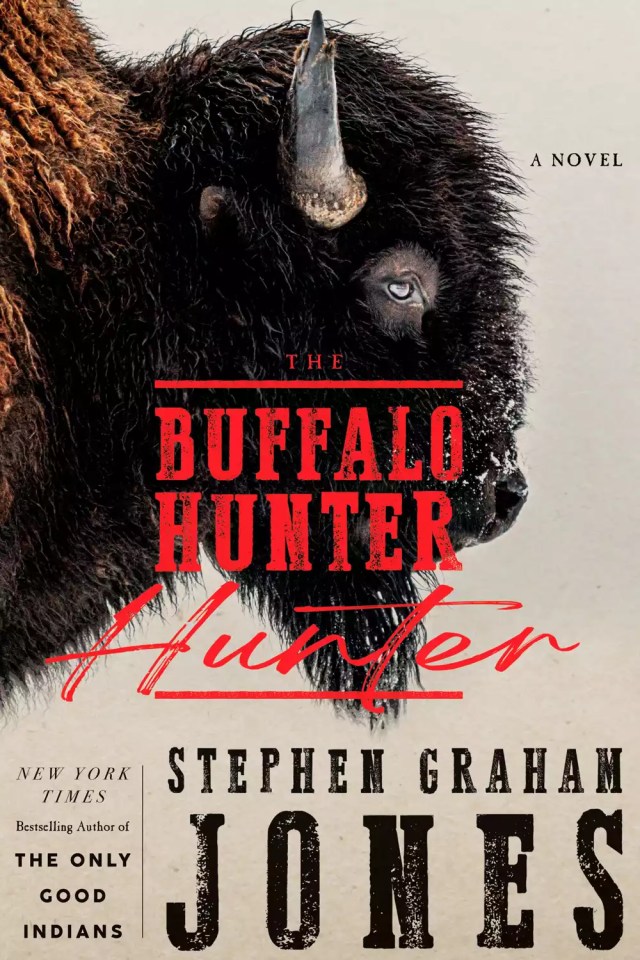
Title: The Buffalo Hunter Hunter Author: Stephen Graham Jones Publisher: Saga Press Publication date: March 18, 2025 Length: 448 pages Genre: Horror / historical fiction Source: Library Rating:
⭐⭐⭐
Rating: 2.5 out of 5.
From the New York Times bestselling author of The Only Good Indians comes a tale of the American West, writ in blood.
This chilling historical novel is set in the nascent days of the state of Montana, following a Blackfeet Indian named Good Stab as he haunts the fields of the Blackfeet Nation looking for justice.
It begins when a diary written in 1912 by a Lutheran pastor is discovered within a wall in 2012. What is unveiled is a slow massacre, a nearly forgotten chain of events that goes back to 217 Blackfeet dead in the snow, told in the transcribed interviews with Good Stab, who shares the narrative of his peculiar and unnaturally long life over a series of confessional visits.
This is an American Indian revenge story, captured in the vivid voices of the time, by one of the new masters of literary horror, Stephen Graham Jones.
Unpopular opinion time: This story of a vampire seeking revenge for the massacre of his people, the Blackfeet of Montana, should have been right up my alley… and yet, I had to force myself to stick with it and slog my way through to the end.
This book has an endless number of rave reviews, including from media sources and bloggers I tend to align with. And yet, it just didn’t work for me.
There’s a great premise: A newly discovered diary left behind by a Lutheran pastor in 1912 reveals a shocking set of confessions from a Blackfeet named Good Stab. Good Stab seeks out Arthur Beaucarne to share the story of his unnaturally long life, his transformation into a vampire, and the punishments he’s meted out to those he deems responsible for murdering his people.
And yet, I found myself disengaged and frustrated throughout much of the book. There are some compelling and horrifying set pieces, some very moving interludes as Good Stab recounts what’s happened to the Blackfeet and to the buffalos… and yet, the story he tells is full of names, places, and incidents that loop and cross, sometimes dropping important pieces of information into long bits of a tale so that they get more or less buried. I found it confusing to track the who and how and why of many of the developments, and ultimately ended up caring far less than I should have, with what should have been big revelations falling flat.
I’m definitely in the minority on this one. By the end, I just wanted it all to be over.
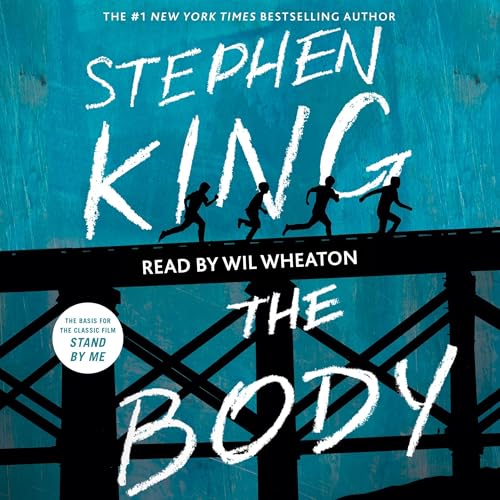
Title: The Body Author: Stephen King Narrator: Wil Wheaton Publisher: William Morrow Publication date: Originally published 1982; new audiobook edition released 2026 Print length: 192 pages Audio length: 6 hours 38 minutes Genre: Coming of age novella Source: Library Rating:
⭐⭐⭐⭐⭐
Rating: 5 out of 5.
Decades after starring in the film adaptation, Wil Wheaton narrates an all-new recording of the story that shaped a generation!
#1 New York Times bestselling author Stephen King’s timeless novella The Body, originally published in his 1982 collection Different Seasons and adapted into the 1986 film classic Stand by Me, now available as a stand-alone edition.
Four rambunctious young boys venture into the Maine woods in search of a boy from a nearby town who has disappeared. Gordie Lachance and his three friends set out on a quest to find the missing boy’s body along the railroad tracks. The Body is set outside King’s iconic fictional town of Castle Rock, which is the setting of many of King’s most popular books including It and The Stand, and Castle Rock, a 10-episode Hulu original series, based on King’s short stories. King’s The Body is an iconic coming of age story that explores the loneliness and isolation of young adulthood.
And from an earlier edition of the book:
It’s 1960 in the fictional town of Castle Rock, Maine. Ray Brower, a boy from a nearby town, has disappeared, and twelve-year-old Gordie Lachance and his three friends set out on a quest to find his body along the railroad tracks. During the course of their journey, Gordie, Chris Chambers, Teddy Duchamp, and Vern Tessio come to terms with death and the harsh truths of growing up in a small factory town that doesn’t offer much in the way of a future.
A timeless exploration of the loneliness and isolation of young adulthood, Stephen King’s The Body is an iconic, unforgettable, coming-of-age story.
Originally published in 1982 as part of Stephen King’s Different Seasons collection, The Body is best known as the story adapted into the outstanding film Stand By Me. I consider myself a fairly well-read Stephen King fan, although I’m nowhere close to having read all (or even more than half) of his works. And yet, before this week, I’d actually never read The Body… and now that I have, I’m astounded that I’ve been missing out on it all these years.
I don’t think I’m exaggerating when I say that The Body may just be one of the most perfect examples of a coming-of-age tale. The story is clearly autobiographical in some ways, in terms of the Maine vibe of the early 1960s, the companionship among boys, the rituals and cultural signifiers, the sense of a future looming just around the corner (not to mention the more obvious fact that the narrator is a writer who writes horror stories, lives in Maine with his wife and children, etc. etc. etc.)
To go back to basics, the core story is as follows: In Castle Rock, Maine one summer day, a group of 12-year-old boys set out on an adventure. The boys are a motley crew, from a variety of unsavory or unlucky families, and even at age 12, no one really expects much of any of them, and the town itself seems like the definition of a dead end. On this summer day, they overhear some of the town “JDs” (aka, the dangerous older brothers and their assorted hoodlum friends) that they’ve found a dead body — a boy who’s been missing for a few days and is believed to be lost somewhere in the woods.
Gordie, Chris, Vern, and Teddy are bored, thirsty for excitement, and eager to claim the title of town heroes. School is about to start, and they have nothing else going on, so they decide to beat the older boys to the body, report that they’ve found it, and basically claim a hefty dose of glory for themselves. The trek to the body is more challenging than they expected, involving miles and miles of train tracks, spots of true danger, and imagined horrors during a sleepless night in the woods.
The brilliance of The Body is in the details. The writing is beautifully evocative of the era, the dynamic of being a 12-year-old boy, the mix of hopefulness and hopelessness that pervades their lives, and the absolute devotion that childhood best friends share for brief moments in time. I felt immersed in Gordie’s worldview; the storytelling voice is powerful and immediate, and we feel what Gordie is feeling throughout.
I never had any friends later on like the ones I had when I was twelve. Jesus, did you?
The Body is also funny and profane and silly — there are some gross-out moments, and the kind of insults that pass for humor among 12-year-old boys. More seriousness is always beneath the surface, or even out in the open. There’s danger from the older boys, but also the looming danger of the future hurtling toward them. What chance do any of these boys have for getting out of their small town? What kind of lives lie ahead? Gordie narrates this tale from a future vantage point, at once enjoying the sweetness of nostalgia while also letting us know that in some ways, these summer days were the best days of their lives, and that they were followed by sorrow and loss and a variety of big and small disappointments.
Wil Wheaton is, of course, a stellar narrator. Having been one of the child stars of Stand By Me (playing Gordie), he’s the perfect choice for this new audiobook edition. His storytelling voice is humorous and inflected with emotion and amusement, and he hits the more tragic or contemplative notes just right.
Listening to The Body reminds me (as if I need reminding) just what an amazing storyteller Stephen King is. On top of telling a terrific tale, he also lets us in on the joys of being a writer and a storyteller, and without hitting us over the head, uses Gordie’s voice to show the power of language and narrative.
The Body is a fantastic story, and the audiobook is truly a special experience. Even if you’ve read the story before, it’s well worth checking out the new audio version.
As for me, I’m now dying for a re-watch of Stand By Me!
Purchase links: Amazon – Audible – Bookshop.org Disclaimer: When you make a purchase through one of these affiliate links, I may earn a small commission, at no additional cost to you.
Title: The Impossible Fortune Series: The Thursday Murder Club, #5 Author: Richard Osman Publisher: Pamela Dorman Books Publication date: September 30, 2025 Length: 368 pages Genre: Mystery Source: Library Rating:
⭐⭐⭐⭐⭐
Rating: 4.5 out of 5.
Who’s got time to think about murder when there’s a wedding to plan?
It’s been a quiet year for the Thursday Murder Club. Joyce is busy with table plans and first dances. Elizabeth is grieving. Ron is dealing with family troubles, and Ibrahim is still providing therapy to his favorite criminal.
But when Elizabeth meets Nick, a wedding guest asking for her help, she finds the thrill of the chase is ignited once again. And when Nick disappears without a trace, his cagey business partner becomes the gang’s next stop. It seems the duo have something valuable—something worth killing for.
Joyce’s daughter, Joanna, jumps into the fray to help the gang as they seek answers: Has someone kidnapped Nick? And what’s this uncrackable code they keep hearing about? Plunged back into action once more, can the four friends solve the puzzle and a murder in time?
It’s always a treat to pick up another Thursday Murder Club book — and now that I’ve finished The Impossible Fortune, I’m all caught up!
This installment picks up a year after the events of book #4, The Last Devil to Die. The gang is as close as ever, but they’re getting a bit itchy to solve more murders. When Joyce’s daughter Joanna’s wedding rolls around, the best man reaches out to Elizabeth for help. He thinks someone is trying to kill him… and based on the bomb placed under his car, it looks like he’s right.
As the group dig into Nick’s worries, they learn about a top-secret storage facility, a potential fortune in Bitcoin, possibly double-crossing business partners and investors, and all sorts of shady secrets. Meanwhile, their personal lives have unanticipated complications, and while Joyce is beaming with joy ever time she gets to mention that she now has a son-in-law, she’s also more than ready to interrogate suspects over tea and baked goods.
The writing in The Impossible Fortune is as clever as always, full of sharp little twists and plenty of humor.
Connie would love to get married. Perhaps she should do something about that? What she really needs is a Tinder for criminals. Everyone could use their most recent mugshot.
The crime is twisty and well-constructed, with a handful of suspects and more than a few red herrings. Meanwhile, there are bad guys to be dealt with, as only our group of septuagenarians can. And even amongst the good guys, there’s room for words of wisdom and the occasional dose of snark.
“We’re not going to be dissuaded,” says Ron. “Don’t try.”
“Wouldn’t dream of it,” says Elizabeth. “You go right ahead. Perhaps they’ll put you all in the same prison? That would make it easier to visit.”
“No one’s going to prison,” says Jason.
Elizabeth nods, reassured. “I wonder if anyone who ever said that before actually did end up in prison? Surely not.”
The 5th book in a series is obviously not the place to start… but take my word for it, it’s absolutely worth the time to start at the beginning and then keep going. I’ve enjoyed every moment with this terrific cast of characters, and I’m only sorry that I’ve run out of Thursday Murder Club books to read. According to the author’s notes, there’s more to come, although I haven’t seen anything definite yet about an expected date for another book. Whenever it does come along, I’ll be waiting!
Purchase links: Amazon – Audible audiobook – Bookshop.org – Libro.fm Disclaimer: When you make a purchase through one of these affiliate links, I may earn a small commission, at no additional cost to you.
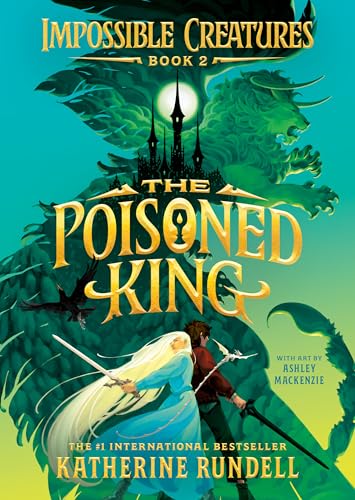
Title: The Poisoned King Series: Impossible Creatures, #2 Author: Katherine Rundell Narrator: Samuel West Publisher: Knopf Books for Young Readers Publication date: September 11, 2025 Print length: 304 pages Audio length: 7 hours 6 minutes Genre: Middle grade fantasy Source: Purchased Rating:
⭐⭐⭐⭐
Rating: 4 out of 5.
Return to the magic of the Archipelago in the dazzling sequel to the runaway, #1 New York Times bestseller Impossible Creatures, hailed as “an instant classic” (Katherine Applegate, Newbery Medal Winner for The One and Only Ivan)!
Christopher Forrester woke to find a dragon chewing on his face—and his heart leapt for joy! He’d been dreaming of going back to the Archipelago, the secret cluster of islands where all the creatures of myth still live, and here was his summons.
But there is a poison spreading in the Archipelago. Rooting it out will involve a daring rescue mission on the back of a sphinx, a stealthy entrance to a dragon’s lair, and a death-defying plan to save a prisoner held in the heart of a castle. At the center of this storm is Anya: a small girl with a flock of birds at her side, a new-hatched chick in her pocket, and a ravenous hunger for justice.
Katherine Rundell’s second thrilling installment in the Impossible Creatures series involves castles, dragons, and revenge—the things of which great stories are made. The splendors within are brought to life with more than fifty illustrations, including a map and a bestiary of magical creatures.
As The Poisoned King opens, a teen-aged boy named Christopher is woken by a dragon chewing on his nose. Which is less dangerous than it sounds — this is a Jaculus dragon, a creature the size of a sparrow, but with an outsized sense of its own importance. Jacques — the dragon — has come with a summons: Christopher is required to come with him to the Archipelago immediately. Someone is poisoning the great dragons, and there’s no time to lose.
What is the Archipelago? It’s a magical world comprising many large and small islands, inhabited by an astonishing variety of humans and creatures, hidden from our own world and accessible only through certain connecting locations known as waybetweens. Waybetweens are protected and kept safe by Guardians, of which Christopher’s grandfather is one — as Christopher learned the previous summer while visiting him at his remote home in Scotland, which led to Christopher’s grand, dramatic adventures in Impossible Creatures.
Christopher is a good, brave person who would never ignore a call for help, so he returns to the Archipelago to discover that things are even worse than he feared. Upon arrival, he’s met by a sphinx, who instructs him that he has a detour to make before proceeding to the dragons: A princess named Anya is in desperate need of rescue, and his mission and her plight are bound together.
And so we meet Anya Argen, granddaughter of the king of the island of Dousha. Anya’s father has raised her far from the castle, free to explore the forest they both love and spend time with the creatures who live there. When the King insists that she learn to behave like a proper princess, they’re forced to return to the castle, much to Anya’s dismay. As the story opens, the King is murdered, and her father — heir to the throne — is framed for the crime, leaving the way clear for his younger brother to act as Regent until Anya comes of age to rule herself. But her uncle Claude is not a patient man, and Anya finds her own life threatened.
As Christopher and Anya’s journeys connect, they join forces to unravel the mystery of what’s happened to the dragons while also laying plans to keep Anya alive and rescue her father, now imprisoned and sentenced to death for the murder of the King. Their quest takes them to new and old friends, and brings them into contact with even more fascinating magical creatures, while also giving them time to develop trust, friendship, and loyalty to one another.
The Poisoned King is a terrific second book in this captivating middle grade series. It has the surprises and delights of encountering magical worlds and beings, journeying through lands with rules and customs so different from our own, and seeing two young humans struggle to fix situations that have gone very badly.
Christopher is as lovely as ever, and Anya is a compelling addition to this fictional world. She’s complex and spiky; her desperate need to save her father is paired with a burning thirst for vengeance, and we see her grapple with the idea of revenge and what its impact might be on the type of person she is and wants to be.
The Poisoned King isn’t quite as glorious as Impossible Creatures — but that’s to be expected in the 2nd book of a series. Impossible Creatures introduced us to a new magical world and its wonders; The Poisoned King tells another story in that world, but lacks just a bit of the awe that comes with a world-building introduction. That said, The Poisoned King is very good, and is a worthy successor to such a stellar first book.
As with Impossible Creatures, I listened to the audiobook, narrated by actor Samuel West (currently starring in All Creatures Great and Small as Siegfried Farnon). He is an amazing voice actor, with delightful voices for Christopher, Anya, and all the various creatures, from tiny dragon Jacques to a deadly manticore and more. I did have a bit of trouble understanding one or two non-human characters due to the pitch of their voices, but that was only for a fraction of the audiobook experience, and didn’t detract from the overall enjoyment at all.
Repeating my reading note from Impossible Creatures: While I loved the audiobook experience, I strongly encourage anyone going that route to also follow along with a print edition. The book is filled with beautiful black and white illustrations by artist Ashley Mackenzie that add so much to the story. A bestiary at the end of the book gives more in-depth explanations of the various creatures in the book, from Batrachomyomachian Mouse to Winged Unicorn, accompanied by illustrations for each. The visual delights of this book should not be missed!
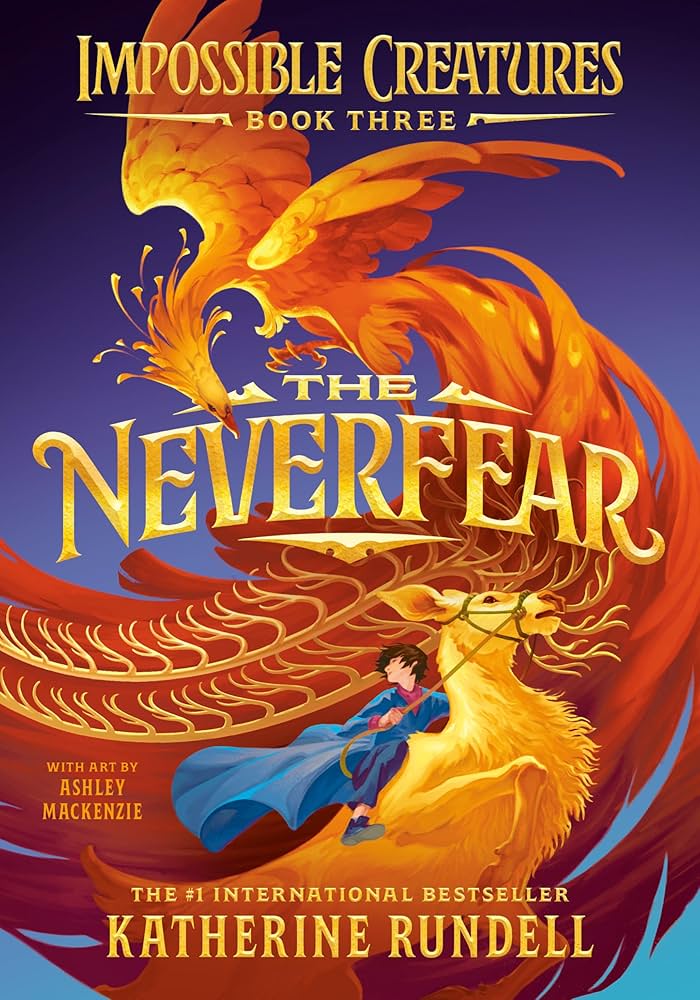
I loved returning to the world of Impossible Creatures, and highly recommend The Poisoned King (but do start with the first book!). A third book, The Neverfear, is scheduled for publication in fall 2026, and I absolutely plan to read it.
The Neverfear (Impossible Creatures, #3) Release date: September 1, 2026
Purchase links: Amazon – Audible audiobook – Bookshop.org – Libro.fm Disclaimer: When you make a purchase through one of these affiliate links, I may earn a small commission, at no additional cost to you.
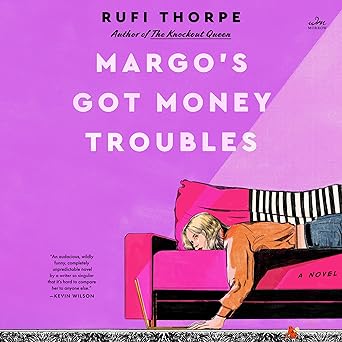
A bold, laugh-out-loud funny, and heartwarming story about one young woman’s attempt to navigate adulthood, new motherhood, and her meager bank account in our increasingly online world—from the PEN/Faulkner finalist and critically acclaimed author of The Knockout Queen.
As the child of a Hooters waitress and an ex-pro wrestler, Margo Millet’s always known she’d have to make it on her own. So she enrolls at her local junior college, even though she can’t imagine how she’ll ever make a living. She’s still figuring things out and never planned to have an affair with her English professor—and while the affair is brief, it isn’t brief enough to keep her from getting pregnant. Despite everyone’s advice, she decides to keep the baby, mostly out of naiveté and a yearning for something bigger.
Now, at twenty, Margo is alone with an infant, unemployed, and on the verge of eviction. She needs a cash infusion—fast. When her estranged father, Jinx, shows up on her doorstep and asks to move in with her, she agrees in exchange for help with childcare. Then Margo begins to form a plan: she’ll start an OnlyFans as an experiment, and soon finds herself adapting some of Jinx’s advice from the world of wrestling. Like how to craft a compelling character and make your audience fall in love with you. Before she knows it, she’s turned it into a runaway success. Could this be the answer to all of Margo’s problems, or does internet fame come with too high a price?
Blisteringly funny and filled with sharp insight, Margo’s Got Money Troubles is a tender tale starring an endearing young heroine who’s struggling to wrest money and power from a world that has little interest in giving it to her. It’s a playful and honest examination of the art of storytelling and controlling your own narrative, and an empowering portrait of coming into your own, both online and off.
When Margo’s Got Money Troubles came out in 2024, I was sure it wasn’t a book for me, despite the buzz I kept seeing. A book about someone starting an OnlyFans account? Nope, no thanks.
But… when the AppleTV adaptation (starring Elle Fanning, who narrates this audiobook) was released a few weeks ago, the reviews were unvaryingly positive — and once I started paying attention, I realized there might be much more to this story than I thought.
So, I borrowed the audiobook from the library, got started… and was immediately captivating by Margo’s narrative voice and the overall excellent storytelling.
Margo’s Got Money Troubles is about a 19-year-old trying to figure things out, without much in the way of parental or other support. A college freshman with a flare for writing, Margo supports herself through waitressing and lives with three roommates in order to make rent. When her (married) English professor takes an interest, Margo falls into a brief affair with him — and when she discovers that she’s pregnant, he tells her to get an abortion and then basically cuts her out of his life completely.
Despite not being at all prepared to become a mother, Margo can’t bring herself to end the pregnancy. Her mother Shyanne is no help whatsoever, being an entirely self-centered woman who sees Margo as an accessory rather than a person separate from herself. Margo’s father Jinx is a former pro wrestler and manager, hugely famous in the wrestling world, who’s always been a guest in Margo’s life, showing up here and there but clearly focused on his “real” family.
Once the baby is born, Margo’s money troubles really hit. Her roommates are furious about the noise a baby makes — they have midterms to study for! She’s fired after leaving a shift due to a baby emergency, and really can’t afford childcare without spending all the money meant for rent. When Jinx shows up needing a place to stay, it’s perfect timing, since two of the roommates have left in a huff. Jinx’s splitting the rent isn’t a long-term solution, but Margo appreciates his help and companionship. One night, watching a wrestling match together, he casually mentions that a particular woman wrestler has struck it rich via OnlyFans… and Margo has to know more.
Let me pause here to say that while the plot may sound somewhat tawdry, it’s anything but — and the key is Margo herself. Funny and smart, Margo tells her story with humor and with a narrative flare.
The sadness from the morning didn’t exactly go away; it dried on me and slowly crumbled, leaving me covered in little flakes, like if you eat a glazed donut in a black shirt.
She alternates between first person and third person throughout the book, which initially feels like an odd choice, but gives Margo room to tell both a straightforward account of her life and a story with a more fanciful feel.
As Margo describes her investigation of OnlyFans and how she might use it as a source of income, it’s clear that her creative spark, once nurtured through her writing classes, has found a new source of inspiration. Margo is curious about what makes someone stand out, and what makes subscribers keep coming back. It’s Jinx who’s able to supply some critical advice. Drawing from his wresting career, they discuss “faces” versus “heels” (hero characters and villain characters), how to draw attention, and what keeps a crowd interested and engaged. Margo isn’t interested in just posting nudes for a few dollars; she wants to know how to succeed online, and engages in some incredibly creative research and outreach to figure it all out.
Margo never would have guessed she loved money this much. In fact, in the movies and TV shows and books she’d read, you could tell if a character was the bad guy by how much he cared about money. And since she wanted to be good, she’d always been careful not to care too much about money. Now she wondered if all those Disney movies were merely propaganda to keep poor people content with their lot.
Meanwhile, her struggles with her mother, and the return of her baby’s father (with a potential custody battle) create tension in her personal life, especially when she starts to achieve the type of viral success she’d hoped for. And I must point out: Margo is a terrific mother. She may struggle financially, have some odd people in her life, and does something very unconventional as her job — but she loves little Bodhi and is a gem when it comes to caring for him and providing him with safety and showers of affection.
Elle Fanning’s narration is fabulous. Her voice for Margo is full of the character’s spirit; the humor and intelligence come through even when Margo is going through some of her worst challenges. I didn’t want to stop listening!
Margo’s Got Money Troubles is highly engaging and entertaining, and it also has a lot to say about reputation, finding one’s own way, and non-conventional families. Margo’s solution to her money troubles certainly isn’t for everyone — but it’s incredibly fun and even inspiring to see her figure out a way to be creative and support her baby through sheer willpower and a kooky sort of talent.
Highly recommended (and do check out the audiobook version if you can).
I’m hoping to start the TV adaptation this week — can’t wait to see how it compares!
Purchase links: Amazon – Audible – Bookshop.org – Libro.fm Disclaimer: When you make a purchase through one of these affiliate links, I may earn a small commission, at no additional cost to you.
Title: We Burned So Bright Author: TJ Klune Publisher: Tor Publication date: April 28, 2026 Length: 171 pages Genre: Contemporary/science fiction Source: Review copy courtesy of the publisher via NetGalley Rating:
⭐⭐⭐⭐⭐
Rating: 5 out of 5.
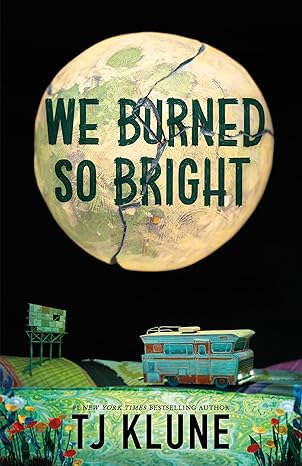
A heart-wrenching standalone novel by #1 New York Times bestselling author TJ Klune, We Burned So Bright follows an elder gay couple on an end-of-the-world road-trip.
The road stretched out before them. No other cars, just the headlights on the blacktop. Above, the cracked moon in a kaleidoscope sky….
Husbands Don and Rodney have lived a good long life. Together they’ve experienced the highest highs of love and family, and lows so low that they felt like the end of the world.
Now, the world is ending for real. A rogue black hole is coming for Earth and in a month everything and everyone they’ve ever known will be gone.
Suddenly, after 40 years together, Don and Rodney are out of time. They’re in a race against the clock to make it from Maine to Washington State to take care of some unfinished business before it’s all over.
On the road they meet those who refuse to believe death is coming and those who rush to meet it. But there are also people living their final days as best they know how—impromptu weddings, bright burning bonfires, shared meals, and new friends.
And as the black hole draws near, among ball lightning and under a cracked moon in a kaleidoscope sky, Don and Rodney will look back on their lives and ask if their best was good enough.
Is it enough to burn bright if nothing comes from the ashes?
Why do we find books about the end of the world so compelling? There’s something inherently heartbreaking about humanity as a whole knowing specifically how and when the world will end, and something fascinating in seeing how people choose to act in the limited time left.
TJ Klune’s new release, We Burned So Bright, has a sci-fi premise — a black hole will destroy Earth within a month — but the point and heart of the story is not science fiction, but what this premise shows about the very human hearts involved.
For perhaps the first time in human history, we’re all experiencing the same thing. It doesn’t matter what color you are. Your background. Your beliefs. Your heritage. Who you love. Everyone, right now, is all the same. There’s something beautiful about that.
I’ll quickly note that in looking back at all the other books I’ve read by TJ Klune, I see that We Burned So Bright is the first of these that doesn’t include a supernatural/magical/fantasy element. It doesn’t need it — this a deeply human story about two regular people facing unprecedented times together.
Don and Rodney, now in their 70s, have been together since they met as young men, through the ups and downs of discrimination, abuse, homophobia, the AIDS crisis, “don’t ask, don’t tell” — basically, they’ve weathered the storm of gay history through the power of their love and commitment. It hasn’t always been easy, and they’ve suffered tremendous hardships, but they’ve survived, and so has their love.
As the world faces its last month of life, Don and Rodney have a promise to keep before the end. While society shuts down around them, with rioting and craziness abounding, they pack up their old RV for one last road trip — destination: Washington State.
The reason for their trip will be revealed by the end. Meanwhile, their journey is one of discovery, connection, sorrow, and beauty. As they travel, they encounter others on the road, all dealing with the end in different ways — violence, despair, denial… but also, love and grabbing moments of joy in every remaining second of life.
“You ever think we’d end up in a field in Ohio with hippies?”
“I’m surprised it hadn’t happened to us before, to be quite honest.”
“Sass,” Rodney said fondly. “Always with the sass.”
Slowly, we learn more about Rodney and Don’s past and why their road leads where it does. Their story is heartbreaking, yet makes the reader love them even more. They’re big-hearted, devoted, flawed, kind people who’ve spent their lives loving one another and doing the best they could. Seeing the end of the world through these two lovely people brings it all home better than a focus on explosions and science and governmental scrambles for survival possibly could.
At heart, We Burned So Bright is a personal, emotional story — showing truly how each individual is an entire universe. Rodney and Don are layered, wonderful characters. They’re ordinary people in an extraordinary time, and even as the world collapses around them, they see beauty wherever they go.
A meditation on what it means to share a life, to grow old with the person you love, to experience joy even after facing tragedy, We Burned So Bright is a lovely, powerful story. Don’t miss it.
Purchase links: Amazon – Audible audiobook – Bookshop.org – Libro.fm Disclaimer: When you make a purchase through one of these affiliate links, I may earn a small commission, at no additional cost to you.
My name was Natalie Heller Mills, and I was perfect at being alive.
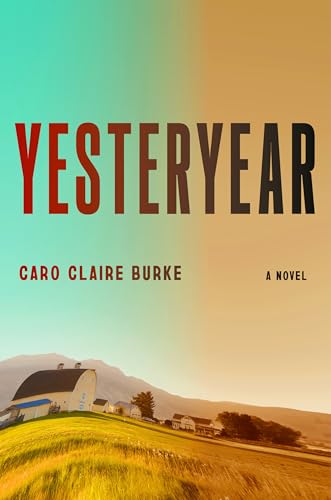
Natalie lives a traditional lifestyle. Her charming farmhouse is rustic, her husband a handsome cowboy, her six children each more delightful than the last. So what if there are nannies and producers behind the scenes, her kitchen hiding industrial-grade fridges and ovens, her husband the heir to a political dynasty? What Natalie’s followers—all 8 million of them—don’t know won’t hurt them. And The Angry Women? The privileged, Ivy League, coastal elite haters who call her an antifeminist iconoclast? They’re sick with jealousy. Because Natalie isn’t simply living the good life, she’s living the ideal—and just so happens to be building an empire from it.
Until one morning she wakes up in a life that isn’t hers. Her home, her husband, her children—they’re all familiar, but something’s off. Her kitchen is warmed by a sputtering fire rather than electricity, her children are dirty and strange, and her soft-handed husband is suddenly a competent farmer. Just yesterday Natalie was curating photos of homemade jam for her Instagram, and now she’s expected to haul firewood and handwash clothes until her fingers bleed. Has she become the unwitting star of a ruthless reality show? Could it really be time travel? Is she being tested by God? By Satan? When Natalie suffers a brutal injury in the woods, she realizes two things: This is not her beautiful life, and she must escape by any means possible.
A gripping, electrifying novel that is as darkly funny as it is frightening, Yesteryear is a gimlet-eyed look at tradition, fame, faith, and the grand performance of womanhood.
The premise sounds like a perfect reality TV show, in a way: Take a tradwife influencer and make her actually live on a homestead. No running water, no appliances, no fresh veggies except what she can grow herself. Make bread for the family every day… without an electric stove or perfect kitchen tools or curated ingredients. And do it all again, day in, day out. How many would last more than a day? A week?
In Yesteryear, this is exactly the set-up… sort of. Natalie is a perfect wife and perfect mother, raising her adorable brood of adorable children with good old-fashioned family values, with a devoted husband to protect them all and care for the farm while she prepares wholesome food and homeschools her little ones. She’s devout, she’s pretty, she’s hard-working… and she’s an influencer with millions of followers. So yes, she makes a small fortune from the products her fans buy, and she’s adored and hated probably in equal measure — but loved or hated, that’s attention, and that means money and fame.
Until it doesn’t. Because one day, Natalie wakes up cold, under a rough quilt rather than the high quality linens she’s used to, and the children in her kitchen aren’t really her children. Instead of a rustic-looking but actually highly polished home, her house is truly rustic, with gaps in the boards, heat from a wood-burning hearth, and no modern conveniences whatsoever. Is this a trick? Is she being secretly filmed? Has she teleported back in time? All Natalie knows is that something is very, very wrong, and she’s powerless to change it or to escape.
As Yesteryear moves forward, we follow several timelines. We seeing Natalie’s history from childhood to college, where she disdained her classmates and dropped out to marry a seemingly perfect man, to their complicated early years of marriage, and finally, to their life at Yesteryear Ranch and her growing internet fame. We also see Natalie’s panic when, pregnant with her sixth child and experiencing huge success, her carefully constructed world starts to crumble around her. And mixed in with all this, we see Natalie’s awakening in the ranch of 1855, experiencing displacement, confusion, and sheer panic as she tries to figure out what’s been done to her and how she can get back to her real life.
Lest you have the impression that Natalie is a hero or a good person, let me assure you: She is not. In every age and stage, Natalie — who professes to be a good, Christian, God-fearing woman — is full of spite, scorn, and even hatred for the people around her. She judges everyone and finds them lacking, and sees herself as the epitome of everything a woman should be.
And who was I? A flawless Christian woman. The manic pixie American dream girl of this nation’s deepest, darkest fantasies. The mother every woman wanted to be, and the wife every man wanted to come home to. Like a nun in a porno, it didn’t make sense, but also, by God: it worked. My name is Natalie Heller Mills, and I was perfect at being alive.
As Natalie’s world unravels, readers may struggle to feel any sympathy for her at all. The world she’s built is so blatantly false, existing only while the cameras roll. Modern conveniences, nannies, farmhands — all are hidden behind false fronts, so that her perfect prairie life appears on screens as a shining example of virtuous, healthy, wholesome family living. It’s all a bit sickening… but even Natalie is aware that she exists as both Online Natalie and Offline Natalie, and it’s only when the two converge that things really go south.
Yesteryear is a strange book in so many ways. It’s truly dismal for much of it. I have no idea why the synopsis calls this book darkly funny; I couldn’t find anything to laugh at. Well, okay, that’s not entirely true: Natalie’s self-serving statements and prayers really did make me stifle a snort at times:
Thank you for watching over the farm animals, Lord, and thank you for helping us pass five million on Instagram this week.
And yet, Natalie is just so awful that there isn’t truly much in the way of enjoyment in reading about her rise and fall and the startling transposition to a 19th century farmhouse. She’s certainly not sympathetic in any way. There’s a weird fascination to it all, as readers are forced to piece together the truth of what’s going on from hints and clues. It takes a very long time for any of it to make sense. I will say that the author manages to pull it all together in an ending that answers all the questions posed along the way, although I didn’t necessarily think the actual events and explanations were believable.
I picked up Yesteryear after seeing the book start gaining buzz once it was selected as the April pick for Good Morning America’s book club, and after winning two hardcover copies for my Little Free Library (which got snapped up in the blink of an eye). Luckily, I was able to get a copy from the library to read myself without too long a wait.
I’m not sorry that I read Yesteryear — but I also didn’t find it as compelling or deep as the buzz might have us believe. Until close to the end, I probably would have given this book less than a 3-star rating… but I did admire the author’s sleight of hand in coming up with an ending that (more or less) works, so long as you can apply a hefty dose of suspending disbelief.
I’d be curious to hear other people’s thoughts on Yesteryear: Timely story about today’s society, influencer culture, the rot beneath the family values/tradwife hype, a rant against anti-feminism? Or a muddled book that seems to want to be saying more than it actually is?
Purchase links: Amazon – Audible audiobook – Bookshop.org – Libro.fm Disclaimer: When you make a purchase through one of these affiliate links, I may earn a small commission, at no additional cost to you.
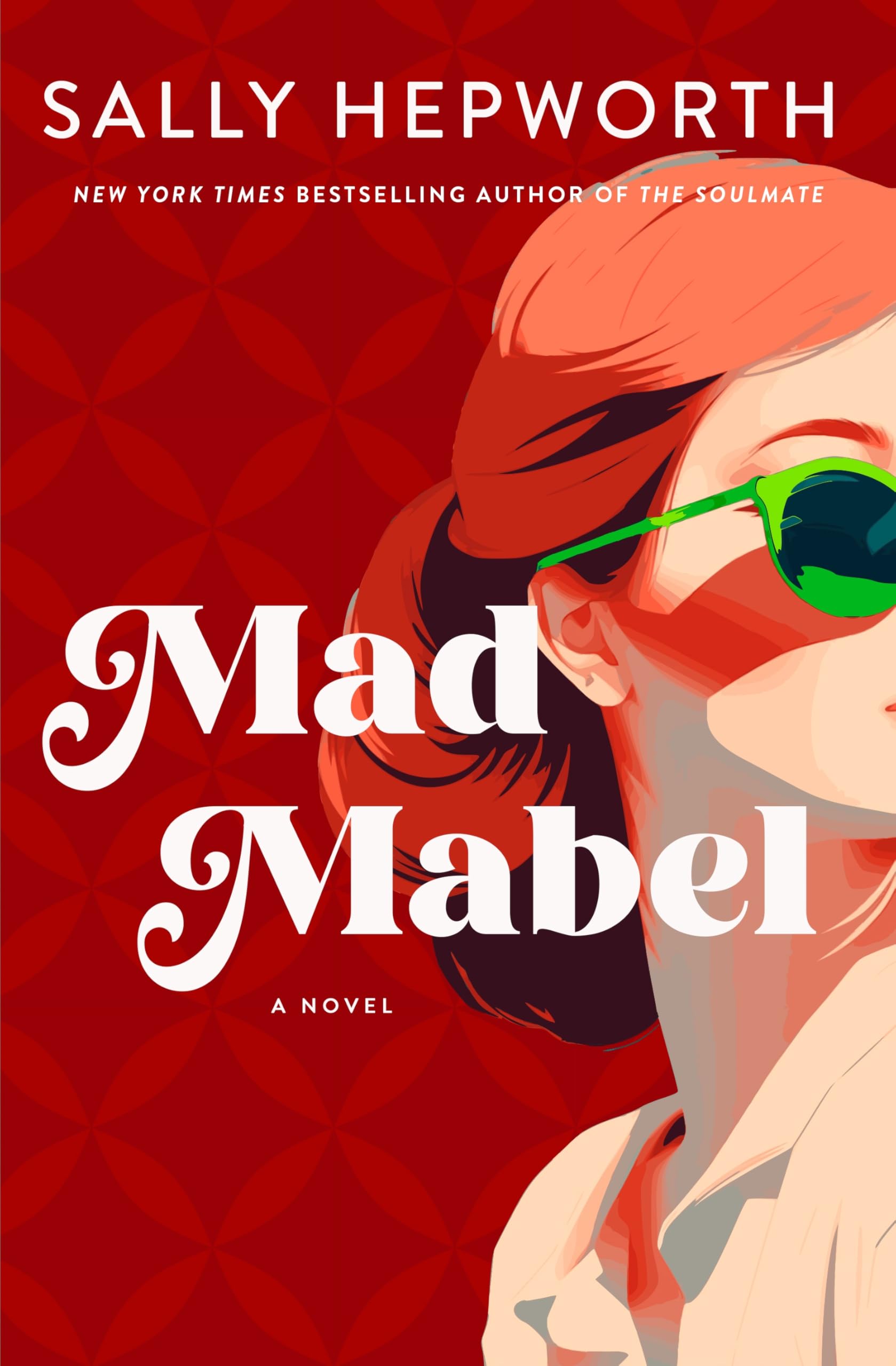
Title: Mad Mabel Author: Sally Hepworth Publisher: St. Martin’s Press Publication date: April 21, 2026 Length: 348 pages Genre: Thriller Source: Review copy courtesy of the publisher via NetGalley (also won a copy in a Goodreads giveaway) Rating:
⭐⭐⭐⭐⭐
Rating: 5 out of 5.
From New York Times bestselling author Sally Hepworth comes a twisty tale of justice, redemption, and one irrepressible woman who’s not done breaking the rules just yet.
Meet Elsie Mabel Fitzpatrick: eighty-one years old, gloriously grumpy, fiercely independent, and never without a hot cup of tea—or a cutting remark. She minds her own business in her quiet Melbourne suburb, until a neighbor turns up dead and the whispers start flying.
Because Elsie hasn’t always been Elsie. Once upon a headline, she was Mad Mabel Waller—Australia’s youngest convicted murderer. But was she really mad, or just misunderstood? Either way, she’s kept her secret buried for decades.
Enter seven-year-old Persephone, a relentless little chatterbox who has just moved in across the road (armed with stickers, questions, and no sense of personal boundaries); Joan, who appears to have it in for Elsie; and a healthy dose of public interest—the cops are sniffing around, and the media is circling like seagulls at a picnic.
So Mabel does what she’s always done best—she takes matters into her own hands.
Is she a cantankerous old lady with a shady past? A cold-blooded killer with arthritis? Or just someone who’s finally ready to tell her side of the story?
Sharp, surprising, and wickedly funny, this is the unforgettable story of a woman who’s spent a lifetime being underestimated—and is about to prove everyone wrong. Again.
What a dark, twisted delight it is to have a new book by Sally Hepworth to read! To read? Maybe I should say to devour. I could not put this book down once I started.
As Mad Mabel opens, we meet grouchy 81-year-old Elsie, who lives on Kenny Lane, a quiet Melbourne street close enough to a seedier part of town to have to deal with the occasional miscreants who stumble through. Still, it’s mostly a predictable life, as Elsie spends time with her best friend Daphne, feuds with her neighbor over his yappy dog, and exchanges nasty little notes with the nosy woman across the street. When 7-year-old Persephone decides that Elsie is her new best friend, despite Elsie’s clear resistance, the door is opened to chaos.
First, the dog-owner next door dies and Elsie finds the body. Next, the nosy neighbor lets it be known that she knows the truth about Elsie’s past. Soon, the police want to talk to Elsie about the body, and packs of reporters are staking out her house. Elsie, it turns out, is Mad Mabel, the youngest convicted murderer in Australian history. Has Mad Mabel struck again?
When a pair of persistent podcasters show up on her doorstep, Elsie decides to finally tell her story. After all, she’s 81 years old! What does she have to lose?
The story Elsie tells is dark and tragic, as the truth about her family and her alleged crimes is revealed. The stories of the murders she was rumored to be responsible for as well as the murder for which she was convicted are shared over the course of her interviews with the podcasters, which we see doled out in small doses in “then” chapters interspersed throughout the book. The story of Mabel’s childhood and early teens is shocking and heartbreaking, and we’re fully on Mabel’s side long before the more sordid events come to pass.
The flashback chapters are fascinating; it was jarring to be forced to return to the “now” chapters. And yet, Elsie’s “now” story is also terrific, with much more humor as well as some rising tension. I couldn’t help but laugh at Persephone’s persistence and Elsie’s utter inability to drive her away. Elsie reveals a tender, nurturing heart underneath the cranky exterior as it becomes clear that she does, in fact, care about her neighbors, that they care about her, and that’s she’s more than willing to take action to protect those who need it.
Elsie is a fabulous character, and her story held me tight from start to finish. The balance of now and then is masterfully managed, with just enough revealed chapter by chapter to keep readers on the edge of their seats. I had plenty of guesses about where the story was going — and while some may have been in the general ballpark, I was delighted by just how many twists and surprises the book had in store for me.
Mad Mabel ranks right up at the top of my list of favorite Sally Hepworth books, along with The Good Sister and The Things We Keep — although you really can’t go wrong with any of her books. I have just one of her books yet to read, The Secrets of Midwives (2015), and I’m going to make it a priority to finally pick it up this year.
Mad Mabel is a compelling story that will keep you hooked. Highly recommended — don’t miss it!
Purchase links: Amazon – Audible audiobook – Bookshop.org – Libro.fm Disclaimer: When you make a purchase through one of these affiliate links, I may earn a small commission, at no additional cost to you.
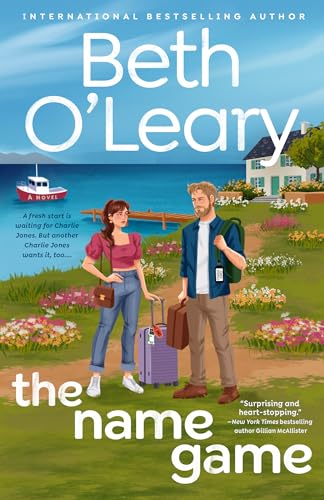
Title: The Name Game Author: Beth O’Leary Narrator: Harriet Cains and Arty Froushan Publisher: Berkley Publication date: April 7, 2026 Print length: 379 pages Audio length: 10 hours 55 minutes Genre: Contemporary romance Source: Audible (eARC via NetGalley) Rating:
⭐⭐⭐⭐
Rating: 4 out of 5.
A man and a woman with the same name are looking for a fresh start only to discover they have landed the same job in this charming new romance by bestselling author Beth O’Leary.
Charlie couldn’t be happier to take the job of farm-shop manager on the remote, wild Isle of Ormer. She’s grieving, a little lost, and in desperate need of a fresh start.
Jones has come out of a difficult breakup and is looking forward to some peace away from the noise of his city life. Moving to Ormer couldn’t have come at a better time.
But when Charlie Jones and, ahem, Charlie Jones both turn up at Ormer’s one and only farm shop, claiming to have been offered the role of manager, everyone is baffled. How could this have happened? And just who is the real Charlie Jones?
In The Name Game, a seemingly simple mix-up leads to a wild mix of truths, deceptions, accidental discoveries, and found community, all set on a small island in the English Channel that’s known for its farms, wild donkeys, natural beauty, and isolation.
When Charlie Jones and Charlie Jones both turn up for the job of shop manager at Bramblebay Farm on the Isle of Ormer, the farm owners, married couple Rosie and Marley, are perplexed. Yes, they sent a job offer to Charlie Jones — but having conducted the entire process via letters, they have no idea which is the intended Charlie. She (Charlie) is a bubbly woman who seems unprepared for island life; he (Charlie, but prefers to be called Jones) is a bit more taciturn but seems solid enough. There’s only one job, and only one accommodation available. The obvious solution? They’ll need to share — the job and the lodgings — until they can figure out which one is actually right for the job and for the island.
As Charlie and Jones settle in, the mystery of which one the job offer was intended for remains murky, but as both prove they’re capable, a solution of sorts is offered: If they can get the shop to be profitable enough to support co-managers by the time the fall harvest festival rolls around, they can both stay.
At first rivals, Charlie and Jones eventually warm up enough to get past resentment and hostility and achieve the start of a friendship. Forced proximity, grumpy-sunshine tropes anyone? The islanders are a mixed group, with everything run by committee, and the most resistant of all is a super ornery store employee and long-time Ormer resident who seems determined to undermine everything Charlie and Jones set out to do.
As the story progresses, we get flashback chapters showing earlier moments in Charlie and Jones’s lives, explaining the pain and secrets each has brought with them to Ormer and shedding a bit of light on why and how they’ve both arrived at this moment.
I must be honest and say that until somewhere a bit past the midpoint of this book, I would have given The Name Game a 3-star rating at best. Nothing much happens. There are the expected fish-out-of-water moments — such as dealing with an errant pig and getting stuck on a hike after a change in tides — showing how little these people (especially Charlie) are suited for the life they seem to be pursuing. But of course, they settle in, begin to make connections with the islanders, and make a positive difference in the life of the community.
Just when my impatience was really reaching a boiling point, things turn around. Without entering spoiler territory, I can’t say why… but the last third or so of the book kept me pretty enthralled and made the reading experience — even the less interesting parts — worth it in the end.
One aspect I found myself more than a little annoyed by is the characters’ approach to wellness and mental health. While on Ormer, and with prodding from Jones, Charlie acknowledges to herself that she has anxiety. Although she asks the local doctor a question about it, she never seeks treatment, and instead finds ways to self-heal and get to a place where she can manage the anxiety when it spikes. Jones, meanwhile, is an alcoholic whose arrival on Ormer marks day one of sobriety. Like Charlie, he seeks no professional help and does not participate in meetings or counseling, choosing to manage his addiction through his own powers of self-healing and control. Both of these situations disturbed me. It’s nice to think that people could address issues of anxiety or addiction on their own, but a healthier version might have shown them seeking actual help.
I listened to the audiobook of The Name Game, and enjoyed the dual narrators, who alternate as the POV changes between Charlie and Jones. I will say, though, that the story complications late in the book can be a bit challenging to follow via audio — listeners may want to keep a print edition handy as backup!
I’ve loved some of Beth O’Leary’s books more than others, and have found my opinions of some changing once I have more time to think and digest. For example, I was surprised to look back and discover that I gave her previous book, Swept Away, four stars! In retrospect, I have a LOT of issues with the plot, but I suppose in the moment, I was caught up in the story enough to go high on the rating. Regardless, I had to chuckle while listening to The Name Game and coming across this line, which just has to be a wink at the previous book:
“Being stranded together in the sea sounds romantic but is actually just quite inconvenient, surely?”
Overall, my early frustration with the story was redeemed by the fun of the confusion and resolution closer to the end. I wouldn’t say this is the best of Beth O’Leary’s books, but it’s a good one! Be patient with it, and you’ll get to a good payoff. Silliness mixed with more serious emotional moments and a highly unusual and quirky setup make The Name Game an entertaining read/listen.
Purchase links: Amazon – Audible audiobook – Bookshop.org – Libro.fm Disclaimer: When you make a purchase through one of these affiliate links, I may earn a small commission, at no additional cost to you.
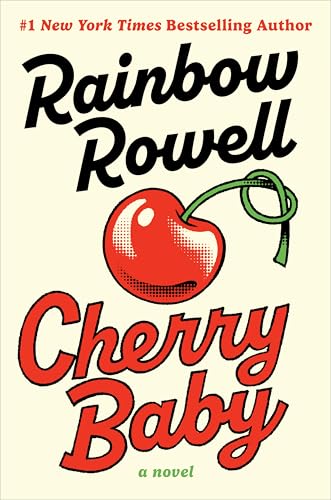
Title: Cherry Baby Author: Rainbow Rowell Publisher: William Morrow Publication date: April 14, 2026 Length: 416 pages Genre: Contemporary fiction / romance Source: Review copy courtesy of the publisher via NetGalley Rating:
⭐⭐⭐⭐⭐
Rating: 5 out of 5.
Everybody knows that Cherry’s husband, Tom, is in Hollywood making a movie . . .
Almost nobody knows that he isn’t coming home.
Tom is the creator of Thursday—a semi-autobiographical webcomic that’s become an international phenomenon.
Semi-autobiographical. That means there’s a character in this movie based on Cherry . . . “Baby.”
Wide-hipped, heavy-chested, double-chinned Baby.
Cherry never wanted this. No fat girl wants to see herself caricatured on the page—let alone on the big screen. But there’s no getting away from it. Baby looks so much like Cherry that strangers recognize her at the grocery store.
While her soon-to-be ex-husband is in Los Angeles getting rich and famous and being the internet’s latest boyfriend, Cherry is stuck in Omaha taking care of the dog he always wanted and the house they were going to raise a family in . . . and wondering who she’s supposed to be without him.
Cherry had promised to love Tom through thick and thin.
She’d meant it.
One night, Cherry decides to leave all her problems, including Tom’s overgrown puppy, at home. She ventures out to see her favorite band play her favorite album . . . and someone recognizes her from across the room.
Russ Sutton knew Cherry when she was a young art student with a fondness for pin-up dresses and patent leather heels. Before Tom.
Russ knows Cherry. He likes Cherry.
And best of all . . . he’s never heard of Thursday.
Tender, funny, and utterly human, Cherry Baby is Rainbow Rowell’s richest, most surprising—sexiest—novel yet.
Cherry Baby is a beautiful depiction of the stages of love — beginnings and endings, and all the messy stuff in between. Main character Cherry is a delight — the middle of five sisters from a devout yet raucous family, Cherry knows she’s gorgeous, accepts that she’ll always be fat, and knows she deserves to be happy… although getting there seems almost impossible.
As Cherry Baby opens, Cherry lives alone in the Omaha home she once shared with her husband Tom. Well, alone except for their outrageously large dog Stevie (as in Stevie Nicks), who really was Tom’s dog before he headed to LA and left Cherry to deal with the aftermath. Cherry and Tom met as art students, and while she went on to have a successful career in marketing, he unexpectedly found fame and fortune when Thursday, the webcomic he’d created as his own little creative outlet, suddenly became a huge sensation.
And now, Cherry is alone, because Tom left for Hollywood to work on the movie version of Thursday and never came back. Making matters worse all these months later is that the trailer for Thursday has dropped, and once again, Tom’s version of Cherry, via the character Baby, is everywhere. Cherry can’t avoid the exaggeratedly fat depiction of herself that apparently shows how Tom truly sees her.
When Cherry decides to treat herself to a night out listening to a favorite nostalgia band, she runs into someone she once had a crush on during college, and learns that he had a crush on her as well. As they begin to date, Cherry wonders if she has a new chance at happiness. But then Tom comes back to Omaha to pack up his belongings, and the more time he spends at their house, working with Cherry to dismantle the physical remnants of their lives together, the more their unfinished business looms over them both.
There’s a beauty in seeing the past and present unfold through the chapters of this book. We’re firmly rooted in Cherry’s present, as she deals with the men in her life and struggles to hold onto her sense of self — yet we also see flashbacks to the start of Tom and Cherry’s love story, from their first meeting through their early relationship and into the years of their marriage. It’s not sugar-coated, and yet it’s incredibly touching. Rainbow Rowell’s depiction of marriage is gritty and real. Love is wonderful, but it doesn’t fix everything, and we see time and again all the ways in which Tom and Cherry get derailed from the life they thought they were working toward.
Cherry Baby surprised me in all sorts of ways. Based on the synopsis, I expected a certain basic story arc, but in fact, that’s not what the book ended up being at all… and honestly, I loved it. I think Cherry Baby is best experienced without a lot of foreknowledge — not because there are dramatic reveals or shocking plot twists, but because its focus on people figuring things out is just such a powerful journey.
Cherry is a fantastic, funny, complex character, and I loved seeing all the ways in which she believes in herself, and all the ways in which doubt and pain creep in. She’s realistic and strong and vulnerable, and an utter delight.
A minor quibble for me is the overly graphic sex scenes — which, on the one hand, show the intricate levels of intimacy involved and also illustrate Cherry’s ease/discomfort dynamic with her own body… yet on the other hand, I think the point could have been made even without the close-up-and-personal details. Then again, I recognize that each reader has their own preferences when it comes to spicy scenes — your mileage may vary.
I can’t say I’ve ever been disappointed by a Rainbow Rowell book, and Cherry Baby is no exception. The banter between Cherry and her sisters is absolutely delicious, and even the more serious scenes include clever quips and dialogue. At the same time, this book is a heartfelt look at love and trust and commitment, and includes a powerful mix of heartbreak and joy. Highly recommended.
Purchase links: Amazon – Audible audiobook – Bookshop.org – Libro.fm Disclaimer: When you make a purchase through one of these affiliate links, I may earn a small commission, at no additional cost to you.