
Book Review: Goodnight June by Sarah Jio
 What does this cover remind you of?
If you immediately started reciting “In the great green room there was a telephone and a red balloon and a picture of the cow jumping over the moon…”, then you’re definitely in tune with the central motif of Goodnight June.
Goodnight June is a contemporary novel about a young woman finding her way and reconnecting with her family’s past. June Anderson, age 34, is a high-powered New York banker who specializes in foreclosing on small businesses. She’s perfected the art of ruthless dedication to the bank’s best interests and is eminently successful — yet she’s also lonely, sad, and on the verge of physical disaster thanks to skyrocketing blood pressure. When June learns that her great-aunt Ruby has passed away and left her her beloved Seattle children’s bookstore, June heads west to settle the estate, dispose of the assets, and make her way back to her intense New York job as quickly as possible.
But then something happens. As June reenters the world of Bluebird Books, she starts to remember the years spent there with Ruby, and bit by bit, the bookstore and her family memories draw her in and demand her attention.
Everyone has a happy place, the scene that comes into view when you close your eyes and let your mind transport you to the dot on the globe where life is cozy, safe, warm. For me, that place is the bookstore, with its emerald green walls and the big picture windows that, at night, frame the stars twinkling above. The embers in the fireplace burn the color of a setting orange sun, and I’m wrapped in a quilt, seated in a big wingback chair reading a book.
Slowly, June discovers clues to her aunt’s secret life, starting with what may be the literary find of the century: Ruby was apparently best of friends with children’s author Margaret Wise Brown, and the two carried on a deep, emotional, soul-baring correspondence for many years. Before her death, Ruby had hidden letters in various books around the store, creating a scavenger hunt leading June on a journey of discovery and revelation.
As June is drawn into her aunt’s past, she meets the gorgeous restaurant owner next door, rediscovers her love of children’s books, and begins to consider making peace with her estranged sister. And out of all this grows June’s determination to save the bookstore from the bankers who want to shut it down — by publicizing Ruby’s role in inspiring author “Brownie” to write her masterpiece, Goodnight Moon.
I’m a sucker for books about bookstores, and from that perspective, Goodnight June was quite fun to read. Through June’s childhood memories, as well as the reminiscences of various community members who come together to save Bluebird Books, we hear over and over again the impact that reading can have on a child:
I think of what he said a moment ago, about wishing he could love reading again, and I remember something Ruby said to parents who claimed their children wouldn’t read, and to bored-looking teenagers sulking through the door with their younger siblings:
“All is takes is one book.”
On the other hand, none of the various story threads concerning June’s experiences, her family relationships, and her love life offer much to sink one’s teeth into. I found all of the personal aspects of the plot entertaining yet entirely predictable. Love with the cute guy next door? Check. Misunderstandings about an ex? Check. Tragic reconciliation with an estranged sibling? Check. Red herrings in the search for an unknown family member? Check. I can’t say that there was much of anything in this book that was a surprise, so that while it was a pleasant read that kept my interest, it didn’t require much thought or engagement. Even the places that were clearly designed to wring tears or provoke an emotional response were telegraphed far in advance — so unfortunately, my eyes remained dry and my heartstrings remained unplucked.
The fictional correspondence with Margaret Wise Brown was interesting to the extent that it presented some of the better known aspects of the author’s life, but in many ways were hard to believe, particularly as they’re designed to support the plot thread of the book which credits Ruby with providing “Brownie” with not only the inspiration for Goodnight Moon, but even some of the key phrases and imagery. Somehow, this didn’t feel creative to me. Rather than feeling like a tribute to the great contributions of Margaret Wise Brown, in some ways Goodnight June actually felt like it was diminishing her work by giving a fictional character that much influence over a real-life work of art.
All this to say that while I enjoyed reading Goodnight June as light entertainment, it didn’t feel particularly fresh or exciting, and I did have a problem with key pieces of the premise. But, thumbs up for showcasing the vital importance of children’s books and children’s bookstores! The pieces of Goodnight June that focus on the role of books in children’s lives were for me the most moving. Unfortunately, the storyline about the actual characters was too predictable to truly appeal to me.
_________________________________________
The details:
Title: Goodnight June
Author: Sarah Jio
Publisher: Plume
Publication date: May 27, 2014
Length: 320 pages
Genre: Contemporary fiction
Source: Review copy courtesy of Plume via NetGalley

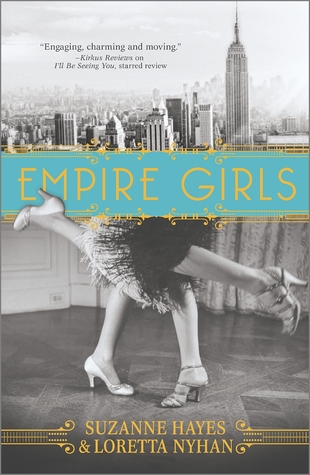 Flapper-era New York is having a moment. The 1920s in Manhattan seems to be the setting of choice for novel after novel right now — not without good reason, of course. What could be more perfect than the glamour, danger, and reckless freedom of the era, with young women living large, gin flowing freely, and a country going a little bit crazy after the trauma of war years?
 Family loyalties, secrets and conspiracies, and questions about mental health lie at the center of the new novel The Farm by author Tom Rob Smith. In this compulsively readable book, the reader is left to wonder just what is true and what is delusion, and unraveling the hints and clues makes for a reading experience that’s hard to walk away from once started.
 In this fairy tale retelling, author Genevieve Valentine takes the classic story of the Twelve Dancing Princesses and transplants it to Jazz Age Manhattan, with a result that is equal parts captivating and frustrating.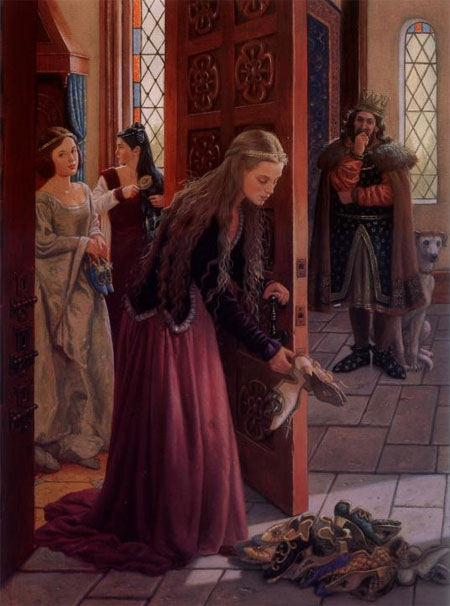
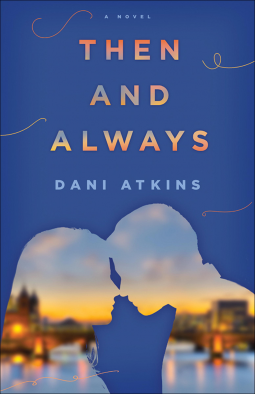 Before I launch into my review of Then and Always, I need to make a small disclaimer: I am not usually a sobber. I don’t get weepy. I’m a pretty hard-eyed cynic, as a matter of fact. So why was I a drippy mess — in my workplace, no less — after reading this book? Read on…
 Mary is a life-long reader and self-professed book-nerd. She carries a book with her wherever she goes, and if she isn’t reading, she’s either sleeping or dead.
