Fields & Fantasies presents… The Fever by Megan Abbott

Welcome to the first Fields & Fantasies book club feature. Each month, in collaboration with my wonderful co-host Diana of Strahbary’s Fields, we’ll pick one book to read and discuss. Our inaugural pick is Megan Abbott’s The Fever:
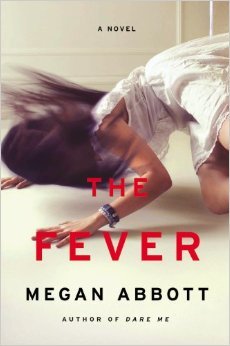
The FeverThe panic unleashed by a mysterious contagion threatens the bonds of family and community in a seemingly idyllic suburban community.

The Nash family is close-knit. Tom is a popular teacher, father of two teens: Eli, a hockey star and girl magnet, and his sister Deenie, a diligent student. Their seeming stability, however, is thrown into chaos when Deenie’s best friend is struck by a terrifying, unexplained seizure in class. Rumors of a hazardous outbreak spread through the family, school and community.

As hysteria and contagion swell, a series of tightly held secrets emerges, threatening to unravel friendships, families and the town’s fragile idea of security.

Something is happening to teen girls, and it’s very, very bad.

First it’s Deenie’s best friend, Lise, who suffers some sort of seizure in the middle of class — and whose greatest worry is whether everyone saw. (They did). Next, Deenie’s almost-best-friend Gabby has a spell of some sort in the midst of an orchestra performance. And then more, and more, and more. Is it an epidemic? Is it mass hysteria?

In The Fever, there are many questions, but not so many answers.

Reminiscent both of The Crucible and Mean Girls, The Fever shows the damage done to girls as they enter and transition through the perilous teen years. For Deenie and her friends, the change from unformed, bright innocents to girls who attract boys’ eyes and know it is fraught with physical and emotional dangers.

They revel in the changes in their own bodies, but are undermined by the food provided by family. They delight in their power, but can be brought low by the looks or oversights of boys. They hunger for attention, but don’t know what to do with it once they get it.

And as we see through the eyes of Deenie’s brother Eli, the girls become a mass of indistinguishable sexualized beings. Eli is a protective big brother, cherishing his younger sister and defending even her friends from predatory eyes — and yet Eli is a total hound toward every other girl in school, having no qualms about inviting adoring girls (he’s a big hottie) over for late-night booty calls and then sending them on their way. The girls are faceless and interchangeable to Eli and his friends: They’re sexy, they’re available, and they’re easily forgotten.

The girls in The Fever are all damaged, one way or the other. Of the characters we meet, all have deficiencies in their home lives — bitterly divorced parents, no parents, irresponsible guardians, even a mother who survived a vicious assault by the father and bears horrific scars as a constant reminder. The environment, too, is literally toxic — the lake is an unnatural emerald green and was declared unsafe for swimming years earlier. The school itself is later found to have all sorts of deadly and dangerous substances in its walls and its grounds.

So what’s making the girls sick? Perhaps everything. Hysterical parents initially blame the mysterious outbreak on the HPV vaccine that was administered to all girls the previous year — but when that proves to be a red herring, other scapegoats must be found. Suspicious eyes turn to Deenie, one of the few who isn’t sick. Does that mean she’s a carrier? Is she the local version of Typhoid Mary?

Deenie is devastated, not just by her friends’ illnesses, but by the shock of discovering the secrets lurking behind the scenes in the life she thought she knew.

I found The Fever to be a compelling read, but I couldn’t quite decide how I really felt about it. In parts, it felt like a mystery to be solved, sifting through clues, unraveling stories that do and don’t make sense. On the other hand, it’s very much an atmospheric piece. There’s a sense of doom and misery throughout the book. None of these girls are happy, and they all suffer, one way or another. It’s all quite dismal, and at times, it’s practically suffocating.

And yet, I couldn’t look away. Perhaps it’s the book version of a car crash on the highway. You know bad things are happening, and yet you stretch to get a glimpse just the same. Towards the end, as the lies and secrets unravel, the story becomes more straightforward and I found myself enjoying it more. The narrative in most of the book weaves between different points of view, but eventually, plot seems to matter more, and I could not wait to get answers.

So yes, by the end, there is a solution of sorts — but not everything is easily explained. The girls of the town may be recovering, but they’ll never recapture the innocence of assuming oneself to be safe. As a study of what it means to be a teen girl in America, The Fever is very frightening indeed.

___________________________________

For another view, check out Diana’s review here.

And now, for a change of pace, a Q&A between Diana and me. Warning: SPOILERS from this point forward. Proceed at your own risk!

Lisa: So many of the girls in this books seem like a “type”. Which, if any, felt more original or unusual to you?

Diana: They didn’t really feel original to me. It was the cliche good girl caught in the middle, the meanest of the mean girls and the girl that wanted to be liked. Then for the mothers it felt like you had the absentee, the clueless one and the overprotective one. Nothing all that original.

Lisa: I agree [with what you said in your review] that Tom was a decent character. What do you think about the book’s portrayal of parents in general?

Diana: Overall I think that the parents were clueless as to what was going on in their kids lives. Perhaps from a teens’ perspective they are but I would think that the parents would have some idea. Do you think that there was anything that the parents could have done to be more involved with their children?

Lisa: I thought Tom was as involved as possible for a parent of high school teens, which just goes to show that even great parents probably have no idea what’s really going on their kids’ lives and inside their kids’ heads. I mean, his son is bringing girls home for sex right under his nose, and he just says hi as they walk by! The other parents all seem very caught up in their own nonsense. Everybody wants to be a good parent, I thought, but nobody really succeeds.

Lisa: Did you buy the explanation for the epidemic? Do you find a mass event like this credible?

Diana: Absolutely. Looking back through history there are a number of cases like this happening throughout the world to teenage girls. My favorite happening in 2006 in Portugal. It was dubbed the Strawberries with Sugar Virus. A number of adolescent girls became sick, their symptoms couldn’t be explained. As it turns out, there was a very popular show called Strawberries with Sugar and there was a girl on the show that had an illness with those symptoms. Portuguese officials later determined it was a case of mass hysteria based on the television show. My only problem with the premise is the guilty party at the beginning of everything being a victim of mass hysteria.  What do you think?

Lisa: Yeah, I hadn’t thought of it in those terms, but you’re right. It’s like she couldn’t deal with her own guilt, so she followed in the victim’s footsteps, and then the whole thing blew up from there. It seemed to be saying that each of these girls had such problems in their lives that becoming a victim of the epidemic was a way out for them. Maybe a way to get the attention they’d been missing? Or a way to physically embody all the turmoil and stress of their lives?

Diana: I like the attention train of thought. It could be one of those cases where a lie just takes on a life of it own…

Lisa: What did you think of the role of social media, cell phones, and other plugged-in technologies in this story?

Diana: It was very relevant. I know I am addicted to my electronics and so many teens are social media obsessed. I think that part felt the most realistic to me.

Lisa: I agree. It made me realize how much harder it must be to be in high school right now than when I was that age. In my day, if you did something embarrassing, people might talk and ridicule, but then it would blow over. With this culture of selfies and everything always being shared, your worst moments can live forever. In The Fever, the girls who had seizures not only broke down in school — they then had to live with knowing that their awful moments would be seen all over YouTube.

Diana: Oh God, I can only imagine the trauma I would have had to deal with if my fellow high school students had social media. There are some things in life that are just best left forgotten.

Lisa: Did the high school setting in The Fever feel realistic to you? 

Diana: There were moments that it felt realistic.  Like with the day to day school stuff. But some of it felt “Saved by the Bell”-esque. Like would the sports star also be in the school band? How many of the cool kids did you know who played in band?

Lisa: True. But I did think the shifting alliances among the girls was pretty true to life — the fact that Deenie thought Gabby was her best friend and that Skye was just an annoyance hanging around, not seeing that Gabby and Skye had a much stronger connection or what the truth of her friendship with Gabby was all about.

Lisa: Is there anything the author could have done differently that would have made this book work better for you?

Diana: Better characters for sure. I so wanted this to be my dirty little indulgent book of the summer. I think if she dug deeper and went beyond the clichés it would have been so much better.

Lisa: It’s been fun talking books with you! Sounds to me like The Fever was not a huge success for either of us (although I liked it more than you did), but it still did give us some things to think about!

Diana: I have really enjoyed our discussion as well! Yeah, I can’t say Fever was my favorite read of the year so far but it has created some great discussion. I have already started reading our book for August: The Museum of Extraordinary Things.

_________________________________________

Updated to add:

Fascinating article by Megan Abbott on the real-life case that inspired The Fever: http://www.huffingtonpost.com/megan-abbott-/dont-look-now-social-medi_b_5534200.html

Next for Fields & Fantasies:

Join us for our August book, The Museum of Extraordinary Things by Alice Hoffman

_________________________________________

The details:

Title: The Fever
Author: Megan Abbott
Publisher: Little, Brown and Company
Publication date: June 17, 2014
Length: 320 pages
Genre: Contemporary fiction
Source: Review copy courtesy of Little, Brown and Company via NetGalley

Blog Tour & Book Review: The Curiosity by Stephen P. Kiernan

FBCuriosity

Book Review: The Curiosity by Stephen P. Kiernan

The CuriosityI’m delighted to be participating in the blog tour celebrating the paperback release of The Curiosity by Stephen P. Kiernan.

In The Curiosity, scientific exploration bumps up against the culture of celebrity and the perils of popularity. Through the voices of a dedicated scientist, a muckraking journalist, and an egomaniacal millionaire, we chart the rise and fall of Jeremiah Rice, a man who’s either a miracle or an abomination, depending on whose perspective you believe.

Kate Philo is the lead-off narrator, and the person who generates the most sympathy. Kate is a cell biologist, a 30-something researcher acknowledged as a genius in her field, who leads a team of Arctic explorers pursuing “hard-ice” on a project funded by the Carthage Institute for Cellular Seeking. Headed by the obsessive-compulsive but brilliant Erastus Carthage, the goal of the Institute is to locate organisms flash-frozen in icebergs and reanimate them. Up to now, the work has focused on krill and other tiny creatures. But one fateful day, Kate and her crew discover something large in a massive berg. Is it a whale? A seal? Nope. It’s the frozen body of a man, stuck in the ice for at least one hundred years.

Back in their Boston lab, the ice man is the center of a media frenzy. The whole world is watching as the team prepares the risky and arduous process of reanimation. Lo and behold, it works: The ice man’s heart begins to beat, he draws breath, and — after an excruciating wait — he opens his eyes and speaks.

The man is Jeremiah Rice, a judge from the early 1900s who disappeared during an Arctic voyage, leaving behind a beloved wife and daughter. Judge Rice is the hottest commodity around, immediately the focus of every story-hungry reporter, the source of endless speculation and online gossip, and debateably the property of Carthage’s Lazarus Project. Kept in a secure room and monitored 24/7, is Judge Rice a person or a laboratory subject? Or, as the growing mass of protestors would have it, is he an abomination, a perversion of God’s will, an affront to people of belief?

Kate, meanwhile, introduces Jeremiah to the 21st century, leading him on outings through the streets of Boston, introducing him to the people and the city of this new era, so different from the world he left behind. And as they venture out, Jeremiah begins to share the story of his life… and he and Kate form a bond that moves beyond science into the untested waters of human emotions.

We know from the outset, however, that this is not a story with a happy ending. Kate warns us in her very first chapter that public sentiment changed dramatically, that she and the project were skewered in the court of public opinion, and that she’s left with nothing but her memories. We know too from an early demonstration of the reanimation process that the reanimated krill go through a lifecycle that’s predictable and doomed to an unavoidable demise. When things start to go badly for Jeremiah, it’s not a surprise, but by then, we’ve come to know him. Jeremiah is a good, decent man — and knowing that, the inevitable end becomes tragic.

There’s much to love about The Curiosity. The book raises some interesting questions: What constitutes a human life? When does science become exploitation? How has 24/7 internet coverage changed the meaning of truth? In this age of constant access, who is responsible for damage to an individual’s life or reputation? And with the hounding of paparazzi and “gotcha” news, can even a truly good person escape the muck?

The scientific processes and discoveries in The Curiosity are fascinating. We’ve seen goofy versions of the “man frozen in ice” concept in movies and TV shows before, but here, the dilemmas involved for the scientists and for the subject himself are taken seriously. In the early chapters, the reader can practically feel the freezing Arctic seas as the diving crews prepare to salvage the unknown object in the iceberg. There’s tension, and drama, and excitement.

Later on, the focus begins to feel a bit scattered, and I’d have preferred to spend a little less time on the protesters and on Erastus Carthage’s point of view.

Overall, however, the narrative moves quickly, and the shifting perspective helps the reader get a clearer picture of the events and people closing in on Jeremiah Rice. As despicable as some of the point-of-view characters are, hearing the story through their words lets us see just how steep the odds are, and just how far people are willing to go to come out on top.

I wasn’t entirely convinced by the romantic elements of the story, which I felt needed more room to breathe and grow. Still, the friendship, trust, and growing feelings between Kate and Jeremiah are moving to witness, if perhaps a bit overly condensed. Kate and Jeremiah are both decent, honest people caught up in events that they can’t control. Jeremiah, especially, is a lovely, tragic figure, full of pathos and yearning for a world forever lost to him, only just starting to adapt to the 21st century when that too slips away.

I recommend The Curiosity both as a tale of scientific exploration and as a study of compelling characters caught up in events they can’t control. Exciting and moving, The Curiosity will hold your attention from start to finish.

About the Author:

Stephen KiernanStephen Kiernan is the author of the 2013 novel THE CURIOSITY. His nonfiction books are LAST RIGHTS and AUTHENTIC PATRIOTISM.

He was born in Newtonville, NY the sixth of seven children. A graduate of Middlebury College, he received a Master of Arts degree from Johns Hopkins University and a Master of Fine Arts degree from the University of Iowa Writers’ Workshop. Over two-plus decades as a journalist he has won 40 awards, including the Brechner Institute’s Freedom of Information Award, the Gerald Loeb Award for financial journalism (two time commentary finalist) and the George Polk Award.

He has taught at Middlebury College and the New England Young Writers Conference, and has worked on the staff of the Breadloaf School of English and the Breadloaf Writers Conference. He chairs the board of the Young Writers Project, served on the Vermont Legislative Committee on Pain and Palliative Care, and joined the advisory board of the New Hampshire Palliative Care Initiative.

Stephen travels the country speaking to a wide variety of audiences about improving life’s last chapters, restoring America through volunteerism and philanthropy, and using the power of creativity to transform lives.

A performer on the guitar since he was ten years old, Stephen has recorded 3 CDs of solo instrumentals, and composed music for dance, the stage, documentaries and TV specials.

He lives in Vermont with his two amazing sons.

_________________________________________

The details:

Title: The Curiosity
Author: Stephen P. Kiernan
Publisher: William Morrow
Publication date: 2013 (hardcover); paperback release July 1, 2014
Length: 464 pages
Genre: Adult fiction
Source: Review copy courtesy of TLC Book Tours

tlc logoFor further information, visit the author’s website or stop by TLC Book Tours to view other blog tour hosts.

Book Review: Close Your Eyes, Hold Hands by Chris Bohjalian

Book Review: Close Your Eyes, Hold Hands by Chris Bohjalian

Close Your Eyes, Hold HandsBestselling author Chris Bohjalian channels a 16-year-old girl in his newest novel, Close Your Eyes, Hold Hands. Narrated by Emily Shephard, the book is set in post-disaster Vermont. A nuclear power plant has exploded in the northeast sector of the state, leaving thousands homeless, a big swath of land (the Exclusion Zone) contaminated and uninhabitable, and resulting in 19 deaths — including the deaths of Emily’s parents. Even worse, Emily’s father was an engineer at the plant, and the common belief is that he was drunk on the day of the disaster. Not only is Emily left on her own, but she’s constantly barraged by the scathing comments of strangers about how Bill Shephard is to blame for it all, so Emily runs away and seeks anonymity in the closest city, Burlington.
There, Emily drifts from teen shelter to the streets, landing for a while in the miserable apartment of Poacher, who supplies her with painkillers and pimps her out to earn her keep, when he’s not sending her out with other members of the posse to steal various and sundry items. Emily operates under an assumed name, spends her time mostly high, cuts herself in secret, and picks up truckers by the interstate for a quick buck, until she meets 9-year-old Cameron, a runaway from a string of bad foster homes, and decides to protect Cameron at all costs.

Emily narrates her tale from some time after the events, and her narration jumps around quite a bit in time. We get snapshots of her pre-disaster life, living with unstable parents who drink too much, running a bit wild, constantly underachieving in school. Emily describes herself as having poor decision-making skills and impulse-control, and really, even before the explosion, her life was heading downhill. Emily’s one true passion is writing. She keeps journals and is an aspiring poet, and admires no one more than Emily Dickinson. If the plant hadn’t melted down, would Emily have gotten her act together? Possibly… but we’ll never know.

Instead, Emily sheds her innocence quickly in the six weeks from nuclear meltdown to her loss of virginity in her first paid sexual encounter. Emily is on her own, on the streets, with no one to look out for her — and because of her fear of admitting who she really is, she’s cut off from any possible aid from official relief agencies.

The narration of Close Your Eyes, Hold Hands is one long spiral downward. The time jumps become jumbled, and while the intended effect might have been a stream-of-conciousness flow, it’s often more like listening to someone ramble. Emily’s inner turmoil and dire straits are immediately apparent, and the impact of the disaster is clear and awful.

Yet somehow, I never truly felt an emotional connection to Emily. Her storytelling style is distant — she’s recounting events from after the fact, and we don’t really find out why or what’s going on in this “after” until quite late in the story. Everything feels abrupt: We hear about an incident at Poacher’s, and only later get more information about how she ended up there. We hear about taking care of Cameron, but don’t get the full picture of why or how this came about until further into the book. The jumbled events leave little to become involved with, as the loose narrative structure never really allows momentum or suspense to build.

My other issue with this book is that Emily’s voice fades in and out quite a bit. I could never quite put out of my mind that this is a grown man’s version of what a teenage girl might sound like, and to my ears, anyway, the language was just a tiny bit off somehow, the slang and expressions lacking the ring of authenticity to convince me that this was really a 16-year-old speaking to me.

On the other hand, there is quite a bit here that packs a punch. The bare bones of the disaster itself are disturbing, and the post-disaster landscape and the suffering of the survivors is bleak indeed.

Close Your Eyes, Hold Hands is harsh and sad and frightening. This isn’t some far-distant post-apocalyptic American nightmare: this is today, here, now. It’s a scenario that’s scarily possible — a what-if imagining that’s not at all difficult to envision. Emily is a mess, and rightly so. She makes some terrible decisions, but this isn’t a situation that anyone could possibly be prepared for.

While the writing style and organization of the book didn’t always work for me, I still couldn’t look away or stop reading. Whether or not I easily bought into Emily as a person, I had no problem picturing the nightmare of a nuclear disaster happening in an oblivious America. Don’t read this book expecting sunshine and happy endings; the sadness and despair will stick with you long after you close the covers.

_________________________________________

The details:

Title: Close Your Eyes, Hold Hands
Author: Chris Bohjalian
Publisher: Doubleday
Publication date: July 8, 2014
Length: 288 pages
Genre: Contemporary fiction
Source: Review copy courtesy of Doubleday via NetGalley


Book Review: Skin Game by Jim Butcher

Book Review: Skin Game by Jim Butcher

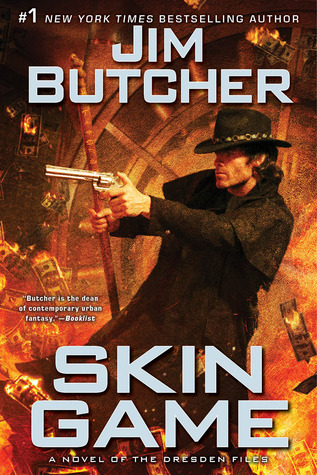
Skin Game (The Dresden Files, #15)

Harry Dresden is back!

Chicago’s only professional wizard (or at least, the only one listed in the yellow pages) returns in the 15th installment of Jim Butcher’s fast-paced urban fantasy series, the Dresden Files.

Synopsis (Goodreads):

Harry Dresden, Chicago’s only professional wizard, is about to have a very bad day….

Because as Winter Knight to the Queen of Air and Darkness, Harry never knows what the scheming Mab might want him to do. Usually, it’s something awful.

He doesn’t know the half of it….

Mab has just traded Harry’s skills to pay off one of her debts. And now he must help a group of supernatural villains—led by one of Harry’s most dreaded and despised enemies, Nicodemus Archleone—to break into the highest-security vault in town so that they can then access the highest-security vault in the Nevernever.

It’s a smash-and-grab job to recover the literal Holy Grail from the vaults of the greatest treasure hoard in the supernatural world—which belongs to the one and only Hades, Lord of the freaking Underworld and generally unpleasant character. Worse, Dresden suspects that there is another game afoot that no one is talking about. And he’s dead certain that Nicodemus has no intention of allowing any of his crew to survive the experience. Especially Harry.

Dresden’s always been tricky, but he’s going to have to up his backstabbing game to survive this mess—assuming his own allies don’t end up killing him before his enemies get the chance….

Clearly, at book 15, this is not a good entry point for Dresden newbies. Sure, you might be able to figure out what’s going on — but I doubt it. By this point in the series, the relationships are complex, there’s a lot of backstory, and the mythology and world-building are so intricate, with so many interwoven storylines and a huge cast of characters, that there’s not much that would make a whole lot of sense coming in cold.

For Dresden fans, however, Skin Game is a delight. Picking up soon after the jaw-dropping events in Cold Days, Skin Game sees Harry thrust right back into action, thrown into a seemingly no-win situation in which he’s forced to help an archenemy carry out a crazy dangerous plan with potentially devastating consequences. Still, Harry has no viable way to refuse, and thus embarks on a whirlwind three-day escapade alongside a team of colleagues who mostly can’t be trusted. Harry’s life is at stake every moment, his friends and loved one are all at risk, he gets broken and bruised — a lot — and above all, Harry has to figure out how to make his way through without endangering everything he holds dear and without turning into what he most fears.

Why do I love Harry Dresden? He’s smart, he’s brave, he’s a total wiseass, and he’s just really, really funny. Jim Butcher’s writing crackles with energy and humor, even in the midst of bloody action sequences. Harry may get hurt, but he’s never completely down for the count. And even in the midst of grave peril, he manages to get off some of the best one-liners and pop-culture references in fiction today.

My only complaint about Skin Game: No Thomas, and not enough Molly*. Other than that, we’re treated to a compelling plot, exciting action, forward motion in Harry’s ongoing personal drama, and an adventure story that’s simply impossible to stop reading.

Plus, we get to meet a Greek god, so there’s that.

All in all, Skin Game is a very successful addition to the Dresden body of work. Ongoing readers of the series have to read this one, period.

Some series stick around way past the point where there’s anything fresh or interesting to say. Not Dresden. I hope Jim Butcher plans to continue writing about Harry for years to come. If he does, I promise, I’ll be there to read the books. All the books. Forever.

And a final word:

Parkour!!**

_________________________________________

The details:

Title: Skin Game
Author: Jim Butcher
Publisher: Roc
Publication date: May 27, 2014
Length: 454 pages
Genre: Urban fantasy
Source: Library

* Oh, wait. One more complaint: We have to wait another year for book #16.

**with special credit and a big smile to my Goodreads friend Emily for reminding me of one of my favorite repeated utterances in Skin Game.


Book Review: One Plus One by Jojo Moyes

Book Review: One Plus One by Jojo Moyes

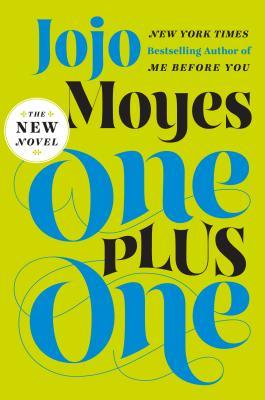
One Plus OneThis is either the happiest sad book I’ve ever read, or the saddest happy book. Either way, it brought me to tears while making me laugh… and either way, I simply loved it.

In One Plus One, we meet single mom Jess Thomas, in her late twenties, working as many jobs as possible to support her two kids, and just not getting by. The bills are stacking up, and there are always more. Plus, stepson Nicky is getting bullied and beaten up and daughter Tanzie is a math genius who should be in private school — but private school is simply out of reach financially.

There were lots of awful things about the father of your children leaving: the money issues, the suppressed anger on behalf of your children, the way most of your coupled-up friends now treated you as if you were some kind of potential husband stealer. But worse than that, worse than the endless, bloody exhausting financial and energy-sapping struggle, was that being a parent on your own when you were totally out of your depth was actually the loneliest place on earth.

And then there’s Ed Nicholls, software success story with oodles of money who makes a seriously bad decision while breaking up with a crush from his college days and ends up embroiled in an insider trading investigation that could cost him everything.

Worlds collide. Jess cleans Ed’s house and has never been more than the unseen cleaner to him — but when his world starts falling apart, he happens to come across Jess and her kids stranded on the side of the road, and in a burst of do-gooder repentance, decides to offer to drive them to Scotland for a math Olympiad competition that may provide Tanzie with the funds to get to the school she needs.

And thus ensues one of the funniest, most uncomfortable, and unluckiest road trips in literary road trip history. Car sickness, food poisoning, big drooly dogs, and cows in the road all play a part in Ed and Jess’s big adventure. Yet along the way, some miraculous things occur. Jess has time with her kids, for the first time in years, in which she has nothing else to do and nowhere else to be. Nicky starts to smile again. Tanzie has a shot at the maths future she so craves. And Ed and Jess go from prickly antagonism to spiky friendship to maybe something more.

Jess is a ridiculously optimistic person who just doesn’t give up, even when her kids are falling apart and she’s down to her last few pounds. She believes that things will get better. She believes that good people eventually wind up getting the good fortune they deserve.

She wondered whether being able to sound cheerful about things that made her want to kick something was her superpower.

But when one thing after another goes wrong and she sees her children getting a raw deal — again — even Jess’s unfailingly sunny outlook starts to wear thin. Ed certainly knows better. He knows that bad stuff happens, like it or not, and that momentary weakness can lead to ruin. The question is, can he and Jess somehow change their fates and find a way toward happier times?

As Tanzie muses:

The law of probability combined with the law of large numbers states that to beat the odds, sometimes you have to repeat an event an increasing number of times in order to get you to the outcome you desire. The more you do, the closer you get. Or, as I explain it to Mum, basically, sometimes you just have to keep going.

The chemistry between Ed and Jess is delightful, going from silent dislike to grudging acceptance to a reluctant attraction and then some. These two smart, lonely, often disappointed people manage to forge a connection during their few short days stuffed in a car together, and between their hurt and their sense of humor, a spark starts to catch:

Mr. Nicholls nodded toward the candle and the plates. And then he looked up at Jess and he was no longer scowling. “This is actually the best pie and chips I’ve ever eaten in a weird bed-and-breakfast somewhere I’ve never heard of on the north Yorkshire moors.”

One Plus One moves effortlessly between points-of-view, so that we hear from Jess, Ed, Nicky, and Tanzie. Each has a unique and compelling voice; each voices his or her slightly different take on matters without feeling forced or artificial. The author skillfully weaves together these characters into one cohesive whole. There’s momentum and there’s real emotion. While many of the escapades along the way are kind of goofy, underlying it all is a story of good people caught up in situations in which it feels like the whole world is against them. How do you stay good when you can never catch a break? When no matter what, things don’t work out?

There aren’t easy answers here for any of the characters, but somehow, by putting them all together, one plus one does add up to so much more than it should. The group dynamics are fabulous, and each character in this lovely novel feels like a real person. The reader can’t help but feel invested in them, individually and as a part of their interwoven relationships.

I’ve read one book by Jojo Moyes previously, her historical novel The Girl You Left Behind (reviewed here last September). I may be the last person on the planet who hasn’t read the author’s bestseller Me Before You, and I plan to remedy that as soon as possible. Jojo Moyes is absolutely gifted at writing that gets to the heart and soul of her characters, bringing them to life in a way that lets readers feel as though they’re meeting real people, not fictional creations. One Plus One is a contemporary novel that conveys warmth and connection through characters who are sympathetic and likeable. You want Jess and Ed to succeed, and you want Nicky and Tanzie to be happy.  Not every novel can make you care quite so much. One Plus One is a quiet book in many ways, but one that I recommend wholeheartedly.

_________________________________________

The details:

Title: One Plus One
Author: Jojo Moyes
Publisher: Pamela Dorman Books
Publication date: July 1, 2014
Length: 384 pages
Genre: Contemporary fiction
Source: Review copy courtesy of Pamela Dorman Books via NetGalley

Book Review: Goodnight June by Sarah Jio

Book Review: Goodnight June by Sarah Jio

Goodnight JuneWhat does this cover remind you of?

If you immediately started reciting “In the great green room there was a telephone and a red balloon and a picture of the cow jumping over the moon…”, then you’re definitely in tune with the central motif of Goodnight June.

Goodnight June is a contemporary novel about a young woman finding her way and reconnecting with her family’s past. June Anderson, age 34, is a high-powered New York banker who specializes in foreclosing on small businesses. She’s perfected the art of ruthless dedication to the bank’s best interests and is eminently successful — yet she’s also lonely, sad, and on the verge of physical disaster thanks to skyrocketing blood pressure. When June learns that her great-aunt Ruby has passed away and left her her beloved Seattle children’s bookstore, June heads west to settle the estate, dispose of the assets, and make her way back to her intense New York job as quickly as possible.

But then something happens. As June reenters the world of Bluebird Books, she starts to remember the years spent there with Ruby, and bit by bit, the bookstore and her family memories draw her in and demand her attention.

Everyone has a happy place, the scene that comes into view when you close your eyes and let your mind transport you to the dot on the globe where life is cozy, safe, warm. For me, that place is the bookstore, with its emerald green walls and the big picture windows that, at night, frame the stars twinkling above. The embers in the fireplace burn the color of a setting orange sun, and I’m wrapped in a quilt, seated in a big wingback chair reading a book.

Slowly, June discovers clues to her aunt’s secret life, starting with what may be the literary find of the century: Ruby was apparently best of friends with children’s author Margaret Wise Brown, and the two carried on a deep, emotional, soul-baring correspondence for many years. Before her death, Ruby had hidden letters in various books around the store, creating a scavenger hunt leading June on a journey of discovery and revelation.

As June is drawn into her aunt’s past, she meets the gorgeous restaurant owner next door, rediscovers her love of children’s books, and begins to consider making peace with her estranged sister. And out of all this grows June’s determination to save the bookstore from the bankers who want to shut it down — by publicizing Ruby’s role in inspiring author “Brownie” to write her masterpiece, Goodnight Moon.

I’m a sucker for books about bookstores, and from that perspective, Goodnight June was quite fun to read. Through June’s childhood memories, as well as the reminiscences of various community members who come together to save Bluebird Books, we hear over and over again the impact that reading can have on a child:

I think of what he said a moment ago, about wishing he could love reading again, and I remember something Ruby said to parents who claimed their children wouldn’t read, and to bored-looking teenagers sulking through the door with their younger siblings:

“All is takes is one book.”

On the other hand, none of the various story threads concerning June’s experiences, her family relationships, and her love life offer much to sink one’s teeth into. I found all of the personal aspects of the plot entertaining yet entirely predictable. Love with the cute guy next door? Check. Misunderstandings about an ex? Check. Tragic reconciliation with an estranged sibling? Check. Red herrings in the search for an unknown family member? Check. I can’t say that there was much of anything in this book that was a surprise, so that while it was a pleasant read that kept my interest, it didn’t require much thought or engagement. Even the places that were clearly designed to wring tears or provoke an emotional response were telegraphed far in advance — so unfortunately, my eyes remained dry and my heartstrings remained unplucked.

The fictional correspondence with Margaret Wise Brown was interesting to the extent that it presented some of the better known aspects of the author’s life, but in many ways were hard to believe, particularly as they’re designed to support the plot thread of the book which credits Ruby with providing “Brownie” with not only the inspiration for Goodnight Moon, but even some of the key phrases and imagery. Somehow, this didn’t feel creative to me. Rather than feeling like a tribute to the great contributions of Margaret Wise Brown, in some ways Goodnight June actually felt like it was diminishing her work by giving a fictional character that much influence over a real-life work of art.

All this to say that while I enjoyed reading Goodnight June as light entertainment, it didn’t feel particularly fresh or exciting, and I did have a problem with key pieces of the premise. But, thumbs up for showcasing the vital importance of children’s books and children’s bookstores! The pieces of Goodnight June that focus on the role of books in children’s lives were for me the most moving. Unfortunately, the storyline about the actual characters was too predictable to truly appeal to me.

_________________________________________

The details:

Title: Goodnight June
Author: Sarah Jio
Publisher: Plume
Publication date: May 27, 2014
Length: 320 pages
Genre: Contemporary fiction
Source: Review copy courtesy of Plume via NetGalley

At A Glance: Thirteenth Child by Patricia C. Wrede

Book Review: Thirteenth Child by Patricia C. Wrede

Thirteenth Child (Frontier Magic, #1)

Synopsis (via Goodreads):

Eff was born a thirteenth child. Her twin brother, Lan, is the seventh son of a seventh son. This means he’s supposed to possess amazing talent — and she’s supposed to bring only bad things to her family and her town. Undeterred, her family moves to the frontier, where her father will be a professor of magic at a school perilously close to the magical divide that separates settlers from the beasts of the wild.

I recently finished reading Thirteenth Child with my son, and while we both enjoyed it, I hesitate to declare this book an unmitigated success.

First, the good: In the world of Thirteenth Child, the American frontier is redefined as a place in which magic is the only thing standing between people and all sorts of deadly beasts. In the country of Columbia, the Mammoth River marks the barrier between civilization and the wild, and as settlers venture west, they rely on magicians to provide the protective spells needed to keep out the wild. The world-building here is quite imaginative — a world in which magic is commonplace, used on a basic level to manage household chores and day-to-day tasks, and on a more complex level, to provide the means of human survival.

Main character Eff is a girl whose powers are just beginning to emerge by the end of this book. Brought up believing herself to harbor some inner evil, thanks to being a thirteenth child, Eff is hesitant and uncomfortable when it comes to using magic, until a gifted teacher introduces her to non-Avrupan (read non-European) approaches to magic. Eff’s worldview is expanded, and she starts to tap into non-traditional approaches to magic, realizing that her talents may be positive after all.

The not-quite-as-good: Thirteenth Child is the first book in the Frontier Magic trilogy, and as such, has to cover a lot of ground in terms of exposition and explanation. Likewise, quite a lot of time is covered, as we follow Eff from age five to age eighteen. Because of the length of time covered in a relatively short book, many of the chapters feel more like summaries than actual events — basically, well, that year, not much happened except Eff’s brother went away to school, or, that year, Eff was sick for a while, missed a lot of classes, and ended up having to repeat a grade.

The author is building a world system from scratch, and at times the jargon threatens to overwhelm the plot. We have Avrupan magic, Hijero-Cathayan magic, and Aphrikan magic, as well as Rationalists, the North Plains Territory Homestead Claim and Settlement Office, and circuit magicians.

The climax of this volume involves a plague of grubs that threaten the western settlements, and Eff’s role in fighting the bug invasion. The solution to the problem comes across like convoluted mumbo-jumbo, not that it’s not exciting to read.

Finally, on the negative side, I’d be remiss in not mentioning the to-do over this book from when it first came out concerning the lack of a Native American population. The only people in the book are the (presumably) white settlers, with a couple of people of color mixed in among the townsfolk and school magicians. There isn’t a native culture, at least not one that’s mentioned at all in this book. Apparently, there was quite a bit of criticism over this when the book came out. As a work of fantasy fiction, I suppose it’s the author’s right to create whatever world she sees fit… but I leave it to potential readers to decide whether or not this is a deal-breaker for them.

Bottom line: My son and I enjoyed Thirteenth Child enough to continue with the series. Despite uneven pacing, the story itself is fresh and intriguing — so that the duller parts are easily outweighed by chapters and sequences that are suspenseful and highly engaging.

_________________________________________

The details:

Title: Thirteenth Child
Author: Patricia C. Wrede
Publisher: Scholastic
Publication date: 2009
Length: 344 pages
Genre: Children’s fantasy fiction
Source: Purchased

Book Review: Empire Girls by Suzanne Hayes and Loretta Nyhan

Book Review: Empire Girls by Suzanne Hayes and Loretta Nyhan

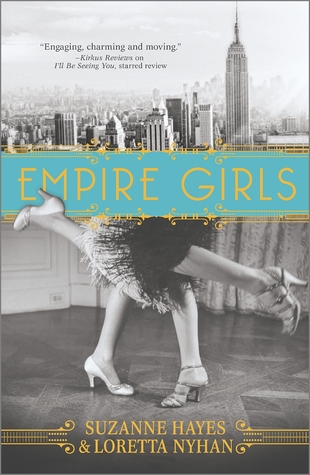
Empire GirlsFlapper-era New York is having a moment. The 1920s in Manhattan seems to be the setting of choice for novel after novel right now — not without good reason, of course. What could be more perfect than the glamour, danger, and reckless freedom of the era, with young women living large, gin flowing freely, and a country going a little bit crazy after the trauma of war years?
Fitting in nicely with this trend is the new novel Empire Girls, focusing on two sisters, Rose and Ivy, and their adventures in the big city. Rose and Ivy have been raised by their widower father in a quiet home in upstate New York. Ivy is the free spirit, going off with her father on explorations and adventures, while Rose is the responsible one, tending the house, making sure dinner is served on time, and trying to keep her family together. But when their father dies suddenly, the girls receive shocking news: They have an older brother, last seen in New York City, who will inherit the house — and unless they can find him and get him to deal with the estate’s debts, they’ll be turned out of their home.

With no other options, the girls set out for the city — Ivy excited, Rose in absolute dread — and head for their brother’s last known address, the Empire House, a semi-respectable establishment renting rooms to young ladies under the watchful eye of a not-terribly-friendly landlady. Once there, the girls have to find their way through the temptations and risks of the city. Never close before, the sisters fight and come together, each finding new facets of herself as they navigate gin joints and speakeasies, charming gents and wild girls, while piecing together the clues to track down their elusive brother.

Empire Girls succeeds in painting the New York of the 1920s, capturing the sights, smells, and unbearable heat of summer in the city. The novel vividly describes the allure of freedom for two country girls, and what they must give up in order to thrive. At the same time, it’s not all fun and abandon: In Empire Girls, we also get a taste of the sacrifices made by the men who lived through the Great War, and come face to face with the darker side of the 1920s in the damaged soldiers who are left to rebuild lives for themselves.

Empire Girls is written by two authors, each taking on the voice of one of the sisters, so that Rose and Ivy each get to “speak” for themselves. This mostly works, although the narrative occasionally feels choppy, and it was sometimes difficult to sort out whose voice we were hearing without referring back to the chapter headers.

Stylistic issues aside, I found the plot to be quite enjoyable, nicely layering the mystery of the missing brother on top of the story of two young women finding themselves and rediscovering each other.

Maybe the New York jazz age thing is getting a bit overdone — but here, it really works. As a showcase for Rose and Ivy and their newfound independence, the Manhattan of the 1920s is a great vehicle for illustrating the changing opportunities available to young women, the wild freedom embraced by people who’ve lived through the awful war years, and the prospect of a future without rigid rules and societal expectations.

And even more importantly, Empire Girls is just plain fun. I enjoyed the characters, the setting, and the plot. It’s a quick book, light but with real emotion, and a great choice for a summer read.

_________________________________________

The details:

Title: Empire Girls
Author: Suzanne Hayes and Loretta Nyhan
Publisher: Harlequin MIRA
Publication date: May 27, 2014
Length: 304 pages
Genre: Historical fiction
Source: Review copy courtesy of Harlequin MIRA via NetGalley

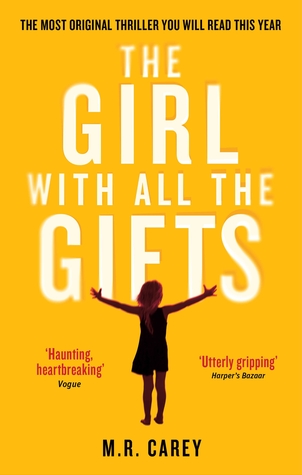
Book Review: The Girl With All The Gifts by M. R. Carey

Book Review: The Girl With All The Gifts by M. R. Carey

The Girl with All the Gifts

The synopsis for The Girl With All the Gifts is certainly intriguing:

Every morning, Melanie waits in her cell to be collected for class.

When they come for her, Sergeant Parks keeps his gun pointing at her while two of his people strap her into the wheelchair. She thinks they don’t like her. She jokes that she won’t bite. But they don’t laugh.

Melanie is a very special girl.

What kind of gifts does Melanie have? Superpowers? Some sort of incredible strength? A secret radioactive aura?

Nope, nope, and nope.

Stop reading now if you don’t want to know!

Bottom line?

(Look away now! Last chance!)

The Girl With All The Gifts is an incredibly inventive, original, and unpredictable… zombie story.

Yes, it’s a zombie story. And I kind of wish I’d known that from the start. Instead, I began the book wondering what was so special and important about this one little girl and what makes her so dangerous, expecting… oh, I don’t know, outbursts of deadly gamma rays or the ability to kill people with her brain.

But before long, we start to hear about “hungries” — the bands of undead, hungry for human brains, who’ve been preying on the remaining live people in the twenty years since the global disaster known as the Breakdown. Melanie and other children are being held as part of a scientific study conducted at a secure army base, the subjects of experimentation designed to test the fungus responsible for destroying host bodies and taking over. Most hungries are mindless beings, driven only by their need to feed — but Melanie and the other children are something more: Actual, sentient beings with the ability to think, to learn, and to feel. Are they human? Hungries? Or some sort of hybrid?

Teacher Helen Justineau is drawn to Melanie’s quick mind and sensitive heart, and feels compelled to shield her from the cruelties of Sergeant Parks and the cold laboratory of Dr. Caldwell. When the base is overrun, Justineau, Parks, Private Gallagher, Dr. Caldwell, and Melanie form a small band and attempt to survive on the road to the only safe place left in Britain, a sanctuary city called Beacon. But the road is dangerous and deadly, and the odds are very much against them.

As The Girl With All The Gifts moves into road trip territory, we get to know each of the characters as individuals and see them fleshed out from one-dimensional stock figures (teacher, soldier, scientist) into people with histories, desires, pains, and complexities. There are surprises along the way, and all are proven to be much more nuanced than they originally seemed.

The adventure aspects are well-drawn and suspenseful — sometimes almost unbearably so. There’s danger, and lots of skin-crawlingly disgusting encounters with the undead. Unlike the hungries, the plot never shambles — instead, it’s a fast-paced tear from one deadly scene to another. Survival is not guaranteed. Heck, it’s not even very likely. And as the body count rises, we get more and more clues into the origins of the Breakdown, who Melanie really is, and what the future may hold.

I absolutely could not put this book down. With echoes of The Road and Never Let Me Go, The Girl With All The Gifts tell a chilling tale of a future that’s scary and almost — but not quite — hopeless. A recurring theme of this book is the myth of Pandora, who unleashes all manner of woes upon the world but also introduces hope. Melanie herself is but the newest iteration of the disaster that’s destroyed the world as we know it, but she does also represent some sort of glimmer of hope for a world that’s fundamentally different, but perhaps not entirely horrible.

With an ending that’s completely unexpected and yet surprisingly fitting, The Girl With All The Gifts is a fascinating, thrilling read that should not be missed. Whether you’re a fan of zombie stories, post-apocalyptic worlds, or just plain good storytelling, this is one book that you definitely should check out.

_________________________________________

The details:

Title: The Girl With All The Gifts
Author: M. R. Carey
Publisher: Orbit
Publication date: June 19, 2014
Length: 416 pages
Genre: Science fiction/horror
Source: Review copy courtesy of Orbit via NetGalley


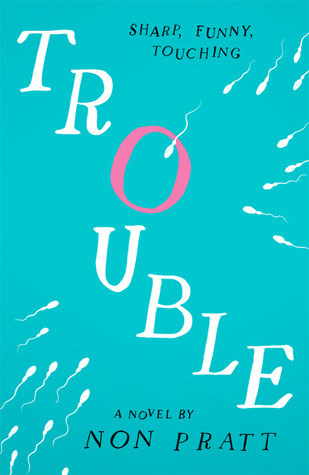
Book Review: Trouble by Non Pratt

Book Review: Trouble by Non Pratt

TroubleWhen Hannah finds herself pregnant at age 15, it certainly doesn’t come as a surprise to the reader, although Hannah seems to be pretty stunned herself. By the time Hannah gets around to taking a pregnancy test, we’ve seen her out at the park every Friday night, hooking up with whatever boy she can find, whether or not he’s actually available. With her underdressed, oversexed best friend Katie, Hannah is known for her sexiness and her willingness. So is it only a matter of time until it all catches up with her?

And then there’s Aaron, the new boy at school, son of the the new history teacher, and mysteriously unknowable — cool, but not excessively so; accepted by the in-crowd, but just ever so slightly stand-offish, with people to hang with but no close friends.

Hannah is hiding a big secret, and so is Aaron… and when Hannah’s former bestie blabs about the pregnancy to exactly the wrong person, the news is soon all over Facebook and Hannah’s reputation is trashed — until Aaron steps in and offers to pretend to be the baby’s father. Why? Well, Hannah needs a hero, and Aaron desperately needs to do something heroic. The two march forward together through the rest of the school year, watching Hannah’s bump grow bigger and bigger, and in the process, becoming each other’s rock and best friend.

Of course, nothing is perfect. There’s family drama to deal with, and Katie simply will not stop trying to mess up Hannah’s life even further, no matter who gets hurt. Through it all, we get Hannah’s view of life as a pregnant teen — ugly clothes, getting up to pee at night, and suffering the horrors of overly graphic prenatal classes.

There’s quite a lot to like about Trouble. Told in the first person in alternating voices, we get both Hannah and Aaron’s perspectives on themselves and on each other, and the author does a terrific job of showing how perceptive and at the same time how dense a hormonal teen can be. Both teens are funny, smart, and aware, yet they still manage to make foolish choices and hurt each other in the process. Yet it’s their friendship that sees them through, and as they finally break down their own protective barriers and share their personal truths, we get a picture of just how important a true friend can be.

Hannah is a puzzling character, and the author very cleverly shows us Hannah in a certain light early on, leading us to form certain opinions, and not revealing until much later that the public Hannah is not at all a true picture of who she is inside. She’s quite engaging and a terrific character to get to know, and yet, I never quite understood all of her decisions.

Aaron too is quite likeable, and his seemingly illogical nobility in rescuing Hannah from social purgatory eventually makes more sense, as his past and his secrets come to life.

In addition to Hannah and Aaron, we meet their families — and despite their quirks, it’s actually quite a nice change to see a YA novel with parents who are responsible, caring, supportive, and truly present. Neither of the main characters come from messed-up homes or are disadvantaged. In fact, Trouble makes a good point of showing that accidents and bad decisions can happen to anyone, even kids from good homes and with everything going for them. (Irony of ironies, Hannah’s mom is a sex ed specialist — this is not a girl who doesn’t know about condoms, safe sex, and morning after pills!)

Trouble was first published in the UK, with its US release coming up in June. I think it will translate well across the pond, although I’d imagine American teens may struggle a bit with some of the Brit speak and certain concepts specific to the British school system. Still, this should be no more than a mild inconvenience. The story itself is engaging and addresses certain universal experiences, and I think any teen reader, no matter the country of origin, should be able to relate to Hannah and Aaron’s experiences.

Overall, I’d recommend Trouble for anyone who enjoys contemporary YA without too much much of a sugar-coating. This isn’t a traditional love story, so don’t expect fireworks or declarations at the end. In fact, Trouble is refreshing in that it avoids many of the overused tropes of today’s YA fiction, such as insta-love, redeemed bad boys, or realizing that the boy next door is actually much hotter than the hunky, popular boy after all.  Trouble is the story of a girl with all sorts of issues and a big baby bump, and the unlikely friend who steps in to get both of their lives back on track. Hannah and Aaron are an odd pairing, but they become true friends, and it’s both fun and touching to see how they grow and change — together.

_________________________________________

The details:

Title: Trouble
Author: Non Pratt
Publisher: Walker Books Ltd.
Publication date: March 6, 2014 (to be published in US on June 10, 2014)
Length: 384 pages
Genre: Young adult contemporary fiction
Source: Purchased