Book Review: Big Little Lies by Liane Moriarty

Big Little LiesIn Liane Moriarty’s newest bestseller, the Australian mommies at the heart of the story have a boatload of secrets and lies, and the schoolyard is practically on fire with hostility, passive-aggressive snarkiness, and not very grown-up-like behavior.

While we’re introduced pretty quickly to a large cast of characters, we mainly follow a group of three women who become best friends:

  • Madeline, happily married to her second husband and mother of two young ‘uns… but still plagued by resentment as she and her ex-husband wrangle time-sharing of their teen-aged daughter and deal with the fact that they’ll each have a little girl in kindergarten this year — in the same class.
  • Celeste, stunningly beautiful and fabulously wealthy, with a perfect husband and twin boys — but hiding a devastating secret from even her closest friends.
  • Jane, young single mom whose son Ziggy is accusing of bullying during kindergarten orientation. But did he do it? And what happened in Jane’s past that makes her so insecure about herself… and makes her wonder whether the accusations against her sweet Ziggy could be true?

We know from the very first chapter that something goes terribly wrong at a school fundraiser, and through quotes from assorted school parents sprinkled throughout the book, we see the the power of gossip and the way events gets distorted through the lens of personal bias and predisposition. Oh, and there’s a dead body and a police investigation, and a whole slew of unreliable witnesses.

Big Little Lies is a roller coaster ride of a book, full of twists and turns, ups and downs. The plot is fast-paced and engrossing, and the characters are just so damn good!

I’ll be honest: I almost closed this book and walked away within the first couple of chapters. Having read (and loved) The Husband’s Secret, I was getting a “been there, done that” feeling at the beginning of Big Little Lies. Another drama centered on the schoolyard? Yawn.

But something told me to keep reading, and wow, what a pay-off. The author is masterful at portraying people who feel real, but with that added oomph that makes them leap off the page. We all know people like Madeline and her ex, or like the “Blonde Bobs”, the ultra-involved moms who rule the school and look down their noses at all the less-perfect mothers — the ones who never quite manage to have the right snacks or finish their kids’ school projects on time.

While there’s real pain and drama here, the humor quotient is also quite high. I couldn’t help but cringe when reading certain characters’ lines, realizing that some of these same ridiculous-sounding statements have come out of my own mouth from time to time. All of the embarrassingly petty thoughts of parents under stress can be found here, and they’re hilarious… and also — almost — uncomfortably true to life. Yup, Madeline’s rants about her ex-husband felt a little too close for comfort to me… to the extent that my own daughter laughed hysterically when I read them to her, clearly pointing a finger back at me and some of my more ridiculous statements about my daughter’s dad.

The underlying story, beneath the surface of snarky humor and quippy one-liners, is sad and powerful. The through-story is about domestic violence and abuse, and it’s conveyed with heartbreaking sympathy and realism. When told from the victim’s point of view, it’s possible to understand why she stays for as long as she does, why she feels trapped, and how no solution or escape plan feels possible to her. Likewise, the deep shame that another character feels over an event from her past may objectively be illogical, but told from her own point of view, we can easily see how her current doubts and worries relate back to this terrible incident and can understand why she feels as she does.

Liane Moriarty does an excellent job of telling a compelling story that gets the balance of entertainment and empathy just right. It’s a sad, sad story in many ways, and yet the writing is so crisp and full of humor that I found myself laughing throughout as well.

I highly recommend Big Little Lies. It’s both a fast and absorbing read and a deep look at friendship, marriage, pain, and healing. I’m really looking forward to reading more by this outstanding Australian novelist.

For a look at another book by Liane Moriarty, see my review of The Husband’s Secret.

_________________________________________

The details:

Title: Big Little Lies
Author: Liane Moriarty
Publisher: Putnam Adult
Publication date: July 29, 2014
Length: 480 pages
Genre: Adult contemporary fiction
Source: Library
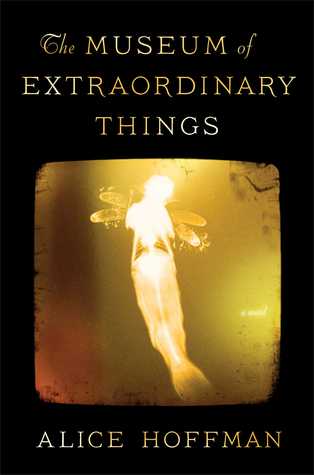


Fields & Fantasies presents… The Museum of Extraordinary Things by Alice Hoffman

Welcome to the August/September pick for the Fields & Fantasies book club! Each month or so, in collaboration with my wonderful co-host Diana of Strahbary’s Fields, we’ll pick one book to read and discuss. Today, we’re looking at The Museum of Extraordinary Things by Alice Hoffman:

The Museum of Extraordinary ThingsSynopsis (Goodreads):

Mesmerizing and illuminating, Alice Hoffman’s The Museum of Extraordinary Things is the story of an electric and impassioned love between two vastly different souls in New York during the volatile first decades of the twentieth century.

Coralie Sardie is the daughter of the sinister impresario behind The Museum of Extraordinary Things, a Coney Island boardwalk freak show that thrills the masses. An exceptional swimmer, Coralie appears as the Mermaid in her father’s “museum” alongside performers like the Wolfman, the Butterfly Girl, and a one-hundred-year-old turtle. One night Coralie stumbles upon a striking young man taking pictures of moonlit trees in the woods off the Hudson River.

The dashing photographer is Eddie Cohen, a Russian immigrant who has run away from his father’s Lower East Side Orthodox community and his job as a tailor’s apprentice. When Eddie photographs the devastation on the streets of New York following the infamous Triangle Shirtwaist Factory fire, he becomes embroiled in the suspicious mystery behind a young woman’s disappearance and ignites the heart of Coralie.

With its colorful crowds of bootleggers, heiresses, thugs, and idealists, New York itself becomes a riveting character as Hoffman weaves her trademark magic, romance, and masterful storytelling to unite Coralie and Eddie in a sizzling, tender, and moving story of young love in tumultuous times. The Museum of Extraordinary Things is Alice Hoffman at her most spellbinding.

True confession time: I did not finish this book.

I seem to have a love/hate relationship with Alice Hoffman’s novels. The ones I love, I love wholeheartedly — The Dovekeepers, Practical Magic, Second Nature, among others. But when I don’t like them, I really don’t (Here on Earth comes to mind… with a big shudder to go with it).

I started Museum with high expectations — the setting, the era, and the description all appealed to me. But as I began to read, I found myself in the weird situation of loving the beautiful writing… and having no compelling interest in the story itself. To me, it felt slow and disjointed. Each chapter begins with pages upon pages of a character’s history — all in italics, which is annoying to read after a while — and then more pages picking up the story in the main timeline of the book. As a portrait of odd characters, it’s an impressive piece of writing, and the language itself is lovely. Still, the storyline as a whole simply didn’t hold my attention. Finally, at around page 130, I couldn’t convince myself to continue forward, and closed the covers.

I will say that one particular section, a detailed description of the Triangle Shirtwaist Factory fire, is especially breathtaking and beautifully crafted. Unfortunately, the individual moments of great writing never coalesced into a story engaging enough to keep me motivated to stick with it.

___________________________________

My F&F partner Diana has a different take on Museum. You can view her review in its entirety on her blog, and it’s excerpted here:

Overall I liked the story. I haven’t read that much about New York City during the turn of the century. The culture clashes and new immigrants made it dangerous and exotic. I think Alice created a good glimpse into the world at that time. Each story progressed on its own and then merged about half way through the book. Which created a slow build that eventually paid off.

I really like Coralie and Eddie. Especially once they met. They both matured as the story progressed. There were a number of secondary characters that I really enjoyed, though I have to say I prefer the freaks that were around Coralie more so because they felt like complete characters. In many ways, the people that Eddie interacted with in the first half of the book felt like stereotypes in some parts.

I wanted to know more about our different takes on the story. Did Diana see something in it that I didn’t? And so, I asked her. Here’s a Q&A between Diana and me about The Museum of Extraordinary Things. Warning: SPOILERS from this point forward. Proceed at your own risk!

What was your favorite part of the story?

I really enjoyed the secondary characters. I have a good friend who is always more fond of the secondary characters in most books that we read and right now I feel like her.  As much as I like Eddie and Coralie, I like the secondary characters more. We start to see a relationship form between Maureen, the “professor’s maid” and the wolf man (whom I loved btw) and I really liked their story. Likewise, why was Maureen so attached to Coralie so much so that she would put up with an abusive father? I would love to have known more about what was going in Maureen’s head.

What was your least favorite part?

Some of the immigrant characters seemed  like stereotypes.  They were just a generalized mass of people, those that did have character development didn’t really seem logical. For example Eddie’s father. He was a runner, and came off as a fairly weak character but all of a sudden at the end we find out his dad was some tough labor activist. It didn’t fit.

What three words come to mind when you think about the plot?

Slow: if I hadn’t been so curious about the historical elements to the book I probably would have dropped it before I became invested in the main characters.

Simple: there aren’t any major revelations that you don’t see coming. But the plot adequately gets you from point a to point b.

Accurate: one of my biggest pet peeves in historic fiction is when the author doesn’t do their homework. The history of Coney Island and the Labor movement was spot on.

Is this more of a character study or more plot-driven?

It’s hard to say. I would like to say that it’s more of a character study because of the detail that is put into the main characters and those closest to them.

What would you say to try to convince me to read this?

I haven’t convinced you so far?? The second half of the book is SO much better.  Give it just a little more time. The characters will grow on you.

Is there any one thing about this book that makes it really stand out for you?

The whole historic freak show/circus element.  It’s actually started me on a Gothic/steampunk circus kick. There was a period in our history where these circuses and freak shows were big attractions. I have really found it fascinating.

Have you read other books by this author? If so, how would you rank this one compared to the others?

You know this is the first book by Alice Hoffman that I have read. Which is odd because the movie Practical Magic is one of my favorite movies. I have heard people on a number of occasions say they weren’t fond of her writing but I quite liked this book and plan on reading more.

Thanks, Diana! I can’t say I’m convinced, but at least I have a sense of what you liked about the book and what I might have come to appreciate if I’d gone a bit further! I don’t think I’ll go back to this one, but I can see that the historical elements probably would have continued to be the most interesting part of the book for me.

_________________________________________


Next for Fields & Fantasies:

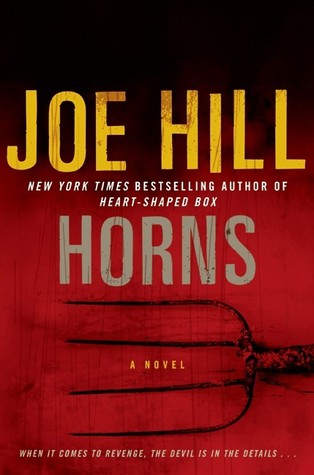
HornsTo get in the mood for Halloween, we’re picking a horror story for October. Can’t wait to finally read Horns by Joe Hill.
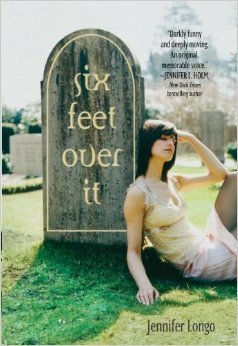
Book Review: Six Feet Over It by Jennifer Longo

Six Feet Over ItIn this moving young adult novel, main character Leigh is stuck working in her family business… which just happens to be running a graveyard. On a whim, her self-centered dad Wade has relocated his family from beautiful coastal Mendocino to the hot, boring inland town of Hangtown (yes, really, that’s its name), where he’s bought a graveyard. Shell-shocked, Leigh is forced into working in the graveyard office, selling plots and services to families at the worst moments of their lives. Does it make sense for an inexperienced teen to be a source of comfort for mourners? Wade doesn’t seem to care.
There’s more here than meets the eye. Only six months prior to the move, Leigh’s older sister Kai finally went into remission after a two-year battle with cancer. And what the family doesn’t know is that Leigh is battling major demons of guilt and self-blame. While Kai was ill, Leigh made a friend, the adorable and bubbly Emily. But Leigh always felt that she was abandoning Kai to spend time with Emily, so kept their friendship a secret. When Kai’s health returned and the girls were sent off to spend the summer with their grandparents, Leigh could have chosen to go with Emily instead to a week of camp — but telling herself that Kai always had to come first, Leigh stuck with her sister, and then discovered only through a newspaper clipping that Emily had died in a freak accident. More guilt. Would Emily have died if Leigh had been there? Would Kai have still beaten her cancer if Leigh hadn’t been by her side the whole time? And if Leigh now allows a new friend into her life, will she be betraying Emily all over again?

The parents in Six Feet Over It are truly appalling. Continuing the trend of absent/clueless parents in YA fiction, Leigh’s parents can, in the kindest interpretation, be accused of benign neglect. No one notices what Leigh is going through. No one notices that she wears the same jeans every single day (Emily gave them to her), that she has no friends, that she’s barely eating, that she’s on the verge of collapse from all of her misery. Instead, her mother retreats into painting and incessant solo trips back to Mendocino, and her dad is… well, he’s just a selfish, insensitive jerk, always quick with a joke but never bothering to listen. It’s awful. Sure, they’ve been through hell almost losing Kai, but their neglect of Leigh is unconscionable.

Six Feet Over It goes a lot deeper than I had anticipated. Leigh’s inner turmoil is painful to read about, yet it feels real. Her burden of guilt and responsibility may not make objective sense to an outsider, but it’s what she feels, and the author gives Leigh a voice that makes her struggles understandable.

There’s a subplot about the graveyard caretaker who becomes Leigh’s only source of support and comfort, but this piece of the story meanders into a rescue/road trip/border crossing story that is more of a distraction than it is a key part of the plot. Quite refreshingly, Leigh is not rescued from darkness by romance; there’s no love story hidden in Six Feet Over It, and that makes for a nice change from so much of the current crop of YA novels.

Overall, I found Six Feet Over It to be deeply affecting, while showcasing a brave young woman with a decidedly unusual life. I enjoyed seeing Leigh’s journey through such a painful and difficult period of her life, and felt that the book ended in a way that seemed both hopeful and realistic. I’d recommend this book for anyone who enjoys contemporary fiction with a slightly off-the-beaten-path feel to it.

_________________________________________

The details:

Title: Six Feet Over It
Author: Jennifer Longo
Publisher: Random House Books for Young Readers
Publication date: August 26, 2014
Length: 352 pages
Genre: Young adult fiction
Source: Review copy courtesy of Random House via NetGalley

Book Review: The Geography of You and Me by Jennifer E. Smith

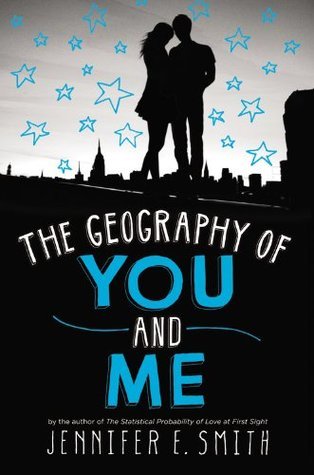
The Geography of You and MeMeeting cute doesn’t get much cuter than this: Two Manhattan teen-aged loners get stuck in an elevator together during a city-wide blackout. Perfect, right?

For Lucy and Owen, the stuck elevator is just the beginning of a magical night. Once freed, they roam the streets and their building with no parents, no electricity, and no interference from normal daily life. They go up to the roof and watch the stars, they talk, and they dream. And the next day, it’s all over — but each is permanently marked by their brief time together.

Meanwhile, Lucy and Owen each have some real life drama as well. Lucy is the youngest child of busy, successful, jet-setting parents, who seem to think nothing of leaving her home alone while they travel the world, sending postcards from every perfect tourist destination they visit. Owen and his father have been drifting for months since Owen’s mother died in a car accident, and the sadness of their lives is overwhelming.

Lucy and Owen are deeply lonely people, and the connection they feel is sudden and strong. But their family ties pull them apart almost immediately, and though they keep up a connection via goofy “wish you were here” postcards, their paths seem to take them further and further away from one another. Was their connection a fluke? Is it just an illusion? Should they forget about it and move on along their new paths, or is the chemistry between them something worth trying to recapture?

The Geography of You and Me is a light and charming young adult romance, but it doesn’t skimp on real dilemmas and honest conflicts. Family loyalty is explored, and the parent-child relationships here are complex and sad. Lucy and Owen both have imperfect parents in their lives, and each has to step up in ways that might seem unfair, yet they love their parents and want more than anything to make their family lives work out. Both characters dream of each other, yet each is also determined to move forward, to find happiness, and to find a place to fit in.

I liked both main characters quite a bit. They’re smart and devoted, wise for their years yet not above being silly and spontaneous. Over the course of the novel, we see them grow and change, and their trajectories feel real. The storyline never sags, and despite spending most of the story apart, the connection between Lucy and Owen is always present between the lines.

My only quibble with this book is less about the book itself and more about overall trends. Perhaps this book might have grabbed me a little bit more or felt fresher if I hadn’t read Gayle Forman’s Just One Day and Just One Year recently. The Geography of You and Me treads familiar ground, focusing as it does on two characters who seem destined to get together, but spend most of the story apart, struggling to reconnect. As with the Forman books, it’s the journey that counts, and the ending scenario is remarkably similar. I feel like the trend of keeping characters apart and ending with a reunion is becoming more prevalent in contemporary young adult fiction, and unfortunately, that means that even when there’s one that succeeds, it may not feel entirely new or different.

That doesn’t mean that The Geography of You and Me isn’t worth reading; it certainly is. It’s fun, sweet, and even touching, and it’s quite a fast read as well, so you’ll be tempted to read it straight through to keep the storyline flowing along. This tale of connection and belonging is entertaining and never sappy. If you enjoy teen love stories with a hip, urban feel, this is definitely a book to check out.

Want to know about another Jennifer E. Smith book? Here’s my review of This Is What Happy Looks Like.

_________________________________________

The details:

Title: The Geography of You and Me
Author: Jennifer E. Smith
Publisher: Poppy/Little, Brown and Company
Publication date: April 15, 2014
Length: 337 pages
Genre: Young adult fiction
Source: Library


Book Review: Hotel on the Corner of Bitter and Sweet by Jamie Ford

Hotel on the Corner of Bitter and SweetTalk about being late to the party. I’ve been hearing about this book for years (since its publication in 2009, to be more precise), and yet it never quite made it into my hands until this month. Thanks to an upcoming book club discussion, I’ve finally read Hotel on the Corner of Bitter and Sweet… and all I can say is, what took me so long?

This sad, sweet, and ultimately hopeful book is about love, friendship, family, and second chances. Centered around a shameful period in US history, Hotel is set at the height of anti-Japanese sentiment during World War II, as communities of Japanese Americans are forced from their homes and into internment camps. In 1942 Seattle, 12-year-old Chinese-American Henry Lee attends an all-white school, wearing the “I Am Chinese” button that his father forces on him to make sure everyone knows that Henry isn’t one of the enemy. Bullied and alone, Henry hates his new school until he meets the lovely, artistic new student, Keiko, daughter of a Japanese-American family. Henry and Keiko become fast friends, but Henry knows he’s breaking his father’s rules every moment he spends in Keiko’s company. When Keiko’s family is forced out in the evacuation of Japantown, Henry is bereft — but with the assistance of his musician friend Sheldon, he finds a way to stay connected with Keiko even in the distant and desolate camp to which she and her family are relocated.

Family is really at the heart of this slim book. Henry’s parents are so determined that he should be an American that he’s forbidden to speak Cantonese in their home — but since neither parent speaks English, the family spends years never really speaking to one another. Family loyalty is tested again and again, as Henry must choose between obedience to his parents — Chinese loyalists who are virulently anti-Japanese — and his need to help Keiko and her family. Keiko too must choose between the possibility of shelter and escape or staying with her parents and brother.

The time period of the books switches between the 1940s and the 1980s, when we see Henry as a recent widower with a cordial but distant relationship with his only child. When a trove of war-era items is found in a boarded-up old hotel in Japantown, Henry’s memories of Keiko are rekindled, and he begins a journey of rediscovery that starts to heal the rift between Henry and his son as well as presenting the possibility of recapturing a long lost love.

Through it all, these well-defined characters struggle for understanding and connection, forced apart by circumstances beyond their control, fighting to do what’s right, even when what’s right isn’t always clear. Loyalty, love, and friendship are all tested in different ways, and the recurring theme of jazz music nicely highlights the characters’ feelings and experiences.

Hotel on the Corner of Bitter and Sweet is a lovely book about a tragic piece of history. More than just a glimpse of the past, though, Hotel offers a glimpse into the hearts of its characters. Deeply affecting and full of period detail, this is a book that will be in my thoughts for quite some time to come.

_________________________________________

The details:

Title: Hotel on the Corner of Bitter and Sweet
Author: Jamie Ford
Publisher: Ballantine Books
Publication date: 2009
Length: 290 pages
Genre: Historical fiction
Source: Purchased

Book Review: Henna House by Nomi Eve

Henna HouseHenna House tells the tale of the little-known world of the Jews of Yemen in the early 20th century, taking place largely during the tumultuous years of the 1920s and 1930s. As seen through the eyes of Adela Damari, whom we meet for the first time at age five, the Jewish community of the village of Qaraah is small and isolated, steeped in a tradition and a simple way of life that seems at odds with the modernity of the time period.

The Jewish community of Yemen at that time was by law an underclass, kept subservient and oppressed through a string of harsh restrictions and edicts, none more feared than the Orphan Decree. According to the Orphan Decree, an unmarried Jewish child left orphaned would be confiscated by local authorities, adopted by a Muslim family, and permanently removed from his or her relatives, community, and faith. Families lived in fear of confiscation, taking the preventive measure of betrothing children at birth so that hasty marriages could be enacted when needed.

Adela first enounters the Confiscator when she is five years old, and is terrified. This official routinely visits her father’s marketplace stall, observing her father’s illness, and practically counting the days until his death so that Adela can be taken. Despite having a very  large family, Adela is at risk, as all of her potential betrothals have come to naught. One day, however, her young cousin Asaf comes to live in Qaraah, and the two children become fast friends — and more. Despite their young age, they form a deep bond, and it’s only natural that their betrothal is announced.

Other arrivals in Qaraah further change Adela’s life. Her uncle Barhun moves to the village with his wife Rahel, a skilled henna artist, and their daughter Hani, who quickly becomes Adela’s closest friend and confidante. Adela is introduced to the women’s henna rituals, in which symbols and patterns are painstakingly painted onto the skin to celebrate happy occasions, commemorate significant events, and represent a secret language full of mystical power and meaning.

That first night I was a novitiate. Soon, like the others, I would learn about the stars in the heavens by reading the astronomical tables they inscribed on my feet, shins, and fingers. Soon, I would grow to believe that I myself was an actual text, and that my skin without henna was like a holy book without words — a shameful, almost blasphemous, thing. Without henna, I wouldn’t know how to read myself. With henna, I was as sacred as a sanctified Torah. With henna, I was the carrier of ancient tales — a living girl-scroll replete with tales of sorrow, joy, and salvation.

The story of Henna House moves from the small mountain village of Adela’s birth to the city of Aden, through the anti-Jewish riots of the 1940s to the rescue of the Yemenite Jews by the newly declared nation of Israel. The story of Adela is at once large in scope, covering the significant events in the global Jewish community during the devastating years during and after the Holocaust, and at the same time, is a deeply personal tale.

Adela herself is a girl and then a young woman finding her way through an ever shifting series of homes and relations, experiencing both joy and love as well as terror and grief. She values the traditions of her people and the rituals of the henna house, yet also finds an inner strength that sees her through horrible loss and betrayals.

I was incredibly moved by this lovingly crafted story. The writing is often poetic, rich with tradition and symbolism, yet the pace never slackens or drags. The forward momentum of the story is engaging while also allowing the emotions of the characters room to breathe.

I was quite taken with the use of traditional rituals and foods to highlight the lives of the Jewish families, and found the depiction of their lives in Yemen completely fascinating.

Henna House is an intimate look at a time, a place, and a people, at a by-gone world with rich yet mysterious traditions. As historical fiction, it’s deeply affecting as well as informative and revealing. And as a novel, Henna House succeeds in telling a story full of love, wonder, loss, and excitement.

_________________________________________

I leave you with a collage of images (scavenged from Pinterest, thank you very much…) which bring to mind some of the people and food mentioned in Henna House.

HH collage

_________________________________________

The details:

Title: Henna House
Author: Nomi Eve
Publisher: Scribner
Publication date: August 12, 2014
Length: 320 pages
Genre: Historical fiction
Source: Review copy courtesy of Scribner via NetGalley

Book Review: Since You’ve Been Gone by Anouska Knight

Since You've Been GoneIn this romance, a young widow learns to start enjoying life again two years after the tragic death of her husband, when she falls in love with the handsome man who unexpectedly swoops into her life. And it doesn’t hurt that he has oodles of money, lives in a mansion, and drives a flashy sports car.

To be fair, Holly is emphatically not interested in Ciaran when he first appears, and she is so not impressed by his millions or by his allegedly playboyish love life. Holly just wants to live a quiet life in the unfinished cottage she and the late Charlie had moved into, where she can be left alone with her troubled dreams of her lost husband and with a big slobbery dog for company. But when Holly’s bakery (deliciously named Cake) is commissioned to make and deliver a specialty item to Ciaran’s father (a loud, often drunk man prone to inappropriate displays of what’s beneath his kilt), she meets and then can’t stop running into lovely Ciaran — and Ciaran is smitten enough to woo Holly despite her rather rude attempts to make him go away.

Since You’ve Been Gone doesn’t hold much in the way of surprises, but for a straight-forward romance, it veers just enough from the expected formula to keep it interesting. Holly herself is a well-drawn character, clearly suffering when we meet her and not ready to let go of her loss and grief. Yes, the money angle is a little obnoxious and obvious, but Holly makes clear that she falls for Ciaran despite the status and glamour, not because of it.

I enjoyed the emphasis on the natural settings, Holly’s love of nature and the outdoors, and the tenderness Ciaran displays in honoring Charlie’s memory. There are some stock characters, to be sure, including the gold-digging personal assistant who is icy-beautiful and constantly needles and undermines Holly — but the rest of the supporting cast, including the lonely older woman next door and Holly’s hugely pregnant and over-involved sister, are off-beat enough to keep the story lively.

Yes, in some respects this is a by-the-numbers romance novel, and anyone who’s not a fan of the genre might want to steer clear. I’m not much of a romance reader ordinarily, but I was drawn to Since You’ve Been Gone by the adorable cover as well as by the synopsis, which made it sound not very run-of-the-mill — and I’m pleased that I gave it a try.

Since You’ve Been Gone is a fast, light read, with some nice emotional moments (and some super-steamy sex) to keep things moving along. It’s an enjoyable book about finding love again, and is a perfectly entertaining way to spend a summer day.

_________________________________________

The details:

Title: Since You’ve Been Gone
Author: Anouska Knight
Publisher: Harlequin HQN
Publication date: July 29, 2014
Length: 320 pages
Genre: Romance
Source: Review courtesy of Harlequin via NetGalley

Book Review: Just Like the Movies by Kelly Fiore

Just Like the MoviesYou know how some young adult novels really resonate with adult readers as well? This isn’t one of them… at least, not for this adult reader.
In Just Like the Movies, two girls bond over their love of rom-com movies and decide to use romantic movie strategies to win the boys of their dreams. For track star Marijke, that means going all Say Anything in her boyfriend’s backyard, blasting Peter Gabriel from an IPod dock. (Unfortunately, he’s not home at the time, but his parents are.) For Lily, it means borrowing a page from Drew Barrymore in Never Been Kissed (kinda) and declaring her interest to the boy she likes.

Meanwhile, we have these two girls, high school seniors, becoming insta-besties within the space of two weeks, learning to see past their differences, and transforming their lives. And yes, there’s a makeover involved, and even some eyebrow tweezing. Plus, an awful lot of talk and fixation on prom proposals — the more elaborate the better — which I didn’t even know was a thing, but apparently it is. At least in this book. And if it’s a thing in real life, then may the gods have mercy on the teens of today. *shudder*

Near the end, there are some minor moments of awakening, as the girls realize that they’re strong and that maybe their lives shouldn’t revolve around the boys they like — at which point, they end up getting the boys anyway.

I was tempted to describe this book as harmless fluff, but I actually can’t. It’s light and fluffy, all right, but I’m not sure that I’d call it harmless. What’s the message here? We have two smart, high achieving girls with horrible esteem and trust issues. Marijke spends most of the book flying into jealous fits because her boyfriend isn’t doing what she wants when she wants. Lily is like every movie shy girl or brainy girl, always working behind the scenes and super good at all her classes, but she’s not one of the popular girls and never gets noticed. (A trip to Marijke’s closet and make-up bag fix that, of course.)

So on the one hand, the books seems to be saying that living one’s life for a boyfriend is a mistake. But on the other hand, once the girls realize that, they still end up getting the perfect romance, complete with prom, that they’ve always wanted. So, you don’t need a boy to be happy… but wait, you kind of do?

Meanwhile, the timeline is bizarrely compacted, with all this drama happening over the space of a few short weeks. It’s just not believable, and not in a charming, rom-com sort of fairy tale way. The movie theme is inconsistent, the messages are muddled, and the girl power just fizzles.

Maybe teen girls will like Just Like the Movies and will swoon over the prom proposals and hunky guys. But I’m guessing not.

_________________________________________

The details:

Title: Just Like the Movies
Author: Kelly Fiore
Publisher: Bloomsbury USA Children’s Books
Publication date: July 2, 2014
Length: 300 pages
Genre: Young adult fiction
Source: Review copy courtesy of Bloomsbury via NetGalley

Book Review: Landline by Rainbow Rowell

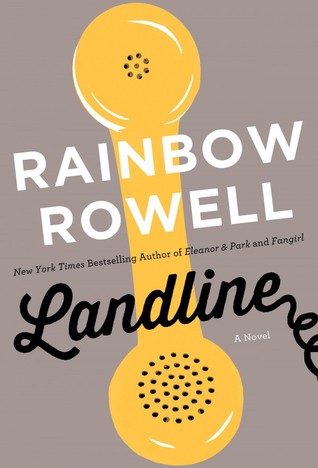
LandlineMarriage, happiness, and a family’s future are on the line in Rainbow Rowell’s newest novel, Landline.
I’ll preface this review by pointing out that Landline is not a young adult novel. Rainbow Rowell exploded with her first YA novel, the excellent and tear-inducing Eleanor & Park, and solidified her place in the YA pantheon with Fangirl — but she also writes terrific grown-up fiction, including 2011’s Attachments and brand-new Landline.

In Landline, we meet Georgie McCool, a thirty-something comedy writer (who happens to love the TV show thirtysomething). Georgie has a stay-at-home husband, two adorable daughters, and a life that’s falling apart. Neal is always unhappy with her, to the point where she’s practically forgotten what it feels like to see him happy at all. Georgie and her best friend-slash-writing partner having been toiling for almost 20 years in the writers’ rooms of LA TV, waiting for the chance to finally make “their” show. And when that chance seems to be within reach, the timing couldn’t be worse: Georgie is supposed to be heading toward Omaha with Neal and the kids for Christmas — but the scripts have to be done that week or the deal is off.

When Georgie decides to stay in LA, she’s blown away that Neal still leaves for Omaha — and is left in a complete tizzy, wondering if they’re merely spending Christmas apart, or if Neal has actually left her.

Things get decidedly weird when a dead cell phone battery and a night spent in her childhood bedroom cause Georgie to resort to digging out the old dial telephone in the back of the closet in an effort to reach Neal in Omaha. Neal, at this point, is very pointedly not answering his cell phone, and Georgie is getting frantic. Lo and behold, when Georgie uses the landline, Neal answers… but it’s Neal in 1998, the almost-but-not-quite adult version of Neal who may be breaking up with Georgie. As the two begin a string of nightly phone conversations, Georgie is understandably weirded out at first, but comes to realize that something approaching miraculous may be happening. Through her conversations with younger Neal, Georgie gains a new understanding of where they’ve lost their way, but the question remains: Is there any chance that Georgie and Neal will find their way back to one another?

Georgie is a fun, funny character, quick-witted and quick with a quip. Her goal in life is to make people laugh, despite ending up with a husband who can barely bring himself to smile. Landline uses the device of the phone calls to take us back through Georgie and Neal’s romance, showing us their history and how two such different people found themselves head over heels in love. Their relationship feels real, and it’s easy to see how a couple with good intentions and full of love could still find themselves teetering on the brink of failure.

Georgie’s not without her faults, of course. She is pretty clueless about Neal’s unhappiness, and she is quite selfish when it comes to putting her career goals ahead of her family life. At the same time, she is the sole financial support of the family, and she works in a demanding field. If the shoe was on the other foot and the husband was the one working late and missing family vacation, would it feel any less unfair or inconsiderate?

I liked the device of the mysterious telephone connection (which Georgie can’t quite believe, and which she refers to sarcastically as her “magic” phone). There’s no explanation offered, so if you  like your mystical objects to have a rational basis, you’ll be out of luck here. Landline is, essentially, a story about the magic of love, and the phone is just one more whimsical plot element that helps the characters move forward and find their way.

As always, Rainbow Rowell’s dialogue is snappy and snarky, and the humor keeps the story from ever feeling too heavy, even when it appears that the marriage is doomed. This is a light-hearted novel — not light as in inconsequential, but light as in filled with sunshine, focused on the quest for happiness, and containing the essence of a modern-day fairy tale. We come to care about the characters and want them to be happy, and by the end, can’t help but cheering as the the novel attains a movie-esque momentum worthy of a rom-com’s will-she-get-there-in-time action sequence.

Landline is a great choice for readers who enjoy well-written contemporary fiction with heaping doses of laughter. While not avoiding the heavier subject matter of a marriage about to implode, Landline keeps the story moving along at a brisk pace and never plunges into despair. It’s a great love story — a story not about falling in love, but about the much harder work of staying in love.

Rainbow Rowell has been firmly on my must-read-everything list ever since Eleanor & Park, and I haven’t been let down yet. Landline made me happy… and I can’t wait to hear about the author’s next project, whatever it might be.

Favorite lines and passages:

“Kids are perceptive, Georgie. They’re like dogs” — she offered a meatball from her own fork to the pug heaped in her lap — “they know when their people are unhappy.”

“I think you may have just reverse-anthropomorphized your own grandchildren.”

___________________

Georgie was extra. She was the fourth wheel. (On something that only needed three wheels. The fourth wheel on a tricycle.)

___________________

“Upper body strength isn’t everything; I have wiles.”

“Not really.”

“Yes, I do. I’m a woman. Women have wiles.”

“Some women. It’s not like every woman is born wily.”

“If I don’t have wiles,” she said, “how come I can get you to do almost anything I want?”

“You don’t get me to do anything. I just do things. Because I love you.”


Want more Rainbow Rowell? See my reviews of her other novels:
Eleanor & Park
Attachments
Fangirl

_________________________________________

The details:

Title: Landline
Author: Rainbow Rowell
Publisher: St. Martin’s Press
Publication date: July 8, 2014
Length: 310 pages
Genre: Adult contemporary fiction
Source: Purchased


Book Review: The Book of Life by Deborah Harkness

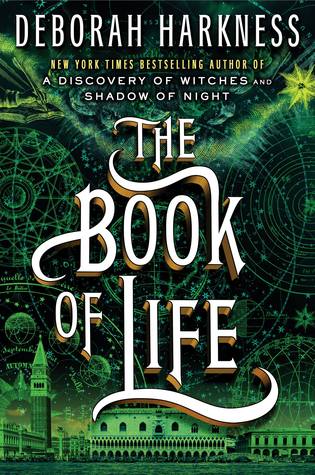
The Book of Life (All Souls Trilogy, #3)Deborah Harkness’s wildly popular All Souls trilogy wraps up with The Book of Life, published earlier this month and debuting at #1 on the New York Times bestseller list.

For anyone who has read the first two books in the series, A Discovery of Witches and Shadow of Night, it’s a given that The Book of Life is a must-read.

My quick thoughts on this book:

First of all, it’s long. That may sound like a stupid thing to point out, but not only is the book 561 pages — you really feel all of those pages while you’re reading. Or at least, I certainly did.

I’m a fast reader, and spending over a week on a book is unusual for me. The Book of Life was a 10-day push. Granted, it was a busy couple of weeks for me, but still: If I was loving this book, I would have found the time to read more. I’d say that it wasn’t until I got to about the half-way mark that I started to get that great swept-away feeling; up to that point, it felt more like work.

The opening section of the book is crammed full of genealogy, vampire law, and oodles of characters from all over the previous books converging on main characters Diana and Matthew. Re-reading the first two books — or finding a good detailed synopsis — is essential in order to enjoy The Book of Life. In fact, by the time I got to page 70, I realized that I needed a refresher, so I spent a couple of days looking up odds and ends, then restarted The Book of Life from the beginning. Luckily, it made a lot more sense with the details sharper in my mind.

There’s nothing particularly wrong with The Book of Life. It’s a wrap-up book, and it does what it needs to do: Ties up all the story threads, builds to a climax, and provides a conclusion to the trilogy that seems fitting. What it doesn’t have is the depth of characters and emotions that we’ve seen in previous books. In A Discovery of Witches, we fall in love with Diana and Matthew and their world. It’s new and enchanting; we feel mesmerized by the romance and danger. In Shadow of Night, it’s easy to get swept up in the historical setting and the challenges it poses for our beloved characters.

But in The Book of Life, it’s go time, all the time. People are constantly coming and going. There’s a lot of stamping about and angry confrontations, there are science lab set pieces and Congregation meetings, chases and rescues, and even some pregnancy drama.

Like I said, it’s not a bad book. Not at all. But I didn’t feel it the way I felt the other two, if that makes sense. I opened the book wanting to know what ends up happening to Matthew and Diana, and I closed the book having found out. The ending was exciting, and by the last quarter of the book, I really couldn’t put it down. I was happy to see more of the secondary characters who make the series so special. (Bonjour, Ysabeau! Hiya, Gallowglass!) The search for Ashmole 782 comes to an end, and there are answers about Diana’s powers and the family history.

What went missing for me was the emotional engagement. We see Matthew and Diana’s marriage and life, but not the dramatic chemistry and attraction that created their connection. Perhaps it’s just the fact of how far along the story is at this point; The Book of Life is the most plot-driven of the three books, and I missed the deeper personal elements that made the first two books so special.

I did end up enjoying The Book of Life, and I was satisfied with the ending. I just wish it had made me feel it all a bit more.

Note: If you’re interested in the All Souls Trilogy, you can check out my review of Shadow of Night here.

_________________________________________

The details:

Title: The Book of Life
Author: Deborah Harkness
Publisher: Viking
Publication date: July 15, 2014
Length: 561 pages
Genre: Adult fiction
Source: Purchased