Blog Tour & Book Review: Us by David Nicholls

usI’m delighted to be participating in the blog tour celebrating Us, the brand-new novel by David Nicholls, author of the amazing One Day. Thank you, TLC Book Tours, for inviting me to participate!

Us is the story of a marriage that may or may not be ending, how it got that way, and what a man in love will do to hold onto what he’s about to lose.

Main character Douglas Petersen is a desperate man. His wife has just informed him that once their teen son Albie leaves for college in the fall, she’s planning to leave too. According to Connie, their marriage has “run its course”, and it’s time for her to move on to the next chapter of life.

Douglas is an odd but determined man. He’s a scientist, very logical, very methodical; the opposite, in many ways, of free-spirit Connie, who was an artist when they first met but has since moved into the business side of the art world. And then there’s their son Albie, a typically sullen 17-year-old with nothing, it seems, but contempt for the father who just doesn’t get him.

The family has a European vacation planned for the summer, the classic “Grand Tour”, and Douglas views it as a last chance to save his marriage and hold his family together. And of course, it’s a complete disaster. Douglas has every step of the trip planned down to the minute,  including viewing every piece of important art and historical artifact in Europe, with no time left in the schedule for spontaneity or fun — which pretty much encapsulates his approach to life in general. Finally, there’s a blow-up, and Albie takes off on his own, leaving Douglas to pursue him in a one-man quest to make amends and repair something that may be irreparable. And, Douglas thinks, if he can come home triumphantly with Albie by his side, Connie may see the error of her ways and stay with him after all.

Nothing goes as it should. Douglas is a crazy smart man, but his people skills are sorely lacking. Time and again, he does just the wrong thing at just the wrong time. It’s no wonder Connie wants out and Albie wants away. Douglas must be insufferable to be around — and yet, Us is Douglas’s first-person narrative, which is a wonderful trick on the part of the author. Seen from the outside, Douglas would be awful. But seeing through his eyes, the picture is quite different: Here’s a man, full of awkwardness, madly in love with his wife from the moment he met her, who tries his best, yet always comes up short. His perception of the world around him makes perfect sense; it just doesn’t necessarily mean that the world understands.

Us is a sad story of what happens to a marriage over the course of many years, no matter how much love it starts with and how much true caring exists between the partners. Over time, the newness erodes, and familiarity takes the place of discovery:

Of course, after nearly a quarter of a century, the questions about our distant pasts have all been posed and we’re left with “how was your day?” and “when will you be home?” and “have you put the bins out?” Our biographies involve each other so intrinsically now that we’re both on nearly every page. We know the answers because we were there, and so curiosity becomes hard to maintain; replaced, I suppose, by nostalgia.

The writing in Us is absolutely sparkling. This is one of those books that will make you very annoying to your friends and family, as you’ll be wanting to read the clever and funny bits out loud constantly — and there are clever and funny bits on every page.

She looked fresh, healthy and tasteful, and yet I found myself instinctively wanting to do up an extra button. I wondered if I might be the only man in the world to have dressed a woman with his eyes.

Douglas may be a rigid and opinionated middle-aged man, but he’s also funny, smart, and full of love, even though the love he feels never quite translates into dialogue that sits well with his wife and son. They’re constantly amused at his expense, seemingly cool and in the know in a way he can never be.

A humorous (yet sad) ongoing theme is Douglas’s inability to understand art — particularly sad, given that his wife is an artist. He’s always stuck for what to say in a museum, resorting to either parroting the audiotour narration or making inane observations on the colors or details of a painting. “Look at the reflection in his eye!” or “I love the blue!” And the more desperate he is to connect, the more he fails:

They stared and stared and I wondered, what was I meant to take from this? What were they seeing? Once again I was struck by the power of great art to make me feel excluded.

Finally, it takes Douglas’s hitting an emotional bottom of sorts and finding himself completely bereft of his usual resources and coping mechanisms before he’s able to achieve any measure of rapprochement with Albie. The father-son relationship is not easy, but there’s still love there, despite the years of snarkiness and incomprehension.

“Da-ad!” he growled, shielding his eyes against the light. “What’s up?”

“I got jumped. By some jellyfish.”

He sat up. “In the water?”

“No, on the land. They took my keys and wallet.”

Interestingly, towards the very end, the author takes a few pages to show us how the same story might have been told by Connie or by Albie, and of course, it’s completely different. And yet, it’s thanks to Douglas’s narration that the not so very unusual tale of a disintegrating marriage becomes something unique.

Us is funny and sad, familiar in its slice of life approach to ordinary people, and yet with many moments that are surprising and unexpected. Any family has its ups and downs; any long-term marriage has its pain, boredom, and exasperation — but there’s still hope, and tenderness, deep caring, and the possibility that there are still more surprises and fresh chapters to explore.

I recommend Us wholeheartedly. Full of crisp, snappy writing and quirky yet relatable characters, Us is a story of love, how it can change over time, and what it means to be a family. For anyone who enjoys contemporary fiction about people and relationships with a ring of truth, don’t miss this terrific new novel.

Find out more:

Check out the Goodreads link, or watch this book trailer:


Buy the book!

Amazon,
IndieBound
Barnes & Noble

About the Author:

David NichollsDavid Nicholls’s most recent novel, the New York Times bestseller One Day, has sold over 2 million copies and been translated into thirty-seven languages; he also wrote the screenplay for the 2010 film adaptation starring Jim Sturgess and Anne Hathaway. Trained as an actor before making the switch to writing, Nicholls’s previous novels include Starter for Ten (originally published in the U.S. as A Question of Attraction), adapted into a film starring James McAvoy, for which Nicholls also wrote the screenplay; and The Understudy. He continues to write for film and TV as well as writing novels and adapting them for the screen, and has twice been nominated for the BAFTA awards. He lives in London with his wife and two children.

Find out more about David at his website and connect with him on Facebook.

_________________________________________

The details:

Title: Us
Author: David Nicholls
Publisher: Harper
Publication date: October 28, 2014
Length: 396 pages
Genre: Adult contemporary fiction
Source: Review copy courtesy of TLC Book Tours

tlc logoFor further information, stop by TLC Book Tours to view other blog tour hosts.
Book Review: Me Before You by Jojo Moyes

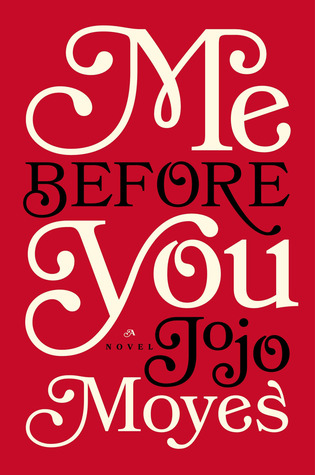
me before youI’m a little late to the party here. I know people have been reading (and crying over) Me Before You for a couple of years now. In fact, I’d reached the point where I was hesitant to read it, simply because I’d heard from so many people about all the feels and all the tears caused by this book — and hype is pretty much the enemy of enjoying books, in my opinion.

But thanks to my book group, I finally buckled down to read Me Before You this week… and despite the choked up feeling in the back of my throat that still hasn’t gone away, I’m glad that I did.

Me Before You tells the story of two people who would never have met, had life gone the way they’d expected. Despite coming from the same small town, Louisa and Will could not be more different. Lou grew up in a working class family, where every bit of income matters, and where her super-smart sister was expected to be the first in the family to attend college, until she dropped out to have a baby. Will Traynor is the son of a wealthy family, accustomed to grabbing life and enjoying every moment, whether via corporate takeovers or extreme sports. The only way these two would have met would have been in some cafe, with Lou serving and Will barely looking up to notice the waitress standing by his table.

Yet life can change in an instant. Lou is informed by the owner of the cafe where she’s worked for years that he’s shutting the doors due to a slump in business, and Lou desperately seeks a new job, knowing that her parents count on her pay to keep the household running. But there’s nothing available for a 27-year-old with little education and few skills, other than a job in a chicken plant or working as a pole dancer. Finally, one more opportunity is presented, working as a carer for a quadriplegic. Despite having no relevant experience, Lou is hired to provide companionship and distraction — and meets Will, whose normal life was snatched away from him two years earlier on a rainy day in London in a freak motorcycle accident.

Will is mean, sarcastic, sullen, and withdrawn, and wants to be left alone. Lou is petrified that she’ll screw up, worried that she’ll lose the only decent-paying job she was able to find, and intimidated both by the wealthy Traynor family and by the silent man in the wheelchair who most emphatically does not seem to want her around. But bit by bit, Louisa, with her wildly colored clothes and ability to say just the wrong thing, starts to crack Will’s shell. She actually makes him laugh, and Will for his part seems to see Lou as a challenge: He’s determined that this small-town girl who’s never gone anywhere or done anything should try new things and expand her horizons. But Lou has set herself a challenge as well: To make Will realize that his life isn’t over, and that there’s still joy and hope for him in this world.

As we (and Louisa) discover early on, there’s a reason that Lou was only hired for a six-month assignment: Will has decided to die via Dignitas, a Swiss clinic offering assisted suicide services. He’s promised his parents to give them six months before proceeding, and in desperation, Will’s mother has hired Lou, hoping that her awkward yet charming demeanor and colorful personality will pull Will out of his despair the way the love of his family hasn’t been able to.

I won’t discuss the plot any further, but suffice it to say, it’s a doozy. It’s not all drama and tears, though. Louisa and Will are both smart and funny, and their interludes are full of laughter and awkward, silly moments. Lou is determined to make Will want to live, and plans a series of misbegotten outings, most of which end in disaster. Will, for his part, forces Lou to spread her wings, through little moments like watching her first subtitled movies or going to the symphony, ordering books from Amazon for her to read, or forcing her to read the newspaper every day so she can debate current issues with him.

Will’s parents are not the most sympathetic people in the world, but I couldn’t help feeling their pain, and while they seem cold and stand-offish at first, through Lou’s eyes we come to see the nightmare of these people who so desperately want to help their son. There are other memorable and wonderful supporting characters, especially Will’s nurse Nathan and Lou’s sister Treena. Lou’s clueless and self-centered boyfriend Patrick, who is so obsessed with triathlons and his fitness routine that he doesn’t see Lou’s needs or feelings, is a comically obnoxious yet cleverly written character. Lou’s parents, who come to play an important role as she makes more dramatic decisions about her intentions toward Will, are equally impressive, as the author portrays them with a convincing sense of heart and history.

But ultimately, this is the story of Lou and Will — how they change each other, and whether they can challenge each other to think differently, and perhaps to feel in new and unexpected ways. A few times, I was sure I knew exactly where this story was going, and yet I ended up surprised by the dramatic developments, the emotional depth, and the final twists of the story.

Because I’d been warned over and over again that I’d cry, naturally, I didn’t. But I did find it a little tough to breathe or talk by the time I got to the last 100 pages or so… and if I hadn’t been told so emphatically to expect tears, then I probably would have ended up a big, soggy mess.

Jojo Moyes is a gifted writer who has a beautiful way with words. She takes ordinary people and conveys the beauty and sadness of their lives and relationships. In all of the books by this author that I’ve read so far, I’ve seen gorgeously drawn love stories, evocative romances, and edge-of-your-seat suspense and dilemmas. The characters in her books feel like real people, and the skill with which she draws us in and makes us care is remarkable.

I’ve read a total of four books by Jojo Moyes by this point, and I’m eager both to explore her earlier works and to read anything new that she writes from this point forward. Meanwhile, my only complaint is that my book group discussion doesn’t start for several more days, and I just can’t wait to talk about Me Before You!

✻✻✻✻✻

Interested in this author? Check out my reviews of other books by Jojo Moyes:
The Girl You Left Behind
One Plus One
The Ship of Brides

_________________________________________

The details:

Title: Me Before You
Author: Jojo Moyes
Publisher: Pamela Dorman Books/ Viking
Publication date: December 31, 2012
Length: 369 pages
Genre: Adult contemporary fiction
Source: Purchased


Binge! The Unwritten series by Mike Carey & Peter Gross

unwritten collage

My reading obsession this past week has been the graphic novel series The Unwritten. Between Sunday and Wednesday, I gobbled up volumes 1- 10 of the trade paperback editions, and now I’m all caught up until the final volume is released in May.

What did I think? I’ll be honest: I think with The Unwritten, the law of diminishing returns was in effect.

I loved the sound of the premise when I first heard of it: Tom Taylor is the adult son of the mysteriously disappeared author Wilson Taylor, whose beloved children’s book series about boy wizard Tommy Taylor is the top selling book of all time. A crazy statistic is thrown around in the very first book: Of all the people worldwide who can read, 40% have read at least one Tommy Taylor book.

Tom is a more or less shiftless adult, who makes a buck by hitting the convention circuit and signing Tommy memorabilia — until the day a young woman stands up in a Q&A session and asks “Who are you?” Lizzie questions Tom’s true identity, alleging that his documentation and early childhood are elaborate frauds — and the fandom erupts. Suddenly, the lead news story worldwide is Tommy-gate: Is Tom really Taylor’s son? What’s he hiding? And where is his father?

Tom Taylor goes from adored to despised seemingly in the blink of an eye. Mobs are after him. The scandal won’t go away. So Tom flees to his father’s remote Swiss villa to hide away… and finds himself implicated in a grisly mass murder for which there is no reasonable explanation. And that’s the most normal part of the story.

Tom’s father guarded a powerful secret about the intersections between story and the real world, and the deeper Tom investigates, the weirder it gets. There are objects with magical powers, because stories made them so. There’s a bad guy who turns anything he touches into fiction. (Word of advice: Do NOT let him touch your head!) A magical doorknob from the Tommy Taylor stories can actually open portals between worlds, and a secret cabal is intent on stopping Tom and his friends and shutting down their mysterious connections to the world of fiction.

I couldn’t possibly even begin to describe the complexities of this series, because I kept getting lost myself. There’s a stairway that goes on forever. The worlds are all real, even if the people in each world believe other worlds to be fiction. The more widely read and taken to heart a story is, the more power it has — so Tom can use the plastic replica wand he carries because the power of belief gives it the magic it has in the Tommy Taylor stories.

Meanwhile, the series cleverly uses screenshots of websites and 24-hour news channels to convey the weirdness and intensity of our media-obsessed world, showing the demonization of Tom and later his redemption in the public eye, the pop-psychology attributing all sorts of ills to Tommy obsessions, the chat room conversations of the true believers, and even the messianic cults that spring up to deify Tom Taylor as the word become flesh.

Volume 9 is a cross-over with the Fables series, which I love beyond all reason. And actually, it was hearing that there would be a Fables/Unwritten cross-over that first made me look into The Unwritten. So it’s with sadness that I find myself saying that I disliked this volume very much, because a) the story was so convoluted that it didn’t really make sense and b) the Fables world here is an alterna-Fables, where truly awful things happen to some of my favorite Fables characters — and it was simply too terrible to see the fates of Snow White, Bigby, the cubs, Ambrose, and the rest of the gang here.

When I look back at my mad dash through these ten volumes, I see that I went from 4 and 5 star responses to the early volumes to 2 or 3 stars for the later ones. What changed? For me, the further the story moved from the Tommy Taylor origin story into the broader world of interwoven universes, the less compelling the narrative arcs became. By the end of volume 10, I was spending most of my brain power trying to figure out one WTF moment after another. Each plot development and story arc is interesting as hell, and I love the design and artwork. It’s inventive and challenging and not like anything else I’ve read. (Granted, I’m not a huge comics expert by any means…) But as a whole, it’s frustrating to read this much of a series and arrive at a place where I have really no idea what any of it means.

So, will I read volume 11 — the last in the series — when it comes out next May? Yes, I’m sure I will. At this point, I feel invested in Tom’s story, and I really love some of the supporting characters as well, especially Richie Savoy and Lizzie Hexam. On the other hand, because the story is so confusing and convoluted, I don’t feel a whole lot of suspense about the conclusion, since I’ve completely lost all sense of what this story is truly about.

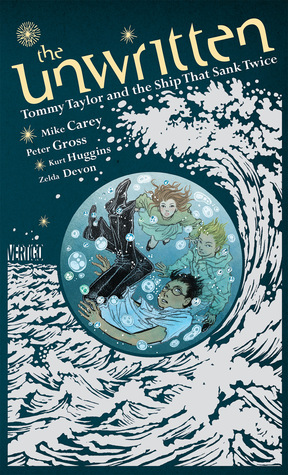
TommyMeanwhile, there’s a prequel volume now available, Tommy Taylor and the Ship That Sank Twice, which I believe tells both the story of the first Tommy Taylor book and how Wilson Taylor came to write it… and yes, I do plan to read this one in the next month or so, although I think I need a break for a while before I’ll be ready to deal with Tommy’s world again.


Take a Peek Book Review: Lizzy & Jane by Katherine Reay

A quick note: I thought I’d try out a new book review format! My “Take a Peek” reviews will be short and (I hope) sweet, keeping the commentary brief and providing a little “peek” at what the book’s about and what I thought. Tell me if you like!

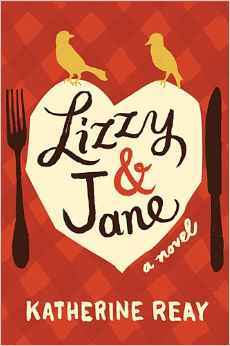
Lizzy and Jane

Synopsis:

(via Goodreads)

Lizzy and Jane never saw eye to eye. But when illness brings them together, they discover they may be more like Austen’s famous sisters after all.

Lizzy was only a teenager when her mother died of cancer. Shortly after, Lizzy fled from her home, her family, and her cherished nickname. After working tirelessly to hone her gift of creating magic in the kitchen, Elizabeth has climbed the culinary ladder to become the head chef of her own New York restaurant, Feast. But as her magic begins to elude her, Paul, Feast’s financial backer, brings in someone to share her responsibilities and her kitchen. So Elizabeth flees again.

In a desperate attempt to reconnect with her gift, Elizabeth returns home. But her plans are derailed when she learns that her estranged sister, Jane, is battling cancer. Elizabeth surprises everyone—including herself—when she decides to stay in Seattle and work to prepare healthy, sustaining meals for Jane as she undergoes chemotherapy. She also meets Nick and his winsome son, Matt, who, like Elizabeth, are trying to heal from the wounds of the past.

As she tends to Jane’s needs, Elizabeth’s powers begin to return to her, along with the family she left behind so long ago. Then Paul tries to entice her back to New York, and she is faced with a hard decision: stay and become Lizzy to her sister’s Jane, or return to New York and the life she worked so hard to create?

My Thoughts:

Lizzy & Jane is both sad and hopeful, a look at two sisters who have a seemingly impassable chasm between them after years of resentment, estrangement, and loneliness. Elizabeth is adrift in the world; she thinks that she’s put her painful family history behind her and that she’s found success as a top New York chef, but as the story opens, she’s forced to admit that her life just isn’t working any more.

Reunited with her sister and her father, Elizabeth slowly starts to find joy in her cooking again, as she cares for her sister, her sister’s kids, and even the other chemo patients she meets while keeping Jane company. As Elizabeth begins to open herself up to forgiveness and reconciliation, she finds her life taking on new meaning and finds a passion and purpose that she didn’t even know she needed.

I loved how neatly the author ties together literature and cooking in this lovely (and delicious) novel. I’m not a foodie, but even I appreciated Lizzy’s knack for understanding a person’s food tastes based on what they love to read. I don’t know if I’m quite convinced that it would work in real life, but in the context of fiction, it’s simply inspired!

Overall, I really enjoyed Lizzy & Jane. The main character is flawed and wounded, and it’s lovely to see her reconnect with her sister and rediscover herself in the process. The love story is a tad predictable, but still delicious in its own way. The portrayal of the fraught relationship between the sisters feels realistic and sensitive, and I couldn’t help cheering for the characters (and occasionally wanting to give them a little kick to get them talking again!). Filled with real emotion, satisfying personal growth, and a group of supporting characters who each add a little spice to the story, Lizzy & Jane is a great choice for anyone looking for a book to make you feel.

_________________________________________

The details:

Title: Lizzy & Jane
Author: Katherine Reay
Publisher: Thomas Nelson
Publication date: October 28, 2014
Length: 339 pages
Genre: Contemporary fiction
Source: Review copy courtesy of Thomas Nelson via NetGalley


Book Review: Brood by Chase Novak

broodI quickly learned, while reading Brood, that my habit of picking up a book whenever I sit down for a bite to eat is maybe not always the best idea. Because — ick. This book would be best read on an empty stomach. Preferably in broad daylight.

That is, assuming that most people would be squicked out by rat infestations, contemplation of which human body parts are edible, and random eviscerations. But, you know, if you’re okay with all that, then by all means, enjoy this book with a hamburger or something.

Brood is the sequel to last year’s Breed, Chase Novak’s horror-filled cautionary tale about the unintended consequences of medical experimentation and the narcissistic need of 1%ers to reproduce, fertility problems be damned.

[Caution: This review includes spoilers related to Breed. You’ve been warned.]

In Breed, ultra-wealthy Alex and Leslie Twisden have everything money can buy, except the ability to produce offspring. At the end of their quest for legitimate treatment, they turn to a hush-hush supposed miracle cure available through a shady doctor in Eastern Europe.

This is not a good idea.

Much mayhem ensues. It’s not pretty. But hey, they do at least have kids!

RIP, Alex and Leslie. And lots of cats and dogs and mice.

In Brood, the offspring — twins Adam and Alice — are 12 years old, and as the story picks up, their aunt Cynthia has just finalized adoption papers, bringing them back home after two years stuck in the foster system. The twins are small for their age, suffering from massive eating disorders, and not at all used to shelter, comfort, and parental love. Cynthia, previously childless, has the idea that she can be a true mother to the twins, and through the power of unconditional love, give them the normal adolescence they deserve and create an ideal home for their little family of three. She’s wrong, of course.

Meanwhile, packs of feral children roam Central Park, a new drug called Zoom is making the rounds of wealthy people looking for their next kick, and a shady research firm is paying a whack-job weirdo to kidnap the wild kids for non-voluntary medical research.

Brood is a quick read. Also a really gross read. (My Goodreads updates: 21%: Ew. 46%: Ew. 92%: Ew.) The action is heavy-duty, animalistic, stalkery/threatening, and — it bears repeating — gross. There’s a lot of time spent on Cynthia’s mental state, which isn’t actually as interesting as the author seems to think it is. Characters are introduced and then dropped. There’s follow-through from Breed, but not consistently.

Some interesting questions are raised about what it means to be human. The science is a bit iffy, but we don’t really know what that fertility treatment actually entailed, so sure, why not have a new breed of children with unknown DNA patterns, unpredictable development, unconventional appetites, and an  undefined step along the evolutionary ladder?

Plus, the idea of preteens running on all fours through the streets of Manhattan? Kind of cool, to be honest.

Last year, after writing a review of Breed, I also wrote a post outlining what I saw as the major lingering questions. Brood ties up some, but not all, of the loose ends left at the end of Breed, which makes me wonder: Is there another installment planned? Or did the author simply feel that some story elements weren’t worth pursuing in the sequel? Brood ends with some finality, but with enough wiggle room left for there to be more yet to come.

Meanwhile, the blood, guts, and rats make Brood a singularly revolting piece of reading. Definitely not for the squeamish. But if you read Breed and remain curious about the fate of all those feral kids, by all means, give Brood a try. For people who enjoy their horror on the chewy side, it’s an *engrossing* (sorry) read.

_________________________________________

The details:

Title: Brood
Author: Chase Novak
Publisher: Mulholland Books
Publication date: October 7, 2014
Length: 320 pages
Genre: Horror
Source: Review copy courtesy of Mulholland Books via NetGalley

Fields & Fantasies presents… Horns by Joe Hill

Welcome to the October (Halloween!) pick for the Fields & Fantasies book club! Each month or so, in collaboration with my wonderful co-host Diana of Strahbary’s Fields, we’ll pick one book to read and discuss. Today, we’re looking at Horns by Joe Hill:

HornsSynopsis (Goodreads):

Ignatius Perrish spent the night drunk and doing terrible things. He woke up the next morning with a thunderous hangover, a raging headache . . . and a pair of horns growing from his temples.

At first Ig thought the horns were a hallucination, the product of a mind damaged by rage and grief. He had spent the last year in a lonely, private purgatory, following the death of his beloved, Merrin Williams, who was raped and murdered under inexplicable circumstances. A mental breakdown would have been the most natural thing in the world. But there was nothing natural about the horns, which were all too real.

Once the righteous Ig had enjoyed the life of the blessed: born into privilege, the second son of a renowned musician and younger brother of a rising late-night TV star, he had security, wealth, and a place in his community. Ig had it all, and more—he had Merrin and a love founded on shared daydreams, mutual daring, and unlikely midsummer magic.

But Merrin’s death damned all that. The only suspect in the crime, Ig was never charged or tried. And he was never cleared. In the court of public opinion in Gideon, New Hampshire, Ig is and always will be guilty because his rich and connected parents pulled strings to make the investigation go away. Nothing Ig can do, nothing he can say, matters. Everyone, it seems, including God, has abandoned him. Everyone, that is, but the devil inside. . . .

Now Ig is possessed of a terrible new power to go with his terrible new look—a macabre talent he intends to use to find the monster who killed Merrin and destroyed his life. Being good and praying for the best got him nowhere. It’s time for a little revenge. . . . It’s time the devil had his due. . . .

My two cents:

Want to know a secret about Joe Hill’s Horns?

At its heart, Horns is a love story. A tragic one, to be sure, but lovely enough in its own way to bring tears to my eyes. Not what I expected when I picked this horror novel to enjoy during the spooky month of October.

In Horns, Ig Perrish lost the love of his life when his one-and-only Merrin was savagely raped and murdered a year earlier. Ig is widely believed to be guilty of the crime, but the case was dismissed without ever clearing his name. Ig is now a pariah, despised by all, wandering aimlessly through the shambles of his life… until the day he wakes up semi-drunk and quite hungover, and finds horns growing out of his head.

The horns are quite real, and seem to give Ig the power of persuasion: People who encounter Ig tell him their deepest, darkest secrets, and with just a nudge, Ig can get them to act on their impulses. Oh, and he seems to attract snakes as well. Meanwhile, with the ability to see inside people’s minds simply by touching them, he’s now privy to new information about Merrin’s murder, and is well on his way to tracking down her killer and making him pay.

Is Ig the devil? Is he evil? How can we explain the horns, Ig’s fondness for pitchforks, his imperviousness from fire?

The symbolism here is rich. Ig and Merrin are presented as true soul mates. When Ig loses Merrin, has he also lost his soul?

Horns is dark and scary — although the scariest element isn’t the supernatural side, but rather, the look inside the very disturbed brain of the murderer. Meanwhile, Ig and Merrin’s love story is pure tragedy — the story of a true and selfless love that is cruelly destroyed by forces outside the lovers’ control.

Written by Joe Hill, son of the legendary Stephen King, Horns feels very much like a King family novel. As in many King books, there are thematic repetitions throughout, a slow reveal of the major event with many hints and glimpses, hidden meanings in everyday objects, and the familiar (yet always scary) concept of people giving into their own worst impulses and letting their ids guide their behaviors.

Horns is a perfect read for the frightful month of October, and I can’t wait to check out the movie version starring Dan Radcliffe! (Scroll down for a peek at the trailer… )

___________________________________

For another view, check out Diana’s review here.

And now for the interactive portion of our program —  a Q&A between Diana and me.

Warning: SPOILERS from this point forward. Proceed at your own risk!

Diana: What are your thoughts on Ig’s spiral into demonhood?

Lisa: I thought the author struck a great balance between humor and horror. I loved how the power of the horns meant that no one really looked twice — it was more like “oh, hey, you have horns on your head, and here’s what going on in my own twisted mind”. Ig’s transformation was a living illustration of his inner demons taking over his life, but I like that he didn’t exactly turn evil; he just became focused on vengeance and got the power he needed to attain it.

Diana: Rapes are always a sensitive subject in books and other forms of media. What were your thoughts on Merrin’s rape?

Lisa: Disturbing and awful to read about, of course. I’m glad that we knew up front what had happened to Merrin, rather than having it turn up later as a surprise. The author showed the brutality and violence of the rape, while showing the twisted mind of the attacker and the sick way in which he justified his actions. It really made my heart break for Merrin, to know the terror and pain she suffered at the end.

Diana: During Ig’s Fire Sermon as he discussed what happened to Merrin I couldn’t help but think about all the times that rape was used by the Greco Roman gods as a punishment. I’ve been studying a lot of these myths so I couldn’t help but make the parallels.

This question has to be asked because it’s just this kind of book: What disturbed you the most?

Lisa: See above — knowing what Merrin went through in her final moments was the most disturbing, although I have to say that seeing inside so many people’s minds was pretty creepy too. And of course, getting an inside view into the mind of a soulless sociopath was absolutely chilling.

What did you find the most disturbing?

Diana: By the time we get to the rape scene I already felt like I was wallowing in the mud so by the time we got to the really nitty gritty the stuff that was going on didn’t disturb me as much. The thing that made me squirm was every time a snake died. I have some as pets and it’s kind of like dogs in movies for me. I cringed every time one of them got hurt or died. I am worse when it comes to dogs in movies. The moment the dog dies I’m out, people could be dropping like flies but the moment the dog gets offed I am out.

The people around Ig were pretty horrible. Were there any redeeming qualities for you?  Or do you think Joe Hill did too good of a job making us hate pretty much everyone but Ig?

Lisa: I didn’t hate everyone but Ig! Granted, most of the people were pretty despicable. But I did think his brother had redeeming qualities. He really loved Ig and Merrin too, but got too caught up in his own fear and cowardice to do the right thing. And I felt sorry for Glenna. I couldn’t hate her at all; in fact, I was hoping that she’d manage to come out of it all with some sort of happy ending. She was just a poor girl who never caught a break, and I thought she was pitiable, but not unlikeable.

Was there anyone you liked at all? Anyone who was less awful than the rest?

Diana: I liked Terry. He redeemed himself to me by the end. I agree with you on Glenna, she just couldn’t catch a break. I like her and Terry’s ending.

How do you feel about Lee’s relationship to Merrin? Do you think at some level he was justified in thinking she had feelings for him? Or do you think Lee was just a sociopath that couldn’t comprehend any normal relationship cues?

Lisa: The second option, for sure! Lee is a sociopath, and yes, he misread Merrin’s intentions, but that’s not her fault. He put on a good act and fooled a lot of people, always doing what society expected of him and looking like the perfect former sinner, a poster child for salvation — but inside, he was just twisted and beyond hope.

Diana: One of the things that he reminded me of is the recent shootings just outside of Santa Barbara and Seattle. Both of those young men acted out because they believed they were jaded by other young women. Lee really speaks to our need as a society to take a better stance in regards to mental health.

Lisa: What do you make of the treehouse? Why was it important?

Diana: The treehouse felt like it was their personal palace or safe place as you say. I like to think that they are living happily in that treehouse.

Lisa: How did you feel when you found out the big secret Merrin was keeping from Ig?

Diana: In a way it was a bit of deus ex machina, she wanted to push him away because she was sick. It was like Joe Hill wanted to make sure that we walked away liking her, or that no one reading it felt like she had it coming. (which for the record no one deserves Merrin’s fate) It is possible that she just could have gotten afraid of commitment, afraid to leave the US, I’m sure it happens all the time. On the other hand, it added to the tragedy and the parallels I made earlier with the Greek Myths and her rape, the poor girl got what she asked for, a quick way out.

Lisa: Have you read other books by Joe Hill? If so, how do you rank Horns in comparison? And if not, would you want to read more by this author?

Diana: This is my very first Joe Hill book. I am excited to discover this new to me author!

Lisa: Do you consider Horns a horror novel? Would you recommend it only to horror fans, or are there other types of reader who should check it out as well?

Diana: If we go by what Joe defined horror as, as being rooted in sympathy then yes this is a horror novel. I personally am not a horror fan, I am a thriller fan and overall this fit within the thriller genre. I do have to say, this is the first time I have simultaneously swooned and be creeped out by an ending to a book.

Lisa: Ultimately, would you describe Ig as a good person? Why or why not?

Diana: I can’t describe Ig as either good or bad…he’s just human. It’s very true to life. In stories it’s easy to say whose the good guy or whose the bad guy but in our own lives can we really point out who the good guys and the bad guys are? Ig is just like us.

And that wraps it up! Thanks, Diana! It’s a pleasure talking books with you! Let’s do this again next month…

_________________________________________

The details:

Title: Horns
Author: Joe Hill
Publisher: William Morrow
Publication date: 2010
Length: 368 pages
Genre: Horror
Source: Purchased

_________________________________________

Intrigued? Read the book for sure — but you might also want to check out the movie version:

Next for Fields & Fantasies:

gillespiesOur November book will be Hello From the Gillespies by Monica McInerney.

Book Review: Rooms by Lauren Oliver

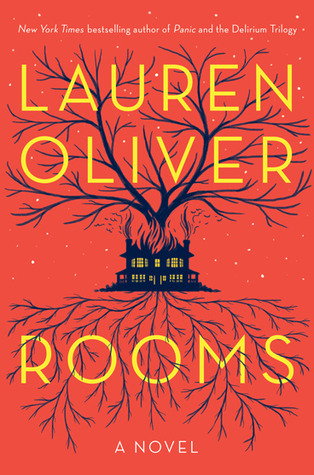
roomsFamily secrets boil to the surface in this debut adult novel by YA and kid lit author Lauren Oliver.

When Richard Walker dies after a long illness, cared for only by hired health aides, his estranged family returns to their old home to divvy up the wealth and clear up the detritus of his life. Along with the living family members sorting through the accumulated memories and clutter are two ghosts, Alice and Sandra, who have their own histories in the house as well.

Richard’s living relations — ex-wife Caroline, troubled daughter Minna and her daughter Amy, and tortured teen Trenton — bring all their dysfunctional strife and trauma with them as they examine the rooms of the house and make sense of what’s left. And for Alice and Sandra, the reappearance of the family members brings up their own sets of memories of their long years spent haunting the house, as well as the living years that came before.

I read Rooms expecting a ghost story, but it’s really more of a sad story of all the various ways people can hurt each other and hurt themselves. No one is happy here; in different ways, the Walkers and the ghosts have suffered sorrows in which they’ve had a hand.

The concept of the ghosts is rather interesting. Not just shades who inhabit the building, Alice and Sandra have really become one with the house. They feel each draft and splinter; the various rooms are like their organs. While the house stands and remains whole, they remain tethered to this world and to their old lives.

Rooms isn’t dull, but it also never particularly grabbed me or created any sense of suspense. Over the course of the book, each of the characters confronts the secrets and hidden truths of their lives. There’s tragedy and deception, pain and loss. What these people, alive and dead, have experienced is worthy of pity and compassion, but somehow a connection is missing. Perhaps because the book is so short, I didn’t feel that I got to know any one person well enough to truly care, so I had no investment in the outcome.

Rooms is well-written and flows quickly from one vignette to another. It’s sad rather than spooky, and lacks the oomph I would have expected in a story about ghosts and their connection to the living. Ultimately, Rooms really wasn’t my cup of tea. I prefer my Halloween reads on the edgier side.

_________________________________________

The details:

Title: Rooms
Author: Lauren Oliver
Publisher: Ecco
Publication date: September 23, 2014
Length: 320 pages
Genre: Adult fiction
Source: Library

Family Reading Time! A Book Recommendation.

8230675

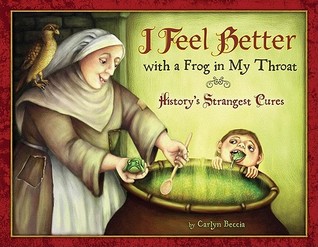
I Feel Better with a Frog in My Throat: History’s Strangest Cures by Carlyn Beccia
(published 2010)

After seeing this book mentioned recently by another blogger (thank you, Bookish!), I just knew I had to grab a copy at my local library.

What a treat!

In I Feel Better with a Frog in My Throat, author Carlyn Beccia takes us through the wild and wacky history of medicine by offering a quiz of sorts, complete with hilarious illustrations.

Which of the following helped cure coughs — caterpillar fungus, frog soup, or cherry bark? For a series of different ailments, we get a choice of cures, and then turn the page to see how they were used, by whom and when, and whether they worked a little, a lot, or not at all.

Can mummy powder help a wound to heal? How about maggots? Or maybe some puppy kisses? The answers might surprise you.

This book is a real multi-generational treat. I happened to bring it home from the library on a day when we had a full house. Before I knew it, I was reading this book, game show style, with various family members ranging from age 12 to 70. We giggled, we got grossed out, and we also learned something!

By the way, I was proud to show off my mad healing skills, thanks to my devoted (some might say obsessive) reading of the Outlander series. Thanks to Claire Fraser, I know all about uses of moldy bread, leeches, and spider webs!

If you have kids around the house — or even if you don’t — check out this book for some fun facts and silly learning.

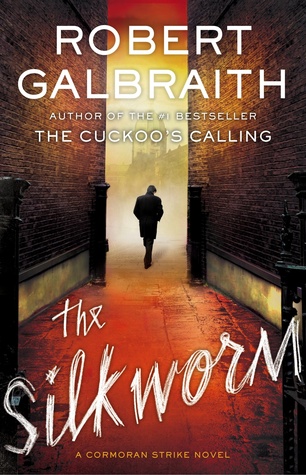
Book Review: The Silkworm by Robert Galbraith

Here’s a quick look at the 2nd book in Robert Galbraith’s detective series:

(Okay, we all know the author is J. K. Rowling, right?)

The Silkworm (Cormoran Strike, #2)Synopsis (Goodreads):

When novelist Owen Quine goes missing, his wife calls in private detective Cormoran Strike. At first, Mrs. Quine just thinks her husband has gone off by himself for a few days—as he has done before—and she wants Strike to find him and bring him home.

But as Strike investigates, it becomes clear that there is more to Quine’s disappearance than his wife realizes. The novelist has just completed a manuscript featuring poisonous pen-portraits of almost everyone he knows. If the novel were to be published, it would ruin lives—meaning that there are a lot of people who might want him silenced.

When Quine is found brutally murdered under bizarre circumstances, it becomes a race against time to understand the motivation of a ruthless killer, a killer unlike any Strike has encountered before…

J. K. Rowling made quite a stir when news of her authorship of the pseudonymously published mystery book, The Cuckoo’s Calling, was leaked last year. Rowling said in several interviews that she wanted the experience of being a new writer, outside the glare of the intense media scrutiny that follows her every move. The Cuckoo’s Calling was Rowling’s 2nd book for adults (after The Casual Vacancy), written in her post-Potter years — and once author Robert Galbraith was revealed to be Rowling, sales of The Cuckoo’s Calling skyrocketed. I enjoyed The Cuckoo’s Calling quite a bit; you can read my review here.

In this second Galbraith book (of a reportedly 7-book series), we pick right back up with detective Cormoran Strike, a truly wonderful character and probably the best element of these books. Strike is a big man, fearsome to behold, despite his missing leg stemming from a war injury suffered during his army service in Afghanistan. Strike is smart, obstinate, and unswerving once on the scent of a clue. He makes enemies fairly easily, and has gained notoriety in the wake of the high-profile murder he solved in The Cuckoo’s Calling. He’s also the illegitimate son of a superstar rocker, and the press loves to dwell on all the sordid details that Strike would just as soon ignore.

In the months since his brush with fame, Strike finds himself in high demand to solve cases for the rich and powerful, usually involving infidelity and general skeeviness, and perhaps that’s why he feels both pity and interest when sad-sack Leonora Quine shows up in his office asking for his help. At first, it’s a missing person case, as Leonora’s author husband has disappeared — and unlike his previous periods of hiding out and sulking, he hasn’t shown up again. As Strike begins to dig, he discovers that Owen Quine is a not terribly successful writer whose newest unpublished work skewers allies and enemies alike. There are a lot of powerful people who’d like to make sure this book never sees the light of day — and once Quine’s mutilated body is discovered, all of the book’s subjects become murder suspects.

Plot-wise, The Silkworm teeters on the edge of being overly complicated. There are dates, times, objects, motives, and secrets to unravel, on top of which, the plot synopsis for Quine’s book is a seemingly coded key to each of the main players and their hidden shames and scandals. My main complaint about The Silkworm has to do with Quine’s writing. Honestly, it’s every bit as terrible as it’s supposed to be, and his book is so heavily symbolic that only the most inside of insiders could possibly have any clue who the people being lambasted might be. I just couldn’t quite buy the idea that this awful manuscript by a washed-up, one-hit-wonder of an author could generate that much attention and kick off such a publishing world crisis.

The Silkworm is densely plotted and moves forward at an incredibly fast pace — so even though it felt a bit more convoluted than strictly necessary, I still couldn’t look away. When Strike finally solves the murder, we more or less just have to take his word for it. Yes, it’s all explained, but I’m not sure that I believe that even the brilliant Cormoran Strike could really make the intuitive leap necessary to put it all together.

Still, I enjoyed spending more time with Cormoran Strike and his terrific assistant Robin Ellacott quite a bit. They’re both fantastic characters, and the book is at its most engaging when we follow their interplay and their own inner lives and struggles. The murder mystery is twisted and suspenseful, but eventually it starts to feel like a bit too much. Full disclosure: I’m not much of a mystery fan in general, so my opinion of the case and its resolution is probably colored by that. I’d love to hear what people who are bigger mystery/thriller fans have to say about The Silkworm!

Do I recommend The Silkworm? Yes! Will I read more by Robert Galbraith? Absolutely yes! I’m really looking forward to the next installment in the Cormoran Strike series, mostly for the pleasure of spending time with Strike himself — although we all know that Rowling/Galbraith can spin a good yarn, and I’m always up for seeing whatever she chooses to do next.

_________________________________________

The details:

Title: The Silkworm
Author: Robert  Galbraith (aka J. K. Rowling)
Publisher: Mulholland Books/Little, Brown and Company
Publication date: June 24, 2014
Length: 455 pages
Genre: Mystery
Source: Purchased


Book Review: The Ship of Brides by Jojo Moyes

20510869In 1946, thousands of war brides set sail to join the men they married and start their new lives. Can you imagine the bravery involved? Around the world, in the midst of the second World War, local girls fell into hasty, romantic marriages with soldiers stationed in their towns. Is there a more swoon-worthy ideal than the heroic GI, on leave for a few days, wooing the local girl and then heading back into battle?

Following the war, the British government made it their business to reunite the brides and their men, commissioning ships to transport the young women to England. Competition to get onboard was fierce; the brides lived in suspense, waiting for their letters to arrive to confirm that it would finally be their turn.

In The Ship of Brides by Jojo Moyes, originally published in 2005 and getting its first US release this month, we follow the journeys of four Australian war brides as they embark on their life-changing journeys. As the story progresses, we get to know more about each young woman, what makes her tick, and how she ends up crossing oceans for the sake of love. We meet:

  • Jean, the 16-year-old party girl, uneducated and slightly crass, but with a taste for fun and a daring spirit. Jean seems to 1373381genuinely love her soldier Stan, whom she married in a flurry of flirtation.
  • Avice, a wealthy society girl who always strives to be seen as the epitome of proper wifey-ness. Avice always has to be just that much better than everyone else.
  • Maggie, a farm girl who’s devoted herself to caring for her father and brothers for the last few years. She’s never been away from home until now — but can a carefree country girl find happiness among strangers in England?
  • Frances, a nurse who’s seen the horrors of war first-hand caring for released POWs in army hospitals. Frances has a reserve and dignity about her, and doesn’t appear to be caught up in the girlish frivolity of the other brides. There’s something going on behind the quiet appearance; Frances is clearly a woman with secrets.

As The Ship of Brides begins, we find out that the bride program is winding down. Some earlier voyages were made aboard luxury liners — but disappointingly for Avice and some of the others, the ship available for our group is the HMS Victoria, a British aircraft carrier that’s seen better days. Rather than sailing in comfy staterooms and dining in formal dining rooms, these brides are provided with hastily built dorm-style cabins in the nooks and crannies of the naval ship, allowed up on deck for exercise, and eating in the converted mess areas. Oh, and the sailors’ areas are strictly off-limits: Yes, these are newly married brides — but they’re also young women spending six weeks at sea in close quarters with a bunch of sailors… and you really can’t be too careful, at least as far as the Navy is concerned.

The Ship of Brides provides a vivid depiction of life on board the ship, aptly showing the unlikely contrast of frilly women’s fashions and the need for a makeshift hair salon with a naval vessel full of planes, fuel, gray walls, and a company of Marines. It’s not just the brides venturing into life-changing territory. For the men on board, the journey represents their voyage home from war — a return to normalcy, to civilian life, and to a peace-time existence that has only been a distant memory during the war years. For the brides as well as for the sailors and soldiers, the six weeks of the voyage are full of uncertainty, hope, and fear.

1172548Fear especially comes into play for the brides as they look ahead toward their married lives. Most had whirlwind romances and hasty marriages; for many, their time spent thus far with their new husbands can be counted in days or weeks. And yet, here they are, sailing around the world and leaving everything behind in pursuit of love and happiness. Nothing is guaranteed, though. After the initial giddiness of the departure from Sydney, the brides inhabit a sort of purgatory, an in-between time with no assurance of a happily-ever-after. Over the course of the journey, several brides receive the dreaded Not Wanted Don’t Come telegram — and once the husband has changed his mind, the journey is over for that bride, who is taken off ship at the next available port and sent back home to pick up her life in Australia once again. No matter how excited and in love the brides are, no matter how romantic their stories of wartime wooing, each knows that this could possibly be her own fate, and the nervous energy of uncertainly underlies each waking hour.

The book gets off to a somewhat slow start, and it’s not immediately clear at the outset who the main characters are and about whom we’re really intended to care. But within a few chapters, we begin to know the brides more deeply, and as the story progresses, we become completely invested in their fates and their potential for finding happiness.

The characters themselves are sharply defined, each with her own story to tell. Frances is the most interesting of the lot and the one whose journey I found the most compelling. There’s a noble tragedy to her tale, and I couldn’t help feeling her pain and her hope as the story unfolded. In many ways, The Ship of Brides is an old-fashioned love story, but with a sense of honor and hopefulness that I found utterly romantic. The young women are often depicted as silly girls, chasing dreams of glamorous love that can’t possibly hold up in real life, and yet there’s something so brave and vulnerable in their commitment to their dreams, stepping out into the unknown in pursuit of their hopes for happiness.

The Ship of Brides is truly a lovely book, perfectly capturing the heady adventure of wartime love, and the bravery of countless young women who took the ultimate risk in pursuit of a dream. I’d never really known much about the war bride phenomenon, and found this book to be an eye-opening peek at a unique little corner of history. I learned a lot, and yet never felt like I was reading a history lesson. Instead, I became swept up by the personalities and courage of the characters, and felt like I was on the edge of my seat, hoping and praying for a happy ending.

If you enjoy a well-written love story with unique characters and a moving narrative, check out The Ship of Brides! As for me, I’ll be reading as many books by this author as I possibly can, starting with Me Before You for a November book group selection.

See my reviews of more books by Jojo Moyes:
The Girl You Left Behind
One Plus One

_________________________________________

The details:

Title: The Ship of Brides
Author: Jojo Moyes
Publisher: Penguin Books
Publication date: October 28, 2014 (originally published in UK in 2005)
Length: 464 pages
Genre: Historical fiction
Source: Review copy courtesy of Penguin Books via NetGalley