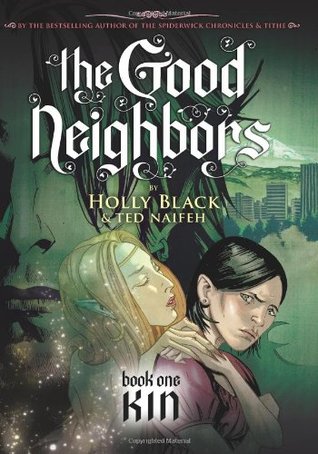
Graphic Reaction: The Good Neighbors series by Holly Black

Let’s talk about the terrific trilogy I just read! Presenting…

KinKith 0-439-85564-0

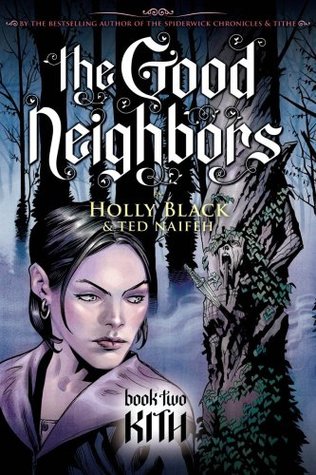
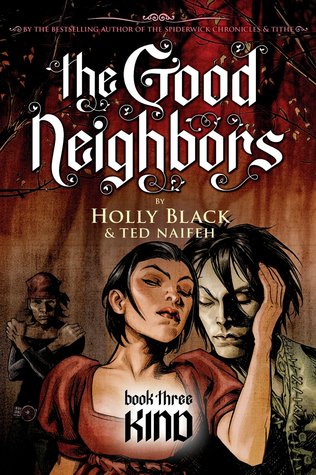
Holly Black excels at creating beautiful yet dangerous faerie worlds in her novels, and here she does so in graphic novel format.

Kin, Kith, and Kind tell the story of Rue Silver, a seemingly normal high school student whose life starts falling apart when her mother disappears. When her father, a folklore professor at the local university, is accused of murdering a student, things gets decidedly weirder.

Rue sees odd visions — people with horns or wings, a creature in the tree outside her house — and remembers all the slightly bizarre things about her mother. Like, for example, how her beautiful mother never seems to age, and how she hangs out naked in the garden, and how the flowers seem to respond to her.

The truth is slowly revealed: Rue’s mother is a faerie, making Rue only half-mortal. And it turns out there’s a plot afoot: Rue’s grandfather Aubrey is a faerie king, and wants to claim the entire city as a world for his people.

These books are such fun! There’s drama and danger, romantic love, passionate encounters, and familial love and loyalty at stake. The story builds, with Rue evolving into a force to be reckoned with, the more she claims her birthright and power.

I really liked the illustrations, which are in black and white throughout the three books. Rue and her friends are all distinct and well-drawn, and I love Rue’s depiction as a cool, funky, rebellious girl, in looks as well as in actions. The inhabitants of the faerie world are visually wonderful, with wings or fangs or talons, beautiful and menacing, and each one different and unusual. The details are terrific, and I particularly love the pages with crowd scenes, where all the various denizens of faerie (or the human world) appear as individuals, even when the page is teeming with them.

The story starts small, focusing on Rue and her personal dilemmas, and grows to a much wider scale, culminating in a fight for survival between the human and faerie worlds.

These books are a quick read, and ideally should be read right in a row for peak enjoyment. I found the Good Neighbors trilogy a really nice treat after a lot of heavier reading, and recommend them as a (dare I say it?) magical diversion when you’re looking for something a bit different to spend your time with.

_________________________________________

The details:

Title: Kin (book 1), Kith (book 2), Kind (book 3)
Author: Holly Black
Illustrator: Ted Naifeh
Publisher: Graphix
Publication date: 2008 – 2010
Length: 128 – 144 pages
Genre: Graphic novel
Source: Library

Blog Tour & Giveaway: The Last Summer at Chelsea Beach by Pam Jenoff

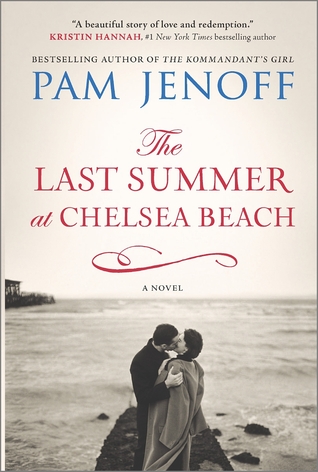
Thank you for joining me for my stop on the blog tour for Pam Jenoff’s new historical romance, The Last Summer at Chelsea Beach! And don’t forget to check out my giveaway — scroll down to enter… and good luck!

Last Summer

Synopsis:

Summer 1941  

Young Adelia Monteforte flees fascist Italy for America, where she is whisked away to the shore by her well-meaning aunt and uncle. Here, she meets and falls for Charlie Connally, the eldest of the four Irish-Catholic boys next door. But all hopes for a future together are soon throttled by the war and a tragedy that hits much closer to home.

Grief-stricken, Addie flees—first to Washington and then to war-torn London—and finds a position at a prestigious newspaper, as well as a chance to redeem lost time, lost family…and lost love. But the past always nips at her heels, demanding to be reckoned with. And in a final, fateful choice, Addie discovers that the way home may be a path she never suspected.

My Thoughts:

I have really mixed feelings about this book. First, the positive: I thought the author did a great job conveying the feel of Philadelphia and the Jersey beaches in the 1940s. The street scenes and depictions of life in a summer beach town were very convincing. I really enjoyed seeing Adelia’s unofficial adoption into the Connally clan. This big, noisy Irish family just opened their hearts and home to her, and it was heartwarming to see this lonely, frightened immigrant girl find a place to fit in.

Likewise, the scenes set in wartime London were stirring, especially seeing the devastation of the Blitz and the danger of simply walking down a street, as well as the sad plight of war orphans and the courage of the war correspondents and soldiers setting off on secret missions. The risks and uncertainty add a sense of breathlessness to every interaction, and I liked seeing Addie find a place amidst the chaos and confusion, seeming to discover a calling of her own.

What worked less well for me was the romance, or rather, romances, that are at the heart of the story. To put it bluntly, I just didn’t buy any of Addie’s love interests. I found her actions and decisions confusing, and even by the very end of the story, I wasn’t convinced by her supposed motivations or feelings. Part of the problem may have been the condensed time frame of the story, covering about four years starting from when Addie is sixteen. An awful lot happens in that amount of time, including romantic entanglements that spring up almost instantly and some that seem to dissolve just as quickly.

For me, The Last Summer at Chelsea Beach seemed over-plotted, and I didn’t feel that the emotional arcs built, but rather jumped from point A to point B (or even C). The romantic aspects of this book just didn’t gel, but I did enjoy the historical setting and the way the descriptions evoke a real sense of a by-gone era.

Find out more:


Add to Goodreads badge

Purchase Links

Amazon | Books-A-Million | Barnes & Noble

About the Author:

Pam-Jenoff-credit-Dominic-Episcopo-200x300Pam Jenoff is the Quill-nominated internationally bestselling author of The Kommadant’s Girl. She holds a bachelor’s degree in international affairs from George Washington University and a master’s degree in history from Cambridge, and she received her Juris Doctor from the University of Pennsylvania. Jenoff’s novels are based on her experiences working at the Pentagon and also as a diplomat for the State Department handling Holocaust issues in Poland. She lives with her husband and three children near Philadelphia where, in addition to writing, she teaches law school.

Connect with Pam:

Website | Facebook | Twitter

_________________________________________

The details:

Title: The Last Summer at Chelsea Beach
Author: Pam Jenoff
Publisher: Mira
Publication date: July 28, 2015
Length: 384 pages
Genre: Historical fiction
Source: Review copy courtesy of TLC Book Tours

tlc logoFor further information, stop by TLC Book Tours to view other blog tour hosts.


GIVEAWAY!

I’m excited to be giving away a bookbag and finished copy of the book! Want to win? No fancy footwork required — just leave a comment below answering any one of these questions:

– What’s the best book you’ve read set during wartime?
– What beach holds special memories for you, and why?
– If you could live in a different period in history, what would you choose?

Extra credit: Do you follow Bookshelf Fantasies? Let me know in the comments if you follow me and how (email, Twitter, WordPress, etc), and you get an extra entry in the giveaway!

That’s it! I’ll do a random drawing on September 1st to pick a winner. Thanks for playing along!

(Sorry — US/Canada only this time around)

Take A Peek Book Review: I Am Princess X by Cherie Priest

“Take a Peek” book reviews are short and (possibly) sweet, keeping the commentary brief and providing a little peek at what the book’s about and what I thought.

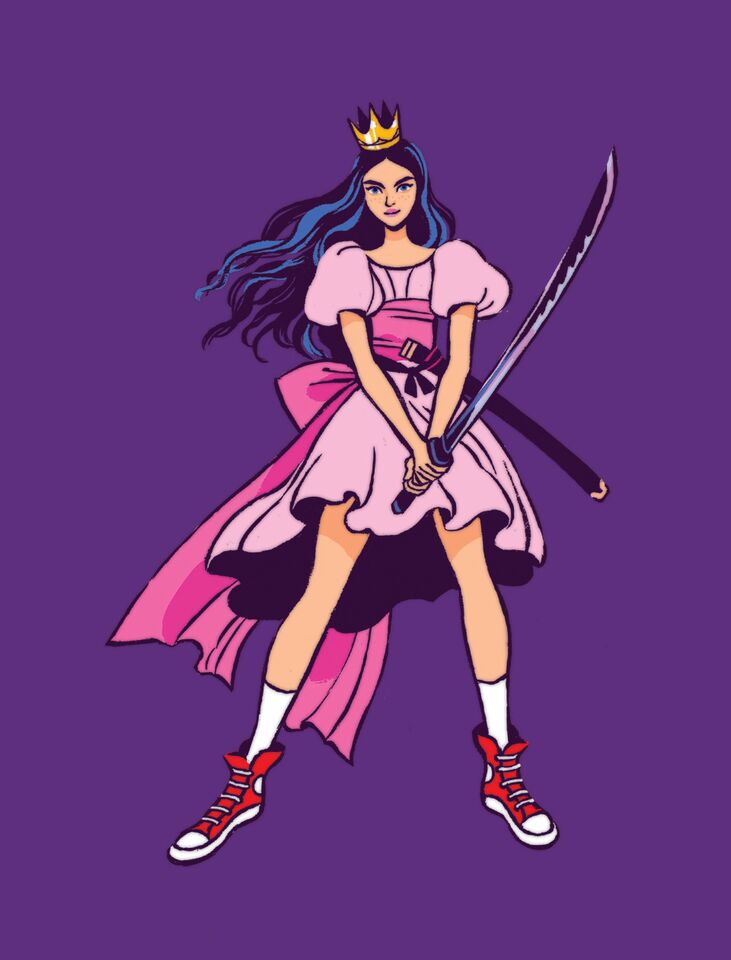
I Am Princess X

Synopsis:

(via Goodreads)

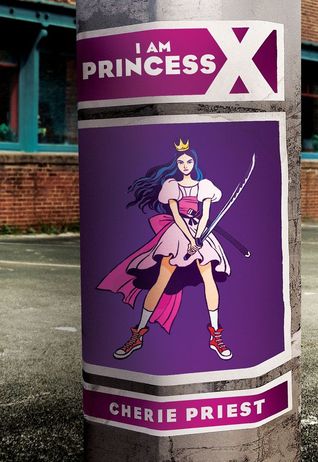
Best friends, big fans, a mysterious webcomic, and a long-lost girl collide in this riveting novel, perfect for fans of both Cory Doctorow and Sarah Dessen; illustrated throughout with comics.

Once upon a time, two best friends created a princess together. Libby drew the pictures, May wrote the tales, and their heroine, Princess X, slayed all the dragons and scaled all the mountains their imaginations could conjure.

Once upon a few years later, Libby was in the car with her mom, driving across the Ballard Bridge on a rainy night. When the car went over the side, Libby passed away, and Princess X died with her.

Once upon a now: May is sixteen and lonely, wandering the streets of Seattle, when she sees a sticker slapped in a corner window.

Princess X?

When May looks around, she sees the Princess everywhere: Stickers. Patches. Graffiti. There’s an entire underground culture, focused around a webcomic at IAmPrincessX.com. The more May explores the webcomic, the more she sees disturbing similarities between Libby’s story and Princess X online. And that means that only one person could have started this phenomenon—her best friend, Libby, who lives.


My Thoughts:

What a treat! I Am Princess X is a smart, well-written, imaginative odyssey focused on girl power and the bonds of friendship. May and Libby are deeply connected, and their true devotion to one another is what drives the search for answers forward.

Fast-paced, clever, pulse-pounding, and funny, I Am Princess X is a great story of friendship and determination, with plenty of adventure and geeky clue-chasing mixed in. The web comic that becomes a piece of the puzzle is terrific, and I really enjoyed the way the comic provides a map to the secrets of the story.

It’s nice to read a young adult novel where romance, for once, is not a factor at all. There’s lots of tech talk and references to gadgets, devices, screens, and tablets (which makes me wonder if this book will feel dated in 10 years). The plot involves hacking and spyware and questionable internet conduct — but that’s about all that could even possibly raise an eyebrow about inappropriate behavior. Otherwise, it’s practically squeaky clean, so a parent could be comfortable sharing this with mature middle school readers as well as the book’s target teen audience. (I say mature, simply because there is danger and a scary bad guy, with the main characters in serious peril. The bad guy is really creepy and threatening — deadly too.)

Overall, I found I Am Princess X to be fun, memorable and exciting. It’s got a fresh and unusual feel to it, and the narrative-plus-graphics format is very engaging. Check it out!

_________________________________________

The details:

Title: I Am Princess X
Author: Cherie Priest
Publisher: Arthur A. Levine Books
Publication date: May 26, 2015
Length: 240 pages
Genre: Young adult fiction
Source: Library

Audiobook Review: The Invention of Wings by Sue Monk Kidd

Invention of Wings 2My book group chose The Invention of Wings by Sue Monk Kidd for our August discussion book, and I was in absolute despair over how impossible it would be to find enough time to read it, when it dawned on me that I needed a new audiobook to listen to and this might be the perfect choice.

Guess what? I was right.

Almost immediately, I became totally wrapped up in this beautiful and powerful story. On top of the quality of the writing and plot, the audiobook narration seemed to suit the characters perfectly, and I was absolutely hooked.

What’s it all about? In short, The Invention of Wings is the story of two women whose lives are joined from childhood onward. One is Sarah Grimke, the daughter of a wealthy planter-class, slave-owning family in Charleston, South Carolina in the early 1800s. The other is Hetty, known as Handful, the slave girl given to Sarah as a present for her 11th birthday.

Sarah is horrified by the idea of owning a person, and her first action is to steal into her father’s library and copy a document of manumission from his law books, setting Handful free. Of course, Sarah’s parents rip up the document on the spot, but from this moment forward, Sarah and Handful’s lives are tied together.

Sarah Grimke is a historical figure, who became a famous (and infamous) public speaker and writer as an adult, as she and her sister Angelina became outspoken, ardent abolitionists and advocates for women’s rights. Handful, though, is a fictional invention, although her life and experiences could easily have been real in the American South.

In alternating voices and chapters, Sarah and Handful narrate their lives. Each presents the world around herself as she experiences it. Sarah is a prisoner of her family’s expectations and society’s beliefs and prejudices, trapped by her gender and by societal norms into a life that torments her. Handful, of course, is literally a prisoner, enslaved for life and forced to experience and witness one degradation after another, despite her mother Charlotte’s best efforts to shield her and give her strength.

The audiobook has two narrators, Jenna Lamia and Adepero Oduye, who alternately voice Sarah and Handful. It’s hard to explain how wonderful this is. Sarah speaks as a young girl at the beginning, and her voice strengthens and matures as she grows into womanhood. Sarah has a speech impediment, which we hear whenever Sarah talks, but not during the narration itself, which is as fluent as her thoughts. The narrator for the Sarah chapters also marvelously captures the upper-class Southern drawl of Sarah’s parents and siblings. Meanwhile, Handful’s chapters are told through Handful’s own speech patterns, with a deep and sorrowful musicality that is really lovely and heartbreaking to listen to.

The story itself is absolutely engrossing. The author does not shy away from the brutality of slavery, and we see the daily degradations as well as the more egregious acts of violence and cruelty. Likewise, we witness the painful journey of a girl breaking free and finding her own voice in a world where speaking out can cost you everything.

The two stories contrast nicely with each other, with themes of family and a search for freedom running through both. I didn’t always buy the idea of the parallels between the two characters’ stories. Handful says to Sarah at one point:

My body might be a slave, but not my mind. For you, it’s the other way round.

While it’s an interesting concept, there isn’t really an equivalency. Sarah may be bound by society’s strictures, but she’s still free and does not have to worry about staying alive and physically whole on a daily basis. Still, it’s worth thinking about the ways in which each woman has her life defined by forces outside her own control, and by the many small steps and defiant acts each takes to carve out her own place in a world that doesn’t value her or even deem her worthy of notice.

Both halves of the story are quite interesting, although Handful’s chapters have a much more urgent and visceral feel to them, and these are the parts of the story that affected me most deeply. Not to say that Sarah’s story isn’t compelling as well: She’s a quiet but strong presence throughout the book, with a deep moral core that propels her forward and has her constantly seeking her purpose in life.

The book ends with an afterward by the author in which she explains the origins of the novel and her research, and gives an overview of the real Sarah Grimke’s life. It’s fascinating to learn more about this historical figure, and to get a glimpse inside the novelist’s writing process, learning which parts of the story are based on real events and which are woven together from imagination and research into 19th century life.

I strongly recommend The Invention of Wings. This feels like the kind of book I’ll be pushing all of my friends and family members to read. The story itself is engrossing, but it’s the characters — deep, well-developed, and sensitively portrayed — who are the heart and soul of this important book.

_________________________________________

The details:

Title: The Invention of Wings
Author: Sue Monk Kidd
Publisher: Viking
Publication date: January 7, 2014
Audiobook length: 13 hours, 46 minutes
Printed book length: 384 pages
Genre: Historical fiction
Source: Purchased (Audible download)

Blog Tour & Book Review: What You Left Behind by Jessica Verdi

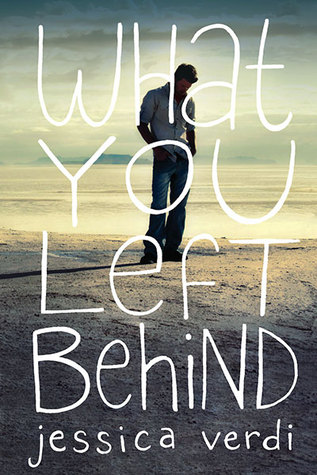
What You Left BehindWith thanks to Sourcebooks Fire, I’m delighted to be participating in the blog tour celebrating the release of What You Left Behind, the new teen novel by Jessica Verdi.

About the Book

Jessica Verdi, the author of My Life After Now and The Summer I Wasn’t Me, returns with a heartbreaking and poignant novel of grief and guilt that reads like Nicholas Sparks for teens.

It’s all Ryden’s fault. If he hadn’t gotten Meg pregnant, she would have never stopped her chemo treatments and would still be alive. Instead he’s failing fatherhood one dirty diaper at a time. And it’s not like he’s had time to grieve while struggling to care for their infant daughter, start his senior year, and earn the soccer scholarship he needs to go to college.

The one person who makes Ryden feel like his old self is Joni. She’s fun and energetic—and doesn’t know he has a baby. But the more time they spend together, the harder it becomes to keep his two worlds separate. Finding one of Meg’s journals only stirs up old emotions. Ryden’s convinced Meg left other notebooks for him to find, some message to help his new life make sense. But how is he going to have a future if he can’t let go of the past?

My Thoughts:

I’ll keep this brief… because if that synopsis doesn’t grab you and make you want to read this book, like, yesterday, then I’m not sure what else I could possibly say to grab your attention!

What You Left Behind is unusual in the increasingly crowded field of contemporary young adult fiction: It’s a teen drama full of loss and hope, told not through the eyes of the tragically dying Meg or by new love interest Joni, but by Ryden himself. I don’t recall reading any other YA novels recently with a male narrator who’s experienced anything quite like Ryden. Age 17, high school senior, father. Bereaved as a teen without every really getting to start a life with the girl he loved. Work, school, soccer, trying to be a good dad, trying to be a good son, and still trying to understand what really happened with Meg.

You can’t help but love Ryden. He didn’t ask for any of this. Meg insisted on keeping the pregnancy, even though it meant going without chemo for all those months. All Ryden wanted was to love Meg and do anything in his power to keep her healthy… and here he is six months after her death, stressed out, feeling like a terrible father, having to face the reality that the life he thought he was meant for is now forever out of reach.

Jessica Verdi’s writing is beautiful in its heartfelt sorrow and frustration and bitterness. Ryden is a giant mess, and he screws up a lot — but I challenge any reader not to feel complete sympathy with him. He’s in a horrible situation, and even though he has an amazing mother who supports him wholeheartedly, his life really does suck at the moment when we first meet him. Watching him go through the process of grieving and figuring things out and finally starting to see a glimmer of hope is painful. Ryden’s emotions are raw and brutal, and he makes some big mistakes, and really doesn’t understand the world around him or what his new life really is a lot of the time. But it’s impossible to blame him for anything. He’s in a horrible situation, not of his making, and — he’s only 17! He’s bound to make mistakes, but I can’t help but admire the courage and grit he shows in just waking up and moving forward day after day.

The author knows how to get inside a teen’s head and explore all the contradictory wants and needs lurking there. The writing doesn’t condescend and doesn’t shy away from showing the good, the bad, and the ugly. The story didn’t necessarily go where I thought it would, but I was invested every step of the way and couldn’t look away.

My only complaint is that the author made me care so much about these characters that I wanted more at the end. I like the ending of the book very much, which makes it clear that a new chapter is just beginning and that Ryden finally has a path ahead of him that can lead to happiness. But (and maybe this is the mom in me speaking!), I wanted to know more. I really want to know what Ryden’s life is like in a year, in two years, and in five. What happens next? What does he decide to do with himself? How does he grow as a person and as a father? I think it’s a testament to the power of this novel that I feel invested enough to have so many questions.

Bottom line: If you enjoy contemporary YA fiction that deals with tough subjects with honesty and emotion, don’t miss What You Left Behind. And for more by Jessica Verdi, check out her excellent previous novel, The Summer I Wasn’t Me (reviewed here).

More Info:

Purchase Here:

What You Left Behind–

Amazon | Apple | B&N | BAM | !ndigo | IndieBound | Kobo

About the Author

Jessica Verdi lives in Brooklyn, NY and received her MFA in Writing for Children from The New School. Her favorite pastimes include singing show tunes at the top of her lungs (much to her husband’s chagrin), watching cheesy TV, and scoring awesome non-leather shoes in a size 5. She’s still trying to figure out a way to put her uncanny ability to remember both song lyrics and the intricacies of vampire lore to good use. Follow Jess on Twitter @jessverdi.

Connect with Jessica Verdi

Website – http://jessicaverdi.com/

Twitter – https://twitter.com/JessVerdi

Facebook – https://www.facebook.com/authorjessicaverdi

Goodreads – https://www.goodreads.com/author/show/6442339.Jessica_Verdi

_________________________________________

The details:

Title: What You Left Behind
Author: Jessica Verdi
Publisher: Sourcebooks Fire
Publication date: August 4, 2015
Length: 320 pages
Genre: Young adult fiction
Source: Review copy courtesy of Sourcebooks Fire

Book Review: In the Unlikely Event by Judy Blume

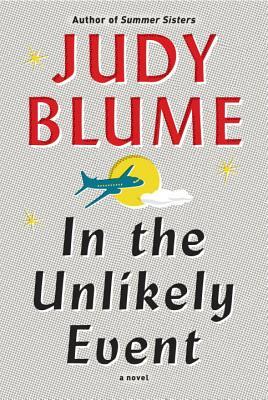
In the Unlikely EventWhen you think of historical fiction, if you’re like me, images of petticoats, palaces and kilts might fill your head. But how about fiction that tells a story of a more recent history? In Judy Blume’s new novel, In the Unlikely Event, the plot revolves around real events from the 1950s, and the effect is stunning.

If you didn’t grow up in New Jersey and weren’t around in the 1950s, you might be as shocked as I was to realize that the plane crashes that serve as a catalyst for the drama of this book actually happened. If these events weren’t actual documented history but rather a fictional invention, we’d all be shaking our heads and saying that’s it’s just too unbelievable.

The facts are these: In the winter of 1951 – 1952 in Elizabeth, New Jersey, three different planes crashed into the town within a span of three months. How is this even possible?

In the Unlikely Event shows us the horrifying plane crashes and the devastating effect on the residents of Elizabeth through the eyes of a large cast of characters, all of whom bear witness in one way or another.

The main character is 15-year-old Miri Ammerman, who lives with her mother Rusty, uncle Henry, and grandmother Irene. Miri’s best friend is Natalie Osner, daughter of the town’s very successful dentist. Each person is connected to other people, so that we meet the best friend of Natalie’s brother, the high school senior who assists in Dr. O’s office, the orphan boy who falls for Miri, the girlfriend of Miri’s uncle, and on and on in interlocking, expanding circles.

The time itself is exquisitely drawn in loving details, from the cashmere sweaters of the rich girls to the Lanz nightgowns that Miri’s friends all wear to sleep-overs, from 17-inch TVs to telephones with long cords — in all sorts of little ways, the author paints a picture of a particular era in American life. World War II is in the past, but not so distant as to be forgotten. American boys are serving in Korea. And air travel is new and fresh and glamorous. Airline stewardesses must be pretty, perky, flirty, and single. Traveling by air is a luxury, and going on an airplane is all part of the excitement.

And then the crashes start. As each plane crash occurs, the impact is felt more and more deeply by Miri and her circle of friends, family, and acquaintances. Boys at school claim it’s either UFOs or Commies behind the whole thing. One of Miri’s friends descends into mental illness and anorexia, consumed by thoughts of one of the dead airline passengers. People on the ground lose their lives as well as the passengers who fell from the sky, and the loss is random, tragic, and incomprehensible. Miri’s life changes in unpredictable ways, marriages disintegrate, friendships are changed forever, and indeed the entire community seems to lose its heart and its center.

In the midst of all this loss and suffering are some quintessential Judy Blume moments. The scenes of Miri and her friends bring back memories of the author’s classic books about preteen and teen girls, as they deal with their parents’ flaws, differences in economic status, pressure to fit in — and boys. Make-up and clothes, flirting and making out, worrying about going all the way and getting “in trouble”, fretting over missed periods — all of this is told in the voice we’ve trusted to portray young womanhood in so many earlier books, and it’s comforting and familiar here in her newest.

My only minor quibble with In the Unlikely Event is that we’re dropped into the world of Elizabeth and immediately introduced to just about every character in the story, and it’s a lot to track. Eventually, we get to know them all individually and it’s easier to understand who’s who and how they connect, but at the beginning, I found myself doing a lot of flipping backwards to figure out who a particular person was and where I’d seen them before.

Other than the early clutter of characters, the structure and richness of In the Unlikely Event works very, very well. The story is framed at the beginning and end by Miri traveling back to Elizabeth for a commemoration of that awful winter, 35 years later. It’s interesting and touching to see how all the people we followed in the 1950s have turned out, and how each has had his or her life changed and shaped by that one fateful year.

With detailed, evocative writing and characters whom we come to truly know and care for, In the Unlikely Event is a touching, compelling story that really holds a reader’s attention from start to finish. I’m very glad to have read it, and strongly recommend it.

End note: Way back when in my early days of blogging, I wrote a little salute to Judy Blume. Want to read it? You can find it here.

_________________________________________

The details:

Title: In the Unlikely Event
Author: Judy Blume
Publisher: Knopf
Publication date: June 2, 2015
Length: 397 pages
Genre: Adult fiction
Source: Library

Blog Tour & Book Review: The Uninvited by Cat Winters

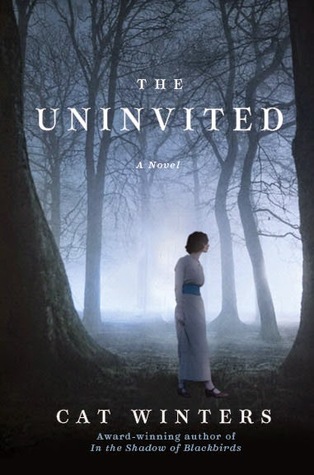
The Uninvited

I admit, I had seen a ghost or two.

I’m delighted to be participating in the blog tour celebrating The Uninvited, a new novel by Cat Winters. This is the author’s first book for adults, following two successful YA releases. Thank you, TLC Book Tours, for inviting me to participate!

Synopsis:

Twenty-five-year-old Ivy Rowan rises from her sickbed after being struck by the great influenza epidemic of 1918, only to discover that the world has been torn apart in just a few short days.

But Ivy’s lifelong gift—or curse—remains. She sees the uninvited ones—ghosts of loved ones who appear to her, unasked for and unwelcomed, for they always herald impending death. On that October evening in 1918, Ivy sees the spirit of her grandmother, rocking in her mother’s chair. An hour later, she learns her younger brother and father have killed a young German out of retaliation for the death in the Great War of Ivy’s other brother, Billy.

Horrified, she leaves home and soon realizes that the flu has caused utter panic and the rules governing society have broken down. Ivy is drawn into this new world of jazz, passion, and freedom, where people live for today, because they could be stricken by nightfall. She even enters into a relationship with the murdered German man’s brother, Daniel Schendel. But as her “uninvited guests” begin to appear to her more often, she knows her life will be torn apart once again, and terrifying secrets will unfold.

My thoughts:

The Uninvited crept up on me, little by little, until I was completely hooked. I wouldn’t say it has a slow start, because there’s certainly nothing about the pace to criticize. What I mean, really, is that it’s subtle and quiet to start with. The author sets the story in small-town Illinois, which should give the book a quaint, peaceful feel — except for the particular place in history chosen as the setting.

It’s October of 1918. Anti-German (and more generally, anti-foreigner) sentiment couldn’t be higher. The American Protection League is busy harassing outsiders into isolation and flight, spying on “good” Americans to make sure they’re behaving correctly, and inciting anger and violence in formerly friendly neighbors. While families lose husbands and sons to the Great War overseas, the horrible and deadly influenza pandemic strikes without warning, and the death toll mounts unbelievably quickly.

Ivy, the main character, is a young woman raised on a farm, frightened by her alcoholic, violent father, in mourning for her brother Billy, killed in the war. Hatred and fear are the overriding emotions all around her, but once she flees her family home to start fresh in town, she encounters friendship, passion, and love that she never expected. Ivy is an unusual character, really well defined, who seeks independence when she realizes how intolerable her family has become. She sets out to make a difference any way she can, and ends up driving an ambulance on a rogue mission to rescue the poor and unwanted flu victims who aren’t white or American enough to merit treatment in the one good hospital in town.

I loved Ivy’s backbone. She goes where she needs to go, stands up to creepy APL members, and chooses connection and physical intimacy despite all the reasons to stay away. She’s drawn to the wild jazz music she hears every night, which represents freedom and a new kind of society to her.

From setting the stage at the beginning, the author builds the tension and stakes as the story progresses. And then, bam! By about 3/4 of the way through the book, I suddenly found myself gobbling up every word, unable to look away.

Something happens along the way which changes the meaning of everything that came earlier, but I won’t say more than that. It’s enough to say that this is one of those books that’ll make you want to start all over again from the beginning once you’ve read it, to see what you missed the first time around and look at events from a different angle.

The Uninvited is a curious mix of historical fiction and ghost story, and the combination really works! The setting and time could not be more dramatic, and I loved the cast of characters, including memorable supporting characters (such as the frightened Red Cross volunteers and Ivy’s ex-suitor) in addition to Ivy herself and her sexy but aloof love interest Daniel.

Absolutely recommended for anyone with an interest in the time period, as well as anyone who enjoys well-developed characters and a plot that informs, moves, and surprises the reader. Okay, basically, recommended for everyone! I plan to read Cat Winters’s YA books as soon as I can, and I do hope she’ll continue writing more for adults as well.

Find out more:

Add to Goodreads badge
 
Purchase Links: Amazon | IndieBound | Barnes & Noble
 

About the Author:

Cat WintersCat Winters’s debut novel, In the Shadow of Blackbirds, was released to widespread critical acclaim. The novel has been named a finalist for the 2014 Morris Award, a School Library Journal Best Book of 2013, and a Booklist 2013 Top 10 Horror Fiction for Youth. Winters lives in Portland, Oregon, with her husband and two children.

Find out more about Cat at her website, and follow her on tumblr, Pinterest, Facebook, and Twitter.

_________________________________________

The details:

Title: The Uninvited
Author: Cat Winters
Publisher: William Morrow Paperbacks
Publication date: August 11, 2015
Length: 368 pages
Genre: Adult fiction
Source: Review copy courtesy of TLC Book Tours

tlc logoFor further information, stop by TLC Book Tours to view other blog tour hosts.


Book Review: Never Always Sometimes by Adi Alsaid

Never Always SometimesNavigating high school is never easy. In the new YA novel Never Always Sometimes, best friends Dave and Julia decide at the end of their 8th grade year that they will not turn into high school clichés. They want to be unusual, true to themselves, outside of the pack mentality that takes over otherwise normal kids’ lives. So Dave and Julia create a “Nevers” list — all of the high school clichés they vow never to do.

Never be identified by where you eat lunch.

Never host or attend a beer party.

Never hook up with a teacher.

Never date your best friend.

After the 8th grade prologue, the book jumps forward to the end of senior year. Senioritis has definitely set in. College acceptances in hand, there’s only the tedium of continuing to attend classes for the reamining months until graduation. But then Dave finds the crumpled-up old copy of the Nevers list at the back of his locker, and an idea is born: Dave and Julia have made it all the way through high school without doing any of the things on their list — so what if they start doing them now, just for fun?

And so Dave and Julia embark on a wild few months of drunken house parties, hair dying, stalking a teacher, running for prom king, and otherwise breaking out of their own happy little world by embracing the “norms” of high school life.

Of course, there are glitches. Dave and Julia have spent all of high school as a complete entity of two. Best friends, whose lives absolutely revolve around one another. They’ve never needed anyone else, and so haven’t bothered with anyone else. They’re not unpopular, exactly — but they’ve also never admitted anyone else into their sphere. When they start their “nevers” project, they’re shocked to discover friendship, fun, and acceptance, and to discover that there are other people worth hanging out with.

The biggest problem of all, though, is that Dave has spent all of high school madly in love with Julia, but never acknowledging it. He’s never had reason to think she might return his feelings, and it’s the classic “wouldn’t want to ruin our friendship” situation, from Dave’s perspective. He’s never dated anyone else, because all he can see is Julia. Julia has dated a bit, but nothing serious — most likely because, at the end of the day, neither really needs anyone else in their lives.

Where it goes from here, well… jump down to the spoilers section if you really want to know. Let’s just say, while there are crazy antics and adventures galore, Dave and Julia also discover plenty of unintended consequences.

I really liked the characters of Dave and Julia. They’re smart and funny, and their banter and easy joking manner with one another is cute and fun. It’s plain to see that they fit together perfectly in their friendship. Their isolation from everyone else might be misguided, but then again, their little universe really does seem complete at times.

The overall arc of the story is engaging and fast-paced. There are emotional issues addressed: Dave’s mother died when he was nine, and I think he gets the warmth and affection from Julia that his still-mourning father and brother don’t really provide. Julia has a happy home life with her two dads, but she’s drawn to her absent bio-mom, who’s a special, free-spirited butterfly who sends postcards from around the world describing her unique and extraordinary experiences, but who’s never actually there for Julia in any real way. The crux of the “nevers” list and Julia’s devotion to it may come down to her unresolved feelings toward her mother — is she embracing this idea of being outside the social norms as a way to prove to herself that she’s worthy of her mother?

The idea of escaping clichés is explored in many ways in this books. Julia and Dave have managed to be outsiders throughout high school, but when they set out — ironically — to join the crowd, they discover that being apart from the crowd all this time deprived them of some legitimate fun as well. Maybe everything they scorned isn’t all bad — maybe there are people who might enhance their lives, instead of just being looked down upon as sheep.

SPOILERS FROM HERE ON OUT, SO AVERT YOUR EYES IF YOU DON’T WANT TO KNOW!

When Dave finally admits to Julia that he likes a girl he met at a party, Julia is hit over the head with the realization that she’s loved Dave all along. These two. Their timing sucks. Because Dave can finally have what he’s always wanted, but he’s not sure it’s actually what he wants anymore.

Dave and Julia do finally hook up, but only after he’s gotten involved with a sweet, popular, “normal” girl. The cliché, from countless YA novels, is the idea of best friends finally realizing (usually at the end of the book) that they’re actually perfect for each other romantically as well. That’s not the case here. They should be perfect together, but once they start sleeping together, Dave realizes that a romantic relationship with Julia actually doesn’t work for their friendship.

I’ll admit that I didn’t quite buy this scenario. Is it just a matter of timing? If Dave hadn’t started dating Gretchen, would things have worked with Julia? I’d almost have preferred to see it play out without the complication of another love interest, so it would be clearer whether Dave’s love for Julia was always just an unrealistic crush on a best friend, or if their connection really could have turned into a romantic connection too.

I feel the need to add that a sex scene that marks the turning point of the story was very odd — at least, it was to me. There’s a casual air to it that seemed out of place, especially for two characters for whom it’s so momentous an occasion in their history together, as well as given the fact that they’re both virgins at the time. In addition (and this may seem kind of nitpicky), there’s no mention in the scene as to whether they’re having protected or unprotected sex. If it’s not specified, do we assume it’s unprotected? I kept waiting for the other shoe to drop (metaphorically speaking), but this part of the equation was never mentioned. It felt to me like it would have been easy to include a reference to the character reaching for a condom, because otherwise, especially given the setting, the unplanned nature of the event, and the virginity of the two characters, it really seems like they just went for it without protection. And not that I feel that YA lit needs to get preachy, but I do think a quick mention of protection wouldn’t have hurt the scene at all and would have sent a positive message about responsibility and taking care of oneself.

I also had a bit of a hard time with the subplot of Julia trying to seduce her math teacher, awkwardly and jokingly, of course, but I found it hard to find this part funny. It just felt kind of weird and awful to me, but maybe that’s my adult brain taking over and criticizing the actions rather than seeing the hilarity of it (which clearly Julia was feeling).

I do want to mention that the writing in Never Always Sometimes is really a stand-out in the crowd of YA fiction. I just loved the author’s ability to paint pictures with language and to use clever word play to evoke a feeling or sum up a situation. For example, I loved this:

How Julia had felt something so deeply for so long without knowing it herself was a mystery. As if love was a fugitive harboring in an attic, hidden even from the people residing in the house.

This too:

Before, when Dave had dreamed about love, this is what it looked like:

It was lazy. Love was lazy as hell. Love laid around in bed, warm from the sheets and the sunlight pouring into the room. Love was too lazy to get up to close the blinds. Love was too comfortable to get up and go pee. Love took too many naps, it watched TV, but not really, because it was too busy kissing and napping. Love was also funny, which somehow made the bed more comfortable, the laughter warming the sheets, softening the mattress and the lovers’ skin.

END OF SPOILERS

Wrapping it all up, I did actually enjoy Never Always Sometimes very much. The balance between serious and funny was kept up very well throughout, and the story explores some interesting ideas about best friendship and trying so hard to be different that you end up missing out on so many good experiences along the way. Julia and Dave are both great characters, although since we spend a lot more of the story viewing events through Dave’s eyes, I felt as though I was playing catch-up a bit when the narrative shifts to Julia’s perspective.

As I mentioned, beyond the plot, I really enjoyed the author’s use of language and his writing style, and I’d love to read more of his work.

This is a fun read that has some good food for thought too. Recommended for anyone who enjoys contemporary YA fiction — and if you’re a parent to a teen, I could see this book generating some really good discussion, if you’re open to it.

_________________________________________

The details:

Title: Never Always Sometimes
Author: Adi Alsaid
Publisher: Harlequin Teen
Publication date: August 4, 2015
Length: 320 pages
Genre: Young adult contemporary fiction
Source: I won an ARC in a giveaway! Thank you to Krystal at Books Are My Thing!

Book Review: Maybe in Another Life by Taylor Jenkins Reid

Maybe in Another LifeAre our lives determined by fate? Or is it all just a matter of chance?

Is there just one person in all the world that we’re meant to be with? Or is life more of a multiple-choice quiz, where different answers may be correct in different circumstances?

In Maybe in Another Life, the characters say one thing, but their lives and actions give a very different message.

Hannah Martin, age 29, has lived anywhere and everywhere, but has no idea where she truly belongs. After a go-nowhere disastrous affair in New York ends, Hannah moves back “home” to Los Angeles, to reunite with her best friend Gabby, pick up the pieces, and start from scratch.

And maybe, just maybe, rekindle an old flame with her high school sweetheart Ethan.

On their first night out on the town, Hannah faces a moment of truth: Should she go home with Ethan and see what happens… or call it a night, head back to Gabby’s place, and spend the night alone? At the moment of decision, the narrative of Maybe in Another Life splits.

From this moment on, we follow two separate narrative threads in alternating chapters. In one, Hannah does go home with Ethan, their dormant feelings are rekindled, and they begin to work through what an adult relationship might look like. In the other, Hannah turns Ethan down, continues on the way home with Gabby, and is struck by a hit-and-run driver, resulting in serious injuries and a lengthy hospital stay.

In both versions of Hannah’s life, she’s confronted with choices. What does her future hold? How do you know if you’re meant to be with someone? How do you recognize a soulmate? What do you give up for a relationship, and what are the deal-breakers?

Likewise, in both versions, Hannah tries to puzzle out the question of destiny and predetermination:

“You think things are meant to be?” I ask her. For some reason, I think I’ll feel better if things are meant to be. It gets me off the hook, doesn’t it? If things are meant to be, it means I don’t have to worry so much about consequences and mistakes. I can take my hands off the wheel. Believing in fate is like living on cruise control.

Hannah has been so busy searching for the perfect life and what she’s “meant” to do, who she’s “meant” to love, that she’s never fully engaged with her options anywhere she’s been.

“Doesn’t it scare you?” I ask her. “To think that you might have gone in the wrong direction? And missed the life you were destined for?”

Hannah’s life is so messy that she has to believe there are other forces at play:

“I mean, I think I have to believe that life will work out the way it needs to. If everything that happens in the world is just a result of chance and there’s no rhyme or reason to any of it, that’s just too chaotic for me to handle. I’d have to go around questioning every decision I’ve ever made, every decision I will ever make. If our fate is determined with every step we take… it’s too exhausting. I’d prefer to believe that things happen as they are meant to happen.

Ironically, the split narrative demonstrated that it is all random, and that every decision changes the course of events. Towards the end of the book, a party guest talks about the multiverse theory, in which every decision leads to multiple universes in which all possible outcomes exist. From the moment Hannah decides to go home with Ethan — or not to go home with Ethan — she has two different parallel lives. In both lives, she confronts pain and difficult choices, finds a soulmate, faces hard truths, and finally sets off on the path toward professional fulfillment as well as a life filled with love.

The lovely thing about Maybe in Another Life is that both halves of the story feel right! Neither of Hannah’s two lives is 100% easy, but both feel real and both seem like valid outcomes. In both, Hannah begins to grow, take chances, and own up to the decisions she’s made that lead her to this point. Both feel like the absolutely right thing for her, and she wouldn’t have it any other way.

I really enjoyed the writing in Maybe in Another Life, which maintains a light touch even in heavy situations. Hannah herself is a person with a lot of room to grow, but she’s self-knowing enough to own up to her mistakes and want to make better choices. And through it all, she’s got a great sense of humor, is a devoted friend, and knows that she needs to finally do something with her life.

The author gives Hannah certain quirks and habits that are both charming and make her feel like an individual, rather than a stock character. In particular, Hannah’s need to always have her hair in a high bun and her constant craving for cinnamon rolls are recurring motifs, and to my surprise, the repetition is actually pretty charming (rather than annoying, as it so easily could have been).

I liked the double narrative, although occasionally I lost track of which event happened in which version of Hannah’s life. No matter, though: Both halves of the story contain ups and downs, loves lost and found, and the true and deep friendship between Hannah and Gabby, which is a key element of the entire story. It’s not often that contemporary novels emphasize the huge difference a good friendship between women can make, while also dealing with romantic entanglements and all sorts of other drama. But here, it’s crystal clear that the bond between Hannah and Gabby is the most important element for both women, grounding them in such a way that they’re able to make their life decisions from a position of strength and support.

Maybe in Another Life is a very quick read. It’s light, but heartfelt. Not sugary, not glossing over the hard stuff, Maybe in Another Life shows a young woman dealing with real life… and the way every decision has consequences. This book is quite fun to read, and yet manages to be emotionally real even amidst all the jokes about cinnamon rolls.

_________________________________________

The details:

Title: Maybe in Another Life
Author: Taylor Jenkins Reid
Publisher: Washington Square Press
Publication date: July 7, 2015
Length: 352 pages
Genre: Adult contemporary fiction
Source: Review copy courtesy of the publisher via NetGalley

Take A Peek Book Review: All the Light We Cannot See by Anthony Doerr

“Take a Peek” book reviews are short and (possibly) sweet, keeping the commentary brief and providing a little peek at what the book’s about and what I thought.

All the Light


Synopsis:

(via Goodreads)

Marie-Laure lives with her father in Paris near the Museum of Natural History, where he works as the master of its thousands of locks. When she is six, Marie-Laure goes blind and her father builds a perfect miniature of their neighborhood so she can memorize it by touch and navigate her way home. When Marie-Laure is twelve, the Nazis occupy Paris, and father and daughter flee to the walled citadel of Saint-Malo, where Marie-Laure’s reclusive great-uncle lives in a tall house by the sea. With them they carry what might be the museum’s most valuable and dangerous jewel.

In a mining town in Germany, the orphan Werner grows up with his younger sister, enchanted by a crude radio they find. Werner becomes an expert at building and fixing these crucial new instruments, a talent that wins him a place at a brutal academy for Hitler Youth, then a special assignment to track the resistance. More and more aware of the human cost of his intelligence, Werner travels through the heart of the war and, finally, into Saint-Malo, where his story and Marie-Laure’s converge.

My Thoughts:

I’m not sure I have anything new to add to the oodles of gushing reviews already written about this book. The writing is thoughtful and lovely, with surprising imagery and carefully crafted descriptions of the world inhabited by the characters. Despite the horrors of war, the book itself is beautiful, even when depicting horrific acts and circumstances.

It did take me a good third of the book to truly get into the back and forth approach to the narrative, with shifts in perspective, character focus, and timelines. That being said, I ended up completely enthralled by this book, and despite its length, felt that I would have wanted even more. The two main characters themselves, Marie-Laure and Werner, are both so well-developed that I came to care deeply about them and felt that I really understood them. Even Werner, who tacitly condones terrible acts by doing nothing to prevent them, has an inner life that makes him a very flawed but understandable character, and his life is tragic in its own way every bit as much as some of the more obviously heroic characters’ lives.

The setting and the supporting characters are all lovingly drawn, and the writing simply glows. This book is hard to describe, other than to call it a must-read.

_________________________________________

The details:

Title: All the Light We Cannot See
Author: Anthony Doerr
Publisher: Scribner
Publication date: May 6, 2014
Length: 531 pages
Genre: Historical fiction
Source: Purchased