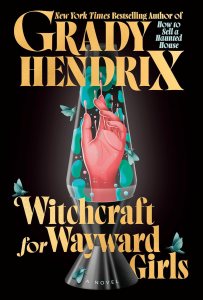
Book Review: Witchcraft for Wayward Girls by Grady Hendrix

Title: Witchcraft for Wayward Girls
Author: Grady Hendrix
Publisher: Berkley
Publication date: January 14, 2025
Length: 482 pages
Genre: Horror
Source: Purchased
Rating:

Rating: 5 out of 5.

There’s power in a book…

They call them wayward girls. Loose girls. Girls who grew up too fast. And they’re sent to the Wellwood Home in St. Augustine, Florida, where unwed mothers are hidden by their families to have their babies in secret, give them up for adoption, and most important of all, to forget any of it ever happened.

Fifteen-year-old Fern arrives at the home in the sweltering summer of 1970, pregnant, terrified and alone. Under the watchful eye of the stern Miss Wellwood, she meets a dozen other girls in the same predicament. There’s Rose, a hippie who insists she’s going to find a way to keep her baby and escape to a commune. And Zinnia, a budding musician who knows she’s going to go home and marry her baby’s father. And Holly, a wisp of a girl, barely fourteen, mute and pregnant by no-one-knows-who.

Everything the girls eat, every moment of their waking day, and everything they’re allowed to talk about is strictly controlled by adults who claim they know what’s best for them. Then Fern meets a librarian who gives her an occult book about witchcraft, and power is in the hands of the girls for the first time in their lives. But power can destroy as easily as it creates, and it’s never given freely. There’s always a price to be paid…and it’s usually paid in blood.

Grady Hendrix writes marvelously inventive horror novels, with psychological and physical terrors around every corner. Here in Witchcraft for Wayward Girls, the greatest horror is not in the supernatural elements, but in the treatment of the pregnant teens sent in disgrace to the Wellwood Home.

“You are here because you acted like a barnyard animal,” Miss Wellwood said. “You took the glory of your womanhood and threw it in the mud.”

The girls at the home are young, and at the complete mercy of their families, the staff of the home, and the doctors. They are never allowed to forget just how awful they are, how little they matter, and how little control they have over anything that happens to their bodies. They are all utterly ignorant as well — they know what they did to get pregnant, but have no idea what childbirth actually entails.

“You all don’t need to worry yourselves about what’s going to happen when you go to the hospital,” he said. “Because it’s none of your business. You just do what the doctors say and you’ll be fine.”

Fern is distraught when her father angrily bustles her off the home and leaves her there without even a good-bye. “Fern” isn’t even her name — all girls are given new names upon arrival, to preserve anonymity and to make the entire experience as separate from their real lives as possible. All Fern wants is to go home, to forget this ever happened, and to get back to her school, her friends, and the senior play.

But the harsh realities of pregnancy are impossible to ignore, especially once Fern witnesses another girl go into early labor in the bathroom and has to face the awful truth of what lies ahead for her. When the biweekly book mobile shows up, Fern asks the librarian for a book on what really happens during childbirth — which would be considered contraband at the home, where pleasant middle grade books seem to be the only allowed reading material.

The book the librarian passes along is anything but benign children’s fiction. Instead, she hands Fern is a hidden copy of a book titled How to Be a Groovy Witch (how awesome is that?!?!). The book’s contents are mostly incomprehensible, but Fern, Rose, Zinnia, and Holly are able to figure out a spell to cure Zinnia’s unrelenting morning sickness… by transferring it to someone else, with shockingly effective results.

The girls are drawn in by the lure of witchcraft and the power it promises, not seeing until it’s too late that nothing is given for free.

In this world there is one truth: everything has a price, and every price must be paid. Perhaps you will not pay it today, maybe you can put it off until tomorrow, but one day there will be a knock at your door in the middle of the night, a voice in the darkness beside your bed, a letter laid upon the table when you believe yourself to be alone, and it will contain a bill that must be paid, and you will pay it in blood.

Witchcraft for Wayward Girls is an absolutely compelling read. It’s a little on the longer side, but it flies by. The girls’ terror and helplessness feel palpable, and the book is a stark reminder of how far we’ve come in so many ways… and how awful it would be to move backward.

There are several gross-out scenes resulting from the girls’ spells, as well as scenes of supernatural power and strange, other-worldly phenomena. Some parts can be truly scary. And yet, the most horrifying scene is a hospital delivery. Nothing goes wrong medically, but it’s a detailed, horrible depiction of what labor and delivery in the 1970s entailed for so many women. That, to me, is the truly disturbing part of this book. Well, that, plus the girls’ utter lack of agency, the casual cruelty of the adults controlling them, and the soul-crushing sense of shame forced on them from every direction.

They said she could go back to her old life. They said it wouldn’t hurt. They said she’d never have to think about it again. They lied.

I loved the girls’ character development, and how each of them struggles to find strength to face their own particular hell. The girls’ power truly lies in their connection and support of one another, even more so than in the gifts they discover through the book and the librarian’s coven. Despite their individual suffering, they still find joy and friendship, as they band together to take back control and figure out how to survive.

Witchcraft for Wayward Girls is a moving, powerful, absorbing read. The depiction of the historical time and place feels spot-on. 1970s slang and attitudes provide some needed moments of fun and entertainment, despite the overall seriousness of the subject matter. (It’s shocking to see the pregnant girls constantly smoking cigarettes… but hey, it’s 1970!)

Grady Hendrix writes terrific horror, always with unique, clever twists and set-ups. I believe I have one more of his books yet to read (and I’m looking forward to it!); meanwhile, I’m thrilled that I finally got my hands on Witchcraft for Wayward Girls. Highly recommended.

For more by this author:
Horrorstör
My Best Friend’s Exorcism
Paperbacks from Hell: The Twisted History of ’70s and ’80s Horror Fiction
We Sold Our Souls
The Final Girl Support Group
The Southern Book Club’s Guide to Slaying Vampires

Purchase linksAmazon – Audible audiobook – Bookshop.org – Libro.fm
Disclaimer: When you make a purchase through one of these affiliate links, I may earn a small commission, at no additional cost to you.
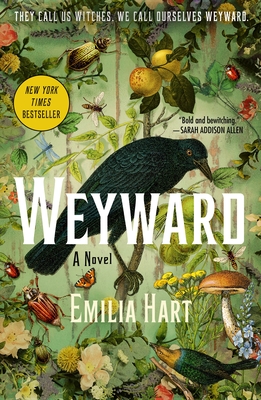
Book Review: Weyward by Emilia Hart

Title: Weyward
Author: Emilia Hart
Publisher: St. Martin’s Press
Publication date: February 2, 2023
Length: 392 pages
Genre: Fantasy
Source: Purchased
Rating:

Rating: 5 out of 5.

I am a Weyward, and wild inside.

2019: Under cover of darkness, Kate flees London for ramshackle Weyward Cottage, inherited from a great aunt she barely remembers. With its tumbling ivy and overgrown garden, the cottage is worlds away from the abusive partner who tormented Kate. But she begins to suspect that her great aunt had a secret. One that lurks in the bones of the cottage, hidden ever since the witch-hunts of the 17th century.

1619: Altha is awaiting trial for the murder of a local farmer who was stampeded to death by his herd. As a girl, Altha’s mother taught her their magic, a kind not rooted in spell casting but in a deep knowledge of the natural world. But unusual women have always been deemed dangerous, and as the evidence for witchcraft is set out against Altha, she knows it will take all of her powers to maintain her freedom.

1942: As World War II rages, Violet is trapped in her family’s grand, crumbling estate. Straitjacketed by societal convention, she longs for the robust education her brother receives––and for her mother, long deceased, who was rumored to have gone mad before her death. The only traces Violet has of her are a locket bearing the initial W and the word weyward scratched into the baseboard of her bedroom.

Weaving together the stories of three extraordinary women across five centuries, Emilia Hart’s Weyward is an enthralling novel of female resilience and the transformative power of the natural world.

Weyward has been on my radar since its release in 2023 — and while I’m mad at myself for not getting to it sooner, I’m thrilled to have finally read this excellent novel.

Weyward follows three women across three timelines to tell the story of a family whose women have special gifts — all of whom must break free from the rules and control of men to fully embrace who they are and what they’re capable of.

In 1619, Altha is a healer relied upon by her community, yet also viewed with suspicion. After a gruesome death, she stands trial for witchcraft.

In 1942, Violet is a teen whose cold, cruel father dictates every aspect of her life, while also denying her a life outside the walls of their estate and a chance to pursue the scientific education she yearns for.

In 2019, Kate flees her abusive boyfriend and takes shelter in the cottage she’s inherited from her great-aunt Violet. At first, she just wants a place to hide, but eventually, she learns more about her family’s heritage and what being a Weyward descendent truly means.

This wildness inside gives us our name. It was men who marked us so, in the time when language was but a shoot curling from the earth. Weyward, they called us, when we would not submit, would not bend to their will. But we learned to wear the name with pride.

The three stories swirl around each other through cycles of chapters. Each woman’s story is, in itself, compelling and utterly fascinating. Each character is wonderfully developed, with rich emotions and complicated circumstances. As a whole, the three stories paint a portrait of a family of powerful women, connected by their abilities, their knowledge, their affinity for the natural world, and their need to protect themselves from those who would do them harm.

By the final third of the book, I hated to leave each woman’s story to move onto a chapter about the next, only to find myself completely absorbed in that chapter and character as well. The interconnectedness of the three women’s lives is lovely to see unfold, and I found myself breathlessly tearing through the final chapters to see how it all came together.

I realize I’m not saying much about plot specifics, but that’s intentional. Weyward is a beautifully crafted, evocative story, and I think it’s best to read it without preconceptions or advance knowledge of details. I recommend enjoying it — slowly, if you can (I couldn’t!) — and savoring the texture and depth of the story as it develops.

I loved reading Weyward, and loved Altha, Violet, and Kate as characters. Highly recommended.

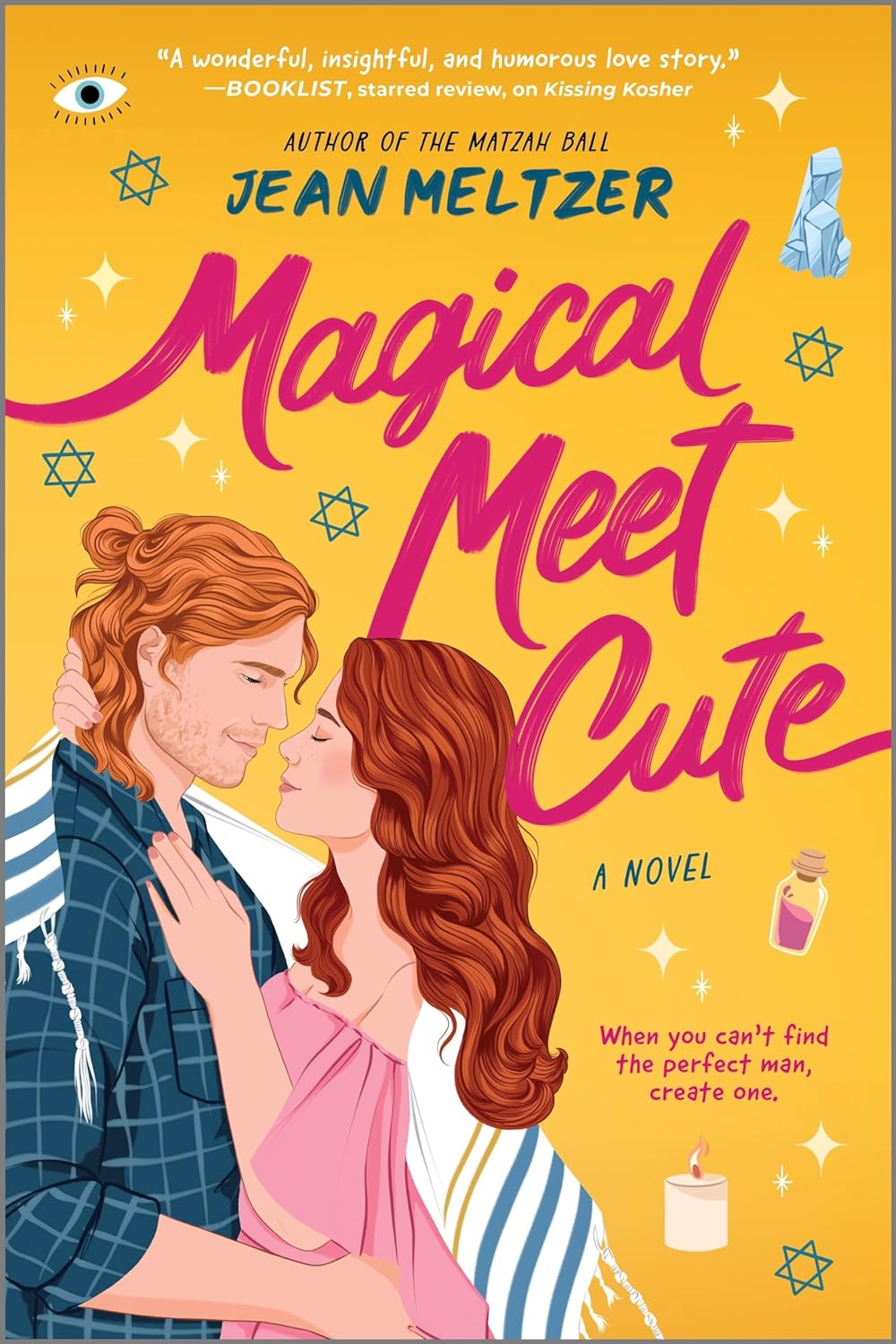
Book Review: Magical Meet Cute by Jean Meltzer

Title: Magical Meet Cute
Author: Jean Meltzer
Publisher: Mira
Publication date: August 27, 2024
Length: 400 pages
Genre: Contemporary romance
Source: Library
Rating:

Rating: 3 out of 5.

Is he the real deal…or did she truly summon a golem?

Faye Kaplan used to be engaged. She also used to have a successful legal practice. But she much prefers her new life as a potter in Woodstock, New York. The only thing missing is the perfect guy.

Not that she needs one. She’s definitely happy alone.

That is, until she finds her town papered with anti-Semitic flyers after yet another failed singles event at the synagogue. Desperate for comfort, Faye drunkenly turns to the only thing guaranteed to soothe her—pottery. A golem protector is just what her town needs…and adding all the little details to make him her ideal man can’t hurt, right?

When a seriously hot stranger mysteriously turns up the next day, Greg seems too good to be true—if you ignore the fact that Faye hit him with her bike. And that he subsequently lost his memory…

But otherwise, the man checks Every. Single. Box. Causing Faye to wonder if Greg’s sudden and spicy appearance might be anything but a coincidence.

In this Jewish-themed romance, Faye Kaplan enjoys her life in the close-knit community of Woodstock, New York. After her fiance dumped her several years earlier, she sold her Manhattan legal practice, moved to a quiet town, and rediscovered her love of ceramics and creating.

A self-described “Jewitch”, she also discovered Jewish magical rituals, which she imbues with her own sense of creativity and spirituality. She’s still hurt and lonely after her break-up, and carries deeper pain stemming from growing up with an abusive mother, who eventually injured her in such a way that her dreams of pursuing her artwork professionally were shattered. Mostly, though, Faye is happy with her circle of close friends and a supportive community.

Her sense of safety is shattered when anti-Semitic flyers appear in town. Suddenly, Faye feels targeted, even in her own home. After a night of self-soothing via wine and magical rituals, she’s ready to reengage with the town’s rally against hate — and then hits a stranger with her bike, landing him in the hospital.

The stranger is tall, muscular, gorgeous, and red-haired, and due to the accident, has a head injury and amnesia. His speech functions are impaired, and he doesn’t know who he is, nor does he have any ID on him. As the hospital prepares to send him to a shelter upon discharge, Faye feels it’s her responsibility to take care of the man she injured, and against the advice of everyone who cares for her, she decided to bring him back to her home until he recovers.

Somewhat randomly, he chooses the name Greg, and as he regains his powers of speech, he and Faye get to know one another. He seems to be the perfect man — he helps her with anything she needs, he plays Scrabble with her, he reads her books, he likes her temperamental dog. But as Faye realizes just how perfectly he matches everything she might want in a man, she thinks back to that wine-soaked night of magic… and wonders if Greg is actually real, or whether she accidentally created a golem, a mythical protector of Jewish legend, called forth to protect the Jewish community in times of need.

As the plot moves forward, we see a growing connection between Faye and Greg, increasing threats from the anti-Semitic element hidden within the town, and Faye’s confusion about who (or what) Greg really is. There’s a lot to like about this quirky romance, but I think the author is trying to do too much, and Faye’s belief that Greg is truly a golem strains all credulity.

The sense of community in Magical Meet Cute is lovely. It’s easy to see why this town has become a refuge and a place of safety for Faye, a woman not truly recovered from childhood trauma and heartbreak. I enjoyed seeing her close friends and the way the people of the town come together in a crisis.

The storyline about anti-Semitism has the potential to be powerful, but shoe-horned into a romance, it feels a bit discordant, especially once Greg decides that the best way to protect Faye is to infiltrate the local cell of anti-Semites and figure out who’s responsible for their threats and violence. Greg’s investigatory scenes are tonally a mismatch for the rest of the book, where the romantic and mystical elements are emphasized.

Faye’s belief that Greg is not a real person, but is in fact a golem… well, it’s just so out-there that I couldn’t help engaging in some heavy-duty eye-rolling. There’s a scene of Faye trying to banish the golem that’s perhaps intended to be funny… but just made me cringe. Hard.

This is now the 3rd book I’ve read by Jean Meltzer, and while all three have been enjoyable in many ways, I’ve realized that the author’s approach to humor just isn’t a good match for me. In each of the books, there are scenes that are clearly meant to be funny, usually involving some slapstick or physical comedy, but they fall flat and feel embarrassing, not silly or cute.

The writing itself is also a mixed bag. It feels to me that the author is trying too hard to incorporate Jewish bits. It’s nice to have the cultural flavor, but there are times in Magical Meet Cute where it’s over the top and doesn’t make sense. For example:

Goddess give her strength. The man was built like a challah.

What does that even mean? Are his muscles braided? Because that sounds like it would hurt.

I did like a lot about Magical Meet Cute, but as with some of the author’s other books, the balance between light and serious seems off. Anti-Semitism and childhood abuse that results in a permanent disability are heavy subjects… and mixing them into a story where (among other things) an octogenarian delights in showing off her stun gun, someone uses kosher salami as a weapon, and there’s a running gag about Faye’s dog leaving… um… surprises on the floor makes this feel as though the author couldn’t quite decide what story she was trying to tell.

It pains me to not be able to rave about this book (and the others I’ve read by Jean Meltzer), as I love the idea of incorporating Jewish elements in a romance novel, and want to support writers who create strong Jewish women as central characters. Something about the writing style and approach makes Magical Meet Cute a mixed experience for me, and at this point, I’m on the fence about reading future books by this author.

Book Review: A Sorceress Comes to Call by T. Kingfisher

Title: A Sorceress Comes to Call
Author: T. Kingfisher
Publisher: Tor Books
Publication date: August 6, 2024
Print length: 336 pages
Genre: Fantasy
Source: Review copy courtesy of the publisher via NetGalley

Rating: 4.5 out of 5.

A dark retelling of the Brothers Grimm’s Goose Girl, rife with secrets, murder, and forbidden magic

Cordelia knows her mother is unusual. Their house doesn’t have any doors between rooms, and her mother doesn’t allow Cordelia to have a single friend—unless you count Falada, her mother’s beautiful white horse. The only time Cordelia feels truly free is on her daily rides with him. But more than simple eccentricity sets her mother apart. Other mothers don’t force their daughters to be silent and motionless for hours, sometimes days, on end. Other mothers aren’t sorcerers.

After a suspicious death in their small town, Cordelia’s mother insists they leave in the middle of the night, riding away on Falada’s sturdy back, leaving behind all Cordelia has ever known. They arrive at the remote country manor of a wealthy older man, the Squire, and his unwed sister, Hester. Cordelia’s mother intends to lure the Squire into marriage, and Cordelia knows this can only be bad news for the bumbling gentleman and his kind, intelligent sister.

Hester sees the way Cordelia shrinks away from her mother, how the young girl sits eerily still at dinner every night. Hester knows that to save her brother from bewitchment and to rescue the terrified Cordelia, she will have to face down a wicked witch of the worst kind.

New T. Kingfisher books are always a reason to celebrate, and A Sorceress Comes to Call is no exception.

In this fairy tale (with a tinge of horror), Cordelia is the 14-year-old daughter of a cruel sorceress named Evangeline. To the outside world, Evangeline is a pretty, respectable woman, who presents herself as a genteel widow with a marriageable daughter. (Among other despicable acts, she claims Cordelia is 17 and ready to find a husband). But Cordelia lives in constant fear and torment: Evangeline’s powers enable her to make Cordelia “obedient” — she can control Cordelia’s body and force her to behave as she wishes, leaving Cordelia’s mind alert, aware, and helpless to overcome Evangeline’s control.

When Evangeline sets her sights on a wealthy man, intending to marry him, gain control, and then use her new riches and power to get an even more highly stationed husband for Cordelia — all with the intent of adding to her own wealth and power — Cordelia has no choice but to go along.

The Squire, Samuel, lives with his sister Hester on his comfortable estate. Both in their 50s and never married, they’re content with their lives and their circle of friends. Evangeline’s arrival disrupts their peaceful lives, and while Hester’s intuition immediately labels Evangeline as “Doom”, she’s unexpectedly sympathetic toward Cordelia. Cordelia, Hester senses, is innocent — in many ways. She has no choice about complying with her mother’s schemes, but as Hester befriends her, Cordelia starts to realize that she has to find a way to protect these kind people from the evil that awaits.

The story is full of wonderful fairy-tale-esque moments and devices, but the characters themselves are what make this book especially delightful. Hester in particular is a hoot, but so are her other close friends — all women on the more mature side, perhaps disregarded by society and viewed as silly or unimportant older women, but with sharp wit, keen intelligence, and nerves of steel.

Evangeline and her horse/familiar Falada are evil, but they’re sly and devious, and not easily defeated. The story builds to a scary, dramatic confrontation, and some elements of the action toward the end have more of a horror feel to them — but it’s all quite exciting and delicious to read, and I loved seeing how the good guys have each other’s backs.

A Sorceress Comes to Call is such a satisfying, engaging read! The characters are superb, and made me care deeply about all the magic-laden ups and downs of the story.

T. Kingfisher’s fantasy/fairy tale stories are among my favorites, and A Sorceress Comes to Call is a terrific addition. Highly recommended.

Book Review: The Black Bird Oracle (All Souls, #5) by Deborah Harkness

Title: The Black Bird Oracle
Series: All Souls
Author: Deborah Harkness
Publisher: Viking
Publication date: July 16, 2024
Length: 464 pages
Genre: Contemporary fiction / fantasy
Source: Purchased
Rating:

Rating: 3 out of 5.

Diana Bishop journeys to the darkest places within herself—and her family history—in the highly anticipated fifth novel of the beloved #1 New York Times bestselling All Souls series.

Deborah Harkness first introduced the world to Diana Bishop, Oxford scholar and witch, and vampire geneticist Matthew de Clairmont in A Discovery of Witches. Drawn to each other despite long-standing taboos, these two otherworldly beings found themselves at the center of a battle for a lost, enchanted manuscript known as Ashmole 782. Since then, they have fallen in love, traveled to Elizabethan England, dissolved the Covenant between the three species, and awoken the dark powers within Diana’s family line.

Now, Diana and Matthew receive a formal demand from the Congregation: They must test the magic of their seven-year-old twins, Pip and Rebecca. Concerned with their safety and desperate to avoid the same fate that led her parents to spellbind her, Diana decides to forge a different path for her family’s future and answers a message from a great-aunt she never knew existed, Gwyneth Proctor, whose invitation simply reads: It’s time you came home, Diana.

On the hallowed ground of Ravenswood, the Proctor family home, and under the tutelage of Gwyneth, a talented witch grounded in higher magic, a new era begins for Diana: a confrontation with her family’s dark past, and a reckoning for her own desire for even greater power—if she can let go, finally, of her fear of wielding it.

I’ve been a fan of Deborah Harkness’s All Souls books ever since the very first book — A Discovery of Witches — was published in 2011. After the original trilogy’s conclusion, fans were surprised and delighted to learn that more books were planned! In 2018, a 4th book — Time’s Convert — was released (note: I only got around to reading it a couple of months ago — my review is here)… and here we are, six years later, with another book in the series. Book #5, The Black Bird Oracle, was released July 16, 2024, and picks up the story several years after the events of Time’s Convert.

In The Black Bird Oracle, the far-flung vampires of the de Clermont clan are largely offstage (except for Matthew, of course, and a few others popping in later in the book). Instead, this sprawling book focuses squarely on the witchy inhabitants of the series. The action is set during the summer of 2017, when Diana and Matthew’s children Pip and Becca are about to turn seven. Just as the family is preparing for summer vacation, a visitation by a flock (unkindness?) of ravens and a summons from an unknown relative provide portents of grave significance, and the family relocates to Ipswich, Massachusetts to learn the secrets of the Proctor family — Diana’s patriarchal line.

Once settled at the Proctor farm and sanctuary, Diana learns about this side of the family’s contribution to her magical talents. She is under pressure to explore the nuances of Light, Shadow, and Darkness as they relate to magic. The Congregation has its eye on her and the children, and she must develop this aspect of her abilities and learn the Proctor family secrets, if she’s to defend her children from powers who may try to control them.

Does that sound like gobbledygook to you? If you haven’t read the earlier books in the series, I’m sure it does. The Black Bird Oracle is absolutely not a starting place. While I love the world of All Souls, the only possible entry point is A Discovery of Witches. Nothing about these books will make sense otherwise.

There are some interesting elements here, especially in regard to the Proctor family history, how they’re intertwined with the tragic events of Salem, and the ways in which the Proctors and de Clermonts have crossed paths over the centuries.

And yet… the book felt strangely flat to me. For all that I adore Diana, I never felt drawn into the story on more than a surface level. Perhaps that’s because the central conflicts of the book have to do with levels of magic, which beyond a certain point get overly symbolic and esoteric. I missed the more personal connections, and although several of the newly introduced Proctor family members are quirky and interesting, the main relationships are oddly stagnant — except when they’re downright puzzling, as in Matthew and Diana’s dynamics. After all they’ve been through in order to be together and create a family of their own, their connection seems fuzzy and off-kilter in this book. I missed the sense of a strong, powerful team working together that we’ve seen previously.

On the positive side, Becca and Pip are great fun — although I’d like to know more about their abilities and their vampiric sides. The focus in The Black Bird Oracle is on their witching talents, and their vampire-influenced traits (and dietary needs) get only the briefest of mentions.

Part of what puzzled me about The Black Bird Oracle is the point of the plot itself. The central conflict never felt fully defined. Toward the end, there’s some excitement involving the Congregation and the reappearance of an old foe of Diana’s, but this is largely unresolved. This new danger is left hanging — I presume we’ll need another book to see what unfolds from here.

Sadly, The Black Bird Oracle was somewhat of a letdown for me. While I’m always happy to reenter the world of All Souls, the emotional hook was missing from this reading experience. I’ll be back for whatever books comes next (fingers crossed we won’t be waiting another six years!), but I can’t say that I feel particularly satisfied after reading this installment in the series.

It pains me to give a Deborah Harkness book a less-than-stellar review. Her writing is always intriguing, and her attention to detail superb. I know many fans are over the moon about this book, and I’m happy for them! I’m still devoted to the author and series, and hope that the next book will return me to five-star joy.

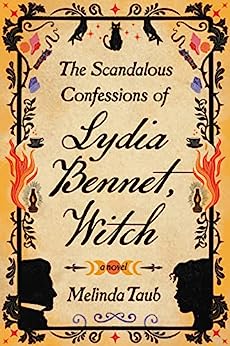
Book Review: The Scandalous Confessions of Lydia Bennet, Witch by Melinda Taub

Title: The Scandalous Confessions of Lydia Bennet, Witch
Author: Melinda Taub
Publisher: Grand Central Publishing
Publication date: October 3, 2023
Length: 400 pages
Genre: Contemporary fiction
Source: Review copy courtesy of the publisher via NetGalley
Rating:

Rating: 4.5 out of 5.

A sparkling, witchy reimagining of Pride and Prejudice, told from the perspective of the troublesome and—according to her—much-maligned youngest Bennet sister, Lydia.

In this exuberant reimagining of Jane Austen’s Pride and Prejudice, Lydia Bennet puts pen to paper to relate the real events and aftermath of the classic story from her own perspective. Some facts are well known: Mrs. Bennet suffers from her nerves; Mr. Bennet suffers from Mrs. Bennet, and all five daughters suffer from an estate that is entailed only to male heirs.

But Lydia also suffers from entirely different concerns: her best-loved sister Kitty is really a barn cat, and Wickham is every bit as wicked as the world believes him to be, but what else would you expect from a demon? And if you think Mr. Darcy was uptight about dancing etiquette, wait till you see how he reacts to witchcraft. Most of all, Lydia has yet to learn that when you’re a witch, promises have power . . .

Full of enchantment, intrigue, danger, and boundless magic, The Scandalous Confessions of Lydia Bennet, Witch, has all the irreverent wit, strength, and romance of Pride and Prejudice—while offering a highly unexpected redemption for the wildest Bennet sister.

Who knew that we needed a witchy retelling of Pride and Prejudice? Just when I thought I’d had my fill of P&P retellings, along comes The Scandalous Confessions of Lydia Bennet, Witch to prove me wrong.

It is a truth universally acknowledged that the seventh daughter of a seventh daughter must be a witch.

In her Scandalous Confessions, Lydia tells us what was really going on behind the scenes at Meryton, Brighton, and beyond. Lydia is a talented young witch, so inseparable from her beloved cat as a child that she eventually turned Kitty into her familiar — and Lydia’s magic was powerful enough to have the entire Bennet family believe that they had this additional daughter all along.

Lydia is bright and gifted, but with a flair for mischief. Fortunately, her aunt also is a witch, and teaches her spellcraft — a good thing, since Lydia never does seem to have the patience to develop the more expected skills of needlework or musical performance.

The arrival of the regiment in Meryton is a source of great fun and romance for the local girls, but Lydia’s life get significantly more complicated with the introduction of Wickham. Here, Wickham is a demon who inhabits the body of a formerly human man, and is the son of a major magical force who wants to “eat” the power of Lydia and other witches. But Lydia doesn’t give up easily, and she’s willing to fight to protect her beloved Kitty.

Narrated by Lydia as she writes an accounting of her adventures, this book is fast-paced, funny, and very clever. Lydia’s story follows the plot beats of P&P, but as told from Lydia’s perspective, there’s more going on behind the scenes than we might imagine. There’s adventure, danger, and plenty of spells, but also balls, garden clubs, and lots of flirtation with handsome and/or fortune-seeking soldiers.

The author weaves together the familiar storylines (plus a bit of Sanditon too) with a plot involving witchcraft, magical forces, cruel hexes, and clever twists. Lydia herself is such a fun character, and I loved seeing Kitty’s story unfold as well. Lizzy doesn’t appear in many scenes, but she’s always a presence from a distance, especially as Darcy gets caught up in the Wickham crisis and has problems with Georgianna to solve as well.

Remember, always, not to judge people too hastily, for everyone is living out a story of their own, and you only get to read the pages you appear on.

Smart, funny, and well plotted, The Scandalous Confessions of Lydia Bennet, Witch is a perfect October read. Highly recommended!

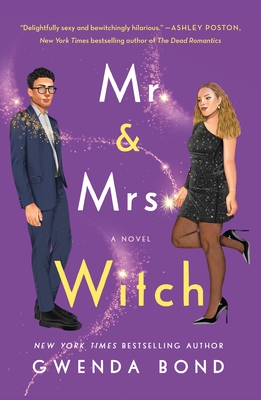
Book Review: Mr. & Mrs. Witch by Gwenda Bond

Title: Mr. & Mrs. Witch
Author: Gwenda Bond
Publisher: St. Martin’s Griffin
Publication date: March 7, 2023
Length: 352 pages
Genre: Fantasy
Source: Review copy courtesy of the publisher via NetGalley
Rating:

Rating: 3.5 out of 5.

In Mr. & Mrs. Witch, the next novel from bestselling author Gwenda Bond, a couple discovers at the altar the surprising secret identities they’ve kept from each other.

Savannah Wilde is a witch, a very powerful one—an identity that only her fellow witches know. Following a whirlwind romance that surprised herself and her family, Savvy is all set to marry the love of her life. But she isn’t the only one with a secret that needs to be kept, even from her soon-to-be husband.

Griffin Carter is a top agent for a clandestine organization that, well, used to primarily hunt witches, but now mainly tries to shut down supernatural threats their own way. He can’t wait to lay his eyes on the woman he’s about to spend the rest of his life with.

As Savvy walks down the aisle to Griffin, the wedding quickly goes from blessed day to shit show when their true identities are revealed. To say there’s bad blood between their factions is putting it mildly. Savvy and Griffin are tasked to take the other out, but when they discover a secret that could take down both of their agencies, they realize the only way to survive is to team up. With assassins hot on their trail, will Savvy and Griffin make it out alive to try again at ‘I do’?

If you’re looking for a deep exploration of the perils of modern love and marriage… this is not that book!

BUT, if you’re a fan of the movie Mr. and Mrs. Smith, love silly contemporary romances, and want some powerful witchcraft (and adorable familiars) thrown into the mix… well, Mr. & Mrs. Witch may be the perfect choice.

We open with Savvy and Griffin’s wedding day. They’re each ecstatic, about to marry the person of the dreams, their one true love, their everything — until the day absolutely and completely goes off the rails. Savvy is a talented witch and an agent of CRONE (a secret society of witches, obviously), and Griffin works for HUNTER, an equally secret society dedicated to fighting supernatural threats, with a dark history of hunting witches. Savvy and Griffin have no idea about one another’s true vocations, and things are about to get ugly.

The plot goes back and forth between “now” — the wedding day and beyond — and the past, from the couple’s first meeting, through the development of their relationship, and finally catching up to the present. They each get POV sections, so we get to know them as individuals as well as together, and also get to see just how much they’re hiding.

Mr. & Mrs. Witch is truly silly fun. As for my earlier reference to Mr. and Mrs. Smith — a movie about a married couple who are ignorant about each others’ careers as professional assassins, and end up with orders to kill each other — well, that kind of gives you the main story arc of this book. Savvy and Griffin are on opposites sides of a secret war between witches and hunters, but it turns out that the bosses of each of their factions may have ulterior motives. Once Savvy and Griffin get past their shock and hurt feelings about the secrets hidden in their relationship, they realize that their only hope for survival (not to mention their postponed Happily Ever After) is to join forces to fight the big bads.

On top of all the silliness, there are great friendships, interesting family dynamics, and awesomely adorable familiars (including a capybara named Captain Bear, because why not?).

In terms of the romance and steam factor, I’d classify this book as graphic: Sex scenes are explicit, but they do tend to be brief. For me personally, I tend not to appreciate super graphic sex scenes in my romance novels, but these were minimal enough that they didn’t get in the way of enjoying the book.

Having read Gwenda Bond’s two previous novels (Not Your Average Hot Guy and The Date From Hell), I was fully prepared for the funny, ridiculous, over-the-top tone of this romantic adventure, and I was not disappointed.

Mr. & Mrs. Witch is not at all a serious book… but if you’re looking for good escapist fun, this might be a perfect fit!

Shelf Control #338: We Ride Upon Sticks by Quan Barry

Shelves final

Welcome to Shelf Control — an original feature created and hosted by Bookshelf Fantasies.

Shelf Control is a weekly celebration of the unread books on our shelves. Pick a book you own but haven’t read, write a post about it (suggestions: include what it’s about, why you want to read it, and when you got it), and link up! For more info on what Shelf Control is all about, check out my introductory post, here.

Want to join in? Shelf Control posts go up every Wednesday. See the guidelines at the bottom of the post, and jump on board!

Title: We Ride Upon Sticks
Author: Quan Barry
Published: 2020
Length: 360 pages

What it’s about (synopsis via Goodreads):

In the town of Danvers, Massachusetts, home of the original 1692 witch trials, the 1989 Danvers Falcons will do anything to make it to the state finals–even if it means tapping into some devilishly dark powers. Against a background of irresistible 1980s iconography, Quan Barry expertly weaves together the individual and collective progress of this enchanted team as they storm their way through an unforgettable season.

Helmed by good-girl captain Abby Putnam (a descendant of the infamous Salem accuser Ann Putnam) and her co-captain Jen Fiorenza (whose bleached blond “Claw” sees and knows all), the Falcons prove to be wily, original, and bold, flaunting society’s stale notions of femininity. Through the crucible of team sport and, more importantly, friendship, this comic tour de female force chronicles Barry’s glorious cast of characters as they charge past every obstacle on the path to finding their glorious true selves.

How and when I got it:

I picked up a used paperback at a thrift shop about a year ago.

Why I want to read it:

I had almost forgotten that I own this book, until I was rearranging some books and found this one tucked behind a couple of others on the shelf. What great timing! This just seems perfect for the witchy month of October.

I’m always up for a good witch story, and I like the sound of the Salem descendants invoking ancient powers to win their championship. Between the 1980s timeframe and the emphasis on friendship, this sounds like it could be a really engaging read… and I’m glad I unearthed it this week, right in time for Halloween.

What do you think? Would you read this book?

Please share your thoughts!


__________________________________

Want to participate in Shelf Control? Here’s how:

  • Write a blog post about a book that you own that you haven’t read yet.
  • Add your link in the comments or link back from your own post, so I can add you to the participant list.
  • Check out other posts, and…

Have fun!

Shelf Control #267: The Familiars by Stacey Halls

Shelves final

Welcome to Shelf Control — an original feature created and hosted by Bookshelf Fantasies.

Shelf Control is a weekly celebration of the unread books on our shelves. Pick a book you own but haven’t read, write a post about it (suggestions: include what it’s about, why you want to read it, and when you got it), and link up! For more info on what Shelf Control is all about, check out my introductory post, here.

Want to join in? Shelf Control posts go up every Wednesday. See the guidelines at the bottom of the post, and jump on board!

Title: The Familiars
Author: Stacey Halls
Published: 2019
Length: 344 pages

What it’s about (synopsis via Goodreads):

Young Fleetwood Shuttleworth, a noblewoman, is with child again. None of her previous pregnancies have borne fruit, and her husband, Richard, is anxious for an heir. Then Fleetwood discovers a hidden doctor’s letter that carries a dire prediction: she will not survive another birth. By chance she meets a midwife named Alice Grey, who promises to help her deliver a healthy baby. But Alice soon stands accused of witchcraft.

Is there more to Alice than meets the eye? Fleetwood must risk everything to prove her innocence. As the two women’s lives become intertwined, the Witch Trials of 1612 loom. Time is running out; both their lives are at stake. Only they know the truth. Only they can save each other.

Rich and compelling, set against the frenzy of the real Pendle Hill Witch Trials, this novel explores the rights of 17th-century women and raises the question: Was witch-hunting really women-hunting? Fleetwood Shuttleworth, Alice Grey and the other characters are actual historical figures. King James I was obsessed with asserting power over the lawless countryside (even woodland creatures, or “familiars,” were suspected of dark magic) by capturing “witches”—in reality mostly poor and illiterate women. 

How and when I got it:

I bought the e-book sometime in late 2019.

Why I want to read it:

They had me at “witch trials”! I just read another book about accusations of witchcraft in the 1600s (although set in Boston in the Colonies, not in England), and the topic is just so fascinating. I love that this one is focused on real people from the period, and that it delves into the issue of witch-hunting being a facade for systemic misogyny.

I picked up a copy of The Familiars after seeing a few glowing reviews from book bloggers whose tastes tend to be in sync with my own. I’m glad I “rediscovered” this book on my dusty old virtual bookshelf — bumping it up to must-read status!

What do you think? Would you read this book?

Please share your thoughts!


__________________________________

Want to participate in Shelf Control? Here’s how:

  • Write a blog post about a book that you own that you haven’t read yet.
  • Add your link in the comments or link back from your own post, so I can add you to the participant list.
  • Check out other posts, and…

Have fun!

Through affiliate programs, I may earn commissions from purchases made when you click through these links, at no cost to you.

Buy now: Amazon – Book Depository – Bookshop.org

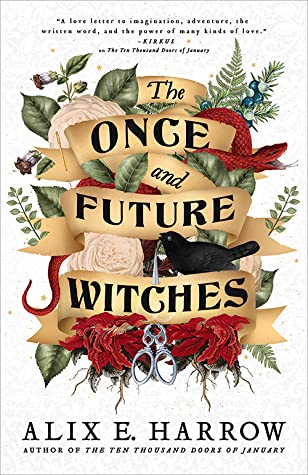
Book Review: The Once and Future Witches by Alix E. Harrow

Title: The Once and Future Witches
Author: Alix E. Harrow
Publisher: Orbit
Publication date: October 13, 2020
Length: 528 pages
Genre: Historical fiction/fantasy
Source: Review copy courtesy of the publisher via NetGalley

Rating: 5 out of 5.

In 1893, there’s no such thing as witches. There used to be, in the wild, dark days before the burnings began, but now witching is nothing but tidy charms and nursery rhymes. If the modern woman wants any measure of power, she must find it at the ballot box.

But when the Eastwood sisters–James Juniper, Agnes Amaranth, and Beatrice Belladonna–join the suffragists of New Salem, they begin to pursue the forgotten words and ways that might turn the women’s movement into the witch’s movement. Stalked by shadows and sickness, hunted by forces who will not suffer a witch to vote-and perhaps not even to live-the sisters will need to delve into the oldest magics, draw new alliances, and heal the bond between them if they want to survive.

There’s no such thing as witches. But there will be.

Alix E. Harrow’s debut novel, The Ten Thousand Doors of January, was one of my favorite reads last year, so it’s a pleasure to have another amazing experience with her newest book, The Once and Future Witches.

The Once and Future Witches takes place in 1893, in a world similar to our own, but with some key differences. Chief among these is the history of witchcraft — a plague and a purge some years earlier have resulted in the complete annihilation of witches or witchcraft, or so the men in power would like people to believe.

While the knowledge and power of witches seem to be lost, grandmothers and mothers still pass down to their daughters the little words and ways that make life easier, from simple spells to help with cleaning or harvest to healing rituals and ways to escape from someone who means you ill. In this world, what we’d call fairy tales are known as witch tales, and they’re regarded as simple folklore, merely children’s entertainment. But for the women who tell the stories, they know there’s something more hidden in the simple words and songs.

Our main characters are the three Eastwood sisters — Beatrice Belladonna, Agnes Amaranth, and James Juniper. While raised on a family farm, they now as adults find themselves drawn together in the town of New Salem after a long separation caused by their abusive father.

When the three sisters are reunited, Bella inadvertently triggers a momentary return of the lost ways, creating both a public scare and an inspiration for women who long for more. The story is set at a time when women are rallying for the right to vote, and workers’ rights are also front and center in the wake of awful mill and factory conditions and the abject poverty of New Salem’s underclass.

The Eastwood sisters soon lead a growing underground movement of women who are willing to risk everything to rediscover their own power and make a place for themselves in their world. But there are forces working against them, who will use whatever means necessary to silence their voices and make sure they keep to their approved places.

This is a powerful, uplifting, and complicated read. At over 500 pages, the story is intricate, with ample detail on the world of New Salem, the sisters’ histories, the witch-tales handed down, and the allies and friends they make in the battle for their rights and their lives. The writing is beautiful, with magical realism in its imagery mixed with the brutality of the slums and factories and the tired lives of the women looking for more.

I love how the quest to reclaim witchcraft melds so well with the fight for the vote, for equal rights and better working conditions. The characters here are distinct and memorable — upright librarian Bella and her unexplored passions, independent Agnes and her devotion to protecting what’s hers, Juniper with her fierce, feral nature and her readiness to fight. The sisters are amazing, as are the other women (and one man) who populate their story.

Likewise, the relationships between the sisters is gorgeously depicted. There is a lifetime’s worth of hurt and betrayal and resentment between them, but beneath all that, there’s also the bonds of sisterhood and love. As truths emerge that shed light on misconceptions about their shared pasts, they have to deal with their bitterness and pain in order to wage their fight for power and freedom.

I can’t say enough good things about The Once and Future Witches. It has to be read and experienced to really get what it’s all about. While it took me a few tries to get past the early chapters, I think that was mostly due to my distracted mind rather than the book itself. Once I shut out the world and really focused, I just couldn’t put it down.

A perfect October read. Don’t miss it!