Book Review: Children of Time (Children of Time, #1) by Adrian Tchaikovsky

Title: Children of Time
Series: Children of Time, #1
Author: Adrian Tchaikovsky
Publisher: Orbit
Publication date: June 4, 2015
Length: 600 pages
Genre: Science fiction
Source: Purchased
Rating:

Rating: 5 out of 5.

A race for survival among the stars… Humanity’s last survivors escaped earth’s ruins to find a new home. But when they find it, can their desperation overcome its dangers?

WHO WILL INHERIT THIS NEW EARTH?

The last remnants of the human race left a dying Earth, desperate to find a new home among the stars. Following in the footsteps of their ancestors, they discover the greatest treasure of the past age—a world terraformed and prepared for human life.

But all is not right in this new Eden. In the long years since the planet was abandoned, the work of its architects has borne disastrous fruit. The planet is not waiting for them, pristine and unoccupied. New masters have turned it from a refuge into mankind’s worst nightmare.

Now two civilizations are on a collision course, both testing the boundaries of what they will do to survive. As the fate of humanity hangs in the balance, who are the true heirs of this new Earth?

Children of Time is a big, detailed, complex work of science fiction. It requires focus and concentration… and is absolutely worth the effort.

In Children of Time, humanity’s time on Earth has come to an end. While expanding out beyond the solar system and exploring other worlds, factions at home and throughout Earth’s space colonies go from adversarial politics to all-out war. The few remnants of humans on Earth find ways to survive an ice age, only to discover, as the ice finally recedes, that the ice actually protected life from the toxins that now doom them all to extinction — unless they can recreate the ancient tech of their space-faring ancestors and journey to a new planet to start again.

Meanwhile, the earlier humans’ space exploration included an ambitious terraforming agenda, journeying to far-flung solar systems to seed likely planets with the potential for new homes for humanity. As we learn early on, though, even this undertaking comes to ruin due to the factionalism and wars that devastate life on Earth.

One scientist heading a terraforming project succeeds, however… in a way. The pioneer of a project known as exaltation, Dr. Avrana Kern’s mission is to seed a terraformed planet with monkeys and a nanovirus to speed their evolution — then have the humans remain in suspension for centuries until the monkeys have evolved enough to support human settlement on their planet. But thanks to the war between humans, something goes very, very wrong with her plans.

Without giving too much away, I’ll just say that the story of what happens on this planet is utterly fascinating. Essentially, an unintended species is infected by the nanovirus — and over the course of Children of Time, we see an intensely interesting version of human evolution as played out by another species entirely. Thanks to the relatively short life span of this species, many generations pass over the course of the decades and centuries that follow — and we see them evolved from basic hunting skills to complex reasoning, strategy, building, communication, religious ideology, and eventually, highly advanced biochemistry and technology.

Meanwhile, in alternating chapters, we see the final remnants of the human race aboard the ark ship Gilgamesh, following the star maps and recovered documents of the last space-exploring humans in a desperate search to locate the old terraformed planets. Because they mainly exist in suspension, millennia pass during the Gilgamesh’s journey. We see familiar characters as they come out of suspension, often after decades or centuries have passed, in order to deal with new threats or discoveries. The concepts of time and what constitutes a life span are investigated in strange and wonderful new ways.

I don’t want to go too far into specifics, as there’s a real joy in seeing just how inventively the author spins out this story. The chapters alternate between life on the Gilgamesh and life on the planet, and it’s done so well that by the time the inevitable conflict between the two arrives near the end of the book, it’s impossible for a reader to favor one side over the other.

I’m thrilled that I’ve finally read Children of Time. Despite the book’s length, it’s so engrossing that the pages just fly by. For science fiction fans, this book is a must!

There are two more volumes in the series currently available, with a fourth set for publication in early 2026. On the one hand, Children of Time does wrap up very well, so I’d say it’s perfectly fine and satisfying to approach it as a single-volume stand-alone. On the other hand, I enjoyed Children of Time so much that I’m eager to read more set in this sci-fi universe!

Purchase linksAmazon – Audible audiobook – Bookshop.org 
Disclaimer: When you make a purchase through one of these affiliate links, I may earn a small commission, at no additional cost to you.

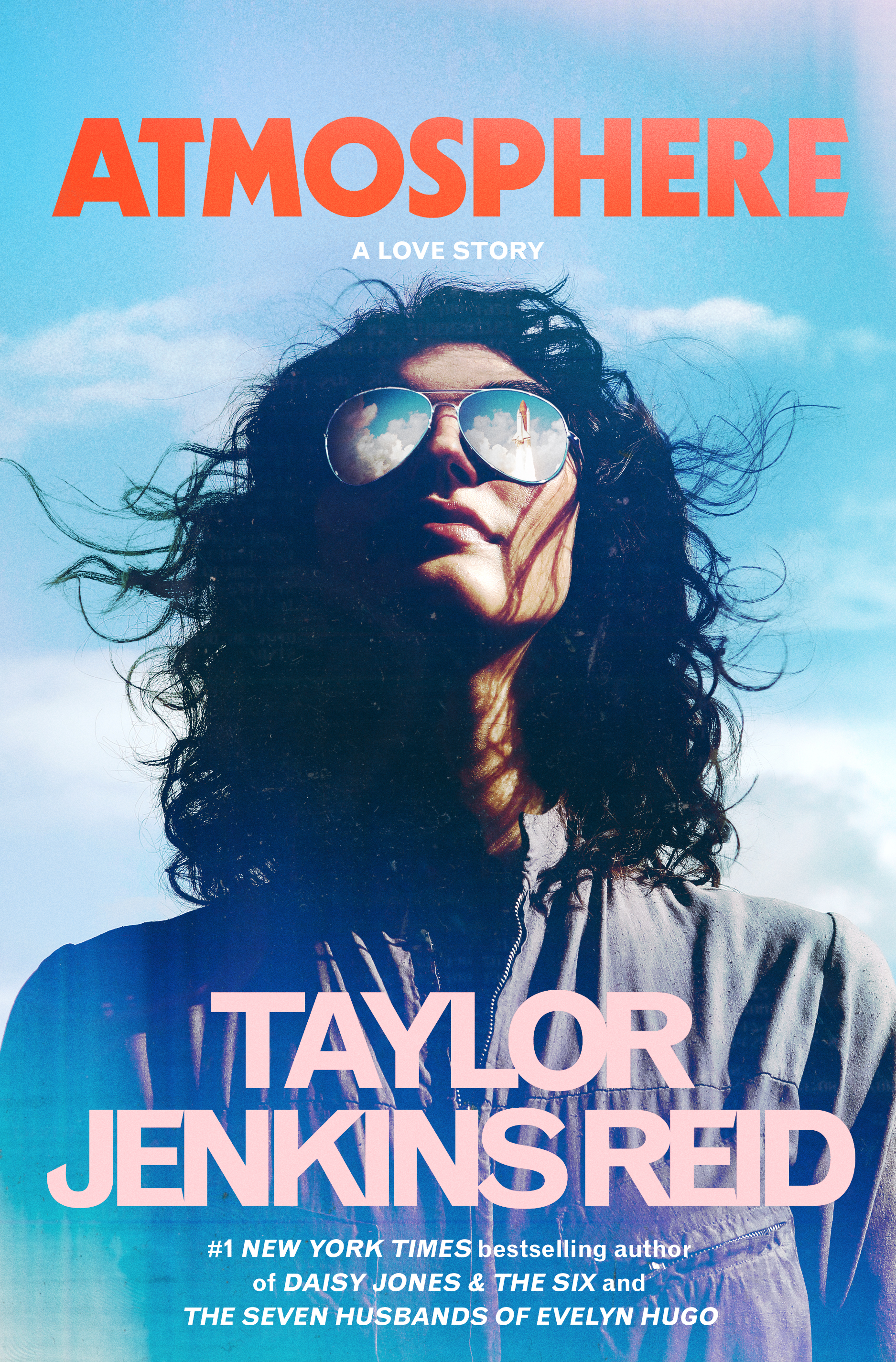
Book Review: Atmosphere by Taylor Jenkins Reid

Title: Atmosphere
Author: Taylor Jenkins Reid
Publisher: Ballantine Books
Publication date: June 3, 2025
Length: 352 pages
Genre: Historical fiction
Source: Purchased
Rating:

Rating: 4.5 out of 5.

From the #1 New York Times bestselling author of The Seven Husbands of Evelyn Hugo and Daisy Jones & The Six comes an epic new novel set against the backdrop of the 1980s Space Shuttle program about the extraordinary lengths we go to live and love beyond our limits.

Joan Goodwin has been obsessed with the stars for as long as she can remember. Thoughtful and reserved, Joan is content with her life as a professor of physics and astronomy at Rice University and as aunt to her precocious niece, Frances. That is, until she comes across an advertisement seeking the first women scientists to join NASA’s Space Shuttle program. Suddenly, Joan burns to be one of the few people to go to space.

Selected from a pool of thousands of applicants in the summer of 1980, Joan begins training at Houston’s Johnson Space Center, alongside an exceptional group of fellow candidates: Top Gun pilot Hank Redmond and scientist John Griffin, who are kind and easy-going even when the stakes are highest; mission specialist Lydia Danes, who has worked too hard to play nice; warm-hearted Donna Fitzgerald, who is navigating her own secrets; and Vanessa Ford, the magnetic and mysterious aeronautical engineer, who can fix any engine and fly any plane.

As the new astronauts become unlikely friends and prepare for their first flights, Joan finds a passion and a love she never imagined. In this new light, Joan begins to question everything she thinks she knows about her place in the observable universe.

Then, in December of 1984, on mission STS-LR9, everything changes in an instant.

Fast-paced, thrilling, and emotional, Atmosphere is Taylor Jenkins Reid at her best: transporting readers to iconic times and places, with complex protagonists, telling a passionate and soaring story about the transformative power of love, this time among the stars.

Taylor Jenkins Reid is one of my go-to authors; I know I’m in for an emotional, immersive reading experience when I pick up one of her books. And with Atmosphere, her terrific writing and character development are set within a topic that always fascinates me: NASA and the development of America’s space program — and especially, how women are (or are not) included within that program.

Atmosphere‘s main character is Joan Goodwin, an astronomer who looks to the stars for insights into life on Earth and humanity’s role within the universe. It’s the 1980s, and NASA is preparing to develop its new space shuttle program. In a huge departure, NASA is — for the first time — accepting applications for women to join its upcoming astronauts cohorts. Joan doesn’t hesitate: She applies immediately, and eventually, is accepted.

But women in the space program are still rarities, and each of them finds that they represent not just themselves, but all women. As one of Joan’s peers comments as they watch Sally Ride launch into space:

“If Sally so much as sneezes at the wrong time, everyone will blame it on the fact that she’s a woman. And then none of us will go up there for a very long time.”

Joan is very much aware:

There were four men on that shuttle. But every American woman was.

Joan has more in her life than the intense training and commitment required to qualify as an astronaut. She’s a devoted aunt, helping raise the young daughter that her selfish sister seems to resent. Joan’s sister Barbara takes Joan for granted, acting as though Joan’s career is a personal affront when it causes her to be less available for babysitting and school pick-ups.

The heart of Atmosphere is Joan’s romantic life, or rather, her growing understanding of why she’s never experienced true love and why shouldn’t couldn’t bring herself to accept a marriage proposal from her high school boyfriend, despite her family’s pressure. When Joan meets Vanessa Ford, another astronaut candidate in her training group, she’s immediately drawn to her. Joan and Vanessa’s friendship slowly develops into something more, and as the women fall deeply in love, they must balance their relationship with the realities of government service in that era. The need to hide is very real; any hint of their relationship would be enough to permanently end their dreams of making it into space.

Atmosphere is structured with a now/then split timeline: As the book opens, it’s December 1984, and Joan is serving a shift as CAPCOM — the voice of Mission Control — while a crew on the space shuttle prepares for what should be a relatively simple satellite launch. And then things go horribly wrong, and Joan is forced to remain calm and provide guidance while a crew of her close friends — and Vanessa — are at risk of never returning to Earth at all.

Interspersed with the “now” chapters focusing on the unfolding disaster, the “then” chapters go back seven years, and follow Joan from her initial application to acceptance into the astronaut program, through her years of training and up to her first space mission. We follow the incredibly rigorous requirements and grueling training she experiences, and witness the competition and comaraderie among the astronaut candidates, as well as the baked-in sexism that the woman astronauts face on a daily basis.

Beyond that, we see Joan and Vanessa’s love story unfold. It’s sweet and passionate and deeply sincere, yet tinged with the necessity of hiding and living very different lives behind closed doors and in public.

Joan studied the thin blue, hazy circle that surrounded the Earth. The atmosphere was so delicate, nearly inconsequential. But it was the very thing keeping everyone she loved alive.

Atmosphere is beautifully written, and evokes the excitement of the space program as well as the social pressures and prejudices of the era. The characters are sharply drawn and sympathetic, and the chapters showing the backstory leading up to the disaster that frames the book are engrossing and highly engaging.

The shuttle disaster is gut-wrenching to read about. From our modern-day perspective, we readers are naturally all too aware of the real-life Challenger and Columbia disasters; we know all too well that the events unfolding on the page are most likely to end in tragedy. It’s impossible to look away; I found myself holding my breath and on edge whenever this piece of the storyline resumed, and was surprised by how intensely emotional I became by the end.

Overall, Atmosphere is an uplifting, highly compelling read. Truly, my only quibble is that I wanted more at the very end, which I felt wrapped up a little bit too abruptly. I would have loved one more chapter, or perhaps an epilogue, to gain a sense of closure in terms of the characters I’d come to care about so deeply.

Still, that’s really a minor complaint. I loved the book as a whole, and highly recommend Atmosphere for anyone looking for a fascinating, emotional read with unforgettable characters and historical elements that resonate today.

Purchase linksAmazon – Bookshop.orgLibro.fm
Disclaimer: When you make a purchase through one of these affiliate links, I may earn a small commission, at no additional cost to you.

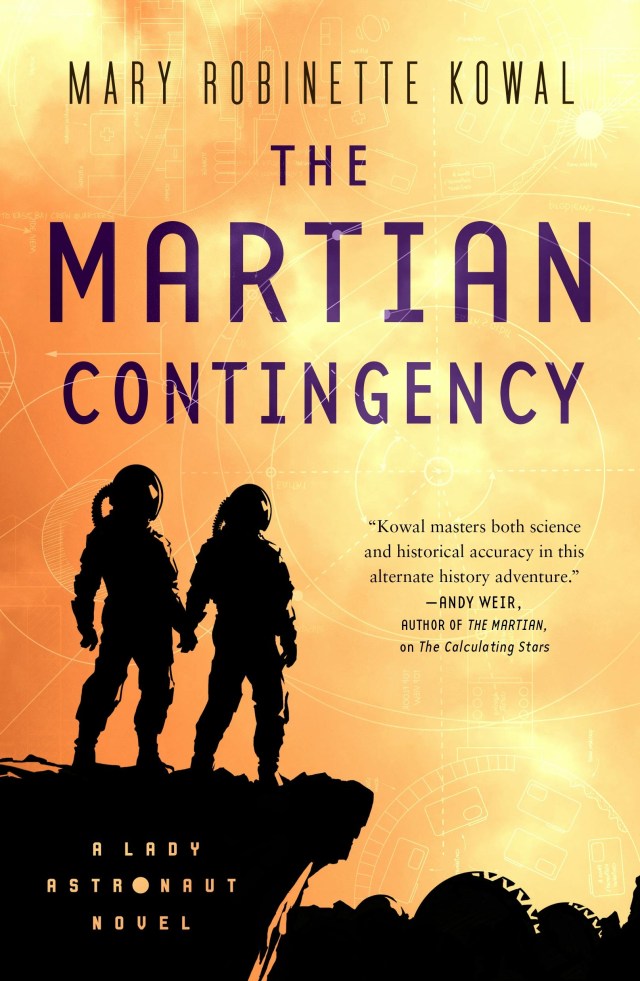
Book Review: The Martian Contingency (Lady Astronaut, #4) by Mary Robinette Kowal

Title: The Martian Contingency
Series: Lady Astronaut, #4
Author: Mary Robinette Kowal
Publisher: Tor Books
Publication date: March 18, 2025
Length: 400 pages
Genre: Science fiction
Source: Review copy courtesy of the publisher via NetGalley
Purchase links: AmazonBookshop.org
Rating:

Rating: 4.5 out of 5.

Years after a meteorite strike obliterated Washington, D.C.—triggering an extinction-level global warming event—Earth’s survivors have started an international effort to establish homes on space stations and the Moon.

The next step – Mars.

Elma York, the Lady Astronaut, lands on the Red Planet, optimistic about preparing for the first true wave of inhabitants. The mission objective is more than just building the infrastructure of a habitat – they are trying to preserve the many cultures and nuances of life on Earth without importing the hate.

But from the moment she arrives, something is off.

Disturbing signs hint at a hidden disaster during the First Mars Expedition that never made it into the official transcript. As Elma and her crew try to investigate, they face a wall of silence and obfuscation. Their attempts to build a thriving Martian community grind to a halt.

What you don’t know CAN harm you. And if the truth doesn’t come to light, the ripple effects could leave humanity stranded on a dying Earth…

The Martian Contingency is an outstanding addition to the excellent Lady Astronaut series — and while my understanding was that this was meant to be the 4th and final book in the series, I can’t actually find anything definitive that says that this is the last book.

The first Lady Astronaut book, The Calculating Stars (published 2018), is one of my all-time favorites. To set the stage for those new to the series: This alternate history version of the space race starts with a catastrophic meteor strike in 1952, which obliterates much of the eastern seaboard of the US and plunges the world into an escalating sequence of climate disasters that will, eventually, lead to planet-wide extinction.

In response to the disaster, there’s an international focus on space exploration. Humanity’s future on Earth is doomed; to survive, people must look beyond the planet for new homes. In this version of history, as envisioned by author Mary Robinette Kowal, the space race begins about ten years ahead of real-world historical events, fueled by an urgent, desperate need find solutions to Earth’s life-threatening problems.

Our point-of-view character throughout much of the series is Dr. Elma York, a scientist, mathematician, and WWII-era pilot who becomes one of the first women astronauts — used by NASA and the IAC (International Aerospace Coalition) for publicity purposes, and gaining fame as the “Lady Astronaut”. (Which, by the way, is better than how some refer to the women in the space program — would you want to be called an “astronette”?)

Elma and her husband Nathaniel (also Dr. York — he’s a brilliant engineer) are vital to the emerging space program. Read the earlier books in the series to find out more! Here in The Martian Contingency, Elma and Nathaniel have finally made it to Mars, as part of the Second Mars Expedition. Their job is to build out the Mars base, expanding it and making it safe for future expeditions, with the ultimate goal of creating a livable, viable, long-term home for humans.

Elma is a gifted pilot, an amazing human “computer”, and an adept leader. She’s appointed to the role of deputy administrator for the Mars base, and is devoted to her colleagues and to the mission. But as she settles in on Mars, she starts noticing some oddities — a patched wall that hadn’t been reported, a mural that clearly been painted to cover up something else, hatch marks etched into an airlock. Something must have happened during the First Expedition — something that didn’t make it into the official reports — but no one is talking. As Elma tries to dig, she’s told clearly that it was nothing, that everything is fine, and that she should leave it alone. But as her time on Mars progresses, the aftereffects of whatever happened show up in shocking ways, and have ripple effects that could imperil the people Elma cares about and the entire mission.

The world of this series is brilliantly depicted, as always. The author’s attention to details is meticulous. Each chapter opens with a news article from the era (most fictitious, although she includes one or two tidbits of real news from the same time period) — and even more amazing, indicates the date. What’s so amazing about the date? She provides both the Earth date and the Mars date — read the afterward of the book to learn more about her approach (and the “massive spreadsheet” she used to figure it all out). Not only does she have to provide both sets of dates, but she also layers in the many different cultural and religious holidays observed by the multicultural crew on Mars — it’s an impressive feat.

The Martian Contingency opens in 1970. In the world of these books, the global disaster has sped up not just science, but also social reckonings that came later in our own history. Because the IAC is truly an international presence, certain social issues come to the fore in startling ways — such as the acceptance of women into male-dominated roles, expedited racial integration at a time when being a racist was more normalized (South Africa is still an apartheid state at this time, which has repercussions for the mission), and the slow recognition that humanity’s future off-planet will by necessity include people of all ethnic, racial, religious, and national identities.

One example that provides a powerful storyline in The Martian Contingency centers on abortion rights and a woman’s right to choose. In the IAC, the norm is for each astronaut to be bound by their country of origin’s laws — so if a woman seeking an abortion is from a country that bans it, it would not be available to her, and likewise, a doctor from a country that bans abortions would not legally be allowed to perform the procedure, even if it were legal for the patient to receive it. It’s complicated, and the dilemmas and political pressures involved are remarkably well portrayed.

The heart of The Martian Contingency is Elma’s marriage with Nathaniel. Theirs is a beautiful love story. They’ve gone through disasters together, and have journeyed into space together, and their love never flags, despite stress, disagreements, and the separations forced upon them by their missions. There’s heartache and despair, but overall, a wonderful, mature, mutually beneficial connection that’s lovely to see.

There are times when the plot in The Martian Contingency doesn’t quite progress as evenly as I’d like, especially as relates to uncovering what happened on the First Mars Expedition. I would have liked some of those events to have surfaced and been explained more clearly, and earlier in the story. That’s a minor quibble — it does all come together eventually, and the story works.

One other truly small quibble: There’s a scene late in the book in which Elma and Nathaniel add to quotes etched into a wall in various languages. Elma (whose Judaism is an important part of her identity) adds a Hebrew phrase — but the Hebrew in the book is printed backwards! (The words themselves are fine; the sentence order is printed left to right, rather than right to left, as it should be.) I’ll note here that I read an e-ARC of the book; I’ll provide an update once my hard copy arrives and I cross-check against the finished book.

UPDATE: I’m pleased to report that the Hebrew issue is fixed in the finished version of the book! It now reads right to left… which is right!

For fans of the series, its been a long wait for The Martian Contingency! The previous book, The Relentless Moon, was published in 2020. As I mentioned, it’s not clear whether The Martian Contingency is the final book in the series — but if it is, it’s not a bad place to stop! The story wraps up with a satisfying ending, and while there could definitely be more stories to tell in the world of the Lady Astronaut, The Martian Contingency provides us with a conclusion to the book itself that resolves the key storylines, makes sense overall, and provides hope for the future.

I highly recommend The Martian Contingency — but do start at the beginning of the series with The Calculating Stars. You won’t want to miss a moment!

Final note: This fictional world all started with the short story Lady Astronaut of Mars — a wonderful work of fiction originally published in 2012. It’s a terrific story — and basically, the entire series of novels is a prequel to this story, which is set much later, when Elma is in her 60s and facing impossible choices. You can read Lady Astronaut of Mars online via Reactor Magazine, download a PDF version via the author’s website here, or find it as an e-book standalone as well as in the story collection Word Puppets through any book retailer.

Purchase links: AmazonBookshop.org
This post contains affiliate links. If you click and buy, we may earn a small commission at no extra cost to you.

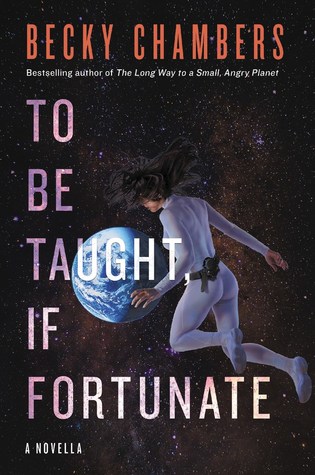
Novella review: To Be Taught, If Fortunate by Becky Chambers


Title: To Be Taught, If Fortunate
Author: Becky Chambers
Publisher: Harper Voyager
Publication date: August 8, 2019
Length: 153 pages
Genre: Science fiction
Source: Purchased
Rating:

Rating: 5 out of 5.

A stand-alone science fiction novella from the award-winning, bestselling, critically-acclaimed author of the Wayfarer series.

At the turn of the twenty-second century, scientists make a breakthrough in human spaceflight. Through a revolutionary method known as somaforming, astronauts can survive in hostile environments off Earth using synthetic biological supplementations. They can produce antifreeze in subzero temperatures, absorb radiation and convert it for food, and conveniently adjust to the pull of different gravitational forces. With the fragility of the body no longer a limiting factor, human beings are at last able to journey to neighboring exoplanets long known to harbor life.

A team of these explorers, Ariadne O’Neill and her three crewmates, are hard at work in a planetary system fifteen light-years from Sol, on a mission to ecologically survey four habitable worlds. But as Ariadne shifts through both form and time, the culture back on Earth has also been transformed. Faced with the possibility of returning to a planet that has forgotten those who have left, Ariadne begins to chronicle the story of the wonders and dangers of her mission, in the hope that someone back home might still be listening.

The title of this novella is a line from former UN Secretary General Kurt Waldheim’s message carried on the Voyager space probe in 1977:

We step out of our solar system into the universe seeking only peace and friendship — to teach, if we are called upon; to be taught, if we are fortunate.

These lines provide a beautiful summary of the theme of Becky Chambers’ deeply thoughtful novella, To Be Taught, If Fortunate. The novella tells the story of the four-person crew of the Lawki 6 mission — a team of astronauts sent on a decades-spanning mission to explore four potentially life-supporting planets located outside Earth’s solar system. The astronauts embark on their journey knowing that their friends, families, and colleagues will all be gone by the time they return to Earth some 80 years in the future — but knowledge is their holy grail, and they’re devoted to their higher purpose.

We learn about the mission through Ariadne, the mission engineer, who writes a letter back to Earth — this is the narrative we read. Ariadne describes the ship’s journey through space — the years of torpor (deep sleep/stasis in which the crew members pass the years of long transit, awakening when they reach their destinations), the glory of discovery as they set foot on each new world, and the traumatizing despair that sets in when they seem to have reached a dead end with no means of continuing the journey.

The story is full of moments of sheer joy, as the team revels in each new world and its wonders — but there’s also sorrow, as communications from Earth inexplicably stop arriving, and the crew is left to consider what, if anything, they might find upon their eventual return.

I’ve described Becky Chambers’ books as “gentle science fiction”, and I’d say the same applies here. Not gentle as in boring or uneventful, but gentle meaning focusing on the people, their emotions and relationships, their hopes and fears. There are no evil forces, no catastrophic invasions, no epic tragedies, and certainly no space battles or laser guns! This is science fiction on a human scale — it’s what the people experience, think, and feel that matters here, and that’s plenty.

We are human. We are fragile. Are we who you want out here?

The writing is lovely, and through the medium of Ariadne’s letter back to Earth, we get to know her on a deep and intimate level. What would a person feel in these circumstances, cut off from home, living in a restricted space with three other people, seeing the passage of time by the changing length of her hair and fingernails each time she emerges from torpor? This book makes the reader feel it all as well, all within just 153 pages.

To Be Taught, If Fortunate is a spare, finely-tuned portrait of humanity’s quest for knowledge and pursuit of higher purpose, as well as a moving depiction of particular people in a unique circumstance.

Don’t miss it!

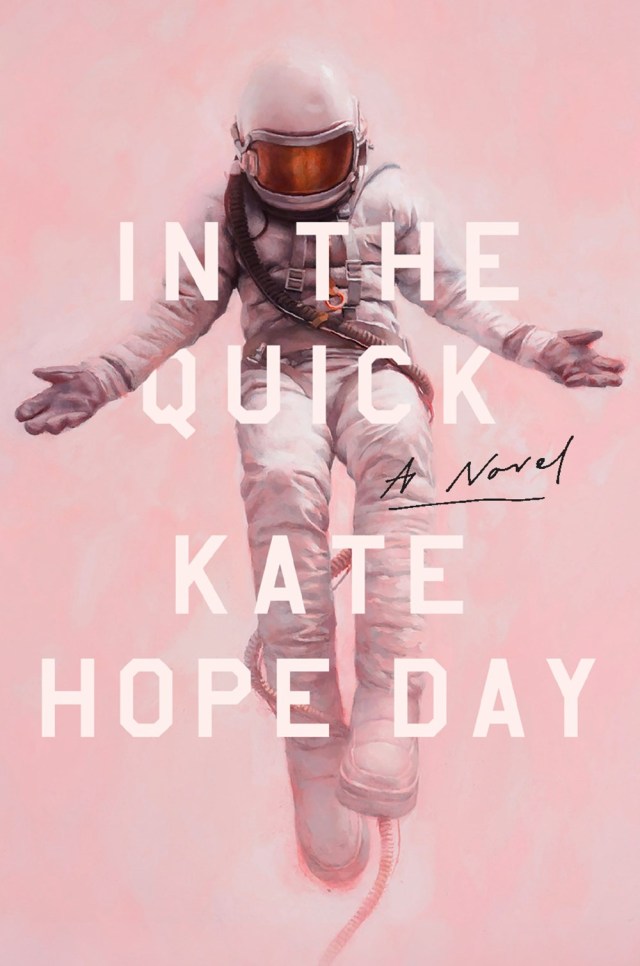
Book Review: In the Quick by Kate Hope Day

Title: In the Quick
Author: Kate Hope Day
Publisher: Random House
Publication date: March 2, 2021
Print length: 251 pages
Genre: Science fiction
Source: Purchased
Rating:

Rating: 3.5 out of 5.

June is a brilliant but difficult girl with a gift for mechanical invention who leaves home to begin grueling astronaut training at the National Space Program. Younger by two years than her classmates at Peter Reed, the school on campus named for her uncle, she flourishes in her classes but struggles to make friends and find true intellectual peers. Six years later, she has gained a coveted post as an engineer on a space station—and a hard-won sense of belonging—but is haunted by the mystery of Inquiry, a revolutionary spacecraft powered by her beloved late uncle’s fuel cells. The spacecraft went missing when June was twelve years old, and while the rest of the world seems to have forgotten the crew, June alone has evidence that makes her believe they are still alive.

She seeks out James, her uncle’s former protégé, also brilliant, also difficult, who has been trying to discover why Inquiry’s fuel cells failed. James and June forge an intense intellectual bond that becomes an electric attraction. But the relationship that develops between them as they work to solve the fuel cell’s fatal flaw threatens to destroy everything they’ve worked so hard to create—and any chance of bringing the Inquiry crew home alive.

A propulsive narrative of one woman’s persistence and journey to self-discovery, In the Quick is an exploration of the strengths and limits of human ability in the face of hardship, and the costs of human ingenuity.

I’m not going to lie — I book this book on a whim based solely and completely on the fact that the pink astronaut cover grabbed my attention in a bookstore and wouldn’t let me walk away!

Much to my surprise, while In the Quick is a science fiction book about a young engineering prodigy whose obsessive need to understand the why of things leads her into a fiercely competitive astronaut program and ultimately, into interplanetary exploration… it’s also a retelling of Jane Eyre. How wild is that?

In In the Quick, June’s beloved uncle, a renowned pioneer in spaceship engineering, dies when June is twelve. He raised her to think, to question, to seek answers, and she delighted in hovering in the background while his students worked with him on challenging prototypes and design projects. But after his death, June is lost in her aunt’s house, unloved and misunderstood — and when the spaceship Inquiry goes dark after a fuel cell failure, June’s worldview is thrown into chaos.

The fuel cells were her uncle’s greatest achievement. What could have gone wrong, and why? Even past the point when the world seems to have concluded that the Inquiry and its crew are lost, June is compelled to seek answers. She soon enrolls at the National Space Program school, determined to forge a path for herself that takes her into space and gives her the knowledge to understand and unravel the mysteries of the failed fuel cells.

June’s journey ultimately takes her to a moon called the Pink Planet, where swirling silt creates a permanently pink atmosphere, and where exposure to the silt results in a hallucinogenic, numbed state. The Pink Planet is an outpost developed as a jumping off point for the vast voyages intended for the Inquiry and its sister ship, but once the Inquiry mission failed, the Pink Planet stations were left in a state of minimal use and shocking disrepair. Once on the Pink Planet, June reconnects with her uncle’s former student James, who is similarly obsessed with June’s uncle’s work. Together, they begin an intense creative phase to finally solve the puzzle of the fuel cells… and to figure out if there truly is any hope still of finding the Inquiry after all this time.

In the Quick is a fairly short book, and it’s a quick read. It’s oddly compelling — the forays into engineering and design are kept to lightly descriptive passages, so the science is never overwhelming for those of us without advanced degrees. The story of June’s growth and education is interesting, although she’s a somewhat hard character to love. We don’t get very deep into her inner life, apart from her never-satisfied quest for knowledge. We know she experiences loss and loneliness, but the friendships she forms along her journey always feel secondary to her scientific obsession.

It’s entertaining to see the Jane Eyre storylines woven into In the Quick. We’re not beaten over the head with them — if someone reading In the Quick hasn’t read Jane Eyre, they’re not going to feel lost or confused in any way. Instead, there are some basic patterns and motifs built into the story (I had to giggle over the opening scene of June reading a book while hidden away in a window seat), and it’s surprising to see how well it all works in a novel of space exploration and interplanetary travel!

I did find the overall plot to have a somewhat flat effect by the end. There are pieces that are never fully explained — in fact, given how central the Pink Planet is to the story, I don’t believe we’re ever told where it is. We know that it’s a moon, despite being named the Pink Planet, but a moon of what?

The book ends, in my opinion, on a very abrupt note, and left me feeling frustrated. Without saying exactly what the ending is, I’ll just say that I wanted more explained about what had transpired over the years since the Inquiry was lost. June’s obsession with the Inquiry leads to her conviction that the crew was still out there somewhere, alive but unable to power their ship or communicate — but if that’s true, how did they survive all these years? The lack of an explanation felt very unsatifsying to me.

If I had to categorize this book, I’d describe it as “literary science fiction”. It’s an interesting, ambitious novel, with themes of classic literature woven into a space story. Overall, I enjoyed reading In the Quick, but for me, I prefer my sci-fi with a lot clearer grounding in the science of it all. I want to understand the details and marvel at how a work of fiction can make it all seem possible. In the Quick is more about the moods and passions and human drives involved, and while it was a good read, it wasn’t 100% my style of science fiction.

Still, I’m glad I gave in to the impulse to grab a copy! In a year where much of my reading is planned well in advance, it was a treat to read on a whim and experience something unexpected. Jane Eyre in space? Well, that was definitely a new, unexpected twist for me, and I’m happy that I gave it a chance.

Shelf Control #282: The Book of Strange New Things by Michael Faber

Shelves final

Welcome to Shelf Control — an original feature created and hosted by Bookshelf Fantasies.

Shelf Control is a weekly celebration of the unread books on our shelves. Pick a book you own but haven’t read, write a post about it (suggestions: include what it’s about, why you want to read it, and when you got it), and link up! For more info on what Shelf Control is all about, check out my introductory post, here.

Want to join in? Shelf Control posts go up every Wednesday. See the guidelines at the bottom of the post, and jump on board!

Title: The Book of Strange New Things
Author: Michel Faber
Published: 2014
Length: 528 pages

What it’s about (synopsis via Goodreads):

It begins with Peter, a devoted man of faith, as he is called to the mission of a lifetime, one that takes him galaxies away from his wife, Bea. Peter becomes immersed in the mysteries of an astonishing new environment, overseen by an enigmatic corporation known only as USIC. His work introduces him to a seemingly friendly native population struggling with a dangerous illness and hungry for Peter’s teachings—his Bible is their “book of strange new things.” But Peter is rattled when Bea’s letters from home become increasingly desperate: typhoons and earthquakes are devastating whole countries, and governments are crumbling. Bea’s faith, once the guiding light of their lives, begins to falter.

Suddenly, a separation measured by an otherworldly distance, and defined both by one newly discovered world and another in a state of collapse, is threatened by an ever-widening gulf that is much less quantifiable. While Peter is reconciling the needs of his congregation with the desires of his strange employer, Bea is struggling for survival. Their trials lay bare a profound meditation on faith, love tested beyond endurance, and our responsibility to those closest to us.

Marked by the same bravura storytelling and precise language that made The Crimson Petal and the White such an international success, The Book of Strange New Things is extraordinary, mesmerizing, and replete with emotional complexity and genuine pathos. 

How and when I got it:

I bought the paperback edition in 2015.

Why I want to read it:

I picked up this book after a friend strongly (and repeatedly!) recommended it. I’m always up for good science fiction, and stories about space travel, humanity exploring other planets, first contact with other beings, etc really appeal to me.

That said, this book does strike me as being more “literary” than I’d typically be drawn to, and it’s also over 500 pages, which is a negative for me these days. Maybe because I always feel so behind with my reading, it really takes a lot to make me want to start a book that’s this long.

But, as I said, my friend was pretty insistent at the time that I absolutely needed to read this book. I also have a copy of of The Crimson Petal and the White by the same author, which I’ve also heard raves about.

What do you think? Would you read this book? Have you read anything by this author?

Please share your thoughts!


__________________________________

Want to participate in Shelf Control? Here’s how:

  • Write a blog post about a book that you own that you haven’t read yet.
  • Add your link in the comments or link back from your own post, so I can add you to the participant list.
  • Check out other posts, and…

Have fun!

Through affiliate programs, I may earn commissions from purchases made when you click through these links, at no cost to you.

Buy now: Amazon – Book Depository – Bookshop.org

Book Review: The World Gives Way by Marissa Levien

Title: The World Gives Way
Author: Marissa Levien
Publisher: Redhook
Publication date: June 15, 2021
Length: 380 pages
Genre: Science fiction
Source: Review copy courtesy of the publisher
Rating:

Rating: 3.5 out of 5.

In a near-future world on the brink of collapse, a young woman born into servitude must seize her own freedom in this glittering debut with a brilliant twist; perfect for fans of Station Eleven, Karen Thompson Walker, and Naomi Alderman.

In fifty years, Myrra will be free.

Until then, she’s a contract worker. Ever since she was five, her life and labor have belonged to the highest bidder on her contract–butchers, laundries, and now the powerful, secretive Carlyles.

But when one night finds the Carlyles dead, Myrra is suddenly free a lot sooner than she anticipated–and at a cost she never could have imagined. Burdened with the Carlyles’ orphaned daughter and the terrible secret they died to escape, she runs. With time running out, Myrra must come face to face with the truth about her world–and embrace what’s left before it’s too late.

A sweeping novel with a darkly glimmering heart, The World Gives Way is an unforgettable portrait of a world in freefall, and the fierce drive to live even at the end of it all.

Based on the synopsis, I expected a dystopian world of class wars and enforced servitude. And yes, that is what’s going on here, but also…

[SPOILER ALERT FOR BIG REVEAL AT END OF FIRST CHAPTER]

[BUT IS IT REALLY A SPOILER IF YOU FIND OUT IN THE FIRST CHAPTER???]

Here’s the spoiler…

The world is a spaceship.

Yup. This is a science fiction novel, and I had no idea before I picked it up!!

Now that that’s out of the way…

Myrra Dal is indentured to the Carlyle family, thanks to a contract signed by her great-grandmother. It’s a work contract that’s binding for not just the original contract signer, but for generations to follow. Myrra is the last in the chain. There are fifty years left on her contract, and then she’ll be free. Of course, this isn’t really a comfort to Myrra: A woman in her 20s, she doesn’t relish the idea of being old by the time she’s released from the contract, but she has no options. Contracts are completely binding and are enforced by the government’s security bureau, which tracks down those who try to escape. Rumor has it that there are executions, but no one really knows for sure.

And back to that spaceship thing: The world of the The World Gives Way is a huge space ship (which the book refers to as “the world the ship” and people just think of as the world). It’s been traveling for centuries, and is expected to reach their planetary destination within fifty years. It’s implied that the Earth was on its way to becoming uninhabitable when the ship was built and launched, and finding a home on board sounds like it was something available to the privileged and wealthy, plus all the workers needed to support a comfortable lifestyle during the lengthy journey.

When I say that the ship is huge, I really mean it. It’s described as being about the size of Switzerland! Which (I looked up for comparison) is equivalent to about Vermont and New Hampshire combined, or closer to home for me, about the size of the Bay Area. (I absolutely couldn’t grasp the size until I had something more familiar to compare it to.)

The world of the ship includes large cities, resort getaways, mountains, deserts, and seas. It really is a world unto itself. For those who can afford it, there are luxuries and extravagances. For everyone else, there’s work and a daily drudge.

As the novel opens, Myrra’s employer, Imogene Carlyle, summons Myrra to the roof of their penthouse. Imogene intends to jump, and wants Myrra to promise to care for her baby, Charlotte. She tells Myrra a huge secret, known only to the top tier of politicians (such as her husband) and government scientists — there’s a breach in the outer hull of the ship, and despite months of study and efforts, there’s no way to repair it. The ship is doomed, expected to breach completely within the next few months. Imogene and Marcus have decided to end their lives now, leaving Charlotte in Myrra’s care. And then she jumps.

Myrra can’t quite believe what’s happened or what she’s just heard, but after searching Marcus’s office, she’s convinced. Taking money from the Carlyle’s safe, she escapes with Charlotte, heading out on the run in search of temporary freedom, alone with the knowledge of the inescapable end of the world.

From here, we also meet Tobias, a rookie cop with a burdened family history who’s assigned the Myrra Dal runaway case as his big opportunity to prove himself. Since no one knows why the Carlyles committed suicide, or if it might even be murder, Myrra is not only an escaped contract worker but also a suspect in their deaths and the kidnapping of their daughter. Tobias and his older partner are hot on Myrra’s trail, following leads that take them to Palmer, an underwater domed city, and onward from there.

Meanwhile, the world begins to show signs of doom. There are more and more frequent “earthquakes”, causing damage, then city-ending destruction, and other strange phenomena as well. Buildings collapse and people are killed, and finally, the government has no choice but to share the horrible news.

But what good does knowing do when there’s no escape? The world the ship is alone is space, years away from any known destination or safe harbor. As the end nears, all Myrra can do is continue her journey, trying to find some sort of solution for Charlotte, and almost inadvertently looking for a semblance of peace for herself.

The World Gives Way has a sense of inevitability about it. As interspersed chapters tell us, the end is indeed coming. These small interludes, in between the chapters focusing on Myrra and Tobias, show us how different parts of the world experience the end and what happens to the people there. It’s awful, because we know all along that there’s only one way the story can end — the world does in fact give way.

That said, Myrra and Tobias’s parallel and then joined journeys are fascinating and moving to read. Their experiences combine elements of an adventure story — daring escapes, near misses, constant danger, clever ruses — with introspective moments about their lives, their pasts, and their hopes, now shown to be out of reach.

As with other books about the end of the world, it can be a very melancholy read, as we know that no matter how much we might wish otherwise, all the characters we meet are doomed. Still, their journey is powerful and and I was very caught up in seeing how their experiences would change them. Would they find peace? Would they make new discoveries? Would they find a way out for Charlotte? I won’t tell here, but I found the ending sad, satisfying, and oddly right, in its own way.

I will say that my brain could never quite grasp the enormity of the world the ship. How can there be a space ship the size of Switzerland? There are only brief descriptions of the overall shape and design of the container of the world — the ship’s hulls, its cylindrical shape, its rotational access — but my mind just never quite got how there could be an entire world, with geographical features like seas and mountains, inside a ship. (That said, I was fine with reading Discworld, in which the entire world travels through space on the back of a giant turtle… but hey, that’s fantasy!)

Despite not being able to come to terms with the size and features of the ship itself, I did enjoy the attempt to picture it all, and couldn’t help but admire the author’s inventiveness in creating such a strange, weird world. Besides the physical aspects of the world, I thought it was also very clever to create such a stratified society, with the ultra-privileged wealthy few dominating the lives of so many contract workers and free working class people. It’s literally an entire world created to support the privilege of those able to afford a new life on a new planet, and the social structure really is fascinating.

The World Gives Way is a little inconsistent in tone, with its ups and downs of action and emotion, but I did like it very much. It wasn’t what I expected, but it ends up really delivering an engrossing and thought-provoking reading experience.

**********

Through affiliate programs, I may earn commissions from purchases made when you click through these links, at no cost to you.

Buy now at AmazonBook DepositoryBookshop.org

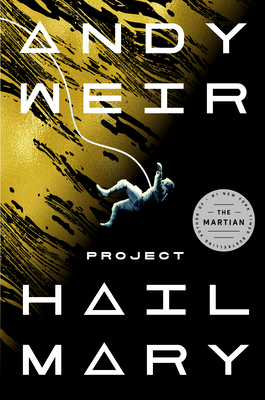
Book Review: Project Hail Mary by Andy Weir

Title: Project Hail Mary
Author: Andy Weir
Publisher: Ballantine Books
Publication date: May 4, 2021
Length: 496 pages
Genre: Science fiction
Source: Review copy courtesy of the publisher via NetGalley
Rating:

Rating: 5 out of 5.

Ryland Grace is the sole survivor on a desperate, last-chance mission–and if he fails, humanity and the earth itself will perish.

Except that right now, he doesn’t know that. He can’t even remember his own name, let alone the nature of his assignment or how to complete it.

All he knows is that he’s been asleep for a very, very long time. And he’s just been awakened to find himself millions of miles from home, with nothing but two corpses for company.

His crewmates dead, his memories fuzzily returning, he realizes that an impossible task now confronts him. Alone on this tiny ship that’s been cobbled together by every government and space agency on the planet and hurled into the depths of space, it’s up to him to conquer an extinction-level threat to our species.

And thanks to an unexpected ally, he just might have a chance.

Part scientific mystery, part dazzling interstellar journey, Project Hail Mary is a tale of discovery, speculation, and survival to rival The Martian–while taking us to places it never dreamed of going.

Wow. This was a great read!

I had a few worries about starting Project Hail Mary. Even though I loved The Martian, I had to stop and think — was I really in the mood for a novel full of equations and science? Could I see myself sticking with it for 500 pages?

Well, thank goodness I decided to jump in. I loved this book!

Right from the start, the suspense is high. The narrator wakes up, and doesn’t know where — or who — he is. He’s greeted by a robotic voice asking him questions, before he falls back to sleep again. As he becomes more and more alert, he starts to recognize some basics: He’s in some sort of bed, he has tubes and medical monitoring devices all over, and he’s being tended by robotic arms. Once he makes it onto his own two feet and takes out the tubes, he’s able to explore his immediately surroundings — an oddly shaped room with a ladder, and two beds containing corpses.

He can’t make much more progress, because the robotic voice won’t open sealed doors for him until he can identify himself… and he still doesn’t know his own name. But as he looks around, bits and pieces start to come back to him.

Over time, he remembers who he is — Ryland Grace, a junior high school science teacher — and figures out that he’s on a space ship of some sort. But why? He’s just a teacher. Granted, he’s a teacher with a Ph.D. who left academia after a poorly-received paper… but still. Why would he be on a spaceship? And why is he here with two dead people? As he’s overset by grief, he realizes that he cared about these people, and that they were his crewmates, but he still doesn’t know why they’re in space, why he was in what appears to have been a lengthy coma, and what it is he’s supposed to be doing.

The computer finishes its boot process and brings up a screen I’ve never seen before. I can tell it means trouble, because the word “TROUBLE” is in large type across the top.

As the book progresses, Grace’s experiences on the ship, the Hail Mary, are interwoven with his returning memories. Through his memories, we learn that Earth faced an extinction-level event, and that the Hail Mary was sent into space to find a solution. Grace was roped into the project early on as a researcher thanks to his expertise in molecular biology, and through his involvement, we get to see the global scientific community’s desperate race to save the planet, all leading up to the Hail Mary‘s launch.

On the ship, Grace is seeking answers, but first he needs to figure out the questions, such as where he is, what he’s looking for, and what tools his has at his disposal. And the biggest questions too — what problem is he trying to solve, and why him? He’s not an astronaut. He’s a science teacher, gosh darn it! (His avoidance of swear words is a funny running bit throughout the book…)

As in The Martian, author Andy Weir uses very smart people to solve problems with SCIENCE. And also as in The Martian, there were plenty of times when the science whooooooooshed over my head. But that’s okay. Even if I’m not up to speed on measuring gravity and can’t explain relativity and infrared light, I followed enough to stay engaged and intrigued and, I admit it, more than a little impressed.

Finding a spaceship “somewhere outside the Tau Ceti system” is no small task. Imagine being given a rowboat and told to find a toothpick “somewhere in the ocean”. It’s like that, but nowhere as easy.

Ryland Grace is a fun main character, even in the direst of dire straits, so even as he’s panicking or confused or feeling angry or hopeless, he’s always entertaining and never dull. He’s quippy and sarcastic, and when he has an idea, it lets us as readers feel like we’re on the sidelines watching a master in action.

“Coffee.”

The arms dutifully hand me a cup of coffee. It’s kind of cool that the arms will hand me a cup when there’s gravity, but a pouch when there isn’t. I’ll remember this when writing up the Hail Mary‘s Yelp review.

I’m sure plenty of reviews are going to talk about a particular character and how utterly amazing he is… and yes, he is utterly amazing… and I would have been pissed to know much about him in advance or how he fits into the story, so I won’t say anything! But trust me, the story takes a turn I didn’t expect, then builds on it in really fantastic ways, and I loved every moment.

“I am happy. You no die. Let’s save planets!”

Start to finish, Project Hail Mary is an exciting, edge-of-your-seat read with lots of smart science and some unforgettable characters, as well as an ending that… well, I won’t say, but WOW.

I’m over the moon (ha! space joke!) after having read Project Hail Mary. This is going to be THE hot book for May — don’t miss it!

**********

Through affiliate programs, I may earn commissions from purchases made when you click through these links, at no cost to you.

Buy now at AmazonBook DepositoryBookshop.org

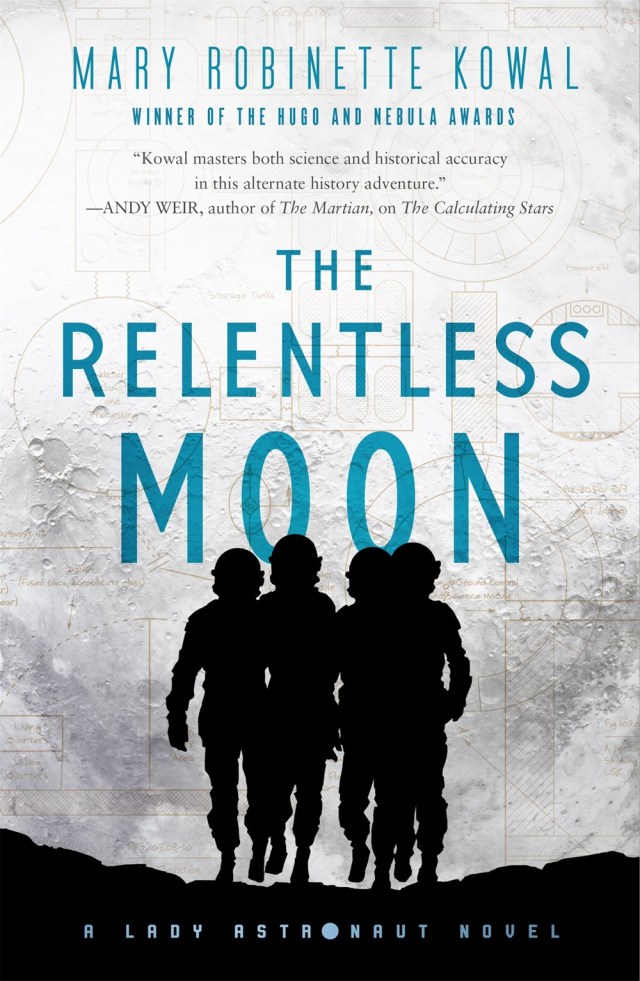
Book Review: The Relentless Moon (Lady Astronaut, #3) by Mary Robinette Kowal

Title: The Relentless Moon
Series: Lady Astronaut, #3
Author: Mary Robinette Kowal
Publisher: Tor Books
Publication date: July 14, 2020
Length: 544 pages
Genre: Science fiction
Source: Purchased
Rating:

Rating: 4.5 out of 5.

Mary Robinette Kowal continues her award-winning Lady Astronaut series, which began with The Calculating Stars and The Fated Sky, with The Relentless Moon.

The Earth is coming to the boiling point as the climate disaster of the Meteor strike becomes more and more clear, but the political situation is already overheated. Riots and sabotage plague the space program. The IAC’s goal of getting as many people as possible off Earth before it becomes uninhabitable is being threatened.

Elma York is on her way to Mars, but the Moon colony is still being established. Her friend and fellow Lady Astronaut Nicole Wargin is thrilled to be one of those pioneer settlers, using her considerable flight and political skills to keep the program on track. But she is less happy that her husband, the Governor of Kansas, is considering a run for President.

The Lady Astronaut series is an absolute favorite, so I’m thrilled that I finally read my copy of The Relentless Moon.

In the first two books in the series (The Calculating Stars and The Fated Sky), we’re introduced into an alternate version of 1950s and 1960s America, in which a catastrophic meteor strike has wreaked havoc on the world. Scientific analysis shows that the planet is on its way to becoming uninhabitable due to the climate change that followed the meteor, and this brings about a global focus on developing a space program. The future of humanity rests on finding a new home for people among the stars.

In books one and two, scientist Elma York is the main character. Here in book #3, The Relentless Moon, a supporting character from the earlier books takes the lead role.

Nicole Wargin is a glamorous politician’s wife. She’s also one hell of a pilot, a former WASP who entered the space program as one of the initial women allowed into astronaut training. Nicole is beautiful, polished, and full of grace, always knowing the right thing to say to the right people. She’s also much more than she appears to be, with secrets from her professional past as well as her own personal struggles that she usually manages to mask.

As the book opens, Nicole is about to join the next launch to the Moon. Her husband Kenneth, governor of Kansas, is poised to announce his candidacy for President. On Earth, protests by the group Earth First are becoming more dangerous and violent day by day — demanding that the space program be abandoned so that government dollars can be focused on helping those who lost so much due to the meteor, and those who — whether for lack of privilege, access, or health — will never be candidates for traveling into space.

Despite the threats, Nicole journeys to the Moon, but things go badly, quickly. The landing mechanisms are damaged, forcing a life-threatening crash landing. It could be an accident… but it could also be sabotage. More problems arise, as small mechanical problems and power outages escalate into situations of increasing danger. Nicole is assigned to help determine if there truly is Earth First sabotage going on, and if so, to stop the perpetrators before the damage becomes catastrophic.

At 500+ pages, The Relentless Moon is a long book, but it flew by. I was completely engrossed in the discussions of life in space and on the Moon, as well as the whodunnit aspects of the hunt to find the saboteurs.

That alone might make for dry reading, but Nicole is a fabulous character with so many layers, and it’s getting to see beneath her surface that makes this a terrific book. She’s smart, sophisticated, and experienced, yet also vulnerable in unexpected ways. Her perspective on the space program, her colleagues and friends, and the pressures of being a public figure are all fascinating, and her personal struggles and tragedies in this book are incredibly moving.

The events of The Relentless Moon happen in the same timeline as those in The Fated Sky, so here, Nicole and her fellow astronauts on the lunar base hear about some of the events from the earlier book as they happen, and we get a different look at what happened and why, as well as information that Elma was not given in The Fated Sky. I love how these two books work together.

A final reveal at the end of The Relentless Moon made me so happy. That’s all I’ll say about it!

The fourth book, The Derivative Base, is due out in 2022, and I don’t want to wait that long! I can’t wait to see how the author wraps up this incredibly masterful and exciting series.

Shelf Control #243: The City in the Middle of the Night by Charlie Jane Anders

Shelves final

Welcome to Shelf Control — an original feature created and hosted by Bookshelf Fantasies.

Shelf Control is a weekly celebration of the unread books on our shelves. Pick a book you own but haven’t read, write a post about it (suggestions: include what it’s about, why you want to read it, and when you got it), and link up! For more info on what Shelf Control is all about, check out my introductory post, here.

Want to join in? Shelf Control posts go up every Wednesday. See the guidelines at the bottom of the post, and jump on board!

cropped-flourish-31609_1280-e1421474289435.png

Title: The City in the Middle of the Night
Author: Charlie Jane Anders
Published: 2019
Length: 366 pages

What it’s about (synopsis via Goodreads):

Would you give up everything to change the world?

Humanity clings to life on January–a colonized planet divided between permanently frozen darkness on one side, and blazing endless sunshine on the other.

Two cities, built long ago in the meager temperate zone, serve as the last bastions of civilization–but life inside them is just as dangerous as the uninhabitable wastelands outside.

Sophie, a young student from the wrong side of Xiosphant city, is exiled into the dark after being part of a failed revolution. But she survives–with the help of a mysterious savior from beneath the ice.

Burdened with a dangerous, painful secret, Sophie and her ragtag group of exiles face the ultimate challenge–and they are running out of time.

Welcome to the City in the Middle of the Night 

How and when I got it:

I bought this book in February 2019, as soon as it was released.

Why I want to read it:

I’ve read the author’s previous novel, All the Birds in the Sky, and loved it. I’ve also been a fan of her writing from the io9 website — so of course, I had to have this book as soon as it came out!

It sounds like a very cool world, with one city always in sun and one always in darkness. I really do want to read this, and there’s no real reason why I haven’t already, except for the age-old problem of too many books and not enough time.

Have you read this book? Would you want to?

Please share your thoughts!


__________________________________

Want to participate in Shelf Control? Here’s how:

  • Write a blog post about a book that you own that you haven’t read yet.
  • Add your link in the comments or link back from your own post, so I can add you to the participant list.
  • Check out other posts, and…

Have fun!