Book Review: Spelunking Through Hell (InCryptid, #11) by Seanan McGuire

Title: Spelunking Through Hell
Series: Incryptid, #11
Author: Seanan McGuire
Publisher: DAW
Publication date: March 1, 2022
Length: 352 pages
Genre: Urban fantasy
Source: Review copy courtesy of the publisher via NetGalley
Rating:

Rating: 3.5 out of 5.

Now in trade paperback, the eleventh book in the fast-paced InCryptid urban fantasy series returns to the mishaps of the Price family, eccentric cryptozoologists who safeguard the world of magical creatures living in secret among humans.

Love, noun:

1. An intense feeling of deep affection; may be romantic, filial or platonic.

Passion, noun:

1. A strong or barely controllable emotion.

2. Enthusiasm, interest, desire.

3. See also “obsession.”

It’s been fifty years since the crossroads caused the disappearance of Thomas Price, and his wife, Alice, has been trying to find him and bring him home ever since, despite the increasing probability that he’s no longer alive for her to find. Now that the crossroads have been destroyed, she’s redoubling her efforts. It’s time to bring him home, dead or alive.

Preferably alive, of course, but she’s tired, and at this point, she’s not that picky. It’s a pan-dimensional crash course in chaos, as Alice tries to find the rabbit hole she’s been missing for all these decades—the one that will take her to the man she loves.

Who are her allies? Who are her enemies? And if she manages to find him, will he even remember her at this point?

It’s a lot for one cryptozoologist to handle. 

It’s almost spring, and that means it’s time for another installment in the ongoing adventures of the Price-Healy family… yes, another InCryptid book is here! (Annoying some fans by switching to trade paperback size rather than sticking with mass market… so now my paperback editions won’t match??? But that’s beside the point when it comes to a review, so onward we go.)

The InCryptid series follows the adventures of the sprawling Price and Healy clan, a large extended family dedicated to studying and preserving the lives of cryptids — non-human beings who (usually) live peacefully among the humans, but who are hunted by the merciless and powerful Covenant simply for existing. Yes, there are also cryptids who do unpleasant things like eating humans, and in those cases, the Prices are a force to be feared… hence their very murdery reputation.

Up to now in the series, the books have focused on members of the current young adult family members — siblings Verity, Alexander, and Antimony (Annie), as well as their cousin Sarah. There are plenty of references to other relatives, and their parents and other cousins and family-by-extension pop in and play different roles as well. One of the more mythological members of the family, whom we’ve seen in action really just once so far, is grandmother Alice.

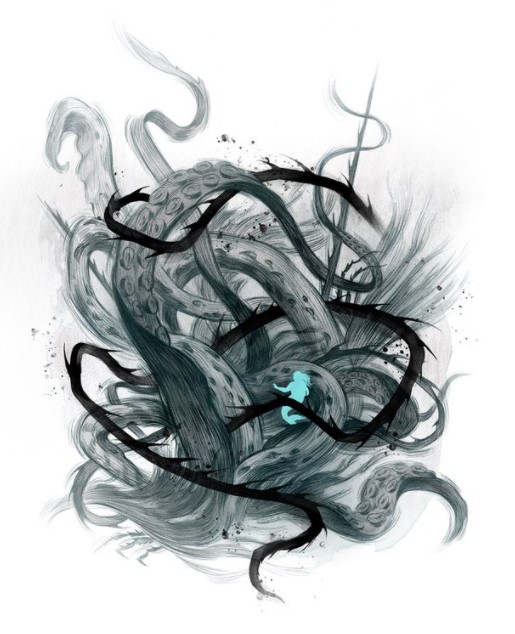
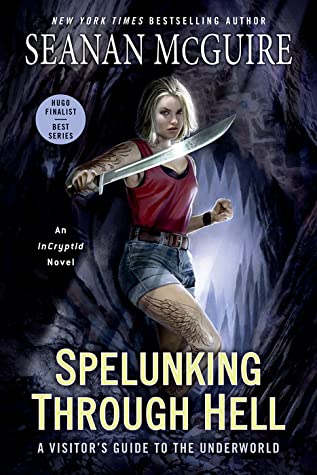
Now look at the book cover image again. That’s Alice! Does she look like a grandma to you?

Alice was a young woman in the 1950s, which is when she lost her beloved husband Thomas to a bad bargain with the crossroads. Granted, he made the bargain to save Alice’s life, so he deserves a little slack for having made it. From the time of Thomas’s disappearance, Alice has been obsessed with finding him — so much so that she’s spent over fifty years as an interdimensional traveler, tracking down every clue and random hint that could possibly lead her to her husband.

Of course, to do so, she’s had to leave her family behind, so her two children resent the hell out of her and her grandchildren know her more from the family legends than from actual relationships… but she can’t give up. Along the way, she has used whatever means necessary to preserve her youth and health so that she could keep going, which is why she looks and feels more or less like a 19-year-old.

All that is backstory. Here, in Spelunking Through Hell, Alice is the main character, and we join her on her desperate journey to find Thomas. It’s been 50 years, and her hope is starting to wear thin. At this point, she’d even accept proof of his death — she’s just about ready to stop. But then a new clue from an unexpected source gives her one more angle to try, and so she sets out one last time to travel to a dying dimension that’s supposedly inaccessible… but Alice is nothing but persistent.

And so what if she doesn’t have an exit strategy? So long as she finds Thomas — even if he is about 80 years old by now — they can figure out what comes next together.

Spelunking Through Hell is yet another fun romp with the Price clan, although we really don’t see many members of the family other than Alice. This makes the tale fresh, but also feels somewhat less engaging, since Alice has never been a main character before and there isn’t a ton to build on in terms of what we know about her or what it’s like to see the world through her eyes.

Like the rest of the Prices, Alice is always fully armed, ready for a fight, and full of quips. She’s funny, fierce, and reckless, and also has no problem pushing herself past injury and excruciating pain, so long as it’s in service of her obsession with finding Thomas.

The plot occasionally feels a little draggy — it does take quite a while to get to the target world — and while I enjoyed the book, I have to say that my lack of familiarity with Alice as an individual made this book slightly less wonderful as a reading experience as compared to earlier books in the series.

Side note on InCryptids: This is a huge expanded world, and it’s supported by many, many short stories available through the author’s website and via Patreon. That’s nice… but also frustrating. Apparently, if I’d been keeping up with all the Price short stories, I would be very invested in Alice and Thomas and would know pretty much everything about their courtship, romance, and early years together. But I haven’t! And that feels problematic for me. Yes, I can make an effort to go get caught up (and I probably will, once I figure out the order the stories should be read in) — but I do think the books alone should tell a complete story, and in this case, I felt like I was always missing key pieces of information.

That said, I did enjoy the book overall, and Seanan McGuire’s writing keeps it fun even while the blood is flowing:

And I, an asshole, had done enough woolgathering for one… day? Evening? Afternoon? There were no windows, and massive blood loss always throws off my sense of time.

I’d rather be married to a man fifty years older than I am than see him go through what I’ve willingly done to myself for his sake, what he never would have asked or expected me to do. It’s always easier to set yourself on fire than to allow someone else to burn for you.

I wanted to avoid being caught at any cost, since one solid snap of those claws could have me down a limb, or possibly down an entire torso. I like my torso. It’s where I keep my lungs.

The Haspers not currently engaged began to run in my direction, forming a nicely unified pack. I like a unified pack. I like the way is splashes when you lob a grenade into the middle of it, and I like it even better when none of its component parts knows what a grenade is, so they react like you’ve just thrown a rock or something. To be nonspecific.

Spelunking Through Hell includes the bonus novella And Sweep Up the Wood, which tells the story of a key turning point in the early years of Alice and Thomas’s relationship. It’s very good and very emotional (plus, you know, plenty of guns and explosives — after all, Alice in involved), and it’s a great way to wrap up this installment of the series.

The InCryptid series itself is going strong, and overall, I love it! I do wish this one had drawn me in a bit more, but I can’t really complain. The Price-Healy clan is amazing (and there are religious mice, who make every scene they’re in 1000% better), and I can’t wait for more of the story. The big question is — who will #12 be about?

As I’ve said in pretty much every review of this series, definitely start at the beginning with with Discount Armageddon. This series is full of great characters and terrific world-building. It’s easy to get hooked!

**Save

Save

Save

Save

Save

Save

Save

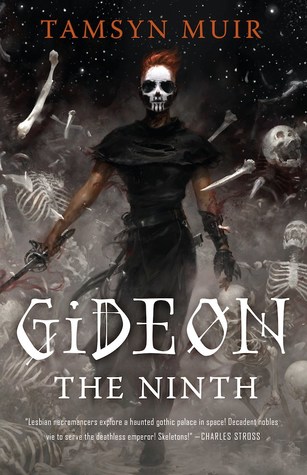
Shelf Control #305: Gideon the Ninth by Tamsyn Muir

Shelves final

Welcome to Shelf Control — an original feature created and hosted by Bookshelf Fantasies.

Shelf Control is a weekly celebration of the unread books on our shelves. Pick a book you own but haven’t read, write a post about it (suggestions: include what it’s about, why you want to read it, and when you got it), and link up! For more info on what Shelf Control is all about, check out my introductory post, here.

Want to join in? Shelf Control posts go up every Wednesday. See the guidelines at the bottom of the post, and jump on board!

Title: Gideon the Ninth
Author: Tamsyn Muir
Published: 2019
Length: 448 pages

What it’s about (synopsis via Goodreads):

The Emperor needs necromancers.

The Ninth Necromancer needs a swordswoman.

Gideon has a sword, some dirty magazines, and no more time for undead bullshit.

Brought up by unfriendly, ossifying nuns, ancient retainers, and countless skeletons, Gideon is ready to abandon a life of servitude and an afterlife as a reanimated corpse. She packs up her sword, her shoes, and her dirty magazines, and prepares to launch her daring escape. But her childhood nemesis won’t set her free without a service.

Harrowhark Nonagesimus, Reverend Daughter of the Ninth House and bone witch extraordinaire, has been summoned into action. The Emperor has invited the heirs to each of his loyal Houses to a deadly trial of wits and skill. If Harrowhark succeeds she will become an immortal, all-powerful servant of the Resurrection, but no necromancer can ascend without their cavalier. Without Gideon’s sword, Harrow will fail, and the Ninth House will die.

Of course, some things are better left dead.

How and when I got it:

I bought a paperback at some point in the last two years (and picked up book #2, Harrow the Ninth, too).

Why I want to read it:

I remember seeing tons of reviews for this book when it came out, most using the tagline lesbian necromancers in space — and yes, that definitely grabbed my attention! I have reader friends who became obsessed with this book (and its sequel), although I’ve definitely seen my share of negative reviews as well.

This does seem like something I’d love, and I’m excited to read it. I think the only reason I haven’t so far is that when I first planned to get started, I got a little intimidated by what seemed like a lot of world-building to absorb up front, and I just wasn’t in the right state of mind to focus at that moment. But now I’m ready!

The third book, Nona the Ninth, comes out later this year, so this seems like a good time to finally dive in.

What do you think? Have you read this book, and if so, do you recommend it? Or if you haven’t read it, does this sound like something you’d want to read?

Please share your thoughts!


__________________________________

Want to participate in Shelf Control? Here’s how:

  • Write a blog post about a book that you own that you haven’t read yet.
  • Add your link in the comments or link back from your own post, so I can add you to the participant list.
  • Check out other posts, and…

Have fun!

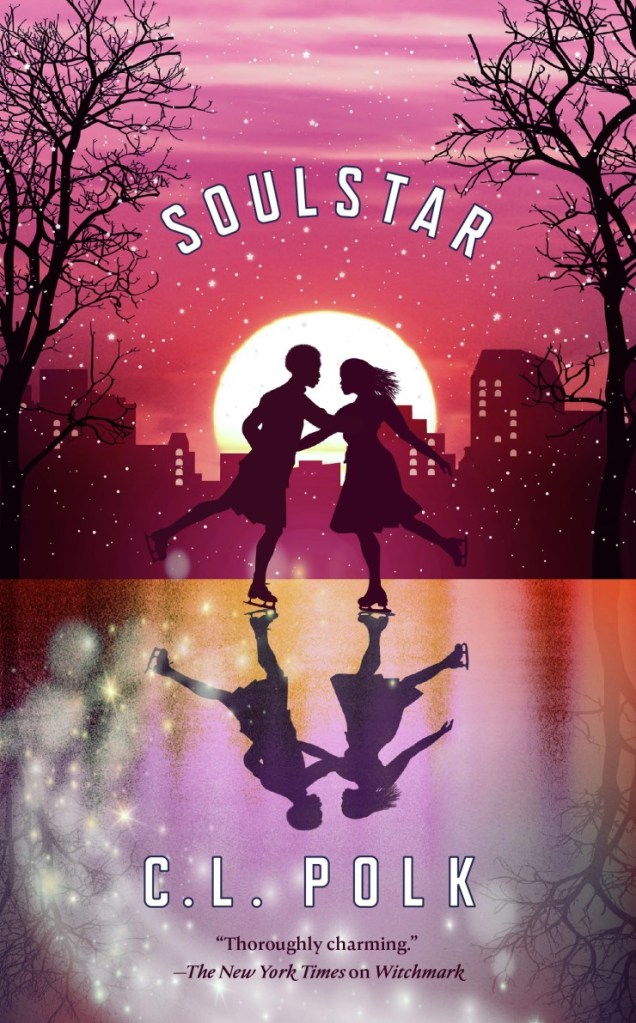
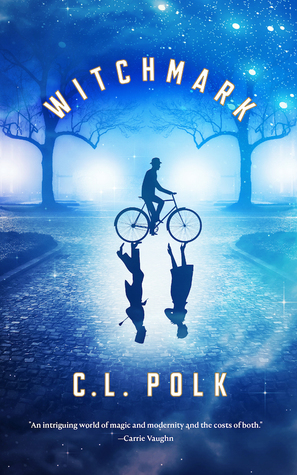
Book Review: Soulstar (The Kingston Cycle, #3) by C. L. Polk

Title: Soulstar
Series: The Kingston Cycle, #3
Author: C. L. Polk
Publisher: Tor
Publication date: February 16, 2021
Length: 304 pages
Genre: Fantasy
Source: Purchased
Rating:

Rating: 3 out of 5.

With Soulstar, C. L. Polk concludes her riveting Kingston Cycle, a whirlwind of magic, politics, romance, and intrigue that began with the World Fantasy Award-winning Witchmark. Assassinations, deadly storms, and long-lost love haunt the pages of this thrilling final volume.

For years, Robin Thorpe has kept her head down, staying among her people in the Riverside neighborhood and hiding the magic that would have her imprisoned by the state. But when Grace Hensley comes knocking on Clan Thorpe’s door, Robin’s days of hiding are at an end. As freed witches flood the streets of Kingston, scrambling to reintegrate with a kingdom that destroyed their lives, Robin begins to plot a course that will ensure a freer, juster Aeland. At the same time, she has to face her long-bottled feelings for the childhood love that vanished into an asylum twenty years ago.

Can Robin find happiness among the rising tides of revolution? Can Kingston survive the blizzards that threaten, the desperate monarchy, and the birth throes of democracy? Find out as the Kingston Cycle comes to an end.

In the third and final book in the Kingston Cycle trilogy, we pick up within weeks of the end of book #2 (Stormsong), this time with the character Robin Thorpe serving as our narrator.

Robin was introduced in the previous books, but here takes center stage. She’s a nurse at the veteran’s hospital, but also comes from a witch clan and has strong ties to the activist movement within Kingston. As the book opens, Robin is very involved in the mission to free imprisoned witches from the horrific asylums where they were kept for the past twenty years and bring them home to their families. Among the freed witches is Zelind, Robin’s spouse, whom she hasn’t seen in all these years.

Society within Kingston is in turmoil, as the aether powering the city has been cut off, the lower classes are suffering, and demands for social justice are on the rise. Meanwhile, the new King has promised change, but seems especially focused on slow, incremental change that doesn’t challenge the status quo in a significant way. Robin’s people want dramatic action, and she becomes in political activism that threatens to overturn the entire government structure of Aeland.

The book very much focuses on activism, political change, and reparations — but the thematic elements don’t seem to mesh well with the fantasy elements. The witches are present as an oppressed class demanding justice, but the politics take precedence. As in the previous books, I was frustrated by the lack of clarity over some basic questions around the fantasy world, such as the presence of ghosts and who can see them, the significance of soulstars, and even the question of who knows what about magic and witches. Additionally, the various political and social and community-based factions introduced all become one big blur over the course of the novels. At times when there was a big reveal, rather than feeling the impact, I first had to go back and check to see who these people were and what role they played.

Wrapping up the trilogy:

I’ve had my eye on these books ever since Witchmark (book 1) was released, and picked up paperback editions over the years. With all three books on my shelf, I was determined to make 2022 the year I finally read them.

Sad to say, I was for the most part underwhelmed. While I liked key characters, I was disappointed to see the main characters from the first two books shunted aside in the narrative from book to book, relegated to supporting roles and with no further exploration of their inner lives.

For a fantasy world, I expected much more in terms of the fantastical elements and the world-building. Instead, I’d describe these books as a story of political change and social justice that happens to be set in a fantasy world.

I had hoped to love these books. I didn’t. I was interested enough in the characters to see the trilogy through to the end, but I can’t say that this trilogy will ever make a list of my favorites.

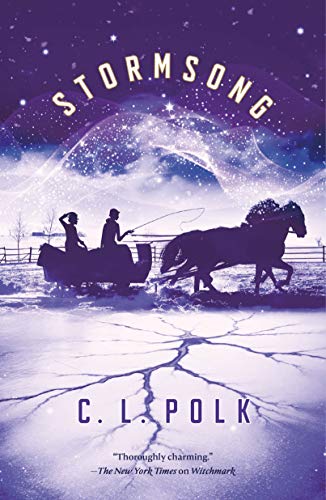
Book Review: Stormsong (The Kingston Cycle, #2) by C. L. Polk

Title: Stormsong
Series: The Kingston Cycle, #2
Author: C. L. Polk
Publisher: Tor
Publication date: February 11, 2020
Length: 346 pages
Genre: Fantasy
Source: Purchased
Rating:

Rating: 3.5 out of 5.

After spinning an enthralling world in Witchmark, praised as a “can’t-miss debut” by Booklist, and as “thoroughly charming and deftly paced” by the New York Times, C. L. Polk continues the story in Stormsong. Magical cabals, otherworldly avengers, and impossible love affairs conspire to create a book that refuses to be put down.

Dame Grace Hensley helped her brother Miles undo the atrocity that stained her nation, but now she has to deal with the consequences. With the power out in the dead of winter and an uncontrollable sequence of winter storms on the horizon, Aeland faces disaster. Grace has the vision to guide her people to safety, but a hostile queen and a ring of rogue mages stand in the way of her plans. There’s revolution in the air, and any spark could light the powder. What’s worse, upstart photojournalist Avia Jessup draws ever closer to secrets that could topple the nation, and closer to Grace’s heart.

Can Aeland be saved without bloodshed? Or will Kingston die in flames, and Grace along with it?

Book two of the Kingston Cycle by C. L. Polk continues and builds upon the story begun in Witchmark. In Witchmark, we’re introduced to the world of Aeland, an early industrial-age country coming out of a brutal war with neighboring Laneer. Our point of view character is Dr. Miles Singer, a traumatized war veteran who himself treats suffering war veterans, all the while keeping his true identity — son of one of the most powerful families in Aeland — a tightly held secret.

In Aeland, the ruling families control the climate through magical rituals, maintaining the even, pleasant seasons year-round and enabling good harvests and a strong economy. By the end of Witchmark, certain truths have come to light, among them the fact that the aether powering Aeland (basically, electricity) is generated via a truly heinous conspiracy. Through the intervention of Miles, his lover, and his sister, the conspiracy is broken apart, but that’s resulted in the shutdown of aether power.

As we pick up in Stormsong, the country is facing a harsh winter without heat or power, and the food supply is threatened as well. Aeland is a country of haves and have-nots, and outside of the royalty and the inner circle of ruling families, almost eveyone is in the latter category.

In Stormsong, Miles’s sister Grace takes over as the point of view character. Dame Grace Hensley is a powerful mage and political leader, but she faces a growing circle of enemies and obstacles. The conspirators behind the aether atrocities are all imprisoned, but their influence is still widely felt. The remaining power players are jockeying for key positions, and Grace’s leadership may come apart at any moment if she can’t solidify her political alliances.

Stormsong is very much about enacting social change. Grace knows that certain horrible laws need to be overturned, but at the outset, she thinks the country needs to ease into it. Yes, the persecution of witches (as revealed in Witchmark) is a travesty, but she fears that the outrage that will erupt when this becomes widely known will have a devastating effect on the country. Slow and steady seems to be her initial approach — maybe stop the badness, but still keep it a secret?

Over time, though, a courageous journalist and other activists push the agenda forward and force Grace’s hand. It’s a complex set of considerations and actions — social justice issues, political power, and the stability of the reigning monarchy are all at play.

The author finds a way to blend the personal and the political here in Stormsong, showing us the stakes for the society as a whole as well as the personal risks to Grace and those she cares about. Grace as an individual is fascinating — a young professional woman who seeks to stay in power because she knows she can do good, but who’s also very much aware that her family’s privilege, built over many years of corruption, are what gave her access to power in the first place.

I would have liked to have seen Miles more in this book (I became very attached to him in book #1), but he does participate with Grace in key scenes, and it’s nice to see that he’s doing well and that his love life is thriving!

One of my complaints about Witchmark was about insufficiently clear world-building. I felt that there were too many concepts that were introduced but not well explained. Some aspects are clearer to me now after reading Stormsong, but I’d still like certain things spelled out even more — especially the Amaranthines, a race (?) or species (?) of people (?) who are feared by all, seem to have unfathomable magical powers, and who intervene in the conflicts between people when they seem fit. I’ve seen other bloggers and commenters interpret them as being this world’s equivalent of the Fae, which helps me make better sense of them, although I think they’re maybe also supposed to be some sort of celestial (?) beings, and their world is called Solace (?) but also has something to do with where souls of the dead go, so maybe some sort of heaven (?).

As you can see, I’m still somewhat confused!

I like the overarching story and the characters enough that I want to know what happens next, so I’ll be continuing onward to book #3, Soulstar. Here’s hoping it all comes together and that everything is crystal clear by the time I finish the trilogy!

Book Review: Elder Race by Adrian Tchaikovsky

Title: Elder Race
Author: Adrian Tchaikovsky
Publisher: Tordotcom
Publication date: November 16, 2021
Length: 201 pages
Genre: Science fiction
Source: Purchased

Rating: 5 out of 5.

In Adrian Tchaikovsky’s Elder Race, a junior anthropologist on a distant planet must help the locals he has sworn to study to save a planet from an unbeatable foe.

Lynesse is the lowly Fourth Daughter of the queen, and always getting in the way.

But a demon is terrorizing the land, and now she’s an adult (albeit barely) and although she still gets in the way, she understands that the only way to save her people is to invoke the pact between her family and the Elder sorcerer who has inhabited the local tower for as long as her people have lived here (though none in living memory has approached it).

But Elder Nyr isn’t a sorcerer, and he is forbidden to help, for his knowledge of science tells him the threat cannot possibly be a demon… 

This stunning, inventive, beautifully crafted novella is a living, breathing embodiment of Arthur C. Clarke’s Third Law:

Any sufficiently advanced technology is indistinguishable from magic.

In Elder Race, Lynesse Fourth Daughter, daughter of the queen of Lannesite, takes the forbidden trail up the mountain to the Tower of Nyrgoth Elder, the revered sorcerer who has not been seen for generations. Lynesse is not taken seriously by her mother or older sisters, all of whom prefer to focus on trade and diplomacy rather than indulge Lynesse’s flights of fancy. But Lynesse has heard refugees from outlying lands plea for help after their towns and forests were overrun by a demon, and she’s determined to take action, even if her mother won’t.

That’s the opening set-up of Elder Race. It feels like the start of an epic quest, and hurray for girl power too!

Stop reading here if you want to avoid spoilers completely, because there’s a doozy coming…

Ready?

The next chapter is told from the perspective of Nyrgoth Elder… and it turns everything upside down. It turns out that his name is really Nyr Illim Tevitch, and he’s not a sorcerer. Nyr is an anthropologist with Earth’s Explorer Corps, and he’s there in his remote outpost to study and observe the local populations.

Thousands of years earlier, Earth sent out generation ships to colonize planets throughout the universe. And some thousands of years after that, groups of scientists followed to check on how the colonies turned out. Nyr was a part of one of these expeditions, and after his fellow scientists were recalled to Earth, he was left behind, the sole member of the expedition remaining to continue their studies.

The problem is, he hasn’t heard back from Earth in centuries. Nyr stays alive through advanced science, including long periods of sleeping in suspended animation. He last awoke a century earlier, and broke one of the cardinal rules of anthropologists by getting involved with the local people. His mission is to study and report; by mingling with the people, he’s potentially contaminating the study.

When Lynesse and her companion Esha show up at his tower, there begins a remarkable story of cultural differences and miscommunications. The early colonies on the planet were rudimentary, starting life over without technology. Their culture is agrarian and feudal and deeply superstitious. Anything unexplainable is attributed to magic and demons and sorcerers. And so even when Nyr tries to explain himself, the language gap between the cultures makes it literally impossible for him to translate the term scientist — every word he tries to use comes out as some form of magician or sorcerer or wizard.

“It’s not magic,” he insisted, against all reason. “I am just made this way. I am just of a people who understand how the world works.”

“Nyrgoth Elder,” Esha said slowly. “Is that not what magic is? Every wise man, every scholar I have met who pretended to the title of magician, that was their study. They sought to learn how the world worked, so that they could control and master it. That is magic.”

As their quest proceeds, Nyr goes against every principle of his training, as he realizes that he can actually serve a different purpose:

I am only now, at the wrong end of three centuries after loss of contact, beginning to realise just how broken my own superior culture actually was. They set us here to make exhaustive anthropological notes on the fall of every sparrow. But not to catch a single one of them. To know, but very emphatically not to care.

I can’t even begin to explain how gorgeously crafted this slim book is. Particularly mind-blowing is a chapter in which Nyr tells Lynesse and Esha the story of how his people came to the planet millennia ago. On the same page, in parallel columns, we read Nyr’s science-based story and right next to it, the same story as it’s heard by Lynesse in the context of her own culture and language. It’s a remarkable writing achievement, and just so fascinating to read.

Also fascinating is Elder Race‘s treatment of depression and mental health, which for Nyr is managed through the use of advanced technology that allows him to separate from his feelings — but not permanently. He can shut off feeling his feelings, but is still aware that they’re there, and can only go so long before he has to let down the wall and experience the emotions that have been walled away. The descriptions of dealing with depression are powerful, as is the way he explains knowing the depression is waiting for him, even in moments when he’s not living it.

I absolutely loved the depiction of a tech-free culture’s interpretation of advanced scientific materials and equipment, and the way the books chapters, alternating between Lynesse and Nyr’s perspectives, bring the cultural divide to life.

Elder Race is beautifully written and expertly constructed. The balancing act between science fiction and fantasy is just superb. This book should not be missed!

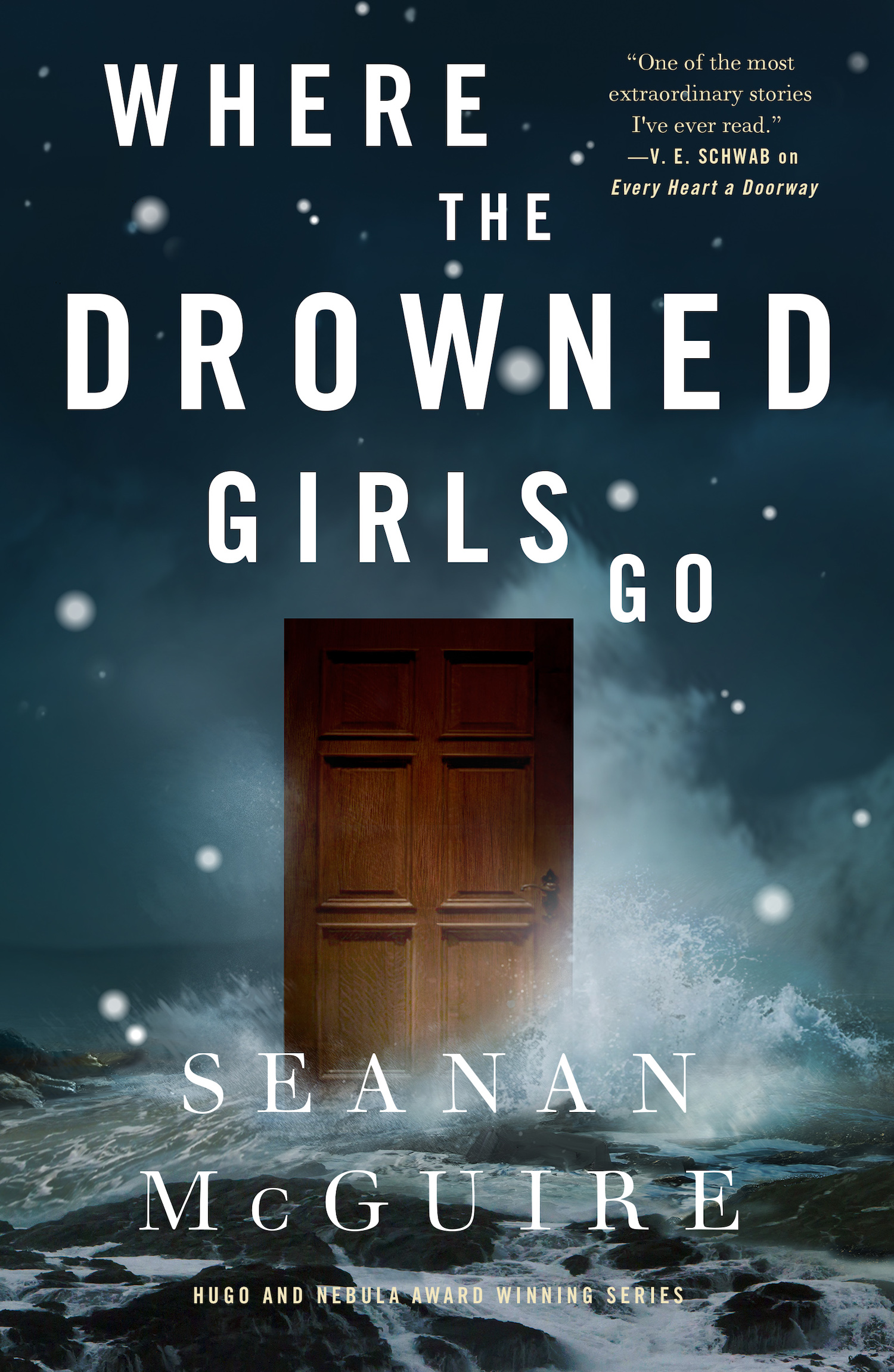
Book Review: Where the Drowned Girls Go (Wayward Children, #7) by Seanan McGuire

Title: Where the Drowned Girls Go
Series: Wayward Children, #7
Author: Seanan McGuire
Publisher: Tor
Publication date: January 4, 2022
Length: 150 pages
Genre: Fantasy
Source: ARC via Netgalley; hardcover purchased

Rating: 4.5 out of 5.

Welcome to the Whitethorn Institute. The first step is always admitting you need help, and you’ve already taken that step by requesting a transfer into our company.

There is another school for children who fall through doors and fall back out again.
It isn’t as friendly as Eleanor West’s Home for Wayward Children.

And it isn’t as safe.

When Eleanor West decided to open her school, her sanctuary, her Home for Wayward Children, she knew from the beginning that there would be children she couldn’t save; when Cora decides she needs a different direction, a different fate, a different prophecy, Miss West reluctantly agrees to transfer her to the other school, where things are run very differently by Whitethorn, the Headmaster.

She will soon discover that not all doors are welcoming…

If it’s January, it must be time for a new Wayward Children book!

Children have always been drawn to the doors.

In the 7th in the series, Where the Drowned Girls Go, the main character is Cora, whom we’ve met in previous installments as a secondary character. Here, she takes center stage.

Cora is a mermaid. That is, she was an ordinary human child until she went through a door to the world of the Trenches, an undersea world where Cora became a hero and a mermaid. Even though she was returned to her “real” world, she knows she belongs back in the Trenches… or she did, until (in book #5, Come Tumbling Down), she accompanies her friends through a door to the Moors, where she has a fateful encounter with the Drowned Gods.

She used to put her head down on the pillow and let the night take her away, off into dreams full of deep, diamond-dappled water, diving down where the currents were warm and the waters were always welcoming.

Since the Moors, though… since the Moors, her dreams were still full of water and waves, but the sea she swam in while she slept was no longer remotely kind. It was filled with teeth, and colder than she would have believed the water could be.

Now, back at Eleanor West’s Home for Wayward Children, Cora can’t shake the memories of the Moors and the awful whispers of the Drowned Gods, who want to drag her back down to their terror-filled realm. Feeling hopeless, Cora requests a transfer to the Whitethorn Institute, the other school for children who journey through portals to strange worlds and come back again. Against Eleanor West’s advice, Cora insists on the transfer, and soon finds herself in a very different type of school.

Days at the Whitethorn Institute always followed the same pattern, as perfect and predictable as a spider’s web.

At Whitethorn, the emphasis in on conformity. The students are urged through behavioral control to abandon any thought of other worlds. They must learn that this is the only world that exists, and give up the fantasies and delusions of other lives. It’s harsh, full of punishments and insistence on obedience, with an overwhelming grayness to it all.

But Cora is still a mermaid at heart, and soon comes to realize what an awful mistake she’s made. And when her friend Sumi shows up at Whitethorn on a rescue mission… well, things really get interesting.

I love the world of the Wayward Children, and despite the bleakness of the new school, there’s still plenty of magic and nonsense to appreciate in Where the Drowned Girls Go.

One of the truly special things about this series is how it celebrates otherness. The children in these books struggle to fit in in their “normal” worlds, and finding their doors is key to discovering who they truly are. What’s clear throughout this series is that the children’s differences aren’t the problem — the problem is a world that has no place for children who don’t conform.

As always, the writing is spectacular. Rovina Cai is back as the illustrator, and her drawings (again, as always) are beautiful and perfectly in tune with the narrative of the story.

Illustration by @RovinaCaiArt

I love this series so, so much. If you haven’t tried these books yet, start at the beginning! I’m thrilled that three more books in the series are listed on Goodreads — here’s hoping the Wayward Children thrive for years to come!

Book Review: Witchmark (The Kingston Cycle, #1) by C. L. Polk

Title: Witchmark
Series: The Kingston Cycle, #1
Author: C. L. Polk
Publisher: Tor
Publication date: June 19, 2018
Length: 318 pages
Genre: Fantasy
Source: Purchased
Rating:

Rating: 3.5 out of 5.

C. L. Polk arrives on the scene with Witchmark, a stunning, addictive fantasy that combines intrigue, magic, betrayal, and romance.

In an original world reminiscent of Edwardian England in the shadow of a World War, cabals of noble families use their unique magical gifts to control the fates of nations, while one young man seeks only to live a life of his own.

Magic marked Miles Singer for suffering the day he was born, doomed either to be enslaved to his family’s interest or to be committed to a witches’ asylum. He went to war to escape his destiny and came home a different man, but he couldn’t leave his past behind. The war between Aeland and Laneer leaves men changed, strangers to their friends and family, but even after faking his own death and reinventing himself as a doctor at a cash-strapped veterans’ hospital, Miles can’t hide what he truly is.

When a fatally poisoned patient exposes Miles’ healing gift and his witchmark, he must put his anonymity and freedom at risk to investigate his patient’s murder. To find the truth he’ll need to rely on the family he despises, and on the kindness of the most gorgeous man he’s ever seen. 

I’ve had my eye on Witchmark for a few years now — I’m so glad I finally sat down with the book and gave it a try!

In Witchmark, we’re introduced to a steampunk-flavored world in which aether lines power lighting and telephones, while average people get around the city on bicycles or in horse-drawn carriages. Witchcraft exists, but it’s divided very sharply along class lines: There is a secret inner circle of nobility with magical powers, known as the Invisibles. They serve the Queen, and keep Aeland protected from storms and natural disasters through quarterly rituals to sing in the seasons.

Invisibles have powers that run through the generations of their families, and in general, there’s one main mage in the family, who uses a lesser-powered family member (known as a Secondary) essentially as a backup battery. The Secondary is magically bound to the family mage, and their own strength is drained as needed in order to power the required spells.

In the lower classes, however, witchcraft is feared and something to be punished. A person accused of witchcraft is tried and examined, and if found guilty, is committed to a witches’ asylum — permanently. It’s a scary, gruesome fate.

The main character in Witchmark is Dr. Miles Singer. A son of the powerful Hensley family, Miles fled home years earlier to join the army and pursue a medical education. He let it be known that he was killed in the vicious war with Laneer; meanwhile, he actually returned home to the city of Kingston, where he works in psychiatric medicine at a veterans’ hospital.

When a dying man, claiming to have been poisoned, identifies Miles as a Starred One — someone gifted with magic — he sets off a chain reaction that leads to Miles becoming embroiled in investigating the possible murder, as well as strange occurrences involving war veterans, otherworldly interest in missing souls, and dire scheming and jockeying for political power among the nobility. He also becomes unwillingly reintroduced to his estranged family and forced to participate in their power plays.

Something sinister is happening behind the scenes, threatening all of Aeland society, and with an unexpected companion, it’s up to Miles to figure it out before it’s too late, even at the risk of his own life.

Witchmark is an engaging read, thanks especially to Miles. Miles is a complex character, with his aristocratic background, his war service and resulting psychological damage, and his commitment to treating and supporting the wounded veterans in his care. His compassion makes him a sympathetic character, one whom it’s easy to root for.

There’s an enigmatic love interest who is very interesting, but I don’t feel as though I understood enough about this individual, their powers, and what they represent.

That brings me to my chief complaint about Witchmark: The world-building is insufficient, from my point of view.

There are a lot of names and terms thrown around — Invisibles, Secondaries, Amaranthines, Solace — which only get minimal explanations. I liked what I saw of this world, but felt like I was missing a deeper knowledge of the types of power, the mystical elements, and more. I often felt like I was trying to catch up, but I think this was because of the lack of specifics in some key areas. I think we’re meant to get a feel for this world and its societies through the plot of the story, but I couldn’t help feeling as though I needed more in order to truly become immersed and connected.

There are two more books in the Kingston Cycle, and I do plan to continue. I like the characters and the overarching story enough to want to see what happens next. I’m hoping that I get deeper into the trilogy, some of the more confusing elements will become clearer.

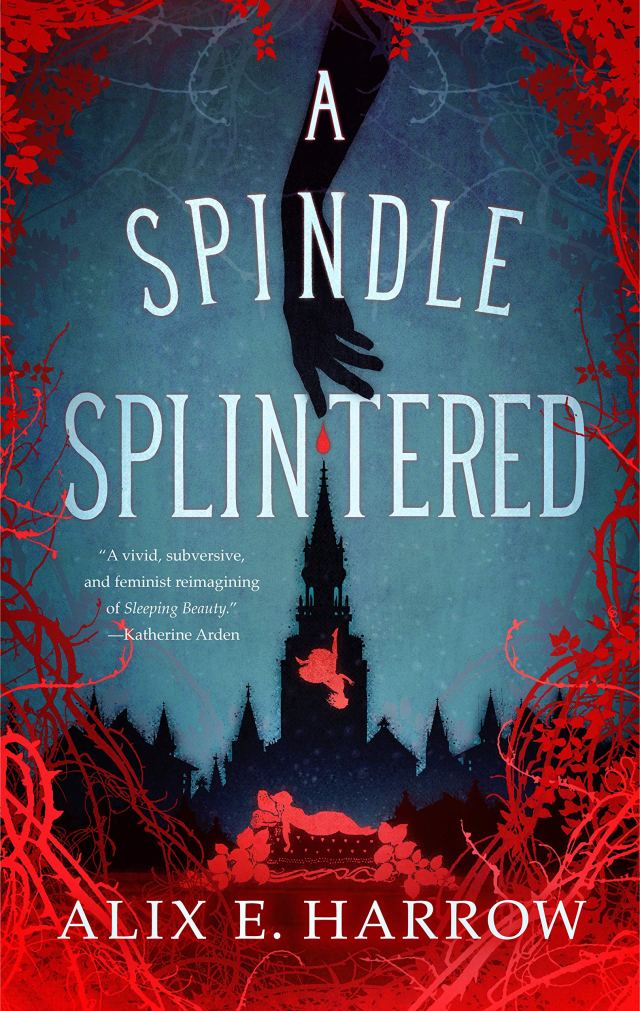
Book Review: A Spindle Splintered by Alix E. Harrow

Title: A Spindle Splintered
Author: Alix E. Harrow
Publisher: Tordotcom
Publication date: October 5, 2021
Length: 128 pages
Genre: Fairy tale/ fantasy
Source: Purchased
Rating:

Rating: 5 out of 5.

It’s Zinnia Gray’s twenty-first birthday, which is extra-special because it’s the last birthday she’ll ever have. When she was young, an industrial accident left Zinnia with a rare condition. Not much is known about her illness, just that no one has lived past twenty-one.

Her best friend Charm is intent on making Zinnia’s last birthday special with a full sleeping beauty experience, complete with a tower and a spinning wheel. But when Zinnia pricks her finger, something strange and unexpected happens, and she finds herself falling through worlds, with another sleeping beauty, just as desperate to escape her fate.

USA Today bestselling author Alix E. Harrow’s A Spindle Splintered brings her patented charm to a new version of a classic story. 

THIS is the way to write a novella — short, sweet, spare, and totally on point.

In A Spindle Splintered, we meet Zinnia Gray on the cusp of what she’s sure will be her last birthday. Thanks to her rare genetic condition, her death is inescapable, and as she explains to people who ask her about future plans, she’s just running out the clock.

Because of her condition, Zinnia has tried to accelerate as much of her life as she can, finishing high school and then college early, getting a degree in folklore, never forgetting that for all her life, she’s been in the process of dying. And maybe because of that, fairy tales in general and Sleeping Beauty in particular are her obsessions.

Even among the other nerds who majored in folklore, Sleeping Beauty is nobody’s favorite. Romantic girls like Beauty and the Beast; vanilla girls like Cinderella; goth girls like Snow White.

Only dying girls like Sleeping Beauty.

In a moment of utter weirdness, Zinnia pricks her finger on the spinning wheel her best friend Charm (short for Charmaine) has set up for her birthday. Suddenly, Zinnia finds herself between worlds, finally landing in one in which an impossibly beautiful princess is calling for help. Primrose is a more traditional version of a Sleeping Beauty, cursed at birth to fall into a 100-year slumber on her 21st birthday — but thanks to Zinnia’s intervention, her doom seems to be avoided, yet she’s left to face a different sort of doom, getting married off to the perfect prince, much to her dismay.

Primrose and Zinnia set off on a quest to break both their curses, but nothing is really as it seems. The story culminates in a terrific action sequence and ends with plenty of surprises, while also leaving the door open for further tales.

I love the writing, the characters, the inventiveness of the storytelling, and the overall attitude and tone. I don’t always get along with novellas, often feeling like I’ve been left without the full picture and that I’ve read a synopsis rather than a full story. That’s not the case in A Spindle Splintered.

This novella reads just like a fairy tale, plus the modern elements make the characters relatable and bring humor even to totally grim (Grimm?) situations.

“Well, Harold,” I say gently. “They’re lesbians.”

(I’m not going to provide any context for that quote — just know that it’s perfect and made me laugh.)

The book has beautiful woodcut illustrations from the traditional Arthur Rackham versions of the story. You can see some of these here — scroll down to get to the woodcuts. These illustrations enhance the magical fairy tale elements of the story, and make the entire book feel classic, even in the more contemporary scenes.

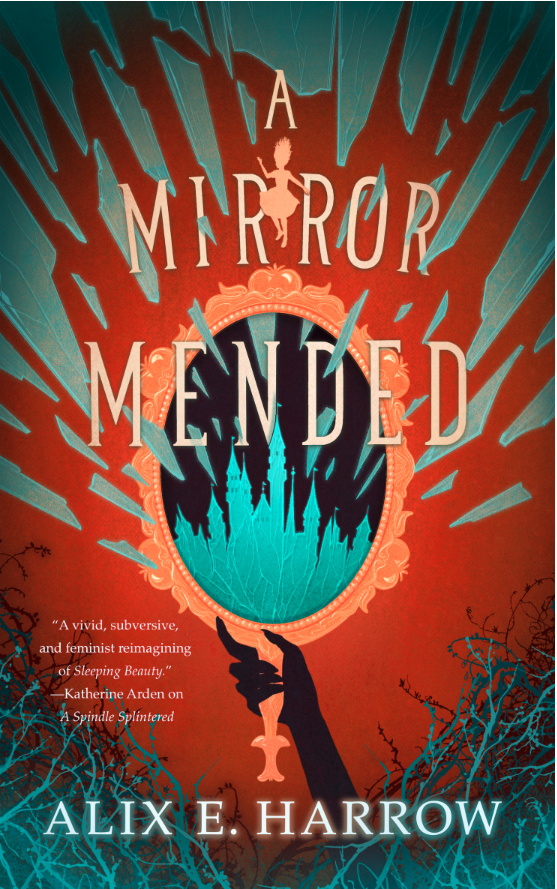
I loved A Spindle Splintered, and can’t wait for the next book in the author’s Fracture Fables series,:

A Mirror Mended
To be released June 2022

A Spindle Splintered is a delight. Don’t miss it!

**********

Through affiliate programs, I may earn commissions from purchases made when you click through these links, at no cost to you.

Buy now at Book Depository – Bookshop.orgBarnes & Noble

Book Review: Under the Whispering Door by TJ Klune

Title: Under the Whispering Door
Author: TJ Klune
Publisher: Tor Books
Publication date: October 21, 2021
Length: 373 pages
Genre: Fantasy
Source: Review copy courtesy of the publisher via NetGalley
Rating:

Rating: 4 out of 5.

When a reaper comes to collect Wallace Price from his own funeral, Wallace suspects he really might be dead.

Instead of leading him directly to the afterlife, the reaper takes him to a small village. On the outskirts, off the path through the woods, tucked between mountains, is a particular tea shop, run by a man named Hugo. Hugo is the tea shop’s owner to locals and the ferryman to souls who need to cross over.

But Wallace isn’t ready to abandon the life he barely lived. With Hugo’s help he finally starts to learn about all the things he missed in life.

When the Manager, a curious and powerful being, arrives at the tea shop and gives Wallace one week to cross over, Wallace sets about living a lifetime in seven days.

Under the Whispering Door is a contemporary fantasy about a ghost who refuses to cross over and the ferryman he falls in love with.

I absolutely adored TJ Klune’s 2020 novel, The House in the Cerulean Sea, so I had very high expectations for Under the Whispering Door. While I enjoyed this novel, it doesn’t quite live up to my (admittedly super high) expectations, but it’s still a sweet, lovely read.

In Under the Whispering Door, we have a very unpleasant first encounter with lead character Wallace Price. Wallace is a powerful, wealthy partner in a powerful, wealthy law firm, and an absolutely awful person. His whole life revolves around his work, and he’s completely heartless in dealing with an employee in need.

Which makes it kind of ironic that he soon drops dead from a heart attack.

When Wallace regains awareness, he’s at his own funeral, which is attended only by his business partners and his ex-wife, none of whom have anything good to say about the dearly departed. But there’s also a stranger there — a young woman whom Wallace has never seen before, who takes charge and informs Wallace that (a) he’s dead and (b) she’s a Reaper, there to escort him to his next step on the journey.

Where they end up is at a strange little tea shop in the woods, run by a kind man named Hugo, and inhabited by Hugo’s ghost grandfather and ghost dog. The tea shop is a real place, with real (living) customers, but it also houses the door to the next world, a portal for dead souls when they’re ready to move on. It’s a lot to take in, and Wallace goes through all the stages of denial and anger and so on — but ultimately, he comes to accept that what’s happening to him is real.

The longer Wallace remains at the tea house, the more he begins to reclaim something like his own humanity, as his contact with the people of the tea house helps him to see how terrible he’s been, and to remember times in his life when he actually experienced the joy of caring and being kind.

The book deals with loss and sorrow and depression throughout, and while the overall tone is whimsical, there’s a seriousness underlying everything that keeps the story grounded even during its most fantastical or silly episodes.

I loved the characters. Hugo, the ferryman, is kind and patient and possesses endless wells of empathy. I got a huge kick out of his grandfather Nelson (and also the very good dog Apollo). Mei, the Reaper, is one character that I couldn’t quite connect with — her scenes are always entertaining, but I didn’t feel that I had a very good grasp on who she was as a person.

Wallace is a tricky one, so utterly unlikeable to start with. It’s a real achievement that the author is able to take this awful person and show his development so carefully and believably that by the end, we really do care about him and want the best for him.

The plot itself isn’t always completely logical, in my opinion — the tea house is perhaps a little too weird to actually function in the real world as it does. And where even is it, besides being in the woods? But these little quibbles don’t really matter.

Ultimately, Under the Whispering Door is a lovely book about it never being too late to become a better person and about finding and seizing joy and choosing kindess wherever possible.

TJ Klune has quickly become one of my favorite authors, and I’ll read whatever he writes next! And meanwhile, I’m going to need to spend some time on his backlist.

Don’t miss Under the Whispering Door!

**********

Through affiliate programs, I may earn commissions from purchases made when you click through these links, at no cost to you.

Buy now at Amazon – Book Depository – Bookshop.org

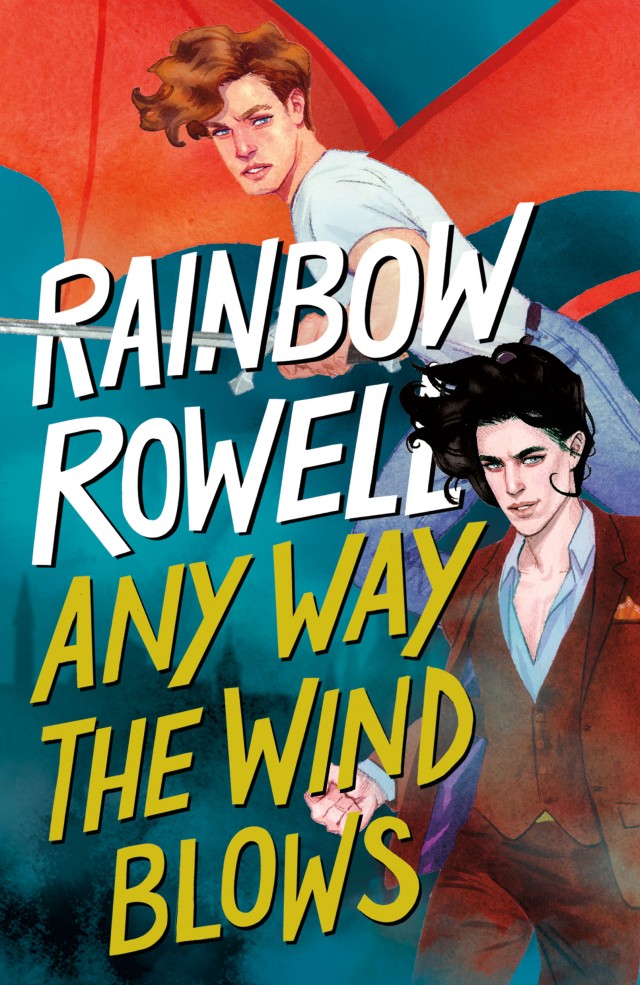
Book Review: Any Way the Wind Blows (Simon Snow, #3) by Rainbow Rowell

Title: Any Way the Wind Blows (Simon Snow, #3)
Author: Rainbow Rowell
Publisher: Wednesday Books
Publication date: July 6, 2021
Length: 579 pages
Genre: Young adult fantasy
Source: Purchased
Rating:

Rating: 4.5 out of 5.

In Carry On, Simon Snow and his friends realized that everything they thought they understood about the world might be wrong. And in Wayward Son, they wondered whether everything they understood about themselves might be wrong.

In Any Way the Wind Blows, Simon and Baz and Penelope and Agatha have to decide how to move forward.

For Simon, that means deciding whether he still wants to be part of the World of Mages — and if he doesn’t, what does that mean for his relationship with Baz? Meanwhile Baz is bouncing between two family crises and not finding any time to talk to anyone about his newfound vampire knowledge. Penelope would love to help, but she’s smuggled an American Normal into London, and now she isn’t sure what to do with him. And Agatha? Well, Agatha Wellbelove has had enough.

Any Way the Wind Blows takes the gang back to England, back to Watford, and back to their families for their longest and most emotionally wrenching adventure yet.

This book is a finale. It tells secrets and answers questions and lays ghosts to rest.

Carry On was conceived as a book about Chosen One stories; Any Way the Wind Blows is an ending about endings. About catharsis and closure, and how we choose to move on from the traumas and triumphs that try to define us.

Note: I’ll try not to be too spoiler-y about Any Way the Wind Blows, but since this is the 3rd book in a trilogy, there will be spoilers for the first two books. You have been warned!

In Carry On, we meet Simon Snow, the most powerful magician of his generation. Simon is the Chosen One, the boy destined to save the World of Mages from its most dastardly threats. Carry On is very much a Harry Potter-esque story — Simon is an orphan, brought to Watford, England’s school of magic, and nurtured as the protégé of the Mage, the school’s powerful, dashing headmaster who exerts influence over all elements of the magical world.

But what would have happened to Harry Potter if, rather than killing the evil Lord Voldemort, he grew in power only to discover that his beloved mentor Albus Dumbledore was actually the villain, set on gathering all power for himself and bending the magical world to his own wishes? This is more or less where Simon finds himself at the end of Carry On. He and his friends confront the greatest evil, ready for the ultimate showdown, only to discover that it’s the Mage himself who’s behind all the bad. And then, inadvertently, Simon kills him.

The end.

But what happens to Simon next? What happens after you face your biggest foe and win, but cause death and the end of the life you knew?

In Wayward Son, Simon and his friends go on a roadtrip in America, experiencing challenges and dangers and adventure, while also giving Simon time to process how very upended his life has become. It’s very action-packed, and there isn’t a whole lot of time for contemplation.

But in Any Way the Wind Blows, back in England, it’s time to confront their futures. For Simon, he’s finally romantically involved with Baz, who was his nemesis and awful roommate during their years at Watford, only to eventually realize that beneath their mutual distrust and dislike was a simmering attraction and depth of feelings. For Simon’s bestie Penelope, she’s ready to resume being the cleverest magician around, except she’s brought a Normal (Muggle) back from American on a mission to cure him of a demonic curse — and as a result, has to not only put all her magical skills to the test, but also challenge magical society’s prejudices about non-magical people. And for Agatha, Simon’s former school girlfriend, she has to find a way to make sense of her life apart from being the beautiful girl always being rescued by Simon.

They all have a lot to deal with, clearly.

Simon suffers the most of all of them. At the end of Carry On, he lost all his magic, but ended up with dragon wings and a tail. He’s madly and passionately in love with Baz, and they’re trying to have a relationship, but at the same time, Simon absolutely doesn’t know how to be intimate or open with another person. It’s not just about physical intimacy — he loves Baz and knows that Baz loves him, but he has literal panic attacks when they get too close. Simon has spent his early life in foster homes, has no family, and has spent his formative years being a savior. What does he do when he has no magic, can’t save anyone, and no longer belongs in the world he thought he was meant to save? And how does he let Baz in when he doesn’t understand himself or who he is?

Simon and Baz’s relationship has ups and downs throughout the book, and parts are painful to read. They’re awkward, and Simon is so clearly suffering. He’s so full of want, but also so fearful, and he just doesn’t know how to be. Baz is absolutely lovely with Simon, even as he also learns more about his own (vampiric) nature and what that might mean for the rest of his life.

To be honest, while I wasn’t exactly bored at any point, I did find Penelope and Agatha’s storylines less interesting than Simon and Baz’s, and since the book alternates focus between the characters from chapter to chapter and section to section, I was always a little reluctant to move away from the main points of interest to delve into the supporting plotlines.

At almost 600 pages, this book is much longer than the previous one, and while I loved it as a whole, I think a large part of that is due to how much I love the characters. When you read a long, involved series, the characters can become more than just people on a page — or at least, that’s true for me when reading really excellent stories with amazing world-building and character development. It’s something of a double-edged sword though, because I become so invested in the characters I love that I don’t particularly want any plot points to get in the way of their happiness… which wouldn’t lead to a very interesting story.

In the case of Any Way the Wind Blows, this means that I was unhappy whenever Simon and Baz were unhappy, even if their unhappiness was part of their journey toward finding their way forward in their relationship. (If I’m making any sense at all…)

In terms of the plot, I enjoyed a lot of this book, although the overarching mystery/drama about the rise of a new Chosen One didn’t particularly resonate for me. There were things I was hoping would happen by the end of the book that didn’t (being cryptic here), and even though that’s hard for me to accept, it makes sense. At the same time, I felt unsatisfied by the lack of answers to certain questions, and felt that the story just kind of ended. There’s an epilogue that gives a lovely ending situation to one character, but it’s a year after the main events of the book… so what happened to everyone else and where are they now??

I love the Simon Snow books as a whole, and I love Simon and Baz so much (and yes, even Penelope and Agatha)… but I wish I’d felt a little more fulfilled when all was said and done. I may need to let this one simmer for a bit and come back to it again, to see if my feelings change over time.

Meanwhile, I think I’ll go back and listen to Carry On all over again, to revisit the origin story with full knowledge of how it all turns out. Carry On is an introduction to a trilogy that — with Wayward Son and Any Way the Wind Blows — ends up not being about a powerful magician in a magical world, but what happens to a formerly powerful magician who doesn’t fit in in any world.

Overall, it’s a fabulous journey with characters who can make my heart happy and also break it into pieces. Come for the magic wands, stay for the Simon and Baz lovefest. And Agatha. And goats (yes, really). And even Penelope and her Normal. As a whole, I heartily recommend the Simon Snow trilogy. It’s not what it seems like it’s going to be, but what it is is very, very cool.

**********

Through affiliate programs, I may earn commissions from purchases made when you click through these links, at no cost to you.

Buy now at Amazon – Book Depository – Bookshop.org